SET rises over hope of recovery as countries ease lockdown measures #ศาสตร์เกษตรดินปุ๋ย

#ศาสตร์เกษตรดินปุ๋ย : ขอบคุณแหล่งข้อมูล : หนังสือพิมพ์ The Nation.

https://www.nationthailand.com/business/30389111?utm_source=category&utm_medium=internal_referral

SET rises over hope of recovery as countries ease lockdown measures

Jun 05. 2020
By The Nation

The Stock Exchange of Thailand (SET) Index rose 24.69 points or 1.75 per cent, closing at 1,435.70 today (June 5).

Total transactions stood at Bt120.331 billion with an index high of 1,438.09 and a low of 1,402.77.

During the morning session, an analyst at Krungsri Securities said he expected the index to rise to 1,420, riding on the hope of economic recovery after many countries eased their lockdown measures, before falling.

“Investors believe the US labour market has seen the worst after the number of Americans seeking unemployment benefits dropped to below 2 million for the first time since mid-March,” the analyst said.

“The index also gained positive sentiment from the European Central Bank’s additional measure to expand the purchase of its emergency bond-buying programme by 600 billion euros to mitigate the Covid-19 impact.”

He said the SET Index would be under pressure due to signs of “overbuying” and tight valuation.

“We advise investors to follow the Opec+ meeting, which will be held next week to discuss the prospects of keeping oil production low,” the analyst said.

The top 10 stocks with the highest trade value today were BAM, PTT, PTTEP, ADVANC, SCB, KBANK, PTTGC, CPALL, BBL and MINT.

As of 4.30pm, the price of crude oil rose by US$0.65 or 1.74 per cent to $38.06 per barrel, while gold dropped by $13.40 or 0.78 per cent, to $1,714.00 per ounce.

Asian indices generally rallied:

Japan’s Nikkei Index closed at 22,863.73, up 167.99 points, or 0.74 per cent.

China’s Shanghai SE Composite Index closed at 2,930.80, up 11.55 points, or 0.40 per cent, while Shenzhen SE Component Index closed at 11,180.60, up 41.34 points, or 0.37 per cent.

Hong Kong’s Hang Seng Index closed at 24,770.41, up 404.11 points, or 1.66 per cent.

South Korea’s KOSPI Index closed at 2,181.87, up 30.69 points, or 1.43 per cent.

Taiwan’s TAIEX Index closed at 11,479.40, up 86.17 points, or 0.76 per cent.

Limited upside seen for SET Index #ศาสตร์เกษตรดินปุ๋ย

#ศาสตร์เกษตรดินปุ๋ย : ขอบคุณแหล่งข้อมูล : หนังสือพิมพ์ The Nation.

https://www.nationthailand.com/business/30389098?utm_source=category&utm_medium=internal_referral

Limited upside seen for SET Index

Jun 05. 2020
By The Nation

The Stock Exchange of Thailand Index opened at 1,417.38, up 6.37 points, or 0.45 per cent, on Friday morning (June 5).

A stock analyst at Krungsri Securities expected the index to rise to 1,420, on hopes of an economic recovery after many countries eased their lockdown measures, before falling.

“Investors expect that the US labour market has seen its worst after the number of Americans claiming jobless benefits rose lower than 2 million people for the first time since the middle of March,” the analyst said

“The index also gained positive sentiment from the European Central Bank’s additional measure to expand the purchases of its emergency bond-buying programme by 600 billion euros to mitigate the Covid-19 impact.”

He said the SET Index would be under pressure due to signs of “overbought” and the tight valuation.

“We advise investors to follow the Opec+ meeting to extend the period to reduce oil production this week,” the analyst said.

He recommended that investors buy MINT, CENTEL, ERW, AOT , AMATA and WHA EEC 2, as well as:

▪ Energy stocks which will benefit from the rising crude oil price, such as PTT, PTTEP, TOP, PTTGC, IRPC and SPRC.

▪ Stocks whose second quarter performance will improve, such as CKP, TASCO, STA and RS.

The SET index on Thursday (June 4) rose by 37 points or 2.68 per cent to 1,411, the highest in three months with transactions totalling Bt120 billion as large cap stocks benefited from foreign funds flow.

Foreign investors made net buys of Bt2.470 billion in stocks and Bt7.539 billion in the bond market. There were 6,347 Net Short TFEX SET50 contracts.

Gold rises on the back of unsteady stock markets #ศาสตร์เกษตรดินปุ๋ย

#ศาสตร์เกษตรดินปุ๋ย : ขอบคุณแหล่งข้อมูล : หนังสือพิมพ์ The Nation.

https://www.nationthailand.com/business/30389097?utm_source=category&utm_medium=internal_referral

Gold rises on the back of unsteady stock markets

Jun 05. 2020
By The Nation

The price of gold rose by Bt50 per baht weight in morning trade on Friday (June 5), the Gold Traders Association reported.

As of 9.32am, buying price of a gold bar was Bt25,500 per baht weight and selling price Bt25,600, while gold ornaments were priced at Bt25,044.32 and Bt26,100, respectively.

At close on Thursday (June 4), buying price of a gold bar was Bt25,450 per baht weight and selling price Bt25,550, while gold ornaments were priced at Bt24,998.84 and Bt26,050, respectively.

The Gold Spot Index price this morning moved to around US$1,713 (Bt53,990) per ounce after the price rose by $22.6 to $1,727.4 per ounce at close on Wednesday.

Gold price gained positive sentiment from the weakening dollar and the European Central Bank’s additional economic stimulus measure. Meanwhile, investors were buying gold as safe haven assets after stock indices worldwide began to fall.

The Hong Kong gold price rose by HK$95 to $15,885 (Bt64,603) per tael.

Stocks drop most in 2 weeks; Treasurys decline #ศาสตร์เกษตรดินปุ๋ย

#ศาสตร์เกษตรดินปุ๋ย : ขอบคุณแหล่งข้อมูล : หนังสือพิมพ์ The Nation.

https://www.nationthailand.com/business/30389075?utm_source=category&utm_medium=internal_referral

Stocks drop most in 2 weeks; Treasurys decline

Jun 05. 2020
By Syndication Washington Post, Bloomberg · Claire Ballentine, Katherine Greifeld · BUSINESS, US-GLOBAL-MARKETS 
Stocks slumped in the U.S. and Europe as concern the recent rally had gone too far overshadowed new stimulus measures and encouraging economic data.

The S&P 500 Index fell less than half a percentage point, still its biggest drop in two weeks, snapping a four-day winning streak. Treasury yields rose as weekly jobless claims fell. The Stoxx 600 stayed lower even as the European Central Bank moved to add 600 billion euros to its pandemic purchase program, more than expected.

After exceptional gains for equities in the past week took valuations to the highest since 2000 and pushed technical levels on the S&P 500 toward overbought levels, traders are searching for further tail winds to drive gains. The moves from the ECB and the slowdown in job losses weren’t enough.

“We had stocks make a miraculous recovery from their March 23 lows and so it makes sense that we’re unlikely to see the rally continue at the pace it has,” said Kristina Hooper, chief global market strategist at Invesco. “We’re probably going to see more of a plateauing, more of trading in a range until there’s a catalyst that moves them forward.”

Investors are awaiting plans for the next round of U.S. economic stimulus, but Trump administration officials have postponed discussions scheduled for this week, according to people familiar with the matter.

Elsewhere, gold gained along with silver. Stocks in Asia were mixed. West Texas oil slumped from a three-month high as OPEC+ unity was threatened by a long-running feud over compliance with production cutbacks.

Here are the major moves in markets:

Stocks

–The S&P 500 Index fell 0.3% at the close of trading in New York.

–The Nasdaq 100 Index fell 0.8%.

–The Stoxx Europe 600 Index declined 0.7%.

–The MSCI All-Country World Index fell 0.4%.

Currencies

–The Bloomberg Dollar Spot Index fell 0.3%.

–The euro rose 0.9% to $1.1336.

–The British pound rose 0.2% to $1.2602.

–The Japanese yen fell 0.2% to 109.13 per dollar.

Bonds

–The yield on 10-year Treasurys rose seven basis points to 0.81%.

–Germany’s 10-year yield rose three basis points to -0.33%.

–Britain’s 10-year yield rose three basis points to 0.30%.

–Australia’s 10-year yield rose five basis points to 1.01%.

Commodities

–WTI crude fell 0.4% to $37.13 a barrel.

–Gold strengthened 0.9% to $1,715.59 an ounce.

The U.S. economic slide is likely bottoming out, but a recovery could take years #ศาสตร์เกษตรดินปุ๋ย

#ศาสตร์เกษตรดินปุ๋ย : ขอบคุณแหล่งข้อมูล : หนังสือพิมพ์ The Nation.

https://www.nationthailand.com/business/30389073?utm_source=category&utm_medium=internal_referral

The U.S. economic slide is likely bottoming out, but a recovery could take years

Jun 05. 2020
By  The Washington Post · Heather Long, Eli Rosenberg · NATIONAL, BUSINESS, US-GLOBAL-MARKETS 
The U.S. economy’s steep slide appears to be leveling off amid signs that layoffs are easing, travel is modestly picking up, and Americans are beginning to eat out again, but a recovery from the coronavirus pandemic is still a long way off, with economic activity at deeply depressed levels.

On Thursday, the latest sign that the economic decline may be bottoming out came as the government reported that 1.9 million Americans had applied for unemployment insurance during the last week of May – a painfully high number but the lowest since the novel coronavirus started spreading widely in the country in March.

The jobs data follows modest signs that the economy may be inching toward the beginnings of a recovery as the nation reopens. Mortgage applications have surged in recent weeks amid record-low interest rates. Consumption of oil and petroleum products is up. The number of travelers at airports, as measured by the Transportation Security Administration’s precheck numbers, have begun increasing in recent weeks. Even restaurant reservations have inched up.

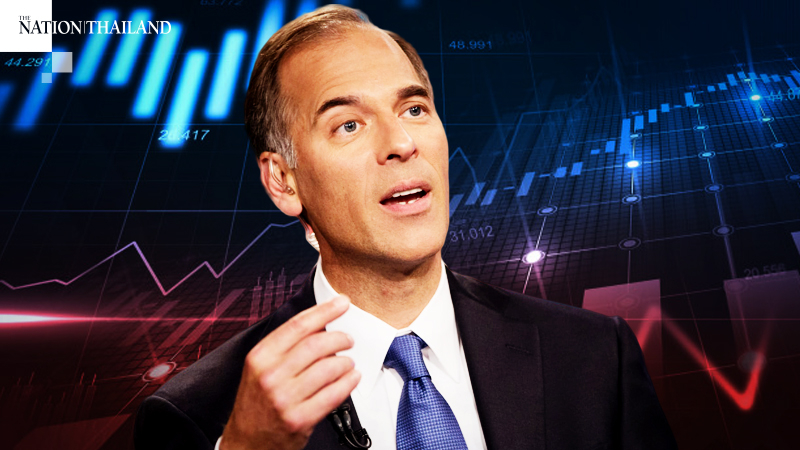
“This covid recession will go down as the shortest and arguably the most severe in history,” said Mark Zandi, chief economist at Moody’s Analytics.

Zandi said the recession caused by the pandemic is likely to be over, almost as abruptly as it started. He points out that private payrolls declined by 2.76 million people in May, according to a report released Wednesday by payroll processor ADP. That was far below analysts’ estimates.

Yet, even when economists declared the Great Recession officially over in June 2009, the unemployment rate did not return to prerecession levels until 2017, a reminder that the economic pain can linger for years. Similarly, experts predict that this recovery will take years.

Cheered on by President Donald Trump, some states have lifted some of their most severe restrictions in recent weeks, more businesses have reopened – at least partially – and brought back workers. But there is still no sense of when commerce will resume at the scale seen late last year. Until there’s a widely available vaccine against the novel coronavirus, the economy is likely to continue struggling at a low rate. And public health officials continue to warn of a second wave of infections in the fall or winter, which could bring on another round of shutdowns.

For now, the U.S. economy is in limbo, with many companies operating at half capacity and a big question mark about how long firms can survive that way. Idled workers aren’t sure when they will be called back, so they are hoarding cash. State and local budgets have been decimated, which is likely to trigger more layoffs later this year.

“These are extremely ugly numbers, but because there were so many forecasts talking about a total collapse of the economy, the numbers we’re seeing, while extremely bad, aren’t the worst-case scenario,” said Lindsey Piegza, chief economist at Stifel Fixed Income. “It’s not as bad as it could have been. It’s an odd silver lining.”

The dueling stories about this economy – it is improving yet remains greatly depressed – are likely to play out all the way through the presidential election. Trump is seizing on any data showing a rebound and is taking credit for the bounce-back in the stock market, where the S&P 500 index just experienced its best 50-day rally since 1952.

“By the time of [the] election, I believe the economy will be doing phenomenal numbers. Big job increase, big GDP increases, and that’ll be before the election,” Trump said Wednesday on Fox News Radio’s “The Brian Kilmeade Show.”

“The stock market is booming,” he said.

But presumptive presidential nominee Joe Biden and other Democrats have been quick to point out that millions of Americans remain out of work and that the job losses aren’t as bad in other countries, raising questions about the U.S. government’s response to the pandemic. Biden predicts a slow recovery.

“Economic growth is likely to be back in positive territory by the third quarter,” Stifel’s Piegza said, but “what we’re really talking about is going from extremely terrible to slightly less terrible.”

Official government growth data looks at how much the economy changes from quarter to quarter. Since the April-to-June period is likely to be one of the worst in U.S. history, the third quarter, even if sluggish, will look like a big surge, giving Trump a talking point just before the election.

What matters to many Americans is the job situation. When Americans feel it is easy to get work, they tend to give the economy more-positive ratings and spend more. When people fear they will lose their jobs, have to take pay cuts or have trouble finding new work, they tend to save more. In April, the U.S. savings rate hit a record high of 33 percent, a sign of how scared people are.

“The savings buildup over the past two months can hardly be considered firepower for future consumption,” Bob Schwartz, senior economist at Oxford Economics, said in a recent note. “The stimulus checks were a one-time payment that has already run its course.”

The unemployment rate for May, due out Friday, is expected to be close to 20 percent, a level not seen since the 1930s. The Congressional Budget Office released projections this week showing it doesn’t expect the U.S. economy to fully recover until 2030.

The CBO also said that the pandemic will shrink the size of the U.S. economy by nearly $8 trillion in the next decade, assuming there are no more coronavirus waves that trigger crippling shutdowns in coming months.

More than 40 million people have applied for unemployment benefits during the pandemic, and roughly 30 million are receiving them, previously unimaginable figures that wiped out a job market in which unemployment was at historic lows as recently as February.

“Whatever optimism there is from seeing some people return to work, we’re not seeing a drastic move off unemployment,” said Jay Shambaugh, a senior fellow at the Brookings Institution. “If anything, we’re seeing a stable number of people on unemployment. Last year it was around 1.5 million.”

Still, signs that the economy is no longer plunging are an encouraging start, forecasters said.

New data from the Census Bureau’s weekly Small Business pulse survey shows businesses are starting to get back on their feet. In the week ending May 30, about 3 in 5 small businesses reported revenue of above $15,000. That’s a massive reversal from a month earlier, when 60 percent of businesses reported little or no revenue.

Other signs of a turning point are that only a quarter of businesses closed locations in the past week, down substantially from a month earlier, and businesses are reporting fewer supply-chain problems and missed loan payments.

Flights are also picking up. American Airlines announced Thursday an expansion next month as travel demand picks up again. For July, the airline expects to fly 55 percent of last year’s domestic trips, up from a mere 20 percent in May.

Americans are also beginning to eat out again. Restaurant reservations on the online platform OpenTable showed that more than 30 percent of its participating restaurants had begun taking bookings as of June 3, vs. zero throughout most of April.

The Federal Reserve has scaled back its purchases of government bonds, a vote of confidence that the worst probably is over.

Yet, the manufacturing sector is a telling example of just how modest any rebound is.

The industry experienced its worst contraction in April since the Great Recession. The Purchasing Managers’ Index slumped to 41.5 in April, signaling a deep contraction. In May, the index rose to 43.1, an improvement but far below the 50-mark that is considered healthy and expansionary.

Such contradictions are also apparent in the job-market data, economists say. New jobless claims are trending lower, but even with so much of the economy reopening, nearly 2 million people filed new applications for unemployment aid.

“It’s a sign that things are not getting as worse as they were before,” said Nick Bunker, economic research director at Indeed Hiring Lab. “We have seen a reduction in the pace of people becoming jobless. So that’s positive. But we’re still seeing claims at astronomical levels than what we saw before this crisis.”

Job postings tell a similar story. The number of jobs posted on Indeed’s site in May was 5 percent higher than in April. But those numbers were still 34 percent lower at the end of May than at the same date in 2019 – a staggering drop.

“It is, at most, an extremely partial rebound,” Bunker said. “Postings are still growing at a rate far slower than we saw last year. I think it’s worthwhile celebrating that the pace of things getting worse has slowed down. But that means we haven’t hit a bottom yet. There are still a fair amount of folks losing their jobs and folks not hiring yet.”

BBS works on masterplan for U-Tapao airport, adjacent city as it awaits Navy’s permission #ศาสตร์เกษตรดินปุ๋ย

#ศาสตร์เกษตรดินปุ๋ย : ขอบคุณแหล่งข้อมูล : หนังสือพิมพ์ The Nation.

https://www.nationthailand.com/business/30389066?utm_source=category&utm_medium=internal_referral

BBS works on masterplan for U-Tapao airport, adjacent city as it awaits Navy’s permission

Jun 05. 2020
Photo credit: tube SATO

Photo credit: tube SATO
By The Nation
The BBS Joint Venture Group, which won the bid to develop U-Tapao Airport and the adjoining airport city, has established Utapao International Aviation Co to act as a Special Purpose Vehicle (SPV) in the signing of a joint investment pact with the Eastern Special Development Zone Policy Committee on June 19.

The SPV was registered on February 13 with a capital of Bt4.5 billion, with Bangkok Airways being the largest shareholder with a 45 per cent stake, BTS Group holding 35 per cent, Sino-Thai Engineering and Construction 10 per cent and the policy committee the remaining 10 per cent.

Meanwhile, the SPV board of directors will include Prasert Prasatthong-Osot, Putthiphong Prasatthong-Osot, Pradit Theekhakul, and Anawat Leelawatwatana from Bangkok Airways, Keeree Kanjanapas, Suraphong Laoha-Anya and Kong Chi Keung from BTS Group and Pakpoom Srichamni and Chaikaew Techapichaya from Sino-Thai.

The policy committee is reportedly partnering up with BBS Group for the project, though it first needs permission from the Royal Navy to use the 6,500 rai for the development. BBS Group will only be able to go ahead with the construction once the policy committee issues a “notice to proceed”.

Ahead of the notice, BBS has to come up with a master plan for the four phases of developing the airport and surrounding area, which is expected to eventually accommodate 60 million passengers.

Phase 1, which is expected to accommodate 16 million passengers, higher than the 12 million initially specified, will include the construction of taxiways for planes, high-speed rail and traffic links to the airport. BBS Group estimates this phase to cost about Bt40 billion.

Construction of the first phase will begin after the environmental impact assessment (EIA) report has been considered, a coordination panel for the high-speed link is set up and the entire project is tied together so work can be done simultaneously.

Over 250 trade activities planned to boost Thai exports #ศาสตร์เกษตรดินปุ๋ย

#ศาสตร์เกษตรดินปุ๋ย : ขอบคุณแหล่งข้อมูล : หนังสือพิมพ์ The Nation.

https://www.nationthailand.com/business/30389068?utm_source=category&utm_medium=internal_referral

Over 250 trade activities planned to boost Thai exports

Jun 05. 2020
Photo credit: Onlyyouqj

Photo credit: Onlyyouqj
By THE NATION
The Commerce Ministry’s Department of International Trade is getting ready to launch more than 250 trade activities in a move to boost Thailand’s exports, director-general Somdet Susomboon said.

He added that the department has been closely monitoring the market situation and will launch these activities during favourable periods. The planned activities include the promotion of Thai goods via online platforms of its foreign partners including China’s Tmall, India’s BigBasket and global Amazon.com as well as in shopping malls overseas.

The department has already launched online and offline promotions for Thai goods in China and Hong Kong.

It has also launched match-making activities between Thai exporters and US importers covering 20 categories via an online channel from May to September.

He added that the department maintains its export growth target of 3 per cent this year, thanks to high demands for Thai products such as food, medical supplies and furniture.

With inflation in negative domain, Thailand may enter deflation, warn economists #ศาสตร์เกษตรดินปุ๋ย

#ศาสตร์เกษตรดินปุ๋ย : ขอบคุณแหล่งข้อมูล : หนังสือพิมพ์ The Nation.

https://www.nationthailand.com/business/30389069?utm_source=category&utm_medium=internal_referral

With inflation in negative domain, Thailand may enter deflation, warn economists

Jun 05. 2020
Bank of Thailand (BOT) senior director Don Nakornthab

Bank of Thailand (BOT) senior director Don Nakornthab
By The Nation

Thailand is facing a fresh threat of deflation after inflation entered negative territory for the third consecutive month, though economists hope the easing of lockdown measures leads to gradual recovery in the second half.

Inflation in May was -3.44 per cent year on year, the lowest in a decade and in the minus territory for a third month in a row.

“Technically, Thailand has entered deflation, marked by a drop in the price of goods and services, with inflation entering negative domain for three months – March -0.54 per cent, April -2.99 per cent and May -3.44 per cent,” said Pimchanok Wonkhorporn, director of the Commerce Ministry’s Trade Policy and Strategy Office.

The dropping price of oil matched with government subsidies in electricity and water have largely contributed to the negative inflation, she told the press on Thursday (June 4).

However, she said, core inflation has expanded 0.1 per cent, suggesting that the price for some goods and services (excluding food and energy items) has risen, so there should not be concerns about deflation.

Separately, Bank of Thailand (BOT) senior director Don Nakornthab said the country was not experiencing deflation from the financial market’s point of view. He said BOT follows the European central banks’ definition of deflation, which takes four conditions into account:

–    Negative inflation for a prolonged period;

–    Many goods and services experiencing negative inflation;

–    The five-year forecast on inflation rate is significantly lower than targeted; and

–    The economy contracts combined with rising unemployment.

He said the BOT believes inflation next year will return to positive, as the five-year forecast is 1.8 per cent, which is close to the target of between 1 and 3 per cent.

However, he warned that there is a risk of deflation if the economy experiences deep contraction coupled with a delay in recovery.

“The BOT has to closely monitor the economic situation and inflation,” he added.

Charl Kengchon, executive chairman at Kasikorn Research Centre, is optimistic that the economy will start recovering in the second half of the year.

“Thailand is unlikely to experience a lost decade like Japan did when it experienced deflation, hitting the vicious cycle of the prices of goods and services falling, consumers not spending due to loss of confidence and the economy contracting subsequently,” he said.

He added that deflation in Thailand had been caused by the drop in energy prices and the impact of the lockdown.

Economic activities are returning as lockdown restrictions are being eased, and the economy in the third and fourth quarters should expand on a quarter-to-quarter basis, he said. However, the economy will contract by 6 per cent for the entire year, though it may grow next year and return to pre-Covid crisis level in 2022.

But Amornthep Chawla, head of research at CIMB Thai Bank, was pessimistic. “We have entered deflation now as prices are also falling due to weak demand. People don’t have much money to spend,” he said.

He also warned that the public will suffer hardship once the government’s financial handouts come to an end. He added that the price of energy and other products and services may rise in the next few months, but people may not be earning enough to match that rise in cost of living.

According to CIMB’s projection, the economy will shrink sharply at 8.9 per cent this year, deeper than the contraction in 1998 during the Asian financial crisis.

Border economic zone development going on at steady pace: NESDC #ศาสตร์เกษตรดินปุ๋ย

#ศาสตร์เกษตรดินปุ๋ย : ขอบคุณแหล่งข้อมูล : หนังสือพิมพ์ The Nation.

https://www.nationthailand.com/business/30389050?utm_source=category&utm_medium=internal_referral

Border economic zone development going on at steady pace: NESDC

Jun 04. 2020
By The Nation

The National Economic and Social Development Council (NESDC) unveiled the progress in the development of special economic development zones in 10 border areas across the country.

Over five years — from 2015 until May 2020 — the value of investment in the special economic development zone amounted to Bt24.699 billion. There are 4,223 businesses with total registered capital of Bt8.409 billion. Most of the companies are small and medium-sized enterprises (SMEs), with about 98 per cent involved in construction, logistics, manufacturing garments, real estate and hotels, resorts and suites, aquatic products, electricity generation and wood products.

In addition to establishing new businesses, there were also requests for investment promotion from the Board of Investment (BOI) for another 75 projects totalling Bt11.043 billion for garments, plastics, pet food, vehicles, machinery and parts, construction equipment, hospitals, etc.

The private sector’s investment in Trat, Kanchanaburi and Nakhon Phanom’s special economic development zones totalled Bt5.106 million.The number of privileges requested under the investment promotion measures of the Customs Department for two projects in Tak and Songkhla in the special economic development zone totalled Bt140 million.

As for the management of foreign workers in special economic development zones, it established a one-stop service centre for labour. The number of foreign workers coming to work in the area, between October 2017 to February 2020, totalled 385,487 people of different nationalities. Of the total, 344,478 people — 155,361 Cambodian workers and 189,117 Myanmar workers — came on a seasonal basis.

The NESDC said basic infrastructure development is on average about 70 per cent complete and key projects will be gradually completed by 2022. Many projects were completed in 2019, such as Highway 12 in Tak province, Mae Sot Airport building, the second bridge over Moei River, the new Sadao Customs checkpoint and the Mae Sot border checkpoint No 2.

Private equity gets big win with U.S. nod to tap 401(k) plans #ศาสตร์เกษตรดินปุ๋ย

#ศาสตร์เกษตรดินปุ๋ย : ขอบคุณแหล่งข้อมูล : หนังสือพิมพ์ The Nation.

https://www.nationthailand.com/business/30389034?utm_source=category&utm_medium=internal_referral

Private equity gets big win with U.S. nod to tap 401(k) plans

Jun 04. 2020
By Syndication Washington Post, Bloomberg · Ben Bain · BUSINESS, PERSONAL-FINANCE, US-GLOBAL-MARKETS

Private-equity firms notched a major win in Washington with the Trump administration paving the way for the industry to tap a massive pot of money that has long been off limits: the trillions of dollars held in Americans’ retirement accounts.

The Labor Department issued guidance Wednesday effectively allowing 401(k) plans to invest in buyout firms. The agency said the move will bolster investment options for consumers and let them access an asset class that can provide better earnings than stocks and bonds.

In a statement, Labor Secretary Eugene Scalia said the action “will help Americans saving for retirement gain access to alternative investments that often provide strong returns.”

The announcement is a significant deregulatory decision that private-equity lobbyists have sought for years. The move was criticized by consumer groups, which argue that high-fee private equity firms are inappropriate for unsophisticated investors because the industry locks up clients’ money for years and backs businesses seen as far riskier than plain-vanilla bond funds.

– – –

Better Markets Chief Executive Officer Dennis Kelleher, whose group has fought the Trump administration’s push to dial back rules, accused the Labor Department of inappropriately using the coronavirus crisis to loosen restrictions on 401(k) investments. The department’s news release noted that President Donald Trump had issued an executive order directing agencies to “remove barriers” that would stand in the way of the economic recovery from the pandemic.

“The last thing the Department of Labor should be doing is enabling or encouraging retiree money to be diverted from transparent public markets with significant disclosure and investor protections to high-risk, dark private markets with little disclosure and few investor protections,” Kelleher said in a statement. “To use the pandemic as a pretext for this irresponsible action is adding insult to injury.”

Public pension funds that manage employees’ retirement savings have a long history of investing in private equity. But complex regulations and concerns about being sued have until now kept individuals’ 401(k) plans out. The private-equity industry has intensified its campaign to change the rules during the Trump administration, which has made cutting back regulations a core element of its economic platform.

The Labor Department’s guidance was focused on professionally managed investment funds that include several types of assets. The agency said it wasn’t green-lighting private equity investments to be offered as a standalone option.

– – –

American Investment Council President Drew Maloney, whose group lobbies for private equity firms, lauded the move.

“This is a positive step towards helping more Americans gain access to private equity investment, which regularly is the best performing asset class for pensioners including teachers and firefighters,” he said in a statement.

The announcement was also praised by Securities and Exchange Commission Chairman Jay Clayton, whose agency has been considering ways to let retail investors access asset classes that have been largely reserved for the wealthy.

Under current SEC regulations, firms such as Apollo Global Management, Blackstone Group, Carlyle Group and KKR & Co. are mostly limited to raising money from the super rich, sovereign wealth funds and pension funds.

– – –

Groom Law Group principal David Levine, whose firm requested the Labor Department guidance on behalf of its clients, said the move would have a notable impact on workers saving for retirement.

“By issuing the guidance, the Department of Labor has taken great steps to democratize the use of private equity in many Americans’ largest investment asset – their retirement accounts,” he said.