Kasikorn Research revises down 2020 GDP projection to minus 6% #ศาสตร์เกษตรดินปุ๋ย

#ศาสตร์เกษตรดินปุ๋ย : ขอบคุณแหล่งข้อมูล : หนังสือพิมพ์ The Nation.

https://www.nationthailand.com/business/30388937?utm_source=category&utm_medium=internal_referral

Kasikorn Research revises down 2020 GDP projection to minus 6%

Jun 02. 2020
Nattaporn Triratanasirikul, centre, and  Kevalin Wangpichayasuk, right

Nattaporn Triratanasirikul, centre, and Kevalin Wangpichayasuk, right
By THE NATION

Kasikorn Research Centre has revised down its economic projection to minus 6 per cent from the previous minus 5 per cent amid a highly uncertain global economy.

Though Thailand’s first quarter GDP fared better than expected, the economy during the remainder of the year is expected to see a sharp contraction, with rising unemployment, assistant managing director Nattaporn Triratanasirikul said at press conference today (June 2).

Meanwhile, the overall global economy remains a concern given the high level of Covid-19 infections reported daily and thorny US political issues, both domestic and international, KResearch said while cutting its 2020 GDP projection to minus 6 per cent.

A KResearch survey using a random sampling of 1,000 Thais shows that the respondents are worried about looming uncertainties and this has prompted them to boost savings and tighten spending even more.

As evidenced, household spending has contracted more sharply than the previous estimate, KReasearch said. However, because the level of public debt is not presently a cause for concern, the government still has sufficient fiscal resources to assist ailing businesses after the lockdown has been eased.

The tourism, automotive and property industries are three important sectors that will require more time to recover than others, said Kevalin Wangpichayasuk, another KResearch assistant managing director.

In terms of employment, the government may need to focus its relief measures on the tourism industry, with priority being placed on the most affected travel-related businesses and workers, because the sector employs as many as 4 million people, KResearch said. Overall, major Thai businesses may take more than a year to recover to their pre-Covid-19 levels, it warned.

The Bank of Thailand’s monetary policy is another important tool that could prove useful in case the situation worsens, and there is leeway for further reduction of the policy rate. Nonetheless, the current situation has not yet hit a level that would require the implementation of a negative interest rate policy, KResearch added.

Gold price unchanged #ศาสตร์เกษตรดินปุ๋ย

#ศาสตร์เกษตรดินปุ๋ย : ขอบคุณแหล่งข้อมูล : หนังสือพิมพ์ The Nation.

https://www.nationthailand.com/business/30388925?utm_source=category&utm_medium=internal_referral

Gold price unchanged

Jun 02. 2020
By The Nation

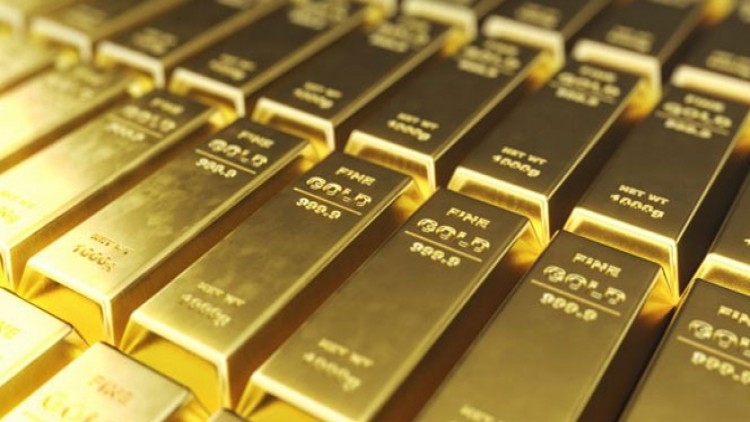
The gold price remained unchanged in morning trade today (June 2), the Gold Traders Association reported.

As of 9.23am, the buying price of a gold bar was Bt25,950 per baht weight and selling price Bt26,050, while gold ornaments were priced at Bt25,483.96 and Bt26,550, respectively.

The Gold Spot Index price this morning moved to around US$1,740 (Bt55,011) per ounce after the price dropped by $1.4 to $1,750.3 per ounce at close yesterday (June 1).

Investors were buying gold as a safe haven asset after the United States revealed that the country’s manufacturing sector in May increased amid tensions between Washington and Beijing and protests across the US.

The gold price on the Hong Kong market rose by HK$40 to $16,085 (Bt65,611) per tael.

SET rises amid worries over renewed US-China trade war, Thai political situation #ศาสตร์เกษตรดินปุ๋ย

#ศาสตร์เกษตรดินปุ๋ย : ขอบคุณแหล่งข้อมูล : หนังสือพิมพ์ The Nation.

https://www.nationthailand.com/business/30388923?utm_source=category&utm_medium=internal_referral

SET rises amid worries over renewed US-China trade war, Thai political situation

Jun 02. 2020
By The Nation

The Stock Exchange of Thailand Index opened at 1,363.15, up 10.78 points, or 0.80 per cent, this morning (June 2).

A stock analyst at Krungsri Securities expected the index to fluctuate between 1,345 and 1,365 points due to uncertainty following a renewed trade war after China suspended imports of soybean in response to the US move to terminate its trade relationship with Hong Kong.

“Meanwhile, the political situation in Thailand and the tight SET valuation will pressure the index,” the analyst said. “On Monday, 18 members of the Palang Pracharat Party’s executive board officially resigned.”

He said that energy and petroleum stocks continued to gain positive sentiment from the rising crude oil price as investors expected the economy to recover after several countries eased their lockdowns.

He recommended investors buy:

▪ Energy stocks which will benefit from the rising crude oil price, such as PTT, PTTEP, Top, PTTGC, IRPC, SPRC and IVL.

▪ Stocks which will benefit from the government’s tourism stimulus measures, such as Mint, Centel, ERW and AOT.

▪ Stocks whose second quarter performance will improve, such as CKP, Tasco, STA and RS.

▪ Stocks which would be added to the SET50 – BPP and TTW – and SET100 calculation – Ace, DoHome, RBF, SIRI , SISB, TVO and WHAUP.

Stocks advance with investors focused on economy #ศาสตร์เกษตรดินปุ๋ย

#ศาสตร์เกษตรดินปุ๋ย : ขอบคุณแหล่งข้อมูล : หนังสือพิมพ์ The Nation.

https://www.nationthailand.com/business/30388910?utm_source=category&utm_medium=internal_referral

Stocks advance with investors focused on economy

Jun 02. 2020
By Syndication Washington Post, Bloomberg · Vildana Hajric · BUSINESS, US-GLOBAL-MARKETS 

U.S. stocks rose as investors focused on signs of economic recovery amid further tension with China, lackluster virus drug-test results and spreading protests over the killing of George Floyd, an unarmed black man, by police. The dollar slumped.

The tech-heavy Nasdaq Composite outperformed as a closely watched measure of U.S. manufacturing rose in May for the first time in four months, suggesting stabilization after a pandemic-driven plunge. Gunmakers rallied in the aftermath as the protests were marred by violence. Gilead Sciences Inc. fell after its drug remdesivir showed only a limited benefit in a large trial.

Risk assets showed signs of resilience Monday after stocks had dipped earlier in the day following reports that Chinese officials had told agricultural companies to pause purchases of some U.S. farm goods, threatening a hard-won trade deal. Metals and emerging-market equities advanced along with shares in Europe and Asia.

Investors mostly looked past the weekend of sometimes violent demonstrations across U.S. cities, highlighting what many see as the disconnect between Wall Street and Main Street. Stocks are near a three-month high as businesses reopen following shutdowns caused by the coronavirus, even with 40 million Americans having filed for unemployment benefits.

“Progress on the road to an economic recovery could help offset pressure on the equity market from near-term challenges stemming from geopolitical, health, and societal risks,” John Stoltzfus, chief investment strategist at Oppenheimer, wrote to clients.

Goldman Sachs said the U.S. labor market is showing the earliest signs of rebounding. China’s Caixin purchasing managers’ index for manufacturing rose above 50 May, indicating an expansion. Euro-area data on Monday also signaled factories have started down their long road to recovery.

Stocks:

– The S&P 500 Index rose 0.4% at the close of trading in New York.

– The Stoxx Europe 600 Index climbed 1.1%.

– Hong Kong’s Hang Seng Index increased 3.4%.

– The MSCI Asia Pacific Index increased 1.8%.

Currencies:

– The Bloomberg Dollar Spot Index declined 0.7%.

– The euro rose 0.3% to $1.1133.

– The British pound gained 1.3% to $1.2503.

– The Japanese yen strengthened 0.2% to 107.6 per dollar.

Bonds:

– The yield on 10-year Treasuries rose one basis point to 0.66%.

– Germany’s 10-year yield increased four basis points to -0.41%.

– Britain’s 10-year yield climbed five basis points to 0.23%.

Commodities:

– West Texas Intermediate crude rose 0.3% to $35.59 a barrel.

– Gold strengthened 0.6% to $1,740.17 an ounce.

Saudi Arabia to pump $13 billion into banks to offset twin shock #ศาสตร์เกษตรดินปุ๋ย

#ศาสตร์เกษตรดินปุ๋ย : ขอบคุณแหล่งข้อมูล : หนังสือพิมพ์ The Nation.

https://www.nationthailand.com/business/30388894?utm_source=category&utm_medium=internal_referral

Saudi Arabia to pump $13 billion into banks to offset twin shock

Jun 02. 2020
Construction workers operate at a development site in the King Abdullah Financial District (KAFD) in Riyadh, Saudi Arabia, on May 19, 2020. MUST CREDIT: Bloomberg photo by Tasneem Alsultan.

Construction workers operate at a development site in the King Abdullah Financial District (KAFD) in Riyadh, Saudi Arabia, on May 19, 2020. MUST CREDIT: Bloomberg photo by Tasneem Alsultan.
By Syndication The Washington Post, Bloomberg · Matthew Martin

Saudi Arabia unveiled a $13.3 billion stimulus package to protect banks against an expected drop in profits and rise in bad loans as they confront the double whammy of the coronavirus shock and lower oil prices.

The move by the central bank, the Saudi Arabian Monetary Authority, will help lenders amend and restructure loans, without additional fees, and support private sector employment and credit. It follows a 50-billion-riyal ($13.3 billion) program in March to help banks provide loans to businesses so companies didn’t have to cut jobs.

Saudi Arabia’s non-oil economy is expected to contract for the first time in over 30 years. Lenders in the world’s largest oil exporter — already dealing with a fragile economy before this year’s crisis — are expected to be hit hard as lockdown measures and lower government spending impact earnings and increase defaults.

Central banks around the world in recent months have unveiled emergency stimulus packages after the pandemic forced authorities to restrict international travel and shut down large parts of their economies. Turkey unveiled its most expansive credit incentive scheme in four years to help the economy, with the nation’s three largest state-owned banks offering mortgages, loans for used cars, credit for home appliances, holiday packages and other products.

Saudi Arabia’s injection “shows that SAMA is committed to support the sector beyond SMEs in this unprecedented crisis,” said Edmond Christou, a banking analyst at Bloomberg Intelligence. “This is likely to boost liquidity at no cost and mitigate part of the pressure on banks from relief repayments or debt restructuring to sectors beyond SMEs.”

Dollar-forwards for the Saudi riyal fell, with 12-month forwards dropping to 94, from 107.5 on Friday, the lowest since April 15, according to data compiled by Bloomberg. The kingdom’s dollar-denominated bonds strengthened for the first time in four days. The yield on the debt due 2060 fell 4 basis points to 3.96%.

The Tadawul Banks Index, composed of 11 Saudi lenders, rose as much as 0.9%, while the broader gauge in Riyadh climbed as much as 0.8%. On top of the stimulus package, the gauges were helped by a 7% increae in crude.

Banks in the kingdom have so far been able to avoid liquidity issues. The statutory loan-to-deposit ratio fell to 78.5% at the end of April, partly due to the slowdown in new lending.

The measures are “helpful” but “irrelevant” for most companies, Tarek Fadlallah, head of Nomura Asset Management’s Middle East unit, said on Twitter.

The government is looking to its largest-ever debt program to keep the depletion of reserves limited to 120 billion riyals, as originally planned in the budget. The kingdom has also turned to austerity measures and tripled the value-added tax in an attempt to cope with the impact of the coronavirus pandemic and the oil-price rout, which has cut deeply into government revenue for the kingdom.

At the same time, officials say they’re seizing investment opportunities abroad. In the first quarter of this year, the Public Investment Fund — Saudi Arabia’s sovereign wealth fund — went on a stock buying spree, investing billions of dollars in companies like cruise operator Carnival, BP Plc, Boeing Co., Citigroup Inc. and Facebook Inc.

In a statement over the weekend, Finance Minister Mohammed Al-Jadaan said the government had transferred around $40 billion from the central bank’s foreign currency reserves to the sovereign fund in March and April to enable it to take advantage of recent market turmoil.

Saudi Arabia’s fiscal deficit this year is set to widen to nearly 13% of gross domestic product, according to the International Monetary Fund. Gross official reserves are set to drop to around $456 billion this year, continuing the trend into 2021, when they’re estimated to reach just over $409 billion, IMF projections show. At the end of April, the central bank’s net foreign assets stood at $443 billion.

– – –

Bloomberg’s Filipe Pacheco and Netty Ismail contributed to this report.

‘Stars were aligned’ for stock rally as Asia follows Wall Street #ศาสตร์เกษตรดินปุ๋ย

#ศาสตร์เกษตรดินปุ๋ย : ขอบคุณแหล่งข้อมูล : หนังสือพิมพ์ The Nation.

https://www.nationthailand.com/business/30388899?utm_source=category&utm_medium=internal_referral

‘Stars were aligned’ for stock rally as Asia follows Wall Street

Jun 01. 2020
Police officers walk along an empty road during a lockdown imposed due to the coronavirus in Mumbai on June 1, 2020. MUST CREDIT: Bloomberg photo by Dhiraj Singh.

Police officers walk along an empty road during a lockdown imposed due to the coronavirus in Mumbai on June 1, 2020. MUST CREDIT: Bloomberg photo by Dhiraj Singh.
By Syndication Washington Post, Bloomberg · Moxy Ying, Abhishek Vishnoi, Ishika Mookerjee · BUSINESS, US-GLOBAL-MARKETS 

The animal spirit was abundant in Asia stocks on Monday as investors, emboldened by a lack of details in President Donald Trump’s speech on Friday and a resilient Wall Street, chose to look past weak economic data to focus on bargains.

Shares advanced in all major regional markets, pushing the MSCI Asia Pacific Index above the average level in the last 100 days for the first time since coronavirus rattled global investors. News of easing lockdowns across the region is fueling a rally in the most beaten down shares, such as those in the hospitality sector. Hong Kong stocks saw the best gains in two months.

India is allowing malls and restaurants to open from June 8 as the country attempts to revive business activities ravaged by the world’s largest lockdown. South Korean government unveiled a $62 billion ‘New Deal’ spending plan to reshape the economy. Regional measures aside, the stability of the U.S. market is also considered a key confidence booster for Asia stock buyers.

Prospects of a robust economic recovery in China, stable U.S.-China tensions, rising memory-chip and commodities prices, and a weak U.S. dollar are all favoring Asia equities, said Khiem Do, head of greater China investments at Barings in Hong Kong. “It just happens that all these stars were aligned over the last few days, a trend which is likely to continue in June.”

The Citi Economic Surprise Index for Asia Pacific climbed four straight days through May 29, rising to highest since end-February. Investors were able to see the bright side of the news events.

South Korea just posted another double-digit decline in overall export in May, but a 7.1% increase in chip exports was enough to push the Kospi to its best gain in a week.

Tensions between China and the U.S. are boiling over, but investors are cheering a better-than-expected PMI reading in China.

The U.S. market has been a mark of resilience for market sentiment in the face of the era of Covid-19, said Jingyi Pan, a market strategist at IG Asia Pte. The combination of reopening news and no strong suggestions of a second wave thus far has encouraged investors to inch back toward riskier assets, Pan said.

“With the momentum seen in the U.S. market, this had likewise powered the expectation across Asia that demand could likewise recover into the summer months,” she added.

Qontigo’s Asia-Pacific head of applied research Olivier d’Assier believes the strong market performance in Asia is because of stimulus packages.

The big U.S. stimulus via interest rates and the dollar affects many countries, he said. “Essentially, these stimulus packages have taken bearish sentiment out of the picture by underwriting speculative behavior and guaranteeing risk assets,” he added.

Bryan Goh, chief investment officer of Tsao Family Office in Singapore, isn’t as optimistic about the economic recovery.

“The markets are looking beyond 2020 to 2021 and even further for a recovery from recession and pandemic,” he said. “We have faith in the eventuality of a cure and vaccine but less faith that the economy will recover to the level implied by equity and credit valuations.”

Investors should also be cautious about “herd-like behavior” in the market, especially when there’s a disconnect between the economic reality and financial asset prices, according to Jeffrey Halley, a senior market analyst at Oanda Asia Pacific Pte in Singapore.

“Macro-funds act more like five-minute macros, and not five-month or five-year macros in my time,” he said.

OPEC+’s talks for short extension to cuts leave oil prices flat #ศาสตร์เกษตรดินปุ๋ย

#ศาสตร์เกษตรดินปุ๋ย : ขอบคุณแหล่งข้อมูล : หนังสือพิมพ์ The Nation.

https://www.nationthailand.com/business/30388895?utm_source=category&utm_medium=internal_referral

OPEC+’s talks for short extension to cuts leave oil prices flat

Jun 01. 2020
By Syndication The Washington Post, Bloomberg · Elizabeth Low, Alex Longley 

The oil market took an initially neutral view on OPEC+ deliberations that could result in the producers group announcing a short-extension to unprecedented output curbs.

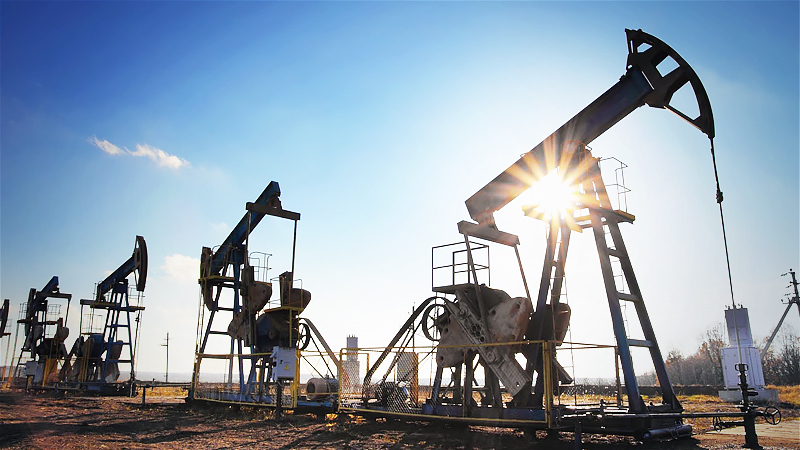
Futures in New York were virtually unchanged near $35 a barrel. The Organization of Petroleum Exporting Countries and its allies is considering bringing their next meeting forward to Thursday, where it will discuss prolonging production curbs by one to three months, according to a delegate. The existing agreement calls for the output cuts to ease from July.

Up to this point, the production curbs have been effective. Crude rallied almost 90% last month, a record gain, as reduced supply helped to offset the demand losses from the coronavirus outbreak. A key oil spread that helps dictate the flow of crude from regions including the North Sea and West Africa turned positive for the first time since March on Monday, the latest sign that crude’s recovery isn’t just financial-driven.

“The prospect of OPEC+ advancing its meeting and agreeing an extension rather than tapering of the deeper cuts should support crude’s rally this week,” said Vandana Hari, founder of energy consultancy Vanda Insights.

An earlier OPEC+ meeting would give the producer group more flexibility to change its current production limits as members usually decide their plans for shipping oil for July in the first week of June. The group’s preference is to take short-term measures on cuts as the situation is changing quickly, the delegate said. The coalition – which includes OPEC’s 13 members plus another 10 exporters — has achieved 92% compliance, according to an estimate by data analytics firm Kpler.

Though crude has rallied there is still evidence of a supply response in the world’s biggest oil producer — America. The number of rigs drilling for oil in the U.S. dropped for an 11th consecutive week to the lowest since 2009, according to data from Baker Hughes. Still, there’s a risk that oil’s continued advance could tempt some producers to turn their taps back on again.

Meanwhile, the U.S. Oil Fund ETF will begin its monthly roll of futures contracts on Monday. The fund plans to sell its July holdings and buy more November and January futures over the next 10 trading sessions.

China halts some U.S. farm imports, threatening trade deal #ศาสตร์เกษตรดินปุ๋ย

#ศาสตร์เกษตรดินปุ๋ย : ขอบคุณแหล่งข้อมูล : หนังสือพิมพ์ The Nation.

https://www.nationthailand.com/business/30388893?utm_source=category&utm_medium=internal_referral

China halts some U.S. farm imports, threatening trade deal

Jun 01. 2020
The ZIM Integrated Shipping Services Ltd. Chicago container ship departs the Yangshan Deepwater Port in Shanghai on March 23, 2020. MUST CREDIT: Bloomberg photo by Qilai Shen.

The ZIM Integrated Shipping Services Ltd. Chicago container ship departs the Yangshan Deepwater Port in Shanghai on March 23, 2020. MUST CREDIT: Bloomberg photo by Qilai Shen.
By Syndication The Washington Post, Bloomberg

Chinese government officials told major state-run agricultural companies to pause purchases of some American farm goods including soybeans as Beijing evaluates the ongoing escalation of tensions with the U.S. over Hong Kong, according to people familiar with the situation.

State-owned traders Cofco and Sinograin were ordered to suspend purchases, according to one of the people, who asked not to be identified discussing a private matter. Chinese buyers have also canceled an unspecified number of U.S. pork orders, one of the people said. Private companies haven’t been told to halt imports, according to one of the people.

The halt is the latest sign that the hard won phase-one trade deal between the world’s two biggest economies is in jeopardy. While Chinese Premier Li Keqiang last month reiterated a pledge to implement the agreement that was inked in January, tensions have continued to escalate since then amid a standoff over Beijing’s move to tighten its grip on Hong Kong.

Beijing’s move eroded the risk-on sentiment that had been prevailing over markets. S&P 500 Index futures gave up gains to trade 0.6% lower, while U.S. 10-year bonds erased declines. The onshore yuan reversed its advance, while soybean futures in Chicago, which had been as much as 1% higher, were little changed.

The measures to halt imports come after President Donald Trump on Friday lobbed a barrage of criticism at Beijing after it moved to impose controversial new national security legislation on Hong Kong. Critics say it will crack down on dissent and undermine the “one country, two systems” principle that has kept Hong Kong autonomous of the mainland since the 1997 handover from the British.

Cofco and Sinograin are China’s key importers of farm goods. They had been making pricing inquiries for 20 to 30 cargoes of U.S. soybeans on Friday but held off on going through with purchases after Trump indicated he would punish Chinese officials, one of the people said. Beijing is waiting to see what steps Trump takes before deciding its next move, one of the people said.

Nobody from the commerce ministry responded to a fax seeking comment. Officials from Sinograin and Cofco also didn’t respond to calls.

Trump said the U.S. would begin the process of stripping some of Hong Kong’s privileged trade status, without detailing how many changes would take effect and how many exemptions would apply. He also promised sanctions against Chinese and Hong Kong officials “directly or indirectly involved” in eroding Hong Kong’s autonomy, though stopped short of giving specifics.

Equity investors had reacted positively to Trump’s remarks, as he didn’t provide any details or time-frame for what actions might come next. It’s unclear how soon the U.S. would move on a range of options, from sanctioning Chinese officials to imposing tariffs on Hong Kong to attacking the territory’s financial stability.

While Trump has periodically threatened to call off the “phase one” trade deal, his top economic advisers have suggested it would continue. Larry Kudlow, director of the National Economic Council, told CNBC on Thursday that the trade agreement “does continue to go on for the moment and we may be making progress there.”

The two sides have traded blows over a range of issues from the coronavirus to Taiwan in recent weeks, and China’s Foreign Minister Wang Yi warned during high-profile legislative meetings in Beijing that some in America were pushing relations to a “new Cold War,” and urged the U.S. to give up its “wishful thinking” of changing China.

China had agreed to buy U.S. farm goods worth about $36.5 billion for 2020 as part of the phase-one trade deal signed in January. However, the coronavirus outbreak roiled those plans, with China only managing to import $3.35 billion in American agricultural products in the first three months of the year, the lowest for that period since 2007, according to data from the U.S. Department of Agriculture.

Still, as China started to gradually reopen its economy from the virus-led lockdown, it had increased its pace of imports, including a more-than 1-million ton cargo of American soybeans in just two weeks in May, and rare purchases of U.S. soybean oil and ethanol.

But then tensions between the U.S. and China began escalating, with Trump blaming the Asian nation for misleading the world about the scale and risk of the coronavirus outbreak. The fallout filtered through to the commodities markets, with China opting to buy Brazilian soy instead of American beans.

SET pushed up by rising oil, Bt1.9tn virus relief fund #ศาสตร์เกษตรดินปุ๋ย

#ศาสตร์เกษตรดินปุ๋ย : ขอบคุณแหล่งข้อมูล : หนังสือพิมพ์ The Nation.

https://www.nationthailand.com/business/30388887?utm_source=category&utm_medium=internal_referral

SET pushed up by rising oil, Bt1.9tn virus relief fund

Jun 01. 2020
By The Nation

The Stock Exchange of Thailand (SET) Index closed at 1,352.37 today (June 1), up 9.52 points or 0.71 per cent. Total transaction volume was Bt65.154 billion with an index high of 1,362.46 and a low of 1,348.99.

In the morning session, a Krungsri Securities stock analystexpected the index to fluctuate between 1,330 and 1,350 points due to uncertainty after curfews were imposed in several US states amid protests against police brutality.

“Meanwhile, investments will come under pressure due to tensions between the United States and China after the US terminated its trade relationship with Hong Kong in response to Beijing’s new national security law,” the analyst said.

However, the index will rebound after Thailand’s House of Representatives approved three loan decrees worth Bt1.9 trillion, and the price of crude oil began rising, he said.

“Energy and petrochemical stocks will gain positive sentiment as the price of crude oil rose more than US$35 [Bt1,111] per barrel after the number of oil and gas rigs in the US fell to its lowest in history,” he added.

The 10 stocks with the highest trade value today were CPALL, SUPER, PTTGC, PTT, KBANK, BBL, TASCO, AOT, STA and SCB.

As of 4.30pm, the price of crude oil dropped by US$0.27 or 0.76 per cent to $35.22 per barrel, while the gold price dropped by $3.90 or 0.22 per cent, to $1,747.80 per ounce.

The US and European indices had a mixed day, while Asian indices were on the rise.

Japan’s Nikkei Index closed at 22,062.39, up 184.50 points, or 0.84 per cent.

China’s Shang Hai SE Composite Index closed at 2,915.43, up 63.08 points, or 2.21 per cent, while the Shenzhen SE Component Index closed at 11,102.15, up 356.07 points, or 3.31 per cent.

Hong Kong’s Hang Seng Index closed at 23,732.52, up 771.05 points or 3.36 per cent.

South Korea’s KOSPI Index closed at 2,065.08, up 35.48 points or 1.75 per cent.

Taiwan’s TAIEX Index closed at 11,079.02, up 136.86 points or 1.25 per cent.

Gold price rises amid conflict between US and China #ศาสตร์เกษตรดินปุ๋ย

#ศาสตร์เกษตรดินปุ๋ย : ขอบคุณแหล่งข้อมูล : หนังสือพิมพ์ The Nation.

https://www.nationthailand.com/business/30388855?utm_source=category&utm_medium=internal_referral

Gold price rises amid conflict between US and China

Jun 01. 2020
By The Nation

The price of gold rose in morning trade today (June 1), the Gold Traders Association reported.

As of 9.35am, the buying price of a gold bar was Bt26,000 per baht weight and selling price Bt26,100, while gold ornaments were priced at Bt25,529.44 and Bt26,600, respectively.

At close on Saturday, the buying price of a gold bar was Bt25,850 per baht weight and selling price Bt26,050, while gold ornaments were priced at Bt25,337.84 and Bt26,550, respectively.

The Gold Spot Index price this morning moved to around US$1,738 (Bt55,203) per ounce after the price rose by $23.4 to $1,751.7 per ounce at close on Friday.

Investors were buying gold as a safe haven asset due to uncertainty following the conflict between the US and China on Beijing’s new national security law in Hong Kong, as it could impact the global economy.

The Hong Kong gold price rose by HK$115 to $16,045 (Bt65,741) per tael.