Dow plunges 3,000 points as Fed intervention does little to subdue Wall Street’s distress #ศาสตร์เกษตรดินปุ๋ย

#ศาสตร์เกษตรดินปุ๋ย : ขอบคุณแหล่งข้อมูล : หนังสือพิมพ์ The Nation

https://www.nationthailand.com/business/30384202?utm_source=category&utm_medium=internal_referral

Dow plunges 3,000 points as Fed intervention does little to subdue Wall Street’s distress
Mar 17. 2020
By The Washington Post · David J. Lynch · BUSINESS, US-GLOBAL-MARKETS

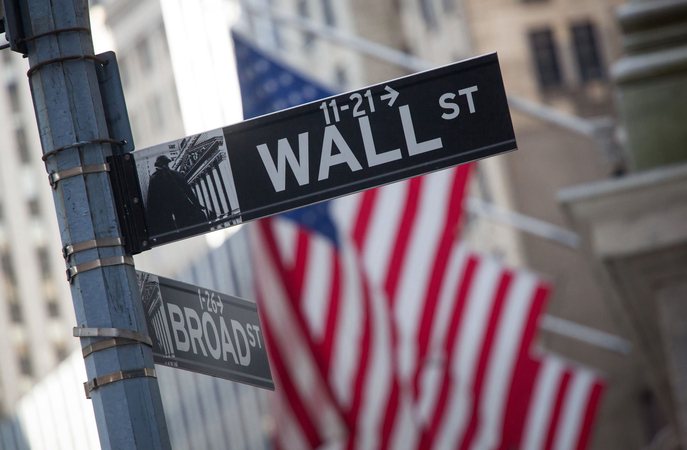
Fears that policymakers have not done enough to avert a protracted economic downturn deepened a sense of national crisis on Monday and sent stocks to their worst single-day losses since the Black Monday crash of 1987.

The selloff accelerated, with the Dow Jones industrial average plunging 2,997 points, after President Donald Trump warned that disruption from the coronavirus pandemic could last through August and issued new public health guidance, saying Americans should limit gatherings to no more than 10 people. He also defended his handling of the crisis, which has been marred by a slow rollout of testing, saying his administration has done “a fantastic job.”

From Washington to Wall Street, the coronavirus is reshaping American life. The Supreme Court said it would postpone scheduled oral arguments through April, citing its stance during the 1918 Spanish flu epidemic and outbreaks of yellow fever in 1973 and 1798.

On Wall Street, investors fled stocks, despite the Federal Reserve’s move Sunday night to cut interest rates to near zero and to begin purchasing $700 billion worth of Treasury bonds and mortgage-backed securities in a bid to calm jittery markets.

The Dow Jones industrial average closed down nearly 13% in late trading before closing at 20,188, down more than 2,997 for the day. That marked the largest one-day point decline in U.S. history, though in percentage terms Monday’s 13% loss was topped by the nearly 23% decline on October 19, 1987. All three of the Dow’s 2,000-point single-day losses have occurred in the past week.

The broader Standard & Poor’s 500 index and the technology-rich Nasdaq suffered similar setbacks.

Trading was halted almost as soon as it began after stocks fell 7%, breaching a “circuit-breaker” designed to discourage panic selling. It was the third such halt in the past six sessions.

Investors welcomed the Fed’s actions but said the central bank needed to do more and do it quickly. Clogged markets for commercial paper – a form of short-term corporate borrowing – threaten to spill over into the banking system and cause a run on money market funds, according to analysts at Bank of America.

The Fed, joined by fellow banking regulators from the Federal Deposit Insurance Corporation and the Office of the Comptroller of the Currency, reiterated its call Sunday for banks to borrow from its “discount window.” The Fed has slashed the rate it charges banks for those short-term loans to 0.25%, in hopes of spurring lending to cash-strapped businesses.

Frustration is building with Washington’s failure to find a way to quickly assemble an economic rescue. “The fiscal response should already have been done,” said David Kotok, chairman of Cumberland Advisors. “And the fiscal response, in my estimation, will eventually have to be more than $1 trillion or the country is going to have a raft of bankruptcies.”

With many governors ordering bars and restaurants to close, and numerous other businesses telling their employees to work from home, the $21 trillion U.S. economy is shuddering to a halt. At the White House, the president, who was slow to acknowledge the severity of the health scare, said the U.S. “may be” tipping into recession.

“It’s going to be incredibly negative for the economy. It looks almost inevitable that we’re heading for a recession,” said Jim O’Sullivan, chief U.S. macro strategist for TD Securities.

In consumer-oriented sectors, the economy is rapidly losing momentum. Already, movie theater box office revenue have plummeted by 60% to 70% compared with the same period last year, according to economist Jesse Edgerton of JPMorgan Chase. And restaurant reservations nationally have fallen by half.

As companies retrench, layoffs will accelerate, driving up the historically low unemployment rate, according to O’Sullivan. Kevin Hassett, Trump’s former top economic adviser, told Politico that job losses could reach “a million or so” by early April. For the economy, it is now a race between Washington’s ability to plug the hole with government spending and the accumulating effects of the virus-inspired shutdown.

Monday’s market plunge – continuing a month-long rout that has slashed more than 30% from the Dow’s value – reflected a growing realization that the economy faces a deep and protracted downturn, almost certainly its worst since the global financial recession.

Ian Shepherdson, chief economist of Pantheon Macroeconomics, said output could shrink in the second quarter at an annual rate of 10%, more than during the worst of the 2008-09 global financial crisis.

Disorderly trading in the market for U.S. Treasurys remained an issue. Normally, the $17 trillion market for those government securities operates without drama. But the volume of trading has roughly tripled since that financial crisis, outstripping the ability of market middlemen to keep pace. In recent days, sellers have vastly outnumbered buyers, leading to wide gaps between the prices demanded and offered.

“All of this selling of Treasuries is telling me that there’s a lot of financial institutions that are under stress and need to raise cash to meet [margin] calls and that’s not going away,” said Steven Blitz, chief U.S. economist for TS Lombard.

If investors were looking for a reason to sell on Monday, they found one in a key gauge of manufacturing activity, which posted its lowest reading since March 2009.

The Federal Reserve Bank of New York’s Empire State survey’s “general business conditions” index plunged 34.4 points, its largest-ever monthly decline, to -21.5 in February. By a margin of more than 2 to 1, manufacturers said business over the past month had gotten worse.

Several major retailers, including Apple, Patagonia and Abercrombie & Fitch, have or will shut their doors through March to contain the coronavirus. Though store closures could be crucial to slowing the speed of the disease, they also sap consumer spending, which powers 70% of the U.S. economy.

Everlane, Nike, Glossier, REI, Urban Outfitters and Lululemon have also announced closures, but say they will keep their online operations running. Some are warning of possible shipment delays while companies in the hardest-hit industries already have begun layoffs.

As the economic toll starts to come into focus, some major industries are petitioning the White House for help. Representatives of the airline industry on Monday circulated a request for a $50 billion bailout that would include loans, grants and tax relief.

“We’re going to back the airlines 100%. It’s not their fault,” the president said.

The sudden crisis took many companies by surprise. In a survey late last month of 90 large multinational companies, British Standards Institute found that almost half (46%) lacked contingency plans that were specifically designed to deal with a possible disease outbreak.

Of those surveyed, 71% of supply chain managers working in industries such as consumer products, pharmaceuticals and aerospace said the coronavirus had disrupted their global supply chains.

After weeks of minimizing the seriousness of the epidemic, the president struck a somber tone Monday. He said he had cautioned his 13-year-old son Barron Trump about the disease, which he labeled “an invisible enemy that a month ago nobody ever thought about.”

“This is a bad one. This is a very bad one,” the president said. “It’s so contagious. It’s just so contagious – record-setting type contagion.”

Trump began his day with a video conference on the coronavirus with leaders of the Group of Seven nations. The group later issued a statement pledging “to doing whatever is necessary to ensure a strong global response through closer cooperation and enhanced coordination of our efforts.” But officials offered no details of any coordinated stimulus efforts.

On Capitol Hill, lawmakers are moving toward approval of legislation that would provide free coronavirus testing, extend paid sick leave to many workers and fund unemployment insurance payments.

National Economic Director Larry Kudlow told reporters Monday that those measures and actions already supported by the president would funnel $400 billion into the economy. A payroll tax cut backed by the president would double that figure, he said. Although such a measure has received lukewarm interest on the hill.

“Our government is prepared to do whatever it takes. Whatever it takes; that’s what we’re doing,” the president said at the White House.

With the central bank having cut interest rates and launched additional measures to smooth markets, the president and lawmakers now must act, said Megan Greene, an economist at Harvard University’s Kennedy School of Government.

“For the most part, it’s not up to the Fed anymore,” she said. “They’ve told the government they can borrow at 0%. There’s no excuse for the government not to step up. And until we get some kind of fiscal response, or actual policy, I think the markets are going to continue to fall.”

Even as the president announced new steps to curb the outbreak, the number of cases and fatalities continued to climb. In the U.S., 4,287 people have been infected as of 5 p.m. Monday with 74 deaths.

Trump predicted that once the pandemic wanes, the stock market will regain lost ground and “you’re going to have a stock market like nobody has ever seen before.”

SET, other Asian markets plunge amid Covid-19 anxiety #ศาสตร์เกษตรดินปุ๋ย

#ศาสตร์เกษตรดินปุ๋ย : ขอบคุณแหล่งข้อมูล : หนังสือพิมพ์ The Nation

https://www.nationthailand.com/business/30384194?utm_source=category&utm_medium=internal_referral

SET, other Asian markets plunge amid Covid-19 anxiety

Mar 16. 2020
By The Nation

The Stock Exchange of Thailand (SET) Index closed at 1,046.08 points today (March 16), a decrease of 82.83 points, or 7.34 per cent, over Friday’s close.

The total transaction volume was Bt68.179 billion with an index high of 1,105.20 and a low of 1,043.79.

A stock analyst at Krungsri Securities expected the index to move at between 1,100 and 1,150, advising investors to closely follow the Dow Jones Futures Index since the US Federal Reserve cut its interest rate by 1 percentage point to almost zero to tackle the Covid-19 crisis.

“In the short term, the Fed’s emergency interest rate cut would cause negative sentiment because investors would think this outbreak might affect the global economy more than expected, while the Fed might not have other tools if this measure is not enough,” he said.

“However, in the long term, we foresee this measure will support the economy when money enters the system and this becomes a positive sentiment for money and capital markets due to an increase in liquidity.”

The top ten stocks with the highest trade value today were CPAll, BAM, PTT, AOT, CPF, Gulf, Advanc, PTTEP, BDMS and SCC.

Elsewhere in Asia, Japan’s Nikkei Index closed at 17,002.04, down 429.01 points, or 2.46 per cent.

China’s Shanghai SE Composite Index ended the day at 2,789.25, down 98.17 points, or 3.40 per cent, while the Shenzhen SE Component Index closed at 10,253.28, down 577.84 points, or 5.34 per cent.

Hong Kong’s Hang Seng ended at 23,063.57, down 969.34 points, or 4.03 per cent.

South Korea’s Kospi closed at 1,714.86, down 56.58 points, or 3.19 per cent.

Taiwan’s TaiEx ended at 9,717.77, down 411.10 points, or 4.06 per cent.

Gold price slides Bt150/baht at the close #ศาสตร์เกษตรดินปุ๋ย

#ศาสตร์เกษตรดินปุ๋ย : ขอบคุณแหล่งข้อมูล : หนังสือพิมพ์ The Nation

https://www.nationthailand.com/business/30384192?utm_source=category&utm_medium=internal_referral

Gold price slides Bt150/baht at the close

Mar 16. 2020
By The Nation

The price of gold dropped by Bt150 per baht weight at the close of trade today (March 16), the Gold Traders Association reported.

At 4.52pm, the buying price of a gold bar was Bt23,100 per baht weight and selling price Bt23,200, while buying price of gold ornaments was Bt22,679.36 per baht weight, selling price Bt23,700.

Prices declined from the morning session where a gold bar was priced at Bt23,250 to buy and Bt23,350 to sell, while gold ornaments costed Bt22,830.96 to buy and Bt23,850 to sell.

Comex futures gold contracts to be delivered in April rose by US$44.60, or 2.94 per cent, to $1,561.30 (Bt49,560.50) per ounce this morning after the US Federal Reserve announced a cut in interest rates by 1 per cent to 0.00-0.25 per cent from 1.00-1.25 per cent, in an emergency meeting on Sunday, to relieve impact of Covid-19 on the US economy.

Oil prices rise #ศาสตร์เกษตรดินปุ๋ย

#ศาสตร์เกษตรดินปุ๋ย : ขอบคุณแหล่งข้อมูล : หนังสือพิมพ์ The Nation

https://www.nationthailand.com/business/30384175?utm_source=category&utm_medium=internal_referral

Oil prices rise

Mar 16. 2020
By The Nation

Oil prices increased amid economic stimulus measures to relieve the the Covid-19 impact, Thai Oil said today (March 16).

Prices rose after falling the previous day since the US and other countries worldwide began implementing monetary policies to boost economies.

Several oil manufacturers in the US began to cut their oil drilling expenses. The US Energy Information Administration (EIA) expected US oil production capacity in 2021 to decrease to 12.7 million barrels per day from the highest expected level in 2020 of 13 million barrels.

However, weekly crude oil prices ending March 13 dropped sharply due to an oil price war between Saudi Arabia and Russia.

Benzene fuel prices dropped in contrast to Dubai crude due to rising supply in Asia after China’s oil refineries increased production capacity, and uncertainty in the market amid the Covid-19 situation in the US and Europe.

Diesel fuel prices rose lower than those of Dubai crude oil because of the market remaining under pressure from the Covid-19 outbreak. However, supply in the region fell due to the volume of diesel fuel in Singapore decreasing by 3.6 per cent compared to the previous week.

Gold price up by Bt150 #ศาสตร์เกษตรดินปุ๋ย

#ศาสตร์เกษตรดินปุ๋ย : ขอบคุณแหล่งข้อมูล : หนังสือพิมพ์ The Nation

https://www.nationthailand.com/business/30384174?utm_source=category&utm_medium=internal_referral

Gold price up by Bt150

Mar 16. 2020
By The Nation

The price of gold rose by Bt150 per baht weight this morning (March 16), the Gold Traders Association reported at 9.38am.

The buying price of a bar of gold was Bt23,250 per baht weight, while the selling price was Bt23,350. Gold ornaments were priced at Bt22,830.96 to buy and Bt23,850 to sell.

The prices rose from Saturday’s close, when a gold bar cost Bt23,100 to buy and Bt23,200 to sell, while gold ornaments cost Bt22,679.36 and Bt23,700, respectively.

Comex futures gold contracts to be delivered in April rose by US$44.60, or 2.94 per cent, to $1,561.30 (Bt49,560.50) per ounce this morning after the US Federal Reserve announced a cut in interest rates in the short term by 1 per cent to 0.00-0.25 per cent from the previous of 1.00-1.25 per cent in an emergency meeting on Sunday to relieve the impact of the Covid-19 coronavirus on the US economy.

The Fed is expected to maintain this target range until it is confident the economy has weathered recent events to achieve the goal of maximising employment and maintaining price stability.

Also, the Fed restarted a crisis-era programme of bond purchases, known as “quantitative easing”, within a limit of US$700 billion (Bt22.22 trillion).

Economic cabinet considering measures to alleviate long-term impact on economy #ศาสตร์เกษตรดินปุ๋ย

#ศาสตร์เกษตรดินปุ๋ย : ขอบคุณแหล่งข้อมูล : หนังสือพิมพ์ The Nation

https://www.nationthailand.com/business/30384100?utm_source=category&utm_medium=internal_referral

Economic cabinet considering measures to alleviate long-term impact on economy

Mar 16. 2020
By The Nation

The economic cabinet is considering ways to tackle the long-term impact on the Thai economy from the Covid-19 outbreak, a top official said.

Although the government has issued monetary and financial measures to support the economy in the short term, evaluating the Thai economy to find proper measures to support the economy during the crisis in the long-term is very important, the official said.

Kobsak Pootrakool, deputy secretary-general to the Prime Minister for Political Affairs as secretary of the economic cabinet, said that the economic cabinet had always reported the situation and the impact of Covid-19 to the prime minister and the Cabinet to evaluate and find proper measures.

“When the outbreak emerged in Wuhan, China, in January this year and it emerged that the number of patients was greater than the number of patients during the Sars outbreak, we reported to the prime minister and the Cabinet about the impact on tourism. We expected that it would affect the Thai economy for three months before recovery,” he said.

“Meanwhile, at the Cabinet meeting on March 6 when the first set of economic stimulus measures was issued, we expected that the Covid-19 outbreak would last until June this year and recover later this year.”

He said that when the Covid-19 spread to other countries, it affected the production supply chain, tourism and services, posing major challenges for the economy this year.

“Therefore, at the previous Cabinet meeting, we evaluated that this outbreak would last until June or the second quarter of this year and return to normal in the third quarter of this year,” he said.

“For Thailand, if this assumption was met, the economy, especially tourism, will begin to recover in the fourth quarter when the government will issue another set of measures to help related businesses to recover faster.”

He said that after the World Health Organisation (WHO) declared Covid-19 a global pandemic and Thailand faced the risk of entering the third phase of the epidemic, it could lead to a 50 per cent drop in the number of tourists visiting Thailand compared to 2019.

“With the number of tourists decreasing, it will affect tourism, hotel, and labour in the tourism sector. Therefore, the economic cabinet needs to evaluate the situation again at the next meeting, while we expect that a new set of measures would be issued within April this year,” he said.

“We admit that although many countries had issued monetary and financial measures to relieve the impact on the economy, this global pandemic may cause the economy of major countries to go into recession and affect the Thai economy, so we must monitor the situation closely.”

He said that at the next Cabinet meeting, aside from evaluating the impact of Covid-19 on the Thai economy, they need to issue additional measures to help businesses that face an impact in the long term, such as airline business that are affected by travel suspension during the outbreak and logistics businesses, which are affected by countries imposing lockdowns in some areas.

“Also, we have to evaluate 14 measures previously issued on how many economic problems can be solved and if it were necessary to issue additional measures,” he said. “We will discuss with other sectors to create confidence in people during the crisis.”

He said that the government is monitoring and evaluating the Covid-19 impact on the economy.

“In Europe, we found that the number of patients and deaths in Italy has increased, while the US also faces the epidemic, leading to closure of schools, lockdown of cities, and declaration of a state of emergency.”

He added that this situation will affect the economy at large.

“Therefore, the government needs to prepare proper economic stimulus measures to support the economy if the Covid-19 situation lasts a whole year,” he added.

SET slumps in reaction to US Fed rate cut #ศาสตร์เกษตรดินปุ๋ย

#ศาสตร์เกษตรดินปุ๋ย : ขอบคุณแหล่งข้อมูล : หนังสือพิมพ์ The Nation

https://www.nationthailand.com/business/30384172?utm_source=category&utm_medium=internal_referral

SET slumps in reaction to US Fed rate cut

Mar 16. 2020
By The Nation

The Stock Exchange of Thailand (SET) Index on Monday (March 16) morning fell by 63.14 points or 5.59 per cent to 1,065.77.

A stock analyst at Krungsri Securities expected the SET Index to move at between 1,100 and 1,150.

“Today, we recommend investors to follow the situation of the Dow Jones Futures Index closely because it is an important indicator for investment in the Thai stock and other regional markets,” the stock analyst said.

He explained that the situation of the Dow Futures will reflect the direct impact from the US Federal Reserve’s announcement of an emergency interest rate cut by 1 percentage point to the lowest in history at zero and revival of the 2008 crisis-era programme of bond purchases known as “quantitative easing” with a limit of US$700 to tackle the situation arising from the new coronavirus outbreak.

“In the short term, the Fed’s emergency interest rate cut would cause negative sentiment because investors would think that this outbreak might affect the global economy more than expected, while the Fed might not have other tools if this measure cannot cope,” the stock analyst said.

“However, in the long term, we foresee that this measure would support the economy when money enters the system and turn to positive sentiment in money and capital markets due to increase in liquidity.”

The analyst recommended three groups of stocks for investors:

● Defensive stocks which pay high dividends, such as ADVANC, INTUCH, and TTW.

● Retail stocks, which gained buying power after the government returned the electricity metre insurance for a total of Bt30 billion, such as CPALL, HMPRO, and BJC.

● Financial stocks, which gained benefit from interest rate cut trends, such as MTC, SAWAD, and KTC.

MPC meeting on schedule next week despite US slashing key rate to zero #ศาสตร์เกษตรดินปุ๋ย

#ศาสตร์เกษตรดินปุ๋ย : ขอบคุณแหล่งข้อมูล : หนังสือพิมพ์ The Nation

https://www.nationthailand.com/business/30384163?utm_source=category&utm_medium=internal_referral

MPC meeting on schedule next week despite US slashing key rate to zero

Mar 16. 2020
Chantavarn Sucharitakul, assistant governor of the BOT

Chantavarn Sucharitakul, assistant governor of the BOT
By The Nation

There are no plans for the Bank of Thailand (BOT)’s Monetary Policy Committee (MPC) to hold an emergency meeting despite the US Federal Reserve cutting its benchmark rate to almost zero.

The MPC is due to meet on March 25, as scheduled, the BOT said.

“The Fed rate cut demonstrates concerns over market conditions in the US, we will closely monitor how markets will react and how it affects confidence in the markets,“ Chantavarn Sucharitakul, assistant governor of the BOT, said on Monday (March 16)

Some analysts expect the MPC to cut the policy rate by another 25 basis points to 0.75 per cent in the coming meeting in response to the impact of the coronavirus outbreak. The current rate is one per cent after the central bank’s last rate cut.

The Federal Reserve announced on Sunday that it would drop interest rates to zero and buy at least $700 billion in government and mortgage-related bonds as part of a wide-ranging emergency action to protect the economy from the impact of the coronavirus outbreak.

The moves, the most dramatic by the US central bank since the 2008 financial crisis, are aimed at keeping financial markets stable and making borrowing costs as low as possible as businesses around the country close and the US economy hurtles towards a recession, the Washington Post reported.

The Fed, led by chairman Jerome Powell, effectively cut its benchmark by a full percentage point to zero. The benchmark US interest rate is now in a range of zero to 0.25 per cent, down from a range of 1 per cent to 1.25 per cent.

In addition to rate cuts, the Fed announced that it would restart the crisis-era programme of bond purchases known as “quantitative easing” in which the central bank buys hundreds of billions of dollars in bonds to further push down rates and keep markets flowing freely.

The Fed is also giving more-generous loans to banks across the country so they can turn around and offer loans to small businesses and families in need of a lifeline.

Federal Reserve slashes interest rates to zero as part of wide-ranging emergency intervention #ศาสตร์เกษตรดินปุ๋ย

#ศาสตร์เกษตรดินปุ๋ย : ขอบคุณแหล่งข้อมูล : หนังสือพิมพ์ The Nation

https://www.nationthailand.com/business/30384153?utm_source=category&utm_medium=internal_referral

Federal Reserve slashes interest rates to zero as part of wide-ranging emergency intervention

Mar 16. 2020
By The Washington Post · Heather Long 

WASHINGTON – The Federal Reserve announced on Sunday that it would drop interest rates to zero and buy at least $700 billion in government and mortgage-related bonds as part of a wide-ranging emergency action to protect the economy from the impact of the coronavirus outbreak.

The moves, the most dramatic by the U.S. central bank since the 2008 financial crisis, are aimed at keeping financial markets stable and making borrowing costs as low as possible as businesses around the country close and the U.S. economy hurtles toward recession.

The Fed, led by Chair Jerome Powell, effectively cut its benchmark by a full percentage point to zero. The benchmark U.S. interest rate is now in a range of 0% to 0.25%, down from a range of 1% to 1.25%.

In addition to rate cuts, the Fed announced that it is restarting the crisis-era program of bond purchases known as “quantitative easing,” in which the central bank buys hundreds of billions of dollars in bonds to further push down rates and keep markets flowing freely. The Fed is also giving more-generous loans to banks across the country so they can turn around and offer loans to small businesses and families in need of a lifeline.

“Economic policy experts must do what we can to ease hardship caused by the disruption to the economy,” Powell said in a 42-minute conference call Sunday evening. “We are prepared to use our full range of tools to support the flow of credit to households and businesses.”

Powell said Fed leaders met Sunday afternoon because they anticipate a “significant effect” on the U.S. economy in the coming months, including negative growth in the second quarter. Their goal is to do all they can to help the nation “weather this difficult period” and “foster a more vigorous return to normal once the disruptions from the coronavirus abate,” he added.

President Donald Trump, who has been relentlessly pushing the central bank to take more action, congratulated the Fed and said its decision to lower interest rates “makes me very happy.”

In the coming months, the Fed will purchase at least $700 billion more in bonds as part of its new quantitative easing. The majority of the buying, at least $500 billion, will be U.S. Treasury bonds. The rest will be mortgage-backed securities, an effort to stabilize home loans.

The Fed’s actions Sunday come on the heels of an emergency interest rate cut on March 3 and a large $1.5 trillion injection into the bond market last week to ensure sufficient liquidity.

The ultra-low interest rates are expected to remain until the U.S. economy recovers from the coronavirus downturn.

“The [Fed] expects to maintain this target range until it is confident that the economy has weathered recent events,” the central bank wrote in a statement.

Layoffs have already begun across the country as large and small businesses see a dramatic decrease in sales. The Dow Jones industrial average remains in bear market territory after the swiftest 20% plunge in U.S. stock market history.

By deploying much of its arsenal Sunday, the Fed left open the risk that even these moves would prove inadequate and that it would have to take further measures later on. While the Fed could launch more bond purchases or do other experimental actions to try to drive rates lower, it’s not clear what else the Fed could try that would significantly alter the economy’s path.

Stock futures slumped after the Fed’s announcement with the Dow Jones industrial average set to open down more than 1,000 points on Monday. Such heavy-handed central bank actions can raise concerns that the economy might be in worse shape than even many experts thought.

America’s largest banks announced shortly after the Fed move that they will stop repurchasing their shares and use that money to make loans to customers instead. The banks include Bank of America, Bank of New York Mellon, Citigroup, Goldman Sachs, JPMorgan Chase, Morgan Stanley, State Street and Wells Fargo.

“The covid-19 pandemic is an unprecedented challenge for the world and the global economy and the largest U.S. banks have an unquestioned ability and commitment to supporting our customers, clients and the nation,” the banks said in a statement, referring to the disease caused by the coronavirus.

In his conference call, Powell tried to emphasize that the U.S. economy was in good shape before the pandemic hit, and he added that he is personally feeling fine and has not felt the need to get tested for covid-19.

“The economic outlook is evolving on a daily basis and it really is depending heavily on the spread of the virus,” Powell said. “That is just not something that is knowable.”

Trump has urged the Fed to make the nation’s interest rates negative, something that has never happened in the United States. Negative rates work by effectively paying borrowers to take out loans and requiring people and businesses that deposit money to pay a fee rather than earn interest. Europe and Japan have tried negative rates with mixed success.

“They are not out of tools, but they’ve used the biggest tool they have, the interest rate tool, the one that’s been proven over the years to work the most effectively,” said Donald Kohn, the former Fed vice chair during the 2008 financial crisis. “Even if they did go below zero, they wouldn’t be able to go far below zero.”

After the Fed cut rates two weeks ago, markets sold off on fears the economy was in a faster dive than originally believed. That appeared to be happening again as stock markets around the world prepared to open sharply down on Monday.

“The Fed and other central banks have gone all out to aid the world economy today,” wrote Chris Rupkey, chief financial economist at MUFG Bank. “Some times the massive Fed interventions have generated even more panic selling in the markets as it shows the severity and concern of Fed officials of just how bad the risks are to the economy.”

Trump has been pushing the Fed for days to do more to prop up markets and try to prevent the economy from falling into a recession. But while many economists agree that the Fed can provide needed stability to the economy, they say Congress will need to pass legislation to stimulate growth or provide security as people lose jobs or are forced to stay home.

Most economists have urged Congress and the White House to enact a major stimulus package to protect workers and businesses from collapse. On Saturday, the House passed billions of dollars of additional funding for health care and workers who must stay home.

In addition to cutting interest rates Sunday, the Fed is giving banks the ability to borrow money from the central bank for up to 90 days, a big jump from the mostly overnight loans that were previously available. Starting Monday, banks can borrow from the Fed at a rate of 0.25%, a massive cut from the 1.75% rate that was in effect before.

The move is meant to help ensure that banks have enough cash on hand to support small businesses and American families as they deal with cash strapped times in the coming weeks.

“This is not just a lifeline for America’s banks; it’s a long lifeline,” said Danielle DiMartino Booth, founder of Quill Intelligence and a former top adviser at the Dallas Fed. “The Fed is trying to say to every small and medium-sized bank in America, ‘You have access to funding when you need it.’ ”

Powell also announced joint action with other central banks around the world.

The Fed is extending U.S. dollar swap lines to other key nations, including Japan, England, Europe, Canada and Switzerland to ensure that those countries have enough dollar reserves on hand. This is another move out of the Fed’s 2008 emergency playbook.

Kohn, the former Fed vice chair, said the central bank could still do more bond purchases and possibly take more measures to extend loans to banks. But it would require action by Congress to give the Fed the ability to do more directly for consumers or small businesses.

Treasury Secretary Steven Mnuchin said Sunday that he is in daily conversation with Powell and the two are working hand-in-hand. Mnuchin suggested that he might ask Congress to grant the Fed more tools to help the economy. The sweeping Dodd-Frank legislation scaled back some powers of the Fed and the Treasury. There are calls now to reverse that.

“Certain tools were taken away that I am going to go back to Congress and ask for,” Mnuchin said on ABC News’ “This Week.”

Powell insisted to reporters that the Fed still has sufficient tools to use to help the economy through this crisis and during the recovery once the coronavirus outbreak passes. He said he has not personally asked Congress for more tools.

All but one Fed leader voted in favor of Sunday’s extraordinary moves. Cleveland Fed President Loretta Mester preferred to keep interest rates slightly higher, but she was outvoted. The Fed canceled its upcoming Tuesday and Wednesday meeting after the central bank’s leader met Sunday by videoconference for several hours.

Chinese market offers scope for more chicken exports #ศาสตร์เกษตรดินปุ๋ย

#ศาสตร์เกษตรดินปุ๋ย : ขอบคุณแหล่งข้อมูล : หนังสือพิมพ์ The Nation

https://www.nationthailand.com/business/30384118?utm_source=category&utm_medium=internal_referral

Chinese market offers scope for more chicken exports

Mar 16. 2020
File Photo

File Photo
By The Nation

China has announced that the spread of the new coronavirus (Covid-19) has passed the peak after the number of newly infected people in Wuhan, Hubei province, which is the source of the epidemic, has fallen to a single digit. The crisis has also created export opportunities for Thailand in many products such as rice, cassava, canned seafood, rubber gloves, plastic beads, and textiles, which are likely to receive more orders during the second quarter of this year.

There may be high demand for chicken products and pigs.

Kukrit Areepakorn, manager of the Thai Broiler Processing Exporters Association, said importers of chicken products from China have placed orders for products with 15 Thai chicken processing plants that have passed certification. New importers from China are contacting the association every day to help coordinate with the production plants to deliver products in the second quarter and in the long term. However, most are disappointed because the factories that have certification are already producing to full capacity and there is no room for additional output, he said.

“At the moment, the Covid-19 situation in China has begun to stabilise. Logistics in China has returned to normal,” he said. “Their product stocks have started to decline, increasing the need for imports. At this time, there are 12 Thai chicken processing plants that the Chinese authorities have approved. If it is officially certified, it will double the value of [chicken] exports to China this year,” he added.

In 2019, Thailand exported 954,000 tonnes of fresh and frozen chicken products worth Bt111.5 billion, divided into Japanese market (438,000 tonnes worth Bt59.7 billion), the EU market (320,000 tonnes worth Bt33.8 billion) and 196,000 tonnes to other markets, worth Bt18 billion. Exports to the Chinese market were 65,000 tonnes, an increase of 18,000 tonnes over 2018, or a 261 per cent increase in orders from China due to the African Swine Fever (ASF), which has made the Chinese turn to consuming more chicken.

The association has set a target for 2020 to export 980,000 tonnes of chicken products worth Bt120 billion, with expectations the Chinese market will increase imports. The main competitors are chicken from Brazil, the United States, Argentina, Chile. and a new competitor, Vietnam, which has started to focus on exporting chicken products to China instead of pork after Vietnam also suffered from ASF. But Vietnam is currently plagued by the bird flu problem, and China prohibits importing chicken products from countries with this disease.