Bank analysts see tourism losing Bt278 bn #ศาสตร์เกษตรดินปุ๋ย

#ศาสตร์เกษตรดินปุ๋ย : ขอบคุณแหล่งข้อมูล : หนังสือพิมพ์ The Nation

https://www.nationthailand.com/business/30383849?utm_source=category&utm_medium=internal_referral

Bank analysts see tourism losing Bt278 bn

Mar 11. 2020
Phacharaphot Nuntramas

Phacharaphot Nuntramas
By The Nation

The Krungthai Compass research centre reckons that the Covid-19 crisis will cost Thai tourism Bt278 billion in lost revenue this year.

Senior vice president Phacharaphot Nuntramas said the number of foreign visitors to Bangkok would likely drop by three million in the first half of 2020, and to Phuket and Chiang Mai by one million each.

The slowdown in arrivals will cost hotels, restaurants and shopping centres Bt200 billion, he said, while overseas exports will contract by 1.9 per cent.

“The effect of Covid-19 on the global economy is more serious than expected, with major countries like China, the US, Japan and South Korea facing the same problem and having no clear solutions,” Phacharaphot said.

“If it takes six months before we see any improvement, the Thai economy might expand by only 1.5 per cent, which is not good for investors, and the economic recession might carry on since the oil price has also drastically dropped.

“Plus, Thailand still has to face the drought crisis, which might cost the agricultural sector Bt58 billion, a slowdown in the Southeast Asian economy as a whole, global trade conflicts, and Vietnam’s free-trade agreement with the European Union, which could post an obstacle for Thai textile exports.”

Mana Nimitvanich, first vice president at Krung Thai Bank, said the government should speed disbursement of the long-delayed Bt2.4 trillion budget for fiscal 2020.

If it at least 67 per cent of it can be disbursed – more than the average of the last five years – and further economic stimulus measures are introduced, particularly for tourism, after the Covid-19 situation is resolved, it would boost confidence in the private sector for the second and third quarters, he said.

“Krungthai Compass believes there is a possibility that the Bank of Thailand will lower the interest rate to 0.75 per cent,” Mana said. “The baht weakened in the first half of the year, especially in the second quarter, but will be stronger with the recovery of tourism and exports.

“The current account is expected to be highly overbalanced due to the lower price of oil.”

Gold price firm as investors return to risk assets #ศาสตร์เกษตรดินปุ๋ย

#ศาสตร์เกษตรดินปุ๋ย : ขอบคุณแหล่งข้อมูล : หนังสือพิมพ์ The Nation

https://www.nationthailand.com/business/30383843?utm_source=category&utm_medium=internal_referral

Gold price firm as investors return to risk assets

Mar 11. 2020
By The Nation

The price of gold was unchanged on Wednesday morning (March 11) from Tuesday’s close, the Gold Traders Association reported.

Buying price of a gold bar was Bt24,600 per baht weight and selling price Bt24,700. Buying price of gold ornaments was Bt24,149.88 per baht weight and selling price Bt25,200.

Meanwhile, gold contracts in COMEX futures to be delivered in April dropped by 1.35 per cent to US$1,653.1 per ounce on Tuesday’s close due to investors selling their safe haven assets and turning to risk assets amid hopes of economic stimulus measures, the strengthening dollar, and rising oil prices.

Investors responded to US President Donald Trump’s move to issue economic stimulus measures, including reducing payroll tax and other urgent measures to relieve the impact from the Covid-19 outbreak.

Investors expect the US Federal Reserve to cut interest rate to up to 1 per cent during the meeting on March 17-18 next week although the Fed had recently made an emergency interest rate cut by half a percentage point last week.

SET Index rises on hopes of US economic stimulus measures #ศาสตร์เกษตรดินปุ๋ย

#ศาสตร์เกษตรดินปุ๋ย : ขอบคุณแหล่งข้อมูล : หนังสือพิมพ์ The Nation

https://www.nationthailand.com/business/30383841?utm_source=category&utm_medium=internal_referral

SET Index rises on hopes of US economic stimulus measures

Mar 11. 2020
By The Nation

The Stock Exchange of Thailand (SET) Index rose in morning session at 11am on Wednesday (March 11) by 5.67 points, or 0.45 per cent, to 1,276.92 over Tuesday’s close.

A stock analyst at Krungsri Securities expected the SET Index to move between 1,250 and 1,285.

“Although the global markets have recovered due to investors’ hopes that the US would issue economic stimulus measures, details of these measures are still unclear,” the stock analyst said.

“Therefore, we believe that this factor would benefit the market in the short term, while there is a risk that the market would fluctuate again if the US does not issue these measures.”

The analyst said that Thailand’s economic stimulus measures approved by the Cabinet on Tuesday (March 10) would not benefit the market because these were focused on helping entrepreneurs affected by the Covid-19 outbreak instead of boosting the economy or purchasing power.

“Therefore, we expected that the index would fluctuate like yesterday,” the stock analyst said.

The analyst recommended four groups of stocks for investors:

● Stocks which would benefit from the declining oil price, such as TASCO and EPG.

● Hotel and retail stocks, which would benefit from the economic Cabinet’s approval of Bt100 billion economic stimulus measures, such as CENTEL, ERW, CPALL, HMPRO, and BJC.

● Financial stocks, which responded to reduced financial costs due to interest rate cut trends, such as MTC, SAWAD, and KTC.

● Defensive stocks which pay high dividends, such as ADVANC, INTUCH, and TTW.

AOT board to consider next month result of bid to construct third Suvarnabhumi runway #ศาสตร์เกษตรดินปุ๋ย

#ศาสตร์เกษตรดินปุ๋ย : ขอบคุณแหล่งข้อมูล : หนังสือพิมพ์ The Nation

https://www.nationthailand.com/business/30383838?utm_source=category&utm_medium=internal_referral

AOT board to consider next month result of bid to construct third Suvarnabhumi runway

Mar 11. 2020
By THE NATION

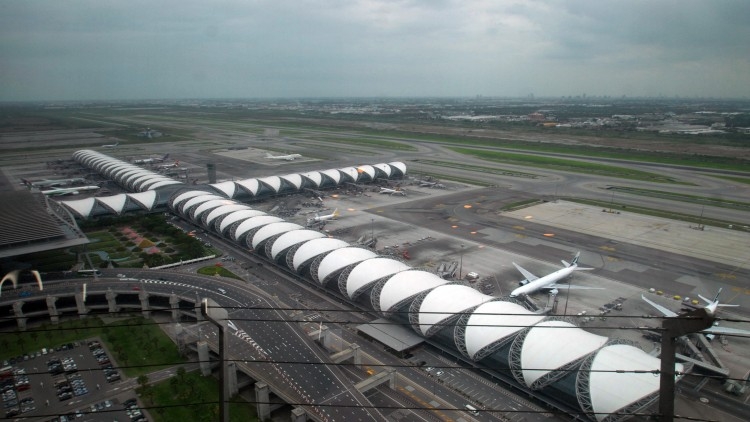
Airports of Thailand (AOT) is expected to submit the result of the bidding for the construction of the third runway at Suvarnabhumi Airport to its board for consideration next month, AOT president Nitinai Sirismatthakarn said on Tuesday.

He added that he was already informed about the name of the winning bidder for the Bt21.8-billion project.

The construction of the third runway is expected to take 35 months to complete.

E-bidding for the project began on March 6 with the median price set at Bt10.413 billion. Twelve companies picked up the documents but only three submitted bids. A consortium led by Nawarat Patanakarn proposed the lowest price of Bt9.713 billion.

Regarding the planned construction of the second terminal at the airport, he said the plan had been submitted for consideration to the National Economic and Social Development Council.

U.S. stocks rebound on hopes for virus stimulus #ศาสตร์เกษตรดินปุ๋ย

#ศาสตร์เกษตรดินปุ๋ย : ขอบคุณแหล่งข้อมูล : หนังสือพิมพ์ The Nation

https://www.nationthailand.com/business/30383823?utm_source=category&utm_medium=internal_referral

U.S. stocks rebound on hopes for virus stimulus

Mar 11. 2020
By Bloomberg · Jeremy Herron, Vildana Hajric · BUSINESS

U.S. stocks rebounded from the worst rout since the financial crisis on expectations the Trump administration will unveil stimulus measures. Treasuries fell and oil jumped.

The S&P 500 extended gains after Bloomberg reported President Donald Trump told lawmakers he wants a payroll tax holiday, proposed to counter the fallout from the spreading coronavirus, to last through the November election. A 4% rally in European stocks got zapped. Stocks earlier rose 3.5% before erasing that advance, only to jump more than 4%.

“It’s market March Madness at the moment, complete with surprising losses, upsets, and comebacks,” said Mike Loewengart, managing director of investment strategy at E*Trade Financial.

Among the major moves:

– The S&P 500 rose 3.9% as of 3:20 p.m. in New York.

– Airlines rallied after Trump’s comments. He did not offer details on what he’d do for the group that’s among the hardest hit, as event cancellations mount.

– Utilities plunged and makers of consumer staples fell along with energy producers. Occidental Petroleum cut its dividend by 86%.

– Apple surged 2.7%.

– The Cboe Volatility Index held above 50.

– The 10-year Treasury yield topped 0.6%. German 10-year rates stood at -0.80%

– West Texas Intermediate surged 7.2% to climb above $33 a barrel.

Volatility continued to grip global financial markets rattled by the virus and an all-out oil price war. U.S. stocks plunged the most since 2008 on Monday, and further selling took futures 20% from records before the rally sparked by Trump’s promise for action Tuesday. The S&P 500 is down 19% from its record. So far, the president has criticized the Federal Reserve and Democratic congressional leaders without providing details of his proposals.

“Doubt and uncertainty about the magnitude, timing, impact of fiscal measures – both in the U.S. and abroad – are causing investors to worry about jumping in too soon,” said Sameer Samana, senior global market strategist at Wells Fargo Investment Institute.

With markets on edge, signs had started to mount that governments around the world are awaking to need for stimulus measures to combat the virus that is threatening to plunge the global economy into recession. Trump’s proposal will likely include a payroll tax cut and a short-term expansion of paid sick leave, according to people familiar with the plan.

At the same time, measures to contain the coronavirus continue to undermine prospects for corporate earnings, and raise the danger of a funding crisis, while the oil price crash threatens a swath of defaults among producers. Italy added nationwide travel restrictions to its effective lockdown of the northern region of the country.

“A strong rebound today, if it in fact holds, does not mean the volatility, or even the worst, is behind us. Rather, investors should expect continued gyrations both up and down until there is greater certainty on coronavirus,” said Greg McBride, chief financial analyst at Bankrate.com.

Elsewhere, Japanese government bonds tumbled after an auction of five-year debt flopped.

Here are some key events coming up:

– The European Central Bank’s policy decision comes Thursday amid expectations it may ease policy.

– The U.K. Chancellor of the Exchequer unveils the government’s 2020 budget on Wednesday.

– The U.S. core consumer price index, due Wednesday, is expected to remain subdued in February.

Dow ends volatile day up more than 1,100 points #ศาสตร์เกษตรดินปุ๋ย

#ศาสตร์เกษตรดินปุ๋ย : ขอบคุณแหล่งข้อมูล : หนังสือพิมพ์ The Nation

https://www.nationthailand.com/business/30383814?utm_source=category&utm_medium=internal_referral

Dow ends volatile day up more than 1,100 points

Mar 11. 2020
By The Washington Post · Taylor Telford, Thomas Heath · BUSINESS

After a shocking start to the week, U.S. stocks on Tuesday rallied on reports that a government stimulus that would help cushion the country from the economic effects of the growing coronavirus.

The Dow Jones industrial average jumped 1,167 points, 4.9 percent, recovering more than half its losses from Monday – which was the blue chip index’s worst day since the 2008 financial crisis. The Standard & Poor’s 500 and tech-heavy Nasdaq composite also finished near 5 percent gains on Tuesday. The S&P closed at 2,882, up 135 points. The Nasdaq finished at 8,344, up 394 points. Financial and technology stocks were leading the way for all 11 market sectors in the S&P 500 index.

The market rally came in the final hour of Tuesday’s trading session on word that the White House was making progress on economic measures to help industries and workers hurt by the coronavirus, including plans to cut payroll taxes, relieve hourly workers, and offer targeted help for the airline, cruise, and hotel industries. Stocks then zipped in and out of negative territory.

“The prospect of some sort of stimulus is a positive ray of light,” said Sarat Sethi of Douglas C. Lane & Associates. “The government is acknowledging the coronavirus and dealing with it. That is removing some of the uncertainty and giving investors relief.”

After weeks of turbulence, U.S. markets plunged to new depths Monday, cratering more than 7 percent on the dual threat of the outbreak’s spread in the United States and the oil price war that erupted between Russia and Saudi Arabia over production targets. The sudden, sharp drop triggered a halt to trading for 15 minutes.

“Markets are trying to force a policy response – from central banks and from Washington, D.C. A basket of more aggressive monetary policy action is coming and how markets respond is the big question,” said David Bahnsen, chief investment officer of the Bahnsen Group, wrote in commentary Monday. “The market will get something resembling “zero bound” very soon, but that is not likely to be effective.”

Overseas markets also saw a bounce Tuesday, with Japan’s Nikkei 225 closing up 0.85 percent and Hong Kong’s Hang Seng climbing 1.4 percent. European markets finished in negative territory across the board.

Oil prices, which sank 25 percent on Monday to their lowest trading levels since the 1991 Gulf War, bounced back, too. West Texas Intermediate, the U.S. benchmark, jumped 11 percent Tuesday. Brent crude, the international oil benchmark, gained 10 percent. Energy stocks rallied, with Chevron, BP and ExxonMobil all gaining.

Reuters reported Tuesday that Saudi Aramco planned to raise output to 12.3 million barrels per day in April, flooding crude markets further and threatening U.S. shale producers. In turn, this could negatively affect oil-producing states and make it more difficult for the domestic economy to heal.

Frank Verrastro, senior vice president at the Center for Strategic and International Studies, said the miscalculation between the Saudis and Russians has blunted not only the price of oil but global financial markets.

Some analysts have even speculated the oil prices could reach single digits, which would decimate not only the U.S. shale oil industry, but would have far-reaching effects on producing countries that cannot survive without healthy per barrel prices in the $50, $60 or higher range.

“Egos and miscalculations can lead to a much larger and adverse economic impact if it’s not corrected,” Verrastro said, adding that the turmoil in oil markets is broad and deep. “Markets don’t like uncertainty, and that’s what is going on today.

“Pretty soon, these oil companies are going to have to report first-quarter earnings,” Verrastro said. “That could jeopardize outstanding bank loans. Then there are unemployment impacts, truckers and tankers are not moving oil. Prices on airlines are down, but no one is flying. We are going to need some signal that Russia and Saudi Arabia can resolve this before things get better.”

The outbreak continues to spread at a rapid clip with more than 113,000 cases worldwide. The director of the World Health Organization called the threat of a coronavirus pandemic “very real.” More than 700 cases have been confirmed in the United States, with the virus present in more than 30 states. The outbreak is responsible for thousands of deaths, including 26 in the United States,

Italy began a nationwide lockdown Tuesday, in a drastic attempt to contain its outbreak that will also upend the lives of 60 million inhabitants. Israel has instituted a quarantine for all arriving travelers, and Japan is moving closer to declaring a national emergency. But as the virus’ grip on Europe and the United States tightens, China is touting its containment practices, with leader Xi Jinping visiting the city of Wuhan for the first time since the virus emerged there late last year.

“Today equity markets sketched a rebound but are still very far away from recovering the losses on the previous days,” said Nancy Davis, chief investment officer of Quadratic Capital, said in an email. “The two main sources of risk are still out there: Coronavirus and the standoff between Saudi Arabia and Russia regarding potential production cuts. It is still unclear what those two risks could bring to global growth and trade. It is hard to call a bottom right now.”

Markets weren’t remotely appeased after the Federal Reserve delivered its first emergency rate cut since the financial crisis last week. The emergency measures seemed to reinforce investor panic rather than quelling it.

“We continue to see the market get whipped around as it searches and thrashes looking for some stability,” said Kenny Polcari of SlateStone Wealth. “Do not expect the market to rally straight up from here after the beating it has taken over the past two weeks. Until we get clarity on both the virus and on what the Saudis and the Russians want to do with oil, expect the markets to remain volatile. ”

The yield on the 10-year Treasury note, a staple of global finance, remained below 1 percent, although it had climbed from record lows. The yield on the bond is increasing because investors are fleeing stocks for the safety of U.S. federal debt, which is one of the safest investments on the planet. As bond prices rise due to demand, yields fall.

Financial managers urged their clients to look past the current financial maelstrom and instead fix their gaze a decade down the road.

“Investors need to change their mind-set from thinking about the next few weeks to thinking about five to 10 years from now,” said Clark Kendall, president of Kendall Capital in Rockville, Maryland, “Do you want to own 10-year Treasurys with a yield below 0.5 percent? In 10 years, a dollar will only be worth less than $1.05. At this time, it is most important to own financially strong companies that can weather this virus. Just like humans, it is the physically and financial weak that are most at risk. ”

5 early-warning economic indicators for U.S. virus shock #ศาสตร์เกษตรดินปุ๋ย

#ศาสตร์เกษตรดินปุ๋ย : ขอบคุณแหล่งข้อมูล : หนังสือพิมพ์ The Nation

https://www.nationthailand.com/business/30383811?utm_source=category&utm_medium=internal_referral

5 early-warning economic indicators for U.S. virus shock

Mar 11. 2020
By Syndication The Washington Post, Bloomberg · Steve Matthews ·

While the official data releases on employment, inflation and gross domestic product will eventually show the effect of the coronavirus on economic activity, they will be behind the curve in deciphering how large the effect is on American consumers.

Stock and bond markets have priced in expectations of an economic blow from the virus. The S&P 500 on Monday recorded the worst day on Wall Street since the financial crisis, while Treasury yields plummeted, crude plunged and credit markets buckled.

But for most Americans, the pain is just beginning. Here are five areas where a slowdown from U.S. consumers cutting back may show up first. By and large, indications are that consumption — the biggest part of the U.S. economy — has so far slowed only slightly.

1. Hotels

Some Americans are avoiding travel because of concerns of being exposed to the virus on flights, trains or at hotels. Organizers of South by Southwest canceled this year’s arts, music and technology festival in Austin, Texas, which last year drew about 13,000 people from 41 countries. Google scrapped a major developer conference and the International Monetary Fund and World Bank switched the format of their spring summit to online.

Occupancy at U.S. hotels fell 1.7% to 64.1% in the week ended Feb. 29, an indication that coronavirus is discouraging travel especially from abroad, according to data tracker STR.

International airport markets like Chicago, New York and San Francisco reported declines, while hotels in markets that mostly rely on domestic travelers like Orlando held up somewhat better, according to the firm’s weekly report. Seattle, near the epicenter of the outbreak in the U.S., saw an increase for the week.

2. Retail sales

Redbook Research’s weekly report on year-over-year comparable store sales gives an insight on whether consumers are still shopping.

U.S. comparable sales rose 6% in the first week of March from a year earlier, according to a Johnson Redbook report Tuesday that also noted shoppers are stockpiling emergency supplies and buying in bulk as virus concerns grow.

Discounter sales have remained strong, according to Bloomberg Intelligence analysts Poonam Goyal and Abigail Gimartin, and they are expected to rise in March with warmer weather. There’s no obvious sign of people avoiding crowded stores, yet, because of concerns about the virus.

3. Box Office

Americans also seem to be avoiding movie theaters as they worry about public gatherings. Last weekend, Disney’s animated feature Onward opened to a disappointing $39.1 million in sales, the third-worst opening for a Pixar film ever.

Entertainment sales are volatile and driven by what’s showing, so it can be hard to pinpoint changes related to a health scare. For the weekend, Comscore says the receipts from top 10 movies fell by 53.5% from a year earlier, when “Captain Marvel” opened to a huge $153.4 million take in North America.

4. Broadway Tickets

Similarly, Broadway’s box office is a measure of whether audiences are showing up to the theater, typically drawing older customers compared with movie theaters. New York has had a cluster of coronavirus cases, which might discourage people from joining big crowds.

In the week ended March 8, Broadway attendance was down 6.5% from a year earlier, according to the Broadway League. Still, popular shows like “Hamilton” operated at full capacity.

The Broadway League said in a statement that shows are continuing. “We have significantly increased the frequency of cleaning and disinfecting in all public and backstage areas beyond the standard daily schedule, and we have added alcohol-based sanitizer dispensers for public use in the lobby of every theatre,” it said.

5. Consumer Comfort

Consumers’ confidence is reported weekly in the Bloomberg Consumer Comfort index, which has been declining since late January, though remains much higher than during the 2007-09 recession. Consumer spending is responsible for about 70% of gross domestic product and has held up as other areas, such as business spending, have weakened.

Confidence among Americans slid to a 10-week low as views of the buying climate dimmed amid mounting virus fears, the latest report shows. The comfort reading for personal finances showed improvement despite the rout in U.S. stocks.

– – –

With assistance from Bloomberg’s Christopher Palmeri.

China’s economy is getting back to work after virus shutdowns #ศาสตร์เกษตรดินปุ๋ย

#ศาสตร์เกษตรดินปุ๋ย : ขอบคุณแหล่งข้อมูล : หนังสือพิมพ์ The Nation

https://www.nationthailand.com/business/30383810?utm_source=category&utm_medium=internal_referral

China’s economy is getting back to work after virus shutdowns

Mar 11. 2020
By Syndication The Washington Post, Bloomberg

China’s economy is beginning to revive, as the government signals progress in battling the coronavirus outbreak that has killed more than 3,100 people and sickened tens of thousands at home.

Government controls and the fear of going outside have curtailed consumer spending, and many factories are still not working at full capacity due to clogged logistics systems, a lack of staff, or limited supplies and raw materials.

The economy was likely running at 70% to 80% capacity last week, according to a Bloomberg Economics report, while China International Capital Corp estimated it was at about 76% as of March 8.

The following data track how much of the world’s second-largest economy remains out of action.

Demand for coal to make electricity was the highest it’s been since Jan. 21 on Monday, but it’s still about 20% below where it was this time last year or in 2018. Along with anecdotal reports from across China’s vast east-coast manufacturing heartland, the power numbers suggest much of the nation’s industrial capacity is running at less than full capacity or is still idle.

That rise in electricity demand may not be a perfect indicator of increasing production. Some cities have given businesses targets for energy consumption because the government is using electricity data to show a resurgence in output. That prompted some firms to run machinery even though the plant was empty and not producing anything, according to people familiar with the matter.

However emissions of pollution from industrial activity confirm the same trend as electricity output — down after the Lunar New Year and then slowly recovering, according to the Centre for Research on Energy and Clean Air, which cited satellite data.

In a survey of over 150 American companies in China in mid-February, only about 18% said they would be back to normal by the end of last month, with another 28% expecting that would happen by the end of March.

The slowdown of refineries and dropping demand has led to larger stockpiles of crude oil.

Imports of liquefied natural gas had shown signs of life and rebounded in late February, but dropped off again last week as the market is oversupplied, with storage full and demand weak.

Imports of LNG will remain weak in March and April as industrial gas consumption has fallen sharply due to the coronavirus outbreak, Shanghai Petroleum & Natural Gas Exchange said Monday on its official WeChat account.

About the same number of trips by planes, trains, automobiles and boats were taken in the runup to the Lunar New Year this year compared to last year, but the fall off since the first day of the Year of the Rat on Jan. 25 was stark.

About 78 million migrant workers have returned to work, which is about 60% of those who went back home for lunar new year, an official at the Ministry of Human Resources and Social Security said at a press conference on March 7. Almost all workers will have returned by early April, a transport ministry official said at the same event.

China’s largest private employer, which makes iPhones and many other electronic devices, said last week it would be operating normally by the end of this month, after resolving severe labor shortages brought on by the outbreak.

Note: Economists at Australia and New Zealand Banking Group, Nomura Holdings and Goldman Sachs Group are among those that have referred to some of these indicators in recent research. Bloomberg News will update this item as the situation continues to involve, adding data as it becomes available.

– – –

With assistance from Bloomberg’s Feifei Shen, Jasmine Ng, Shirley Zhao, Aaron Clark, Yinan Zhao, Masatsugu Horie, Matt Turner, Serene Cheong and Stephen Stapczynski.

How much will Saudi Arabia’s oil price slash hurt its neighbors? #ศาสตร์เกษตรดินปุ๋ย

#ศาสตร์เกษตรดินปุ๋ย : ขอบคุณแหล่งข้อมูล : หนังสือพิมพ์ The Nation

https://www.nationthailand.com/business/30383804?utm_source=category&utm_medium=internal_referral

How much will Saudi Arabia’s oil price slash hurt its neighbors?

Mar 10. 2020
By Special To The Washington Post · Karen E. Young

Saudi Arabia’s decision to increase production and sell oil at sharply discounted prices at a time of declining oil demand has sent shock waves through oil markets and stock markets.

Increased production comes at a moment when the covid-19 outbreak has seized business and tourism activity globally – essentially creating a simultaneous demand and supply shock.

There will probably be severe economic effects on both sides of the Persian Gulf, as well as in Pakistan and countries in the Middle East and Horn of Africa that rely on the Gulf Arab states for financial support. Other Middle East oil producers will be forced to sell their crude at the Saudi price, posing a heavy blow to fiscal plans. Here’s how this may play out across the region.

– 2020 was already looking like a difficult year: Few producers will be able to bear the pain until either Russia agrees to production cuts – which looks unlikely for now – or a political crisis threatens the availability of oil transferring through the Strait of Hormuz or Bab al-Mandeb, bumping up oil prices. Neither is a longer-term solution to get back to steady, if low, growth.

For Iraq, without a new government in place, the timing is terrible. For Iran, there appears to be no bottom to the list of problems. Iran’s capacity for oil production and export is crippled by sanctions, and basic governance is halted by internal turmoil related to covid-19.

With oil prices forecast by the Energy Information Administration in February to stay in the $60-per-barrel range, 2020 was already a difficult year across the gulf. Depending on the country, fiscal break-even prices ranged from $40 a barrel to over $100 a barrel. Many oil exporters faced low growth projections around 1 percent of gross domestic product, just hovering above recession levels. The Saudi government’s own budget forecast a fiscal deficit at 6.5 percent of GDP for 2020, to be filled with reserves, loans or bond issues.

– Gulf nations spend more than they earn: S&P Global has estimated that the Gulf Cooperation Council states will need as much as $300 billion in external funding to meet 2018-2022 spending needs. New funding needs may dwarf those estimates, should the price war drag out through the year. Access to debt capital markets has been good for the six members of the GCC – Saudi Arabia, Kuwait, the United Arab Emirates, Qatar, Bahrain and Oman – even those with less than perfect credit ratings such as Oman and Bahrain. The issue is not the ability to borrow but the ability to repay, given other demands on government budgets.

The simple math is that Saudi Arabia and all of its GCC neighbors tend to spend more than they earn in oil and gas revenues. Fiscal break-even prices for oil vary throughout the GCC, with Bahrain (forecast at $96 a barrel) at one extreme and Qatar (forecast at just over $60 a barrel) at the other. But with oil now trading in the range of just $30 a barrel and expected to go even lower, no GCC government will have a cushion. What are the options? Seek external finance, draw down reserves or drastically cut spending.

Over the past four years, the GCC nations have tried to become less energy-dependent, including the imposition of a 5 percent value-added tax in Bahrain, Saudi Arabia and the UAE, along with efforts to curtail energy and water subsidies. But my research suggests that these governments now have few levers to reduce spending and find alternative sources of revenue. The measures that have already been tried – implementing more taxes and fees and further reducing spending on social benefits and public sector wages – could lead to social unrest and undoubtedly increased state repression and would certainly dampen any prospects for private-sector growth.

– What does this mean for MENA private-sector growth? The weaker GCC states have relied on their wealthier neighbors for support in the recent past. Saudi Arabia may now be less in a position to help Bahrain, as in 2011 and 2019. Oman is in the midst of a leadership transition, with a mounting debt repayment cycle and a reliance on China as its main oil export destination. Inside the GCC, equity markets have panicked, wiping out investment gains made by gulf citizens, including those who invested in the Saudi Aramco initial public offering in late 2019.

For fledgling private-sector growth, the continued ability of state-owned national oil and gas entities to determine wild swings in the local economy continues to be a threat, given the cyclical nature of GCC economies – government spending increases when oil prices are high and generally contracts when oil prices are low. What will this mean in 2020? Expect GCC government contracting to dry up and many foreigners to be made redundant, along with delays in government payments.

– Reconstruction aid may be tough to find: Outside the Gulf, governments that depend on GCC-member foreign aid and direct financial support will face a difficult year. Conflict zones in need of aid and reconstruction support – especially Yemen and Syria – may see new threats to sources of support already under political strain, as early UAE reconstruction efforts in Syria have been met with U.S. disapproval.

For Lebanon, which Saudi Arabia has not committed to support, the timing is particularly bad. A regional economic downturn will lessen any hopes for a strong tourism resurgence, increased private investment and a bank-sector bailout. For Pakistan, which is currently dependent on Saudi Arabia and the UAE as key investors in its energy sector (along with China), there are few ready replacements should those investments be delayed or canceled. In the Horn of Africa, a quick retreat of the GCC states as political and economic investors could be very disruptive.

The MENA region has always seen cycles of oil windfalls and dry periods. In spite of this volatility and the various regional conflicts since 2011, there have been green shoots of growth – the World Bank projected at least positive regional growth in 2020, for instance.

That cautious optimism may prove premature. Right now, the Saudi oil supply shock is a gamble to that hard-won growth, already threatened by a global outbreak few seem to know how to control.

Karen E. Young is a Resident Scholar at the American Enterprise Institute. For other comment and analysis by political scientists from universities around the country, see http://www.washingtonpost.com/blogs/monkey-cage

Bt150 bn soft loans, tax cut on offer to virus-hit businesses #ศาสตร์เกษตรดินปุ๋ย

#ศาสตร์เกษตรดินปุ๋ย : ขอบคุณแหล่งข้อมูล : หนังสือพิมพ์ The Nation

https://www.nationthailand.com/business/30383799?utm_source=category&utm_medium=internal_referral

Bt150 bn soft loans, tax cut on offer to virus-hit businesses

Mar 10. 2020
 Finance Minister Uttama Savanayna

Finance Minister Uttama Savanayna
By THE NATION

The Cabinet today (March 10) approved a slew of phase 1 relief measures for businesses, households and individuals hit hard by the Covid-19 outbreak, said Finance Minister Uttama Savanayna.

Topping the measures is the offer of Bt150 billion in soft loans with an interest rate of not exceeding 2 per cent for the first two years. Companies can apply for the loans capped at Bt20 million each .

The Bank of Thailand will relax rules governing commercial banks’ lending while witholding tax will be cut to 1.5 per cent from 3 per cent during April to September this year.

These businesses are also eligible for corporate tax deduction on employee salaries at three times the total cost.

Meanwhile, state-owned banks will suspend principle loan payments, cut interest rate and extending debt repayment period for affected clients.

The state agencies will consider lowering rental fees on land or extending the deadlines on payment.

Other measures include the refund of electricity meter deposit to 21.5 million households and Small and Medium sized Enterprises (SMES), totalling Bt30 billion.

The Finance Ministry has also discussed with the Budget Bureau to set up a Bt20 billion fund to mitigate impact of the Covid-19 outbreak, such as mass unemployment or business closures.

Government deputy spokesperson Traisulee Traisoranakul said the Cabinet has yet to consider an extension to the waiver of visa- on- arrival fee for tourists from 19 destinations, which will expire on April 30 this year.