Kla Party leader Korn Chatikavanij has reiterated his allegations against oil companies, accusing one oil refinery of making up to 1,000 per cent profit and two oil trading firms of over 100 per cent profit while consumers suffer from high petrol prices.
Korn, a former finance minister, posted on his Facebook wall on Sunday that the performance of four oil refineries and two oil trading firms for the second quarter was “shocking” or “saddening” for consumers.
He posted that the four oil refineries — Thai Oil Plc, Esso Thailand Plc, Star Petroleum Refining Plc, and Bangchak Corporation Plc – enjoyed a year-on-year profit of 1,088.9 per cent, 867.1 per cent, 825.3 per cent and 199.0 per cent respectively.
Korn said the refineries might argue that they had low profit last year so it could not be compared to this year, so his party had checked the profits in the second quarter of the four previous years.
“We found that the sum of profits of each refinery in four years did not amount to even half of the profits the refineries enjoyed in the second quarter of this year,” Korn wrote.
The Kla leader attributed the “extraordinary increase” in profits to the high gross refining margin (GRM) of the refineries.
Korn said the high GRM had inflicted high prices on the public and other business sectors and driven the Oil Fuel Fund to indebtedness.
Korn noted that the club of oil refineries in Thailand issued a joint statement two months ago that the GRM did not automatically mean profits because the refineries had to shoulder other costs. “But I’ll say the figures tell the truth clearly,” Korn wrote.
Apart from the profits enjoyed by the refineries, two oil trading firms also reported to the Stock Exchange of Thailand high profits during the second quarter, Korn wrote.
The two firms are PTT Oil and Retail Plc, and PTG Energy Plc, which enjoyed year-on-year profits of 103.7 per cent and 20.7 per cent, respectively. In the case of PTG, the firm enjoyed 275.3 per cent profit boost compared to the first quarter, Korn pointed out.
He said the oil trading firms enjoyed high profits because they collected the “unusually high” market price of 3 baht per litre for Gasohol 95 and Gasohol 91 petrol.
Korn said despite the excessively high retail price, the Energy Ministry had not taken any action to help the affected consumers.
“The profits of the giant oil firms clearly reveal which side the government chooses to stand by. All in all, the profits were reaped from the hardship of the people,” Korn wrote.
With the figures of “unusually high profits”, Korn repeated his call for the government to slap a windfall tax on the oil refineries.
He also called on Energy Minister Supattanapong Punmeechaow to speed up measures to alleviate the grievances of the people and business sectors suffering from high oil prices.
“Or is it that you no longer care about this after you have survived the censure debate?” Korn asked.
He said the high oil prices caused by high profit taking by refineries and traders impacted the country’s high inflation and rising prices of consumers goods, which also prompted the Bank of Thailand to increase its policy rate by 25 basis points to 0.75 per cent per annum.
As a result, Korn said, the high GRM and retail prices of refineries and oil trading firms were the first time bomb that the government must defuse soon before it could trigger other economic bombs.
The overall economic outlook for Thailand this year remains positive, but inflation, global tensions, increasing interest rates and debt continue to pose a threat to the country’s growth, the National Economic and Social Development Council (NESDC) has said.
The NESDC announced that Thai gross domestic product (GDP) in the second quarter of 2022 had expanded by 2.5 per cent year on year, accelerating from a 2.3 per cent growth in the previous quarter.
After seasonal adjustment, the economy grew 0.7 per cent from the first quarter of 2021. In the first half of 2022, the economy grew by 2.4 per cent.
The expansion of private consumption expenditure and service exports, as well as the recovery of the tourism industry following the easing of Covid-19 control measures, have enabled economic activities and spending to return to normal levels, with support from consumption stimulus measures.
Meanwhile, there are some geopolitical risk factors to consider. The increasing tensions between China and Taiwan will have an impact on the country’s semiconductor imports. Semiconductors are key components in the country’s automobiles, integrated circuits and parts, electronic appliances, and computers, the NESDC said.
If China tightens sanctions and hinders shipments, Thailand’s automotive and electronics industries may suffer, slowing their growth, NESDC secretary-general Danucha Pitchayanun said.
Currently, Thailand imports 29 per cent of semiconductors from Taiwan, he said.
In addition, the prolonging Russia-Ukraine war, the risk of a Covid-19 pandemic and monkeypox, interest rate hikes, and China’s economic slowdown are the main factors to be closely monitored.
The council also suggested that the government monitor and accommodate market mechanisms to bring domestic prices in line with input costs, support agricultural production and farmers’ income, resolve retail debt in the face of rising interest rates, maintain momentum in the export sector, catalyse the recovery in tourism and related service sectors, and prepare for global economic and financial market volatility.
Besides, supportive policies for small and medium-sized enterprises (SMEs) are required to sustain Thailand’s long-term growth.
Overall, the NESDC projected that the Thai economy would grow by 2.7 to 3.2 per cent in 2022, owing primarily to increased domestic demand, the recovery of the tourism sector, and the continued expansion of goods exports.
Thailand topped the list of rubber exporting countries in the first half of the year, with shipments of 2.19 million tonnes valued at 70.5 billion baht, the agriculture minister’s adviser revealed on Friday.
This year’s total exports of natural rubber are expected to reach 4.27 million tonnes, up 3.41 per cent from last year, said Alongkorn Ponlaboot, citing the Rubber Authority of Thailand.
In the first half, Thailand exported 167.2 billion baht of natural rubber and rubber products, he added.
Almost half (49 per cent) of the exports went to China, which is the largest market for Thailand’s rubber and rubber products, said Democrat Party deputy leader Alongkorn, who also chairs the Agriculture and Cooperatives Ministry’s committee monitoring rubber prices.
Between January and June, China imported 1.42 million tonnes of natural and synthetic rubber from Thailand, up 5.37 per cent from last year.
Malaysia was second on the list with 10 per cent, followed by the United States (7 per cent), Japan (6 per cent), and South Korea (4 per cent).
The Rubber Authority of Thailand estimates Thai rubber production this year will total 4.79 million tonnes, up 0.88 per cent from last year, he added.
Alongkorn on Thursday chaired an online meeting on the situation in the global rubber market. Also attending were senior officials from the Rubber Authority, Agriculture and Cooperatives Ministry, Commerce Ministry, and Thai agriculture attachés from across the world.
The National Economic and Social Development Council (NESDC) reckons the Thai economy can be affected by three scenarios taking into account the ongoing Russia-Ukraine war and other geopolitical conflicts.
The first and most probable scenario, NESDC Deputy Secretary-General Wichayayuth Boonchit said, is if the Russia-Ukraine war continues, but the global oil supply is not affected by sanctions against Russia. In this case, Thailand’s economy should expand between 2.5 and 3.5 per cent this year. Thailand’s GDP currently stands at 1.6 per cent, according to the World Bank.
“Thailand’s inflation should drop slightly in 2023, while the current account will build up gradually,” he said.
He also expects the global economy to expand this year before slowing down next year based on the interest rate directions and the cycle of major economies. He believes the global economy should start to recover after 2023.
In the second, but less probable scenario, Wichayayuth said, Thailand’s economy will grow less than expected in 2022-2023 if more sanctions are slapped on Russia. This will result in a surge in the global price of oil and other products.
“The inflation this year will be higher than in the first scenario before declining,” he said, adding that the current account will have a higher surplus than in the first scenario.
He also expects the global economy to grow at a lower level next year depending on the types of sanctions. He added that economies in Europe, the UK and the US face the risk of recession.
The third and worst scenario is if a conflict is sparked between the US and China. Wichayayuth said this conflict will spark a global economic recession depending on the intensity of this and other geopolitical conflicts.
Should a US-China conflict arise, it will push up the price of fuel, food and consumer goods and even trigger shortages.
“Thailand’s inflation will remain high, with the current account balance in deficit,” he said.
Global supply chains remain disrupted as the Covid-19 pandemic enters the third year and the crisis in Europe creates chaos in Europe-Asia transportation.
Expert Mark Millar said the disturbance offers companies an opportunity to reevaluate their sourcing and production, considering a more regional approach going forward.
He also expects global supply chain reconfiguration to last through 2025 to 2030, with some businesses nearshoring and reshoring.
Millar is an internationally known industry expert in logistics and supply chain strategies with over 30 years of global business experience.
He is a renowned keynote speaker and author of Global Supply Chain Ecosystems.
He will deliver a keynote speech at a webinar hosted by DIGITIMES Asia on August 25: From Long Chains to Short Chains: Reforming Global Supply Chains in the Post-Pandemic Era.
According to Millar, much of the world is still experiencing vast supply chain chaos, while some regions are recovering. The more globalized supply chains are, the more prevalent the disruption gets.
However, the challenges companies face today differ from two years ago, especially with the ongoing conflict, which Millar described as a “black swan” event.
He said that during 2021, an additional one million cargo containers traveled by rail from the East, mainly China, to Western Europe due to the significant congestion in the sea freight shipping sector.
Most of those routes go through Russia and are not available now. Therefore, freight forwarders and logistics companies must find space for the containers on ships which are already full to capacity.
On a broader basis,the crisis in Europe has impacted the availability of oil and gas and increased energy prices. Millar said the situation has created a knock-on effect on the global transportation network serving supply chains.
More nearshoring and reshoring to come
What can companies do to tackle the challenges? While it is an overused term, Millar said collaboration among the supply chain partners is the practical way to get through the crisis in the short to mid-term.
The effort includes finding alternative sources or transportation routes that may be more expensive but can deliver the goods to the final destination.
On a medium-term basis, Millar said the disruption has created an opportunity for reevaluation after 30 years of globalization. For instance, companies might want to take a more regional approach in the future that would build more resilience into their supply chains and reduce emissions.
In fact, a movement of businesses reconfiguring their supply chains has started. Millar said some companies are looking at or implementing nearshoring, moving sourcing and production closer to the final destination market. Others are considering moving sourcing and production back into the final destination, which is reshoring, also known as on-shoring.
“We’ll see a movement towards a more regional approach to supply chains,” Millar said.
The expert added that in the European scenario, Poland, Turkey and even some North African countries with low-cost labour forces and are geographically close to Europe would all come into play as potential nearshoring locations.
Sourcing and production to remain strong in Asia
With all the nearshoring and reshoring coming, questions about whether reconfiguring supply chains would affect Asia’s, especially China’s, role as the manufacturing powerhouse have been raised.
Millar said due to multiple reasons, there will not be a mass exodus, only a proportion of production will be moved out of China or Asia. For example, some of the supply chains are so complex and fine-tuned that relocating them would be prohibitively expensive and risky.
Moreover, the majority of growth in the consumer class will continue to originate from Asia until at least 2030. Millar said the increase would almost make up for what would exit Asia for nearshoring.
Therefore, production and sourcing for supply chains in Asia will remain strong to serve the region.
Additionally, the China government has taken the dual circulation strategy to foster greater self-reliance for its economy. The policy will provide extra impetus to boost production within China.
Millar concluded that the real movement of reconfiguring global supply chains will become evident from 2025 to 2030. Besides nearshoring and reshoring, companies would concentrate supply chains in China for the products they sell locally – “In China for China”. Furthermore, the diversification around Asia would result in a China-Plus strategy, creating supply chains built in Asia for Asia.
Some CEOs and CFOs of major listed companies are now involved in the strategic decisions of supply chains, Millar said. Lots of executive boardroom discussions about future supply chain directions will be ongoing. The results will gradually unfold over the next five to 10 years.
“The global supply chain landscape in 2030 will be pretty different to what we’ve been used to for the last decade or so,” Millar added. Join DIGITIMES Supply Chain Webinar and discuss Supply Chain 2025, reflecting on Covid disruptions, and exploring how logistics sector dynamics and geopolitical will impact the future of post-pandemic Supply Chains
The Commerce Ministry sees vegetarian food as a golden opportunity to break into the Taiwan market.
The ministry said that the demand for vegetarian food is likely to grow in Taiwan. It will be an opportunity for Thai exporters to use their expertise in food manufacturing to export products to Taiwan.
Phusit Ratanakul Sereroengrit, International Trade Promotion Department director-general, said that he had received survey results of Taiwan’s vegetarian food market from a commercial ambassador in Manila.
The results show that it is an interesting market that has a great potential to grow because 10 per cent of Taiwan’s 23-million population eats vegetarian food regularly, he said.
They eat vegetarian food because they want to protect the Earth which is different from the past when they used to eat veg food due to religious and health reasons.
Currently, the Taiwanese brand Plant-Based is successful in the US market and is sold in the famous supermarket chain Aldi while also joining hands with Carrefour, a giant hypermarket in Taiwan.
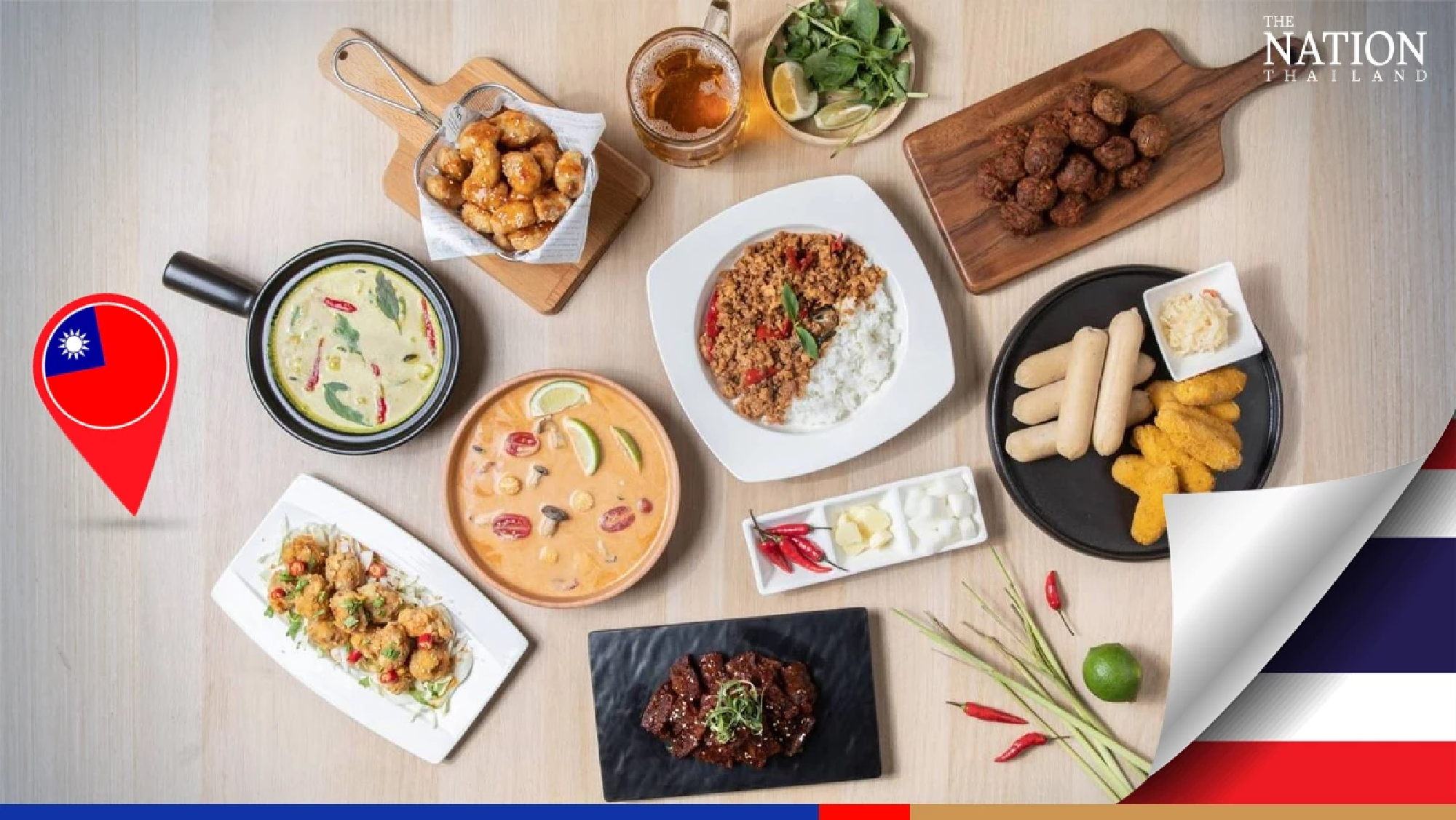
The brand is also pushing ready-to-cook meat to the market, such as stir-fried pork with basil, Korean-style grilled beef, and European sausages.
The brand also plans to sell tom yum kung, green curry, and fried chicken with lemongrass and chilli, which are popular Thai foods in Taiwan, he said.
Meanwhile, Plant-Based has successfully developed nine menus of planted-based ready-to-cook for Mahayana Buddhists and Yiguandao believers who eat vegetarian foods.
Previously, most vegetarian foods are bland and their tastes are not varied so they are not very popular in the market, he added.
Therefore, the company decided to develop products with diverse tastes and successfully got into the US market two years ago.
The taste was similar to normal foods as consumers could not tell the difference and almost 20,000 kilograms of products were sold in the first phase.
After the Covid-19 pandemic, the transportation cost increased heavily, so the company decided to accept fewer overseas orders and focused on the domestic market instead.
The company has joined hands with several hypermarket giants in Taiwan and developed ready-to-cook meals based on Thai foods’ popularity in Taiwan.
Phusit mentioned that more business operators have decided to get into the Thai vegetarian food market to respond to consumers’ demands and released several items, especially famous Thai foods such as stir-fried pork with basil, tom yum kung, and green curry.
Therefore, it is a good opportunity for Thai operators to use their expertise in Thai foods to develop Thai vegetarian food for the Taiwanese market, he said.
Despite deteriorating market conditions, SCB CIO has revealed investment strategies for generating profits in both bull and bear markets
1)Investment in long-term sovereign bonds and investment-grade fixed income to generate cash flow; 2) Diversifying risks to new products; 3) Investing in structured notes to generate cash flow; 4) Opting for long-term thematic investment, and 5) Utilizing assets to generate returns through Wealth Lending Products.
SCBS expects the SET index to reach 1,650 points this year and recommends BBL, BJC, CPF, CBG, and MTC for their potential gains and the advantages they will enjoy as a result of the country’s reopening. Meanwhile, Bank Julius Baer recommends keeping 20 per cent of private equity in a portfolio as a hedge against market volatility and a source of potential long-term rewards.
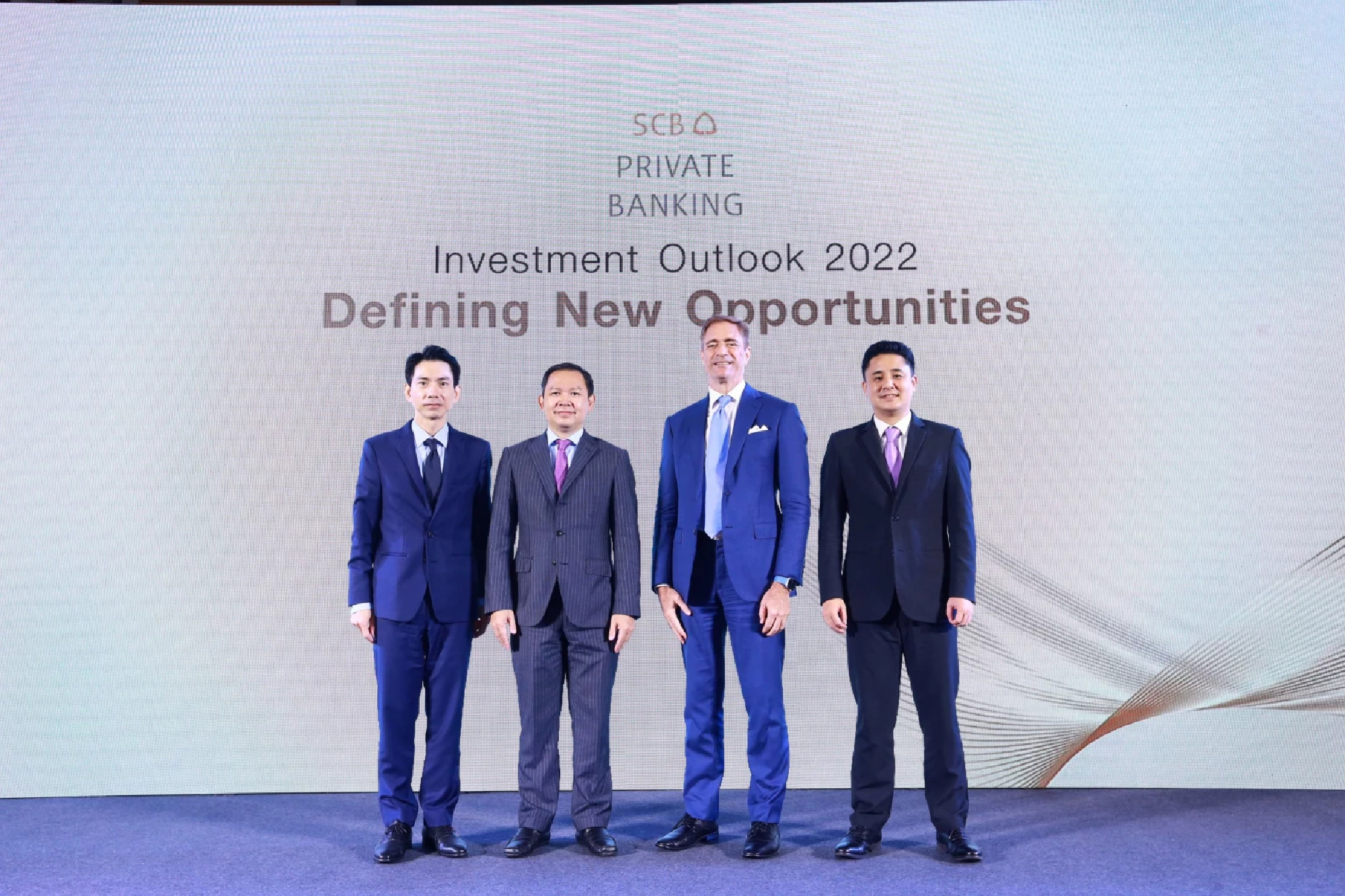
Siam Commercial Bank Chief Investment Office and Product Function Executive Vice President Sornchai Suneta recently spoke at a seminar for SCB PRIVATE BANKING customers titled “Defining News Opportunities: Investment Outlook 2022,” where he revealed that in the United States (US), declining energy and food prices, as well as falling home prices due to the doubling of loan interest rates from their original 30-year rate of around 3% p.a. to an average of 6% p.a., are all indicators that US inflation may have slowed down in July.
Similar to the trend in home prices, rents are expected to decrease. Meanwhile, the hourly cost of labour has already begun to fall. Due to the strengthening dollar and decreasing shipment times, the cost of importing goods into the US has gone down significantly.
Inflation may fall as a result of this pattern because it suggests that prices across the board will fall. It is anticipated that the Federal Reserve (Fed) will raise interest rates by 0.50 percentage points at their upcoming September meeting, followed by two additional rate hikes of 0.25 percentage points each. The [US] economy has shown signs of slowing, so interest rate hikes may end next year.
Oil is another factor to keep an eye on. Despite the fact that oil prices will decrease in the short term, the remaining production reserve capacity of Opec nations is progressively declining. Even if the price increases, they are unable to significantly increase production capacity since investments in new oil drilling have continuously dropped as the importance of fossil fuels continues to decline. As a result, this constraint prevents energy costs from being significantly reduced. Opec members may produce less than their quota this year due to a lack of supplies. Given that the recent drop in oil prices may be temporary and not the beginning of a new, lower trend, the capacity issues facing the industry are cause for concern.
European countries are experiencing a moderate energy crisis and their inflation rates have not yet passed their peak due to their reliance on natural gas imports primarily from Russia. While importing natural gas from the US could solve this issue, transportation costs are rather significant in comparison to imports from Russia. The GDP of European nations may enter a recession sooner than that of other nations.
Thailand’s inflation rate has not yet reached its high. A probability greater than 7 per cent exists due to price increases of numerous products. This will have an impact on the consumer price index. The public sector is still in a fragile position, with pay minus inflation resulting in a negative cost of living. As a result, the Monetary Policy Committee (MPC) may not hike interest rates significantly, because doing so would cause widespread financial hardship for families. As the baht depreciation did not result in significant capital outflows, it is unnecessary to hike interest rates as aggressively as the US. However, it is anticipated that the MPC will likely hike interest rates by 0.25 percentage points at its August meeting, and will raise interest rates more three times this year and twice next year.
Sornchai Suneta noted that investors should focus on the following five investment strategies to generate profits in both bull and bear markets amid a volatile environment:
1) Generate cash flow from investment portfolios by investing in long-term government bonds and investment-grade fixed income. A potential slowdown or recession in the economy means that interest rates are unlikely to rise much more. Investing in REITs to earn dividends is also attractive because the hotel industry has been increasingly active as visitors have resumed travelling and room rates are beginning to revert to pre-pandemic norms.
2) Diversify risks by investing in new alternative products uncorrelated to market conditions, such as private equity, private debts, and private real estate. This long-term investment in non-listed companies is less volatile than in publicly listed companies and will lower portfolio volatility.
3) Invest in structured notes that can generate cash flow. For example, by mixing debt securities with futures to create derivatives. Unlike conventional products, innovative structures like Sharkfin and Inverse can guarantee both a high rate of return and the safety of your principle. KIKO (Knock-In Knock-Out) is a type of investment that does not guarantee repayment of principal but offers a high rate of return in the form of regular cash flow.
4) Long-term thematic investment is an investment strategy that disregards short-term volatility in order to seek opportunities to invest in businesses with strong growth potential in the future, such as healthcare, e-commerce, and green energy in the EV segment.
5) Take advantage of existing assets to create returns via Wealth Lending Products in the category of property-backed loans or Lombard loans which use debentures or vacant real estate as collateral for special interest rate loans to invest in a variety of assets. Under the guidance of the Bank’s investment advisory teams, investors can find solutions that fit their objectives in terms of risk tolerance and inflation protection. The annual rate of return for medium-risk investments ranges between 7 and 8 per cent.
SCB Securities Co., Ltd. Research Chief Research Office Sukit Udomsirikul revealed that even though the rest of the world is concerned about the current economic downturn, Thailand is currently not at risk of experiencing a downturn. However, the economy is not significantly superior to that of other nations. Based on GDP estimates for this year, Thailand is projected to be in a relatively optimistic group, with a GDP of approximately 2-3 per cent. The International Monetary Fund IMF recently predicted 2.8 per cent GDP growth for Thailand, whereas most local institutions expect growth of 3 per cent or higher. For this reason, Thailand is relatively safe. The economy and stock market provide independent aspects. When times are tough, the conventional wisdom among investors is that it is best to stay out of the market. In reality, now is a suitable time to invest because the stock market drives economic growth. SCBS estimates that the SET index will end the year at approximately 1,650 points. The third quarter could see the lowest point for stock markets around the world, including Thailand.
Now is the right timing for investment as there are several solid, reasonably priced stock options available. Investors should look for stocks that are showing signs of recovery since they offer the greatest number of investing opportunities. SCBS picks five outstanding companies, namely BBL, BJC, CPF, CBG, and MTC. Retailer BJC (BigC) stands to gain from the reopening of the country’s economy. Food company CPF will profit from cheaper raw materials. With cities now open for business again and the price of packaging raw materials decreasing, CBG energy drinks are entering a period of business recovery. However, the stock price may fluctuate due to the company’s sales generated by exporting to CLMV nations, which account for around 30% of revenues. Due to a shortage of dollars, some countries may avoid trading their currency for dollars, which may have an effect on its earnings. We consider right now to be a compelling time to buy CBG stocks. The beverage industry as a whole is forecast to grow even further next year. The combined effects of higher interest rates and worries about bad loans led to a precipitous decrease in MTC’s share price, but MTC’s stock price should benefit from a recovering economy and stable interest rates.
Despite the downturn, the outlook for the Thai stock market is not as pessimistic as compared to the US or Asian stock markets. The Thai stock market is outperforming other markets because of the substantial number of companies in the energy, banking, and commercial sectors linked to the country’s reopening. These shares are favourable for the stock market because of their robust performance and fundamentals, in contrast to those of the economic sector that focuses on consumption and export, and do not represent the majority of shares on the stock market. Investing in the stock market is analyzed from a business perspective, while the economy will be analyzed from the country’s overall picture. This is why the Thai stock market has not plummeted as dramatically as other markets.
Gains this year were seen mostly in the medical, tourism, and transportation sectors, while other sectors saw a moderate loss. The average loss for Thai stocks is less than 10 per cent, with just a handful of sectors seeing losses greater than 10 per cent. This indicates that the Thai stock market declined less, compared to the loss of more than 20 per cent suffered in other markets. However, the energy, food, banking, and insurance industries—all of which have a bearing on inflation—should be the primary focus of investors. In the event that interest rates go up, these equities will perform well.
Bank Julius Baer Head of Funds Specialist Asia Donald Rice noted that global financial markets were extremely turbulent. The Russian-Ukrainian crisis, volatility from inflation, economic uncertainty, and subsequent interest rate hikes have all contributed to negative treasury yields and stock market sentiments. Because of these considerations, conventional assets are extremely unstable. Private equity investments are becoming increasingly attractive as a means for institutional investors (such as funds, conservative organizations, and wealth management firms catering to high-net-worth individuals) to cushion themselves from the effects of market volatility. An investor may allocate between 5 and 10 per cent of their portfolio to private equity investments, with the option to allocate as much as 20 per cent.
A portfolio should include private equity to diversify risks beyond traditional assets and gain access to companies with solid fundamentals that are not publicly traded. Currently, companies listed on the stock exchange in the US are decreasing due to the existence of many regulations, while the number of private corporations continues to rise. As a result, investing in these firms which are currently experiencing a time of rapid expansion has the potential to provide big profits.
” These companies will be able to grow rapidly and sustainably based on over two decades of professional experience working in private equity and leveraging our skills to help them expand financially and strategically through private equity financing,” Rice noted.
Investing in private equity entails a number of risks, including 1) Market volatility, although to a lesser extent than investing in traditional assets; 2) Investment regulations that differ from those governing traditional assets, and 3) Unpredictable returns because investors may have to put their money into early-stage companies. Investors will see returns after they begin to generate income; 4) Investment information is not provided routinely and will not be as constant as when investing in listed stocks, and 5) This investment has a long-time horizon with low liquidity.
The Thai Bankers’ Association vowed to adjust the interest rate gradually in a bid to minimise the impact on vulnerable customers and small and medium enterprises (SMEs) after the Monetary Policy Committee (MPC) decided on Wednesday to raise the policy rate by 25 basis points to 0.75 per cent.
The MPC decided on the rate rise after believing a loose monetary policy is less necessary to support the economy amid the Covid-19 crisis as the economy is likely to recover thanks to an increase in foreign visitors.
Association chairman Payong Srivanich said on Wednesday evening that banks would proceed with the rate adjustment gradually to ensure vulnerable customers and SMEs who have yet to fully recover from the impact of the pandemic and energy price crisis can continue to operate their businesses smoothly.
Banks will continue rolling out long-term debt-restructuring measures for customers to counter NPLs (non-performing loan) until the end of next year, when the economy is expected to bounce back, Payong said.
Individual customers will not be affected much by the rate adjustment as most have been granted fixed interest rates, including for hire-purchase loans, credit cards, and personal loans, he pointed out.
Meanwhile, most housing loan customers, who are on floating rates such as MLR (minimum loan rate) or MRR (minimum retail rate), already have fixed monthly payments, so the impact of a rate adjustment would be minimal, he said.
The association and member banks will monitor the situation closely and provide suitable aid to customers to prevent the NPL cliff phenomenon, or a situation where a big amount of debt defaults occur in a very short time, forming a cliff of non-performing loans, Payong said.
The association also reported that as of May 2022, customers who have applied for debt restructuring programmes due to the impact of Covid-19 have dropped to 1.6 million accounts amounting to 2 trillion baht of debts, from 6.1 million accounts or 4.2 trillion baht of debts recorded in July 2020.
The baht opened at 35.35 to the US dollar on Thursday, strengthening from Wednesday’s close of 35.56.
The currency is expected to move between 35.20 and 35.45 during the day, Krungthai Bank market strategist Poon Panichpibool predicted.
He said the baht was likely to fluctuate and strengthen as the market was in a risk-on state amid a weakening of the dollar.
Moreover, the baht has also found support after foreign investors purchased Thai stocks.
However, the Thai currency will not weaken past its support level of 35.20 because investors are waiting to purchase the dollar at this level while other foreigners might sell the US currency for profit, Poon felt.
He advised investors to beware of volatility from Emerging Asia assets, which could pressure the baht to weaken as some investors are worried the Chinese government might impose more lockdown measures to control Covid-19 in some areas.
Concern over the situation forced Chinese and Hong Kong stock indexes to head down while the yuan was also seen to weaken, Poon added.
After holding the interest rate for more than two years during the pandemic, the Monetary Policy Committee (MPC) on Wednesday decided to raise the policy rate by 25 basis points to 0.75 per cent.
MPC secretary Piti Disyatat said after the meeting that six members voted to raise the policy rate by 25 basis points, while one member voted for a 50 basis points hike.
He said the economy was likely to recover gradually, thanks to an increase in foreign visitors after the easing of travel restrictions.
He added that private sector consumption was also likely to recover, due to the improvement in the labour market and household income.
He expected Thailand’s economy to reach the pre-Covid-19 level by the end of this year.
“The committee concluded that a loose monetary policy to support the economy amid the Covid-19 crisis has become less necessary, as the economy is likely to recover,” he said.
However, he added that the committee would follow up on rising production cost and the impact of the cost of living on Thailand’s economic recovery.
He expected inflation to remain high this year before declining next year.
Piti added that the country’s financial system is now stable, as commercial banks have strong capital and reserves, while the business and household sectors’ ability to repay debt has improved in line with economic recovery.
However, he said measures to relieve the debt burden are necessary for some vulnerable groups, especially small and medium-sized enterprises and low-income households.
He added that the financial markets would be vulnerable to high volatility, as the baht has weakened against the dollar amid uncertainty about a global economic slowdown and the monetary policy direction of the US Federal Reserve.
“The committee agreed that raising the policy interest rate to meet economic expansion in the long term should be done gradually, in line with economic context and inflation,” he concluded.











 SootinClaimon.Com