China’s Belt and Road plan is getting lashed by coronavirus #ศาสตร์เกษตรดินปุ๋ย

#ศาสตร์เกษตรดินปุ๋ย : ขอบคุณแหล่งข้อมูล : หนังสือพิมพ์ The Nation

https://www.nationthailand.com/business/30383639?utm_source=category&utm_medium=internal_referral

China’s Belt and Road plan is getting lashed by coronavirus

Mar 08. 2020
The Ban Ladhan Railway bridge, a section of the China-Laos Railway built by the China Railway Group Ltd., stands under construction on the Mekong River in Ban Ladhan, Luang Prabang province, Laos, on Oct. 18, 2018. MUST CREDIT: Bloomberg photo by Taylor Weidman.

The Ban Ladhan Railway bridge, a section of the China-Laos Railway built by the China Railway Group Ltd., stands under construction on the Mekong River in Ban Ladhan, Luang Prabang province, Laos, on Oct. 18, 2018. MUST CREDIT: Bloomberg photo by Taylor Weidman.
By Syndication Washington Post, Bloomberg · Iain Marlow, Karlis Salna, Anusha Ondaatjie, Dandan Li · WORLD

Xi Jinping’s Belt and Road Initiative has long been seen as a way to project China’s influence around the world. Now, the coronavirus is showing how the trade and infrastructure program can help export the country’s troubles.

The deadly outbreak is prompting delays and disruptions to China’s construction and investment plans overseas, risking years of planning and hundreds of billions of dollars in economic diplomacy. Quarantine measures are preventing Chinese workers from making it to foreign building sites, domestic firms supplying overseas projects face acute labor shortages and fears are mounting that workers will inadvertently spread the virus to new locales.

Projects that have been affected since the virus emerged in December include a $5.5 billion high-speed rail line in Indonesia. There’s also a separate railway initiative in neighboring Malaysia, construction projects in Sri Lanka and corporate expansion plans in Pakistan.

The disruption has exposed another pitfall of the region’s growing dependence on China’s backing for major infrastructure projects. Even as the pace of new coronavirus cases slows in China, host countries remain wary of avoiding future outbreaks, with deadly infection surges in places like Iran, Italy and South Korea serving as a warning about how quickly a small cluster can spin out of control.

“While there are risks of delays and cancellation of projects, there are also risks in early resumption,” said Bonnie Glaser, who has advised the U.S. government and directs the China Power Project at the Center for Strategic and International Studies in Washington.

Xi “seems determined to demonstrate that life is returning to normal and he wants to get the economy churning again,” Glaser said. “Resuming BRI projects is probably among his goals, not only for economic reasons, but also because BRI activities are a lever to enhance Chinese political influence.”

Even before the outbreak, Xi had been seeking to rebrand and scale back his Belt and Road ambitions amid an economic slowdown at home and backlash from some partner nations concerned about the costs. The U.S. has led a global campaign against the program, arguing that China’s reliance on loans locked poorer countries in “debt traps” while advancing its own strategic aims.

The virus has thrown up another hurdle, as countries bar or quarantine Chinese visitors. One official involved in BRI planning in Beijing said last week that a failure to stop the virus spreading outside of China would inevitably take a toll on projects.

Still, another Chinese official in Beijing said that the impact to key projects remained limited and that significant disruptions were likely to remain an issue only in the short term. That optimistic assessment was echoed Thursday by Vice Chinese Foreign Minister Ma Zhaoxu at a briefing on international support for coronavirus actions.

“The impact of the outbreak on the construction of BRI is only temporary,” Ma told reporters in Beijing. “We are willing to work with all parties to continue to promote the high-quality construction of BRI. We have full confidence in this.”

The same day, however, Indonesian Coordinating Minister for Maritime Affairs and Investment Luhut Pandjaitan acknowledged that the multibillion dollar Jakarta-Bandung high-speed railway — a flagship BRI project — was likely to face delays. More than 300 workers remain stuck in China.

In neighboring Malaysia, a dozen of the roughly 200 Chinese workers building the $10.4 billion East Coast Rail Link hail from Wuhan, the city at the center of the outbreak. They’re not allowed back to the Southeast Asian nation, while other workers can return after a 14-day quarantine process.

In Pakistan, which hosts numerous BRI projects spanning power and construction, two companies — Engro Polymer & Chemicals and Pakistan Oxygen — have said their projects face slowdowns because their Chinese contractors alerted them to delays stemming from hampered mainland facilities.

There has been widespread disruption to efforts in Sri Lanka, where Chinese investment is building the massive Port City Colombo, an expansion of the capital city via land reclamation.

The Ceylon Chamber of Commerce recently reported that about half of 100 firms surveyed said that business was affected by the coronavirus outbreak. Government road and apartment construction projects involving Chinese contractors have slowed down, said Nissanka Wijeratne, secretary general of the Chamber of Construction Industry of Sri Lanka.

Chinese workers returning to Port City Colombo have self-quarantined and there have so far been no major delays at the country’s biggest construction site, said Thulci Aluvihare, head of strategy and business development for the project, which is being built by state-owned China Communications Construction Co.

The virus may prompt a shift in focus by Chinese firms in the future, according to Arv Sreedhar, Singapore-based executive director at investment firm Atlantic Partners Asia. “China is under incredible stress from the current situation and has other priorities for its money, such as coming to an acceptable agreement with the U.S. on the trade war, and fighting both the health and financial aspects of the coronavirus,” he said.

That puts political pressures on BRI partners, as well. Developing nations such as Cambodia, Laos, Myanmar and Pakistan might be afraid to aggressively tackle the virus for fear of alienating China, research firm Fitch Solutions said in a note on Thursday.

“That these countries, which are heavily dependent on China’s patronage, have so far reported zero or just a few confirmed cases, and we believe that this could be attributed to both low access to health care, which is likely to inhibit infection detection, and a desire to avoid antagonizing China by ‘overreacting’ to the outbreak,” Fitch Solutions said.

China’s overseas investments were already beginning to tail off and consolidate before the virus brought the country’s industry to a standstill.

The American Enterprise Institute and the Heritage Foundation, which have tracked 3,600 major Chinese overseas transactions since 2005, found that outbound investment last year totaled just $68.4 billion. That’s a 41% plunge from 2018 and the lowest in a decade. The figure is far less than the Chinese Ministry of Commerce’s official tally of $124.3 billion in total overseas investment last year.

Going forward, China could concentrate its BRI programs in fewer countries, working to avoid criticism by making its outbound investment less aggressive and one-sided, said Derek Scissors, a resident scholar at the American Enterprise Institute.

Xi could “retrench and advertise more loudly that the BRI is a group effort,” he added. “It’s going to be harder for host governments over the next year to tout their supposedly close relationship with China as contributing to development.”

Coming to a couch near you: A brave new world of telework in the coronavirus era #ศาสตร์เกษตรดินปุ๋ย

#ศาสตร์เกษตรดินปุ๋ย : ขอบคุณแหล่งข้อมูล : หนังสือพิมพ์ The Nation

https://www.nationthailand.com/business/30383626?utm_source=category&utm_medium=internal_referral

Coming to a couch near you: A brave new world of telework in the coronavirus era

Mar 08. 2020
By The Washington Post · Shibani Mahtani · BUSINESS, WORLD, ASIA-PACIFIC 

HONG KONG – For a taste of what’s in store for Americans, look to Hong Kong, where businesses have been enforcing work-from-home arrangements for six weeks due to coronavirus fears.

The social experiment of teleworking en masse has unearthed pitfalls, comical moments and potential opportunities. With the virus hitting the United States and Europe, millions more will likely need to crowd into homes with children and spouses while finding a way to stay productive.

Businesses in Hong Kong say the biggest challenge is getting staff to stay focused and on task. Terence Lin, who runs an online jewelry and used-car sales business, repeatedly has caught employees slacking off on social media and playing games during work hours.

“I can see that they keep logging into Facebook, posting photos on their stories, showing up on online games,” he said of his employees, who are scattered across Hong Kong and several Chinese cities. A favorite is Wangzhe Rongyao, or Honor of Kings, a multiplayer fantasy battle game based on historical Chinese heroes. “They are always online there, and they think I can’t see them!” Lin said.

Employers, including government departments, closed offices here in January when the coronavirus spread rapidly in China. Though some workers have trickled back to their desks, many corporate offices will remain shut for at least several more weeks.

U.S. companies are preparing for similar: Twitter is encouraging its 5,000 employees to work from home – already mandatory for staff in East Asia. Seattle-based Microsoft and Amazon have urged employees to avoid the office, and banks are preparing contingency plans if the outbreak worsens. (Amazon CEO Jeff Bezos owns The Washington Post.) Facebook asked Bay Area employees, including those at the Menlo Park headquarters, to stay at home Friday.

In Hong Kong, some businesses are enforcing morning video chats to deter workers from lounging around in their pajamas. Food-delivery companies, online video platforms and virtual private network providers are enjoying a boom in business, bucking wider economic worries.

Some firms have seen the allure of this brave new world – allowing them to cut down on pricey office rents, attract global talent and provide flexibility – and are considering shifting to teleworking full-time.

“All signs point to this being something we will just have to deal with in the long term, so we will just have to be prepared,” said Eric Burns, chief executive of Panopto, a Seattle-based company that provides video streaming and management software to universities as they switch to e-learning.

Interest from China and Hong Kong in its software has surged 1,000 percent compared with a year ago, Burns said, and he is getting inquiries from officials in Seattle and elsewhere in the United States. “It is the same set of problems worldwide,” he said.

Business is soaring for Deliveroo, a London-based food-delivery platform. Brian Lo, the firm’s Hong Kong general manager, said there has been a “massive explosion” in lunch orders, which almost doubled in February from the previous month, while dinner orders also rose as some people avoid eating in crowded restaurants. Overall, he said, orders in Hong Kong were 65 percent higher last month compared with January.

Companies in Hong Kong expect work-from-home arrangements to continue until schools reopen in late April.

Ben Cheng, co-founder of Hong Kong-based software company OurSky, said the firm marked a teleworking milestone this week: celebrating the first remote birthday party for a member of the team. About 30 employees logged into video conferencing app Zoom and sang him a birthday song, he said.

Next, they are considering a remote hot-pot gathering in lieu of monthly team dinners.

“We need to figure out how we do this if this becomes a longer-term arrangement,” Cheng said. “How do you keep a team feeling close to each other, especially when, like us, you are a smaller company? There’s still that need to do some team bonding.”

To keep employees motivated, Lin, of the online platform Jewellery-Box, says he uses apps such as WeChat and DingTalk, a business productivity platform owned by Alibaba, to communicate with staff.

“I can see what time they wake up, what time they check in,” he said. During morning meetings, Lin said employees must switch on their video function. “I require them to clean themselves up, or at least not wear pajamas, and look proper for the work day.”

Deliveroo holds a team call every Monday via Google Meets, and similarly encourages people to use the camera function.

“Obviously some people are more disheveled than others, but it kind of forces you to be more present,” Lo said.

OurSky and Jewellery-Box are looking to continue remote working beyond the outbreak, hoping to adapt their culture, instill discipline and recruit talent from anywhere.

Cassie Law, 27, a public relations executive in Hong Kong, said she still finds herself in her pajamas late into the morning, glued to her laptop. She feels more pressure to respond constantly to emails compared with when she’s in the office, so she tends to shower later in the day.

“When I miss emails from my boss or clients, I worry that they may think I’m not working,” she said.

But there are distractions. Hardest to ignore are her parents, with whom she lives – common in Hong Kong, where rents are among the world’s highest.

“They talk to me all the time,” Law said. “I think they don’t really realize I’m actually working.”

A tortuous journey from London exposes a hard economic truth #ศาสตร์เกษตรดินปุ๋ย

#ศาสตร์เกษตรดินปุ๋ย : ขอบคุณแหล่งข้อมูล : หนังสือพิมพ์ The Nation

https://www.nationthailand.com/business/30383614?utm_source=category&utm_medium=internal_referral

A tortuous journey from London exposes a hard economic truth

Mar 08. 2020
Vans sit parked at the Dunsters warehouse in Bury, England, on Feb. 20, 2020. MUST CREDIT: Bloomberg photo by Lucy Meakin.

Vans sit parked at the Dunsters warehouse in Bury, England, on Feb. 20, 2020. MUST CREDIT: Bloomberg photo by Lucy Meakin.
By Syndication Washington Post, Bloomberg · Lucy Meakin, David Goodman · BUSINESS, WORLD, EUROPE

Tom Mathew travels most weeks from his home in London to the industrial park on the edge of the northern English town of Bury from where the family business distributes food and drinks to schools and hospitals.

It takes just over two hours by train to go the first 160 miles (259 kilometers) to the nearby city of Manchester. Usually, there’s even wifi so he can get some work done. The trip will be quicker once a controversial new high-speed rail link is completed, albeit in two decades.

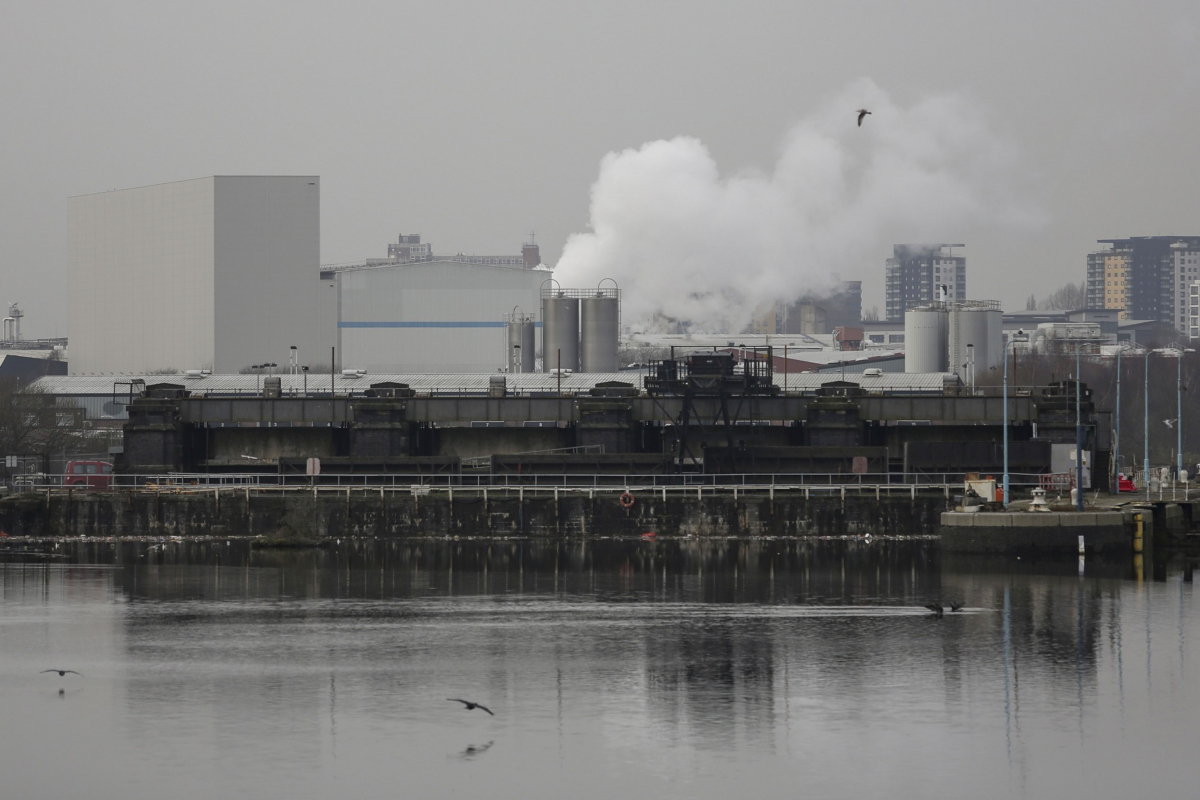
Factories operate on the banks of a river in Manchester, England, on Feb. 5, 2020. MUST CREDIT: Bloomberg photo by Paul Thomas.

Factories operate on the banks of a river in Manchester, England, on Feb. 5, 2020. MUST CREDIT: Bloomberg photo by Paul Thomas.

Then Mathew, 33, begins a completely different journey, one that exposes the underlying malaise in the economy: the weakest productivity performance since the Industrial Revolution. It’s something the government must contend with just as the U.K. enters a critical juncture after leaving the European Union and tackles the coronavirus outbreak.

In an all-too-familiar account of Britain outside the big cities, Mathew’s next dozen or so miles require either a taxi or a combination of tram and bus that can add another hour again. The poor infrastructure hampers the company’s ability to attract staff because too many simply can’t get to work on time. One employee commutes from a town 30 miles away and it can take more than two hours by car or train. Road congestion regularly delays deliveries.

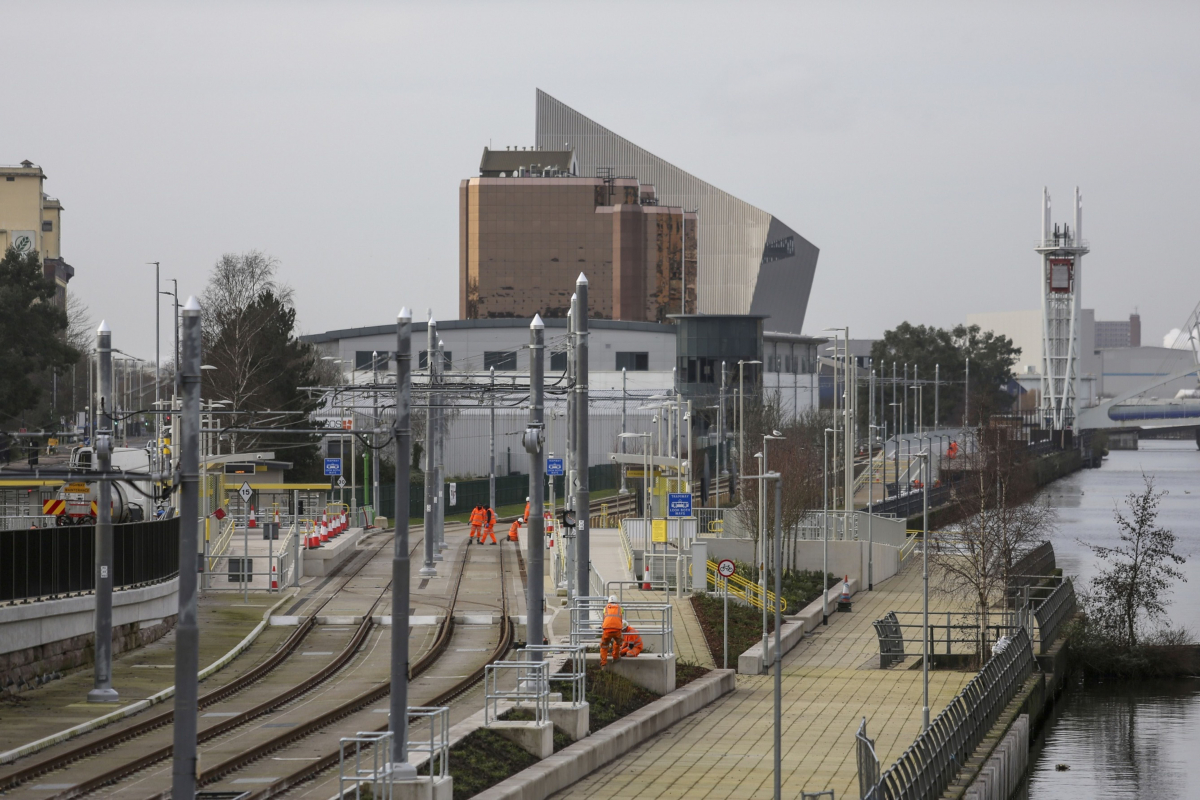
Workmen work on the site of the new Wharfeside tram stop in Trafford Park in Manchester, England, on Feb. 5, 2020. MUST CREDIT: Bloomberg photo by Paul Thomas.

Workmen work on the site of the new Wharfeside tram stop in Trafford Park in Manchester, England, on Feb. 5, 2020. MUST CREDIT: Bloomberg photo by Paul Thomas.

“They seem to be obsessed with huge projects, headline grabbers, when actually the question is could they be doing more around how much businesses our size make up of the economy,” says Mathew. “If you can improve the productivity of those companies, you’re going to improve the productivity of the whole country.”

The fact that the British spend more time than just about any developed nation for the same economic benefit presents the biggest challenge to a government aiming to make the country a powerhouse outside the EU-with or without a trade deal with the bloc.

Poor productivity is the slow puncture that has curtailed economic growth potential to just over a third of the government’s 2.8% target and left companies at bottom of the league table for efficiency of output. The government’s task is also made tougher by the huge disparity between London and anywhere more than an hour north.

A report by the Office for National Statistics on Feb. 29 showed an hour of work in London produced 44% more gross value to the economy than the northwest or a whopping 76% more than the part of the Manchester metropolitan area that includes Bury. Productivity there is lower than it was in 1994.

“Leveling up” the country has become the mantra of Prime Minister Boris Johnson after so many voters in northern regions abandoned their traditional politics and defected to his Conservative Party in December’s election as he promised to “Get Brexit Done.”

Next week’s budget is expected to deliver billions of pounds of infrastructure spending based on a review of the government’s “Green Book,” the guidelines for projects. Chancellor of the Exchequer Rishi Sunak will also address the potential impact of the latest global headwind, coronavirus.

“We are on the verge of a Japan-like decade of stagnation if we can’t transform productivity,” says Tony Danker, chief executive of Be the Business, a group that aims to boost U.K. competitiveness. “This is the secret sauce missing in the economy that will fuel growth.”

Bury, population 80,000, is one of the red-brick northern towns that encapsulates Britain’s Victorian heyday and the challenges the country now faces. Geographically, it’s in a prime spot in the shadow of Manchester, the city that defined the Industrial Revolution. The railways arrived in Bury in the 19th century, as did a hallmark of English life at the time, a local soccer club.

While the town is one of the lucky ones-it maintains its connection to central Manchester via the city’s tram network-it suffered from cuts after World War II as local industry went into decline. The only trains moving through Bury now are the historic steam and diesel engines that operate on the rescued heritage line. Bury Football Club was expelled from the soccer league last year because of financial trouble.

“This is the country that brought railways to the rest of the world,” shrugs volunteer John Hulme as he stands in the entrance to an old disused station, which now houses displays of bygone engines and signage from long-abandoned train stops.

The government’s spending plans include 100 billion pounds ($128 billion) on the HS2 high-speed rail network from London, even though it probably won’t reach Manchester until 2040. By comparison, new local bus and cycle networks to ease congestion on roads are slated to get just 5 billion pounds. A proposed east to west northern train line that could more than double average train speeds has yet to be approved.

But it’s those kind of smaller, more locally targeted initiatives that Mathew and his sister and business partner, Hannah Barlow, say would make a bigger difference to productivity-or, as they see it, efficiency and profitability.

Their business, Dunsters Farm Foodservice, was built up over 60 years from their grandfather’s milk deliveries. It needs to get vans out from the 20,000 square-foot warehouse to schools before parents drop off their kids, something again Barlow blames on a lack of alternatives. Shifts run from 4 a.m. to 11 p.m., in part to take traffic into account.

“With the northern archaic system, everyone just jumps in a car and that does have an impact on our deliveries, our stock,” says Mathew.

To get more done for the cost, they have focused on technology, streamlining the process by which orders are picked from the warehouse and replacing paper lists with management software. That reduced the time employees spend walking around the vast floor space by as much as 40% and has given them a 99% plus accuracy rate, meaning dramatically fewer extra deliveries to rectify problems.

“We weren’t thinking about being productive,” says Barlow. “We were thinking this is wasting time, it’s wasting money.”

Research by the Industrial Strategy Council, which oversees the government’s efforts to boost productivity and wage growth, found that locally tailored policies would be more effective than top-down, big-ticket projects.

There’s also the issue of Brexit. Tougher immigration rules are designed to staunch the supply of cheaper labor from Eastern Europe, and one of the goals is to force companies to invest in technology and machinery that can reduce the need for manual workers.

But in the meantime the economy faces significant hurdles. Uncertainty over whether Brexit would happen-Britain finally left the EU on Jan. 31 after 3 ½ years of wrangling-has given way to the prospect of turmoil over trade talks. The Bank of England said in January that the limit the economy can grow without generating inflation is now just 1%.

Now there’s the impact of coronavirus, which the Organisation for Economic Cooperation and Development said could shrink the global economy this quarter.

“It’s easier for firms to improve productivity when demand for their product is rising, but the slowdown in the economy means that for many firms demand has been flat or even falling,” says John Young, one of the Bank of England’s network of representatives based in the northwest.

There’s also not the same money being spent everywhere. A report by the Resolution Foundation think-tank published a week before the government’s budget highlighted the stark differences in regional public investment. London’s spending per head of 1,456 pounds in 2018-19 was 53% more than in the northwest and more than double that of the East Midlands.

At the Dunsters warehouse on the outskirts of Bury, Mathew and Barlow urged the government to focus less on the new high-speed train link and do more for what’s known as “soft infrastructure” like better broadband.

“There’s probably a lot more productivity stuff that could be done without HS2, but it gets all the fanfare,” she says. “Give people the support on the ground.”

Renewed demand amid Covid-19 crisis pushes up gold price #ศาสตร์เกษตรดินปุ๋ย

#ศาสตร์เกษตรดินปุ๋ย : ขอบคุณแหล่งข้อมูล : หนังสือพิมพ์ The Nation

https://www.nationthailand.com/business/30383563?utm_source=category&utm_medium=internal_referral

Renewed demand amid Covid-19 crisis pushes up gold price

Mar 07. 2020
By The Nation

Comex futures gold contracts increased by US$4.40 to $1,672.40 per ounce at Friday’s close as investors turned to safe-haven assets following the worldwide spread of the new coronavirus (Covid-19).

Throughout the week, Comex futures gold contracts rose by $105.70, making the highest weekly record since 2011.

The Gold Traders Association reported on Friday that gold bar closed at a buying price of Bt24,900 per baht weight and selling price of Bt25,000, while gold ornaments’ buying price was Bt24,453.08 and selling price Bt25,500.

According to the US Johns Hopkins University, there are more than 100,000 cases of Covid-19 patients worldwide, while the number of patients had increased outside China.

At 8pm US time on Friday (8am Thailand time Saturday), the number of patients worldwide had reached 100,055. China has the most number of patients, followed by South Korea, Iran and Italy, while the death toll was 3,398.

Meanwhile, the World Health Organisation increased the death rate from Covid-19 to 3.4 per cent from the previous 2 per cent.

Trump administration exempts face masks and medical gowns from import tariffs as coronavirus spreads #ศาสตร์เกษตรดินปุ๋ย

#ศาสตร์เกษตรดินปุ๋ย : ขอบคุณแหล่งข้อมูล : หนังสือพิมพ์ The Nation

https://www.nationthailand.com/business/30383541?utm_source=category&utm_medium=internal_referral

Trump administration exempts face masks and medical gowns from import tariffs as coronavirus spreads

Mar 07. 2020
By The Washington Post · Jeanne Whalen · NATIONAL, BUSINESS, HEALTH, US-GLOBAL-MARKETS 

U.S. trade officials have exempted medical gowns, protective masks and other healthcare products made in China from trade-war-related import tariffs as demand soars amid the coronavirus crisis.

The exemptions, dated March 5, were posted on the website of the Office of the United States Trade Representative.

Recipients of the exemptions include VistaLab Technologies Inc., Cardinal Health and Medline Industries Inc. Disposable lab coats, medical drapes, exam gloves, medicine cups and stethoscope covers are among the more than 100 products exempted, as reported earlier by The Wall Street Journal.

USTR granted the exemptions in response to requests made by the companies. In a Jan. 31 letter, the Advanced Medical Technology Association urged USTR to lift the tariffs on products “critical to helping to contain the coronavirus in the U.S. and in China.”

“Including medical technology products on the USTR tariff list is troubling from a public health perspective,” the industry group added.

The Trump administration began imposing extra import tariffs on goods made in China in 2018, in a bid to force Beijing to abandon trade policies that the U.S. has long labeled discriminatory. The countries signed a partial trade truce in January, but most of the tariffs remain in place.

In a statement Friday, Medline Industries called the exemptions “helpful,” but added that USTR had denied some of the company’s exemption requests.

“Just yesterday, 33 other exclusion requests were denied, including surgical drapes and biohazard bags,” said the company, based in Northfield, Illinois. Overall the tariffs have cost Medline more than $100 million and had “a significant impact on healthcare and its costs,” the company said.

The U.S. labor market was strong in February, but coronavirus outbreak has upended future outlook #ศาสตร์เกษตรดินปุ๋ย

#ศาสตร์เกษตรดินปุ๋ย : ขอบคุณแหล่งข้อมูล : หนังสือพิมพ์ The Nation

https://www.nationthailand.com/business/30383540?utm_source=category&utm_medium=internal_referral

The U.S. labor market was strong in February, but coronavirus outbreak has upended future outlook

Mar 07. 2020
File photo /Syndication Wasington Post, Bloomberg

File photo /Syndication Wasington Post, Bloomberg
By The Washington Post · Taylor Telford, Rachel Siegel · NATIONAL, BUSINESS, US-GLOBAL-MARKETS

The U.S. economy added 273,000 jobs in February, showing impressive strength before the coronavirus outbreak began weighing heavily on the U.S. economy.

The report, published by the Bureau of Labor Statistics, offer the snapshot of an economy that was relatively strong in the days leading up to the coronavirus’s spread into the United States.

The jobs data were collected largely before U.S. financial markets began a dramatic slide, oil prices fell sharply, the Federal Reserve announced an emergency interest rate cut, and Congress rushed to pass an $8.3 billion spending bill to bulwark the government’s health readiness.

The unemployment rate in February fell slightly to 3.5 percent, near a 50-year low. The outstanding growth was driven by gains in health care, restaurants, government and construction hiring. But many investors and business executives are more concerned about the future.

Wall Street ended its tempestuous, week-long coronavirus ride on Friday with all three major stock indexes in the red for this year and investors continued to flee to the safety of government bonds because they are unsure what the virus’s impact on the economy will be.

“The employment report was nearly perfect in February before the growing economic storm posed by the spreading coronavirus around the country that threatens many industries where the public gathers from movies, to travel, to the airline industry, even shops and malls,” Chris Rupkey, chief financial economist of MUFG Union Bank, wrote in a commentary Friday.

President Donald Trump heralded the “tremendous” jobs report while he signed Congress’ $8.3 billion emergency coronavirus spending package. He said the jobs report was evidence of the country’s continued economic resilience in the face of the outbreak. But as he spoke, White House officials were considering targeted steps to help the airline, travel, and cruise industries stabilize after many Americans have canceled trips because of concerns about the virus’s reach.

Over the past few weeks, experts have gone from sanguine to increasingly alarmed about the virus’ threat to global growth, as the outbreak has spread to nearly 90 countries and sickened more than 100,000. Global markets have shown volatility and fallen sharply as investors monitored the coronavirus’ dampening effect on manufacturing, travel and consumer spending. Analysts are predicting global growth could slow to the lowest levels since the financial crisis this quarter.


The price of oil dropped sharply Friday as talks between OPEC and Russia over production cuts collapsed without a deal. Brent crude was down 8 percent, to about $46 a barrel by late morning Eastern time.

“This is an existential threat to many oil companies if the price per barrel doesn’t stabilize and go higher,” said John Kilduff of Again Capital. “Many of the companies are unprofitable when oil prices are under $50 per barrel. They will drop like flies over the course of the second half of the year if prices don’t move higher.”

Stalled production at Chinese factories has dealt blows to toy makers and electronics manufacturers alike, many of whom were already dealing with the unpredictability of President Trump’s trade war with China. Earlier this week, the Federal Reserve took the unusual step of cutting the benchmark U.S. interest rate by half a percentage point, to get ahead of economic and financial fallout from the coronavirus.

As investors have largely fled global stocks in the past two weeks, many have piled into the safety of U.S. government debt, which pays a low yield but also carries low risk. At its current price, the 10-year Treasury bond is paying less than 1 percent interest. The 10-year note is a crucial global financial measure that can be an indicator of future economic health, as well as a marker for mortgage rates and car loans.

“The low yield on the 10-year Treasury is a sign that the investors are very concerned about future growth in the economy,” said Eric Jacobson, senior fixed income research analyst at Morningstar. “That’s what happens. When people are worried about everything else, they run to Treasurys because they know they are going to get paid back.”

The labor market data showed just how far the economy had come before the coronavirus outbreak began taking its toll. Temporary jobs, which may have been one of the first employment areas impacted by the coronavirus, declined by 3,300 in February.

The fresh February data shows that women continue to outnumber men in the workforce, a threshold which was crossed in December for only the second time in history.

Wage growth continued to climb, with workers seeing their average hourly earnings rise 3 percent in the past year.

Still, economists are worried about the leisure and hospitality industries going forward. Chinese tourists are suddenly missing from major tourist destinations, and Visa warned of a significant blow to profits from reduced travel and tourism to and from Asia. Global airline stocks have shed $41 billion in value, or 25 percent of the sector’s market cap, in the past month. The International Air Transport Association is predicting an 11 to 19 percent drop-off in global passenger revenue this year, driven by falls in airfreight and cargo.

“Many of these industries, such as leisure and hospitality, are among those most likely to be affected by the coronavirus and related fears,” Nick Bunker, economic research director at Indeed, wrote in a commentary. “This forward momentum could help these industries weather this shock, but also raises the possibility that job growth may slow significantly if the impact of the virus hits these industries hard.”

Industries with large numbers of workers who can do their jobs from home are less likely to be impacted, said Julia Pollak, ZipRecruiter’s labor economist. In the past three years, ZipRecruiter, an online employment marketplace, has seen the share of job postings that offer work from home increase 40 percent.

“We’re about to see a major experiment in increased work from home,” Pollak said. “Work that’s not based on person-to-person service provision, as with manicures, teaching or nursing, may not be affected at all.”

Analysts had predicted an uptick of 140,000 to 170,000 jobs. But some of these big gains are expected to be lost in the months to come if the coronavirus outbreak doesn’t end soon.

Wild week on Wall Street ends with stocks down, bond prices up, and coronavirus fears persisting #ศาสตร์เกษตรดินปุ๋ย

#ศาสตร์เกษตรดินปุ๋ย : ขอบคุณแหล่งข้อมูล : หนังสือพิมพ์ The Nation

https://www.nationthailand.com/business/30383539?utm_source=category&utm_medium=internal_referral

Wild week on Wall Street ends with stocks down, bond prices up, and coronavirus fears persisting

Mar 07. 2020
By The Washington Post · Thomas Heath · BUSINESS, US-GLOBAL-MARKETS

Wall Street ended its tempestuous, week-long coronavirus ride on Friday with all three major stock indexes in the red for this year and with a critical economic indicator flashing caution.

The Dow Jones industrial average finished Friday down more than 250 points, rallying hundreds of points in the final minutes of the trading session. The blue chip index dropped despite a strong jobs report Friday that exceeded analysts’ expectations. The Standard & Poor’s 500 and Nasdaq composite declined nearly 2% each.

Contributing to the sell-off was the alarming drop in the 10-year Treasury yield, which at its current price means bonds are paying less than 1% interest. The 10-year note is a crucial global financial measure that can be an indicator of future economic health, as well as a marker for mortgage rates and car loans. Investors are fleeing equities for the safety of the 10-year notes, which are viewed as a bulwark against financial mayhem.

“The low yield on the 10-year Treasury is a sign that the investors are very concerned about future growth in the economy,” said Eric Jacobson, senior fixed income research analyst at Morningstar. “That’s what happens. When people are worried about everything else, they run to Treasurys because they know they are going to get paid back.”

Despite all the turbulence, which included several thousand-point swings in the Dow, the stock market ended the week higher from where it began. But it is still down sharply where its peak in mid February, and the coronavirus’s spread in the United States and elsewhere has many investors concerned that economic problems will only worsen.

The trading day was rougher in Europe, with the benchmark Stoxx 600 index and Germany’s DAX both plummeting 3%, France’s CAC 40 down 4% and Britain’s FTSE 100 slid 3.6%.

Asian markets were less bruised then Europe, due in part to reports that Chinese industries may be stabilizing. Hong Kong’s Hang Seng Index declined 1% and the tech-heavy Shanghai Index slid 1%. Japan’s Nikkei was down around 3% early Friday.

“While the rest of the world is freaking out, China’s going back to work,” said Mark Greeven, professor of innovation and strategy at the IMD business school in Lausanne, Switzerland, in an email.

All 11 Standard & Poor’s stock market sectors lost value Friday, with energy shellacked by a 10% drop in the price of a barrel of oil. Only four of the 30 Dow Jones components were in positive territory heading into the final minutes of the session.

The price of oil dropped sharply Friday as talks between OPEC and Russia over production cuts collapsed without a deal. Brent crude was down 8%, to about $46 a barrel by late morning Eastern time.

Saudi Arabia had pushed hard for a reduction of 1.5 million barrels a day in order to prop up the price as world demand for oil weakens in the face of the covid-19 epidemic. But Russia, which has been in a cooperative arrangement with the Organization of the Petroleum Exporting Countries since 2016 called OPEC+, believes it can weather lower prices. Cheaper oil would allow Russia to maintain market share while putting a squeeze on American shale producers, who have dramatically increased production over the past four years but face higher expenses.

But the apparent failure to reach an agreement at the OPEC meeting in Vienna Friday threatens to rupture Russia’s ties with the cartel, although the Russian news agency TASS reported that Russia has asked for more time and is agreeable to further talks.

As Russian Energy Minister Alexander Novak left the meeting Friday, he told reporters, “We have just signed a joint document that we will continue to work and interact,” according to the Ria Novosti news agency.

The breakdown “is an unexpected development that falls far below our worst case scenario and in our view will create one of the most severe oil price crises in history,” Bjoernar Tonhaugen, head of oil market research for Rystad Energy, a Norwegian firm, wrote in a note. “The decision risks sending oil prices into a free-fall.”

“This is an existential threat to many oil companies if the price per barrel doesn’t stabilize and go higher,” said John Kilduff of Again Capital. “Many of the companies are unprofitable when oil prices are under $50 per barrel. They will drop like flies over the course of the second half of the year if prices don’t move higher.”

Low oil prices hurt the petroleum industry, but consumers benefit because of lower gasoline prices and home heating costs. Because oil is a base ingredient in many products – from drugs to plastic – low prices can help blunt inflation.

The strong jobs report on Friday did not move the market much. The U.S. economy added 273,000 jobs in February, showing impressive growth and strength even amid concerns about the economic fallout of the coronavirus.

The unemployment rate fell slightly to 3.5% from 3.6%. The jobless rate remains near a 50-year low. The outstanding growth was driven by gains in health care, restaurants, government and construction hiring.

At Thursday’s close, U.S. stocks had declined a total of $3.67 trillion in value since the market’s high on Feb. 19, according to Howard Silverblatt of S&P Dow Jones Indices.

“The easiest path during this period of uncertainty is to sell first and ask questions later,” said Sarat Sethi of Douglas C. Lane & Associates. “People need to be prepared for this to continue for a little while. The reaction to this virus will slow economic activity for at least the next couple of quarters. But it won’t permanently impair the economy.”

The three leading U.S. stock indexes tipped into a correction for the second time this week on Thursday. A correction is a 10% decline from recent highs.

The Dow closed down almost 970 points Thursday as investors fled stocks and headed for the safety of U.S. debt. The Dow ended Thursday 3.5% lower on the day to finish at 26,121. The S&P 500 fell to 3,023, a 3.4% drop. The technology-laden Nasdaq Composite slid to 8,738.60, erasing 3.1% of its value.

All 11 S&P sectors had finished negative, with financials, industrials and energy the worst performers. All 30 Dow blue-chip stocks were in the red. United Technologies, aerospace giant Boeing, JP Morgan Chase and Goldman Sachs were among the Dow’s biggest drags. Profits for financial firms decline in a low-interest rate environment.

The markets had been seesawing all week. Thursday’s market trauma followed an exuberant Wednesday when investors – heartened by Joe Biden’s Super Tuesday victories – propelled the Dow nearly 1,200 points upward, more than 4.5%, while the S&P 500 and the Nasdaq climbed 4.2% and 3.85%, respectively. The bounce came after the International Monetary Fund committed $50 billion to fight coronavirus in low-income and emerging-market countries.

Lack of clarity on where the virus was headed had dulled investors’ attempts to bring some equilibrium to stock and bond markets.

“Despite all the talk about the virus, the truth is that no one knows what path it will take, how long it will last, and how severe it will be,” said Nancy Davis, chief investment officer of Greenwich, Connecticut-based Quadratic Capital in a note this week. “So the uncertainty will continue to feed higher volatility.”

The decline in the yield of the 10-year Treasury note isn’t all bad. Many lenders mark their interest rates to the 10-year, and that can have a salutary effect on the economy, driving mortgage rates down, spurring borrowing for businesses and home-equity loans as well as spending in general. On Thursday, mortgage rates also hit record lows.

The market mayhem failed to ease even after President Donald Trump on Friday signed a $8.3 billion emergency spending bill to combat the coronavirus that the Senate passed on Wednesday.

The money includes research funds to find a virus vaccine and assistance to local communities to combat the epidemic. It also will help fund small businesses to help them navigate the crisis.

The global death toll from the coronavirus had surpassed 3,200, and more than 97,000 people have been infected. The outbreak’s hold on the United States is also tightening, with California declaring a state of emergency after its first coronavirus-linked death brought the nation’s death toll to 11.

The outbreak has disrupted global supply chains and threatens to stymie economic growth since the first cases emerged in Wuhan, China, in late December, roiling markets across the globe. Trump has staked much of his argument for reelection on the strength of the economy and of Wall Street, which had been setting record highs as recently as three weeks ago.

Global travel is plummeting as event cancellations and travel restrictions mount, delivering a brutal blow to tourism, aviation, cruises and hospitality. Airline stocks rebounded Friday after White House economic advisor Larry Kudlow said the administration was considering a stimulus to cushion the industry from the effects of the coronavirus on travel.

Delta Air Lines, American and Southwest all spiked on the news.

Virus keeps pressure on SET index #ศาสตร์เกษตรดินปุ๋ย

#ศาสตร์เกษตรดินปุ๋ย : ขอบคุณแหล่งข้อมูล : หนังสือพิมพ์ The Nation

https://www.nationthailand.com/business/30383526?utm_source=category&utm_medium=internal_referral

Virus keeps pressure on SET index

Mar 06. 2020
By The Nation

The Stock Exchange of Thailand (SET) index closed at 1,364.57 on Friday (March 6), for a decrease of 26.26 points and 1.89 per cent over Thursday’s close.

Daily trade volume was Bt52.201 billion, with an index high of 1,374.20 and a low of 1,359.75.

A stock analyst at Krungsri Securities speculated that the index would fall between 1,360 and 1,370 points before rebounding due to uncertainty over the Covid-19 situation, which is becoming more severe in the United States and elsewhere.

“Investors are still under pressure, which can be seen in the rising gold price and declining US bond yields,” he said.

“However, the index will rebound on internal positive sentiment after the Cabinet signalled its readiness to consider the first set of Covid-19 relief measures worth Bt100 billion, including an adjustment of Super Savings Fund criteria, making it similar to the Long-term Equity Fund.”

The 10 stocks with the highest trade value today were PTT, CPALL, BAM, ADVANC, KBANK, SCB, AOT, GPSC, PTTEP and TOP.

Elsewhere in Asia:

Japan’s Nikkei Index closed at 20,749.75, down 579.37 points or 2.72 per cent.

China’s Shanghai SE Composite Index closed at 3,034.51, down 37.17 or 1.21 per cent.

Shenzhen’s SE Component Index closed at 11,582.82, down 128.56 or 1.10 per cent.

Hong Kong’s Hang Seng Index closed at 26,146.67, down 621.20 or 2.32 per cent.

South Korea’s KOSPI Index closed at 2,040.22, down 45.04 or 2.16 per cent.

Taiwan’s TAIEX Index closed at 11,321.81, down 193.01 or 1.68 per cent.

Gold price holds steady #ศาสตร์เกษตรดินปุ๋ย

#ศาสตร์เกษตรดินปุ๋ย : ขอบคุณแหล่งข้อมูล : หนังสือพิมพ์ The Nation

https://www.nationthailand.com/business/30383525?utm_source=category&utm_medium=internal_referral

Gold price holds steady

Mar 06. 2020
By The Nation

The price of gold remained unchanged at the close of markets on Friday (March 6), the Gold Traders Association reported.

At 5.04pm, the buying price of a gold bar was Bt24,900 per baht weight and the selling price Bt25,000

old ornaments were Bt24,453.08 to buy and Bt25,500 to sell.

At Thursday’s close, a gold bar was Bt24,450 to buy and Bt24,550 to sell, and gold ornaments Bt24,013.44 to buy and Bt25,050 to sell.

Comex futures gold contracts increased by US$25 to $1,668 (Bt52,518.50) per ounce at Thursday’s close as investors turned to safe-haven assets amid Covid-19 worries.

Virus’ cost to Thailand likely Bt176 bn, says ADB #ศาสตร์เกษตรดินปุ๋ย

#ศาสตร์เกษตรดินปุ๋ย : ขอบคุณแหล่งข้อมูล : หนังสือพิมพ์ The Nation

https://www.nationthailand.com/business/30383521?utm_source=category&utm_medium=internal_referral

Virus’ cost to Thailand likely Bt176 bn, says ADB

Mar 06. 2020
By The Nation

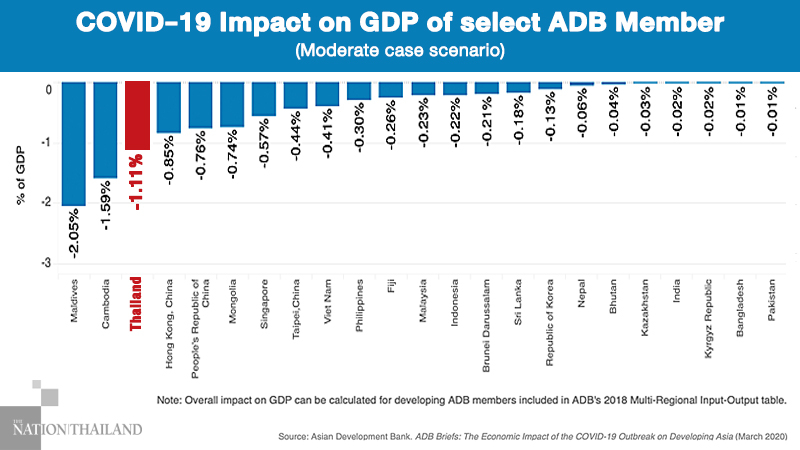
The Covid-19 virus could cost Thailand US$5.6 billion (Bt176 billion), the Asian Development Bank warned on Friday (March 6).

In an analysis covering all countries and territories in the region, the ADB cited sharp declines in domestic demand, less tourism and business travel, weakened trade and production linkages and supply disruptions, as well as the enormous outlay on health treatment.

“The magnitude of the economic impact will depend on how the outbreak evolves, which remains highly uncertain,” it said, adding that a “range of scenarios” had to be considered.

“The range of scenarios [the ADB] explored suggests a global impact of $77 billion to $347 billion, or 0.1-0.4 per cent of global GDP, with a moderate-case estimate of $156 billion or 0.2 per cent of GDP.”

The Thai economy is likely to lose $5.6 billion – 1.11 per cent of GDP – in a moderate case, it said.

Two-thirds of the outbreak’s impact falls on China, the ADB said, but the whole region will share the pain of “a sharp but temporary decline in domestic consumption and possibly investment, if the outbreak affects views on future business activity”.

There will be “declines in tourism and business travel, spill-overs of weaker demand to other sectors and economies through trade and production linkages, supply-side disruptions to production and trade, and effects on health such as increased disease and mortality as well as shifts in health care spending.

“ADB developing members that will be significantly affected are those with strong trade and production linkages with China. In addition to tourism-dependent economies, other developing economies such as Hong Kong, Mongolia, the Philippines, Singapore, Taipei and Vietnam will be materially affected.