Surge in gold exports to limit weakening of baht: analyst #ศาสตร์เกษตรดินปุ๋ย

#ศาสตร์เกษตรดินปุ๋ย : ขอบคุณแหล่งข้อมูล : หนังสือพิมพ์ The Nation

https://www.nationthailand.com/business/30382808?utm_source=category&utm_medium=internal_referral

Surge in gold exports to limit weakening of baht: analyst

Feb 25. 2020
By The Nation

The baht traded slightly higher in Tuesday morning trade at Bt 31.65 to the US dollar after closing on Monday at Bt 31.69/dollar, Jitipol Puksamatanan, senior director at SCB Securities (SCBS), said.

He expected the baht to move in a range of Bt31.60 to Bt31.70 against the greenback on Tuesday.

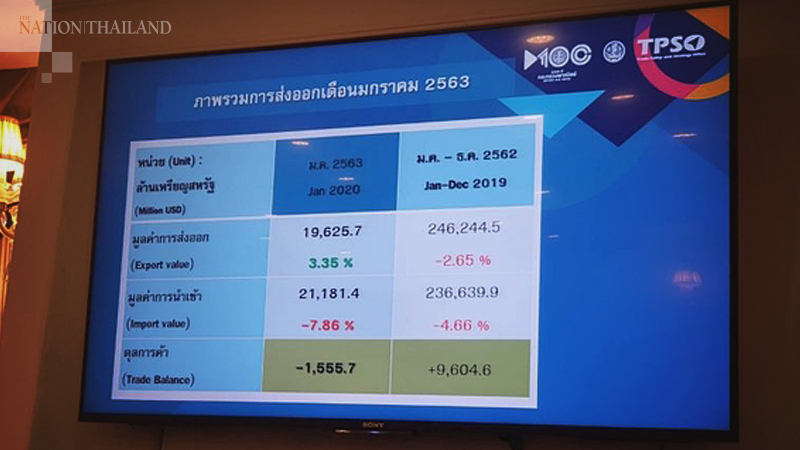
The baht moved up again as export of gold increased, suggesting that Thailand will remain a gold exporter when demand for the precious metal in the market is high. The large volume of gold exported last month partly contributed to a return of Thai exports growth, rising to 3.35 per cent after six straight months of contraction.

As investors rushed to buy safe-haven assets over concerns of Covid-19 spreading outside China, investors are expected to continue to dump Thai stocks, he said. They, however, may buy Thai bonds, so their investment strategy would stabilise the baht value, preventing it from further sliding today.

US financial markets faced a sell-off on Monday night, as the S&P500 fell 3.35 per cent, while in Europe, the Euro Stoxx and Britain’s FTSE 100, plunged 4.01 per cent and 3.34 per cent respectively. It was their worst performance since August last year. In the global bond markets, the US 10-year yield dipped below 1.40 per cent for the first time since 2016 while the Japanese bond yield also went down to minus 0.09 per cent, the lowest level since November last year as investors worried about the impact of Covid-19 on the economy.

Investors see Japanese bonds and the yen as safe-haven assets. The Australian and New Zealand dollars went down due to decreasing prices of commodities products. This made the US dollar unchanged against other major currencies last night.

Trudeau seeks talks after protest broken up #ศาสตร์เกษตรดินปุ๋ย

#ศาสตร์เกษตรดินปุ๋ย : ขอบคุณแหล่งข้อมูล : หนังสือพิมพ์ The Nation

https://www.nationthailand.com/business/30382782?utm_source=category&utm_medium=internal_referral

Trudeau seeks talks after protest broken up

Feb 25. 2020
Demonstrators stand at a rail blockade, during a protest near Belleville, Ontario, Canada, on Feb. 13, 2020. MUST CREDIT: Bloomberg photo by Brett Gundlock.

Demonstrators stand at a rail blockade, during a protest near Belleville, Ontario, Canada, on Feb. 13, 2020. MUST CREDIT: Bloomberg photo by Brett Gundlock.
By Syndication Washington Post, Bloomberg · Sandrine Rastello, Stephen Wicary · WORLD, THE-AMERICAS 

Prime Minister Justin Trudeau’s government hopes to restart talks with Indigenous groups now that police have begun to clear a key rail blockade that has disrupted Canada’s economy for weeks.

Trudeau met with his top officials in Ottawa on Monday morning as provincial authorities moved in to clear a protest site near Belleville, Ontario. The blockade by Mohawk leaders was erected Feb. 6 in solidarity with some Wet’suwet’en Nation hereditary chiefs in British Columbia who oppose TC Energy Corp.’s Coastal GasLink pipeline, a C$6.6 billion ($5 billion) liquefied natural gas project.

“We are committed to reconciliation and we are committed to sitting down and having a dialogue over the specific problem that exists with the Wet’suwet’en,” Transport Minister Marc Garneau told reporters after the cabinet meeting. “But at the same time the barricades had to come down because it was having a profound effect on the economy.”

Demonstrations in several provinces by environmental and indigenous-rights activists had crippled freight and passenger traffic across Canada. Some blockades came down thanks to injunctions obtained by Canadian National Railway Co., but the one in Tyendinaga, Ontario — along the key Toronto-to-Montreal corridor — persisted past a midnight deadline Sunday, prompting police to move in.

While Public Safety Minister Bill Blair said he is concerned about potential blowback from the detentions, he doesn’t think the Mohawk protesters intended to cause harm to the broader population. “Once those barricades are down, come back to the table. We’ve got so much work to do,” he said after the meeting with Trudeau.

Indigenous Services Minister Marc Miller, speaking Monday afternoon outside the legislature, added: “We’re not only fighting days of suspicion and mistrust, but decades and even centuries in some cases.”

Protesters were detained by police in Tyendinaga, as provincial governments followed through on warnings that they would clear rail lines that have been blocked for weeks.

At least three demonstrators were restrained by provincial police Monday morning, according to the state broadcaster. They were warned Sunday that they’d face a police investigation and charges if they didn’t obey a midnight deadline to disperse, the Canadian Broadcasting Corp. reported, citing a Mohawk source. The blockade is about 130 miles northeast of Toronto.

“The Ontario Provincial Police has taken action to resolve protest activity and remove the barriers to rail service in and near Tyendinaga Township,” according to a statement. “We have remained respectful of the ongoing dialogue, including issues of sovereignty between our Indigenous communities and various federal ministers.”

Trudeau, who spoke with premiers from British Columbia, Ontario and Quebec on Sunday, informed them “of measures being taken to ensure that critical needs are addressed across Canada, including propane, chemicals to treat drinking water, and essential agricultural products,” according to a statement from his office.

On Saturday, Blair called officials in Ontario and Quebec to discuss “ongoing work to end” the blockades, according to statements from his office. He told Quebec’s minister of municipal affairs and housing that he “appreciated the measured and effective approach taken by the police in Quebec.”

Having asked for patience throughout last week, Trudeau changed tack on Friday afternoon. “We cannot continue to watch Canadians suffer shortages and layoffs,” the prime minister said in a televised address to the nation, adding that the responsibility to enforce court orders lies with provincial police forces. “The barricades must now come down,” he said.

U.S., global markets plunge as coronavirus cases spike, creating ‘economic pandemic’ #ศาสตร์เกษตรดินปุ๋ย

#ศาสตร์เกษตรดินปุ๋ย : ขอบคุณแหล่งข้อมูล : หนังสือพิมพ์ The Nation

https://www.nationthailand.com/business/30382772?utm_source=category&utm_medium=internal_referral

U.S., global markets plunge as coronavirus cases spike, creating ‘economic pandemic’

Feb 25. 2020
By The Washington Post · David J. Lynch, Rachel Siegel, Thomas Heath · BUSINESS, US-GLOBAL-MARKETS · 

Financial markets plunged Monday as the spread of the coronavirus that has ravaged China threatens economic havoc on a global scale.

The Dow Jones industrial average sank by more than 1,000 points, or 3.6%, to close at 27,961.01 after Wall Street interpreted new disease clusters in South Korea, Italy and Iran as a sign that the respiratory illness has outraced confinement efforts. The technology-heavy Nasdaq index fell by more than 3.7%.

Factories around the world are grappling with parts shortages as their Chinese suppliers struggle to resume normal operations. With global economic engines sputtering, the Federal Reserve and other central banks face calls for emergency help.

But central bank chiefs may be ill equipped to battle the economic consequences of the flu-like illness, which has prevented many Chinese workers from returning to their assembly lines and kept consumers at home instead of shopping. Interest rates are in negative territory in Europe and at near-historic lows in the United States. And while making credit less expensive – the Fed’s standard tool for combating a slump – may offset some of the financial upheaval, it can do little to remedy broken supply chains or ease individuals’ fears of contagion.

“There’s just growing angst in the investor community that this thing is more serious than we realized,” said Chris Meekins, an analyst with Raymond James and a former Trump administration preparedness official. “When you’re worried about catching a disease, you’re not going to go out to dinner; you’re not going to go to the movies or sporting events or concerts. The only question is how widespread this becomes.”

President Donald Trump weighed in after the close of trading with an upbeat tweet proclaiming the virus “very much under control in the USA” and urging investors to adopt a buy-the-dip approach. “Stock Market starting to look very good to me!” the president tweeted.

One of his top economic advisers was equally positive. “The coronavirus will not last forever. The U.S. looks well contained and the economy is fundamentally sound,” National Economic Council Director Larry Kudlow told The Washington Post in an interview late Monday. “If you’re a long-term investor, you should seriously consider buying these dips,” he said.

Still, the administration’s cheerleading seemed at odds with news that the number of U.S. cases had reached 53, including 36 patients who had been evacuated from the Diamond Princess cruise ship and returned to the United States.

The comments also defied the market’s verdict, showing that the illness extends into every corner of the global economy. Shares of automakers such as Renault are down nearly 30% this year. Three cruise lines – Norwegian Cruises, Royal Caribbean and Carnival – are all off by more than one-quarter. And declines in ExxonMobil, Burberry and Air China shares show the impact spreading into energy, consumer goods and airlines.

The financial toll spiked after reports over the weekend of sharp increases in case numbers in South Korea, Italy and Iran. Italy, which Moody’s says will fall into recession this quarter because of the virus, has the largest known outbreak outside Asia, with more than 200 confirmed cases and six deaths as of Monday. The caseload in South Korea, a critical link in the technology industry’s pan-Asian supply chain, climbed to 833. And a spokesman for Iran’s health ministry said the death toll in that country had reached 12.

Wall Street and official Washington were slow to grasp the coronavirus’s danger. Kudlow said at the end of January that the administration anticipated “no material impact” from the virus that first appeared in Wuhan, China. Likewise, stocks climbed steadily through the first several weeks of the health crisis.

But that sanguine mood is gone. Goldman Sachs on Monday cut its estimate for U.S. economic growth in the first quarter to 1.2% from an original 1.4%, which would make it one of the weakest three-month periods in Trump’s presidency. And after weeks of playing down the likely impact outside China, investors on Monday rushed into traditional safe havens, sending the price of gold soaring as government bond yields, which move opposite prices, approached decade-old lows. Oil also fell into bear market territory amid expectations of prolonged global weakness.

“It may not be an actual pandemic yet, but it’s an economic pandemic,” said Diane Swonk, chief economist for Grant Thornton. “It’s global in scope and disrupting activity around the world.”

Monday’s markets action showed the rapid evolution of the coronavirus from a limited threat to supply chains into an across-the-board tightening of financial conditions, said Gregory Daco, chief U.S. economist for Oxford Economics. A spike in volatility may prompt businesses to pause planned investments. And as nervous global investors sought safety in U.S. assets, they pushed up the value of the U.S. dollar.

That will make imported goods for American consumers less expensive, chilling inflation and leaving the Fed further from hitting its goal of 2% annual price increases, which the central bank sees as a sign of a healthy economy. As a result, some investors now expect the Fed to cut rates as soon as next month to counteract some of the economic weakness.

“The Fed can’t eliminate all the risks on its own,” Daco said. “What the Fed can do is prevent a worsening of the situation.”

Narayana Kocherlakota, a former member of the Fed’s policymaking committee, called for the central bank to cut rates before the economy feels the full effects of the coronavirus. At a time when rates already are hovering around 1.5 to 1.75%, the risk of waiting is that the economy first tips into recession and the Fed doesn’t have room for a big enough cut to pull it out.

“The Fed has to do its best to keep the economy as healthy as it can and stimulate demand now,” said Kocherlakota, an economics professor at the University of Rochester. “It has to ease the pain for the economy as much as possible.”

Monday’s unsettling events showed that investors had wrongly assumed the coronavirus would be largely a China problem that might hobble the global economy in the first quarter but not beyond, said Meekins, who spent 19 months as a top Trump administration preparedness official in the Department of Health and Human Services.

On Monday, Chinese leaders postponed the National People’s Congress – the most prominent event on their political calendar – set for March 5. Beijing also reversed course after saying it would relax travel restrictions on the outbreak’s hotbed of Wuhan.

Raymond James’ estimate of the risk of a widespread outbreak in the United States has risen steadily over the past two weeks from 1 in 7, to 1 in 5 to 1 in 3. “And that may still be too low,” he said.

Gold, a safe haven in times of turmoil, climbed 1% to $1,659 an ounce. Crude oil skidded 4% on worries that the outbreak will subdue demand for months. China is the world’s largest energy consumer, but it has been buying less crude amid virus-related travel restrictions. Meanwhile, major oil producers have yet to reach a deal on emergency measures to scale back output. The drop in oil prices will ramp up pressure on OPEC – the Organization of the Petroleum Exporting Countries – and Russia to reduce oil supplies at an upcoming meeting in March.

The likelihood of more bad news as the virus expands to more countries makes further market rockiness likely, which could prompt the Fed to act, according to a research note from Ian Shepherdson, chief economist at Pantheon Macroeconomics. But it took a nearly 20% market drop and additional credit tightness in late 2018 to convince the Fed to retreat from plans to raise rates, so any move may not be imminent, he wrote.

Nathan Sheets, chief economist for PGIM Fixed Income, said the Fed can do only so much to help. “If U.S. firms can’t produce because supply chains are broken, a rate cut won’t get production lines rolling again. If spending is down because consumer confidence has been hit, a rate cut won’t reverse these anxieties,” he said. “That said, a rate cut can create a somewhat more supportive macro environment – a safety net of sorts – to help the economy absorb the shock.”

In a CNBC International interview that aired Monday, Treasury Secretary Steven Mnuchin said it would be difficult to “have strong predictions on the economic issues without being able to predict the health outcome.”

“I think we need another three or four weeks to see how the virus reacts until we really have good statistical data,” Mnuchin said.

The Chinese government reported 409 new coronavirus cases and another 150 deaths by the end of Sunday. There are now more than 77,000 confirmed cases, with a cumulative death toll of more than 2,500.


Nakhon Si Thammarat Airport abuzz with activity #ศาสตร์เกษตรดินปุ๋ย

#ศาสตร์เกษตรดินปุ๋ย : ขอบคุณแหล่งข้อมูล : หนังสือพิมพ์ The Nation

https://www.nationthailand.com/business/30382753?utm_source=category&utm_medium=internal_referral

Nakhon Si Thammarat Airport abuzz with activity

Feb 25. 2020
By THE NATION

Nakhon Si Thammarat Airport under the Department of Airports is busier than usual despite the Covid-19 coronavirus outbreak, said its director Thaworn Saeng-ampai on Monday (February 24).

He said some airlines have even asked for an airport permit to increase their flight frequency until late next month.

Thaworn added that Nok Air will increase the number of its flights to the airport – from four daily to five.

He said that last year the airport handled 1.48 million passengers. The airport is expanding its departure terminal to boost capacity. The expansion is expected to be completed in May.

GH Bank mortgage loans hit Bt12 billion in January #ศาสตร์เกษตรดินปุ๋ย

#ศาสตร์เกษตรดินปุ๋ย : ขอบคุณแหล่งข้อมูล : หนังสือพิมพ์ The Nation

https://www.nationthailand.com/business/30382746?utm_source=category&utm_medium=internal_referral

GH Bank mortgage loans hit Bt12 billion in January

Feb 25. 2020
GH Bank president Chatchai Sirilai

GH Bank president Chatchai Sirilai
By THE NATION

Government Housing Bank (GH Bank) posted higher mortgage lending early this year as commercial banks in the same period rejected an increased number of loan applications.

GH Bank president Chatchai Sirilai said today (February 24) that the bank’s mortgage loans in January rose to Bt12 billion from the regular level of around Bt8 billion in the period.

He said the bank has targeted more than Bt200 billion of mortgage loans this year, thanks to the government’s continued measures to encourage people to purchase houses and the trend of falling interest rates. He is confident the bank would meet its target.

Chatchai believes the low interest rate will remain for a long time to come.

The Bank of Thailand’s Monetary Policy Committee cut the policy rate by 0.25 percentage point, from 1.25 per cent to 1 per cent at its meeting on February 5, effective immediately.

Gold zooms toward $1,700 as virus fuels a ‘plethora’ of concerns #ศาสตร์เกษตรดินปุ๋ย

#ศาสตร์เกษตรดินปุ๋ย : ขอบคุณแหล่งข้อมูล : หนังสือพิมพ์ The Nation

https://www.nationthailand.com/business/30382764?utm_source=category&utm_medium=internal_referral

Gold zooms toward $1,700 as virus fuels a ‘plethora’ of concerns

Feb 24. 2020
By Syndication Washington Post, Bloomberg · Luzi Ann Javier, Yvonne Yue Li · BUSINESS, US-GLOBAL-MARKETS

Gold hovered near $1,700 an ounce, extending its rally to the highest in more than seven years, as investors pile into haven assets amid mounting worries that the coronavirus could turn into a global pandemic.

Italy’s financial hub is in virtual lockdown as the outbreak spread further outside China, heightening concerns of slowing global economic growth. Traders are loading up on bets that central banks will step in to support the economy by cutting borrowing costs — a move that would help boost the appeal of non-interest bearing gold. Copper and other industrial metals fell.

Bullion futures have rallied about 10% on the Comex this year as China imposed road blocks and quarantines to contain the virus, delaying deliveries of raw materials around the world and damping the outlook of companies including Apple Inc. Last week, hedge funds and other large speculators made the biggest-ever bet on bullion.

“A plethora of global concerns” has seen traders aggressively building up their bullish bets on gold, Keith Wildie, a senior commodities broker at R.J. O’Brien, said in a telephone interview. “The virus today is front and center.”

Gold futures for April delivery advanced 1.5% to $1,673 an ounce at 10:02 a.m. on the Comex in New York, after climbing to $1,691.70, the highest for a most-active contract since early 2013. Prices are up for an eighth straight session. Silver futures also rose.

The long position in U.S. gold futures and options surged 22% in the week ended Feb. 18 to the largest in records going back to 2006, according to Commodity Futures Trading Commission data released Friday. The rally also spurred the most volume ever in the metal’s call options last week.

Copper futures for May delivery fell 1% to $2.5895 a pound on the Comex in New York as investors exited riskier assets including commodities and equities. On the London Metal Exchange, copper, aluminum, nickel, zinc, lead and tin also declined.

Platinum and palladium, which are mostly used to curb emissions from vehicles, fell on the New York Mercantile Exchange.

Italy risks another recession that could pummel Europe’s Economy #ศาสตร์เกษตรดินปุ๋ย

#ศาสตร์เกษตรดินปุ๋ย : ขอบคุณแหล่งข้อมูล : หนังสือพิมพ์ The Nation

https://www.nationthailand.com/business/30382762?utm_source=category&utm_medium=internal_referral

Italy risks another recession that could pummel Europe’s Economy

Feb 24. 2020
By Syndication Washington Post, Bloomberg · Fergal O’Brien · BUSINESS, WORLD, US-GLOBAL-MARKETS, EUROPE

Italy appears never far from a recession, and the spread of the coronavirus may just tip it back into the danger zone.

Long Europe’s weak link, it now has to deal with a jump in infections and a government lockdown in an area that’s both the country’s financial center and its industrial heartland. Carmaker Fiat ordered all those in affected areas to work from home, while fashion designer Armani closed its Milan offices as well factories in Italy’s north for a week.

Not only does the crisis pile pressure on an economy that shrank at the end of 2019, but a renewed slump could also batter a euro zone struggling to shake off a prolonged slowdown.

Italy’s fragile ruling coalition is trying to ease the financial burden on companies in the region. But if more is needed, it’s not clear where it could drum up a bigger cushion. The European Central Bank’s armory is depleted, and domestic fiscal support would weigh on an already stretched budget. The country’s debt ratio is already almost 140% of gross domestic product.

“Although quarantine is recommended, one has to take into consideration that’s its going to paralyze a core part of the country,” said Raffaella Tenconi, chief economist at ADA Economics. “You are already looking at a very significant hindrance to growth without not much else in terms of stimulus.”

She said if the situation isn’t cleared up quickly, a 1% GDP contraction in Italy this year is “plausible.” That would be the worst since the height of the European debt crisis in 2013.

Recession concerns pushed Italian stocks and bonds lower. The FTSE MIB Index slumped as much as 4.4%, the largest daily decline since September 2018. That fear was echoed in stocks across the world.

Analysts at Citigroup said the hit to Italy’s economy this quarter could be big, even if containment lasts for only one week.

“The likelihood that these measures are extended for more than one week is probably quite elevated, if the Chinese developments are of any guidance,” they said in a note Monday.

The numbers don’t add up for Italy if more fiscal support is needed, but a full-blown crisis could see European Union authorities allow some leeway in the application of its strict rules.

Yet for that to happen, country’s squabbling politicians have to agree to a response. Prime Minister Giuseppe Conte is already under fire by populist leaders for not acting sooner on the outbreak.

Even before the virus, Deputy Finance Minister Antonio Misiani acknowledged this month that it will be harder for the country to hit its full-year growth target.That goal was already pretty feeble, just 0.6%, or half the pace expected for the euro area. The economy, which grew 0.2% in 2019, was last in technical recession (identified as two consecutive quarters of contraction) in the previous year.

The virus was the dominant topic at the meeting of Group of 20 central bankers and finance ministers in Saudi Arabia at the weekend. Trade and supply chains have been disrupted, and the International Monetary Fund expects lower global growth because of the outbreak.

Bank of Italy Governor Ignazio Visco said monetary policy may not have the firepower to help if the crisis worsens. He repeated a view long held by central bankers that governments must step up with extra spending to prop up growth.

“If we don’t see a rapid V-shaped effect there must be some decision to act in a coordinated way,” he said. “We must use fiscal policy because monetary policy is already very very accommodative around the world, and it’s uncertain that we can do more on that.”

Global safety rush sends U.S. yields plunging toward record lows #ศาสตร์เกษตรดินปุ๋ย

#ศาสตร์เกษตรดินปุ๋ย : ขอบคุณแหล่งข้อมูล : หนังสือพิมพ์ The Nation

https://www.nationthailand.com/business/30382758?utm_source=category&utm_medium=internal_referral

Global safety rush sends U.S. yields plunging toward record lows

Feb 24. 2020
File Photo/Syndication Washington Post, Bloomberg

File Photo/Syndication Washington Post, Bloomberg
By Syndication Washington Post, Bloomberg · John Ainger, Stephen Spratt · BUSINESS, US-GLOBAL-MARKETS 

Traders are preparing for the worst as the coronavirus spreads across national borders, stoking fears about its economic impact.

Investors snapped up U.S. Treasuries, sending the yield on 10-year securities plunging by as much as 11 basis points Monday to 1.36%, the lowest level since 2016 and within 5 basis points of its all-time low. Bets on Federal Reserve easing this year surged, with futures indicating a benchmark overnight rate of around 1% by year end.

In Europe, the entirety of Germany’s bond yield curve fell back below 0% for the first time since October, meaning that investors may have to pay for the privilege of holding them to maturity. Global stock indexes tumbled, with S&P 500 futures dropping 3%, the most in six months.

The total stock of negative-yielding investment-grade debt looked set to jump back above $14 trillion.

Other bond markets took a beating. Italy’s debt appeared most vulnerable, with borrowing costs soaring above those of Greece’s after the government imposed a lockdown on an area of 50,000 people near Milan, with infections in the country rising to about 150 from just a handful a week ago. The outbreak threatens to weigh further on the country’s already-struggling economy.

“The moves in bunds, Treasuries etc. are all rational moves, with the coronavirus now having a significant impact outside of China,” said Peter Chatwell, the head of European rates strategy at Mizuho International. “The impact on Italian bonds specifically seems extreme – this just goes to show that hotspots for the spread of the disease are being found a long way outside of China.”

The spread of the coronavirus is quashing hopes that the peak rate of infections may have passed and bodes badly for the global economy, which had seen signs earlier this year of a rebound. As investors mark down growth estimates, expectations for rate cuts from the Federal Reserve have also gathered pace.

Fed funds futures priced for two 25 basis point cuts this year, with the first fully-priced for June. Money markets also moved to price in a full, 25 basis point rate cut from the Bank of England in November, having previously not anticipated one for 2020.

Alessandro Tentori, chief investment officer at Axa Investment Managers, described a “triple whammy” for bonds, citing demand for safety, long-dated bonds and convexity-related pension flows. Swap spreads tightened once again in the U.S.

“The risk-off episode during the past 48 hours just adds to a global risk situation that’s been deteriorating for months,” Tentori wrote in a note to clients.

The U.S. 10-year yield has dropped more than 50 basis points this year. The all-time low is 1.3180%, reached in 2016. The 30-year bond, typically favored in a risk-off environment, saw yields touch a record low on Monday.

The rate on its German and Dutch peers fell below 0% for the first time since October while Italy’s 10-year yield jumped the most since December, reaching 1.0%, meaning borrowing costs at one point were higher than Greece’s across the curve. Stock futures from Europe to the U.S. fell.

Yield curves flattened aggressively, with the premium between Germany’s five-year bonds and 30-year ones closing in on the narrowest since 2008. Spanish benchmark securities are on their longest run of gains in a year.

Cash trading was shut during the Asia trading session due to a holiday in Japan. The dollar once again proved itself to be the currency to own at times of stress, appreciating versus all Group-of-10 currencies with the exception of the yen. The latter’s appreciation showed its reputation as a haven outshining the growing recession risk in Japan.

To help model the effect of the virus, analysts are looking toward other major shocks, such as the terrorist attacks on the U.S. in 2001, or the global financial crisis. ADMacro is recommending investors target the bond markets of countries where central banks still have relatively high interest rates.

“Events are moving at speed and for all the bluster from central banks they have shown how quickly they can move when they have to — Think 9/11. Think GFC,” wrote Patrick Perret-Green, head of research and strategy, in a note to clients. “The view is simple – look at the countries that have room to ease and where the pricing of such action is delayed. The US and Canada are the stand outs and the U.K. is interesting.”

Euphoric year for stocks falls apart with outbreak pummeling S&P #ศาสตร์เกษตรดินปุ๋ย

#ศาสตร์เกษตรดินปุ๋ย : ขอบคุณแหล่งข้อมูล : หนังสือพิมพ์ The Nation

https://www.nationthailand.com/business/30382757?utm_source=category&utm_medium=internal_referral

Euphoric year for stocks falls apart with outbreak pummeling S&P

Feb 24. 2020
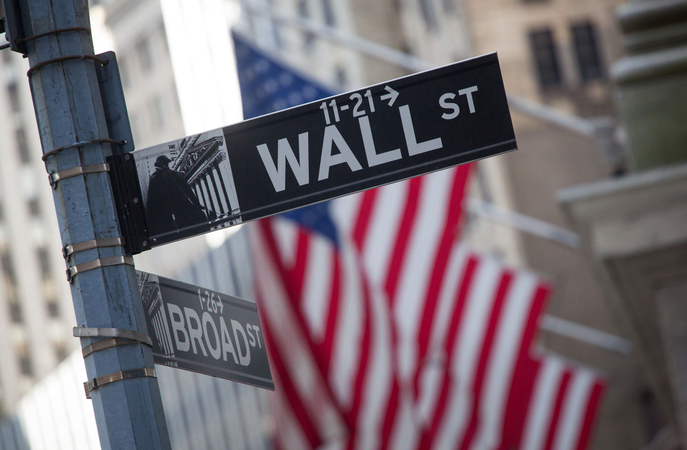
A Wall Street street sign hangs in front of the New York Stock Exchange (NYSE) in New York, U.S., on Friday, April 18, 2016. Photographer: Michael Nagle/Bloomberg

A Wall Street street sign hangs in front of the New York Stock Exchange (NYSE) in New York, U.S., on Friday, April 18, 2016. Photographer: Michael Nagle/Bloomberg
By  Syndication Washington Post, Bloomberg · Jackie Edwards, Vildana Hajric · BUSINESS, WORLD, US-GLOBAL-MARKETS

The warnings were out there. It was coming too easy in the S&P 500. Records fell once every two days, valuations had swollen and each dip found buyers. That confluence was in danger of coming asunder Monday.

In a market that has posted only two back-to-back drops all year, indexes were at risk of their first three-day decline since early December, with the losses threatening to wipe out about four-fifths of the year-to-date rally in the benchmark gauge for American equities. Investors who for two months had looked past every threat to the markets abruptly turned bearish on rising concern the spread of the coronavirus will upend global economic growth.

They are reprising a pattern that has prevailed in U.S. markets for almost a year, in which periods of near-euphoric gains are intermittently broken by sharp reactions to outside threats. Futures are pointing to declines that would leave equities down almost 4% since Wednesday as the deadly virus spread in countries including Italy and Iran.

High valuations may be exacerbating losses. The S&P 500 started last week trading at more than 22 times earnings while the Nasdaq 100 Index’s multiple was nearly 30, both among the highest in decades. Beyond coping with an increasingly extensive human toll, equity traders have struggled to estimate the outbreak’s impact on global economies and supply chains.

“World stock markets are not priced well for a decline in earnings that will surely come as the world’s factory in China is seeing unprecedented upheaval,” said Chris Rupkey, chief financial economist for MUFG Union Bank. “Until investors get a better read on when China is coming back on line, it’s clearly sell now and see what happens later.”

U.S. stock index futures slid, with S&P 500 March contracts down 2.5% at 7:39 a.m. in New York, after a raft of new coronavirus cases in numerous countries outside China renewed concern about the ability of the illness to spread.

China’s coronavirus cases rose to at least 76,936 over the weekend, with a total of 2,442 fatalities. South Korea raised the country’s infectious-disease alert to the highest level after a 20-fold increase in cases. Italy — the virus’s epicenter in Europe, with 140 infections — canceled the Venice Carnival and other events. Turkey will temporarily close its border with Iran, which with 43 infections has the most cases in the Middle East, including eight fatalities.

“The virus spreading to Italy and Iran is finally spooking some investors on what has mostly been a mostly Asian situation,” said Rick Bensignor, the founder of Bensignor Group and a former strategist for Morgan Stanley. “It’s not a question of if it comes to the U.S., but when, and perhaps investors are finally realizing that.”

The S&P 500 fell 1.1% on Friday after a major piece of U.S. economic data showed a sizable hit from the epidemic. U.S. business activity fell in February for the first time since 2013 as the outbreak made firms hesitant to place orders.

“This escalation has had investors reverse their previous opinion that it would be a temporary economic problem,” said Michael McCarthy, chief market strategist at CMC Markets.

Nomura Securities International Inc. cross-asset macro strategist Charlie McElligott had cautioned in a note Friday that e-minis below about 3,325 was “where things could begin to get slippery.” That’s the level at which he said gamma would flip to the downside for options dealers, so they might add to pressure on the index.

Thai exports back in positive territory after US-China deal #ศาสตร์เกษตรดินปุ๋ย

#ศาสตร์เกษตรดินปุ๋ย : ขอบคุณแหล่งข้อมูล : หนังสือพิมพ์ The Nation

https://www.nationthailand.com/business/30382730?utm_source=category&utm_medium=internal_referral

Thai exports back in positive territory after US-China deal

Feb 24. 2020
By THE NATION

Thai exports grew 3.35 per cent in January 2020, bouncing back to positive growth in the first turnaround in six months, mainly due to oil and gold export , according to a statement from the Trade Policy and Strategy Office on Monday (February 24).

The rise reflects positive sentiment from the Phase-1 deal between the US and China.

Exports of products related to US-China tariff measures, such as computers and components expanded in both the US and China markets.

Additionally, many rising star products continued to grow such as chilled and frozen chicken, pet foods, canned and processed fruits, food condiments, milk and milk products, beverages, motorcycles and parts, furniture and parts, cosmetics, soaps and skin care products.

Excluding golds and oil, Thai exports in January 2020 contracted 0.6 per cent while imports fell 7.86 per cent from a high base of weaponry for military exercise in January last year and a decrease in gold imports .

Excluding golds, oil, and weaponry, Thai imports in January 2020 fell 0.17 per cent. However, imports of capital goods expanded 5.8 per cent , in particular machinery and components which registered the highest growth in 2 years at 18.7 per cent .

In terms of export destination, exports to two major trading partners – the US and China, grew favourably at 9.9 and 5.2 per cent, respectively.

Exports to Taiwan and Middle East stayed on the uptrend, increasing 13.1 and 2 percent.

Export Markets

Overall, Thai exports to most trading partners showed a mild recovery. Exports to US and EU (15) expanded 9.9 and 0.6 per cent and exports to Taiwan recorded positive growth of 13.1 per cent for the seventh consecutive month.

Additionally, exports to China, Asean (5), and Middle East rose 5.2, 3.8 and 2.0 per cent.

On the contrary, exports to some markets dropped, including Japan (-2.5 per cent ), CLMV (-0.7 per cent), Latin America (-4.1 per cent ), India (-5.7 per cent), and Australia (-16.0 per cent).

Export prospects

Although the Phase-1 deal between the US and China has helped to improve the trading atmosphere and partly reflected on Thai exports in January, the global economy and Thai exports are still facing downside risks from the Covid-19 situation, which could slow down economic recovery in the short and medium term, in addition to geopolitical risks and the low oil price.

However, the Chinese government has taken rapid actions and it shows a continued decline in the number of new confirmed cases in the country.

It is hoped that the situation will soon be under control and China would announce additional stimulus measures to offset the economic impact .

Regarding foreign exchange rate , the baht has slightly depreciated since the beginning of the year. This may reduce pressure on price competition in some products. However, exporters are encouraged to hedge currency risk to minimise negative effects from uncertainties.

Facing many challenging factors across export markets, a variety of Thai export products, distributed in various stages including raw materials, intermediate, and final products, and the export market diversification will support Thai exports well in this period.

Moreover, this is a good opportunity to expedite exports of food products when hygiene and safety are the main concerns as Thailand has an advantage in image and recognized international standards.

In addition, market penetration to online platforms is another option to promote trade in response to modern lifestyles ,especially when consumers are reluctant to leave their homes amid the Covid-19 outbreak.

Deputy Prime Minister and Commerce Minister Jurin Laksanavisit has trade missions to at least 18 countries to promote Thai exports this year, including South Africa, Middle East, Russia, UK, Germany, Australia, Vietnam, Cambodia, Bangladesh and India.

In regard to long-term trade strategy, the Ministry of Commerce aims to conclude ongoing free trade agreement (FTA) negotiations such as FTA Thailand-Turkey, FTA Thailand – Pakistan, and FTA Thailand – Sri Lanka as well as to prepare for more FTA negotiations to capitalise on trade opportunities from an expansion of partnerships.