Indonesia resumes rate cuts amid growing concerns over virus #ศาสตร์เกษตรดินปุ๋ย

#ศาสตร์เกษตรดินปุ๋ย : ขอบคุณแหล่งข้อมูล : หนังสือพิมพ์ The Nation

https://www.nationthailand.com/business/30382526?utm_source=category&utm_medium=internal_referral

Indonesia resumes rate cuts amid growing concerns over virus

Feb 20. 2020
Bank Indonesia in Jakarta, Indonesia. MUST CREDIT: Bloomberg photo by Dimas Ardian

Bank Indonesia in Jakarta, Indonesia. MUST CREDIT: Bloomberg photo by Dimas Ardian
By Syndication Washington Post, Bloomberg · Karlis Salna, Arys Aditya, Eko Listiyorini · BUSINESS, US-GLOBAL-MARKETS

Indonesia’s central bank cut its benchmark interest rate Thursday after a three-month pause, and lowered the growth forecast as the spread of the coronavirus threatens the outlook for Southeast Asia’s biggest economy.

Bank Indonesia lowered the seven-day reverse repurchase rate by 25 basis points to 4.75%, joining a string of other central banks around the region that have eased policy in recent weeks to counter the impact of the virus. Nineteen of the 31 economists in a Bloomberg survey predicted the central bank’s move while the rest saw no change.

Indonesia is yet to record a single case of the deadly virus, but officials have become increasingly worried about a slump in trade and tourism after China shut factories to contain the outbreak and both countries restricted travel. Bank Indonesia’s resumption in rate cuts after four reductions last year comes on top of a fiscal boost from the government to cushion the economy, which was already slowing last year because of the U.S.-China trade war.

The central bank on Thursday lowered its forecast for global growth to 3% from 3.1%, and sees the domestic economy expanding 5%-5.4% this year compared to a previous range of 5.1%-5.5%.

Bank Indonesia will “keep a close watch on global and domestic economic developments in utilizing an accommodative policy mix space,” Governor Perry Warjiyo said, signaling the latest cut may not be the last in the current easing cycle. The board remains concerned about a hit to trade and investment from the virus, he said.

Foreign exchange revenue from tourism was likely to fall by $1.3 billion, the governor said, adding that provisions related to the macroprudential intermediation ratio would also be adjusted in a bid to boost lending by commercial banks. The central bank also cut its 2020 forecast for credit growth to 9%-11% from 10%-12%.

The yield on Indonesia’s 10-year government bonds was little changed after the decision, while the rupiah was headed for its biggest drop in more than two weeks.

“The new 2020 growth forecast of BI still looks optimistic to me considering the risks from COVID-19,” said Euben Paracuelles, an economist at Nomura Holdings in Singapore. “I’m therefore keeping my forecast that BI cuts again by another 25 basis points in the second quarter as growth disappoints, and we’re still not seeing clear indications of more fiscal support.”

Finance Minister Sri Mulyani Indrawati said Wednesday the virus outbreak will curb growth and put government revenue under pressure. The Trade Ministry has also warned of a deeper hit to exports, which already slumped in January, putting the current account deficit at risk.

“The growth outlook is weak. We have a 5.1% figure, but we have highlighted the risk of growth testing the 5% level in the first half of the year,” said Mohamed Faiz Nagutha, an economist with Bank of America Securities in Singapore. “We see the policy rate at 4.5% by mid-year,” he said.

While inflation has so far remained subdued, coming in at 2.7% in January, supply disruptions in China are pushing up costs of some foods, such as garlic, which surged almost 70% in Jakarta in one week.

A relatively stable currency provides the central bank with sufficient room to ease policy now. The rupiah, which has weakened in recent weeks, is still up about 0.7% against the dollar since the start of the year, making it the best performer in Asia.
SET Index plunges below 1,500 level in morning trade #ศาสตร์เกษตรดินปุ๋ย

#ศาสตร์เกษตรดินปุ๋ย : ขอบคุณแหล่งข้อมูล : หนังสือพิมพ์ The Nation

https://www.nationthailand.com/business/30382478?utm_source=category&utm_medium=internal_referral

SET Index plunges below 1,500 level in morning trade

Feb 20. 2020
By The Nation

The Thai stock exchange index fell to1478.13, shedding 18.41 points, or 1.22 per cent, with trade volume worth Bt32.8 billion at around 11am.

Analysts at KTB Securities said that the market was adversely impacted by concerns over the coronavirus, and slower economic growth. Political uncertainty also was affecting the market, as investors are anxious to see whether the Constitutional Court would, on Friday, dissolve the Future Forward Party, which has the third most number of seats in the House of Representatives.

US removes China from list of developing countries #ศาสตร์เกษตรดินปุ๋ย

#ศาสตร์เกษตรดินปุ๋ย : ขอบคุณแหล่งข้อมูล : หนังสือพิมพ์ The Nation

https://www.nationthailand.com/business/30382466?utm_source=category&utm_medium=internal_referral

US removes China from list of developing countries

Feb 20. 2020
A container vessel is loaded at Zhoushan Port, Zhejiang province.[Photo by Yao Feng/For China Daily]

A container vessel is loaded at Zhoushan Port, Zhejiang province.[Photo by Yao Feng/For China Daily]
By Jing Shuiyu and Zhong Nan
China Daily|

China, together with some other countries, has been removed from the United States’ list of “developing “nations and considered as a “developed” country when it comes to international trade, according to a recent notice issued by the Office of the US Trade Representative.

The US also revoked its special preferences for a list of World Trade Organization members, including Brazil, India, Indonesia and South Africa.

The removal of these countries from the US’ internal list of developing nations will make it easier for the US to launch an investigation into whether these countries are unfairly subsidizing exports.

Xue Rongjiu, deputy director of the Beijing-based China Society for WTO Studies, said the US announcement has undermined the authority of the multilateral trading system.

“Such unilateralist and protectionist actions have harmed the interests of China and other WTO members,” Xue said.

“China has always firmly defended the multilateral system. Its trade and economic ties with partners of both developed economies and developing countries has proved that multilateral negotiation mechanism is effective, and it has boosted the world’s economic growth.”

In the notice issued on Feb 10, the USTR said it revised the developing country methodology for investigations on countervailing duty, a duty imposed on imports, because the country’s previous guidance-which dates back to 1998-”is now obsolete”.

To update its internal list, the USTR said it has taken into consideration several economic and trade factors, such as the level of economic development of a country and a country’s share of world trade.

For instance, the USTR considers countries with a share of 0.5 percent or more of world trade to be “developed” countries. According to the 1998 rule, the threshold was 2 percent or more.

It has also not considered “social development indicators such as infant mortality rate, adult illiteracy rate and life expectancy at birth” as a basis for changing the designation.

Tu Xinquan, dean of the China Institute for World Trade Organization Studies at the University of International Business, said the WTO rules and mechanisms should further be improved as many emerging economies understand and utilize the rules differently. This cannot be addressed in the current negotiation mechanisms.

“As a major emerging country, China needs to stress the developed nations’ issues of concern and remain flexible in various talks,” he said.

Tu said the WTO reforms can also push countries to address issues on agricultural subsidies, agricultural trade barriers, technological export restrictions and technological trade barriers to fulfill their responsibility.

It must focus on offering generally applicable rules for different countries while allowing none of the members to damage the system, he added.

Bitcoin: Fortress said to increase offer to purchase Mt. Gox claims #ศาสตร์เกษตรดินปุ๋ย

#ศาสตร์เกษตรดินปุ๋ย : ขอบคุณแหล่งข้อมูล : หนังสือพิมพ์ The Nation

https://www.nationthailand.com/business/30382458?utm_source=category&utm_medium=internal_referral

Bitcoin: Fortress said to increase offer to purchase Mt. Gox claims

Feb 20. 2020
By Syndication Washington Post, Bloomberg · Olga Kharif · BUSINESS, TECHNOLOGY 

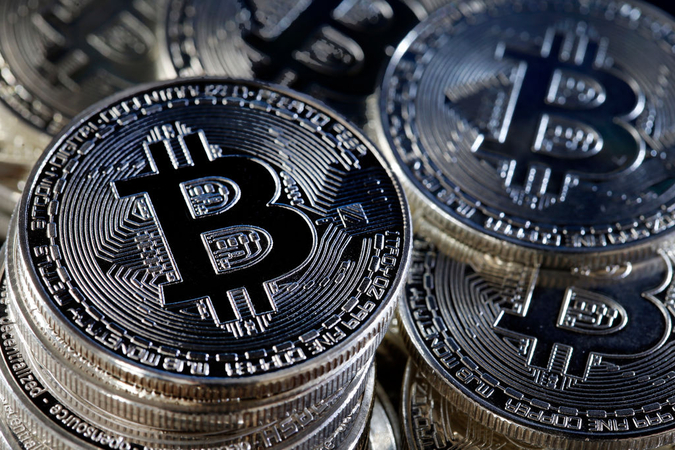
Fortress Investment Group increased its offer to purchase creditor claims from the defunct Mt. Gox cryptocurrency exchange in the wake of this year’s bitcoin rally.

The private-equity and hedge-fund firm sent letters this week to creditors offering $1,300 per bitcoin, or 88% of its estimated account value, according to the one-page proposal, which Bloomberg News obtained from a person who said they weren’t authorized to speak on the matter. In December, the firm offered $755, and when Bitcoin traded lower, it dropped the price to as little as $600 per Bitcoin last March.

Based in Japan, Mt. Gox was once the world’s biggest Bitcoin exchange, until it closed in early 2014 after losing the coins of thousands of customers. Thousands of Bitcoins have since been found, and a trustee is working to reimburse creditors. The reimbursement is being delayed by lawsuits.

Michael Hourigan, a managing director at Fortress, said in the letter that firm is making the discount offer “due to the likely timeline (3 to 5 years) and financial risk of the ongoing litigations” involved in getting money from Mt. Gox.

Bitcoin has rallied about 40% since the beginning of the year to cross $10,000.

Fed officials saw policy appropriate ‘for a time’ amid risks #ศาสตร์เกษตรดินปุ๋ย

#ศาสตร์เกษตรดินปุ๋ย : ขอบคุณแหล่งข้อมูล : หนังสือพิมพ์ The Nation

https://www.nationthailand.com/business/30382457?utm_source=category&utm_medium=internal_referral

Fed officials saw policy appropriate ‘for a time’ amid risks

Feb 20. 2020
The Marriner S. Eccles Federal Reserve building in Washington on Nov. 17, 2017. MUST CREDIT: Bloomberg photo by Andrew Harrer.

The Marriner S. Eccles Federal Reserve building in Washington on Nov. 17, 2017. MUST CREDIT: Bloomberg photo by Andrew Harrer.
By Syndication Washington Post,  Bloomberg · Craig Torres · BUSINESS, US-GLOBAL-MARKETS

Federal Reserve officials viewed their current monetary policy as appropriate “for a time” while they remained on guard against domestic and global risks that could slow the longest U.S. expansion on record.

“Participants discussed how maintaining the current policy stance for a time could be helpful in supporting U.S. economic activity and employment in the face of global developments that have been weighing on spending decisions,” according to the minutes of the Jan. 28-29 Federal Open Market Committee meeting released Wednesday in Washington.

Futures traders maintained expectations for the Federal Reserve to lower interest rates at least once this year, pricing in around 40 basis points of easing by the end of December. The 10-year Treasury yield remained little changed on the day around 1.56%, while the Bloomberg dollar index and the S&P 500 held gains.

The minutes showed a broad discussion as officials considered inflation ranges as a tool to achieve their 2% target, how to adapt policy to combat financial-stability risks, and how they would wind down ongoing repurchase agreement and Treasury-bill purchases.

The record also showed “several” officials pushing for “inflation modestly exceeding 2%” for a time. Such action “would be consistent with the achievement of the committee’s longer-run inflation objective” and “underscore the symmetry of that objective.”

The staff official in charge of open market operations told policy makers that in the second quarter, reserve conditions would “support slowing the pace of Treasury bill purchases.”

“Many participants stressed that, as reserves approached durably ample levels, the need for sizable Treasury bill purchases and repo operations would diminish and that such operations could be gradually scaled back or phased out,” the minutes said.

The FOMC left the benchmark lending rate unchanged in a range of 1.5% to 1.75% during the gathering, and said that the setting was “appropriate” to sustain the expansion and achieve its goals of maximum employment and stable prices.

The U.S. economy began 2020 on solid footing with payrolls rising by 225,000 in January. The jobless rate edged up to 3.6%, still near a half-century low, while average hourly earnings climbed 3.1% from a year earlier.

U.S. central bankers are counting on household consumption — aided by low interest rates — to sustain growth and help lift inflation back to their 2% target. Their preferred price measure rose 1.6% in 2019.

Within their ongoing framework review, officials held their most substantive discussion to date about the possibility of transforming their inflation target — currently 2% — into a range. The review began in early 2019 and is meant to assess whether the Fed has the right tools and strategies to deal with persistently low interest rates and low inflation.

The committee considered inflation ranges based on three concepts: an “uncertainty” range, meant to communicate how wide inflation outcomes might vary and still be considered consistent with the target; an “indifference” range, emphasizing that policy need not respond to deviations within the range; and an “operational” range that could be used when officials wanted inflation to favor one side.

While the U.S. economy started the year in good shape, the coronavirus has raised questions about global growth, including the potential for spillovers affecting the U.S.

Participants expected growth to continue at a moderate pace, supported by accommodative monetary and financial conditions. “In addition, some trade uncertainties had diminished recently, and there were some signs of stabilization in global growth. Nonetheless, uncertainties about the outlook remained, including those posed by the outbreak of the coronavirus,” the minutes said.

Officials saw consumption spending as likely to remain on a firm footing, “supported by strong labor market conditions, rising incomes, and healthy household balance sheets.”

Powell told lawmakers in semi-annual testimony last week “it’s too uncertain to even speculate” on how the outbreak would impact the economy or if it could present a “material change” to the outlook, though he said the impact on China should be “substantial.”

U.S. central bankers are purchasing Treasury bills at a pace of $60 billion per month to boost reserve balances and plan to continue the operation into the second quarter. They are also conducting term and overnight repurchase agreements at least through April to offset seasonal demands for payments and cash.

The minutes said the term repo operations could be phased out after April.

Gold tops $1,600 as virus fuels growth fears #ศาสตร์เกษตรดินปุ๋ย

#ศาสตร์เกษตรดินปุ๋ย : ขอบคุณแหล่งข้อมูล : หนังสือพิมพ์ The Nation

https://www.nationthailand.com/business/30382456?utm_source=category&utm_medium=internal_referral

Gold tops $1,600 as virus fuels growth fears

Feb 20. 2020
By Syndication Washington Post, Bloomberg · Lynn Thomasson, Ranjeetha Pakiam · BUSINESS

Fears that the coronavirus could be a disaster for the global economy and a drumbeat of speculation over central-bank stimulus are driving another rally in precious metals.

Gold surpassed $1,600 an ounce this week and is closing in on a seven-year high. Palladium climbed for a sixth day in the spot market, extending its record-breaking rally.

“Gold is continuing to resist the firm U.S. dollar and appears to remain in good demand as a safe haven because of the Covid-19 virus,” Daniel Briesemann, an analyst at Commerzbank analyst, said in a note. “The madness on the palladium market continues.”

The most surprising metal remains palladium, which rose as much as 8.4%. The metal used to curb emissions from vehicles rallied as the Chinese government pledged to stabilize car demand in the Asian country. Efforts to contain the coronavirus earlier prompted manufacturing shutdowns.

Companies from Apple to Adidas are starting to account for the economic damage of the coronavirus, which has already killed more than 2,000 people. At the same time, traders are paying more attention to the possibility of central bank easing in the coming months.

The Fed has said the effects of the virus have presented a “new risk” to the outlook and traders will study minutes from the latest meeting, due later Wednesday, for any hint of a dovish tone. Lower borrowing costs boost the investment appeal of precious metals that don’t offer yields.

Palladium generated the biggest return among the raw materials tracked by a DCI BNP Paribas gauge in the past two years as supply continues to trail consumption.

“There is nothing on the horizon to change the direction of these shortages,” Neal Froneman, the chief executive officer of Sibanye-Stillwater Ltd., said at a presentation in Johannesburg, referring to palladium and rhodium.

Stricter vehicle emissions standards are spurring more demand for the metals, which are used to clean car fumes, he said.

In China, the world’s largest auto market, areas with purchase limits should be encouraged to soften curbs by increasing car plate quotas, according to an article by President Xi Jinping published in Communist Party-run magazine Qiu Shi on Sunday.

Why Palladium Is Suddenly a More Precious Metal: QuickTake

Palladium rose 2.6% to $2,696.82 an ounce at 11:15 a.m. in New York after reaching a record $2,849.61 earlier. For a second straight day, the metal’s 14-day relative index stayed above 70, a level seen by traders who study charts as a sign that the commodity is overbought and poised to decline.

Tighter supply and China’s support for the auto sector “do not justify the renewed upswing in price in our opinion,” Commerzbank’s Briesemann said.

Gold advanced 0.3% to $1.607.05 an ounce.

Stocks reach record highs after moves from China, Fed #ศาสตร์เกษตรดินปุ๋ย

#ศาสตร์เกษตรดินปุ๋ย : ขอบคุณแหล่งข้อมูล : หนังสือพิมพ์ The Nation

https://www.nationthailand.com/business/30382455?utm_source=category&utm_medium=internal_referral

Stocks reach record highs after moves from China, Fed

Feb 20. 2020
By Syndication Washington Post, Bloomberg · Vildana Hajric · BUSINESS, US-GLOBAL-MARKETS

Equities advanced on signs that China may be planning further measures to support its economy as it reels from a virus-induced slowdown and after Federal Reserve officials signaled that they aren’t anxious to raise interest rates anytime soon.

Gains for chipmakers and banks led the S&P 500 Index and Nasdaq Composite to record highs after Bloomberg News reported that China’s latest moves to aid growth include possible bailouts for hard-hit industries. The dollar climbed to the strongest since October after data on housing starts and building permits exceeded analysts’ estimates. Treasuries held steady after minutes showed that Federal Reserve officials viewed monetary policy as appropriate “for a time.”

The Stoxx Europe 600 Index reached new highs, and shares rose in Tokyo, Hong Kong and Sydney. The yen fell to a nine-month low on concern that Japan’s economy may slip into a recession. Oil gained as U.S. sanctions on Russia’s largest producer and conflict in Libya put the focus on supply threats.

Investors appear relatively confident in the ability of policymakers to contain fallout from the deadly coronavirus, even after Apple spooked markets this week by warning of a slowdown in sales. Data released Wednesday showed that the housing market remains a bright spot for the U.S. economy amid sluggish business investment.

“Housing is an economic bellwether and seeing data like this gives investors a lot of reasons to be optimistic, at least for the U.S. market,” said Mike Loewengart, vice president of investment strategy at ETrade Financial.

Gold traded near its highest level since 2013, while palladium extended its record-breaking rally on forecasts for a widening supply deficit.

– – –

Here are some key events coming up:

– Earnings season rolls on, with results from Deere & Co. set for Friday.

– Indonesia is expected to cut interest rates Thursday, following emerging-market peers that have already moved.

– Group of 20 finance ministers and central bank chiefs are scheduled to meet Saturday and Sunday in Riyadh, Saudi Arabia, and are expected to discuss efforts to support growth amid the coronavirus threat.

– – –

These are the main moves in markets:

Stocks

– The S&P 500 Index advanced 0.5% at the close of trading in New York.

– The Stoxx Europe 600 Index jumped 0.8%.

– The MSCI Asia Pacific Index fell 0.1%.

– The MSCI Emerging Market Index advanced 0.7%.

Currencies

– The Bloomberg Dollar Spot Index rose 0.2%.

– The euro rose 0.2%, to $1.0808.

– The British pound fell 0.6%, to $1.2924.

– The Japanese yen weakened 1.3%, to 111.28 per dollar.

Bonds

– The yield on 10-year Treasuries was little changed at 1.56%.

– Germany’s 10-year yield fell one basis point, to -0.42%.

– Britain’s 10-year yield fell one basis point, to 0.6%.

– Japan’s 10-year yield rose one basis point, to -0.05%.

Commodities

– West Texas Intermediate crude advanced 2.4%, to $53.28 a barrel.

– Gold strengthened 0.6%, to $1,611.87 an ounce.

Baht keeps strength despite coronavirus outbreak, economic decline #ศาสตร์เกษตรดินปุ๋ย

#ศาสตร์เกษตรดินปุ๋ย : ขอบคุณแหล่งข้อมูล : หนังสือพิมพ์ The Nation

https://www.nationthailand.com/business/30382434?utm_source=category&utm_medium=internal_referral

Baht keeps strength despite coronavirus outbreak, economic decline

Feb 19. 2020
By The Nation

The Thai economy in 2020 would expand at a much lower rate than previous forecast and way below its full potential, mainly due to the combined impact from the coronavirus outbreak, delay to enactment of the Annual Budget Expenditure Act and drought on a large number of businesses and employment, according to the minutes released today by the Monetary Policy Committee of the Bank of Thailand .

On February 5 ,  the committee  voted unanimously to cut the policy rate by 0.25 percentage point from 1.25 to 1.00 per cent, in a bid to shore up the economy.

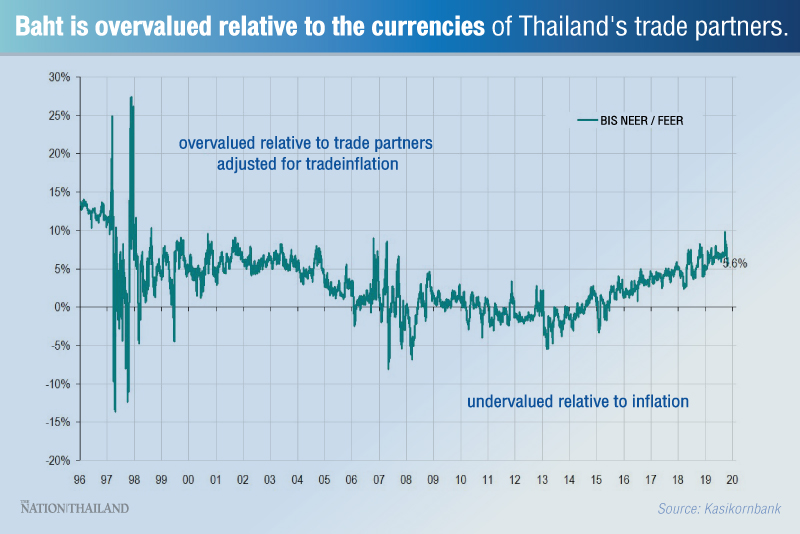
Regarding exchange rates, the committee said although the Thai baht depreciated somewhat in recent days , it remained potentially inconsistent with economic fundamentals. During  inter-meeting period, the currency depreciated against the US dollar. The baht also depreciated against regional currencies as reflected by a decline in nominal effective exchange rate (NEER) despite its high level compared with that in the past. The recent  depreciation was mainly a result of  investors’ concerns over the softening outlook of  the Thai economy,  from both domestic and external prespectives , as well as the Bank of Thailand’s relaxation of foreign exchange regulations to facilitate capital outflows.

Investors started to view that the baht could depreciate after a substantial appreciation last year, the report said.

Meanwhile, a divergence in the trends of the baht and the prices of gold, a safe-haven asset, was more prominent amid the  coronavirus outbreak ,  reflecting a diminishing safe-haven status of baht-denominated assets from the investors’ perspective, according the central bank.

In an interview, Kobsidthi Silpachai, head of capital markets research at Kasikornbank told the Nation that the baht is currently 5.6 per cent overvalued.

While the country would have lower current account surplus this year, it still remains high, he said. Kasikornbank has lowered its projection of current account surplus to US$33 billion this year, down from the previous forecast of $33.8 billion, he said.

He said imports was  still falling faster than exports, resulting in a continuous  surplus of the current account, the  main factor behind the baht’s appreciation.

The weighted- average interbank exchange rate was Bt 31.187  per dollar  at the close of trade on February 19, according to the central bank.

Many research houses have revised downward their economic growth forecast to below 2 per cent rate this year.

PTT estimates more than 24 per cent decrease in 2019 profit #ศาสตร์เกษตรดินปุ๋ย

#ศาสตร์เกษตรดินปุ๋ย : ขอบคุณแหล่งข้อมูล : หนังสือพิมพ์ The Nation

https://www.nationthailand.com/business/30382387?utm_source=category&utm_medium=internal_referral

PTT estimates more than 24 per cent decrease in 2019 profit

Feb 19. 2020
By THE NATION

PTT Group expects its net profit in 2019 to be 24.34 per cent lower than its results in 2018 due to loss in oil stock, refinery repairs and decreasing gross refinery margin and sales of petrochemical businesses.

The company’s 2019 net profit was estimated at Bt164.33 billion, compared to Bt217.2 billion in 2018.

When broken down by subsidiaries, the group estimated that PTT Exploration and Production (PTTEP) will have a net profit of Bt48.8 billion, a 34.79 per cent increase year on year; PTT Global Chemical (PTTGC) will have a net profit of Bt11.68 billion, down 70.85 per cent year on year; IRPC will have a net loss of Bt11.74, down 115.17 per cent year on year; Thaioil (TOP) will have a net profit of Bt6.27 billion, 38.15 per cent lower year on year; and Global Power Synergy (GPSC) will have net profit of Bt4.06 billion, a 20.89 per cent improvement over 2018.

Regarding net profit estimates for 2020, Kitticharn Sirisuk-Acha, senior analysis director at CGS-CIMB Securities (Thailand), said that PTT Group should be able to earn Bt178.9 billion, a 14 per cent increase year on year. “This year there should be no loss in oil stock while the refineries under repair should resume operations as normal,” he said. “Meanwhile, the gross refining margin in the petrochemical section as well as sales from retail businesses should improve this year.”

Share prices of companies in the PTT Group on Tuesday (February 18) mostly fell: PTTGC’s shares fell 4.76 per cent to Bt50 per share; TOP shares lost 2.8 per cent to Bt52 per share; GPSC’s shares were down 1.3 per cent to Bt75.75 per share.

The SET Index also went down 13.57 points, or 0.89 per cent, to 1,513.68 points, with total trading value of Bt49.27 billion.

Global markets shudder as Apple’s warning deepens coronavirus fallout #ศาสตร์เกษตรดินปุ๋ย

#ศาสตร์เกษตรดินปุ๋ย : ขอบคุณแหล่งข้อมูล : หนังสือพิมพ์ The Nation

https://www.nationthailand.com/business/30382381?utm_source=category&utm_medium=internal_referral

Global markets shudder as Apple’s warning deepens coronavirus fallout

Feb 19. 2020
File Photo by Syndication Washington Post, Bloomberg

File Photo by Syndication Washington Post, Bloomberg
By The Washington Post · Taylor Telford, Thomas Heath · BUSINESS, US-GLOBAL-MARKETS

Global stocks fell Tuesday after Apple said the coronavirus would crimp its quarterly revenue, signaling that China’s health crisis is casting an ever-widening shadow.

“The floodgates are opening,” said Invesco chief market strategist Kristina Hooper in an email after the market’s close. “Companies are beginning to warn that the coronavirus outbreak will impact earnings and stocks have begun to react negatively.”

China accounts for roughly 20% of global gross domestic product. The nation has been hit hardest as the epicenter of the outbreak, with more than 72,000 cases. The epidemic has forced the country into lockdown and idled its manufacturing industry, a vital supplier to companies everywhere.

The virus had killed more than 1,800 people worldwide as of Monday, leading to supply chain disruptions, tourism and travel drops, and widespread store closures that are challenging global firms and stalling growth at a time when it was expected to rebound thanks to the U.S.-China trade truce. Experts now predict the global economy will shrink this quarter, the first time since 2009.

“Markets have been far too complacent about how China’s woes would have a direct impact on supply chains for a large number of companies around the world,” Russ Mould, investment director at AJ Bell, said in commentary Tuesday. “If factories are closed, are running at partial capacity, or are struggling to get raw materials to make goods, then it is no wonder that supplies will be disrupted.”

The Dow Jones industrial average declined for the third day in a row after hitting record highs last week. The Dow closed at 29,232 on Tuesday, down 165 points, or 0.56%, after bouncing back from a 300-point fall earlier in the day. Walmart was the Dow leader, gaining 1.48% on the day after it announced a hefty dividend increase. Dow Inc., Goldman Sachs Group and Intel – along with Apple – were the big drags on the blue chips as 24 of the index’s 30 components finished in the red.

The Standard & Poor’s 500 stock index closed down about 10 points, or 0.29%, to finish at 3,370. Utilities, communication services and consumer discretionary sectors were the only positive industries among the 11 sectors in the S&P. Financials, energy and industrials were the big losers. The tech-heavy Nasdaq composite index closed the day just a hair inside the plus column after Apple cut its losses. Tech stars Google-parent Alphabet and Microsoft surged. Europe’s benchmark Stoxx 600 index finished down 0.38% on the day. Hong Kong’s Hang Seng closed down more than 1.5%.

Some investors took heart from the late rally by Nasdaq and Apple.

“Those betting on a major stock market decline may be making a losing bet,” said Peter Tanous of Lynx Investment Advisory. “While the virus has infected many thousands of people, the death rate among those inflicted is just over 2%, which means that 98% of those who get it survive.”

The coronavirus has slammed China’s economy, diminishing its oil consumption and disrupting the careful symmetry between global supply and demand. U.S. benchmark crude and Brent crude were trading at about $52 and $57 per barrel respectively, far lower than what oil companies and major supplier nations prefer. BP has warned that the virus could reduce global oil demand by as much as 40% this year.

Gold, a safe haven, climbed more than 1%, to $1,605 an ounce.

Moody’s Investors Service on Tuesday cut its 2020 forecast for China growth from 5.8% to 5.2% to reflect the outbreak’s “severe but short-lived” impact that would probably spill into neighboring Asian economies.

“Our baseline assumption is that the economic effects of the coronavirus outbreak will continue for a number of weeks before tailing off and allowing normal economic activity to resume,” Christian de Guzman, a Moody’s Senior Vice President, said in the report.

Apple, which counts on greater China for nearly a fifth of its revenue, warned investors Monday that it is experiencing an iPhone supply shortage as Chinese factories have been slow to come back to life. The tech giant, whose success over the last decade has been tethered to its ability to harness China’s massive labor force and sprawling network of component manufacturers, also said demand for its products in China had been significantly hurt by store closures. The few stores that have remained open are operating on reduced hours “with very low customer traffic.” Apple’s shares were down 2 percent in premarket trading.

“This unexpected news confirms the worst fears of the Street that the virus outbreak has dramatically impacted iPhone supply from China/Foxconn with a demand ripple impact worldwide,” Dan Ives, managing director of equity research for Wedbush Securities wrote in a research note Monday. “While we have discussed a negative iPhone impact from the coronavirus over the past few weeks, the magnitude of this impact to miss its revenue guidance midway through February is clearly worse than feared.”

Other major companies are warning that the virus could take a bite out of their earnings. Tesla cited “health epidemics” as a risk last week, and Chinese e-commerce giant Alibaba called the outbreak a “black swan” event. Nike, which has closed half its stores in China, said the outbreak will have a “material impact” on its operations in the country. Disney has said it could take a $175 million hit in operating income if its theme parks in China are shuttered for the next two months, and manufacturing giants General Motors, Toyota and Airbus have all warned of slow returns to production.

China’s massive aviation market – which is poised to eclipse the U.S. this decade to become the world’s biggest, saw its capacity shrink by nearly 80 percent between January 20 and February 17, according to OAG Aviation Worldwide. More than 40 airlines around the world have cut or halted service to China because of the outbreak.

“No event that we remember has had such a devastating effect on capacity as coronavirus,” John Grant, senior analyst at OAG, wrote in a recent report. “In many ways it highlights the importance of the Chinese market to aviation and the rapid globalization of air services as new markets and travelers emerge.”

Walmart piled onto Wall Street’s woes with its fourth-quarter earnings miss Tuesday, with the retailer reporting slowing e-commerce growth and weakening demand for toys and apparel during the holiday shopping season. It also offered a fiscal 2021 earnings outlook that was below analyst expectations and warned that the situation in China could seep into its struggles.

“Currently, we do anticipate some financial impact to the China business in Q1 and potentially Q2,” chief financial officer Brett Biggs told reporters Tuesday.

Walmart’s shares were up 0.6 percent in premarket trading.