Stocks slump on Apple’s warning; Treasuries rally #ศาสตร์เกษตรดินปุ๋ย

#ศาสตร์เกษตรดินปุ๋ย : ขอบคุณแหล่งข้อมูล : หนังสือพิมพ์ The Nation

https://www.nationthailand.com/business/30382380?utm_source=category&utm_medium=internal_referral

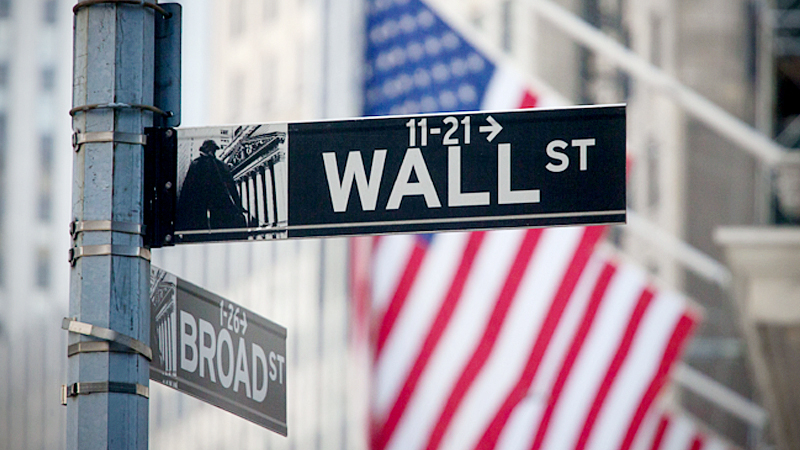
Stocks slump on Apple’s warning; Treasuries rally
Feb 19. 2020
By Syndication Washington Post, Bloomberg · Claire Ballentine · BUSINESS, US-GLOBAL-MARKETS 

Stocks slumped after Apple’s warning that sales will miss forecasts spooked investors who had hoped for a limited economic impact from the deadly coronavirus that originated in China. Treasuries rose and the dollar strengthened.

The S&P 500 Index fell from a record as the iPhone maker warned of production and demand disruptions due to the epidemic, while gains for Microsoft, Amazon and Facebook provided a slight lift to the Nasdaq 100. Apple suppliers including Dialog Semiconductor and AMS helped drag down European stocks. HSBC tumbled the most since 2009 after it said it will slash jobs in a restructuring, while also flagging risks from the virus.

Government bonds climbed, while the euro weakened after a German investor-confidence index plunged. Gold rallied.

Investors are still trying to judge the corporate and economic impact from the coronavirus, even as the growth rate of cases in China’s Hubei province – the epicenter of the disease – continues to stabilize. It’s a turnaround from Monday, when sentiment was lifted by Chinese policymakers’ moves to support companies hit by the prolonged shutdown of large parts of the country. BHP Group said commodity prices will take a hit if the fallout extends beyond the end of next month.

“The market has largely ignored what’s going on with the coronavirus in terms of what impact it might have, but I’m not sure that’s entirely appropriate,” said Jeff Mills, chief investment officer at Bryn Mawr Trust. “It’s likely to be temporary and the economy may bounce back, but this is different than what we saw with SARS. China is a much larger more entwined piece of the global economy.”

Elsewhere, equity benchmarks in Tokyo, Seoul and Hong Kong saw declines of over 1%. The Australian dollar weakened after the Reserve Bank of Australia said it reviewed the case for a further rate cut at its last meeting, but didn’t go ahead. Emerging-market stocks and currencies fell.

– – –

Here are some key events coming up:

– Earnings season rolls on, with results from Deere & Co. set for Friday.

– Minutes of the most recent Federal Reserve meeting publish Wednesday.

– Indonesia is expected to cut interest rates Thursday, following emerging-market peers that have already moved.

– Twenty finance ministers and central bank chiefs are scheduled to meet Friday and Saturday in Riyadh, Saudi Arabia, and are expected to discuss efforts to support growth amid the coronavirus threat.

– – –

These are the main moves in markets:

Stocks

– The S&P 500 Index declined 0.3% at the close of trading in New York; the Nasdaq 100 added 0.1%.

– The Stoxx Europe 600 Index fell 0.4%.

– The MSCI Emerging Markets Index decreased 1.2%.

Currencies

– The Bloomberg Dollar Spot Index gained 0.2%.

– The euro decreased 0.4%, to $1.0794.

– The British pound slipped 0.1%, to $1.3.

– The Japanese yen was little changed at 109.86 per dollar.

Bonds

– The yield on 10-year Treasuries declined three basis points, to 1.55%.

– Germany’s 10-year yield fell one basis point, to -0.41%.

– Britain’s 10-year yield decreased three basis points, to 0.61%.

Commodities

– West Texas Intermediate crude was little changed at $52.05 a barrel.

– Gold strengthened 1.4%, to $1,602.96 an ounce.

Coal’s losing steam as supply restarts, virus stifles demand #ศาสตร์เกษตรดินปุ๋ย

#ศาสตร์เกษตรดินปุ๋ย : ขอบคุณแหล่งข้อมูล : หนังสือพิมพ์ The Nation

https://www.nationthailand.com/business/30382374?utm_source=category&utm_medium=internal_referral

Coal’s losing steam as supply restarts, virus stifles demand

Feb 19. 2020
By Syndication Washington Post, Bloomberg · Bloomberg News · BUSINESS, US-GLOBAL-MARKETS 

Coal prices in China are back on the slide as local miners resume production, easing concern about tight supply and suggesting demand is a bigger wild card as the world’s top market tries to contain a coronavirus outbreak.

Futures on the Zhengzhou exchange have fallen for five straight days, reversing a surge at the start of the month that was fueled by an extended Lunar New Year break, transport curbs and quarantine policies that prevented mines from restarting operations.

At the urging of China’s energy regulator, producers accelerated output resumption. About two-thirds of national capacity restarted as of Thursday. Customs officials are also expediting the clearance of imported coal to ensure sufficient supply. Now attention is shifting to demand, with consumption by power plants particularly slow to recover as industrial end-users continue to face labor and logistics constraints.

“We’ve seen evidence that coal supply is improving while there is a bigger uncertainty around demand recovery,” Feng Dongbin, chief analyst at China Coal Resource, said by phone from Shanxi province. Futures are falling and spot prices may follow suit if demand doesn’t pick up soon, he added.

Futures for May delivery on the Zhengzhou Commodity Exchange slipped 0.3% to 552 yuan ($78.80), the lowest since Jan. 23, capping the longest run of consecutive losses since September.

Spot prices at Qinhuangdao port gained 6 yuan to 576 yuan a ton last week, said China Coal Transport & Distribution Association. Australian Newcastle coal futures, which have gained 6.2% so far in February, slipped 0.2% to $70.40 a ton Monday.

While coal usage by power generators tends to pick up promptly from its holiday lows, the level this year is still relatively flat. The daily coal consumption of six major coastal utilities was at 388,000 tons Monday, about 20% below levels a year ago, according to CCTD.

The exceptionally slow return of workers after the holiday will have far-reaching impact on various industries, BOCI Research analysts said in a note last week as they cut their 2020 power demand outlook. China’s power consumption may be largely flat year-on-year in the first three months before expanding at about 5% in subsequent quarters, the analysts said.

In metallurgical coal:

– Coking coal for May -0.5% to end at 1,264 yuan/ton on Dalian Commodity Exchange, slipping for a second day

– Coke for May -1.2% to 1,849 yuan/ton on DCE

– Australian coking coal futures for February +1.1% to $154.71/ton on Singapore Exchange on Monday, highest in a month

Global markets shudder as Apple’s warning deepens coronavirus fallout #ศาสตร์เกษตรดินปุ๋ย

#ศาสตร์เกษตรดินปุ๋ย : ขอบคุณแหล่งข้อมูล : หนังสือพิมพ์ The Nation

https://www.nationthailand.com/business/30382366?utm_source=category&utm_medium=internal_referral

Global markets shudder as Apple’s warning deepens coronavirus fallout

Feb 18. 2020
By The Washington Post · Taylor Telford · BUSINESS, US-GLOBAL-MARKETS

Global stocks took a downturn Tuesday after Apple said the coronavirus would keep it from hitting revenue goals this quarter, signaling to investors that deepening supply chain cracks in China stand to weaken some of the world’s most powerful companies and take a bite out of growth.

China, whose economy accounts for roughly 20 percent of global gross domestic product, has been hit hardest as the epicenter of the outbreak, with more than 72,000 cases in mainland China alone that have forced the country into lockdown and idled its vital manufacturing industry.

The virus had killed more than 1,800 people worldwide as of Monday, and its fallout has rippled across the globe through supply chain disruptions, cratering tourism and travel and widespread store closures that are challenging global firms and stalling growth at a time when it was expected to rebound thanks to the U.S.-China trade truce. Experts are predicting the global economy will shrink this quarter for the first time since 2009 as a result of the outbreak.

“Markets have been far too complacent about how China’s woes would have a direct impact on supply chains for a large number of companies around the world,” Russ Mould, investment director at AJ Bell, said in commentary Tuesday. “If factories are closed, are running at partial capacity, or are struggling to get raw materials to make goods, then it is no wonder that supplies will be disrupted.”

The Dow Jones industrial average opened down 150 points, a stark change in tune for U.S. indexes after a series of record-breaking closes last week. The Standard & Poor’s 500 index and tech-heavy Nasdaq were both trading down .3 percent. Europe’s benchmark Stoxx 600 index was down more than 0.5 percent in midday trading and Hong Kong’s Hang Seng closed down more than 1.5 percent.

China is the world’s leading oil consumer, and its lock down has sent shock waves through crude markets. Brent crude was trading down more than 2 percent, at $56.50 a barrel. BP has warned that the virus could reduce global oil demand by as much as 40 percent this year.

Gold, a safe haven, climbed more than 0.5 percent to $1,595 an ounce.

Moody’s Investors Service on Tuesday cut its 2020 forecast for China growth from 5.8 percent to 5.2 percent to reflect the outbreak’s “severe but short-lived” impact that would likely spill into neighboring Asian economies.

“Our baseline assumption is that the economic effects of the coronavirus outbreak will continue for a number of weeks before tailing off and allowing normal economic activity to resume,” Christian de Guzman, a Moody’s Senior Vice President, said in the report.

Apple, which counts on greater China for nearly a fifth of its revenue, warned investors Monday that it is experiencing an iPhone supply shortage as Chinese factories have been slow to come back to life. The tech giant, whose success over the last decade has been tethered to its ability to harness China’s massive labor force and sprawling network of component manufacturers, also said demand for its products in China had been significantly hurt by store closures. The few stores that have remained open are operating on reduced hours “with very low customer traffic.” Apple’s shares were down 2 percent in premarket trading.

“This unexpected news confirms the worst fears of the Street that the virus outbreak has dramatically impacted iPhone supply from China/Foxconn with a demand ripple impact worldwide,” Dan Ives, managing director of equity research for Wedbush Securities wrote in a research note Monday. “While we have discussed a negative iPhone impact from the coronavirus over the past few weeks, the magnitude of this impact to miss its revenue guidance midway through February is clearly worse than feared.”

Other major companies are warning that the virus could take a bite out of their earnings. Tesla cited “health epidemics” as a risk last week, and Chinese e-commerce giant Alibaba called the outbreak a “black swan” event. Nike, which has closed half its stores in China, said the outbreak will have a “material impact” on its operations in the country. Disney has said it could take a $175 million hit in operating income if its theme parks in China are shuttered for the next two months, and manufacturing giants General Motors, Toyota and Airbus have all warned of slow returns to production.

China’s massive aviation market – which is poised to eclipse the U.S. this decade to become the world’s biggest, saw its capacity shrink by nearly 80 percent between January 20 and February 17, according to OAG Aviation Worldwide. More than 40 airlines around the world have cut or halted service to China because of the outbreak.

“No event that we remember has had such a devastating effect on capacity as coronavirus,” John Grant, senior analyst at OAG, wrote in a recent report. “In many ways it highlights the importance of the Chinese market to aviation and the rapid globalization of air services as new markets and travelers emerge.”

Walmart piled onto Wall Street’s woes with its fourth-quarter earnings miss Tuesday, with the retailer reporting slowing e-commerce growth and weakening demand for toys and apparel during the holiday shopping season. It also offered a fiscal 2021 earnings outlook that was below analyst expectations and warned that the situation in China could seep into its struggles.

“Currently, we do anticipate some financial impact to the China business in Q1 and potentially Q2,” chief financial officer Brett Biggs told reporters Tuesday.

Walmart’s shares were up 0.6 percent in premarket trading.

BOT confident despite expected rise to over 3% in banks’ NPLs #ศาสตร์เกษตรดินปุ๋ย

#ศาสตร์เกษตรดินปุ๋ย : ขอบคุณแหล่งข้อมูล : หนังสือพิมพ์ The Nation

https://www.nationthailand.com/business/30382364?utm_source=category&utm_medium=internal_referral

BOT confident despite expected rise to over 3% in banks’ NPLs

Feb 18. 2020
Tharith Panpiemras, senior director at the Bank of Thailand.

Tharith Panpiemras, senior director at the Bank of Thailand.
By The Nation

The ratio of non-performing loans (NPL) could climb to over 3 per cent of all outstanding debts in the banking system this year from 2.98 per cent year on year in 2019, said Tharith Panpiemras, senior director at the Bank of Thailand.

He attributed the projection to slower economic growth and impact of the coronavirus crisis on tourism and its related businesses.

Tarith, however, expressed confidence that banks could cope with the expected rise in NPLs as they did last year, saying that :” I believes banks have enough buffers to manage risks especially impact from the coronavirus outbreak”.

Banks have stepped in to help clients manage their debts, especially small and medium-sized enterprises facing liquidity problem.

When the situation improves, bad debts would decline and deterioration of asset quality would be slower, he said.

The Bank of Thailand forecast loan growth at 2 per cent this year as winning telecoms companies at the 5G bandwidth auction on Sunday will need more loans, he said.

Beverage and food manufacturers also require funding through bank loans of up to Bt50 million each.

Tarith was confident that banks could weather the unfavourable economic conditions, given their high capitals and the combined net profit of Bt270.9 billion last year, up 30.8 per cent from the previous year.

Overall loan growth stood at 2 per cent last year with business loans contracting 0.8 per cent and large business lending down 1.9 per cent against a 7.5 per cent rise in consumer loans.

NPLs amounted to 2.98 per cent of total loans last year, totalling Bt465 billion, up from 2.94 per cent in 2018. Special mentioned loans grew 2.79 per cent in 2019 compared to 2.42 per cent for the previous year.

NPLs among small businesses represented 4.63 per cent of their combined loans last year, up 4.65 per cent year on year. In the consumer segment, bad debt of mortgage loans was 3.71 per cent last year, up from 3.25 per cent in 2018; car loans 1.86 per cent, up 1.66 per cent ; and credit card loans was 2.41 per cent, an increase of 2.34 per cent from the previous year.

South Korean president calls for ‘extraordinary steps’ to combat virus #ศาสตร์เกษตรดินปุ๋ย

#ศาสตร์เกษตรดินปุ๋ย : ขอบคุณแหล่งข้อมูล : หนังสือพิมพ์ The Nation

https://www.nationthailand.com/business/30382361?utm_source=category&utm_medium=internal_referral

South Korean president calls for ‘extraordinary steps’ to combat virus

Feb 18. 2020
Moon Jae-in, South Korea's president, speaks during the U.N. General Assembly meeting at the United Nations on Sept. 24, 2019. MUST CREDIT: Bloomberg photo by Jeenah Moon,

Moon Jae-in, South Korea’s president, speaks during the U.N. General Assembly meeting at the United Nations on Sept. 24, 2019. MUST CREDIT: Bloomberg photo by Jeenah Moon,
By Syndication Washington Post, Bloomberg · Sam Kim · BUSINESS, WORLD, HEALTH, US-GLOBAL-MARKETS, ASIA-PACIFIC

President Moon Jae-in called for “extraordinary” steps to minimize the impact of the coronavirus on South Korea’s economy, hinting at the possibility of extra spending to support growth by a government looking to protect a fragile recovery.

“An emergency situation warrants an emergency prescription,” Moon told his Cabinet on Tuesday, warning that the virus’s impact could be bigger and longer-lasting than a 2015 epidemic that killed 38 people in South Korea and hit growth. Back then, the government put together a 11.6 trillion won ($9.8 billion) extra budget and the central bank cut interest rates.

Moon’s remarks ramp up the likelihood that the government may soon reveal extra spending measures, though it remains unclear if the government would match or go beyond the action it took during the crisis over the Middle East Respiratory Syndrome in 2015.

Still, the fact that Moon is calling so publicly for action indicates there may be something substantial in the pipeline, according to Moon Hong-cheol, an analyst at DB Financial Investment.

“It does feel a bit early and elections are near, but it’s also true that the president and the ruling party can’t afford to let the economic recovery slip after last year’s slump,” the analyst said.

So far, there have been no deaths in South Korea from the virus, while infections have been limited to 31 people. Still, there is increasing concern that the economic recovery will be derailed for some time if a prolonged outbreak slams supply chains and cuts shipments to China, the country’s biggest export market.

Finance Minister Hong Nam-ki already said last week that the government was considering a package of measures to boost exports and domestic consumption after a meeting with BOK Governor Lee Ju-yeol. For his part, Lee tried to tamp down speculation over a possible rate cut at the BOK’s meeting next week, saying it was too early to decide whether further action was necessary.

President Moon offered no specifics on measures he’s considering to protect the economy in his remarks Tuesday, but he said that “every kind of step that can be taken by the government” should be carried out.

Should South Korea decide to draw up an extra budget, it could set aside as much as 15 trillion won, roughly 0.7% of its gross domestic output, DB Financial Investment’s Moon said separately in a report earlier in the day. In 2015, during the MERS crisis, extra money was used to build infrastructure and support small businesses.

Any attempt to pass a sizable spending package would likely face fierce criticism from opposition parties before April’s parliamentary elections, according to economist Oh Suk-tae at SG Securities.

“It’s too early to shift the entire macro policy over the virus outbreak, but we may see some micro steps to tide the economy over,” he said.

Exat gets green light to extend expressway concession terms #ศาสตร์เกษตรดินปุ๋ย

#ศาสตร์เกษตรดินปุ๋ย : ขอบคุณแหล่งข้อมูล : หนังสือพิมพ์ The Nation

https://www.nationthailand.com/business/30382351?utm_source=category&utm_medium=internal_referral

Exat gets green light to extend expressway concession terms

Feb 18. 2020
By THE NATION

The Cabinet today (February 18) approved the Transport Ministry’s proposal that the Expressway Authority of Thailand (Exat) extend the concession terms for certain expressway contracts for Bangkok Expressway and Metro, government spokeswoman Narumon Pinyosinwat said.

This is to settle 17 legal disputes between them.

The extension means these particular contracts, which have various original concession expiration dates, will end at the same time in October 2035.

New economic stimulus package to seek cabinet approval next month #ศาสตร์เกษตรดินปุ๋ย

#ศาสตร์เกษตรดินปุ๋ย : ขอบคุณแหล่งข้อมูล : หนังสือพิมพ์ The Nation

https://www.nationthailand.com/business/30382295?utm_source=category&utm_medium=internal_referral

New economic stimulus package to seek cabinet approval next month

Feb 18. 2020
Minister Uttama Savanayana

Minister Uttama Savanayana
By THE NATION

The Finance Ministry will propose a new economic stimulus package to the cabinet in mid-March, hoping it will immediately catapult the momentum to boost the economy in April, Minister Uttama Savanayana said today (February 17).

The package will cover tourism, consumption and investment, he added.

The tourism measure is aimed at stimulating domestic travel, which is suffering from the novel coronavirus outbreak.

The measure to boost consumption will be phase 4 of the “Eat, Shop, Spend” campaign.

Uttama said he has asked state agencies to prepare a procurement budget in advance, so that they can spend once the 2020 fiscal budget is disbursed.

The economy grew by 2.4 per cent in 2019, lower than the previous estimate of 2.6 per cent, the National Economic and Social Development Council said on Monday (February 17).

Textile Institute sewing new opportunities #ศาสตร์เกษตรดินปุ๋ย

#ศาสตร์เกษตรดินปุ๋ย : ขอบคุณแหล่งข้อมูล : หนังสือพิมพ์ The Nation

https://www.nationthailand.com/business/30382289?utm_source=category&utm_medium=internal_referral

Textile Institute sewing new opportunities

Feb 18. 2020
By THE NATION

The Thailand Textile Institute has accelerated a change in structure of the industry to boost competitiveness and seek new growth opportunities.

The institute, under the Industry Ministry, promotes the development of textiles and garments and helps business operators enhance their competitiveness.

Executive director Chanchai Sirikasemlert said the industry has to focus more on high value textiles or material that can serve high growth industries, such as textiles for medical use, smart vehicles, military use, and bio-textiles.

Chanchai said the industry should produce more textiles for use in hospital operation rooms, such as sheets for beds in operation rooms or gowns for surgeons. There is high demand for these products in hospitals, he added.

He also said textile companies can easily produce the material and fabric for medical use but they may have no idea of the specific qualities or properties of the textiles hospitals need. The institute will therefore step in to seek information from medical staff.

Upgrading textile quality to meet top medical standards will also help the country serve an ageing society by producing clothes for the aged or debt-ridden patients.

The institute recently arranged business meetings between textile suppliers and hospitals, so the former can produce products that serve the specific needs of the latter.

Chanchai said textiles for next-generation cars are another big market.

The institute will also seek collaboration with textile machinery manufacturers to help textile producers upgrade their capacity to produce material and fabric from farm products such as pineapple peels, banana peels and coconut coir to lower overall operating costs.

Finance Minister approves BAAC’s plan to issue Bt20-bn green bonds #ศาสตร์เกษตรดินปุ๋ย

#ศาสตร์เกษตรดินปุ๋ย : ขอบคุณแหล่งข้อมูล : หนังสือพิมพ์ The Nation

https://www.nationthailand.com/business/30382298?utm_source=category&utm_medium=internal_referral

Finance Minister approves BAAC’s plan to issue Bt20-bn green bonds

Feb 17. 2020
Finance Minister  Uttama Savanayana

Finance Minister Uttama Savanayana
By The Nation

Finance Minister Uttama Savanayana on Saturday (February 15) approved the Bank for Agriculture and Agricultural Cooperatives (BACC)’s plan to issue green bonds, capped at a maximum of Bt20 billion, for sales to Thai institutions, said an informed source at the BAAC.

His approval of the issuance  came at a  committee meeting of the BACC .

Proceeds from the bonds, through crowdfunding,  will support the cooperatives’  low-interest loan project ‘Forest saving, Sustaining people’ life’.

It will also be used as loans to  SMEs, community enterprises, and farmers planning  green projects in agriculture and tourism as well as funding for other BAAC programmes.

“BACC was the first institution allowed to issue green bonds  for environment development, in line with the bonds’ international standard” the minister said, adding that  “ these bonds are checked and guaranteed by related organisations”, he said.

The meeting also approved  BAAC’s strategy for  grass-root economy improvement.

Economy expected to contract 2%: TMB Analytics #ศาสตร์เกษตรดินปุ๋ย

#ศาสตร์เกษตรดินปุ๋ย : ขอบคุณแหล่งข้อมูล : หนังสือพิมพ์ The Nation

https://www.nationthailand.com/business/30382288?utm_source=category&utm_medium=internal_referral

Economy expected to contract 2%: TMB Analytics

Feb 17. 2020
By THE NATION

The economy is expected to contract 2 per cent year on year in the first quarter, according to TMB Analytics chief Naris Sathapholdeja.

He said fourth quarter momentum last year into this first quarter is lower than expected.

However, the economy is expected to recover in the second quarter, propelled by the disbursement of the fiscal 2020 budget and the expected improvement of private consumption following the government’s continued stimulus packages.

Naris forecast economic growth of 1.8 per cent this year.