Vegetable oil market in state of flux after India-Malaysia estrangement hits palm oil #ศาสตร์เกษตรดินปุ๋ย

#ศาสตร์เกษตรดินปุ๋ย : ขอบคุณแหล่งข้อมูล : หนังสือพิมพ์ The Nation

https://www.nationthailand.com/business/30382274?utm_source=category&utm_medium=internal_referral

Vegetable oil market in state of flux after India-Malaysia estrangement hits palm oil

Feb 17. 2020
By The Nation

Last month India, a large palm oil customer, stopped buying from Malaysia. The decision caused fluctuation in the world oil palm market as Indonesia switched to penetrate the Indian oil market instead. As for Malaysia, it is accelerating reach into markets that Jakarta used to lead while India is seeking use of other types of oil instead of palm oil.

India, the world’s largest palm oil buyer, reportedly banned the import of refined palm oil from Malaysia last month. Many people view this as a response to Malaysian Prime Minister Mahathir Mohamad criticising New Delhi on Kashmir and a new citizenship amendment act after which buyers also slowed down purchase of crude palm oil from Malaysia.

The latest figures from Malaysia showed that in January, palm oil exports to India fell by 85 per cent year on year, down to 46,876 tonnes, the lowest since 2011.

In 2019, exports to India accounted for almost a quarter of all Malaysian palm oil exports. India has been Malaysia’s largest customer for five years. To make up for the lost market, Malaysia is increasing exports to other countries, including Pakistan, Saudi Arabia and Ghana, who rely mainly on palm oil from Indonesia. Total exports to all three countries last month jumped more than 100 per cent compared to the same period in 2019.

A palm oil trading company based in Mumbai revealed that the palm oil market is currently balancing out the situation. Buyers from Asia who mainly look at prices and European buyers are moving from Indonesia to Malaysia because it is cheaper.

Lee Yeow Chor, chairman of the Malaysian Palm Oil Council, said the reduced palm oil reserves helped to counter the effects of India’s cessation of purchases.

“Now the situation for Malaysia is not bad. Our stock is still tight. India may buy more from Indonesia but it provides an opportunity to create a demand vacuum in some markets,” said Lee. Malaysia’s palm oil depot is at the lowest in two years. Besides, Malaysia is expanding its market share in the Middle East, Africa and Southeast Asia.

According to the Malaysian palm oil board, in January Malaysia sold 170,802 tonnes of palm oil to Pakistan up from 80,660 tonnes in the same period of 2019, 12,527 tonnes to Bangladesh, up by 575 tonnes in the same period last year.

In 2019, Indonesia used to be the largest supplier to these markets.

Between July and December 2019, the reference palm oil price increased by 60 per cent but it has recently fallen amid concern about the needs of India and the spread of the new coronavirus in China.

India, which is a price-sensitive palm market, has dropped its purchase power in the past three months due to the higher palm price while other oils are not much different, encouraging Indians to use other types of oil instead.

India’s Solvent Extractors Association said that in January, India’s palm oil imports were down by 27 per cent, compared to the same period in 2019, to 594,804 tonnes, but import of soybean and sunflower oil rose by 40 per cent and 51 per cent respectively, reducing the proportion of cooking palm oil in India to 51 per cent, the lowest since June 2018.

Chevrolet to cease sales in Thailand by 2020 end #ศาสตร์เกษตรดินปุ๋ย

#ศาสตร์เกษตรดินปุ๋ย : ขอบคุณแหล่งข้อมูล : หนังสือพิมพ์ The Nation

https://www.nationthailand.com/business/30382268?utm_source=category&utm_medium=internal_referral

Chevrolet to cease sales in Thailand by 2020 end

Feb 17. 2020
By The Nation

General Motors announced today (February 17) that it had signed a binding term sheet with Great Wall Motors to purchase GM’s Rayong vehicle manufacturing facility, and would withdraw Chevrolet from the domestic market in Thailand by the end of 2020.

The automaker also announced it would wind down sales, design and engineering operations in Australia and New Zealand and retire the Holden brand by 2021. The company will focus its strategies on the GM speciality vehicle business.

“I’ve often said that we will do the right thing, even when it’s hard, and this is one of those times,” said GM chairman and CEO Mary Barra. “We are restructuring our international operations, focusing on markets where we have the right strategies to drive robust returns, and prioritising global investments that will drive growth in the future of mobility, especially in the areas of EVs [electric vehicles] and AVs [autonomous vehicles].

“While these actions support our global strategy, we understand that they impact people who have contributed so much to our company. We will support our people, our customers and our partners to ensure an orderly and respectful transition in the impacted markets,” she said.

GM had undertaken a detailed analysis of production at its Rayong manufacturing facility. Low plant utilisation and forecast volumes have made continued GM production at the site unsustainable. Without domestic manufacturing, Chevrolet is unable to compete in Thailand’s new-vehicle market, the firm said.

GM senior vice president and president Steve Kiefer said these decisions build on the announcement in January that the automaker would sell its Talegaon manufacturing facility in India, conduct significant restructuring in Korea, and invest in South American operations.

“These are difficult decisions, but they are necessary to support our goal to have the GM International region on the pathway to growth and profitability,” Kiefer said.

In Thailand, Australia, New Zealand and related export markets, customers can be assured that GM will honour all warranties and continue to provide servicing and spare parts, the firm said. Local operations will also continue to handle all recall and any safety-related issues, working with appropriate governmental agencies.

As a result of these actions in Thailand, Australia and New Zealand, the company expects to incur net cash charges of approximately $300 million (Bt9.34 billion). The company expects to record total cash and non-cash charges of $1.1 billion. These charges will primarily be incurred in the first quarter and continue through the fourth.

Fourth-quarter Thai GDP growth lost the momentum of Q3 #ศาสตร์เกษตรดินปุ๋ย

#ศาสตร์เกษตรดินปุ๋ย : ขอบคุณแหล่งข้อมูล : หนังสือพิมพ์ The Nation

https://www.nationthailand.com/business/30382264?utm_source=category&utm_medium=internal_referral

Fourth-quarter Thai GDP growth lost the momentum of Q3

Feb 17. 2020
By The Nation

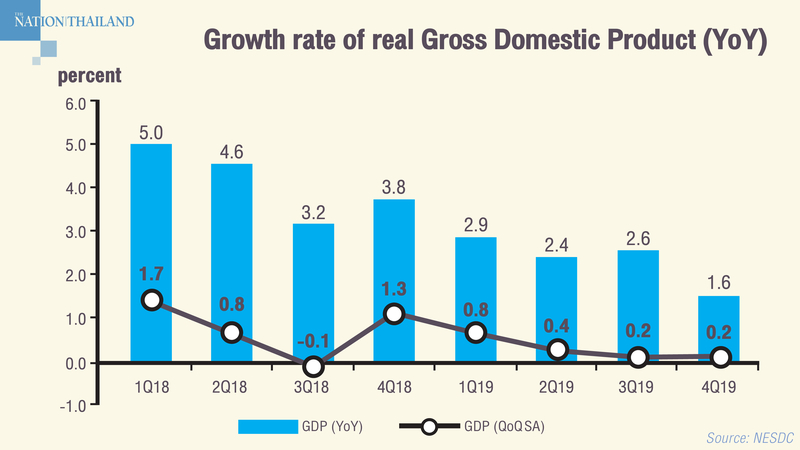
Thailand’s gross domestic product in the fourth quarter of 2019 expanded by 1.6 per cent year on year, decelerating from 2.6 per cent in Q3 2019, as a consequence of decrease in exports, government final consumption expenditure and public investment. However private final consumption expenditure and private investment maintained their growth momentum, the Nation Economic and Social Development Council reported today (February 17)

On the production side, the agricultural sector decreased by 1.6 per cent, compared to a rise of 2.7 per cent in Q3 2019. Non-agricultural sector increased by 2 per cent, slowing down from 2.5 per cent in Q3 2019, due to the manufacturing sector declining by 2.3 per cent.

NESDB lowers 2020 economic growth estimate

The coronavirus’s effect on tourism will carry into 2021, experts say

Economic fallout from China’s coronavirus mounts across the globe

Manufacturing was hurt mainly by a drop in output of motor vehicles and refined petroleum products. Nevertheless, the services sector increased by 4.1 per cent, compared to an expansion of 3.9 per cent in the previous quarter. The improvement was driven by expansion in accommodation and food service activities, wholesale and retail trade; repair of motor vehicles and motorcycles, and information and communication with growth rates of 6.8 per cent, 5.2 per cent, and 10.8 per cent, respectively.

On the expenditure side, private final consumption expenditure, and gross fixed capital formation grew by 4.1 per cent, and 0.9 per cent, compared to 4.3 per cent, and 2.7 per cent in Q3 2019, respectively.

Government final consumption expenditure, exports and imports of goods and services decreased by 0.9 per cent, 3.6 per cent, and 8.3 per cent, respectively. After seasonal adjustment, the Thai economy in Q4 2019 expanded by 0.2 per cent.

Private final consumption expenditure increased by 4.1 per cent, in comparison with a rise of 4.3 per cent in Q3 2019, contributed largely by an expansion of semi-durable and service items with a rise of 2.7 per cent and 8.5 per cent, accelerating from 2.4 per cent and 6.4 per cent respectively in Q3 2019. However, non-durable items grew by 2.6 per cent, slowing from 3.5 per cent in Q3 2019 whereas durable items declined by 4.1 per cent, in contrast to a rise of 1.6 per cent in Q3 2019.

General government final consumption expenditure decreased by 0.9 per cent, compared to a 1.7 per cent growth in Q3 2019. The contraction was mainly contributed by a 6.5 per cent decline in purchases of goods and services while compensation of employees increased by 1.4 per cent, slowing from 1.8 per cent in Q3 2019.

Meanwhile, social transfer in kind grew by 5.1 per cent.

Gross fixed capital formation grew by 0.9 per cent, slowing from 2.7 per cent in the third quarter of 2019, contributing largely to private investment with an increase of 2.6 per cent, compared to 2.3 per cent in Q3. The expansion was due mainly to a 3.1 per cent and 2.5 per cent investments in construction and machinery items, respectively. However, public investment dropped by 5.1 per cent, compared to a 3.7 per cent growth in Q3 2019, which contributed to a decrease in construction and machinery items. In particular, a contraction in government construction resulted from a delay in passing the FY2020 budget bill.

Changes in inventories at current market prices in this quarter increased with a value of Bt126.3 billion. Accumulation in stocks was mainly from paddy, gold, and wearing apparel.

Goods and services balance at current market prices recorded a surplus of Bt390.9 billion comprising surpluses of Bt180.1 billion in trade balance and Bt210.8 billion in service balance.

Airports’ expansion work ready for bidders #ศาสตร์เกษตรดินปุ๋ย

#ศาสตร์เกษตรดินปุ๋ย : ขอบคุณแหล่งข้อมูล : หนังสือพิมพ์ The Nation

https://www.nationthailand.com/business/30382151?utm_source=category&utm_medium=internal_referral

Airports’ expansion work ready for bidders

Feb 17. 2020
Photo credit: Department of Airports website

Photo credit: Department of Airports website
By THE NATION

The Department of Airports is ready to call bids for expansion projects, worth a total of Bt3.6 billion, to boost the capacities of four airports this year, said director-general Tawee Gasisam-ang.

Among the planned developments is the construction of a new taxi way at Krabi airport, valued at Bt1.350 billion. This project will boost the airport’s capacity to serve 25 flights per hours from ten flights currently. The new taxi way is expected to be operational in 2022.

A new passenger terminal, worth Bt800 million, will be built at Narathiwat airport to raise passenger capacity from 800,000 to 1.7 million a year. Completion is expected in 2023.

Expansion of the departure area and installation of a jet bridge in Surat Thani airport at a cost of Bt200 million will also be up for grabs. This project will raise the airport’s total capacity from 2.3 million passenger per year to 3.5 million. Currently, the airport handles 2.16 million passenger a year.This project is scheduled for completion in 2022.

A second passenger terminal will be built at Buriram airport, costing Bt775 million, to raise its passenger capacity from 800,000 to 1.7 million a year. Construction is expected to complete in 2022.

He added that the term of reference for the projects at Krabi, Narathiwat, and Surat Thani airports will be available in March before the bids in April for construction to begin in August this year.

The bid for the project at Buriram airport is expected in May this year, said Tawee.

Direct-sales watchdog panel being readied #ศาสตร์เกษตรดินปุ๋ย

#ศาสตร์เกษตรดินปุ๋ย : ขอบคุณแหล่งข้อมูล : หนังสือพิมพ์ The Nation

https://www.nationthailand.com/business/30382145?utm_source=category&utm_medium=internal_referral

Direct-sales watchdog panel being readied

Feb 17. 2020
File Photo by The Office of the Consumer Protection Board's Website

File Photo by The Office of the Consumer Protection Board’s Website
By THE NATION

Candidates are being considered for membership on Thailand’s first committee charged with overseeing direct sales and direct marketing businesses.

The Office of the Consumer Protection Board will propose a list this week to the permanent secretary of the Prime Minister’s Office for consideration.

Dechawat Chaeng-chuen, director of the Centre for Consumer Protection in Direct Selling and Direct Marketing Business, said the committee’s appointment responds to new legislation regulating direct sales, a type of retailing that’s playing an increasingly influential role in Thai life.

The committee will have eight members, with the chairman appointed by the Cabinet.

Members will include the directors-general of the departments of Internal Trade and Industrial Promotion, the chief of the Royal Thai Police and the secretary general of the Food and Drug Administration.

The Cabinet will appoint other members from associations and foundations involved in direct sales and marketing and consumer protection.

Dechawat said the committee will ensure consumers of fair treatment.

NBTC makes Bt100.521 billion in spectrum licences auction #ศาสตร์เกษตรดินปุ๋ย

#ศาสตร์เกษตรดินปุ๋ย : ขอบคุณแหล่งข้อมูล : หนังสือพิมพ์ The Nation

https://www.nationthailand.com/business/30382237?utm_source=category&utm_medium=internal_referral

NBTC makes Bt100.521 billion in spectrum licences auction

Feb 16. 2020
By Sirivish Toomgum
The Nation

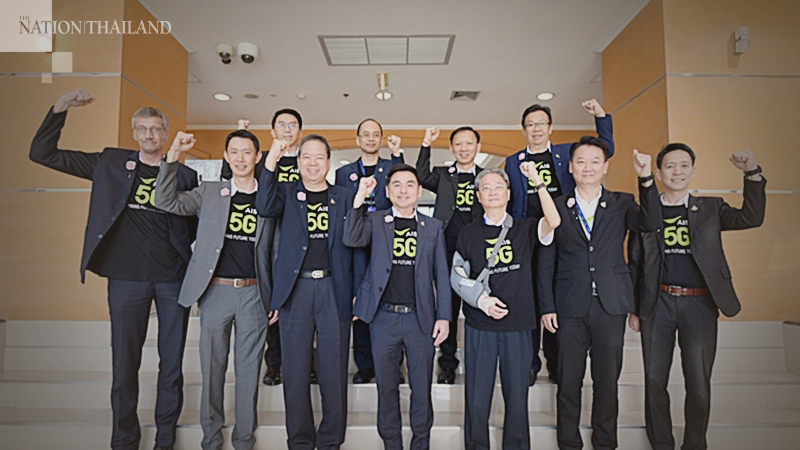
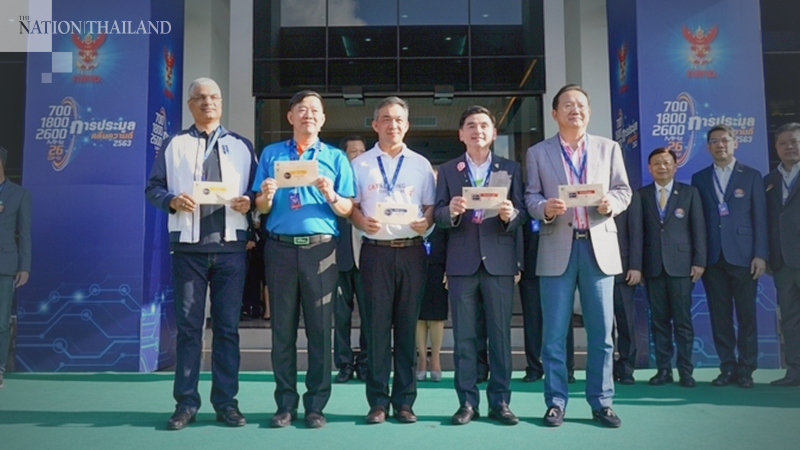
The National Broadcasting and Telecommunications Commission (NBTC) raked in Bt100.521 billion (excluding VAT) from its auction of 49 licences of three spectrum band – 700MHz, 2600MHz and 26GHz, today (February 16). Of the 49 licences put on auction , 48 were taken up, leaving just a single licence for the 26GHz spectrum unsold. There were 27 26GHz licences at the auction.

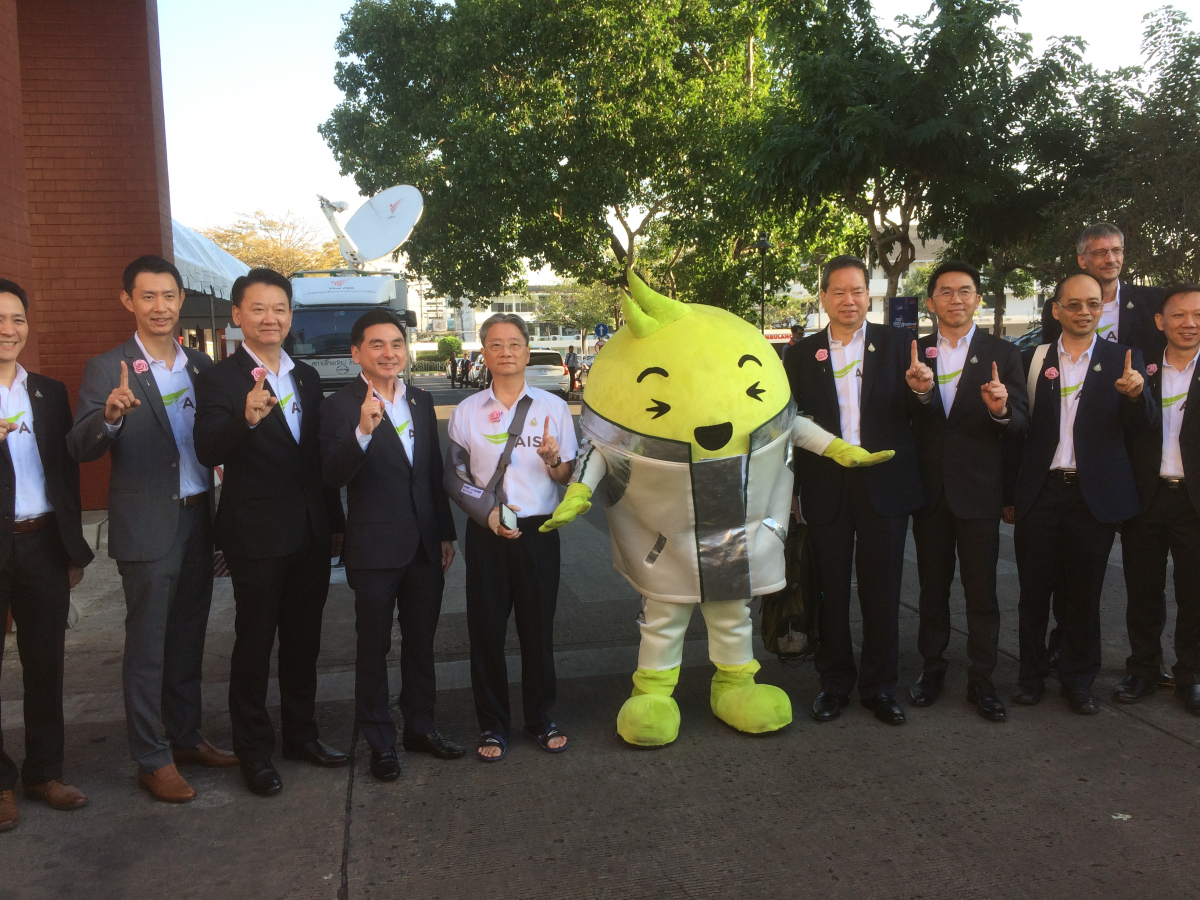
Five bidders took part in the much-awaited multiband auction, which is expected to give the country’s march towards 5G technology a big push. Advanced Wireless Network (AWN) of Advanced Info Service (AIS), dtac TriNet of Total Access Communication, TrueMove H Universal Communication (TUC) of True Corp, CAT Telecom, and TOT were in the fray for the licences.

AWN secured the most licences. It offered more than Bt17.154 billion to win one 700MHz licence, more than Bt19.56 billion to win 10 licences in the 2600MHz spectrum and Bt5.345 billion to win 12 licences of 26GHz.

AWN already has 2x10MHz bandwidth of the 700MHz. Clinching an additional 2x5MHz of 700MHz would mean it will have a total of 2x15MHz of the band.

CAT proposed Bt34.306 billion to clinch two 700MHz licences.

TUC offered Bt17.873 billion to win nine licences of 2600MHz and Bt3.577 billion to win eight licences of 26GHz.

TOT offered Bt1.795 billion to grab four licences of 26GHz.

Dtac Trinet offered more than Bt910 million to win two licences of 26GHz.

The NBTC started the auction early in the morning with three 700MHz licences, totalling 2x5MHz bandwidth each. All the licences were grabbed before noon after less than three hours of bidding.

This was followed by the auction of 19 licences of the 2600MHz spectrum, totalling 10MHz. All licences were grabbed.

Then it auctioned 27 licences of the 26GHz spectrum, totalling 100MHz each. Twenty-six licences were grabbed.

Overall, the auction of all the licences took five hours.

Only CAT, TUC and AWN bid for the both the 700MHz and 2600MHz bands, while all, except CAT, bid for the 26GHz band.

NBTC secretary-general Takorn Tantasith said the NBTC board will approve the bid results on February 19. The winning bidders can obtain the licences after that.

The watchdog is expecting the licence-holders to offer 5G service on these bands.

The NBTC had originally intended to auctionfour spectrums, including 1800MHZ licences. However, none of the bidders showed interest in the 1800MHz bandwidth. Therefore, the NBTC auctioned off only three bands today.

700MHz spectrums go for Bt51.45 billion in 5G auction #ศาสตร์เกษตรดินปุ๋ย

#ศาสตร์เกษตรดินปุ๋ย : ขอบคุณแหล่งข้อมูล : หนังสือพิมพ์ The Nation

https://www.nationthailand.com/business/30382230?utm_source=category&utm_medium=internal_referral

700MHz spectrums go for Bt51.45 billion in 5G auction

Feb 16. 2020
By Sirivish Toomgum
The Nation

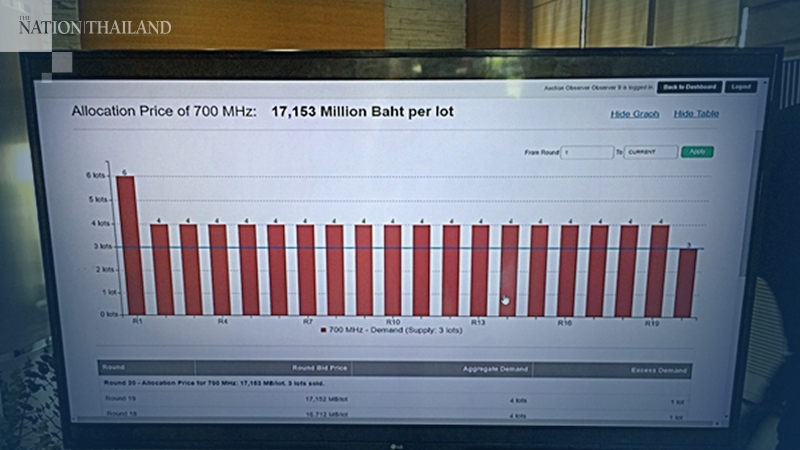
The auction of three 700MHz licences in the multiband auction on Sunday (February 16) was concluded in the morning with total sales of around Bt51.459 billion.

The National Broadcasting and Telecommunications Commission (NBTC) on Sunday began the auction of the three bands.

Out of the five bidders in the fray for spectrums being auctioned to provide 5G wireless broadband service, Advanced Wireless Network (AWN) of Advanced Info Service (AIS), TrueMove H Universal Communication (TUC) of True Corp, and CAT Telecom made bids for the 700MHz licences.

The auction was concluded after nearly three hours and 20 rounds of bidding.

The competition resulted in each licence going at a final price of Bt17.153 billion, after bidding started at Bt8.792 billion for 2x5MHz bandwidth for each licence.

The watchdog will announce details about the winning bidders of the three bands — 700MHz, 2600MHz and 26GHz — after concluding the auction.

The watchdog will next auction the 2600MHz spectrum, followed by 26GHz.

CAT, AWN and TUC will also bid for the 2600MHz licences.

TUC, AWN, DTAC TriNet of Total Access Communication and TOT will bid for the 26GHz band.

The NBTC had said earlier that it would auction four spectrums, including 1800MHz. However, none of the bidders showed interest in bidding for the 1800MHz spectrum, leading to auction of the other three spectrums on Sunday.

Stage set for the auction of spectrums for 5G tech #ศาสตร์เกษตรดินปุ๋ย

#ศาสตร์เกษตรดินปุ๋ย : ขอบคุณแหล่งข้อมูล : หนังสือพิมพ์ The Nation

https://www.nationthailand.com/business/30382202?utm_source=category&utm_medium=internal_referral

Stage set for the auction of spectrums for 5G tech

Feb 16. 2020
By THE NATION

The auction of spectrum bands for 5G wireless technology begins on Sunday (February 16). The five bidders are True Move H Universal Communication Co Ltd (TUC) of True Corp, DTAC TriNet of Total Access Communication, Advanced Wireless Network (AWN) of Advanced Info Service (AIS), TOT, and CAT Telecom.

The NBTC will auction the 700MHz, 1800MHz, 2600MHz, and 26GHz spectrums.

The NBTC last week declared that TUC, AWN, DTAC TriNet and TOT will bid for the 26GHz band.

CAT, AWN and TUC will also bid for 700MHz and 2600MHz.

None of the bidders has shown interest in the 1800MHz band.

Deputy Prime Minister Somkid Jatusripitak last month stepped in to push for the start of 5G service, urging state and private spectrum bidders to hasten the process for the benefit of society and the economy.

Somkid said 5G could help drive the country’s competitiveness and efficiency in the industrial sector as well as attract foreign investment.

The telecom operators have already partnered with several parties to demonstrate 5G in industrial use.

The NBTC will auction three licences of the 700MHz spectrum, each containing 2x5MHz bandwidth, at a starting price of Bt8.792 billion each.

The bidders can raise the price by Bt440 million per time. The licence term is for 15 years. The total payment for the licence is divided into 10 instalments, each at 10 per cent of the winning price.

The NBTC does not cap the maximum number each contender can bid for this licence.

The watchdog will call a bid for 19 licences of the 2600MHz, each containing 10MHz bandwidth at a price of Bt1.862 billion each. They can raise the price by Bt93 million per time. The licence is good for 15 years.

Each bidder can take a maximum of 10 licences of this band. The bidders are required to pay upfront 10 per cent of the total winning price in the first year and enjoy a grace period during the second to fourth years.

They will pay 15 per cent annually of the balance in the fifth to 10th years. The winners are obliged to provide service covering 40 per cent of the Eastern Economic Corridor within one year and 50 per cent of the business zones in several major cities within four years, including Bangkok and Greater Bangkok, Chiang Mai, Nakon Ratsima, Khon Khaen, Songkhla, and Phuket.

The competition for the 2600MHz licences is expected to intensify, given the need for at least 100MHz bandwidth (10 licences) out of the available 190MHz bandwidth (19 licences) in order to enable the company to provide effective 5G service.

The NBTC will auction 27 licences of 26GHz, each containing 100MHz bandwidth at a price of Bt423 million each. They can raise the price by Bt22 million per time.

The licence is valid for 15 years. Each bidder can bid for a maximum of 12 licences. They will have to pay the price upfront.

For the 1800MHz, it will auction seven licences, each containing 2x5MHz bandwidth at a starting price of Bt12.486 billion each. They can raise the price by Bt25 million per time. The licence is good for 15 years.

The NBTC caps at four the maximum number each contender can bid for this licence. The upfront payment is divided into three instalments — 50 per cent in the first instalment, followed by 25 per cent each in the next two instalments.

Solar and wind power can’t compete with gas this cheap #ศาสตร์เกษตรดินปุ๋ย

#ศาสตร์เกษตรดินปุ๋ย : ขอบคุณแหล่งข้อมูล : หนังสือพิมพ์ The Nation

https://www.nationthailand.com/business/30382181?utm_source=category&utm_medium=internal_referral

Solar and wind power can’t compete with gas this cheap

Feb 15. 2020
By Bloomberg · Naureen Malik, Brian Eckhouse 

This will almost certainly be a record-breaking year for the advance of solar and wind power across the U.S. The additions that are in progress or planned are significant enough to boost hopes for emissions-free electrical grids within a generation-if natural gas doesn’t get in the way.

It just may. Gas is such a bargain that it’s being viewed less as a bridge fossil fuel, driving the world away from dirtier coal toward a clean-energy future, and more as a hurdle that could slow the trip down. Some forecasters are predicting prices will stay low for years, making it tough for states, cities and utilities to achieve their goals of being zero-carbon in power production by 2050 or earlier.

“The fact that there’s an abundance of it makes the move to complete decarbonizaton much harder,” says Ravina Advani, head of energy, natural resources and renewables at BNP Paribas. Gas is a tough competitor. “It’s reliable and it’s cheap.”

The flood of inexpensive gas does have a big environmental upside, because it’s putting increased pressure on struggling coal plants that contribute significantly to global warming. But it’s also squeezing margins for nuclear reactors, which are the U.S.’s biggest source of carbon-free power. And it’s driving utilities to lay down infrastructure that could ensure gas remains central to the power mix for decades.

Solar and wind are certainly winning in many markets on price alone. Without cheap gas, though, the renewables build-out would be faster, says Cody Moore, head of gas and power trading at Mercuria Energy America. “Absolutely, 100%.”

Rising exports of liquefied natural gas from the U.S. Gulf Coast to Siberia will probably keep prices down and expand developing economies’ reliance on the fuel. The International Energy Agency expects global gas consumption to climb through 2040. “We’re using solar and wind more than ever, but until we’re very purposeful about trying to subtract some fuels that we’re using, history shows us that market forces alone won’t successfully push fossil fuels out of the energy mix,” says Noah Kaufman, a research scholar at Columbia University’s Center on Global Energy Policy.

None of this is to say that renewable investments in the U.S. haven’t been on a tear. They went up 28% last year to a record $55.8 billion, according to BloombergNEF. Between now and 2050, renewable power will be the fastest-growing source of electricity, accounting for 38% of generation, according to the U.S. Energy Information Administration.

That, of course, isn’t the percentage envisioned by the likes of the state of California, the city of Pittsburgh and the Minneapolis-based utility Xcel Energy, which are among the governments and power providers that have target dates between 2030 and 2050 for cleaning carbon emissions out of their grids.Whatever the price, natural gas will have to continue to fill the gap for some time because renewable generators need the strength of wind or sun to do their jobs. The battery power-storage technologies that could cut every grids’ ties to fossil fuels are only slowly being added to systems.

Without them, “we cannot go 100% renewable,” says Tom Rumsey, a senior vice president at Competitive Power Ventures, which builds both gas-fired and renewable plants. “There are these moonshot goals, which drive policy behavior. But the reality is, how do you maintain grid reliability without a breakthrough in storage? You are going to need fossil fuels.”

There’s widespread agreement among forecasters, policymakers and increasingly business leaders that solar and wind will win out in the end. Ultimately, “gas plants will meet the same reality as coal,” says Jules Kortenhorst, chief executive officer of the Rocky Mountain Institute, a nonprofit focused on delivering a low-carbon future. “It’s just a question of when.” Gas prices may define the answer.

(Michael R. Bloomberg, the founder and majority stakeholder of Bloomberg LP, the parent company of Bloomberg News, has committed $500 million to launch Beyond Carbon, a campaign aimed at closing the remaining coal-powered plants in the U.S. by 2030 and slowing the construction of new gas plants.)

Valentine’s Day spending expected to rise 32% #ศาสตร์เกษตรดินปุ๋ย

#ศาสตร์เกษตรดินปุ๋ย : ขอบคุณแหล่งข้อมูล : หนังสือพิมพ์ The Nation

https://www.nationthailand.com/business/30382175?utm_source=category&utm_medium=internal_referral

Valentine’s Day spending expected to rise 32%

Feb 15. 2020
By Syndication Washington Post,  Bloomberg · Janet Freund 

Record spending this Valentine’s Day could give a boost to specialty retailers, according to the National Retail Federation.

Total spending for the holiday is expected to increase 32% to $27.4 billion compared to 2019’s record level of $20.7 billion.

A survey by the trade group found that more people said they would buy presents this year than they did last year, and average per-person spending is also projected to rise, to nearly $200.

“Valentine’s Day is a sentimental tradition, but gift-giving can be driven by the economy,” NRF President and CEO Matthew Shay said in a statement. “The same strong employment numbers and higher wages that boosted [Christmas] holiday sales should make it easier to spend a little extra to say ‘I love you’ this year and to spread the gift-giving beyond just your significant other.”

One of the companies looking to capitalize on the growth is 1-800-Flowers.com. It expects to deliver about 18.5 million stems for Valentine’s Day, the second biggest floral holiday behind Mother’s Day. Valentine’s sales represent about 3.5% of the company’s total consolidated annual revenue, CEO Chris McCann said in an interview on Bloomberg Radio. Valentine’s Day falling on a Friday this year should also boost demand, he said.

Northcoast Research analyst Tim Vierengel said in an email that flower retailers seem to be taking a more “rational” approach to promotional activity this year, “which should reflect in the bottom line if sales are strong like we expect.”