Lagarde heralds yearlong ECB review looking at ‘host of issues’ #ศาสตร์เกษตรดินปุ๋ย

#ศาสตร์เกษตรดินปุ๋ย : ขอบคุณแหล่งข้อมูล : หนังสือพิมพ์ The Nation

https://www.nationthailand.com/business/30380976?utm_source=category&utm_medium=internal_referral

Lagarde heralds yearlong ECB review looking at ‘host of issues’

Jan 23. 2020
Christine Lagarde, president of the European Central Bank (ECB), arrives for the central bank's rate decision news conference in Frankfurt, Germany, on Jan. 23, 2020. MUST CREDIT: Bloomberg photo by Alex Krause.

Christine Lagarde, president of the European Central Bank (ECB), arrives for the central bank’s rate decision news conference in Frankfurt, Germany, on Jan. 23, 2020. MUST CREDIT: Bloomberg photo by Alex Krause.
By Syndication Washington Post, Bloomberg · Paul Gordon

European Central Bank President Christine Lagarde signaled that all options are on the table for the institution’s approach in reviving inflation as she launched the first reappraisal of its monetary policy since 2003.

“We are going to review a whole host of issues,” she told reporters after the Governing Council meeting on Thursday. The exercise will encompass “how we deliver, how we measure, what tools we have and how we communicate.”

Lagarde said the conclusions of the review should be communicated before the end of the year. She stressed that it will involve listening to the views of ordinary people, though differing from the approach of the Federal Reserve’s “Fed Listens” events of last year.

While Lagarde noted signs of a “moderate increase in underlying inflation” — a remark that briefly pushed the euro to a session high — it remains well short of its goal of just under 2%. She also observed that downside risks to the ECB’s economic outlook are “somewhat less pronounced.”

Lagarde said monetary policy must remain highly accommodative, and reiterated that governments with the space to add fiscal stimulus should be prepared to do so.

Her efforts to modernize the ECB include potentially resetting the inflation goal, studying alternative measures of price growth, and assessing its policy tools. She’s benefiting from signs that a deep manufacturing slump in the 19-nation economy is bottoming out before it causes greater harm to the labor market and consumer spending.

That should allow policymakers to focus on the review, which will last most of the year and also tackle issues including financial stability, climate change and communication.

“I would not exclude, preclude or anticipate how we’re going to deliver,” she said, adding that it would be unfair to reveal her own opinions just yet. “I do have my views as do other members. My mission is to harness all the views around.”

The ECB is questioning its methods as globalization, digitalization and demographics challenge long-standing theories that inflation will pick up if you throw enough money at it. Negative interest rates and 2.6 trillion euros ($2.9 trillion) of asset purchases so far resulted in consumer-price growth barely above 1%.

Other economies haven’t fared much better. Japanese inflation has been muted for a generation despite extremely accommodative policy. In the U.S., where fiscal policy has helped a little, the Federal Reserve is also appraising its strategy. Those results are expected to be released this year and may be inspiration for the ECB, which has already said it will take a page out of the Fed’s book by listening to academics and members of civil society.

At the ECB’s meeting, the 500th since the central bank was founded two decades ago, the Governing Council also decided to keep the deposit rate unchanged at -0.5% and the pace of monthly bond buying at 20 billion euros ($22 billion), in line with economists’ expectations.

Policymakers reiterated their pledge that borrowing costs will remain at present or lower levels until the inflation outlook has “robustly” converged with their goal. Quantitative easing will “run for as long as necessary.”

Economic prospects have improved lately. Trade tensions have eased with the signing of a preliminary U.S.-China trade deal, though U.S. President Donald Trump warned this week that threat of car tariffs still looms over the European Union, and confidence among businesses and investors has picked up.

Gauges tracking future output by euro-area factories and orders from abroad suggest the trend may last. Volkswagen AG, the world’s biggest carmaker, saw global vehicle deliveries edg higher last year as it eked out a small gain in China and saw improved results in both Europe and South America.

The IMF’s latest update, released this week on the sidelines of the World Economic Forum in Davos, noted that global risks are “less skewed” negatively.
Jurin’s business delegation achieves Bt2.78 billion sales in two Indian cities #ศาสตร์เกษตรดินปุ๋ย

#ศาสตร์เกษตรดินปุ๋ย : ขอบคุณแหล่งข้อมูล : หนังสือพิมพ์ The Nation

https://www.nationthailand.com/business/30380952?utm_source=category&utm_medium=internal_referral

Jurin’s business delegation achieves Bt2.78 billion sales in two Indian cities

Jan 23. 2020
By The Nation

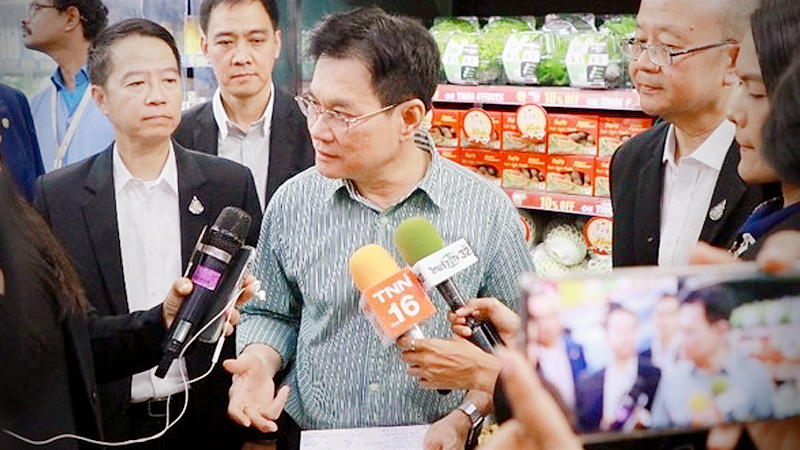
The Thai Food and Fruits Fiesta event in India clocked up total sales of over Bt2.78 billion, Commerce Minister Jurin Laksanawisit said.

Jurin led a group of 80 entrepreneurs to the southern Indian cities of Bangalore and Hyderabad with support from the Indian government where they conducted business.

He said the Indian government’s housing-for-all policy offered opportunities for sale of Thai rubberwood and construction materials while the ban on plastic supported the export of cassava for biodegradable plastic.

He said Thai foods and fruit got favourable attention from Indian buyers due to certain similarities in the products in the two countries.

At Bangalore, 11,000 cubic metres of rubber worth Bt100 million were sold; cassava sales totalled 3,500 tonnes and were worth Bt72 million; glue powder (1,200 tonnes) worth Bt60 million; products under memorandum of understanding such as furniture, food, chemicals,etc were worth Bt805 million.

In addition, Thai products launched on Bigbasket, an India online grocery store website, are predicted to sell at least Bt50 million in value in the first year.

Jurin added that he had the chance to meet the commerce minister of the Indian state of Telangana. They plan to sign a memorandum of understanding to promote investments in both countries in the future. The value of trade negotiations and business matching in Hyderabad can be summarised as follows: 1280 cubic metres of rubberwood worth Bt17.5 million; 1,280 LCD TVs worth Bt1.5 billion; clothing worth Bt100 million;1,000 tonnes of flour worth of Bt18 million, and logistics services to help exports by Thai small entrepreneurs worth Bt50 million for a total of Bt1.68 billion.

Total sales in the two cities amounted to Bt2.78 billion.

Coronavirus scare chills SET, other Asian markets #ศาสตร์เกษตรดินปุ๋ย

#ศาสตร์เกษตรดินปุ๋ย : ขอบคุณแหล่งข้อมูล : หนังสือพิมพ์ The Nation

https://www.nationthailand.com/business/30380951?utm_source=category&utm_medium=internal_referral

Coronavirus scare chills SET, other Asian markets

Jan 23. 2020
By The Nation

The Stock Exchange of Thailand index remained in a slump on Thursday morning (January 23), down about 0.4 per cent following a fall Wednesday.

Tisco Financial Group is predicting a narrow swing between a support level of 1,565-1,570 and a resistance level of 1,585 from Wednesday’s close of 1,574.59.

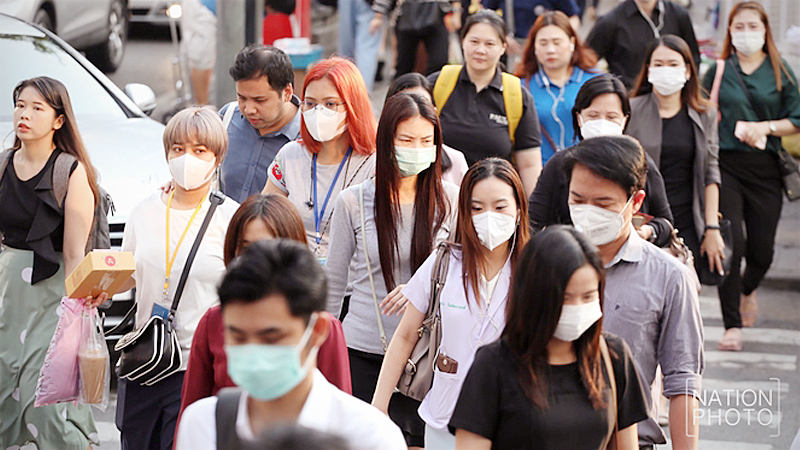
It cited several contributing factors for the muted trade, including concerns about the Wuhan coronavirus, an expected delay in disbursing the budget for fiscal 2020 and a lowered project for world economic growth from the International Monetary Fund.

Tisco is recommending investment in STEC, SEAFCO, PYLON, COMM, CPALL, BJC, BBL, KKP, SCB and AEONTS.

Coronavirus concerns dropped both Japan’s Nikkei 225 and South Korea’s Kospi about 1 per cent, the Shanghai Composite index and Hong Kong’s Hang Seng by more than 2 per cent and the Shenzhen Composite about 3 per cent.

There have been reports suggesting that thousands in Wuhan, public transit has been suspended, might be infected, rather than the official tally of 571.

Improvement in December, but 2019 exports dip 2.65% #ศาสตร์เกษตรดินปุ๋ย

#ศาสตร์เกษตรดินปุ๋ย : ขอบคุณแหล่งข้อมูล : หนังสือพิมพ์ The Nation

https://www.nationthailand.com/business/30380932?utm_source=category&utm_medium=internal_referral

Improvement in December, but 2019 exports dip 2.65%

Jan 22. 2020
By THE NATION

Thai exports last year contracted 2.65 per cent year-on-year to US$246.244 billion, Pimchanok Vonkorpon, director-general of Trade Policy and Strategy Office, said on Wednesday (January 22).

Imports last year totalled $236.639 billion, down 4.66 per cent.

Exports dropped 1.28 per cent in December year-on-year to $19.154 billion, representing an improvement from November, which saw a 7.4-per-cent decline.

Pimchanok credited the improvement to the US-China trade war’s lessening impact on Thailand.

While overall exports fell last year, those to the US in December expanded 15.6 per cent, the highest growth in 10 months. The expansion came in computers, rubber products and furniture.

Exports to China in December alone rose 7.3 per cent, the highest in 18 months, although for the whole year they shrank 3.8 per cent. Products performing well were fresh, frozen and dried fruit, vehicles and auto parts, computers and frozen chicken.

Exports to Cambodia, Laos, Myanmar and Vietnam returned to expansion for the first time in eight months, to 1.1 per cent, but contracted 6.3 per cent over the whole year.

Exports to Japan last year dropped 1.5 per cent, to the European Union (15 countries) 6.6 per cent and to other Southeast Asian countries 8.2 per cent.

Exports to India dipped 3.9 per cent, to Hong Kong 6.5 per cent and to South Korea 4.3 per cent.

Exports of farm and agricultural-industrial products dropped 2.4 per cent last year, while those of industrial products declined 1.8 per cent.

Pimchanok said the trend in exports this year is rising in line with the improving global trade sentiment after Washington and Beijing reached agreement on Phase 1 of their trade agreement.

She also noted that the Commerce Ministry would be more aggressive in tapping overseas markets.

If Thailand can export $21.278 billion of goods per month, the year’s total will expand 3 per cent, based on the assumption that crude oil is priced at $65 per barrel and the baht stays between Bt30 and Bt32 against the dollar.

Shanghai reports $553b worth of output #ศาสตร์เกษตรดินปุ๋ย

#ศาสตร์เกษตรดินปุ๋ย : ขอบคุณแหล่งข้อมูล : หนังสือพิมพ์ The Nation

https://www.nationthailand.com/business/30380907?utm_source=category&utm_medium=internal_referral

Shanghai reports $553b worth of output

Jan 22. 2020
A Tesla Model 3 vehicle is seen at a Tesla store in Shanghai. [Photo/Xinhua]

A Tesla Model 3 vehicle is seen at a Tesla store in Shanghai. [Photo/Xinhua]
By China Daily/ANN

The services sector’s contribution to Shanghai’s GDP continued to expand last year, with foreign investment, new economy activities and strategic emerging industries shoring up economic performance that local authorities defined as “progressive amid stabilization”.

The metropolis reported 3.82 trillion yuan ($553 billion) worth of economic output in 2019, up 6 percent year-on-year, the Shanghai Municipal Statistics Bureau said in a news conference on Tuesday.

Among them, the services sector jumped 8.2 percent to add about 2.78 trillion yuan, accounting for 72.7 percent of the city’s GDP. The finance sector surged 11.6 percent year-on-year to 660 billion yuan, which is among the fastest-growing sectors.

The city dispelled global uncertainties to secure a large number of foreign direct investment deals. The number of newly attracted FDI contracts reached 6,800, up 21.5 percent from a year earlier, while contract value jumped 7.1 percent to $50.2 billion.

Investment from the United States’ private sector exhibited strong momentum, with contract value climbing 1.3 times to reach $3.03 billion, whereas the actual use of foreign capital soared 29.6 percent from a year earlier to $603 million, said Tang Huihao, deputy chief of the bureau.

New economic activities such as internet-related services and technology startups were shaping up to be a major force driving economic growth. Online shopping hit 1.3 trillion yuan, up 27 percent year-on-year, whereas web-based transaction in the service sector jumped 26.2 percent, though detailed figures were not disclosed.

“From January to November last year, companies engaged in scientific research and technology services saw their revenue expand 12.4 percent from the same period in the previous year, and that of information software and services rose 10.3 percent,” Tang said.

Market vitality has been continuously strengthened, with the average number of new companies set up hitting 1,476, up 12 percent. Research and development investment is forecast to hit 150 billion yuan, and the average number of patents held by every 10,000 residents was 53.05.

Strategically emerging industries jumped 3.3 percent year-on-year to reach 1.1 trillion yuan, significantly outpacing that of overall industrial output, which recorded an ebb of 0.3 percent in 2019.

According to Tang, leading drivers in that sector include the new energy industry, which surged 17.7 percent, as well as biology-related industries, which expanded 7.3 percent, fueled by foreign pharmaceutical firms.

The per capita disposable income in Shanghai grew by 8.2 percent for urban residents and 9.3 percent for rural residents last year, with the latter recording faster growth than the former for eight consecutive years.

Shanghai’s economy will continue to benefit from new opportunities like an expanded free trade zone, a science and technology bourse, the integration of the Yangtze River Delta region, as well as hosting the China International Import Expo, said Mayor Ying Yong on Monday at the close of the city’s annual legislature meeting.

The city has just passed a regulation that bolsters its goal of constructing a world-class innovation hub through multiple means.

Korea’s 2019 growth slowest in decade in 2019, Q4 expansion faster than expected #ศาสตร์เกษตรดินปุ๋ย

#ศาสตร์เกษตรดินปุ๋ย : ขอบคุณแหล่งข้อมูล : หนังสือพิมพ์ The Nation

https://www.nationthailand.com/business/30380899?utm_source=category&utm_medium=internal_referral

Korea’s 2019 growth slowest in decade in 2019, Q4 expansion faster than expected

Jan 22. 2020
(Yonhap)

(Yonhap)
By The Korea Herald/ANN

The South Korean economy expanded at the slowest pace in a decade in 2019, largely weighed down by an extended slump in outbound shipments amid a lengthy trade row between the United States and China, the central bank said Wednesday.

South Korea’s gross domestic product expanded 2 percent in 2019 from a year earlier, according to advance data from the Bank of Korea.

The figure marks the slowest on-year growth since 2009, when Asia’s fourth-largest economy expanded 0.7 percent in the aftermath of the financial crisis that jolted the globe economy the year before.

It is on par with the 2 percent forecast by the central bank, but the BOK’s growth outlook published in November followed three earlier downward revisions — from 2.7 percent in late 2018 to 2.6 percent in January, 2.5 percent in April and 2.2 percent in July.

The annual growth estimate beat market consensus.  In a recent poll by Yonhap Infomax, the financial news arm of Yonhap News Agency, seven analysts predicted Asia’s fourth-largest economy to have expanded 1.89 percent in 2019.

Such a gloomy outlook followed 13 consecutive months of a decline in exports.

Last year, the country’s exports fell 10.3 percent on-year. This year’s outbound shipments are forecast to rise 3 percent.

In the fourth quarter of the last year, the economy expanded at a better-than-expected clip of 1.2 percent from three months earlier, fanning hopes that Asia’s fourth-largest economy may get on a recovery track.

The figure marks the fastest quarterly growth rate since the third quarter of 2017.  The estimate-beating performance seems to be underpinned by a surge in state spending and firm domestic demand.

For the year, the economy is expected to grow 2.3 percent.  In 2019, economic expansion generated by exports gained 1.5 percent from a year earlier, sharply slowing from a 3.5 percent on-year expansion in 2018, with that by imports dipping 0.6 percent in the year, marking a turnaround from a 0.8 percent on-year gain in 2018.

Amid the sluggish trade, the country’s overall production by the manufacturing industry also slowed to a 1.4 percent on-year expansion in 2019 from 3.4 percent the previous year.

The construction industry posted a second consecutive year of decline, with its output dipping 3.2 percent last year following a 4 percent drop in 2018.  Fiscal spending jumped 6.5 percent on-year in 2019, up from 5.6 percent the year before, making up shortfalls in other sectors.

Private consumption, on the other hand, slowed to 1.9 percent from 2.8 percent over the cited period. (Yonhap)

Investment under Foreign Business Act surges 60% last year #ศาสตร์เกษตรดินปุ๋ย

#ศาสตร์เกษตรดินปุ๋ย : ขอบคุณแหล่งข้อมูล : หนังสือพิมพ์ The Nation

https://www.nationthailand.com/business/30380874?utm_source=category&utm_medium=internal_referral

Investment under Foreign Business Act surges 60% last year

Jan 22. 2020
By THE NATION

Foreign investment in Thailand, under the Foreign Business Act of 2542, surged 60 per cent year on year to Bt200 billion in 2019.

Weerasak Wangsupakitkosol, Deputy Minister of Commerce, said on Tuesday (January 21) that 697 foreign investors were permitted to invest in Thailand last year under the Act.

Most of the investments were in capital -intensive businesses such as engineering service, software development, and application services related to logistics and passenger transport, and e-payment.

There were 3,000 Thai-foreign joint ventures set up last year with Bt47 billion in total registered capital.

He added that the figures indicated that foreign investment in Thailand was continuing and expected to expand further this year, thanks to the government’s incentives.

New round of bidding expected in April for gas exploration #ศาสตร์เกษตรดินปุ๋ย

#ศาสตร์เกษตรดินปุ๋ย : ขอบคุณแหล่งข้อมูล : หนังสือพิมพ์ The Nation

https://www.nationthailand.com/business/30380885?utm_source=category&utm_medium=internal_referral

New round of bidding expected in April for gas exploration

Jan 22. 2020
By THE NATION

The Department of Mineral Fuels is expected to announce the terms of reference for a new round of bidding for a petroleum exploration and production concession in April.

Director-general Sarawut Kaewtathip said the department is expected to conclude next month the number of plots to be put up for the 23rd round of bidding.

The department is expected to open bidding for the plots in the Gulf of Thailand first.

The new round of bidding is the first in 13 years, he added.

Interested bidders will have four months to submit their offers, and the department will subsequently take two months to select the winner.

It is expected to grant the concession, which will be on a production sharing contract basis, next January.

The contract is estimated to see investment of at least Bt1.5 billion, Sarawut said.

He added that land exploration cannot be allowed immediately, given overlapping rules among involved state agencies.

Exploration in the Andaman Sea is still pending as the department’s preparation of information is not yet complete.

Natural gas production in two key plots, Erawan and Bongkot, has a combined capacity of 2.1 billion cubic feet per day. They account for 70 per cent of the country’s natural gas production. This capacity will however decline to 1.5 billion cubic feet per day in 2022.

Additionally, the Energy Ministry has assigned the department to enter into negotiations with Cambodia on developing an overlapping sea area.

The department is preparing information for discussion with related Thai ministries. The negotiations with Cambodia will be based on the joint development area concept between Thailand and Malaysia.

The petroleum exploration and production industry earned Bt160 billion for state coffers last year. This made the department the fourth largest state revenue earner after the Excise, Revenue and Customs departments.

PM appoints panel to speed up trade, investment #ศาสตร์เกษตรดินปุ๋ย

#ศาสตร์เกษตรดินปุ๋ย : ขอบคุณแหล่งข้อมูล : หนังสือพิมพ์ The Nation

https://www.nationthailand.com/business/30380884?utm_source=category&utm_medium=internal_referral

PM appoints panel to speed up trade, investment

Jan 21. 2020
PM Prayut Chan-o-cha

PM Prayut Chan-o-cha
By THE NATION

Prime Minister Prayut Chan-o-cha has appointed a committee to accelerate trade and investment.

Finance Minister Uttama Savanayana said on Tuesday (January 21) that a cabinet meeting in Narathiwat province acknowledged the PM’s order to appoint the committee.

The Cabinet also gave the green light to a Bank for Agriculture and Agricultural Cooperatives (BAAC) recapitalisation of Bt20 billion over five years.

Government spokeswoman Narumon Pinyosinwat said the PM-appointed committee would accelerate public sector investment this year and the next.

The committee will be chaired by Deputy PM Somkid Jatusripitak. The finance minister is to be vice chairman.

The committee members will comprise economic ministers, including ministers of Finance, Commerce, Energy, Industry, and Digital Economy and Society, as well as deputy secretary-general to the prime minister for political affairs Kobsak Pootrakool, the permanent secretaries of the Foreign and Commerce ministries, and the Board of Investment secretary-general.

Also among the committee are the Budget Bureau director, the National Economic and Social Development Council secretary-general and deputy secretary-general, the State Enterprise Policy Office director, the Trade Negotiations Department director-general, and the Eastern Economic Corridor Policy Committee secretary-general.

The committee is tasked with accelerating state enterprise investment this year and in 2021 to meet schedules.

It will determine the guidelines for international trade negotiations and investment promotion and joint investment, and is to draw up monetary and fiscal policies and related urgent action plans and propose them to the cabinet.

The committee, which will also invite companies to jointly invest with the state sector in mega projects, will report progress and obstacles of its tasks to the premier on a regular basis.

The BAAC’s recapitalisation of Bt20 billion will raise the bank’s capital to Bt80 billion.

Somkid recently said the higher capital will enable the BAAC to become a key mechanism of the government in bringing sustainable development to rural areas.

The financial injection will come from the Specialised Financial Institutions Development Fund.

The Cabinet also approved in principle an urgent investment plan of Bt18.68 billion in the special economic zone in Songkhla’s Chana district.

Value of food exports to increase 5.4% this year #ศาสตร์เกษตรดินปุ๋ย

#ศาสตร์เกษตรดินปุ๋ย : ขอบคุณแหล่งข้อมูล : หนังสือพิมพ์ The Nation

https://www.nationthailand.com/business/30380888?utm_source=category&utm_medium=internal_referral

Value of food exports to increase 5.4% this year

Jan 21. 2020
By THE NATION

The National Food Institute forecasts that the value of food exports this year will be US$34.9 billion (Bt1.05 trillion), up 5.4 per cent year on year, according to its president Anong Paijitprapapon.

However, the value of exports will contract 0.3 per cent to Bt1.02 trillion if the baht rises to 29.30 per US dollar.

The export value is expected to expand 3.5 per cent to Bt1.06 trillion if the baht holds steady at 30.40 per dollar.

One positive factor helping food exports this year is the global economic recovery after tensions over a US-China trade war eased.

The Olympic Games in Japan will also spark demand for more food.

The negative factors that could affect the food industry are the drought and the possible hike in production and logistics costs if energy prices rise following an escalation in the US-Iran conflict.

Food exports last year dropped 3.8 per cent to $33.1 billion, or Bt1.025 trillion, while food imports amounted to Bt401.3 billion, down 0.1 per cent.

Among items suffering a decline in export value are rice, which fell 22 per cent, sugar 13.7 per cent, canned tuna 6 per cent, shrimps 9.2 per cent, and pineapples 15.7 per cent. However, the value of chicken exports increased 0.8 per cent, condiments 4 per cent, coconuts 3.8 per cent and ready-to-eat meals 4.6 per cent.

The institute blames the drop in the value of food exports on the global economic situation, the strengthening baht and declining world food prices. The global food trade last year amounted to $1.3 trillion, down 0.6 per cent. Thailand’s food exports accounted for 2.51 per cent of the world food trade.

Last year, China was Thailand’s biggest food importer, replacing the CLMV (Cambodia, Laos, Malaysia, Vietnam) bloc. Exports to China rose 34 per cent to Bt150.75 billion, accounting for 14.7 per cent of Thailand’s total food exports.