Stuck-in-the-past Japanese banks wary of fintech revolution #ศาสตร์เกษตรดินปุ๋ย

#ศาสตร์เกษตรดินปุ๋ย : ขอบคุณแหล่งข้อมูล : หนังสือพิมพ์ The Nation

https://www.nationthailand.com/business/30381093?utm_source=category&utm_medium=internal_referral

Stuck-in-the-past Japanese banks wary of fintech revolution

Jan 26. 2020
The Money Forward app is displayed on a smartphone in Tokyo, on Jan. 22, 2020. MUST CREDIT: Bloomberg photo by Toru Hanai.

The Money Forward app is displayed on a smartphone in Tokyo, on Jan. 22, 2020. MUST CREDIT: Bloomberg photo by Toru Hanai.
By Syndication Washington Post, Bloomberg · Taiga Uranaka, Yuki Hagiwara

Japan’s effort to nudge its more than 100 struggling regional lenders into the digital age is floundering.

More than a year after rules to spur open banking were issued, small lenders are stuck in a back-and-forth with startups over fees for access to client account data, according to a Financial Services Agency official. Fintechs that must reach agreements with individual banks before a May deadline say they don’t have the resources to pay hefty charges or crisscross the country convincing hold-outs.

The impasse risks embarrassing policymakers keen to lift Japan off the bottom of a ranking on fintech adoption. A successful move into open banking would put the Asian nation in the company of the U.K. and Australia, which are freeing up data access to spur competition and create innovative financial solutions.

Japan is hoping for voluntary partnerships where startups help overhaul a stodgy industry hammered by years of negative interest rates, deflation and, for rural banks, depopulation. Mired in shrinking profits as the hinterland ages and empties of its young, some lenders are reluctant to ink deals that promise vague future returns but demand immediate investments.

“It’s difficult for some banks to fork out additional costs, even if they’re investments for the future, when it’s not clear how much they can profit by doing this,” said Junichi Kanda, an executive officer at fintech Money Forward Inc.

Progress has been slow. Just 25 of 59 eligible fintech companies had signed contracts with any banks as of September, the most recent FSA figures show. Only 57 of 130 lenders had any one-on-one agreements.

Teaming up with fintechs can give lenders a quick way to offer new digital services, while also gaining a fuller view of customer finances, the FSA official said, asking not to be identified in accordance with the agency’s policy. The official hoped talks would accelerate as the deadline neared.

Money Forward, one of the biggest startup participating in the project, has made agreements with fewer than half the 100 banks it wants to tie up with, Kanda said. He tries to convince banks that sharing data via application programming interfaces, or APIs, will migrate customers to mobile platforms from costly branches and automated teller machines.

Money Forward is developing apps for lenders including Gunma Bank and North Pacific Bank. For smaller peers, Kanda said negotiating with banks around the country is daunting, even with the FSA and industry groups arranging match-making sessions.

Another fintech, Moneytree KK, says putting a financial burden on startups could undermine the initiative. “We’re not a competitor to banks, we’re there to help them win,” sales chief Taizo Miyagami said.

Concerns about data-leak risks have played a role in some lenders’ slow adoption of open banking, according to Hideki Osawa, a senior consultant at Nomura Research Institute.

The lack of a dominant fintech player of the scale of China’s Alipay and WeChat Pay — which have reams of data on individual spending — is also a stumbling block in luring banks on board.

For the startups, failure to reach agreements means they risk being stranded without data access after May, disrupting services for households and small business owners who use their budgeting and accounting apps. That’s because the current practice of screen scraping without a bank’s permission will end after the deadline.

Some banks may decide to offer data access “for free or very low fees if they see significant benefits,” Japanese Bankers Association Chairman Makoto Takashima said at a briefing in December. “On the other hand, there could be cases where banks don’t see benefits and can’t even cover the costs of maintaining systems.”

Rural banks have also been frustrated by the process. Joyo Bank Ltd. President Ritsuo Sasajima, said his firm was quick to build APIs but short-staffed fintechs have been slow to respond. Still, Sasajima, who chairs the Regional Banks Association of Japan, said that on the whole “progress has been made.”

Traditional banks often have a “fortress mentality,” said James Lloyd, who leads Asia-Pacific fintech and payments at consultancy EY. Ultimately, “this will only work if the banks themselves see value in opening up.”


Davos elite want to plant 1 trillion tress to help the planet, but many still fight a carbon tax #ศาสตร์เกษตรดินปุ๋ย

#ศาสตร์เกษตรดินปุ๋ย : ขอบคุณแหล่งข้อมูล : หนังสือพิมพ์ The Nation

https://www.nationthailand.com/business/30381042?utm_source=category&utm_medium=internal_referral

Davos elite want to plant 1 trillion tress to help the planet, but many still fight a carbon tax

Jan 25. 2020
Photo Credit:  World Economic Forum / Mattias Nutt

Photo Credit: World Economic Forum / Mattias Nutt
By The Washington Post · Heather Long 

DAVOS, Switzerland – Leaders of the world’s most powerful companies sent one clear message this week as they gathered in this ski chalet town for the World Economic Forum: They care about the environment — to a point.

With the Australian bushfires raging and teenage activist Greta Thunberg proclaiming “our house is still on fire,” business leaders were eager to talk about how they are eliminating plastic water bottles at their headquarters, installing solar panels on their homes and corporate buildings and planting a lot of trees.

Nearly everyone attending the Davos events committed to join the new “1 trillion tree” initiative to plant an abundance of trees by 2030. Even President Trump signed on despite his insistence that “prophets of doom” about climate change are wrong.

But conversations grew tense when someone brought up putting a price on carbon.

“If you want to put a tax on people, go ahead and put a carbon tax. That is a tax on hard-working people,” said U.S. Treasury Secretary Steven Mnuchin on a panel Friday. He argued a tax was unnecessary, because technology would almost certainly bring down clean energy costs.

Economists across the political spectrum overwhelmingly say the best way to tackle climate change is to enact a carbon tax or “cap and trade” system, where there’s a limit on carbon emissions and companies that go past the limit must purchase credits.

But at the World Economic Forum, the idea is still a somewhat dicey subject, at least among CEOs and government leaders from certain parts of the world.

“I was in a few discussions where we talked about the price of carbon. That’s definitely something there is no agreement on,” said Douglas Peterson, chief executive of financial firm S&P Global, in an interview on the sidelines of the forum.

Few chief executives are brave enough to publicly say they are against a carbon tax. They are fearful of the 17-year-old Thunberg and her allies calling them out on Twitter or in speeches.

At Davos, the heads of large companies gather behind closed doors for an International Business Council meeting. Brian Moynihan, head of Bank of America, put forward a framework companies could use to assess their carbon footprint and environmental risk, according to two attendees who spoke on the condition of anonymity. There was no formal vote on it, but one attendee estimated at least a third of the room looked annoyed and unconvinced.

The hesitancy among some corporate leaders to do a real assessment of carbon risk is indicative of how far there is to go to see wide-scale mitigation, advocates say. Environmental activists blasted Davos attendees for paying lip service to caring about environment but not actually doing much.

Banks and pension funds that attend Davos are “collectively financially exposed to fossil fuel companies to the tune of $1.4 trillion,” Greenpeace reported.

“We got the feeling WEF [the World Economic Forum] was locked in a bubble of positivity,” said Loukina Tille, an 18-year-old climate activist in Switzerland, as she protested outside the conference center in Davos on Friday with Thunberg and others.

Mnuchin’s dismissal of a carbon tax did not sit well with European leaders. Numerous European officials from Britain’s Prince Charles to European Commission President Ursula von der Leyen took to the Davos stage to endorse putting a price on carbon.

“Do we want to go down in history as the people who did nothing to bring the world back from the brink?” Prince Charles said.

The European Union has committed to becoming carbon neutral by 2050 and already has a cap and trade system in place.

Von der Leyen threatened to impose a border tax — similar to Trump’s tariffs — on goods coming into Europe that don’t come from a country with a price on carbon. The tax “would hit importers from countries that do not respect international climate goals,” she said.

Canada started a tax of $20 per ton of carbon dioxide last year that is gradually set to rise. Other countries are moving even more aggressively. Finland is aiming to be carbon neutral by 2035.

“It would be very effective if we had a global carbon price,” Finnish Prime Minister Sanna Marin said in an interview with The Washington Post. “We don’t have the luxury of time. We need to act now. That’s a fact.”

Some companies like Microsoft and Verizon are already planning ahead, based on a price of carbon they have calculated internally. A number of chief executives told The Washington Post that they think it’s inevitable there will be a carbon tax or cap and trade system in most major markets, if not globally, in the coming years.

An incentive price is needed “to move behavior,” said Verizon chief executive Hans Vestberg, a native of Sweden, in an interview. Verizon has committed to becoming carbon neutral by 2035.

Axel Weber, the chairman of UBS bank, put it this way: “Whatever that price is, it will increase over time” and he encouraged companies to start planning for it.

Markets wrap: Stocks post biggest drop since October on virus #ศาสตร์เกษตรดินปุ๋ย

#ศาสตร์เกษตรดินปุ๋ย : ขอบคุณแหล่งข้อมูล : หนังสือพิมพ์ The Nation

https://www.nationthailand.com/business/30381040?utm_source=category&utm_medium=internal_referral

Markets wrap: Stocks post biggest drop since October on virus

Jan 25. 2020
By Syndication Washington Post, Bloomberg · Brendan Walsh, Vildana Hajric

The spread of a deadly respiratory virus rattled global markets, sending U.S. stocks lower and fueling demand for havens in government bonds and gold. Oil fell for a fourth day on concern the outbreak will dent economic growth.

The S&P 500 index posted its biggest drop since October amid reports that U.S. officials had confirmed two more cases of the illness, which originated in China and has also spread to several countries in Asia and to Europe. Benchmark Treasury yields fell to a three-month low, while the dollar advanced for a second day.

Investors are exercising caution with stocks close to all-time highs, cognizant of the chance the respiratory virus migrates across the world and develops into a more devastating pandemic like the SARS illness that emerged 17 years ago. Officials in China boosted travel restrictions to cover 40 million people to contain the virus’s spread.

“Investors can’t help but be unnerved by constant headlines of new cases all over the world,” said Alec Young, managing director of global markets research at FTSE Russell. “To make matters worse, the market will be closed when we get the next update on the virus’ spread over the weekend. As such, this is quickly turning into a sell first, ask questions later environment.”

In company news, United Airlines Holdings Inc. and American Airlines Group Inc. each slid more than 3% on concern the virus will limit demand for air travel and tourism. Financial shares also sank, with Citigroup Inc. down almost 2% as UBS warned the sector could be hurt by less credit-card spending and a decline in cross-border payments.

Health shares were among the worst performers Friday on growing speculation that upcoming elections in the U.S. may prompt lawmakers to take action on the increasing cost of medicines in the U.S. Intel Corp. was a rare bright spot after giving a bullish revenue forecast.

Elsewhere, the pound slipped for a second day versus the dollar, giving back some of its rally from earlier in the week.

These are the main moves in markets:

– – –

– The S&P 500 index fell 0.9% at the close of trading in New York; it lost 1% for the week.

– The Stoxx Europe 600 index added 0.9%.

– The MSCI AC Asia Pacific index fell 0.1%.

– – –

– The Bloomberg Dollar Spot index gained 0.1%.

– The British pound declined 0.4% to $1.3076.

– The euro fell 0.3% to $1.1027.

– The Japanese yen rose 0.2% to 109.29 per dollar.

– – –

– The yield on 10-year Treasuries fell five basis points 1.69%.

– Britain’s 10-year yield dipped three basis points to 0.56%.

– Germany’s 10-year yield fell three basis points to -0.34%.

– – –

– West Texas Intermediate crude declined 2.2% to $54.39 a barrel.

– Gold rose 0.5% to $1,571.30 an ounce.

– – –

With assistance from Bloomberg’s Cecile Gutscher, Adam Haigh and Brian Chappatta.

Global LNG poised for terrible year as supply floods market #ศาสตร์เกษตรดินปุ๋ย

#ศาสตร์เกษตรดินปุ๋ย : ขอบคุณแหล่งข้อมูล : หนังสือพิมพ์ The Nation

https://www.nationthailand.com/business/30381039?utm_source=category&utm_medium=internal_referral

Global LNG poised for terrible year as supply floods market

Jan 25. 2020
By Syndication Washinton Post, Bloomberg · Stephen Stapczynski, Anna Shiryaevskaya, Naureen S. Malik

Liquefied natural gas prices are poised to test record lows this year thanks to an onslaught of new supply and warmer winter temperatures curbing consumption.

The startup of new export projects from Australia to the U.S. has flooded the market, while brimming stockpiles in Europe and an expected slowdown in Chinese demand have dumped cold water on consumption prospects. LNG for spot delivery to North Asia is on track to hit an all-time low this summer, while gas prices in Europe and the U.S. are trading at the weakest seasonal levels since 1999.

“The outlook for natural gas over the next year or so isn’t great,” said Marco Dunand, chief executive officer of trading house Mercuria Energy Group Ltd. “There’s a surplus already in the U.S. and Europe. And the mild winter in Asia means another surplus is building up there,” he said in an interview. Mercuria jumped into LNG trading last year with hires from EDF Trading Ltd.

This is what the rock-bottom prices mean for the industry:

– American Halt

U.S. gas exports have surged amid the nation’s shale boom, but plummeting prices may now throttle back shipments or encourage sustained maintenance while firms weather the storm. Producers and companies with off-take agreements may decide not to load cargoes because prices are too low to earn a profit after accounting for shipping costs.

“The global oversupply of LNG has been building and building and building,” said Ron Ozer, founder of gas-focused hedge fund Statar Capital LLC in New York. “The gas market can’t stomach the oversupply and warm weather, and it’s getting both.”

With cargoes from the Gulf of Mexico currently priced around $2.65 per million Btu, cash margins are positive only because of weak U.S. benchmark prices, according to Robert Sims, an analyst at Wood Mackenzie Ltd. There’s a chance that production could be reduced if the spread between benchmark Henry Hub and U.S. Gulf LNG narrows 25 cents, he said.

Torbjorn Tornqvist, chief executive officer of Gunvor Group Ltd., the biggest independent LNG trader, sees the market about 50 cents away from shut downs.

“We can see even lower prices in the next few months,” Tornqvist said in an interview this week in Davos. “The supply and demand balance doesn’t look good.”

U.S. cargoes are seen least profitable in Asia in April, and in Europe in July, Anna Borisova, analyst at BloombergNEF in London, said.

– Contract Scrutiny

Buyers may demand revisions to long-term supply contracts, such as better pricing or the removal of restrictions on reselling cargoes. Japan’s Osaka Gas Co. has already taken action, moving an Exxon Mobil Corp.-led LNG joint-venture to arbitration in a bid to get lower rates.

Qatar, one of the world’s biggest suppliers and traditionally the strictest when it comes to pricing, may be showing some flexibility. The supplier has started offering more competitive price links, with the lowest seen to Korea Gas at 10.8% the price of oil, according to FGE, an energy consultant. That compares to 2008, when Qatar signed contracts with Chinese firms in the 16% range.

– Investment Delays

After four years of belt-tightening, the amount of investments last year in new production capacity set a record. Companies including Qatar Petroleum, Novatek PJSC and Venture Global LNG Inc. sanctioned new plants from the U.S. to Russia.

But the current wave of additional supply and persistent weak global prices is challenging new projects seeking final investment decisions, according to Morgan Stanley. The bank reduced its outlook for the number of projects reaching FID and revised lower its new supply outlook for the middle of the decade. The low price environment will also likely force Qatar to stagger or postpone its planned 64% capacity expansion, currently scheduled by 2027, according to FGE.

– Profit Pain

Weak prices mean more pain for global energy majors including Total SA and Eni SpA, who have seen profits from gas-related businesses dwindle. Some European utilities — who face mounting criticism for their use of fossil fuels — may decide to follow peers that are ditching LNG altogether. Denmark’s Orsted A/S cited loss-making LNG operations for its decision to sell the business to Glencore Plc at the end of last year, while Spain’s Iberdrola SA completed its exit this month.

– The Sunnier Side

Royal Dutch Shell Plc, the biggest trader of the fuel, has been able to stave off losses on LNG through contracts linked to oil, while leveraging the weak spot market. Most long-term LNG contracts are linked to the price of crude, which puts them about twice as expensive as prompt cargoes sourced on the spot market.

The world’s biggest importers of LNG, Japan’s Jera Co. and Korea Gas Corp., will benefit from lower prices and may be encouraged to shift more of their procurement to the spot market. Jera gets about 20% on spot or via short-term contracts, which run four years of less. That compares with an average of 32% across global LNG trade. Korea Gas bought about one-quarter of its imports on a spot basis in 2018. Still, the firms’ upside is limited as they will source most of the remainder through oil-linked contracts.

India’s transition toward gas may get a boost, as the nation’s price-sensitive buyers are poised to pick up more cargoes from the spot market, Morgan Stanley analysts said in a Jan. 16 note. Beneficiaries of the transition are gas aggregators like Gail India Ltd and Petronet LNG Ltd and city gas distributors, according to the bank.

_ _ _

With assistance from Bloomberg’s Javier Blas.

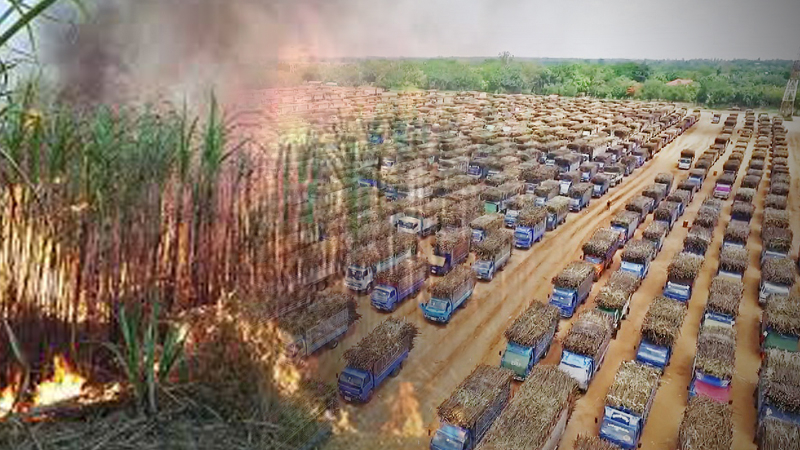
Govt financial support sought to end sugarcane plantation burning problem #ศาสตร์เกษตรดินปุ๋ย

#ศาสตร์เกษตรดินปุ๋ย : ขอบคุณแหล่งข้อมูล : หนังสือพิมพ์ The Nation

https://www.nationthailand.com/business/30381007?utm_source=category&utm_medium=internal_referral

Govt financial support sought to end sugarcane plantation burning problem

Jan 24. 2020
By The Nation

The problem of fires at sugarcane plantations requires cooperation from all sectors, Sitiwuth Siempakdee, vice president of Thai Sugar Miller Co, said.

Meanwhile, sugar factories are campaigning to cut raw sugarcane for processing. They have suggested that the government offer funding at low interest rates to farmers to buy harvesters as the prices of the equipment are quite high. They are priced in the range of Bt6 million to Bt12 million. They also urged the government to purchase electricity from biomass power plants as some plants could not sell the power to the Electricity Generating Authority of Thailand (Egat).

“No farmer wants to burn their field but the cost of labour is high. Factories must sign contracts with farmers to help with the harvesting. Factories can encourage farmers by buying raw sugarcane while some sugarcane can be left for generating power,” Sitiwuth said.

Sugarcane harvesting started on December 1, 2019. Cane output was 42.62 million tonnes. Fresh sugarcane was 21.69 million tonnes (15.83 million tonnes in the previous year), burnt sugarcane was 20.93 million tonnes (20.58 million tonnes), cane sugar production was 43.73 million bags (34.80 million bags), representing a yield of 102.61 kilograms of sugar per tonne (95.59 kilograms per tonne) and the sweetness average was 12.20 Commercial Cane Sugar (CCS) (11.46 CCS).

“The increase in sugarcane output over the previous year was because there were three new factories,. Also, factories increased the efficiency of their machines, improved sugar extraction as a result cane extraction capacity average is 1.0-1.1 million tonnes per day,” Sitiwuth said. “However, as the impact of drought increases, sugarcane output this year will be lower than 30-40 per cent of the previous year, or only 90 million tonnes. Sugarcane extraction will be less than last year by 3 to 4 million tonnes,” said Sitiwuth.

FICO changes mean 40 million Americans could soon see lower credit scores #ศาสตร์เกษตรดินปุ๋ย

#ศาสตร์เกษตรดินปุ๋ย : ขอบคุณแหล่งข้อมูล : หนังสือพิมพ์ The Nation

https://www.nationthailand.com/business/30380988?utm_source=category&utm_medium=internal_referral

FICO changes mean 40 million Americans could soon see lower credit scores

Jan 24. 2020
By The Washington Post · Renae Merle 
About 40 million consumers who have fallen behind on their bills or have rising debt levels could see their credit scores fall significantly under changes being made to FICO.

Fair Isaac, which produces the widely used credit score, said the severity of the downward shift for those with the lowest credit scores, 600 or below, would depend on how recently the consumer had fallen behind and by how much.

About 40 million consumers who already have high credit scores, at least 680, could see it rise even further. “Consumers that have been managing their credit well . . . paying bills on time, keeping their balances in check are likely going to see a gain in score,” Dave Shellenberger, vice president of product management scores, said in a statement.

Overall about 110 million people will see their scores swing about 20 points in either direction, according to Fair Isaac. Companies could adopt the new scoring model as soon as this summer, the company said.

The changes come as consumers are accumulating record levels of debt that has worried some economists but has shown no sign of slowing amid a strong economy. Consumers are putting more on their credit cards and taking out more personal loans. Personal loan balances over $30,000 have jumped 15% in the past five years, Experian recently found.

Despite increasing debt loads, delinquency rates have remained relatively low. About 6% of consumers were late on a payment in 2019 compared with 15% in 2009, according to WalletHub.

The changes being implemented by Fair Isaac were first reported by The Wall Street Journal.

Fair Isaac periodically updates its scoring model. In recent years, the changes have generally raised consumers’ scores, increasing the population of people receiving credit card offers and loans.

FICO credit score ranges from a low of 300 to a high of 850. A high score – along with other financial factors – can translate into lower interest rates and more lending options for borrowers. A low score can make it difficult to get a credit card or rent an apartment.

Last year, Fair Isaac said the national average credit score had hit an all-time high of 706 compared with an all-time low of 686 during the Great Recession.

This new model will help reduce defaults, including a potential 9% reduction among new auto loans, Fair Isaac said. New scores, for example, could factor in consumers’ checking and savings account balances over two years rather than just a couple of months. That will give lenders more insight into how people are managing their credit, Fair Isaac said.

“Many lenders want to leverage the most comprehensive data possible to make precise lending decisions,” Jim Wehmann, executive vice president for Scores at FICO, said in a statement.

Stocks edge higher amid virus fallout, oil drops, gold rises #ศาสตร์เกษตรดินปุ๋ย

#ศาสตร์เกษตรดินปุ๋ย : ขอบคุณแหล่งข้อมูล : หนังสือพิมพ์ The Nation

https://www.nationthailand.com/business/30380980?utm_source=category&utm_medium=internal_referral

Stocks edge higher amid virus fallout, oil drops, gold rises

Jan 24. 2020
By Syndication Washington Post, Bloomberg · Claire Ballentine 

U.S. stocks eked out a small advance, dodging the losses that took hold in Europe and Asia, as investors evaluated the risk that a deadly respiratory virus spreading from China could curb global growth. Treasuries climbed, and oil dropped.

Gains for big tech companies overshadowed losses for makers of consumer goods, providing just enough lift to send the Nasdaq Composite Index to a fresh record high. Other markets showed greater concern about the potential fallout, with oil sinking to its lowest level since November on speculation the virus could dent demand. Government bonds and the yen rallied as investors sought out havens.

Earlier, China’s Shanghai Composite Index plunged 2.8% on the last trading day before the Lunar New Year holiday, the biggest drop in eight months, as traders considered the virus’s potential impact on travel and shopping.

While corporate earnings have beaten analysts’ estimates this season amid signals that global growth is picking up, investors are cautious with stocks trading at lofty valuations. Fewer than 20 deaths have been tallied from the Chinese virus, and the World Health Organization opted against calling the outbreak a public health emergency of international concern. But traders are hesitant to take on risk on the chance the outbreak could develop into something like the much more devastating SARS respiratory illness that emerged in China 17 years ago.

“There is concern that this may become a much bigger event,” said Quincy Krosby, chief market strategist for Prudential Financial. “The market is vulnerable to a pullback or a consolidation.”

Elsewhere, emerging-market stocks fell to a two-week low. Mining companies led the Stoxx Europe 600 Index lower. The euro weakened after policy makers held interest rates steady and European Central Bank President Christine Lagarde said officials will look into the potential side effects of negative interest rates.

– – –

Here are some events to watch out for this week:

– Companies including Intel and Procter & Gamble will post results.

– Eurozone PMI data is due Friday.

– The World Economic Forum, the annual gathering of global leaders in politics, business and culture, continues in Davos, Switzerland.

– – –

These are the main moves in markets:

Stocks

– The S&P 500 Index rose 0.1% at the close of trade in New York; the Nasdaq Composite added 0.2%.

– The Stoxx Europe 600 Index fell 0.7%.

– The MSCI Asia Pacific Index dipped 0.8%.

Currencies

– The Bloomberg Dollar Spot Index rose 0.1%.

– The euro fell 0.3%, to $1.1055.

– The British pound fell 0.2%, to $1.3121.

– The Japanese yen gained 0.3%, to 109.49 per dollar.

Bonds

– The yield on 10-year Treasuries dipped four basis points, to 1.73%.

– Germany’s 10-year yield fell five basis points, to -0.31%.

– Britain’s 10-year yield decreased five basis points, to 0.59%.

Commodities

– West Texas Intermediate crude decreased 2%, to $55.59 a barrel.

– Gold rose 0.3%, to $1,562.72 an ounce.

Private sector to help tackle air pollution #ศาสตร์เกษตรดินปุ๋ย

#ศาสตร์เกษตรดินปุ๋ย : ขอบคุณแหล่งข้อมูล : หนังสือพิมพ์ The Nation

https://www.nationthailand.com/business/30380971?utm_source=category&utm_medium=internal_referral

Private sector to help tackle air pollution

Jan 24. 2020
 Kalin Sarasin

Kalin Sarasin
By THE NATION

The private sector will brainstorm on ways to tackle the problem of PM2.5 particulate matter in the next few days, said Kalin Sarasin, chairman of the Thai Chamber of Commerce.

The meeting will map out a plan of actions and propose it to the Joint Standing Committee on Commerce, Industry and Banking on January 29.

The plan will then be submitted to the government.

The chamber will also ask the Natural Resources and Environment Ministry to accelerate passage of the Act on air-quality management.

Pressure on agencies to start investing now so economy can revive #ศาสตร์เกษตรดินปุ๋ย

#ศาสตร์เกษตรดินปุ๋ย : ขอบคุณแหล่งข้อมูล : หนังสือพิมพ์ The Nation

https://www.nationthailand.com/business/30380969?utm_source=category&utm_medium=internal_referral

Pressure on agencies to start investing now so economy can revive

Jan 24. 2020
Deputy Prime Minister Somkid Jatusripitak

Deputy Prime Minister Somkid Jatusripitak
By THE NATION

A government committee tasked with accelerating trade and investment has urged the agencies involved to start pouring money into key projects.

Deputy Prime Minister Somkid Jatusripitak chaired the committee’s first meeting on Thursday (January 23) and said afterward the Finance Ministry had given a progress report on a new tax incentive to help boost the economy.

The incentive, to be presented to the Cabinet on Tuesday, will let private firms deduct 1.5 times the value of imported machinery and capital goods.

Somkid said the measure would go into effect in tandem with other new tax incentives being considered by the Board of Investment, including one designed to encourage major companies to invest in rural areas.

The Transport Ministry was meanwhile urged to speed its investments this year, especially in the western section of the Orange Line mass transit route in Bangkok, from the Thailand Cultural Centre to Bang Khun Non. That also comes before the Cabinet soon.

Somkid pressed relevant parties to hasten development of maintenance, repair and overhaul (MRO) facilities and the “smart city” project in the Eastern Economic Corridor.

The deputy PM said he planned to visit the National Broadcasting and Telecommunications Commission on Monday to discuss the use of 5G technology to drive the economy.

The commission will auction off four 5G spectra on February 16.

The Office of National Water Resources was ordered to expedite the digging of Bt10 billion worth of wells to mitigate the effects of drought.

Somkid urged the Commerce Ministry to hasten completion of plans for Thailand to join the Comprehensive and Progressive Agreement for Trans-Pacific Partnership. That involves establishing a fund to assisted organisations adversely affected by the move, he added.

The ministry also has to swiftly complete negotiations on free-trade agreements with the European Union and Hong Kong.

Govt in disarray over ‘further delay’ to FY2020 budget #ศาสตร์เกษตรดินปุ๋ย

#ศาสตร์เกษตรดินปุ๋ย : ขอบคุณแหล่งข้อมูล : หนังสือพิมพ์ The Nation

https://www.nationthailand.com/business/30380977?utm_source=category&utm_medium=internal_referral

Govt in disarray over ‘further delay’ to FY2020 budget

Jan 24. 2020
Deputy Prime Minister Somkid Jatusripitak

Deputy Prime Minister Somkid Jatusripitak
By The Nation

A possible further delay to the passage of the budget bill for fiscal 2020 into law has sent the government into a panic mode, in fear of severe economic impact.

The government has prepared a contingency plan should the budget bill face further delay due to legal issues, says officials.

Deputy Prime Minister Somkid Jatusripitak on Thursday(January 23) admitted that the government did not know when the Bt3.2-trillion budget bill will become law and how much longer budget disbursement will be delayed after it has already been delayed for four months.

His comment came after House speaker Chuan Leekpai submitted a request to the Constitutional Court, seeking its ruling on the verification of the bill after two Bhumjaithai MPs (Chalong Toedweerapong and Natee Ratchakitprakarn) were accused of casting their vote without being present during the voting process.

The bill’s passage was first delayed amid the political impasse after the general election in March, from its annual implementation in October. The government then expected it to be passed into law in February this year. The Thai fiscal year starts in October and ends in September.

If the budget is put off again, it would delay public spending as a series of procedures have to be completed before budget disbursement could take place, Somkid said.

“The government may have just four months left for public investments, it could derail much of the planned projects. Such problem should have not occurred,” Somkid said in reference to the legal hurdle.

When asked if the government would resort to issuing an emergency decree to jump start public spending, Somkid said it should not do so as the case had been forwarded to the Constitutional Court.

Meanwhile, Director of Budget Bureau Dechapiwat Na Songkhla, said the government might run out of cash by March.

In the event of a delay to the passage of a budget bill, the government is allowed by law to spend in advance 50 per cent of the amount set in the bill.

In the past four months of delay, October to January, the government had  spent Bt1 trillion, leaving it a balance of just Bt500 billion in the absence of the FY2020 budget.

The amount may be enough to cover government expenditure until March before the coffers of state agencies dry up, he warned.

The Budget Bureau will ask Prime Minister Prayut Chan-o-cha and the Cabinet to consider raising advance spending to 75 per cent of the total amount under the 2020-budget bill, he said, adding that it would allow the administration to carry on until May and avoid a potential government shutdown.

To lessen impact from the delay, the government plans to accelerate capital spending of Bt 223.3 billion and current spending items such as state officials’ salary of Bt776.7 billion by the end of March, he added.

Stock investors were also unsettled by the latest development, leading to share sales and a drop in the SET index.