Inside minimalism and tidying are the makings of a seismic shift in American consumerism #ศาสตร์เกษตรดินปุ๋ย

#ศาสตร์เกษตรดินปุ๋ย : ขอบคุณแหล่งข้อมูล : หนังสือพิมพ์ The Nation

https://www.nationthailand.com/business/30380809?utm_source=category&utm_medium=internal_referral

Inside minimalism and tidying are the makings of a seismic shift in American consumerism

Jan 20. 2020
Americans are moving away from pride of ownership, which has been a bedrock of our capitalist society, Solomon says. It becomes more like: Use it and give it back, as opposed to own it forever. /File Photo Credit Bloomberg

Americans are moving away from pride of ownership, which has been a bedrock of our capitalist society, Solomon says. It becomes more like: Use it and give it back, as opposed to own it forever. /File Photo Credit Bloomberg
By Syndication Washington Post, Bloomberg · Leslie Patton 

On a recent Saturday afternoon in downtown Chicago, Tara Latta’s 36th-floor apartment with stunning river views is a complete mess.

I’m watching the 39-year-old trying to jam the contents of a storage unit into her new one bedroom, and it doesn’t appear to be going well. Latta’s kitchen table is teeming with CVS receipts, unused thank-you notes, catalogs, utility bills and to-do lists. U-Haul boxes are stacked halfway to the ceiling. The counters are overflowing with tea cups, mixing bowls and water bottles.

But all is not as it seems. Latta is in the midst of her second of three, five-hour sessions with tidying consultant Kristyn Ivey. One of the first steps Ivey demands of her clients is to bare all. That means all the stuff-even old underwear-gets laid out in full sight, and then she gets to work. The former chemical engineer, who charges about $100 an hour, promises to clean up people’s homes-and much more.

“This is about confronting yourself and learning about the things that you keep around you,” Ivey said. “This is more than an organization strategy.”

Ivey is a disciple of Marie Kondo. For the uninitiated, Kondo, also known as KonMari, is the tidying guru and best-selling author who debuted a hit Netflix show a year ago that catapulted her from cult following into the mainstream. Kondo has said she became obsessed with order as a kid-reportedly organizing bookshelves during recess-and after one freak-out over what to throw away had a breakthrough: What she really should be doing is keeping the things that make her happy.

That evolved into Kondo’s “spark joy” gospel that’s now being spread by nearly 400 certified consultants like Ivey, who had her own come-to-Kondo moment when she parted ways with $300 worth of clothes that still had the tags on. She left her job at consultant Booz Allen Hamilton and three years ago started For The Love of Tidy (tag line: “Tidy your home, change your life”).

Ivey found a willing devotee in Latta, who is paying $1,350 for 15 hours of consulting. Latta is fresh off a solo hiking trip in Sedona, Arizona, where she practiced her new ethos of buying less stuff and purchased only a couple things. For Christmas, she focused on experiences instead of physical gifts, including tickets on a replica of the Polar Express for two nieces.

This purge is “kind of like when you go into therapy,” Latta says. “This has been giving me the tools to have a process to really face this stuff and really design a life that I enjoy.”

Latta is a recent convert to a growing tribe of Americans who are rejecting the post-WWII consumerism that served as the engine of the world’s biggest economy. Consumer spending makes up about 70% of the U.S. economy, one of the world’s highest rates, and it’s even more crucial now that manufacturing has slowed.

But there are signs everywhere of people living stripped-down lives. It’s not just KonMari: Reality TV is flooded with shows about tiny houses and saving money. More people are convinced they can live cheaply in their 20s and 30s, and then retire in their 40s-a movement that’s been dubbed financial independence retire early, or FIRE.

Instead of buying stuff, consumers are opting to rent, with entire ecosystems built to lease everything from wardrobes to camping gear to toys. 2019 proved to be the year when the re-sale market mainstreamed to the point that buying used goods became OK for Christmas gifts.

Plaster all that with mounting anxiety about climate change and the environmental impact of consumption, including the packaging and miles from e-commerce deliveries, and you have the ingredients for a seismic shift, not just a short-lived trend. It would be more bad news for a struggling U.S. retail sector and a potential long-term threat to consumer spending, according to Michael Solomon, a marketing professor at Saint Joseph’s University.

Americans are “moving away from pride of ownership, which has been a bedrock of our capitalist society,” Solomon says. “It becomes more like: Use it and give it back, as opposed to own it forever.”

Big retail has taken notice. Macy’s is selling second-hand clothing at about 40 U.S. locations. Neiman Marcus bought a stake in an e-commerce company that sells pre-owned luxury handbags and other accessories. Meanwhile, malls are filling spaces once occupied by department stores and apparel chains with restaurants and trampoline gyms-another nod to the surging demand for experiences, not stuff.

To be sure, the average American was expected to increase Christmas spending by 4% this year with plans to shell out more than $1,000, according to the National Retail Federation’s annual survey. But other data shows increasing dissatisfaction. In the U.S., 61% of people say they recently received at least one unwanted gift, according to personal finance website Finder.com. Clothes and household wares top the list.

I was intrigued watching Ivey help Latta achieve her goal to “eliminate as much paper as possible” and create a clear, cozy environment. Bloomberg paid for her to come to my four-bedroom house, which I share with my husband and three young kids, for a two-hour session. But I was skeptical because I already considered myself a minimalist of sorts: We’re constantly donating to Goodwill, and I’ve never been shy about re-gifting.

Ivey arrived with a pair of indoor gray flats to slip on, a nice courtesy during a slushy winter day, and a small backpack with a label maker for tagging containers. We started at the kitchen table where we open the “The Tidy Home Joy Journal,” her own creation that she sells for $9.99 on Amazon and her website. In the “Visualizing Your Best Life” section, I write down that I want to spend more time with family and being outdoors.

That leads us to home in on holiday decor and my closet. I find a candle and two pairs of stretch pants that I hadn’t worn in at least a year to ditch. A heart-covered candy bowl, a hand-me-down from my mom, was added to the list. Throughout, Ivey emphasizes being positive. She discourages using words like “junk” or “mess” because even the discarded should be honored. It sounds a little silly at first, but even a few weeks later I find myself treating my things with more care and thought. It seems like a good practice to pass down to my kids.

But this isn’t just about throwing stuff away. Ivey suggested rolling socks sushi style, instead of balling them, which can stretch out the elastic. She recommended cutting off store tags from all household goods and clothing to “make them yours.” This even includes peeling those super sticky labels off Sterilite storage bins (she’s equipped with a special little tool to do just that).

In the end, the biggest takeaway-or maybe breakthrough-from my certified KonMari tidying is the ceremonial release of an item. It should be treated with respect and thanked for its service in your life, Ivey says. After more reflection, I think about how my daughter likes decorating for holidays, even smaller ones like Valentine’s Day.

So that candy dish with the hearts is staying.

GSB offers loans to keep SMEs’ cash flowing #ศาสตร์เกษตรดินปุ๋ย

#ศาสตร์เกษตรดินปุ๋ย : ขอบคุณแหล่งข้อมูล : หนังสือพิมพ์ The Nation

https://www.nationthailand.com/business/30380720?utm_source=category&utm_medium=internal_referral

GSB offers loans to keep SMEs’ cash flowing

Jan 20. 2020
By THE NATION

Government Savings Bank (GSB) has earmarked Bt50 billion for loans allowing small and medium-sized enterprises (SMEs) to pay off principle owed to financial institutions.

GSB president Chatchai Payuhanaveechai said on Friday (January 17) the loans will be available until December.

In an example cited, an SME owing Bt10 million in principle on a Bt50-million loan from any bank can borrow the Bt10 million from GSB.

The SME has to pay the principle first and use a receipt of the payment to secure the GSB loan in monthly instalments over 12 months.

The GSB loans cover a lending period of six years, with a grace period for the principle payment of one year.

Chatchai said the campaign is not intended to help SMEs refinance their debt, but rather enhance their liquidity.

Energy ministry to hasten EV charging-station plan #ศาสตร์เกษตรดินปุ๋ย

#ศาสตร์เกษตรดินปุ๋ย : ขอบคุณแหล่งข้อมูล : หนังสือพิมพ์ The Nation

https://www.nationthailand.com/business/30380796?utm_source=category&utm_medium=internal_referral

Energy ministry to hasten EV charging-station plan

Jan 20. 2020
By Nutnicha Donsuwan
The Nation

Disruptive technology has affected the electricity business and the automobile industry, causing the government and private sector to enhance performance in order to maintain the country’s competitiveness and production base to export cars in the region.

Energy Minister Sontirat Sontijirawong said the ministry has prepared to present to the Cabinet the establishment of the national commission on electric vehicles (EV), with Deputy Prime Minister Somkid Jatusripitak as president. He added that if the plan were to be delayed, Thailand would lose the opportunity to be a production base of cars in the region.

The ministry recently directed the Energy Regulatory Commission to conduct a study on excess electricity reserves, or oversupply, in the country, which is around 30 per cent, to use as incentives such as the reduction of electricity bills in order to encourage investors to speed up the construction of electric charging stations for the public. The study will be reported by February.

In addition, he ordered the Energy Policy and Planning Office and the Department of Energy Business to study amending the law to be consistent with the mapping of installation points for charging stations, which will give a clear picture of electric charging stations’ locations nationwide with specified distance radius of each station. This will help avoid making redundant investments, diverse investments into other provinces and prevent from competing with each other.

“The private sector is very excited. We are expecting there will be a systematic investment by the private sector, which will accelerate the growth of electric cars,” the Energy Minister said.

As for the EV plan for passenger cars, the Electricity Generating Authority of Thailand (Egat) has collaborated with the National Science and Technology Development Agency (NSTDA) to make the EV Kit & Blueprint Project using Nissan cars Almera and Toyota Altis as prototype cars modified into EV cars. The blueprint will be publicised within 2020.

The minister also plans to open a modified car garage. He said the opening of a car modification garage plan was delayed because the ministry still has to wait for the battery cost, which is the heart of the EV car, at lower than US$150 per kilowatt-hour, to make it worth the investment and to create incentives for consumers to buy cars.

For buses, the collaboration between Egat and the NSTDA will be announced later. For electric motorcycles, 12 entrepreneurs are cooperating, both importing and assembling in the country, but they still have to wait for various issues, such as licences from the Department of Land Transport.

“What Egat does now is research and development to prepare the database until the demand is ready; it can be extended to commercial use immediately,” said Sontirat.

Somphote Ahunai, chairman of the executive committee at Energy Absolute Pcl, said that they were still waiting for clarity from the government. If it’s clear, then the company will review the EV charging stations business plan to speed it up. More than 500 operations have been carried out, with 1,000 being completed within 2020, according to the original plan.

“If the government draws excess electricity backup to help reduce the electricity price, it will encourage private companies to invest more in EV charging stations. Vietnam and Indonesia are also focusing on promoting EV as well,” Somphote commented.

Thailand plans to promote the use of EV vehicles in four phases. Phase 1 (2016-17) — preparation of all sections; phase 2 (2018-2020) — expand the results to public buses and prepare for personal electric cars; phase 3 (2021 onwards) — extend to promote personal electric cars; and phase 4 (2036 onwards) — electric vehicles to replace targeted 1.2 million oil vehicles.

Twitter’s top lawyer is final word on blocking tweets-even Donald Trump’s #ศาสตร์เกษตรดินปุ๋ย

#ศาสตร์เกษตรดินปุ๋ย : ขอบคุณแหล่งข้อมูล : หนังสือพิมพ์ The Nation

https://www.nationthailand.com/business/30380771?utm_source=category&utm_medium=internal_referral

Twitter’s top lawyer is final word on blocking tweets-even Donald Trump’s

Jan 19. 2020
Vijaya Gadde, chief legal officer of Twitter., listens during the Wall Street Journal Tech Live global technology conference in Laguna Beach, Calif., on Oct. 21, 2019. MUST CREDIT: Bloomberg photo by Martina Albertazzi.

Vijaya Gadde, chief legal officer of Twitter., listens during the Wall Street Journal Tech Live global technology conference in Laguna Beach, Calif., on Oct. 21, 2019. MUST CREDIT: Bloomberg photo by Martina Albertazzi.
By Syndication Washington Post, Bloomberg · Kurt Wagner · BUSINESS, COURTSLAW, MEDIA 

Whenever somebody on Twitter takes issue with the network’s rules or content policies, they almost always resort to the same strategy: They send a tweet to @jack.

A quick scan of Chief Executive Officer Jack Dorsey’s mentions show just how often he’s called upon to lay down the law for the service he helped create. But what users don’t know is that they’re imploring the wrong Twitter executive. While Dorsey is the company’s public face, and the final word on all things product and strategy, the taxing job of creating and enforcing Twitter’s rules don’t actually land on the CEO’s shoulders. Instead, that falls to Twitter’s top lawyer, Vijaya Gadde.

The Twitter logo on an Apple laptop. MUST CREDIT: Bloomberg photo by Gabby Jones.

As Twitter’s head of legal and policy issues, Gadde has one of the most difficult jobs in technology: Her teams write and enforce the rules for hundreds of millions of internet users. If people break the rules, the offending tweets can be removed, users can be suspended, or in extreme cases booted off Twitter altogether. Dorsey may have to answer for Twitter’s decisions, but he’s taken a hands-off approach to creating and enforcing its content policies.

“He rarely weighs in on an individual enforcement decision,” Gadde said in a recent interview. “I can’t even think of a time. I usually go to him and say, ‘this is what’s going to happen.'”

That leaves Gadde, 45, as the end of the line when it comes to account enforcement — a delicate position in a world where Twitter’s rules are both an affront to free speech and an invitation to racists and bigots, depending on who’s tweeting at you. “No matter what we do we’ve been accused of bias,” Gadde said. “Leaving content up, taking content down — that’s become pretty much background noise.”

Like most corporate lawyers, Gadde generally operates in the background herself, though her influence has helped shape Twitter for most of the past decade. A graduate of Cornell University and New York University Law School, Gadde spent almost a decade at a Bay Area-based law firm working with tech startups before she joined the social-media company in 2011. Her eight-plus years at Twitter are about equal to the amount of time Dorsey has worked there over the years.

But as Twitter’s role in global politics has increased, so has Gadde’s visibility. She was in the Oval Office when Dorsey met with President Donald Trump last year, and joined the CEO when he met Indian Prime Minister Narendra Modi in November 2018. When Dorsey posted a photo with the Dalai Lama from that trip, Gadde stood between the two men, holding the Dalai Lama’s hand. InStyle just put her on “The Badass 50,” an annual list of women changing the world. “Vijaya defines the word,” tweeted Twitter Chief Marketing Officer Leslie Berland.

When Gadde first joined Twitter, the internet was a different place. At the time, a lot of politicians were just getting familiar with the platform. Trump primarily used his Twitter to share announcements about his TV appearances (though this would quickly change). The official presidential account, @POTUS, wouldn’t even come into existence until 2015, under then-President Barack Obama.

When Gadde took over as general counsel in 2013, the social-media service had an “everything goes” mentality. A year prior, one of Twitter’s product managers in the U.K. famously said that Twitter viewed itself as “the free speech wing of the free speech party,” a label later repeated by then-CEO Dick Costolo. The company simply “let the tweets flow,” said one former employee.

That freedom is part of what drew Gadde to Twitter in the first place. An immigrant from India, Gadde moved to the U.S. as a child and grew up in east Texas, where her dad worked as a chemical engineer on oil refineries in the Gulf of Mexico, before moving to New Jersey in middle school. “I was the only Indian child most of my education until I went to college,” she says now. “You feel voiceless. And I think that that’s kind of what drew me to Twitter — this platform that gives you a voice, and gives you a community and gives you power.”

Twitter’s commitment to giving everyone a voice, though, has also come with a general reluctance to take it away. Twitter’s decisions in recent years to ban certain users, including conspiracy theorist Alex Jones and far-right media troll Milo Yiannopoulos, were news in part because Twitter’s decisions to act were so uncharacteristic. Gadde acknowledges the change, saying that the company has come to realize in recent years the responsibility it has to protect the safety of its users, including when they’re not using the product. “I would say that the company has shifted its approach dramatically [since I started],” she said.

Perhaps no user presents a bigger quagmire for Gadde and her team than Trump, the platform’s most famous user, whose tweets often push the boundaries of Twitter’s rules. The president’s habit of blasting messages to his 70.9 million followers has taken on a new vigor thanks to a looming impeachment trial and re-election bid. Following the U.S. drone strike in early January that killed a top Iranian general, Trump threatened Iran with military force in a number of tweets, including the targeting of cultural sites. That prompted many observers, including some former Twitter employees, to ask why he hadn’t been suspended — a cycle that has played out several times following other Trump tirades.

Last month, Trump attacked his Democratic rivals, blasted Congress over impeachment proceedings, and even mocked teenage climate activist Greta Thunberg from his @realDonaldTrump Twitter account. According to a USA Today analysis, his tweets contain more negative language than ever. The study looked at whether Trump tweeted words with positive or negative connotations, and found he “is posting fewer tweets with words that convey joy, anticipation and trust, and more that convey anger.” Trump sent or retweeted more than 1,050 messages in December, according to Hootsuite — more than any other month since taking office.

“The way he uses social media is a reflection of just how unusual a candidate, and now a president, Trump is. A big part of that is that he breaks all the rules,” said Patrick Egan, a professor of politics and public policy at New York University. “Something that a lot of people really like about him is that he says the kind of things he’s not supposed to say, and of course that’s exactly the kind of thing that can get you into trouble on social media.”

Inside Twitter, Trump’s tweets are a frequent topic of conversation among employees, and Gadde’s authority also means that she has the unique job of punishing the world’s most famous tweeter — should it ever come to that. “My team has the responsibility to do that with every single individual who uses Twitter, whether it’s the president of a country or it’s an activist or it’s somebody we don’t know,” she said. “I honestly do my best to treat everyone with that same degree of respect.”

Twitter has so far decided that Trump hasn’t crossed any lines, but the company is prepared for such a scenario. While it’s unlikely that Twitter would ever suspend a well-known politician – the company also has a newsworthiness policy, which means it’s less likely to take action on tweets from elected officials — it’s devised another penalty for world leaders: A warning screen unveiled last summer that hides a tweet from public view and limits its distribution, but still allows people to view the tweet with the click of a button. It’s a way to publicly acknowledge that a politician has violated Twitter’s rules while admitting what they said is too newsworthy to be taken down. “It’s preserving a record of what is said in the public interest,” Gadde explained.

The process is designed like this: A content moderator, who may be a third-party contractor, reviews a tweet that has been flagged and determines whether it violates Twitter’s rules. If they decide that it does, moderators can usually enforce punishment at this stage, but Twitter requires a second layer of review for offenders who are considered public figures — in this case, a verified politician with more than 100,000 followers, Gadde said.

The tweet is then sent to Twitter’s trust and safety team, and if they also agree that the post violates the rules, Twitter convenes a special group of employees from across the company to review it. This group, about a half-dozen people from various teams, is meant to bring in a diverse set of perspectives, Gadde explained. That panel then makes a recommendation to Del Harvey, Twitter’s head of trust and safety, and her boss, Gadde, for a final decision.

Barring some kind of emergency, using the label will ultimately be Gadde’s call. “Vijaya has a young kid still, so she’s very used to being woken up any hour, which is helpful,” Harvey joked to a group of reporters last summer.

Gadde won’t go so far as to say the new warning label was created with Trump in mind — “We try to think of these things globally and not just about the United States,” she said — but added that even though the screen, referred to internally as the Public Interest Interstitial, hasn’t been used since its debut last June, it will eventually make an appearance. Gadde said Twitter has used the newsworthiness policy a “handful” of times in the past as justification for leaving offending tweets up. But the company didn’t have the warning label back then, so the general public didn’t know anything had even been discussed behind the scenes, she said. “We know it happens, and that it will happen.”

Twitter actually pointed to this policy in September 2017 when answering questions about the decision to leave up a tweet from Trump that appeared to threaten North Korea with nuclear war. Twitter also has a policy against threats of violence. A White House spokesman, Steven Groves, declined to answer questions about Trump’s use of Twitter.

Historically, Twitter’s rules around free speech have been so lax that a number of celebrities and journalists, including singer Lizzo, actress Millie Bobby Brown and New York Times writer Maggie Haberman, have stepped away from the service — at least temporarily — with many citing bullying and harassment. Sen. Kamala Harris, a former Democratic candidate for president, thought Twitter’s enforcement weak enough that she implored the company to suspend Trump in a letter in October, saying he uses his account to obstruct justice and intimidate people, including the whistle-blower whose report ultimately led to his impeachment. Twitter responded that Trump’s tweets didn’t break the rules.

The newsworthiness exemption gives Twitter a lot of wiggle room when it comes to removing high-profile tweets, but Gadde said the point of the warning label, and the company’s attempt to explain it, are part of a broader effort to be more transparent about how and why the company makes decisions — something she admits hasn’t always been clear. As Twitter has grown, so has the company’s understanding that it can’t simply sit by and let people tweet whatever they want, Gadde said. It’s one of the many ways her job has evolved over the years.

“We’re trying to do so much more of our work in public,” she said. “I want people to trust this platform.”

Lagarde’s year of listening may see ECB get earful on prices #ศาสตร์เกษตรดินปุ๋ย

#ศาสตร์เกษตรดินปุ๋ย : ขอบคุณแหล่งข้อมูล : หนังสือพิมพ์ The Nation

https://www.nationthailand.com/business/30380768?utm_source=category&utm_medium=internal_referral

Lagarde’s year of listening may see ECB get earful on prices

Jan 19. 2020
Christine Lagarde, president of the European Central Bank (ECB), pauses during the central bank's rate decision news conference in Frankfurt, Germany, on Dec. 12, 2019. MUST CREDIT: Bloomberg photo by Alex Kraus.

Christine Lagarde, president of the European Central Bank (ECB), pauses during the central bank’s rate decision news conference in Frankfurt, Germany, on Dec. 12, 2019. MUST CREDIT: Bloomberg photo by Alex Kraus.
By Syndication Washington Post, Bloomberg · Craig Stirling, Catherine Bosley 

If European Central Bank officials use their review of monetary policy this year as a chance to connect with ordinary people, they need to be ready for some plain truths.

At the heart of the assessment, likely to be announced on Jan. 23, is how price stability should be defined and targeted. But ask citizens how they feel about inflation and they’re likely to come up with wildly varying answers. In fact, as the Federal Reserve found in its own recent consultation, many may be less convinced than central bankers that prices are rising too slowly.

While President Christine Lagarde says she wants to hear diverse views, it’s not yet clear how much that will involve people outside of economic and banking circles, nor how seriously policymakers will take the opinions submitted. If they did want consumers’ perceptions to influence how the review reshapes monetary policy, that could conceivably put the institution on a different path from the ultra-accommodative stance it has adopted for years.

“It’s definitely going to add to the knowledge the ECB has about the inflation process, and the ways inflation affects different groups in society,” said Florian Hense, an economist at Berenberg in London. “How much that is actually going to affect the overhaul or the result of that overhaul is a bit difficult to say.”

Lagarde, who wants to agree on the review at next week’s policy meeting, insisted last month that it will tap more than “the usual suspects.”

“It will also include consulting with Members of Parliament and I’ve committed to that with the European Parliament. It will reach out to the academic community, of course. It will reach out to civil society representatives, and it will aim at not just preaching the gospel that we think we master, but also listening.”

One example she might follow is that of the Fed, which held “community listening sessions” last year in places including San Francisco and Atlanta. The “Fed Listens” initiative heard how officials’ desire for higher prices wasn’t shared by lower-income workers, who fret about their living costs.

Such an exercise would appeal to Bank of France Governor Francois Villeroy de Galhau, who insisted last week that what consumers and businesses think, particularly on inflation, is crucial for the review’s credibility. “They are the ones that ultimately set prices and wages,” he said.

The approach has its problems though. A Bundesbank study published in December found “large differences” between German households on inflation perceptions depending on factors such as earnings, education, home ownership, job type and recent experience of price trends.

Housing is a key area of contention. It is significantly underweighted in the European Union’s official inflation measure because of the challenge of collecting data, yet it’s also a major expense for many individuals. Property values and rents have tended to outstrip inflation in recent years. Data on Thursday showed annual prices of homes in the euro region rose 4.1% in the third quarter — roughly four times the pace of consumer inflation at the time.

Households not only tend to predict more inflation than investors, they also overestimate it. In July, former ECB Executive Board member Benoit Coeure cited a survey of citizens who believed annual price increases were near 9% in the 14 years through 2018, when the figure was actually 1.6%.

Coeure still noted that consumers are good at identifying shifts in inflation, and that their expectations can be “a better proxy” of company pricing decisions than financial markets. Under former ECB President Mario Draghi, policy makers tended to emphasize indicators of future inflation generated by investor bets, such as five-year, five-year forwards.

“The mood has changed, also because the policy space is reduced,” said Marco Valli, an economist at UniCredit in Milan. “There’s more inclination to look at different types of inflation expectations — especially households.”

Lagarde’s strategy rethink is also an opportunity to better explain what the ECB is trying to achieve. Villeroy argues that if people can’t understand its goals, the effectiveness of its policies is blunted.

“They are less convinced than economists of the need to boost price growth from 1% to 2%,” he told an audience in Paris. “I believe the economic analyses and theories; but I also believe that they only have a real-world impact if they are perceived, accepted and assimilated by common sense and public opinion.”

Building a coherent view from a mass of public opinions is likely to be challenging, but it might be worth a try. At a time when many people in richer countries are furious at negative interest rates and quantitative easing, increasing the emphasis on their views could ultimately push the ECB to find more palatable ways to support the economy.

In any case, addressing erroneous perceptions of the ECB, as Villeroy suggests, will likely require more outreach. Lagarde has acknowledged as much, saying that bringing the central bank closer to citizens in an age of populism is a priority.

“It is important to me that our focus on connecting with the people we serve continues and grows stronger,” she told lawmakers in December. “Communication is a two-way street.”

Ex-congressman Chris Collins sentenced to 2 years on insider-trading, false-statements charges #ศาสตร์เกษตรดินปุ๋ย

#ศาสตร์เกษตรดินปุ๋ย : ขอบคุณแหล่งข้อมูล : หนังสือพิมพ์ The Nation

https://www.nationthailand.com/business/30380744?utm_source=category&utm_medium=internal_referral

Ex-congressman Chris Collins sentenced to 2 years on insider-trading, false-statements charges

Jan 18. 2020
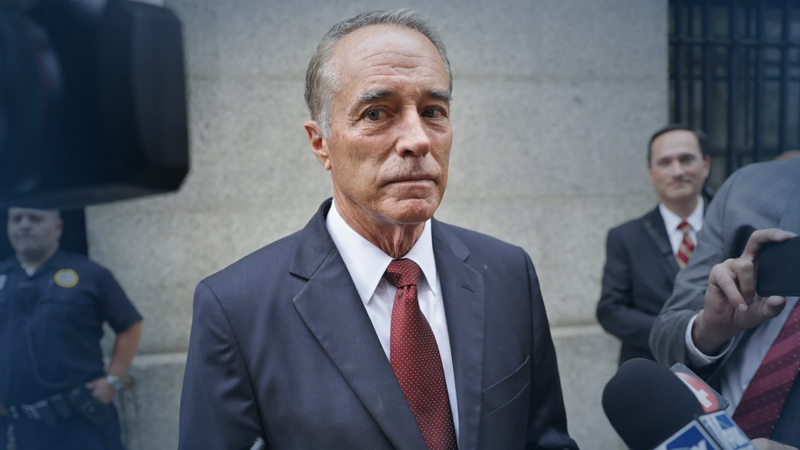
Chris Collins
By The Washington Post · Renae Merle 

NEW YORK — A federal judge on Friday sentenced former congressman Chris Collins to 26 months in prison for his part in an insider trading scheme and lying to the FBI.

“You had a duty to meet and you betrayed that duty,” U.S. District Judge Vernon Broderick said as he handed down the sentence.

Collins tearfully apologized to his family and his constituents, acknowledging that he tipped off his son to confidential information that a small Australian biotechnology company’s new therapy for multiple sclerosis had failed a critical clinical trial. Collins’s son and several others used the information to avoid more than $700,000 in losses. Collins also admitted that he later lied to the FBI about the incident.

“I stand here today a disgraced former congressman,” said Collins, who was one of President Donald Trump’s first supporters in Congress. “I cannot face my constituents. What I have done has marked me for life.”

Collins said he particularly regretted the impact the case would have on his son, who is scheduled to be sentenced next week. “I have destroyed the reputation of my son,” he said.

Collins’s attorneys cited his age, 69, years of public service and track record as a businessman who saved hundreds of jobs in New York, in asking Broderick to sentence Collins to probation, home detention and community service. But prosecutors asked for a much longer sentence, 46 to 57 months in prison, arguing that the New York Republican had violated a public trust and the loss of status and money was not enough of a penalty.

After a more-than-three-hour hearing, Broderick said Collins was “highly unlikely to be a recidivist” but that he still considered the former congressman’s crime significant. Insider trading creates the perception for investors that the financial markets are rigged, he said.

Broderick received more than 100 letters of support for Collins, including from John Boehner, the former Republican speaker of the House, Collins’s family and former business associates. Others, including some former constituents, sent angry letters calling for a tough sentence.

Broderick sentenced Collins to 26 months each for two counts: conspiracy to commit securities fraud and making false statements. The sentences are to run concurrently. Collins was also fined $200,000.

The case ended the career of one of Trump’s most ardent early supporters. Collins represented New York’s 27th Congressional District, which encompasses suburban and rural areas stretching east of the Buffalo metropolitan area, for more than five years. The district is a Republican stronghold that supported Trump by a wide margin in the presidential election.

Even before facing federal charges, Collins was under scrutiny for his role in promoting Innate Immunotherapeutics, a small Australian company that was developing a new therapy for multiple sclerosis. Collins served on the company’s board and was its largest shareholder.

Then, while at the June 2017 congressional picnic at the White House, Collins received an email from Innate Immunotherapeutics’s chief executive alerting the company’s board that an eagerly anticipated drug trial had been a failure, according to court filings. Minutes later, the filings said, Collins responded to the email: “Wow. Makes no sense. How are these results even possible???”

Collins frantically attempted to contact his son, who owned millions of Innate Immunotherapeutics shares, according to the indictment. Within a few minutes, Collins and his son called each other six times before connecting and talking for six minutes. During that call, Collins told his son about the failed drug trial, according to the indictment, which cites phone and bank records as well as texts.

With that insider knowledge, Collins helped his family avoid significant losses before the news became public and the company’s stock price fell more than 90%, prosecutors allege. (Because Collins was a board member, he was prevented from unloading his stock and reportedly lost millions.)

Collins was “emotionally devastated” by the failed drug trial and when he shared the news with his son, the former congressman’s attorneys argued. “It was a stupid, impulsive action. He didn’t need the money, neither did his son,” said Jonathan Barr, one of Collins’s attorneys. “People are not robots.”

And when the FBI questioned him months later, making a surprise visit to his home at 6:30 a.m., Collins didn’t want to implicate himself or his son in a potential crime, Barr said. “He has paid a very heavy and public price for his conduct,” he said.

But prosecutors were skeptical. Collins didn’t act out of emotion but from financial interests, which he exacerbated by lying to the FBI, said Assistant U.S. Attorney Max Nicholas. “We do not agree this was a crime of emotion,” he said. “The fact that he was in a position to write the country’s laws… there is nobody in a better position to know not to lie to the FBI.”

Prosecutors also faulted Collins for running for reelection after being charged in 2018. “There was a courtship of the public trust… to hold this high office having just lied to the FBI to cover up a crime he committed ten months earlier,” Nicholas said.

After the federal indictment, Collins initially suspended his campaign but then reversed course. He was narrowly elected to his fourth term months after being indicted. He resigned his seat in October after entering a guilty plea.

Several of Collins former constituents wrote to the judge complaining that they had been left unrepresented on Capitol Hill and now faced the cost of putting on an another election.

While standing before the judge, Collins sometimes struggled to form words as he sobbed and talked of finding himself in a “dark hole.” He was now branded a felon, unable to vote or even participate in the Boy Scouts as he had for decades, Collins said.

“People feel sorry for me. They shouldn’t,” he said. “I did what I did, and I violated my core values.”

Stocks surge to record highs; dollar strengthens, gold rise #ศาสตร์เกษตรดินปุ๋ย

#ศาสตร์เกษตรดินปุ๋ย : ขอบคุณแหล่งข้อมูล : หนังสือพิมพ์ The Nation

https://www.nationthailand.com/business/30380739?utm_source=category&utm_medium=internal_referral

Stocks surge to record highs; dollar strengthens, gold rise

Jan 18. 2020
The benchmark S&P 500 index, along with the tech heavy Nasdaq Composite, set record highs for an eighth consecutive trading session. Boeing Co. slumped after a Fitch downgrade, weighing on the Dow Jones Industrial Average. The Stoxx Europe 600 index closed at a record, posting its biggest gain since mid-December.

The benchmark S&P 500 index, along with the tech heavy Nasdaq Composite, set record highs for an eighth consecutive trading session. Boeing Co. slumped after a Fitch downgrade, weighing on the Dow Jones Industrial Average. The Stoxx Europe 600 index closed at a record, posting its biggest gain since mid-December.
By Syndication Washington Post, Bloomberg · Sarah Ponczek 

Stocks extended this week’s relentless push to all-time highs as positive U.S. and China economic data, low interest rates and easing trade tensions propelled investor optimism. The dollar strengthened and gold climbed.

The benchmark S&P 500 index, along with the tech heavy Nasdaq Composite, set record highs for an eighth consecutive trading session. Boeing Co. slumped after a Fitch downgrade, weighing on the Dow Jones Industrial Average. The Stoxx Europe 600 index closed at a record, posting its biggest gain since mid-December.

“The headwinds of last year have dissipated and we’ve gotten more clarity on the backdrop. That clarity is helping to solidify marginal improvement in risk assets,” said Jack Janasiewicz, a portfolio manager at Natixis Investment Managers Solutions, which oversees $1 trillion “The big one is going to earnings, and so far so good.”

The longest-dated Treasuries dipped after the U.S. announced plans for a new 20-year bond. The dollar increased against its major peers including the euro and pound, with the latter reversing gains while gilts turned higher after U.K. retail sales data disappointed.

Investors in risk assets headed into the weekend looking confident after the completion of an initial Sino-American trade deal and solid results from the biggest banks on Wall Street. U.S. markets are closed Monday for the Martin Luther King Jr. holiday. The earnings season continues to ramp up next week with Procter & Gamble Co. and Intel Corp. reporting, but for now most economic data is supporting sentiment: China GDP was in line with estimates, while housing starts surged in the U.S.

“At this stage of the game we’ve got a Fed that’s committed to staying on hold, you’ve got a belief that there’s a signal of easing, and some improvement in the economic data globally,” Kathy Jones, chief fixed income strategist at Charles Schwab, said on Bloomberg Television. “That’s helping propel markets.”

Elsewhere, oil slumped for a second week as optimism following the signing of the America-China trade agreement offset signs that supplies remain plentiful.

Emerging-market equities also climbed for a seventh week of gains.

These are the major market moves:

Stocks

-The S&P 500 index climbed 0.4% to 3,329.46 as of 4:02 p.m. New York time, the highest on record.

-The Dow Jones Industrial Average gained 0.2% to 29,347.62, reaching the highest on record with its fifth consecutive advance.

-The Nasdaq Composite index rose 0.3% to 9,388.95, the highest on record.

-The Stoxx Europe 600 index climbed 1% to 424.56, the highest on record with the biggest increase in more than a month.

-The MSCI All-Country World index increased 0.4% to 579.17, hitting the highest on record with its fifth straight advance.

Currencies

-The Bloomberg Dollar Spot index increased 0.2% to 1,194.36, the highest in more than three weeks on the biggest climb in more than a week.

-The euro fell 0.4% to $1.1093, the weakest in more than three weeks on the largest drop in more than a week.

-The Japanese yen was little changed at 110.14 per dollar.

-The British pound dipped 0.5% to $1.3014.

Bonds

-The yield on two-year Treasuries declined less than one basis point to 1.57%.

-The yield on 10-year Treasuries increased two basis points to 1.83%.

-Britain’s 10-year yield decreased one basis point to 0.632%, reaching the lowest in 11 weeks on its sixth straight decline.

-Germany’s 10-year yield rose less than one basis point to -0.22%.

Commodities

-Gold strengthened 0.3% to $1,557.03 an ounce, the highest in a week.

-West Texas Intermediate crude rose 0.3% to $58.70 a barrel, the highest in a week.

U.S. to start issuing 20-year bonds to fund rising deficit #ศาสตร์เกษตรดินปุ๋ย

#ศาสตร์เกษตรดินปุ๋ย : ขอบคุณแหล่งข้อมูล : หนังสือพิมพ์ The Nation

https://www.nationthailand.com/business/30380729?utm_source=category&utm_medium=internal_referral

U.S. to start issuing 20-year bonds to fund rising deficit

Jan 18. 2020
Visitors take photographs outside the U.S. Treasury building in Washington on Aug. 13, 2019. MUST CREDIT: Bloomberg photo by Andrew Harrer.

Visitors take photographs outside the U.S. Treasury building in Washington on Aug. 13, 2019. MUST CREDIT: Bloomberg photo by Andrew Harrer.
By Syndication Washington Post, Bloomberg · Saleha Mohsin

The U.S. Treasury will start issuing 20-year bonds in the first half of 2020, expanding its roster of securities as the government seeks ways to fund a ballooning deficit.

Institutional investors have been clamoring for more longer-dated, risk-free securities that offer some nominal yield, amid a global total of $11 trillion of debt with negative rates. Japanese officials have discussed adding a 50-year security, something the U.S. opted against in its announcement.

“The 20-year bond fits more easily into the existing market structure,” said Lou Crandall, chief economist at Wrightson ICAP in New York. “This is a way of taking advantage of long-term interest rates that are low by historical standards without introducing a wild-card such as an ultra-long bond, which would have had more growing pains.”

Previously issued 30-year Treasuries with about 20-years left to maturity yield about 2.15%, suggesting the new debt will offer a sizable premium over other comparable notes. Japanese 20-year bonds yield about 0.31%, and German ones just 0.07%.

The new 20-year bonds will probably draw more domestic buyers than global funds, who tend to favor shorter maturities. Foreign investors bought an average of less than 9% of U.S. 30-year debt sold at auctions in 2019.

More information will come in the Treasury’s next quarterly announcement of sales of longer-dated debt, on Feb. 5, the department said in a statement. Given that the long-standing practice is to avoid a market-timing issuance strategy, the sales will be done “in a regular and predictable manner in benchmark size,” the Treasury said.

“The newness of the bond should make it trade a little cheap,” said Priya Misra, head of global rates strategy at TD Securities in New York. The yield curve is likely to steepen as the 20-year supply will be coming sooner than some had anticipated, she said.

Misra said she’ll be looking to see which securities the Treasury will cut back on to make space for the new 20-year bonds. One danger is that, given the Federal Reserve’s efforts to boost purchases of bills, there could be “scarcity” in some maturities, she said.

Longer-maturity Treasuries fell in Asian trading Friday, steepening the yield curve. Thirty-year yields rose three basis points to 2.29% while 10-year yields climbed two basis points to 1.82%. The spread between 30-year bonds and matched maturity interest rate swaps, known as the swap spread, tightened over one basis point.

This is a revival for the 20-year bond, which the Treasury abandoned back in 1986 in favor of the 30-year security, long known as the benchmark “long bond” in the American market before it too was ditched for a time in the 2000s.

The U.S. also issued bonds with maturities up to 40 years between 1955 and 1963, and sold 50-year debt in 1911 to fund the construction of the Panama Canal.

Treasury Secretary Steven Mnuchin said in the statement that “we will continue to evaluate other potential new products” to finance debt at the lowest cost over time.

The decision, made in consultation with dealers, comes after the U.S. reviewed options including ultra-long bonds maturing in 50 or 100 years. The current maximum is 30 years. Many on Wall Street lobbied against those longer durations.

At President Donald Trump’s request, Mnuchin in August began a second review into ultra-long bonds since taking office. Trump has said repeatedly the U.S. should seek to take advantage of historically low interest rates.

Issuing extremely long-term debt would limit the cost to taxpayers of plugging a budget deficit that’s headed to $1 trillion annually. Pension funds are also likely to enjoy a few extra points of returns amid falling yields.

“Lengthening duration as a borrower in the current very-low interest-rate environment is a sensible move,” said Michael McCarthy, chief market strategist at CMC Markets Plc in Sydney. “It’s the richest and deepest of markets around the globe. They are happy to take a long-run view to reshape their portfolio for the long term.”

Among the risks of an ultra-long bond is the ebb and flow of demand over the course of an economic cycle. Buyers may be enthusiastic when yields are high, but in downturns, when the Fed is cutting rates, interest may evaporate, pushing government borrowing costs higher.

For now at least, demand is likely to be sustained, market participants said.

There’s a large gap between the 10-year and 30-year bonds so “there will be demand for it,” said Tony Farren, managing director at broker-dealer Mischler Financial in Stamford, Connecticut. It will appeal to “people that don’t want to go all out to 30 years,” he said.

– – –

Bloomberg’s Christopher Anstey, Emily Barrett, Vivien Lou Chen, Adam Haigh and Stephen Spratt contributed to this report.

U.S. housing starts surged last month to highest in 13 years #ศาสตร์เกษตรดินปุ๋ย

#ศาสตร์เกษตรดินปุ๋ย : ขอบคุณแหล่งข้อมูล : หนังสือพิมพ์ The Nation

https://www.nationthailand.com/business/30380733?utm_source=category&utm_medium=internal_referral

U.S. housing starts surged last month to highest in 13 years

Jan 18. 2020
By Syndication Washington Post, Bloomberg · Ana Monteiro

Groundbreakings on new U.S. homes surged in December to a 13-year high, giving the housing market momentum heading into the new year amid low mortgage rates, solid job growth and optimistic buyers and builders.

Residential starts rose 16.9% to a 1.61 million annualized rate after an upwardly revised 1.375 million pace in the prior month, according to government figures released Friday. The gain was the biggest in three years and well above all estimates in a Bloomberg survey. Permits, a proxy for future construction, fell 3.9% to 1.42 million.

Shares in homebuilding companies rose at the open of New York trading, with the index climbing to the highest since August 2005.

The data indicate residential construction added to fourth-quarter growth after contributing in the previous quarter for the first time since the end of 2017. While the spike may not be immediately sustained at these levels, demand has been fueled by mortgage rates near a three-year low as the job market remains resilient and wage gains help put money into the pockets of potential homebuyers.

Construction of single-family homes rose 11.2% to the highest since mid-2007, while permits for those dwellings decreased 0.5%. Groundbreakings for the multifamily category, which tends to be more volatile and includes apartment buildings and condominiums, jumped 29.8% to the highest since 1986.

The full-year gain was more subdued, as new-home construction rose 3.2% following 3.9% in 2018. Permits were up 3.9% in 2019.

Even so, the strong overall reading on starts corroborates a jump in developers’ confidence. U.S. homebuilder sentiment posted the highest back-to-back readings since 1999 in December and January amid a jump in prospective buyers and a bump in the sales outlook.

France keen on more investment from Thailand #ศาสตร์เกษตรดินปุ๋ย

#ศาสตร์เกษตรดินปุ๋ย : ขอบคุณแหล่งข้อมูล : หนังสือพิมพ์ The Nation

https://www.nationthailand.com/business/30380726?utm_source=category&utm_medium=internal_referral

France keen on more investment from Thailand

Jan 18. 2020
By Wichit Chaitrong
The Nation

France is looking forward to more Thai investment in the country, says its ambassador to Thailand Jacques Lapouge in an exclusive interview with The Nation.

With its excellent research and development facilities, a deep talent pool and a skilled work force, France is an ideal destination for foreign direct investment, he said.

People may see Yellow Vest protesters marching on the streets, but the reality is not a country in chaos,   Lapouge assured.

France has an advantage in location, sitting at the centre of one of the world’s biggest markets, with an outstanding infrastructure: the biggest airport in Europe, advanced rail system, modern power and internet networks, he said.

It also boasts a deep talent pool and a skilled workforce with 44 per cent of those between 25 to 34 years old possessing tertiary education certification. It produces about 38,000 graduates in engineering very year.

“Our workforce is great in quality with one million engineers, which is probably the first motivation for foreign investors,” Lapouge said, adding that it is now the first destination for industrial  and R&D investment in Europe.

France has been touted as the most favorable tax incentive for R& D among OECD members. The country offer 30 per cent reduction of R & D expense for startups.

President Emmanuel Macron has initiated many reforms to boost the economy, reduce inequality and facilitate ecological transition. The corporate tax rate will be cut to 25 per cent by 2022 from 33.3 per cent in 2017, 31 per cent in 2019 for companies having revenue less than Euro 250 million, 28 per cent this year and 26.5 per cent next year, according to www.investinfrance.fr.

According to the CBRE’s quarterly study published in November 2019, Paris has knocked London off the top spot in the ranking of the world’s most attractive cities for foreign investment in real estate.

The British capital was downgraded to second place due to uncertainty surrounding Brexit.

Some large Thai corporates have already invested in France, for instances, Thai Union has modernised its existing canned seafood plant in Quimper and has established a European R&D Centre in French Brittany for its European subsidiaries while Indorama Venture has acquired companies in technical fibre and recycling business in Grand Est Region.

Double A, having invested in a paper plant in Normandy, has re-injected about Euro 40 million into a biomass power generation plant last year. SEA Value has announced expansion of its existing interest and new investment for 2020, according to the French Embassy in Bangkok.

Meanwhile, two Thai business executives have been invited to a business summit at the Palace of Versailles in Paris on January 20.

Regarding two-way trade, Thailand’s exports to France amounted to Euro 2.81 billion in 2018 while imports from France stood at Euro 1.87 billion, resulting in Euro 941 million of trade surplus for Thailand.


Recent news report suggested that the French government had made a concession on pension fund reform after unions’ protests nationwide.