Germany reports its slowest economic growth in six years #ศาสตร์เกษตรดินปุ๋ย

#ศาสตร์เกษตรดินปุ๋ย : ขอบคุณแหล่งข้อมูล : หนังสือพิมพ์ The Nation

https://www.nationthailand.com/business/30380619?utm_source=category&utm_medium=internal_referral

Germany reports its slowest economic growth in six years

Jan 16. 2020
By Syndication Washington Post, Bloomberg · Carolynn Look, Chris Reiter, Iain Rogers

Germany’s economy made a slight recovery in the fourth quarter, ending a year in which manufacturing took a battering and the country was dragged to the brink of a recession.

The statistics office estimates that output registered a small increase in the final three months of 2019, a year that saw growth of just 0.6%. That’s the slowest in six years, amid trade tensions and a broader slowdown in demand that added to fundamental structural challenges the country is battling.

The small increase in GDP at the tail end of 2019 may reinforce hopes that the economy is through the worst of the slump. It also means less chance the government will cave to calls that it provide more fiscal support for the economy.

But the economy, and particularly its industrial heart, are far from out of trouble. Carmakers including Volkswagen AG are facing a critical period as they push sales of electric vehicles, while manufacturers such as Siemens AG are under pressure to adapt to climate change. Geopolitical uncertainty in the Middle East and continued risk of a disruptive Brexit will also weigh on sentiment and momentum.

The figures for 2019 showed investment and exports posted only modest gains. At the same time, private and government consumption as well as construction accelerated. The government recorded a budget surplus of 1.5% of GDP.

“After a dynamic start to the year, and a decline in the second quarter, there were signs of a slight recovery in the second half,” said Albert Braakmann, head of the statistics office’s department that compiles GDP.

The euro was little changed against the dollar following the remarks. German 10-year bonds slipped for a second day, declining three basis points to -0.20%. They’ve been slowly edging back up toward positive territory recently on hopes that the economy is through the worst of the slump.

Business expectations improved at the end of last year and the Economy Ministry has pointed to a slightly better outlook for industrial activity, yet actual data are still largely disappointing. Manufacturing orders continued to decline late last year, and exports dropped.

In the 19-nation euro area, industrial production rose 0.2% in November, less than economists predicted, as output of intermediate and consumer goods declined.

Germany’s outlook for 2020 is barely better than its performance last year. Economists see growth accelerating to only 0.7% this year. The U.S., by comparison, is forecast to expand more than twice that pace.

“Germany’s economy saw a slight recovery in growth in 4Q, according to the statistics office — that’s consistent with our slightly above-consensus expectation for an expansion of 0.2% to be recorded. Leading indicators have turned up into 2020 and we see the worst as being over for for the German economy. Renewed trade tensions are the biggest risk to that view,” said Bloomberg Economics’ Jamie Rush.

Persistent weakness has fed calls for the government to ramp up fiscal stimulus. It’s already pledged to step up investment in infrastructure and education, and committed to spend 54 billion euros ($60 billion) fighting climate change — more than Germany’s stimulus plan following the financial crisis. It’s said more support will be available if the economy deteriorates.

Two weeks into the new year, Germany is among the first of the world’s advanced economies to publish 2019 GDP figures. As the world’s third-largest exporter, it acts as a bellwether for the global economy, which is widely estimated to have had its worst year since the Great Recession a decade ago.

– – –

Bloomberg’s Kristian Siedenburg, Harumi Ichikura and Zoe Schneeweiss contributed to this report.

Mobile apps made $310 billion in 2019 en route to bigger 2020 #ศาสตร์เกษตรดินปุ๋ย

#ศาสตร์เกษตรดินปุ๋ย : ขอบคุณแหล่งข้อมูล : หนังสือพิมพ์ The Nation

https://www.nationthailand.com/business/30380618?utm_source=category&utm_medium=internal_referral

Mobile apps made $310 billion in 2019 en route to bigger 2020

Jan 16. 2020
By Syndication Washington Post, Bloomberg · Vlad Savov

Mobile app spending and usage hit a record in 2019 and show no signs of tapering off this year as faster cellular connections and more big-name video streaming services come online, industry tracker App Annie says.

In the past year, mobile apps accumulated $120 billion of global consumer spending, with games accounting for 72% of that. Advertising brought in $190 billion, said App Annie, forecasting the number to grow to $240 billion this year. China made up half of all consumer spending and is among the fastest-growing markets when it comes to time spent on a mobile device. The global average is now 3.7 hours per person per day, according to the researchers.

Among the headline-grabbers of the year, ByteDance Inc.’s video-sharing platform TikTok racked up 14.5 billion hours of time watched, with its audience growing 200% in the fourth quarter of 2019. Nine out of every 10 minutes spent in the app have come from China, App Annie said. Google’s YouTube Music racked up even more impressive numbers, growing worldwide active users 870% over the 24 months ending Dec. 19.

“Year 2020 will mark the beginning of a mobile-first decade,” said Cindy Deng, managing director for Asia-Pacific at App Annie. “It’s imperative that brands start to adapt their strategy to this growing generation, or risk being left behind.”

Generation Z — the cohort born after 1997 for whom mobile has become the first screen — is fueling the surge. Income from games continued to grow in 2019, when 1,121 mobile titles brought in more than $5 million in earnings, up from 959 two years prior. 139 games went beyond $100 million in revenue for the year, up from 88 in 2017.

But non-gaming apps grew even faster, led primarily by subscription-based revenue models and a rabid appetite for entertainment.

In the U.S., App Annie found Apple Inc.’s iOS platform commanded 79% of non-gaming app revenue versus Google’s Android claiming 21%, with the majority on both platforms coming from subscriptions to the likes of Tinder and Netflix Inc.

The use of mobile finance apps doubled between 2017 and 2019, with users accessing such services 1.1 trillion times in the past year. This has been driven by mobile-first countries like China, India and Brazil, while Indonesia, Japan and Russia are growing fastest when it comes to monthly active users. App Annie analysts said fintech apps designed specifically for mobile screens, such as Monzo or PayPay, were outperforming traditional banks because of their greater ease of use.

Entertainment apps also saw a 120% rise in use over the past two years, and in 2019 Netflix was joined by Apple TV+ and Walt Disney Co.’s Disney+ subscription streaming offerings. The competition will intensify as more mobile-centric services emerge: former HP Inc. Chief Executive Officer Meg Whitman and film veteran Jeffrey Katzenberg’s Quibi, for instance, offers different video perspectives depending on how a phone is held.

Streaming content looks likely to be the big driver for the adoption of 5G networking among mobile users, as App Annie found it growing universally around the globe. On Android phones over the past two years, India streamed nearly 80% more, France and Japan were up more than 50% and the U.S., Canada, and Indonesia all grew by more than 40%. Data consumption on streaming sports was up 80% over the same period, indicating a bandwidth-hungry market that’s far from hitting its consumption ceiling.

Govt presses 45 state enterprises to start investing #ศาสตร์เกษตรดินปุ๋ย

#ศาสตร์เกษตรดินปุ๋ย : ขอบคุณแหล่งข้อมูล : หนังสือพิมพ์ The Nation

https://www.nationthailand.com/business/30380613?utm_source=category&utm_medium=internal_referral

Govt presses 45 state enterprises to start investing

Jan 15. 2020
Deputy PM Somkid Jatusripitak

Deputy PM Somkid Jatusripitak
By THE NATION

Forty-five state enterprises and their subsidiaries were prodded on Wednesday (January 15) to begin disbursing at least Bt100 billion in the first quarter of the year.

The urging came at a meeting at the State Enterprise Policy Office (Sepo) chaired by Deputy Prime Minister Somkid Jatusripitak.

Sepo deputy director Chanvit Nakburee said the state enterprises planned to invest Bt345.14 billion this year.

Among the key mega-projects targeted are the Red Line mass transit extension and double-track railway development.

Sepo director-general Prapas Kong-Ied said Somkid had urged the state enterprises to speed disbursement of funding by giving top priority to projects requiring imported raw materials and those involving overseas investment.

Role of 5G stressed in industrial transformation #ศาสตร์เกษตรดินปุ๋ย

#ศาสตร์เกษตรดินปุ๋ย : ขอบคุณแหล่งข้อมูล : หนังสือพิมพ์ The Nation

https://www.nationthailand.com/business/30380610?utm_source=category&utm_medium=internal_referral

Role of 5G stressed in industrial transformation

Jan 15. 2020
Wichian Premchaiswadi

Wichian Premchaiswadi
By THE NATION

The 5G wireless broadband technology is key to the digital transformation of the industrial sector, said Wichian Premchaiswadi, vice chairman of the Digital Council of Thailand, on Wednesday (January 15).

For instance, factories can deploy 5G to boost the performance of machinery in the production process, he told a seminar on businesses key to economic growth this year, hosted by the Economic Reporters Association.

Speaking at a separate event, the National Broadcasting and Telecommunications Commission (NBTC) secretary-general Takorn Tantasith said the 5G spectrum auction on February 16 is expected to sell at least 25 licences with a total value of Bt54.65 billion.

Proceeds of the auction will be handed over to the state coffer.

The NBTC will call bids for 56 licences, combining 700MHz, 1800MHz, 2600MHz and 26GH bands, worth a total of Bt160.577 billion.

Five companies have picked up the bid document, including the three subsidiaries of True Corp, Advanced Info Service and Total Access Communication. The other two are TOT and CAT Telecom.

Stronger yuan is sending waves through assets worldwide #ศาสตร์เกษตรดินปุ๋ย

#ศาสตร์เกษตรดินปุ๋ย : ขอบคุณแหล่งข้อมูล : หนังสือพิมพ์ The Nation

https://www.nationthailand.com/business/30380575?utm_source=category&utm_medium=internal_referral

Stronger yuan is sending waves through assets worldwide

Jan 15. 2020
By Syndication Washington Post, Bloomberg · Sam Potter, Srinivasan Sivabalan

China’s currency is on the march, and it’s powering bets across every corner of global markets.

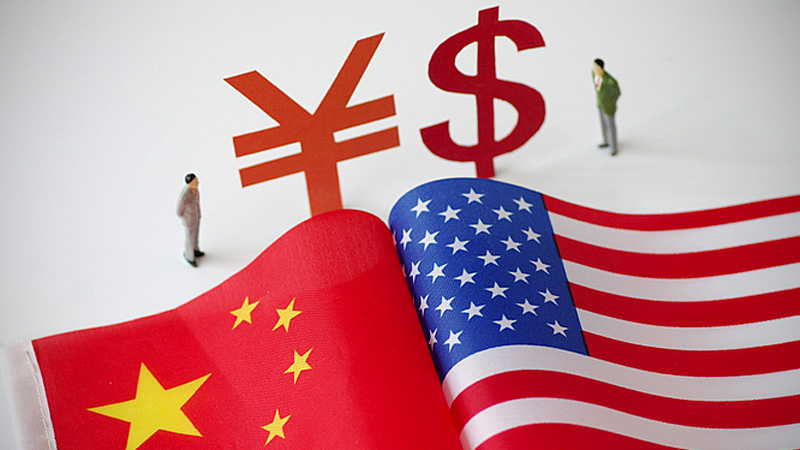
From the euro and copper to bunds and luxury stocks, traders are adjusting to the strongest yuan in more than five months after the U.S. lifted the label of currency manipulator from the Asian nation. The two countries are due to sign the first part of a trade accord on Wednesday, another step in the thawing of tensions.

The upshot is a brighter outlook for global growth that’s feeding first and foremost into the currencies of both nations, while firing up bets on looser international financial conditions.

As the yuan blasts through key levels, the dollar is now the most oversold against it in two years. The yuan — up about 4% against the greenback since August — has gained far less versus a basket of currencies, making this just as much a story of dollar weakness.

“The U.S.’s well-considered decision to refrain from accusing China of being a currency manipulator is an encouraging basis for further negotiations,” Marc-André Fongern, head of research at MAF Global Forex, wrote in a note. “The resulting appreciation of the Chinese yuan can be expected to breathe life back into the FX world.”

Here’s a look at how yuan strength may affect major assets.

– Stocks

Yuan appreciation is being felt most acutely across Hong Kong with markets with the city state tied to global risk-on sentiment and Chinese growth. Shares have gained 11% since a low on Dec. 4, adding $579 billion to market values through Monday and pushing the index back to the level it was trading at last year before political protests escalated.

Similarly, yuan strength is also potentially good news for European exporters like luxury goods manufacturers. While they’re able to cope with a weaker Chinese currency, they usually benefit from periods when the yuan is rising.

The MSCI Europe Apparel and Luxury Goods Index has gained 3% this year compared with an increase of about 0.9% for the MSCI Europe Index.

– Commodities

China is the world’s biggest buyer of copper and gold, so commodity traders could tell their European stock counterparts plenty of stories about market dynamics in the Asian nation. A stronger yuan typically makes both assets cheaper for local consumption.

For the industrial metal, the rising yuan may therefore provide an additional boost to an already tight market. Copper has climbed 14% above September lows, when the trade-war rhetoric still looked fierce.

Sino dynamics remain key to the direction of gold from here. Chinese New Year — the peak buying season for the yellow metal — combined with yuan strength may buttress gold as demand for havens ebb.

– Rates

Speaking of consumption, China absorbs around 7% of German exports — including some from the kind of luxury companies whose shares are mentioned above. That means Europe’s biggest economy stands to gain if the buying power of the Asian nation increases. Throw in an improving global trade outlook, and there could be upward pressure on German bund yields, according to market participants.

That would come as rates are already creeping back toward positive territory for the first time in eight months amid a deluge of supply and increasing hopes that European growth may have bottomed.

– Currencies

Implicit in the yuan strength is an improving outlook for the global economy, which can encourage capital flows out of the safety of U.S. dollars and spur greenback weakness.

Since a shock devaluation in August 2015, turning points for the Chinese currency have coincided with shifts in the dollar-euro pair as China influenced the global macro cycle. But during the trade war the yuan’s correlation to the euro has been falling, and it’s now the most negative in around five years. A stronger yuan could therefore signal further weakness in the single currency — hurting the Chinese economy’s competitiveness relative to Europe.

Still, while Chinese currency moves are focal point for Wall Street traders this week, there’s a key factor limiting the day-to-day impact of a stronger yuan for Western companies. The currency’s status as the preferred exchange rate for international transactions has been failing after devaluations in 2015 and 2019.

Those moves helped further erode the yuan’s already limited use as an international currency. By comparison, the euro has gained market share and accounted for a third of all transactions in November 2019.

Economists increasingly approve of U.S. taking on more debt for right reasons #ศาสตร์เกษตรดินปุ๋ย

#ศาสตร์เกษตรดินปุ๋ย : ขอบคุณแหล่งข้อมูล : หนังสือพิมพ์ The Nation

https://www.nationthailand.com/business/30380569?utm_source=category&utm_medium=internal_referral

Economists increasingly approve of U.S. taking on more debt for right reasons

Jan 15. 2020
By The Washington Post · Heather Long

SAN DIEGO – Many top economists are coming around to the belief that it’s OK, even preferable, for the United States government to spend more money, even if it means increasing America’s $23 trillion debt.

When thousands of economists gathered for the annual American Economic Association meeting this month, there were overwhelming calls for more – and wiser – government spending. Leading economic thinkers laid out the case that the nation will almost certainly have to spend more during the next recession, that major challenges such as climate change and inequality will likely require more money, and that the United States is significantly under-investing in infrastructure and education.

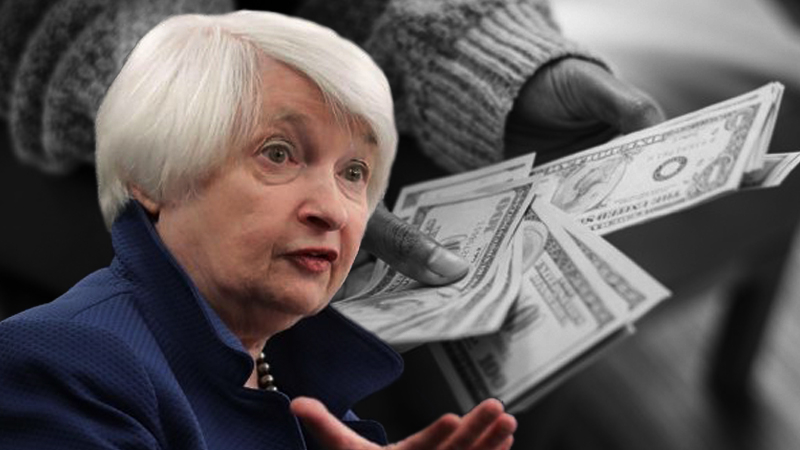
“Even under current conditions, I think we can afford to increase federal spending or cut taxes to stimulate the economy if there’s a downturn,” said Janet Yellen, the former Fed chief who is the incoming president of the American Economic Association. “Chronic low interest rates create additional fiscal space.”

Yellen’s remarks are part of a growing chorus of prominent economists who are building the intellectual case for the United States to take on a bit more debt. They are not saying that politicians have a blank check to spend more or that higher debt doesn’t have any negative consequences. The money still has to be paid back at some point – with interest.

But the consensus view is shifting among economists from a belief that debt harms the economy to a belief that responsible borrowing is warranted.

Yellen argued that the timing is right to make smart investments: It’s cheap to borrow with interest rates so low and unlikely rise much any time soon.

“In a world of low real rates, there’s also a strong case for programs to invest in infrastructure, education, research and development, climate change mitigation – namely investments that would elevate potential growth,” Yellen said.

Her call for more spending noticeably contrasts from her 2017 testimony before Congress that the long-term budget outlook should “keep people awake at night.”

The academic conversation around spending more to strengthen the economy comes at a time when the federal budget deficit topped $1 trillion, due to the Trump administration tax cuts and increased spending. It was the first time the deficit broke the trillion dollar mark during a January to December period since 2012 when the economy was still recovering from the Great Recession. The deficit continues to rise, according to the latest Treasury report on government debt released Monday.

Some economists called for higher taxes, especially on the rich, to fund additional spending. And many denounced Trump’s tax cuts as wasteful spending that could have gone toward other initiatives, including infrastructure. But there was a lot less worry about the current debt level.

“If you had been at the [AEA] meetings seven years ago, there would have been a lot of concern about entitlement spending. There’s very little of that now,” said Lawrence Summers, the former treasury secretary under Bill Clinton who helped craft the last balanced federal budget.

Indeed, many pointed to Japan, where debt is about 250% the size of the economy, as a good example that debt can rise a lot without triggering a doomsday scenario. Economic textbooks teach that too much debt can bankrupt a country and trigger massive inflation, which can cause a recession. But after years of high debt in Japan, investors are still willing to lend the country money, and Japan’s economy is sluggish but stable.

U.S. debt is about 80% of GDP and is projected to grow to 95% of GDP by 2029, largely because of rising Social Security and Medicare spending as baby boomers age. But many argued that it’s unlikely U.S. bonds would lose their status as one of the safest assets in the world if debt grew somewhat more.

“I would be very confident the United States would not go bankrupt,” Summers said. He would support a “prudent” program of borrowing to finance “reasonable, prudent public investment,” for example on schools and renewable energy.

That sentiment was echoed by many.

“We are in such bad shape on infrastructure,” said economist Lisa Lynch, the provost of Brandeis University. “We had such a missed opportunity as part of the response to the Great Recession to really have doubled down on making major investments in our infrastructure.”

The economists who attend AEA are largely academics. Several who spoke with The Washington Post estimated that 80% to 90% of the conference attendees are politically liberal, which could explain the heightened calls for the government to do more.

But others say economists’ views are evolving on government spending, because circumstances have changed. Lower interest rates make borrowing and investing more attractive. And rapid technological advances make it more necessary for the United States to invest heavily to remain competitive.

The U.S. economy is growing at about 2%, a modest pace compared with prior booms. Summers has dubbed this “secular stagnation.” Trump promised his tax cuts and deregulation would lift growth, which happened in 2018, but growth slowed closer to 2% in 2019. And economists say a big reason the economy rarely grows beyond 3% anymore is because of the aging population (fewer workers) and muted productivity growth.

Janice Eberly of Northwestern University’s Kellogg School of Management put up a slide showing that while the U.S. government spends more dollars today on the military and domestic programs than it did in the 1960s, federal investment as a share of GDP is at an all-time low, which is likely hurting productivity and growth.

There’s also the reality that if another recession hits, the Federal Reserve is unlikely to be able to do as much to rescue the economy. The Fed typically cut rates 5% points during prior recessions. The Fed’s benchmark rate is already just shy of 1.75%, leaving little room to goose the economy.

“We don’t have monetary policy. It’s very limited at the moment,” said Kenneth Rogoff, a Harvard economics professor who foresaw much of the 2008 financial crisis.

With monetary policy hamstrung, Congress would likely need to spend more during the next recession to help revive the economy, but Rogoff said he is “not at all optimistic” that can be done.

Several economists, including Summers, proposed “automatic stabilizers” for the economy, which are measures such as payroll tax cuts or extra food stamps that would take effect once the unemployment rate climbs to a high rate. But it would take an act of Congress to set up the automatic stabilizers, which seems unlikely in the current political environment.

Other economists called for bolder moves for the government to spend more on addressing climate change by funding more research on green technologies. There were also calls for the government to better address inequalities, such as giving children from low- and moderate-income families “baby bonds” that can help pay for college and other springboards to a better life.

“Everybody now assumes that social programs and social safety nets require more resources,” said Dani Rodrik, a Harvard economics professor. “Nobody stood up and said all of this inequality is because the government is doing too much.”

‘Lackluster’ holiday sales cast a pall over U.S. retail sector #ศาสตร์เกษตรดินปุ๋ย

#ศาสตร์เกษตรดินปุ๋ย : ขอบคุณแหล่งข้อมูล : หนังสือพิมพ์ The Nation

https://www.nationthailand.com/business/30380567?utm_source=category&utm_medium=internal_referral

‘Lackluster’ holiday sales cast a pall over U.S. retail sector

Jan 15. 2020
File Photo

File Photo
By Syndication Washington Post, Bloomberg · Matthew Boyle 

What a difference a year makes.

U.S. retailers have gone from peak Christmas to weak Christmas, judging from “lackluster” results released Tuesday by data tracker NPD Group. Sales of key gift categories rose just 0.2% between Nov. 3 and Dec. 28 compared with the same period last year, NPD said, hurt by sluggish demand for apparel and toys in particular.

“Retailers did not have their typical robust peak season,” NPD’s chief industry adviser Marshal Cohen said. “It’s flat. You don’t want a flat peak, that’s like an oxymoron.”

Combined with feeble numbers from retailers like Kohl’s Corp., J.C. Penney Co., L Brands Inc. and Five Below Inc., it’s shaping up to be a December some retailers would rather not remember. NPD’s results stood in sharp contrast with those from Mastercard SpendingPulse, which earlier reported a 3.4% gain in sales over a similar time period, fueled by a 19% uptick in online revenue.

While some retailers blamed a shortened holiday-selling period for their declines — there were six fewer days between Thanksgiving and Christmas in 2019 compared with 2018 — investors won’t swallow such excuses.

Shares of Five Below, for example, plunged 11% Monday after it cut its profit forecast amid a falloff in comparable holiday sales. Another contributing factor was that retailers were boosted in 2018 by the demise of Toys R Us Inc. — even Best Buy Co. had toys in its aisles — but that benefit largely disappeared a year later. NPD’s Cohen also said consumers continue to migrate more toward experiences versus merchandise.

“Romantic gifts, ties, nobody bought that stuff,” he said.

The poor performance doesn’t bode well for the upcoming year. While unemployment is near record lows, U.S. consumer confidence unexpectedly dropped for the fourth time in five months in December, while wage growth remains tepid.

“One thing we are certain of is that the outlook seems much more uncertain,” Scott Mushkin, an analyst at R5 Capital, said in a note last week. The end of interest-rate cuts and this year’s presidential election are weighing on consumer demand, he said.

The industry’s star pupils have yet to post their holiday grades, however. Target Corp. reports sales Wednesday, while Walmart Inc. and Best Buy will update investors next month. Costco Wholesale Corp., meanwhile, remained impervious to the adverse conditions that are battering retailers, with its December sales trouncing estimates.

U.S. stocks drop from record highs; Treasuries gain #ศาสตร์เกษตรดินปุ๋ย

#ศาสตร์เกษตรดินปุ๋ย : ขอบคุณแหล่งข้อมูล : หนังสือพิมพ์ The Nation

https://www.nationthailand.com/business/30380565?utm_source=category&utm_medium=internal_referral

U.S. stocks drop from record highs; Treasuries gain

Jan 15. 2020
By Syndication Washington Post, Bloomberg · Vildana Hajric, Claire Ballentine

U.S. stocks retreated from all-time highs after Bloomberg reported that tariffs on billions of dollars of Chinese goods will likely stay in place until after the presidential election.

The S&P 500, Nasdaq Composite and Dow Jones Industrial indexes all pulled back from records as the conditions underscored lingering concern about future progress in negotiations. Positive results from big banks had driven prices higher. Treasuries climbed earlier after a gauge of underlying inflation rose less than forecast.

“There was a lot of optimism built up and now this just throws a whole new wrench into that optimism,” said Ryan Nauman, a market strategist at Informa Financial Intelligence’s Zephyr. It raises “a lot of questions moving forward.”

The two sides have an understanding that no sooner than 10 months after the signing of the agreement at the White House Wednesday, the U.S. will review progress and potentially trim tariffs now in place on $360 billion of imports from China, according to people familiar with the matter.

The Stoxx Europe 600 index closed up for the first time in three sessions. Earlier in Asia, stocks finished slightly higher.

The Chinese yuan held most of its surge from Monday, when Washington lifted its designation of the country as a currency cheat. The dollar held its gains after the inflation data, while the pound broke a five-day slide.

Here are some events to watch for this week:

–Phase one of the U.S.-China trade deal is set to be signed on Wednesday in Washington.

–The biggest American financial institutions kick off earnings season, with Bank of America Corp., Goldman Sachs Group Inc., Morgan Stanley and BlackRock Inc. next up.

–The Fed’s so-called beige book is due on Wednesday.

–China GDP comes on Friday.

These are the major moves in markets:

-Stocks

-The S&P 500 index decreased 0.2% to 3,280.88 as of 3:13 p.m. New York time. The index closed at 3,283.15,   down 0.15 %

-The Dow Jones Industrial Average closed  at 28,939.67, up 0.11 %.

-The Nasdaq Composite index fell 0.24% to 9,251.33, the largest drop in more than a week.

-The MSCI All-Country World index was little changed at 573.21.

-The Stoxx Europe 600 index jumped 0.3% to 419.59.

Currencies

-The Bloomberg Dollar Spot index was little changed at 1,193.02.

-The Japanese yen was little changed at 109.96 per dollar, the weakest in about eight months.

-The euro decreased 0.1% to $1.1128.

-The British pound increased 0.3% to $1.3024, the first advance in more than a week.

Bonds

-The yield on two-year Treasuries declined one basis point to 1.57%, the biggest drop in more than a week.

-The yield on 10-year Treasuries dipped three basis points to 1.81%, the lowest in more than a week.

-Germany’s 10-year yield fell one basis point to -0.17%.

-Britain’s 10-year yield decreased three basis points to 0.72%, the lowest in six weeks.

Commodities

-West Texas Intermediate crude advanced 0.4% to $58.34 a barrel, the first advance in more than a week.

-Gold depreciated 0.1% to $1,546.35 an ounce, the weakest in more than a week.

Additional measure to help SMEs #ศาสตร์เกษตรดินปุ๋ย

#ศาสตร์เกษตรดินปุ๋ย : ขอบคุณแหล่งข้อมูล : หนังสือพิมพ์ The Nation

https://www.nationthailand.com/business/30380549?utm_source=category&utm_medium=internal_referral

Additional measure to help SMEs

Jan 15. 2020
Finance Minister Uttama Savanayana

Finance Minister Uttama Savanayana
By THE NATION

The Finance Ministry will introduce an additional measure to help small and medium-sized enterprises (SMEs). Minister Uttama Savanayana said the Fiscal Policy Office, the Bank of Thailand and the Board of Investment will jointly draw up the measure.

The state agencies under the ministry earlier launched measures to enable SMEs to gain easier access to low-interest loans.

On Monday (January 13), Deputy Prime Minister Somkid Jatusripitak instructed the BOI to consider launching more measures to boost competitiveness and cut operating costs.

The ministry will also urge state enterprises to accelerate investment, aiming to lift the economy, he added.

The ministry will hold a meeting with state enterprises on Wednesday (January 15) to accelerate their budget disbursement. Somkid will chair the meeting.

The fiscal 2020 budget bill sailed through the House of Representatives on Saturday (January 11).

U.S., EU square up for trade brawl after Trump’s China deal #ศาสตร์เกษตรดินปุ๋ย

#ศาสตร์เกษตรดินปุ๋ย : ขอบคุณแหล่งข้อมูล : หนังสือพิมพ์ The Nation

https://www.nationthailand.com/business/30380562?utm_source=category&utm_medium=internal_referral

U.S., EU square up for trade brawl after Trump’s China deal

Jan 15. 2020
By Syndication Washington Post, Bloomberg · Jonathan Stearns, Shawn Donnan

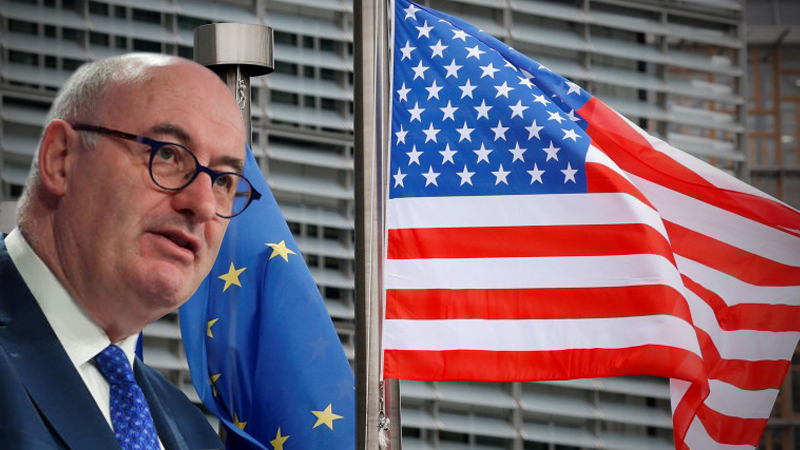
The European Union’s new trade chief will be in Washington for the next three days trying to head off a transatlantic commercial war on several fronts. The prospects for success look slim.

Phil Hogan is due to meet U.S. Trade Representative Robert Lighthizer and other American officials during a Jan. 14-16 visit that follows a general fraying of ties in recent months between the world’s biggest economic partners.

While U.S. President Donald Trump has held back on a threat to hit European cars and auto parts with tariffs that are much dreaded in the EU, both sides have revived old disputes and triggered new ones as a result of fundamental disagreements over trade policy.

A high-stakes security standoff between the West and Iran adds to the complexity and gloom because Trump’s stance toward Tehran is much more hardline than Europe’s. This raises the possibility that the White House will use transatlantic commercial questions — and the option of American tariffs — as leverage against EU allies when it comes to Iran.

“The gloves are off,” said Hosuk Lee-Makiyama, director of the European Centre of International Political Economy in Brussels. “There is going to be a lot of fireworks before any underlying progress in resolving U.S.-EU policy differences over trade.”

Trump continues to unsettle Europe three years after entering office with an “America First” agenda that has shaken the global order the U.S. was instrumental in building after World War II. The EU has gone from being perplexed to steeling itself for more disruptions as it fights to uphold multilateralism, a defining principle for the bloc.

The U.S.-EU tensions so far have played out largely in the shadow of a trade war that Trump instigated against China with far bigger economic ramifications. Now the U.S. and China plan to de-escalate their battle during Hogan’s visit by signing a first-phase agreement on Wednesday in Washington.

“It just feels like we are now entering what I call the transatlantic trade and tariff tantrum,” said Heather Conley, a former U.S. diplomat now at the Center for Strategic and International Studies in Washington. “This is going to be a pretty intense period, I fear.”

The troubles started in 2018 when the Trump administration invoked national-security considerations to impose tariffs on steel and aluminum from Europe. As a U.S. military ally, the EU was infuriated and promptly retaliated with levies on U.S. goods including iconic brands such as Harley-Davidson motorcycles and Levi Strauss & Co. jeans.

A subsequent U.S. threat to wreak significantly more economic damage by targeting the European auto industry with duties on the same security grounds led to a hastily agreed truce and a pledge by both sides to work toward reducing industrial tariffs across the board.

Since then, the Trump administration has refused to start the tariff-cutting negotiations unless Europe includes agriculture in them. Also, it imposed levies on EU products in retaliation over government aid to Airbus SE that was deemed illegal by the World Trade Organization, and disabled the WTO’s appellate body,

The EU is pressing ahead with a plan for tit-for-tat tariffs against the U.S. in a parallel WTO case over unlawful subsidies to Boeing Co. The bloc is also advocating a stopgap global arbitration system and expanding the European trade-policy arsenal to allow for sanctions against countries that illegally restrict commerce and simultaneously block the WTO’s dispute-settlement process.

The latest flashpoint is a U.S. plan to apply duties on $2.4 billion of French goods ranging from cheeses to handbags in retaliation over a digital-services tax in France that the Trump administration alleges discriminates against American technology companies such as Google, Apple Inc. and Amazon.com Inc.

Such duties would mark the first time the Trump administration deploys against Europe a policy tool — Section 301 of a 1974 American law — reserved so far for the U.S. trade war against China.

The EU is pleading for more time to reach an international accord on the taxation of digital businesses through the Organization for Economic Cooperation and Development. The bloc is also vowing a unified response should the U.S. trigger the levies against France.

“I think we have a bumpy ride ahead of us,” Sabine Weyand, director general for trade in the European Commission, the EU’s executive arm, told a Brussels conference last month. “If you deal with partners who link up trade policy with security and with industrial policy, et cetera, well, you have to up your game as well. That will be the challenge for this commission.”

Weyand is the chief civil servant for international commerce under Hogan, an Irish politician who became European trade commissioner on Dec. 1 as part of a new EU commission led by President Ursula von der Leyen.

Hogan, who has a reputation as a dealmaker, burnished those credentials in mid-2019 while in his previous job as EU farm chief. He reached an accord with Lighthizer to give American farmers more access to the European beef market after persuading Australia, Argentina and Uruguay to cede chunks of an EU import quota.

Still, in the eyes of some officials in Washington, Hogan got off to a bad start with regard to the European trade-commissioner post by telling Irish radio on the day of his nomination in September that Trump was “reckless” and needed to see the “error of his ways.” The comments prompted White House economic adviser Larry Kudlow to summon the EU ambassador to the U.S., according to officials familiar with the event.

Regardless of any political damage that Hogan caused with his blunt words or of his dealmaking skills, the main difficulty for him may simply be the size of the transatlantic gap in views about how trade policy should be pursued in an increasingly interconnected global economy.

The gulf would become even bigger were Trump to view U.S. trade ties with Europe through the prism of his “maximum pressure” Iran strategy, which has included abandoning a landmark international accord to control the Iranian nuclear program. Europe has fought to keep the deal alive.

Treasury Secretary Steven Mnuchin last week stepped up U.S. calls on the EU to abandon a payment system meant to shield European trade with Iran from American sanctions, repeating a threat of penalties against bodies in Europe should any transactions take place.

“There is very little that Hogan can actually put on the table to sway Lighthizer,” Lee-Makiyama said. “That leaves the EU facing domestic political pressure for more trade retaliation, which in turn is economically counterproductive.”