Central bank panel ready to take more action to deal with rising baht #ศาสตร์เกษตรดินปุ๋ย

#ศาสตร์เกษตรดินปุ๋ย : ขอบคุณแหล่งข้อมูล : หนังสือพิมพ์ The Nation

https://www.nationthailand.com/business/30380232?utm_source=category&utm_medium=internal_referral

Central bank panel ready to take more action to deal with rising baht

Jan 07. 2020
Titanun Mallikamas, assistant governor of the BOT's Monetary Policy Group, stated that the MPC had maintained the expansion rate of the Thai economy would be lower than the previous forecast.

Titanun Mallikamas, assistant governor of the BOT’s Monetary Policy Group, stated that the MPC had maintained the expansion rate of the Thai economy would be lower than the previous forecast.
By The Nation

The Monetary Policy Committee (MPC) of the central bank said it stands ready to use policy tools as appropriate and monitor structural problems which should be firmly addressed by all related parties.

The statement was made on Tuesday (January 7) at the central bank and analysts’ meeting at the Bank of Thailand (BOT)’s headquarters amid rising concerns over the baht’s exchange rate moving beyond economic fundamentals.

Titanun Mallikamas, assistant governor of the BOT’s Monetary Policy Group, stated that the MPC had maintained the expansion rate of the Thai economy would be lower than the previous forecast.

However, the global economic outlook has started to stabilise. As a result, Thai exports and economic growth will tend to improve in 2020, he said.

Furthermore, an accommodative monetary policy during the recent period will support economic growth and bring the rise of headline inflation towards the targeted rate.

The committee will monitor economic growth, inflation, and financial stability as well as associated risks, in deliberating monetary policy going forward.

The committee said it stands ready to use policy tools as appropriate.

The committee expressed concerns over the appreciation of the baht against trading partners and competitors’ currencies even though the appreciation of the baht has slowed down and recently, its movement has been more two-way. Therefore, the committee suggested closely monitoring exchange rates and capital flows amid elevated external uncertainties as well as the effectiveness of the relaxation of foreign exchange regulations to encourage capital outflows. It will also assess the necessity of implementing additional measures.

The overall Thai financial system is stable but it has continued accumulating vulnerabilities because of an economic slowdown and the prolonged low interest rate. The committee believed that the policy interest rate as well as microprudential and macroprudential measures should be applied in controlling the risk to the stability of the financial system.

The committee thinks that the Thai economy is facing structural problems which should be firmly addressed by all related parties. In the labour sector, for example, the emergence of the ageing society has reduced the number of working population.

More businesses replaced human labour with automation. Employment has been more of outsourcing and sub-contracting. Workers from these kinds of jobs are less stable and endowed with less welfare than the permanent worker. Moreover, it is more difficult for laid-off workers to return to the labour market, especially aged and skills-mismatch workers.

In the investment sector, the continued increase in the current account surplus reflects the structural problem: there is high savings but low investment, especially in the business sector.

Compared to other countries, the Thai investment rate is lower although the savings have continually increased. Therefore, we should encourage both public and private investment which will increase economic growth in the short term and enhance the potential of economic growth in the long term, added the statement.

Stocks advance; Treasuries, dollar decline #ศาสตร์เกษตรดินปุ๋ย

#ศาสตร์เกษตรดินปุ๋ย : ขอบคุณแหล่งข้อมูล : หนังสือพิมพ์ The Nation

https://www.nationthailand.com/business/30380224?utm_source=category&utm_medium=internal_referral

Stocks advance; Treasuries, dollar decline

Jan 07. 2020
File Photo: Getty Images/ The S&P 500 rose for the third time in four sessions, erasing early losses, as investors looked past geopolitical tensions and toward the resilience of the U.S. economy. Amazon Inc. and Google-parent Alphabet Inc. paced the advance.

File Photo: Getty Images/ The S&P 500 rose for the third time in four sessions, erasing early losses, as investors looked past geopolitical tensions and toward the resilience of the U.S. economy. Amazon Inc. and Google-parent Alphabet Inc. paced the advance.
By Bloomberg · Randall Jensen, Vildana Hajric 

U.S. stocks advanced as heavyweight technology companies led a rebound. Treasuries and the dollar dropped.

The S&P 500 rose for the third time in four sessions, erasing early losses, as investors looked past geopolitical tensions and toward the resilience of the U.S. economy. Amazon Inc. and Google-parent Alphabet Inc. paced the advance.

The risk-off rally that started Friday, sparked by the U.S.-Iran conflict, lost momentum Monday. Gold retreated from the highest in more than six years and the yen fell from a three-month high versus the dollar, while 10-year Treasury yields rose to above 1.80%.

Oil also pared gains, which reached the highest since April, to trade below $63 a barrel in New York.

“It’s wait-and-see mode here,” said Steve Chiavarone, a portfolio manager with Federated Investors. “How much, if at all, do things escalate with Iran and does it ultimately impact the global economic outlook? Right now, not so much. Could it change? Sure.”

The risk-off sentiment spurred by the sudden escalation of tensions in the Middle East last week ebbed Monday as investors refocused on improving trade and better economic numbers. But the uncertainty surrounding Iran’s potential reaction to the U.S. airstrike still hung over markets.

Here are some events to watch for this week:

–Federal Reserve officials Richard Clarida, John Williams, James Bullard and Charles Evans speak on Thursday.

–The U.S. monthly employment report is due Friday.

These are moves in major markets:

Stocks

–The S&P 500 index rose 0.4% as of 4 p.m. New York time.

–The Nasdaq 100 rose 0.6%.

–The Stoxx Europe 600 index sank 0.4%.

–The MSCI Asia Pacific index fell 1.2%.

–The MSCI Emerging Market index dropped 1%.

Currencies

–The Bloomberg Dollar Spot index declined 0.2%.

–The euro increased 0.3% to $1.1192.

–The British pound gained 0.6% to $1.3163.

–The Japanese yen fell 0.3% to 108.37 per dollar.

Bonds

–The yield on 10-year Treasuries rose one basis point to 1.80%.

–The yield on two-year Treasuries increased one basis point to 1.53%.

–Germany’s 10-year yield sank less than one basis point to -0.28%.

–Britain’s 10-year yield advanced four basis points to 0.777%.

Commodities

–West Texas Intermediate crude fell 0.5% to $62.71 a barrel.

–Gold gained 1% to $1,567.60 an ounce.

Commerce minister to lead trade delegation to India #ศาสตร์เกษตรดินปุ๋ย

#ศาสตร์เกษตรดินปุ๋ย : ขอบคุณแหล่งข้อมูล : หนังสือพิมพ์ The Nation

https://www.nationthailand.com/business/30380205?utm_source=category&utm_medium=internal_referral

Commerce minister to lead trade delegation to India

Jan 07. 2020
Jurin Laksanawisit

Jurin Laksanawisit
By The Nation

Thailand’s commerce minister will lead a private-sector trade delegation to India from January 16 to 20 to increase exports and expand trade channels since the large Asian country is an essential market for the kingdom.

International Trade Promotion Department director-general Somdet Susomboon said Commerce Minister Jurin Laksanawisit will take private sector representatives to Bengaluru and Hyderabad to expand trade opportunities there and seek channels for export. The trade delegation visited Mumbai and Chennai in September, helping to successfully expand trade and other activities.

With a huge population of more than 1.3 billion, India is one of the most important markets for Thailand, second only to China. According to the United Nations World Population Prospects 2019 report, by 2030, or in just 10 years, India will have a population of 1.5 billion, surpassing China. By 2040, it will have a population of 1.59 billion people. Importantly, India is a market that relies on its domestic economy and is barely affected by the trade war between the United States and China.

The department has come up with a strategic plan to continually promote exports and services to the Indian market. This is in line with the Commerce Ministry’s policy to find new markets that have the potential to replace current export markets during a global economic slowdown.

Jurin’s policy is proactive in expanding the Indian market by penetrating eight states – Maharashtra, Gujarat, Karnataka, Tamil Nadu, Talangana, New Delhi, West Bengal and the “Seven Sisters” states, or the northeast states.

Karnataka and Talangana are both considered India’s information technology centres, elevating businesses dealing with residences, hotels, shopping malls, and tourism, leading to increased demand for various goods and services to support the growth of urban society, as well as foreign investors.

This visit, which will see the opening of the first TopThai store on Bigbasket, the largest online grocery store in India, is also expected to witness business match-ups dealing with agricultural and industrial products such as cassava flour, rubber wood, food, fruit, construction materials, cosmetics, and more.

Euro zone edges away from stagnation as services improve #ศาสตร์เกษตรดินปุ๋ย

#ศาสตร์เกษตรดินปุ๋ย : ขอบคุณแหล่งข้อมูล : หนังสือพิมพ์ The Nation

https://www.nationthailand.com/business/30380223?utm_source=category&utm_medium=internal_referral

Euro zone edges away from stagnation as services improve

Jan 07. 2020
File Photo: Washington Post/The euro-zone economy edged gradually away from stagnation at the end of 2019 as services picked up to counter moribund manufacturing.

File Photo: Washington Post/The euro-zone economy edged gradually away from stagnation at the end of 2019 as services picked up to counter moribund manufacturing.
By Syndication Washington Post, Bloomberg · Paul Gordon 

The euro-zone economy edged gradually away from stagnation at the end of 2019 as services picked up to counter moribund manufacturing.

A gauge of private-sector activity by IHS Markit climbed to 50.9 in December, slightly better than a flash estimate and holding above the 50 level between expansion and contraction. While that’s the highest in four months, it still signals the economy is floundering, with growth at the weakest in six years and manufacturing shrinking.

IHS Markit estimates that GDP rose about 0.1% in the final quarter.

An upward revision to Germany’s services measure gave the euro a boost. The single currency extended its gain and was up 0.3% to $1.1195 as of 11:14 a.m. Frankfurt time. Other markets continued to take their lead from Middle East concerns, with stocks down, and oil and gold up amid fallout from a U.S. airstrike that killed powerful Iranian general Qassem Soleimani.

The euro area has increasingly relied on spending on services to support its expansion, offsetting the slump in manufacturing that is partly due to the U.S.-China trade war and Brexit. The risk is that factory job losses will undermine the economy as a whole.

Investors have become more confident, and are the most optimistic on the euro-region economy since the end of 2018, a separate survey by Sentix on Monday showed. “The specter of recession seems to have been dispelled,” it said, though predicts only a “slight upswing” in growth.

“In the absence of any major adverse developments we expect to see growth starting to improve as 2020 proceeds,” said Chris Williamson, chief business economist at IHS Markit. “Downside risks to growth in the year ahead nevertheless remain notable.”

The PMI report had some relative bright spots. Germany returned to marginal growth after three months of contraction. Spain and France both registered solid expansions. New work increased for the first time in four months, and business optimism improved.

There was also better news from the U.K., where December’s services measure was revised up, and new orders rose the most in five months.

Italy’s private sector shrank for a second month though, registering its worst performance in almost a year. Euro-area exports fell for a 15th successive month. Payroll numbers grew at the weakest pace in five years.

Closely monitor escalating US-Iran conflict, Prayut tells state agencies #ศาสตร์เกษตรดินปุ๋ย

#ศาสตร์เกษตรดินปุ๋ย : ขอบคุณแหล่งข้อมูล : หนังสือพิมพ์ The Nation

https://www.nationthailand.com/business/30380216?utm_source=category&utm_medium=internal_referral

Closely monitor escalating US-Iran conflict, Prayut tells state agencies

Jan 07. 2020
By THE NATION

Prime Minister Prayut Chan-o-cha on Monday (January 6) ordered related state agencies to keep a close watch on the escalating conflict between the United States and Iran amid concern of a possible impact on the Thai economy.

Prayut is worried the conflict could affect Thailand’s energy sector.

Finance Minister Uttama Savanayana on Monday asked all the ministry’s agencies to keep a close watch on the tense situation.

He said that if need be, the government would launch a measure to cushion the impact. Therefore, the ministry’s agencies have to stay alert to the developing situation.

On Monday, Prayut ordered the Defence Ministry and Army to closely monitor and evaluate the situation between the US and Iran.

This follows a US drone strike that killed Maj-General Qasem Soleimani, the commander of Iran’s elite Quds Force, as he travelled in a convoy near Baghdad airport on Friday.

Prayut, who is also Defence Minister, ordered responsible agencies to beef up security at potential attack targets. They must also be ready to evacuate Thais overseas if the situation deteriorated, he instructed.

Labour Minister MR Chatumongol Sonakul said on Monday that he ordered Thai minister-counsellors of labour in the United Arab Emirates and Saudi Arabia to monitor developments both in Iran and Iraq.

EEC office told to hasten infra investments #ศาสตร์เกษตรดินปุ๋ย

#ศาสตร์เกษตรดินปุ๋ย : ขอบคุณแหล่งข้อมูล : หนังสือพิมพ์ The Nation

https://www.nationthailand.com/business/30380213?utm_source=category&utm_medium=internal_referral

EEC office told to hasten infra investments

Jan 07. 2020
By THE NATION

Deputy Prime Minister Somkid Jatusripitak on Monday (January 6) urged the Eastern Economic Corridor Office to hasten the start of investment in key infrastructure projects, in his policy speech to the office.

The projects include development of a high-speed train route linking Don Mueang Airport, Suvarnabhumi Airport and U-tapao Airport, and Phase 3 of Map Ta Phut deep sea port.

Others are Phase 3 of Laem Chanbang deep sea port, the development of U-Tapao Airport as well as maintenance, repair and overhaul (MRO) service facilities.

Last October, the State Railway of Thailand (SRT) and a consortium led by Charoen Pokphand group signed a Public Private Partnership (PPP) contract for the high-speed rail project linking the three international airports.

Somkid added that the government was also keen to proceed with the Northern Economic Corridor (NEC) and the Southern Economic Corridor (SEC) projects.

Kanit Sangsubhan, secretary-general of Eastern Economic Corridor Office, said partnerships would be formed for all key projects in the first quarter of this year.

He expected Thai Airways International and Airbus to sign a contract on the maintenance, repair and overhaul (MRO) facilities in the second quarter.

The investment in EEC, he said, will meet this year’s target of Bt300 billion. It is now a good time for the private sector to import capital goods thanks to the strengthening baht, Kanit said. The EEC covers three eastern provinces of Chachoengsao, Chonburi and Rayong.

What to watch for in commodities in 2020 #ศาสตร์เกษตรดินปุ๋ย

#ศาสตร์เกษตรดินปุ๋ย : ขอบคุณแหล่งข้อมูล : หนังสือพิมพ์ The Nation

https://www.nationthailand.com/business/30380221?utm_source=category&utm_medium=internal_referral

What to watch for in commodities in 2020

Jan 07. 2020
Gold refining at the JSC Krastsvetmet non-ferrous metals plant in Krasnoyarsk, Russia, on Nov. 5, 2019. MUST CREDIT: Bloomberg photo by Andrey Rudakov.

Gold refining at the JSC Krastsvetmet non-ferrous metals plant in Krasnoyarsk, Russia, on Nov. 5, 2019. MUST CREDIT: Bloomberg photo by Andrey Rudakov.
By Syndication Washington Post, Bloomberg · Alex Longley, Yvonne Yue Li, Ranjeetha Pakiam

It’s time for some 2020 foresight in raw materials. After commodities posted a 10% advance last year, how will crude to coffee fare in the months to come?
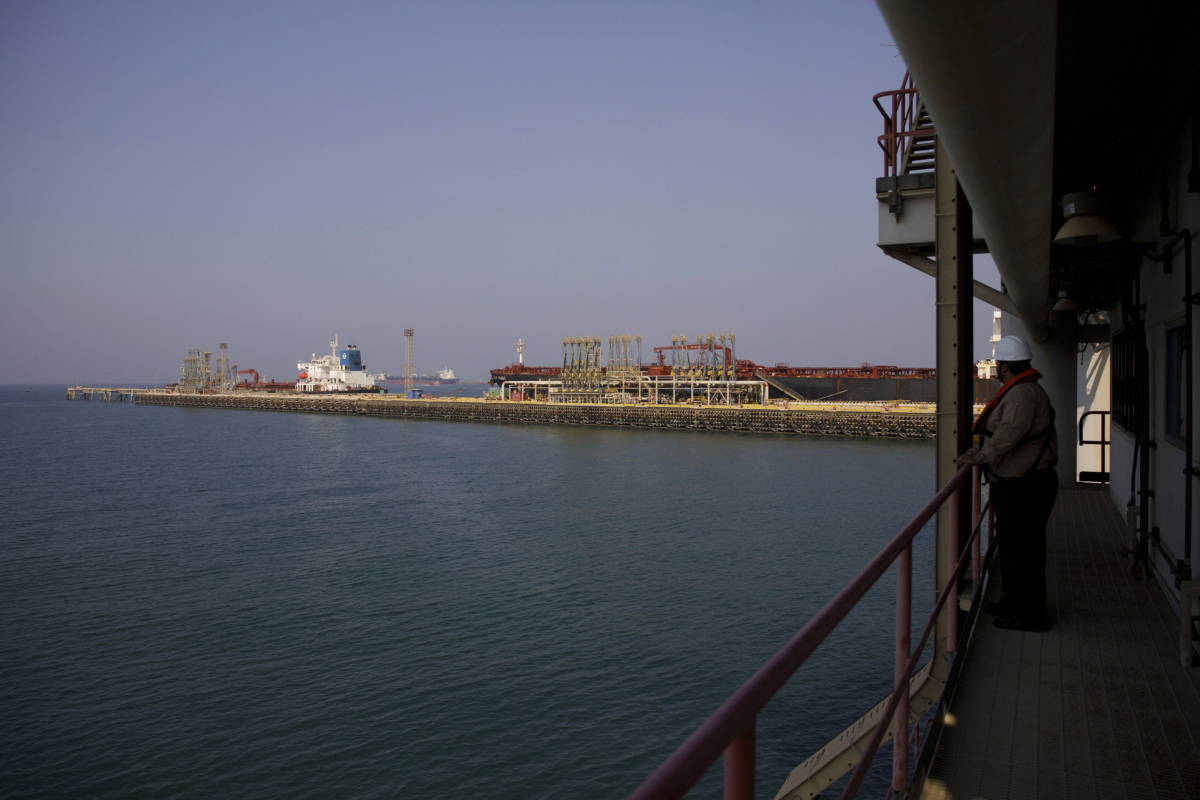
An employee watches oil tankers being loaded with oil for shipping at the North Pier Terminal, operated by Saudi Aramco, in Ras Tanura, Saudi Arabia, on Oct. 1, 2018. MUST CREDIT: Bloomberg photo by Simon Dawson.

An employee watches oil tankers being loaded with oil for shipping at the North Pier Terminal, operated by Saudi Aramco, in Ras Tanura, Saudi Arabia, on Oct. 1, 2018. MUST CREDIT: Bloomberg photo by Simon Dawson.

The year’s first full week of trading will be dominated by the Mideast crisis after the American assassination of one of the Iran’s most powerful generals. Crude and gold surged on Monday after President Donald Trump said he was prepared to strike Iran “in a disproportionate manner” if it hits any U.S. target. RBC Capital Markets has warned of “a retaliatory spiral.”

The complex number-crunching and informed guesswork used to generate year-to-come predictions in the global oil market have been thrown into disarray by the sharp escalation of tensions between Washington and Tehran. Prior to the U.S. killing of Iranian General Qassem Soleimani, investors were focused on whether continued efforts by OPEC and its allies to curb production would be sufficient to counter a global glut supported by rising U.S. shale supply and new output from outside the cartel, including fields in Guyana.

With that in mind, analysts had been forecasting WTI at just below $59 a barrel; but on Monday the benchmark rallied above $70 as the two sides traded ever harsher rhetoric. Further gains will depend on developments this week, including potential risks to crude shipped via the Strait of Hormuz. Tensions between the U.S and Iran disrupted oil markets last year but the episodes were short-lived; the current standoff is of far greater magnitude.

Copper struggled to sustain a rally in 2019 as the trade war spurred destocking of inventories by manufacturers. Now, the outlook is turning brighter with the preliminary truce between Washington and Beijing easing demand concerns for the metal used in everything from automobiles to electronics. Potential output cuts by Chinese smelters also point to tighter supply at a time when stockpiles tracked by the London Metal Exchange are at the lowest in nine months.

Goldman Sachs, Morgan Stanley, Citigroup and Standard Chartered are all bullish on copper as they predict a rebound in global consumption. Citigroup forecasts China’s demand will expand 2.6% this year, underpinned by gains in grid investment. While prices fell on Friday as the Mideast tensions hurt appetite for risk, they remain above $6,000 a ton.

Gold just delivered a stellar year for bulls as the Federal Reserve cut rates, trade tensions hurt growth, central banks beefed up reserves and ETF holdings swelled. The haven’s upward march may not be quite done: Goldman Sachs, Citigroup and UBS Group have all said they’re looking for $1,600 an ounce, and RBC Capital Markets is positive too. And those calls were made before the Iranian crisis sent bullion tearing higher.

On top of the Mideast tensions, additional underlying positivity toward bullion comes as the Fed signals that rates will almost certainly be on hold right throughout this year, at least until central bank officials have seen a “material reassessment” in their outlook. Among other precious metals, palladium also demands attention as a persistent global deficit looks set to fuel gains far beyond $2,000 an ounce.

Bulls in arabica coffee, coming off its best year in five, will be watching developments in Brazil, the top producer and exporter. After 2019’s harvest was marred by irregular weather and poor quality, the country’s green bean stockpiles are set to drop to the lowest in more than five decades, and any signs of more production issues may exacerbate the tight supply scenario.

In addition to a forecast world deficit in 2019-2020 technical indicators are strong, with the beans favored by Starbucks Corp. moving above 50- 100- and 200-day moving averages. While traders will be looking for signs of increased output, many growers are still under financial distress, and that may limit resumption of farm investments. Meantime, a further depreciation in the Brazilian real could raise prospects for increased supplies in the years to come.

After a tumultuous year, iron ore is expected to slide in 2020. The steelmaking material capped the biggest annual gain in three years in 2019 on a shortage triggered by a dam disaster at Brazil’s Vale SA. Prices, which hit as much as $120 a ton in July, ended the year near $90, while shares of miners such as BHP Group rose. Fortescue Metals Group Ltd.’s stock more than doubled.

As seaborne supply expands this year from Brazil and Australia the deficit is seen closing, and there’s a chorus of forecasts for prices to weaken. Top producer Australia sees iron ore averaging $63 a ton, and the material is Morgan Stanley’s least-favored commodity. In China, steel demand is expected to fall as economic growth slows, hurting iron ore consumption.

Unprecedented outbreaks of African swine fever upended the pork trade in 2019, and whether the spread continues will be a key driver for meat markets going forward. The fallout lifted global meat prices to a five-year high and sent pork exports from Europe and elsewhere surging. China’s hog population — the world’s largest — has collapsed, and traders will be eyeing whether a recovery in herds comes as quickly as some government officials have pledged.

Outside of Asia, the market will focus on whether the disease strikes any major pork shippers, risking further trade disruption. The virus has moved nearer to Poland’s border with Germany, a key European producer, and officials are stockpiling fences and training boar-sniffing dogs in a bid to ward off the threat. It also remains to be seen by how much China will boost purchases of U.S. pork after the nations reached an initial trade agreement.

Climate change and how governments, companies and funds respond will shape investment decisions in 2020 as never before. This year, the amount of new wind and solar power generation capacity will cross the 200-gigawatt threshold, boosting the total to about 1,450 gigawatts, BloombergNEF says. To put that in perspective, that’s just shy of 20% of global installed capacity.

That shift will see renewables close the gap with natural gas as the biggest potential source of electricity behind coal, though their intermittent nature will leave them lagging behind in terms of actual output. The variability will also increase challenges for grids and traditional utilities to keep all the lights on, while pressuring wholesale power prices on gusty or bright days.

Palm oil was one of the big winners among commodities in the second half of 2019, and there are signals prices will remain well-supported. The most-used vegetable oil ended the year with a 44% gain, the best showing in a decade, lifted by concerns dry weather and haze will curb supplies from top growers Indonesia and Malaysia, as well as prospects for strong biofuel demand.

The latest Bloomberg survey showed prices may average 2,400 ringgit ($587) a ton this quarter, compared with 2,248 ringgit over all of 2019. Participants flagged Indonesia as a key factor, with Southeast Asia’s top economy boosting palm’s share in its biofuel blend to 30% from 20%. Still, questions remain on export markets, especially the European Union’s limit on palm oil use.

U.S. natural gas prices have slumped for two straight weeks, but the sell-off probably isn’t over, according to traders and analysts surveyed by Bloomberg. Some 55% of respondents were bearish, the most in more than three months, as mild weather slows the seasonal decline in stockpiles.

Soybeans remained in favor with traders and analysts a third week, helped by expectations that the U.S. government will trim crop yields in an upcoming report. Bullish sentiment on gold edged out bearish and neutral views as prices extended a rally fueled by recent dollar weakness and tensions in the Middle East. Terminal subscribers can see other commodity surveys here.

Risk of Iranian conflict rattles investors. But a serious economic hit looks unlikely. #ศาสตร์เกษตรดินปุ๋ย

#ศาสตร์เกษตรดินปุ๋ย : ขอบคุณแหล่งข้อมูล : หนังสือพิมพ์ The Nation

https://www.nationthailand.com/business/30380217?utm_source=category&utm_medium=internal_referral

Risk of Iranian conflict rattles investors. But a serious economic hit looks unlikely.

Jan 06. 2020
File Photo: Getty Images

File Photo: Getty Images
By The Washington Post · Tory Newmyer 

WASHINGTON – The new year is already bringing new threats to fray nerves from C-suites to Wall Street: Just as the U.S.-China trade war cools off, the risk of a hot war with Iran is spiking.

But the economic impact of an escalating conflict in the Middle East remains far from clear. Economists – for now, at least – appear to agree that a limited military confrontation wouldn’t mean much to U.S. growth.

“The economic and financial fall-out from Friday’s events seems likely to be minor,” Macroeconomic Advisors economists wrote, referencing the U.S. military drone attack that killed Iranian Maj. Gen. Qasem Soleimani at the Baghdad airport. In response, the Iranian regime has announced it is suspending its commitments under the 2015 nuclear deal and will attack military sites.

“The direct economic impact would be on the collective psyche, equity prices and oil prices,” Ryan Sweet, director of real-time economics at Moody’s Analytics, writes. “By itself, a military conflict between the U.S. and Iran would have modest implications for the U.S. economy, but the spillover impact on oil prices could be more significant.”

Indeed, oil prices are already jumping on fears that Middle Eastern infrastructure will get caught in the crossfire. But even unraveling what a sustained increase in the cost of the commodity will mean at home is debatable.

“Higher oil prices represent a tax on oil consumers and a windfall for producers,” Pantheon Macroeconomics chief economist Ian Shepherdson writes. “World oil consumption is about 100M barrels per day, so each five dollars on the price of oil is equivalent to an annualized tax of about $183B per year, or 0.1% of global GDP.”

But since the United States is now both a major oil producer and consumer, higher oil prices could benefit the economy by encouraging the domestic energy sector to invest in expanding its capacity. That dynamic has played out over the past half-decade. “When oil prices collapsed between spring 2014 and early 2016, the ensuing plunge in capital spending in the oil sector outweighed the boost to consumers from cheaper gasoline and heating oil, and overall economic growth slowed markedly,” Shepherdson writes. “This story played out in reverse when oil prices rebounded in the three years through spring 2018, and economic growth picked up.”

Consumers – the primary engine of American economic growth – should be able to withstand the pinch of higher prices at the pump in the immediate term, per Michael Pearce, senior U.S. economist for Capital Economics. “Labor market conditions remain solid, the household saving rate is elevated, and consumer confidence remains high,” he writes.

And the Federal Reserve is unlikely to change its outlook based on escalating tensions, per a note from Larry Meyer, a former Fed governor and founder of Washington-based research firm LH Meyer. The conflict is not “anywhere close” to weighing on Fed policymaking “at this point,” he writes.

Then again, the picture could change if the conflict snowballs into a full-scale war. “The wild card is whether turmoil in the Middle East triggers a sustained sell-off in equities, depressing business and consumer confidence to the point where labor market and inflation concerns become secondary,” Shepherdson writes. “We’d be surprised – the drop in the S&P on Friday was just the initial knee-jerk response – but if Iran takes more drastic action than we are expecting, it will become a real risk.”

Or as Fundstrat analyst Vito Racanelli puts it, “Once hostilities begin, predictions go out the window.”

Global and Thai economic forecast for 2020 #ศาสตร์เกษตรดินปุ๋ย

#ศาสตร์เกษตรดินปุ๋ย : ขอบคุณแหล่งข้อมูล : หนังสือพิมพ์ The Nation

https://www.nationthailand.com/business/30380199?utm_source=category&utm_medium=internal_referral

Global and Thai economic forecast for 2020

Jan 06. 2020
Anusorn Tamajai

Anusorn Tamajai
By The Nation

The Thai economy will improve only slightly if the investment and export sectors recover, or it could worsen if a new political crisis affects the investment and consumption sectors.

Also, if a war develops between Iran and the United States, oil prices could spike 20 per cent from the current level.

To make matters worse, the tourism sector in Thailand and Asia may be affected by a new strain of pneumonia if this becomes as severe as the SARS epidemic 17 years ago.

However, the economic situation might not reach 1997 Asian financial crisis proportions.

The economic growth rate this year will be approximately 3.5-3.6 per cent, compared to 3 per cent in 2019, the lowest GDP in 10 years, said Assist Prof Anusorn Tamajai, director of the Economic and Business Research Centre at the Institute of Economics, Rangsit University, on Sunday ( January 5).

Global GDP in 2020, calculated by the IMF Purchasing Power Parity, will be $149.53 trillion.

The impact from the trade war has improved, but global economic growth is still lower than the average seen between 2001 and 2019, which was 3.9 per cent, Anusorn said. The growth rate of the world economy touched 4.3 per cent in 2000.

The latest global economic risk factors stem from the conflict between the United States and Iran, which is likely to expand the crisis and conflicts in the Middle East, he said. These factors will force oil and energy prices to rise. The oil price on the world market has increased by more than 4 per cent, reaching the highest level since April last year. If Iran responds to the conflict by closing the Strait of Hormuz, which connects the Persian Gulf with the Gulf of Oman, or attacks oil tankers in the strait, it will affect the supply of crude oil to Asia as 80 per cent of tankers use the channel to transport approximately 22.5 million barrels per day of crude oil to the continent.

US President Donald Trump has also announced that the military is prepared to attack 52 key targets in Iran.

If Iran takes drastic steps, the domestic oil price will increase more than 20 per cent from the current level, he said.

Inflation rates in many countries will be higher than expected by the International Monetary Fund and the World Bank. However, inflation will not hinder the need for easy monetary and fiscal policies. US GDP is expected to be at the 1.9-2.1 per cent level, the euro zone at 1.2-1.5, Japan 0.5-0.8 and China 5.8-6 per cent.

Anusorn said world trade growth should increase significantly – by no less than 3 per cent compared to 1.2 per cent in 2019. However, when compared to the value in dollars, the growth rate will continue to decrease or remain negative from last year’s level, while trade and investment growth within the region is expected to increase as a result of the “changing globalisation system and the diffusion of trade barriers, including the influence of commercialism and economic nationalism”.

Global stock and financial markets are expected to remain positive from high liquidity and will increase due to quantitative easing measures by the central banks of developed countries and China.

Gold prices and the dollar will rise if the Middle East is engulfed in a war. Investors will seek more safe haven assets such as dollars, government bonds and gold.

One positive factor is that the trade war between the United States and China may not intensify but will see the enforcement of intellectual property laws, especially for high-tech products. In addition, there may be trade conflicts on the taxation of digital and online businesses between the United States and Europe, while Brexit could take longer to achieve.

Thailand’s economic growth rate this year is very uncertain and highly volatile, Anusorn pointed out. There may not be an economic crisis that many people call the “real burn”, or a twin of the 1997 Asian financial crisis, but only a long period of low economic growth due to structural problems, stiff trade competition, the spread of corruption at all levels, the decline of faith as a result of not adhering to the rule of law, and an inability to keep up with international digital technology. These factors will cause more layoffs and unemployment in the first half.

The country’s growth rate in 2020 is expected to be 1.8-2.9 per cent, lower than the average GDP growth of the Asean region. Thailand will have the second-lowest GDP after Singapore this year. The average GDP growth rate of developing countries in Asia is around 6 per cent.

However, the Thai economy may improve slightly if the investment and export sectors recover, which could see an expansion of around 2.6-2.9 per cent, but there are also expectations that it may grow below 2 per cent.

According to Anusorn, investment in financial markets will continue to benefit from low interest rates and high liquidity. The rise in the price of risk-weighted assets may not reflect the fundamentals of the economy and business performance. Therefore, investors must choose the timing of investment and trading appropriately and in line with rapidly changing dynamics. It is expected that the Thai stock market index will move in the range of 1,750-1,550 in 2020.

He forecast that the baht currency will be highly volatile and may strengthen slightly in the first quarter but could weaken after short-term capital outflows. The baht will move at the level of 29-31 per dollar in the first quarter, 30.50-31.50 during the second quarter, 29.50-30.50 in the third quarter, and 31-32 during the last quarter.

Middle East tensions cast shadow over Asian bourses #ศาสตร์เกษตรดินปุ๋ย

#ศาสตร์เกษตรดินปุ๋ย : ขอบคุณแหล่งข้อมูล : หนังสือพิมพ์ The Nation

https://www.nationthailand.com/business/30380191?utm_source=category&utm_medium=internal_referral

Middle East tensions cast shadow over Asian bourses

Jan 06. 2020
For this week's outlook, KSecurities expects the SET to have support at 1,580 and 1,565 points, but resistance at 1,615 and 1,640 points, respectively. Key matters to watch include the deliberations on Thailand’s budget bill for fiscal 2020, US-China trade issues and the Middle East situation. 

For this week’s outlook, KSecurities expects the SET to have support at 1,580 and 1,565 points, but resistance at 1,615 and 1,640 points, respectively. Key matters to watch include the deliberations on Thailand’s budget bill for fiscal 2020, US-China trade issues and the Middle East situation.
By The Nation

Thai and other Asian stock markets dropped in Monday’s trading after a US strike killed a top Iranian commander last week.

The Stock Exchange of Thailand Index dropped this morning along with other major Asian stock markets.

The SET Index was down 0.73 per cent in opening trade at 1,583.37, while the Nikkei 225 fell sharply by almost 2 per cent, South Korea’s Kospi also fell more than one per cent, Malaysia’s KL Composite lost almost one per cent, the Singapore Straits Times index was down about half a per cent, but China’s Shenzhen Composite was up about one per cent and the Shanghai Composite was up about half a per cent.

Kasikorn Securities said on Monday that the SET Index was under pressure from the tension in the Middle East.

For this week’s outlook, KSecurities expects the SET to have support at 1,580 and 1,565 points, but resistance at 1,615 and 1,640 points, respectively. Key matters to watch include the deliberations on Thailand’s budget bill for fiscal 2020, US-China trade issues and the Middle East situation.

Key US indicators include the December purchase managers index, services indices, non-farm payrolls and unemployment rate. Other international factors that warrant close monitoring include the euro-zone and Japan’s December PMI Composite Indices plus China’s December PPI and CPI.

Last week, the SET Index rose week on week, ending at 1,594.97 points, up 1.06 per cent week on week. The average daily trading value was Bt48,445.61 million, up 40.69 per cent week on week. The MAI closed at 311.58 points, up 1.14 per cent week on week. The SET Index moved within a tight range at the end of 2019 before surging at the beginning of 2020 on institutional investor purchases,

supported by the progress in US-China trade issues, as President Donald Trump said he would sign the first phase of the trade deal with China on January 15 and travel to Beijing to begin talks on a second

phase of the deal. However, the SET pared gains somewhat at the end of the week amid concerns over the Middle East situation, KSecurities said.