Thai and foreign investors are expected to snap up more than 20 hotels worth over 15 billion baht this year, according to property consultant Colliers International Thailand.
As the country’s tourism outlook improves, the first half of 2022 has seen brisk demand for Thai hotels, particularly in major tourist destinations such as Bangkok, Phuket, Samui, Pattaya and Chiang Mai, said Colliers research and communication director Phattarachai Taweewong.
Most purchases involved old hotels that were later renovated, upgraded and rebranded.
This year, Colliers expects more than 20 hotels to be purchased, compared to 24 last year and seven in 2020, when the Covid-19 pandemic struck.
Earlier, the number of hotels offered for sale was limited. However, with the advent of Covid, many owners were forced to put their hotels up for sale following a severe lack of liquidity and mounting operating costs.
Last year’s prices were about 30 per cent lower than market prices but are being adjusted higher this year due to the better tourism outlook, with foreigners returning to visit Thailand in droves.
An upbeat Tourism Authority of Thailand predicted tourist arrivals of more than 10 million this year.
“Investors can buy hotels at reasonable prices,” Phattarachai pointed out. “It is likely the value of purchases will exceed 15 billion baht.”
Chinese investors tend to show interest in purchasing hotels in Phuket and Chiang Mai, while those from the US, Singapore and Japan look for properties in Bangkok, according to Colliers.
Over the past decade, total purchases of Thai hotels were worth 99.6 billion baht. The value was particularly high in 2017 and 2018, when the amount was more than 20 billion baht in each of those years, Colliers records show.
The new bidding terms for a 35.9-kilometre section of the Orange Line rail project are unlawful and against a Cabinet resolution, Skytrain operator Bangkok Mass Transit System (BTSC) said on Wednesday.
Its statement came after it opted out of the new bidding, alleging the terms were designed to help a particular bidder.
BTSC chairman Keeree Kanjanapas said the new terms of reference (TOR) and request for proposal (RFP) “limit the competition” and will lead to the Mass Rapid Transit Authority of Thailand losing the opportunity to get the best offer.
“The new TOR and RFP are aimed at preventing the BTSC and its partners from participating in the bidding,” he said plainly.
The company is ready to participate in the bidding, but it must be fair and provide the maximum benefit to the country, Keeree added.
Meanwhile, BTSC chief executive Surapong Laoha-Unya said the new TOR and RFP are preventing private companies from participating in the bidding, even though they were eligible to participate in past bidding.
He alleged that the TOR and RFP were helping a particular consortium win the project, adding that such a practice would violate the BE 2542 (1999) Act against bidding collusion.
“We believe such a practice is unlawful and against the Cabinet resolution, the Administrative Court’s ruling, the Public-Private Partnership Act BE 2562 (2019) and other related laws,” Surapong said.
He added that the BTSC has filed a lawsuit with the Central Administrative Court against the TOR and RFP and it has also filed a complaint with the Department of Special Investigation, calling for a probe.
Thai industries are preparing to cut costs and raise capital in response to the possibility of an interest rate hike, the latest poll of the Federation of Thai Industries (FTI) showed.
The survey of 209 executives from 45 industry groups and 76 provincial industry councils, found that the majority of them believe the Bank of Thailand’s Monetary Policy Committee (MPC) will have to raise the interest rate at their next meeting to combat the country’s inflation, the highest in 13 years, and the several rate hikes by the US Federal Reserve.
Meanwhile, 33 per cent of respondents said they plan to cut operational and investment costs, while 19.6 per cent plan to increase cash flow along with a change in management strategy in response to the likely increase.
Montree Mahapruekpong, deputy chairman of the FTI, said more than half of the respondents (52.6 per cent) expect the BOT to gradually raise interest rates to reflect the current economic conditions, as well as introduce supportive measures such as soft loans, fixed-rate loans, debt restructuring, and tax breaks to assist businesses that have not fully recovered from the pandemic.
He added that while the continued weakness of the baht will help the country’s competitiveness in the export sector, the price of energy, raw materials, and goods will continue to rise, forcing industries to raise product prices.
The FTI also advised Thai manufacturers to hedge against a weakening baht, such as through forward or options contracts.
The poll suggested the appropriate value of the baht for business operations should be 32-34 per US dollar to stabilise overall economic conditions.
Thai exporters of plant-based protein products have bright prospects in Spain as consumers there have become more health-conscious, the Department of International Trade Promotion said on Wednesday.
DITP director-general Phusit Rattanakul said a recent study showed that the demand for plant-based protein products is rising in Spain.
He cited the study by the Louis Bonduelle Foundation, titled “Route to the Food Transition”, which showed that 64 per cent of Spanish people pledged to eat plant-based protein this year.
The survey said 78 per cent of these people would eat plant-based protein because of health reasons and 48 per cent said they would do it for the sustainability of food security, while 26 per cent cited price and 21 per cent cited taste reasons. Respondents were allowed to give more than one answer to this question.
According to Phusit, the study also found that the Gen Z group of people between 18 to 28 years old would see the biggest increase in number of people that would turn to plant-based proteins. The survey found that 7 in 10 of this group said they would start eating plant proteins this year and they would eat more vegetables and fruits during the next five years.
The study also pointed out that if animal meat consumption is reduced by half, it would help reduce global warming by up to 40 per cent.
Phusit said the study also found that Spanish people 25 to 34 years old are the biggest group that pays attention to the environmental impact of food consumption.
The study also pointed out that 6 of 10 Spaniards from 18 to 24 years old give priority to sustainability of food security, Phusit added.
“The attitude of Spanish people in this study showed that they are aware of the environmental impact of food consumption,” Phusit said.
“This will provide a chance for making foods based on plant protein to respond to the demand of Spanish people and it will create food sustainability in the market in the long term.”
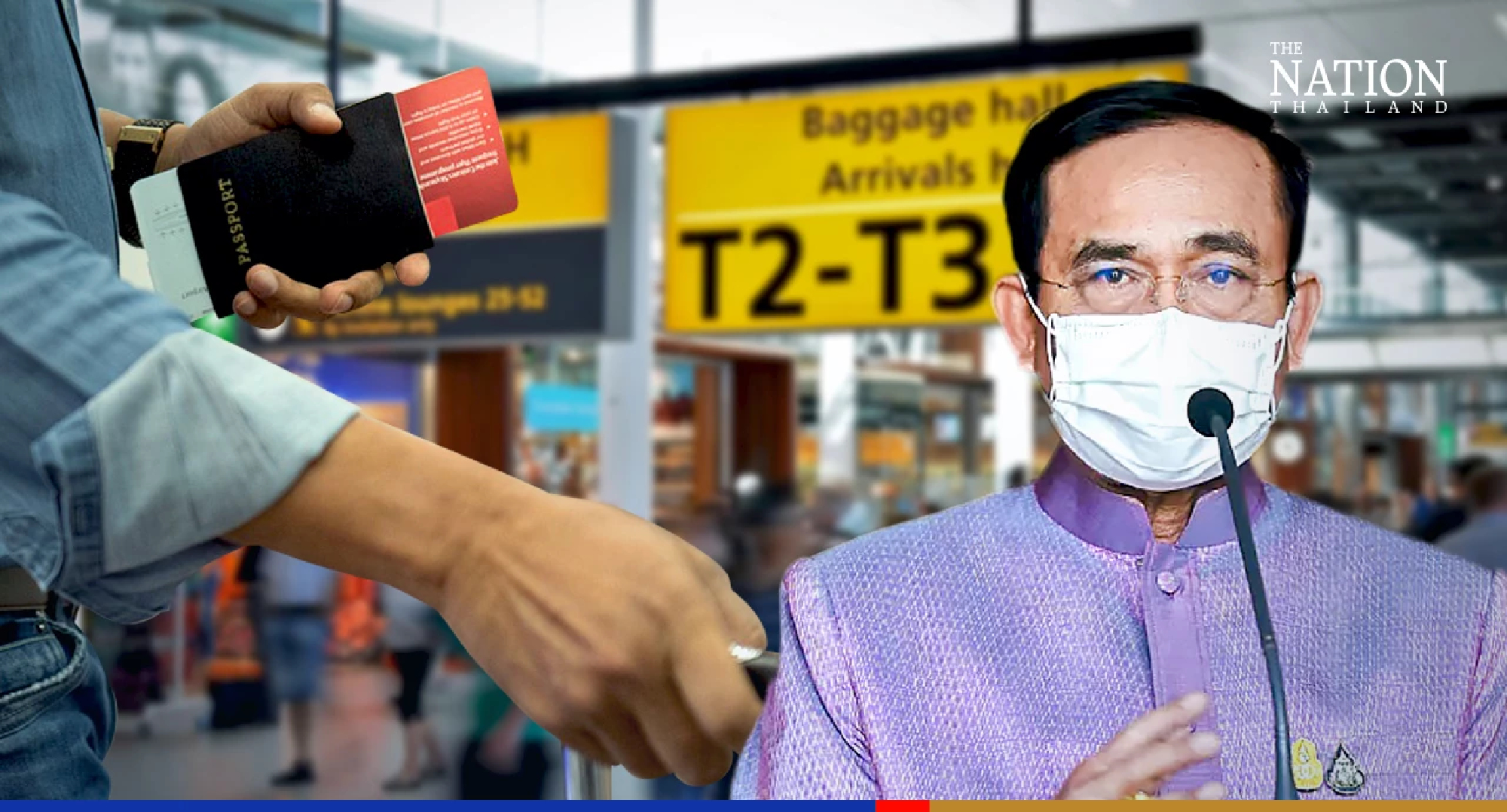
Prime Minister Prayut Chan-o-cha has endorsed the Tourism Authority of Thailand’s revenue target of 2.38 trillion baht and strategies for next year, the government spokesman said on Wednesday.
Spokesman Thanakorn Wangboonkongchana said the prime minister supported TAT’s strategic plans to revive the tourism sector next year and make tourism a sustainable revenue earning industry for the country.
TAT had submitted a four-point plan to the prime minister to increase Thailand’s competitiveness and achieve its “high value sustainable tourism” goal.
The four strategies are:
– Drive demand
– Create valuable experiences for foreign tourists, making their travel meaningful
– Shape supplies with various types of tourism
– Upgrade tourism into a high-value, sustainable industry by making use of Thailand’s soft power.
The prime minister also agreed with TAT’s proposal to integrate close cooperation among all sectors to make Thailand a world-class destination, the spokesman said.
Prayut supported TAT’s plan to promote domestic travel with its campaign theme of “365 Days of Amazing Thailand – Everyday Travel”, Thanakorn said.
The campaign highlights outstanding characteristics of each region to promote travel around the country and encourage domestic tourists to spend more.
TAT plans to woo tourists from a host of new markets, including Saudi Arabia.
All in all, the comprehensive plans would generate some 2.38 trillion baht in tourism revenue next year, Thanakorn said.
Furthermore, Prayut was happy Bangkok had been voted the number one destination by users of tourism platform Agoda for 2022 summer travel, the spokesman said, adding that the premier was also glad Pattaya was ranked eighth in Agoda’s top ten tourist destinations.
“The prime minister appreciated the hard work and cooperation by all agencies concerned to develop the tourism industry efficiently,” Thanakorn said.
“Prayut thanked them for promoting various policies and complying with government measures, thus creating confidence among foreign tourists,” the spokesman added.
The Cabinet on Tuesday approved a project to grant soft loans worth a total 5 billion baht to hotel operators and their supply chains.
The project, operated by Government Savings Bank (GSB), aims to help up to 1,000 small and medium-sized enterprises and supply chains access funds in the current challenging economic situation.
Hoteliers and their supply chains can now borrow loans of up to 5 million baht per person for no more than seven years.
The soft loans have grace periods and interest of 1.99 per cent in the first two years. Interest from the third to seventh year will be specified by the GSB.
Borrowers can use their assets as collateral or request the Thai Credit Guarantee Corporation to be their guarantor, or both.
They can avail of the loans until September 30 this year or until all of the loans are snapped up.
The following are eligible:
• SME operators must be Thai or juristic persons registered to operate a business in the country with shareholding of more than 50 per cent of registered capital.
• Hotel operators must have a licence or a requested licence to operate their business before December 31, 2020.
• Borrowers must be directly or indirectly affected by the Covid-19 crisis.
• Their business should have shown profit over the past three years.
• In case of juristic persons, shareholders’ equity must not be in deficit.
• Borrowers must also not be in debt or have any non-performing loans. They should not have been prosecuted or must not be facing bankruptcy.
The baht opened at 36.70 to the US dollar on Wednesday, unchanged from Tuesday’s closing rate.
The Thai currency is expected to move between 36.60 and 36.80 during the day, predicted Krungthai Bank market strategist Poon Panichpibool.
Poon said the baht was likely to fluctuate and weaken to test its resistance level of 36.80 if the market descends into a risk-off state, which would support the dollar to weaken while pressuring the euro.
He advised investors to closely monitor the baht’s volatility especially during the US Federal Reserve meeting on Thursday, as it comes during the long holiday in Thailand, so the trade volume might be lower than normal during the period.
Poon feels the dollar might decline while the baht could strengthen if the Fed does not signal another interest rate increase by a big margin.
However, he said to beware of investors selling their assets in the Emerging Asia market if the Chinese government enforces additional lockdown measures.
Poon also advised investors to use hedging tools such as options to manage risks in a highly volatile currency market.
Siam Commercial Bank (SCB) projects exports of Thai electronic products will rise by a modest 4.1 per cent this year from the US$4.22 billion earned in 2021.
SCB’s Economic Intelligence Centre (EIC) said export growth for electronic products this year has slowed from the 16.5 per cent increase seen in 2021.
It explained that 2021 export growth was driven by demand for electronic parts and computer parts in response to work-from-home and online education trends.
The EIC said demand for electronic parts from Thailand was still high but exports would be hampered by the global economic slowdown and semiconductor shortage.
It added that Thai washing machines had been removed from the European Union’s Generalised Scheme of Preferences (GSP). This, along with other trade controls imposed by some countries, had added to the slowdown in exports of Thai electrical products, it said.
Average tax revenues in Asia and the Pacific fell by -1.2% of GDP between 2019 and 2020 to 19.1% of GDP as a result of the Covid-19 pandemic, according to a new OECD report released Monday.
Revenue Statistics in Asia and the Pacific 2022 provides harmonised data on tax revenues for 28 economies in the region, including Bangladesh, Cambodia, Kyrgyzstan and Pakistan for the first time. The report reveals that the average tax-to-GDP ratio in the Asia-Pacific region was lower than the averages for the OECD and Latin America and the Caribbean (LAC). Between 2019 and 2020, tax-to-GDP ratios fell in 19 of the 26 economies for which 2020 data are available.
The first year of the pandemic amplified a decade-long decline in tax-to-GDP ratios across the region, which fell in 15 of the 26 economies between 2010 and 2020. The pandemic also widened the gap between the Asia-Pacific average and the averages for the OECD and the LAC region: the OECD’s average tax-to-GDP ratio increased by 0.1 percentage points (p.p.) to 33.5% between 2019 and 2020 while the average tax-to-GDP ratio in the LAC region declined by -0.8 p.p. to 21.9%.
Falls in revenue from taxes on goods and services drove the decline in Asia-Pacific’s average tax-to-GDP ratio between 2019 and 2020, decreasing as a percentage of GDP in 21 of the 26 economies for which 2020 data are available. This fall was particularly large for the Pacific Islands covered by the report because of the sharp decline in tourism caused by the pandemic. On average, taxes on goods and services accounted for 50.6% of total tax revenues in the Asia-Pacific region in 2020.
Between 2019 and 2020, revenues from corporate income tax (CIT) fell by -0.1 p.p. in Asia and the Pacific, a more modest decline than was observed in the OECD (-0.4 p.p.) and in the LAC region (-0.2 p.p.). Revenues from personal income tax remained unchanged as a percentage of GDP on average in Asia and the Pacific and in the LAC region, while they increased by 0.3 p.p. in the OECD.
Revenue Statistics in Asia and the Pacific 2022 includes data on non-tax revenues for 19 economies in the region. Between 2019 and 2020, non-tax revenues declined in twelve economies as a percentage of GDP while they increased in seven. In 2020, non-tax revenues exceeded 10% of GDP in Samoa (11.6%), Bhutan (19.8%), Vanuatu (24.0%), the Cook Islands (27.4%), Nauru (67.5%) and Tokelau (218.7%).
The new report also includes a special feature by the Asian Development Bank (ADB) on options for developing countries in Asia to enhance domestic resource mobilisation in the wake of the COVID-19 pandemic. This chapter shows that a large number of countries have the potential to increase tax revenues by optimising existing sources of revenues, making more strategic use of tax expenditures, adapting to the growth of the digital economy and supporting multilateral initiatives to increase revenues from CIT.
Revenue Statistics in Asia and the Pacific is jointly produced by the OECD’s Centre for Tax Policy and Administration and the OECD Development Centre with the cooperation of the ADB, the Pacific Island Tax Administrators Association (PITAA), and the Pacific Community (SPC), and support from the governments of Ireland, Japan, Luxembourg, the Netherlands, Norway, Sweden, Switzerland and the United Kingdom.
Thailand’s National Innovation Agency (Public Organization) or NIA has recently hosted the Southeast Asia Startup Assembly (SEASA 2022) in Bangkok under the theme “Open the Cities for Startup Opportunities among Apec Member Economies”.
The hybrid event brought together representatives from government startup agencies from Asean and partnering countries – Thailand, Brunei, Malaysia, Vietnam, China, and India to discuss the main issues confronting the startup ecosystem and the solutions that can be achieved through a united effort.
Pun-Arj Chairatana, Executive Director of NIA, said the Covid-19 pandemic has brought changes in people’s lives, as well as work and business operations. Notably, innovativeness, foresight, and resilience are some of the key factors helping firms to overcome global challenges and thrive during the post-Covid 19 era. The government has a significant role to support in promoting invaluable assets such as Artificial Intelligence, digital transformation, technology, advanced materials, and manufacturing.
“We should leverage each other’s experience and expertise to enhance the strength of the overall ecosystem. SEASA event is, therefore, the place where key players in regional startup communities can exchange knowledge and experience regarding policies, current situations, and challenges that all are currently facing.”
Pun-Arj also expressed his confidence that with continued cooperation and goodwill within the region, the startup communities will together navigate through this dire time to a brighter future.
The representatives of each country made their brief presentations on “The Roles of Governments in Promoting Startups in the Post-Covid-19 Era” focusing on policy, launch pads, and the current startup situation to maintain strong collaborations of the Asean startup ecosystem. It reflected that they have similar policies to support startups.
Since the Covid-19 pandemic had accelerated the digital transformation and forced people to adapt their behaviours to accept a cashless society, now 90% of Brunei’s population is now completely comfortable with QR codes. This opens us up to the acceptance of things like e-wallets and cashless transactions. To support tech innovation and capacity building, they are going to launch a Brunei Innovation scheme in July 2022.
India has India Stack model to support a market expansion through eKYC and customer onboarding. This enables its population to better access financial services. The government also developed and launched UPI to ensure that everybody has an opportunity to access digital payment. While Thailand has been trying to provide easy access and create infrastructure and opportunities for both Thai and international tech enterprises under the Thailand 4.0 initiatives. And Malaysian government has been working on three pillars to promote the digital economy – digital talents, digital businesses, and digital investment.
Community and Ecosystem are also important. Hence, the Thai government started the Global Startup Hub in Thailand five years ago. They have currently set up offices in Bangkok, Chiang Mai, and Eastern Economic Corridor (EEC) to facilitate local and foreign startups in various sectors. Malaysia also has been trying to build startup communities and facilitate the market. The government has launched Malaysia Digital Hub Initiatives with over 400 startups in communities.
To foster its startup ecosystem, Vietnamese government is working aggressively on next steps by developing the policy sandbox to fund startups directly, producing more talents, setting up an innovation corridor and strengthening both domestic and international networks. Recently, they also amended the Intellectual Property (IP) laws, aiming to encourage universities and startups to bring more technology and research into commercialization.
In terms of foreign investment, the pandemic disconnected most flights causing more difficulties to attract foreign startups to expand or establish in other countries. Therefore, China has set up Chinese Academy of Sciences (CAS) centres in overseas including in Bangkok. Besides, it also cooperates with Chulalongkorn University to set up an incubation centre and creates partnerships with government agencies and local investors to attract Chinese startups to Thailand by focusing on the sectors related to bioeconomy, circular economy, and green economy. The Malaysian government also welcomes foreign startups to invest in Malaysia by offering 1-5 year passes for entrepreneurs who would like to explore or want to set up a business in Malaysia
Panelists also discussed Environmental, Social, and Governance or ESG which is a huge trend influencing all sectors including startups. For some startups receiving funding from big corporates, they are already required to meet ESG compliances. In addition, businesses and universities should escalate their collaborative efforts to make the research or studies more practical for businesses. In conclusion, the post-Covid-19 time requires resilience and agility where startups need to create business models that suit the current situation. Therefore, the governments need to have policies in place to create business continuity for SMEs and startups as well as help ease some unnecessary regulations to improve a long-term business environment.
Apart from 6 countries joining the SEASA event, Thailand also has a strong connection with other Asean and partner countries namely Singapore, Korea, and Japan. And they will foster collaborations to together drive innovation in the future.





 The study also pointed out that if animal meat consumption is reduced by half, it would help reduce global warming by up to 40 per cent.
 “The attitude of Spanish people in this study showed that they are aware of the environmental impact of food consumption,” Phusit said.




 SootinClaimon.Com