Properties rented out for residential purposes subject to lower tax rate, ministries confirm #ศาสตร์เกษตรดินปุ๋ย

#ศาสตร์เกษตรดินปุ๋ย : ขอบคุณแหล่งข้อมูล : หนังสือพิมพ์ The Nation

https://www.nationthailand.com/business/30379856?utm_source=category&utm_medium=internal_referral

Properties rented out for residential purposes subject to lower tax rate, ministries confirm

Dec 26. 2019
 Homes or condominium units put up for rent as residential property will not be subject to the higher tax rate applied on rental properties for commercial use but will be charged at the lower tax rate applied to residential properties.

Homes or condominium units put up for rent as residential property will not be subject to the higher tax rate applied on rental properties for commercial use but will be charged at the lower tax rate applied to residential properties.
By The Nation

The Finance and Interior ministries have agreed to relax tax rules on home and condominiums units rented out by their owners as residential property.

Prasong Poontaneat, permanent secretary of Finance Ministry, yesterday clarified the land and building tax which will be enforced next year.

He said homes or condominium units put up for rent as residential property will not be subject to the higher tax rate applied on rental properties for commercial use but will be charged at the lower tax rate applied to residential properties.

That means the annual tax charge would be just Bt200 per million baht value of the property, not the Bt3,000 rate for commercial use properties. His announcement will be welcomed by Thais who were both confused and worried about the new tax charges to be enforced next year.

Lavaron Sangsnit, director general of the Fiscal Office, added that homes and condominiums rented out via Airbnb.com or registered as homestays will however be subject to commercial rates.

The two ministries will shortly announce the full details of land and building tax collection on these d properties, he added.

China’s imports of U.S. soy surge to highest in about two years #ศาสตร์เกษตรดินปุ๋ย

#ศาสตร์เกษตรดินปุ๋ย : ขอบคุณแหล่งข้อมูล : หนังสือพิมพ์ The Nation

https://www.nationthailand.com/business/30379846?utm_source=category&utm_medium=internal_referral

China’s imports of U.S. soy surge to highest in about two years

Dec 26. 2019
Soybeans are loaded into a truck at a grain elevator in Ohio, Illinois, on June 19, 2018. MUST CREDIT: Bloomberg photo by Daniel Acker

Soybeans are loaded into a truck at a grain elevator in Ohio, Illinois, on June 19, 2018. MUST CREDIT: Bloomberg photo by Daniel Acker
By Syndication Washington Post, Bloomberg · Bloomberg News

988 Viewed

China’s imports of U.S. soybeans rose to the highest in 20 months in November after more American cargoes cleared customs ahead of the signing of a partial trade deal in January.

China’s inbound shipments from the U.S. surged to 2.6 million tons, the highest since March 2018, and up from about 1.1 million tons in October. China imported almost no U.S. soybeans in November last year, customs data show.

Chinese companies are likely to continue purchasing American soybeans as the two countries are expected to sign the partial trade deal in early January.China has been issuing regular tariff waivers for domestic firms to buy U.S. soybeans.The waivers cover the 30% retaliatory tariffs on American soybeans.China’s total commitments in the current marketing year hit 10.5 million tons, compared with 2 million tons the previous year, U.S. Department of Agriculture data showed.

China is reviewing retaliatory tariff exemptions for $60 billion of U.S. goods and will release a list of products eligible for an exemption at an “appropriate time,” China’s customs said in a statement.

Retail petrol prices to come down by Bt1/litre #ศาสตร์เกษตรดินปุ๋ย

#ศาสตร์เกษตรดินปุ๋ย : ขอบคุณแหล่งข้อมูล : หนังสือพิมพ์ The Nation

https://www.nationthailand.com/business/30379839?utm_source=category&utm_medium=internal_referral

Retail petrol prices to come down by Bt1/litre

Dec 25. 2019
Energy Minister Sontirat Sontijirawong

Energy Minister Sontirat Sontijirawong
By THE NATION

1,127 Viewed

Retail prices of all petrol types will be cut by Bt1 per litre from December 26 to January 10 next year, following a resolution of the Oil Fund’s administration committee on Wednesday (December 25) to lower contributions to the fund.

Energy Minister Sontirat Sontijirawong said the move will ease the cost of living. The Oil Fund had Bt38.409 billion as of December 24.

Sontirat also outlined the ministry’s missions next year under the Energy For All policy.

He said he would push hard for the negotiations between Thailand and Cambodia early next year on the overlapping sea area. There has been much progress in the country’s framework for negotiations , he added.

The ministry also aims to finish early next year the revision of five long-term comprehensive energy plans.

The ministry is promoting the use of B10 diesel and all petrol stations nationwide have been instructed to make B10 diesel available from March 2020. The sale volume of B10 is expected to reach 57 million litres per day by the middle of next year.

Border trade drops 2.97 per cent in first 11 months of year #ศาสตร์เกษตรดินปุ๋ย

#ศาสตร์เกษตรดินปุ๋ย : ขอบคุณแหล่งข้อมูล : หนังสือพิมพ์ The Nation

https://www.nationthailand.com/business/30379834?utm_source=category&utm_medium=internal_referral

Border trade drops 2.97 per cent in first 11 months of year

Dec 25. 2019
By The Nation

956 Viewed

Border trade in the first 11 months of 2019 fell 2.94 per cent year on year to Bt1.23 trillion, the Department of Foreign Trade under the Commerce Ministry revealed.

Keerati Rushchano, director-general of the department, said that Malaysia remained Thailand’s top trade partner among border countries with Bt476 billion, down 8.76 per cent, followed by Laos Bt181 billion, Myanmar Bt180 billion and Cambodia Bt146 billion while border trade with the southern province of China was worth Bt118 billion — up 25.31 per cent — followed by Singapore Bt67 billion and Vietnam Bt60 billion.

The lower border trade was attributed to the baht’s appreciation, the global economic slowdown, and the trade war between the US and China.

Trade with Malaysia has decreased constantly due to fall in exports of rubber products and computers, exports of diesel, car and parts to Laos declined, while exports of cattle products, diesel oil products, non-alcoholic beverages, fabric and threads to Myanmar decreased.

Meanwhile, exports to South China grew 25.31 per cent. The most favourable products were fresh fruit and vegetables, computer parts and dried longan. The trade situation with Singapore worsened due to a decrease in the export of combustion machines, computers and circuits while exports of fresh fruit and vegetables, non-alcoholic drinks and dried longan to Vietnam declined.

Govt revenue up 5 per cent in the first two months of fiscal year 2020 #ศาสตร์เกษตรดินปุ๋ย

#ศาสตร์เกษตรดินปุ๋ย : ขอบคุณแหล่งข้อมูล : หนังสือพิมพ์ The Nation

https://www.nationthailand.com/business/30379833?utm_source=category&utm_medium=internal_referral

Govt revenue up 5 per cent in the first two months of fiscal year 2020

Dec 25. 2019
 Lavaron Sangsnit, director-general of the Fiscal Policy Office

Lavaron Sangsnit, director-general of the Fiscal Policy Office
By THE NATION

1,306 Viewed

The government’s net revenue in the first two months of the current fiscal year — October to November — rose 4.7 per cent year on year to Bt413.6 billion, Lavaron Sangsnit, director-general of the Fiscal Policy Office, said on Wednesday. The revenue was 1.6 per cent higher than the target, he said.

The Excise Department collected Bt107.4 billion, jumping 36.8 per cent. But the Revenue Department saw its tax collection down by 8.1 per cent to Bt252.4 billion compared to the corresponding period last year. Customs Department revenue fell by 12.1 per cent to Bt17.4 billion. However, remittances from state-owned enterprises totalled Bt67.9 billion, up 12.4 per cent. Government budget disbursement in the two months was Bt 549.5 billion.

Treasury reserves stood at Bt340.8 billion.

Vietnam beauty market boasts excellent growth potential #ศาสตร์เกษตรดินปุ๋ย

#ศาสตร์เกษตรดินปุ๋ย : ขอบคุณแหล่งข้อมูล : หนังสือพิมพ์ The Nation

https://www.nationthailand.com/business/30379830?utm_source=category&utm_medium=internal_referral

Vietnam beauty market boasts excellent growth potential

Dec 25. 2019
Customers shop for cosmetics at a supermarket in HCM City. — VNS Photo Xuân Hương

Customers shop for cosmetics at a supermarket in HCM City. — VNS Photo Xuân Hương
By Viet Nam News

1,336 Viewed

HCM CITY — The personal care sector has enjoyed strong growth of 7 per cent a year on average, higher than the fast moving consumers goods (FMCG) market, thanks to the skincare and make-up segment, according to a study by global data and consulting company Kantar Worldpanel.

Rapid economic growth and higher living standards are shaping changes in Vietnamese lifestyles and needs.

Urbanites now spend not only on basic products but also on aspirational demands.

Besides being able to afford advanced beauty products, Vietnamese women are not hesitant about paying more for premium products that are capable of bringing about significant skin improvements.

The cosmetic market has been offering a wide range of beauty products, welcoming new brands, new variants, and new formats every day, which effectively stimulates consumer spending.

Also, the current digital world has opened a new door for new players entering the market.

Health and beauty stores, including cosmetic stores and pharmacies, continue growing in importance thanks to the entry of new players like Pharmacity, Watsons and Hello Beauty.

This channel remains the key for beauty categories since shoppers can look for physical testing, professional advice and recommendations in real time.

Additionally, with digital transformation, these stores offer a “phygital” experience which brings together the best from online and brick-and-mortar stores.

Easy access to the internet, especially via mobile phones, enables Vietnamese consumers to keep abreast of beauty trends faster, research product information more easily and shop conveniently online.

Noticeably, 80 per cent of incremental spending on beauty products comes from online shopping, according to the latest Omnichannel report.

In order to bring an omnichannel shopping experience to consumers, a number of brands are starting to build their own retail formats such as websites, chains and, lately, subscription models.

The phenomenal growth in popularity of Korean culture is clear across multiple aspects of Vietnamese life from TV dramas, movies, music, and reality TV shows to cuisine, travel and beauty.

In cosmetics, South Korea ranked first among countries exporting to Việt Nam in 2018 with nearly a third of the market. Korean brands are consistently expanding as the fastest growing brands in terms of shopper base, predominantly in the make-up and mask segments.

Potential for growth

According to experts, there is enormous room for growth in many beauty categories, which are still underdeveloped.

The Kantar report said two out of five Vietnamese households have never bought beauty products. But following the global beauty trend, Vietnamese are more willing to stretch their budget for advanced beauty solutions such as skincare devices and beauty supplements.

The rising need for self-indulgence has led to a great opportunity for beauty care beyond facial care. Professional hair care products, hand and body care, nail styling are all emerging, and have great potential to attract spending in the years to come.

Tran Quang Thang, director of the HCM City Institute of Economics and Management, said, “The middle class, who spend a lot on cosmetics, is set to grow to 33 million by 2020.”

This again points to huge potential for growth.

Nguyen Van Minh, deputy chairman of the Vietnam Association of Essential Oils, Aromatherapy and Cosmetics, said many famous foreign cosmetic brands had entered by opening representative offices, companies and factories and through agents and distributors, including high-end brands like Esteé Lauder, Lancome, Shiseido, Fendi, Clairins, and L’Oreal.

Some local cosmetics brands such as Thorakao, Saigon Cosmetic, Lana, Biona, and Sao Thái Dương had also achieved a certain position in the market though they still held a small share. — VNS

Somkid outlines new tasks for economic and social development council #ศาสตร์เกษตรดินปุ๋ย

#ศาสตร์เกษตรดินปุ๋ย : ขอบคุณแหล่งข้อมูล : หนังสือพิมพ์ The Nation

https://www.nationthailand.com/business/30379828?utm_source=category&utm_medium=internal_referral

Somkid outlines new tasks for economic and social development council

Dec 25. 2019
By THE NATION

719 Viewed

Deputy Prime Minister Somkid Jatusripitak on Wednesday (December 25) assigned new tasks to the National Economic and Social Development Council (NESDC) to push forward the economy.

They have been asked to work with related state agencies to draw up plans for the next phase of the Eastern Economic Corridor (EEC) development, including plans to protect the environment and boost the incomes of people in the EEC.

The council will have to work closely with the Bank for Agriculture and Agricultural Cooperatives to design packages to solve the poverty problem and reduce the debt of people.

Moreover, it has to work with the Board of Investment (BOI) to create new tax incentive packages to create new economic activities.

Somkid also wants the council to seek ways to solve the debt problem of small and medium-sized enterprises.

He also told the council to work with related ministries to draw up a human resource development plan.

He added that the council and the BOI should work together to seek ways to boost the tourism sector to enable it to absorb the workforce laid off from the industrial sector.

Red flag raised on Chinese products in Thai e-commerce #ศาสตร์เกษตรดินปุ๋ย

#ศาสตร์เกษตรดินปุ๋ย : ขอบคุณแหล่งข้อมูล : หนังสือพิมพ์ The Nation

https://www.nationthailand.com/business/30379814?utm_source=category&utm_medium=internal_referral

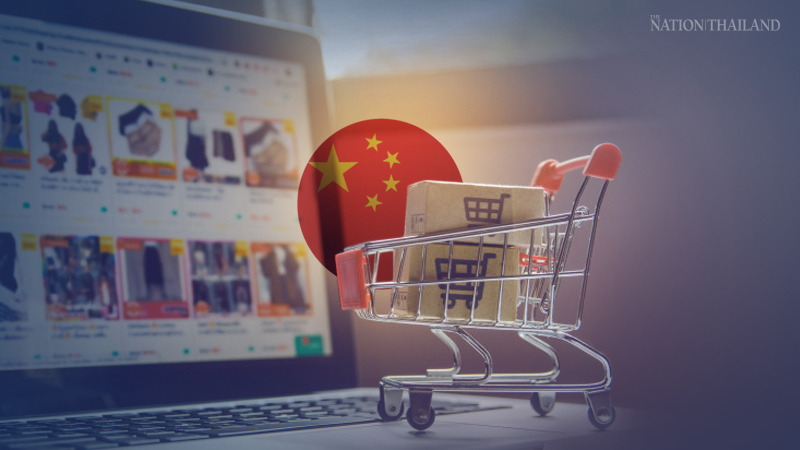
Red flag raised on Chinese products in Thai e-commerce

Dec 25. 2019
By The Nation313 Viewed

E-commerce accounted for only 3 per cent of Thailand’s total trade, but the country is one of the main markets of Chinese e-commerce giants as Thai consumers are more likely to shop online while Chinese products are popular in the country.

One of the reasons Chinese products keep flowing into Thailand, aside from their cheap prices, is the government’s policies such as the Eastern Economic Corridor project (EEC) and tax privileges. The government wants to attract capital from foreign countries, it also allows foreign products, especially from China, to enter the country easily.

Government measures sought

Pawoot Pongvitayapanu of the Thai e-Commerce Association, who has been in the e-Commerce business for years, said Chinese e-commerce investors, especially those in the ECC are now allowed to invest in infrastructure. Previously, foreign companies set up factories and hired local operators while Chinese investors rented space in Thailand to stock export products under the Free Trade Zone agreement for distribution in country and other Asean nations.

Pawoot said he recently had a talk with Kanit Sangsubhan, secretary-general of the EEC Office, and was told that the EEC office is planning to send more Thai products to the Chinese market which will benefit Thai manufacturers.

He said the Revenue Department is adjusting the tax structure on foreign products sold in Thailand. They will be taxed from the first baht. The prices of goods ordered from abroad will be collected 7 per cent VAT from the first baht. If Thailand doesn’t have any protective measure against the invasion of foreign goods online, the country will see a trade deficit with China, affecting a wide range of retail businesses nationwide including the production sector

Chinese products top market

Chinese products account for 60 to 70 per cent of sales on Thai e-commerce platforms and 20-30 per cent in total sales to foreign countries.

“I collected data from Lazada website on October 11, divided by category and origin of the product, and found that there were 41.77 trillion products on Lazada, comprising 21.99 trillion of domestic products or 52.65 per cent, and 18.65 trillion of Chinese products or 44.65 per cent, which was a significant share while not many products from other countries were available,” said Pawoot.

Some categories have a large numbers of Chinese products such as shoes, watches, luggage, sports equipment. There are 60-70 per cent of Chinese products in the infant, smart device and toy categories. Among IT products or gadgets, especially on Lazada, products from China account for over half of the total.

After the opening of ECC, these products will be distributed more quickly.

However, consumers will pay less. What will be missing is the middleman who buys Chinese products for sale. The first batch of products to be affected are gadgets manufactured in China which carry cheaper prices since they come directly from the factory. There is also a dark side as fake items have been found among cosmetic products.

Thailand may lose Bt50 billion

“When China has a direct delivery channel and dumps millions of products into Thai hands in just a few days. I personally predicted that this year, Thais will order products through Lazada worth over Bt1 billion. By 2020, it is expected to be over Bt10 billion, or with an average growth rate of 30 per cent per year, and within 5 years, Thais will buy Chinese products through Lazada up to Bt50 billion,” Pawoott said.

For Thai traders, the chance of competition is rather small. Entrepreneurs must try to look for other products and create their own brand in order to compete with these Chinese products.

Entrepreneurs should adapt

At the same time, Thai businessmean should not rely on any platform but balancing ports and analysing for positive channels. They also need to self-collect customer information and start marketing with those customers without going through anyone, be it marketplace or social media. The merchant should own channels which he can manage hinself.

Thai e-commerce is currently growing although E-Market Place in Thailand has died since nobody can fight Lazada or Shopee. However, there is still another segment that still has potential, living on the side of social commerce – Merchants who sell and interact with customers on Facebook and LINE. Looking deeper into certain categories such as supplements, consumer products, or beauty products, Chinese products have not penetrated the market yet because of certian problems with the FDA

Research found that Thailand is the leader of the social e-commerce market, with a 40 per cent growth rate a year, outpacing all nations in the world.

Thanawat Malabuppha, president of the Thai E-Commerce Association, said the Thai online market grew 30 per cent a year, with an annual value of Bt200 billion.

According to Priceza, a shopping search engine, SMEs and start-up business should penetrate into the online market which are social media 40 per cent, E Market Place 35 per cent, and E-Tailers or Brands website 25 per cent, with the most popular products being maternal and child products, health, beauty, fashion, clothing and electronic products, among others.

Borderless online commerce will begin to play a major role which could be seen from the number of Chinese products. According to data from three marketplaces in Thailand, this year the number of products has increased by 174 million per cent, with 77 per cent in Chinese products.

Control on Chinese products

Online traders need to know that at present, 80 per cent of the competitors of the same product are not based in the country, so there must be a direct way to sell products to customers while the Customer Lifetime Value (CLV) market is still developing. Currently, the Indonesian market is as attractive as Vietnam since it is a big market but a local partner is needed.

Startups that invest in new products will find it difficult to compete amid the invasion of Chinese product. They must have a clear strategy for certain group. At the same time, the government should have measures to prevent Chinese goods from spilling in including encouraging startup investments, such as exempting tax for small traders.

“The e-commerce market has grown a lot since it’s easy to access and fast. The most popular products are fashion, beauty, electronics devices, and smartphones. The only concern is the overflow of products from China. The government must take action and protect entrepreneurs before drowning in Chinese products” Pawoot said.

 

U.S. stocks slip, treasuries rise as holiday begins #ศาสตร์เกษตรดินปุ๋ย

#ศาสตร์เกษตรดินปุ๋ย : ขอบคุณแหล่งข้อมูล : หนังสือพิมพ์ The Nation

https://www.nationthailand.com/business/30379813?utm_source=category&utm_medium=internal_referral

U.S. stocks slip, treasuries rise as holiday begins

Dec 25. 2019
The S&P 500 Index slipped but held onto a 28% gain for the year.

The S&P 500 Index slipped but held onto a 28% gain for the year.
By Syndication Washington Post, Bloomberg · Vildana Hajric, Jeremy Herron

348 Viewed

U.S. stocks ended a meandering session slightly lower and Treasuries edged higher in thin Christmas Eve trading. Oil and gold rose.

The S&P 500 Index slipped but held onto a 28% gain for the year. Trading volume was almost 40% below the 30-day average, with equities trading ending at 1 p.m. in New York. Boeing Co. dropped 1.4% after rallying Monday, when the troubled planemaker announced a leadership change. Shares were little changed in London, Paris and Madrid. Markets in Germany and Italy were closed, anticipating Wednesday’s holiday that will shutter exchanges on both sides of the Atlantic.

A gauge of emerging-market shares fell. The 10-year Treasury yield hit 1.95% before falling back to 1.90%. West Texas oil climbed toward $61 a barrel. Precious metal futures were mostly higher.

“What’s going on this week is capitulation and by capitulation I mean money is coming into the market,” Andrew Slimmon, senior portfolio manager at Morgan Stanley Investment Management, said by phone. “Markets have had an incredible run, you have to start to wonder if it’s getting very overbought and what could cause a pause or reversal in the market, which is not to say the run is over.”

Along with the holiday calm, several asset classes are holding on the extraordinary advances they’ve notched in 2019. The $45 trillion MSCI World Index is maintaining a 25% year-to-date surge that augurs its top performance in a decade. Gold advanced, on track for its best year since 2010, as mixed U.S. data Monday kept hopes of interest-rate cuts alive.

Elsewhere, the dollar pared earlier gains against its major peers and headed for a monthly decline. The pound reversed earlier declines.

In Asia trading, equities ended little changed in Tokyo on thin volume, while they dipped in Seoul. Shanghai recovered some of Monday’s slide that came after a sell-off in tech companies.

Here are some events to watch for this week:

– Many nations’ stock markets are closed Wednesday for Christmas. Australia, Canada, Germany and U.K. markets also shut on Dec. 26.

– U.S. jobless claims on Thursday.

– Japan retail sales and industrial production are scheduled for Friday.

These are the main moves in markets:

Stocks

– The S&P 500 Index fell less than 0.1% as of 1:00 p.m. New York time.

– The Dow Jones Industrial Average fell 0.1%.

– The MSCI Asia Pacific Index dipped 0.1%.

– The MSCI World Index was little changed.

Currencies

– The Bloomberg Dollar Spot Index was little changed.

– The British pound rose 0.1% to $1.2952.

– The euro declined 0.1% to $1.1081.

– The Japanese yen was little changed at 109.39 per dollar.

Bonds

– The yield on 10-year Treasuries fell three basis points to 1.90%.

– Germany’s 10-year yield gained one basis point to -0.24%.

– Italy’s 10-year yield rose two basis points to 1.43%.

Commodities

– West Texas Intermediate crude increased 0.8% to $60.99 a barrel.

– Gold futures climbed 1.1% to $1,504.30 an ounce.

– Silver rose 0.8% to $17.59 per ounce.

Spending for New Year season to hit almost Bt138 billion #ศาสตร์เกษตรดินปุ๋ย

#ศาสตร์เกษตรดินปุ๋ย : ขอบคุณแหล่งข้อมูล : หนังสือพิมพ์ The Nation

https://www.nationthailand.com/business/30379803?utm_source=category&utm_medium=internal_referral

Spending for New Year season to hit almost Bt138 billion

Dec 25. 2019
By THE NATION765 Viewed

Thais are expected to spend around Bt137.8 billion this New Year season, up 1.9 per cent, according to a University of Thai Chamber of Commerce (UTCC) survey.

The expansion is the lowest in 14 years, UTCC president Sauwanee Thairungroj said on Tuesday (December 24).

The university conducted the survey on 1,223 respondents.

Bt11 billion is expected to be spent on parties, Bt9.61 billion on merit making, Bt17.43 billion purchasing consumer products, Bt1.16 billion on luxury products, Bt60.44 billion on domestic travel and Bt35.84 billion on overseas trips.

The low expansion reflects Thais’ cautious spending due to their concern over a softening economy, said Thanawan Polvichai, director of the UTCC Centre for Business and Economic Forecasting.