Decrease in November exports, but some products witness increased sales #ศาสตร์เกษตรดินปุ๋ย

#ศาสตร์เกษตรดินปุ๋ย : ขอบคุณแหล่งข้อมูล : หนังสือพิมพ์ The Nation

https://www.nationthailand.com/business/30379773?utm_source=category&utm_medium=internal_referral

Decrease in November exports, but some products witness increased sales

Dec 24. 2019
By The Nation

2,365 Viewed

Thailand’s November exports witnessed a drop of 7.39 per cent compared to the same period last year, with the trade value being US$19.7 billion (Bt593.5 billion) while exports in the first 11 months of this year totalled $227.09 billion. The value of imports was $218.08 billion, with a surplus balance of trade being $9 billion.

Exports still maintained a higher value compared to other countries in the region, including South Korea, Indonesia and Singapore.

One temporary factor that led to decreased exports of oil and related products came from oil refinery maintenance at the end of the year, causing a reduction by 27 per cent in exports of oil, plastic beads and chemical products. Oil refineries under maintenance will resume production at the beginning of 2020.

Oil-related products saw a decrease in exports to China, Malaysia, Vietnam, Cambodia and Indonesia, but expanded in Pakistan.

The impact of the US-China trade war on Thailand’s exports has stabilised and this can be seen from the fact that the kingdom exports many products to the US and Chinese markets.

The value of exports of agricultural products declined by 3.6 per cent compared to the same period last year. Major agricultural products that have seen higher sales are sugar, which grew 105.3 per cent, expanding in markets such as Indonesia, Sudan, China, Cambodia and Vietnam.

Frozen, processed and fresh chicken grew by 10.4 per cent, with increased sales to Japan, the United Kingdom, China, South Korea and Malaysia. Meanwhile, exports of fresh, chilled, frozen, canned and processed fruits and vegetables grew by 7 per cent in the Chinese, US, Hong Kong, Indonesian and Australian markets.

Beverages witnessed 3.8 per cent growth, with increased sales to Cambodia, Myanmar, China, Indonesia and Japan.

However, cassava products decreased by 37.3 per cent, shrinking in the Chinese, Japanese, Indonesian, Taiwan and US markets but expanding well in Vietnam and the Netherlands.

Rice, too, went down by 31.4 per cent, with reduced sales to China, South Africa, Hong Kong, Japan and Singapore, but exports to the US, Cameroon and Angola increased.

Rubber dropped by 18.4 per cent, seeing decreased exports to China, Japan, South Korea, India and Brazil, but expanding in Malaysia, the US and Turkey.

Frozen shrimp and processed shrimp also dropped – by 9.1 per cent – witnessing reduced exports to the US, Japan, Australia, Canada and South Korea, but saw increased sales to China, Malaysia and Myanmar.

Additionally, the export value of industrial products dropped by 6.4 per cent. Major products which performed well were furniture and related parts, which grew 26.4 per cent, expanding in the Chinese, US, Malaysian, Vietnamese and Philippines markets.

Cars, equipment and parts saw a reduction of 15.6 per cent, dropping in the Australian, Philippine, Japanese, Indonesian and Malaysian markets but expanding well in Vietnam, China and Saudi Arabia.

Gold decreased by 8.5 per cent, seeing reduced exports to Cambodia, Singapore, Taiwan, Bangladesh, and Italy but expanding in Switzerland, Myanmar and South Korea.

Exports to the US decreased by 2.6 per cent. Major products that saw a reduction in exports included iron and steel products and electrical circuits, while high-growth export products included semiconductors, furniture, and rubber products

The EU market (15 countries) saw a decline by 8.2 per cent. Major products that went down were automobiles and parts.

Exports to Japan fell by 10.9 per cent. Major products that declined were telephones and accessories, plastic beads, cars and components, televisions and components, and machinery, while air conditioners witnessed high growth.

Exports to the Chinese market grew by 2.3 per cent. Automobiles and related components, fresh, frozen and dried fruit, combustion engines and sugar saw increased sales.

The Asean market of five countries went down by 11.1 per cent. Refined oil, computers, automobiles and related parts, machinery and plastic beads witnessed slowing sales, while exports of gems and jewellery increased.

The Indian market also saw a reduction of 14.1 per cent. Chemical products, televisions and components, cars and parts, and copper saw lower sales, while the high-growth products included gems and jewellery.


New Year gift in store for SMEs, says Somkid #ศาสตร์เกษตรดินปุ๋ย

#ศาสตร์เกษตรดินปุ๋ย : ขอบคุณแหล่งข้อมูล : หนังสือพิมพ์ The Nation

https://www.nationthailand.com/business/30379762?utm_source=category&utm_medium=internal_referral

New Year gift in store for SMEs, says Somkid

Dec 24. 2019
Deputy PM Somkid Jatusripitak

Deputy PM Somkid Jatusripitak
By THE NATION

1,733 Viewed

As a New Year gift to Small and Medium-sized Enterprises (SMEs), Deputy Prime Minister Somkid Jatusripitak said on Monday (December 23) that he had ordered the setup of a working panel, tasked with preparing support measures to ease their financial burden.

The committee will comprise representatives from the Finance Ministry, Bank of Thailand, the Thai Bankers’ Association and the private sector. The measures are expected to be submitted to the Cabinet on January 7, 2020.

SME owners will return from their New Year break to good news, Somkid said.

He added that Prime Minister Prayut Chan-o-cha had asked related parties to look into the procurement law, in order to seek access for SMEs to participate in bidding for state projects.

U.S. new-home sales rise to cap best three months since 2007 #ศาสตร์เกษตรดินปุ๋ย

#ศาสตร์เกษตรดินปุ๋ย : ขอบคุณแหล่งข้อมูล : หนังสือพิมพ์ The Nation

https://www.nationthailand.com/business/30379772?utm_source=category&utm_medium=internal_referral

U.S. new-home sales rise to cap best three months since 2007

Dec 24. 2019
By Syndication Washington Post, Bloomberg · Vince Golle 

1,352 Viewed

Sales of new U.S. homes increased in November, capping the best three months for demand since 2007 and reflecting sustained momentum in a residential real estate market that’s helping to underpin the economy.

Single-family home sales rose 1.3% to a 719,000 annualized pace from a downwardly revised October, government data showed Monday. In the three months through November, purchases averaged a 720,000 pace, the strongest in 12 years. An index of U.S. homebuilder stocks pared losses following the report.

Increased demand for new homes is being fueled by historically cheap borrowing costs, the lowest jobless rate since the 1960s and stronger income growth. The strength in housing should continue to fuel gains in residential construction, a direct input into the government’s calculation of gross domestic product.

At the same time, low supplies continue to put upward pressure on prices, offsetting some of the boost in affordability from low interest rates and wage gains. The median sales price of a new home increased 7.2% from a year earlier to $330,800 in November.

Following a separate report Monday showing a slight gain in core capital goods orders, the home-sales figures underscore consumer-led economic growth as business- investment cutbacks restrain manufacturing.

Data last week showed sales of previously owned homes, which make up the vast majority of the market, declined in November as lean inventory continued to restrain an industry with otherwise solid growth. New-home sales are considered a timelier barometer than those of previously- owned homes, which are calculated when contracts close.

Purchases of new homes rose in two of four U.S. regions, led by a 52.4% surge in the Northeast and a 7.5% gain in the West, which recorded its highest sales level in two years.

Economists in Bloomberg’s survey projected an annualized pace of 732,000 new-home sales for November after a previously reported 733,000 a month earlier. Estimates ranged from 696,000 to 765,000.

The supply of homes at the current sales rate dropped to 5.4 months from 5.5 months in November. The number of new homes for sale held at 323,000.

The number of properties sold for which construction hadn’t yet started increased, while the number of partially built dwellings climbed to the highest level since July 2016. The figures indicate a robust pipeline for homebuilders.

Changes in the seasonally adjusted data are volatile and have a wide margin of error. There’s a 90% chance that the monthly percentage change was between a 9.7% decline and a 12.3% increase, according to the U.S. Census Bureau. The report is published jointly by Census and the Department of Housing and Urban Development.

Blockchain, alternative energy to disrupt power industry #ศาสตร์เกษตรดินปุ๋ย

#ศาสตร์เกษตรดินปุ๋ย : ขอบคุณแหล่งข้อมูล : หนังสือพิมพ์ The Nation

https://www.nationthailand.com/business/30379763?utm_source=category&utm_medium=internal_referral

Blockchain, alternative energy to disrupt power industry

Dec 24. 2019
 Several manufacturers and retailers such as Tesco and BigC have deployed solar cell panels on their rooftops, says Prasit Siritiprussamee, director of engineering and regulatory department at the office of the Energy Regulatory Commission.

Several manufacturers and retailers such as Tesco and BigC have deployed solar cell panels on their rooftops, says Prasit Siritiprussamee, director of engineering and regulatory department at the office of the Energy Regulatory Commission.
By Wichit Chaitrong

The Nation

2,405 Viewed

The arrival of blockchain technology and alternative energy will disrupt the current electricity generating and trading system, say experts.

As the slide in solar cell price continues with increasing numbers of businesses and households turning to solar energy, power supply and consumption will see a dramatic change.

Several manufacturers and retailers such as Tesco and BigC have deployed solar cell panels on their rooftops, said Prasit Siritiprussamee, director of engineering and regulatory department at the office of the Energy Regulatory Commission.

Should storage technology progress, then it would disrupt the way we produce and trade electricity, he said at seminar recently hosted by the Economic Reporters Association.

Currently, Electricity Generating Authority of Thailand(Egat) is the only   buyer of power from large plants. However, in the near future, there would be multiple buyers while a large number of households will also become  electricity producers, he said.

Blockchain technology will lead to a new system of electricity trading where peer to peer transaction is a possibility as opposed to  producers selling only to Egat.

There are eight peer to peer energy trading projects being tested in sandbox experiment by the Energy Regulatory Commission. Small production has the advantage of staying closer to consumers, meaning that energy loss and energy transmission cost is lower.

“About 200 applicants filed for the sandbox experiment but only eight were accepted. We figured that the rest could learn from these pilot projects. Also, it would spare them the expenses involved in an experiment,” he said.

The new way of electricity production and trading have the potential to disrupt the existing system.

If more small producers join in, large electricity generating plants run by state enterprises would have to reduce production capacity which might affect their previous investments.

Those who still buy electricity from the Metropolitan Electricity Authority and Provincial Electricity Authority might have to shoulder higher cost of excessive investment in large electricity plants.

Prasit said that regulators must ensure a smooth transition to the scenario of multiple-producers and buyers of electricity. Asked about when the big change will happen, he replied that nobody know what would happen after the next three years,

Sathapon Patanakuha, CEO and founder of Smart Contract, said his company has been facilitating peer to peer energy trading among households and factories via blockchain technology. Home owners could sell and buy electricity produced by roof top solar panels among themselves.

Alternative energy, mainly solar energy, is estimated to account for 9 per cent of total supply in Thailand.

It remain a small proportion but growing fast, Sathapon said.

Meanwhile, Veerapol Chirapraditkul, director of the Energy Fund Administration Institute, said state enterprises must get a fare share from previous investment in electricity infrastructure because new producers will still depend on power lines and other facilities for energy trade.

SET index barely up at 0.04% #ศาสตร์เกษตรดินปุ๋ย

#ศาสตร์เกษตรดินปุ๋ย : ขอบคุณแหล่งข้อมูล : หนังสือพิมพ์ The Nation

https://www.nationthailand.com/business/30379759?utm_source=category&utm_medium=internal_referral

SET index barely up at 0.04%

Dec 23. 2019
By The Nation

909 Viewed

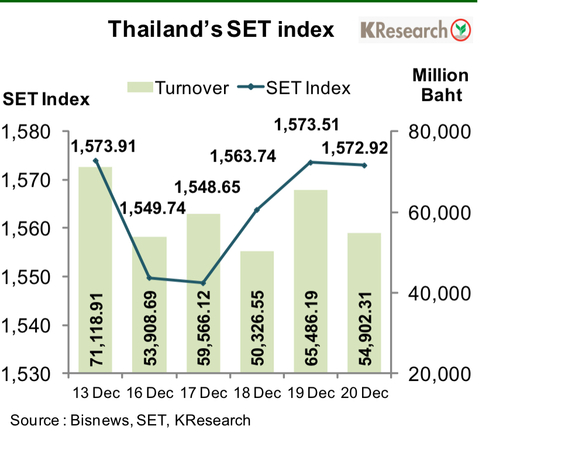
The SET Index on Monday (December 23) closed at 1,573.57, barely changing from Friday’s close, up 0.04 per cent with turnover of Bt42.9 billion. KSecurities predicts resistance at 1,590 and 1,600 for this week.

Investors were disappointed with November exports, which declined by 7.39 per cent year-on-year to US$19.7 billion (Bt593.5 billion), compared to market forecasts of a 4.5 per cent decrease and following a 4.5 per cent drop in October. Total exports between January and November shrank 2.8 per cent from the corresponding period a year earlier. The Commerce Ministry predicts exports will grow by 3 per cent this year, while most research houses forecast negative growth.

Regarding the SET index outlook for this week until December 27, Kasikorn Securities expects the SET to touch 1,565 to 1,555 points, but face resistance at 1,590 to 1,600 points. The key issues to watch include November exports, year-end window dressing, the US-China trade situation and Brexit. Important US indicators include November new home sales and durable goods orders. Other international factors that warrant close monitoring include the latest Bank of Japan minutes, Japan’s November industrial production and retail sales, plus China’s November industrial profits.

The SET index on Friday closed near previous week’s level, ending at 1,572.92 points, down 0.06 per cent over the week. The average daily trading value was Bt56.8 billion, down 4.32 per cent over-week. The MAI closed at 310.49 points, down 1.4 per cent over-week. The SET index dropped early in the week on sell-offs by foreign and institutional investors amid concerns over domestic political issues, although there were signs of easing trade tensions between the US and China.

However, the SET rebounded midweek, supported by large-cap stock purchases, especially in the banking and telecommunication sectors, as a result of window dressing and long-term equity funds as well as retirement mutual funds investment, added Kasikorn Securities.

Baht to remain strong: Kasikorn Research Centre #ศาสตร์เกษตรดินปุ๋ย

#ศาสตร์เกษตรดินปุ๋ย : ขอบคุณแหล่งข้อมูล : หนังสือพิมพ์ The Nation

https://www.nationthailand.com/business/30379749?utm_source=category&utm_medium=internal_referral

Baht to remain strong: Kasikorn Research Centre

Dec 23. 2019
Kasikorn Research Centre expects the baht to move within a range of 30.10-30.50 per US dollar this week.

Kasikorn Research Centre expects the baht to move within a range of 30.10-30.50 per US dollar this week.
By The Nation

516 Viewed

The value of the baht this week (December 23-27) is expected to remain strong, according to KBank’s research arm.

Kasikorn Research Centre expects the baht to move within a range of 30.10-30.50 per US dollar. A key domestic factor to be monitored closely is November’s export data. External factors will include preparation for the first phase of the US-China trade deal. US economic data, to be released this week, includes new home sales in November and durable goods orders data. Meanwhile, the trading volume will likely be thin as most global markets enter the period of year-end holidays.

The baht last week stayed within a tight range, Kasikorn Research Centre said. The currency fell briefly before the Bank of Thailand’s MPC meeting, as investors awaited its economic forecast revision and signals for a policy rate outlook . However, the baht rose later in the week despite BOT’s decision to keep its policy rate unchanged as expected by the market. And the US dollar faced a sell-off against safe-haven currencies, including the yen and the baht, after US President Donald Trump was impeached by the House of Representatives. Weaker-than-expected US home sales for November, and the Philly Fed Business outlook survey for December also weighed down US dollar sentiment. On Friday, December 20, the baht closed at 30.17/dollar versus 30.21 reported for Friday, December 13.

Central bank governor foresees growth rate higher in 2020 #ศาสตร์เกษตรดินปุ๋ย

#ศาสตร์เกษตรดินปุ๋ย : ขอบคุณแหล่งข้อมูล : หนังสือพิมพ์ The Nation

https://www.nationthailand.com/business/30379748?utm_source=category&utm_medium=internal_referral

Central bank governor foresees growth rate higher in 2020

Dec 23. 2019
Central bank governor Veerathai Santiprabhob,left, says  today (December 23) GDP will expand 2.8 per cent next year.

Central bank governor Veerathai Santiprabhob,left, says today (December 23) GDP will expand 2.8 per cent next year.
By The Nation

650 Viewed

The Thai economy will grow next year but its rate of growth is likely to be well below its potential, says Veerathai Santiprabhob, central bank governor.

Speaking at the Thailand Economic Outlook hosted by Krungthep Turakij newspaper, Veerathai said today (December 23) GDP will expand 2.8 per cent next year. “The growth would be higher next year than this year, but it remains below potential of 3.5-4 per cent,” he told the seminar’s participants.

Exports would return to growth next year and drive the economy forward, he said.

The central bank recently cut its growth forecast to 2.5 per cent this year and predicted exports of goods and services to contract by 4.8 per cent in 2019 before returning to growth of 1.4 per cent next year.

As for the appreciation of the baht, Veerathai blamed the structure of the Thai economy.

Structural issues have emerged during economic slowdown; labour and baht appreciation are by-products of the underlying forces, he said.

“When we get a cough, it may be caused by inflammation inside our body and while medicine will relieve the symptoms, it cannot cure the real illness,” he said alluding to how cuts in the policy rate would not restrain baht appreciation.

Exporters and businesses have long complained about the rising baht against the US dollar and other key currencies, while academics say the large current account surplus combined with weak investment have been the real cause of baht appreciation. The baht has risen about 7 per cent against US dollar since early this year.

The central bank cut the policy rate twice this year, bringing it to the low level of 1.25 per cent.

The cut partly aimed to deter investors from parking their money in Thailand hoping to gain from the strengthening baht but has done nothing to make the baht weaker.

Exports down but certainly not out #ศาสตร์เกษตรดินปุ๋ย

#ศาสตร์เกษตรดินปุ๋ย : ขอบคุณแหล่งข้อมูล : หนังสือพิมพ์ The Nation

https://www.nationthailand.com/business/30379746?utm_source=category&utm_medium=internal_referral

Exports down but certainly not out

Dec 23. 2019
By The Nation

333 Viewed

Export value in November was US$19.657 billion from $20.8 billion in October, a decrease of 7.39 per cent due to the slowing economy, trade war, and other factors affecting international trade and export in many countries including Thailand, Pimchanok Vonkorpon, director-general of the Office of Trade Policy and Strategy Office, said on Monday.

However, exports still maintained their value better than many countries in the region including South Korea, Indonesia and Singapore, during the first 11 months of 2019 when Thailand saw an export value $227.09 billion, a decrease of just 2.77 per cent compared to the previous year.

Trading places: Chengdu’s Jinniu District makes a pitch for Thai investment #ศาสตร์เกษตรดินปุ๋ย

#ศาสตร์เกษตรดินปุ๋ย : ขอบคุณแหล่งข้อมูล : หนังสือพิมพ์ The Nation

https://www.nationthailand.com/business/30379742?utm_source=category&utm_medium=internal_referral

Trading places: Chengdu’s Jinniu District makes a pitch for Thai investment

Dec 23. 2019
By THE NATION

593 Viewed

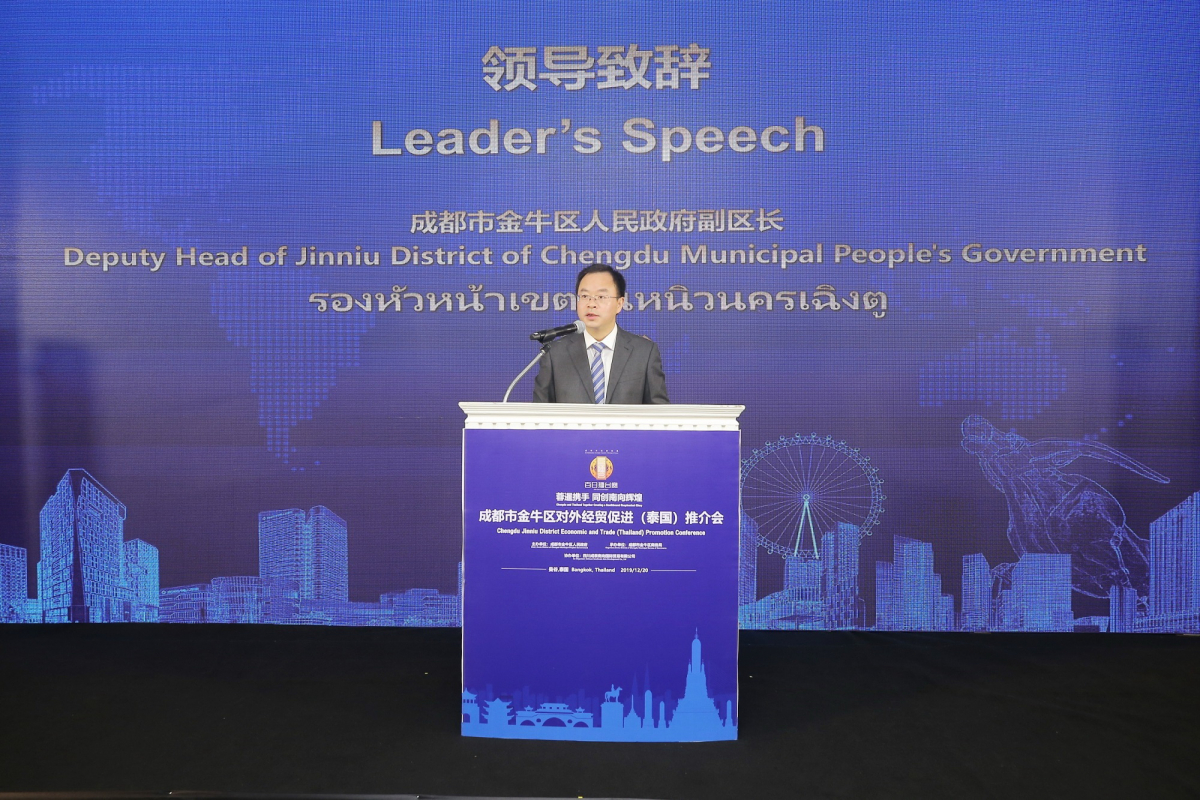
An urban district is Sichuan’s Chengdu Municipality, Jinniu is working hard to firm up trade ties with Thailand, recently organizing a conference on the theme “Creating a Southbound Resplendent Glory” at Windsor Suites Hotel Bangkok that brought together more than 40 leading companies from Jinniu and Thailand.

The conference is the latest in a series of measures aimed at promote Jinniu District and enhancing the economic and trade cooperation between the two countries.

“Jinniu District is among the five central urban areas of Chengdu City and an important commodity manufacturing base. The number of traditional commodity markets accounts for more than half of Chengdu City’s total, making it the No 1 economic area in the west of China,” said Yu Jian, deputy head of Jinniu District.

Jinniu has the potential to support overseas investments as it has a convenient logistics network and good transportation access. Situated around 20 kilometres from Shuangliu International Airport, it is the hub of urban tourism, medicine and health, and cutting-edge technology. Jinniu District’s major projects include Yisha Chengdu International Trade City, Yinxing Plaza, and Group 3, 5, and 6 commercial projects on Wukuaishi street, the electronic and artificial intelligence equipment manufacturing base that is seeking Thai investors to help it expand.

 “Jinniu District has the potential to support overseas investments as it has convenient logistics network and transportation.” – Yu Jian, deputy head of Jinniu District of Chengdu Municipal People’s Government.

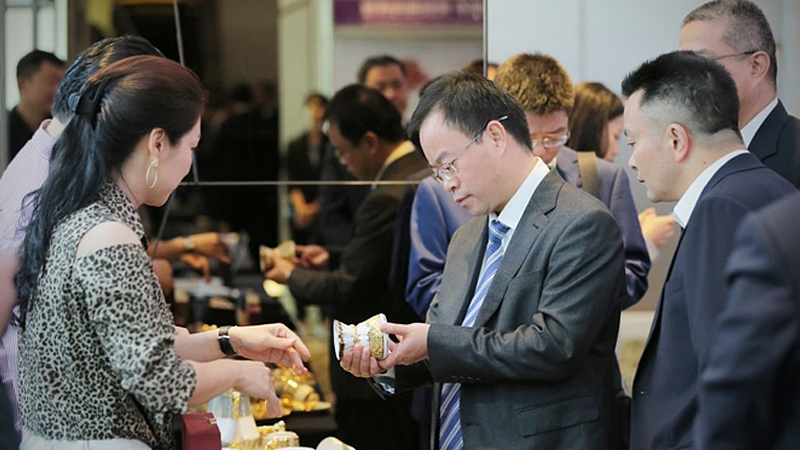
The deputy head pointed to Yisha Chengdu International Trade City, the giant trade and exhibition centre showcasing products and services from worldwide manufacturers, luring more than 38,000 investors to invest in China, attracting 80,000-100,000 visitors daily, and with a value of 60 billion yuan (Bt258.5 billion) per year. The international trade city features more than 20 categories of products covering 400,000-plus items. The first phase comprises 7 exhibition zones covering clothes and apparel, fashion, IT, electrical items, and home décor accessories, as well as herbal products and traditional Chinese medicines for which Jinniu District is famed.

“Yisha Chengdu International Trade City also provides trade and exhibition centres for its member countries including Spain, Russia, Sri Lanka, and Japan. Thailand’s trade and exhibition centre is also being constructed to serve Thai businesses seeking a venue to display and market products in China, especially agricultural products which are popular in Chengdu. Investors, who want to invest in Jinniu Commerce Area, will be benefited from the VIP One-Stop Service provided by the government department which includes license and taxes benefits. Plus, there will be assistance on e-commerce knowledge transfer to leverage skills excellency and trade collaboration. Interpreters in different languages will also be provided to facilitate the communication,” said Yu Jian.

During the conference, Yisha Chengdu International Trade City and Sichuan Huiji Food signed agreements with major Thai companies MR DIY Bangkok and Active Plus Blue. It expects Thai investors to better understand the investment and business environment of Jinniu District and to promote and develop economic collaborations between the two countries further.

 The signing ceremony between Thai and Chinese companies 

Egat aims to finalise gas deal with PTT by year-end #ศาสตร์เกษตรดินปุ๋ย

#ศาสตร์เกษตรดินปุ๋ย : ขอบคุณแหล่งข้อมูล : หนังสือพิมพ์ The Nation

https://www.nationthailand.com/business/30379701?utm_source=category&utm_medium=internal_referral

Egat aims to finalise gas deal with PTT by year-end

Dec 23. 2019
Kulit Sombatsiri

Kulit Sombatsiri
By THE NATION

1,085 Viewed

The board of the Electricity Generating Authority of Thailand (Egat) on December 26 will look into progress of the natural gas sale and purchase contract between PTT and the Egat.

Egat board chairman Kulit Sombatsiri said that the gas will be used by Egat power plants.

On December 4, the Energy Policy Administration Committee ordered both parties to enter into discussions on some details of the contract and try to sign the contract within this year.

The Egat board meeting early next year will also ask Egat to draw up a plan to procure the third lot of the liquefied natural gas (LNG).

Egat planned to procure and import LNG in two stages of 65,000 tonnes each in the spot markets. The first cargo will arrive at Rayong on December 28, and the second lot in early April next year.