The government is calling on Japanese multinational MinebeaMitsumi Inc to manufacture semiconductors that can be used to bolster Thailand’s budding electric vehicle (EV) industry.
The company, which produces machinery components and electronic devices, has several plants in Thailand.
Prime Minister Prayut Chan-o-cha met MinebeaMitsumi CEO, Kainuma Yoshihisa, on Monday to discuss future investment in the EV industry and smart city development.
At the meeting, Prayut said his Japanese counterpart Fumio Kishida had said in May that he would build more Kosen (technology institutes) in Thailand as part of bilateral economic cooperation. Kishida also agreed to boost investment in the electric vehicles industry this year, Prayut said.
“Having more Kosen institutes in Thailand will speed up the transfer of knowledge and technology to Thai workers, which will benefit Japanese manufacturers investing here as they can hire skilled local labour,” Prayut said.
The premier also praised Japanese companies for their continued investment in Thailand, especially during the Covid-19 outbreak and the ongoing global fuel price crisis. He said he hopes to see more investment projects in the future, especially in the manufacturing supply chain to prevent a shortage in key materials.
Prayut and Yoshihisa also discussed plans to promote the use of clean energy in MinebeaMitsumi’s facilities in line with the government’s target of reducing greenhouse gas emissions in the industrial sector.
Yoshihisa said his company was committed to the environment as it is already producing eco-friendly products like smart streetlamps that use less energy, which will soon be supplied to Thailand.
He said MinebeaMitsumi was prioritising investment in Thailand as it is already the company’s largest manufacturing base, and is planning to use the country as one of its export bases in the region.
The baht opened at 36.66 to the US dollar on Tuesday, weakening from Monday’s close of 36.61.
The currency is expected to move between 36.60 and 36.80 during the day, Krungthai Bank market strategist Poon Panichpibool predicts.
Poon speculated that a weakening dollar may slow down the baht’s downturn, but the Thai currency may drop to 37 to the dollar if the market shifts to a risk-off state, especially if China enforces new lockdown measures. A new lockdown in China may spook investors into selling their assets in the Emerging Asia market.
Poon, however, does not expect the baht to reach that level this week unless the US Federal Reserve increases the interest rate as expected.
He pointed out that the currency market is volatile and investors are not taking many risks as they were waiting for listed companies’ performance reports and the Fed’s meeting on Thursday.
The strategist has also advised investors to use hedging tools such as options to manage risks in a highly volatile currency market.
The European Union (EU) is inviting investors, especially government agencies, to invest in Next Generation EU (NGEU) programme to help the recovery of EU economies in the post-Covid-19 era.
EU Commissioner for Budget and Administration Johannes Hahn explained that this programme aims to raise 800 billion euros by offering bonds to investors until 2026.
He added that the EU had managed to raise 130 billion euros under the programme so far, but Asian investors who invested in the programme accounted for only 7 per cent.
“That’s why I came here [Thailand] to discuss, explain and invite investors to invest in the programme,” he said.
Hahn said he went to many countries to promote the NGEU programme before entering Thailand, such as the United Kingdom, Japan, South Korea, Malaysia and Singapore, adding that he planned to go to the US and Canada in October.
He said the programme received a good response during the meeting with Bank of Thailand (BOT) Governor Sethaput Suthiwartnarueput.
He said the BOT governor understands that these AAA-rated bonds in euro will help increase investment alternatives apart from bonds in dollar.
Hahn said EU will launch green bonds worth 250 billion euros with a system that enables investors to know how the cash is being spent under the programme.
He added that the interest on a 10-year green bond is now 1.6 to 1.7 per cent.
He also confirmed that everyone can subscribe to the aforementioned green bonds, but the EU will focus on attracting sovereign wealth funds and pension funds first.
“This is why our bonds were rated AAA,” he said.
Hahn said Europe is facing supply chain disruption due to the Russia-Ukraine war similar to other countries. He expected Europe’s economy to grow by 2.5 per cent this year and 1.5 per cent next year.
He didn’t expect fuel prices in Europe to return to normal within a year, adding that the supply chain disruption would resolve once China lifts the lockdown measure.
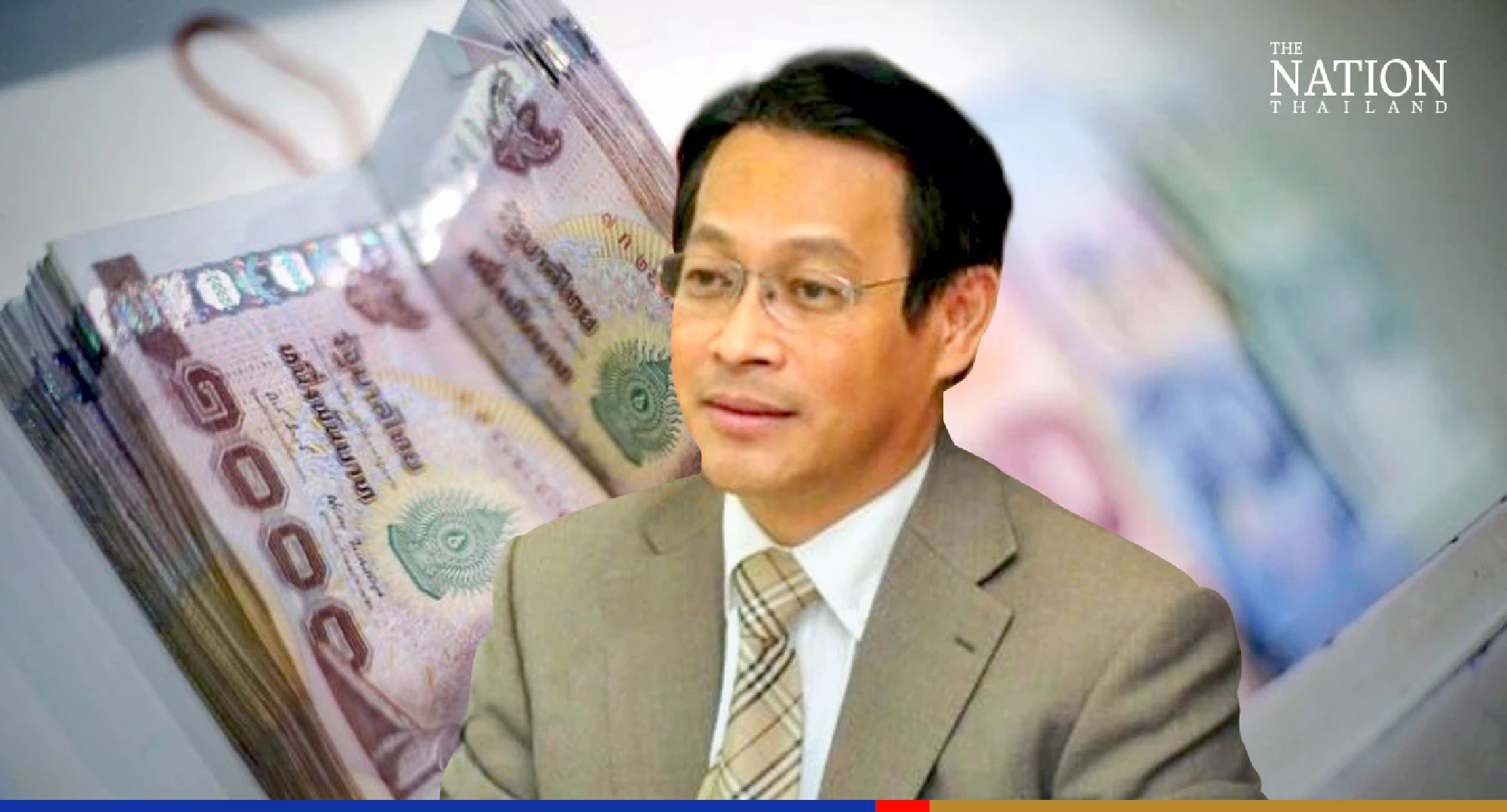
Former finance minister Suchart Thada-Thamrongvech has urged the Bank of Thailand not to follow the US by raising the interest rate quickly, warning that such a move would hit Thai exports.
Hiking the policy rate too rapidly would drive up the baht’s value, undermining the competitiveness of exports which make up 70 per cent of GDP, Suchart said on Monday.
The US Federal Reserve looks set to hike its benchmark by 0.75 points for the second successive month on Wednesday in a bid to curb soaring inflation.
Meanwhile the Thai central bank’s Monetary Policy Committee is expected to raise its key interest rate from a record low at its next meeting on August 10,
The MPC left its key rate at a low of 0.50 per cent in May 2020 after three cuts that year to mitigate impacts from the Covid-19 pandemic.
Suchart urged the central bank not to heed calls from speculators who want the BoT to follow the Fed’s example to avoid baht depreciation and a drop in Thai stocks from foreign outflows.
“If the baht is stronger than other currencies, Thailand’s exports will drop. This will result in reduction of manufacturing output and employment,” he said.
Falling exports would hit GDP and the profits of Thai companies, which see their share price fall.
Suchart added that economists have warned against raising the policy rate too sharply.
“What speculators say will be good in the short term will be bad for the country in the long term.”
He added that inflation in Thailand and the United States were caused by different factors. The US economy had overheated with demand growing faster than manufacturing capacity because of too much cash in the economy.
In contrast, Thailand’s inflation was caused by imports as Thai economic activity was only just starting to recover from low production and employment rates.
He advised a rate rise of 0.25 points, insisting the government must promote exports and the service sector to generate income.
He admitted that a weaker baht would result in higher costs for oil and fertiliser but said the impact would be offset by higher income from exports.
He added that the government could help reduce the fuel price burden on the public by altering the retail price structure and reducing excise tax.
Many Thais will switch banks in 2022 to chase better offers. Intent to switch in 2022 is notably higher than last year, especially for the mass affluent, an analytics firm said
70 per cent (nearly 3 in 4) of Thailand’s retail banking consumers experienced a negative impact on their income due to the pandemic Amidst an uncertain financial climate, the majority of banking consumers in Thailand will focus on savings (73 per cent) and investment (66 per cent) products
1 in 5 affluent Thai banking customers will consider switching banks in search of the most competitive banking deals.
RFI Global’s 2022 Post-Pandemic Consumer Banking Expectations Report, prepared for FICO, a leading global software analytics firm, confirmed that the pandemic has aggravated financial hardship for retail banking consumers in Thailand, with nearly 3 in 4 experiencing a drop in income. It has also revealed that many are motivated to search for better banking offers and that the inclination to switch lenders has increased year over year.
Disruptive impacts from the pandemic differed across the region.
While a considerable 23-30 per cent of New Zealand and Australian respondents experienced a negative impact, 40 per cent of Singaporeans and Indians, 50 per cent of Malaysians and 63 per cent of Indonesians saw a decline. Respondents in Thailand suffered the biggest blow, with 70 per cent saying their income had been reduced.
The report uncovered that more than 1 out of 4 consumers across the Apac region (27 per cent) have deferred loan repayments, with consumers in some countries more likely to do so than others. While nearly half of retail banking customers in Thailand (47 per cent) and nearly 1 in 3 (31 per cent) in India deferred loan repayments as a result of COVID-19, this was much less common in Singapore (12 per cent), Australia (9 per cent) and New Zealand (7 per cent).
Despite the uncertain financial climate, the majority of Thailand’s retail banking customers plan to maintain or boost their investments (66 per cent). Most are looking to maintain or increase savings (73 per cent), and many will consider changing banking providers this year.
Increase in customers’ intention to switch banking providers
Surprisingly, while the report indicates that most customers were highly satisfied with their main banking providers, up to 20 per cent of Apac banking customers who responded said they plan to change banks in 2022. In contrast, only 10 per cent said they changed banks in 2021.
This increased propensity to switch lenders is highest among the mass affluent (defined as the high end of the mass market or those with at least THB3,000,000 total investable asset holdings).
In Thailand, 13 per cent of retail banking customers and 8 per cent of mass affluent customers switched in 2021. That is set to more than double this year for the mass affluent, with 20 per cent saying they are very likely to switch. The propensity of retail banking consumers has fallen slightly to 10 per cent, which is still a considerable 1 in 10 banking customers.
Top reasons cited by Thai respondents include a change in personal circumstances (28 per cent), a wish to consolidate all accounts with another institution (22 per cent), a desire for access to better investment and wealth management products and services (20 per cent) and incentive from another institution (20 per cent).
Financial impacts felt by even the wealthiest of Thais
Amongst mass affluent banking customers in Thailand, 63 per cent experienced a decrease in income due to the pandemic, 7 per cent less than the wider retail banking market in Thailand. Many (41 per cent) of the country’s mass affluent deferred loan repayments, as a result, 6 per cent lower than Thailand’s retail banking customers, overall.
This disruption to income has left 37 per cent of affluent Thais saying they intend to reduce spending, just as half of Thailand’s retail banking customers plan to do.
Across Apac, the mass affluent are more likely to step up their borrowing compared to the wider market (16 per cent vs 8 per cent). In Thailand, the mass affluent are just about as likely to increase their borrowing as retail banking customers (11 and 12 per cent respectively).
The report further revealed that a significant 78 per cent of Thailand’s mass affluent are opting to maintain or boost their investment levels with banks, which is higher than the country’s overall retail banking market (66 per cent).
Impacts of the Pandemic on banking intentions
Consumers are changing their banking behaviours, in response to the financial impact of the pandemic.
Just about 3 in 4 of Thailand’s retail banking customers will either increase or maintain their savings (73 per cent). Across the region, the sentiment to maintain or increase savings was highest in New Zealand (94 per cent) and Indonesia (87 per cent).
Despite a dip in borrowing plans year over year, the level of borrowing for Apac retail banking customers remains higher than in pre-pandemic times as consumers deal with the lasting effects of the disruption.
“The pandemic has exacerbated financial hardship for customers regardless of income class,” said Aashish Sharma, Senior Director of Decision Management Solutions for FICO in the Asia Pacific. “As borrowing and spending habits contract, customers will be on the lookout for avenues to grow their wealth and boost their savings. Banks must be able to proactively identify customers’ needs, and pivot their approach to alleviate financial anxieties while ensuring their products suit customers’ affordability and funding requirements.”
Gravitating towards Digital
Close to half of Thailand’s respondents (44 per cent) still consider the proximity of branches and ATMs as a top determinant for the main banking provider; however, the report highlighted the importance of providing digital services. As many as 72 per cent of Apac retail banking customers chose a fintech product over the option to use their banks’ main services. This was highest in Malaysia (94 per cent) and lowest in Australia (39 per cent). Respondents did so as they wanted time and cost savings, ease of use, and easier application processes.
Comparing 2021 to 2019, Apac consumers are increasingly gravitating toward digital channels at every stage of their application journey: initial enquiries and research (up 14 per cent), follow-up enquiries (up 15 per cent), and banking applications (up 15 per cent).
How Banks can Ensure the Customer is at the Center of Actions and Decisions
Transform operations and data silos through the use of sophisticated analytics technology and centralized management platforms. Make data-driven decisions by predicting, analyzing and optimizing customer interactions in real time for an event-based, profile-driven approach to relationship management. Develop precise insights into optimal interactions and offers that would work best for customers.
Create a digital twin (a type of virtual model used for simulation purposes) to leverage this continuous learning and test out radical new approaches and strategies in a low-cost, low-risk environment.
Deliver hyper-personalized offers and customer actions in a scalable way “Banks must understand their customers’ needs on a deeper and more granular level, or risk losing them to competitors and alternative providers,” said Sharma. “Maintaining customer satisfaction alone will no longer suffice; customer experiences must be radically enhanced. Customer-centricity will be key to consistently delivering hyper-personalized experiences and retaining customers.”
Survey Methodology
This survey was conducted in 2021 by an independent research company adhering to research industry standards. 1012 adults in Thailand were surveyed, along with 12,885 consumers in Malaysia, Australia, New Zealand, Singapore, Indonesia and India.
About FICO
FICO (NYSE: FICO) powers decisions that help people and businesses around the world prosper. Founded in 1956, the company is a pioneer in the use of predictive analytics and data science to improve operational decisions. FICO holds more than 200 US and foreign patents on technologies that increase profitability, customer satisfaction and growth for businesses in financial services, manufacturing, telecommunications, health care, retail and many other industries. Using FICO solutions, businesses in more than 120 countries do everything from protecting 2.6 billion payment cards from fraud to helping people get credit, to ensuring that millions of airplanes and rental cars are in the right place at the right time.
Thailand’s growing “future food” industry faces headwinds from rising inflation and reduced purchasing power this year.
Kasikorn Research Centre recently lowered its 2022 growth forecast for future food – non-meat protein products made from plants, algae, nuts, insects and fungi – from 7 per cent to 5.1 per cent year on year, with total market value at 4.1 billion baht.
“Although alternative protein or future food is enjoying market expansion fuelled by eco- and health-conscious consumers and increasing sales channels, its expansion is still limited, especially among consumers with low to medium income who are suffering from reduced purchasing power,” KResearch said.
The centre said the current economic climate would make it harder for future-food manufacturers to expand their customer base and increase sales.
“Food products are responsible for 36 per cent of Thai household expenditure and are therefore affected by the economic crisis in which the cost of living and inflation are rising, while people’s purchasing power is weakening,” KResearch said.
Future food’s current customer base is health-conscious consumers and so-called flexitarians (mainly-vegetarian consumers who enjoy animal products every so often), while the major sales channels are modern trade, restaurants and online shopping.
The centre added that consumer’s reduced purchasing power is not the only challenge facing the future food industry. Small players in particular are facing higher costs and barriers to reach target consumers, as more large companies powered by unlimited finances enter the market.
Risks also exist from costs of imported ingredients like beans, whose prices are expected to rise further in the second half of 2022. The future food industry might turn instead to locally produced ingredients as a more sustainable solution.
Alternative protein is a protein that does not come from meat. It is produced by other organisms such as plants, algae, nuts, insects and naturally occurring fungi.
The Federation of Thai Industries (FTI) recently announced its aim to move all plants and factories in the country to environmentally friendly industrial estates by 2024.
Kriengkrai Thiennukul, chairman of FTI, said this was part of the plan to take Thailand’s industrial sector to a level where factories, communities and the environment can coexist harmoniously.
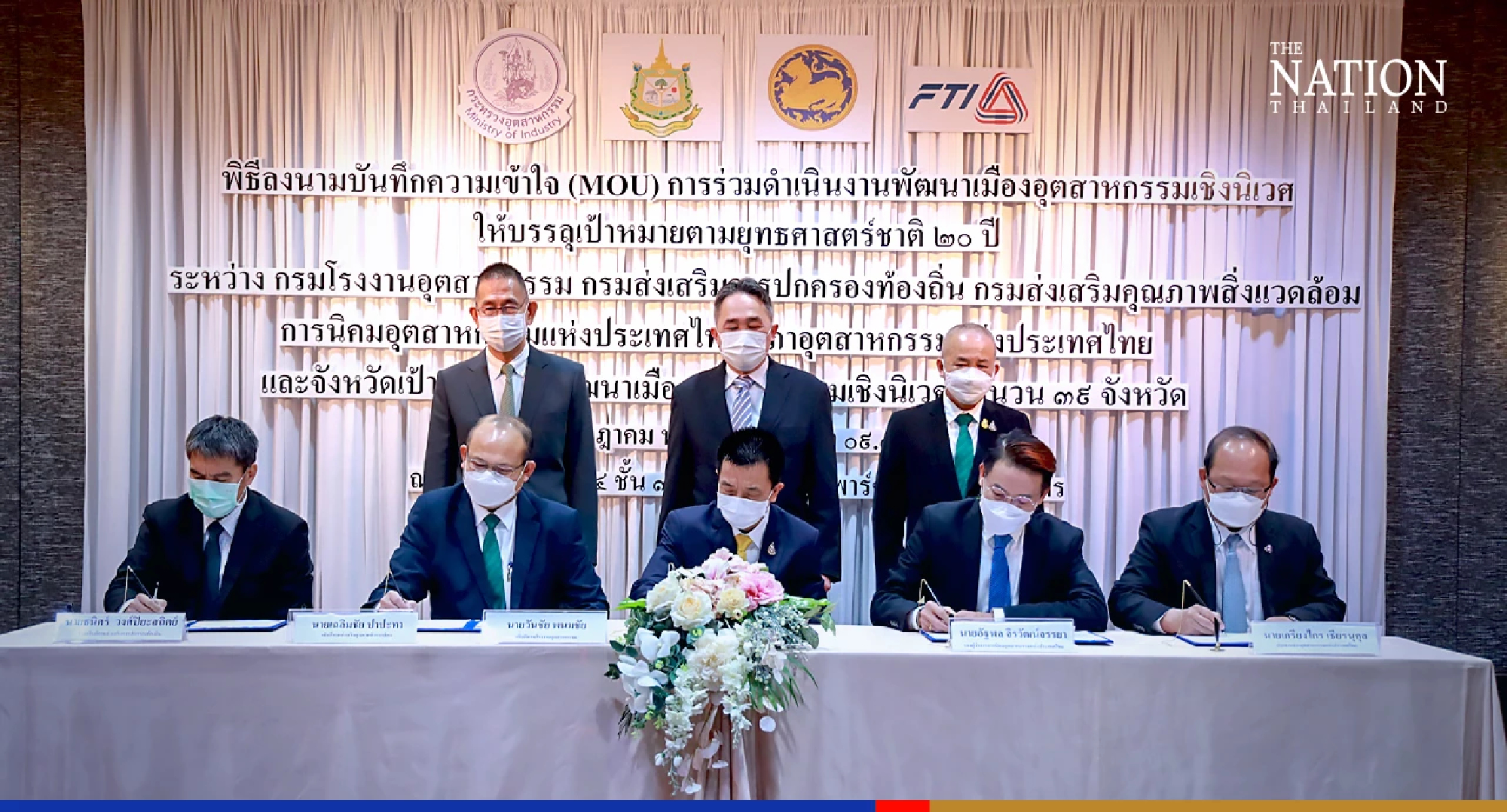
The chairman was speaking at a memorandum of understanding (MoU) signing ceremony in Bangkok on Friday with relevant ministries.
FTI signed an MoU on the industrial sector going green with the ministries of Interior, Industry and Natural Resources and Environment.
The signatories also included the Department of Local Government Promotion and 39 provincial authorities.
The effort was inspired by the Industry Ministry’s plan to create industrial estates that are sustainable and can prosper without harming local communities.
Kriengkrai said some 380 companies, both FTI members and non-members, have shown interest in the “going green” option. He said he expects all 14,000 FTI members nationwide to become part of the effort by 2024.
Wanchai Phanomchai, director-general of the Department of Industrial Works, said his department will promote the upgrading of industrial plants to become 100 per cent green. It will also work towards meeting the corporate social responsibility standards in at least 40 per cent of the target area under the government’s 20-year national strategy.
“Eco-friendliness is a global trend, and Thailand needs to be part of it,” Wanchai said. “This will not only make local manufacturers acceptable internationally but will also add more value to sustain our industrial sector.”
Chulapong Taweesri, the Industry Ministry’s deputy permanent secretary, said more eco-industrial estates are proof of a country’s development. However, he said, transforming the industrial sector cannot be done without collaboration from related parties, especially local communities. This is why, he said, 39 provincial governors were invited to sign the pact.
“They are key to taking action. By the end of this year, there will be 54 areas in 39 provinces joining the first phase of the eco-industrial estate process,” he said.
Chulapong said there are five steps to transforming the industrial sector. They are: getting involved, showing support and taking action, maximising resource efficiency, plants and communities becoming interdependent, and lastly, businesses, people and the environment living in harmony.
The baht opened at 36.78 to the US dollar on Friday, strengthening from Thursday’s close of 36.87.
The currency is expected to move between 36.65 and 36.90 during the day, Krungthai Bank market strategist Poon Panichpibool predicted.
He said the baht’s weakening may slow down as the dollar is weakening. Though the Thai currency could still weaken if the market moves to a risk-off state as the baht recently went past its resistance level from 36.70 to 36.80 to the dollar.
Poon said the baht could weaken and test the level of 37 to the dollar if the greenback strengthens when the market is in a risk-off state or if China enforces lockdown measures, which will encourage investors to sell off assets in Emerging Asia markets.
Investors, however, may sell gold once it rises close to its resistance level from US$1,730 to $1,750 per ounce after some investors bought the metal when the price had dropped.
These transactions may slow down the baht’s weakening.
He added that foreign investors may also start buying Thai stocks again as the market is in a risk-on state.
He also advised investors to use hedging tools such as options to manage risks in a highly volatile currency market.
Thailand’s export growth in the second half of this year is expected to slow down from 12.9 per cent in the first five months, the Export-Import Bank of Thailand (Exim Thailand) said on Thursday.
Overall exports during the year are expected to expand by 6-7 per cent amid the rising inflation which has pushed up the prices of goods as well as business and transportation costs, Exim Thailand president Rak Vorrakitpokatorn said.
He also announced the launch of “Exim Index”, a business research innovation that presents forward-looking export prospects based on 25 indicators in five dimensions: demand, supply, prices, market sentiment, and the bank’s trade finance.
He pointed out that the Exim Index as of June this year was 100.63, down slightly from 100.90 in May.
“This reflected a slowing export trend in line with the declining economic outlook of trade partners, concerns over recession and inflation among consumers and investors, impact on exporters’ costs from global supply chain disruptions, and decelerating expansion of trade finance transactions,” he said.
Rak advised Thai entrepreneurs to make adjustments to cope with the rising costs by upgrading their products, production processes and marketing guidelines to meet market trends and the demands of consumers in the new era.
He also advised entrepreneurs to manage risks by diversifying products in various markets and penetrating new frontiers, such as countries under the Regional Comprehensive Economic Partnership.
Rak added that Exim Thailand is fully ready to support Thai entrepreneurs in fighting rising costs and managing risks through the “Hybrid Model: Rejuvenate export amid rising costs, drive investment towards new industries”. The measures include:
Maintaining the interest rate with the prime rate held at 5.75 per cent per annum to relieve the cost burden on Thai entrepreneurs.
Exim Export Ready Credit, a new credit facility with a maximum credit line of 5 million baht, minimum interest rate of 4.5 per cent per annum in the first six months, and instalment repayment term not exceeding three years for Thai entrepreneurs to boost liquidity for export and related businesses.
Financial facilities to support market diversification, upgrading of products in response to global trends with demand for green, digital and health products; domestic and overseas investments, particularly development of infrastructure, and new industries that enhance research and development for Thai goods, such as industries conducive to bio-circular-green economy and S-curve industries.
Risk management tools for international trade and investment, such as export credit insurance to safeguard against non-payment by foreign buyers, investment insurance, and foreign exchange forward contract services.
Exim Thailand Pavilion, an online trade channel on world-leading e-commerce platforms.
“This is certainly a testament to our determination in pursuing our role as Thailand Development Bank tasked to perform beyond banking with development of innovations in providing financial and non-financial services,” he said.
“We aim to empower Thai entrepreneurs to brave challenges, capture opportunities and deal with emerging risks in the global markets,” he added.
PTT, Thailand’s largest energy conglomerate, has outlined a roadmap for Thailand’s long-term energy security.
Auttapol Rerkpiboon, president and chief executive officer of PTT Public Company Limited, stated during his opening speech at “Future Energy Asia Exhibition and Summit” on Wednesday that the energy giant aimed to make Thailand a liquified natural gas (LNG) hub in Asia over the next few decades.
Although people worldwide realise the urgent need to reduce their dependence on fossil fuel energy, businesses and households at present have huge demands for any kind of energy to move on, said Auttpol.
He explained that of the three categories of fossil fuels — coal, oil, and LNG — natural gas is the cleanest and most eco-friendly, and there is plenty to meet market demand.
“We need natural gas, such as LNG, during this energy transition period from cancelling the use of oil and coal to using renewable energy, such as wind, solar cells, and electricity,” Attapol added.
The hub would be a centre for selling and buying LNG, which means Thailand would purchase LNG from other producers, prepare it for use, and re-export it to other countries in need, such as Japan, China, Cambodia and Laos.
He stated that Thailand’s infrastructure, such as ports and pipelines, are ready to support these processes. He expected that by 2030, the country would export 9 million tons of LNG.
Making Thailand the region’s LNG hub is part of PTT’s plan to secure and sustain Thailand’s energy industry. He revealed that the company had made significant investments in future energy, including renewable energy, energy storage and system-related, EV value chain such as EV charging stations and EV factories, and hydrogen power.
The objective of these investments is to ensure that Thailand maintains its competitiveness during the energy transition period while also being prepared to seize new opportunities when future energy arrives.
Under the concept of “Powering Life with Future Energy and Beyond”, Auttapol insisted energy security is key to achieving energy sustainability.
Thailand needs to supply enough energy for domestic consumption before considering export, and PTT looks forward to investing in renewable energy and related technology abroad, he said.
Apparently, energy sustainability is a critical solution to the current global energy crisis situation like climate change. Countries worldwide, including Thailand, have announced targets to achieve carbon neutrality in 2050 and reach net zero greenhouse gas emissions in 2065.
To achieve such pathways, concrete measures and serious action plans are required.
“PTT’s new vision, ‘Future Energy and Beyond’, will not only invest in future energy but also invest in other new businesses, such as life sciences, electric vehicles, AI, robotics and digitalisation. The proportion of investments in future businesses will reach 30 per cent by 2030,” said the PTT CEO.
Recently, PTT joined Foxconn, the leading Taiwanese tech firm, to build an EV factory in Thailand. The factory will be finished and ready to produce all designs of EV cars by the first quarter of 2024.
Auttapol believes that by working closely with the government sector, PTT could help shape the country’s energy landscape, improve energy consumption and utilisation, and make energy accessible to all.












 SootinClaimon.Com