Average monthly household expenses rose to 18,088 baht in June – two times higher than the minimum wage, according to a survey by the Commerce Ministry’s Trade Policy and Strategy Office (TPSO).
The TPSO said rising living costs driven by the energy crisis caused headline inflation in June to rise to 7.66 per cent from the same month last year.
The TPSO divides household expenses into 14 categories, with transportation costs, rent and utilities sucking up 8,432 baht or 46.62 per cent of total average expenses.
The TPSO calculates average monthly household spending on each category in June as follows:
– Transportation costs, vehicle instalments, fuel, and mobile phone: 4,477 baht (24.75%)
– Rent, home construction materials, electricity bill, cooking gas and household appliances: 3,955 baht (21.87%)
– Meat, chicken and fish: 1,752 baht (9.68%)
– Food ordered by delivery services: 1,585 baht (8.76%)
– Eating-out cost: 1,214 baht (6.71%)
– Medical expenses and personal services (barber fee, for example): 967 baht (5.35%)
– Fruit and vegetables: 918 baht (5.08%)
– Books, study, recreation, social contributions: 758 baht (4.19%)
Thailand’s economic recovery from the Covid-19 fallout should become visible in third quarter of this year thanks to the influx of tourists sparked by the lifting of entry restrictions.
“We estimate the gross domestic product [GDP] expansion for the year to be in the scope of 2.5 to 3.5 per cent or an average of 3.1 per cent year on year,” rector of the University of the Thai Chamber of Commerce (UTCC) Thanawat Polvichai said on Thursday.
Thanawat is also chief adviser to the university’s Centre for Economic and Business Forecasting.
“The expansion in the third quarter will be the most prominent at 4.1 per cent year on year, while in the last quarter it will be 3.8 per cent. Thailand can expect some 6 to 8 million tourists this year, generating revenue of around 50 billion baht per month,” he added.
The centre also said the export sector will expand 5 to 7 per cent year on year, while the average inflation rate will be 6.2 per cent.
“The inflation will peak at 7.6 per cent in the third quarter as manufacturers will gradually raise their prices to cope with rising costs from surging energy prices. However, this will come down to around 5.5-6.5 per cent in the last quarter,” he said.
Thanawat, meanwhile, estimates that the Monetary Policy Committee will up the policy rate three times this year from July onwards to tackle inflation. By yearend, Thailand’s policy rate should be 1.25 per cent.
UTCC also said that Thailand’s Consumer Confidence Index (CCI) rose to 41.6 in June, up from 40.2 in May and the highest in six months.
“Our survey shows that consumers are starting to feel a slight revival of the economy as the Covid-19 situation is improving and restrictions are being lifted, especially for foreign arrivals,” Thanawat said.
“Consumers are, however, concerned about the rising price of fuel and cost of living, weakening of the baht and impact of the Russia-Ukraine war that might further drive up the global price of oil.”
Financial institutions are experiencing highly volatile income statements during the pandemic mainly due to a cushion set aside for defaults from certain type of receivables and financial assets. Now that economies are reopening as infections abate, the question is what are going to happen next?
What is provisioning?
Publicly Accountable Entities, which are the companies that issued outstanding tradable debts or equities, are obliged to follow the requirement of the Thai Financial Reporting Standards (TFRS 9) that state on how entity should classify and measure their financial assets and liabilities. Chief among them is lending institutions which are our focus today.
As they lend money to counterparties, a part of loans is required to be provisioned as a cushion for potential default. This provisioning amount is derived from their own historical data and the incorporation of forward-looking elements that forecast future portfolio conditions based on economic variables, modelled through complex mathematical processes that aim to provide the best estimation on losses reasonably expected to be incurred from that lending, to arrive at the Expected Credit Loss (ECL) which are also presented in the financial statements to help their user to gauge the overall health of the entity’s lending portfolio. The ECL serves as the best estimation on losses incurred from credit risk exposures of certain financial asset receivables including lending.
Example of factors widely used in the computation of ECL are number of days past due of loan facilities, usually high number of days past due imply higher chance of default thus higher provisioning, but during the pandemic, worldwide authorities were rushed to announce series of debt moratorium to alleviate financial difficulties especially to the hardest hit segments of the society, making the number of customer defaults artificially low in the process, thus giving understated provisioning amount.
Another factors in consideration in money regained by financial institutions from collection and liquidation effort after customer defaults, which was temporarily lower as the seizure and liquidation of collaterals were partially suspended to prevent people displaced and job lost. The market price of some collaterals was fluctuated to the point that financial institutions preferred to warehouse them instead of outright selling.
ECL models developed before the pandemic based on information in relatively calm situations were likely not be able to capture escalating credit risks timely. For reasons above provisioning amount from those models suddenly seem to be understated. Statistical models developed during sunny days were suddenly yield no avail.
Worse still, these provisioning models also contained forward-looking elements. Macroeconomic variables such as GDP growth, unemployment ratio, consumer price index (CPI), or energy price with designated level of relationships to the portfolios were incorporated to those models to get the provisioning amount as accurate as possible. This feature suddenly becomes liabilities since variables deviated sharply from reasonable levels. Almost all countries exhibited negative GDP growth, unemployment shot up, crude oil price was in free fall, and the CPI that weighted heavily by commodities were tanked to multi-year lows.
As the world inched towards uncharted territories, financial institutions were hastily racking up provisioning as a cushion against the worst possible scenarios. Financial institution executives developed highly judgmental overlays based on pessimist assumptions to calculate additional provisioning immediately necessary for their institutions, and provisioning amounts including these overlays were reaching exorbitant levels which eventually driven down their profits.
This prompted central banks around the world to aggressively loosening monetary policies, joining forces with governments in economic stimulation to provide lifeline to businesses and individuals and the business engine once again reignited, so should unwinding provisioning amount now legit?
Woefully, it is not likely that we are seeing provisioning going down any time soon as financial institutions shift their concern to second-order impact from the pandemic and the emergence of geopolitical tension which disrupt supply chains and racks up global inflation. They are reluctant to disentangle overlays set up during the pandemic as uncertainty looms large. Governments are running budget deficit for years are unlikely to continue offering supports, leaving corporate and retail borrowers survived from pandemic fully exposed to unprecedent inflation that in turns affecting their repayment ability.
Some lending institutions are now seeing first-hand impact, as people disbursing their available credit lines while reducing repayments. This is the forward indicator of potential defaults as financial condition at individual levels are deteriorating, shutting possibilities for immediate provisioning release.
There are also ECL model risks that keep financial institutions think that it is still premature to release provisioning and overlays as parameters used in the model development process were mostly frozen during the pandemic and needs to be recalibrated to reflect the most recent situations. Forward-looking elements once again be a cause of ECL model performance deviations. Factors related to inflationary such as CPI or commodities price are expected to remain highly volatile as market participants balance current supply chain situations with potential recession due to cost-pushed inflation thus distorts provisioning results. We are expecting that once normalcy is attained, ECL models would be rectified, and management overlays unwound.
The purpose of provisioning models and overlays is to ensure that financial institutions are setting the right amount of cushion for running business safely while letting financial statement audiences assess the true health of portfolios, therefore it is in everybody’s benefits to keep the precision of these models the top priority, but for the time being, brace for elevated level of provisioning and suppressed level of profit.
By Sarun Boonchalakulkosol Director I Risk Advisory – Financial Industry Risk & Regulatory Deloitte Thailand
The baht opened at 36.08 to the US dollar on Friday, strengthening from Thursday’s close of 36.11.
The currency is expected to move between 35.90 and 36.15 during the day, predicted Krungthai Bank market strategist Poon Panichpibool.
He said the baht was likely to fluctuate and weaken as the dollar is strengthening and the market is concerned that the Chinese government might enforce strict Covid-19 prevention measures again.
He expects the baht’s support level in the short term to be 35.90 to 36 to the dollar, while the resistance level should be 36.5.
However, he said the dollar may “invert” and help the baht strengthen if the US Federal Reserve does not signal plans to go in for a heavy rate increase at the end of this month.
Poon urged investors to beware of the currency market’s volatility before and after the US employment data has been revealed.
The PTT Oil and Retail Business Plc and Bangchak Corporation will reduce their retail petrol prices by 1.8 baht per litre for E85 gasohol petrol and 3 baht per litre for other petrol types.
The two firms said the price reductions will take effect at 5am on Friday.
But diesel oil price will remain unchanged at 34.94 baht per litre.
The new rates will see petrol stations in Bangkok sell petrol at:
The Tourism Authority of Thailand will ask the Centre for Covid-19 Situation Administration (CCSA) to consider waving visa fees until the year-end to promote arrivals and increased spending by foreign tourists.
TAT governor Yuthasak Supasorn said the proposal would be raised at the next CCSA meeting, which has not been scheduled yet.
Yuthasak said the visa fee exemption would be another step to boost revenue from foreign tourists after the CCSA abolished the Thailand Pass registration on July 1.
TAT expects revenue of 1.5 trillion baht this year, compared to 3 trillion in 2019 before the Covid pandemic, the governor said.
Tourism operators have been calling for the exemption of visa fees, once approved, until December 31.
The fee is currently 1,000 baht for those applying for a visa before arrival and 2,000 baht for a visa on arrival.
Yuthasak said tour operators also proposed that the government extend tourism visas from 30 to 45 days for those seeking one in advance and the visa on arrival from 15 to 45 days.
The operators believe a visa exemption and longer stay would encourage more foreign tourists to visit Thailand and stay longer, and thus spend more in the kingdom.
They also pointed out that the two proposals would support the government’s Visit Thailand Year 2022-2023 policy.
“The private sector and TAT has seen that each foreign tourist normally plans his or her tourism budget. If tourists don’t need to pay visa fees, they would spend the money in our country,” Yuthasak explained.
He said TAT expected about 5 million to 7 million foreign tourists to visit Thailand in the second half of this year and spend some 5-7 billion baht, injecting money into the domestic economy.
“This money will distribute income better to the grassroots people. In particular, Indian tourists who travel in families, will spend more here if they don’t have to pay 8,000 baht to 10,000 baht for visa fees alone,” Yuthasak said.
However, he said, the proposals would have to be considered by other related government agencies as well. Visa applications are under responsibility of the Foreign Ministry while the Immigration Bureau oversees the visa on arrival, he said.
Yuthasak noted that after Thailand Pass was discontinued on July 1, the number of foreign arrivals jumped to some 38,000 to 40,000 a day, compared to 25,000-30,000 a day in June.
“If the current rate of international arrivals continues, the number of foreign tourists will exceed one million per month. TAT expects about one million foreign tourists to arrive each month in the third quarter or from July to September. The number will increase to 1.5 million in the fourth quarter,” Yuthasak believed.
He said TAT expects about 9.5 million foreign tourists to visit Thailand this year – if there are enough flights for them.
In the first six months, 2.1 million visited the country, with Indians topping the list at 234,206, followed by 196,764 Malaysians and 127,371 Singaporeans.
Meanwhile, Thai Hotels Association president Marisa Sukosol Nunbhakdi said a survey of 137 hotels from June 13 to 26 found that the room occupancy rate in June was 38 per cent compared to 36 per cent in May.
She expected occupancy in July to improve because of the government’s extension of the fourth phase of its “We Travel Together” subsidy scheme.
The association expects an occupancy rate of more than 50 per cent in the fourth quarter, Marisa said.
The cancellation of Thailand Pass and the lifting of the mask mandate did bode well for the hotel business, resulting in a clearer sign of recovery, she maintained.
However, the lack of skilled personnel – as many have resigned and returned to their home provinces during the Covid pandemic – would hamper hotel business recovery, Marisa said.
According to her, the shortage of hotel personnel was serious in Bangkok, Phuket, Chiang Mai, Chonburi and Surat Thani.
The baht opened at 36.23 to the US dollar on Thursday, the highest in six years, weakening from Wednesday’s close of 36.10.
The currency is expected to move between 36.15 and 36.40 during the day, predicted Krungthai Bank market strategist Poon Panichpibool.
Poon said the dollar’s strengthening was an important factor that pressured the baht to decline more than expected.
The Thai currency will continue to weaken if market concern about a recession in Europe does not subside or if the European Central Bank does not signal that it would increase the interest rate.
Poon said the dollar might “invert” if the US Federal Reserve, too, does not signal it will go in for a heavy rate increase at the end of this month.
The baht has a chance to strengthen, but could even weaken past 36.50 to the dollar if the Chinese government enforces lockdown measures again and the number of Covid-19 patients in Thailand increases.
The Bank of Thailand might however intervene, which would slow the weakening of the baht, so investors will be able to close risks in time, he said.
Exporters might sell the dollar once the baht passes 36 to the US currency, which could also temper the baht’s weakening, Poon added.
Public Health Minister Anutin Charnvirakul on Wednesday expressed confidence that Thailand would generate revenue of at least 48 million baht from traditional and alternative medicines this year.
Anutin said his ministry aims to grow herbs that would make Thailand the herbal hub of the region and the leader in traditional and alternative medicines.
The minister unveiled his goal while making a speech to kick off the Thailand Herbal Expo 2022 or the 19th National Herbal Exhibition and annual academic meetings on Thai traditional and alternative medicines at the Impact Arena in Muang Thong Thani, Nonthaburi province.
In the speech, Anutin noted that Thailand is recognised in the international community for its expertise in the use of herbs in traditional and alternative medicines.
He said traditional medicine has been included in the country’s 20-year strategic plan and the ministry would keep developing the use of herbs and traditional medicine in line with the master plan.
Anutin added that the government would also promote the use of herbs by Thais in their foods in line with the government’s policy of promoting Thai foods to be known worldwide.
He said the use of herbs to make special dishes would increase the income of Thais and communities.
The minister said the government would also promote Thai traditional massage, which was been registered by Unesco as a world heritage culture in 2019, into a business that would draw foreign tourists and generate huge income for the country.
Anutin said he believed spa businesses that highlight traditional massage and health tourism as well as teach foreigners Thai massage would generate over Bt300 million worth of income in the near future.
The minster added that he regarded marijuana as a kind of herb that has medical use, so the Public Health Ministry supported its use for medical purpose and supported its use in beauty products and researches.
Dr Kiattiphum Wongrachit, permanent secretary for Public Health, said the National Herbal Exhibition is a popular event and it draws more than 200,000 attendants each year.
He said the exhibition helped Thai farmers sell millions of baht worth of their herbs to visitors at the fair, which continues from Wednesday to Sunday.
The fair has an innovation zone that showcases technologies and products related to Thai herbs. There are also business matchings for Thai and foreign investors in the zone.
Interesting booths in the Innovation zone include the Beauty & Cosmetic Wellness Ganja booth.
There is also the Wisdom zone that showcases well-known traditional practitioners from the four regions of Thailand as well as demonstrations of alternative medicines and massages.
Inside an academic zone, visitors can take 27 free short courses on Thai traditional medicines and there are also academic meetings.
Kiattiphum said some 300 herbs are distributed free of charge each day.
On the first day of the fair, Anutin gave a reward for outstanding performance to a traditional medicine practitioner, Ia Saikrasoon, 72, from Surin province.
He is recognised for using herbs to cure bites by poisonous snakes and several other symptoms, including haemorrhoid and menstruation pain.
The Finance Ministry has told the Bank of Thailand (BOT) to closely monitor the weakening baht, as a continuous slide could trigger outflow of capital.
On Wednesday, the baht opened at 35.94 to the US dollar, the weakest in five years, falling from Tuesday’s close of 35.80.
“There are many factors contributing to the baht’s weakening, including the strengthening of the US dollar and Chinese yuan, as well as the increase in policy rate by the US Federal Reserve,” Finance Minister Arkhom Termpittayapaisith said on Wednesday. “The ministry has ordered the BOT to follow the situation closely, especially regarding capital outflow.”
Arkhom said that he believed the weakening of the baht would have only a minor impact on Thailand’s bond market, as foreign investors still have high confidence in the market, and the weakening of a currency is a normal phenomenon in capital markets.
Arkhom also said that the current inflation rate at 7.66 per cent, the highest in 13 years, is considered in the “low level” compared to developed countries. “The government has already issued measures for product and energy price control to help affected groups, and will discuss with the Ministry of Energy and related agencies to come up with additional measures to expand the coverage to more groups of people,” he said.
When asked about the extension of excise tax cut on diesel fuel, which will expire on July 20, Arkhom said that there is still time to consider the global price situation. “Currently the price of West Texas crude has gone down by $10 dollar per barrel, but this does not directly impact Thailand’s price as we use Dubai crude as reference,” he said. “Global oil prices can either go up or down next week, while the decision to extend the tax cut must be based on other factors as well, such as the burden on the Oil Fuel Fund.”
The Department of International Trade Promotion (DITP) signed a memorandum of understanding with leading retail developer Siam Piwat on Tuesday to promote Thai products on the international market.
The MoU was inked at the Design Excellence Award (DEmark) Show 2022 at IconSiam shopping complex in Bangkok.
The exhibition, which features more than 405 interesting product designs by Thai entrepreneurs, is being held until Sunday.
DITP director-general Phusit Ratanakul Sereroengrit said the move is in line with Commerce Minister Jurin Laksanawisit’s policy to support businesses in boosting the value of products and services and competitiveness in the international arena.
Phusit pointed out that many Thai entrepreneurs were facing business challenges as the Covid-19 crisis had triggered a change in global market demands.
Phusit Ratanakul Sereroengrit
“Hence, Thai entrepreneurs, especially small, medium and retail, must develop strategies to boost the competitiveness and value of their products and services to meet the demands of the new era,” he advised.
Design is an important strategy, which enables small and medium enterprises to boost the value of their products and services, Phusit noted.
“DEmark plays an important role in boosting global confidence in Thai products and services, promoting a creative industry and enhancing the country’s economy,” he added.
Meanwhile, the senior director of Siam Piwat’s Retail Business Concept Shop, Parisa Chatnilbandhu, said the MoU came as the company intended to create opportunities for Thais to boost their potential and promote their products and services internationally.
“The company has been paying attention to promoting personnel in the design industry for a long time now,” she said.
Parisa Chatnilbandhu
Parisa said Siam Piwat is ready to support the exchange and publicisation of information and knowledge and back venues for holding activities to ensure designers gain access to international markets.
“Siam Piwat hopes this cooperation will help make the development of Thai products sustainable and generate revenue for the country, as well as help Thai products to become well known on the international stage,” she added.








 Anutin added that the government would also promote the use of herbs by Thais in their foods in line with the government’s policy of promoting Thai foods to be known worldwide.
 Anutin said he believed spa businesses that highlight traditional massage and health tourism as well as teach foreigners Thai massage would generate over Bt300 million worth of income in the near future.
 The fair has an innovation zone that showcases technologies and products related to Thai herbs. There are also business matchings for Thai and foreign investors in the zone.
 On the first day of the fair, Anutin gave a reward for outstanding performance to a traditional medicine practitioner, Ia Saikrasoon, 72, from Surin province.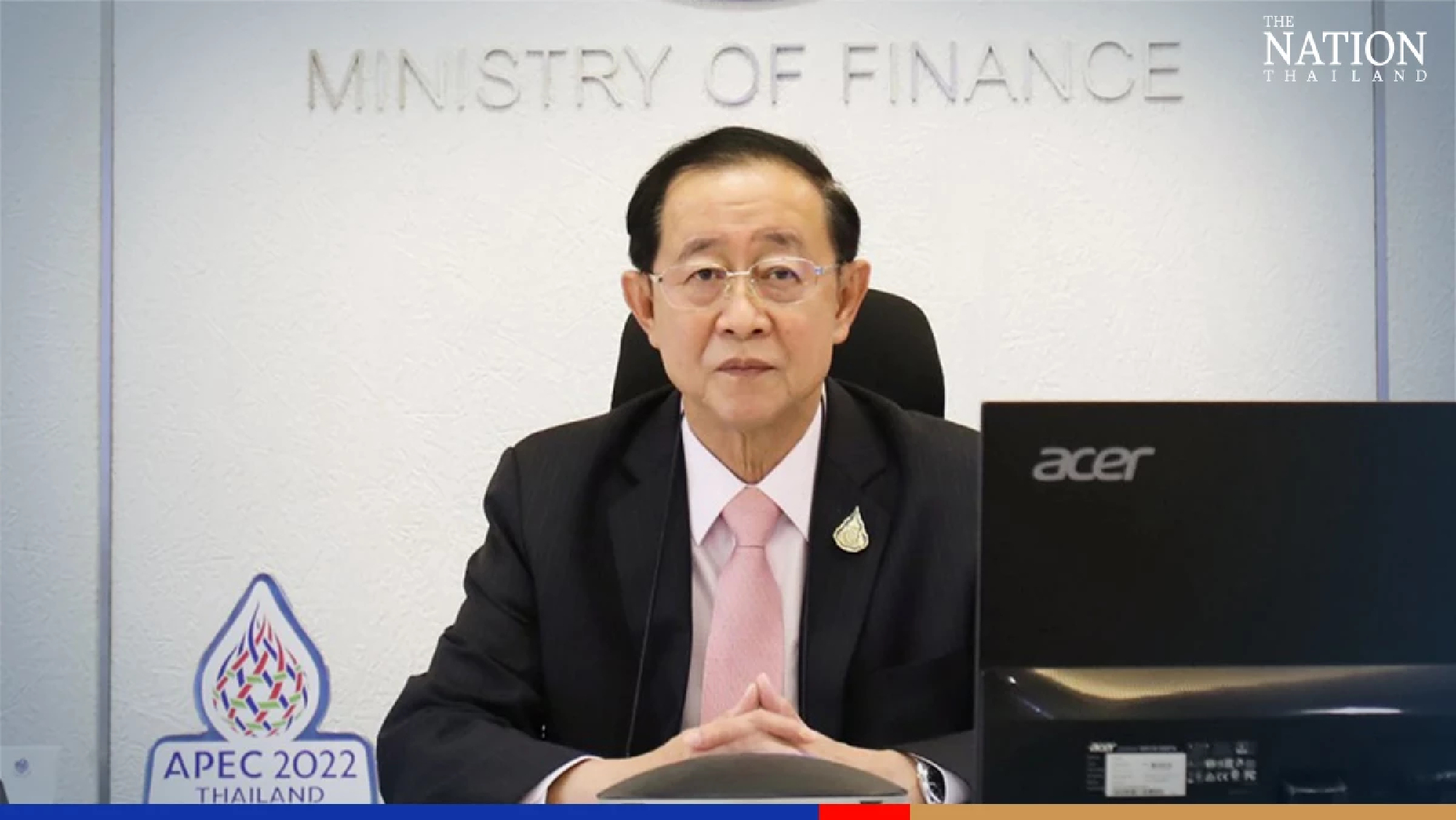


 Phusit Ratanakul Sereroengrit
 Parisa Chatnilbandhu
 SootinClaimon.Com