CSR Asia Summit returns to Bangkok for 13th meet

ศาสตร์เกษตรดินปุ๋ย : ขอบคุณแหล่งข้อมูล : หนังสือพิมพ์ The Nation

https://www.nationthailand.com/business/30376180

CSR Asia Summit returns to Bangkok for 13th meet

Sep 13. 2019
By THE NATION

465 Viewed

CSR Asia Summit, the annual conference on sustainability, social responsibility and supply chain responsible sourcing will again be held in Bangkok on September 18 and 19.

Now in its 13th year, CSR Asia Summit 2019 will bring together more than 400 regional practitioners, policymakers and thinkers representing 30 countries to discuss the challenges and solutions to the region’s most pressing issues, centred around this year’s theme: Sustainability: From Rhetoric to Results.

Speakers from diverse industries will share their insights on a variety of topics including investors and ESG (environmental, social and governance) data, measuring business impact on the sustainable development goals, what’s next in gender equality, responsible sourcing trends in 2019 and beyond, ethical recruitment and Southeast Asia’s supply chains, sustainable capacity building at factories and farms, resilient workforce, climate prosperity, as well as collaborative strategies to positively address mental health problems in Asia.

Keynote speaker Archana Kotecha, Director and Head of Legal at Liberty Shared/Asia, will address this year’s summit on “Regulation, Risk and Opportunity: Our next steps in dismantling human trafficking and forced labour”. She will be joined by Rob Kaplan, founder and CEO of Circulate Capital, an impact investment management firm based in Singapore, dedicated to financing companies, projects and infrastructure that prevent the flow of plastic waste to the oceans.

The summit is organised by CSR Asia, an Elevate company, and the meet this year is the thirteen to be held in Asia. A pre-summit course for delegates will take place on September 17 to provide practical training focused on building and implementing a sustainability strategy; understanding the effectiveness and impact of community investment and CSR programnes ; integrated reporting and integrated thinking; and creating shared value.

Richard Welford, chairman of CSR Asia, said: “The CSR Asia Summit is a platform for vital conversation, co-creation, and action. This year’s summit in Bangkok will create a collaborative environment where a unique mix of business, government and civil society come together to identify practical, result-driven solutions to today’s pressing sustainability challenges.”

Ian Spaulding, CEO of Elevate, said: “Requirements for responsible business and investment are more apparent than ever and impacting organisations’ value creation for stakeholders and society. We look forward to a robust dialogue on trends and innovations in responsible sourcing and supply chain management, corporate sustainability and CSR in Asia at CSR Asia Summit 2019″.

A Japanese eatery at nearly every corner in Thailand

ศาสตร์เกษตรดินปุ๋ย : ขอบคุณแหล่งข้อมูล : หนังสือพิมพ์ The Nation

https://www.nationthailand.com/business/30376178

A Japanese eatery at nearly every corner in Thailand

Sep 13. 2019
By THE NATION

863 Viewed

The number of Japanese eateries in Thailand has been growing continuously, especially in the provinces, the Japan External Trade Organisation (Jetro) Bangkok said on Friday (September 13).

The number of outlets serving Japanese food in the Kingdom has expanded 21 per cent from last year to 3,637 eateries this year. Japanese outlets in Bangkok alone rose from 1,718 to 1,993, while upcountry, the number has grown from 1,286 to 1,644.

The survey, conducted from June 1 to August 20, covered eateries serving Japanese cuisine, fusion foods and outlets where half of the menu covers Japanese food.

In terms of types of eateries, restaurants led the list with 893, up 19 per cent from last year, followed by outlets selling sushi, ramen, sukiyaki and izakaya or Japanese tapas-style food. The number of sushi outlets alone grew to 683 this year from 299 last year.

Bangkok has the largest number of Japanese eateries, followed by Chon Buri, Nonthaburi and Chiang Mai.

Meet highlights benefits, need for upcycling of plastic waste

ศาสตร์เกษตรดินปุ๋ย : ขอบคุณแหล่งข้อมูล : หนังสือพิมพ์ The Nation

https://www.nationthailand.com/business/30376173

Meet highlights benefits, need for upcycling of plastic waste

Sep 13. 2019
By Somluck Srimalee
The Nation

854 Viewed

PTT Global Chemical Plc (GC) plans to reduce its production of single-use plastics from 250,000 tonnes to 100,000 tonne a year in 2023, said Senior Vice President Warawan Tippawanich after attending the seminar “Upcycling for Better World 2019” on Friday.


The event,  organised by the  Research & Innovation for Sustainability Centre (RISC) and  Magnolia Quality Development Corporation Limited (MQDC) in collaboration with  PTT Global Chemical Plc (GC) and partners from related sectors, aimed to showcase upcycling design projects, development, and innovations destined to transform unwanted materials into valuable items for household use.

Warawan said GC had teamed up with Austria’s Alpla group to set up a Bt3-billion plastic-recycling plant which would start commercial operations in 2022. The facility can recycle 65,000 tonnes of used plastic items into 45,000 tonnes of new plastic materials a year .

“We started the campaign to upcycle single use plastics three years ago. We have succeeded in collecting  500,000 plastic items from the ocean which were upcycled into Arrow T-shirt and polo-shirts, and Jim Thomson neck ties, worth up to Bt20 million”.

Currently, there is an average of 2 million tonnes of single use plastics strewn across the Thai coasts.

The government policy to do away with single-use plastics in 2022 is a big step towards reducing its usage, she said.

According to Siam Commercial Bank’s Economic Intelligence Centre, Thailand ranks sixth in a list of the world’s worst offenders for dumping plastic waste into the sea, behind China, Indonesia, the Philippines, Vietnam and Sri Lanka.

Plastic waste found off the Thai coasts include bags (13%), straws (10%) and food containers (8%) among other items.

“Today, all of us know well that millions of tonnes of garbage are exponentially dumped on earth and these cannot be fully managed,” said Assoc Prof Dr Singh Intrachooto, Chief Adviser of Research & Innovation for Sustainability Center (RISC), one of the event’s organising partners.

“As a research agency focusing on sustainable development and environmental preservation, RISC has a dedicated team of specialist researchers ready to share knowledge on this matter. Therefore, we are partnering to invent and develop guidelines and more effective methods for waste handling through innovations and technologies to minimise waste and create value from discarded materials in various forms.

“At RISC, we are researching how to apply the upcycling process in product design and development as well as value creation. As a result, upcycled objects we have created and developed are as attractive and beautiful as newly manufactured products, and most importantly, they can be truly used in everyday life. We have some upcycled projects and innovations on display at this event. Among other items, there is the world debut of hand-woven carpets made from discarded plastic bottles from the sea. It is just a beginning of the upcycling movement, and RISC still needs the collaboration from various agencies and organisations to further develop for commercial purposes. I believe a concerted effort from all parties, in their areas of specialisation and expertise, can change the world.”

Soonthorn Kraitrakul, president and owner of Carpet Maker (Thailand) CoLtd, an upcycling partner, said: “Carpet Maker supplies premium-quality carpets to leading companies worldwide and high-end fashion brands in Europe, as well as very exclusive carpeting for palaces, super yachts, and private jets. Personally, I have a passion for handicrafts and meticulous craftwork from Thailand’s northeastern villages.  I decided to open a world-class carpet factory in the Banphai district of Khon Kaen, mainly to create jobs and a steady income for the villagers, so that they could live with their families and take care of their parents.

“Today’s plastic waste has become an increasingly serious problem and has an adverse effect on human well-being. It becomes closer and closer to us every day. It seems that most people are paying attention to this issue, but only a few have taken action to solve it. After a discussion with Dr Singh, RISC saw an opportunity for me to take part in solving the environmental problem. I like the word upcycling. It is different from recycle, because it turns a problem into a value-added object. For this reason, Carpet Maker has developed a hand-woven carpet collection, made of fabrics from discarded plastics from the sea. The qualities of these carpets are superior to others in the market as they are stain proof,  resistant to fungi, soft and easy to care for, and in compliance with the globally recognised ASTM D2859 flammability standard.

“We have combined our carpet-weaving technique, which has been developed and used for more than 30 years, with leading contemporary design to make this upcycled carpet collection luxuriously beautiful and outstandingly functional. It is suitable for many occasions and places, and definitely helps reduce plastic waste in the sea. Once introduced, it will be the top choice for conscious consumers who are looking for household items that truly reflect the need for environmental preservation.”

Somkid pushes for resumption of FTA talks with EU

ศาสตร์เกษตรดินปุ๋ย : ขอบคุณแหล่งข้อมูล : หนังสือพิมพ์ The Nation

https://www.nationthailand.com/business/30376142

Somkid pushes for resumption of FTA talks with EU

Sep 13. 2019
By The Nation457 Viewed

Deputy Prime Minister Somkid Jatusripitak is wooing the EU to revive talks on a Thai-EU free trade agreement after the next round of talks in October.

He has also asked the EU to help convince Airbus to invest in an aircraft repair centre in Thailand’s Eastern Economic Corridor (EEC).

Somkid said after meeting with EU diplomat Pirkka Tapiola on September 12 that he had been informed the EU is ready to negotiate an FTA with Thailand once again. FTA talks stopped in 2014 due to the military coup that year and a military-backed government running the country until elections this year.

Now that Thailand has a democratically-elected government, talks are expected to resume after October, Somkid said.

“The EU is ready to negotiate with Thailand and they say we are their first priority as we now have an elected government,” Somkid said. “The negotiations should not take much time and apart from the FTA there is also interest in other bilateral agreements.”

Somkid said Tapiola expressed the EU’s interest in nvesting in the EEC for production and export facilities.

He also met with Damien O’Connor, New Zealand’s Minister for Agriculture, Biosecurity, Food Safety, and Rural Communities, and Associate Minister for Trade and Export Growth, on September 11. They discussed about the RCEP (Regional Comprehensive Economic Partnership) as well as partnerships in other fields such as education, science and technology.

Leading Thai economist blames inequality for Thailand’s ills

ศาสตร์เกษตรดินปุ๋ย : ขอบคุณแหล่งข้อมูล : หนังสือพิมพ์ The Nation

https://www.nationthailand.com/business/30376120

Leading Thai economist blames inequality for Thailand’s ills

Sep 12. 2019
Pasuk Phongpaichit, second left, and Chris Baker, right, on stage at the Fukuoka Prize Symposium.

Pasuk Phongpaichit, second left, and Chris Baker, right, on stage at the Fukuoka Prize Symposium.
By Sirivish Toomgum
The Nation
Fukuoka, Jpan

865 Viewed

Thailand needs new thinking on its economy, moving away from the emphasis on growth and consumption to the quality of life rather than the quantity of things, said Pasuk Phongpaichit, Emeritus Professor in Political Economy, Chulalongkorn University.

She made the remark at the Fukuoka Prize Symposium held on September 10 in the Japanese city, in an event celebrating its 30th anniversary.

Pasuk and historian Chris Baker, the co-winners of the Fukuoka Prize’s 2017 Grand Prize, were among five past laureates invited to share their views in the Symposium, which had as its theme “The coexistence of developing Asia and its cultures-What Fukuoka Prize and the successive Prize laureates have protected, nurtured and newly created in last 30 years”.

Pasuk said that as an economy, Thailand along with others in Southeast Asia, have been doing quite successfully. But Thailand’s big problem is inequality.

“As we got richer, the gap between rich and poor grew wider and wider,” she said.

She added the economic inequality creates social division. Some people are denied their basic rights, and human respect.

“Our politics have been in turmoil for over a decade. Behind that turmoil is our gaping inequality. But many people hesitate to recognise that,” she said, adding that new threats from AI and climate change will make things worse. “Automation will mean less work, less income and less dignity for many, while floods, droughts and food shortages resulting from climate change will hurt the poorest and most vulnerable.

“Growing inequality has been a problem worldwide for around 25 years. There have been many books and reports on the subject but nothing has much been done. This is also true in Thailand. Many of our leaders now accept that inequality is a problem. They give speeches and write manifestoes promising to do something about it. They ask economists like me to give them advice, and I do so. But nothing much happens.”

She pointed out that one simple reason for this failure is the power wielded by large corporations and the rich, both in public positions and behind the scenes. This is very difficult to change.

“But we must not give up. I take inspiration from other societies which are much more equal than ours and often happier too. They show that inequality can be evened out by the public policies,”

She added that Thailand needs new thinking on economics, moving away from the emphasis on growth and consumption per se, towards more efficiency in the use of resources, less waste, more care, more greening of the cities, which robots cannot do, and to focus on the quality of life rather than the quantity of things.

“That said, inequality cannot be stamped out overnight. Thailand needs to have the continuity in the administrations run by the democratically elected governments to solve the inequality on a non-interrupted basis.”

Any income tax measures should not only aimed at boosting the economy but also ensuring equal income distribution.

Also on September 10, the Fukuoka Prize hosted an official ceremony to grant its 2019 awards to the three laureates.

The Grand Prize was awarded to Philippines public sociologist Prof. Randolf David, while the Academic Prize went to Dutch historian and expert in Southeast Asian history, Professor Leonard Blussé.

The Arts and Culture Prize went to Japanese playwright and stage director Makoto Sato.

Crown Prince Akishino and his wife Crown Princess Kiko were also present at the ceremony.

David is a sociologist who has played a dynamic part in achieving social justice in the Philippines, by sharing his knowledge not only with the students through his university lectures but also more widely with the general public through TV programmes and newspaper columns.

Sociologist Randolf David from the Philippines won this year’s Grand Prize

He has also striven for intellectual and cultural exchanges and mutual understanding among Asian countries, through cooperative links with the United Nations University and Japanese university lecturers and intellectuals.

His determination and activity to transform currently existing society for the better, by opening universities to the public and by working together with citizens or overseas countries, have won him high praise as a leading Asian public intellectual, a man of action as well as ideas.

Leonard Blussé, recipient of this year’s Academic Prize

Blussé has created a new academic field, broad in its chronological and geographical scope, “the maritime history of early modern East/Southeast Asia”, establishing an interdisciplinary approach as a foundation for historical studies.

His studies began from Sinology, then some elements of Japanese Studies were added, before embracing the maritime history of East Asia with his studies about Overseas Chinese, and have now expanded to include maritime history of Southeast Asia.

In the currently popular trend of “global history” in historical studies, his approach is highly regarded as providing an ideal framework based on empirical micro analysis without ever losing the macro conceptual perspective.

Japanese national Makoto Sato was recognized with the 2019 Arts and Culture Prize

Stage director and playwright Sato, meanwhile, has created a large number of outstanding theatrical productions which combine a contemporary ambience with traditional aesthetic sensibility.

His innovative work has been highly praised both in Japan and abroad. He has also taken a leading role in promoting international exchange with Asian theatrical professionals, and enhancing the construction of regional networks.

Furthermore, working as the artistic director of public theatres, he has engaged in embodying the concept of “theatre as a meeting point for local people”, and thus completely transformed the conventional image of public halls.

The Fukuoka Prize is an internationally recognized award organized by Fukuoka City. It is given to individuals and/or groups that have contributed to the preservation and creation of Asian cultures.

The Grand Prize is presented to individual/group who has made outstanding contributions to the preservation and creation of Asian culture and have exhibited the significance of Asian culture to the world through the internationality, universality, popularity and/or creativity of their work.

The Academic Prize goes to individuals/groups that have made outstanding achievements in the field of Asian studies, contributing to the world’s understanding of Asia. It covers the fields of social sciences, such as history, archaeology, cultural anthropology, economics, and political science.

The Arts and Culture Prize is awarded to individuals/groups that have made outstanding contributions in the cultivation and/or advancement of the unique and diverse arts and culture of Asia. It covers the fields such as fine arts, literature, music, drama, dance, film, architecture, traditional and ethnic culture.


Asian stocks rise following US tariffs delay, China’s scrapping of tariffs

ศาสตร์เกษตรดินปุ๋ย : ขอบคุณแหล่งข้อมูล : หนังสือพิมพ์ The Nation

https://www.nationthailand.com/business/30376104

Asian stocks rise following US tariffs delay, China’s scrapping of tariffs

Sep 12. 2019
By The Nation

74 Viewed

Asian stocks rise following US tariffs delay, China’s scrapping of tariffs

Japan’s Nikkei 225 rose about 1 per cent in Thursday’s morning trade boosted by signs of an easing in the trade tension between world’s two largest economies, the United States and China. Taiwan and Korean stocks also increased.

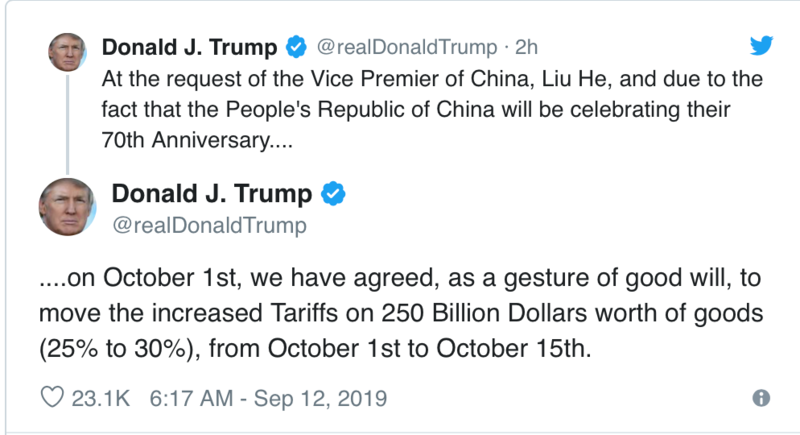
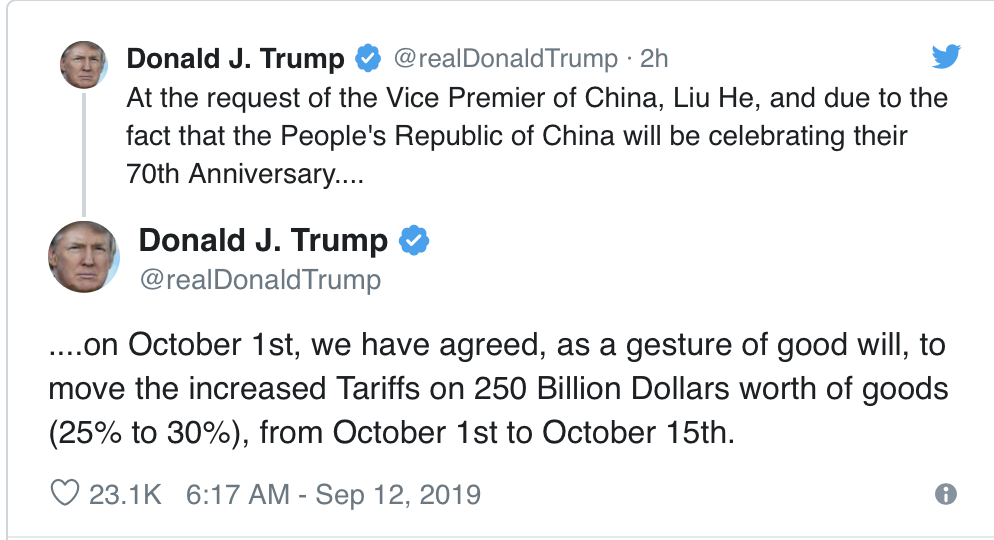
US President Donald Trump on Wednesday tweeted that he will be delaying the increased tariffs on $250 billion in Chinese goods to October 15 from October 1 as a “gesture of good will” to China.

His tweet came after China scrapped tariffs on some US goods on Wednesday ahead of the latest round of trade talks.

Trump said the postponement came “at the request of the Vice Premier of China, Liu He, and also marked the People’s Republic of China’s celebration of their 70th Anniversary.”

The tariffs were set to increase to 30 per cent from 25 per cent on selected categories of goods. Liu He is set to be in Washington for talks in early October.

CNBC reported that US stock futures jumped more than 0.5 per cent after news of the delay. The Dow is poised to open up 150+ points on Thursday.

China took first the move to ease trade tensions, announcing the first group of products for exclusion from the initial round of additional tariffs on United States imports scheduled to take effect on Tuesday, the Customs Tariff Commission of the State Council said in a statement on Wednesday.

In the statement, the commission unveiled two tariff exclusion lists of 16 items, including fish meal, raw materials used in cancer drugs and some lubricants, state media China Daily reported.

All items on the two lists will be excluded from additional tariffs for a year up to September16, 2020. That means the items will not be subject to additional tariffs imposed by China on US products as countermeasures to US Section 301 measures.

For the 12 items on the first list, tariffs already levied are eligible for refunds. The affected enterprises can apply for refunds within the next six months, the statement said.

The four items on the second list can be excluded from tariffs but are not eligible for refunds.

The statement said the commission will continue to work on the exclusion of additional tariffs on US products, and the lists of the subsequent groups will be released in due course.

Experts said the measure is important because it will to some extent ease the impact of the China-US trade disputes for enterprises in both countries.

Chen Huaisheng, an expert at the China Chamber of International Commerce’s legal services department, said the measure will support the development of relevant companies and boost their confidence.

“We have heard opinions and feedback from the corporate sector, and they expect the exclusion will reduce a potential negative impact from the additional US tariffs,” Chen said.

The measure can also help enterprises to control production costs, especially for some importers in the agricultural and chemical industries, and to stabilise market supply of certain products, said Tian Zhihong, an economics professor at China Agricultural University.

China decided to initiate the exclusion process for additional tariffs on US products on May 13. The first-round applications, from enterprises, business associations or chambers of commerce in China, were accepted from June 3 to July 5, the commission said.

The work of accepting applications for exclusion from the second round of additional tariffs on US products is ongoing, with the deadline set for October 18, it added. The second round was worth $60 billion, taking effect last September, the China Daily reported.

The tariff exclusion process for the third round of additional tariffs on US imports will be launched at an appropriate time, according to the Customs Tariff Commission.

As signs of ease of trade tension emerged, US stock markets rose substantially on Wednesday. Dow Jones rose 227.61 or 0.85 per cent to close at 27,137.04 points, Nasdaq New York went up 1.06 per cent and closed at 8,169.68 and the S&P 500 Chicago increased 0.72 per cent, closing at 3,000.93.

Gas to play leading role in energy mix over the next 30 years

ศาสตร์เกษตรดินปุ๋ย : ขอบคุณแหล่งข้อมูล : หนังสือพิมพ์ The Nation

https://www.nationthailand.com/business/30376096

Gas to play leading role in energy mix over the next 30 years

Sep 12. 2019
By The Nation

165 Viewed

Gas and variable renewables will be the only energy sources for which demand is higher in 2050 than today. However, they must work together alongside greater uptake of carbon capture and storage (CCS) to secure a rapid energy transition, according to a new forecast of the energy transition by DNV GL.

The 2019 Energy Transition Outlook provides an independent forecast of developments in the world energy mix to 2050. By this time, gas will account for nearly 30 per cent of the global energy supply, providing the world with a base of secure and affordable energy, and with manufacturing feedstock.

DNV GL’s Outlook reveals there is no single pathway to a decarbonized energy mix. A combination of energy sources – primarily gas and renewables – will be the quickest route to delivering a supply of affordable, decarbonized energy in the lead-up to mid-century. Gas will increasingly complement variable renewables, meeting demand in peak periods such as winter in colder climates.

As gas secures its place as the world’s largest energy source from the middle of the next decade, its production and consumption must be decarbonized to help achieve national and international targets for climate change mitigation.

CCS – the only currently-available technology to deeply decarbonize hydrocarbon use – will not be employed at-scale until the 2040s unless governments develop and enact more definitive policies on its use, according to the Energy Transition Outlook.

“All major routes to successfully decarbonizing gas rely on the large-scale uptake of carbon capture and storage. The future of CCS largely lies in the hands of policy-makers setting a higher carbon price than the cost of the technology. Industry can also play a role in stimulating quicker adoption by focusing on finding ways to reduce the cost of CCS technology,” said Liv A Hovem, chief executive of DNV GL – Oil & Gas.

“Large-scale uptake of carbon capture and storage technology will unlock significant opportunities for hydrocarbon and renewable energy technologies to work together to decarbonize the energy mix. The energy industry must however also shift its mindset from ‘gas vs renewables’ to ‘gas and renewables’ for success,” Hovem added.

Approaches to integrating hydrocarbon and renewable technology for decarbonized gas production and consumption include:

– Introduction of new, carbon-free forms of gas, such as hydrogen, to national gas networks;

– Power-to-gas, with existing gas pipelines used to transport hydrogen produced from electrolysis of seawater using offshore wind power, or from offshore-based methane reformers;

– Gas-to-wire, where gas is used to produce power offshore for transport to shore via nearby windfarm cabling;

– Offshore platform electrification, with offshore windfarms installed nearby, platforms can import renewable electricity directly.

According to DNV GL’s analysis, global oil demand will peak in the mid-2020s and gas demand will keep rising to 2033. Gas demand will then plateau, and the fuel will remain dominant until the end of the forecast period in 2050, when it will account for over 29 per cent of the world’s energy supply.

Significant investment will be required to ensure production meets demand, including realising the potential from stranded gas reserves and for reserve replacement. DNV GL forecasts global upstream gas capital expenditure to reach US$737 billion in 2025, and $587 billion in 2050. Other important forecasts for the future of natural gas include:

Unconventional onshore gas will increase from 2019 right through to the end of the forecast period, growing by 68 per cent from 2017 production levels. Production will principally come from North America

Conventional onshore gas production will be maintained at today’s output rates until the late 2030s. It will then decline slowly to mid-century, ending at about 19 per cent lower than 2017. Production has already begun to fall in North America, but it will continue to rise in North East Eurasia until 2033

Offshore gas production will rise until 2040, when it will be 58 per cent greater than in 2017. In 2050, it will still be more than a third higher than in 2017, with the Middle East and North Africa providing the greatest production volumes

Power generation will be the main consumer of gas in most regions, challenged by manufacturing (mainly petrochemicals) in China, India, and Latin America.

DNV GL highlights that the long term, sustainable future of the oil and gas industry is dependent on its license to operate today.

“Our sector will only have the opportunity to decarbonize if it maintains society’s trust through a sharp focus on safe operations and environmental performance. Companies’ ability to display the highest standards of safety and sustainability today will win the public support that the industry needs to decarbonize for tomorrow,” added Hovem.

DNV GL’s suite of 2019 Energy Transition Outlook reports are available to download free of charge. The main ETO report covers the transition of the entire energy mix to 2050 globally, and in 10 world regions. It is accompanied by three supplements forecasting implications for the oil and gas; power supply and use; and maritime industries.

NBFIs face increased risks but should remain stable: report

ศาสตร์เกษตรดินปุ๋ย : ขอบคุณแหล่งข้อมูล : หนังสือพิมพ์ The Nation

https://www.nationthailand.com/business/30376095

NBFIs face increased risks but should remain stable: report

Sep 12. 2019
By The Nation

168 Viewed

The current global economic conditions are affecting non-bank financial institutions (NBFIs) causing them to face increased business risks, according to S&P Global Ratings’s latest report titled “Global Nonbank Lenders Continue To Face Stiff Competition, But Less Stringent Oversight Than Banks” released on Thursday.

The report discusses the risks that global nonbank financial institutions (NBFIs) face and how these risks are reflected in its anchors for these entities. A section reads: “Our anchors reflect our view of the economic and industry risks that NBFIs face in a particular country. We detail our reasoning behind the NBFI anchors for each country where we rate NBFIs. The report covers NBFIs operating around the globe, focusing on 17 countries, including Australia, China, India, Japan, Korea, Mongolia, New Zealand, and Taiwan”.

Operating and financial performance of NBFIs is closely linked to the economic and industry risk conditions in the countries where they operate. During the past few months, trade tensions, -in particular the tariff dispute between the US and China, have cast a shadow on the global economy and financing conditions in all regions. However, central banks stand ready to stimulate growth, and borrowers around the globe continue to enjoy fairly benign credit conditions. S&P Global Ratings believes many countries have their own particularities, which influence the economic performance. In its view, the main risks for fincos are the potential consequences of a slowing global economy, increasing protectionist policies, the possibility for a market correction, and liquidity reversal if financing conditions tighten faster than expected.

On the other hand, industry risks and regulatory frameworks for NBFIs vary not only from region to region but also from country to country. In the majority of countries, regulatory bodies have been demanding fincos implement more stringent requirements, and this is expect this to continue. Nevertheless, these regulations remain less stringent than those of banks, and S&P Global Ratings believes this will remain the case at least for the next one to two years.

While no deterioration in the credit quality of the NBFI sector has been seen following the weakening global economic conditions, S&P Global Ratings believes that market volatility, global trade tensions, declining investment confidence, and unfavourable political conditions in some regions could weigh on their operating performance. US-China friction has broadened from tariffs to technology. Middle East tensions pose a risk to energy markets. These prolonged global tensions have shaken investors’ confidence and have the potential to dent long-term growth. In addition, political challenges in Latin America’s largest countries have been materialising, and new administrations in the region are facing waning domestic investor confidence as policy uncertainty prevails. On the positive side, the US Federal Reserve lowered the benchmark rate by 25 basis points in July 2019. In this sense, issuers in many regions stand to benefit from declining benchmark borrowing costs, while fincos’ funding costs are likely to decrease and their net interest margins to improve gradually.

“In our view, during the past 12 months, fincos have been able to refinance their debt obligations and maintain their necessary funding and liquidity needs to continue growing. The latter was successful despite the rising interest rates and market volatility due to geopolitical tensions. Nevertheless, market volatility, coupled with lower credit growth in the majority of regions, remains a concern for all fincos, and could weaken financial performance in 2019 and beyond. Asset quality metrics, profitability, and capital indicators may also suffer. NBFIs with lower asset quality and higher concentrations compared with those of peers could face higher credit risk,” the report notes.

Tax to rise on zero-alcohol beer

ศาสตร์เกษตรดินปุ๋ย : ขอบคุณแหล่งข้อมูล : หนังสือพิมพ์ The Nation

https://www.nationthailand.com/business/30376089

Tax to rise on zero-alcohol beer

Sep 12. 2019
Uttama

Uttama
By The Nation

782 Viewed

The Finance Ministry plans to raise the excise tax rate on zero-alcohol beer, saying it would discourage people from start drinking.

Finance Minister Uttama Savanayana said on Wednesday that the Excise Department of the ministry would  soon complete a study on raising tax on zero-alcohol beer from the current rate of  14 per cent, the same level as on soft drinks, which is lower than the rate on beer.

The ministry is concerned that zero-alcohol beer may lead to new drinkers switching to alcoholic drinks, said Uttama, adding that the higher tax rate will still be lower than that on beer.

The ministry will also regroup tax rates on beverages. For example,  functional drinks such as  water mixed with vitamins,or cologne, will be taxed lower than beverages with high sugar content.

The ministry, he said,  is also considering whether to delay a new round of  tax hike on cigarette as the state-owned Thailand Tobacco Monopoly, has complained about the severe impact on its business from the last tax increases.

OSMEP, Silpakorn University launch “2nd Digital Content Cluster Day”

ศาสตร์เกษตรดินปุ๋ย : ขอบคุณแหล่งข้อมูล : หนังสือพิมพ์ The Nation

https://www.nationthailand.com/business/30376090

OSMEP, Silpakorn University launch “2nd Digital Content Cluster Day”

Sep 11. 2019
By THE NATION

408 Viewed

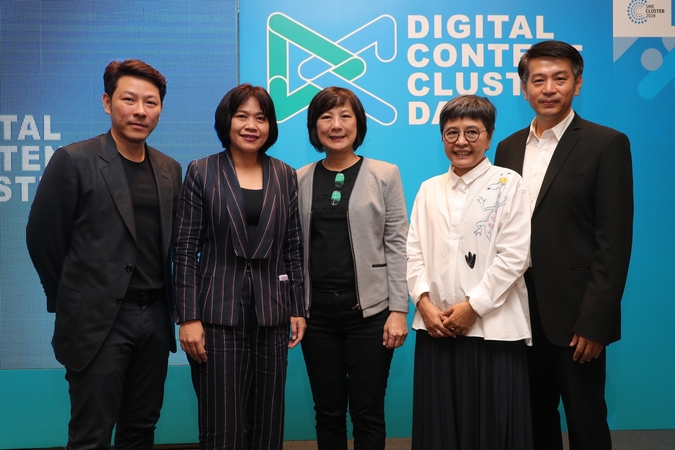
The Office of Small and Medium Enterprises (OSMEP) has again teamed up with Silpakorn University for “Digital Content Cluster DAY Year 2”, the second phase of the competition.

The annual  contest is the premier tool in support of the Thai digital content industry under a 2018-2019 initiative.

Aiming for a strong and sustainable digital content industry, the initiative has drawn backing from the Digital Content Association of Thailand (DCAT) in collaboration with the university’s professors and industry experts.

Luckana Tungjitnob, director of the Office of Small and Medium Enterprises Promotion (OSMEP), said digital content plays a role in almost every industry today. It also can be applied endlessly and expanded in various fields of business. It is considered an important industry in all countries as it requires human resources and technologies to work effectively. The industry could become a growth driver of the Thai economy, given support in the global market.

OSMEP and Silpakorn University together with  several community partners jointly orgnaised  the first  “Digital Content Cluster Day” last year to promote the industry’s potential.  The event featured business matching and other activities under the SMEs Cluster initiative.

It strives to strengthen the Thai economy through promoting and supporting SMEs, the key enabling element for growth. The development of entrepreneurs through creating a strong group or network under the concept of cluster development is a tool of OSMEP in support of SMEs.

It stimulates the link between entrepreneurs to meet market demands, as well as helping them to compete in the domestic and international markets by adopting innovation and technology in the development of products and services. It also hasten the development of  marketing channels proactively through  activities,  creating awareness of Thai products among local and foreign consumers.

To improve workers’ skills, Thai Digital Content Cluster provides training in Character Design and Licensing, Character Merchandising, Animation IP, Animation Services, and CG Services.

Asst Prof Nathaporn Karnjanapoomi, Silpakorn University said “In order to maximise benefits of the policy of promotion, support, and academic cooperation between organisations to transfer and exchange knowledge, the university has had a curriculum to develop digital content personnel for more than 15 years. We believe in creating workers possessing the  knowledge of design, marketing, and digital media creation”.

Moreover, the exchange of  knowledge and activities  in this event will help Thai industries develop the capability of  digital content. To expand abroad, the initiative also calls for human resource development to meet future needs of the industry.

The outstanding work in  this year’s event is Hey Buddy, an animation created by Big Brain Pictures Company Limited that is one of the selected work from Thailand Animation Pitch 2018 (TAP) in the Digital Network Development category, under the SMEs Network Support Project. Success of the first event organised by OSMEP in collaboration with Silpakorn University had led to  the Asian Animation Summit 2018 (AAS 2018), sponsored by the Department of International Trade Promotion (DITP) with the Association of Thai Animation and Computer Graphic Operators (TACGA) as  coordinator.

Hey Buddy is considered a successes of all the parties involved – the Department of International Trade Promotion (DITP) under the Office of Business Development and Services, Small and Medium Enterprise Promotion Agency (OSMEP), Silpakorn University, Big Brain Picture Company Limited, Toonz media group and Thai Animation and Computer Graphic Entrepreneurs Association (TACGA) including Cartoon Club Media Company Limited, a marketing arm of  Big Brain Picture for trading, negotiation and public relations

Based on a survey by the Digital Economy Promotion Agency (DEPA), the Thai industry is forecast to be worth Bt27,005 million last year, and expected to reach Bt30,000 million by the end of 2019, driven by the growth of digital media and the digital content industry.