The baht opened at 35.59 to the US dollar on Monday, strengthening from Friday’s close of 35.65.
The Thai currency is expected to move between 35.50 and 35.70 against the greenback during the day and between 35.30 and 35.80 during the week, Krungthai market strategist Poon Panichpibool predicted.
Poon said the baht may test its new resistance level at 35.75 to the dollar because the market is in a risk-off state, resulting in foreign funds flowing out of the country continuously.
The baht will fluctuate further before inflation numbers are revealed, though the currency’s weakening may be limited by exporters waiting to sell the baht and investors planning to sell gold.
However, Poon reckons the baht should not go beyond 36 to the dollar unless the market worries about China enforcing new lockdown measures and investors sell off stocks and bonds in the Emerging Asia market.
Meanwhile, the dollar is likely to fluctuate as the US economy has significantly slowed down and its state is worse than expected.
Also, the US Federal Reserve has not signalled it will increase the interest rate, which may pressure the dollar to weaken, though it may be supported by the demand for safe assets.
The strategist advises investors to use hedging tools like options to manage their risks in the highly volatile currency market.
Malaysia is allowing Thailand to export rice flour to the western part of the country after shipments were halted for almost 20 years, Commerce Minister Jurin Laksanawisit said on Sunday.
The move came after a long-standing ban on issuing licences for Malaysian importers to import rice flour to the west was lifted, he said.
“We found that Malaysian agencies responsible for issuing licences to import products to the western and eastern parts of the country were different,” Jurin explained.
In response, Thailand’s trade envoy in Malaysia had asked importers to send evidence to the Department of Trade Negotiations (DTN) for negotiations between the countries, he added.
Recently, Malaysian importers had informed the DTN and Thai trade envoy that they had received the licences.
“Thailand can now export rice flour to the western part of Malaysia after exports were suspended for almost 20 years,” Jurin said.
He added that that Malaysia’s move should boost the value of Thailand’s exports and trade with its southern neighbour.
Thailand exported goods worth 75.34 billion baht via Malaysia’s border in the first five months of this year. Exports of rice products via the channel in the first five months of this year rose 12.5 per cent.
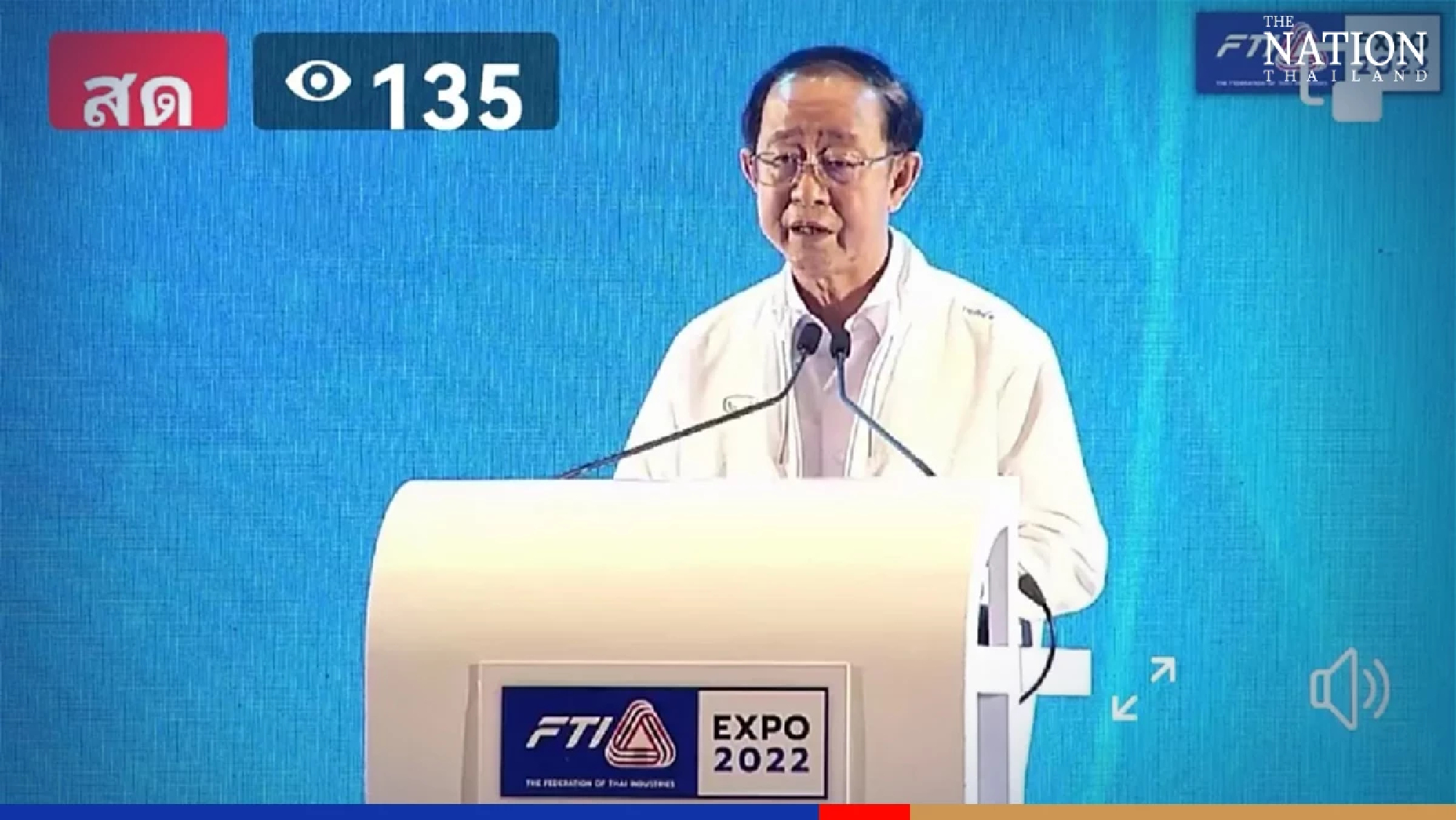
The government will seek wage increases for private-sector employees to help them cope with rising costs due to higher inflation, Finance Minister Arkhom Termpittayapaisith said on Saturday.
Authorities would discuss the matter with employees towards the end of this year, he said.
Arkhom said Thailand’s inflation would remain high for the rest of this year, eventually forcing the Bank of Thailand to raise its policy interest rate, which has remained unchanged at 0.50 per cent.
“The Thai economy is suffering impacts not only from Covid-19 but also high inflation resulting from the Ukraine war. Inflation this year is unlikely to go down to levels seen many years ago,” said the finance minister.
However, Thailand’s inflation rate is still considered low when compared to other countries, he added.
Inflation in Thailand has ranged between 6 and 7 per cent in recent months.
The finance minister was speaking during an address to the FTI Expo 2022 on the government’s monetary and financial policies for this year.
The event is being held by the Federation of Thai Industries in Chiang Mai province until Sunday.
Arkhom also defended the government’s monetary and financial policies to aid the economy over the past two years during the pandemic. He said government borrowing was necessary to help stimulate the economy as people’s incomes fell.
“Other countries, as well as Thailand, did the same thing,” he said, referring to government borrowing.
The finance minister also said that the World Bank and International Monetary Fund had encouraged countries to issue relief measures for their citizens despite incurring rising public debt.
Arkhom said that what counts was a country’s ability to repay its public debts, noting that some countries have debt exceeding 100 per cent of their gross domestic product (GDP).
The Bank of Thailand (BOT) reported that household debt in the first quarter of 2022 rose to 14.64 trillion baht, up by 80.076 billion baht from the fourth quarter of 2021.
However, the percentage of household debt to gross domestic product decreased from 90 per cent in the fourth quarter of 2021 to 89.2 per cent in the first quarter of 2022.
Of the total debt 12.56 trillion baht were from deposit-taking corporations, up by 57.929 billion baht from the previous quarter.
6.28 trillion baht were from commercial banks
4.11 trillion baht were from depository specialised financial institutions
2.17 trillion baht were from savings cooperatives
5.111 billion baht were from other institutions
Meanwhile, 2.08 trillion baht were from other financial corporations, increasing by 22.149 billion baht from the previous quarter
1.57 trillion baht were owed to credit card, leasing and personal loan companies
177.836 billion baht were from insurance companies
116.778 billion baht were from securities companies
99.455 billion baht were from asset management corporations
77.319 billion baht were from pawnshops, and,
40.465 billion baht were from other financial institutions.
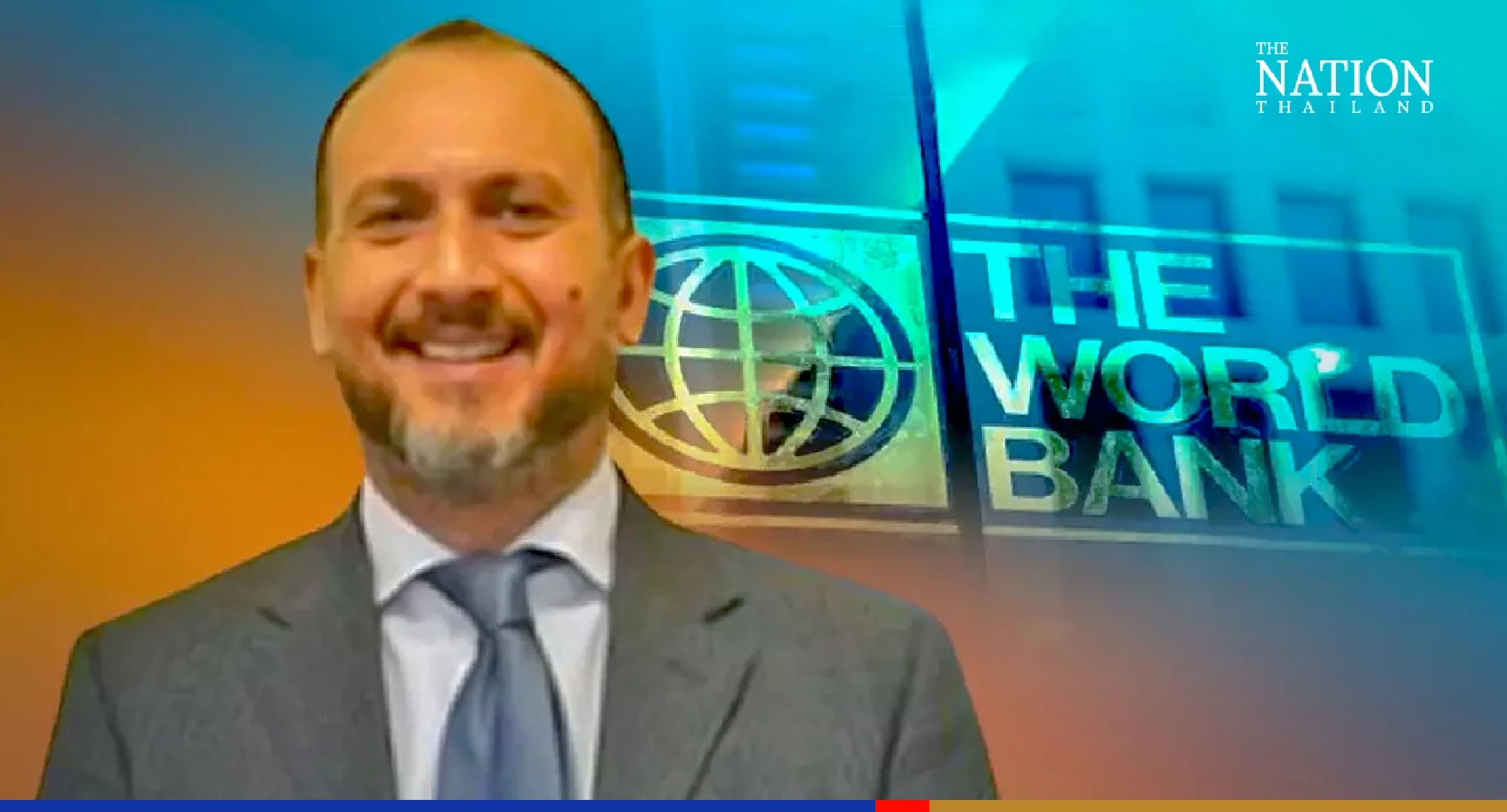
The World Bank has appointed Fabrizio Zarcone as country manager of Thailand with effect from July 1 to help Thailand tackle poverty and boost prosperity.
Italian Zarcone succeeds Birgit Hansl, who served in the position for four years.
Zarcone will implement the World Bank Group-Thailand Country Partnership Framework (CPF), which is focused on key structural economic and social reforms to end poverty and boost prosperity.
He also will be the lead negotiator between the World Bank and the government sector, civil society sector, private sector, and other partners.
The CPF for 2019-22 supports Thailand’s transformation towards greater inclusion, resilience and competitiveness. It is focusing on supporting Thailand integrate with every group of society, promoting competition and innovation by helping improve the business environment, economic institutions, and infrastructure.
The bank also will address climate change and support quality education and targeted programmes for disadvantaged and vulnerable groups.
It also will address issues in the fragile and conflict-affected areas of southern Thailand.
Zarcone said: “It is with great pleasure that I take up this new position in Thailand just as the country emerges from the economic and social challenges posed by the Covid-19 pandemic.
“The tragedy of the pandemic must be turned into an opportunity to build back better and position the economy for sustained productivity-led growth and recovery over the medium and long term. I look forward to supporting Thailand in the achievement of these critical goals,” he added.
Before this appointment, Zarcone was the country manager in Bulgaria, Czech Republic, and Slovakia where he supervised a large and complex portfolio of technical assistance projects. He also was the country manager of Costa Rica and El Salvador, in charge of both lending and advisory services.
He spent time in the Middle East as senior operations officer for the West Bank and Gaza, managing important budgetary support projects for the Palestinian National Authority.
He also has extensive experience working in Sub-Saharan Africa where he supervised several projects in Kenya, Rwanda and the Comoros Islands.
Zarcone holds a PhD in Management Sciences from Escuela Superior de Administración y Dirección de Empresas, and a Masters in European Economics and Law.
Thailand’s export sector saw a growth of over 10 per cent in May and almost 13 per cent in the first five months of this year, Commerce Minister Jurin Laksanawisit said on Friday.
This healthy growth is expected to continue for the remainder of the year, and the Commerce Ministry’s target of 4 to 5 per cent expansion for 2022 is likely to be achieved, he said.
Jurin, who doubles as deputy prime minister, said exports would continue to serve as the economy’s main driving force this year, with tourism coming in a close second.
In May, Thailand’s exports were worth US$25.5 billion (905.2 billion baht), marking a 10.5 per cent increase year on year. Imports during the month totalled $27.3 billion (969.1 billion baht), marking a 24.2 per cent hike. This resulted in a trade deficit of $1.8 billion (63.9 billion baht) in May.
The first five months of the year saw exports rise 12.9 per cent, at a total value of $122.6 billion (4.3 trillion baht), while imports expanded 20.2 per cent, totalling $127.3 billion (4.5 trillion baht). The trade deficit in the first five months of this year totalled $4.7 billion (166.8 billion baht).
The commerce minister attributed the rise in Thai exports to five key factors: successful policy in exporting food and beverages, the Thaifex-Anuca Asia 2022 food expo, implementation of free trade agreements, global economic recovery, and a weaker baht that makes Thai products more competitive.
Consumer goods giant Saha Group is once again calling on the government to allow manufacturers to increase the price of instant noodles as companies are now making losses.
Thamarat Chokwatana, director and executive vice president of ICC International Plc, said this at the Saha Group Fair on Thursday.
He said the company has asked the government for permission to increase the price of instant noodles from 6 baht per packet. Choosing not to elaborate on what the new price would be, he only said that the cost of production has risen by more than 10 per cent as the price of each ingredient has risen several fold.
Thamarat said the price of instant noodles, like detergent, is controlled so it is difficult to adjust the price tag when production cost rises. The price of other products is controlled by market mechanisms, he said.
He added that instant-noodle manufacturers are trying to maintain the price for as long as possible, but will not be able to do this for too long.
He added that a 1-baht increase in price may not be enough if the cost of ingredients continues rising.
Thamarat added that he understands why the government wants to keep the price unchanged, but if prices are not adjusted then companies will start making huge losses.
Saha Group had called on the Commerce Ministry in June for permission to increase prices, but the request was rejected.
The four-day Saha Group Fair, which wraps up on Sunday, is being held at the Bangkok International Trade and Exhibition Centre (Bitec).
Manufacturers sell products at original prices in a bid to help ease consumers’ burden of rising living costs. Thammarat said this year’s fair is bigger than ever, especially since this is the first on-site event since the arrival of Covid-19 in early 2020.
The baht opened at 35.33 to the US dollar on Friday, strengthening from Thursday’s closing of 35.37, and is expected to move between 35.25 and 35.40 during the day.
Krungthai Bank market strategist Poon Panichpibool reckons the baht will strengthen as the dollar weakens, but said the baht will possibly fluctuate and weaken if foreign investments flow out and the market remains in a risk-off state.
The baht may also weaken if the gold price drops to its main support level of US$1,800 per ounce, encouraging some investors to buy at the dip.
He also warned investors to beware of the baht’s volatility before and after eurozone inflation figures have been revealed at 4pm Thailand time.
If inflation in Europe is high, the market will expect the European Central Bank to increase the interest rate, which will strengthen the euro and baht, and weaken the dollar.
Poon advises investors to use hedging tools like options to manage their risks in the highly volatile currency market.
The Thailand Tourism Council (TCT) has vowed to attract at least 10 million foreign tourists to the country in the second half of this year, and is pleading with all government agencies to provide more subsidised, soft loans, and lenient measures to all entrepreneurs, particularly local small and medium-sized enterprises.
Speaking at the press conference for the Thailand Tourism Confidence Index 2022, TCT president Chamnan Srisawat said that the council has already set a target of 12-16 million inbound tourists for this year and two million tourists have already arrived in the first half of the year. This figure target represents 30-40 per cent of all international tourists who visited Thailand prior to the Covid-19 pandemic, and it is critical for all Thai tourism businesses to recover and survive.
According to the report, the tourism confidence index increased in the first six months of 2022 due to the positive sentiment about the sector’s recovery as a result of government measures, such as opening the country’s borders, relaxing some regulations, and lifting the Thailand Pass requirement to make it easier for tourists to visit the kingdom.
In particular, the confidence index of Thailand’s tourism industry rose to 53 points in the second quarter. In Q3, it is expected to reach 62 points. According to the researchers, the number is gradually increasing because many entrepreneurs are concerned about rising energy prices and high inflation, which raises their costs.
Overall, the report predicted that tourism in Thailand will generate more than 671 billion baht this year.
Chanchai insisted that the private sector of all sizes needed some support from various government agencies in order to maintain the country’s competitiveness and remain the favourite destination of tourists. For example, companies require soft loan measures from the Ministry of Finance to provide liquidity for their operations, land and building tax exemptions from the Revenue Department, digital transformation assistance from the Digital Economy Ministry, and labour training sessions from the Labour Ministry.
“We appreciate everything the government has done to help the tourism industry and businesses begin to recover,” but winning this tourism war game while maintaining supply-side competitiveness will require special synergy. There is still work to be done, and those tasks cannot be completed by a single party,” Charnchai explained.
He also forecast that as countries around the world gradually open their borders, competition in the tourism industry would be fierce. Each country will make an effort to lure tourists because they see tourism as a quick-win strategy for generating income and reviving their economies.
According to Vichit Prakobgosol, TCT’s vice president of marketing, tourism is one of the simplest ways to quickly distribute income to people. The most pressing issue right now is determining how to increase the number of inbound visitors.
He proposed that the government meet with travel agencies and airline operators to discuss joint promotions, such as hard sales and chartered flights, as well as any other measures that would make it easier for tourists to visit the country and thus increase the likelihood of more tourists coming to Thailand.
Marisa Sukosol Nunbhakdi, president of the Thai Hotels Association, stated that the country’s hotels and accommodation facilities have yet to fully recover. As a result, they continue to require government assistance, particularly with regard to the exemption of land and building taxes.
Meanwhile, she supported the government’s efforts to promote Thailand’s soft power, which includes food, fashion, film, fighting (Thai traditional boxing), and festivals. All of these forms of soft power will add value to Thailand’s rich culture and entice foreigners to visit the country.
Somchai Jearanaisilp, TCT vice president and president of the Wellness Tourism Committee, added that medical and wellness tourism could be another factor in helping Thailand’s tourism industry grow. The government must prioritise Thailand Medical Hub, particularly the training of skilled personnel with more specific expertise, continue to promote various researches so that Thailand can create Thai-style medical products that are distinctive and different, support investment through the Board of Investment (BOI), and issue a policy promoting a 10-year long-stay visa for foreigners.
Charnchai concluded that the country is currently engaged in a “tourism war game”. While Thailand’s government policies and measures are ready to welcome tourists, many private operators and related businesses, particularly owners of small hotels or local car rentals, remain reluctant to provide their services. As a result, greater collaboration between the government sector, the council, and related businesses is required.
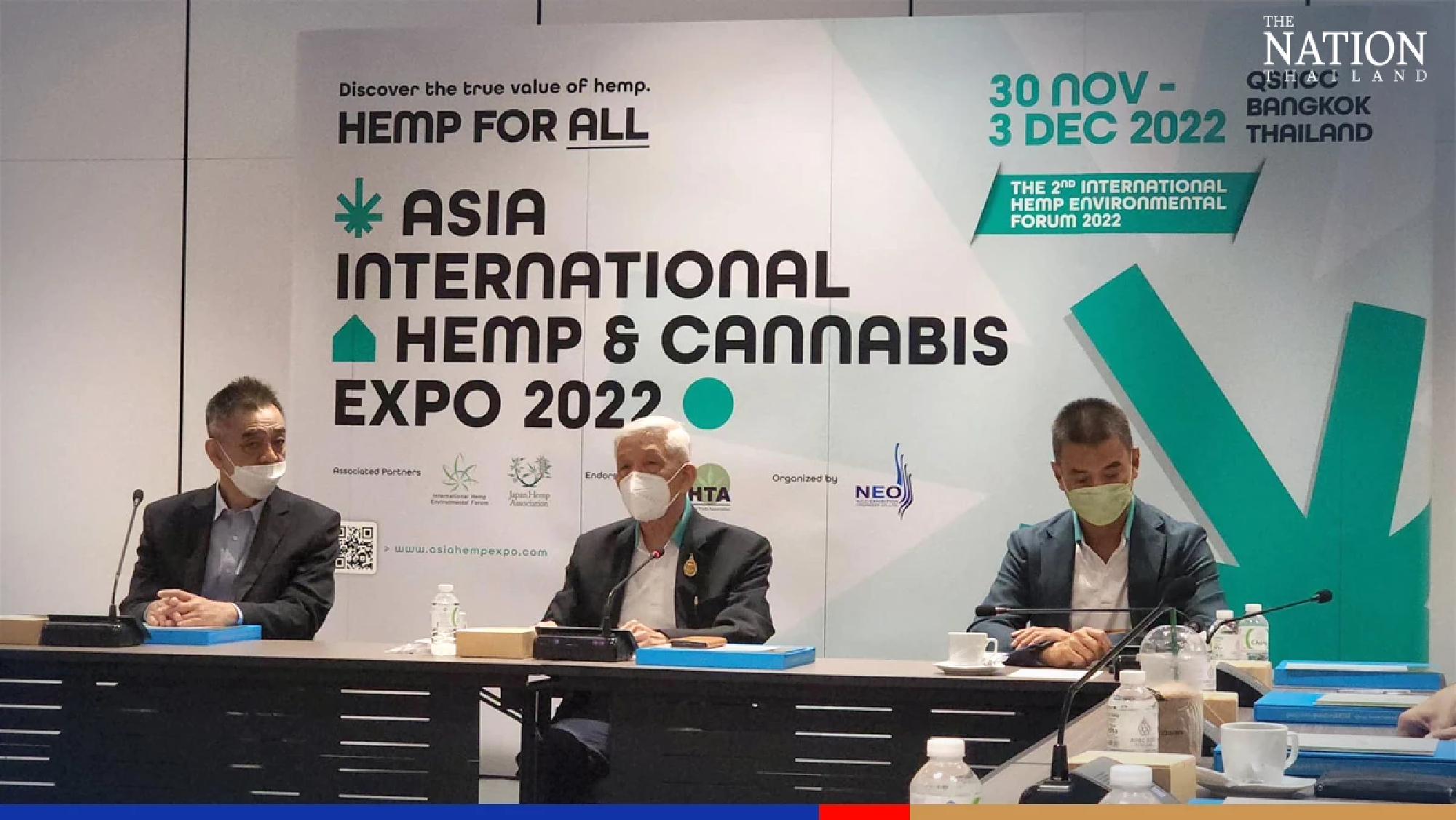
Thailand is holding a year-end exhibition to highlight hemp and cannabis production. The event will also enlighten visitors about the technology used for manufacturing products from the two plants.
The Asia International Hemp and Cannabis Expo 2022 will be held from November 30 to December 3 at Queen Sirikit National Convention Centre.
The “Hemp for All” exhibition aims to offer opportunities to all sectors.
The event is possible after Thailand legalised the two plants on June 9 and is promoting them as cash crops.
The legalisation of hemp and cannabis is a milestone for the medical sector and the economy as it offers new opportunities for businesses.
Thailand has the advantage of turning hemp and cannabis into cash crops as it has built a comprehensive process of developing products from the plants.
There are several marijuana and hemp species in the country. These plants flourish thanks to climate and soil conditions.
Labs and factories have been set up to extract substances from the two plants for use in consumer products.
With a fairly large local market, businesses entering the industry can be assured of success. International investors have also shown an interest.
The government has set up the Thai Industrial Hemp Trade Association (TIHTA) to facilitate businesses entering the industry.
The association has members in 16 provinces. It has also teamed up with state agencies and private firms. Its aim is to develop a new, sustainable industry.
TIHTA is holding the expo in collaboration with NCC Exhibition Organiser Co Ltd.
Some 300 businesses from 12 key industries have registered for the expo so far. They include medical, cosmetics, food and beverage, spa therapy, herbs and health tourism firms.
The expo will also include a seminar titled the 2nd International Hemp Environmental Forum 2022 featuring 25 foreign experts.








 SootinClaimon.Com