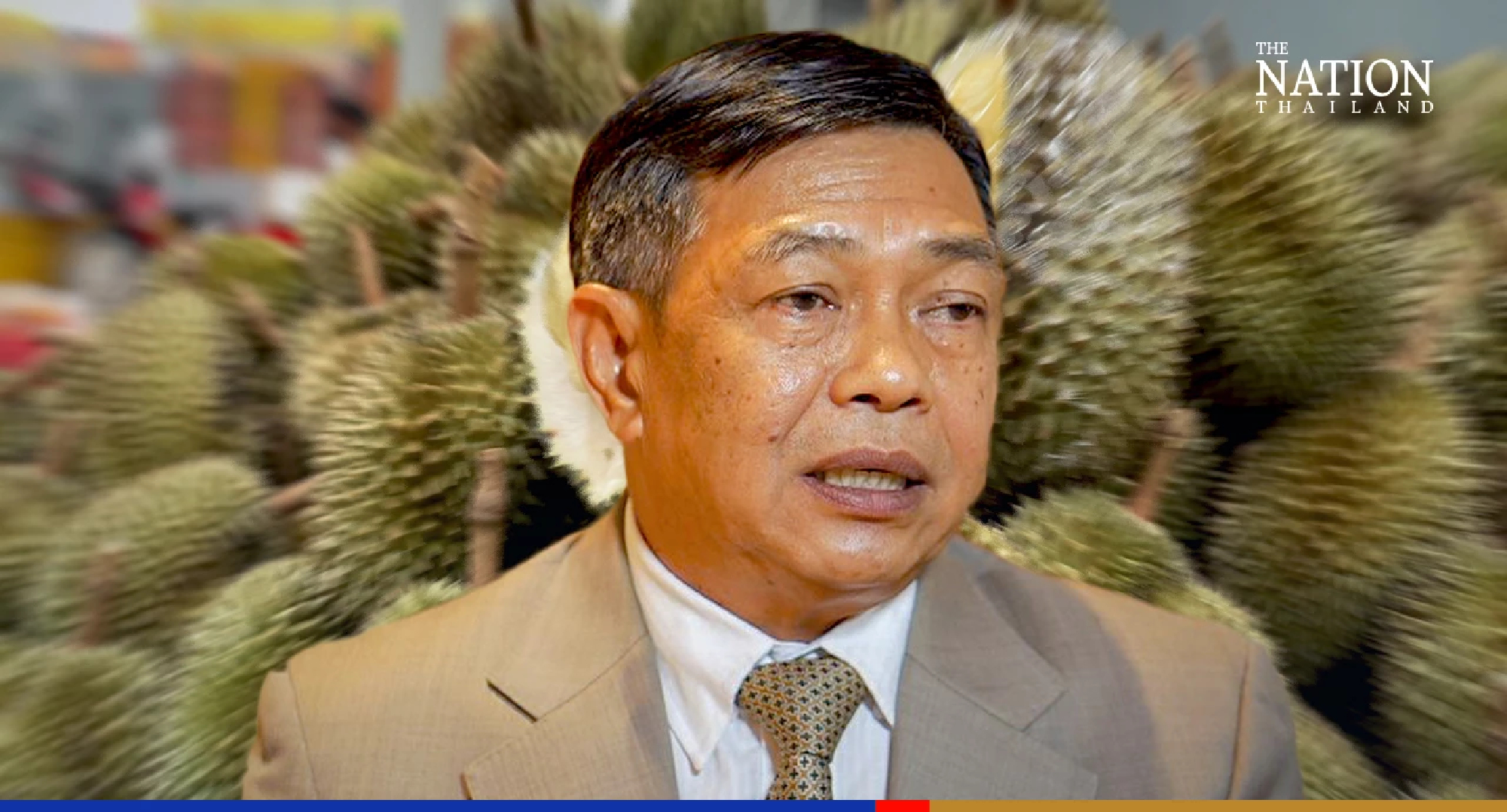
Thailand exported 550,848 tonnes of durian in the past five months, an adviser to the agriculture minister said on Wednesday.
Alongkorn Ponlaboot, who is also a member of a committee on fruit development and management, boasted that durian exports from February 1 to June 24 were higher than the same period last year. He did not provide any numbers for last year.
Alongkorn said durian exports tasted success because of effective supply and demand management by his committee, which is chaired by Agriculture and Cooperatives Minister Chalermchai Sri-on.
Alongkorn was speaking at a press conference with Nawanit Polken, Agriculture Extension Department deputy director-general, who is secretary-general of the fruit committee.
Nawanit said the committee had been working with government agencies concerned in all provinces to draft operation plans for each province in accordance with the committee’s master development plan, resulting in greater fruit exports.
The committee found that more fruits would be harvested this year because of better production and larger orchards.
“For example, the total area for growing durian grew by 15 per cent compared to five years ago and production rose 7 per cent,” Nawanit pointed out.
He said Thailand has about 7.3 million rai of cash fruits, which are durian, mangosteen, rambutan, longan, southern langsat and lychee.
In 2021, the six fruits had a combined production of 3.44 million tonnes – a 7.9 per cent increase year-on-year – while 2 million tonnes were exported, generating revenue of 168.54 million baht.
The committee will try its best to prevent a lot of fruits being harvested at the same time because such a situation would affect market prices, Nawanit added.
Thai employers have been urged by an international recruitment services firm to consider hybrid work arrangements because its survey has found that most Thai employees prefer a hybrid working environment for better work-life balance.
The Talent Trends 2022 Report survey was carried out by Michael Page Thailand. The recruitment services firm issued an insight summary report titled “The Great X” on June 21.
The Great X report stated that the survey found “a swing towards non-monetary benefits” although salaries and bonuses are still top motivators for Thai job applicants.
“A significant 69 per cent of respondents in Thailand are willing to forgo pay rise and/or promotion for better work-life balance, overall well-being, and happiness,” The Great X report states.
It added that 82 per cent of respondents want a hybrid arrangement between working from home and office.
“As economies improve, companies cannot underestimate the psychological effect that merging ‘work’ and ‘personal’ life has had over the past two years. Some 82 per cent of respondents want a hybrid work arrangement between working from home and the office,” the report recommended.
The Great X report stated that the Great Resignation has been happening in Thailand for the past two years and will only intensify in 2022.
“There has been a wave of resignations in Thailand with a large portion [37 per cent] of employees who have been at their current jobs for not more than two years and a significant 81 per cent of employees looking for new career prospects over the next six months,” the report said.
It added that 70 per cent of candidates believe that mental health and well-being should play a part in employee performance and appraisals. Companies must create a positive culture in which employees at all levels feel appreciated.
The report said a significant number of employees has been found to not feel supported at work.
It said 52 per cent of respondents say that their workload has increased compared to before Covid-19. Some 86 per cent believe that their company does not take active steps to ensure work-life balance. Companies need to change things and help employees efficiently.
The report also quoted Kristoffer Paludan, regional director of Michael Page Thailand, as urging Thai companies to start digital transformation.
“Companies starting their digital transformation may find the learning curve steep,” Paludan said. “However, the pay-off is worth it in the long run. Embracing digital tools will be crucial in a world where remote-working has become the norm. Companies that have embraced digitisation have the advantage in a competitive talent landscape, as they will no longer be restricted by geography when hiring.”
High inflation and household debt would be key risks in hindering the expansion of Thailand’s economy this year and circular economy would play a vital role to sustain the country’s growth, the World Bank has said.
According to the Thailand Economic Monitor 2022 published on Wednesday, World Bank projected that Thailand’s economy would expand by 2.9 per cent this year, as the tourism industry and private consumption show positive signs of recovery.
However, there are some areas of concern, which are the rapid price surge and household debt. Meanwhile, global tensions from the Russia-Ukraine conflict and the uncertainty of the pandemic in China need to be closely monitored as well since these two scenarios affect Thailand’s oil dependence and vulnerability to supply chain disruptions.
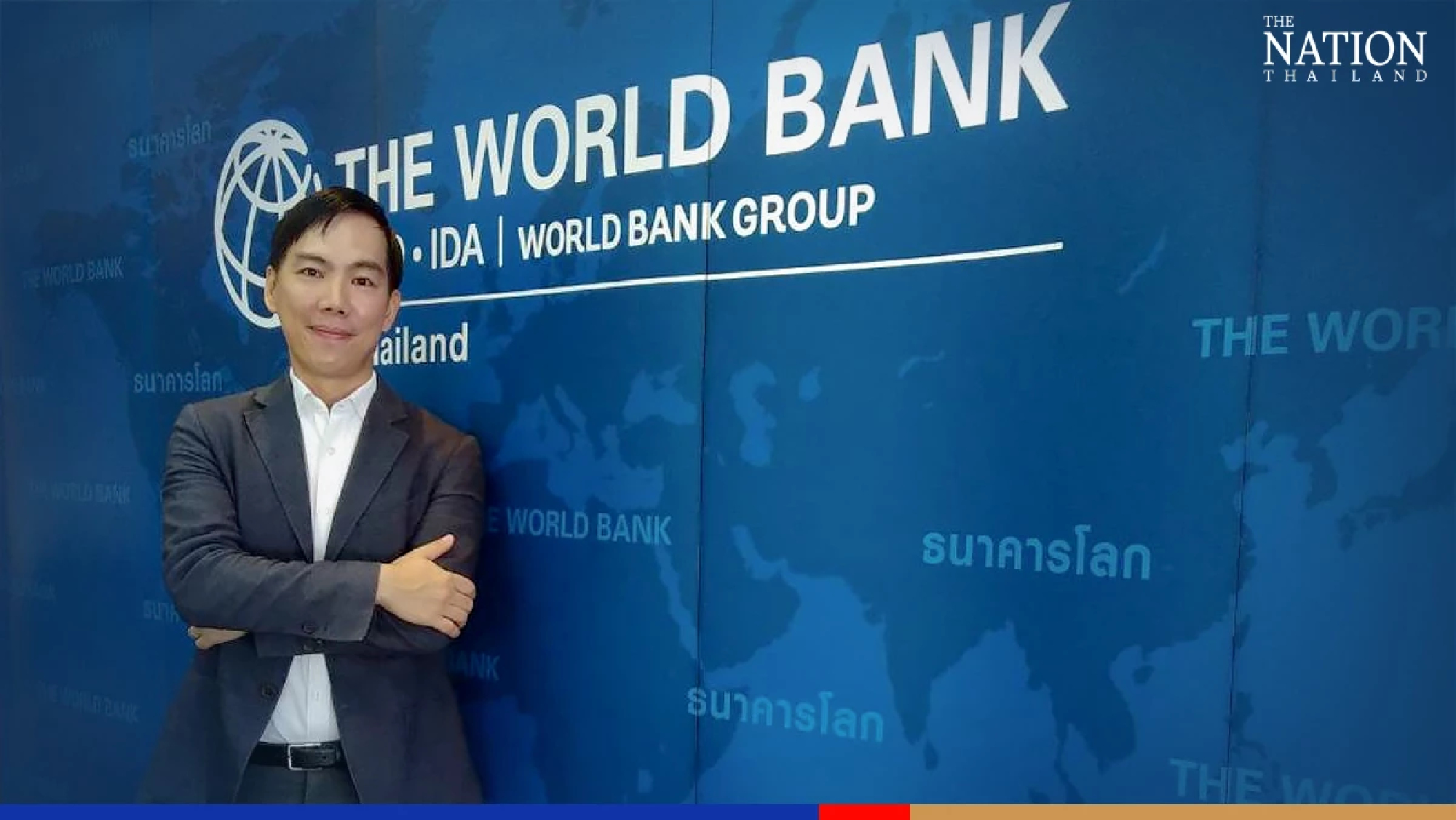
To maintain domestic consumption, Kiatipong Ariyapruchya, World Bank senior economist for Thailand, said the country requires some measures to control the price. Meanwhile, although the financial system remains stable overall, risks associated with increased levels of corporate and household debt persist.
World Bank projected that the country’s headline inflation would stay at a 14-year high of 5.2 per cent this year with core inflation at 2.3 per cent before decreasing to 2.2 per cent next year. Export of goods are expected to grow at 4.1 per cent in 2022, slowing down after a strong outcome in 2021 at 18.8 per cent, reflecting the softening global demand, and the prolonged global supply chain disruptions.
Besides, the war in Ukraine may aggravate debt and poverty in Thailand through high food and energy prices. The World Bank estimates that a 10 per cent increase in the global prices of food would raise the poverty rate by 1.4 per cent, and an increase of 10 per cent in energyprices would raise the poverty rate by 0.2 per cent. Overall public debt has risen to 61.5 per cent this year and will grow to 62.5 per cent next year.
“Poverty and unemployment are estimated to have declined over the past year but labour incomes have fallen and household debt has increased to meet expenditure needs,” said Kiatipong.
To combat high inflation, Kiatipong suggested that the Monetary Policy Committee of the Bank of Thailand (BOT) gradually raise interest rates. If the committee can raise interest rates in each round of meetings throughout the rest of this year, interest rates are expected to return to near-normal levels by 2023, when Thailand’s economy recovers fully.
He added that the main objective of monetary policy is to stabilise the economy and inflation while supporting expansion. Hence, the interest rate hike requires to be adjusted at a gradual rate in line with the recovery stage so that the decision will not affect the growth.
Also, given the decline in Covid-19 cases and the further relaxation of border restrictions in Thailand and other countries, there are some encouraging signs that the country’s economy will pick up steam in the second half and reach pre-pandemic levels in the fourth quarter of 2022.
Tourist arrivals are expected to reach 6 million in 2022, up from 0.4 million in 2021, and 24 million, or roughly 60 per cent of pre-pandemic levels, by 2024. As a result, 4.3 per cent and 3.9 per cent growth are projected for 2023 and 2024, respectively.
As the country moves into the recovery phase, it will be important to make progress on fiscal consolidation while rebalancing public spending towards public investment to help support the government’s vision to build back better and greener. Kiatipong suggest.
He stated that the BCG (Bio, Circular, Green) economy model could increase GDP by about 1.2 per cent and create nearly 160,000 new jobs by 2030, accounting for about 0.3 per cent of total employment. It can also help to stabilise volatile commodity prices and cut greenhouse gas emissions by about 5 per cent by 2030.
The World Bank has suggested several actions that the Thai government can take to support the circular economy. The first step is to create strong circular economy policies, legal frameworks, and institutional frameworks. Then, both the government and the private sector must work together to build institutional capacity and inter- and intra-agency coordination. Next, implement concerted action and targeted measures to enable missing complementarities, and finally, advocate for circular economy and raise awareness about resource intensity, pollution, and resource degradation.
According to Jaime Frias, senior economist at the World Bank, with rising domestic demand for resources, Thailand could add the circular economy approach to the pool of policy solutions that can decouple growth from a resource-intensive economy. He believes that unlocking Thailand’s potential in this area will require a coordinated public and private response, as well as targeted reforms.
Finance Minister Arkhom Termpittayapaisith said on Wednesday that he plans to use the government’s central emergency fund to provide more economic mitigation measures in the second half of this year.
Arkhom said the Finance Ministry is still discussing with the Office of the National Economic and Social Development Council about possible measures to mitigate economic grievances and reduce the cost of living for the poor.
The two agencies are still discussing which measures will be appropriate to be launched during the second half of the year with money from the central fund, Arkhom added.
Apart from new measures, the government will also extend existing measures to help the poor cope with rising cost of living, he said.
“For example, the government has extended the measures to subsidise the prices of NGV gas for vehicles and cooking gas for household use,” Arkhom said.
He added that the Finance Ministry still has time to consider whether to extend the reduction of excise tax on diesel oil. The current tax reduction period for diesel oil will end on July 20.
The finance minister said the government would have to be more selective to subsidise oil prices because the government has a limited budget and the central fund is also dwindling.
Arkhom expressed confidence that the country’s gross domestic product (GDP) would still expand by 3.5 per cent this year, which would be in the estimated range of 3 to 4 per cent.
He said the GDP would grow within the targeted range because Thailand has been fully opened, allowing more foreign tourists to visit the kingdom.
Arkhom said the Tourism and Sports Ministry has adjusted its projection of foreign arrivals from 7 million to at least 9.5 million.
The finance minister said Thailand’s exports were still growing and during the first four months of this year, exports had expanded by 14 per cent year on year.
“With more foreign arrivals and growing exports, I’m confident the country’s GDP will reach the target,” Arkhom said.
The baht opened at 35.16 to the US dollar on Wednesday, weakening from Tuesday’s close of 35.08.
The currency is expected to move between 35.05 and 35.25 during the day, predicted Krungthai Bank market strategist Poon Panichpibool.
He said the currency market is fluctuating widely due to concerns that the economy might shrink or even enter a recession, increasing demand for the dollar and pressuring the Thai currency to weaken.
However, the baht may strengthen on hopes that the Thai economy would recover soon after China eases Covid-19 prevention measures. Also investors’ hopes that Chinese tourists would be able to travel to Thailand might help the baht to advance.
However, Poon said, a strengthening of the baht is not sustainable as investors are waiting to sell the currency when it reaches the support level of 35-35.10 to the dollar.
Moreover, he speculated, it is too fast for the Chinese government to allow travel abroad right now. He expected the country to allow international travel only at the year-end.
Poon advised investors to use hedging tools such as options to manage their risks in the highly volatile currency market.
Six major tourism operators have said they could woo some 450,000 Russian tourists to visit Thailand this year, but the lack of direct flights could instead drive them to visit Vietnam and the Middle East.
Tourism Authority of Thailand Governor Yuthasak Supasorn said on Tuesday that he had held a meeting with the six tourism operators and they affirmed that they could woo at least 450,000 customers in the high season from October to December.
The six operators are: Exotic Voyage, Pegas, Anex, Odeon, Sayama and Tez.
Yuthasak said the six tourism operators found that more Russian tourists wanted to visit Thailand, especially those from eastern Russia, such as Novosibirsk and Vladivostok.
But Yuthasak said the lack of direct flights would be an impediment to meet the target of one million Russian tourists visiting the country this year.
“The main problem is that there have been no direct flights from Russia to Thailand since the Covid-19 pandemic started,” Yutthasak said.
From January 1 to June 24, only 65,541 Russian tourists have visited Thailand, far below the TAT’s target of one million.
Yuthasak said the TAT has been trying to find direct flights between the two countries and it has learned from Thai AirAsia X that it is interested to provide charter flights for Russian tourists by coordinating with the tourism operators.
The TAT governor said Thai AirAsia X has asked for more time to study the insurance implications, plane sizes and appropriate routes before it would hold separate meetings with each tourism operator.
Yuthasak said the airline would update the TAT about its decisions next week.
“The TAT is willing to provide promotions with the airline and tourism operators and we are ready to coordinate with state agencies for all state clearances,” Yuthasak said.
Exotic Voyage managing director Sathirapong na Takuathung said Thailand would lose its prospective tourists to Vietnam if there were no direct flights between Thailand and Russia.
He said VietJet Air is now seeking permission to operate direct flights between Vietnam and the Russian cities of Novosibirsk, Vladivostok and Krasnoyarsk.
“Once Russian tourists turn to Vietnam, Thailand will lose a big tourism market,” Sathirapong said.
He said Russian tourists used to pay only 30,000 to 40,000 baht for round trips between Thailand and Russia but the fare has now shot up more three times to 100,000 baht because they had to make transit flights in the Middle East.
“Many of them decided to visit the Middle East instead, as a result only some 1,000 are visiting Thailand each month,” Sathirapong added.
He said the tourism firms would like to ask for cooperation from all sides to provide direct flights to facilitate tourist arrivals from Russia.
The baht opened at 35.45 to the US dollar on Monday, strengthening from Friday’s close of 35.49.
The Thai currency is expected to move between 35.35 and 35.55 against the greenback during the day and between 35.20 and 35.65 during the week, Krungthai market strategist Poon Panichpibool predicted.
He said the baht will test its resistance level at 35.50 to 35.65 to the dollar, especially if foreign transactions flow out of the country while the market is in a risk-off state.
However, the weakening might be slowed down by exporters waiting to sell their dollars.
Poon also believes the baht will strengthen if the price of gold rebounds and investors start trading in the precious metal.
The baht may also not weaken to the new resistance level of 36 to the dollar unless China enforces a new lockdown, forcing investors to dump bonds and stocks in emerging Asian markets.
The dollar, however, may weaken if the US economic data is worse than expected and the US Federal Reserve does not support boosting the interest at a high rate again.
Poon added that the dollar will remain stable if the economic data from Europe and Asia is worse than expected.
The strategist has advised investors to use hedging tools like options to manage their risks in the highly volatile currency market.
More than 600 female business leaders from 52 countries wrapped up the 32nd Global Summit of Women on Saturday with a firm final message of commitment to protecting children from human trafficking and cybercrime.
Irene Natividad, president of this year’s summit, also lauded Thailand for hosting the event with warm hospitality and professional management.
She said the three-day summit offered a lifetime experience for everybody to hear and learn from global women influencers and opinion leaders.
She also hoped this summit will inspire other women to improve their business and career, as well as their own lives and those of others.
Natividad added that though this summit is over, it is not the last because there is a lot more work to be done.
Shifting focus on child protection The summit’s closing ceremony focused on raising awareness of child trafficking and online abuse and pleading for support in strengthening prevention measures and punishment for the crime.
Suriyon Sriorathaikul, the vice-chair of SafeguardKids Foundation Thailand, said that though law-enforcement agencies and related organisations worldwide are focusing on protecting children, crimes against them continue and are escalating during these troubled times.
Child trafficking and online abuse, especially sexual exploitation, have no borders, he said. Many countries, including Thailand, may already have legal processes in place, but efforts to protect children must continue as criminals always find ways to harm the young, Suriyon added.
The women business leaders, all dressed in beautiful colours, stood up to applaud Suriyon and offer their firm commitment to protecting children.
The event wrapped up with Natividad announcing that the next summit will be hosted by Dubai.
Lessons to learn, partnerships to continue Over the past three days, women from both public and private sectors have learned from each other and shared invaluable experiences. They have also allowed others to expand their business prospects, build partnerships and highlight women’s role in economic development.
The summit also offered guidelines to women entrepreneurs on how to apply technology and innovation such as social media, e-commerce, cryptocurrency and the metaverse to groom and grow their business.
They learned to become part of a global community and employ environmental solutions, gender diversity and global political participation.
Founded in 1990, the Global Summit of Women is a Washington-based non-governmental organisation conceived as a forum for all sectors – public, private and non-profit – to gather under the common vision of expanding opportunities for women.
A stellar group of women CEOs shared their companies’ approach to incorporating ESG to drive growth during Saturday’s morning session of the Global Summit of Women in Bangkok.
Under the topic “How ESG Informs Business Strategy”, the CEOs agreed the pandemic has spurred people worldwide to demand social responsibility from companies that exploit resources from nature and advantages from society.
However, ESG is not the same as CSR (Corporate Social Responsibility), said Kattiya Indaravijaya, CEO Kasikorn Bank (Thailand). She explained that ESG provides a company with more advantages to boost profits and competitiveness while CSR is used to build image and brand awareness.
She insisted that ESG is no longer a choice but a necessity as companies adapt to big changes in consumers’ behaviour and mindsets over the past two years. A recent study showed that 74 per cent of consumers are willing to spend on goods and services that comply with the ESG strategy.
Sharon Dayoan, chair and CEO, KPMG RG Manabat & Co (Philippines), added that there is a price to pay for adopting an ESG strategy. The ESG process may not be profitable in the beginning, she said, but it would reward companies with accountability and sustainability.
ESG or Environmental, Social, and Governance standards have received growing attention in the past few years as people and communities become more aware and concerned about the environment and society. ESG is now being applied by analysts and investors across the world as a non-financial factor to assess a company’s risk and growth opportunities.
Irene Natividad, president of this year’s Global Summit of Women, said even though ESG was not required by law, companies are adopting it in response to the ever-growing demands of investors, millennials and regulators to recognise consumer concerns on climate change, sexual harassment, discrimination and local fair trade.
She pointed out there is an increasing trend away from an emphasis on bottom-line success to a company’s value being assessed on how well it has performed on ESG metrics.
Elena Butarova, Asia-region head for Russian insurer MetLife, noted that most companies are focusing only on the E (Environment) rather than the S and G (Social and Governance). She suggested this was because environmental impacts are often obvious and work to protect the environment can be easily measured and assessed.
She said companies could correct this imbalance by adopting practices to support gender equality, respect diversity, and improve their local community’s quality of life.
Chadatip Chutrakul, CEO of real estate developer Siam Piwat (Thailand), said one of the most challenging elements of adopting ESG strategy was dealing with differences of behaviour and mindset among staff. Companies need to find ways of motivating staff to accept the ESG concept, which includes mutual respect for other’s rights.
Sustainability, meanwhile, did not apply to the company’s operations alone but to the whole surrounding community. Chadatip said this means that the company is responsible for creating a support system that allows both it and the local community to grow together.
She cited the example of Siam Piwat’s “Sook Siam” (Thailand Happiness) project that offers low-rent pitches for small vendors to sell OTOP products at the luxury ICON Siam mall. She said the project has earned US$50 million in revenue over three years, with more than 100,000 visitors per day.
Dian Siswarini, CEO of Indonesia’s leading telecoms firm, PT XL Axiata, said ESG has been part of the company’s vision since the beginning. As such, she said her company had continued investing to improve infrastructure since its founding, believing that infrastructure drives long-term growth of the country.
The ESG practices may be tough and some companies may feel exhausted but it should never stop. It is because ESG facilitates top-line growth in the long run, attracts talent, reduces costs, and forges a sense of trust amongst consumers. Dian added.
The path to getting more women around the world into the corporate boardroom was explored at the three-day Global Summit of Women (GSW) in Bangkok on Friday.
Five leading female tycoons shared their unique experiences of pressing for women’s business leadership in their own countries during a seminar titled “Moving the Needle on Women on Boards: Does Advocacy Make a Difference”.
Irene Natividad, president of the GlobeWomen Research and Education Institute (US), said the decades-long fight for equality in the corporate workspace is yielding great progress in some countries. However, a wide gap still exists and one key to narrowing it is setting gender quotas and deadlines for companies to comply with.
Natividad proposed that governments mandate that the top 100-300 listed companies must have women in at least 30 per cent of their board posts by the due date or face punishment. This strategy would lend urgency for companies to consider talented female candidates.
She added that pressure and public awareness campaigns via media were often needed to bring about big changes.
“In the United States, for example, the MeToo and BlackLivesMatter campaigns have made Americans realise that they have to stand up. Finally, the government has approved some regulations against sexual harassment and discrimination while leading companies have put these issues in their codes of conduct,” said Natividad.
She also encouraged girls and women to get out of their comfort zone and fight for their dreams. They shouldn’t be afraid to reach for excellence in their chosen fields or to stand up and present their work in public. She said building networks with others was key to forming connections to overcome obstacles in their path.
Amanda Johnston-Pell, IBM’s chief digital officer for Asia-Pacific, said the government sector plays a vital role as a role model for the private sector when it comes to equality of opportunity for women. She also agreed that clear and concise regulations were required to speed up women’s access to corporate board seats. She advocated the “if not, why not” approach that allows companies room to explain why they feel unable to promote female workers to high-ranking positions. What are their challenges and what kind of support do they need?
In Johnston-Pell’s view, promoting women in the workplace is not just about equity but is also smart human-resource management in the digital economy era.
Strongly believing that women have as much ability and potential as men, Ami Moris, CEO of Maybank Investment Banking Group (Malaysia) said her “30% Club”, an independent organisation that drives for equality and acceptance of women in the workplace, launched a campaign in 2015 to get as many women on boards as possible.
The number of women on boards of the top 100 listed companies in Malaysia has now risen to about 26 per cent, close to the 30 per cent target. However, she insisted that 30 per cent is not the magic number but merely a starting point for companies to take action to support women’s roles.
She added that the biggest challenge to this kind of effort is bias and discrimination. Therefore, rather than saying why the male-dominated companies need to support women, it was better to show the significant rise in sales and revenue that occurs in companies that promote women to their boards.
This improved performance is strong evidence that gender diversity spurs the creative thinking required to tackle the uncertain and rapidly changing digital world, Moris added.
Jimena Fernandez, board director of transport firm Aleatica, shared her experience from Mexico where most private companies are family businesses. Hence, it is very difficult for the government to mandate laws and regulations to promote women’s role in business.
She acknowledged that progress was slow but said methods being adopted include mandated quotas, insertion of gender diversity into corporate governance codes, and shareholder-driven initiatives.
Girls’ education was another key driver in Mexico’s journey to gender parity. Fernandez said more and more girls are now changing their mindset and stubbornly following their dream careers, while the older generation believed that females should stay at home.
Although Thailand is fairly open to women being promoted to high-ranking corporate positions, the country still needs motivation to drive changes, said Reunvadee Suwanmongkol, secretary-general of the Securities and Exchange Commission. Hence collaborative projects were launched by the public and private sectors to promote women’s role in the workplace.
She explained that the country’s chief problem is not regulations but demand and supply. She pointed out that while more job positions are open to women, many companies struggle to find talented female workers who suit their needs. Hence, Thailand not only needs to support companies to hire and promote more women but also needs to empower Thai women as well.
Founded in 1990, GSW is a Washington DC-based non-governmental organisation conceived as a forum for all sectors – public, private and non-profit – to gather under the common vision of expanding women’s economic opportunities globally through exchange of working solutions. The focus of the summit, which Thailand is hosting for the first time this year, is women’s advancement in the global economy.

 He said Thailand has about 7.3 million rai of cash fruits, which are durian, mangosteen, rambutan, longan, southern langsat and lychee.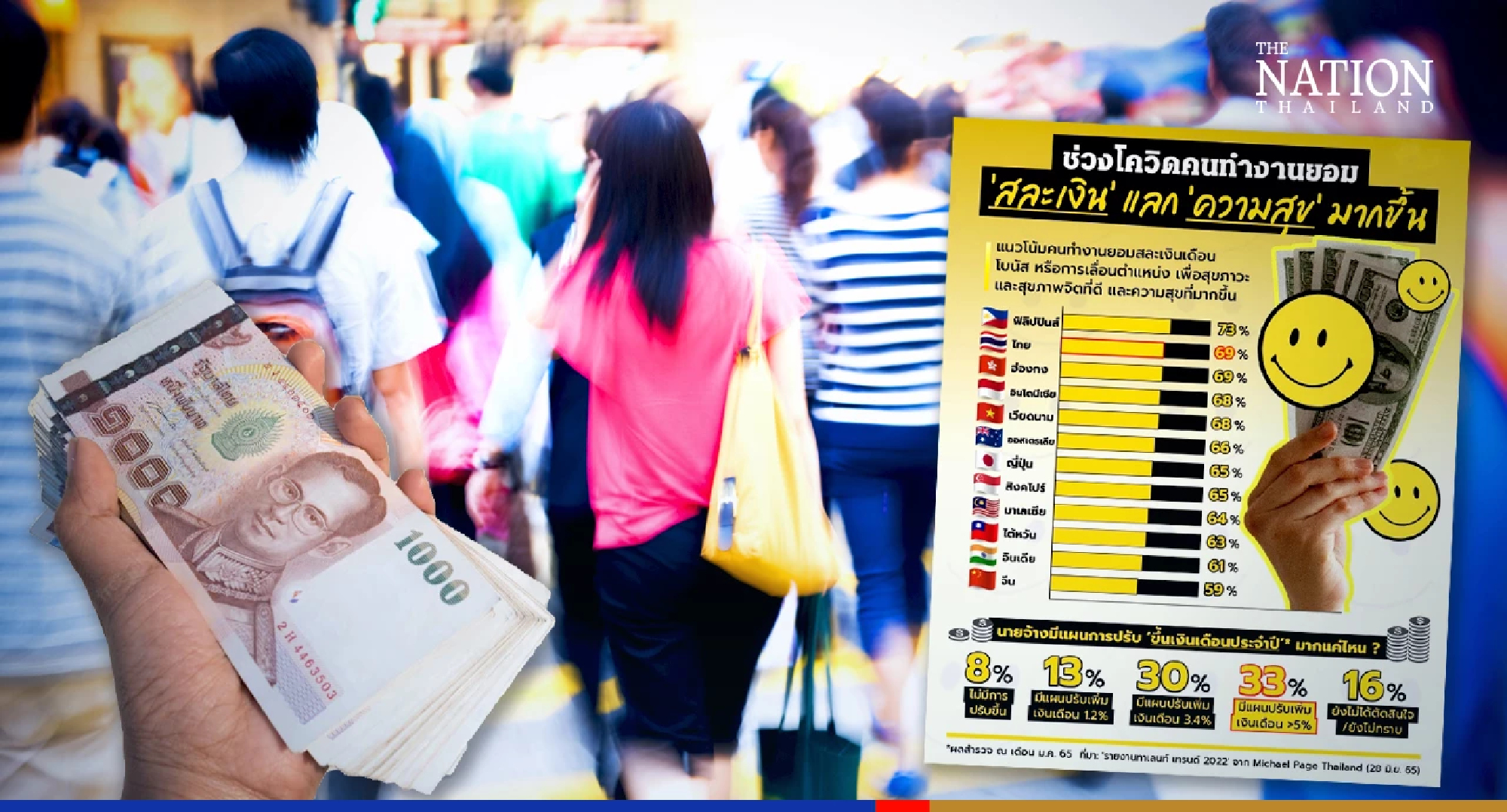








 SootinClaimon.Com