ACFS pushes for higher levels of organic farming

ศาสตร์เกษตรดินปุ๋ย : ขอบคุณแหล่งข้อมูล : หนังสือพิมพ์ The Nation

https://www.nationthailand.com/business/30374618

ACFS pushes for higher levels of organic farming

Aug 12. 2019
By THE NATION

331 Viewed

The National Bureau of Agricultural Commodity and Food Standards (ACFS) has introduced a brand new online-marketing channel for young producers focusing on organic farming, which is aimed at helping them expand their clean food business and catch up with the increasing value of organic products, which is growing by 20 per cent every year.

ACFS secretary-general Juadee Pongmaneerat notes that young smart famers have an important role to play in helping government meet its goals of expanding the organic market, as set out in the 20-year national strategic plan 2018-2037. This involves creating awareness about the food safety system among both food producers and consumers while guiding farmers to ensure their products meet health standards.

The office’s newly developed website DGTFarm.comserves as an online marketplace and is open to young farmers to place any of their products provided these are 100-per-cent organically produced. A Business Matching option is also featured while the QR Trace helps buyers access product information.

Safe food and organic products will be exhibited and farmers encouraged to adopt new marketing channels for organic produce.

“This year, we expect to train 189 young smart farmers who have expressed interest in organic farming. We are confident that our efforts will increase the number of organic plantations,” Juadee said.

According to the Department of Internal Trade, there are 40,774 farmers in 119 groups certified by organic farming standards cultivating more than 521,826.56 rai. The Ministry of Commerce’s Organic Marketing Intelligence Center reports the value of domestic organic farming products at Bt3 billion baht, with Bt900 million coming from the domestic market. The growth rate is 10 per cent per year and the value of exports represents 0.06 per cent of the global value.

It is estimated that the global organic farming products could reach U$104 billion, or Bt3.55 trillion, and enjoy a growth rate of 20 per cent per year. The main markets dominating the global organic farming market are the United States, Canada, Europe, China and Australia.

Juadee adds that organic produce remains the choice of a niche market which regards health as the main priority and says this is growing rapidly. Organic farming is a platform for agricultural sustainability and generates more income and thus raises the living standards of farmers.

To respond the global trend of healthcare and to elevate produce to organic standard and GAP (Good Agricultural Practice), DGTFarm.com categorises the products into three types. They are organic produce, which is planted in land free from chemical and toxins such as vegetables, fruits, rice and processed food. Group 2 comprises products certified by GAP like vegetables, fruits, rice, egg, processed food, livestock and fishery products, including banana soap from Kamphaengphet province. Finally, the products with QR Trace identifies the source through a QR code attached to the products and include rice, eggs, vegetables, fruits, processed food and herbal cosmetics from Ratchaburi province.

Currently 1,600 farmers who have attained organic and GMP standards are active on the online marketplace.
Plan to expand alternative energy sources to get final hearing in August

ศาสตร์เกษตรดินปุ๋ย : ขอบคุณแหล่งข้อมูล : หนังสือพิมพ์ The Nation

https://www.nationthailand.com/business/30374593

Plan to expand alternative energy sources to get final hearing in August

Aug 12. 2019
By THE NATION

510 Viewed

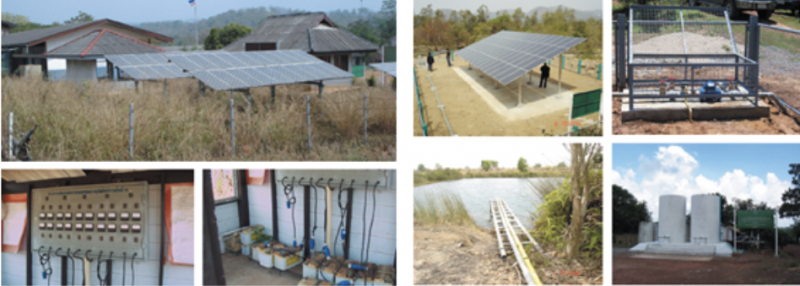
The Department of Alternative Energy Development and Efficiency has drawn up Bt10 billion budget plan to support its projects during 2020-2024.

The department deputy director-general Yongyuth Sawatdisawanee said the projects will include preparing a revolving fund to promote energy conservation, actions to support the use of energy-saving machinery, the promotion of solar rooftops, and demonstration projects targeted to farmers showing how to use less energy.

The department will this month hold a fifth and final hearing into its draft plan for developing alternative energy from 2018-2037.

The plan aims to raise the ratio of electricity generated by alternative energy sources to 30 per cent of total produced energy, representing 29,358 contracted megawatts, within 2037.

The contribution from solar energy will be increased to 15,574 megawatts in that year.

Govt relaxes policy on van service operators switching to microbus

ศาสตร์เกษตรดินปุ๋ย : ขอบคุณแหล่งข้อมูล : หนังสือพิมพ์ The Nation

https://www.nationthailand.com/business/30374591

Govt relaxes policy on van service operators switching to microbus

Aug 10. 2019
(Photo: thairath.co.th)

(Photo: thairath.co.th)
By THE NATION

668 Viewed

After talking with van operators in the Bangkok area, Transport Minister Saksayam Chidchob said that he would revisit the policy requiring public van services to switch from van to bus.

If operators insist on using their existing van, they must ensure the old van achieves the safety standards. For van operators who would like to change to a microbus, the registration deadline previously set for August 13 has been removed.

The minister also directed the Land Transport Department to allow vans 10-12 years old to ensure they pass quality standards. He will later discuss with the department about security measures.

Sontirat plans renewed push for Napier grass energy plants

ศาสตร์เกษตรดินปุ๋ย : ขอบคุณแหล่งข้อมูล : หนังสือพิมพ์ The Nation

https://www.nationthailand.com/business/30374586

Sontirat plans renewed push for Napier grass energy plants

Aug 10. 2019
By The Nation

593 Viewed

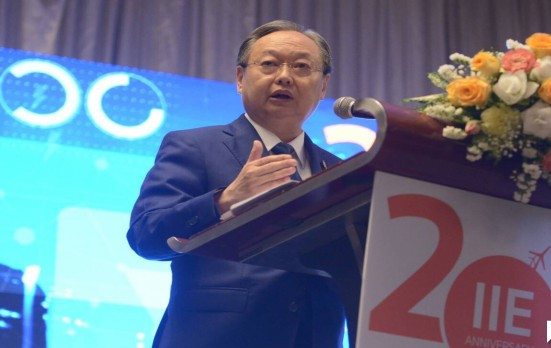
Energy Minister Sontirat Sontijirawong is pushing for the use of Napier grass as a source of energy.

Speaking at a seminar on “Energy for Industries for a sustainable future” to mark the 20th anniversary of the Institute for Industrial Energy on Friday (August 9), he revealed plans to establish a committee to work with the industrial sector in order to review the plan to use Napier grass, also known as elephant grass, as an energy source. He said the review process was expected to be completed within a month.

He spoke of a plan for Napier grass farming to feed electricity-generating plants, which could provide electricity to nearby villages and also encourage people to take part in energy production. This will help secure energy for people at a lower cost.

“I met with industries who are using Napier grass as a source for electricity. We will cooperate with the businesses to review and improve the power development plan [PDP]. In 2018, the PDP plan de-prioritised Napier grass in the energy crop group. However, I have to hold a session in order to hear from businesses and agriculture experts,” Sontirat said.

The Energy Ministry source said that the review of the Napier grass farming project was looking at two ways:

1 Using the successful business model of UAC Global, which uses Napier grass and corn as sources for biogas electricity production in Chiang Mai.

2 Adjust the pattern from the past to promote biogas by bringing the grass to ferment production of gas to produce electricity. This approach may help to reduce the cost of producing electricity.

“Napier grass electricity plants have to be based near animal farms due to the fermenting process and the need for a large water source. They are still discussing these matters to discover the proper approach,” the source said.

The Napier grass farming plan was proposed in 2013 by the then-energy minister, Pongsak Ruktapongpisal, as part of bioenergy production. However, the plan was abandoned a year later due to lack of a budget. The industrial sector continued with the plan without financial support from the government.

Bank depositor protection cut to Bt5 million

ศาสตร์เกษตรดินปุ๋ย : ขอบคุณแหล่งข้อมูล : หนังสือพิมพ์ The Nation

https://www.nationthailand.com/business/30374582

Bank depositor protection cut to Bt5 million

Aug 10. 2019
By The Nation

1,115 Viewed

Coverage amounts for protection of deposits has been reduced by half, from Bt10 million to Bt5 million per account per financial institution starting August 11, the government’s Deposit Protection Agency (DPA) said.

The period of protection will last until August 10, 2020 after which the coverage amounts will be reduced to Bt1 million.

DPA president Songpol Chevapanyaroj said depositors covered will also drop to 99.65 per cent of total bank depositors from 99.83 per cent at present.

When the coverage amount reduces to Bt1 million, the depositor coverage will reduce to 98.14 per cent of total depositors.

“Although the number of depositors covered will have decreased, the coverage rate is higher than the global benchmark,” he said.

DPA, established in 2007 in the aftermath of the 1997 financial crisis, has been created to reduce taxpayers’ burden when crisis hits the financial system. Before the crisis, a blanket coverage was in place, therefore it was largely attributed to a rapid rise of public debt as a result of government spending tax money to rescue the banking sector.

The limited insurance is expected to check the risky behaviour of investors who search for high rate of returns without taking into account potential risks.

New committee to monitor online business practices

ศาสตร์เกษตรดินปุ๋ย : ขอบคุณแหล่งข้อมูล : หนังสือพิมพ์ The Nation

https://www.nationthailand.com/business/30374574

New committee to monitor online business practices

Aug 10. 2019
By The Nation

664 Viewed

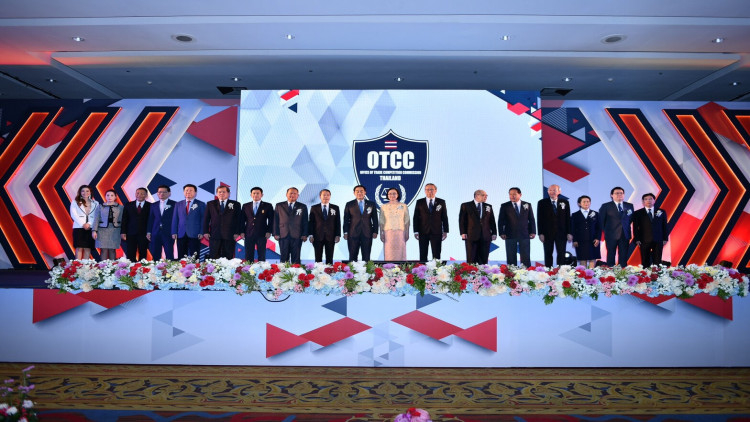
The Office of Trade Competition Commission (OTCC) has set up a committee to monitor fair competition in the online arena following complaints from both large and small operators.

OTCC chairman Sakon Varanyuwatana said the complaints had been lodged by and against many parties, such as small operators against larger ones and vice versa.

This unnamed committee under the Commerce Ministry has also been tasked with issuing guidelines for fair business practices in the franchising area, as well as business practices regulated by the government, such as telecommunications, insurance, energy and financing.

Those found breaching these guidelines will be punishable under a yet-to-be legislated law that will be based on these guidelines as well as the committee’s case studies and recommendations.

Citing one of the complaints, Sakon said private hospitals using powerful networks are dumping service fees unfairly against businesses using smaller networks, and are also fixing the prices of medicines and medical supplies in their favour.

TCC will also look into the merger of two taxi-hailing services based outside Thailand that was done without notifying Thai regulatory agencies. This merger has resulted in higher fares and the committee will study the impact this has had on Thai commuters, he said.

He added that sellers have also complained about the owners of e-commerce websites forcing them to sell their goods at much lower prices.

New guidelines to prescribe reserve funding for corporate bonds

ศาสตร์เกษตรดินปุ๋ย : ขอบคุณแหล่งข้อมูล : หนังสือพิมพ์ The Nation

https://www.nationthailand.com/business/30374572

New guidelines to prescribe reserve funding for corporate bonds

Aug 10. 2019
By The Nation

705 Viewed

The Thai Bond Market Association (ThaiBMA) has said that guidelines are being drafted on reserve funding for corporate bonds, which were expected to be effective at the end of the year, while the IFRS 9 will be effective next year.

A UOB analyst commented that it would have only a slight affect on the market as banking institutions and insurance companies invest in high-rated corporate bonds. The ThaiBMA has suggested that the reserve fund should depend on the rating of corporate bonds.

Ariya Tirnapragit, deputy managing director of the ThaiBMA, said that the International Financial Reporting Standard, IFRS 9, would be effective in 2021. The measure would affect insurance companies and commercial banks. Listed companies who invest in corporate bonds have to reserve fund in case of bad debt. The bad debt reserve will depend on the corporate bond’s rating and the term of the corporate bond. High-rated bonds will have low reserve fund while low-rated ones will require high reserve funds. Also, long-term corporate bonds will have a higher reserve fund than short-term bonds.

The association was in the process of preparing the guidelines following new standards in the IFRS 9. They will hold a focused group discussion with other parties in the bond market such as the federation of accounting professions, commercial banks, insurance companies, securities companies and asset management companies.

“The new financial reporting standard ‘IFRS 9’ has more stipulations. In the future, every investment has to reserve funds for possibility of bad debt from loans, credit and corporate bonds. The ThaiBMA is focusing on corporate bond investments by creating guidelines for small companies to help them reach the new standards” Ariya added.

Kitpon Praipaisarnkit, a strategist at UOB Kay Hian, said that there was not enough information to decide if the reserve fund would affect the market, as companies that invest in corporate bonds usually choose high-rated bonds. Companies do not have expectations of high returns, and returns higher than from savings accounts were acceptable.

An indirect effect from the IFRS 9 is the higher cost of corporate bond sales, as low-rated bonds have a high maintenance cost, which will affect medium companies with unstable financial status.

“Investors in corporate bonds are commercial banks, insurance companies and listed companies mostly through commercial banks. These parties have already prepared for the new standard and they will invest in high-rated bonds,” Kitpon said.

Ariya said that since July 2019, private companies had sold Bt650 billion worth of bonds, expected to reach Bt700 billion by September.

In addition, the Bank of Thailand will start Basel III measurement next year, including capital accords, as bonds will be able to convert to funding for five years, increasing the chances of bond sales. However, commercial banks have already invested in new corporate bonds to replace old bonds due to the lower bond cost.

Finance, BOT to coordinate monitoring as economy threatens to stall: Somkid

ศาสตร์เกษตรดินปุ๋ย : ขอบคุณแหล่งข้อมูล : หนังสือพิมพ์ The Nation

https://www.nationthailand.com/business/30374566

Finance, BOT to coordinate monitoring as economy threatens to stall: Somkid

Aug 09. 2019
Somkid

Somkid
By The Nation

495 Viewed

Somkid Jatusripitak, a deputy prime minister, has revealed a future plan to establish a committee coordinated between the Finance ministry and Bank of Thailand (BoT) to monitor economic condition.

He said that Finance Minister Uttama Savanayana had recently reported a successful discussion with BoT about the co-monitoring plans.

The major members of the committee will include the Finance minister as the chairman of the committee, the Finance secretary, the governor of The Bank of Thailand, the secretary general of the office of the Securities and Exchange Commission, and the secretary general the office of the National Economic and Social Development Council.

“It is an ideal plan for these people, who are almost of the same age and have the same vision, to work together and discuss current financial problems,” said Somkid. “Their teamwork will find a solution and prepare for the difficult situation [coming] in the near future ”

On August 6, the government discussed the unstable global economic situations that has arisen due to three trends – the US-China trade war, pro-democracy protests in Hong Kong, and a weakening of the Yuan currency.

As the Dow jones index has decreased during the China-Us trade war, Thailand is closely monitoring it as China holds many US bonds.

“I have directed every agency that is related to the situation, such as the Finance ministry, to hold discussions with financial institutions, the Bank of Thailand, and the Stock Exchange of Thailand to ensure better economic management,” Somkid said.

Bt200 bn expansion for fiscal 2020 budget

ศาสตร์เกษตรดินปุ๋ย : ขอบคุณแหล่งข้อมูล : หนังสือพิมพ์ The Nation

https://www.nationthailand.com/business/30374553

Bt200 bn expansion for fiscal 2020 budget

Aug 09. 2019
By The Nation

412 Viewed

The Bureau of the Budget said the budget for 2020 will be increased by Bt200 billion from the fiscal 2019 budget.

Of this amount, Bt120 billion will be allocated for the approval of projects and Bt80 billion for economic stimulus and future projects.

Budget director Dechapiwat Na Songkhla said that the Cabinet had approved the fiscal 2020 budget at Bt3.2 trillion, with a budget deficit of Bt469 billion. An additional Bt200 billion will be reserved for the future government plans

The additional Bt200 billion will be divided into: salaries and welfare for civil servants at Bt40 billion; Treasury at Bt60 billion; and an additional budget for new recruit civil servants of around Bt10-20 billion. The government will have Bt80 billion remaining for use in future government projects and for the economic stimulus.

The investment budget in 2020 has been set at Bt640 billion, representing 20 per cent of the whole government budget.

Finance chief Uttama orders officials to study proposal for sustainable equity fund

ศาสตร์เกษตรดินปุ๋ย : ขอบคุณแหล่งข้อมูล : หนังสือพิมพ์ The Nation

https://www.nationthailand.com/business/30374541

Finance chief Uttama orders officials to study proposal for sustainable equity fund

Aug 09. 2019
Uttama Savanayana

Uttama Savanayana
By THE NATION

480 Viewed

Finance Minister Uttama Savanayana has told the Fiscal Policy Office to study a proposal from an investment grouping that a sustainable equity fund (SEF) be set up to replace the long-term fund (LTF).

The study will focus on how the SEF can play a crucial role in encouraging people to save and further enhance the capital markets, Uttama said.

The proposal to establish the SEF was put forward by the Federation of Thai Capital Market Organisations (FETCO).

Uttama said that the issue of whether the tax benefits for LTF investors would be cancelled had yet to be finalised. If the granting of the tax benefits continued, it should be awarded via a new kind of fund.

It is envisaged that the new fund would encourage individuals to direct their savings into the capital markets.

Separately, Uttama said that the ministry supported the establishment of the National Pension Fund (NPF) and the e-business law. The bills to enable both laws will be forwarded to the Council of State for scrutiny.