‘No faith’ in Prayut’s economic team, opposition leader tells opening policy debate

ศาสตร์เกษตรดินปุ๋ย : ขอบคุณแหล่งข้อมูล : หนังสือพิมพ์ The Nation

https://www.nationthailand.com/business/30373645

‘No faith’ in Prayut’s economic team, opposition leader tells opening policy debate

Jul 25. 2019
Sompong

Sompong
By THE NATION

548 Viewed

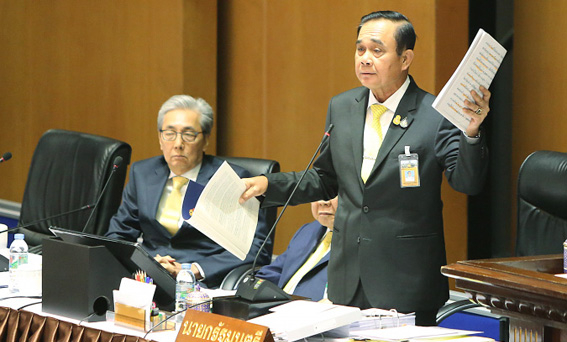
Thailand’s Opposition leader Sompong Amornwiwat said he lacked confidence that the current economic team under Prime Minister Prayut Chan-o-cha could successfully implement its policies, given that most of its existing team members are the same as those in the previous Prayut government.

Sompong, who is the new leader of Pheu Thai Party, was the first MP to kick off Thursday’s parliamentary debate after Prayut finished announcing the government’s policies.

Sompong added that the previous government had failed to solve either the nation’s economic difficulties or to address the concentration of wealth among a small group of people.

Chinese consumers want richer experiences, quality of life

ศาสตร์เกษตรดินปุ๋ย : ขอบคุณแหล่งข้อมูล : หนังสือพิมพ์ The Nation

https://www.nationthailand.com/business/30373637

Chinese consumers want richer experiences, quality of life

Jul 25. 2019
Photo: foodnewsinternational.com

Photo: foodnewsinternational.com
By THE NATION

328 Viewed

Mintel has published its annual Chinese Consumer Report, offering an overview of the key trends and spending behaviours affecting China’s consumer landscape over the last year that reveals Chinese consumers are in pursuit of richer experiences and quality of life.

Latest findings from The Chinese Consumer Report shows that 91 per cent of Chinese respondents agree that when making a purchase, quality is more important than price; while over four in five (81 per cent) are interested in trying something new rather than sticking to the familiar.

The new Mintel research also reveals that total consumer expenditure in China grew 8.6 per cent to reach RMB41,146 billion (Bt184,177 billion) in 2018. While this is slower than the 11.2 per cent growth seen in 2017, expenditure grew in line with China’s per capita disposable income of 8.7 per cent.

Mintel’s Jessica Jin notes that the survey shows Chinese consumers are becoming savvier spenders and are willing to pay a premium for products and services that support a richer lifestyle. But when it comes to basics, value for money is still the top consideration.”

Savvier and more prudent spending

Household care products is the top sector where decreased prices or discounting has played a big part in driving consumers to spend less; as indicated by the 43 per cent of Chinese respondents who have spent less on household care products (eg tissue paper, household cleaning products). On the other hand, consumers are willing to spend more for broader, self-indulgent experiences including holidays.

Mintel research further reveals that personal items and housing remain the biggest consumer spending sector, accounting for 23.7 per cent of total consumer expenditure in 2018. This is followed by in-home food (14.3 per cent), holidays (9 per cent) and clothing and accessories (8.1 per cent). Looking ahead, Mintel predicts that holidays, transportation, and personal finance and housing, will be the top three sectors with the highest growth in terms of consumer spending, reaching a compound annual growth rate of 12.8 per cent, 10.2 per cent and 10.1 per cent, respectively, in the five years to 2023.

“China’s stable economy in 2018 has driven consumer demands beyond basic necessities like food and drink, towards more emotional requirements like attaining enjoyment from holidays, leisure and entertainment. With more and more consumers pursuing a better quality of life and wanting more new life experiences, sectors such as holidays, leisure and entertainment, and clothing and accessories, have encouraged many consumers to self-indulge and spend more in 2018. Meanwhile, increasing expenditure on essentials like in-home food, for instance, is driven by rising prices in the market,” Jin said.

Mintel’s annual The Chinese Consumer 2019 Report tracks consumer spending across 15 market sectors, revealing the future opportunities with each category. Sector highlights include:

– In-home food: Pursuing better-for-you and convenient diets

– Beauty and personal care: 360-degree holistic beauty solutions will mainstream

– Clothing and accessories: keeping up with growing individuality and Chinese brands increasingly in the spotlight

– Leisure and entertainment: Self-indulgence and breaking from routine

– Holidays: Leading sector for consumer spending with promising growth prospects

Policy debate starts with Prayut facing protests from the opposition

ศาสตร์เกษตรดินปุ๋ย : ขอบคุณแหล่งข้อมูล : หนังสือพิมพ์ The Nation

https://www.nationthailand.com/business/30373629

Policy debate starts with Prayut facing protests from the opposition

Jul 25. 2019
By THE NATION

1,254 Viewed

Prime Minister Gen Prayut Chan-o-cha kicked off the government policy debate at 9.30am and was immediately disrupted by protests from the opposition.

Turmoil broke out even before Prayut delivered his government policy statement when opposition Future Forward Party MP Piyabutr Saengkanokkul rose to protest against the prime minister.

Piyabutr alleged that Prayut did properly take the oath of allegiance to the King before he took office.

Phalang Pracharat MP Virakorn Khamprakorb quickly rose to defend Prayut by pointing out that the video clip of Prayut taking the oath was edited to remove certain wording.

The chair of the meeting then allowed Prayut to deliver his policy statement.

Soon after Prayut began speaking, Pheu Thai MP Julaphan Amornwiwat rose to protest on the grounds that the prime minister was violating meeting regulations by failing to speak in accordance with the copy of policy statement distributed to parliamentarians.

Another opposition MP, Pheu Thai’s Chonnan Srikaew also protested, saying that Prayut must address the chair of the meeting instead of speaking to the parlimentarians.

Chonnan also asked the chair of the meeting to tell the prime minister not to address or give orders to parliamentarians again.

Parliament President Chuan Leekpai, who chaired the meeting, then told the prime minster to adhere to copy of his policy statement when making his speech.

Prayut acknowledged the instruction and thanked Chonnan and called him a rising star before he continued to read from the copy.

But Jirayu Huangsup, Pheu Thai MP, rose to protest again when Prayut skipped over the drug issue. Jirayu asked whether this meant the government would not be serious in tacking drug issue.

Prayut resumed reading the statement after the protest.

Meeting held to draw EEC investment from Hong Kong

ศาสตร์เกษตรดินปุ๋ย : ขอบคุณแหล่งข้อมูล : หนังสือพิมพ์ The Nation

https://www.nationthailand.com/business/30373609

Meeting held to draw EEC investment from Hong Kong

Jul 25. 2019
By THE NATION

619 Viewed

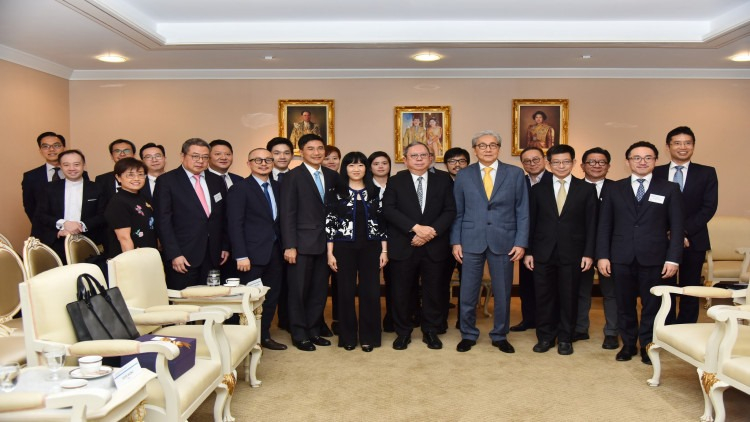
Deputy Prime Minister Somkid Jatusripitak held a meeting yesterday (July 24) with a private business mission from Hong Kong, led by chairman of the Hong Kong Trade Development Council Peter Lam, on the prospects of investment in the Eastern Economic Corridor.

Somkid revealed after the discussions that Lam had led the leading businessmen to Thailand as they were interested in exploring investment opportunities in the country, especially the innovation and digital zones of the Eastern Economic Corridor (EEC).

The first meeting between Thailand and Hong Kong on their cooperation in the ‘Thailand Cyberport’ project will be held in October in Hong Kong.

Lam informed Somkid at the meeting that Hong Kong’s chief executive Carrie Lam will invite Thai delegates to participate in the Belt and Road Initiative (BRI) meeting, to be held in Hong Kong in October this year.

The meeting is to extend the discussions held last year. Topics will include Thailand’s intention to link up with the Greater Bay Area (GBA) – comprising Guangdong province, Hong Kong, and Macao, as well as the ‘Thailand Cyberport’ project.

The move will promote Thailand as a hub for nurturing startups in 10 remote industries, backed by the connection of capital markets in Thailand and Hong Kong.

“I have suggested that cooperation between Thailand, Hong Kong and China should be in the form of a three-party committee as it will connect Thailand with Hong Kong and Guangdong. The meeting should also be participated by representatives from the private sector of the two countries,” said Somkid.

Somkid said the government attached great importance to the planning and progress of the project.

In regard to the on-going protests in Hong Kong, Somkid said it was an internal issue and would ease up soon, adding that it would have no impact on its relation with Thailand.

Meanwhile, Somkid said executives of ExxonMobile Corporation had arrived in Thailand following the extension of the company’s area for the construction of refinery and cracker plants in the EEC.

Located in the vicinity of Laem Chabang Port in Sriracha province, the petrochemical production facilities will cost Bt300 billion in investment.

NESDC chief Sanit sets out steps for success amid upgrade

ศาสตร์เกษตรดินปุ๋ย : ขอบคุณแหล่งข้อมูล : หนังสือพิมพ์ The Nation

https://www.nationthailand.com/business/30373596

NESDC chief Sanit sets out steps for success amid upgrade

Jul 25. 2019
Dr Sanit Aksornkaew/Photo by NESDC

Dr Sanit Aksornkaew/Photo by NESDC
By The Nation

586 Viewed

The National Economic and Social Development Council (NESDC) is undergoing a series of transformations aimed at keeping the organisation at the forefront of Thailand’s economic and social development.

Driving the changes is the announcement of the National Economic and Social Development Council Act B.E. 2561 (2018) to replace the old version that had been used for 40 years. This new act prompts the NESDC to appoint a new board of directors, chaired by Professor Dr Sanit Aksornkaew, a former board member and also a member of the Royal Institute who has over 10 years’ experience in academic circles.

As the new president, Sanit revealed that NESDC was in dire need of transformation as it now has a wider scope of mission.

“The 2017 constitution dictates that we must have a national strategic plan that promotes the country’s reformation,” he said. “And NESDC was appointed with the task to drive the plan forward and evaluate the results. We have to coordinate with both government and private sectors to ensure the mission’s success.”

This primary mission – combined with existing tasks undertaken by NESDC such as monitoring the economic and social development status, approving investment plans of state enterprises and other turnkey projects of the government – has prompted the NESDC to appoint a new set of board members. Required are 18 experts qualified in their fields: economic, social, public health, technology, environment, business, and community development. The present board also comprises of directors appointed by government agencies at permanent-secretary level to work with these experts in respective fields.

“Thai people’s expectation ofs NESDC is rather high, as we are responsible for both economic and social aspects of the country. To drive the NESDC forward is like driving a vehicle. We need a working and well-maintained car along with an efficient driver with strong knowledge of the route and environment, to transport all passengers to the destination safely. And that’s what we are trying to achieve here at NESDC,” he said.

Sanit unveiled his plan to drive the council forward in seven steps:

1. Appoint groups of sub-committees to facilitate the panel of experts in their missions. Reporting to assistant the NESDC secretary, these sub-committees can be divided by their areas of focus into 7 groups: 1) competitive enhancement, 2) social development, 3) disparity reduction, 4) eco-friendly development, 5) balancing and development of public safety and administration systems, 6) consideration of state enterprises’ investment budget, and 7) economic monitoring. Furthermore, the NESDC will appoint special committees to work on specific aspects that are crucial to the country’s development, such as investment screening, infrastructure development, SMEs promotion, or economic restructuring. These special committees will be supervised by the board members and will work together with assistant NESDC secretary.

2. Assign each mission to personnel in corresponding line of work, for example, social-, national strategy-, regional-, economic-, and management-related. Each line of work must be able to work independently but remain under the same direction to ensure a seamless cooperation throughout the organization.

3. Drive the NESDC forward with knowledge and innovations. To achieve this, the council has established the Information and Communication Technology Centre to ensure a smooth flow of information and comprehensive distribution of useful data to people in all areas of Thailand.

4. Coordinate with internal and external parties at all levels, be they the public, government, or business sectors to build a mutual understanding and tackle the problems in timely fashion.

5. Establish a strong network with both domestic and foreign partners to strengthen the workforce and promote collaboration at regional and international levels.

6. Prioritise the missions based on their urgency and importance as suggested by the seven sub-committees mentioned above. “For example, at present we are focusing on tackling drought problems, so we gather necessary data to formulate suitable remedy measures for people in affected areas as soon as possible,” Sanit said.

7. Speculate future changes based on trends and information at hand and inform people to be ready for either opportunities or crises, along with preparing strategic plans for upcoming challenges.

“These 7 steps require serious and continuous implementation to achieve the desired results. We also need to put an effective monitoring and evaluation mechanism in place to make sure that we are moving forward on the right path,” Sanit said.

As for the consideration of investment budget in mega projects of the government and state enterprises, the NESDC will focus on public benefit as highest priority. Each approved project must not affect the livelihood of local people or pose a serious threat to the environmental and social dimensions. The NESDC will make sure that every affected party is fairly and adequately compensated and all investment budgets are handled with full transparency, Sanit said.

“I am not concerned that the political climate will affect the consideration of project investments, as each of NESDC board members is highly qualified and our consideration process is fully transparent and verifiable. Moreover, the society is becoming more cautious about shady operations nowadays as corrupted politicians are often publicly exposed via social media. Hopefully this will help shaping a new era of politics where politicians have better public consciousness,” Sanit said.

Another important mission that NESDC is embarking on is to establish Thailand’s first think tank, a reservoir of knowledge and information that are vital to the country’s development. “The first step of this mission is to gather complete, correct and up-to-date information as much as possible, and the NESDC is doing so by establishing the Public Policy and Development Research Institute, which was approved by the Cabinet for the budget of Bt1 billion for 5 years plan (2019-2022). Meanwhile, the institute’ directors and executives were already appointed,” Sanit said

“The Public Policy and Development Research Institute will source and store research information from internal and external origins. Internal data will come from work experience of the NESDC’s sub-committees while external information will be gathered by private sectors and educational institutes, both domestic and international who are partners of the NESDC. A comprehensive knowledge distribution channel will be devised to deliver vital information to target groups of different socio-economic status and occupations to ensure equality in learning opportunity.”

Meanwhile, NESDC is also promoting the gathering of knowledge from first-hand experience by sending its board members to observe the operations of several projects on site, such as royal initiative and sufficiency economy projects, and the Eastern Economic Corridor (EEC).

“It is imperative for us to go on-site and monitor the progress of these projects closely,” he said. “Different viewpoints will give us a better understanding of each aspect, enabling us to make informed decisions that eventually benefit the development of the country.”

Chulalongkorn Business School overhauls management programme

ศาสตร์เกษตรดินปุ๋ย : ขอบคุณแหล่งข้อมูล : หนังสือพิมพ์ The Nation

https://www.nationthailand.com/business/30373599

Chulalongkorn Business School overhauls management programme

Jul 24. 2019
The school’s Modern Management Programme is said to have a significantly higher proportion of managerial content than that offered in other executive education programmes.

The school’s Modern Management Programme is said to have a significantly higher proportion of managerial content than that offered in other executive education programmes.
By THE NATION

406 Viewed

Chulalongkorn Business School has reorganised its Modern Management Programme (MMP) based on the concept of transformational leadership. The aim of the reorganisation is to groom modern executives to cope with a rapidly changing business world in the age of digital transformation.

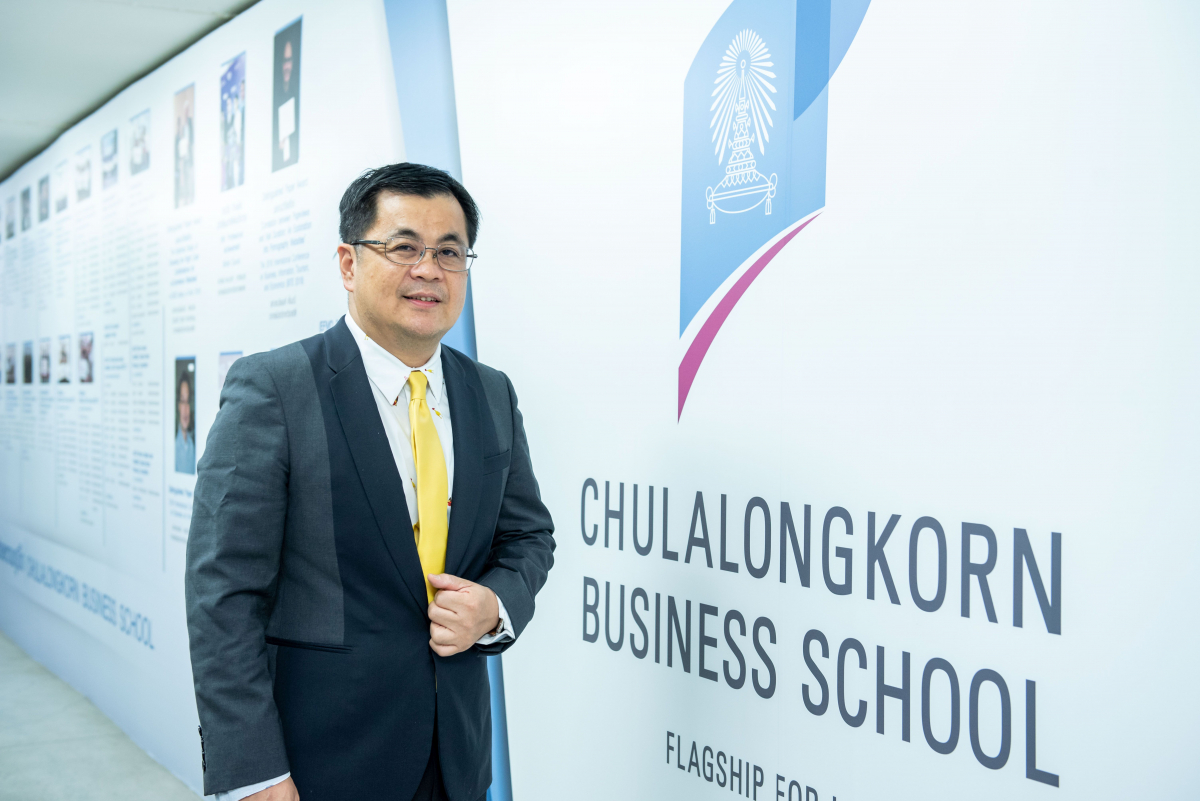
Asst. Prof. Dr Wilert Puriwat, dean of Chulalongkorn Business School, said that since its launch in 1984, the school has kept the MMP up to date. The MMP responds to the need for executives to have the proper business management skills and knowledge to develop brands, organisations, and eventually the country. Today, successful executives must learn the specific management skills that fit the changing context of business practices.

“This year, Chulalongkorn Business School improved our MMP in terms of the content, speakers, practitioners, and overseas study trip programmes. The improvements enable learners to apply knowledge in practical applications, create new ideas, and gain digital management perspectives through online and offline platforms. The objective of the MMP improvement is not just to bring modern executives on par with international standards, but to go beyond,” said Wilert.

Asst. Prof. Dr Wilert Puriwat, dean of Chulalongkorn Business School

Asst. Prof. Dr Wilert Puriwat, dean of Chulalongkorn Business School

Wilert added that the MMP distinguishes itself from other executive education programmes by having a significantly higher proportion of managerial content. The MMP consists of 60 per cent practical knowledge and 40 per cent networking and relationship-building activities, which are also important.

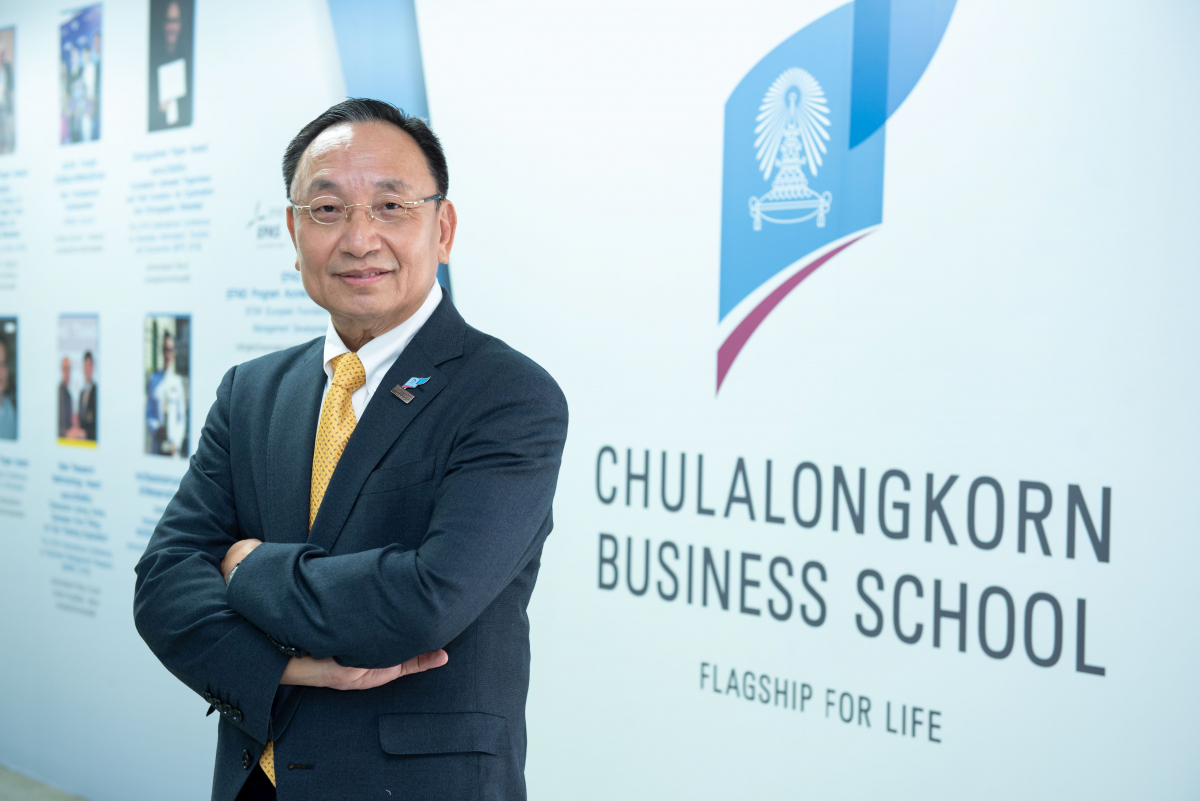
Assoc. Prof. Dr. Supol Durongwatana, head of the MMP, said that this year, the school has advanced the MMP to fulfil the strategic requirements in the age of digital transformation. This means leaders of organisations must revamp their vision and mindset to prepare for the new challenges posed by digital disruption.

“Today, companies conduct integrated business operations in a much more dynamic environment. The new MMP has been developed around the concept ‘Unwrap the Unknown’,” said Supol.

Assoc. Prof. Dr. Supol Durongwatana, head of the MMP

Assoc. Prof. Dr. Supol Durongwatana, head of the MMP

He said the programme offers new topics such as transformational leadership, because corporate executives must be ready to change constantly. Disruptive marketing, digital marketing, rejuvenating marketing, and design thinking are the key topics of the MMP.

The programme also incorporates effective methods that help strengthen organisations facing rising costs and increasing competition. Many tools learned from the MMP will allow executives to crack the problems at hand and grow their businesses by lowering costs, improving efficiency and effectiveness, increasing profit, and through people development.

In addition to business management, wellness management is considered a critical issue for today’s executives. In the past, many executives followed a Western leadership style that focused heavily on profits and resulted in health problems and stress. Executives must therefore learn to be health conscious and consider ways of monitoring their health. Modern executives can learn how to improve performance through maintaining their well-being, thus allowing them to develop business with a healthy, long-term view.

Supol adds that besides the reorganisation of the MMP, the school has selected speakers and practitioners who are highly experienced in each topic, and who have the ability to transfer content that can be immediately executed by participants. The speakers for the 2019 class included Harald Link, chairman of B. Grimm Group;. Somchai Lertsutiwong, CEO of AIS;. Dolchai Bookyaratavet, chairman of Densu One (Bangkok); Vorakpak Tanyawong, an adviser at McKinsey and Co., Ajarn Paothong Thongchua, a well-known archeologist; and the school’s lecturers Assist. Prof. Wilert Puriwat, Dr Ake Pattaratanakun, and Dr Kritinee Pongtanalert.

SET closes slightly higher at 1,725.44

ศาสตร์เกษตรดินปุ๋ย : ขอบคุณแหล่งข้อมูล : หนังสือพิมพ์ The Nation

https://www.nationthailand.com/business/30373594

SET closes slightly higher at 1,725.44

Jul 24. 2019
Photo by: The Nation

Photo by: The Nation
By Somluck Srimalee
The Nation

236 Viewed

The Stock Exchange of Thailand (SET) closed on Wednesday at 1,725.44, or 0.57 points up from Tuesday with a trade value of Bt52.83 billion.

Foreigners, institutions and individual investors bought Bt57.5 million, Bt36.11 million and Bt361.42 million worth of shares respectively.

Meanwhile, markets in Asia appeared to be generally suffering, with Singapore’s FTSE Straits Times Index closing at 3,368.44, down 4.69 points; Bursa Malaysia KLC Index at 1,652.41, down by 3.26 points; and the Philippines PSEi Index closing at 8,161.49, down by 89.97 points.

The Taiwan Capitalisation Weighted Stock Index also closed 10,935.76, down 11.50 points from Tuesday.

However, Hong Kong’s Hang Seng Index closed at 28,524.04, up 57.56 points, while Japan’s Nikkei closed at 21,709.57, up 88.69 points.

Index Creative Village’s ICVeX unit plans Myanmar expos

ศาสตร์เกษตรดินปุ๋ย : ขอบคุณแหล่งข้อมูล : หนังสือพิมพ์ The Nation

https://www.nationthailand.com/business/30373592

Index Creative Village’s ICVeX unit plans Myanmar expos

Jul 24. 2019
Taking part in a panel discussion in Yangon on Wednesday are, from left, Sarah Wai, Nay Lin, Thurein Nyein, Chinakit Viphavakit and Nay Lynn Tun. Chinakit, general manager of ICVeX, is optimistic on the Myanmar market.

Taking part in a panel discussion in Yangon on Wednesday are, from left, Sarah Wai, Nay Lin, Thurein Nyein, Chinakit Viphavakit and Nay Lynn Tun. Chinakit, general manager of ICVeX, is optimistic on the Myanmar market.
By KHINE KYAW
THE NATION
YANGON

224 Viewed

With a bright outlook for the food and beverage sector and the broader retail scene in Myanmar, ICVeX Co, a subsidiary of Index Creative Village Pcl, on Wednesday announced two upcoming trade fairs – the 6th Myanmar FoodBev and the 4th Myanmar Retail Sourcing Expo.

Chinakit Viphavakit, general manager of ICVeX, told The Nation that the events would play a critical role in the expansion of its business in Myanmar, as the firm is seeking opportunities to widen its reach. With free admission, both events will be held all day from August 15 to 17 at Tatmadaw Hall in Yangon.

“We see high growth in Myanmar as we have new exhibitors joining our shows every year,” he said. “The increasing number can be more stable with the clear policy from the government.”

According to Chinakit, ICVeX is working to provide a one-stop service platform for organising fairs and trade exhibitions in Myanmar, with the support of its parent company. The firm plans to hold Myanmar Build & Décor in October.

“Currently, we are having three shows, and plan to have more profiles by organising events in other cities including Mandalay,” Chinakit said.

Chinakit Viphavakit, general manager of ICVeX, tells a press conference on Wednesday that the company is seeking to broaden its reach in Myanmar.

Chinakit Viphavakit, general manager of ICVeX, tells a press conference on Wednesday that the company is seeking to broaden its reach in Myanmar.

Last year, the fairs received around 4,000 visitors each. Chinakit hopes to welcome more visitors this year.

“We hope to get as many visitors as we can. Through these fairs, we create a platform for the food, beverage, restaurants and retail industries in Myanmar to meet with international suppliers,” he said.

“Both events will ensure benefits to visitors, as they can see new products and have a chance to attend a seminar and activities to catch up with the current trends in food and retail industries.”

This year the expos will stress the importance of connecting global manufacturers and retail technology with local businesses to open doors for new business opportunities, strengthen the competitive advantages for the existing businesses as well as create a networking platform for international and local players.

“Exhibitors from Thailand, Korea and Saudi Arabia will also showcase their latest products there so the exhibitions offer the latest of food and beverage supplies as well as fittings, decorations, retail solutions, technologies and retail sourcing products,” Chinakit said.

“We hope our exhibitions will serve the local businesses in terms of providing more product varieties and creating a competitive advantage by offering new F&B products and international standard retail technology and a platform to network with global partners amid the new retail law.”

With the rising middle-class population, Chinakit foresees a stronger growth in Myanmar’s food and beverage and retail industries in the next few years.

Myanmar’s middle class will reach 19 million by 2030, from 2.5 million in 2010. Consumer spending could triple from US$35 billion to $100 billion by 2030, which will generate soaring demand for high-quality groceries, including imported premium meat, seafood, dairy products, alcoholic beverages, even organic items, according to an analysis from Kasikornbank.

“Consumers seem to be looking for new varieties of food. The food and beverage and retail industries need to grow fast by offering new products and services to their clients,” Chinakit said.

“In the next few years, we will see healthy products in this market more and more, as consumer demand for quality food is on the rise and they are all looking for new choices.”

Nay Lin, chairman of the Myanmar Restaurants Association, shares this view.

“Now is the time for entrepreneurs to prepare for the future. By attending these expos, entrepreneurs can benefit from their discussions with international companies, and are able to find more partners and opportunities for their future plans,” he said.

Highlights of the exhibition include new product launches and a special seminar on waste management in the restaurant business by the Myanmar Restaurant Association and a panel discussion on franchising by the Myanmar Retailers Association (MMRA).

Thurein Nyein, secretary general of the MMRA, said Myanmar needs to educate the public on franchising.

“We have chosen this topic because franchising is a new business opportunity in this market. We hope the public will gain more awareness on franchising, as those who are interested can learn from experts about extensive opportunities,” he said.

Economic boost of up to Bt100 bn tipped from stimulus

ศาสตร์เกษตรดินปุ๋ย : ขอบคุณแหล่งข้อมูล : หนังสือพิมพ์ The Nation

https://www.nationthailand.com/business/30373587

Economic boost of up to Bt100 bn tipped from stimulus

Jul 24. 2019
By PHUWIT LIMVIPHUWAT
THE NATION

703 Viewed

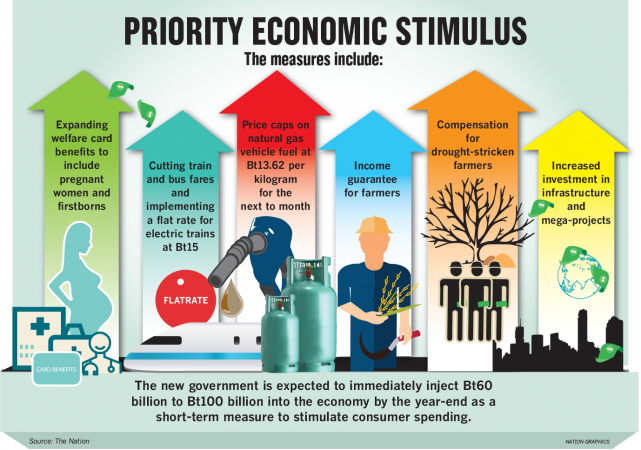
The new government is expected to inject between Bt60 billion and Bt100 billion into the economy by the end of the year with policies to boost consumer spending and reduce the cost of living.

However, economists question the government’s budget capabilities to fund these projects and suggest that it should prioritise policies that directly boost consumer spending.

The economy is this year projected to grow at a mere 3.1 per cent, the Bank of Thailand said earlier this month, compared to the 4.1 per cent growth witnessed in 2018, .

The key factor dragging down growth has been declining exports, which makes up for more than 75 per cent of the Kingdom’s GDP.

With the new government established, the ministers have announced their immediate economic policies to stimulate growth in the second half of 2019.

First, Finance Minister Uttama Savanayana said that he plans to expand the benefits offered under the welfare card scheme for low-income earners. He also announced that state welfare will also cover pregnant women and firstborns.

Uttama said that in the long term, the government will reform the tax structure in order to address the issue of income inequality in the country.

Mana Nimitvanich, first vice president of the Krungthai Bank’s global business development and strategy group, said: “Through the welfare card policies, the incoming government should be injecting at least Bt4 billion per month into the economy.”

This amounts to around Bt20 billion injection in total by the end of the year from this measure alone.

Transport Minister Saksayam Chidchob stated earlier this week that the government has plans to cut train and bus fares, as well as to propose a flat rate for electric trains at Bt15 for all rides.

This, he said, will be part of the government’s efforts to reduce the cost of living by lowering transport costs.

Energy Minister Sontirat Sontijirawong said that he plans to cap the price of natural gas for vehicles (NGV) at Bt13.62 per kilogram for the next two months. PTT Plc will be tasked with pegging the price in order to ease the pressure from transportation costs and lower the cost of living for the public.

Meanwhile, the Commerce Ministry aims to focus on the agricultural sector. Commerce Minister Jurin Laksanawisit revealed plans to implement a revenue guarantee plan for crop farmers, including those producing rice, rubber, tapioca, palm oil and corn.

“The farmers’ revenue guarantee programme has been one of the most successful campaigns of the previous government and is therefore expected to continue following the existing procedures and regulations which have proved to be working,” he said.

Phacharaphot Nuntramas, senior vice-president for global business development and strategy at Krungthai Macro Research, said: “We also expect the incoming government to relieve the drought problem by providing compensation for farmers who have fallen victim to this year’s dry season.”

He estimated that in the past three months the lost income resulting from the drought amounts to Bt10 billion.

Despite all these policy promises, economists and private-sector representatives are questioning whether the government will have sufficient funds in the budget to finance these economic measures.

The policies promised by the new government suggest that around Bt100 billion will be injected into the economy by the year’s end, said Mana. However, it may be difficult for the stimulus injection to reach this value, given the budgetary issues which the government is facing.

Mana, along with other economists throughout the country, have predicted that the level of public spending and investment will fall off in the fourth quarter of this year as the fiscal budget for 2020 will be delayed by two to three months due to the slow formation of the government.

Even so, Mana said, the government should be able to inject at least Bt60 billion into the economy by the year-end from the current budget.

“Ideally, the government should be spending around Bt100 billion to boost economic growth in the second half of this year. However, it is unclear how the government will fund their policy promises given their budget issues,” said Kriengkrai Thiennukul, vice chairman of the Federation of Thai Industries.

Phacharaphot said: “We expect the incoming government to focus on policies which directly target consumer spending, such as increasing the benefits of the welfare cards and providing compensation for drought-stricken farmers.”

Tim Leelahaphan, an economist at Standard Chartered Bank, said that expanding welfare card benefits is the most likely measure which the incoming government will implement in order to promote consumer spending and stimulate the economy in the second half of this year.

Tim stated that if these policies are implemented effectively, it could cushion the slowdown of the economy, stimulate economic growth in the second half of this year and prevent GDP growth from falling below 3 per cent in 2019.

Minister asked to reform energy sector

ศาสตร์เกษตรดินปุ๋ย : ขอบคุณแหล่งข้อมูล : หนังสือพิมพ์ The Nation

https://www.nationthailand.com/business/30373583

Minister asked to reform energy sector

Jul 24. 2019
Piyasvasti Amranand/Photo by: BangkokBizNews

Piyasvasti Amranand/Photo by: BangkokBizNews
By The Nation

160 Viewed

The Energy Reform for Sustainability Group (ERS) is to ask Energy Minister Sontirat Sontijirawong to reform the sector in many ways.

Piyasvasti Amranand, ERS chairman and former Energy Minister, said the letter his group would be sending contained various proposals, notably that the price of energy be restructured to reflect actual cost.

Others included that competition in the sector be improved, state intervention be reduced, conflicts of interest among state officials be prevented and renewable energy be promoted.

Piyasvasti added that the new government had to ensure transparency and good governance.

If, for example, it granted permission for a private firm to build a power plant without allowing any of its competitors to also bid, it should make public how much of the benefits would accrue to the state and the public in general.

He said that the current policy of cross-subsidising parts of the energy sector was unfair to some groups of consumers.