SCB raises forecast for Thai economy this year despite inflation woes

#SootinClaimon.Com : ขอบคุณแหล่งข้อมูล : หนังสือพิมพ์ The Nation.

https://www.nationthailand.com/business/40016642


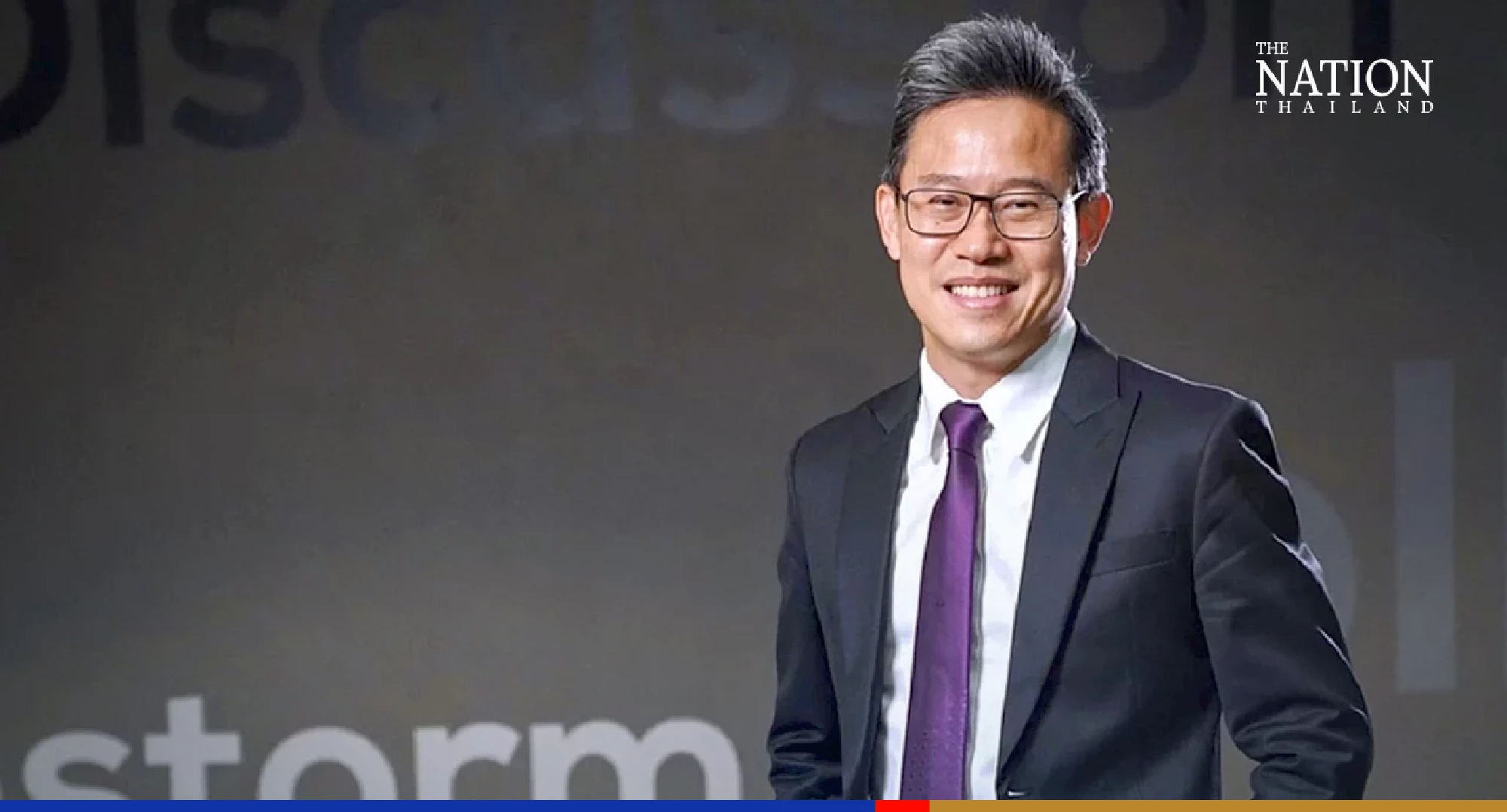
Siam Commercial Bank (SCB) on Tuesday upped its forecast for Thailand’s economic growth from 2.7 per cent to 2.9 per cent, citing recovery in the tourism and service sectors.
SCB raises forecast for Thai economy this year despite inflation woes

Somprawin Manprasert, chief economist of SCB’s Economic Intelligence Centre, said Thailand was among many countries that had reopened to foreign tourists. He expects 7.4 million foreign tourists to visit Thailand this year.

Meanwhile, recovery in the service sector should accelerate after the government eased Covid-19 restrictions, he said.

However, SCB expects inflation to hit 5.9 per cent this year, the highest in 24 years.

Meanwhile, the government’s move to reduce aid to soften the impact of rising living costs would affect people’s purchasing power and consumption, as well as delaying business investment, he added.

The decline in household income amid delayed recovery of the labour market would exacerbate problems from living-cost inflation.

He also urged the government to launch fresh measures to control energy prices and reduce living costs.

On monetary policy, he expected the Bank of Thailand’s Monetary Policy Committee to raise the interest rate to 0.75 per cent in the third quarter this year to combat rising inflation.

He said the baht would strengthen slightly in the latter part of this year in response to economic recovery and improvement in the country’s current account. He expected the baht to strengthen to between 33.5 and 34.5 to the dollar by the end of this year. The rate stood at 34.98 as of Tuesday.

Tourism and the service sector would be the main economic engines of economic recovery in the next phase as Thailand reopened and eased Covid-19 restrictions.

However, economic recovery would be hampered by inflation’s impact on domestic spending and limitations in the government’s economic stimulus measures.

GDP will not reach pre-pandemic levels until the third quarter next year, he said.

He added that Thailand’s economy would be pressured by five factors:

  • Rising energy and consumer-produce prices due to Russia-Ukraine war.
  • Supply disruption in manufacturing and export sectors due to China’s zero-Covid policy.
  • Rising production costs in manufacturing from supply chain disruption due to geopolitical factors.
  • Impact of rising living costs on economy and debt repayment ability.
  • Decline in government measures to stimulate the economy and control cost of living.

Published : June 14, 2022

By : THE NATION
Diesel price may hit THB38/litre as Oil Fund drying up

#SootinClaimon.Com : ขอบคุณแหล่งข้อมูล : หนังสือพิมพ์ The Nation.

https://www.nationthailand.com/business/40016631


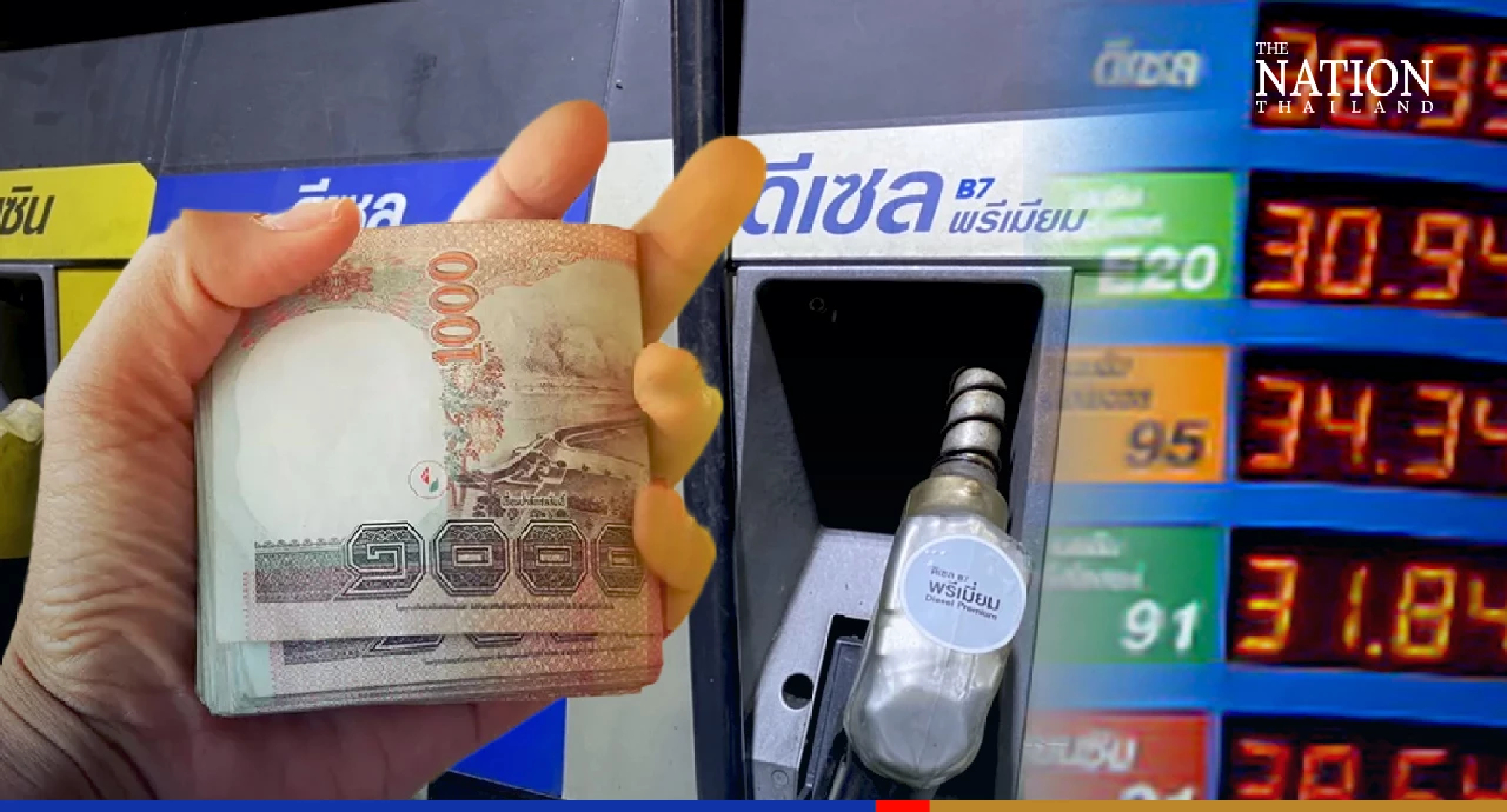
The price of diesel may hit 38 baht per litre now that the Oil Fuel Fund’s deficit is getting wider, an official said Tuesday.

Diesel price may hit THB38/litre as Oil Fund drying up

Pornchai Jirakulpaisal, chief of the agency’s policy and strategy arm, said on Tuesday that the 35-baht-per-litre price may only be maintained until the end of this month. He added that the Oil Fuel Fund’s executive committee may have no option but to increase the capped rate to 38 baht/litre.

He said global oil prices have to be monitored closely along with the fund’s liquidity and the government’s ability to borrow money to replenish the fund. All these factors, he said, would affect the new retail price of diesel.

The fund’s executive committee agreed on Monday to up the price of diesel from 34 baht to 35 baht per litre from Tuesday.

Wisak Watanasap, director of the Oil Fuel Fund Office, said the fund currently subsidises diesel by 9.96 baht per litre because the current global price is 45 baht per litre.

He added that global prices fluctuated heavily over the past week. Crude oil at the Singapore market stood at US$158.29 per barrel on June 2, rising to $170.61 on June 6 and then again to $172.77 on June 10.

Wisak said apart from heavily subsidising the price of diesel, the Oil Fuel Fund is earning very little from the sale of benzyne and gasohol. Earlier, the fund earned about 1.02 baht for every litre sold, but now it gets just 0.09 baht per litre.

As of Sunday, the Oil Fuel Fund was in deficit worth 91.09 billion baht, which can be divided into a 54.57 billion baht deficit in oil contributions and subsidy, and a 36.52 billion baht deficit from LPG subsidy, Wisak added.

Separately, Energy Ministry spokesman Sompop Pattana-ariyangkul said refineries in Thailand have not been enjoying high margins over the last decade.

He was apparently referring to a comment from Kla Party secretary-general Korn Chatikavanij, who said on Sunday that refineries were making 8.56 baht per litre and that the government should lower this margin to bring down retail prices.

Sompop said the ministry’s Energy Policy and Planning Office did not conceal the margins earned by refineries and had published the figures regularly over the past 10 years.

He said the average refining margin between January and May was 3.27 baht per litre, adding that the margin fluctuates according to demand. For instance, in 2021 and 2022, when the demand was low, the margin came in at between 0.7 and 0.89 baht per litre.

Sompop added that the refining margin over the past decade was on average 2.15 baht in 2012, 2.2 baht in 2013, 2.35 baht in 2014, 2.43 baht in 2015, 1.83 baht in 2016, 2.16 baht in 2017, 1.7 baht in 2018 and 1.2 baht in 2019.

Published : June 14, 2022

By : THE NATION

BOI grants privileges to four mega-projects worth THB209 billion

#SootinClaimon.Com : ขอบคุณแหล่งข้อมูล : หนังสือพิมพ์ The Nation.

https://www.nationthailand.com/business/40016605


The Board of Investment (BOI) on Monday approved tax privileges to four mega-projects with combined investment value of 209.478 billion baht.

BOI grants privileges to four mega-projects worth THB209 billion

BOI secretary-general Duangjai Asawachintachit said the BOI meeting, which was chaired by Prime Minister Prayut Chan-o-cha, approved a project to manufacture battery electronic vehicles (BEV) by Horizon Plus Co Ltd with investment value of 36.1 billion baht. Horizon Plus is a joint venture between PTT Plc and Foxconn Technology Group from Taiwan.

The BOI also agreed to grant investment incentives to Asia Era One Co Ltd for its high-speed train project linking the Don Mueang, Suvarnahbhumi and U-Tapao airports with an investment value of 162.318 billion baht. CP Group is the major shareholder.

She said the BOI granted tax privileges to Kingboard Holding Ltd for its 8.23-billion baht investments in a textile project and the BOI also approved an electricity co-generation project worth 2.83 billion baht of the IRPC Clean Power Co Ltd.

Duangjai said the BOI approved the investment privileges for the mega-projects as they would benefit the country and lead to further investments in infrastructure in the Eastern Economic Corridor.

The BOI also sees the BEV manufacturing project as increasing Thailand’s potential to become a base for making EVs.

Dungjai added that the BOI also agreed to increase privileges to draw more investors to EV battery-making, including the manufacture of battery cells, battery modules and high energy density batteries.

BOI grants privileges to four mega-projects worth THB209 billionInvestors will get import tariff reduction for the import of materials and necessary items for the manufacturing process for five years instead of two years as approved earlier, Duangjai said.

The companies that have received a two-year tax reduction earlier can asked for extension of the privilege to five years, she added.

Currently, 10 companies have received investment privileges from the BOI for their 16 projects to make batteries for EVs with a combined investment value of 4.82 billion baht, Duangjai said. Three other high energy density battery projects with a combined value of 6.746 billion baht had also been approved by the BOI.

Duangjai said the BOI also agreed to revise criteria for granting investment privileges to investors who plan to invest in building smart industrial estates.

The revised rules would require such estates to have functions regarded as smart facilities, smart IT, smart energy, and smart economy as well as one of three functions of smart good governance, smart living and smart workforce, she said.

She said smart industrial estates can also be built in Bangkok and Samut Prakan under the revised rules.

BOI grants privileges to four mega-projects worth THB209 billionThe approved smart industrial estates would be exempted from corporate taxes for eight years. And if the smart industrial estates are located in the EEC, they will get 50 per cent corporate tax reduction for five years on top of the eight-year exemption.
The BOI also agreed to offer more privileges to attract foreign investors, she said.

Foreign investors with a paid capital of 50 million baht, whose projects have been approved by the BOI, would be allowed to buy 5 rai [0.8 hectare] of land for their offices, 10 rai [1.6 hectares] of land for residences of their foreign experts and 20 rai [3.2 hectares] of land for residences for their workers, Duangjai said.

But they will be required to sell the land within a year of the expiry of the BOI privilege for their businesses.

Published : June 13, 2022

By : THE NATION

Thailand not in danger from stagflation, says finance minister

#SootinClaimon.Com : ขอบคุณแหล่งข้อมูล : หนังสือพิมพ์ The Nation.

https://www.nationthailand.com/business/40016600


Thailand is not in immediate danger from “stagflation”, as the economy and employment are recovering gradually, Finance Minister Arkhom Termpittayapaisith said on Monday.

Thailand not in danger from stagflation, says finance minister

Stagflation occurs when inflation is coupled with slow growth and rising unemployment.

Arkhom said that inflation was currently a worldwide phenomenon but GDP growth was a crucial factor in determining whether a country was suffering stagflation.

Thailand’s GDP will grow 2.5 and 3.5 per cent this year, according to the government’s forecast, accelerating from 1.1 per cent in 2021.

Arkhom commented that the Thai economy was in recovery from the Covid-19 crisis, adding that action was being taken to ensure it does not slump again.

Employment was also recovering but wage levels depended on economic conditions, he said.

If full wage levels are restored but product prices increase, people’s purchasing power will still fall, Arkhom said.

He noted, however, that the current situation was an improvement on the lockdown period, when the government intervened to help people suffering financial hardship.

Published : June 13, 2022

By : THE NATION

THB10 billion step-up bonds sold out in 40 minutes

#SootinClaimon.Com : ขอบคุณแหล่งข้อมูล : หนังสือพิมพ์ The Nation.

https://www.nationthailand.com/business/40016596


Savings bonds worth THB10 billion were snapped up in less than an hour after they were launched via the Paotang application at 8.30am on Monday, the Public Debt Management Office (PDMO) said.

THB10 billion step-up bonds sold out in 40 minutes

Both the five-year and 10-year “Happy Savings” bonds, offering annual interest of 2.90 per cent and 3.60 per cent, respectively, were snapped up in around 40 minutes. The interest will be paid every three months.

The five-year multiple-step-up bonds’ annual interest will increase from 2.50 per cent in the first two years to 3.00 per cent in the third and fourth years, and 3.50 per cent in the fifth year.

The 10-year multiple-step-up bonds’ annual interest will increase from 2.50 per cent in the first two years to 3.50 per cent from the third to sixth years, 4.00 per cent in the seventh and eighth years, and 4.50 per cent in the ninth and 10th years.

PDMO director Patricia Mongkhonvanit said the office will offer “Happy Savings” bonds worth THB45 billion via four banks, namely Bangkok Bank, Krungthai Bank, Kasikornbank and Siam Commercial Bank.

She explained that the bonds will be offered in two periods:

June 15-19: Both five-year and 10-year bonds worth THB40 billion will be offered to the general public, subject to a maximum investment of THB10 million per individual.

June 20-30: Bonds worth THB5 billion will be offered to non-profit entities specified by the Finance Ministry. These 10-year bonds have annual interest of 3.30 per cent, while the interest will be paid every six months.

Published : June 13, 2022

By : THE NATION

Stock transactions in Thailand will soon be taxed

#SootinClaimon.Com : ขอบคุณแหล่งข้อมูล : หนังสือพิมพ์ The Nation.

https://www.nationthailand.com/business/40016584


Finance Minister Arkhom Termpittayapaisith said on Monday that he will soon propose that the Cabinet approves his ministry’s plan to start collecting tax on revenue earned from the sale of shares.

Stock transactions in Thailand will soon be taxed

The minister did not provide a specific timeframe for the implementation but said he would propose it to the Cabinet soon so a Royal Decree can be issued allowing the ministry to start collecting the tax.

However, Arkhom said he will wait for the right time.

“We won’t start collecting the tax while the stock index is falling daily,” he said. “But we can’t announce it in advance either, so all sides should be aware of the plan and make preparations accordingly.”

He said it is still uncertain when the planned Royal Decree will be issued, but it will give brokers a 90-day grace period to adjust.

“The new system will not be difficult to implement, but we must give them to make adjustments,” he said.

Arkhom had said earlier that the tax rate would be 0.1 per cent of the earnings from stock sales. This tax has been waived since 1991.

He had also announced that this tax would be applied to every single baht earned from the sale of stocks and that brokers would have to deliver the collected tax to the Revenue Department every month. He said the government would earn more than 10 billion baht a year from the tax and collection should start within the 2022 fiscal year which ends on September 30.

Published : June 13, 2022

Pending Fed decision, China lockdown measures pull down baht

#SootinClaimon.Com : ขอบคุณแหล่งข้อมูล : หนังสือพิมพ์ The Nation.

https://www.nationthailand.com/business/40016573


The baht opened at 34.82 to the US dollar on Monday, weakening from Friday’s close of 34.77.

Pending Fed decision, China lockdown measures pull down baht

The Thai currency is expected to move between 34.70 and 34.90 to the dollar during the day and between 34.40 and 35 during the week, Krungthai market strategist Poon Panichpibool predicted.

He said the baht may test the resistance level at 34.80 to 35 as the dollar is strengthening.

However, the weakening of the baht may be limited by the selling off of gold. Meanwhile, exporters are also waiting to sell their dollars at the baht’s resistance level.

Poon added that the baht should not go beyond 35 to the dollar if the market is not affected by lockdown measures enforced in several parts of China. The lockdown may encourage investors to sell off a lot of stocks and bonds in emerging Asian markets.

As for the dollar, Poon said it is strengthening because the US Federal Reserve has signalled that it will increase the interest rate.

If the Fed does not increase the rate as high as expected (the market expects the rate to reach 0.75 per cent by September), it may cause the dollar’s value to drop once the Fed announces its latest decision.

Published : June 13, 2022

By : THE NATION

Thai exports to Asean up 17% in first four months

#SootinClaimon.Com : ขอบคุณแหล่งข้อมูล : หนังสือพิมพ์ The Nation.

https://www.nationthailand.com/business/40016571


The value of Thai exports to Asean rose 17 per cent in the first four months from the same period last year, the Trade Negotiations Department reported on Sunday.

Thai exports to Asean up 17% in first four months

Thailand’s exports to the region between January and April were worth US$24 billion.

Asean is Thailand’s largest export market, accounting for 24.7 per cent of the Kingdom’s total exports.

The first four months saw “satisfactory growth”, said the department, with exports up 60 per cent to Singapore, 34 per cent to Indonesia, 24 per cent to Myanmar, 11 per cent to Malaysia, 8 per cent to Laos, 7 per cent to Cambodia, and 0.4 per cent to Vietnam.

Growth was driven by exports of sugar (up 140 per cent), wheat and instant foods (12 per cent), animal and vegetable fat/oil (81 per cent), animal feed (21 per cent) and tapioca (72 per cent). Agricultural products accounted for 16 per cent of all exports to Asean.

Thai exports to Asean up 17% in first four monthsIndustrial products, which made up 72 per cent of Thai exports to Asean, also rose, including vehicles and auto parts (up 1.4 per cent), plastic pellets and chemicals (14 per cent), electronic circuits (27 per cent), machinery and parts (21 per cent) and electric appliances and parts (8 per cent).

Free-trade agreements with Asean members played a major role in export growth, the department said.

It expects exports to Asean will grow further in the second half of 2022 following relaxation of Covid restrictions and export bans of key foods such as chicken by other Asean countries.

Published : June 12, 2022

By : THE NATION

Public debt, false forecasts will put Thailand in crisis: Pheu Thai

#SootinClaimon.Com : ขอบคุณแหล่งข้อมูล : หนังสือพิมพ์ The Nation.

https://www.nationthailand.com/business/40016569


Thailand is in a worrisome financial situation due to high public debt created by the government and its mistaken economic projects, a member of the opposition Pheu Thai Party warned on Sunday.

Public debt, false forecasts will put Thailand in crisis: Pheu Thai

The concerns were aired by deputy Pheu Thai secretary-general Paopoom Rojanasakul, who is a member of the panel vetting the 2023 budget bill.

He said the ad hoc House panel has been scrutinising the bill for a week now and he has been able to pinpoint several concerns.

First off, he said, Prime Minister Prayut Chan-o-cha’s government has generated public debts worth 4.4 trillion baht, while there is another 1 trillion baht worth of debt not accounted for in the budget.

He said these hidden debts were incurred by subsidies offered to farmers and the amount was growing every year.

Paopoom said the subsidies were channelled through allocations given to the Bank of Agriculture and Agricultural Cooperatives, but there were no written records on how the money has been spent. Pheu Thai is demanding that the bank provide documents detailing the spending, he said.

Secondly, he added, the budget to service public debts has skyrocketed. According to the budget bill, the Public Debt Management Office will be allocated 192.13 billion baht to cover interest and loan fees, which is three times higher than the portion of the capital it has to pay back this fiscal year.

This shows that a lot of the taxpayers’ money will be used to service public debts, he said. Worse yet, he added, the government will continue creating public debts, and its recent borrowing will not contribute to the country’s revenue in any way.

The third issue, he pointed out, was that the proposed spendings by government agencies were based on daydreams about the economic outlook. While the panel sees a negative outlook, government agencies think otherwise.

“It’s like we’re living in different countries,” he said.

Paopoom added that the 2023 budget bill was based on projected GDP growth of 3.7 per cent. However, he said, these figures were calculated several months ago before many negative factors hit the country, such as rising inflation and the US Federal Reserve hiking policy rate.

Fourthly, he said, the Revenue Department has been missing its revenue target every month this year. So far, he said, it has missed the target by 26.5 billion baht.

What is worse, he added, is that the department will harm the investment atmosphere by going ahead with its plan to collect taxes from the trading of shares and digital assets, and not collect any inheritance tax.

The fifth point Paopoom said was the fact that state banks had failed to help small and medium enterprises as they should have done. Instead, he said, they were more focused on making profits and lowering non-performing loans.

The sixth, and most worrying sign, Paopoom said, was that this budget bill will create a deficit that will near the ceiling due to the government’s inflated figures of possible revenue and GDP. He said the situation would worsen if the Finance Ministry is forced to raise the policy rate due to external negative factors.

Published : June 12, 2022

By : THE NATION

Korn urges govt to slap oil refineries with ‘windfall tax’, margin cap

#SootinClaimon.Com : ขอบคุณแหล่งข้อมูล : หนังสือพิมพ์ The Nation.

https://www.nationthailand.com/business/40016568


The government should cap the margin enjoyed by oil refineries and slap a “windfall tax” on them as part of measures to survive the oil crisis, Kla Party’s secretary-general Korn Chatikavanij said on Sunday.

Korn urges govt to slap oil refineries with ‘windfall tax’, margin cap

Korn, a former finance minister, held a press conference to propose three measures to help Thailand pull through the oil crisis.

Apart from capping the margin and slapping a windfall tax, Korn urged the government to become more serious about enforcing energy conservation measures.

He especially named PTT Plc in his call for action against oil refineries to bring down prices, saying the Finance Ministry holds shares in PTT, which owns up to 70 per cent of refineries in Thailand.

Korn told the press that the Oil Fund is now struggling and will not be able to shoulder more financial burdens as the debt it incurred from oil subsidies will hit 100 billion baht by the end of June.

He said the government should cap the refining margin because Thais have been “robbed” for over a year by refineries collecting high margins, resulting in high oil prices.

He explained that crude oil recently stood at about 25.92 baht a litre on average, but the retail price was about 34.48 baht per litre. This means, refineries enjoy a margin of 8.56 baht per litre, while the actual refining cost is about 0.87 baht a litre, he said.

“So, the refining margin rose to 10 times the real cost, yet their [refineries’] cost has not increased. This is blatant robbery and the government has not provided any explanations,” Korn said.

“The question is who owns the refineries? PTT owns more than 70 per cent of the country and yet the government has nothing to say.”

Korn urges govt to slap oil refineries with ‘windfall tax’, margin capHe added that the Commerce Ministry has the power to control prices, but has failed to act. Also, he said, the Energy Ministry is directly responsible, yet it failed to act.

“The energy minister was with PTT before, so he should know this well. This is not the time for him to worry about his friends [at PTT]. There are steps he can take for the good of the country and the people. He should hurry up,” he said.

Korn also pointed out that the Finance Ministry does not just have the windfall tax to use as a tool, but can also take action as a shareholder of PTT. He said it’s time refineries were slapped with a windfall tax because they have been enjoying a high margin for too long.

Published : June 12, 2022

By : THE NATION