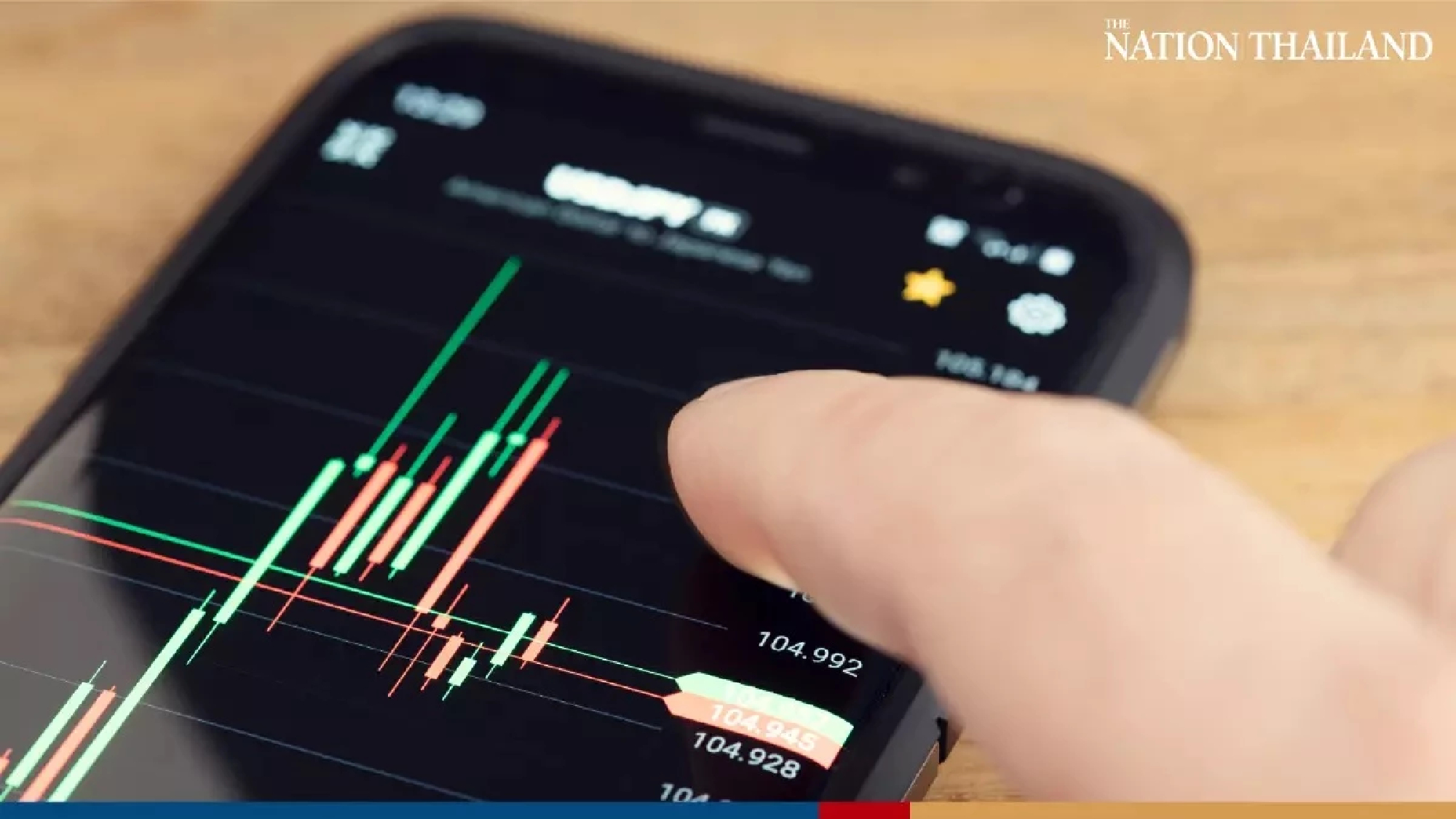
The baht opened at 33.81 to the US dollar on Wednesday, the highest in almost four months, weakening from Tuesday’s close of 33.75.
Krungthai Bank market strategist Poon Panichpibool predicted the Thai currency would move between 33.70 and 33.90 during the day.
Poon said the baht might weaken as it was pressured by the strengthening dollar and dividend transactions. Furthermore, some investors are waiting for the gold price to come down so they can buy back the precious metal, which might also pressure the baht.
He expected exporters to sell the dollar at 33.80-34 as long as the market does not turn heavily risk-averse, which would add pressure to the baht.
Poon suggested monitoring foreign investor transactions. He said there was a chance the baht could test the key resistance level of 34 if foreign investors sold a large amount of stocks and bonds.
With high volatility in the currency market, businesses should use hedging tools such as options to manage risks, he advised.
The Cabinet is still deciding whether the government should take more loans to launch another round of the co-payment scheme, the prime minister said on Tuesday.
Speaking to reporters after the weekly Cabinet meeting, Prime Minister Prayut Chan-o-cha said the discussion about new loans and the relaunching of the co-payment scheme has not been concluded yet.
“We’re still discussing whether the government needs more loans or not,” he said, adding that measures have been put in place in case more loans need to be taken.
“[The new loans] must be adequate. We must consider how to spend the money. We must also see how much we have now and whether more is needed now that we cannot control external factors affecting the economy,” Prayut said.
He added that the government is thinking about launching the fifth phase of the Khon La Khrueng (Let’s Go Halves) co-payment scheme to help stimulate the economy. The fourth phase was approved by the Cabinet on December 21 last year before the third phase expired on December 31.
Under this scheme, the government subsidises 50 per cent of the price of food, drink and general goods, capped at up to 150 baht per person per day.
“I have told the Finance Ministry to see if the scheme should be relaunched. The scheme’s first four phases used a lot of money but also benefitted the economy. It led to the circulation of money several-fold. But the problem now is where will we get the money from,” he said.
Prayut also urged critics not to slam his government if it does decide to relaunch the co-payment scheme because he said previous administrations have never faced the same scope of crises this government is facing.
“My government will try its best, so I ask for understanding from the public. If we continue attacking each other, we will never be successful,” the premier said.
The government had issued a 1-trillion-baht loan decree in 2020 to tackle the fallout of the Covid-19 crisis.
Two leading entrepreneurs said the event organising industry had remained quiet during the first half but one of them predicted a recovery by the year-end while the other was pessimistic and expected more contraction.
Chief executive officer of Index Creative Village Plc, Kriengkrai Kanchanapokin, said he believed the events organising industry bottomed out last year, and this year would see a recovery mainly because of the Asia-Pacific Economic Cooperation (Apec) Summit in November.
But Upatham Nitisukcharoen, chairman of Rightman Co Ltd and president of Event Management Association, expected the event industry would contract 50 to 60 per cent.
Both said the industry had failed to pick up during the Songkran celebrations because businesses declined to hold major events due to the complicated Covid restrictions.
Kriengkrai said the Covid-19 pandemic and the economic slump, which was aggravated by the Russia-Ukraine war, had prompted business operators and various brands to decline to hold events during the first and second quarters.
He said the Bangkok elections had failed to help the industry because election candidates chose door-to-door campaigns instead of holding big election rallies.
Kriengkrai expected the industry to start recovering later this year after the government downgrades Covid-19 to an endemic and when Thailand hosts the Apec Summit in November.
Kriengkrai said the Index Creative Village still gets income from organising the Ancient City Light Festival from March 16 to May 15. And the company has been selected to organise the 2022 Thomas & Uber Cup badminton championships from May 8 to 15.
“The event industry will not contract further because no events were held last year and it has already hit bottom. This year, it has started seeing some growth from last year’s negative growth,” Kriengkrai said.
Upatham said major businesses failed to hold Songkran events this year, causing billions of baht to disappear from the industry.
“For the second half of year, the industry is expected to remain in the slump because the rainy season is the low season for events organising,” Upatham said.
“Worse still, the Omicron spread has not eased yet and it affects consumer confidence. Consumers dare not come out to live their normal lives, so brands and service providers are withhold spending for events,” Upatham said.
But he expected the industry to receive some money from the Bangkok elections and preparations by political parties to contest the next general election early next year.
Upatham also expected the government would spend billions of baht for organising events when it hosts the Apec Summit in November.
He, however, does not expect the spendings on elections and for the Apec Summit to offset the loss of event organising money during Songkran.
“The event organising industry’s slump will be prolonged. We cannot see when the Omicron spread will end,” Upatham said.
“So, the overall picture of the event organising industry in 2022 would contract some 50 to 60 per cent,” he said.
Soft power exercised by Thai influencers is playing a positive role in enabling Thailand to increase the value of its creative economy.
Promoting soft power is a part of the 20-Year National Strategy to boost the country’s competitiveness in line with BCG – bio, circular and green – economic model.
The Culture Ministry is focusing on promoting the cultural creative industry in five aspects — foods, films, fashion, Muay Thai and festivals.
The first influencer who created soft power among people was Thai K-pop star Lalisa “Lisa” Manoban after her own music video “Lalisa” was launched in September last year.
In the music video, BlackPink’s only Thai member used various Thai elements, such as Thai dress and a background that looks similar to Phanom Rung Stone Castle.
Meanwhile, Lisa’s remark, stating that she missed the meatballs in her hometown in Buriram province, caused sales of meatball retailers in the province to increase sharply.
Lisa’s move to return home to celebrate her 25th birthday in March this year also caused her fans to flock to restaurants where she went, such as barbeque pork restaurants in Bangkok’s Chokchai 4 Road and Brasserie 9, a French restaurant in Sathon district.
Another influencer who used soft power recently is Thai rapper Danupha “Milli” Khanatheerakul’ who ended her set at the Coachella Valley Music and Arts Festival in California on Sunday by eating mango sticky rice.
Commanding the stage in a skimpy red outfit, Milli took a break from her twerk-heavy dance routine to grab a bowl and take a mouthful.
Line Man revealed on Monday that orders for mango sticky rice in Thailand had risen by more than 3.5 times after the hashtag #MILLILiveatCoachella became top-trending on Twitter.
Inspired by Milli’s mouth-watering performance, the Department of Cultural Promotion says it will push for mango sticky rice to be listed as Unesco intangible cultural heritage.
The Finance Ministry on Tuesday denied it is hiding a public debt worth 1 trillion baht, saying this amount was used as advance payments for subsidy programmes under the Fiscal Disciplines Act.
Pornchai Theeravet, director of the Fiscal Policy Office, dismissed an online report claiming that the government was hiding a debt liability of 1 trillion baht by not declaring the amount under the category of public debt in the state budget.
He explained that the 1-trillion-baht figure covered advance payments for the government’s many public subsidy programmes.
He said these advance payments were not listed as a financial liability, but the Finance Ministry had clearly summed up the payments and reported the amount.
Pornchai said the total advance payments made were still within the framework of 30 per cent of the annual budget as stipulated in Section 28 of the 2018 State Fiscal and Financial Disciplines Act.
A source from the Finance Ministry explained to The Nation that this amount was not counted as public debt because it covered advance payments under state policies.
The source said the central bank was ordered to cover funds needed to implement policies first before the government allocates a budget for reimbursement.
Such policies include the crop-price guarantee scheme as well as subsidies such as a reprieve from high-interest rates.
Finance Minister Arkhom Termpittayapaisith said the Monetary Policy Committee raised the ceiling of advance expenditure under Section 29 of the Fiscal Disciplines Act from 30 to 35 per cent in November last year.
He said this new ceiling was temporary and is due to expire at the end of September.
Arkhom also said that the Finance Ministry will need to consider two points related to the 2023 budget and advance expenditures to see if it should extend the 35 per cent ceiling for another year.
First, the ministry needs to find out which projects that have received funding can be wrapped up. If they can wrap up, then they should return the remaining funds to the Finance Ministry.
Second, the ministry will study the scope of the projects that are implemented in the 2022-2023 fiscal years to see if they can be downsized. These projects include the paddy-price guarantee programme.
If these subsidies can be downsized, then the advance expenditure ceiling will be lowered, Arkhom said.
“We want to return to the 30-per-cent ceiling because we don’t want to spend too much in advance,” Arkhom added.
The minister said the amount of advance expenditure has piled up because the Budget Bureau failed to allocate enough funds to compensate for the advance payments made.
Arkhom added that the spending for subsidies cannot be declared in the fixed expenditure of the annual state budget because the government cannot estimate details of subsidies in advance.
The Tourism Council of Thailand is confident that Chinese tourists will return to the Kingdom in October and help boost foreign arrivals this year.
Wichit Prakorbkosol, vice president of the council and president of CCT Express Co Ltd, said Thai tourism operators, who have inside sources in Chinese government agencies, learned that Beijing would allow its citizens to travel abroad starting October 1, which is China’s National Day.
“It is expected that a lot of Chinese tourists will travel to Thailand,” said Wichit, whose Express company is a major inbound tourism operator.
“But we can’t expect the number of Chinese tourists to be around 800,000 to 900,000 a month like the pre-Covid years.”
Speaking to The Nation, Wichit urged the government to lift Covid restrictions for foreign arrivals and fully open the country to foreign tourists in preparation for tourists from China and other countries.
He said if the country is opened fully to foreign tourists without travel restrictions within the second quarter of this year, at least 5 million foreign tourists would arrive in the second half of the year.
“The sooner the country is opened fully, the more advantage we will have over our competitors, who are opening their countries more and more,” Wichit said.
He said it is yet to be seen whether China would open its country fully. If China imposes no travel restrictions on its citizens, the number of Chinese arrivals may boost the number of foreign arrivals in Thailand to about 7 million or 8 million this year, Wichit added.
Wichit said it is expected the inbound tourism industry would recover by 70 per cent next year compared to the pre-Covid level of almost 40 million foreign tourists in 2019 and the industry is expected to fully recover in 2024.
But he said the council expected the inbound tourism trend would change from big tourist groups to small groups. He said operators of tourist coaches with 30 to 40 seats would be in trouble because foreign tourists would prefer travelling in small groups by van.
The foreign tourists in the post-Covid period would focus on resting in hotels, eating at unique restaurants in Bangkok or big cities and choosing to visit places on their own instead of eating and participating in tourism and shopping programmes set by operators, Wichit added.
Meanwhile, Prachoom Tantiprasertsuk, marketing president of the Thai Hotels Association, said most hotels are now hit by shortage of human resources because many staff have left to do their own business and they did not want to return to work in hotels again.
Prachoom said the hotels after the Covid situation had to teach their remaining staff to be multi-skilled. For example, one staff must do at least three tasks, he said.
He said Thai hotels would have to impress returning foreign tourists, who have high expectations of their services, with warm and Thai-style hospitality.
Nok Air CEO Wutthiphum Jurangkool, meanwhile, said his airline expected the return of Chinese tourists in the fourth quarter when the Chinese government is expected to allow its citizens to travel abroad.
He said Nok Air would buy six more Boeing 737-800 planes with 189 seats for opening routes to China, India, Osaka and Ho Chi Minh City in preparation for the return of foreign tourists. The new planes would add increase Nok Air’s fleet to 17, he said.
He said Nok Air would resume flying to international routes in June depending on the travel restrictions of the destination countries.
Teerapol Chotichanapibal, the chief commercial officer of Nok Air, said Nok Air hoped the daily number of its passenger would rise to 12,000 to 13,000 later this year when several countries lift Covid restrictions. Currently, the airline has about 10,000 passengers a day, he added.
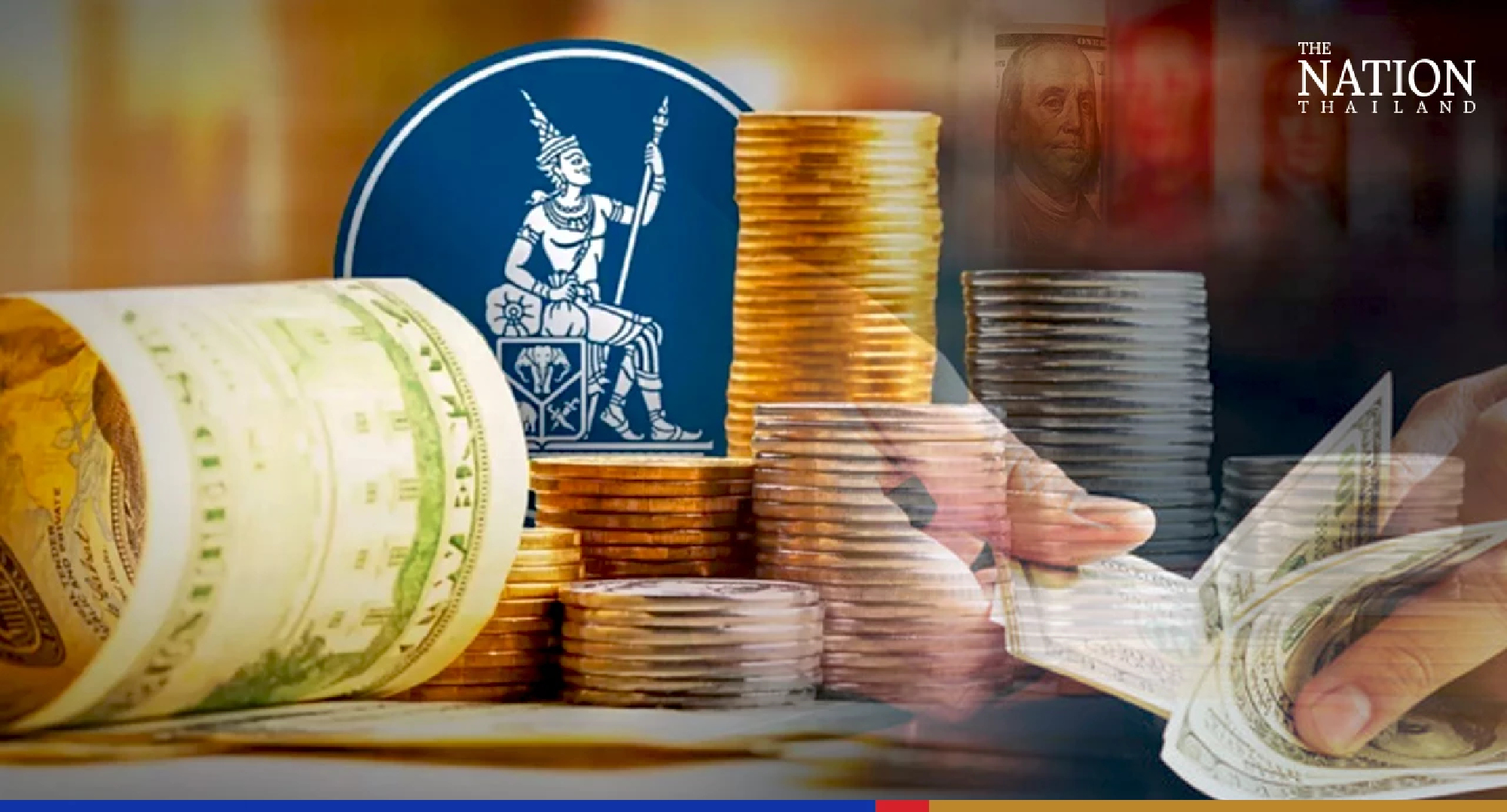
The Bank of Thailand (BOT) has relaxed foreign exchange regulations in a bid to ease capital flows and curb baht volatility amid its slide against the dollar.
The move is designed to make investment and transactions in foreign currencies more convenient. It should also help the Thai private sector manage risks and reduce transaction costs.
The BOT announced three measures to further ease forex rules on Monday.
First, the yearly US$50-million cap on lending to unaffiliated companies and for purchase of property abroad will be removed.
Thai companies will also be able to purchase foreign currencies for transfer domestically as necessary, aiding payment for goods whose price is linked to the global market. Previously, transfers were allowed only through foreign currency deposit accounts.
Second, resident companies will be able to manage their foreign exchange risk in a broader scope, such as by hedging foreign exchange exposures arising from domestic payment for goods whose price is linked to the global market, hedging on behalf of other resident affiliated companies, hedging of anticipated foreign exchange revenues or expenses with a tenor longer than one year, and hedging balance sheet exposures.
Third, the burden of providing documents for foreign exchange transactions will be eased for Thai residents. Bank customers will no longer be required to submit underlying documents when undertaking regular foreign exchange transactions.
The changes will go into effect the day after being published in the Royal Gazette.
The Stock Exchange of Thailand (SET) Index is expected to fluctuate between 1,660 and 1,680 points on Tuesday amid a rise in the oil price due to the intensifying Russia-Ukraine conflict and Libya’s production halt due to a protest, Krungsri Securities said.
It added that uncertainty over the US Federal Reserve’s move to shrink its balance sheet and raise the interest rate to deal with inflation would pressure the index.
It recommends the purchase of the following as an investment strategy:
• PTTEP, TOP, IVL, SPRC and BCP would benefit from the rising oil price.
• AOT, AAV, BA, MINT, CENTEL, ERW, CPN, CRC, HMPRO, CPALL, MAKRO, AMATA and WHA would benefit from countries reopening.
• BDMS, BH, INTUCH, ADVANC, BTS and BEM which can tolerate market volatility.
The SET Index closed at 1,668.06 on Monday, down 6.28 points or 0.38 per cent. Transactions totalled 64.43 billion baht with an index high of 1,675.95 and a low of 1,665.25.
The baht opened at 33.71 to the US dollar on Tuesday, weakening from Monday’s close of 33.66 and sliding towards the key 34 per dollar level. Breaching that closely watched resistance level would invite further losses for the Thai currency.
Krungthai Bank market strategist Poon Panichpibool predicted the baht would move between 33.65 and 33.80 per dollar during the day.
Poon said the Thai currency would likely continue to swing sideways, pressured by the strengthening dollar after the US Federal Reserve signalled it would hasten to tighten monetary policy, as well as short-term demand for safe assets.
Meanwhile, dividend transactions worth 4-5 billion baht this week could add pressure on the baht.
However, sales of gold after its price increased to the key resistance level might support the baht, limiting losses in this period.
He expected exporters to sell the dollar at 33.70 to 33.80 as long as the market does not turn heavily risk-averse, which would add pressure to the baht.
With high volatility in the currency market, businesses should use hedging tools like options to manage risks, he said.
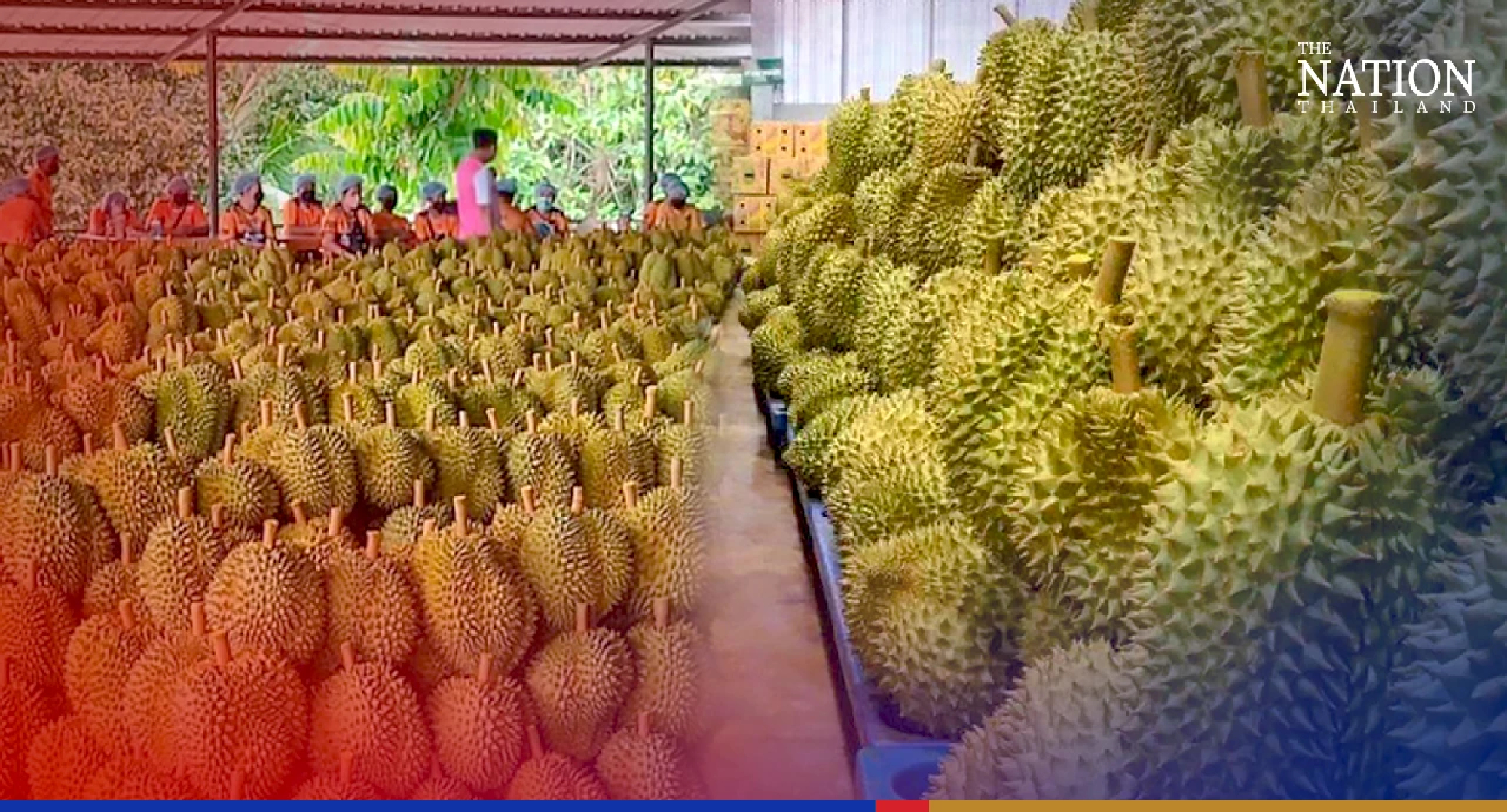
The Agriculture Ministry has reached an agreement with durian exporters in Chanthaburi province to clean up their warehouses on Friday after an export container to China was found contaminated with Covid-19 virus.
Alongkorn Pollabutr, an adviser to the agriculture minister, said he has visited the warehouses of durian exporters in Chanthaburi and reached an agreement on carrying out a big cleaning day on Friday.
He said the exporters from now on would conduct rapid antigen tests on workers regularly to prevent more contamination of the coronavirus.
China suspended import of durians from Thailand at its Mohan checkpoint for three days from April 12 to 14 after a container of durians on a trailer truck from Thailand was found contaminated.
Alongkorn said although the Chinese authorities allowed the import of Thai durians to be resumed on April 15, the exporters of Thai fruits could not be complacent.
Alongkorn said the peak season of fruit in the eastern provinces would soon arrive with over a million tonnes of durian, rambutan, mangosteen and southern langsat ready for harvesting and export so the exporters must make sure that their fruit would be free from contamination.
The adviser said the export of durians from Chanthaburi would be resumed in the middle of next week using the Laos-China high-speed train so the Thai authorities and exporters must step up measures to prevent contamination of the fruit.
Alongkorn said the export by train has been successful after two containers of durians and one container of coconuts were dispatched early this month. The durians would be transported on trucks from Thailand to the railway station in Laos to be sent aboard the train.



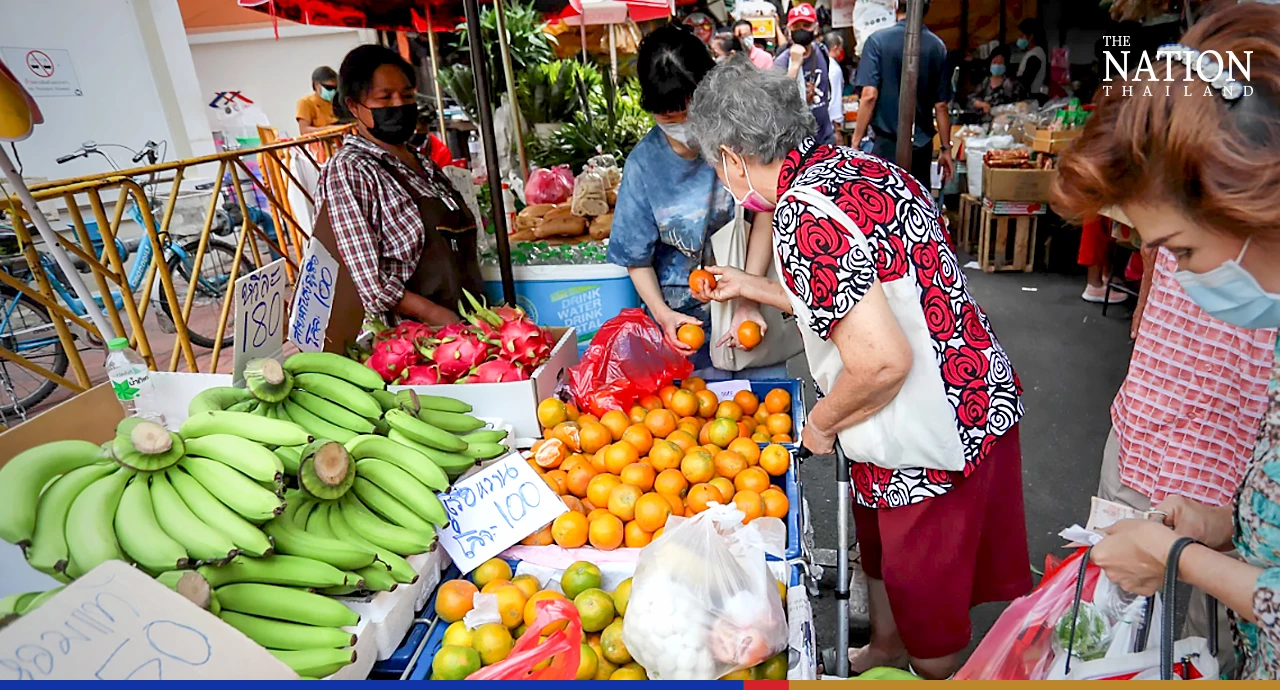 Prayut also urged critics not to slam his government if it does decide to relaunch the co-payment scheme because he said previous administrations have never faced the same scope of crises this government is facing.


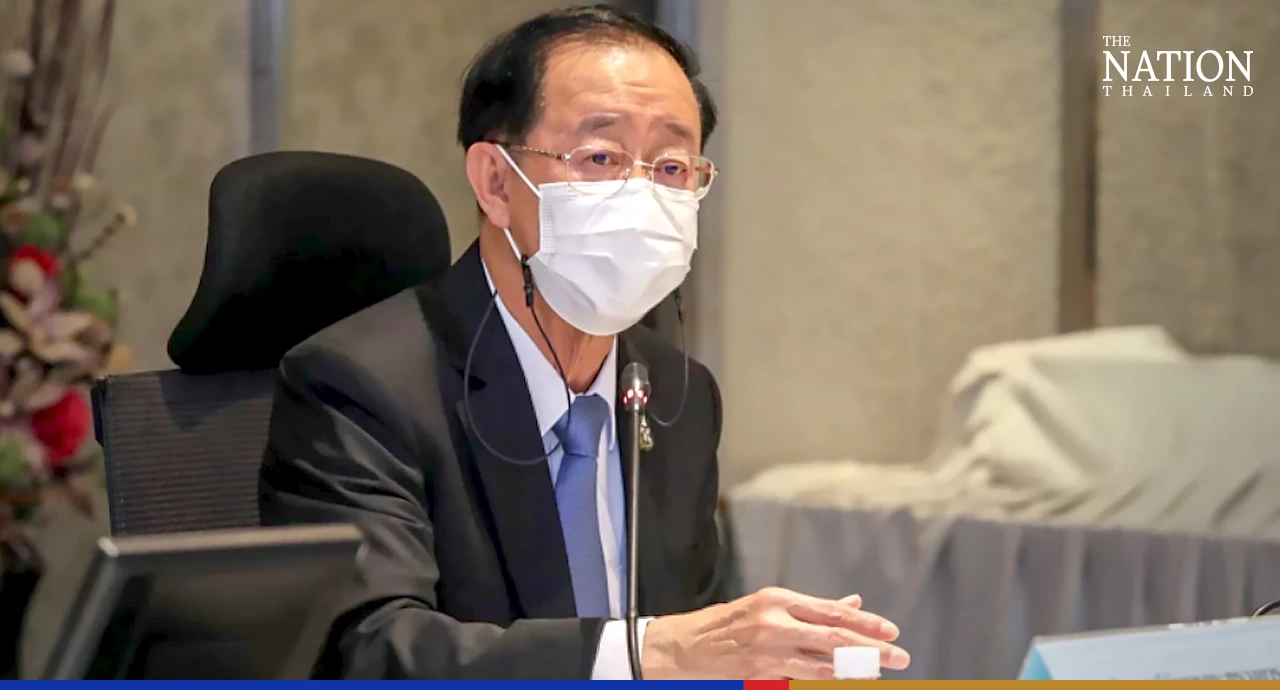 Finance Minister Arkhom Termpittayapaisith said the Monetary Policy Committee raised the ceiling of advance expenditure under Section 29 of the Fiscal Disciplines Act from 30 to 35 per cent in November last year.

 SootinClaimon.Com