The latest round of talks aimed at defusing tensions between Russia and the West within the framework of the Organization for Security and Cooperation in Europe (OSCE) ended here on Thursday without a breakthrough as both sides warned of potential escalation.
VIENNA, Jan. 13 – Alexander Lukashevich, Russia’s permanent representative to the OSCE, said after the talks that Moscow was disappointed by the West’s response to its proposals on Ukraine and European security.
However, Lukashevich said that Moscow will not give up on diplomacy and that the sides must reach an agreement or else run the risk of a potentially catastrophic outcome.
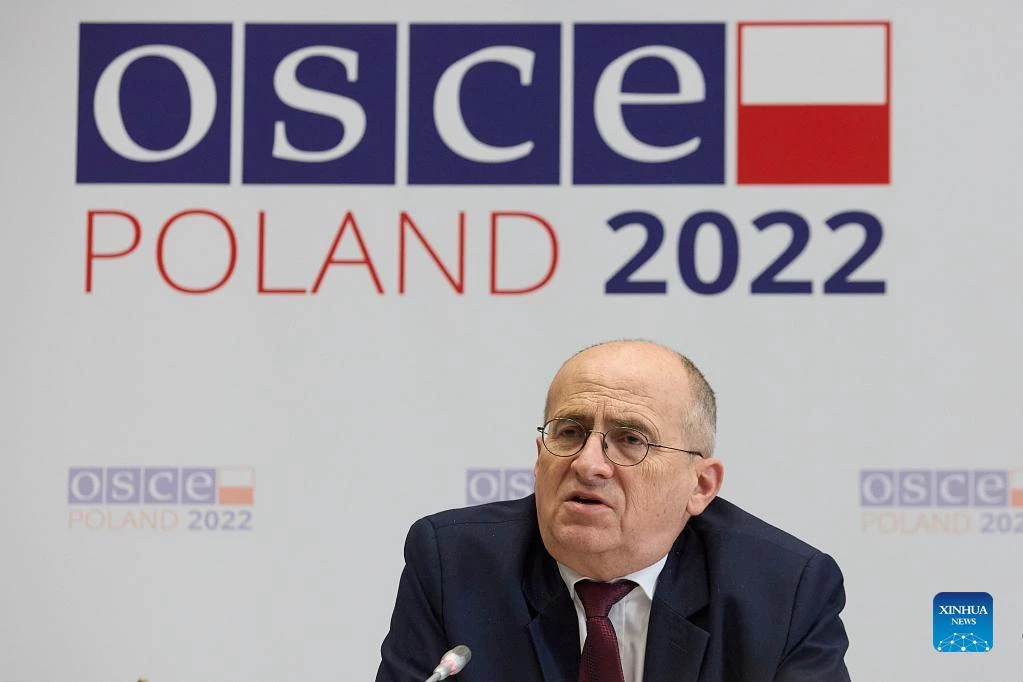
Polish Foreign Minister Zbigniew Rau, whose country chairs the Organization for Security and Cooperation in Europe (OSCE) in 2022, speaks to reporters in Vienna, Austria, on Jan. 13, 2022. The latest round of talks aimed at defusing tensions between Russia and the West within the framework of the Organization for Security and Cooperation in Europe (OSCE) ended here on Thursday without a breakthrough as both sides warned of potential escalation. (Photo by Georges Schneider/Xinhua)
“It seems that the risk of war in the OSCE area is greater than ever before in the last 30 years,” said Poland’s Foreign Minister Zbigniew Rau, whose country will chair the OSCE in 2022.
Michael Carpenter, U.S. envoy to the OSCE, also warned of a major security crisis in Europe. “The drumbeat of war is sounding loud and the rhetoric has gotten rather shrill,” he said.
Alexander Lukashevich, Russia
The Vienna talks followed bilateral meetings between Russia and the United States in Geneva on Monday and Russia and the North Atlantic Treaty Organization (NATO) in Brussels on Wednesday. However, these negotiations have failed to narrow their differences.
Russia has repeatedly accused the West of threatening its security by expanding NATO eastwards and deploying weapons systems near the country’s borders.
A rescued snow leopard is faring well and can move 5.86 km on average every day, after having been released into the wild in north China in September 2021, researchers said.
The range of its activities spanned 45 km from east to west and 81 km from north to south, covering most areas of Helan Mountain, said Shi Kun, head of the Wildlife Institute, Beijing Forestry University, citing satellite tracking data collected by Jan. 10, 2022.
About 96 percent of its active sites were in the protected Helan Mountain national nature reserve which has been strictly protected with little human interference, he said.
Researchers conducted a field survey on the hunting sites of the snow leopard and found it can feed with a high frequency, feasting on a blue sheep or a red deer every four or five days.
On Sept. 5, 2021, the snow leopard was found in a feeble state in Siziwang Banner in the Inner Mongolia Autonomous Region and taken to a wildlife rescue station for treatment. Wildlife experts provided it with water and fresh meat, as well as a health checkup.
The snow leopard gradually recovered and was released back into the wild on Sept. 22, 2021. It was fitted with a satellite tracking collar through which its living conditions in the wild can be monitored.
Snow leopards are under China’s highest national-level protection and are listed as vulnerable by the International Union for Conservation of Nature. The species mainly inhabits the Himalayas in central and southern Asia at an altitude of 2,500 to 4,500 meters.
In China, they are found in the alpine areas in southwestern and northwestern regions including Tibet, Sichuan, Xinjiang, Gansu and Inner Mongolia.
A new cargo train carrying 50 goods containers departed Wednesday from Urad Back Banner, north Chinas Inner Mongolia Autonomous Region, and is expected to arrive in Moscow in about 10 days.
It is the first China-Europe freight train service officially launched in Urad Back Banner in the city of Bayannur, a significant hub connecting China and Mongolia and a node city of the new Silk Road Economic Belt.
In 2022, Urad Back Banner plans to operate 55 China-Europe freight trains, transporting about 50,000 to 60,000 tonnes of goods with an annual trade value of 300 million yuan (about 47.1 million U.S. dollars) to 500 million yuan.
The banner has completed the construction of two logistic rail lines and a large container yard, creating the largest and fastest railway logistics platform in the city, said Hai Gang, head of the banner’s foreign affairs and commerce bureau.
An industrial park for warehousing, cold-chain, e-commerce, and logistics is also being planned to facilitate the cargo trade.
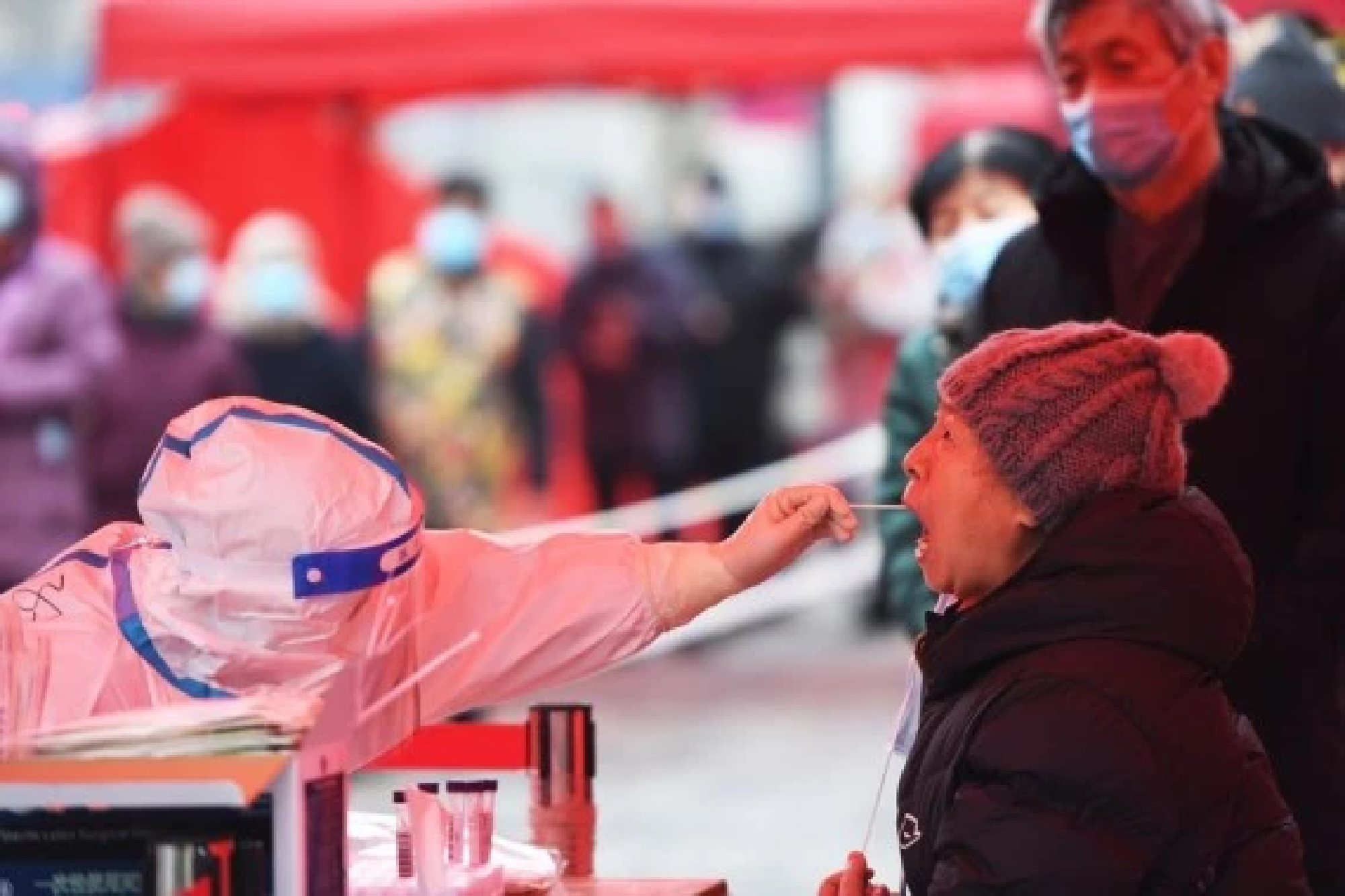
Getting vaccinated against COVID-19 is still a necessity in the face of the Omicron variant, senior Traditional Chinese Medicine (TCM) expert Zhang Boli said in an interview with Xinhua on Tuesday.
As of noon on Tuesday, a total of 97 people have tested positive for COVID-19 in north China’s Tianjin, a municipality of 13.86 million people that neighbors Beijing, with all the cases confirmed as the Omicron variant.
The source of the spread of Omicron in Tianjin — whether it be people or objects — is still under investigation, said Zhang, an academician with the Chinese Academy of Engineering and recipient of the national honorary title “the People’s Hero” for his outstanding anti-epidemic efforts.
Zhang noted that, as a variant strain of COVID-19 virus, Omicron is characterized by its rapid spread and strong concealment.
“Many patients have no symptoms, so they don’t seek medical treatment immediately, resulting in hidden transmission,” he said.
“It is inappropriate to regard Omicron as ‘flu with a larger size’,” said Zhang. Although the symptoms caused by Omicron are mild, it can still cause serious harm to middle-aged and elderly people.
Children, accompanied by their parents, register their information to receive COVID-19 vaccine at a temporary vaccination site in north China
In addition, according to overseas data analysis, Omicron can cause a greater number of sequelae than flu, said Zhang.
Based on the analysis of Omicron, Zhang believes that seeking herd immunity is an irresponsible approach in terms of protecting people’s lives and health. “China has adopted the approach of ‘dynamic zero-case policy’ for two years, and this has proved to be successful. We must continue to put people’s lives first,” said Zhang.
By putting people’s lives first, instead of political considerations, China has implemented the “dynamic zero-case policy” to maintain the normal functioning of society and promote economic development at the same time.
As for how to fight Omicron, Zhang suggested that people should wear masks, wash their hands frequently, avoid gatherings where possible, and adjust their physical condition. In addition, vaccination remains a necessary measure.
“Vaccines are effective in preventing severe Omicron symptoms and deaths,” Zhang said, citing the analysis of data from abroad.
The combined use of TCM and Western medicine is one of the biggest highlights in China’s fight against the coronavirus disease.
“According to the new characteristics of Omicron, we have also created new TCM prescriptions, which are being examined by experts,” Zhang added.
Omicron is more infectious but not more virulent, which causes Zhang to believe the epidemic may have reached a turning point.
“I think the world will see a significant change in the global pandemic by the spring. The overall situation will be much better once everyone has been vaccinated,” Zhang said.
A cargo flight carrying about 45 tons of pine nuts left the Afghan capital Kabul for China. This is the first flight carrying a shipment of pine nuts to China in 2022.
Acargo flight carrying a fresh shipment of pine nuts left the Afghan capital Kabul for China on Monday, authorities said.
“About 45 tons of pine nuts will be transported by today’s cargo flight to Shanghai, China, that marks the first flight carrying a shipment of pine nuts to China in 2022,” Sabawoon Ahmadzai, who is in charge of chartered cargo flights of the Afghan private airline Kam Air, told Xinhua.
The airline has run more than 30 cargo flights taking pine nuts to China since November when Afghanistan resumed export of the nut to China, according to Ahmadzai.
“Cargo flights will continue in 2022 as the Kam Air and exporters and Afghan pine nuts traders are determined to increase Afghanistan’s exports,” he said.
A shipment of pine nuts is seen to be loaded into a plane at Kabul International Airport in Kabul, Afghanistan, on Jan. 10, 2022. (Photo by Saifurahman Safi/Xinhua)
Experts underscored that the Kim Jong-un regime needs to show substantial achievement in developing defense capabilities, noting the importance of this year filled with political anniversaries.
North Korea on Tuesday test-fired an apparent ballistic missile from an inland area toward its east coast in its second weapons test in less than a week, while the South Korean military said the missile has “advanced” capabilities compared to the previous one.
The United States Forces Korea said it was “aware of the DPRK’s most recent ballistic missile launch and are consulting closely with our allies and partners” in a statement. DPRK refers to North Korea’s official name, the Democratic People‘s Republic of Korea.
The USFK’s assessment is that the missile launch “does not pose an immediate threat to US personnel or territory, or to the Republic of Korea,” adding that the US commitment to the defense of South Korea “remains ironclad.”
But South Korea’s Joint Chiefs of Staff said the military “detected one projectile, which is presumed to be a ballistic missile, being fired from the Jagang Province area into the East Sea at around 07:27 a.m.”
Seoul’s initial evaluation shows that the projectile traveled at a top speed of around Mach 10 and at a maximum altitude of 60 kilometers.
The Rodong-type missiles fly at speeds of around Mach 9 or 10 and the Musudan-type missiles fly at the speed of Mach 14 or more in a boosting phase, but the missiles are not classified as a hypersonic missile.
Also, South Korea’s JCS said Tuesday‘s missile flew more than 700 kilometers.
But there is a discrepancy in flight distance detected by the South Korean and Japanese authorities. Japan’s Defense Ministry said the projectile was possibly a ballistic missile, which would have flown less than 700 km if following the normal trajectory of a ballistic missile.
South Korea’s JCS declined to share further details and it said the South Korean and US intelligence authorities were analyzing further details, specifications, and characteristics of the missile test launch.
But the JCS assessed that the projectile was “an advanced one compared to the ballistic missile launched on Jan. 5.”
A military source on Tuesday additionally explained that Seoul made the evaluation based on detected specifications, including speed and flight distance, refusing to confirm the type of the ballistic missile.
The JCS reiterated that the South Korean military “has capabilities to detect and intercept the projectile and continues to strengthen the response system,” criticizing the successive missile launches.
“North Korea’s recent series of ballistic missile launches clearly violates the ‘UN Security Council resolutions,’” the JCS said.
“We urge to immediately stop a launch given that it poses a significant threat to international peace and safety and it does not helpful in easing military tensions amid ongoing diplomatic efforts to establish peace on the Korean peninsula.”
The USFK denounced that the missile launch, saying it “highlights the destabilizing impact of the DPRK’s illicit weapons program.”
The presidential National Security Council immediately held a 50-minute emergency meeting Tuesday morning and expressed “strong regret” over the test, which came at a time when regional stability is extremely critical.
Tuesday’s launch came less than a week after North Korea on Jan. 5 test-fired what it claimed was a “hypersonic missile.”
Experts noted the test would simultaneously aim to fulfill domestic purposes and send messages mainly to South Korea and the US with the goal of raising the stakes for dialogue and increasing pressure on them.
Kim In-tae, a senior research fellow at the government-run Institute for National Security Strategy, said the test was in line with Pyongyang’s continued demands to withdraw the US’ “hostile policy” toward the county and “unequal double standards” against its military buildup, including its missile tests.
“Through the consecutive weapon tests, North Korea sends the message of urging South Korea and the US to withdraw the hostile policy and double standards and to change their attitude toward the country,” Kim told The Korea Herald. “Pyongyang puts pressure on Seoul and Washington.”
Notably, Tuesday’s missile test, which appears to be Pyongyang’s continuing attempt to legitimize its missile tests, came during the UN Security Council‘s closed-door meeting on North Korea’s missile test last week.
Mexican President Andres Manuel Lopez Obrador on Monday said after his usual press conference that he has tested positive for Covid-19 for the second time
Lopez Obrador, 68, tweeted that he has “mild symptoms” and will continue to work while being isolated.
“I will communicate virtually until I get through it,” said the president, who is famed for his daily morning press conferences from the National Palace.
The president’s second infection was confirmed after his usual press conference early Monday, when he appeared with a hoarse voice which he attributed to a common cold, saying he would be tested shortly.
Interior Minister Adan Augusto Lopez will held the press conferences during the president’s isolation, and represent him on other official occasions.
Lopez Obrador, who is fully vaccinated and has received a booster shot, first contracted COVID-19 in January last year with mild symptoms.
Hong Kongs new opportunities amid changes reshaping the economic landscape have been highlighted at the 15th Asian Financial Forum (AFF)
HONG KONG, Jan. 11 (Xinhua) — Hong Kong’s new opportunities amid changes reshaping the economic landscape have been highlighted at the 15th Asian Financial Forum (AFF) which opened Monday.
“The distress and disruption caused by the pandemic over the past two years have taught us the importance of preparing for global crises. That certainly includes climate change,” said Carrie Lam, chief executive of the Hong Kong Special Administrative Region (HKSAR).
The HKSAR government expects some 30 billion U.S. dollars in public-sector investment over the next 15 to 20 years to support local carbon reduction measures, Lam said via video at the virtual event themed “Navigating the Next Normal towards a Sustainable Future.”
“I’m confident this will also create wide-ranging opportunities for our fast-emerging green economy,” she added.
According to Lam, the HKSAR government looks forward to the creation of a global voluntary carbon market and carbon-market opportunities as part of Hong Kong’s growing cooperation with the Guangdong-Hong Kong-Macao Greater Bay Area.
Speakers at the forum also highlighted opportunities for Hong Kong’s financial development offered by the national development.
China’s top securities watchdog said it will firmly support Hong Kong to consolidate its status as an international financial center and promote the complementary development between the capital markets of the Chinese mainland and Hong Kong.
Fang Xinghai, vice chairman of the China Securities Regulatory Commission, said by the end of 2021, the number of mainland companies listed in Hong Kong had reached 1,222, accounting for 47 percent of the total number of listed companies in Hong Kong.
“The listings boost the global allocation of resources for mainland enterprises to achieve high-quality development, and also create good opportunities for global investors to share the dividends of China’s long-term stable development,” Fang said in a video speech at the forum.
Photo taken on Nov. 24, 2021 shows the view of the Victoria Harbour in Hong Kong, south China. (Xinhua/Wang Shen)
Xiao Yuanqi, vice chairman of the China Banking and Insurance Regulatory Commission, said a lot can be achieved by Hong Kong’s wealth management industry, which can take the advantage to allocate the portfolio globally to meet soaring demand on the Chinese mainland.
Growing demand for reinsurance in the Chinese mainland also means opportunities for Hong Kong, which can provide professional and financial specialists as the traditional center of the industry in the Asia-Pacific region, Xiao said in a video speech at the forum.
As a highlight event celebrating the 25th anniversary of Hong Kong’s return to the motherland, the two-day 15th AFF will present the insights of more than 170 global business leaders, policymakers, financial experts, investors, entrepreneurs, tech giants and economists.
The forum is organized by the HKSAR government and the Hong Kong Trade Development Council.
“The talks were difficult, long, very professional, deep, concrete, without attempts to gloss over some sharp edges,” said Russian Deputy Foreign Minister Sergei Ryabkov after the talks.
GENEVA – A new round of security talks between the United States and Russia concluded Monday evening in Geneva without yielding any diplomatic breakthrough.
While the U.S. side called the latest talks between the two major global powers “our diplomacy in pursuit of a de-escalation with Russia,” the Russian side called the talks U.S.-Russia “security guarantees negotiations.”
Like the two previous bilateral U.S.-Russia Strategic Stability Dialogues in Geneva last year, the U.S. delegation is headed by U.S. Deputy Secretary of State Wendy Sherman, while the Russian side is headed by Deputy Foreign Minister Sergei Ryabkov.
“The talks were difficult, long, very professional, deep, concrete, without attempts to gloss over some sharp edges,” Ryabkov told a press briefing after the talks. “We had the feeling that the American side took the Russian proposals very seriously and studied them deeply.”
Sherman told a separate press briefing after the talks that “We had a frank and forthright discussion over the course of nearly eight hours at the U.S. Mission in Geneva. This is the third time the U.S.-Russia Strategic Stability Dialogue has convened since President Biden and President Putin met in Geneva last June.”
Photo taken on June 15, 2021 shows security officers stand guard at an entrance to the Villa La Grange, the venue for a summit in Geneva, Switzerland, between U.S. President Joe Biden and his Russian counterpart Vladimir Putin. (Xinhua/Guo Chen)
Ryabkov was cited by the Russian Mission in Geneva on Monday that what Russia seeks is legally binding guarantees of the North Atlantic Treaty Organization (NATO) not to expand further to the East.
“It should dismantle everything it has created while driven by anti-Russia phobias and delusional perceptions about our country’s policies since 1997,” he was cited as saying.
Ryabkov told reporters after the talks that “the main questions are still up in the air, and we don’t see an understanding from the American side of the necessity of a decision in a way that satisfies us.”
“We do not trust the other side,” he stated. “We need ironclad, waterproof, bulletproof, legally binding guarantees – not assurances, not safeguards.”
He said that he has told his U.S. counterpart that Russia has no plans to attack Ukraine, and there was no reason to fear an escalation of tensions with Ukraine.
“Certain threats or warnings were put forward, We explained to our colleagues that we have no plans to attack Ukraine,” Ryabkov said. “There is no basis for fearing any escalated scenario in this regard.”
Photo taken on June 15, 2021 shows fences with barbed wires are seen outside the Villa La Grange, the venue for a summit in Geneva, Switzerland, between U.S. President Joe Biden and his Russian counterpart Vladimir Putin.(Xinhua/Guo Chen)
Sherman told reporters that the United States came to Monday’s meeting to hear Russia’s security concerns and to share its own, “We came with a number of ideas where our two countries could take reciprocal actions that would be in our security interests and improve strategic stability.”
The senior U.S. diplomat said that the U.S. will not stop NATO’s “Open Door” policy, it will not forego bilateral cooperation with sovereign states that wish to work with the United States, and it will not make decisions about Ukraine without Ukraine, about Europe without Europe, or about NATO without NATO.
“We’ve made it clear that if Russia further invades Ukraine, there will be significant costs and consequences well beyond what they faced in 2014. Russia has a stark choice to make,” she said.
She also said that the United States offered to meet again soon with Russian officials to discuss these bilateral issues in more detail.
According to the U.S. mission in Geneva, after Monday’s talks with the Russian officials, Sherman will then travel to Brussels on Jan. 11 to 12 for further consultations with NATO leadership, NATO allies, and EU officials.
Two COVID-19 local infections in Anyang City, central Chinas Henan Province, are confirmed to be caused by the Omicron variant, which has been classified as a member of Clade BA.1, local authorities said Monday.
The two patients are believed to be linked to the same transmission chain as the existing local cases in Jinnan District, north China’s Tianjin Municipality, according to the city’s publicity department.
Previously, Tianjin detected its first two locally transmitted confirmed cases attributable to the VOC/Omicron variant in the fresh resurgence, all registered in the city’s Jinnan District.
Based on the epidemiological investigation and gene sequencing results, the source of the COVID-19 infections in Anyang has been identified as a college student who returned to Tangyin County of Anyang from Tianjin’s Jinnan District on Dec. 28, 2021.

 Polish Foreign Minister Zbigniew Rau, whose country chairs the Organization for Security and Cooperation in Europe (OSCE) in 2022, speaks to reporters in Vienna, Austria, on Jan. 13, 2022. The latest round of talks aimed at defusing tensions between Russia and the West within the framework of the Organization for Security and Cooperation in Europe (OSCE) ended here on Thursday without a breakthrough as both sides warned of potential escalation. (Photo by Georges Schneider/Xinhua)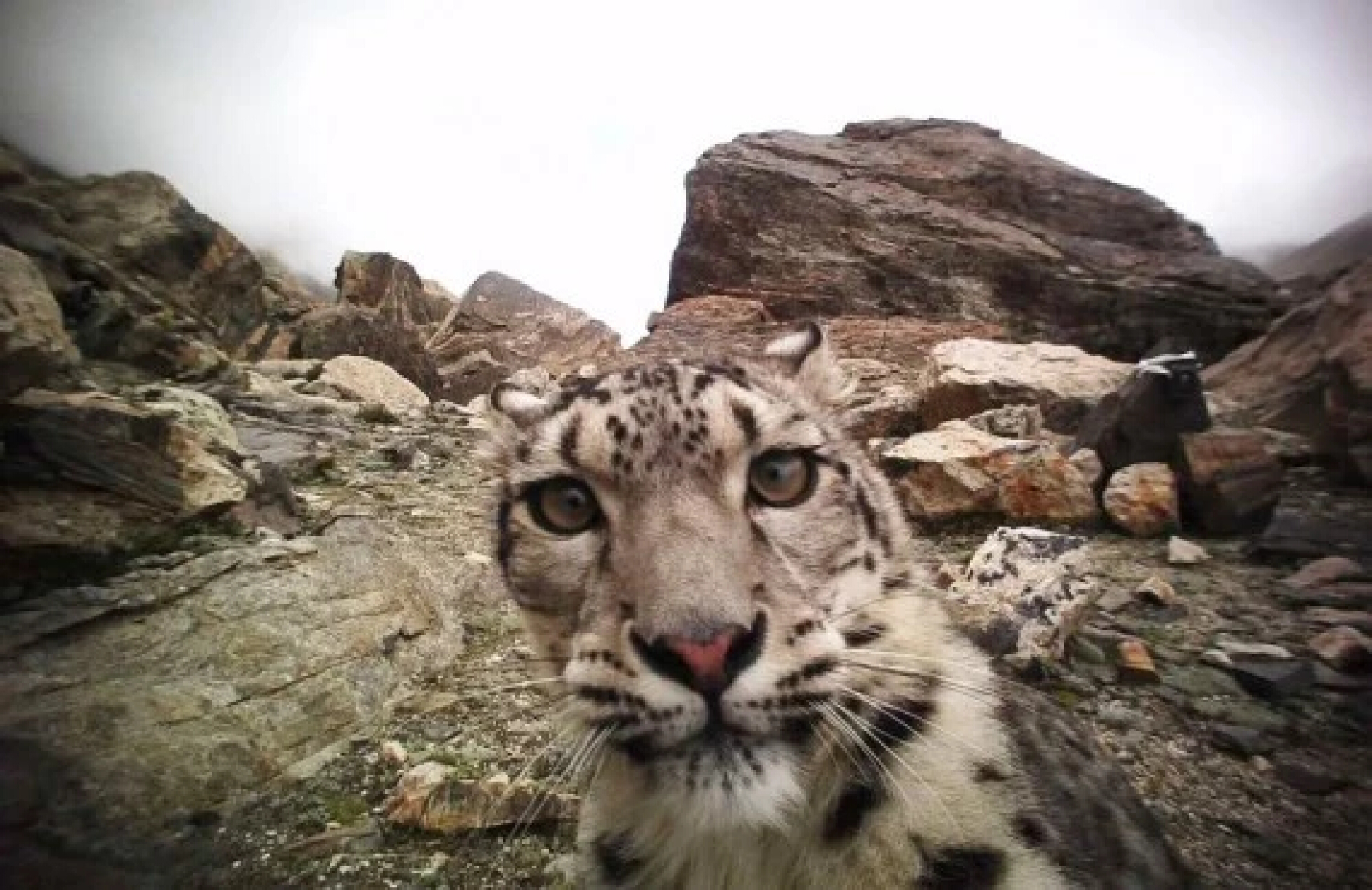


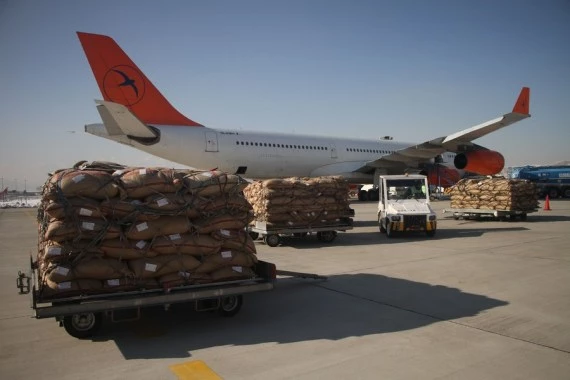 A shipment of pine nuts is seen to be loaded into a plane at Kabul International Airport in Kabul, Afghanistan, on Jan. 10, 2022. (Photo by Saifurahman Safi/Xinhua)
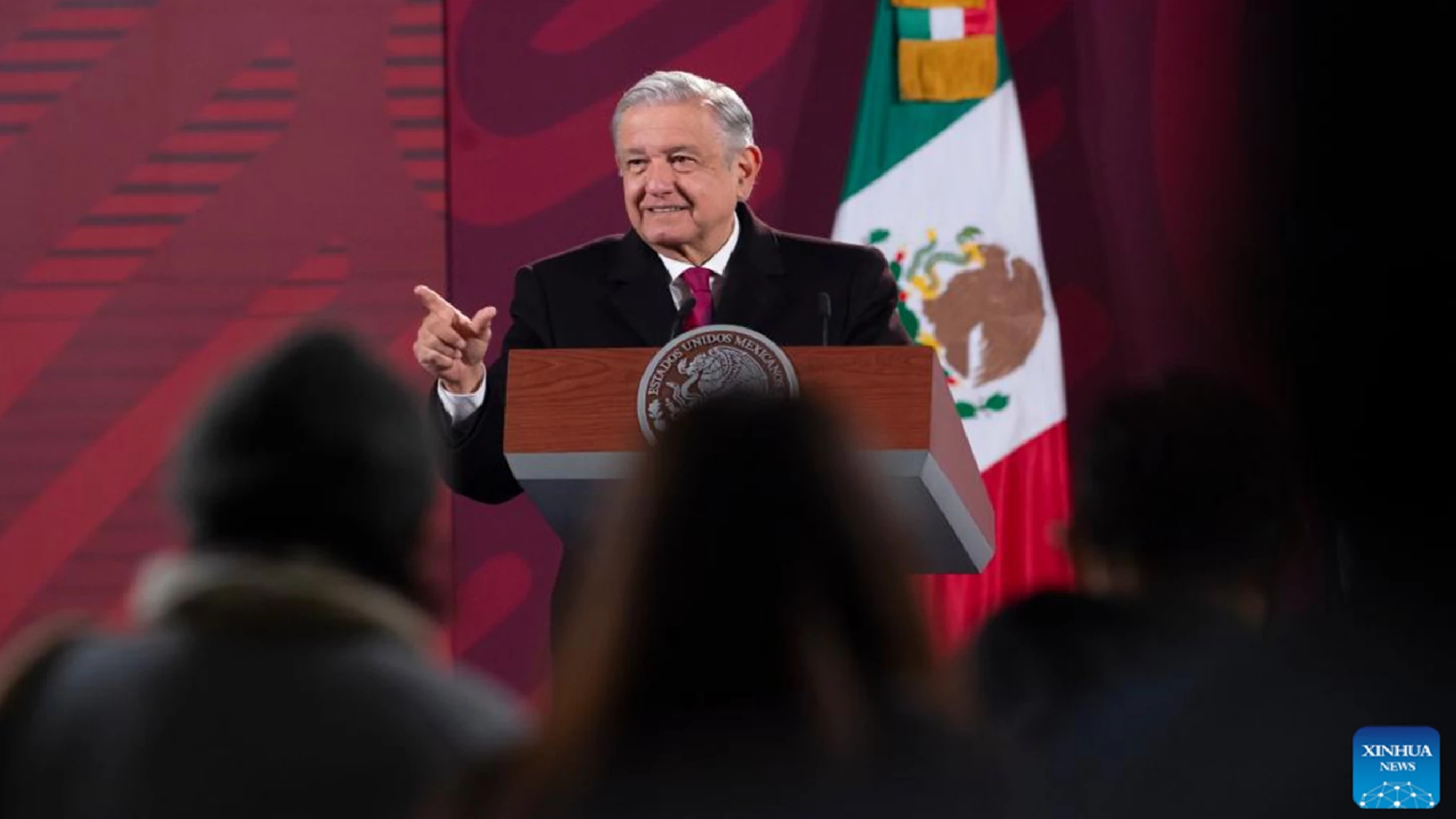
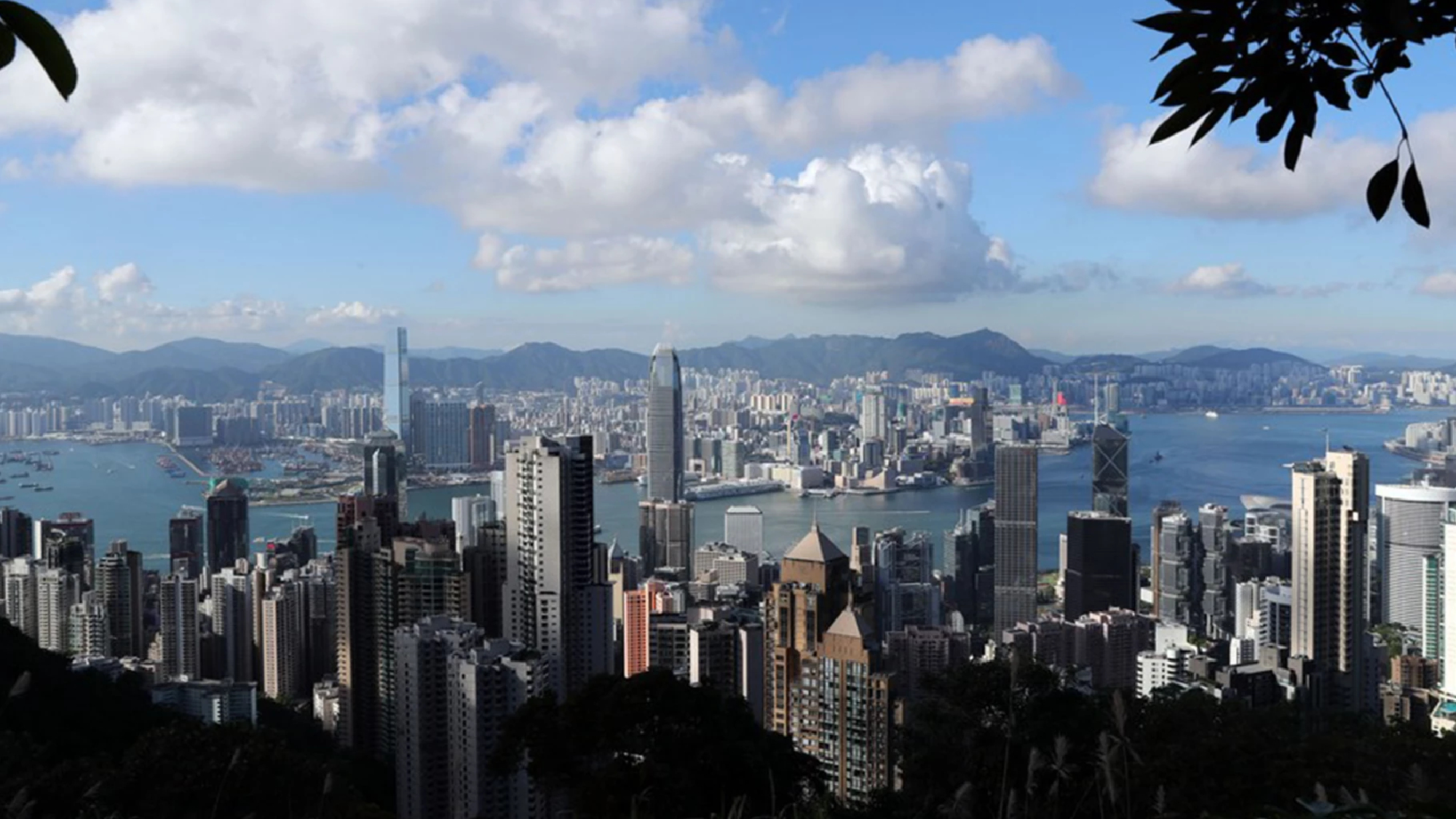
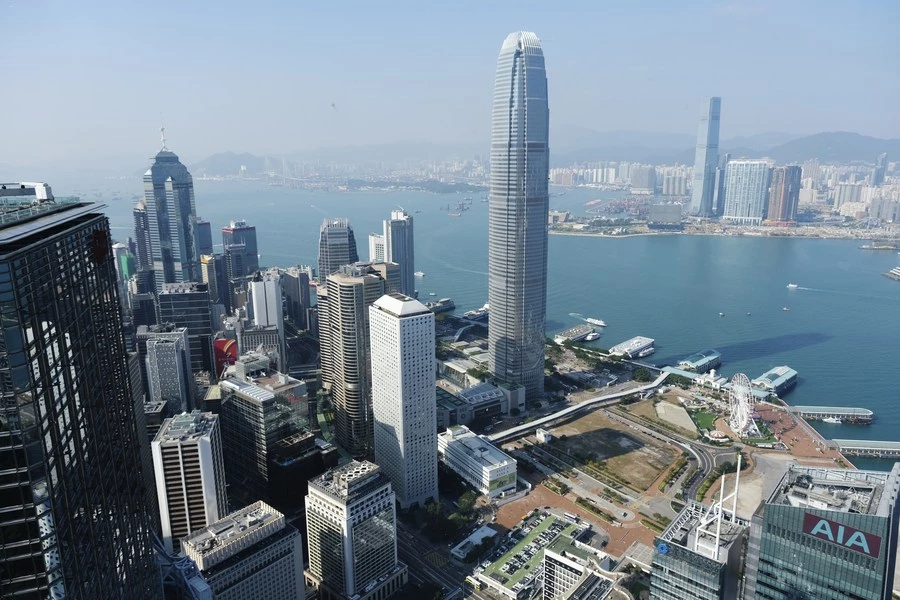 Photo taken on Nov. 24, 2021 shows the view of the Victoria Harbour in Hong Kong, south China. (Xinhua/Wang Shen)
 Photo taken on June 15, 2021 shows security officers stand guard at an entrance to the Villa La Grange, the venue for a summit in Geneva, Switzerland, between U.S. President Joe Biden and his Russian counterpart Vladimir Putin. (Xinhua/Guo Chen)
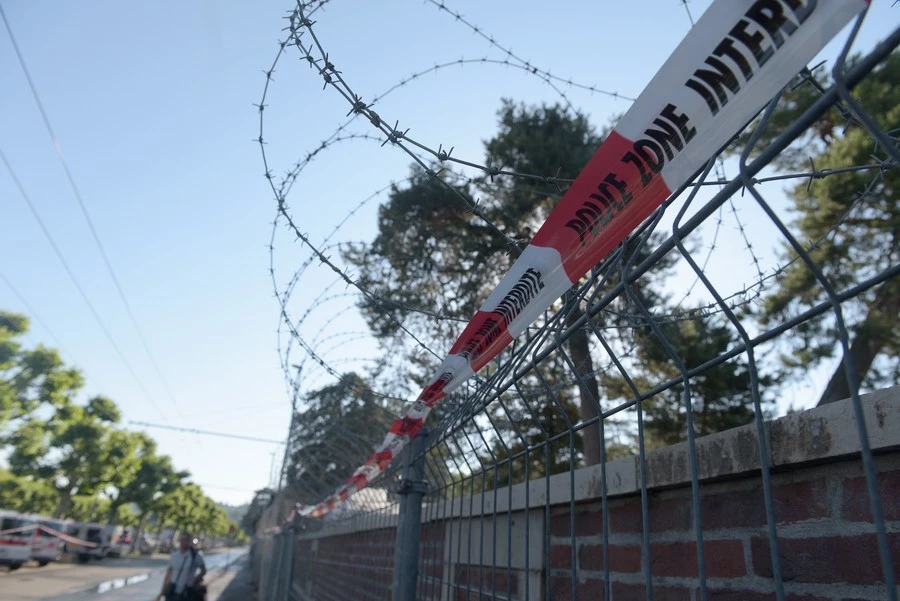 Photo taken on June 15, 2021 shows fences with barbed wires are seen outside the Villa La Grange, the venue for a summit in Geneva, Switzerland, between U.S. President Joe Biden and his Russian counterpart Vladimir Putin.(Xinhua/Guo Chen)