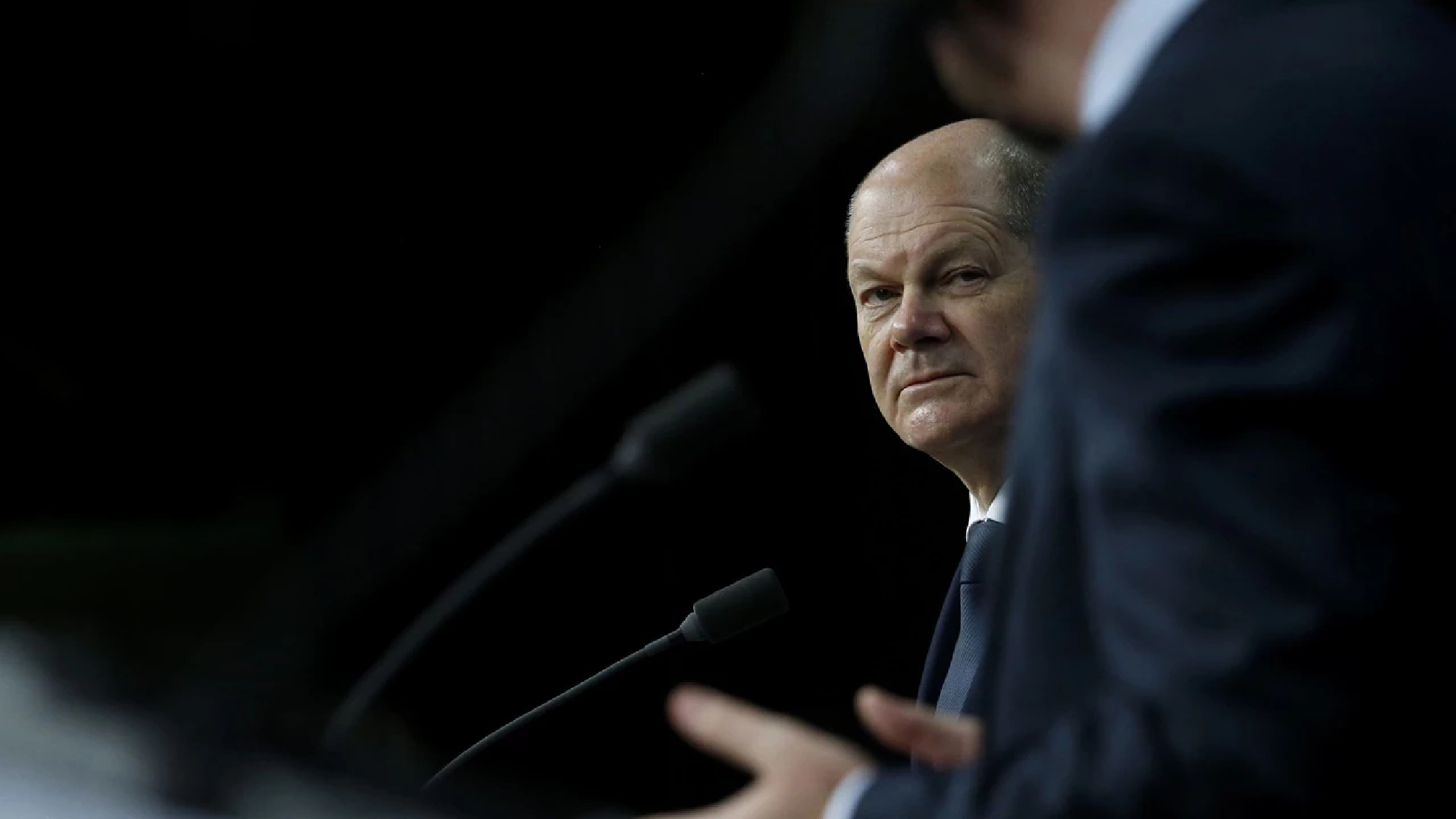
German Chancellor Olaf Scholz said extremist opposition to vaccines and other measures to contain Covid-19 pose a risk to democratic society, with the threat underscored by authorities foiling an alleged assassination plot in the eastern state of Saxony.
Police on Wednesday conducted a set of raids to investigate allegations of plans to kill officials over lockdown measures. While Scholz — who succeeded Angela Merkel last week — didn’t specifically refer to the police action in and around Dresden, he’s taken a firm stance on anti-vaccine protesters.
“A small, extremist minority in our country has turned against our society, our democracy, our community and state,” Scholz told Bundestag lawmakers on Wednesday in his first address to parliament.
The new chancellor insisted a large majority of citizens support measures to stem the pandemic, reinforcing his plea for Germans to get fully vaccinated and receive booster shots.
Germany’s latest bout of coronavirus infections has been attributed to lagging vaccination rates, with more than 13 million adults not inoculated. Plans to make shots compulsory risks inciting further opposition, and authorities have warned that the threat of violence is on the rise.
Early on Wednesday, police raided homes and other premises in the area around the state capital as part of a probe into six people suspected of having discussed plans to murder the Saxony Premier Michael Kretschmer and other officials, the state’s Central Police Office said in a statement.
Police said the five men and a woman, who oppose the vaccination program and lockdown measures, had communicated over a Telegram chat group and in person about plans. The raid turned up crossbows and other weapons that are being examined.
Saxony has the lowest vaccination rate among Germany’s 16 states, and defiance to pandemic measures there has been particularly fierce. Only 59.1% of state residents are fully vaccinated, well below the national average of 69.8%, according to Germany’s Robert Koch Institute.
German politicians roundly condemned a group of protesters brandishing torches outside the home of Saxony’s health minister, Petra Koepping, on Dec. 3.
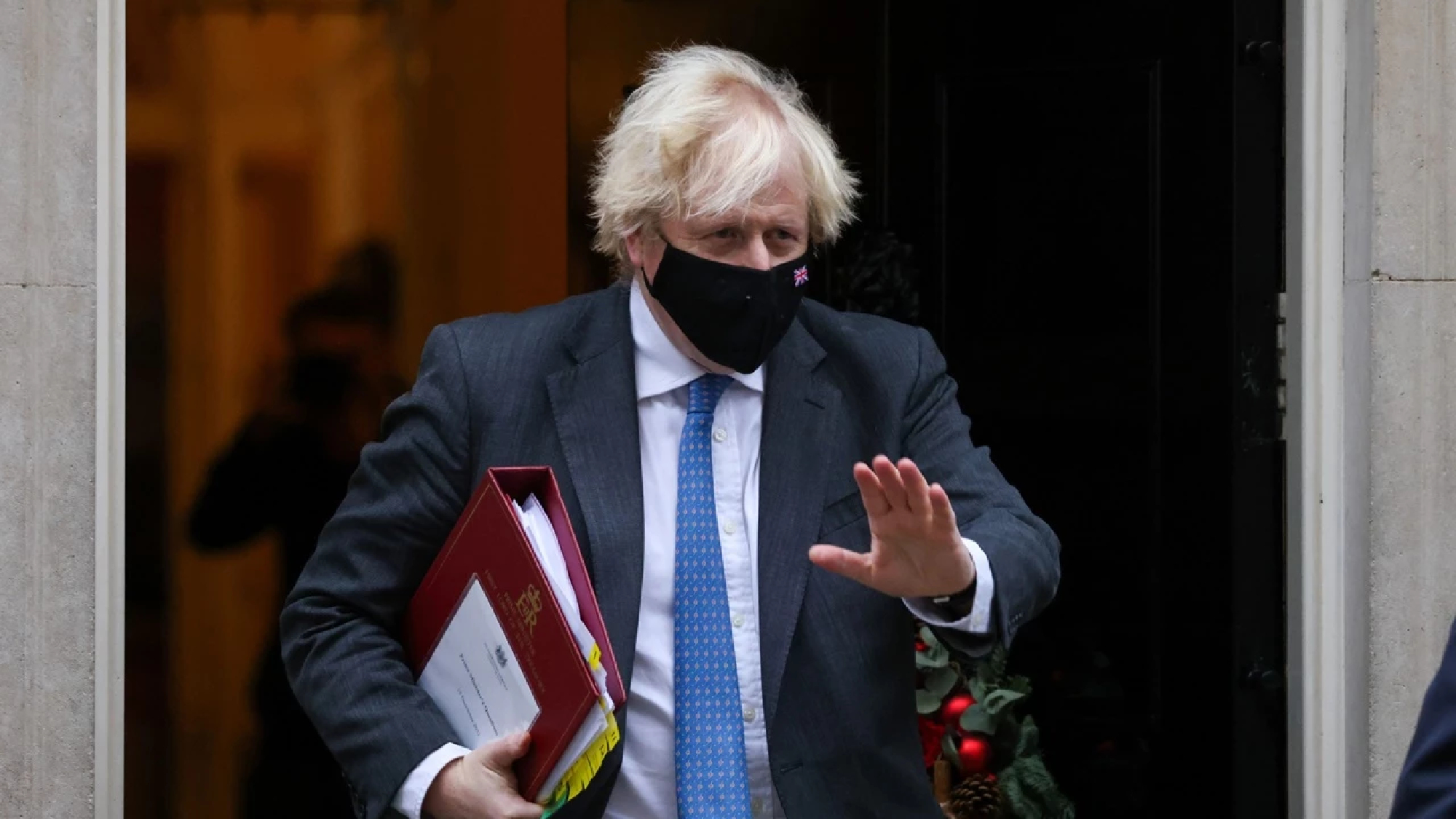
Boris Johnson is being squeezed from both sides of the argument over how to tackle a “staggering” surge in Covid-19 omicron infections — and that could have dangerous implications for the U.K.
The prime minister suffered the biggest Conservative rebellion of his tenure late Tuesday, as 100 members of Parliament opposed his strategy for clamping down on the new coronavirus variant. Many accused Johnson of going too far, too soon when so much still remains unknown about the new variant.
At the same time, warnings are growing that the sheer number of infections expected — Health Secretary Sajid Javid told Parliament that scientists have never seen Covid-19 spread so fast — mean the National Health Service is again at risk of being overwhelmed unless ministers take tougher action.
There were almost 60,000 new confirmed Covid-19 cases in the U.K. on Tuesday, though the number of daily omicron infections was estimated to be 200,000 as of Monday, with the rate doubling every two to three days.
“It’s probably the most significant threat we’ve had since the start of the pandemic,” U.K. Health Security Agency Chief Executive Officer Jenny Harries told the House of Commons Transport Committee on Wednesday. “The numbers that we see on data over the next few days will be quite staggering compared to the rate of growth that we’ve seen in cases for previous variants.”
Measures brought in with the help of opposition votes on Tuesday include Covid passes to gain entry to nightclubs and other venues, an expansion of mandatory mask-wearing, and compulsory vaccination for NHS workers.
Johnson’s Tories “won’t vote for basic public health measures,” Labour Party leader Keir Starmer told the House of Commons on Wednesday. “If it wasn’t for Labour votes, his government wouldn’t have been able to introduce vital health measures we need to save lives and protect the NHS.”
With Johnson’s party making clear where it stands on Covid restrictions, the prime minister could find his options limited even if the pandemic demands it. The government may find previous steps it has taken — closing hospitality venues, limiting the size of gatherings or even lockdowns — off the table.
Johnson’s spokesman, Max Blain, told reporters on Wednesday “there are no plans to go beyond what Parliament voted for yesterday.”
The measures many Tories objected to — including Covid passes to gain entry into nightclubs and face coverings in public spaces — are mild compared to other European countries. Austria was in lockdown until Sunday, while France has shut down nightclubs for four weeks. Germany’s new chancellor, Olaf Scholz, has backed the introduction of mandatory vaccinations.
Johnson would potentially face a more serious fallout, and possibly even a leadership challenge, if he tries to make MPs support new curbs in future.
Johnson will be wary of taking additional action, especially over Christmas after the disruption last year. In addition to the measures voted through on Tuesday, the government is primarily relying on a program of vaccine boosters to get the country through the crisis.
But with omicron infections doubling in less than two days in parts of the country, and its severity and ability to evade vaccines still unclear, there are already calls from doctors for the government to take more action.
“The fact that we are much more immune than we were generally means that the virus will appear to be much less severe,” Graham Medley, a member of the government’s Scientific Advisory Group for Emergencies, told BBC radio. “But the numbers of infections means that even though individually we’re at less risk, at a population level the number of people ending up in hospital could get very large.”
One option for Johnson could be to take the approach of Scotland’s First Minister Nicola Sturgeon, who issued guidance on Tuesday to limit household mixing over Christmas. Doing so would avoid the risk of another parliamentary rebellion, though Johnson would still likely face the wrath of some Tories when they return from the holiday period in January.
Defending the government’s approach during the morning media round on Wednesday, Transport Secretary Grant Shapps said ministers are trying to make a “judgment” about how far to go and how quickly.
“The one thing we know about coronavirus is it’s typically better to act sooner,” he told LBC Radio. Still, “No one wants to curtail freedoms.”
The United States remains the country worst hit by the pandemic with the worlds highest caseload and death toll, accounting for more than 18 percent of the global cases and more than 15 percent of global deaths.
The United States reached the grim milestone of 800,000 coronavirus deaths on Tuesday, according to data from Johns Hopkins University.
With the national case count topping 50.2 million, the death toll across the United States rose to 800,266 as of 6:22 p.m. local time (2322 GMT), according to the tally.
California led the country in COVID-19 deaths, with 75,411 fatalities. Texas reported the second-highest fatalities of 74,707, followed by Florida with 62,073 deaths and New York with 58,287 deaths, the data showed.
States with more than 25,000 fatalities also include Pennsylvania, Georgia, Illinois, New Jersey, Ohio and Michigan.
The United States remains the country worst hit by the pandemic with the world’s highest caseload and death toll, accounting for more than 18 percent of the global cases and more than 15 percent of global deaths.
The U.S. COVID-19 deaths hit half a million on Feb. 22, topped 600,000 on June 15, and reached 700,000 on Oct. 1. It took 113 days for the national death toll to climb from 500,000 to 600,000, 108 days to jump from 600,000 to 700,000 and 74 days to soar from 700,000 to 800,000.
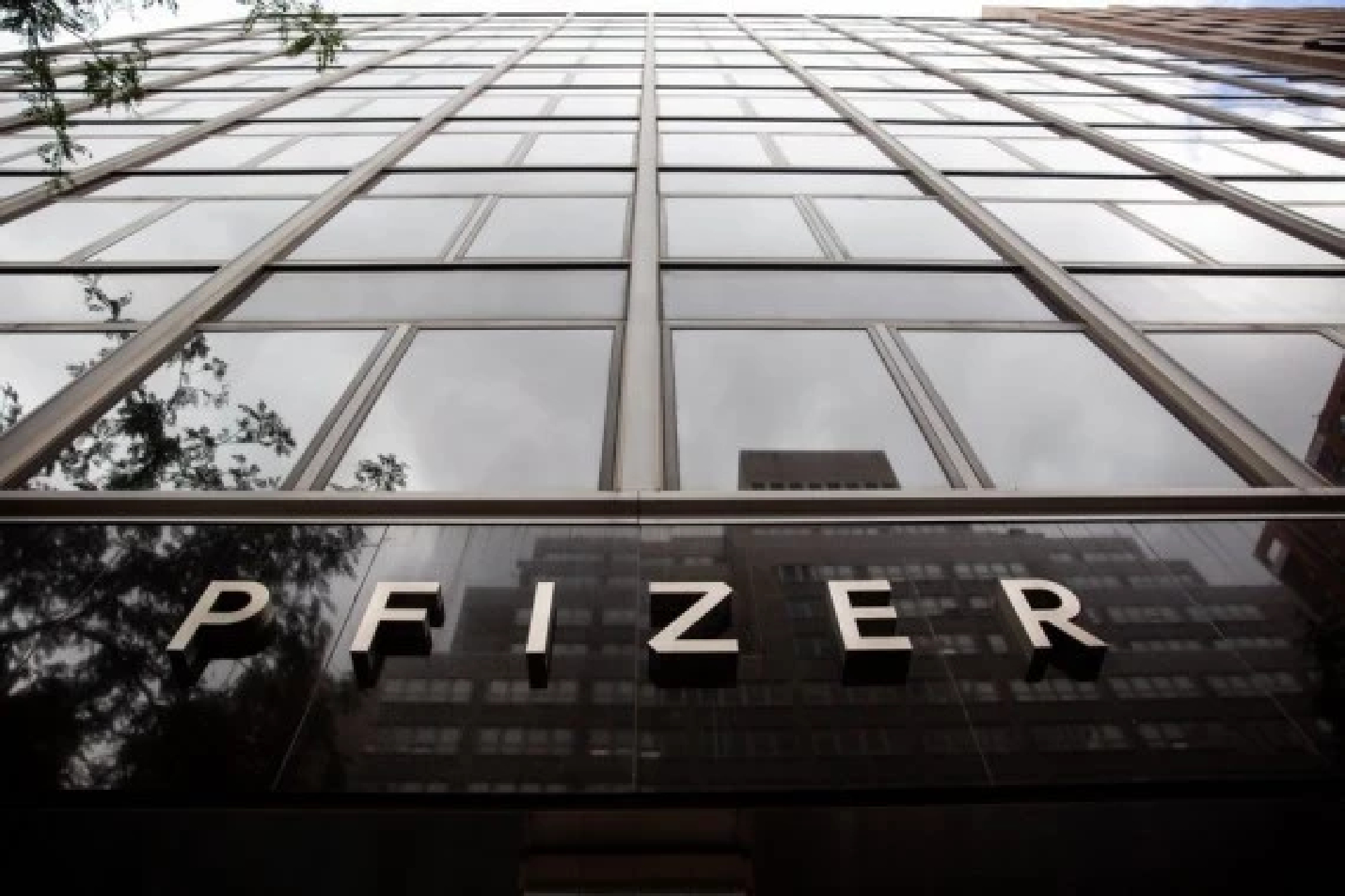
The risk of hospitalization or death was reduced by 89 percent compared to placebo in non-hospitalized, high-risk adult patients with COVID-19 treated within three days of symptom onset, said Pfizer.
U.S. pharmaceutical giant Pfizer Inc. Tuesday said final results show that its novel COVID-19 oral antiviral tablets could reduce risk of hospitalization or death by close to 90 percent for high-risk patients.
The results, based on an analysis of over 2,000 patients in a phase 2/3 trial, were consistent with the interim analysis announced in November 2021, according to a release by Pfizer on Tuesday.
The risk of hospitalization or death was reduced by 89 percent compared to placebo in non-hospitalized, high-risk adult patients with COVID-19 treated within three days of symptom onset, said Pfizer.
The treatment of patients by the oral antiviral pill within five days of symptom onset reduced risk of hospitalization or death by 88 percent up from 85 percent shown in the interim analysis, Pfizer added.
Pfizer has shared the final results with the U.S. Food and Drug Administration (FDA) as part of an ongoing rolling submission for emergency use authorization regarding the COVID-19 oral antiviral candidate.
“Emerging variants of concern, like Omicron, have exacerbated the need for accessible treatment options for those who contract the virus, and we are confident that, if authorized or approved, this potential treatment could be a critical tool to help quell the pandemic,” said Albert Bourla, chairman and chief executive officer of Pfizer.
Moreover, the oral antiviral pill reduced the risk of hospitalization by 70 percent in regards to standard-risk patients, according to interim analyses of another phase 2/3 trial by Pfizer.
The pill reduced viral load by approximately 10-fold at the fifth day of treatment compared with placebo in both the trials with high-risk and standard-risk patients, according to the release.
On Nov. 30, an advisory panel to the FDA recommended the authorization of a COVID-19 antiviral pill, which is developed by Merck & Co, Inc. and Ridgeback Biotherapeutics LP with at least 30 percent of efficacy than a placebo at preventing hospitalizations and death from COVID-19 infections.
The temperature, at 38 degrees Celsius, was measured at a meteorological observing station in the Russian town of Verkhoyansk, about 115 km north of the Arctic Circle, on June 20, 2020.
WMO said the extremes are “snapshots” of our current climate, and that it’s likely greater extremes will occur in the Arctic region in the future.
The World Meteorological Organization (WMO) verified on Tuesday a new record high of 38 degrees Celsius within the Arctic, one of the fastest warming regions in the world that is heating more than twice the global average.
The temperature was measured at a meteorological observing station in the Russian town of Verkhoyansk, about 115 km north of the Arctic Circle, on June 20, 2020, during an exceptional and prolonged Siberian heatwave.
It’s “one of a series of observations reported to the WMO Archive of Weather and Climate Extremes that sound the alarm bells about our changing climate,” according to WMO Secretary-General Petteri Taalas.
A tourist visits the Death Valley National Park in the United States, Jan. 11, 2020. (Xinhua/Wu Xiaoling)
WMO’s data suggests that average temperatures over Arctic Siberia reached as high as 10 degrees Celsius above normal for much of summer last year, fueling devastating fires, driving massive sea ice loss and playing a major role in 2020 being one of the three warmest years on record.
An in-depth analysis of available data has shown no known temperatures of 38 degrees Celsius or above before at any Arctic locations. WMO said the extremes are “snapshots” of our current climate, and that it’s likely greater extremes will occur in the Arctic region in the future.
In addition to the new record high of Arctic temperature, WMO is currently verifying other extreme temperatures around the world, including the 54.4 degrees Celsius recorded in both 2020 and 2021 in the world’s hottest place, Death Valley in California, and a new European record of 48.8 degrees Celsius in the Italian island of Sicily this summer.
“The WMO Archive of Weather and Climate Extremes has never had so many ongoing simultaneous investigations,” said Taalas.
Airfinity has estimated that more than 100 million vaccines are set to expire by the end of the year and would need to be redistributed immediately. Meanwhile, Hansen warned that the roll-out capacity in middle and low-income countries is still lacking.
As the world is facing a “tidal wave” of new Omicron cases, manufacturers will likely have to develop a new generation of vaccines and reconfigure their production facilities, Rasmus Bech Hansen, CEO of Airfinity, a London-based global health intelligence and analytics provider, told Xinhua.
“It’s pretty clear that the world can expect a tidal wave of new infections. How much of that translates into hospitalizations and mortality is still unknown. It seems that it’s either milder or the existing levels of protection do give some protection. But just the sheer number of infections is highly concerning,” said Hansen during an online interview.
“Many of the large vaccine producers are a little bit split over this. Pfizer has come out and argued that the current vaccines are good enough. Moderna has said we need a new generation of vaccines. Health authorities around the world haven’t really come to a conclusion. It’s a bit of a wait and see,” said Hansen.
However, Hansen stressed that the need for the development of a new vaccine could trigger fresh production bottlenecks.
“We basically would have to take all the existing factories and reconfigure those against a new variant. It won’t go from zero to 1 billion a month in day one. You’d take 100 days and then scale up the capacity,” he said.
“To put it very bluntly, if we need a new generation of Omicron vaccine, I don’t think there’s going to be enough vaccines according to our numbers for the world next year,” he added.
Hansen urged the need for more international collaboration and said that China could play a crucial part as a manufacturer of vaccines as well as in COVID-19 treatments.
“China has played a really important role as a producer of vaccines and has emerged as the world’s largest producer. It’s fantastic to see the innovation and the vaccine production coming out of China. I think China could play a role in many other areas, in the treatment space, testing, protection of variants, and supporting countries around the world with that,” he noted.
A person waits outside a COVID-19 Walk-In Vaccination Center in London, Britain on Dec. 6, 2021. (Photo by Ray Tang/Xinhua)
RAMPING UP PRODUCTION
Hansen stressed that the continuing challenge for the world is to avoid production and supply disruptions of current vaccination programs.
“It is remarkable to see the scale of production we’ve witnessed this year. Currently, the world is producing around a billion vaccines a month. That scaled up from hardly anything at the beginning of the year.”
“When we look into 2022, we expect that capacity of 1 billion vaccines monthly to continue and even accelerate a little bit. If we’re continuing with the current generation of vaccines, we can reach as much as 23 billion at the end of next year, which basically means that there will be enough vaccines for the world even with booster shots,” he said.
The World Health Organization (WHO) has warned that the Omicron variant can spread more rapidly than previous variants and could have a major impact on the course of the COVID-19 pandemic.
“It’s still too early days. But if we need a new vaccine, then we’re starting all over again. It will take 100 days to reconfigure and then you have to scale up production,” Hansen said.
“Our best-case estimate is then we’ll have around half the number of vaccines next year if we need a new generation as all of these production facilities need to be reconfigured,” he added.
EQUAL DISTRIBUTION
The executive urged the COVAX, the global initiative aimed at accelerating the development and manufacture of COVID-19 vaccines, to continue to support fair and equitable access to new vaccines around the world along with international partners.
Asked about whether production should not rather take place locally to avoid “vaccine nationalism,” Hansen said high-yielding factories would be more efficient in the manufacturing and distribution process.
“I think the solution really is to scale up the production capacity. I’m a little bit more skeptical on the initiatives of local vaccine production because when we model that and look at the numbers, it is not going to have a big impact in 2022. It’s more like 2023 and 2024. And you know, the pandemic is raging right now,” he said.
Another major problem is the short shelf-life of vaccines, with several countries facing challenges with utilizing all available doses before their expiry date.
Airfinity has estimated that more than 100 million vaccines are set to expire by the end of the year and would need to be redistributed immediately. Meanwhile, Hansen warned that the roll-out capacity in middle and low-income countries is still lacking.
“There is a risk that these vaccines get stuck in airports and not get distributed. It’s also because the deliveries have been quite uneven. Until we have more regular deliveries from COVAX and others, we are sadly going to see some of these examples of doses going to waste,” he warned.
JAKARTA, Indonesia – Secretary of State Antony Blinken used his first official visit to Southeast Asia to criticize Chinas “aggressive actions” and encourage smaller countries in the Indo-Pacific to unite against Beijings assertiveness in the region.
Speaking at a university in the capital of Indonesia, Blinken said the Biden administration would work with allies and partners to defend the “rules-based order” against a rising China that he depicted as a threat to freedom of movement in the South China Sea, where an estimated $3 trillion of commerce flows every year.
“Claiming open seas as their own. Distorting open markets through subsidies to its state-run companies. Denying the exports or revoking deals for countries whose policies it does not agree with,” Blinken said. “Countries across the region want this behavior to change – we do too.”
Blinken’s criticisms of China in a region where it holds strong political and economic ties resembled some of the broadsides leveled by former secretary of state Mike Pompeo, his predecessor in the Trump administration. But Blinken sought to strike a softer tone, insisting that Washington is not forcing countries to choose between the two superpowers.
“Individual countries will be able to choose their own path and their own partners,” he said.
Blinken is using his three-country swing through Southeast Asia, which will include stops in Malaysia and Thailand, as a means for spelling out the Biden administration’s Indo-Pacific strategy. Beijing has drawn criticism in the region for laying claim to much of the South China Sea, which is disputed by smaller countries in the region such as Vietnam, the Philippines and Malaysia. China has also moved military hardware into the waters and dismissed a 2016 international tribunal decision that refuted its historical claim there.
U.S.-China relations have plummeted in recent years due to differences over Hong Kong, Taiwan, human rights and the coronavirus pandemic. Blinken said the United States, which has more members of its military stationed in the Indo-Pacific than anywhere outside the contiguous United States, is committed to “peace and security” that is “vital to prosperity in the region.”
A key pillar of the Biden administration’s policy is to ensure the rights and freedoms of the people of the region, Blinken said.
But in promoting free and democratic governance, he was careful not to criticize corruption and anti-democratic practices of the countries on his tour, which he’s hoping to bring closer to Washington’s orbit.
During a news conference in Jakarta’s glitzy Fairmont hotel, Blinken was asked about whether he would give voice to anti-corruption and pro-democracy efforts in Thailand and Malaysia. The top U.S. diplomat dodged the question, saying, “we’ll have an opportunity in both places to address questions particular to those places when we’re there.”
Despite Blinken’s disciplined focus on Asia, the stop in Indonesia also brought a reminder of Washington’s high-stakes standoff with Russia over its military buildup on the border with Ukraine.
When Blinken touched down in Jakarta on Monday, he shared the same tarmac as Russian President Vladimir Putin’s senior aide Nikolai Patrushev, whose plane parked nearby as he met separately with Indonesian officials.
“I noticed his plane on the runway next to ours when we landed,” said Blinken during the news conference. “I can’t or won’t speak to why anyone else might be here or what they’re doing.”
Blinken, who did not meet with Patrushev during the stop, was asked if he missed a diplomatic opportunity to address a crisis that has consumed Washington. He suggested that Washington first needed to consult with its partner Ukraine before serious discussions ensued with Moscow.
“We have a senior State Department official, Karen Donfried, who is now in Ukraine consulting with our Ukrainian partners,” he said.
“She’ll be going on to Moscow . . . to test” whether Moscow is serious about resolving the crisis in Ukraine, Blinken said.
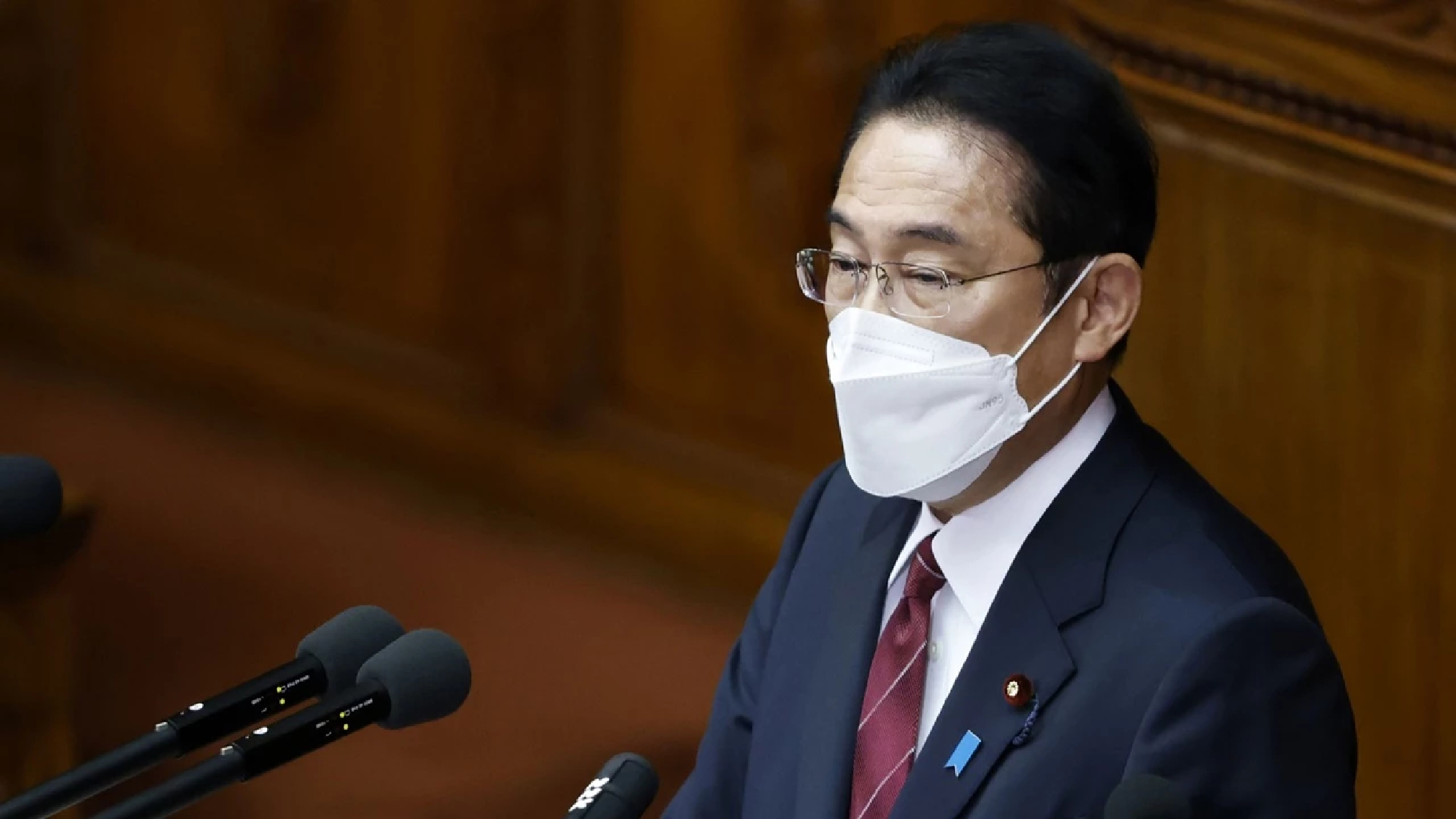
Japanese Prime Minister Fumio Kishida indicated he could consider writing guidance for companies on share buybacks, triggering a dip in the nations stock market thats been boosted by such repurchases in recent years.
Kishida said introducing “guidelines” on buybacks would be appropriate, in response to a question in parliament from opposition lawmaker Takayuki Ochiai. The Japanese premier added that caution would be needed in implementing any strict regulations.
The comments come as investors watch for a different approach from Kishida after a series of shareholder-friendly reforms started under former Prime Minister Shinzo Abe. Kishida came to office earlier this year pledging to roll back what he called “neoliberal” measures of the past two decades, with a greater focus on narrowing the gap between rich and poor.
“If buybacks become subject to restrictions, that will cap the upside in share prices,” said Tatsushi Maeno, senior strategist at Okasan Asset Management Co. But “it’s unclear whether a guideline will actually be put together.”
The Nikkei 225 Stock Average fell as much as 1.2% in afternoon trading before paring declines to close down 0.7%. SoftBank Group Corp., which has long used stock repurchases and is currently in the process of a 1 trillion yen ($8.8 billion) buyback program, dropped as much as 1.6%, and finished 0.9% lower.
“I wonder if it would be possible to consider a response that takes into account the circumstances of individual companies, such as introducing guidelines,” Kishida said. Ochiai had suggested Japan should review its share buyback rules or ban repurchases altogether.
Prime ministers regularly take questions from lawmakers on various topics in parliament, and the responses don’t necessarily mean they will take that policy direction.
Share buybacks surged in Japan under the administration of Abe, who implemented a corporate governance code for companies to make them more responsive to shareholders and encourage them to improve investor returns.
Stock repurchases by Japanese companies are expected to rise 50% this fiscal year to more than 7 trillion yen, according to an analysis by Tokai Tokyo Research Institute Co.
But such buybacks were banned in Japan for decades, only becoming allowed in 2001. Opposition lawmaker Ochiai said in parliament that deregulation of stock repurchases had allowed companies to favor shareholders over employees.
“It’s possible that some kind of guidelines could be considered,” said Hiroshi Matsumoto, head of Japan investment at Pictet Asset Management. “While it’s fine if buybacks come from profits, in recent years many companies buy back shares to offset stock declines after losses, or do repurchases using debt.”
It’s not the first time Kishida’s promises to introduce a “new form of Japanese capitalism” have spooked markets.
Early in his administration, talk of capital gains taxes led to a dip in the Nikkei 225 that was termed the “Kishida shock.” While Kishida shelved that plan, his subsequent stronger-than-expected showing in a general election has led to talk of taxing financial income being revived.
Kishida has also called for tax breaks for companies that raise wages rather than dividends, though he hasn’t previously openly commented on regulating buybacks.
The ruling Liberal Democratic Party on Friday unveiled a set of carrot-and-stick incentives to use the tax code to prompt businesses to raise worker pay and penalize those that don’t.
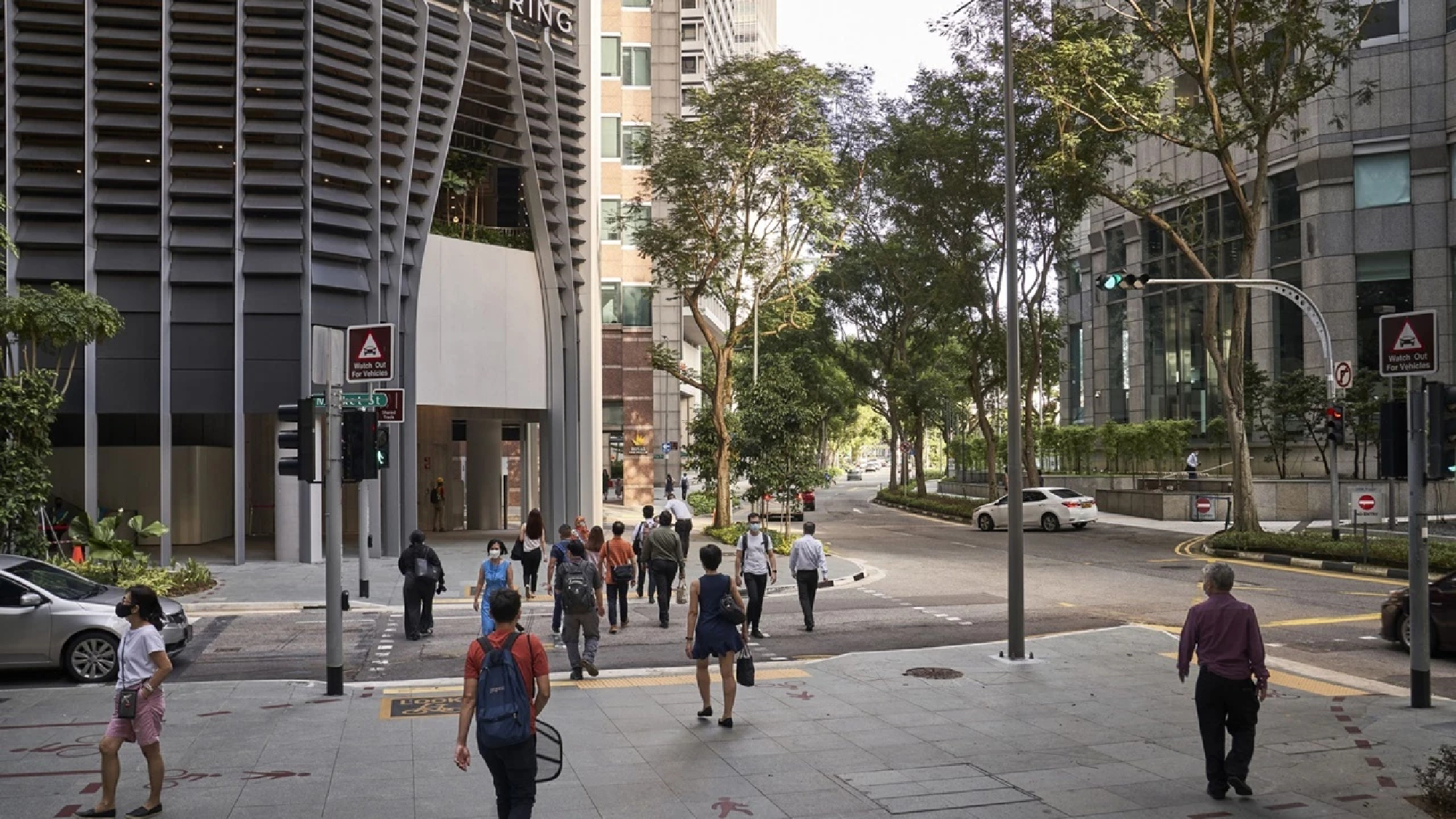
Singapore will loosen some workplace rules as the city-state sees Covid-19 infections easing off their peak, even while it braces for a potential “omicron wave.”
Up to 50% of fully-vaccinated individuals who can work from home will be allowed to return to the office from Jan. 1, the Ministry of Health said in a statement Tuesday, although social gatherings at the workplace still aren’t allowed.
But with preliminary data on the new virus strain suggesting that it is at least as transmissible as the delta variant and may carry a higher risk of re-infection, the government said it would put in place additional measures to prepare to deal with the spread of omicron in the community.
“Unfortunately, the pandemic is not ending soon,” Finance Minister Lawrence Wong, who co-chairs the country’s virus taskforce, said at a briefing Tuesday. “In some ways this is perhaps the calm before the next storm. So we do have to brace ourselves for the omicron wave.”
In an early sign of the government’s desire to cajole the population to take up boosters, taskforce co-chair and Health Minister Ong Ye Kung, said at the same briefing that officials would set a “validity period” for vaccine regimes, with the duration to be determined. There’s a need for Singapore to treat primary vaccination as three doses, he added.
This follows similar announcements in the U.K. that so-called “vaccine passports” for large events would soon require proof of booster shots as well.
Ahead of the ministers’ comments, Prime Minister Lee Hsien Loong said on Monday Singapore was confident that it could cope with the challenge posed by omicron. With vaccinations and boosters, the city-state is starting to see encouraging signs, although it’s not out of the woods yet, Lee said.
The highly-vaccinated Southeast Asian hub has been trying to pull off the rare feat of transitioning to living with the virus and allowing infection to become endemic while preventing hospitals from becoming overwhelmed. While it’s opened up travel for vaccinated people to a number of countries, domestic social rules remain relatively strict with only five people from different households allowed to gather at a time.
After a harrowing peak of more than 4,500 community cases a day in end-October, infections have stayed below 800 cases in the past week while its weekly infection rate has dipped to 0.6.
So far, though it’s detected 16 omicron cases, the city-state has not reversed course on incremental easing. It has tightened testing at the border and postponed the start of vaccinated travel lanes with Qatar, Saudi Arabia and the United Arab Emirates.
To counter the new threat, Singapore — with 87% of its total population inoculated — is continuing to ramp up vaccinations. Shots will be extended to children aged five to 11, and this could potentially start before the end of the year.
The government is also seeking to tighten the screws on those who decline to come forward for jabs further, with authorities mulling whether to scrap a previous exemption allowing unvaccinated employees to enter the workplace if they have a valid test, said Wong.
Further steps to bar most unvaccinated individuals from public venues including indoor sports facilities, higher education institutions and hotels will also kick in from Feb. 1, while carve-outs allowing them to perform tests instead of having to prove their inoculation status to enter public spaces will be removed from the start of next year as well.
Here are some further details from the briefing:
– Travel between Singapore and neighboring Malaysia via the land border will now be extended to vaccinated citizens of both countries.
– Booster jabs will be made available to 18-29s from Dec. 14, if they have completed a two-dose regime at least five months earlier.
– Plans are in place to increase capacity and manpower at community facilities and hospitals to deal with a potential surge due to omicron.
China has detected its first cases of the omicron coronavirus variant in two patients who had recently returned to the country from abroad, state media reported this week.
One of the two patients was identified in Tianjin, a major port city near Beijing, while staying at a quarantine facility, local authorities told the Tianjin Daily newspaper. A local health official said Tuesday that the patient, who has been transferred to a designated hospital for coronavirus treatment, does not have a cough or a fever.
China is one of the last countries maintaining a zero-tolerance covid policy, with Beijing requiring all inbound travelers to quarantine for two to three weeks and to undergo repeated testing.
Authorities from the southern city of Guangzhou reported one case of the omicron variant Tuesday. The patient was a 67-year-old man who tested positive while under home quarantine; he had completed two weeks of quarantine in dedicated facilities in Shanghai and was allowed to fly to Guangzhou on Saturday.
Wu Hao, a public health expert who advises the central government on coronavirus policies, insisted that China is “very safe,” given that the two cases had minimal contact with the general population.
“The omicron variant fundamentally is still a coronavirus, and the pattern with which it spreads is similar to past coronaviruses,” Wu said in an interview with Beijing Daily. “So the conventional methods of protection are still effective.”
Since early 2020, China has shuttered its doors to most foreigners while strictly managing the movement of citizens returning home. Most reported cases since the virus was first detected in Wuhan have been traced to overseas returnees, the government claims.
China is battling a spate of cases in Zhejiang province, where about 200 infections have been detected since last week. To clamp down on the spread, regional travel restrictions will be in place until March, according to provincial officials.



 A tourist visits the Death Valley National Park in the United States, Jan. 11, 2020. (Xinhua/Wu Xiaoling)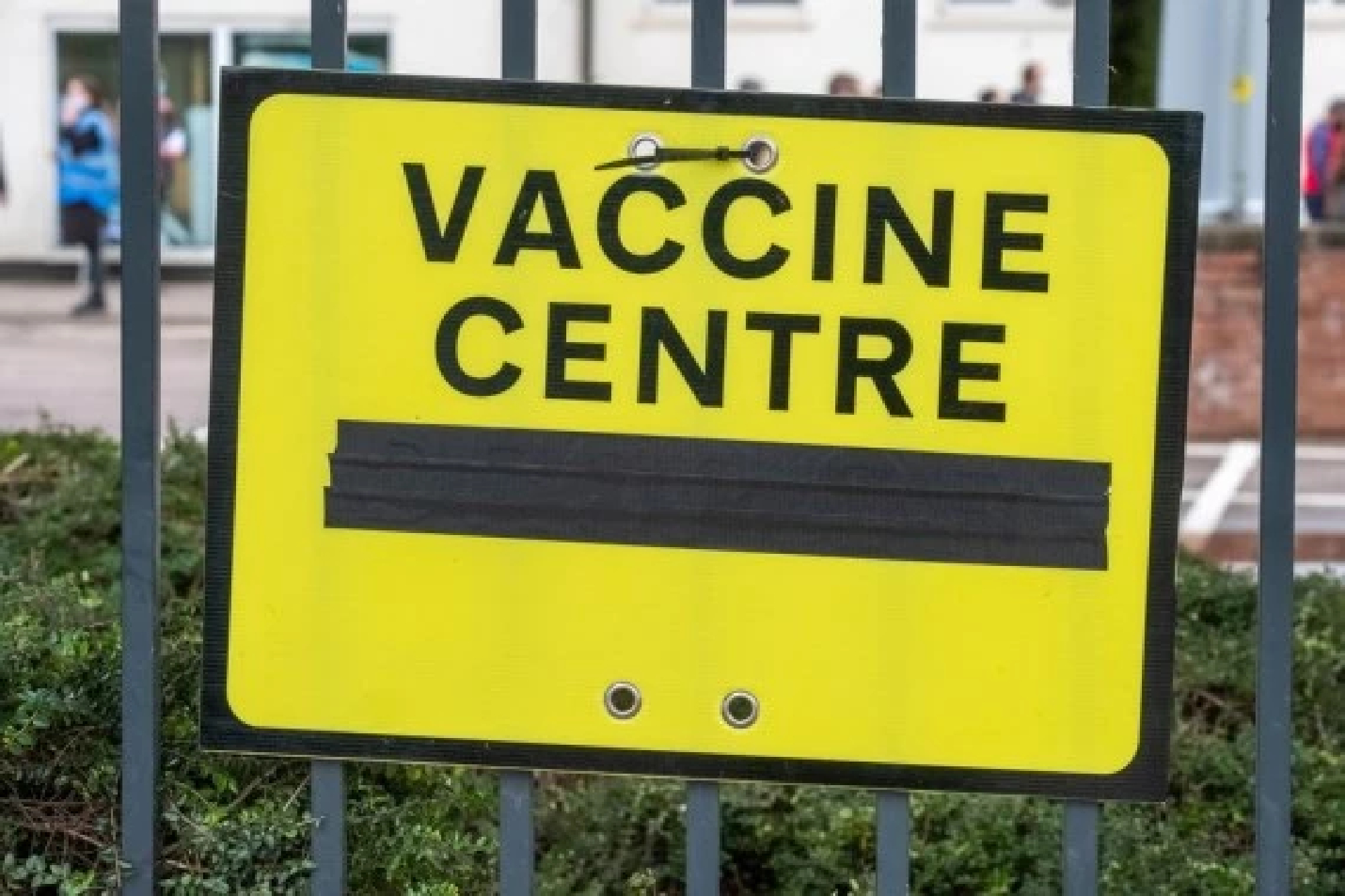
 A person waits outside a COVID-19 Walk-In Vaccination Center in London, Britain on Dec. 6, 2021. (Photo by Ray Tang/Xinhua)