Britain recorded another 52,009 new coronavirus cases, marking the first time the figure has been above 50,000 since July 17.
The country also reported a further 115 coronavirus-related deaths.
Another 52,009 people in Britain have tested positive for COVID-19, marking the first time that figure has been above 50,000 since July 17, according to official figures released Thursday.
The latest figure came after more than 40,000 daily cases of COVID-19 were reported for eight consecutive days, bringing the total number of coronavirus cases in the country to 8,641,221.
The country also reported a further 115 coronavirus-related deaths. The total number of coronavirus-related deaths in Britain now stands at 139,146. These figures only include the deaths of people who died within 28 days of their first positive test.
A man walks past an NHS COVID-19 vaccination centre in London, Britain, on Sept. 7, 2021. (Photo by Ray Tang/Xinhua)
There are currently 8,142 patients in hospital with COVID-19.
Meanwhile, separate figures published by the Office for National Statistics showed there have now been 162,620 deaths registered in Britain where COVID-19 was mentioned on the death certificate.
British Prime Minister Boris Johnson has admitted that the level of COVID cases is “high” and he is “watching the numbers very carefully every day”.
However, he has insisted he is “sticking with our plan”. The British government has so far resisted calls to move to Plan B of its autumn and winter COVID response for easing pressures on the National Health Service (NHS).
Speaking at a Downing Street news conference on Wednesday, Health Secretary Sajid Javid cautioned that the coronavirus pandemic “is not over”. Javid has even predicted there could be as many as 100,000 COVID cases a day heading into winter.
Britain has lifted most COVID restrictions thanks to the progress of its vaccine rollout.
More than 86 percent of people aged 12 and over in Britain have had their first dose of vaccine and around 79 percent have received both doses, the latest figures showed.
To bring life back to normal, countries such as Britain, China, Germany, Russia and the United States have been racing against time to roll out coronavirus vaccines.
People walk past a kiosk in London, Britain, on Sept. 7, 2021. (Photo by Ray Tang/Xinhua)
“Unlike NATO countries, we are not trying to form any closed military alliance, there is no military bloc between Russia and China,” Putin said.
Russia-China relations are “not directed against anyone” and are in the interests of both countries, Russian President Vladimir Putin said Thursday in Sochi.
“We talked about this many times. We are friends with China in each other’s interests, and (our relations) are not directed against anyone,” the president said at the plenary session of the 18th annual meeting of the Valdai Discussion Club, a Russian think tank.
“Unlike NATO countries, we are not trying to form any closed military alliance, there is no military bloc between Russia and China. We have no such intention,” he added.
The 18th meeting of the Valdai Discussion Club took place in Sochi from Monday to Thursday. This year’s theme is “Global Shake-Up in the 21st Century: The Individual, Values, and the State.”
The Valdai Discussion Club was established in 2004 and unites experts, politicians and public figures from all over the world. International participants traditionally discuss urgent global matters in a wide array of fields.
A Pfizer-BioNTech booster dose showed a relative vaccine efficacy of 95.6 percent when compared to those who did not receive a booster, according to a trial.
Pfizer and BioNTech announced Thursday that a large-scale trial of their COVID-19 vaccine booster showed it restored full protection against the disease.
In a Phase 3 randomized, controlled trial, a Pfizer-BioNTech booster dose was administered to more than 10,000 individuals 16 years of age and older, who previously received the Pfizer-BioNTech primary two-dose series.
It showed a relative vaccine efficacy of 95.6 percent when compared to those who did not receive a booster.
These are the first efficacy results from any randomized, controlled COVID-19 vaccine booster trial.
“These results provide further evidence of the benefits of boosters as we aim to keep people well-protected against this disease,” said Albert Bourla, Pfizer chairman and chief executive officer.
Last month, the U.S. Food and Drug Administration authorized the booster shots for the Pfizer-BioNTech COVID-19 vaccine, allowing a single booster dose of the Pfizer-BioNTech vaccine be administered at least 6 months after completion of the primary series to individuals 65 years of age and older, and 18 through 64 years of age with frequent institutional or occupational exposure to SARS-CoV-2.
Canadian Deputy Prime Minister and Finance Minister Chrystia Freeland said that new measures with an estimated 7.4 billion Canadian dollars between Oct. 24 and May 7, 2022, are the “final pivot in delivering the support needed to deliver a robust recovery.”
The Canadian government on Thursday announced new measures to restore the economy while its income and business support programs against the COVID-19 pandemic are to expire on Saturday.
Canadian Deputy Prime Minister and Finance Minister Chrystia Freeland said on Thursday that new measures with an estimated 7.4 billion Canadian dollars between Oct. 24 and May 7, 2022, are the “final pivot in delivering the support needed to deliver a robust recovery.”
Freeland noted that Canada is in a new phase following the darkest days of the COVID-19 pandemic. “We’re moving from the very broad based support that was appropriate at the height of our lockdown to more targeted measures that will provide help where it is needed while prudently managing government finances.”
People line up to enter a movie theater in Toronto, Ontario, Canada, on July 16, 2021. (Photo by Zou Zheng/Xinhua)
The Canada Recovery Benefit (CRB) will be replaced by the Canada Worker Lockdown Benefit for those whose work is directly impacted by government-imposed lockdowns.
The program will provide 300 Canadian dollars a week to eligible workers until May 7, 2022.
“Temporary lockdowns are still a possibility in the months to come. We want Canadians to know that we intend now to put in place measures that would snap into action immediately,” Freeland said.
As of Oct. 10, the government paid out 27 billion Canadian dollars to more than two million unique CRB applicants.
Freeland also announced the implementation of two new programs to help hard-hit sectors, replacing the wage and rent subsidies.
With the Tourism and Hospitality Recovery Program and the Hardest-Hit Business Recovery Program expiring on Nov. 20, Freeland said the government is proposing to introduce legislation to have them extended until May 7, 2022.
The Tourism and Hospitality Recovery Program, which would apply to operations such as hotels, restaurants, bars, festivals and travel agencies, requires applicants to show an average monthly revenue loss of at least 40 percent for the first 13 qualifying periods of the Canada Emergency Wage Subsidy and a current one-month revenue loss of the same amount.
The Hardest-Hit Business Recovery Program applies to those that don’t fit under the tourism and hospitality umbrella but are still facing significant financial hurdles caused by the pandemic.
Eligible businesses would have to show an average monthly revenue loss of at least 50 percent over the first 13 qualifying periods of the Canada Emergency Wage Subsidy and a current one-month revenue loss of the same amount.
The maximum subsidy rate would be set at up to 50 percent until mid-March and then reduced by half thereafter.
The government will also extend the Canada Recovery Hiring Program, for businesses that can show a more than 10 percent revenue loss, until May 7, 2022 at a subsidy rate of 50 percent paid to eligible employees.
The Canada Recovery Sickness Benefit and the Canada Recovery Caregiving Benefit will remain in place until the same time and are being extended by two weeks – moving the sickness benefit from four to six weeks and the caregiving benefit from 42 to 44 weeks.
Visitors are seen at the Canadian side of Niagara Falls, Ontario, Canada, on March 31, 2021. (Photo by Zou Zheng/Xinhua)
The number of Covid-19 cases crossed 12.9 million across Southeast Asia, with 29,833 new cases reported on Thursday (October 21), higher than Wednesday’s tally at 28,372. New deaths are at 573, increasing from Wednesday’s number of 314. Total Covid-19 deaths in Asean are now at 274,090.
Malaysia’s Public Service Department is mandating all medically fit civil servants to get the jab against Covid-19 before November 1 or face disciplinary action or termination in a bid to ensure a safe work environment and that service delivery and public service productivity is at an optimal level. The department reported that 1.6 per cent of civil servants or 16,900 people have yet to register to get vaccinated, while the country reported that 70 per cent of the population or 22.9 million people have been fully vaccinated.
Meanwhile, Singapore will extend its Covid-19 restrictions until November 21, as the country’s healthcare system is at risk of being overwhelmed. The extended measures – which include capping group sizes for social gatherings and dining in at two – will be reviewed at the two-week mark and adjusted based on the community situation then. The Health Ministry will also add more intensive care unit beds if necessary.
China’s international collaboration benefits all parties, Chinese Ambassador Han Zhiqiang said during a video conference on Wednesday, pointing out that the Asian giant has delivered 46 million Covid-19 vaccine doses to Thailand alone.
He said he had conducted negotiations with a number of government officials and private sector firms after being appointed Chinese ambassador in August.
Han said China has achieved success in developing the country, enabling its citizens to overcome poverty, generate income and have a better quality of life.
“In addition, China has collaborated with several countries in allocating vaccines and medical supplies to tackle the Covid-19 crisis,” he pointed out.
“China has delivered 46 million doses of Covid-19 vaccine to Thailand, of which more than 1 million have been donated by Beijing,” he said.
Han thanked Thailand for medical assistance at the beginning of the Covid-19 crisis.
He promised China would continue supporting Thailand in tackling the pandemic.
Collaboration with Beijing benefits all parties: Chinese ambassador
He went on to confirm that China wants to maintain peace and avoid any confrontation with the United States.
“If two powerful countries collaborate, it will benefit all parties,” he said, adding that trade between China and the US expanded last year.
Han asked Thailand and other countries not to feel that they are being forced to choose sides because “Beijing’s international collaboration and law enforcement are carried out under United Nations mechanisms”.
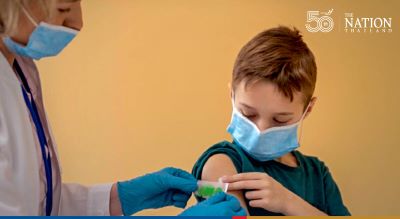
WASHINGTON – The White House on Wednesday announced plans to distribute vaccines to a huge group that has been ineligible so far to receive the coronavirus shots – 28 million children aged 5 to 11.
The operation is slated to begin as soon as federal health officials sign off on a reduced dose of the Pfizer-BioNTech vaccine, which the Biden administration anticipates as soon as the first week of November
White House officials said they have already acquired enough doses to vaccinate every child in that group and plan to make the specially packaged vaccine available at more than 25,000 pediatricians’ and doctors’ offices, hospitals, pharmacies, community health centers, and school- and community-based clinics. They also will undertake a campaign to educate parents more fully about the vaccines.
That strategy is key to reducing the impact of the virus across the United States, Anthony S. Fauci, the nation’s top infectious-disease specialist, said at a White House briefing. The delta variant has changed the game, he said, describing a recent study showing children are getting infected and transmitting the virus as readily as adults, even though 50% of them are asymptomatic.
“If we can get the overwhelming majority of those 28 million children vaccinated, I think that would play a major role in diminishing the spread of infection in the community,” Fauci said. “That’s one of the reasons why we want to do as best as we can to get those children 5 to 11 vaccinated.”
The rollout will rely on familiar approaches, such as identifying trusted messengers to overcome vaccine hesitancy. But this one will be tailored to children and families, officials said. Among the changes will be a focus on administering the vaccines in small-group settings and the creation of a Parent Leadership Corps of scientists and other experts who are parents themselves, and who will be a resource for other parents.
Wednesday’s announcement comes as the Biden administration has struggled to regain confidence in its planning and coordination in the wake of its mid-August announcement that all Americans would be eligible for booster shots beginning in late September. The FDA and CDC narrowed the ranks of those eligible for booster shots, sowing confusion among some patients and practitioners.
On Wednesday, members of the White House response team compared their readiness for a pediatric vaccine rollout to what they described as the lack of coordination around the initial vaccine distribution effort last December, rather than as an end-run around federal regulators and health officials.
“I think we learned that lesson from the previous administration,” said Jeff Zients, White House Coronavirus Response Coordinator.
“Should the FDA and CDC authorize the vaccine, we will be ready to get shots in arms,” Zients said. “Kids have different needs than adults.”
An expert group advising the Food and Drug Administration is scheduled to meet Oct. 26 to hear data about the vaccine’s safety and efficacy and make recommendations to regulators. The FDA will then decide whether to authorize its use. If the FDA gives its assent, a vaccine advisory panel to the Centers for Disease Control and Prevention is scheduled to meet Nov. 2 and 3 to weigh a recommendation for use. If the CDC director signs off on a recommendation, the vaccine may be administered to kids in early November.
White House officials said they are already hosting “operational readiness calls” with local jurisdictions and others, and stressing the need to distribute the shots to smaller, more intimate settings like pediatricians’ offices, rather than the mass-vaccination sites opened for adults last spring.
Zients said a total of 15 million doses will be available in the first week after the vaccine is cleared for use. Of those doses,10 million will be sent to local jurisdictions, five million to pharmacies, and 265,000 to federal entities, such as the Indian Health Service, according to a CDC planning document sent to local jurisdictions last week, a copy of which was obtained by The Washington Post.
The federal government plans to allocate the initial shots according to a formula to ensure equitable distribution based on a state’s population of eligible children, according to state and federal health officials.
This vaccine will be shipped in smaller packages than the adult version – 10-dose vials in cartons of 10 vials each – along with smaller needles that would make more sense for pediatricians and community clinics to use, according to a federal planning guide. Once a vial is opened, doses must be used within six hours, the documents state.
It will be up to state officials to decide how to spread out the initial doses. In Maine, officials are giving priority to providers who plan vaccine clinics in the first week after the vaccine is authorized and recommended, said Nirav Shah, director of Maine’s Center for Disease Control and Prevention.
Shah said officials don’t expect all families to rush their children in for shots the first week. Survey data suggests about 30% to 35% of parents will want their children vaccinated immediately, he said.
Lee Savio Beers, president of the American Academy of Pediatrics and a practicing pediatrician, praised the administration’s planning for “leaning heavily on the relationship that pediatricians have with families.”
She said the pediatricians’ group has been developing strategies to speak with parents about vaccination, some of them posted on online. The group is also figuring out how to work effectively with school and church leaders. “We are thinking about how we leverage their expertise,” she said.
Pediatricians who have signed up to be coronavirus vaccine providers are already making their own preparations.
Reshma Chugani, who is part of a two-doctor practice in Atlanta, said the group is calculating how many 5- to 11-year-olds are among their patients. Given the minimum order of 300 doses, Chugani said they may try to organize a weekend clinic to vaccinate as many children as possible “early on, as there will be initial demand that will then likely taper off.”
Such a pattern occurred among adolescents and teens, she noted. “Some families have been eager to vaccinate, while others are reluctant,” Chugani said in an email. “I have had countless conversations daily with parents and patients about the safety and efficacy of the vaccine and have had to counter misinformation on a daily basis. I anticipate that I will still be doing this with the younger age group moving forward.”
Jay A. Winsten, director of strategic media initiatives at the Harvard School of Public Health, said that despite top officials’ powerful vaccine endorsements, a far trickier messaging campaign lies ahead. Public health officials need to break down the science, possibly in question and answer form, for the lay people they need to enlist – and especially for parents who may worry about rare side effects, he said.
“I’m afraid parents will be much more attuned to reacting emotionally to what they hear from others,” Winsten said. “Government scientists should directly confront the vaccine side-effects issue by placing it in proper context.”
Surgeon General Vivek Murthy acknowledged as much in his remarks at Wednesday’s briefing, describing a public education campaign “that will meet parents where they are.”
“We will work with schools to send letters home to parents, who will convene doctors and health clinics, and support them in delivering vaccinations as soon as they have conversations with families,” Murthy said. “We will provide faith leaders with materials and toolkits that they can distribute to their congregations. We will create forums for parents to ask questions to health experts.”
Above all else, he said, the effort would emphasize “reaching parents in their language and through the people they trust.”
Despite the federal plan to prioritize doctors’ offices as vaccine sites, state health officials say they are concerned that clinicians have been slow to enroll as vaccinators in some parts of the country.
“There are serious concerns that providers are just not signing up,” said Marcus Plescia, chief medical officer for the Association of State and Territorial Health Officials. Those worries are more widespread in southeastern states, which have been among the hardest hit in the delta surge, he said.
“We are both concerned and disappointed,” he said of that enrollment. Providers cite reasons such as the logistics of obtaining and administering the vaccine. Others are “concerned that this may be controversial, and they don’t want to have demonstrations in front of their clinics,” he said.
WASHINGTON – The Commerce Department on Wednesday announced a long-awaited rule that officials hope will help stem the export or resale of hacking tools to China and Russia while still enabling cybersecurity collaboration across borders.
The rule, which will take effect in 90 days, would cover software such as Pegasus, a potent spyware product sold by the Israeli firm NSO Group to governments that have used it to spy on dissidents and journalists.
It would bar sales of hacking software and equipment to China and Russia, as well as to a number of other countries of concern, without a license from the department’s Bureau of Industry and Security (BIS).
What it is not intended to do, senior Commerce Department officials say, is prevent American researchers from working with colleagues overseas to uncover software flaws, or cybersecurity firms from responding to incidents.
The rule had been in the works for years, stalled earlier by fears that it would stymie cyber defensive work. Now officials hope they have reached the right balance.
“The rationale is these are items that can be misused to abuse human rights, to track and identify dissidents or disrupt networks or communications, but they also have very legitimate cybersecurity uses,” said one senior official, who spoke on the condition of anonymity under ground rules set by the agency. “So what the rule does is restrict these exports to the problematic countries.”
Commerce already has export controls on products containing encryption, so the new rule applies to products that do not contain encryption, officials said.
There are probably few U.S. companies whose products would be covered by the rule, but anyone who sells U.S.-origin software or technology to develop cyber intrusion products outside the United States must also seek authorization, officials said.
The rule is complicated. For instance, an American company wanting to ship “intrusion software” to the governments of Israel, the United Arab Emirates and Saudi Arabia would require a license. If the software is to be used for cyberdefense purposes, such as penetration testing, and will be sold to nongovernment persons, then a license is not required.
Any intrusion software, even for defensive purposes, being sold to anyone in China or Russia, whether they work for the government, will require a license, according to the rule.
Commerce’s BIS will vet the end user before deciding whether to grant a license.
“That’s one of the primary purposes of the license application,” said Kevin Wolf, a former assistant secretary of export administration at the Commerce Department. “Do we trust that the company overseas is going to use it for the reason stated? If there are doubts, they will deny the application.”
The rule will align the United States with the 42 European and other allies that are members of the Wassenaar Arrangement, which sets voluntary export control policies on military and dual-use technologies – or products that can be used for both civilian and military purposes.
China is not a Wassenaar member, but Russia is. Israel is also not a member but voluntarily adopts its controls, although that apparently did not prevent Pegasus from being sold to and used by Saudi Arabia to track journalists and dissidents, as countries can vary in how they implement Wassenaar controls.
Most of the other Wassenaar countries have already imposed regulations on hacking tools. The United States would be the last or near last to do so, officials said. The delay grew out of the issue’s complexity and the agency’s desire not to impede legitimate cybersecurity work.
Unlike most of the other Wassenaar countries, the United States has a large cybersecurity industry. When Commerce several years ago released a proposed rule governing this area, companies voiced concerns that the regulation could restrict legitimate work such as responding to network attacks or disclosing software flaws to software makers.
The new rule is an attempt to address those concerns while seeking to prevent tools and technology from being misused by authoritarian states, officials said.
“We’re trying to walk the line between not impairing legitimate cybersecurity collaboration across borders, but trying to make sure these pieces of hardware and software technology aren’t obtained and used by repressive governments,” the senior official said.
The push for a control on hacking tools began about a decade ago in the wake of reports about firms whose wares were used to target dissidents. The official recalled how he learned that Libyan leader Moammar Gaddafi, who was deposed and killed in 2011, had used surveillance tools to track dissidents and activists. They were made by a French company, Amesys, according to the Wall Street Journal.
In the ensuing years, other companies that produced spyware made headlines: The Italian company Hacking Team. The European firm Gamma. The Israeli NSO Group.
In late 2013, Wassenaar members agreed to add products that aid cyber intrusions to the list of controls. It was up to each member state to adopt the control as it saw fit.
The rule’s complexity makes comment from the security community crucial, said Dave Aitel, a computer scientist who worked for the National Security Agency and who consulted on the rule’s provisions. Commerce should assign a team tasked with educating cyber researchers and companies about it, he said. “They’re very used to engaging with large companies but the security community is not centered in a few industry giants.”
Wolf, the former senior official, was glad to see the rule finally emerge.
“Commerce appears to have threaded the needle of controlling cyber intrusion software without harming legitimate cyber defense efforts,” said Wolf, a former head of BIS who spearheaded the effort to create the rule from 2013 until he left the agency in 2017.
He noted that Commerce is giving the public 45 days to comment on the rule, and the agency will have another 45 days to make changes before the rule becomes final.
Public health experts in the United Kingdom are calling on the government to reintroduce some coronavirus restrictions as cases climb – far outstripping those of its western European neighbors – despite the countrys high vaccination coverage.
British Prime Minister Boris Johnson ended the lockdown in England on July 19, declaring it “Freedom Day.” Since then, the country has lifted most restrictions, with no legal mask requirement in most settings, including schools, and nothing approaching a universal vaccine mandate, in sharp contrast with some other European countries.
In a speech in September laying out his government’s plan for autumn and winter, Johnson said he would like things to continue that way, with an emphasis on promoting vaccinations, booster doses, and frequent testing, rather than reintroducing covid restrictions. However, he outlined a pandemic “Plan B” that he said could be necessary if the publicly funded National Health Service became overwhelmed. Some restrictions could then be introduced, including advising people to work from home, legally mandating face coverings in certain settings again, and bringing about mandatory covid passports.
Now, as the United Kingdom this week recorded its highest number of deaths from the coronavirus since March, health experts are warning of a potential “winter crisis,” and have begun urging the government to not just implement “Plan B” – but to go further with “Plan B Plus.”
“We are right on the edge – and it is the middle of October,” Matthew Taylor, Chief Executive of the NHS Confederation, a group representing the health care systems in England, Wales and Northern Ireland, told The Guardian newspaper Tuesday. “It would require an incredible amount of luck for us not to find ourselves in the midst of a profound crisis over the next three months.”
The government should ensure “clear communications to the public that the level of risk has increased,” his organization said, and call on the public to “mobilise around the NHS and do whatever they can to support front line services this winter,” including by getting booster shots and volunteering.
“Many of these measures, particularly around mask-wearing and COVID-19 certification, are already common in parts of Europe where the prevalence of the disease is lower,” the group added.
However, the government, which has been keen to reopen the economy, has insisted that its current approach is working. Business Secretary Kwasi Kwarteng said Wednesday that it was not the time for Plan B, adding: “What we want to do is manage the situation as it is – we don’t want to go back into lockdown and further restrictions. I would rule that out.”
The Cabinet Office said in an emailed statement: “The vaccination programme has significantly weakened the link between cases, hospitalisations and deaths and will continue to be our first line of defence against COVID-19.”
“We always knew the coming months would be challenging, which is why we set out our plan for Autumn and Winter last month.”
Daily case numbers are the highest they have been since July – 49,156 people were reported to have tested positive for the coronavirus in Britain on Oct. 18. And “the problem is a lot worse than the daily figures suggest,” says Robert West, a Professor of Health Psychology at University College London who is part of the government’s Scientific Pandemic Insights Group on Behaviors.
This is because not everyone who has covid-19 is aware of it, particularly if they do not have symptoms, and some people may test positive but not report their result to public health bodies. The Office for National Statistics estimates that the true number of infections in England, in the week ending on Oct. 9, was closer to 1 in 60 people in the country, or about 127,000 new cases per day.
And while hospitalizations and deaths remain low, they are climbing. According to the government, in the United Kingdom as a whole, 954 people were recorded to have died of covid-19 in the past seven days, a 21% week-on-week increase, while 6,074 people were reported to have been admitted to a hospital due to covid-19 in the seven days up to Oct. 16, an 11% week-on-week increase.
Experts say three major trends may have led Britain to this point: Loosened public health restrictions, the relative success of different vaccination campaigns and the natural evolution of the virus.
The government went into “an explicitly post-pandemic mode” and did not do enough to mitigate risks after Johnson ended lockdown, says Danny Altmann, Professor of Immunology at Imperial College London. This created a “perfect storm” once the more contagious delta variant began to spread, while schools reopened, immunity from the coronavirus vaccines began to wear off and the weather got cooler.
The success of the country’s vaccination program may, ironically, also be a factor in the rising number of cases right now. While much is still unknown about how coronavirus vaccines work, studies suggest their efficacy could be reduced over time. Because many people were vaccinated early, immunity to infections could be going down around now, says UCL’s West, just as people begin to spend more time indoors, potentially increasing transmission.
The virus mutates naturally over time, so some of the rising cases could also be explained by “basic biology and timeline,” says Altmann. “Not only were we early, we were also at the front of the queue for importation of delta variant so we’ve had much longer for it to percolate,” he said, adding that the same is true for AY4.2, a new variant sometimes known as “delta plus” that is “expanding” in England, according to the latest official analysis.
And while nearly 79% of those aged above 12 have been fully vaccinated, efforts to vaccinate school-aged children have progressed more slowly – even though infections are rising in that age group. The latest official data shows an estimated 8.9% of children in England in what roughly translates to sixth to tenth grade were infected.
“They get sick, they miss school, they spread it to their mates and teachers and family, they get long covid,” Altmann adds.
While the government has remains reluctant to reintroduce covid restrictions, it has said it will be keeping “a very close eye” on case numbers.
It has delayed implementing covid measures in the past, partly out of concern that the British public would not comply, according to a recent scathing review of the British response to the pandemic. In that review, lawmakers concluded that the government underestimated people’s willingness to comply with restrictions and erred in delaying a lockdown as a result.
Now, some health experts believe that the public would be willing to accept more restrictions again if they are sold as common-sense measures.
Research shows most people would be willing to start wearing masks again “if you make it very clear in your communications why and when to do it,” West says.
Meanwhile, Altmann has a more blunt assessment: “I don’t understand how people can get bored of avoiding death.”
WASHINGTON – The attorney general for the District of Columbia has added Facebook chief Mark Zuckerberg to a lawsuit stemming from the Cambridge Analytica scandal, one of the first times the tech scion has personally been targeted by regulators.
In 2018, Attorney General Karl Racine sued the social media giant on accusations of unfair and deceptive trade practices under the District’s Consumer Protection Procedures Act, alleging Facebook had misled users – including about half of District residents – about the security of their data. Under the CPPA, individuals are liable for the actions of a company if they were aware of them at the time.
But after reviewing hundreds of thousands of pages of internal documents and interviewing former employees and others, it became evident that Zuckerberg “knowingly and actively” participated in each decision leading up to Cambridge Analytica’s collection of user data and misrepresented how secure that data was, Racine said Wednesday in a statement.
If Zuckerberg and Facebook are found to have broken the law, they could be on the hook for millions of dollars in restitution and civil penalties.
Zuckerberg was aware that Facebook’s success hinged on assuring users their data was protected, while selling access to that data without driving people away, Racine’s complaint states. The decision to open Facebook to third parties was Zuckerberg’s “brainchild.”
“The evidence further demonstrates that Mr. Zuckerberg also participated in misleading the public and government officials about Facebook’s role,” Racine said. “Under these circumstances, Mr. Zuckerberg should be held liable for his involvement in the decisions that enabled the exposure of millions of users’ data.”
Though much of the evidence in the complaint is redacted due to a privacy order, what remains speaks to tight grip Zuckerberg has on operations. The CEO owns more than half of Facebook’s voting shares, giving him immense sway over the company’s activity.
In the wake of the scandal, Zuckerberg sought to take responsibility for the company’s missteps, including its entanglement with Cambridge Analytica.
“I started Facebook, I run it, and I’m responsible for what happens here,” he told lawmakers.
Historically, though, company lawyers have fought hard to shield Zuckerberg from legal and regulatory fallout, The Washington Post has reported. When the Federal Trade Commission cobbled together its initial Facebook settlement over privacy failings roughly a decade ago, the agency weighed whether to charge the young CEO personally.
In the end, however, the FTC dropped mention of him from a version of the order shared around April 2011, according to email records obtained from the agency under open-records laws.
Facebook fought Racine’s lawsuit when it was filed in 2018, asking the judge to dismiss it. On Wednesday, a Facebook spokesman called the allegations “as meritless today as they were more than three years ago, when the District filed its complaint,” in an emailed statement to The Post.
“We will continue to defend ourselves vigorously and focus on the facts.”
Cambridge Analytica, a political consultancy that had worked for the Trump campaign, was suspended from Facebook for improperly accessing the personal information of 87 million users. The company later declared bankruptcy and ceased operations in the United States and United Kingdom.
“Zuckerberg was personally aware of the risks that sharing consumer data with apps posed,” the complaint reads, “but actively disregarded those risks because sharing data was otherwise beneficial and lucrative to Facebook’s business model and platform growth.”
In 2019, the Federal Trade Commission reached a $5 billion settlement with Facebook over its failure to protect users in a case that began with the Cambridge Analytica scandal but later broadened to include other privacy and security abuses at the company.
The move to hold Zuckerberg accountable for the company’s privacy failures comes as Facebook and its effects on democracy, polarization, security, public health and other critical matters come under growing scrutiny.
On Wednesday, The Verge reported that Facebook is poise to ditch its name and unveil a new one that reflects the company’s ambitions to build a “metaverse,” a term Zuckerberg has been bandying that signals the company’s quest for further dominance in daily life and technology.
“The metaverse is going to be a big focus, and I think that this is just going to be a big part of the next chapter for the way that the internet evolves after the mobile internet,” Zuckerberg told The Verge this summer. “And I think it’s going to be the next big chapter for our company too, really doubling down in this area.”


 A man walks past an NHS COVID-19 vaccination centre in London, Britain, on Sept. 7, 2021. (Photo by Ray Tang/Xinhua)
 People walk past a kiosk in London, Britain, on Sept. 7, 2021. (Photo by Ray Tang/Xinhua)

 People line up to enter a movie theater in Toronto, Ontario, Canada, on July 16, 2021. (Photo by Zou Zheng/Xinhua)
 Visitors are seen at the Canadian side of Niagara Falls, Ontario, Canada, on March 31, 2021. (Photo by Zou Zheng/Xinhua)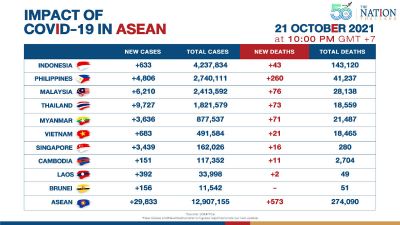

 Collaboration with Beijing benefits all parties: Chinese ambassador