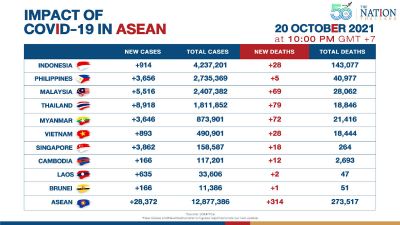
The number of Covid-19 cases crossed 12.87 million across Southeast Asia, with 28,372 new cases reported on Wednesday (October 20), lower than Tuesday’s tally at 29,432. New deaths are at 314, decreasing from Wednesday’s number of 530. Total Covid-19 deaths in Asean are now at 273,517.
Vietnamese Prime Minister estimated that the country’s exports are likely to rise 10.7 per cent in 2021, with annual inflation expected below 4 per cent year on year. He made this estimation although Vietnam’s gross domestic product (GDP) contracted 6.17 per cent in the third quarter of 2021 from a year earlier as the containment measures hit, the sharpest quarterly decline on record. A fast-spreading outbreak of the Delta variant in its economic hub of Ho Chi Minh City led to wide curbs on movement and commerce, hitting key manufacturing provinces nearby.
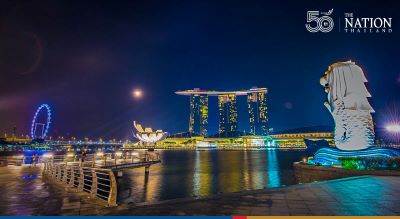
Meanwhile, Singapore reported 3,862 new cases and 18 deaths on Wednesday, bringing cumulative cases in the country to 158,587 patients and total 264 deaths. The government urged its citizens especially those in risky groups and elders to refrain from social activities and only leave home when it is necessary. The government is also monitoring the situation closely to estimate whether the rise in daily infections is just a temporary trend or the start of a new wave of pandemic.
Singapore warned that covid-19 cases are dangerously straining the city-states health care system, even as strict rules designed to curb the current outbreak are set to be reviewed within days.
New daily cases hit 3,994 on Tuesday, another record, with more patients needing intensive care, the Ministry of Health said in a statement. The increase was likely due to a post-weekend surge, the ministry said, though it will continue monitoring cases to determine if it is part of a trend.
“The number of persons requiring ICU care continues to rise, and this has put our hospitals under significant pressure and strain,” according to the ministry. It asked residents to limit their social activities, especially the elderly population, and go out only for essential trips.
There are currently 71 patients in intensive care, the agency said. Health minister Ong Ye Kung said earlier this month that the city-state is working to increase the number of ICU beds to 180, up from 134, in anticipation of a rise in cases.
The continuing surge in infections is likely to test the government’s resolve to proceed with reopening within the community, with officials set to review measures introduced nearly a month ago to curb the virus’s spread. The spate of restrictions, including making work-from-home the standard and allowing a maximum of two people to meet in social settings, were put in place until Oct. 24.
There are growing signs of fatigue with the curbs. A rise in activity levels was observed over the past week, including more visitors to malls and a slight increase in use of public transportation, the health ministry said.
The seven-day average number of new infections in the Asian financial hub have more than tripled from a month ago and is now hitting more than 3,000 a day, though the vast majority of cases are mild or asymptomatic. Daily reported infections among unvaccinated seniors above the age of 60, a group that is more vulnerable to developing severe disease, has risen to well over 100, according to the ministry.
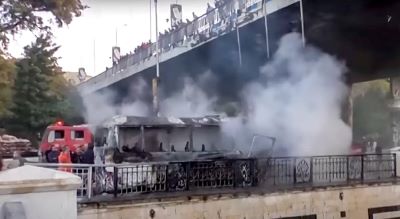
BEIRUT – At least 14 people were killed in Syrias capital Wednesday morning when two explosive devices detonated on a military bus in one of the deadliest attacks to hit Damascus in years, according to the Syrian official news agency SANA.
At 6:45 a.m. local time, two bombs attached to the bus exploded as it crossed the usually bustling President Hafez al-Assad Bridge in central Damascus. A third device had fallen off and was later found and dismantled, SANA reported.
Footage shared by the news agency showed a charred husk of the small military bus after it had been doused with water. At least three people were wounded in the blast.
It was not immediately clear whether all the dead and wounded were military personnel.
It was the deadliest such incident in the capital since 2017, when at least 30 were killed in an Islamic State attack on the Justice Palace. The capital has enjoyed relative calm in the years before and since, while war raged on in the rest of the country as President Bashar al-Assad has tried to wrest control back from different groups, including a U.S.-backed Kurdish group, various rebel formations and armed Islamist organizations.
The attack was claimed by a group called Saraya Qasiyoun, which appears to have first surfaced two years ago when it took responsibility for targeting two security forces in Damascus. Since then, the group has claimed several attacks on Syrian army personnel, intelligence security outposts and pro-government militants.
In a statement shared on a Telegram channel that appeared to be its official method of communication, the group said it will continue its operations inside government-held areas “in response to the daily massacres that the regime and its militias commit against our people in the freed north.”
About an hour after the attack in Damascus, local media in the northern rebel-held pocket of Idlib reported intense artillery shelling on a residential area in the town of Ariha. Salem Abdan, the head of Idlib’s health directorate, said in a text message that at least 13 people had been killed, including three children. The Syrian American Medical Society, which supports hospitals in the province, said that at least 21 people wounded in the shelling were being treated at Idlib Central Hospital.
Juliette Touma, UNICEF’s Middle East spokeswoman, said the organization had confirmed that four children were killed in the shelling while they were on their way to school.
The rebel-held northwest corner of the country hosts millions of Syrians displaced from the rest of the country and has witnessed a surge of violence and attacks over the summer. A fragile cease-fire between rebels and the Syrian government has been interrupted by repeated bouts of violence, and fears of a larger military confrontation loom, especially after two Turkish soldiers were killed and three injured in an attack in Idlib last month.
Turkey, Syria’s northern neighbor, has supported anti-Assad rebels and maintains military observer posts in Idlib. Last year, Turkish troops helped deter a Syrian government offensive aimed at recapturing the province.
Photos of the artillery attack on Ariha circulated on social media, with one garnering immediate attention: two motionless boys in bloodied clothes, one with an arm missing and his leg twisted unnaturally, the other lying on his side clutching his bloodstained stomach with a green backpack still hugging his back.
Local opposition media reported the attack was on a market, as children were on their way to school. It is unclear if the shelling was related to the attack in Damascus.
In a statement, Syria’s Minister of Interior vowed to find those who had carried out the Damascus bombing, which he said “took place after terrorism had been kicked out from most of Syrian lands. Those who resorted to and planned this cowardly [attack] wanted to hurt as big a number of citizens as possible.”
It remains unclear if any civilians were hurt or killed, but the bombs exploded while the bus was driving over a central bridge, around the corner from the Four Seasons Hotel, a semi-permanent home for many of the U.N. employees in Damascus.
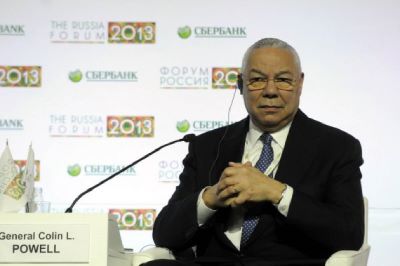
Former U.S. Secretary of State Colin Powells passing added fuel to those who oppose vaccines in the country, but health experts stressed Powells death was an exception to the vaccines protection, not proof they do not work.
Former U.S. Secretary of State Colin Powell died at 84 of COVID-19 complications on Monday, triggering heated debate over the effectiveness of vaccines in the United States.
“General Colin L. Powell, former U.S. Secretary of State and Chairman of the Joint Chiefs of Staff, passed away this morning due to complications from COVID-19,” the Powell family wrote in a Facebook post on Monday, noting Powell had been fully vaccinated. He was suffering from serious underlying conditions.
Powell’s passing added fuel to those who oppose vaccines in the country, but health experts stressed Powell’s death was an exception to the vaccines’ protection, not proof they do not work.
“While Powell was fully vaccinated, he also had multiple myeloma, a cancer that suppresses the body’s immune response,” said Gwen Nichols, chief medical officer at the U.S. Leukemia & Lymphoma Society.
“Multiple myeloma is not curable, so while he may or may not have been on active treatment, his disease, and his age, made him more vulnerable to breakthrough infection, complications and death,” she explained.
Powell battled other heightened risks of severe COVID-19.
Besides multiple myeloma, Powell reportedly had surgery for prostate cancer when he was U.S. secretary of state and, more recently, Parkinson’s disease.
Former U.S. Secretary of State Colin Powell delivers a speech in Tsinghua University in Beijing, July 19, 2006. (Xinhua Photo/Wang Chengxuan)
Neurologic conditions are among those cited by the U.S. Centers for Disease Control and Prevention (CDC) as potentially increasing the risk of severe COVID-19 in patients.
“I’m afraid people will say the vaccine didn’t help him,” said Robert Murphy, executive director of the Institute for Global Health at Northwestern University Feinberg School of Medicine.
“But the mortality rate for vaccinated people is 11 times less than unvaccinated. People still die from the disease, especially if you are 84 and have underlying health risks. He is one of the unfortunate ones, but he was very high risk,” Murphy was quoted by USA Today as saying.
Experts stressed that Powell’s passing does not demonstrate the futility of vaccines, but instead underscores the importance of everyone getting vaccinated to protect society’s most vulnerable.
A new CDC study published on Tuesday shows that among hospitalized U.S. patients aged 12 to 18 years, vaccine effectiveness of two doses of Pfizer-BioNTech vaccine against COVID-19 hospitalization during June to September was 93 percent.
Unvaccinated people have an 11 times higher risk of dying from COVID-19 than fully vaccinated people, according to another CDC study published recently.
In addition, the study shows that unvaccinated people have a six times higher chance of testing positive for COVID-19 than fully vaccinated people do.
“Former Secretary of State Colin Powell’s death from COVID-19 complications signifies the latest wake-up call in the United States’s extended battle against the virus, demonstrating the continued risk the pandemic poses to American lives,” said a report of The Hill.
Surrounded by a winding river and tucked among green mountains, Zhaisha Dong Village in southwest Chinas Guizhou Province is a popular tourist destination.
However, the ethnic village was once known for something else — muddy roads, thatched houses and a lack of arable land. Many locals used to live on government relief.
Xia Yongfa, a 49-year-old local resident, left the village soon after coming of age to work in the more developed coastal province of Guangdong. Back then, over 60 people, like him, left the village with some 200 people to work elsewhere.
Today, Xia is back in his village, running a farmhouse, thanks to the booming tourism there over the past 10 years.
The village is about 2 km away from Mount Fanjingshan, which was inscribed on the World Natural Heritage List of UNESCO in 2018. The village, once lacking infrastructure, today boasts stilt houses, drawbridges, and bell and drum towers, all in the traditional Dong style.
Xia’s farmhouse, which opened in April 2013, was also built in the traditional style and can accommodate over 100 guests. Farmhouses like Xia’s offer visitors a distinctive local experience. Xia cooks local cuisine for the guests and his wife works at reception.
In the first half of this year, the farmhouse’s total revenue amounted to 50,000 yuan (about 7,770 U.S. dollars).
“At the busiest time, I went out to buy ingredients at 5 a.m., and had dinner at 11 p.m.,” said Xia, adding that within six months, he had paid off all the debts of more than 100,000 yuan that he owed for house decoration.
At present, the Dong village boasts 56 farmhouses and 21 homestays and hotels. In the first half of this year, the village received a total of over 210,000 tourists, generating a revenue of 95.96 million yuan.
Long Chao, an official with the bureau of culture and tourism in Jiangkou County, which administers Zhaisha, said that thanks to the tourism resources of Mount Fanjingshan, more than 30,000 residents in nearby 13 villages have been engaged in tourism.
To strike a balance between the local environment and economic benefits, since 2016, about 26 million yuan has been invested in Mount Fanjingshan for wildlife protection, research and monitoring.
After the site was made a national nature reserve in 1984, environmental protection has been a local priority, with only necessary tourist facilities being built, and less than a tenth of the reserve is open to tourists.
Since 2018, an average of 10 groups of students come here every year for nature education to increase their understanding of wildlife.
“Research can not only provide evidence for scientific protection but also improve the fame of Mount Fanjingshan in the tourism industry,” said Li Haibo, with the Fanjingshan National Nature Reserve administration.
Scores of families affected by latest terrorist attacks in two Afghan provinces have received humanitarian aid provided by Iran.
Scores of families affected by latest terrorist attacks in two Afghan provinces have received humanitarian aid provided by Iran, local officials confirmed on Monday.
At least 93 worshippers have been killed and more than 230 people wounded in suicide bomb attacks against two Shiite Muslims mosques during Friday prayers in northern Kunduz and southern Kandahar provinces earlier this month.
In northern Kunduz province, 240 families of victims were provided by food and non-food items on Monday morning, Matiullah Rohani, director of provincial information and culture directorate, told Xinhua.
An airplane is about to transfer people injured in terrorist attacks to Iran for medical treatment, in Kandahar city, southern Afghanistan, Oct. 18, 2021. (Photo by Arghand/Xinhua)
The assistance were dispatched to Kunduz airport a couple of days ago by planes, the official said.
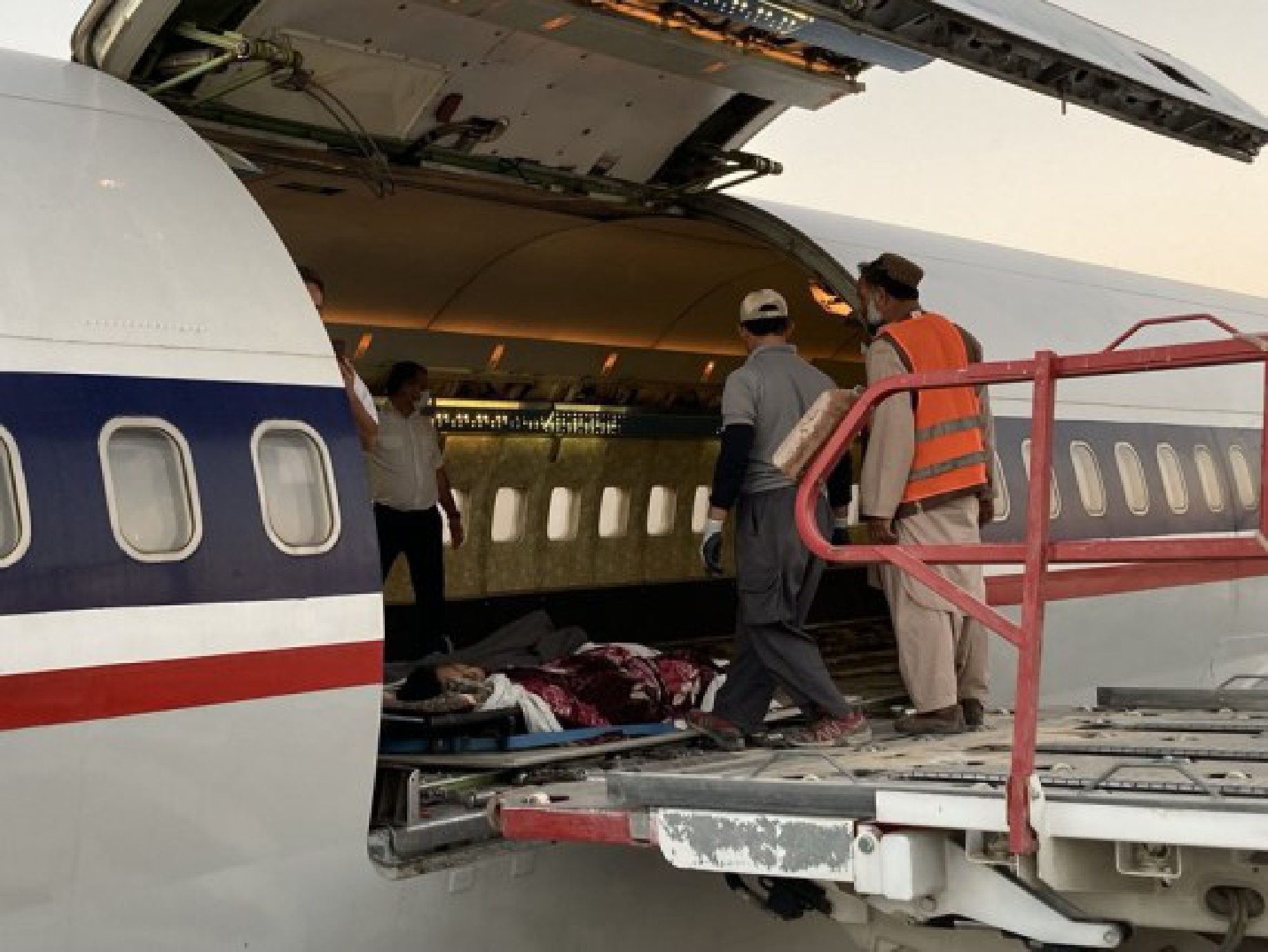
Earlier on Monday, two planes transported 35 tons of relief goods consignment, including 10 tons of medicines, from Iran to Kandahar International Airport, according to Hafiz Abdul Hai, head of provincial health directorate.
A total of 30 patients, who sustained serious wounds, will be shifted to Iran from a regional hospital in Kandahar city, capital of Kandahar, the official noted.
The affiliates of Islamic State (IS) claimed responsibility for the deadly explosions that occurred on Oct. 15 and Oct. 8 in Afghanistan.
An airplane is about to unload humanitarian aid for victims of terrorist attacks, in Kandahar city, southern Afghanistan, Oct. 18, 2021. (Photo by Arghand/Xinhua)
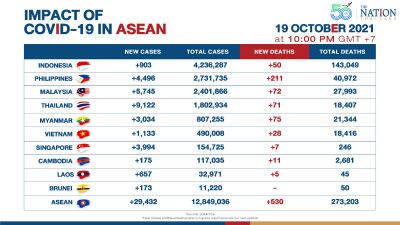
The number of Covid-19 cases crossed 12.84 million across Southeast Asia, with 29,432 new cases reported on Tuesday (October 19), lower than Monday’s tally at 30,524. New deaths are at 530, increasing from Monday’s number of 382. Total Covid-19 deaths in Asean are now at 273,203.
Authorities in northern Laos’ Luang Prabang province have canceled the celebration of an annual light boats festival (Boun Lai Heua Fai) amid lockdown restrictions, as the number of Covid-19 cases keeps rising in Laos. The traditional practice of making merit through almsgiving toward the end of Buddhist Lent will also not be permitted in Luang Prabang. Residents of Luang Prabang will not be permitted to leave their homes to float small candle boats along rivers or in lakes to curb the spreading of Covid-19.
Singapore will allow vaccinated travellers from 8 countries to enter starting Tuesday under the new Travel Lane scheme. People travelling from the UK, US, Denmark, France, Italy, Spain, the Netherlands and Canada who have been fully vaccinated can enter the country without having to quarantine. Singapore has previously allowed travellers from Brunei and Germany to enter the country under similar rule since September.
Meanwhile, the US Centers for Disease Control and Prevention has moved Singapore up from Level 3, or “high” risk for Covid-19, to Level 4 or highest risk category just one day before the Travel Lane scheme was announced.
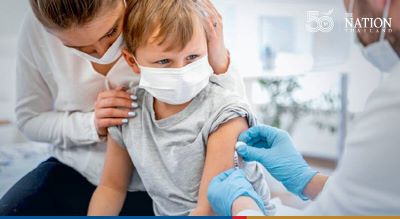
The U.K. plans to expand access to Covid-19 vaccines for children, the head of the National Health Service said, following a surge in infections in schools.
Amanda Pritchard, head of the NHS in England, told Parliament on Tuesday that children ages 12 to 15 would be able to access vaccination centers through the national booking service. Until now, U.K. children were only eligible to receive vaccinations at school-based facilities.
“We want to do everything possible to expand and ensure we get the jabs in as efficiently and as safely as possible,” Max Blain, Prime Minister Boris Johnson’s spokesman, told reporters Tuesday. “There are a number of challenges to vaccinating 12-15 year olds at scale and at pace.”
An estimated 8% of U.K. children in school years covering ages 11 to 16 tested positive for coronavirus in the week ending Oct. 9, according to the most recent government figures. That number is eight times higher than every adult age group and has risen from about 2% in early September before schools restarted.
Unlike the U.S., which started inoculating young people in May, and most European countries, where vaccination was largely rolled out during the school holidays, the U.K. didn’t give the green light for 12-to-15-year-olds to receive the shots until mid-September.
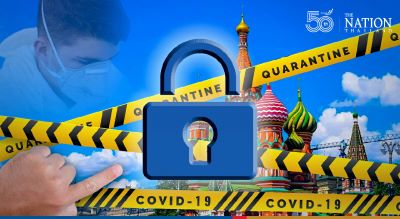
Moscow told its unvaccinated seniors to stay home while Russia moved to impose other new restrictions nationwide against the spread of covid-19 as the country battles record levels of infections and deaths.
Unvaccinated people over 60 in the Russian capital will have to remain at home for four months starting Oct. 25, Mayor Sergei Sobyanin said in a blog post Tuesday. Meanwhile, Prime Minister Mikhail Mishustin told officials that President Vladimir Putin will be asked to declare Oct. 30 to Nov. 7 as non-working days nationwide. Regions with the most serious levels of cases should introduce the restriction from Oct. 23, Deputy Prime Minister Tatyana Golikova said.
“The burden on the healthcare system continues to increase and, in this situation, we need to get ahead of the curve,” Mishustin said, telling Golikova to present the proposals at a government meeting with Putin on Wednesday. “The experience of previous restrictions has shown the effectiveness of these measures.”
The government is turning to Putin after a week in which daily new infections have passed 30,000 for the first time since the crisis erupted last year, with deaths reaching a record high of 1,015 on Tuesday.
The Kremlin has resisted all calls to reintroduce a nationwide lockdown, placing responsibility on regional officials to announce social restrictions to try to curb the spread of the virus. Putin has sought to distance himself publicly from unpopular restrictions but has always supported the government’s proposals.
Only a third of people in the 60+ age group have been vaccinated, despite the group accounting for 86% of covid-19 deaths, Sobyanin said in justifying the lockdown. He also announced several new restrictions to fight the spread of the pandemic.
Moscow will increase the percentage of workers facing mandatory vaccination and reintroduce a work-from-home requirement for at least 30% of employees until Feb. 25, he said.
Although Putin last year touted Russia as the first country to approve a covid-19 vaccine, the inoculation program has been met with widespread skepticism. Just over 45% of the population has either vaccinated or recovered from infection by covid-19, far below the level needed for collective immunity, Golikova said.
Only 28 regions have introduced QR codes to restrict access to shopping centers, restaurants, fitness centers and other public spaces to those who’ve vaccinated or recovered from the illness, which is “insufficient,” Anna Popova, head of Russia’s public health watchdog, said at the meeting.
The worsening situation “requires a much larger volume of measures to be taken and a much faster response,” Popova said.
PORT-AU-PRINCE, Haiti – An armed gang in Haiti holding members of a U.S. Christian missionary organization hostage is seeking a ransom of $1 million per person in exchange for their release, the Haitian justice minister told The Washington Post on Tuesday.
The 16 Americans and one Canadian national with the Ohio-based Christian Aid Ministries were kidnapped Saturday by 400 Mawozo, a street gang notorious for violent mass abductions and a history of targeting religious figures and churches. The missionary group was returning from a visit to an orphanage when it was ambushed. Five children are among the hostages.
Liszt Quitel, Haiti’s justice minister, said it was not clear whether children were included in the ransom amount, and that the gang was probably expecting to negotiate. He said that while his team was assisting, he was not privy to more specific details and that “every case is different.”
“Usually, they request more, then people close to the kidnapped persons will negotiate,” Quitel said. “Usually, even when they ask for a ransom they know they don’t get all that they ask.”
The adult hostages, which include six men and six women, range in age from 18 to 48, according to Christian Aid Ministries. The youngest child is 8 months old and the oldest is 15 years old. The group said in a statement on Tuesday that it was “working diligently” to bring them home safely.
The Wall Street Journal was the first to report the ransom demand.
Officials from the State Department and the FBI are on the ground in Haiti seeking the release of the hostages, U.S. officials said this week. They have provided few details about those efforts or the identities of the hostages, citing privacy considerations.
White House spokeswoman Jen Psaki has said that President Joe Biden was receiving “regular updates” about the work of the State Department and the FBI to secure the release of the group. She told reporters on Tuesday that she could not discuss “operational details” about those efforts, and said that the United States advises against travel to Haiti because of the risk of kidnapping and civil unrest.
“We know these groups target U.S. citizens who they assume have the resources and finances to pay ransoms, even if that is not the case,” Psaki said.
Canada’s Royal Canadian Mounted Police said it was collaborating with U.S. and Haitian counterparts and that it “does not comment on ongoing investigations conducted by other countries.” Canada’s foreign ministry said it was providing consular assistance to the family of the Canadian national.
“Canada takes this situation very seriously and is collaborating with Haitian and American policing authorities, as well as implicated NGOs on this incident,” said Jason Kung, a spokesman for Global Affairs Canada, in an email.
The abduction of the missionaries over the weekend is part of an alarming surge in kidnappings of people from all walks of life – preachers, doctors and bus drivers, among them – by powerful gangs that exert control over large swaths of the Caribbean nation and whose rise and influence, analysts say, threaten the very fabric of the state. The country has the world’s highest number of kidnappings per capita.
It is also one of several calamities facing the western hemisphere’s poorest country – each of which, on their own, would pose a challenge and could imperial regional stability. In July, President Jovenel Moïse was assassinated, opening up a political vacuum that has seen rival factions jockeying for power. Then, in August, a powerful earthquake struck the largely rural south, killing more than 2,200 people, damaging critical infrastructure and creating a massive humanitarian crisis that further destabilized the country.
Such was the desperation in Haiti that local unions and other groups had planned a widespread general strike even before the kidnapping of the missionaries to protest the deteriorating security situation and the inability of the country’s political leaders and police forces to ameliorate it. It continued Tuesday.
Christopher Sabatini, senior Latin America research fellow at the international affairs think tank Chatham House, said the kidnapping of Haitian schoolchildren, clergy and small-business owners was increasingly common, but that such a “massive and unusual” foreign kidnapping raised the profile of the country’s deteriorating security situation.
“There’s just a vacuum of state in the midst of an economic crisis . . . and a preexisting pandemic of criminality,” he said.
The U.S. government has a long-standing policy of not paying ransoms for American citizens abroad. The Canadian government, which has said little about the kidnapping, has previously said that it has the same policy.
Sabatini said it was likely that America’s approach would “hold true” in Haiti, or risk setting a “dangerous precedent.” The kidnapping would also probably deter diplomatic and humanitarian personnel from traveling to the country, further jeopardizing the rebuilding of Haiti – particularly outside the capital – he added.
400 Mawozo controls parts of Ganthier in the Croix-des-Bouquets area, east of Port-au-Prince, where the Christian Aid Ministries vehicle was hijacked. It was behind about 80 percent of abductions in the third quarter of 2021, according to Gédéon Jean, director of the Center for Analysis and Research in Human Rights in Port-au-Prince.
The gang is known for targeting religious groups and has engaged in mass kidnappings from buses and cars in the past. In April, 400 Mawozo kidnapped five priests and two nuns, some of whom were French nationals. All were eventually released.
Even several days after the kidnapping, little information had emerged about those taken. Congressman Bill Huizenga, R-Mich., said some of the missionaries appeared to have been from the western part of his state, and that his office was working with the Biden administration to secure their return.
Christian Aid Ministries, based in Ohio, was founded in 1981 as a “channel for Amish, Mennonite, and other conservative Anabaptist groups and individuals to minister to physical and spiritual needs around the world,” according to its website.
It has worked for years in Haiti, providing emergency services, running anti-poverty programs and spreading Christian teachings. Its American staff members returned to Haiti last year after being pulled out for nine months because of the political unrest.
In a statement Tuesday, it said its members had been working throughout the country, distributing Bibles, teaching Haitian pastors, supplying medicines, feeding the elderly and coordinating a project to rebuild homes after August’s temblor.

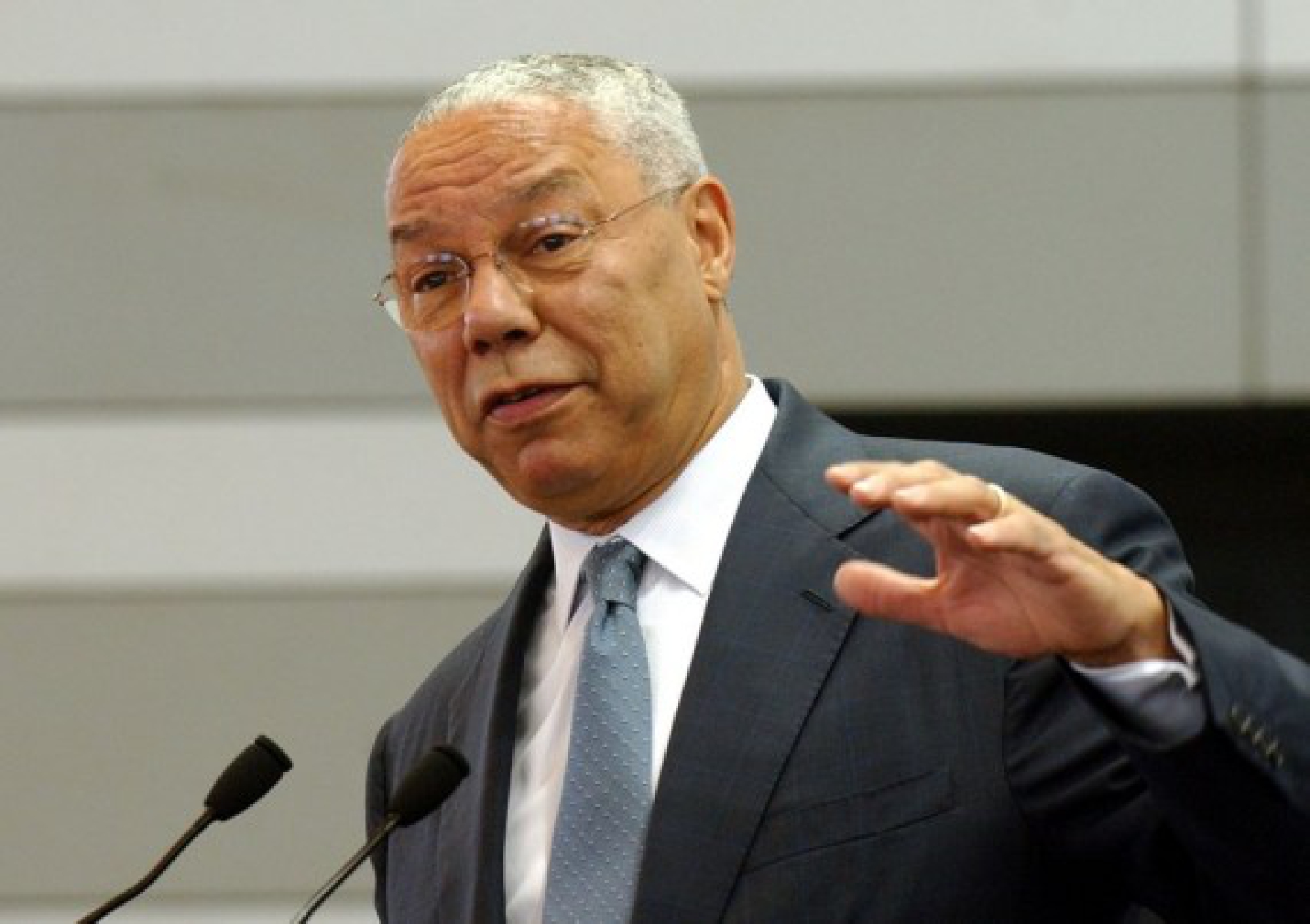 Former U.S. Secretary of State Colin Powell delivers a speech in Tsinghua University in Beijing, July 19, 2006. (Xinhua Photo/Wang Chengxuan)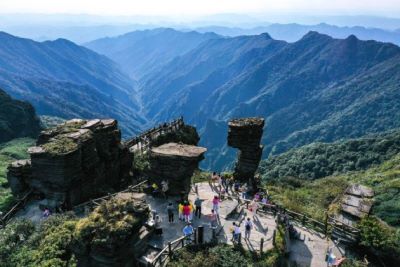
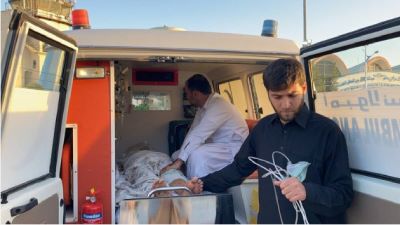
 An airplane is about to transfer people injured in terrorist attacks to Iran for medical treatment, in Kandahar city, southern Afghanistan, Oct. 18, 2021. (Photo by Arghand/Xinhua)
 An airplane is about to unload humanitarian aid for victims of terrorist attacks, in Kandahar city, southern Afghanistan, Oct. 18, 2021. (Photo by Arghand/Xinhua)