The Kabul International Airport is now fully operational for international flights and all airliners can resume airlifts, the Ministry of Foreign Affairs of the Taliban caretaker government announced.
The Kabul International Airport is now fully operational for international flights and all airliners can resume airlifts, spokesman of Ministry of Foreign Affairs of the Taliban caretaker government announced on Sunday.
“As the problems at Kabul International Airport have been resolved and the airport is fully operational for domestic and international flights, the Islamic Emirate of Afghanistan assures all airlines of its full cooperation and expects all airlines and countries that had previously flown to Kabul to resume their flights as before,” spokesman Abdul Qahar Balkhi said in a statement.
ADVERTISEMENT
The Ministry of Foreign Affairs once again assures full cooperation on its part in conducting flights more than 40 days after Taliban takeover, he added.
The Kabul airport was damaged with its many facilities destroyed during the withdrawal of U.S.-led forces and American nationals on Aug. 31.
Airport authorities confirmed that the Kabul airport has received planes carrying humanitarian assistance from Qatar, Bahrain, the United Arab Emirates, Uzbekistan, Kazakhstan and Pakistan as well as a number of commercial flights from Pakistan, Iran and Qatar in recent weeks despite long suspension in the flights since mid-last month.
Photo taken on Sept. 20, 2021 shows a plane at the Kabul International Airport in Kabul, capital of Afghanistan. (Photo by Saifurahman Safi/Xinhua)
The Russian pilots identified the air target as a U.S. Air Force B-52H strategic bomber and then escorted it.
Russian fighters on Sunday escorted a U.S. strategic bomber over the neutral waters of the Pacific, said the Russian Defense Ministry.
Russian radars detected an air target approaching Russian borders over the Pacific, and three Su-35S fighters of Russia’s Eastern Military District took off in response, the ministry said.
ADVERTISEMENT
The Russian pilots identified the air target as a U.S. Air Force B-52H strategic bomber and then escorted it.
No violation of Russian borders was allowed and the flight of the Russian aircraft strictly complied with international rules for the use of airspace, it said.
Since the outbreak of the pandemic, scientists worldwide have been looking for drugs to treat COVID-19 successfully. As variants of the virus have emerged to challenge the vaccines effects, Chinese drug researchers and developers try to find the right medicine to beat the virus.
Chinese researchers and pharma companies are hunting for the right one in two ways: biological macromolecular drugs based on antibodies and small molecular compounds that can inhibit virus invasion and replication.
Rapid advancements have been made in biological macromolecular drugs, most of which are antibodies, including monoclonal antibodies and antibody cocktail therapy. Some countries have approved antibody drugs for marketing and emergency use. They are used in the early stage of COVID-19 to lower the risks of developing into severe cases.
Monoclonal antibodies enlist human-made proteins that act like human antibodies in the immune system to fight off harmful pathogens such as viruses. They may also be used in combination with other treatments to form a cocktail.
ADVERTISEMENT
The antibody drugs bind to the virus, blocking the access to human cells and inhibiting the infection and replication inside human cells, said Zhu Qing, senior vice president of Brii Biosciences and head of the company’s biopharmaceutical department.
Earlier this month, the China National Biotec Group affiliated with Sinopharm unveiled Human COVID-19 Immunoglobulin (pH4) for Intravenous Injection, which was approved for clinical trials.
In August, Sinopharm also announced that its research team had discovered a potent neutralizing antibody against the Delta variant that could be effective in the short-term prevention and early treatment of COVID-19 triggered by the variant.
The monoclonal antibody, called 2B11, can effectively block the binding of novel coronavirus to the ACE2 enzyme attached to the membrane of cells in the intestines, kidney, testis, gallbladder and heart, preventing the virus from infecting cells.
In July, Tsinghua University, the Third People’s Hospital of Shenzhen and Brii Biosciences launched phase II clinical trials in China on a cocktail therapy of monoclonal antibodies BRII-196 and BRII-198. They were derived from antibodies isolated from people who had recovered from COVID-19.
The cocktail therapy also entered clinical trials in the United States, Argentina, South Africa, Brazil, the Philippines, and Mexico. The data suggested that BRII-196/BRII-198 could be a potent new treatment option for COVID-19.
Compared with biological macromolecular drugs, small molecular compounds have various mechanisms to play their roles by inhibiting the invasion, replication, assembly, and release of viruses.
DC402234 (FB2001), a COVID-19 drug candidate mainly developed by a research team at the Shanghai Institute of Materia Medica of the Chinese Academy of Sciences, entered Phase I clinical trial in the United States in March. It is a compound designed and synthesized through analyzing the crystal structure of the coronavirus’ membrane protein.
DC402234 became the cover story of the journal Science in June.
Ding Sheng, dean of School of Pharmaceutical Sciences at Tsinghua University, told Xinhua that it is hard to apply antibody drugs in early prevention. The antibody drugs, which need to be injected, are inconvenient to use among mild cases and non-hospitalized patients. They are also more costly, cannot adapt to the mutant variants well, and need cold-chain transportation.
Compared to their bigger counterparts, small molecular drugs have advantages in a large-scale promotion. They can be taken orally and stored at room temperatures.
Ding noted that small-molecule drugs could be quickly used in high-risk groups such as close contacts, or help patients with mild symptoms to improve their condition.
However, it takes a relatively long time to verify the drug’s toxicity, making the R&D of small molecular drugs much slower.
Experts have pointed out that vaccines and drugs are both pivotal in controlling the spread of the virus. According to the current situation, researchers should focus on developing drugs for effective early prevention, drugs that can reduce mortality, and broad-spectrum antiviral drugs that can deal with mutant strains in the future.
The UN chief said although the total number of nuclear weapons has been decreasing for decades, some 14,000 are stockpiled around the world, which is facing “the highest level of nuclear risk” in almost four decades.
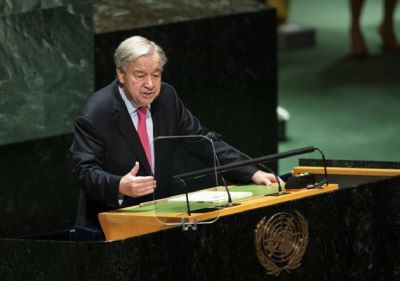
United Nations Secretary-General Antonio Guterres spoke Sunday on the International Day for the Total Elimination of Nuclear Weapons, declaring that nuclear weapons must be eliminated from the world and a new era of dialogue, trust and peace must begin.
Addressing the threat of nuclear weapons “has been central to the work of the United Nations since its inception,” said the top UN official.
ADVERTISEMENT
“In 1946, the very first General Assembly resolution sought ‘the elimination from national armaments of atomic weapons and of all other major weapons adaptable to mass destruction,'” the secretary-general noted.
The UN chief pointed out that although the total number of nuclear weapons has been decreasing for decades, some 14,000 are stockpiled around the world, which is facing “the highest level of nuclear risk” in almost four decades.
“Now is the time to lift this cloud for good, eliminate nuclear weapons from our world,” said Guterres, “and usher in a new era of dialogue, trust and peace for all people.”
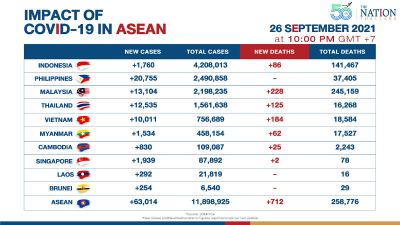
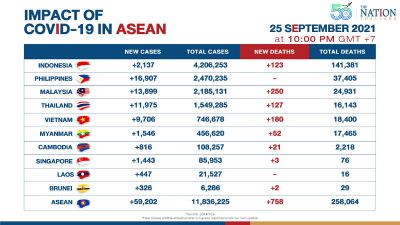
Southeast Asia saw an increase in Covid-19 cases on Sunday but a lower number of deaths compared to Saturday, collated data showed.
Asean countries reported 63,014 new cases on Sunday, higher than Saturday’s 59,202, with 712 deaths, lower than the previous day’s 758.
Total caseload in the region rose to over 11.89 million and the death toll to 258,776.
Singapore has tightened restrictions to slow the exponential rise in Covid-19 cases by reducing public gatherings from five people to two persons from Monday until October 24, except for people from the same family. This restriction will apply to outdoor dining as well as use of taxis and personal cars.
The government has also urged people to work from home while businesses that require working at jobsites or offices must perform testing using antigen method every week. Elders over 60 were asked to refrain from attending religious ceremonies even if they have received two jabs of vaccine.
Meanwhile, police in Malaysia have issued a warning about fake Covid-19 vaccine certificates as the economy gradually opens up to those vaccinated.
More businesses in Malaysia, such as restaurants, hair salons and retailers, are now demanding proof of vaccination before allowing entry. Those who are fully vaccinated can also vacation in Langkawi and pray at houses of worship.
Police have warned that any activity connected to forging digital vaccination certificates is a serious offence punishable with a maximum seven-year jail term and RM100,000 (approx. Bt800,000) fine. At least 10 individuals have been charged in court with falsifying vaccination certificates and selling them online at around RM200-1,500 each (Bt1,600-12,000).
Swiss voters backed a measure to legalize same-sex marriage by a large margin on Sunday.
Nearly two-thirds of voters supported the measure in a national referendum, the Associated Press reported, and it won a majority in each of Switzerland’s 26 cantons. The measure will also allow same-sex couples to adopt unrelated children and married lesbian couples to access sperm donation, according to the BBC.
Approval, a victory for gay rights advocates after a years-long campaign, puts Switzerland in line with many countries in Western Europe.
The country of 8.5 million tends to lean more conservative than its neighbors on social issues. Switzerland has permitted same-sex civil partnerships since 2007, but conservative political parties and church groups had argued that same-sex marriage would undermine the traditional family headed by one man and one woman.
“It is a historic day for Switzerland, a historic day when it comes to equality for same-sex couples, and it is also an important day for the whole LGBT community,” Jan Miller of the “yes” campaign committee told Agence France-Presse. Supporters celebrated Sunday in Bern, the capital, with kisses and rainbow-colored cake. Drag artist Mona Gamie sang Edith Piaf’s “Hymn to Love.”
Amnesty International called opening civil marriage to same-sex couples a “milestone for equality,” Reuters reported.
ADVERTISEMENT
The measure will also help same-sex spouses who are foreign nationals to acquire Swiss citizenship, advocates said. Supporters say it could take months before same-sex couples can get married, though, because of administrative and legal procedures, according to the Associated Press.
Opinion polls leading up to the referendum indicated that the Swiss population supported same-sex marriage, and the country’s parliament passed a law last year to allow same-sex couples to wed.
But that legislation prompted a strong backlash from opponents, who gathered enough signatures to force a binding referendum on the issue under Switzerland’s system of direct democracy.
The campaign leading up to Sunday’s vote was marked by allegations of unfair tactics, including the ripping down of posters, opponents deluging LGBTQ hotlines with complaints and other efforts to suppress opposing views, according to the Associated Press.
Monika Rüegger of the right-wing Swiss People’s Party, who campaigned against the “Marriage for All” measure, told Reuters after the polls closed that “children and fathers are the losers here.”
But for many couples in Switzerland, Sunday’s vote seemed to herald new possibilities and societal acceptance.
“I think it’s like a strong signal that would actually be so great for all the young queer people who might be struggling still, with coming out or with their sexual orientation,” Roman Heggli of Swiss LGBTQ group Pink Cross told the LGBTQ news outlet PinkNews ahead of the vote.
LONDON – Hoping to ease a supply-chain crisis and forestall a Christmas logjam, the British government announced late Saturday night that more than 10,000 foreign workers will be eligible for temporary visas to work as truck drivers and in the food industry.
The move is a departure for Boris Johnson’s administration, which, since Britain’s exit from the European Union in January 2020, has overhauled its immigration system to end what it described as an overreliance on cheap, low-skilled foreign labor. It said that it wanted to hire and train the domestic workforce and that employers needed to adjust and invest more in technology and automation.
But in a U-turn this weekend, the government said it would allow temporary visas for truck drivers and poultry workers. It comes as labor shortages in Britain have rippled through the economy, with supermarket shelves running out of some goods and restaurant chains like McDonalds and KFC cutting items from their menus.
On the weekend, the crisis spread to gas stations, resulting in long queues and rationed fuel sales.
Business groups said the emergency visas were too little, too late. For months, businesses had been warning about labor shortages across the economy – including in nursing homes, agriculture, construction, hospitality – and urging the government to relax its rules for specific sectors to make it easier to recruit E.U. workers.
But the government had resisted the calls, saying that an influx of cheaper foreign labor could reduce companies’ incentives to improve pay and working conditions for British workers.
ADVERTISEMENT
Andrew Marr, a BBC presenter, asked Transport Secretary Grant Shapps about the government’s reversal on his Sunday morning show.
“On Friday, you said you weren’t going to bring in foreign workers, and now you are,” Marr said.
“I said we will do whatever we need to do to make sure that things flow in this country … but we don’t want to be relying on overseas labor in the longer run, which is why this is limited to Christmas,” Shapps said.
“The whole point of leveling up is we can train our workers here, so people can do a decent day’s work and get paid for it. That’s why we are so reticent to do those things,” he said.
“On the other hand, I’m not going to stand by and watch queues forming and not respond.”
On Saturday night, the government announced that it would allow new visas for 5,000 truck drivers and 5,500 poultry workers to work in the United Kingdom until Christmas Eve. It is also urging retired drivers to help ease the shortage and said the army will help with testing new drivers.
The British Chambers of Commerce likened the announcement to “throwing a thimble of water on a bonfire.”
Roger Gale, a Conservative lawmaker, told Times Radio that the new visas were a good start, but not enough. “This is not just about lorry drivers,” he said, using the British term for truck driver, “this is also about fruit pickers.” He said Thanet Earth, the largest greenhouse complex in the country, based in his constituency, had to throw away 300,000 pounds’ worth of tomatoes because there was nobody to pick them.
“It’s all very well for the home secretary to say, ‘Domestic labor should do the job,’ but domestic labor isn’t doing the job,” Gale said.
Some questioned whether foreign workers will come to Britain for only a few months before being sent home just before Christmas.
“There is a driver shortage across Europe,” Marco Digioia, head of the European Road Haulers Association, told Britain’s Observer newspaper. “I am not sure how many would want to go to the U.K.”
Britain’s Road Haulage Association estimates that the country needs about 100,000 drivers.
Industry groups here say Brexit has exacerbated the problem by making it harder for the U.K. to recruit from the E.U., which traditionally supplied a lot of the drivers. The coronavirus pandemic has played a part, too, with some foreign workers returning to their home countries. The pandemic also put on hold testing for recruits.
Shapps rejected the notion that Brexit had worsened the situation. “Brexit gives us the flexibility to set our own rules – in this case, produce visas, because I don’t want to see these queues at all,” he told the BBC, adding that it has also helped him expand the number of tests for drivers. “We’ve benefited from some of those extra freedoms.”
Others disagreed.
David Henig, an expert in global trade, said that the situation was complex but that, “clearly, Brexit is also the reason why global strains, as there are, are exacerbated in the U.K.”
Referring to Brexit, he said, “The U.K. has made a big change to our trading relations, our people-movement relations, at exactly the point when there is a global strain on global supply chains. You got to expect in that situation you will run into problems.”
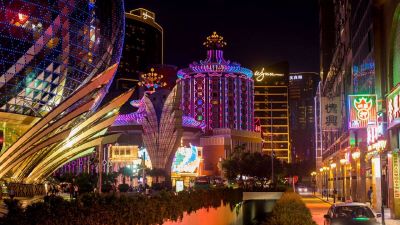
To many investors, Macaus push to extend oversight over the worlds largest gambling hub came as a shock, triggering a record selloff in casino shares. To long-term observers, however, it was just the latest move in Chinas grand plan to transform the $24 billion economy.
For years, Beijing has been focused on trying to control an industry that’s enriched the only Chinese territory where casinos are legal but also provided an avenue for capital outflows for the country’s rising elite. Authorities have been steadily tightening their grip, with facial-recognition software installed in Macau’s ATMs, cash withdrawals limited, and a digital currency under consideration to better track transactions.
At the same time, the government has been laying the groundwork for the dilution of Macau’s reliance on gambling. Unveiled in 2019, China’s blueprint for the Greater Bay Area — a region that includes Hong Kong and parts of southern China — sees the former Portuguese colony departing from its decades-long identity as a casino mecca to become a global leisure and tourism hub. Think sports stadiums, convention centers and traditional Chinese medicine parks instead of more baccarat tables.
“What the government wants, and what Beijing wants, is to have a lot more non-gaming facilities,” said Allan Zeman, chairman and an independent director of Wynn Macau Ltd., one of the six casino operators with licenses to operate in the enclave. “The border will kind of disappear. Macau will become a much bigger place, so gaming is just one part of a city that will have a lot more.”
The announcement of revisions to the law governing casinos was one of the most definitive signs yet that there’s no turning back for Beijing.
ADVERTISEMENT
The proposed changes, which are now up for consultation with the public and industry, came just a week after the Chinese government released a plan to further integrate Macau with the Chinese mainland. The city is being encouraged to develop non-gaming industries in a special zone on the neighboring island of Hengqin — currently divided between Guangdong province and Macau — with a focus on high-tech manufacturing, cultural tourism, Chinese medicine, conventions and sports, according to a master plan released by Beijing earlier this month. Gambling won’t be allowed.
The Bloomberg Intelligence index of Macau’s six casino operators has fallen 26% since last Tuesday’s proposal. The market recovered slightly this week, with the index gaining about 1.7%.
Gambling in Macau goes back more than three centuries, with the practice legalized there in 1847 as a way to fill the colonial authority’s coffers. By the late 19th century, gaming taxes had become the government’s main income. For decades the industry was monopolized by a company co-founded by late billionaire Stanley Ho before opening up in 2002 to the current players. Macau eventually surpassed Las Vegas, and today bettors can pose before a fake Eiffel Tower or stroll along replica Venetian canals on its main strip.
But a shift is firmly under way. While still employing one-fifth of the city’s workforce, the gambling industry’s contribution to Macau’s gross domestic product had dropped to 51% before the pandemic hit, from 63% in 2013, according to the latest government data.
The license renewal process for the city’s six casino operators is shaping up to be a key test of Beijing’s pivot. With the permits set to expire in less than 10 months, the government is expected to pressure the firms — who have seen gaming revenue contribute 85% of overall revenue on average the past three years, according to Bloomberg calculations from company reports — to boost investment in non-gaming sectors.
Macau’s government will likely nudge casino operators to invest in projects in Hengqin, even if their profit outlook is questionable, given the limitations on expanding further in Macau, said Ben Lee, a managing partner at gambling consultancy IGamiX.
While the casinos have recently been doubling down on luring more so-called mass market bettors, who may spend more time dining out and shopping than at the tables, entire projects separate to the casino business could be more challenging. Convention activities, the ferry service and income from retail accounted for less than 3% of net revenue in 2019 for Sands China Ltd., the largest operator in Macau by gaming revenue.
And they face stiff competition for non-gaming business from elsewhere in the region. Hong Kong — just a ferry ride away — has an established convention and exhibition industry and hosts major international events from art festivals to rugby tournaments. The island province of Hainan has also seen a domestic tourism boom due to its tax-free status and wants to develop similar industries.
The revisions to the casino law follow a decade-long crackdown on VIP bettors, said Morningstar Inc. analyst Jennifer Song. Such gamblers attracted Beijing’s wrath because they’re facilitated by junkets which sometimes breach Chinese law by promoting gaming in the mainland, organizing overseas gambling trips and providing shadow banking services to high rollers.
The moves significantly reined in what was once the lifeblood of Macau, Song said. Now, Beijing’s wider plan could have a similar effect on the casino industry overall.
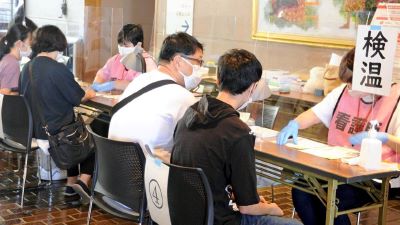
TOKYO – With registration for the Common Test for University Admissions set to open on Sept. 27, educators and authorities are facing a test of their own as they prepare for a second entrance exam season under the novel coronavirus pandemic.
There is a growing trend toward priority vaccination for test-takers as they are expected to travel more across prefectural borders.
“The Common Test exam site is going to be crowded, so I wanted to make sure I got vaccinated,” said a 17-year-old third-year high school student after receiving a shot at the Comprehensive Social Education Center in Ota, Gunma Prefecture on Sept. 19.
The student was vaccinated alongside her mother, 42, who added: “I didn’t want to leave any chance my daughter would be infected at home before taking her exams.”
Since August, Ota has offered priority vaccination to third-year students who live in the city and attend junior and senior high schools there. Students’ parents have also been given preferential access, as have students planning to take entrance exams or run the job interview gauntlet. About 2,400 people have applied for the 2,800 slots set aside by the city for these purposes.
Ota is just one of many local governments that have begun implementing priority vaccination campaigns as entrance exam season hits full swing.
In Tokyo, 50.7% of all residents have already received two shots. But less than 25% of Tokyoites aged 12 to 19 have been vaccinated. The Tokyo metropolitan government has begun accepting reservations for third-year high school students and other youths at a mass vaccination center in the capital from August.
ADVERTISEMENT
The Shizuoka city government set aside 7,000 doses for the priority vaccination of students in their last year of elementary, junior high or senior high schools in the city from September. About 6,300 doses have been claimed.
On Sept. 14, the Education, Culture, Sports, Science and Technology Ministry issued a memo to local governments nationwide, introducing the precedent for allowing exam-takers priority access to COVID-19 shots.
Education minister Koichi Hagiuda also called for “special consideration to be given to exam candidates who want to get vaccinated so that they can do so expediently.”
Private high schools have even initiated their own vaccine drives — some drawing ire in the process.
Although schools offered shots on a discretionary basis to students who wanted them, this was in some cases misconstrued as a vaccine mandate for all students. One school was inundated with missives protesting the policy, on the grounds that peer pressure would make it hard for students to decline the shots.
The Common Test for the upcoming academic year is slated to be held on Jan. 15 and 16 next year, with a makeup test two weeks later. Makeup tests will be conducted at venues in all 47 prefectures.
Face masks were required during the last Common Test in January, but trouble still arose when an exam-taker was disqualified after repeatedly refusing to cover his nose with his mask. This led to a new rule stipulating that masks must fully cover examinees’ mouths and noses.
A majority of universities plan to take precautions when conducting their own institution-specific admissions exams.
As of the end of July, 1,020 of 1,056 — 96.6% — of national, private, and junior colleges surveyed by the education ministry indicated that they plan to offer makeup exams or alternative dates.
According to the Kawaijuku cram school chain, some perennially popular private universities have announced that they will use Common Test scores to make an admissions decision in the event an applicant becomes unable to sit for their institution-specific entrance exams due to infection with the novel coronavirus or other extenuating reasons.
Southeast Asia witnessed a decline in new Covid-19 infections but the death toll was higher on Saturday, collated data showed.
Asean countries reported 59,202 infections and 758 deaths — nearly one-third in Malaysia — on Saturday compared to 61,840 and 690 respectively on Friday.
Vabiotech, a pharmaceutical company in Vietnam, has achieved success in production of Sputnik V Covid-19 vaccine.
The first batch of vaccines will be evaluated by Gamaleya, a research institution under Russia’s Sputnik V research and development centre.
These vaccines will be used under Vietnam’s vaccine distribution plan to deal with the fourth Covid-19 wave and vaccine shortage.
Cambodian Prime Minister Hun Sen has banned celebration of the Kan Ben festival that falls on October 6, in order to contain the spread of Covid-19.
ADVERTISEMENT
The move came after almost 50 monks at a Buddhist temple in Phnom Penh tested positive for Covid-19 on Thursday.
The Kan Ben festival is considered the country’s largest Buddhist festival as many devotees will go to temples to make merit for their ancestors.
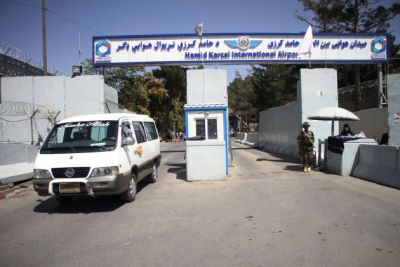
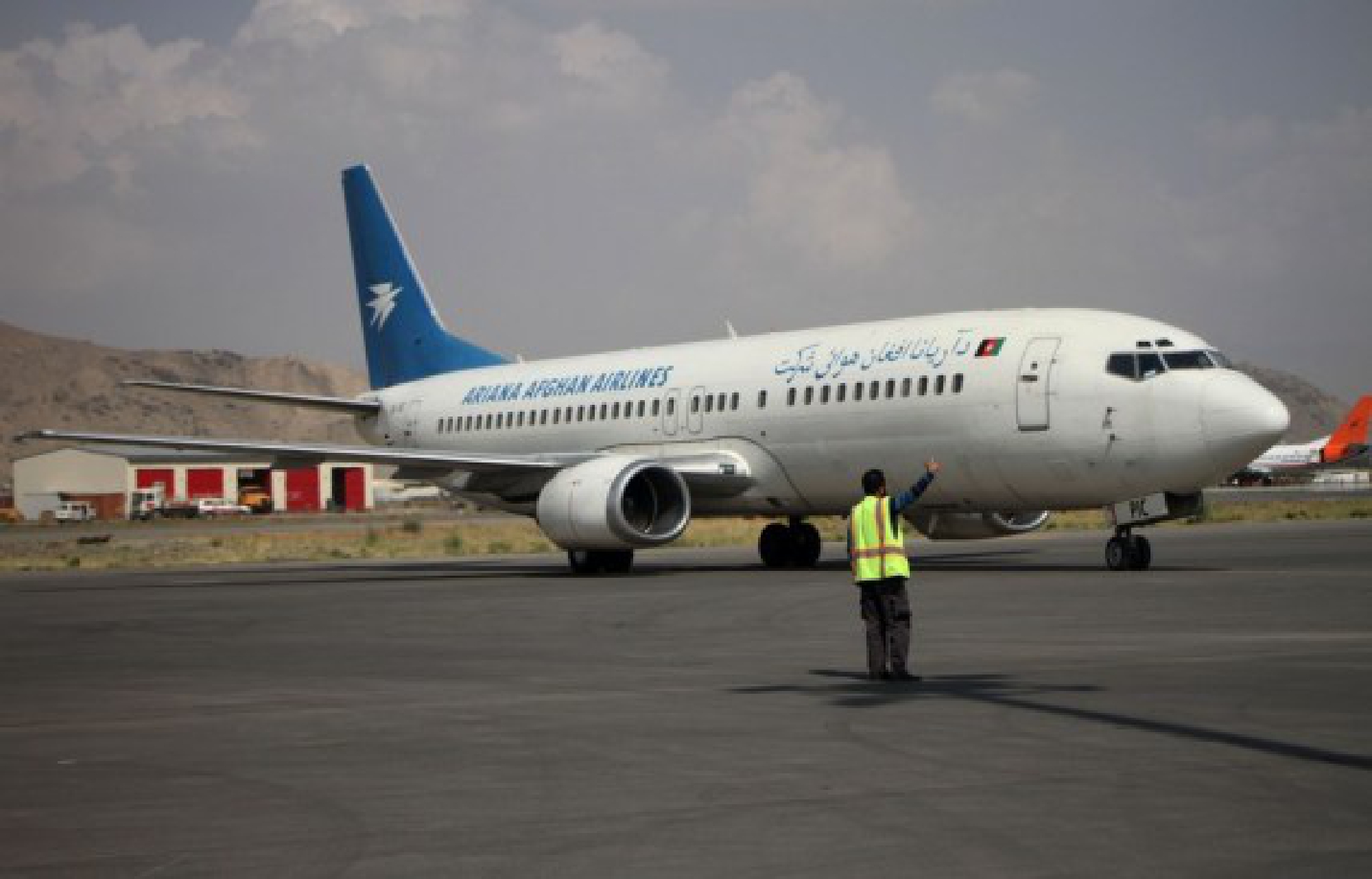 Photo taken on Sept. 20, 2021 shows a plane at the Kabul International Airport in Kabul, capital of Afghanistan. (Photo by Saifurahman Safi/Xinhua)