U.S. pushes for booster shots, school mask mandates as daily COVID-19 fatality hits 2,000 #SootinClaimon.Com

#SootinClaimon.Com : ขอบคุณแหล่งข้อมูล : หนังสือพิมพ์ The Nation.

https://www.nationthailand.com/international/40006536


The United States is stepping up its preparation of COVID-19 vaccine booster shots, while strong actions are being taken to protect students and staff members from the pandemic on campus
The United States is battling rising death tolls and strained hospital resources amid the COVID-19 pandemic, and “all that could be made more difficult by the upcoming flu season,” CNN reported..

According to The New York Times, the 7-day average of confirmed cases of the pandemic stood at 134,036 nationwide on Tuesday, with its 14-day change striking a 12-percent fall. COVID-19-related deaths were 2,046 on Tuesday, with the 14-day change realizing a 36-percent rise.

CHANGE OF DATA, CHANGE OF MIND

ADVERTISEMENT

The United States is battling rising death tolls and strained hospital resources amid the COVID-19 pandemic, and “all that could be made more difficult by the upcoming flu season,” CNN reported on Wednesday.

The country is once again at a point where an average of more than 2,000 people are dying of COVID-19 every day, according to data from the Johns Hopkins University. Meanwhile, hospitals are straining to keep up with the number of patients coming in.

Staff shortages and employee fatigue in Pennsylvania hospitals have reached a point where some health systems are offering signing bonuses, loan forgiveness and other incentives to staff. In Wyoming, nearly 100 members of the state’s National Guard were activated on Tuesday to assist hospitals dealing with the surge, according to the report.

People wait outside a mobile vaccine clinic in New York, the United States, on Aug. 31, 2021. (Xinhua/Wang Ying)People wait outside a mobile vaccine clinic in New York, the United States, on Aug. 31, 2021. (Xinhua/Wang Ying)

Related Stories

The serious scenario has triggered off a change of mind among the Americans. According to a new poll, some 50 percent of vaccinated respondents are either “extremely” or “considerably” hesitant to spend the holidays with unvaccinated family members or friends, and only 38 percent said they were not hesitant about making holiday plans with the unvaccinated, while 12 percent said it’s a non-issue for all their families and friends have gotten the shots.

A slightly larger share of 52 percent of vaccinated respondents said that they would be very or somewhat uncomfortable about attending a holiday dinner or gathering knowing some attendees are unvaccinated, according to the Harris poll conducted from Sept. 17 to 19 among 2,055 U.S. adults, including 1,454 vaccinated ones.

A 54 percent majority of all respondents said vaccination status would be a factor in deciding whether or not they will travel or attend events as part of their holiday plans, and a further 42 percent of vaccinated respondents said they had canceled at least one event or existing travel plan they had with people because they were unvaccinated.
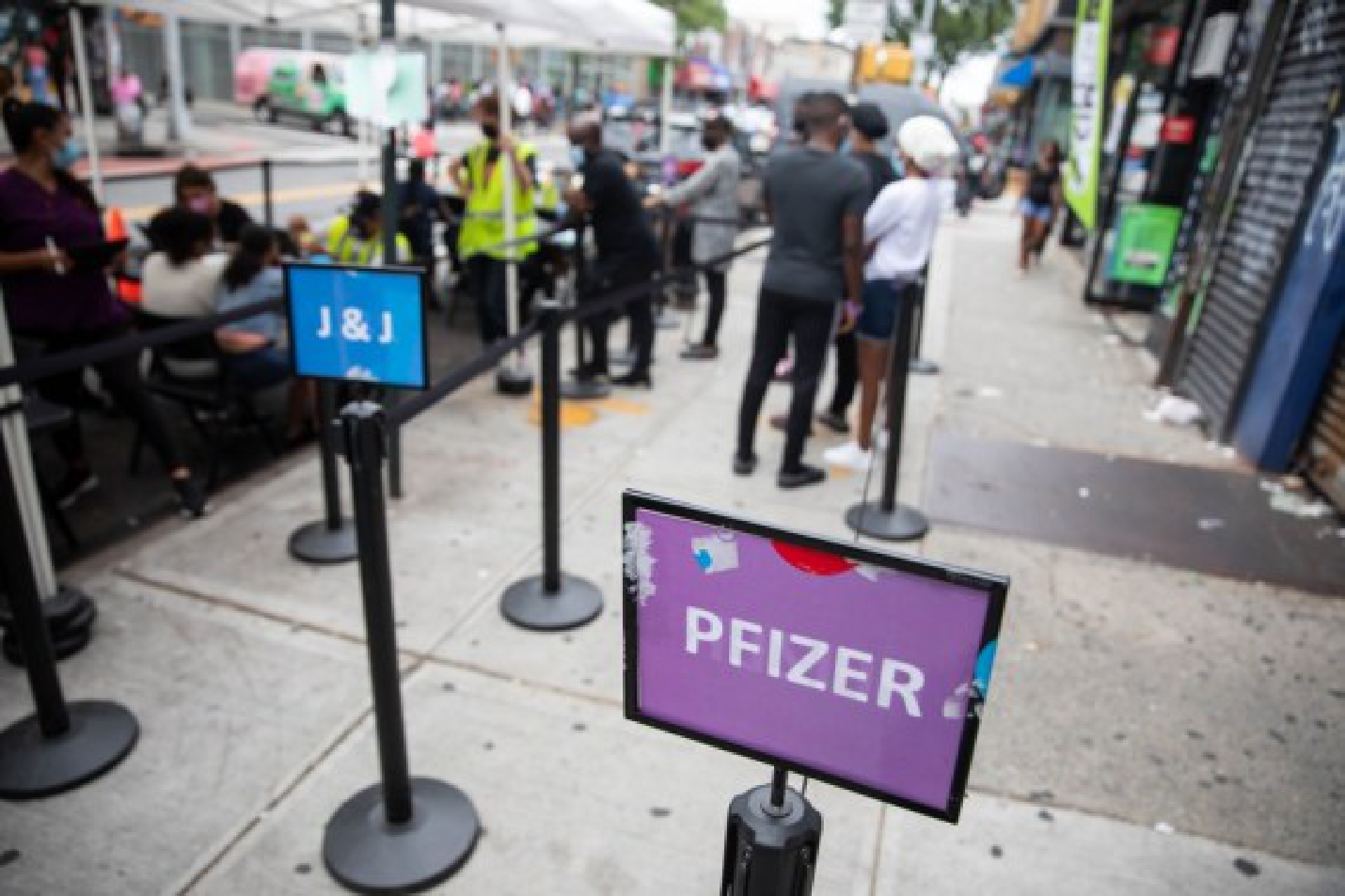
Placards display signage for Johnson & Johnson and Pfizer COVID-19 vaccinations at a mobile COVID-19 vaccination center in the Brooklyn borough of New York, the United States, Aug. 18, 2021. (Xinhua/Michael Nagle)Placards display signage for Johnson & Johnson and Pfizer COVID-19 vaccinations at a mobile COVID-19 vaccination center in the Brooklyn borough of New York, the United States, Aug. 18, 2021. (Xinhua/Michael Nagle)

BOOSTER SHOTS ON TRACK

A committee of top vaccine experts under the U.S. Centers for Disease Control and Prevention (CDC) started 10 hours of meeting on Wednesday morning to decide who should be eligible for a booster dose of the Pfizer-BioNTech COVID-19 shot. A vote is expected on Thursday.

A different federal advisory committee under the U.S. Food and Drug Administration (FDA) on Friday recommended a third dose of the Pfizer-BioNTech vaccine six months after full vaccination for people aged 65 and older and those at high risk of severe COVID-19.

The FDA has not yet issued an approval for the booster doses, so while the CDC’s committee can meet, it cannot vote on recommendations until it receives that sign-off, Julie Morita, executive vice president of the Robert Wood Johnson Foundation, a health-focused nonprofit, was quoted on Wednesday by USA Today as saying.

Meanwhile, Johnson & Johnson released new data on Tuesday showing a booster dose of its vaccine given two months after the one-shot vaccine provides 94 percent protection against moderate-to-severe COVID-19 symptoms.

“A single-shot COVID-19 vaccine that is easy to use, distribute and administer, and that provides strong and long-lasting protection is crucial to vaccinating the global population,” said Paul Stoffels, chief scientific officer at Johnson & Johnson. “A booster shot further increases protection against COVID-19 and is expected to extend the duration of protection significantly.”

Johnson & Johnson, citing three studies of the vaccine, said the booster shot offers strong protection against severe or critical symptoms, and a booster dose given six months after the single shot provides even more protection. The results are in line with data from studies of Moderna and Pfizer-BioNTech, two other U.S. vaccines authorized by federal agencies.

SCHOOL MANDATE DISPUTES

The Education Department’s Office for Civil Rights opened an investigation into the Texas Education Agency on Tuesday in response to its guidance that prohibits school leaders from requiring students and staff to wear masks.

“(The) investigation will focus on whether, in light of this policy, students with disabilities who are at heightened risk for severe illness from COVID-19 are prevented from safely returning to in-person education, in violation of Federal law,” Suzanne Goldberg, the department’s acting assistant secretary for civil rights, wrote in a letter to Texas Education Commissioner Mike Morath.

Specifically, the investigation will focus on whether the state’s ban on mask requirements flouts part of the 1973 Rehabilitation Act, which guarantees students with disabilities the right to receive education in a regular educational environment, alongside their peers without disabilities.

Last week, two New York state senators, John Liu from Queens and Robert Jackson from Manhattan, introduced a bill to require any public school located in a city with at least 1 million people to offer a remote option to students if the CDC considers the COVID-19 transmission rate of the surrounding county “substantial” or “high level.”

One of the ways the CDC categorizes the level of community transmission of COVID-19 in an area is by determining the number of positive cases of the virus per 100,000 residents. If a county has 100 or more COVID-19 cases per 100,000 inhabitants, it is considered a red zone or an area of high transmission. Per current data from the CDC, every county in New York City (NYC) is a red zone.

“Parents are calling for a remote option for school and it’s time @NYCSchools provided one. Many families don’t feel safe sending their kids to physical school right now. The stubborn lack of receptiveness to legitimate safety concerns raises questions about mayoral control,” Liu said in his tweet, questioning NYC public schools’ reopening on Sept. 13 with full in-person teaching and learning.
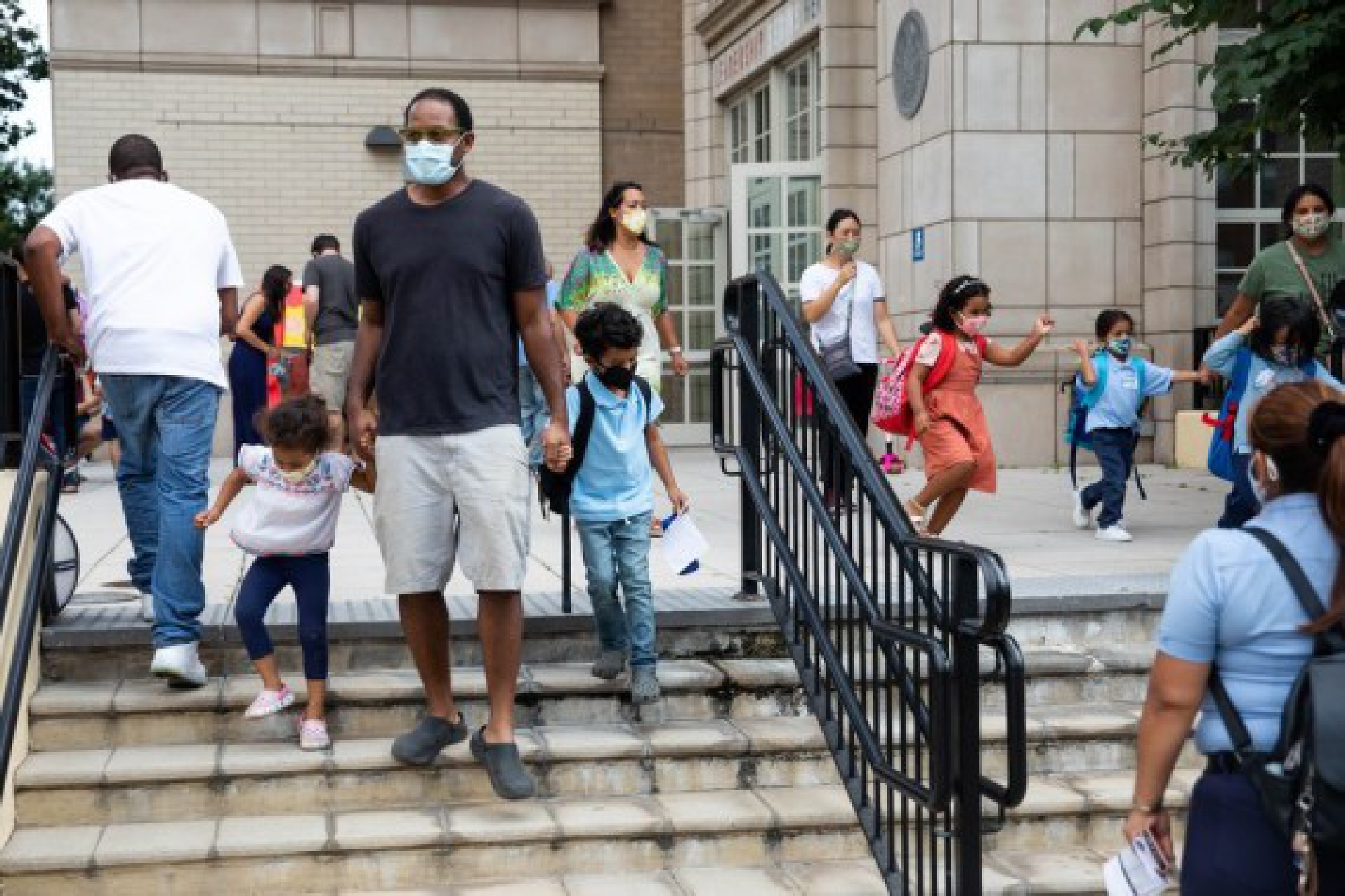
Students are dismissed from the first day of school at PS 133 in the Brooklyn borough of New York, the United States, on Sept. 13, 2021. (Photo by Michael Nagle/Xinhua)Students are dismissed from the first day of school at PS 133 in the Brooklyn borough of New York, the United States, on Sept. 13, 2021. (Photo by Michael Nagle/Xinhua)

Published : September 23, 2021
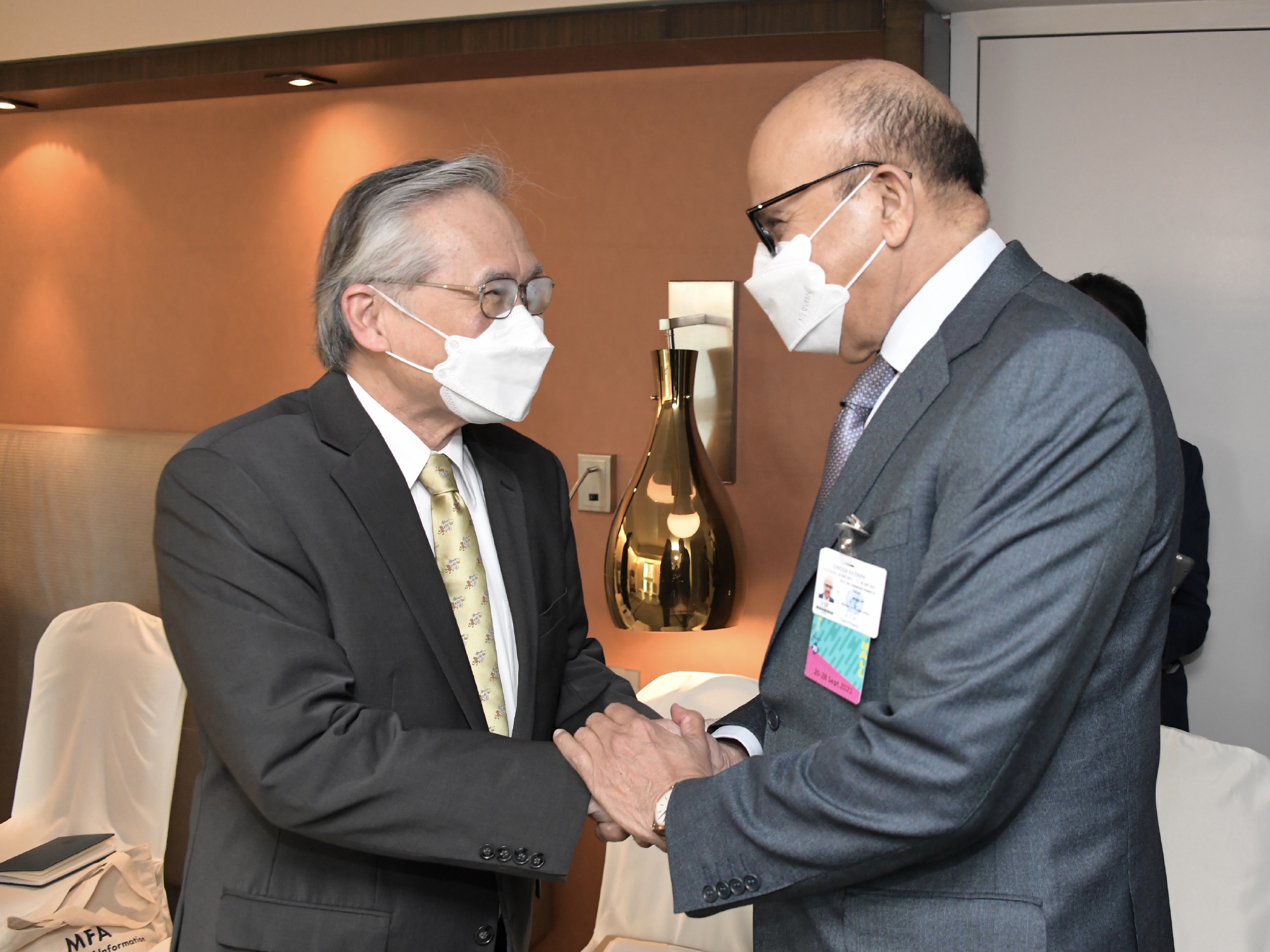
Don has one-on-one discussions with foreign ministers attending UNGA #SootinClaimon.Com

#SootinClaimon.Com : ขอบคุณแหล่งข้อมูล : หนังสือพิมพ์ The Nation.

https://www.nationthailand.com/pr-news/international/40006535


Deputy Prime Minister and Foreign Minister Don Pramudwinai reconnected with world leaders while stressing the importance of post-Covid-19 economic recovery at the opening session of the 76th United Nations General Assembly (UNGA).

Don had bilateral discussions with foreign ministers from Australia, Bahrain, Vietnam and Hungary on his first day of a week-long high-level UN visit to New York City.

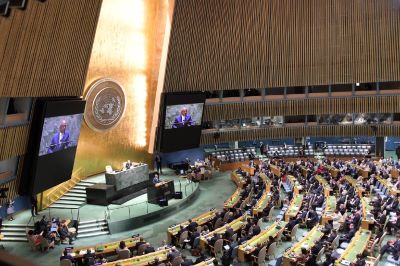
Don on Tuesday attended the opening of the general debate of the 76th UNGA session under the theme “Building resilience through hope – to recover from Covid-19, rebuild sustainably, respond to the needs of the planet, respect the rights of people, and revitalise the United Nations”.

Don has one-on-one discussions with foreign ministers attending UNGADon has one-on-one discussions with foreign ministers attending UNGA
Don heard several leaders’ statements, including those from the presidents of the United States and Brazil. He also met with several foreign dignitaries at UN headquarters.

Prime Minister Prayut Chan-o-cha is scheduled to deliver his pre-recorded remarks on September 25 at 01.15 hours (Thailand time).

Don has one-on-one discussions with foreign ministers attending UNGADon has one-on-one discussions with foreign ministers attending UNGA

During Don’s meeting with his Australian counterpart Marise Payne, both sides expressed satisfaction over dynamic bilateral relations despite the Covid-19 pandemic, and exchanged views on regional and international issues.

In Don’s discussions with Bahrain Foreign Minister Abdullatif bin Rashid Al Zayani, both nations agreed to deepen bilateral ties by setting up a mechanism to follow up on cooperation and projects. Thailand also expressed its readiness to support Bahrain as the ACD chair for 2021-2022.

Don has one-on-one discussions with foreign ministers attending UNGADon has one-on-one discussions with foreign ministers attending UNGA

ADVERTISEMENT

Don also met with his Vietnamese counterpart Bui Thanh Son. Both voiced pleasure over bilateral trade between the two Asean countries, which continues to thrive despite the Covid-19 crisis. Don reaffirmed that Thailand continues to work hand in hand with Vietnam in combating the pandemic. Both sides said they looked forward to participating in the 4th Joint Commission on Bilateral Cooperation.

Don discussed with Hungarian Foreign Minister Péter Szijjártó cooperation on procurement of vaccines and medical supplies, especially oxygen concentrators. Thailand voiced its appreciation for Hungary’s call to the European Union to expedite negotiations of a free trade agreement with Thailand. Don also encouraged Hungary to explore investment opportunities in the Eastern Economic Corridor.

Published : September 23, 2021

Putin, Draghi discuss Afghanistan by phone #SootinClaimon.Com

#SootinClaimon.Com : ขอบคุณแหล่งข้อมูล : หนังสือพิมพ์ The Nation.

https://www.nationthailand.com/international/40006533


They emphasized the importance of fostering an intra-Afghan dialogue.

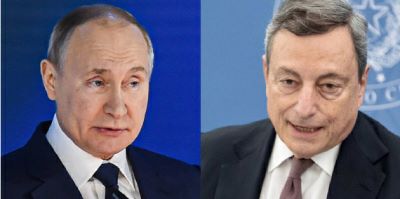
Russian President Vladimir Putin held a phone conversation with Italian Prime Minister Mario Draghi on Wednesday to discuss the situation in Afghanistan.

Both sides expressed their intention to cooperate in order to prevent terrorism, extremism and drug-related crimes, the Kremlin said in a press release.

They emphasized the importance of fostering an intra-Afghan dialogue, with the interests of all groups of the population taken into account.

ADVERTISEMENT

Putin informed Draghi of the results of the Collective Security Treaty Organization summit, the Shanghai Cooperation Organization summit and a joint meeting of the two groups held last week in Dushanbe, Tajikistan.

Related Stories

The leaders discussed post-conflict reconstruction in Afghanistan, including efforts by the Group of 20, which Italy is chairing this year.

Published : September 23, 2021

Macron, Biden to meet in Europe in October over submarine row #SootinClaimon.Com

#SootinClaimon.Com : ขอบคุณแหล่งข้อมูล : หนังสือพิมพ์ The Nation.

https://www.nationthailand.com/international/40006532


Macron and Biden “have decided to open a process of in-depth consultations aimed at creating the conditions for ensuring confidence and proposing concrete measures toward common objectives,” said a joint statement.

Since the AUKUS pact was unveiled, France, outraged by the abrupt move without notice, has accused Australia and the U.S. of “lying, duplicity, a major breach of trust and contempt” and recalled its ambassadors to the two countries.

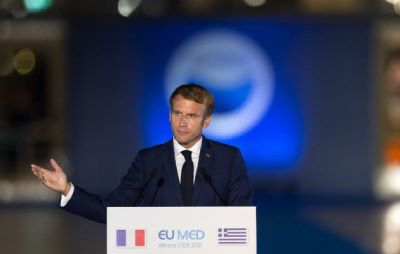
French President Emmanuel Macron and his U.S. counterpart Joe Biden said they will meet in October in Europe following their phone call on Wednesday over the new trilateral Australia-United Kingdom-United States (AUKUS) security partnership.

The AUKUS deal, which was described as a “stab in the back” by France and sparked outcry across Europe, has raised concerns over nuclear proliferation from the international community as under the deal Australia has scrapped a contract to buy submarines from France in favor of U.S.-made nuclear vessels.

ADVERTISEMENT

The two presidents “agreed that the situation would have benefitted from open consultations among allies on matters of strategic interest to France and our European partners,” according to their joint statement.

Related Stories

Since the AUKUS pact was unveiled last Wednesday, France, outraged by the abrupt move without notice, has accused Australia and the U.S. of “lying, duplicity, a major breach of trust and contempt” and recalled its ambassadors to the two countries on Friday.

U.S. President Joe Biden speaks during a ceremony celebrating the 31st anniversary of the Americans with Disabilities Act (ADA) at the White House in Washington, D.C., the United States, on July 26, 2021. (Photo by Ting Shen/Xinhua)U.S. President Joe Biden speaks during a ceremony celebrating the 31st anniversary of the Americans with Disabilities Act (ADA) at the White House in Washington, D.C., the United States, on July 26, 2021. (Photo by Ting Shen/Xinhua)
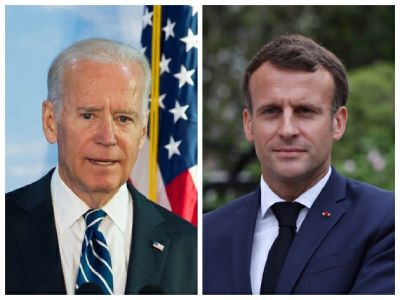
Macron and Biden “have decided to open a process of in-depth consultations aimed at creating the conditions for ensuring confidence and proposing concrete measures toward common objectives.” They will meet in Europe at the end of October “in order to reach shared understandings and maintain momentum in this process,” the joint statement said.

Macron has decided that the French ambassador will return to Washington next week, it added.

Meanwhile, Biden reaffirmed “the strategic importance of French and European engagement in the Indo-Pacific region” and said that the U.S. “recognizes the importance of a stronger and more capable European defense that contributes positively to transatlantic and global security and is complementary to NATO (North Atlantic Treaty Organization),” according to the joint statement.

Dismayed by the “unacceptable” act by the U.S., European leaders in recent days have voiced concerns about the AUKUS agreement and demanded an explanation from Biden on why he misled France and other European partners in forging the new strategic agreement in the Indo-Pacific region.

Published : September 23, 2021

Biden, Macron hold phone call over submarine deal rift #SootinClaimon.Com

#SootinClaimon.Com : ขอบคุณแหล่งข้อมูล : หนังสือพิมพ์ The Nation.

https://www.nationthailand.com/international/40006531


U.S. President Joe Biden and French President Emmanuel Macron agreed to meet in Europe in late October to “reach shared understandings and maintain momentum in this process,” according to a joint statement.

U.S. President Joe Biden held a phone call with his French counterpart Emmanuel Macron on Wednesday in an attempt to defuse a diplomatic rift caused by a controversial submarine deal with Australia.

The White House said in a joint statement between the two countries that Biden requested the call with Macron to discuss “the implications of the announcement on September 15.”

ADVERTISEMENT

The United States and Britain announced on Sept. 15 that they would support Australia to develop nuclear-powered submarines, depriving France of a contract to provide conventional submarines to Australia.

Outraged by the abrupt move without consultations, France recalled its ambassadors to the United States and Australia on Friday in protest.

Related Stories

“The two leaders agreed that the situation would have benefitted from open consultations among allies on matters of strategic interest to France and our European partners. President Biden conveyed his ongoing commitment in that regard,” said the joint statement.

“The two leaders have decided to open a process of in-depth consultations, aimed at creating the conditions for ensuring confidence and proposing concrete measures toward common objectives,” it added.

Macron ordered the French ambassador to return to Washington next week and “start intensive work with senior U.S. officials,” according to the joint statement. Biden and Macron agreed to meet in Europe in late October to “reach shared understandings and maintain momentum in this process.”

U.S. media noted that the joint statement suggested regret by the Biden administration over how it handled the issue.

The phone call came a week after the United States, Britain, and Australia unveiled a new trilateral security partnership known as “AUKUS,” which lists a nuclear submarine fleet for Australia with U.S. and British technology a top priority.

Australia then announced it would scrap the deal with France signed in 2016 to purchase 12 conventional diesel-electric submarines.

French Foreign Minister Jean-Yves Le Drian called the trilateral move a “stab in the back” and a “crisis of trust” between allies that requires explanations.

Published : September 23, 2021

Asean sees slightly lower number of new Covid cases #SootinClaimon.Com

#SootinClaimon.Com : ขอบคุณแหล่งข้อมูล : หนังสือพิมพ์ The Nation.

https://www.nationthailand.com/international/40006530


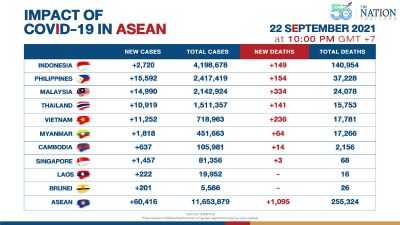
The number of Covid-19 cases in Southeast Asia crossed 11.65 million, with 60,416 new cases reported on Wednesday, slightly lower than Tuesday’s tally of 61,942. Asean also saw 1,095 additional deaths, an increase from Tuesday’s 1,089, taking total coronavirus deaths to 255,324 so far.

Laos reported 222 new cases on Wednesday, bringing cumulative cases in the neighbouring country to 19,952 patients and a total 16 deaths. Laos’s Public Health Ministry announced it is planning to give Covid-19 vaccines to children aged 12-17 soon to prepare for the reopening of schools in Vientiane and other provinces that had been ordered shut since the new Covid-19 wave.

Meanwhile, Malaysia announced it had fully vaccinated 80 per cent of its adult population, and is moving on to inoculating teenagers and rolling out booster shots for high-risk groups. The country’s Special Committee on Covid-19 Vaccines Supply will now focus on tracking down the remaining 20 per cent of adults who are yet to be vaccinated to achieve 100 per cent adult vaccination by the end of October.

The country reported 14,990 new cases and 334 deaths on Wednesday, bringing cumulative cases to 2,142,924 patients and a total 24,078 deaths.

Published : September 23, 2021

Hobby Lobbys forfeited Gilgamesh tablet is headed back to Iraq, and authorities hope it will be a warning to smugglers #SootinClaimon.Com

#SootinClaimon.Com : ขอบคุณแหล่งข้อมูล : หนังสือพิมพ์ The Nation.

https://www.nationthailand.com/international/40006528


WASHINGTON – The 3,500-year-old cuneiform clay tablet from ancient Mesopotamia that was seized by federal authorities in 2019 and officially forfeited by craft store Hobby Lobby in July is being returned to Iraq in a formal ceremony on Thursday afternoon.

The handover is both a victory lap for American and Iraqi officials and a symbolic warning to looters that both governments are committed to eradicating the illicit trade of cultural artifacts.

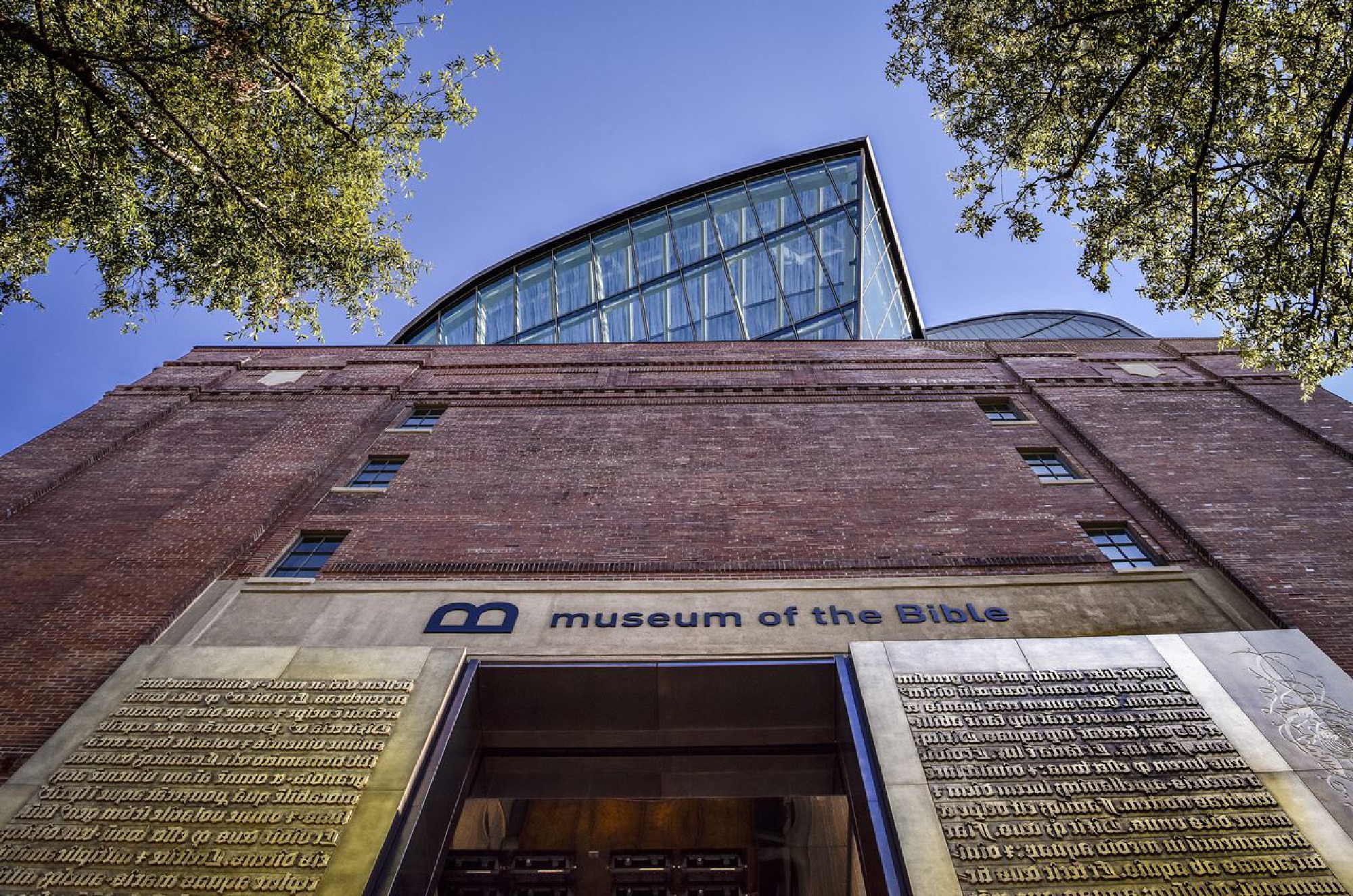
The head of the United Nations Educational, Scientific and Cultural Organization (UNESCO) and senior leaders from the U.S. and Iraqi governments will gather at the Smithsonian’s National Museum of the American Indian for the return of the Gilgamesh Dream Tablet, a 6-by-5-inch clay artifact that is part of an epic poem considered to be one of the world’s earliest works of literature. The rare piece had once been on display at the Museum of the Bible, the institution built and led by Hobby Lobby chief executive Steve Green that opened a few blocks from the U.S. Capitol in 2017.

The ceremony caps a multiyear effort to return the rare artifact to its homeland and spotlights the ongoing fight against cultural smuggling. While the fragment of the Gilgamesh poem is the star of the event, it represents more than 17,000 items that U.S. officials have returned to Iraq.

Hobby Lobbys forfeited Gilgamesh tablet is headed back to Iraq, and authorities hope it will be a warning to smugglersHobby Lobbys forfeited Gilgamesh tablet is headed back to Iraq, and authorities hope it will be a warning to smugglers

ADVERTISEMENT

UNESCO Director General Audrey Azoulay described the restitution as historic and said it is crucial to Iraq’s recovery. After Thursday’s event, the tablet is expected to be sent to Iraq and displayed at the National Museum in Baghdad, she said.

“The Gilgamesh tablet is the most symbolic of the 17,000 cultural objects that were seized,” Azoulay said in an email. “The 3,500-year-old Assyrian tablet contains a segment from the Sumerian Epic of Gilgamesh poem, which is considered one of the oldest literary works in history. It is a founding story that has inspired the great monotheisms, because this myth has been reinterpreted again and again. It also influenced ‘The Iliad’ and ‘The Odyssey.’ It is therefore a jewel of our common humanity and a bulwark against all obscurantism and the identities which pull us apart.

“Having the Gilgamesh tablet returned to Iraq and displayed in the National Museum in Baghdad is also a major step forward in the return of the cultural heritage that was looted from Iraq during decades of conflict,” Azoulay continued. “This is crucial to Iraq’s reconstruction and recovery.”

Highlighting the return of the artifacts could deter the continued looting and trade, said Katharyn Hanson, a cultural heritage preservation scholar at the Smithsonian’s Museum Conservation Institute, which has worked with Iraqi cultural heritage practitioners for many years.

“We don’t see big repatriations like this as often as we should. I have a lot of hope that it is raising awareness of the issue,” Hanson said. “This is going to be a joyous event. The Gilgamesh poem holds a special place in human history, in Iraqi history.”

Hobby Lobby bought the tablet for almost $1.7 million in 2014 to display at the museum being built in Washington. The artifact is thought to have been looted from a museum in Iraq in 1991 and smuggled into the United States in 2007, according to UNESCO. It was seized by U.S. officials in 2019, and in July, the U.S. District Court for the Eastern District of New York ordered Hobby Lobby to forfeit it.

The looting and sale of cultural artifacts have increased because of the armed conflict in the region, UNESCO says. Although the extent of the looting is unknown, the organization estimates that the United States represents 44 percent of the global art market.

The recovery of looted artifacts is slow and difficult, said Lazare Eloundou Assomo, UNESCO director for culture and emergencies.

“Some have false documents and it take years to detect them,” Assomo said. “To this, add the fact that every country has its own legal framework, judicial framework and laws regulating the art market.”

Thursday’s 3 p.m. ceremony spotlights the collaboration between the United States and Iraq, both signatories of a 1970 UNESCO convention that created a legal framework for preventing the trafficking of cultural items and ensuring their repatriation, Assomo said. Iraqi officials in August also cited the efforts of the Bible Museum’s leaders in facilitating the return of what they described as a record number of artifacts from the United States.

“In May 2020, when we learned of the fraudulent import and documentation supplied for the item by previous owners, we announced our full support of the U.S. government’s efforts to return this item to Iraq,” Jeffrey Kloha, the Bible Museum’s chief curatorial officer, said in an email.

“We are grateful for the work of the ambassador of Iraq, Fareed Yasseen, and the U.S. State Department for helping us restore this and other items to the Iraqi people,” added Kloha, who plans to attend the ceremony. “We look forward to future opportunities to collaborate with our friends in Iraq to study and preserve its rich cultural heritage.”

The ceremony also highlights the importance of cultural diplomacy in the fight against the illicit trade of cultural property, Azoulay said, adding that she hopes it serves as a model.

“This restitution is unprecedented, both in terms of the number of items and their value. We expect that this will send a clear message that the time when looted or illegally exported objects could be easily sold on the market is over,” she said. “We also need actors in the art market to play an active role to protect cultural heritage worldwide. Museums are reviewing their acquisition policies, while collectors and auction houses are now paying more attention to provenance information and adhering to professional ethical codes of conduct.”

The Smithsonian’s Hanson says the demand for ancient artifacts, especially those like the Gilgamesh tablet that are connected to the origins of writing, remains high. And that makes it very easy, she said, “for bad guys to make a profit.”

“We lose so much information when an artifact is looted, when it is ripped away from its archaeological context,” she explained. Not only is the object removed from its country of origin, but its connection to history also is severed. For example, Hanson said, the systematic excavation of an artifact like the Gilgamesh would provide scholars with specific location data and other potentially significant details.

“We don’t know what it was found around. Did it come from an intentional archive, or the trash? Was it carefully sealed for the future?” she said. “It’s exciting to see it go back, and I want that joy to overcome the sadness of what we’ve lost.”

Azoulay is expected to speak at the afternoon ceremony, as is Iraqi Ambassador Yasseen; Hassan Nadhem, Iraq’s minister of culture, tourism and antiquities; and senior officials from the U.S. Departments of State, Justice and Homeland Security.

Published : September 23, 2021

Delta is by far worlds most dominant coronavirus variant, WHO says #SootinClaimon.Com


Delta is “by far” the worlds dominant coronavirus variant, a top World Health Organization scientist said Tuesday.

The global body downgraded its advisories on three other virus variants in a reflection of how delta is “outcompeting and replacing” everything else.

“Less than 1% of the sequences that are available right now are alpha, beta and gamma,” Maria Van Kerkhove, the WHO’s technical lead on covid-19, said in a video Q&A, referring to the three other variants the organization considers “of concern.”

“Of those four variants of concern, delta is, by far, the most transmissible,” Van Kerkhove added. “If delta is identified or starts to circulate in a country where there is beta . . . [delta] has quickly replaced the variant there.”

ADVERTISEMENT

The delta variant has appeared in 185 countries, as global coronavirus cases near 230 million and deaths surpass 4.7 million since the start of the pandemic.

The mu variant, which has been identified thousands of times in the United States and had raised concerns that it may be more resistant to vaccines than its sibling variants, is also being replaced in countries where delta is present, Van Kerkhove said. “Lambda and mu don’t seem to be dominant.”

By the end of July, delta had overpowered all its rivals in the United States. The “coronavirus pandemic in America has become a delta pandemic,” The Washington Post reported in August, noting that it accounted for 93.4% of new infections.

In the past four weeks, more than 98% of the coronavirus sequences submitted from the United States to the Global Initiative on Sharing All Influenza Data, a large database of novel coronavirus genome sequences in the world, were of the delta variant.

Separately on Tuesday, the WHO reclassified three other variants – eta, iota and kappa – to “monitoring” status, indicating that they “no longer pose a major added risk to global public health” as they are being outcompeted by delta.

“They are not taking hold,” Van Kerkhove said.

Ahead of a vaccination summit that President Biden is set to propose on Wednesday, the World Health Organization also said that the number of global coronavirus deaths and infections had declined in recent weeks, reflecting increased access to vaccines in rich and some middle-income nations even as developing economies scramble to immunize their populations.

Mike Ryan, the WHO’s emergencies chief, warned in the same video event that previous dips had been followed by sharp spikes, though he said that countries with high immunization rates had less to worry about. “It shows us that vaccines work,” he said.

Published : September 23, 2021

U.S. will double Pfizer doses it donates abroad, Biden announces #SootinClaimon.Com

#SootinClaimon.Com : ขอบคุณแหล่งข้อมูล : หนังสือพิมพ์ The Nation.

https://www.nationthailand.com/international/40006524


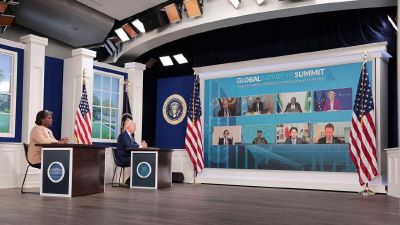
WASHINGTON – President Joe Biden announced Wednesday that the United States will double the number of Pfizer coronavirus vaccine doses it is donating to other countries, a step toward the goal of immunizing 70% of the worlds 8 billion people within the next year.

Biden made the pledge as he convened a virtual global summit of world leaders amid criticism that his administration has done too little to help nations with fewer resources.

Organizers said the conference would explore ways that all nations can cooperate to blunt a pandemic that has killed an estimated 4.5 million people and stunted economic growth around the globe.

“We’re not going to solve this crisis with half measures or middle-of-the-road ambitions,” Biden said at the White House.

“We need to go big, and we need to do our part” across governments, the private sector and charities, Biden said.

“This is an all-hands-on-deck crisis. And the good news is, we know how to beat this pandemic: vaccines, public health measures and collective action.”

The United States will buy 500 million doses of the Pfizer-BioNTech coronavirus vaccine to donate to countries in need as part of what Biden said is an effort to become “the arsenal of vaccines, as we were the arsenal of democracy during World War II.”

ADVERTISEMENT

The Biden administration already purchased 500 million doses of the vaccine in July to be distributed in batches.

The doses would go to poorer countries through Covax, the initiative led by the World Health Organization, Gavi and the Coalition for Epidemic Preparedness Innovations.

“This is a monumental commitment by the United States, bringing our total number of donated vaccines to the world to more than 1.1 billion,” White House coronavirus coordinator Jeff Zients and Secretary of State Antony Blinken wrote in an op-ed in The Washington Post on Wednesday. “For every one shot we’ve put in an American arm to date, we are now donating about three shots globally.”

The United States is the world leader in vaccine donations, Biden said, although he and other leaders of wealthy nations have been criticized for all but cornering markets for vaccines early on. Biden has also come under fire for welcoming booster shots for Americans while vaccination rates remain in single digits across most of Africa.

“Put another way, for every one shot we have administered to date in America, we have now committed to do three shots to the rest of the world,” Biden said.

The WHO chief has called for a halt to boosters in rich countries for the rest of the year, to give other nations more chances to catch up.

Neither Biden nor United Nations Ambassador Linda Thomas-Greenfield addressed critiques of the booster plan in the United States in their opening remarks heard by reporters.

“We can do both, and it’s a false choice,” White House press secretary Jen Psaki said of the suggestion that rich nations should hold back.

“Our view also continues to be that, frankly, the rest of the world needs to step up and do more.”

The summit, which coincides with this week’s U.N. General Assembly meetings, was broken into four sessions.

Biden chaired the first session on the need to vaccinate the world, where he called on global leaders to fully vaccinate 70% of the world’s population by next September, The Post previously reported.

Participants included U.N. Secretary General António Guterres, World Health Organization chief Tedros Adhanom Ghebreyesus, the leaders of Britain, Canada, South Africa and Indonesia, plus a representative from the European Union.

Biden stressed that the goal is “donating, not selling” vaccines and with no strings attached. That was a dig at China and Russia, which have sold vaccines.

Vice President Kamala Harris also announced that the United States would contribute $250 million toward a new World Bank fund intended to finance global health security initiatives and avert future outbreaks.

Harris said the Biden administration would seek an additional $850 million from Congress for the global fund and appealed to other nations to contribute as well.

“Unless we establish a new financing mechanism, in my view, we will never be fully prepared,” Harris said at the session.

Some advocates cheered Wednesday’s event as a needed turning point in the pandemic response and said they awaited further actions.

The summit was a “critical reset of the world’s ambition to end the pandemic once and for all, as quickly as possible,” said Carolyn Reynolds, co-founder of Pandemic Action Network, who spoke at the event. “We welcome President Biden’s plan to host another summit early next year to make sure the world is on track to achieve the summit goals and targets.”

But other advocacy groups like Oxfam America panned Biden’s event as insufficient and faulted the U.S. government for not doing more to pressure coronavirus vaccine manufacturers to immediately share their intellectual property with the developing world.

“While additional donations are always welcome, it’s hard not to see the summit as anything but a disappointment,” said Zain Rizvi, a researcher at Public Citizen. “The global vaccine effort cannot be relegated to a GoFundMe campaign.”

Published : September 23, 2021

Asia Album: Full moon shines on night of Mid-Autumn Festival in Malaysia #SootinClaimon.Com

#SootinClaimon.Com : ขอบคุณแหล่งข้อมูล : หนังสือพิมพ์ The Nation.

https://www.nationthailand.com/international/40006483


Malaysians enjoyed a full moon on Tuesday night.

The Mid-Autumn Festival, which falls on Sept. 21 this year, is a traditional Chinese festival with a custom of family reunion, and is now celebrated in several Asian countries.

A full moon is seen against the skyline of Kuala Lumpur, Malaysia, on the occasion of Mid-Autumn Festival on Sept. 21, 2021. (Photo by Chong Voon Chung/Xinhua)A full moon is seen against the skyline of Kuala Lumpur, Malaysia, on the occasion of Mid-Autumn Festival on Sept. 21, 2021. (Photo by Chong Voon Chung/Xinhua)


ADVERTISEMENT

A full moon is seen against the skyline of Kuala Lumpur, Malaysia, on the occasion of Mid-Autumn Festival on Sept. 21, 2021. (Photo by Chong Voon Chung/Xinhua)A full moon is seen against the skyline of Kuala Lumpur, Malaysia, on the occasion of Mid-Autumn Festival on Sept. 21, 2021. (Photo by Chong Voon Chung/Xinhua)

Photo taken on Sept. 21, 2021 shows a full moon seen in Kuala Lumpur, Malaysia, on the occasion of Mid-Autumn Festival. (Photo by Chong Voon Chung/Xinhua)Photo taken on Sept. 21, 2021 shows a full moon seen in Kuala Lumpur, Malaysia, on the occasion of Mid-Autumn Festival. (Photo by Chong Voon Chung/Xinhua)

Published : September 22, 2021