European Council President Charles Michel also expressed concerns about the AUKUS agreement, demanding an explanation from Biden on why he misled France and other European partners in forging the new strategic agreement in the Indo-Pacific.
European Commission President Ursula von der Leyen has described as “unacceptable” the way France was treated by Australia, Britain and the United States in their newly established security partnership AUKUS.
The European Commission chief expressed her dismay during an interview with CNN, in which she demanded explanations from U.S. President Joe Biden.
“There are a lot of open questions that have to be answered,” von der Leyen said. “One of our member states has been treated in a way that is not acceptable, so we want to know what happened and why. And therefore you first clarify that before you keep going with business as usual.”
ADVERTISEMENT
The deal was signed recently by the United States and Britain which will share nuclear submarine technology with Australia.
French President Emmanuel Macron (L) welcomes European Commission President Ursula von der Leyen at the Elysee Palace in Paris June 23, 2021. (Xinhua/Gao Jing)
European Council President Charles Michel also expressed concerns about the AUKUS agreement, demanding an explanation from Biden on why he misled France and other European partners in forging the new strategic agreement in the Indo-Pacific.
He took to social media to say: “The AUKUS security partnership further demonstrates the need for a common EU approach in a region of strategic interest. A strong EU Indo-Pacific strategy is needed more than ever.”
European Council President Charles Michel (R) and European Commission President Ursula von der Leyen (L) welcome U.S. President Joe Biden (C) at the EU headquarters in Brussels, Belgium, on June 15, 2021. (European Union/Handout via Xinhua)
He then told reporters at the UN General Assembly: “With the new Joe Biden administration, America is back.” This was interpreted as questioning whether the U.S. had returned to the international table.
“What does it mean America is back? Is America back in America or elsewhere? We do not know,” he added.
Michel told journalists at the UN on Monday that the U.S. had demonstrated “lack of loyalty” after Australia cancelled the multi-billion-dollar deal with France on nuclear-powered submarines which it will now obtain from the U.S. and Britain.
“The elementary principles for allies are transparency and trust, and it goes together. And what do we observe? We are observing a clear lack of transparency and loyalty,” Michel told reporters.
He added that the Europeans need clarifications on this deal and would step up efforts to build their own defensive capabilities.
French Foreign Minister Jean-Yves Le Drian said in New York on Monday that all EU countries should be worried about the contempt the United States has shown to its allies.
“Europeans must not be the rejections of the strategy chosen by the United States,” said Le Drian. “We are in this new state of mind, which means that the Europeans must identify their own strategic issues and discuss with the United States on this subject.”
Even EU foreign affairs chief Josep Borrell weighed in on the alliance during a press conference in New York following an informal EU Foreign Ministers’ meeting when they considered it “very disappointing.” He said the ministers expressed clear solidarity with France.
Borrell said he also met with his Australian counterpart Marise Payne in a planned meeting during which he inquired about the reasons behind the lack of prior consultation on AUKUS.
British Prime Minister Boris Johnson (L) talks with U.S. President Joe Biden after their meeting in Carbis Bay, Cornwall, Britain, on June 10, 2021. (Andrew Parsons/No 10 Downing Street/Handout via Xinhua)
“I am here to sound the alarm: The world must wake up. We are on the edge of an abyss, and moving in the wrong direction,” UN Secretary-General Antonio Guterres told the General Assembly before the opening of the General Debate.
UN Secretary-General Antonio Guterres on Tuesday warned that the world is on the edge of an abyss and moving in the wrong direction.
“I am here to sound the alarm: The world must wake up. We are on the edge of an abyss, and moving in the wrong direction,” he told the General Assembly before the opening of the General Debate.
“Our world has never been more threatened, or more divided. We face the greatest cascade of crises in our lifetimes,” he said in his report to the assembly on the work of the world body.
ADVERTISEMENT
The COVID-19 pandemic has supersized glaring inequalities. The climate crisis is pummeling the planet. Upheaval from Afghanistan to Ethiopia to Yemen and beyond has thwarted peace. A surge of mistrust and misinformation is polarizing people and paralyzing societies. Human rights are under fire. Science is under assault. And economic lifelines for the most vulnerable are coming too little and too late — if they come at all. Solidarity is missing in action — just when the world needs it most, he said.
People receive the COVID-19 vaccine in a mobile vaccination unit in Bangkok, Thailand, on Sept. 17, 2021. (Xinhua/Rachen Sageamsak)
On the one hand, the COVID-19 vaccines were developed in record time, a victory of science and human ingenuity. On the other hand, triumph is being undone by the tragedy of a lack of political will, selfishness and mistrust: a majority of the wealthier world vaccinated, over 90 percent of Africans still waiting for their first dose.
“This is a moral indictment of the state of our world. It is an obscenity. We passed the science test. But we are getting an F in ethics,” said Guterres.
The climate alarm bells are also ringing at a fever pitch, he said.
“Climate scientists tell us it’s not too late to keep alive the 1.5-degree goal of the Paris Climate Agreement. But the window is rapidly closing. We need a 45 percent cut in emissions by 2030. Yet a recent UN report made clear that with present national climate commitments, emissions will go up by 16 percent by 2030,” he said. “That would condemn us to a hellscape of temperature rises of at least 2.7 degrees above pre-industrial levels. A catastrophe.”
COVID-19 and the climate crisis have exposed profound fragilities as societies and as a planet, he said. “Yet instead of humility in the face of these epic challenges, we see hubris. Instead of the path of solidarity, we are on a dead end to destruction.”
At the same time, another disease is spreading in the world today: a malady of mistrust, he said.
“The people we serve and represent may lose faith not only in their governments and institutions, but in the values that have animated the work of the United Nations for over 75 years: peace, human rights, dignity for all, equality, justice, solidarity. Like never before, core values are in the crosshairs.”
A breakdown in trust is leading to a breakdown in values. Promises, after all, are worthless if people do not see results in their daily lives, he warned. “Failure to deliver creates space for some of the darkest impulses of humanity. It provides oxygen for easy fixes, pseudo-solutions and conspiracy theories. It is kindling to stoke ancient grievances, cultural supremacy, ideological dominance, violent misogyny, the targeting of the most vulnerable including refugees and migrants.”
It is a moment of truth. Now is the time to deliver. Now is the time to restore trust. Now is the time to inspire hope, said Guterres. “And I do have hope. The problems we have created are problems we can solve. Humanity has shown that we are capable of great things when we work together. That is the raison d’etre of our United Nations.”
But he cautioned that today’s multilateral system is too limited in its instruments and capacities, in relation to what is needed for effective governance of managing global public goods. It is too fixed on the short term.
“We need to strengthen global governance. We need to focus on the future. We need to renew the social contract. We need to ensure a United Nations fit for a new era,” he said.
People march during a climate change protest in Vancouver, British Columbia, Canada, on March 27, 2021. (Photo by Liang Sen/Xinhua)
Chinese President Xi Jinping on Tuesday elaborated on the guiding principles for international relations.
“We must strengthen solidarity and promote mutual respect and win-win cooperation in conducting international relations,” Xi said in his statement delivered via video at the general debate of the 76th session of the United Nations General Assembly.
A world of peace and development should embrace civilizations of various forms, and must accommodate diverse paths to modernization, Xi said. “Democracy is not a special right reserved to an individual country, but a right for the people of all countries to enjoy.”
ADVERTISEMENT
Referring to recent developments in the global situation, he said they showed once again that military intervention from the outside and so-called democratic transformation entail nothing but harm.
“We need to advocate peace, development, equity, justice, democracy and freedom, which are the common values of humanity, and reject the practice of forming small circles or zero-sum games,” Xi said.
Xi added that one country’s success does not have to mean another country’s failure, and that the world is big enough to accommodate common development and progress of all countries.
Stressing that China has never and will never invade or bully others, or seek hegemony, Xi said that China is always a builder of world peace, contributor to global development, defender of the international order and provider of public goods.
China will continue to bring the world new opportunities through its new development, Xi noted.
“We must improve global governance and practice true multilateralism,” Xi said. “In the world, there is only one international system, i.e. the international system with the United Nations at its core. There is only one international order, i.e. the international order underpinned by international law. There is only one set of rules, i.e. the basic norms governing international relations underpinned by the purposes and principles of the UN Charter.”
The UN should hold high the banner of true multilateralism and serve as the central platform for countries to jointly safeguard universal security, share development achievements and chart the course for the future of the world, Xi said.
U.S. President Joe Biden said the United States will “compete vigorously” with other major powers while emphasizing it is not “seeking a new Cold War or a world divided into rigid blocs.”
U.S. President Joe Biden said in a speech at the United Nations on Tuesday that the United States is opening a new chapter of diplomacy after ending the two-decade Afghan war.
“We’ve ended 20 years of conflict in Afghanistan, and as we close this era of relentless war, we’re opening a new era of relentless diplomacy,” Biden said in his first address to the UN General Assembly.
The U.S. military completed its chaotic withdrawal from Afghanistan in late August under Biden’s order, ending the longest war in American history.
ADVERTISEMENT
The president pointed out the U.S. military power “must be our tool of last resort, not our first,” and should not be used as an answer for every global problem.
“Many of our greatest concerns cannot be solved or even addressed through the force of arms. Bombs and bullets cannot defend against COVID-19 or its future variants,” he added. “To fight this pandemic, we need a collective act of science and political will.”
Biden said the United States will “compete vigorously” with other major powers while emphasizing it is not “seeking a new Cold War or a world divided into rigid blocs.”
“The United States is ready to work with any nation that steps up and pursues peaceful resolution to shared challenges, even if we have intense disagreements in other areas,” he continued. “Because we’ll all suffer the consequences of our failure if we do not come together to address the urgent threats like COVID-19 and climate change or enduring threats like nuclear proliferation.”
Biden said that Washington will remain to engage with Tehran diplomatically and seek a mutual return to the Iran nuclear deal. The United States seeks “serious and sustained diplomacy” to pursue the complete denuclearization of the Korean Peninsula.
He also reaffirmed both U.S. security commitment to Israel and a two-state solution to the Israeli-Palestinian conflict.
Biden’s debut at the UN General Assembly came after controversial foreign policy decisions without sufficient consultations with allies, including the chaotic withdrawal from Afghanistan and a diplomatic rift with France over a submarine deal with Australia.
Under a new security partnership unveiled last Wednesday between Australia, Britain and the United States, known as AUKUS, Australia will build nuclear-powered submarines with U.S. and British technology. Australia then announced it would scrap the deal with France signed in 2016 to purchase 12 conventional diesel-electric submarines.
Outraged by the abrupt move without notice, France recalled its ambassadors to the United States and Australia for consultations on Friday.
French Foreign Minister Jean-Yves Le Drian said Monday in New York that the trilateral move between the United States, Britain and Australia represents a “crisis of trust” between allies that requires explanations.
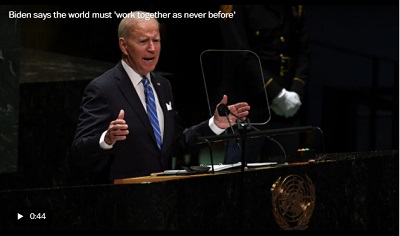
U.S. President Joe Biden (at the podium and on the screens) speaks during the General Debate of the 76th session of the United Nations General Assembly at the UN headquarters in New York, on Sept. 21, 2021. (Xinhua/Wang Ying)
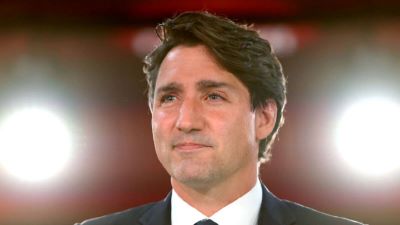
Prime Minister Justin Trudeau won a third term in Canadas snap election though fell short of regaining the majority he was seeking, forcing him to rely on smaller parties in another fragmented parliament.
Trudeau’s Liberal Party was elected or leading in 158 of the 338 seats in the House of Commons, with 99% of the polls reporting. That’s one more seat than he won in the last vote in 2019. The main opposition Conservatives, under Erin O’Toole, won 119 seats, two fewer than last time.
For a second straight election, though, the Liberals lost the popular vote to the Conservatives and won only because of a strong showing in Toronto, Montreal and other cities.
Overall, the result leaves parliament little changed from what it was before Trudeau called the vote — a stable minority that gives the prime minister license to continue pursuing a pre-election big-spending agenda that had already received parliamentary backing earlier this year. In addition, Trudeau should easily find support in the legislature to press ahead with new campaign pledges such as raising taxes on financial institutions and imposing stricter emission rules for the oil and gas sector.
“This points to ongoing heavy fiscal support and some upside bias towards wider deficits in the medium term,” Doug Porter, chief economist at Bank of Montreal, said by email. “Of course, since it seems we will be dealing with a minority government, the specifics will remain fluid.”
Other initiatives expected to be brought forward quickly include new regulations that will compel media stream services and social platforms like Netflix and TikTok to finance and promote Canadian content. Trudeau had introduced a bill to regulate the sector in the previous parliament that never won passage through the Senate before the election was called.
ADVERTISEMENT
In his victory speech early Tuesday morning in Montreal, Trudeau likened the election result to voters sending parliamentarians “back to work.”
“I hear you when you say you just want to get back to the things you love, and not worry about this pandemic or about an election,” he said.
The Liberal victory is a historic milestone for Trudeau, marking only the eighth time a Canadian leader has won three successive elections. Trudeau’s father, Pierre, also did it. It also represents a comeback of sorts for Trudeau, whose party was trailing in the polls midway through the five-week campaign.
But the outcome is also a rebuke of Trudeau’s decision to call a snap election that many Canadians saw as a power grab while the Covid-19 pandemic still rages. With more than 90% of polls reporting, the Liberals had just 32.2% of the national vote. That would be the lowest share for any governing party in the nation’s history. The Conservatives stood at 34%.
It’s the second time voters have denied this prime minister full control of the legislature, limiting his freedom to take big risks or govern unilaterally.
The results reflect a nation that’s unsure about its immediate future amid a fourth wave of the pandemic. Canadians are dealing with growing debt levels and concerned about a future transition from an oil-producing nation to a low-carbon economy. Party leaders struggled to find a coherent message with which to unite the electorate, pollsters said.
“That’s a damning assessment of the front-runners from Canadians, reflecting for them, a lack of inspiring choices,” said Shachi Kurl, executive director of the Angus Reid Institute, a Vancouver-based polling firm.
Like in 2019, when Trudeau lost his majority, the outcome also underscores the regional divisions facing the nation. Resource-rich western Canadians again voted heavily for Conservatives, a party more supportive of the energy sector. Quebeckers chose to send nationalists to the legislature in large numbers, instead of siding with Trudeau’s federalist party.
To be sure, Trudeau will have a stable minority. He has multiple potential partners to pass legislation, giving the prime minister maximum leverage. The New Democratic Party won 25 seats, while the Bloc Quebecois had 34. Each has enough to push the Liberals beyond the 170 votes in parliament needed to pass legislation.
Minority governments have become familiar to Canadians. The past seven elections have now produced five minority governments. They’re popular because they require the participation of several parties to make laws.
But there’s a downside. Minority parliaments keep parties on constant campaign footing and give them less scope to consider long-term issues. In practice, that means politicians are wary of tackling big problems like Canada’s sagging competitiveness or slow transition toward a low-carbon economy.
“The economic challenges ahead of us are significant,” Robert Asselin, senior vice president of policy at the Business Council of Canada, said by email. “We are going to need a longer-term approach to growth.”
Since the 2019 election, the country’s benchmark S&P/TSX Composite Index has climbed 23%, barely half the gain of the S&P 500. The Canadian currency has been the second-worst performer among G-10 currencies against the U.S. dollar.
Trudeau largely had control over the economic agenda last month before he called the election, with all three opposition parties at one point backing his emergency borrowing to pay for the Covid-19 response.
The Liberals passed a budget in April with $110 billion (CA$140 billion) in new spending measures, with support from the NDP. Even the Conservatives largely supported the Liberal government’s pandemic support measures through much of last year.
But the prospect of the Liberals linking up with the New Democrats on policy could prompt an even more leftward shift. The NDP wants to raise tax rates on corporate income and capital gains, as well as on wealthy individuals.
The election outcome also amounted to a rejection of O’Toole, the Conservative leader whose gamble to move his party closer to the political center with a moderate platform failed to win enough voters to offset losses to his right. In particular, the Conservatives struggled to make any breakthroughs in the big urban centers.
“There are no winners here,” Darrell Bricker, global chief executive of Ipsos Public Affairs, said by email.
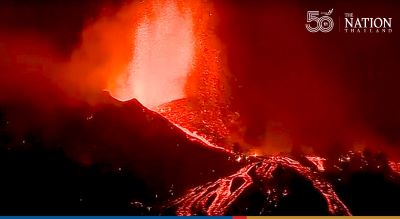
An estimated 5,000 residents fled their homes as a volcano on La Palma, one of Spains Canary Islands, erupted Sunday and sent streams of red molten lava downhill toward villages and a column of thick, dark smoke into the sky.
Videos and photos on social media showed streams of bright orange lava from the Cumbre Vieja volcano flowing through streets, engulfing houses and roads, while fountains of lava and ash exploded overhead.
The volcano, which last erupted in 1971, had shown signs of activity in the days leading up to the eruption, placing locals on high alert.
The Canary Islands Volcanology Institute, known as Involcan, said that early measurements recorded temperatures of 1,967 degrees Fahrenheit (1,075 Celsius).
“Follow the advice of the authorities and DO NOT GO near the site of the eruption,” the institute tweeted Sunday.
According to authorities, more than 22,000 tremors were detected in one week around the active volcanic region.
ADVERTISEMENT
“According to experts there are about 17 to 20 million cubic meters of lava,” Canary Islands President Ángel Victor Torres told a news conference Sunday night.
People with disabilities were evacuated ahead of the eruption, which took place around 3 p.m. local time Sunday. Hiking trails had also been cordoned off to the public as a precaution, CNN reported.
Torres added that the lava was slowly flowing “towards the coast” and that nobody else would need to be evacuated.
Locals were advised to stay away from the area and to exercise “extreme caution,” Reuters reported, as soldiers were deployed to help.
On Sunday, Spanish Prime Minister Pedro Sánchez tweeted that he had canceled his trip to New York for the United Nations General Assembly and confirmed he would be arriving in the area to help in the aftermath of the eruption.
Meanwhile, Spain’s Tourism Minister Reyes Maroto caused a backlash after she suggested that the volcano eruption could be used to attract tourists. “We can also make the most of this as an attraction, so that a lot of tourists who want to enjoy what nature has brought to La Palma can do so in the coming weeks and months,” she said, according to The Guardian.
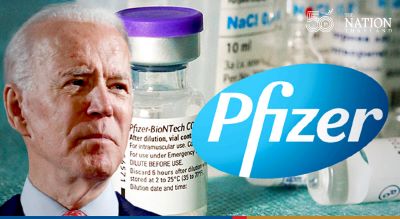
President Joe Biden plans to announce an order of 500 million doses of the Pfizer -BioNTech vaccine Wednesday, according to two people familiar with the matter, as the president looks to increase donations of shots abroad and ward off criticism about U.S. plans for boosters.
Negotiations between the administration and manufacturers are continuing but a deal is poised to be unveiled at a virtual vaccine summit, said the people, who asked not to be named ahead of the announcement.
The order would double the amount of the Pfizer-BioNTech shots that the U.S. has bought for export. An initial pledge of 500 million doses was made in June and deliveries began in August. About 200 million of those will ship by Dec. 31. Another 300 million are due by the end of June. It’s not clear when the new order of 500 million shots would ship or how much they would cost.
The White House declined to comment.
Biden has planned the summit to coincide with United Nations General Assembly meetings this week and has promoted his coming announcement.
“I’ll be announcing additional commitments as we seek to advance the fight against Covid-19 and hold ourselves accountable around specific targets on three key challenges: saving lives now, vaccinating the world and building back better,” Biden said in a speech on Tuesday.
He said that the U.S. has shipped more than 160 million doses of vaccine abroad. The U.S. is the top donor of vaccines, according to Unicef data, although other countries have high export totals based on vaccine sales. U.S. donations have landed in 100 countries, Biden said.
ADVERTISEMENT
On top of the one billion doses ordered specifically for donation, the U.S. has donated another 130 million. The U.S. has administered 386 million doses domestically so far, a figure that is poised to jump in the coming months as booster shot campaigns expand and with potential authorization of shots for children age 5 to 11.
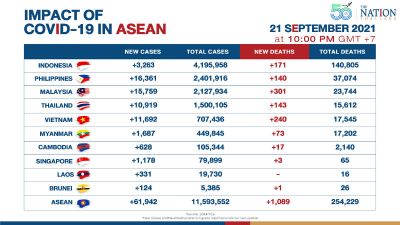
The number of Covid-19 cases in Southeast Asia crossed 11.59 million, with 61,942 new cases reported on Tuesday, higher than Monday’s tally of 60,156. Asean also saw 1,089 additional deaths, an increase from Monday’s 1,084, taking total coronavirus deaths to 254,229.
Vietnam reported 11,692 new cases and 240 deaths on Tuesday, with cumulative cases in the country being 707,436 patients and a total 17,545 deaths so far.
Non-essential services, including hair salons and restaurants, across the capital Hanoi resumed on Tuesday as the city eased Covid-19 restrictions.
Food and drink establishments have been permitted to reopen for takeaways and delivery services only and must close before 9pm each day. Other daily life services including traditional markets and stores selling stationery and textbooks also reopened.
Meanwhile, Malaysia’s Health Ministry aims to inoculate 80 per cent of eligible children before school reopens in 2022, after it revealed that 67 students died from Covid-19 this year compared to six in 2020.
Statistics also showed an increasing trend of infections among those up to 18 years old in the country.
Malaysia reported 15,759 new cases and 301 deaths on Tuesday, bringing cumulative cases to 2,127,934 patients and a total 23,744 deaths.
NEW YORK – President Joe Biden defended the messy end to the war in Afghanistan and made a case Tuesday that the world can come together to confront global threats such as climate change and the coronavirus, as he sought to address allies increasing qualms about American leadership.
In his first speech to the United Nations as president, Biden affirmed U.S. support for it and other international partnerships. He pledged additional support for poorer countries often disproportionately affected by climate change and said the challenges of the future require leaving old conflicts in the past.
“We’ve ended 20 years of conflict in Afghanistan, and as we close this era of endless war we are opening an era of endless diplomacy,” Biden said.
His measured address was notable mostly for its contrast to the boastful tone and sour reception that marked addresses by President Donald Trump.
Biden drew applause when he closed with a note that his speech was the first by a U.S. president in “20 years with the United States not at war.”
“We’ve turned the page. All the unmatched strength, energy and commitment, will and resources of our nation are now fully and squarely focused on what’s ahead of us, not what was behind,” Biden said.
“I know this – as we look ahead, we will lead – we will lead on all of the greatest challenges of our time, from covid to climate, peace and security, human dignity and human rights, but we will not go it alone.”
U.S. forces continue to serve combat tours in Iraq, where about 2,500 American troops protect a handful of bases with the consent of Baghdad.
On Monday, the U.S. military conducted a drone strike in northwestern Syria in what it called a “kinetic strike” targeting a senior leader of al-Qaida.
Biden tried to justify a foreign policy increasingly built on a broad challenge to China, though he avoided directly addressing or even naming the country he has elsewhere called the United States’ most significant competitor.
Biden announced plans to double U.S. funding for poorer nations seeking to address climate change, if Congress agrees. Chinese President Xi Jinping, in a recorded address, appeared to one-up Biden with a surprise announcement that China will no longer build coal-fired power plants abroad.
Xi also appeared to take a swipe at the United States over the collapse of the effort to build a democracy in Afghanistan.
“Recent developments in the global situation show once again that military intervention from the outside and so-called democratic transformation entail nothing but harm,” Xi said.
Biden had renounced what he called “nation building” as he closed down the sprawling, multibillion-dollar effort this year. The theocratic Taliban militant movement displaced by the United States and NATO in 2001 is now back in charge.
“Both leaders are seeking to establish themselves as working responsibly to manage U.S.-China relations and implicitly suggesting that if there is a further breakdown in relations, it is the other side’s fault,” said Ryan Hass, a senior fellow at the Brookings Institution.
Other reception for Biden’s address at the United Nations was muted.
“Pedestrian” but not problematic, said Elliott Abrams, a foreign policy veteran of three Republican administrations.
Biden met with Iraq’s prime minister before leaving New York, and also with Australian Prime Minister Scott Morrison. He will also see Morrison at the White House on Friday, following a surprise announcement that Australia would purchase U.S.-made nuclear submarines, a major military challenge to China in its Pacific neighborhood. The arrangement infuriated France, which had contracted to provide less capable vessels. French officials claim they were blindsided.
Biden did not mention the controversy during his speech but tried to show that the United States is not charting a solo course.
“We must choose to do more than we think we can do alone so that we accomplish what we must together,” he said. “Ending this pandemic and making sure we’re better prepared for the next one, staving off climactic climate change and increasing our resilience to the impacts we already are seeing, ensuring a future where technologies are a vital tool to solving human challenges and empowering human potential, not a source of greater strife and repression.”
The fence-mending follows several setbacks for Biden as he attempts to rebuild trust among allies after four years of Trump. European allies have grown increasingly skeptical about Biden’s message that “America is back” in light of an Afghanistan withdrawal that left NATO nations feeling sidelined and as he advances a China agenda that many find needlessly confrontational.
Biden persuaded ambivalent allies to take a slightly tougher public line against China over human rights and economic practices during his first trip abroad, in June. But he has gotten little public backing for his broader argument that China could pose an existential threat to democratic governments in the future, and that old conflicts such as Afghanistan are a distraction.
“The world of today is not the same world as 2001,” Biden said of the year the Afghan conflict began in response to the terrorist attacks of Sept. 11.
“We’ll stand up for our allies and our friends and oppose attempts by stronger countries to dominate weaker ones,” Biden said of his posture toward U.S. adversaries, but he added that he does not intend to escalate hostility. “We are not seeking a new Cold War or a world divided into rigid blocs.”
Biden entered the gathering of global leaders shadowed by the rift with France, whose foreign minister has openly questioned whether Biden really represents a change from Trump, who distrusted traditional alliances and rejected consensus.
“We can only acknowledge that this spirit is still the same” as under Trump, Jean-Yves Le Drian told reporters Monday.
“A basic principle among allies is we talk to one another. We can’t hide and put together some alternative strategies. This is surprising and shocking; this is why there is a crisis of trust beyond the fact that the contract is being broken.”
The concern among European leaders that Biden is taking a go-it-alone approach includes the withdrawal from Afghanistan, he said. Several NATO allies opposed Biden’s Aug. 31 withdrawal deadline but felt powerless to argue against it. Others grumbled that the United States didn’t have sufficient plans in place when the moment came, leading to scenes of chaos as foreigners and vulnerable Afghans rushed to flee a Taliban takeover.
Europeans have also raised alarm of a refugee crisis or terrorism arising from the collapse of the Western-backed government in Afghanistan.
“The Europeans should not be left behind in a strategy chosen by the United States,” Le Drian said.
French President Emmanuel Macron temporarily recalled his ambassadors to the United States and Australia in protest, an unprecedented breach between Washington and Paris that left the White House scrambling. Biden and Macron are expected to speak by phone this week.
Biden hosted British Prime Minister Boris Johnson at the White House later Tuesday. The populist Johnson was a Trump favorite for his successful effort to withdraw Britain from the European Union. His relationship with Biden is businesslike but cooperative as Britain prepares to host a marquee climate summit in November.
The two made small talk in the Oval Office and Johnson thanked Biden for his remarks underscoring a renewed U.S. commitment to addressing climate change.
“It’s fantastic to see the United States really stepping up,” Johnson said.
Even as it has embraced more aggressive action to cut emissions under Biden, the United States has faced criticism for not doing more to pay its fair share to help more vulnerable countries battered by climate change.
In April, the Biden administration promised to double its annual climate financing to developing countries by 2024, to $5.7 billion – a figure some critics said was too little given the U.S. role as the world’s largest historical emitter of greenhouse gases.
Biden pledged Tuesday that he will work with Congress to again double that request.
“This will make the United States the leader of public climate finance, and with our added support, together with increased private capital and other – from other donors, we’ll be able to meet the goal of mobilizing $100 billion to support climate action in developing nations,” he said.
Collectively, the world is far off target from the goals of the 2015 Paris climate agreement and remains on a trajectory that scientists and many policymakers have described as “catastrophic.”
Trump pulled the United States out of the Paris compact; Biden won goodwill among major allies by rejoining it in one of his first actions as president.
But distrust and exasperation persist among small, developing nations that have done little to cause climate change but often have been most ravaged by its effects.
Developed countries pledged more than a decade ago to begin providing $100 billion annually by 2020 to help the most defenseless nations deal with the deepening consequences of sea-level rise, heat waves, intensifying hurricanes and other effects of warming – and to hasten the transition away from fossil fuels as those economies grow.
That money has never fully materialized.
According to an updated analysis this month from the Organization for Economic Cooperation and Development, developed nations mobilized $79.6 billion in 2019 to help poorer countries grapple with climate change – a 2 percent increase from the previous year but still a $20 billion broken promise.
“Failure to fulfill this pledge would be a major source of the erosion of trust between developed and developing countries,” U.N. Secretary General António Guterres told reporters on Monday. “Developed nations need to bridge this gap.”
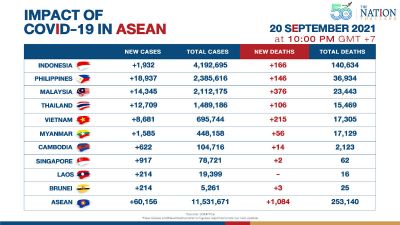
The number of Covid-19 cases crossed 11.53 million across Southeast Asia, with 60,156 new cases reported on Monday, lower than Sunday’s 63,862. The number of deaths was lower at 1,084 from Sunday’s 1,094. The death toll in Asean is now 253,104.
Vietnam will ease up disease control measures in Hanoi from Wednesday onwards after new infections in the city decreased to 20 people per day on average and more than 94 per cent of adult population have been vaccinated with the first jab. The city will continue to maintain social distancing measures while most of the construction sites have been allowed to open as usual.
Vietnam reported 8,681 new cases and 215 deaths on Monday, with a cumulative 695,744 patients and 17,305 deaths.
Meanwhile, the Philippines will reopen up to 120 schools for limited in-person classes for the first time since the start of the coronavirus pandemic in a pilot approved by President Rodrigo Duterte. Up to 100 public schools in areas considered “minimal risk” for virus transmission will be allowed to take part in the two-month trial, while 20 private schools can also participate. Classrooms will be open to children in kindergarten to Grade 3, and senior high school, but limited to not exceeding 20 students per class in a half-day session. It has yet to announce when the programme will start.

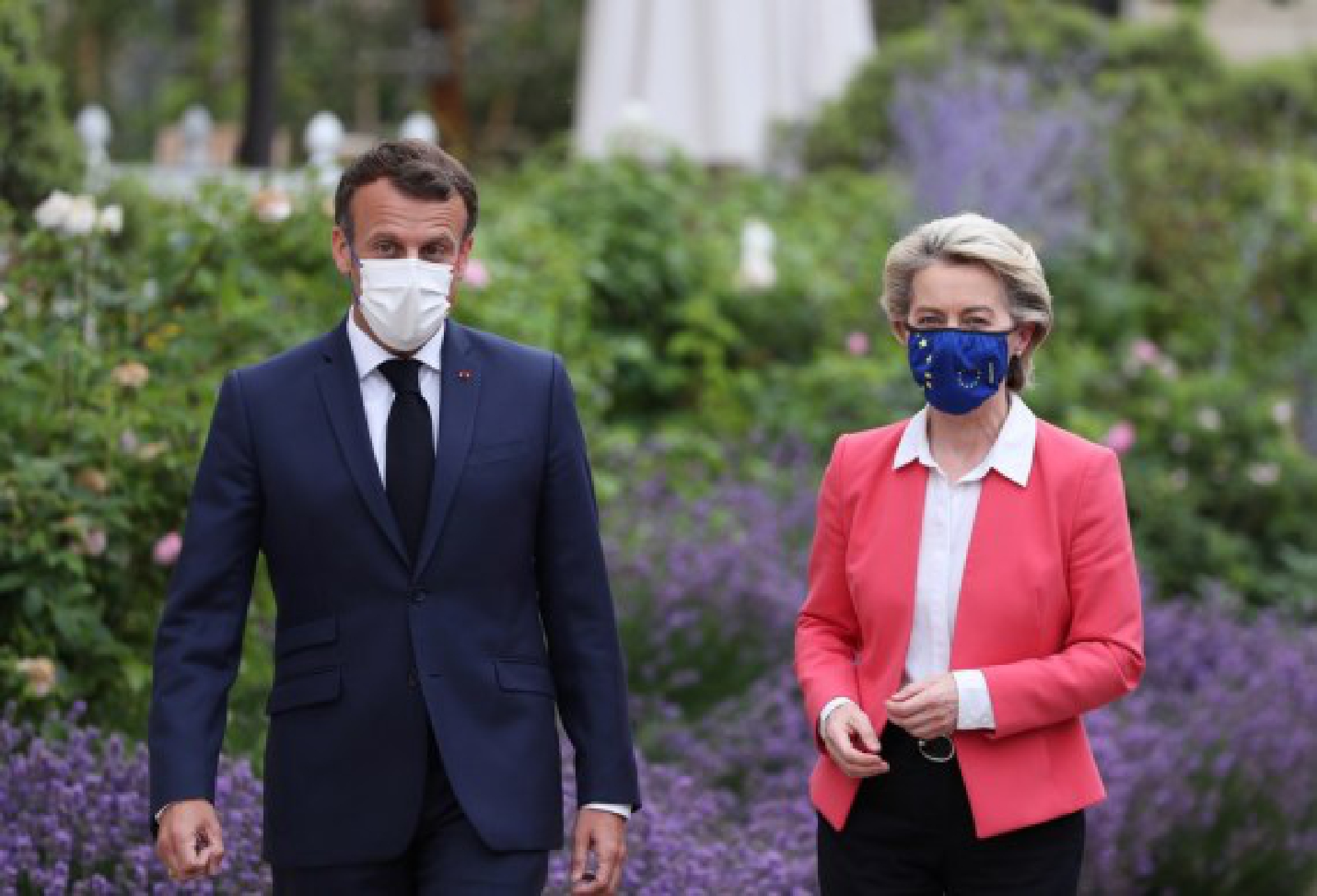 French President Emmanuel Macron (L) welcomes European Commission President Ursula von der Leyen at the Elysee Palace in Paris June 23, 2021. (Xinhua/Gao Jing)
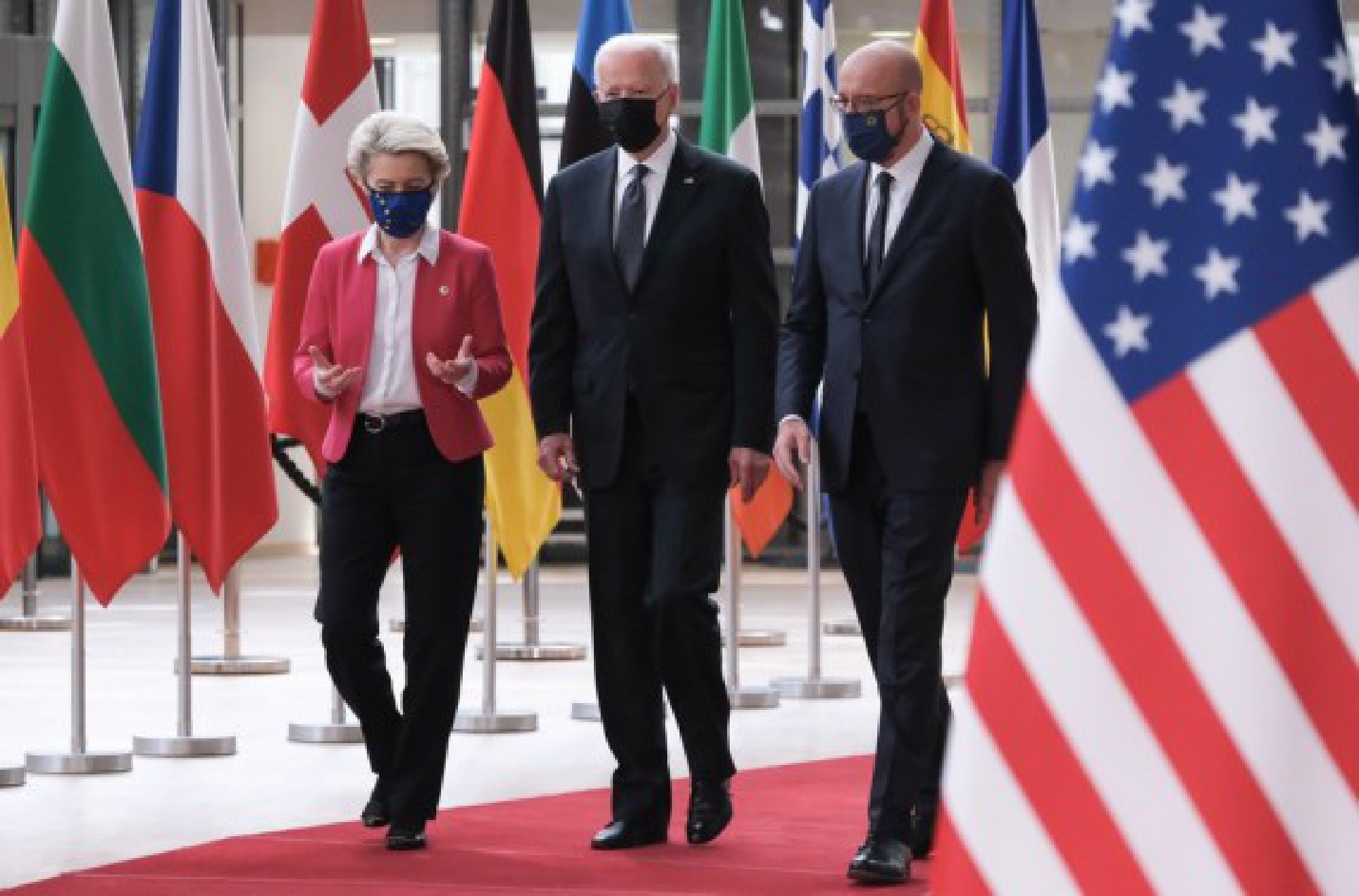 European Council President Charles Michel (R) and European Commission President Ursula von der Leyen (L) welcome U.S. President Joe Biden (C) at the EU headquarters in Brussels, Belgium, on June 15, 2021. (European Union/Handout via Xinhua)
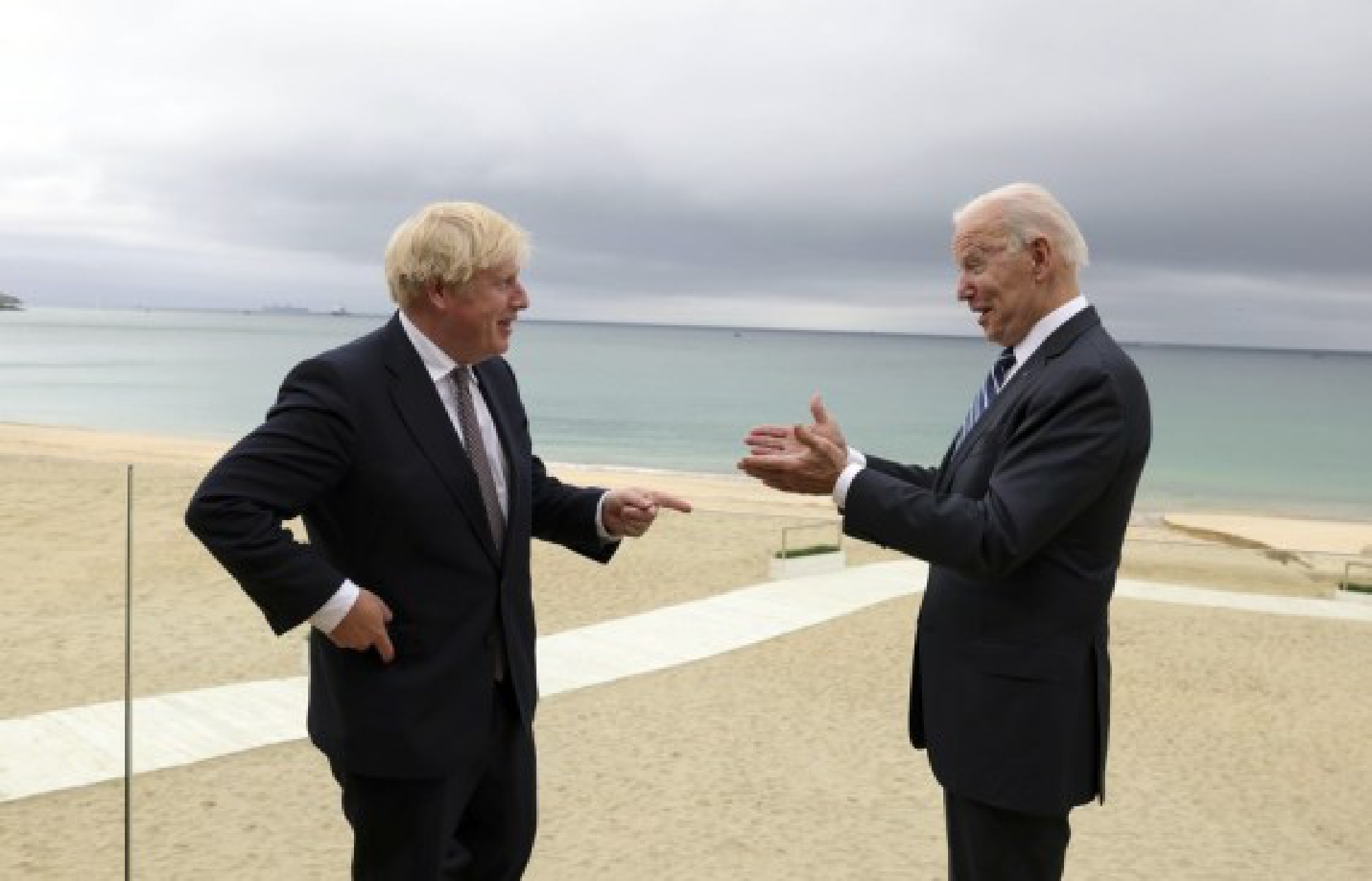 British Prime Minister Boris Johnson (L) talks with U.S. President Joe Biden after their meeting in Carbis Bay, Cornwall, Britain, on June 10, 2021. (Andrew Parsons/No 10 Downing Street/Handout via Xinhua)
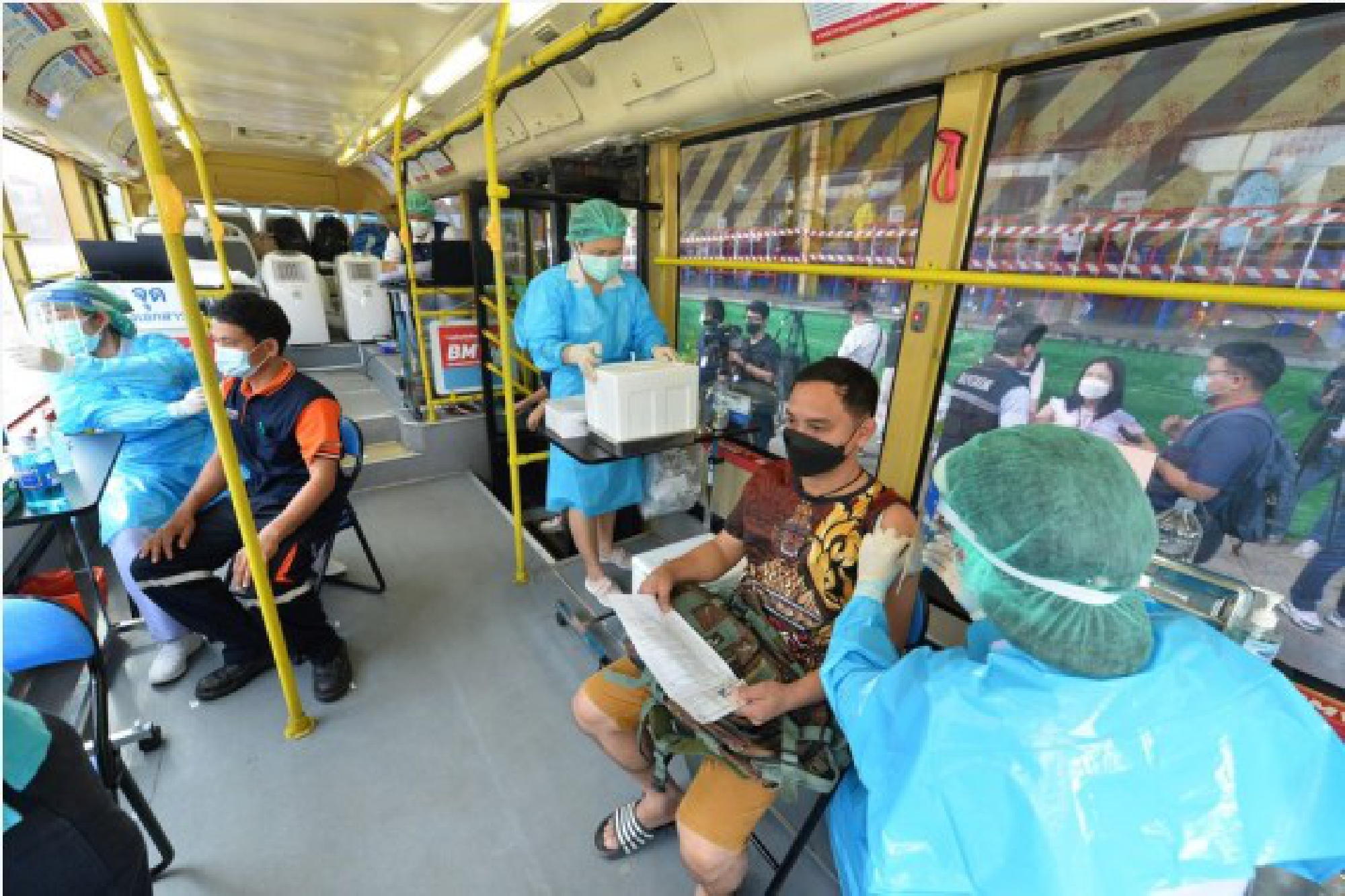 People receive the COVID-19 vaccine in a mobile vaccination unit in Bangkok, Thailand, on Sept. 17, 2021. (Xinhua/Rachen Sageamsak)
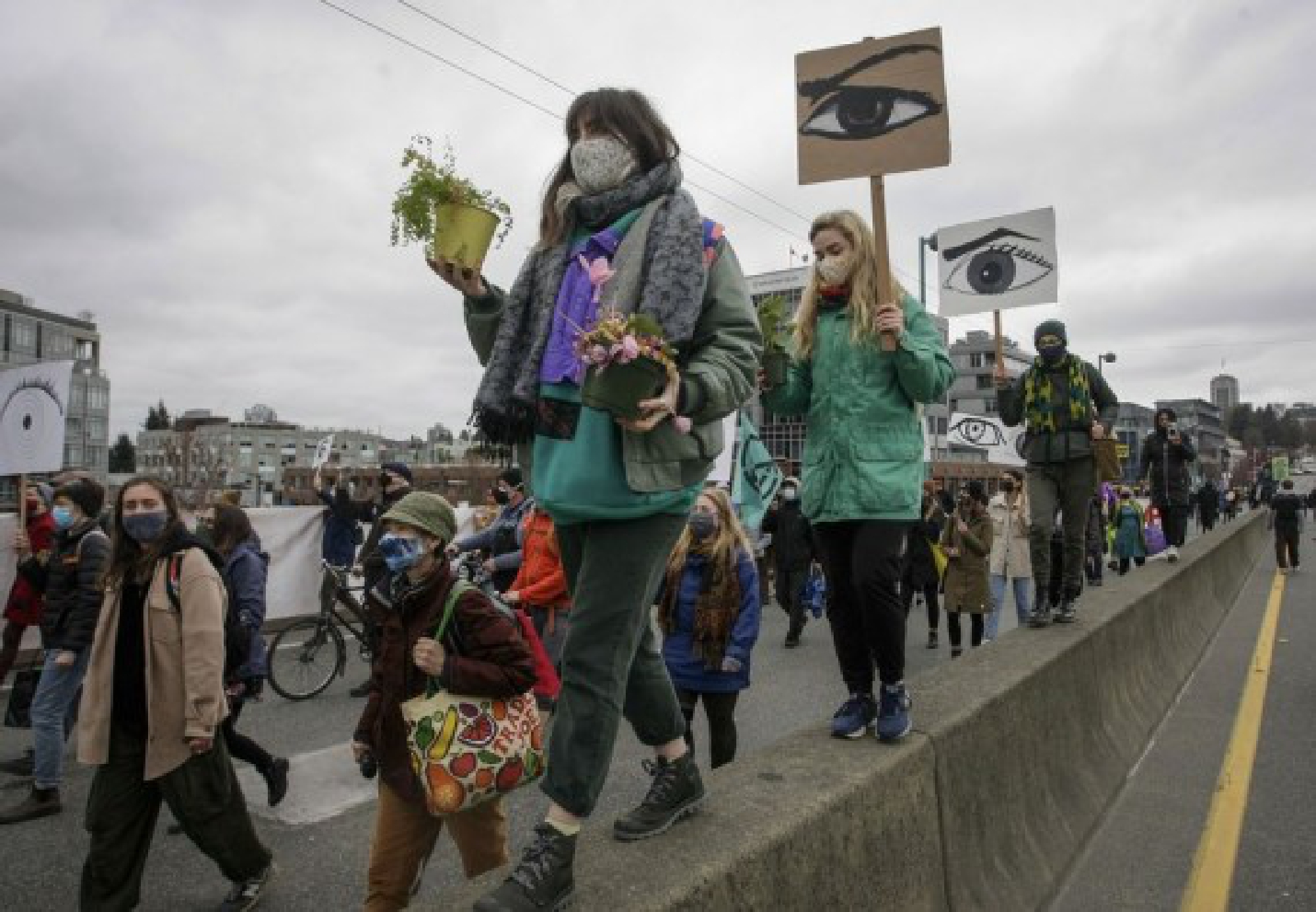 People march during a climate change protest in Vancouver, British Columbia, Canada, on March 27, 2021. (Photo by Liang Sen/Xinhua)
 U.S. President Joe Biden (at the podium and on the screens) speaks during the General Debate of the 76th session of the United Nations General Assembly at the UN headquarters in New York, on Sept. 21, 2021. (Xinhua/Wang Ying)