After 16 years, Germany Merkel is stepping down. Heres how her legacy was built. #SootinClaimon.Com

#SootinClaimon.Com : ขอบคุณแหล่งข้อมูล : หนังสือพิมพ์ The Nation.

https://www.nationthailand.com/international/40006089

After 16 years, Germany Merkel is stepping down. Heres how her legacy was built.


After a decade and a half in power, German Chancellor Angela Merkels era is coming to an end. The first German premier to leave power of her own volition, she has chosen not to run in elections later this month that will usher in her successor.
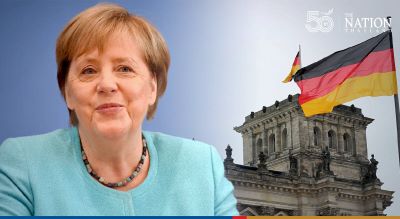
If negotiations to form a government drag on after the Sept. 26 elections, she could overtake Helmut Kohl as modern Germany’s longest-serving leader. She is the doyenne of European politics – a generation of young Germans remembers no one else at the helm.

Her admirers have described her as everything from the leader of the free world to a contemporary Joan of Arc – grand portrayals she has always spurned. Yet she has been repeatedly named among the world’s most powerful women. President Barack Obama, among her most enduring advocates, described her as an outstanding global political leader.

But she leaves a complicated legacy. Some applaud her humble, consensus-driven political style. Others see a lack of bold leadership, particularly in the face of a more aggressive Russia and rising Chinese power.

In 2015, she opened the door to more than 1 million refugees, mostly from war-battered Syria. But Merkel’s watch has also seen a surge in nationalist sentiment that has propelled the far right into parliament.

While dubbed the “climate chancellor” for her environmental promises, she leaves office with Germany as the world’s biggest producer of air-choking brown coal.

Historians will debate her impact for years to come. What is certain: Her departure will leave a vacuum after a career that has spanned more than three decades, beginning amid the dying gasps of the Cold War.

– – –

Growing up behind the Iron Curtain, it was the fall of the Berlin Wall in 1989 that opened up the world of politics to Merkel, the daughter of a pastor in communist East Germany.

ADVERTISEMENT

In a speech at Harvard University in 2019, she described how she’d walk past the wall every day on the way home from work at her scientific institute.

“The Berlin Wall limited my opportunities,” she said. “It quite literally stood in my way.”

She was 35 years old when the most enduring symbol of the Cold War dramatically crumbled. “Where there was once only a dark wall, a door suddenly opened,” she said in the speech. “For me, too, the moment had come to walk through that door. At that point, I left my work as a scientist behind me and entered politics. That was an exciting and magical time.”

That history has, in many ways, shaped Merkel’s politics as she has tried to position Germany, and Europe, as a bridge between East and West.

After entering politics, her rise was rapid. She joined the traditional, conservative and male-dominated Christian Democrats and was elected to Germany’s parliament, the Bundestag, in 1990. A protegee of Kohl, then Germany’s chancellor, she was appointed minister for women and youth the following year, when she also became deputy chairman of the party. In the early days of her career, she was nicknamed “Kohl’s girl.”

But in a move that stunned German politics, she turned on Kohl in a newspaper opinion piece in December 1999, calling on her former mentor to resign. Now party leader, she argued that his credibility, and the party’s, had been damaged in a donations scandal.

“The party thus has to learn to walk,” she wrote. “[It] has to trust itself to take on the fight with the political opponent in the future even without its old warhorse, as Helmut Kohl often liked to call himself.”

“I brought my killer,” Kohl later reflected on Merkel’s decision to turn against him. “I put the snake on my arm.”

It was a razor-tight electoral win that brought Merkel power in 2005. Few expected sweeping change. The same critics did expect her to last long.

“Many will say, ‘This coalition is taking many small steps and not just one big one,’ ” she said in her first speech as chancellor. “I will answer them: ‘Yes, that’s exactly how we do it.’

She came to power in a period of relative stability, but Europe would soon be buffeted by successive crises.

– Euro-zone storm. As the euro zone’s debt crisis began to unfold in late 2009, she helped lead efforts to save the continent’s shared currency. “If the euro fails, Europe fails,” Merkel argued.

Clinging tightly to Europe’s purse strings, Merkel became the face of northern Europe’s frugality. She became a figure of hate in countries such as Greece, as they were forced into crippling austerity. Greek newspapers compared her to Hitler, and her visits were marked with protests for years.

Ultimately, she helped steer Germany and Europe’s euro zone through an existential threat. She recently said she sees it as one of her biggest achievements as chancellor.

– Migrant surge. Perhaps the most-defining moment of her political career came in 2015 as the number of refugees arriving in Europe began to surge. Many were fleeing from the civil war in Syria and taking perilous journeys by sea to Europe.

Merkel’s opened Germany’s doors. In a typically understated comment made after a visit to an asylum center in August that year, she assured the German public. “Wir schaffen das,” she said, meaning “We can do it.”

“She’s on the right side of history on this,” Obama said at the time.

But Merkel’s refugee-friendly stance divided Europe and was jumped on by Germany’s far right, which gained ground as her popularity took a hit.

– The pandemic. When the world was hit by its next epochal crisis, Merkel had learned the importance of clear and frank communication. As some world leaders appeared to dither, she stood out for her science-led approach.

The pandemic laid bare some of the country’s deficiencies, including a lack of flexibility that hampered a vaccine rollout. But the majority of Germans supported her leadership during the pandemic.

– East and West. Merkel’s 16 years in power have seen a shift in the global world order. Washington has pressured Germany to take a firmer stance toward Russia and China. But as a child of the Cold War, she has stressed the importance of avoiding another one.

She has tried to separate Chinese human rights abuses and Russian expansionism from issues of trade and economy, sometimes also finding herself out of step with her European neighbors.

Her relationship with Russian President Vladimir Putin has, at times, been strained and antagonistic. But she has said it is important to keep lines of dialogue open. Despite her fear of dogs, Putin once brought his Labrador into a bilateral in what she says was an effort to intimidate her.

In a career that has spanned four U.S. presidencies, she has remained staunchly committed to the transatlantic alliance, even as relations became particularly strained under President Donald Trump. In one telling moment in 2018, Merkel’s official Instagram account posted a photo showing her bearing down over a table with Trump on the other side with his arms folded.

– – –

Now aged 67, Merkel has said she isn’t seeking a new political role. “Do I want to write, speak, hike? Do I want to be at home? Do I want to travel the world?” she said this month.

Merkel has regularly dismissed questions on her legacy, saying historical analysis is not for her and she’d rather get on with the job.

But in a town hall in the coastal town of Stralsund in 2019, she was asked what she’d like children to read about her in history books in 50 years time.

“She tried,” she said.

Published : September 14, 2021

First batch of wintering birds arrive in Chinas Poyang Lake #SootinClaimon.Com

#SootinClaimon.Com : ขอบคุณแหล่งข้อมูล : หนังสือพิมพ์ The Nation.

https://www.nationthailand.com/international/40006059

First batch of wintering birds arrive in Chinas Poyang Lake


Four white spoonbills arrived in Maying Lake in Duchang County, east Chinas Jiangxi Province, on Sept. 11, becoming the first batch of wintering birds to arrive in the Poyang Lake area this year.

According to the Duchang station of the Poyang Lake National Nature Reserve Administration Bureau, the birds landed a day earlier than last year.
 

It’s the ninth consecutive year the migratory birds have come to Maying Lake for their first stop during the winter months since 2013.

ADVERTISEMENT

With a surface area of over 3,200 square km, Poyang Lake hosts up to 700,000 wintering birds every year.

Published : September 13, 2021

RCEP to boost China-ASEAN ties, economic recovery #SootinClaimon.Com

#SootinClaimon.Com : ขอบคุณแหล่งข้อมูล : หนังสือพิมพ์ The Nation.

https://www.nationthailand.com/international/40006058

RCEP to boost China-ASEAN ties, economic recovery


The worlds largest free-trade deal, the Regional Comprehensive Economic Partnership (RCEP), will further boost China-ASEAN cooperation and facilitate the regions economic recovery from the COVID-19 pandemic, officials and business leaders said at a high-level forum of the ongoing 18th China-ASEAN Expo.

The RCEP, signed by 15 Asia-Pacific countries, including China and ASEAN’s ten member states in November last year, will “open a new chapter for China-ASEAN economic and trade ties,” said Ren Hongbin, China’s vice minister of commerce. The forum took place on Friday in Nanning, the capital of south China’s Guangxi Zhuang Autonomous Region.

Covering roughly 30 percent of the world’s gross domestic product, trade and population, the RCEP has great development potential and will inject strong impetus into the anti-pandemic battle and economic revival in East Asia and across the globe, Ren said.

ADVERTISEMENT

Noting that China expects the RCEP to add new vitality to East Asia economic integration, he said the agreement “integrates and optimizes the region’s economic and trade rules in a wide range of fields, including goods, services, investment, intellectual property rights, e-commerce and competition policy, which will further promote the integrated development of industrial chain, supply chain and value chain in the region.”

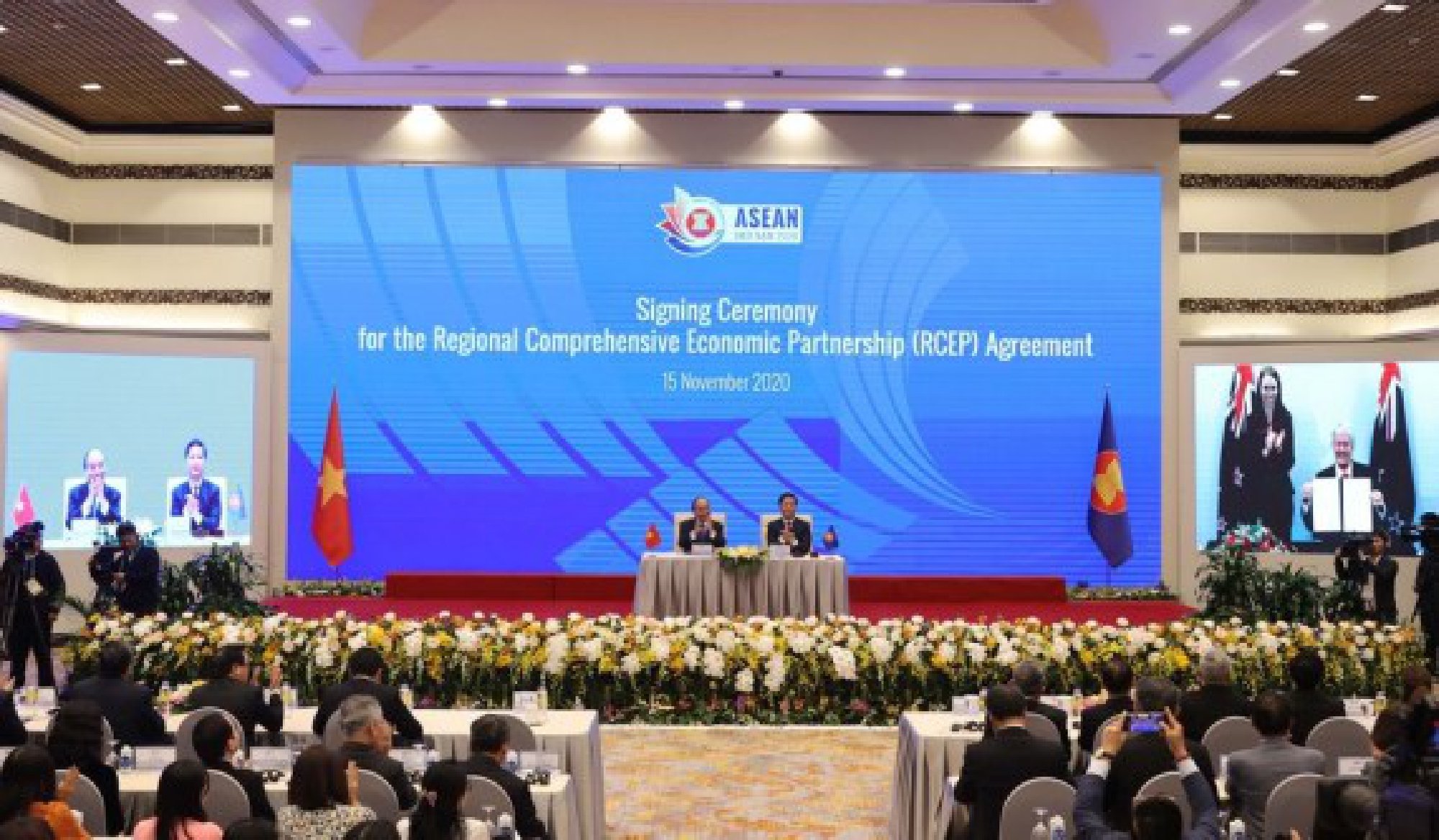
The signing ceremony of the Regional Comprehensive Economic Partnership (RCEP) agreement is held via video conference in Hanoi, capital of Vietnam, Nov. 15, 2020. The signing ceremony of the Regional Comprehensive Economic Partnership (RCEP) agreement is held via video conference in Hanoi, capital of Vietnam, Nov. 15, 2020.
Dato Lim Jock Hoi, secretary-general of ASEAN, said via video that the RCEP could play a significant part in post-pandemic economic recovery in the region by linking the regional value chains more closely. In turn, this will improve the transparency of trade and investment regulations and enhance cooperation across the RCEP participating countries.

The RCEP has the potential to boost business confidence, benefit consumers and promote regional economic integration and equitable economic development for all participating countries, said Thanongsinh Kanlagna, executive vice president of the Lao National Chamber of Commerce and Industry, via a video message.

At the forum, officials, business leaders, scholars and entrepreneurs from China and ASEAN also called on the RCEP participating countries to work together for the agreement’s early entry into force and implementation.

“To reap the rewards of the RCEP, we need to ensure the timely entry into force of the RCEP agreement,” Dato Lim stated, noting that full, effective and efficient implementation of the RCEP is imperative for realizing its benefits.

He also commended China for setting an example as one of the first signatories that ratified the agreement.

Ratifications of six ASEAN member states and three non-ASEAN member countries are needed to reach the threshold of the RCEP’s entry into force. Countries that have completed the ratification procedures include China, Singapore, Japan and Cambodia.

“Attaching great importance to the RCEP, the Chinese government has ratified the agreement and made full preparations for fulfilling its obligations under the agreement,” Ren said.

He added that China will work with the RCEP participating countries to expedite their ratification processes for early entry into force and implementation of the agreement.

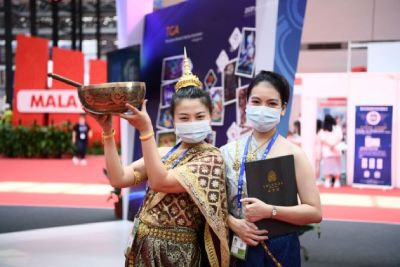
Photo taken on Sept. 11, 2021 shows exhibitors from Thailand at the 18th China-ASEAN Expo in Nanning, capital of south ChinaPhoto taken on Sept. 11, 2021 shows exhibitors from Thailand at the 18th China-ASEAN Expo in Nanning, capital of south China

Published : September 13, 2021

Afghan women can attend schools but in gender-separated classes: Taliban official #SootinClaimon.Com

#SootinClaimon.Com : ขอบคุณแหล่งข้อมูล : หนังสือพิมพ์ The Nation.

https://www.nationthailand.com/international/40006057

Afghan women can attend schools but in gender-separated classes: Taliban official


Afghan female students are allowed to go to school in gender-separated classes, and wearing an Islamic dress is also necessary, said the Talibans acting education minister.

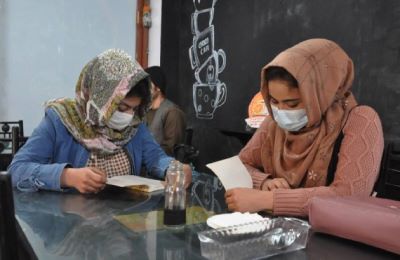
Afghan female students can attend higher education institutions and universities but in gender-separated classes, Abdul Baqi Haqqani, acting minister of higher education of the new Taliban government, said on Sunday.

“All government-run universities will reopen soon. Higher education authorities are working on regulations as students will return to their classes,” Haqqani told reporters.

ADVERTISEMENT

The minister noted that “boys and girls would not study together … They will be separated,” as co-education scheme has been against Islamic principle and national values.

Related Stories

The minister noted that the “Islamic dress was also necessary for the female students while attending classes.”

The report came as an Afghan female student secured a top position at a national university entrance exam this year.

Being affected by the COVID-19 lockdown earlier this year, the Afghan universities were closed after the Taliban takeover of the country in mid-August. However, a number of private universities reopened earlier this week after the Taliban announced a caretaker government in Afghanistan

Published : September 13, 2021

Argentine president stresses importance of voting in primary elections #SootinClaimon.Com

#SootinClaimon.Com : ขอบคุณแหล่งข้อมูล : หนังสือพิมพ์ The Nation.

https://www.nationthailand.com/international/40006055

Argentine president stresses importance of voting in primary elections


“I have fulfilled my duty to vote. It is a beautiful day, because every time we vote in Argentina, we make democracy a little stronger, and for me, that is very important,” said the president after casting his vote in southern Buenos Aires.

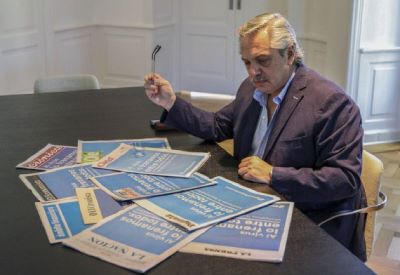
Argentine President Alberto Fernandez on Sunday stressed the importance of voting in the Primary, Open, Simultaneous, and Mandatory elections (PASO), in which citizens choose the candidates that will face off in the legislative elections scheduled for Nov. 14.
 

“I have fulfilled my duty to vote. It is a beautiful day, because every time we vote in Argentina, we make democracy a little stronger, and for me, that is very important,” said the president after casting his vote in southern Buenos Aires.

ADVERTISEMENT

A total of 101,457 ballot boxes are open to voters in 17,092 electoral establishments, which have reported long lines and delays due to COVID-19 protocols.

Related Stories

The winners of the primaries will be able to compete in the legislative elections, in which 127 of the 257 seats in the Chamber of Deputies and 24 of the 72 seats in the Senate are up for grabs.

The National Electoral Chamber reported that as of 2:00 p.m. local time, 36 percent of the electorate had voted.

The primary elections were implemented in 2011 with the aim of allowing each party to define who appears on their candidate lists during the national legislative elections.

Published : September 13, 2021

Singapore braces for quadrupling of Covid cases, as Asean sees improvement #SootinClaimon.Com

#SootinClaimon.Com : ขอบคุณแหล่งข้อมูล : หนังสือพิมพ์ The Nation.

https://www.nationthailand.com/international/40006048

Singapore braces for quadrupling of Covid cases, as Asean sees improvement


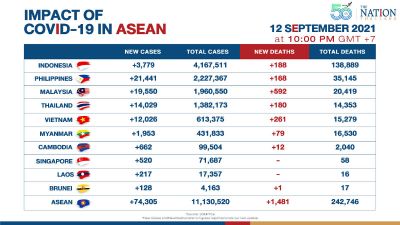
Southeast Asia saw a decline in new Covid-19 cases on Sunday, the lowest in four days, but deaths were higher, collated data showed.

Asean reported 74,305 new cases, lower than Saturday’s 83,523, while the death toll was higher at 1,481 from Saturday’s 1,323.

Total Covid-19 cases in the region crossed 11.1 million, with 242,746 deaths.

Indonesia, which a few months ago had the most number of new cases on a daily basis, was fifth in Asean behind Philippines, Malaysia, Thailand and Vietnam with 3,779 patients on Sunday. Cumulative cases in the country rose to 4,167,511 patients and the death toll to 138,889.

Indonesia on Sunday received 500,000 doses of Johnson & Johnson Covid-19 vaccine from the Netherlands, which is a part of the 3 million doses that the Dutch government promised to provide to the country. Earlier, the Netherlands had delivered 657,000 doses of AstraZeneca vaccine to Indonesia, which is planning to provide Johnson & Johnson jabs to those over 18 years of age.

Meanwhile Singapore reported 520 new cases on Sunday, bringing cumulative cases in the country to 71,687 with 58 deaths. The Ministry of Public Health revealed that domestic infections had doubled since the government eased up disease control measures despite 50 per cent of the country’s population receiving two doses of vaccination. It estimated that in the next few weeks new infections could reach 2,000 a day, and suggested widening its active case finding campaign to prevent large cluster cases as well as giving a booster shot to those over 60 years old.

Published : September 13, 2021

FBI releases 9/11 investigation document that scrutinized Saudis #SootinClaimon.Com

#SootinClaimon.Com : ขอบคุณแหล่งข้อมูล : หนังสือพิมพ์ The Nation.

https://www.nationthailand.com/international/40006045

FBI releases 9/11 investigation document that scrutinized Saudis


WASHINGTON – The FBI has released the first of what are expected to be several documents from its investigation into whether agents of the Saudi Arabian government provided support to the Sept. 11, 2001 terror plot, a move heralded by victims families though it yielded no tangible proof of official involvement.

The Saturday night release was the result of an executive order issued by President Joe Biden earlier this month ordering government agencies to review, declassify and release more information regarding the investigation.

Some families of 9/11 victims have sued the Saudi government, alleging the Saudis knowingly provided financial and logistics support to the terrorism plot, something that country’s government has long denied. As part of that lawsuit, lawyers for the families have fought for years to force the FBI to share what it knows about possible connections between the 9/11 hijackers, most of whom were citizens of Saudi Arabia, and any Saudi diplomats or intelligence operatives.

Brett Eagleson, whose father was killed in the attacks, said it was “particularly meaningful” that first document in response to the executive order was released on the 20th anniversary of the attacks. “Today marks the moment when the Saudis cannot rely on the U.S. government from hiding the truth about 9/11,” he said in a written statement pledging to “hold the Saudi government fully accountable for the tremendous pain and losses we suffered.”

Biden signed the executive order after families of hundreds of 9/11 victims said he would not be welcome at this year’s events marking the anniversary unless he declassified evidence.

ADVERTISEMENT

In 2019, the Trump administration said it would share some of the relevant information with the families but not other details about the bureau’s findings, invoking the rarely used state secrets privilege to argue that some elements of the investigation into the 9/11 attacks would damage national security if revealed.

Justice Department lawyers said last month they had recently closed an investigation related to the attacks, making it easier to share documents like the one released Saturday.

That document shows that FBI agents were still investigating as recently as 2016 possible ties between two of the hijackers, Nawaf al-Hazmi and Khalid al-Midhar, and those who may have helped them after they arrived in the United States in 2000.

Investigators were particularly interested in details about the Saudi government’s connections to Fahad al-Thumairy, a former Saudi consulate official, and Omar al-Bayoumi, a person the FBI once investigated as a possible Saudi intelligence officer.

After the 9/11 attacks, Bayoumi told investigators that he met the hijackers by chance in early 2000 in a Los Angeles restaurant and that they became friends. Bayoumi said he helped them navigate their new lives in the United States, but denied any knowledge of their terrorist intentions.

The newly released FBI document says some of Bayoumi’s statements in that 2003 interview “are directly contradicted by eyewitness statements.”

The 9/11 families suspect those interactions were not accidental, but directed by a senior Saudi government official.

The FBI document released Saturday contains significant redactions, but nevertheless shows FBI officials were skeptical of claims by various witnesses that Saudis in the U.S. who met with the two hijackers did so accidentally through chance encounters.

It was “difficult to reconcile” the connection between the hijackers and those who gave them support, the FBI document states, noting that one individual claimed he met the hijackers at a 7-Eleven convenience store in Northern Virginia “during a ‘chance meeting’, in a uniquely similar fashion to the way Bayoumi described his ‘chance meeting’ with Hazmi and Midhar in Los Angeles.”

The report also said Bayoumi’s “logistical support to Hazmi and Midhar included translation, travel assistance, lodging and financing.”

In 2004, the 9/11 Commission said: “Saudi Arabia has long been considered the primary source of al Qaeda funding, but we have found no evidence that the Saudi government as an institution or senior Saudi officials individually funded the organization,” but added, “This conclusion does not exclude the likelihood that charities with significant Saudi government sponsorship diverted funds to al Qaeda.”

Published : September 13, 2021

Taliban minister says women can attend university, but not alongside men #SootinClaimon.Com

#SootinClaimon.Com : ขอบคุณแหล่งข้อมูล : หนังสือพิมพ์ The Nation.

https://www.nationthailand.com/international/40006043

Taliban minister says women can attend university, but not alongside men


Women in Afghanistan will be allowed to study in universities and postgraduate programs but only in gender-segregated classrooms and in Islamic dress, a senior Taliban official announced Sunday as the militant group began to articulate its vision for the country after forming an all-male cabinet and raising its flag over the presidential palace.

The Taliban intend to “start building on what existed today,” the acting minister of higher education, Abdul Baqi Haqqani, told reporters in Kabul.

He said women would not be kept out of schools as they were from 1996 to 2001, when the Taliban last ruled the country under a fundamentalist Islamist code. But he said Taliban officials would conduct a curriculum review, and suggested the group would not abandon its hard line. “We will not allow female and male students to study in one classroom,” Haqqani said. “Coeducation is in opposition to sharia law.”

Farzana Sarwari, 21, who is studying at both a private university and Kabul University, likened that segregation to a pandemic. “It will spread to other parts of the society as well,” she said.

Questions of how the Taliban will handle culture, education and civic freedoms have loomed over Afghanistan since the group defeated government forces and returned to power last month. The fate of women, perhaps more than anything else, has been a central concern in the early weeks of Taliban rule.

Women in the past week have led protests in several major cities to demand they be allowed to keep their government jobs, only to have their demonstrations broken up forcibly by Taliban fighters patrolling the streets. Journalists covering an unapproved women’s march in Kabul were detained and whipped.

ADVERTISEMENT

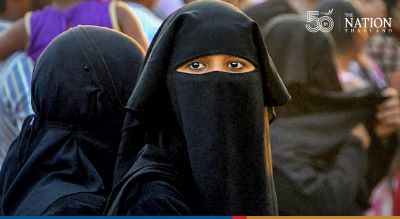
Meanwhile, pro-Taliban women have held a countermarch, and a group wearing niqabs – a conservative face veil showing only their eyes – sat in a Kabul University lecture hall on Saturday to hear speakers inveigh against the liberal women who protested earlier in the week.

The Taliban dismissed women from government ministries shortly after seizing Kabul on Aug. 15, saying the work was not appropriate for female employees. And as classes resumed in the past week for the first time since the Taliban takeover, some universities already began imposing gender segregation, or classrooms divided by curtains.

On Tuesday, the Taliban unveiled an all-male caretaker cabinet drawn entirely from its own ranks. That brought criticism from foreign governments, which have said they will monitor how the Taliban rolls out its social policies to determine whether to extend diplomatic recognition to the caretaker government.

The Taliban raised its white flag over the presidential palace on Saturday, the 20th anniversary of the attacks of Sept. 11, 2001, to signify it was beginning the business of governing.

Much of the international community has yet to recognize the new government. Qatar’s foreign minister on Sunday became the most senior foreign official to visit Afghanistan since the Taliban’s takeover. In a brief trip, Foreign Minister Muhammad bin Abdul Rahman Al Thani met with senior leaders of the group, according to Taliban spokesman Bilal Karimi.

“This visit is very important for us,” Karimi said. “We hope the rest of the world follows suit.”

Al Thani also met with former Afghan President Hamid Karzai and former chief of reconciliation Abdullah Abdullah, leaders from previous governments who have remained in Kabul, the two said in a statement. Qatar has been a longtime mediator between the West and the Taliban.

In the new government’s first news conference on Sunday, Haqqani took pains to emphasize gender segregation in the classroom.

In most circumstances, he said, women should be taught only by female teachers, but in the event of a shortage of lecturers, male instructors could teach women from behind a curtain, or via video call. “We will provide classrooms with a video screen,” he said.

Mohammad Nasir Habibi, a lecturer of psychology at Kabul University, said it was unrealistic that the university would be able to provide women with adequate educations under the new Taliban rules. Almost 90 percent of the lecturers at his university are men, he said, and it would be difficult to find lecturers who would be allowed to teach women.

The entire environment at the university has become “terrorized,” Habibi said. “Already, many of my students and colleagues say that they do not want come to the university.”

When private universities reopened last week, Sarwari said, she returned to find a classroom with a divider to separate men from women. She said only seven of the class’s 42 students – four women and three men – showed up.

Sarwari said she, too, will stay away.

“I don’t feel safe go to university,” she said. “There is no hope for our educational journey anymore. The Taliban has thrown us back to 20 years ago. . . .

“If we want to build a sustainable country, we need to grow together, both girls and boys.”

The new university rules could have stark consequences for women beyond the campus.

Amanullah Sarwari, a second-year computer science student at Kabul University, said his generation grew up alongside female students, which led them to view women at the workplace and outside the home more as equals.

“When you graduate from university with female students, interaction with them becomes normal,” said Sarwari, who is unrelated to Farzana Sarwari. “Without having female classmates, it will feel weird and strange to see them in the street.”

Published : September 13, 2021

England abandons vaccine passport plans #SootinClaimon.Com

#SootinClaimon.Com : ขอบคุณแหล่งข้อมูล : หนังสือพิมพ์ The Nation.

https://www.nationthailand.com/international/40006042

England abandons vaccine passport plans


As more countries turn to coronavirus vaccination requirements in a bid to bring the pandemic to heel, England is moving in a different direction.

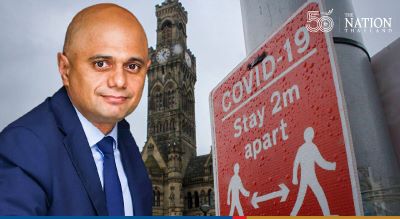
“I’m pleased to say that we will not be going ahead with plans for vaccine passports,” U.K. Health Secretary Sajid Javid told the BBC’s Andrew Marr on Sunday.

“There’s a lot of defenses . . . that we need to keep in place because this virus hasn’t gone anywhere, there’s still a pandemic, so of course, we need to remain cautious,” he said. “But we just shouldn’t be doing things for the sake of it or because others are doing it.”

The announcement marked a reversal of the government’s plan to require proof of full vaccination to enter nightclubs and other crowded venues in England. Intended to incentivize vaccine uptake, especially among young people, the system had been expected to take effect at the end of the month.

About 65 percent of the population in England is fully immunized. But vaccination rates among young people have lagged behind those of older demographics. Coronavirus cases have dropped since July, though England is still reporting more than 20,000 new cases per day.

“Some of life’s most important pleasures and opportunities are likely to be increasingly dependent on vaccination,” Prime Minister Boris Johnson said in remarks directed to young people in July.

Officials had previously suggested, however, that the plan would never become reality, and that the government was using the threat of vaccine passports to convince people to get the shots. In late July, Foreign Secretary Dominic Raab pointed to the surge in vaccination appointments in France following its government’s announcement that proof of vaccination, a negative coronavirus test or natural immunity would be required to access restaurants, cafes and other places beginning in August.

ADVERTISEMENT

A month after the system took effect in France, coronavirus infections have dropped. One public health consultant told Politico that the measures “saved tens of thousands of lives.”

Italy also instituted a “green pass” system in July, requiring people to show proof of vaccination, recovery from covid-19 or a recent negative test to access indoor activities – a move that, to the surprise of some, appears to have helped increase internal tourism. New York City and several Canadian provinces are rolling out similar measures.

Some countries, such as Indonesia and Turkmenistan, have instead opted for blanket vaccine mandates. Russia and the United States, meanwhile, have placed the onus on employers to require that workers get vaccinated – though not without criticism.

In England, the vaccine passport plan encountered fierce opposition from across the political spectrum, with lawmakers in Johnson’s Conservative Party calling it a hindrance to businesses and an infringement on civil liberties. The Liberal Democrats also opposed the measure, as did some venues. Labour leaders raised concerns about the plan and called for a testing component to be added.

Javid on Sunday acknowledged the concerns but defended the government’s consideration of the policy. “I’ve never liked the idea of saying you must show your papers or something to do what is just an everyday activity. But we were right to properly look at it, to look at the evidence,” he told Marr.

He added, however, that the government “should keep it in reserve as a potential option” should the coronavirus situation deteriorate. Some venues have been asking people to show proof of vaccination anyway, the BBC reported.

Just days before, government officials had defended the vaccine passport plan as necessary.

The Labour Party’s deputy leader, Angela Rayner, on Sunday criticized the swift reversal and called the government’s approach to vaccine passports “shambolic from the start.”

Johnson’s government has come under fire for policy reversals over the course of the pandemic that have eroded the public’s trust. Javid’s remarks Sunday came ahead of Johnson’s announcement of his winter coronavirus plan for England on Tuesday.

Sunday’s announcement applies only to England. Wales is still considering adopting vaccine passports, and people in Scotland will be required to show proof of full vaccination to get into nightclubs and many large events starting in October. Northern Ireland is not currently considering such measures.

Published : September 13, 2021

With rockets and rhetoric, Hamas seeks to leverage Palestinian prisoner escape #SootinClaimon.Com

#SootinClaimon.Com : ขอบคุณแหล่งข้อมูล : หนังสือพิมพ์ The Nation.

https://www.nationthailand.com/international/40006041

With rockets and rhetoric, Hamas seeks to leverage Palestinian prisoner escape


TEL AVIV – Hamas, aiming to capitalize on the public euphoria after Palestinian prisoners escaped from an Israeli prison last week, said it would demand the release of the men who have been rearrested as it remained committed to fighting.

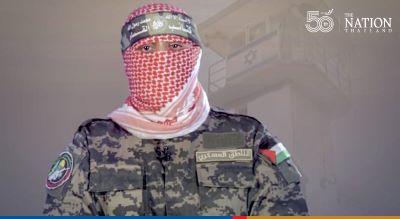
Abu Obeida, the spokesman for the Hamas militant arm, al-Qassam Brigades, spoke during a weekend of rocket fire exchanges with Israel that threatened to shatter a fragile four-month cease-fire between Hamas and Israel.

“An upcoming exchange deal will only take place with the liberation of these heroes,” he said Saturday night. “If the heroes of the Freedom Tunnel have liberated themselves this time from underground, we promise them and our free prisoners that they will be liberated soon, God willing, from above ground.”

The video statement was released after rockets were fired from the Gaza Strip into Israel. Overnight Saturday, Israeli fighter jets and helicopters struck three Hamas targets in Gaza. On Sunday night, at least one rocket was fired from Gaza into southern Israel for a third consecutive night.

The Israeli army said Israel views the “Hamas terrorist organization as responsible for all terror activity emanating from the Gaza Strip.”

“If the situation escalates, Hamas and the Gaza Strip will pay a heavy price,” Israeli army chief of staff Aviv Kochavi said Sunday night.

The cross-border exchange of fire was spurred by developments in the Israeli manhunt for the Palestinian prisoners. The cease-fire halted an 11-day conflict between Israel and Hamas in May that left 13 dead in Israel and more than 250 people dead in the Gaza Strip.

ADVERTISEMENT

On Saturday, Israeli police said they had arrested four of the six Palestinian fugitives: two on Friday near the northern Israeli city of Nazareth and two more on Saturday at a truck stop near the Arab town of Umm el-Ghanem. They said they were tipped in both cases by Arab-Israeli families in the area.

The men were classified as high-profile “security prisoners” for having orchestrated a string of suicide bombings and lethal shootings against Israeli soldiers and civilians during the second intifada, or mass Palestinian uprising, in the early 2000s.

They include Zakaria Zubeidi, a former child theater actor turned militant leader who served as the Jenin chief of the al-Aqsa Martyrs’ Brigade, a militant offshoot of the West Bank’s Fatah party. He escaped with five members of Islamic Jihad, the Islamist militant group based in Gaza, from the Gilboa detention facility in northern Israel, several miles west of his home in the Jenin refugee camp, by digging a tunnel underneath the walls.

Zubeidi was among the four prisoners who were recaptured. The two others remained at large on Sunday.

Israel’s Prison Service called the incident “a major security and intelligence failure.” Palestinians hailed it as “heroic.”

Pictures of the four Palestinian men that were altered to make them appear as if they were smiling broadly at the time of the arrest have circulated widely on social media.

One Palestinian news site, Shehab Agency, tweeted the doctored photos superimposed on an image of al-Aqsa Mosque, a flash point for Israeli-Palestinian tensions, with the hashtag #freedom_tunnel.

In the last week, hundreds of Palestinians demonstrated in the streets in support of the prisoners. They held up spoons, the tool that the men reportedly used to dig out of a hole in the shower area and into a dirt road.

Riots have erupted in Israeli prisons, and Palestinian inmates have set fire to their cells. On Friday, as Hamas called for a “day of rage,” a Palestinian was shot to death by Israeli police in Jerusalem’s Old City after reportedly attempting to stab the Israeli officers.

Israeli security forces remained on high alert and increased their presence near prisons, throughout the West Bank and at the border near Jordan, which initially was believed to be the Palestinian escapees’ preferred destination.

Nafez Azzam, a member of the political bureau of the Islamic Jihad, said the prisoners’ escape “sent a clear message to all those calling for normalization and coexistence with the occupation, that the Palestinian cause is alive in the hearts of peoples.”

“The operation achieved its goals,” he said in a statement. “The heroes crossed barriers and fortresses and struck the enemy’s concept of its own security, and they wrested their freedom to bring the issue of prisoners back to the spotlight.”

Published : September 13, 2021