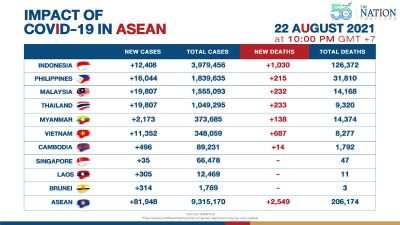
The number of Covid-19 cases in Southeast Asia crossed 9.31 million, with 81,948 new cases reported on Sunday, lower than Saturday’s tally of 91,399.
However, the region saw 2,549 additional deaths, an increase from Saturday’s 2,400, taking total coronavirus deaths in Asean to 206,174.
Vietnam reported 11,352 new cases and 687 deaths, bringing cumulative cases in that country to 348,059 patients and a total 8,277 deaths.
Ho Chi Minh City residents lined up at department stores on Sunday to buy food and necessities before the city could go into strict lockdown.
Residents are under stay-at-home orders from Monday, with the army and police deployed to curb the surge of Covid-19 cases in the city of 13 million people.
Meanwhile, Myanmar’s State Administration Council has further extended the public holiday period to the end of August to curb the spread of Covid-19.
During this period, all basic education schools will be closed. The Central Bank of Myanmar and its subordinate government banks and private banks will be exempted from public holidays.
Biden says safe zone around Kabul airport to expand, as Pentagon enlists commercial airlines to aid evacuations
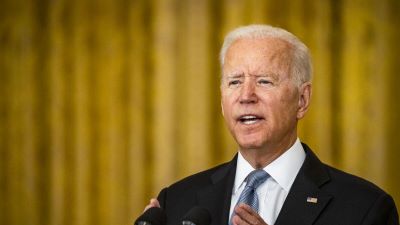
WASHINGTON – President Joe Biden said Sunday that the U.S. military is “executing a plan” to move stranded American citizens to the Kabul airport in greater numbers, including through an expansion of a safe zone around the facility and by creating conduits for people to access the compound “safely and effectively.”
“Our first priority in Kabul,” Biden said in remarks at the White House, “is getting American citizens out of the country as quickly and as safely as possible.”
The president would not say how the plan for “increased rational access to the airport” is being carried out or whether U.S. troops have expanded their perimeter outside the airport and further into Kabul, which could put them at heightened risk of attack from Taliban factions manning security checkpoints and Islamic State operatives who, U.S. officials warn, pose a serious threat.
In recent days, the Qatari ambassador to Afghanistan has escorted small groups of Americans into the airport, according to two people familiar with the effort who, like others, spoke on the condition of anonymity to discuss the sensitive operation. American citizens have been instructed to meet at rally points in the city, and the ambassador then accompanies them to guarantee safe passage, these people said. Qatar has served as an intermediary between the United States and the Taliban at several stages of the American withdrawal, sponsoring peace talks and serving as the first point of refuge for many evacuees.
ADVERTISEMENTx
The operational shift comes as U.S. commanders gear up for what officials hope will be a dramatic acceleration of evacuations from Afghanistan in the coming days, enlisting domestic commercial airliners and a number of foreign allies to aid the effort.
Evacuations had slowed over the past couple days, as backlogs in waystations like Al Udeid Air Base in Qatar prevented planeloads of people from departing Kabul, grounding planned flights out and degrading humanitarian conditions at the already overcrowded airport.
The addition of 18 commercial airplanes – activated, the Pentagon announced Sunday, as part of the Civil Reserve Air Fleet – is intended to address those bottlenecks. The jetliners, contracted from domestic airlines United, American, Atlas, Delta, Omni and Hawaiian, will not be flown into Kabul, but used instead to move those taken to places like Qatar on to other destinations in Europe, the Americas, Africa and the Persian Gulf. Secretary of State Antony Blinken said earlier in the weekend that 13 countries had pledged to temporarily host evacuees, while an additional 12 had agreed to serve as transit points.
Biden said Sunday that the mobilization represented a “first stage,” leaving the possibility that more flights could be added to the effort.
On Saturday, the U.S. military operated 14 evacuation flights that took about 3,900 people out of the country, while 35 other planes evacuated approximately the same number, according to White House and Pentagon officials. That’s up twofold from Friday – but still short of the 5,000 to 9,000 people per day that senior military officials have said they have the capability to evacuate themselves.
ADVERTISEMENT
About 28,000 people have been evacuated since Aug. 14, including 11,000 over the weekend, Biden said. “We see no reason why this tempo will not be kept up,” the president told reporters.
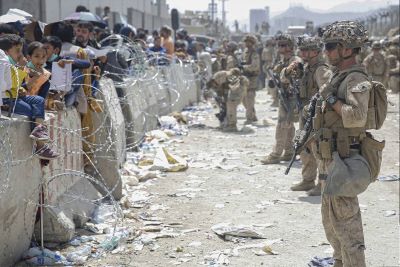
Yet the backlog remains significant – particularly at the Kabul airport, where people have been waiting for days in increasingly squalid conditions to learn when it might be their turn to board a plane to safety. Over 10,000 people had crammed themselves inside the airport perimeter on Sunday, as more clamored to get in.
The crush and chaos outside the airport killed seven Afghan civilians, including a toddler, on Saturday, according to the British military. Although it appears the Taliban has tried to reason
those crowds, some Afghans stayed anyway, according to a senior U.S. official. The gates to the airport remain closed to most people Sunday, the official said, though U.S. citizens and Afghans with approved special immigrant visas are being let through.
Many American citizens and U.S.-approved Afghans, however, are still sheltering in place, awaiting instruction for when it is safe to come to the airport. Over the weekend, the State Department issued a warning to U.S. citizens, telling them not to approach the airport unless expressly notified by a U.S. government official.
ADVERTISEMENT
Last week, the Biden administration estimated there were up to 15,000 Americans remaining in Afghanistan. Officials said Saturday that about 2,500 had left the country.
U.S. officials are in contact with Taliban leaders to try to negotiate assurances of peaceful passage to the airport. But as Blinken noted during a television appearance Sunday, the Taliban “are in control of Kabul. That is the reality.”
The Taliban’s leaders are presently in Kabul, discussing how to form a government. On Sunday, a senior member of the Taliban’s ruling council said that although the militant group would respect an amnesty for Afghan citizens, including those who cooperated with the United States, it would not apply to “troublemakers” or those “who are creating law and order situations.”
The State Department’s warning also was motivated in part by threats that the Islamic State might be targeting Americans.
“The threat is real. It’s acute. It is persistent. And it is something we’re focused on with every tool in our arsenal,” Biden’s national security adviser, Jake Sullivan, said Sunday on CNN. During remarks later in the day, the president added that “we’re under no illusions” about the severity of the threat posed by the Islamic State.
The Islamic State has long been at odds with the Taliban. But the Taliban remains aligned with al-Qaida, the group behind the 9/11 terrorist attacks that prompted the United States to invade Afghanistan 20 years ago. Blinken acknowledged during an interview on Fox News that remnants of al-Qaida remain in Afghanistan, though he insisted that the group’s capacity to launch a similar attack on the U.S. homeland “is vastly, vastly diminished.”
Neither Blinken nor Defense Secretary Lloyd Austin, who appeared Sunday on ABC News, would say whether U.S. forces would be allowed to go beyond the narrow perimeter of the Kabul airport – or whether they thought Biden should extend the Aug. 31 deadline for U.S. forces to leave Afghanistan, to ensure that the maximum number of American citizens and Afghans eligible for U.S. entry are evacuated. The president indicated that such conversations are underway within the administration but that he remains hopeful it won’t be necessary to stay there any longer.
Published : August 23, 2021
By : The Washington Post · Karoun Demirjian, John Hudson, Dan Lamothe, Adela Suliman
At least 21 dead, dozens missing after catastrophic flooding in central Tennessee, officials say
The family of six woke Saturday to floods bursting into their new duplex, relatives said. The water outside was up to their chests. Soon it tore them apart.
Danielle Hall, 25, was swept to a tree, where she clung for hours, waiting to be rescued, family members said. Her partner, Matt Rigney, tried to grab their four kids, but a current pulled them away.
Two of the young children resurfaced unscathed, said their grandparents, who heard the story later. But Hall and Rigney’s 7-month-old twins never came up.
They are among 21 known victims of the historic rain and flash flooding that swept central Tennessee on Saturday, devastating the small city of Waverly, about 60 miles west of Nashville. Rescuers were still searching Sunday for 45 people, as families desperate for answers filled Facebook groups and comment chains with the names of their missing loved ones. Receding waters left behind wrecked homes and flipped cars.
ADVERTISEMENTx
The Tennessee Emergency Management Agency (TEMA) called the torrential rain and flooding “catastrophic.” One observation site recorded 17 inches of rain in 24 hours, blowing past the state’s nearly 14-inch record set in 1982, a meteorologist said. A flash flood watch issued Friday quickly became a “flash flood emergency” Saturday as some people yelled for help from their rooftops while others found themselves trapped in vehicles.
Flash flood emergency alerts are saved for “the most dire circumstances,” said National Weather Service meteorologist Krissy Hurley, who described Waverly as “pretty much underwater” Saturday. “Yesterday was definitely one of them.”
The destruction unfolded as other extreme weather events around the country stoke concerns that the changing climate is making natural disasters more frequent and more intense. The Northeast braced for an unrelated pummeling from Tropical Storm Henri; the West is battling wildfires; and flooding in North Carolina recently left several people dead. Although Hurley could not say whether climate change played a role in the devastation in Tennessee, she said the area has been battered by three fearsome floods in less than a year. The last one, in March, was also deadly.
“This is unusual,” she said, calling the weekend’s rains more reminiscent of a hurricane on the coast than a flash flood in central Tennessee. A thunderstorm kept hitting the same spots, she said, and “when you get that amount of rainfall in a short amount of time, you are going to have devastating consequences.”
Chris Davis, the sheriff in hard-hit Humphreys County, offered a mix of sorrow and resolve on Sunday.
ADVERTISEMENT
“Small town, small community. We know each other, we love each other,” he told local TV station News 4 Nashville in an emotional interview. One of his best friends drowned, he said.
“It’s tough, but we’re going to move forward,” he said. “I slow down and I talk about it, and I get emotional. If I stay – you know, if I stay working and focused, we work through it.”
President Joe Biden said he has spoken with Tennessee Gov. Bill Lee, R, and stands “ready to offer them support.”
Joey Hall, the grandfather of the two 7-month-olds, said his daughter called him worrying about how she would afford to bury her babies. The young couple had lost nearly everything – and even before the floods swept through, they were spread thin, said Hall and his wife, Jeanna Hall, who live about an hour away from Waverly in Ashland City, Tenn.
Joey Hall said his daughter’s family had just moved into their duplex weeks ago, seeking somewhere closer to relatives – and cheaper, as they tried to get by on Rigney’s factory night-shift salary.
ADVERTISEMENT
Danielle Hall got to hold her deceased children briefly in the hospital before they were taken away, the family said. The twins were reportedly found together.
“Every time they’d put them apart in the bed, they would cry,” their grandfather said. “You put them next to each other, they’re holding each other’s hands and arms. Sweetest thing I’ve ever seen.”
Sunday was full of tears as person after person called to offer help. A GoFundMe drive for the family has raised more than $20,000.
“God is good,” said Jeanna Hall, 38. “He sees us hurting, and how broke we are right now.”
By Sunday, the waters had receded, and the torrential rain had given way to showers. But officials were still pleading for caution and announced an 8 p.m. curfew.
“We are asking that residents please stay out of neighborhoods and roadways while the rescue effort is underway,” Waverly Chief of Public Safety Grant Gillespie said in a statement.
On Sunday, TEMA said, more than 10,000 customers in the storm area lacked power. Teams were still working after conducting more than 20 rescues and evacuations on Saturday and searching about 100 homes and 25 businesses, the agency said. Waverly, home to several thousand people, reported that its water treatment facility was down, and residents there and in nearby Bon Aqua were told to boil their drinking water.
Others counties affected include Dickson, Hickman and Houston, according to TEMA. The sheriffs in those counties have yet to report fatalities but had urged people to stay home as they warned of downed trees and roads made impassable by water and debris.
The disaster came on quickly. Communication became difficult as cell service faltered. Staffers stranded in the gym of an elementary school asked for prayers Saturday.
A 20-minute drive from Waverly, in McEwen, Tenn., Tamara Woodward said she and her boyfriend woke up early Saturday to strong rain but “didn’t think much of it” at first. Then her boyfriend tried to get to the farm he runs next door. He couldn’t get through the driveway, Woodward said.
They stayed inside all day as the news grew more dire. Alerts pinged on their phones; they saw a picture of a car floating by and listened to sirens. “We’ve lived here three years, and yeah, we’ve seen the creek rise maybe three times. . . . But nothing like this,” Woodward said.
They were not immune to the damage – their basement flooded and their farm fences toppled – but they feel intensely lucky, Woodward said. As soon as they could, they brought supplies down to donation centers, including bags of clothes, masks and sanitizer, because Woodward worries about another threat: the spread of the coronavirus.
“We’re mostly focused on just helping the people of Waverly,” she said.
When she read about the 7-month-olds, she burst into tears.
Another woman told local news station WKRN that her 2-year-old nephew, Kellen Burrow Vaughn, was also swept away and missing.
The Tennessee National Guard said Saturday night that its soldiers and airmen were helping other emergency responders. A Black Hawk helicopter was assisting with water rescues, officials said, while medics were airlifted to a hospital as support staff and others were setting up emergency cellular, Internet and radio communications.
“Our first priority is to assist with getting responders access to the area and conduct rescue operations,” Maj. Gen. Jeff Holmes, Tennessee’s adjutant general, said in a statement shared by the Guard.
McEwen High School’s gym is acting as a reunification center, officials said, and three churches in Waverly are offering shelter: Waverly Church of Christ, First Baptist Church and Compassion Church.
Waverly Mayor Buddy Frazier told WKRN that the floods were “the most devastating disaster that we’ve ever experienced in this area,” striking with “the quickness of a tornado.”
Frazier said authorities were hoping the number of people unaccounted for would decline as more were found safe.
“Normally, on a Sunday morning like this, people are going to church,” he said. “But this Sunday, our churches are shelters for those who were left homeless.”
One Waverly couple told the Tennessean that they were rescued from their attic by a bulldozer after spending several hours stuck.
“Hell. That’s what we had to go through,” Cindy Dunn, 48, told the newspaper.
“I have no credit cards,” she said as she and her husband planned to stay with family in Clarksville. “I have no bank cards. No IDs. I have nothing.”
Vietnam orders covid tests for millions in Ho Chi Minh City
Vietnams Prime Minister Pham Minh Chinh ordered covid-19 tests for all of Ho Chi Minh City after the government dispatched the military to dispense food in the nations commercial hub amid new drastic measures to contain a worsening outbreak.
Uncertainty swept across the city of almost 10 million through the weekend, triggered by conflicting information from authorities about food shopping restrictions. Local media depicted crowds of residents descending on food markets and standing in lines for hours. The curbs on shopping are set to be in place starting Monday until Sept. 6.
Officials estimate the city needs to provide 11,000 tons of goods to residents daily and the government is capable of doing that, an unnamed official from the city’s trade department was cited as saying by Tuoi Tre. The military will work with volunteers, veterans and some unions to deliver food to households, Vo Minh Luong, deputy minister of national defense, said in a meeting on Friday with city officials. His comments were made available on a government website, which didn’t give details on the scale of the distribution in the city.
ADVERTISEMENTx
The Southeast Asian country is battling its worst coronavirus wave with a record 11,299 domestic new virus cases reported Saturday. Ho Chi Minh City is the nation’s epicenter with more than 171,000 reported domestic patients out of the country’s 332,626 local cases since April 27, the start of latest national outbreak. The city has recorded 80% of the country’s covid-19 deaths.
Authorities are increasingly concerned that months of tough anti-virus measures have yet to contain the spread of covid-19, and aim to further reduce movements by Ho Chi Minh City residents. They have already been restricted from leaving home and can do so for only essential reasons, such as getting food, seeking medical treatment or going to work-sites approved by the government.
The government aims to contain the virus to pockets in Ho Chi Minh City by Sept. 15, according to its website.
Less than 2% of the nation of 98 million people have been fully vaccinated as of Aug. 19, according to a statement posted on the website of the health ministry’s publication Suc Khoe Doi Song.
Stricter movement restrictions are also being ordered in neighboring provinces including Dong Nai and Binh Duong, according to a statement on the government’s website. That region is dotted with industrial parks – home to suppliers of global brands.
Hundreds of police officers from different parts of the country are being sent to Ho Chi Minh City and Binh Duong province to assist with enforcement of the restrictions, according to the government statement. Likewise, thousands of doctors and other medical professionals have been arriving in the southern region to assist with the growing number of patients.
The army will oversee the enforcement of stay-at-home orders that were extended through Sept. 15 in Ho Chi Minh City and assist the city to ensure its food supply for the next 15 days, according to the government posting. Local officials must detail the number of stores in their areas and calculate the needs of households, the notice said.
Published : August 23, 2021
By : Syndication Washington Post, Bloomberg · Nguyen Xuan Quynh
What corporate america can learn from the Navys vaccine campaign
The corporate world may want to take a page out of the U.S. Navys manual when it comes to boosting workforce Covid-19 vaccination rates.
The Navy is the pride of the U.S. military when it comes to inoculation: 76% of active duty members are fully vaccinated, the highest rate of the main four branches, according to data provided by each. And at a rate of 56%, the broader U.S. population has a ways to catch up.
The Navy has taken a more-stick-than-carrot approach with its members, eschewing the free gift cards or cash bonuses that some private employers are offering as incentives and instead making life more difficult for sailors who haven’t gotten their shots. It had been imposing long quarantines away from family and restricting port calls for unvaccinated sailors even before the Defense Department’s Sept. 15 inoculation mandate was announced.
“A lot of sailors join the Navy because they want to see the world,” said Cmdr. Wade Smith of the USS Sioux City. “I told the crew, if you get to 100% vaccinated, you’ll have that option.”
ADVERTISEMENTx
The Navy’s experience could be a useful roadmap for U.S. employers that are facing a delicate balancing act as they seek to ensure a safe return to office while not alienating certain workers by forcing them to get a jab. Some employers have recently imposed vaccine mandates as the delta variant spreads, but others like Amazon can’t enact such rules in the current labor market without the risk of losing employees.
Companies don’t have the same level of control over employees as officers do sailors on a ship, but they can create inconveniences for their workers’ daily lives and limit activities – like in-person trainings and meetings – that could give employees a leg up.
“What can companies learn from this? Incentives work,” said Mark Cancian, senior adviser at the Center for Strategic and International Studies and a retired Marine Corps colonel. “Putting out another pamphlet about how vaccination is safe and you should do it is not going to help.”
Covid outbreaks at big companies like Amazon – which saw 20,000 of its U.S. workers contract the virus over six months last year – have proven public relations disasters. And the Navy hasn’t been immune, either. Nearly 1,300 sailors were infected on the aircraft carrier USS Theodore Roosevelt in March 2020, forcing the crew to evacuate to Guam and sidelining the ship for more than a month.
Officers have clamored to avoid the same fate since the Defense Department began its vaccine rollout in mid-December. If sailors get sick while at sea, operations could be crippled for weeks, an especially costly problem for the Navy, which is the most expensive of the military’s branches to operate.
ADVERTISEMENT
For commanding officers, “not being effective is not an option,” said Katherine Kuzminski, director of the Military, Veterans, and Society Program at the Center for a New American Security.
In March, Smith’s crew on the USS Sioux City in Mayport, Florida, became the first in the Navy to reach 100% vaccination. Ten ships have rates of 95% or more.
“We tried to tell them all the time about the mission of the ship,” he said about convincing crew members to get the shot. “‘We’re about to deploy, and I only have 70 sailors. I need every one of you.'”
Smith said he first called his crew to the flight deck to emphasize the importance of the Covid vaccines, and the ship’s hospital corpsman then set up a table in the mess deck for 30 minutes every day to answer questions from individual sailors. Capt. John Gay, public affairs officer at the Navy Bureau of Medicine and Surgery, said officers across the country engaged each sailor personally about getting vaccinated.
“We have a unique environment that the other services don’t have, working in these close quarters,” he said. “So there’s been a lot of education, and that face-to-face leadership has really helped.”
ADVERTISEMENT
The newly imposed vaccine mandate requires that all military personnel be vaccinated by mid-September, and those who don’t comply could face punishments as extreme as removal from service. But before the shots became mandatory, the rollback of restrictions for vaccinated sailors in February convinced many to get the jab. Meanwhile, unvaccinated service members faced restrictions that impacted their personal and professional lives. Even now, those without a shot have to quarantine on the ship for at least two weeks before deployment, which means they’re sequestered in close quarters, away from family, before what will likely be a months-long absence at sea.
When docking at a foreign port, which can happen several times per tour, unvaccinated sailors may also be forced to stay on the ship while their vaccinated counterparts enjoy their time off in a new city.
Individual bases have the authority to impose additional rules, too. Mark Julian Martinez, a junior enlisted sailor on the USS Donald Cook, said unvaccinated sailors on the base in Rota, Spain, were prohibited from going anywhere outside the base besides their homes. It was “just another added incentive for people to get the vaccine,” he said.
In the corporate world, some companies have found success in encouraging vaccines by making life inconvenient for those without. Forcing masks and routine testing could be a hassle for unvaccinated workers, while not being able to return to the office or attend in-person events could impact those employees’ professional lives.
“You can choose to be unvaccinated, but then you also give up opportunities that would be beneficial to your career,” Kuzminski said. “At a certain point, that would catch up with you.”
Wall Street firms like Morgan Stanley and Citigroup now require their workers to be vaccinated to return to the office, skirting a mandate while still creating a strong incentive for inoculation. Other employers like AbbVie require only their unvaccinated employees to mask up and undergo weekly testing.
The Navy has allowed vaccinated sailors to go unmasked for the majority of its vaccination campaign, though the requirement was reintroduced at many bases for all sailors at the end of July in response to the delta variant.
Jaslyn Henyard, a junior enlisted sailor on the USS Whidbey Island, said that many people on her ship wanted to get the vaccine in order to “go back to normal life.”
“A lot of people were looking forward to getting out of those restrictions,” she said. “So once the vaccine hit the ship, a lot of people were very excited. They wanted to get it over with.”
Gay, the Bureau of Medicine and Surgery public affairs officer, said that if the rest of the country took notes from the Navy, the pandemic might soon be behind us.
“We have to remain really disciplined, and the Navy’s done a really good job with that by creating Covid-free bubbles of people,” he said. “If we can create that in our communities, I think the end would be near.”
Published : August 23, 2021
By : Syndication Washington Post, Bloomberg · Rebecca Torrence
Escalating U.S.-China solar rift threatens Biden green goals
The first big test of Joe Bidens lofty clean-power ambitions may not be congressional approval of sweeping climate legislation, but managing a solar supply chain thats being shaken by the seizure of imported Chinese panels.
Multiple companies have now had solar components detained at U.S. ports in the aftermath of a Biden administration ban on equipment using raw materials originally from Hoshine Silicon Industry Co., according to people familiar with the situation who asked for anonymity while discussing sensitive trade issues.
The seizures come amid a new push by some U.S. solar manufacturers to extend tariffs to China-linked factories in Vietnam, Malaysia and Thailand, the U.S.’s largest panel suppliers. Together the developments threaten to disrupt the U.S. solar market, potentially jeopardizing Biden’s goal of a carbon-free power sector by 2035.
“It is clear that the administration wants 40% of the nation’s electricity generation to be from solar,” Abigail Ross Hopper, president of the Solar Energy Industries Association, said in an interview Wednesday. “These kind of uncertainties and additional costs could have a material impact on the rapid deployment goals that they have.”
ADVERTISEMENTx
While the solar group isn’t aware of specific project delays, Hopper said the seizures have had a chilling effect on the industry. SEIA has heard about companies not wanting to contract for future shipments until they get more clarity on how the ban will be enforced.
Already, solar developers are scrambling to prove incoming goods — some of which may have been ordered months before the Biden ban — are free of Hoshine material. A major solar-panel maker warned this week that all imports from China risk being detained by U.S. Customs and Border Protection.
Manufacturer Canadian Solar said that four of its sample modules shipped from China to its U.S. office were held last week by officials due to a sourcing issue, and that all Chinese shipments were at risk of being stopped at the border.
Other companies have also been affected, with multiple containers seized at different ports, according to people familiar with the actions. The cost of having products detained at U.S. Customs facilities is prohibitive, making other companies question whether it’s worth the risk of trying to import to the U.S., one of the people said.
The Biden administration’s order is part of efforts to confront alleged human-rights abuses in the Xinjiang region. China denies the allegations, which it claims are an attempt to undermine successful businesses.
ADVERTISEMENT
Solar developers and manufacturers had spent months shuffling supply chains and preparing for an administration move against polysilicon, a prime ingredient in the panels that convert the sun’s rays into electricity. But the administration’s Customs order in June instead had far broader reach by targeting products containing metallurgical-grade silicon, which is used to make polysilicon. Hoshine is the world’s biggest producer of the metal.
The material is so many steps removed from completed panels that just about any module coming to the U.S. can’t yet prove it doesn’t contain Hoshine material, Philip Shen, an analyst at Roth Capital Partners, said in a research note.
U.S. solar advocates are appealing to the administration to refine its initial approach — so it still discourages human-rights abuses in Xinjiang without ensnaring imports. Hopper suggested a focus on polysilicon, not the metal from which it is formed. And some solar supporters are asking the administration to phase in future moves so companies aren’t caught flat-footed, according to two people familiar with the matter.
A White House spokesman didn’t address messages seeking comment and a Customs spokeswoman didn’t immediately address an email seeking comment.
In some respects, there has never been a brighter moment for solar power in the U.S. Installations are booming, and Biden appeared poised to deliver the most progressive climate presidency in history — on the heels of an administration steadfast on boosting fossil fuels. And yet, the industry’s supply chain has been battered by higher costs, including for modules and freight.
ADVERTISEMENT
Solar panels already cost about 40% more in the U.S. than the rest of the world, and expanded tariffs could lift prices further, according to Jenny Chase, BloombergNEF’s head of global solar research.
“Recent enforcement actions and international trade petitions go beyond the intended goal and risk significantly impacting U.S. solar deployment,” said Heather Zichal, chief executive officer of the American Clean Power Association, said by email.
Amid the seizures, a group called the American Solar Manufacturers Against Chinese Circumvention filed petitions with the Commerce Department seeking to extend tariffs to factories run by Chinese firms out of the three Southeast Asian countries.
The filings come at a time when some domestic solar manufacturers are seeking an extension of former President Donald Trump’s solar tariffs — and as Democrats advance a $3.5 trillion tax-and-spending plan that could benefit both solar developers and clean-energy manufacturers.
But while the seizures may hurt U.S. developers, any moves that make imports more expensive could help level the playing field for companies that want to manufacture solar equipment on U.S. soil. That would be a boost to another part of Biden’s agenda — union jobs.
“Trade actions against imported solar products may counter President Biden’s climate agenda,” Timothy Fox, a vice president of ClearView Energy Partners, said in an interview. “But they also could further his union and domestic manufacturing agenda.”
Published : August 23, 2021
By : Syndication Washington Post, Bloomberg · Brian Eckhouse, Jennifer A. Dlouhy
Pentagon hints at more rescues outside Kabul airport, as security worsens, evacuations slow
WASHINGTON – The Pentagon on Saturday strongly hinted that U.S. troops may stage further operations outside the Kabul airport to help evacuate stranded American citizens and Afghans who aided the war effort, as the threat of violence in the capital grows amid the return of the Talibans top political leader and increased concern about potential attacks by the Islamic State.
The signal that U.S. troops could undertake enhanced efforts to rescue people outside the airport came as the Biden administration scrambles to fly thousands of people per day out of Afghanistan, and amid signs there were still significant bottlenecks to doing so. Numerous gates at the Kabul airport were closed for much of Saturday, as crowds continued to swell inside and the U.S. government struggled to process people quickly enough to alleviate the issues, said three U.S. officials familiar with the issue, who spoke on the condition of anonymity to discuss the precarious and evolving situation.
“Look, without getting predictive here, we have troops in a very dynamic environment, a very perilous mission, and they understand that – and they also understand why they’re there, they’re there to help people,” Pentagon spokesman John Kirby said, after indicating there had been no U.S. military operations outside the airport perimeter over the past 24 hours. “I’m not going to rule out that if they see a moment, if they see an opportunity to do it, they won’t do it.”
ADVERTISEMENTx
Kirby’s comments followed the disclosure that U.S. troops, traveling aboard Chinook helicopters, left the airport Thursday to retrieve 169 Americans from a nearby hotel. European commandos have conducted such missions for days, leading some U.S. lawmakers and others to suggest the Biden administration should do more to help people reach the airport.
Several thousand American citizens – and likely far more Afghans who have worked on behalf of the United States – remain in Afghanistan as U.S. forces stare down President Joe Biden’s Aug. 31 deadline to complete the American withdrawal, though he indicated in recent days that time frame could stretch if necessary. Since the evacuation began a week ago, the U.S. military has managed to remove about 17,000 people from Kabul, including 2,500 Americans, Pentagon officials said Saturday – a fraction of the 10,000 to 15,000 U.S. citizens the Biden administration estimated last week still remained in Afghanistan.
On Saturday night, the White House announced that Spain had agreed to temporarily house transiting evacuees from Afghanistan at military bases in Rota and Moron.
In the last measured 24-hour period, amid increased violence outside the airport and new threats that the Islamic State might try to stage an attack, the military evacuated about 1,600 people aboard six C-17 transport aircraft, Maj. General William Taylor told reporters at the Pentagon. Although an additional 2,200 people left Kabul on charter flights, evacuations aboard military aircraft were down from the approximately 2,000 people they were removing in each of the past several days, already well below the Pentagon’s stated capacity of between 5,000 and 9,000 daily.
The Pentagon cited a backup at Al Udeid Air Base in Qatar as a reason for the slowdown. The base has been the first stop for many evacuees. On Friday, U.S. officials described overcrowding with thousands of evacuees inside Kabul airport and at Al Udeid, prompting a stoppage lasting at least six hours, officials said. As a result, the U.S. military has begun flying evacuees from Kabul directly to other military bases in the Persian Gulf, Europe and to Dulles International Airport on the outskirts of Washington, alleviating the bottleneck in Qatar.
ADVERTISEMENT
Thousands of evacuees were due to arrive in the United Arab Emirates on Saturday night en route to the United States, said a U.S. official familiar with the situation. Like other nations, the small Arab country, though a stanch U.S. ally, does not want to host Afghans indefinitely but is allowing its territory to serve as a weigh station.
Three planes landed at Dulles Airport on Saturday, the Pentagon said, noting that the Afghans onboard would be transferred to Fort Bliss, an Army post in Texas, for processing. Such changes, Taylor said, means it is likely the military will “get back into numbers we saw the day before.”
Officials acknowledged Saturday that time was of the essence.
“We know that we’re fighting against both time and space,” Kirby said. “That’s the race that we’re in right now, and we’re trying to do this as quickly and as safely as possible.”
Although the military insists it has control of the Kabul airport and that the gates are open to Americans who arrive with the proper credentials, the State Department on Saturday, citing an unspecified security threat, warned Americans there “to avoid traveling to the airport and to avoid airport gates at this time unless you receive individual instructions from a U.S. government representative to do so.”
ADVERTISEMENT
That warning appears to have been inspired, at least in part, by concerns that Americans could be targeted by fighters loyal to the Islamic State affiliate in Afghanistan. But Kirby also said Saturday that, although the United States has been communicating with the Taliban to guarantee safe passage for Americans and U.S.-sponsored Afghans, apparently “not every Taliban fighter either got the word or decided to obey the word.”
Meanwhile, the Taliban’s de facto leader, Abdul Ghani Baradar, returned to Kabul on Saturday to begin the process of setting up a new government, though north of the capital resistance fighters managed to push back Taliban forces in three districts of Baghlan province – raising the specter that the militant group may not have an absolute lock on power in the country, and that more violent battles for control could ensue.
Baradar appeared in Kabul with Abdullah Abdullah, a senior Afghan official who was a political rival of Ashraf Ghani, the Afghan president who fled the country as the Taliban seized control, according to photographs that Abdullah tweeted. They were joined by Afghanistan’s former president, Hamid Karzai, who was installed as the country’s leader after the U.S. military toppled the Taliban in 2001 and remained in charge through September 2014. Baradar founded the extremist group in 1994 along with three other men and went on to serve as a negotiator for peace talks in Doha, Qatar.
Inside the airport, uncertainty and hardship remains for those who have managed to make it through Taliban checkpoints. An Afghan American, speaking on the condition of anonymity due to security concerns about his family, said Saturday that his brother and other family members had been at the airport since Thursday night. The family, with three children, entered the military side of the airport after braving angry and desperate crowds. The brother was beaten by the Taliban while crossing through a checkpoint, the man said.
Many families inside the airport have been cloistered in tightly packed tents. Some opted to stay outside in the open air because of the smell inside, the Afghan American said. The families have received prepackaged meals and water, but there were no additional accommodations for infants, the man said.
The Afghan American who spoke with The Washington Post said his brother had been directed by U.S. Embassy staff to come to the airport as a special immigrant visa applicant. But when he attempted to find a staff member to talk to about his paperwork, he was told to sit down by U.S. Marines defending the facility and helping to coordinate evacuation flights, the Afghan American said. One Marine told the brother at the airport that the American service members were doing the best they could with limited resources, and that if the Afghans knew anyone who could contact members of Congress, they should, the Afghan American said.
The brothers were communicating in small bursts, with the one in Kabul bringing three cellphones with him to the airport and already burning through batteries on the first two of them.
“The moment your phone is dead, you’re disconnected,” the brother in the United States said.
The number of evacuees inside the Kabul airport has climbed from the estimated 10,000 who were there Friday, a defense official said. The official declined to say how much larger the crowd was Saturday, but noted that the increase had prompted the U.S. military to reduce the number of people it was allowing into the airport from the chaotic streets outside.
Logistically, the official said, it had been “impossible” to keep up with the evacuees entering the airport.
The departments of State and Homeland Security have faced criticism for the pace at which they are able to process non-American citizens. One U.S. official attributed the delays to the Department of Homeland Security’s process for assessing evacuees’ biometric data, which is run through various databases to determine whether an individual has a criminal record, has previously entered the United States illegally or has links to terrorist organizations.
A senior U.S. official said that the military playing catch-up on the bottleneck of people at the air base in Qatar and security screening of Afghans both were playing an issue.
When asked if it is responsible for delays in visas processing, a DHS spokesman said the agency is working alongside the FBI and other agencies to conduct the vetting, “which includes biometric and biographic screening.” The official said DHS personnel are working “around-the-clock” to ensure individuals are screened against U.S. government databases before arriving in the United States and upon arrival.
Another U.S. official familiar with the issue expressed frustration that the government did not appear to be relying more on screening the United States already has done with Afghan partners.
“Every day that the gates aren’t open at the airport is another day lost,” the official said. “We’re running out of time.”
Published : August 22, 2021
By : The Washington Post · Karoun Demirjian, Dan Lamothe, John Hudson
New Covid cases and deaths in Asean fall for second day in a row
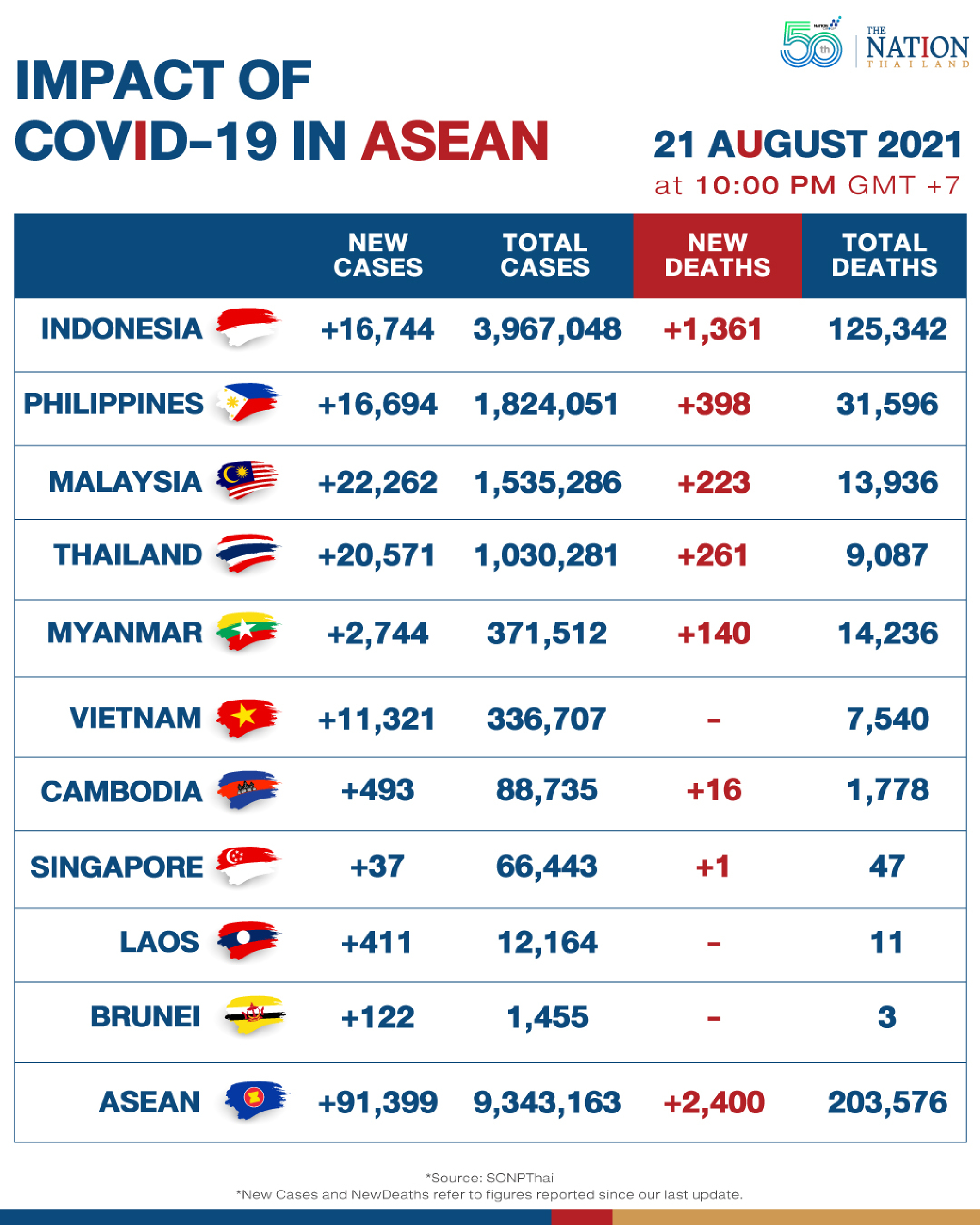
Southeast Asia saw a decrease in new Covid-19 cases and related deaths on Saturday for the second successive day, collated data showed.
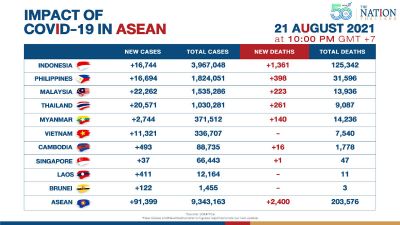
Asean countries reported 91,399 infections and 2,400 deaths on Saturday, lower than 95,512 and 2,696 respectively on Friday.
Cambodia’s Prime Minister Hun Sen expected the government to vaccinate 12 million people, or 75 per cent of the total 16 million population, by the end of this year.
The Cambodian government has extended the enforcement of curfew measures in Phnom Penh for another seven days as the country’s daily Covid-19 cases continued to rise due to the outbreak of the Covid-19 delta variant.
The government has accelerated administering the third Covid-19 jab on frontline personnel, as well as the third AstraZeneca jab on people who had received two Sinovac or Sinopharm jabs, in a bid to stimulate their immunity.
ADVERTISEMENTx
The Vietnam government is preparing to enforce maximum lockdown measures in Ho Chi Minh City for two weeks in a bid to reduce the number of Covid-19 infections and deaths due to the Covid-19 delta variant.
Starting on Monday, over 9 million people will be banned from going outdoors unless necessary.
Meanwhile, the Vietnam government has deployed soldiers and police to publicise lockdown measures, deliver foods and necessities, and conduct proactive Covid-19 tests on people.
New Covid cases and deaths in Asean fall for second day in a row
The country also reported another 104 coronavirus-related deaths. The latest data came as the Medicines and Healthcare products Regulatory Agency (MHRA) approved Ronapreve as the first monoclonal antibody combination product indicated for use in the prevention and treatment of acute COVID-19 infection in Britain.
Another 32,058 people in Britain have tested positive for COVID-19, bringing the total number of coronavirus cases in the country to 6,460,930, according to official figures released Saturday.
ADVERTISEMENTx
The country also reported another 104 coronavirus-related deaths. The total number of coronavirus-related deaths in Britain now stands at 131,591. These figures only include the deaths of people who died within 28 days of their first positive test.
The latest data came as the Medicines and Healthcare products Regulatory Agency (MHRA) approved Ronapreve as the first monoclonal antibody combination product indicated for use in the prevention and treatment of acute COVID-19 infection in Britain.
Developed by Regeneron/Roche, the drug is administered either by injection or infusion and acts at the lining of the respiratory system where it binds tightly to the coronavirus and prevents it from gaining access to the cells of the respiratory system, according to a statement by the MHRA.
Clinical trial data assessed by a dedicated team of MHRA scientists and clinicians has shown that Ronapreve may be used to prevent infection, promote resolution of symptoms of acute COVID-19 infection and can reduce the likelihood of being admitted to hospital due to COVID-19, the statement said.
“Ronapreve is the first of its kind for the treatment of COVID-19, and after a meticulous assessment of the data by our expert scientists and clinicians, we are satisfied that this treatment is safe and effective,” said Dr Samantha Atkinson, Interim Chief Quality & Access Officer at the MHRA.
England lifted almost all its remaining COVID-19 restrictions since July 19. More than 87 percent of people aged 16 and over in Britain have had their first dose of vaccine and more than 76 percent have received both doses, the latest figures showed.
To bring life back to normal, countries such as Britain, China, Germany, Russia and the United States have been racing against time to roll out coronavirus vaccines.
People dine in the outdoor dining area of a restaurant in London, Britain, on Aug. 13, 2021.
Washington national zoo celebrates panda cub Xiao Qi Jis 1st birthday
“The relationships that we develop with our Chinese colleagues, including the ambassador, working together to save this endangered species is one of the most incredible parts” of the giant panda conservation program, said Brandie Smith, acting director of the Smithsonians National Zoo.
Xiao Qi Ji, the giant panda cub born in the national zoo in Washington, D.C., turned one on Saturday, and the zoo held a big birthday party for the little cutie featuring ice cakes and other activities to celebrate the occasion with his avid fans coming for a visit.
ADVERTISEMENTx
Staff at the Smithsonian’s National Zoo and Conservation Biology Institute got Xiao Qi Ji’s tiered cake with a large number “1” topper set up just after 7:00 a.m., placing the delicacy at the center of the outdoor ground so that reporters could easily shoot the moment Xiao Qi Ji enjoys his birthday feast.
The cake is made from frozen dilute grape, apple juices and colored water and decorated with sweet potato, apple, carrot, pear, sugar cane, banana and bamboo. Xiao Qi Ji’s parents, mama Mei Xiang and papa Tian Tian, each got their own ice cakes in honor of their son’s birthday.
When Xiao Qi Ji and Mei Xiang stepped out of their house, they went straight toward mama’s cake. It was not until the “Xiao Qi Ji” inscript on the main cake melted that the mother-son duo finally turned their attention to the entree of the day, working on it as spectators cheered in the background.
It appeared that Xiao Qi Ji was more than satisfied with the cake, crushing the 1-shaped topper and then, after finishing the special breakfast, climbing onto his favorite tree to inspect those who came for the purpose of wishing him happy birthday.
ADVERTISEMENT
“I’ve been here about four times already, even with the COVID and everything,” said Yolanda Reyes, a panda lover who couldn’t resist the innocence and charm of Xiao Qi Ji, and who could still vividly recall Tai Shan, Bao Bao and Bei Bei — three other cubs Mei Xiang gave birth to in the D.C. zoo who used to live here before returning to China.
“It’s been wonderful. They always have (Xiao Qi Ji) here, and you see the interaction with his mother and everything like that. It’s great,” said the Virginia resident.
“Xiao Qi Ji” is the Chinese expression of “little miracle” in English. People decided to name the adorable boy that way because his mother, at age 22, was the oldest giant panda to give birth in the United States. When she conceived Xiao Qi Ji, Mei Xiang had a less than 1 percent chance of having another baby.
After his miraculous birth, Xiao Qi Ji, who the keepers said is a quick learner, never stopped bringing surprise and joy to people caring for him, having not only reached a number of milestones in the past year — such as going through his first veterinary exam, his first steps, getting his first toys and having his first taste of sweet potato — but also adapted incredibly well to the harsh reality of the pandemic thanks to the love and caring from his keepers.
“Not only was (Mei Xiang’s) age a challenge, in the best case scenario, panda breeding is challenging,” said Bryan Amaral, the national zoo’s senior curator. “Due to the pandemic, we had a lot of tools not available to us that we would normally use to help us be successful.”
ADVERTISEMENT
“We had to take a little bit of a different approach this time,” Amaral said, noting that because of the extraordinary public health crisis, reproductive physiologists working with the giant panda conservation program had to share the lab space and, as a result, were unable to run samples in a timely fashion.
“I don’t know if we’ll use this (new approach) completely as a model in the future, but clearly the results speak for themselves,” he said.
Speaking of the cooperation around Xiao Qi Ji between the national zoo and its partners in China, Brandie Smith, acting director of the zoo, told Xinhua that since there are so many experts in China who know how to take care of pandas, people here at the zoo have been calling and writing to their Chinese counterparts on a regular basis, giving updates about Xiao Qi Ji’s care and growth.
“With the pandemic, we haven’t been able to meet in person, but we’re looking forward to doing that again as soon as we can,” Smith said.
To mark the joyous day, Chinese Ambassador to the United States Qin Gang expressed his birthday wishes to Xiao Qi Ji in a video and sent the adorable baby bear a gift.
“His arrival and every bit of his growth have given us joy and hope. For us, he is a miracle,” the ambassador said of Xiao Qi Ji, adding the cub “has truly added a splash of color to the exchanges between Chinese and American people.”
Smith, who had watched Qin’s video, said in comments to the ambassador’s remarks that “the relationships that we develop with our Chinese colleagues, including the ambassador, working together to save this endangered species is one of the most incredible parts” of the giant panda conservation program.
Celebratory events were held throughout the zoo on Saturday. General visitors attending Xiao Qi Ji’s birthday party received commemorative Xiao Qi Ji buttons, and registered members of the zoo were given reusable fans featuring Xiao Qi Ji’s picture.
“It’s nice to be able to open up and have something really fantastic to celebrate,” Amaral, the senior curator, said.




 New Covid cases and deaths in Asean fall for second day in a row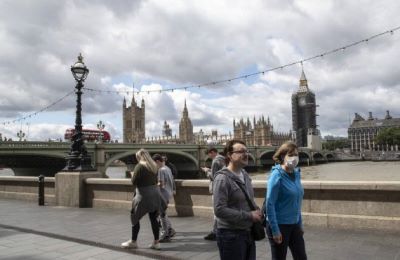

 People dine in the outdoor dining area of a restaurant in London, Britain, on Aug. 13, 2021.