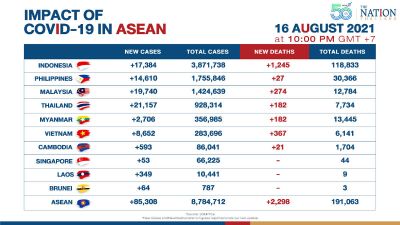
Asean reports fewer new Covid-19 cases and related deaths
Southeast Asia saw a fall in new Covid-19 cases and related deaths on Monday, collated data from Asean countries showed.
Countries in the region reported 85,308 new cases on Monday, lower than Sunday’s 91,166, and 2,298 deaths, down from the previous day’s 2,522.
The number of Covid-19 cases crossed 8.78 million and deaths rose to 191,063.
Indonesian President Joko Widodo vowed on Monday during the annual state of the nation speech to parliament to keep working to reform the nation, even as the Covid-19 pandemic continues to batter Indonesia’s economy.
He said while gross domestic product grew 7 per cent in the second quarter, tighter social restrictions in place since early July to curb the spread of the delta variant were set to weigh heavily on the economy this quarter.
The president also promised to ease travel restrictions on Java island from Monday and on the four major islands on August 23.
Meanwhile a Singaporean undergraduate, who was studying acting in Britain, was convicted on Monday of exposing others to the risk of Covid-19 infection after returning to Singapore. Esther Tan Ling Ying, 24, had some Covid-19 symptoms before she flew back from London via Doha. But in breach of her stay-home notice, she had eaten at a foodcourt at the airport on March 23 last year. District Judge convicted Tan on Monday, and adjourned mitigation and sentencing to August 30. For exposing others to the risk of infection of Covid-19, Tan can be jailed for up to six months and fined up to $10,000.
Last images from the Afghan war capture a 20-year failure to acknowledge how badly the conflict was going
WASHINGTON – Two indelible, humiliating images are certain to endure from the final days of the Afghan war.
The first came in the White House on July 8 when President Joe Biden was asked if the U.S. departure from Afghanistan carried echoes of Vietnam. “None whatsoever. Zero,” he replied, testily. “There’s going to be no circumstance where you see people being lifted off the roof of an embassy.”
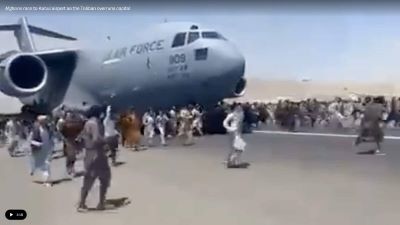
The other is an image just as searing as those from the fall of Saigon: Desperate Afghans clinging to the wheel wells of a C-17 U.S. Air Force cargo jet as it taxis for takeoff at Kabul’s international airport.
Together, the two moments embody a malady that has infected the war from its earliest days and helps to explain the catastrophic collapse of the Afghan government and its military. Senior U.S. officials in Washington and Kabul have continually failed to appreciate how difficult the mission would be, how badly it was going and how little they had achieved.
“It’s not a good image . . . that we were burning documents because our embassy was going to be overrun. It is not a good image to take down the flag,” said Sue Gordon, who served 25 years in the CIA before resigning two years ago as deputy director. “These images suggest that we did not understand the situation.”
The failure to grasp the depth of the dysfunction in Afghanistan dates back to November 2001 when President George W. Bush ordered the Pentagon to begin planning for an invasion of Iraq. Suddenly, many of the most critical intelligence assets and the most potent ground combat forces were shifted to a focus on Baghdad. Afghanistan in the words of one Bush-era White House official became a “distraction and a sideshow.”
And it carried through until this July when Biden described the Afghan military as a force of 300,000 troops – “as well equipped as any army in the world.”
In fact, former defense and White House officials said that Biden’s figures were a fantasy and that by late 2020 as many as half of the Afghan army forces had stopped showing up for duty. “The desertion numbers were very high,” said a former senior defense official, who spoke on the condition of anonymity to discuss sensitive intelligence. “We were told that 100,000 of their soldiers had put down their guns and that in all likelihood the numbers were much worse.”
A senior White House official said the Biden administration was prepared for the chaos in Afghanistan and had pre-staged thousands of U.S. troops in case the Taliban forces made rapid gains. “This is not the worst case scenario,” the official said. “No Americans are under fire. What we’re seeing is not Taliban attacking [the embassy]. It is desperate Afghans trying to get out.”
It’s a defense that carried little weight with even the president’s staunchest allies in Congress. Sen. Mark Warner, D-Va., the chairman of the Senate Intelligence Committee, called the images from Kabul’s airport and its capital “devastating.”
ADVERTISEMENT
Warner vowed to work with others in Congress to determine “why we weren’t better prepared for a worst-case scenario involving such a swift and total collapse of the Afghan government and security forces.”
An entire generation of U.S. military officers came of age in the aftermath of the Vietnam War with a guiding mission to make sure the country never had to endure the sorts of humiliating images from Saigon that were repeated this week in Kabul.
“The disgraceful performance of Biden and what passes for military leadership today in managing this debacle borders on criminal,” said retired Col. Gary Anderson, who joined the Marines in the final years of that losing Vietnam effort.
In 2012, Anderson served in Bala Murghab, a remote district near Afghanistan’s border with Turkmenistan. Within a week of U.S. troops leaving the area in 2012, Anderson said, the local army commander and police chief “had cut deals with the Taliban, just as happened throughout the country this last week.”
Former senior U.S. officials said those in charge of the war effort over several administrations often seemed unwilling to accept – or unable to grasp – clear signs of failure or futility in Afghanistan.
ADVERTISEMENT
Pentagon officials were almost constantly at odds with CIA experts over “district assessments” that cast doubt on how much territory the American-backed Afghan government controlled across the country.
In 2019, U.S. spy agencies delivered a sweeping assessment known as a National Intelligence Estimate of the conflict that warned many of America’s often-stated objectives were in jeopardy even with a continued U.S. military presence, and without direct American backing all but destined to collapse.
“We would run into really serious battles with the Pentagon, which would say, ‘We’ve got boots on the ground, we know the truth,’ ” said a former senior U.S. intelligence official.
The diverging views on the war were a reflection of the institutional predispositions of military planners groomed to accept even the most daunting missions and find ways to deliver results.
In Afghanistan, “you had good people who tried mightily believing they could do it,” the former intelligence official said. “And in the end are forced to face the reality that they couldn’t.”
On Monday, many of those senior military officials were operating on only a few hours sleep after staying up much of the night fielding calls from former Afghan colleagues who were stranded in the country or at the airport and were terrified that they would soon be killed. Some couldn’t understand why the White House and the Pentagon had decided to abandon Bagram air base to looters a month ago, long before Afghans who had worked for the United States and were in danger could be evacuated.
Unlike Kabul’s airport, which is located in the middle of the city, Bagram would have been far easier to secure.
“Any military official who said it is OK to leave all the airfields before we have everyone out should be fired tomorrow,” said one retired Army general who served multiple tours in Afghanistan. He asked for anonymity because he is still working with the Biden White House to get some of his former Afghan colleagues out of the country.
The only thing left of the U.S. mission is to “get out the people who sacrificed and suffered for us,” said Carter Malkasian, a longtime adviser to the U.S. military and author of the recently released history “The American War in Afghanistan.”
Malkasian defended the attempts of the military and the Biden administration to end the war in an orderly fashion. The failures spoke to the difficulty of predicting any short-term outcomes in Afghanistan and “human nature,” he said.
Biden didn’t ignore the signs of potential collapse, Malkasian said. Rather, he made a “hard choice” to end the losing war despite the “costs and consequences” that the United States and its Afghan partners would endure. Biden echoed this sentiment on Monday, saying that he was “deeply saddened” by the chaos, but that he could not allow U.S. troops to pursue a mission that was “not in our national security interests [and] not what the American people want.”
Rep. Seth Moulton, D-Mass., a Marine veteran, described the scene at Kabul airport as “a moral and operational failure.”
The video and pictures also spurred him to reflect on his own war.
“To your Afghanistan veterans and their families,” he said in a statement. “I am too honest to stand here today and try to convince you that your sacrifice was worth it.”
Published : August 17, 2021
By : The Washington Post · Greg Jaffe, Greg Miller
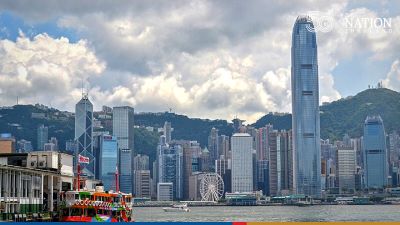
Hong Kong hikes travel curbs for 16 nations on delta threat
Hong Kong tightened its travel curbs for residents returning from 16 countries — including the U.S., France and Spain — less than two months after it started easing some of the worlds strictest quarantine measures.
The abrupt reversal reflects a fear of reopening as the delta variant drives resurgences across the world. Fifteen countries were moved up to the “high-risk” category, which means that vaccinated Hong Kong residents returning home must spend 21 days in hotel quarantine upon arrival, triple the previous length of stay. Tourists and unvaccinated residents from those places are no longer allowed entry.
The new restrictions take effect starting Aug. 20, according to a government statement Monday. Residents and tourists with antibody test results proving they had been vaccinated previously had to spend a week in hotel quarantine.
The flip flopping creates additional uncertainty and risks further diluting Hong Kong’s attractiveness as a business destination. The city implemented new rules to allow visitors from all but ten places to enter on Aug. 9.
ADVERTISEMENTx
Hong Kong is caught between its desire to reopen and its zero tolerance for any cases of covid-19. Meanwhile, it’s rival financial hub in Singapore has announced plans to ease covid restrictions on daily life and begin slightly loosening border controls, citing vaccination rates that rank among the best in the world.
Hong Kong’s success with covid-19 has come through its strict mitigation measures, including lengthy hotel quarantines for those newly arriving. Just 39% of its population is fully vaccinated, less than many other developed economies. Mainland China, which is also following a Covid-zero strategy, has committed to tightly sealed borders to stamp out the virus, risking leaving it isolated for years.
“This is a devastating announcement in terms of the inability for businesses to plan,” said Tara Joseph, president of the American Chamber of Commerce Hong Kong, in a WhatsApp message. “We respect the worries over the need to keep infections down, but business and people need to connect overseas and plan for the future.”
The about-turn comes after a resident returning from the U.S. tested positive for the virus several days after completing a seven-day quarantine, sparking fears that the eased travel rules would allow the delta variant to slip into the Asian financial hub. Hong Kong has enjoyed a streak of over two months with nearly no local virus cases, even as neighbors like Singapore and mainland China struggled to contain the mutation.
“The global covid-19 epidemic situation is under serious threat from the delta variant, with acute surges in the number of confirmed cases within a short period of time in many countries,” the government statement said. The measures are meant to “uphold the local barrier against the importation of covid-19,” it said.
Hong Kong is once again seeing its border rules tighten as the delta variant spreads in neighboring areas. It also reinstated quarantine rules for its residents returning from Macao and mainland China, except Guangdong province.
The business community has struggled for the past 18 months with an economy that’s been starved of big-spending tourists and business travelers. Hong Kong had about 99.9% fewer visitor arrivals in the first half this year than in the same period in 2019.
Hong Kong’s economy has faced an uneven recovery from two years of contraction. Retailers and tourism-related businesses, which are some of the biggest employers of Hong Kong’s working class, were particularly hard hit as borders remained closed and travel was curtailed. Financial services and the property market are booming, though, exposing a deepening wealth imbalance.
Published : August 17, 2021
By : Syndication Washington Post, Bloomberg · Jinshan Hong, Bruce Einhorn
Spain soared to record high of 117 degrees Saturday amid historic heat wave
Amid a prolonged, unforgiving heat wave in southern Europe and northern Africa, the temperature in the city of Montoro, Spain, soared to 117.3 degrees Saturday, setting a record high for Spain. This topped the previous record of 117.1 degrees in July 2017.
Montoro is a city of about 9,500 people in southern Spain, about 100 miles east of Seville. The record was confirmed by AEMet, Spain’s meteorological agency.
The record was one of scores set in the broader region since the middle of last week. In addition to Spain, punishing heat scorched portions of Portugal, Italy, Morocco and Algeria. Notably, the temperature in Syracuse, Sicily, skyrocketed to 120 degrees Wednesday, potentially setting a new all-time heat record for all of Europe.
ADVERTISEMENTx
Other notable records in the region set in recent days include:
_ Agadir Airport in southwest Morocco soared to 120.4 degrees Monday, the country’s highest temperature on record during August, according to Maximiliano Herrera, a climatologist and expert on world weather records.
_ Madrid tied its all-time high (for any month) on Saturday, soaring to 105.3 degrees, while establishing a new August record, according to Etienne Kapikian, a meteorologist with MeteoFrance, France’s meteorological agency.
_ Cordoba, Spain, tied its all-time high (for any month) Saturday, soaring to 116.4 degrees, while establishing a new August record, according to Kapikian.
The excessive heat is linked to an intense zone of high pressure or heat dome sprawled over the region for the past 5 to 6 days. Parked over the Mediterranean initially, it has drifted southwest and is now centered just west of Morocco. The heat dome reached historically intense levels Friday into the weekend.
At the height of the heat wave on Saturday, 16 cities in Italy and 14 districts in Portugal were put under a red alert due to the dangerously high temperatures, according to the Associated Press.
The extreme heat increased the wildfire risk over the region and may have intensified ongoing blazes in Italy, Turkey, Greece and Algeria, the AP reported.
The record-setting temperatures hit the same week that the Intergovernmental on Climate Change released its landmark report warning that these extreme events are expected to become more frequent and intense as global temperature rise due to the burning of fossil fuels.
“A warmer planet makes it easier to break extreme heat thresholds,” tweeted Scott Duncan, a meteorologist based in London. “This is what we are seeing continually all over the globe.”
The heat dome responsible for the blistering temperatures is forecast to drift further offshore Africa in the coming days allowing temperatures to moderate closer to seasonal norms by the middle of the week.
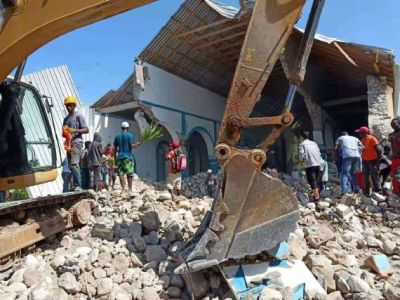
Aid workers scramble to save Haiti earthquake victims as storm approaches
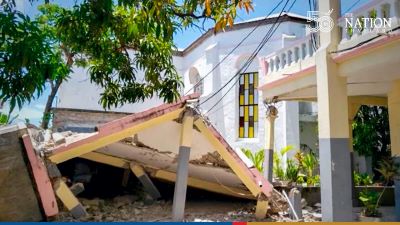
PORT-AU-PRINCE, Haiti – Rescue workers and doctors with little equipment worked feverishly Monday to save victims of the massive earthquake in southwestern Haiti as a powerful storm threatened to unleash flooding and further snarl aid efforts.
Heavy rains started dousing the country on Monday afternoon, creating yet another crisis for exhausted, newly homeless people who needed shelter. Officials estimated that Tropical Depression Grace would dump 5 to 10 inches of rain on the region by Tuesday. The U.S. National Hurricane Center warned that Grace, while downgraded from a tropical storm, could still cause flash flooding and mudslides in Haiti and the Dominican Republic.
“We’re pleading for help,” Marie-Helene L’Esperance, mayor of the harbor town of Pestel, told Haiti’s Pacific Radio. “Every house was destroyed, there’s nowhere to live, we need shelters, medical help and especially water. We’ve had nothing for three days and injured victims are starting to die.”
She said the prospect of heavy rain had “spread fear through residents who had nothing left but to pray.”
ADVERTISEMENTx
The 7.2-magnitude earthquake that struck Saturday morning has killed at least 1,419 people, according to the country’s civil protection office, but that figure was expected to climb. Schools, medical centers, churches, bridges and more than 84,000 homes collapsed or were damaged in the temblor, which struck a region already battered by Hurricane Matthew in 2016.
The tragedy was the latest for the Western Hemisphere’s poorest nation – coming on top of a coronavirus outbreak, rising gang violence, an economic crisis and acute political instability after the assassination of President Jovenel Moïse last month. Haiti was devastated 11 years ago by an earthquake that reduced the capital to ruins.
On Monday, aid began to trickle in to some of the worst-hit areas. A 65-member search-and-rescue team from Fairfax County, Va., dispatched by USAID, arrived in Haiti and headed for Les Cayes, a city of about 100,000 people on the country’s southwest peninsula. UNICEF said it had sent medical kits for 30,000 people to the city, roughly 90 miles west of Port-au-Prince, the capital. The U.S. Coast Guard was ferrying injured victims to the capital.
Mexico, the Dominican Republic, Chile and other countries also sent assistance. Haitian Prime Minister Ariel Henry pledged to speed up the relief effort. “From this Monday, we will move faster. Aid provision is going to be accelerated,” he wrote on Twitter.
Elizabeth Riley, executive director of the Caribbean Disaster Emergency Management Agency, said the Haitian government was prioritizing cash donations, because supplies could be purchased in the capital and other areas not pummeled by the quake.
ADVERTISEMENT
But aid workers expressed concern about violent gangs that have largely cut off the main road from the capital to the southwest in recent months. U.N. spokesman Stephane Dujarric said local authorities were negotiating with the armed groups to gain access, and a six-vehicle U.N. aid convoy had traveled the route without incident on Sunday.
“We do hope that roads will be increasingly be accessible and non-risky,” Muhamed Bizimana, the assistant country director for CARE, said in a phone interview from Port-au-Prince. He said the aid group’s prepositioned supplies were running low in some areas.
Violent gangs weren’t the only problem. Jerry Chandler, head of Haiti’s civil protection agency, said Colombian search-and-rescue teams that planned to travel from Port-au-Prince to the northern part of the affected area – including the port town of Jeremie – were unable to get through on Monday. “The difficulty is that the bridge over the Glace River collapsed,” blocking travel over National Route 7, a crucial artery, he said. The bridge was later repaired, but debris continued to block smaller roads.
In Beaumont, normally a two-hour drive south from Jeremie, residents were still waiting Monday afternoon for any signs of help, according to former mayor Alexi Faveur, a member of the community development association. He said the 31,850 residents were on their own as the rains approached.
“Eighty percent of all homes have been destroyed, and any passable road has been blocked by mudslides,” he said in a telephone interview. Outlying communities were accessible only by foot, he said.
ADVERTISEMENT
Martinor Gerardin, mayor of L’Asile, a town of 52,000 northeast of Les Cayes, said most homes there, too, were destroyed or severely damaged. He estimated that 50 residents had been killed and 500 injured. Scores of cows and goats in the rural community had been buried under rubble, he said, threatening the inhabitants’ livelihoods. No aid from the government or nonprofit groups had arrived by Monday, he said. “We needs tents and water urgently,” he said.
David Geleste, a physician in the seaside city of Baradères, called the situation there “catastrophic.”
“Medical help is urgently needed,” he told Radio Caribe. “It’s critical in the first two to four days. We have many injured with fractured limbs and need to mobilize basic materials like painkillers, bandages, braces. We have to perform urgent operations but don’t have the equipment.”
Hospitals in heavily damaged towns were overwhelmed, with patients lying on cots or mattresses outside because of a lack of space, according to photos. Lucette Gedeon, a pediatrician volunteering in the neonatal unit at the main hospital in Les Cayes, told Reuters that the facility had exhausted its supply of antibiotics and anesthesia.
“There have been babies that came in needing limbs amputated after they were trapped under the rubble,” Gedeon said.
Haiti’s health system was already fragile. Then came the coronavirus pandemic. Until last month – when the U.S. government donated 500,000 shots of the Moderna coronavirus vaccine through the Covax aid initiative – Haiti was the only country in the Americas that hadn’t received a single vaccine dose.
Among those who died in Saturday’s quake was Ousmane Touré, en epidemiologist from Guinea “who helped beat Ebola in West Africa & Congo & was deployed to Haiti for the #COVID19 response,” tweeted Tedros Adhanom Ghebreyesus, the head of the World Health Organization. He said he was “devastated” by the loss.
The earthquake pushed Haiti’s stressed hospitals to the brink of collapse.
“Basically all the health facilities are overwhelmed, all the referral hospitals are full,” said CARE’s Bizimana. “And there are still people coming in.”
Published : August 17, 2021
By : The Washington Post · Ingrid Arnesen, Mary Beth Sheridan, Widlore Merancourt
Chinese researchers develop new material in glassy state capable of scratching diamond
Researchers have synthesized a new material in a glassy state that can cause scratches on diamond, said a national key laboratory in Yanshan University, north Chinas Hebei Province.
The newly developed tough material named AM-III was obtained under high temperature and pressure using C60 fullerene, as hard as diamond as it has a 113 GPa hardness in the Vickers hardness test. It is hitherto the world’s strongest and hardest amorphous material, said the researchers in their paper published in the journal National Science Review.
ADVERTISEMENTx
The material is approximately 10 times as hard as steel and should be quite a bit better at stopping bullets than most vest technology, according to the paper.
It is also an optically transparent semiconductor material and is expected to be applied in photovoltaic technologies and innovations.
Timeline: Recent situation changes in Afghanistan since irresponsible U.S. troop withdrawal
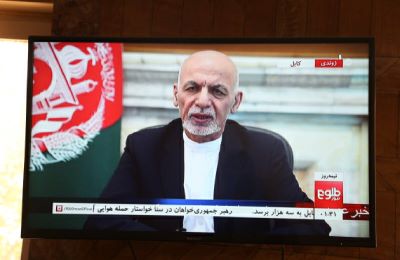
Afghan President Mohammad Ashraf Ghani left the country on Sunday night, while the Taliban forces entered the capital of Kabul and took control of the presidential palace.
Here is a timeline of the recent situation changes in Afghanistan:
Aug. 15:
— Afghan President Mohammad Ashraf Ghani has left the country, head of the Afghan National Reconciliation Council Abdullah Abdullah confirmed on Sunday evening.
— The Taliban ordered its forces to enter Kabul city after encircling it for hours. Taliban spokesman Zabihullah Mujahid tweeted that Taliban got inside the city to provide security for the countrymen and ensure law and order.
— A curfew was imposed in Kabul starting 21:00 local time on Sunday to prevent violence.
— Taliban spokesman Zabihullah Mujahid told media he could confirm there were talks with the presidential palace about a peaceful takeover of power.
ADVERTISEMENTx
Aug. 13:
— Taliban spokesman Zabihullah Mujahid said on social media that the Taliban had seized Kandahar, capital of the southern province of Kandahar; Herat, capital of western Herat province; Qala-e-Naw, capital of western Badghis province; Qalat, capital of southern Zabul province; Lashkar Gah, capital of southern Helmand province; Pul-e-Alam, capital of eastern Logar province; Tirin Kot, capital of the southern province of Uruzgan; and Firoz Koah, capital of the western province of Ghor. By then, the group had reportedly taken 18 provincial capitals of the country’s 34 provinces.
— British Secretary of Defense Ben Wallace said the U.S. decision to pull its troops out of Afghanistan was a “mistake,” adding that the U.S. withdrawal “causes a lot of problems and as an international community, it’s very difficult for what we’re seeing today.”
— The Pentagon said that Afghan Taliban militants were trying to isolate the capital city Kabul and the situation on the ground is “deeply concerning.”
Taliban militants are seen in Mehtarlam, capital of Laghman province, eastern Afghanistan, Aug. 15, 2021.
ADVERTISEMENT
Aug. 12:
— Mujahid, Taliban spokesman, confirmed that Taliban militants had overrun Ghazni, the capital city of the east Afghan province of Ghazni, 150 km from the national capital Kabul.
— The White House announced that the United States was withdrawing personnel from its embassy in Kabul amid the deteriorating security situation in Afghanistan, and would deploy 3,000 troops to Kabul’s Hamid Karzai International Airport to facilitate the drawdown.
— Representatives of countries taking part in the Doha international meeting on Afghanistan called on the Afghan warring parties to expedite the peace process, and reach a political settlement and comprehensive ceasefire as quickly as possible.
Aug. 11:
ADVERTISEMENT
— Taliban militants overran Pul-e-Khumri city, capital of northern Baghlan province and Faizabad city, capital of neighboring Badakhshan province, local media reported.
— President Ghani travelled to Mazar-i-Sharif, capital of northern Balkh province. A security meeting was underway in the city.
— Pakistani Prime Minister Imran Khan told local media that Islamabad was not taking sides in Afghanistan, and that Pakistan had “made it very clear” that it does not want any American military bases in Pakistan after U.S. forces exit Afghanistan.
Aug. 10:
— U.S. President Joe Biden said that Afghan troops must fight for themselves as multiple cities have fallen to the Taliban. The United States will continue to provide Afghan forces with close air support, food, equipment, and salaries, he said.
Aug. 8:
— Taliban militants took control over Taluqan city, capital of Afghanistan’s northern Takhar province, according to a Taliban spokesman.
— Earlier in the day, the militant group seized Sari Pul city, capital of northern Sari Pul province while it also gained ground in Kunduz city, capital of Kunduz province, in the west of Takhar.
Aug. 6:
— Taliban militants captured Zaranj city, capital of Afghanistan’s western Nimroz province, said a Taliban spokesman.
— Zaranj, the smallest Afghan provincial capital, was the first Afghan city seized by Taliban militants since the U.S. withdrawal from the country started on May 1.
— Afghanistan is at a historic conjuncture of war and peace, Dai Bing, charge d’affaires of China’s permanent mission to the United Nations, told the Security Council.
The international community should work, following the principle of Afghan leadership and Afghan ownership, to strengthen coordination and contribute positive energy to the Afghan peace and reconciliation process, he said. Taliban militants are seen inside the Ghazni city, eastern Afghanistan, Aug. 12, 2021.
Aug. 5:
— The European Union released a statement, condemning the significant escalation of violence across Afghanistan, and calling for “an urgent, comprehensive and permanent ceasefire.”
“This senseless violence is inflicting immense suffering upon Afghan citizens … The Taliban’s military offensive is in direct contradiction to their stated commitment to a negotiated settlement of the conflict,” it said.
An Afghan special force member attends a military operation against Taliban fighters in Kandak Anayat village of Kunduz city, Afghanistan, July 23, 2021.
Aug. 2:
— Ghani blamed the withdrawal of U.S. troops for the worsening situation, and revealed a six-month security plan to change the security situation in the conflict-battered country.
July 8:
— An intra-Afghan dialogue held between high-ranking delegates of the Afghan government and the Taliban group concluded in Iran’s capital Tehran.
— The Afghan government and the Taliban group agreed that war is not a solution to Afghanistan’s political conflicts, and that they should endeavor to reach a political and peaceful solution to the differences among the parties concerned, said the statement released at the end of the meeting.
— Biden said that U.S. military mission in Afghanistan will conclude on Aug. 31.
— Russian Foreign Minister Sergey Lavrov said: “The United States is not just withdrawing its troops from Afghanistan: by doing that, it is admitting the failure of its mission.”
Photo taken on July 2, 2021 shows the Bagram Airfield after all U.S. and NATO forces evacuated in Parwan province, eastern Afghanistan.
July 6:
— The U.S. Central Command said that the U.S. military had completed over 90 percent of the withdrawal.
July 2:
— A spokesperson of the Afghan Defense Ministry confirmed that all U.S. and NATO forces in Afghanistan have evacuated the Bagram Airfield near the Afghan capital Kabul and handed over the largest coalition base to the Afghan government troops.
May 1:
— U.S. and NATO troops began to pull out from Afghanistan.
Photo taken on July 8, 2021 shows the Bagram Airfield base after all U.S. and NATO forces evacuated in Parwan province, eastern Afghanistan.
Spain reports record-breaking temperature in southern town
The heatwave coincides with rising prices for electricity, which peaked at 117.29 euros (138 U.S. dollars) per megawatt hour (MWh) on Friday.
The town of Montoro in southern Spain registered the highest-ever temperature recorded in Spain on Saturday, according to the Spanish State Meteorological Agency (AEMET).
ADVERTISEMENTx
The temperature, 47.2 degrees Celsius, beat the previous record of 46.9 degrees Celsius, which was set in the city of Cordoba on July 13, 2017.
A large portion of Spain remains under red or orange alert for high temperatures and the risk of wildfires on Sunday, although temperatures are expected to drop from Monday.
The heatwave coincides with rising prices for electricity, which peaked at 117.29 euros (138 U.S. dollars) per megawatt hour (MWh) on Friday.
28 killed, 79 injured in fuel tank explosion in northern Lebanon
A fuel tank exploded Sunday early morning in northern Lebanons town of Tleil, district of Akkar, killing at least 28 people and injuring 79 others, the National News Agency reported.
The Lebanese army said both army members and citizens are among the casualties.
Security sources were quoted by media outlets as saying that the explosion took place when the army was distributing fuel among citizens after having seized a fuel storage tank hidden by black marketeers in Akkar.
ADVERTISEMENTx
Sources added that about 200 people were nearby at the time of the explosion. Moreover, the Lebanese Red Cross announced earlier in the day that its teams were still searching on the scene.
The High Relief Committee urged all international organizations in Lebanon to provide medicines, serums and other materials needed to treat the severe burn cases of the injured in the explosion.
The committee’s Secretary General Mohamad Kheir said that he has contacted officials in Turkey and Egypt to transfer some seriously injured to these countries for treatment.
Lebanese President Michel Aoun expressed his deep sadness for the incident and held a meeting with the Higher Defense Council to discuss the latest developments.
Lebanon, which is facing an unprecedented financial crisis, has been grappling with fuel shortages for months.
Members of the Lebanese army are evacuating civilians from the scene of the explosion in Akkar, northern Lebanon, on August 15, 2021.
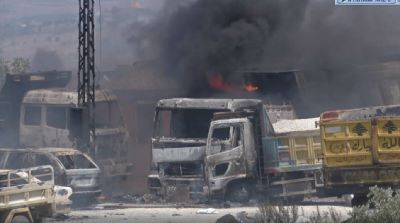
A truck is burned by angry youths near the site of the petrol tank explosion in Akkar, northern Lebanon, on August 15, 2021.
A truck is burned by angry youths near the site of the petrol tank explosion in Akkar, northern Lebanon, on August 15, 2021.
People wait to fill gasoline at a gas station in the city of Tripoli, northern Lebanon, on Aug. 12, 2021.
People wait to fill gasoline at a gas station in the city of Tripoli, northern Lebanon, on Aug. 12, 2021.
Death toll from 7.2-magnitude earthquake in Haiti rises to 1,297
Haitian Prime Minister Ariel Henry said it was necessary to “work together” in the face of the “extremely serious situation” following the earthquake, which has also left some 5,700 injured.
The death toll from the 7.2-magnitude earthquake that struck Haiti on Saturday rose to 1,297, the country’s civil protection agency reported on Sunday.
ADVERTISEMENTx
A breakdown of the fatalities in terms of departments shows that 1,054 people were killed in Sud, 122 in Nippes, 119 in Grand’Anse, and two in Nord-Ouest, the Haitian Civil Protection Service said on Twitter.
Haitian Prime Minister Ariel Henry said on Sunday that it was necessary to “work together” in the face of the “extremely serious situation” following the earthquake, which has also left some 5,700 injured.
“As soon as I landed, I met victims of the earthquake. Doctors, rescuers, and paramedics are arriving to provide assistance from the Cayes airport. A harsh and sad reality that we must face with courage,” the prime minister said on Twitter.
He noted that various teams are on the ground to “provide help and assistance to victims” and called for a speedy action to respond to the crisis.



 Taliban militants are seen in Mehtarlam, capital of Laghman province, eastern Afghanistan, Aug. 15, 2021.
 Taliban militants are seen inside the Ghazni city, eastern Afghanistan, Aug. 12, 2021.
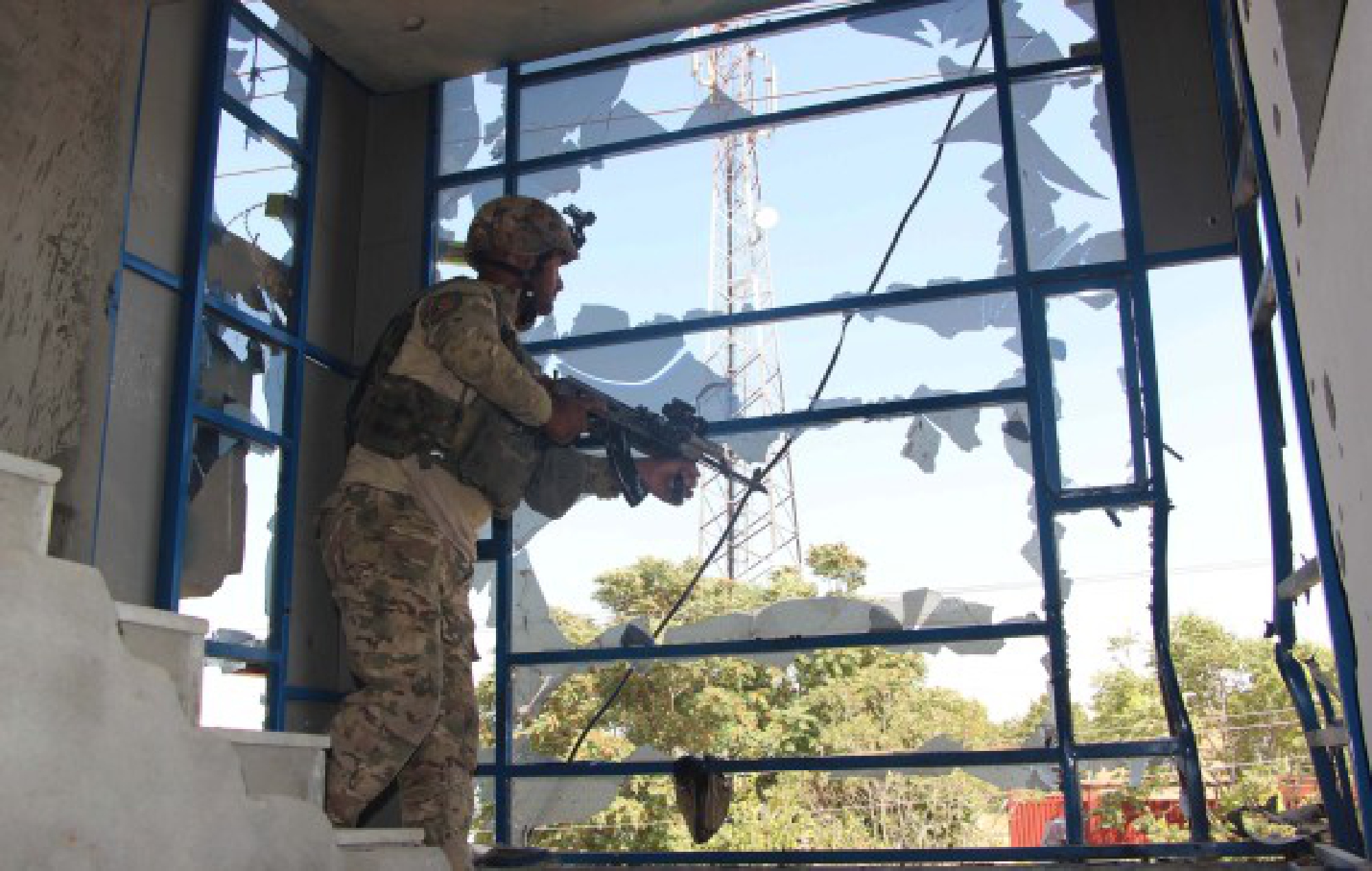 An Afghan special force member attends a military operation against Taliban fighters in Kandak Anayat village of Kunduz city, Afghanistan, July 23, 2021.
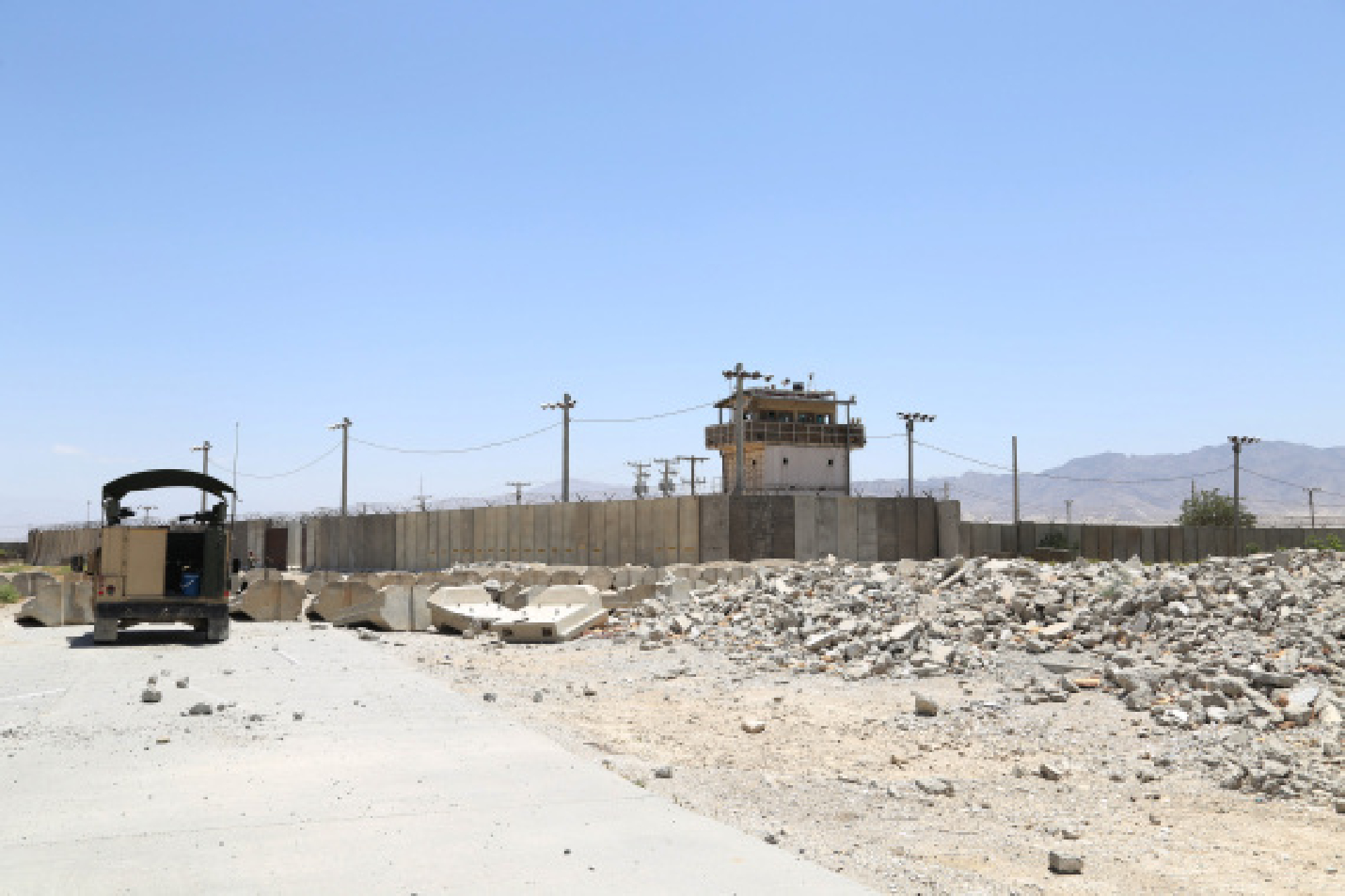 Photo taken on July 2, 2021 shows the Bagram Airfield after all U.S. and NATO forces evacuated in Parwan province, eastern Afghanistan.
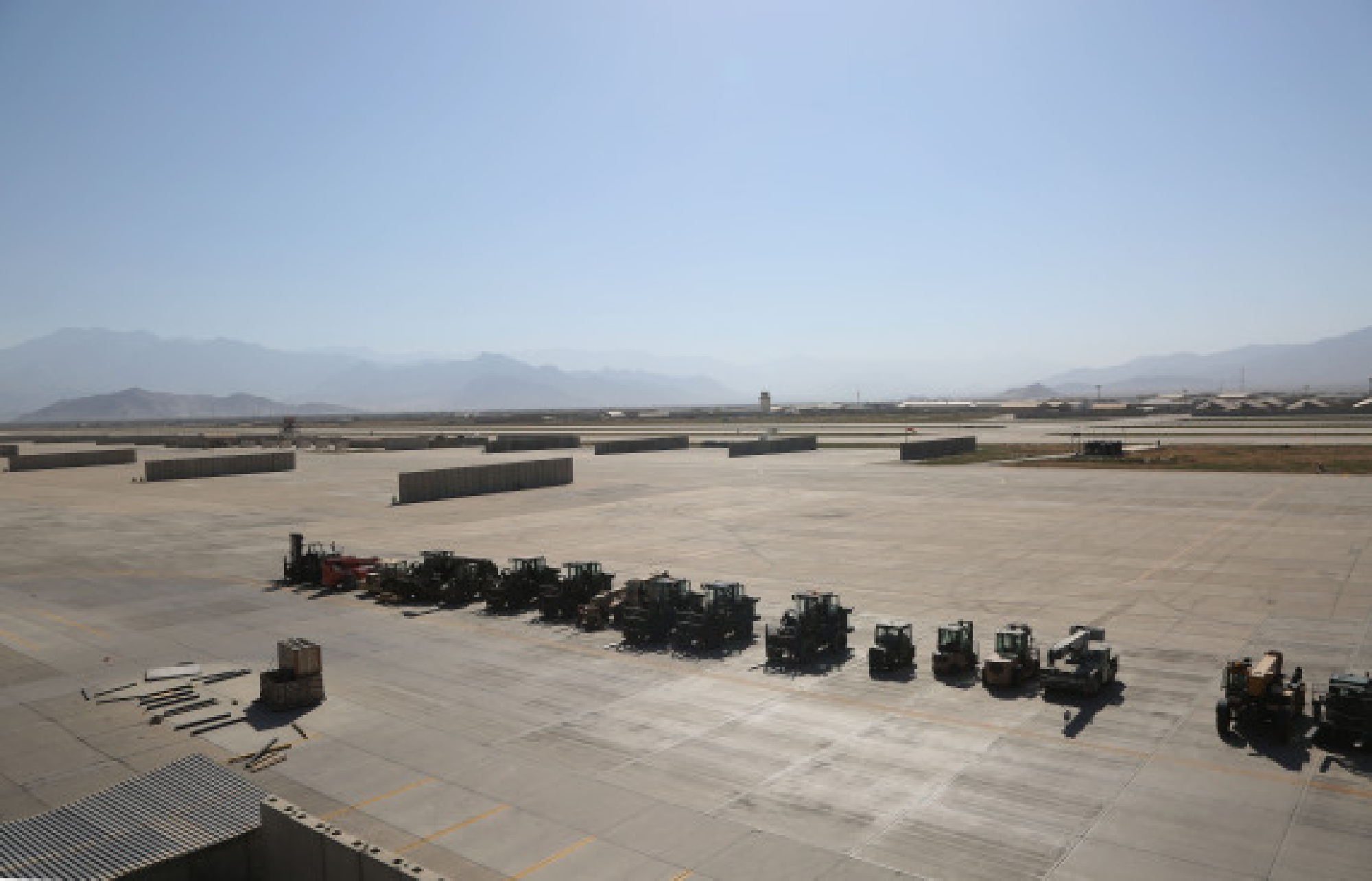 Photo taken on July 8, 2021 shows the Bagram Airfield base after all U.S. and NATO forces evacuated in Parwan province, eastern Afghanistan.
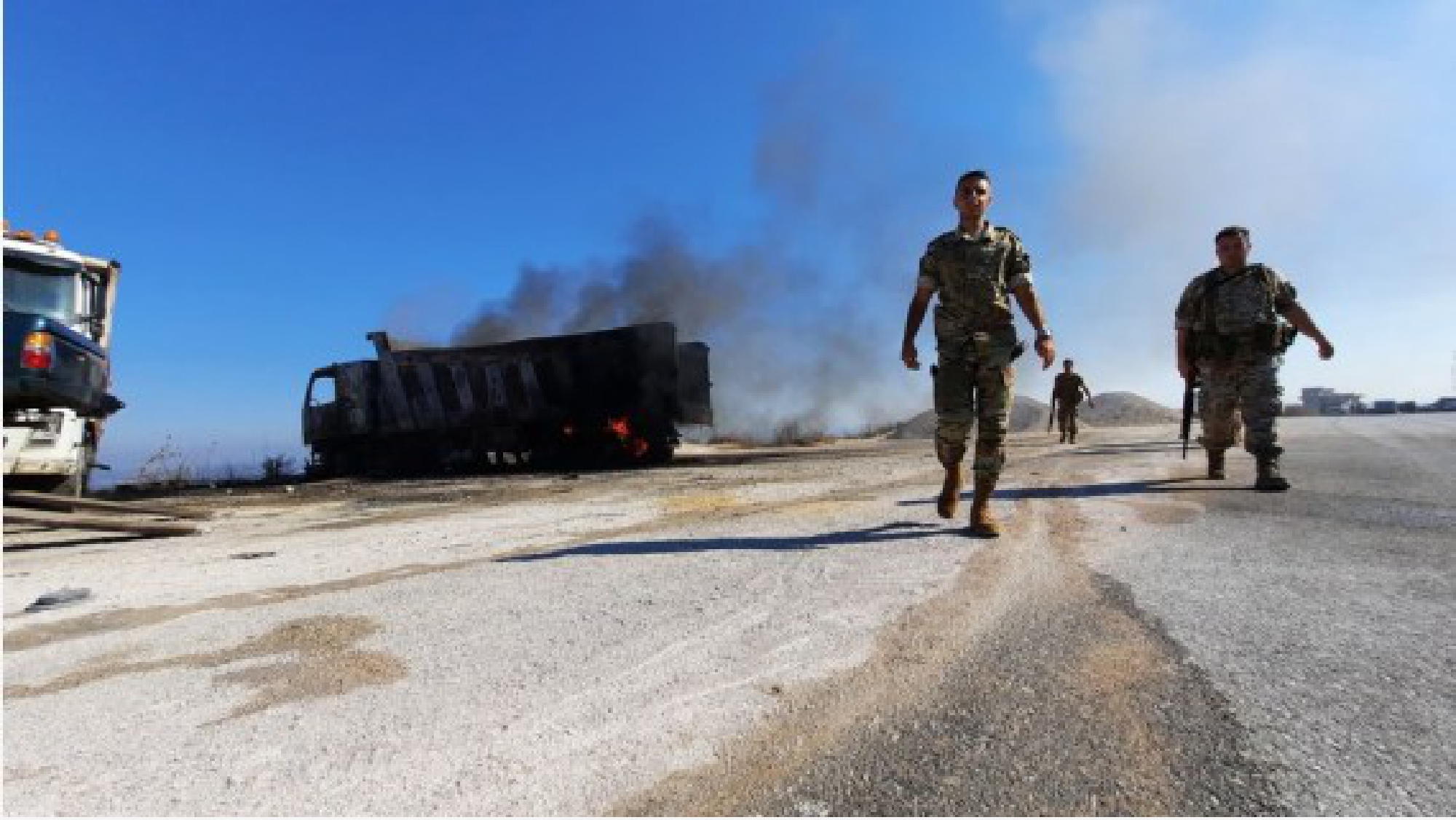 Members of the Lebanese army are evacuating civilians from the scene of the explosion in Akkar, northern Lebanon, on August 15, 2021.
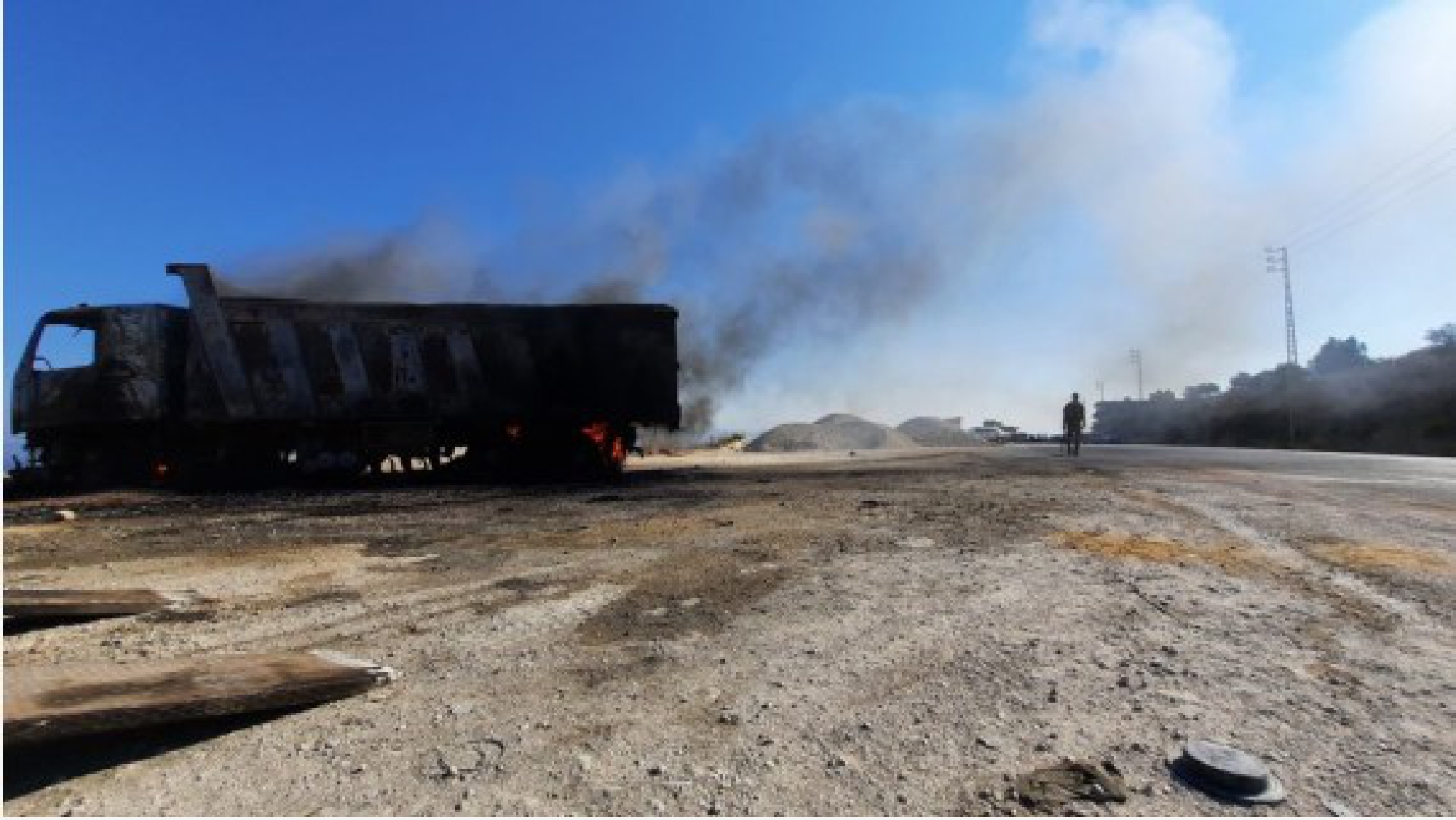 A truck is burned by angry youths near the site of the petrol tank explosion in Akkar, northern Lebanon, on August 15, 2021.
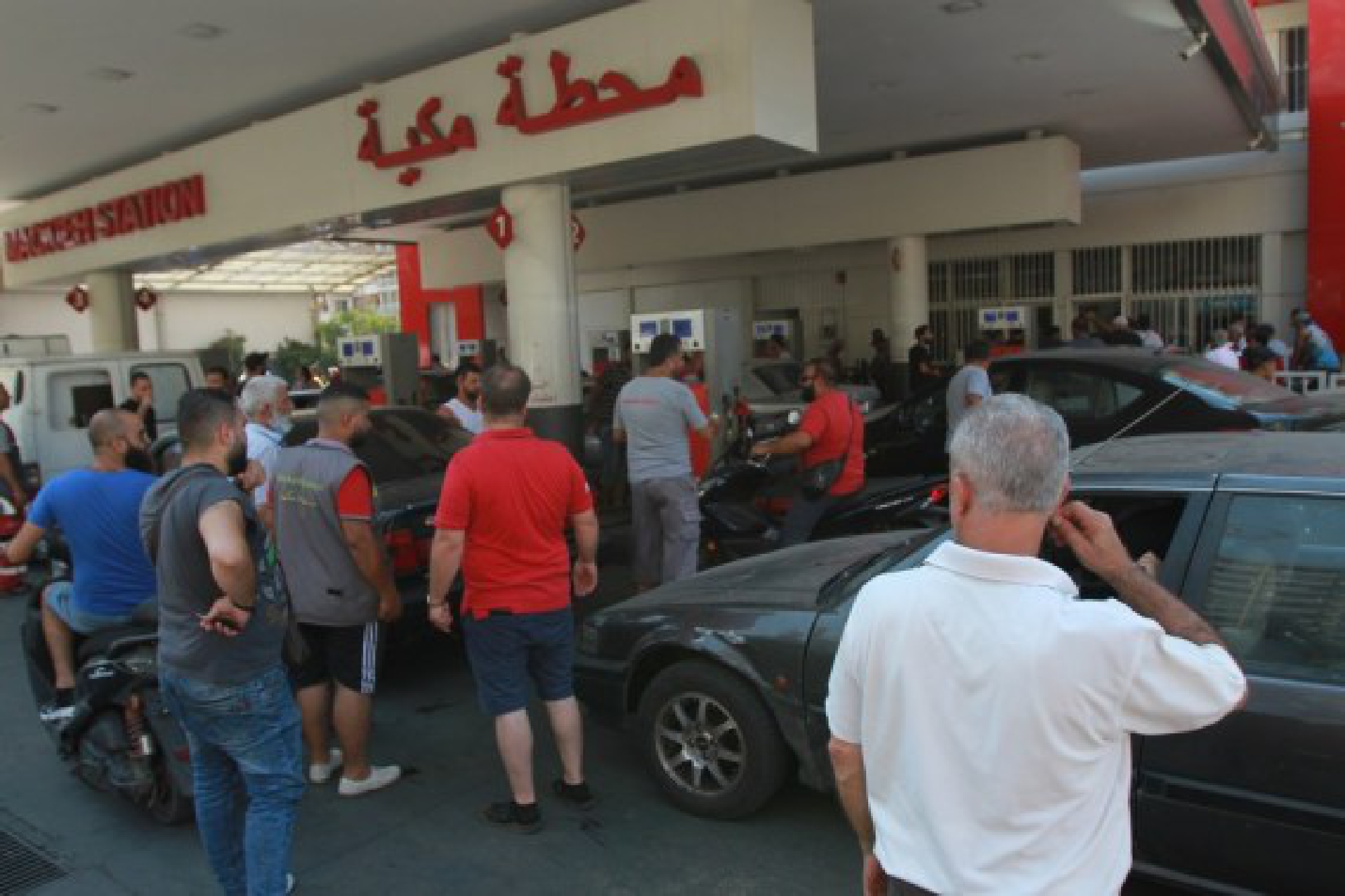 People wait to fill gasoline at a gas station in the city of Tripoli, northern Lebanon, on Aug. 12, 2021.