After the Florida building collapse, condos struggle to fund big repairs #SootinClaimon.Com

#SootinClaimon.Com : ขอบคุณแหล่งข้อมูล : หนังสือพิมพ์ The Nation.

https://www.nationthailand.com/international/40003109

After the Florida building collapse, condos struggle to fund big repairs


Condo owners are facing a financial reckoning in the wake of the building collapse in Surfside, Fla., that killed at least 86 people and left more than 40 unaccounted for.
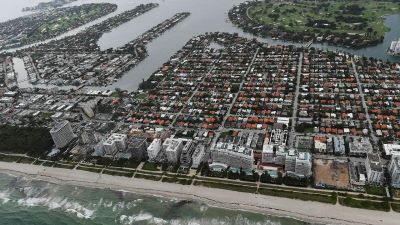
Across the country, residents and board members are discovering that they haven’t set aside enough money to pay for major repairs, like aging roofs. This funding crunch is rattling developers and property owners, and could increase housing costs for millions of Americans, who often view condominiums as a low-stress, lower-cost alternative to single family homes.

There are about 160,000 condominium buildings in the U.S. Though industry officials can’t put a price tag on how much maintenance is needed nationwide, Robert Nordlund, the CEO of Association Reserves – which advises condominium and homeowners associations on setting aside money for repairs – said the figure is “staggering.”

Of Nordlund’s 30,000 clients, he estimates that 30 percent of properties are significantly behind in their reserve funding, meaning they hold 30 percent or less than the total funding they need for planned and unexpected future projects. Another 40 percent properties are only in “fair” condition, holding just 30 to 70 percent of needed funding.

In a separate report issued last year, Community Associations Institute, an umbrella organization for resident-owned buildings and developments, found that 80 percent of associations faced unplanned repairs during the preceding three-year period.

Despite the enormity of the challenge, industry leaders says they don’t see signs of a financial “bubble,” where costs could overwhelm residents and creditors. One major reason for that, they say, is that property values in many places continue to rise despite the backlog of maintenance needs.

But industry leaders say the collapse of Champlain Towers South in Surfside, Fla., should be a wake-up call for condominium owners on the true costs of their units. And the collapse could also nudge cities and states to reevaluate whether more regulation is needed.

“The sad part about government is it takes a crisis or a tragedy to inspire legislation to protect the future,” said Jerry Hill, a former California state senator who in 2018 pushed to update laws in that state after a six people were killed in a balcony collapse in Berkeley.

The financial and regulatory challenges facing the condominium industry come about four decades after the first big wave of condominiums hit the market in the U.S.

Although a form of common-interest ownership has been around for at least a century, there were only about 10,000 condominium and homeowners associations in the U.S. by 1970, according to the CAI.

But in the mid-1970s, after federal tax reform permitted condominium mortgages to be deductible, the number of units began to proliferate.

Around the same time, real estate investors in big cities such as Chicago sought to boost returns on aging apartment complexes by converting buildings into condominiums. Condominiums also helped absorb an influx of residents into fast-growing states such as Florida, Texas and California during the 1980s.

ADVERTISEMENT

The number of condominium units in the U.S. increased by 115 percent between 1980 and 1990, according to the Census Bureau.

Some of the buildings constructed during the original condo boom are now due for major repairs and replacement projects, part of the financial crunch owners now face. According to Fannie Mae, the recommended life span for a metal roof and chimney on multifamily building, for example, is about 40 years.

But Jim Riley, director of architecture for Certa Building Solutions – which advises condominium associations on how to rehab troubled properties – said that some buildings are experiencing structural breakdowns far sooner than expected, accelerating the timeline for remedial work.

The biggest culprit, Riley said, is moisture infiltrating some structures, especially those that were poorly built in the first place. “Water is getting into places it was never intended to be,” said Riley, who primarily works in Florida and the Pacific Northwest but says challenges can extend far away from coastal communities. “It’s rusting rebar. It’s damaging wood framing and it’s causing all kinds of problems.”

Joel Meskin, an insurance executive, added the structural vulnerabilities can impact newer buildings, as well as older ones.

ADVERTISEMENT

“I’ve got co-ops in Manhattan built in the 1920s that aren’t having these kinds of issues because they were built with good materials and craftsmanship,” said Meskin, managing director of community association products and risk management at McGowan Program Administrators. “A lot of the new developments are being put together with what seems to be cardboard and super glue now, and a lot of that has to deal with the developers.”

When problems arise, condominium associations can quickly face financial distress if owners have not been proactively saving for repairs.

Nordlund said condominium associations should be putting aside at least 25 percent of their annual budget into savings for repairs, which is known as a reserve fund. The budget of most condo boards is made up of monthly fees paid by residents, which can range from a couple hundred dollars to a couple thousand.

When they don’t, the costs of unexpected repairs are passed onto owners through special assessments that can quickly test the ability of the owner to pay for them.

At the Champlain Towers South building, for example, the condominium board had been pushing unit owners to finance $15 million in roof and structural repairs in the weeks before the building collapsed on June 24.

The association had just $800,000 in reserves. The only way to pay for the project was to charge each unit a special assessment, ranging from $80,000 to $200,000. Owners balked at the high cost, leading to infighting and causing board members to resign.

In recent years, some condominium buildings have faced equally eye-popping special assessments. In 2007, the owners of units in Harbor Towers in Boston faced special assessments of $70,000 to $400,000 after the board discovered it need $75 million in repairs on the then 36-year-old building, the Boston Globe reported at the time.

John David Allen, a former property manager in northern Virginia, said many condominium owners do not understand that a well-managed building should be steadily increasing monthly assessments.

“It’s a big challenge for property management,” Allen said. “I recall often going to the president of my company and saying, ‘We have to go to talk to the board and tell them, ‘No, you cannot cut this (monthly condo) fee.'”

Although engineers describe the catastrophic collapse of Champlain Towers South as exceptionally rare, condominium boards often don’t have to look far to see what could happen if they push off maintenance for too long.

In 2016, a building at River Towers Condominium, a marsh-front complex in Northern Virginia built in the 1960s, suffered serious structural damage.

The center tower, which is shaped like a “T” when viewed from above, rested on steel support beams that dug into the ground but had not been properly secured by concrete, according to Bill Hicks, Fairfax County’s director of land development services.

As that steel was exposed to the elements over the years, the northern end of the building – equivalent to the bottom trunk of the “T” – dropped about two inches down and shifted out another two inches, bringing the nine stories above closer to the ground and nearby sidewalk.

County officials quickly ordered mandatory evacuations.

Residents “left their homes with what they had in their hands,” Hicks said. “Immediately, all of a sudden, folks realized they were not going to be back anytime soon.”

Laura Sebastianelli, 61, who bought her unit in 2013 and still lives on the second floor, said that in hindsight the foundation issues appeared months earlier. She recalls how green marble that abutted the north end of the building began popping off. Then, a floor-to-ceiling window in the front lobby fell out, too.

“Nobody anticipated that the building was moving,” she said. “People thought it (the window and marble damage) was vandalism or that it was a high windstorm, but nobody imagined that our building was shifting.”

About 32 residents were displaced from their condos for up to 9 months, as firm KCE Structural Engineers developed a plan for remediation.

Margaret Crowley, a 70-year-old retired teacher who was one of the residents who was displaced, said the condo board split the cost of repairs among all the owners in the three-tower complex. The owners were given the option to pay the sum all at once – $4,000, in her case – or add it onto their condo fees, which range from about $350 a month for her smaller unit to $900 or $1,000 for some of the larger properties.

The River Towers condo association board did not respond to multiple requests for comment. But Hicks said it was likely that the problem got as bad as it did because of a lack of routine maintenance or inspection.

Residents, meanwhile, said the ordeal makes them question why Virginia does not require a thorough inspection of aging condominium properties.

“Nobody wants to pay extra money for an inspection,” Sebastianelli said, adding she would still support more robust inspections if it was “something that could truly help make us all safe.”

But most states and municipalities don’t do much to regulate condominium associations.

Currently, only California and two counties in Florida – Miami-Dade and Broward – require condo associations to conduct structural inspections of aging buildings.

Only nine states – California, Delaware, Colorado, Hawaii, Nevada, Oregon, Utah, Virginia and Washington – require condominium associations to conduct a reserve study to map out how much a condominium association should set aside based on the expected life span of building’s various components.

Hawaii is the only state that mandates how much an association must hold for its capital projects.

After the Champlain Towers South disaster, which occurred in the midst of Miami-Dade County’s 40-year recertification requirement for condominium buildings, some lawmakers are calling for tighter re-inspection requirements.

After a fatal balcony collapse at Liberty Gardens apartment building in Berkeley, California passed a law requiring condominium associations to hire a structural engineer or architect to inspect balconies, decks, outdoor stairs and elevated walkways every nine years.

“It happened here. It happened there (in Surfside). It can happen anywhere,” said Hill, the co-sponsor of the legislation.

Industry leaders, however, are skeptical that more government regulation of condominiums is needed.

Dawn Bauman, CAI’s senior vice president, government and public affairs, noted that most states have a limited number of municipal building inspectors. Requiring buildings to hire their own engineers would increase costs on homeowners while also raising questions about how government could assure the reports being generated are accurate, Bauman added.

And although government mandates for reserve studies are limited, Bauman said the mortgage industry has its own set of requirements. Fannie Mae, Freddie Mac, and the Federal Housing Administration – which currently back about 70 percent of mortgages in condominium buildings – usually require a building to have a reserve plan before they underwrite the loan, Bauman said.

“The problem is being addressed by the financing side, as opposed to the regulatory side,” said Tom Skiba, CAI’s chief executive, who adds he remains more worried about the financial risks posed by “natural disasters” than he is widespread foreclosures or insolvencies of condominium associations due to of maintenance costs.

But Skiba and other industry leaders say the Champlain Towers South collapse means condominium owners across the country could soon discover that their housing choice isn’t as cheap as they had expected.

Meskin, the insurance executive, said developers and Realtors continue to sell condominiums under false assumptions that associations are adequately funded, or that monthly assessments will never increase, perhaps substantially.

“The problem is, at the end of the day, someone has to pay or you can end up in this type of situation again,” Meskin said. “I am leery of creating too much fear in people, because I hope this does not happen again, but it may, and that is a concern of a lot of us so people have to wake up.”

Published : July 12, 2021

By : The Washington Post · Kathy Orton, Teo Armus, Tim Craig

Europe is racing to vaccinate residents – but in some countries, undocumented immigrants have been left out #SootinClaimon.Com

#SootinClaimon.Com : ขอบคุณแหล่งข้อมูล : หนังสือพิมพ์ The Nation.

https://www.nationthailand.com/international/40003105

Europe is racing to vaccinate residents – but in some countries, undocumented immigrants have been left out


As Europe races to vaccinate its residents against covid-19 and outpace the highly infectious delta variant, efforts to inoculate the continent face a major gap: undocumented immigrants.

An estimated 4.8 million unauthorized immigrants lived in 32 European countries as of 2017, according to the Pew Research Center. Studies show they are more vulnerable to the coronavirus than European populations at large. But many countries have excluded them from vaccination drives in policy or in practice – and deep distrust among some immigrant populations toward authorities has caused complications for more inclusive campaigns.

Around 64 percent of adults have received at least one dose of a vaccine and roughly 44 percent are fully vaccinated across European countries surveyed by the European Centre for Disease Prevention and Control (ECDC). But the delta variant sweeping the continent has heightened urgency to vaccinate the rest.

Undocumented immigrants in the United States are eligible to get the vaccine, and the federal government has said it will not conduct immigration enforcement operations around vaccine sites.

In March, the E.U. published guidance calling for member states to include all immigrants in coronavirus vaccination programs, regardless of their legal status.

Still, vaccination policies and procedures vary widely across Europe, and an ECDC report last month found that low vaccination rates persist among some immigrant groups.

“The public health imperative (to vaccinate immigrants) is one that still has legs. But it’s an invisibility issue in some countries,” said Alyna Smith, an advocacy officer at the Platform for International Cooperation on Undocumented Migrants (PICUM).

The struggle to vaccinate this “invisible” population has underscored existing health care disparities. Public health experts say it may put a wrench in plans to return to normal life on a continent itching to shed coronavirus restrictions.

“It’s important to address the issue of migrants because it’s a priority group, it’s a vulnerable group because of their risk factors, their living and working conditions,” said Benedetta Armocida, a PhD candidate in global health at University of Geneva and a research assistant at the Institute for Maternal and Child Health-IRCCS Burlo Garofolo.

Even before the pandemic, undocumented immigrants faced steep barriers to health care in many European countries, according to Sally Hargreaves, a migrant health expert and lead author of the ECDC report.

In the past, countries including the United Kingdom have charged immigrants for health services that citizens receive free. Other countries have turned away those without documents. In some places, health authorities share information with immigration services.

Fears of deportation or hefty medical bills have deterred some undocumented immigrants from seeking treatment for chronic conditions that put them at increased risk of covid-19 complications, public health experts said. The same concerns are keeping some immigrants away from vaccination sites.

“What happens with any of these hostile policies is that it means that when you speak to lots and lots of migrants and the wider ethnic minority community, there’s a real lack of trust in health systems,” Hargreaves said.

A handful of countries have prioritized undocumented immigrants in their vaccination programs. The Netherlands’ vaccination plan explicitly mentions that the group is eligible. Portugal created a registration platform for undocumented immigrants to book vaccine appointments, and more than 19,000 had signed up as of June, according to PICUM.

Everyone residing in Belgium is eligible to get the vaccine, and the Belgian government has specified that data collected during the vaccination process can only be used for health purposes. The government has deployed mobile vaccination teams and worked with local authorities and civil society groups to reach immigrant populations. In the capital, Brussels, public transportation to vaccination centers is free.

But in some countries where everyone is theoretically entitled to receive the vaccine, administrative hurdles remain. Coronavirus vaccines are free and available to undocumented immigrants in the U.K. Booking an appointment, though, often requires being registered with a general practitioner, and some GPs “routinely refuse” to register migrants who can’t provide proof of address or ID, Anna Miller of Doctors of the World UK said.

Italian authorities, meanwhile, have sent mixed messages on whether unauthorized immigrants are eligible. Registration requirements mean they are often “de facto excluded,” Human Rights Watch senior researcher Belkis Wille said in a webinar last month.

The German government clarified this spring that undocumented people could access the vaccine. But a law requiring public authorities to report them to immigration officials remains in effect. The result: Undocumented migrants avoid the medical system, nongovernmental organizations (NGOs) say.

Other countries are making little or no efforts to inoculate undocumented migrants. In Hungary, where Prime Minister Viktor Orban has long burnished his anti-immigrant reputation, it appears to be nearly impossible to register for a shot without proof of legal residence, according to PICUM.

Greece began vaccinating refugees living in camps in early June, after what critics called a sluggish start. But migrants without documents still cannot access the vaccine registration platform, according to Lefteris Papagiannakis, a former vice mayor of Athens and current head of advocacy, policy and research at SolidarityNow, an NGO that works with refugees and migrants in Greece.

Papagiannakis blamed anti-immigrant politics, and said that the country’s stance may backfire as it seeks to revive its tourism industry.

“When you talk about tourism and you don’t mention people who work as undocumented (people) in the kitchens, in the hotels, doing the laundry, guarding the elderly, then you have a hole in the protection of public health,” he said.

Even in countries that have attempted to include undocumented immigrants, language barriers and misinformation may be contributing to vaccine hesitancy among migrant populations, the ECDC study found. And for those eager to get the shots, long work hours or difficulties traveling to vaccination sites can stand in the way, Hargreaves, the study author, said.

Some NGOs and municipalities have taken the lead in addressing these concerns. Doctors of the World UK has run information sessions across London and – with government support – is working to translate resources about the vaccine into roughly a dozen languages, Miller said. In Italy, health authorities in the region encompassing Rome ran an overnight vaccination drive earlier this month for “people on the margins of society,” the New York Times reported.

Still, rights groups are calling for the E.U. to play a more active role in coordinating member states’ efforts to reach marginalized groups. Human Rights Watch has also asked governments to drop documentation requirements for vaccine registration and to implement strict firewalls between health and immigration services.

The pandemic has exposed the danger of sidelining undocumented immigrants from health services, public health experts say – and the need for broader access in the future.

“Going forward, it’s not acceptable in high income countries for tens of thousands of people to operate outside of health and vaccine systems,” Hargreaves said. “The reality is, we’re all in this together, aren’t we?”

Published : July 12, 2021

By : The Washington Post · Claire Parker

Kazakhstan to Mark 2021 the Anniversary Year of the Nation #SootinClaimon.Com

#SootinClaimon.Com : ขอบคุณแหล่งข้อมูล : หนังสือพิมพ์ The Nation.

https://www.nationthailand.com/international/40003091

Kazakhstan to Mark 2021 the Anniversary Year of the Nation


The 2021 is a significant year to highlight the 30th anniversary of Independence of Kazakhstan – the country with unity and the 9th largest economy with a higher GDP than other Central Asian countries.

Kazakhstan celebrates a glorious spectrum of achievements as anniversaries of remarkable milestones and remembrance are recognized in 2021. The Capital Day on July 6 celebrates the settlement of Nur-Sultan, Kazakhstan’s capital city, as it marks the 23rd Anniversary on this day, which heralded a new dawn of prosperity and unity in the following decades.

Additionally, July 6, 2021 is the 29th Anniversary of diplomatic relations between the Republic of Kazakhstan and the Kingdom of Thailand. Having shared similar geopolitical characteristics as natural transit hubs of their continent, the two countries have maintained excellent diplomatic relations through 29 years and are looking forward to expediting mutual interests, especially in commerce and tourism, in the years to come.

The 2021 is a significant year to highlight the 30th anniversary of Independence of Kazakhstan – the country with unity and the 9th largest economy with a higher GDP than other Central Asian countries. From transformations, growth, reforms, advancement to international outreach, Kazakhstan has strongly convinced the world its strength today and a brighter future ahead.

H.E. Ms. Raushan Yesbulatova, Ambassador Extraordinary and Plenipotentiary of the Republic of Kazakhstan to the Kingdom of Thailand, disclosed that “The 2021 is a special year. With several past achievements and lucrative future trends, Kazakhstan has so much to celebrate, while heading to the next challenging phase.”

Not only a transcontinental country with unrivalled interethnic relations achieving by its unique ethnopolitics, Kazakhstan has also recognized global responsibility to the world and initiated by the First President of Kazakhstan Nursultan Nazarbayev abandoned its nuclear arsenal. The 2021 marks the 30th anniversary of Ban of Semipalatinsk Nuclear Tests, proving Kazakhstan’s vision to promote global peace and environmental responsibility.

“The stronger than death” monument in Kazakhstan. Photo by qazaqstan3d.kz

Respecting to mark the termination of nuclear tests, the Republic of Kazakhstan together with a large number of sponsors and co-sponsors had initiated a commemoration on the closure of Semipalatinsk Nuclear Test site by declaring the International Day against Nuclear Tests on 29 August 1991, according to the Resolution A/RES/64/35 adopted by the United Nations General Assembly in 2009. Built in Semey, “The stronger than death” monument is one of significant landmarks in Kazakhstan to signify peace.

Literally, “Kazakh” means Free and “Stan” means Land. Kazakhstan translates into a Land of Free People, which has been reflected in Kazakhstan’s unending endeavor to treasure social, economic and political stability above all.

“Kazakhstan is steering toward a new era through consistent reforms, be it social, economic, political or domestic. Armed with the readiness and investment potential, the country welcomes every possible opportunity. Moreover, Kazakhstan is rising as an aviation hub in the west of country in Europe-Asia direction. Therefore, plenty opportunities are available for foreign investors and global companies.”

In order to achieve the remarkable reform scheme, which embraces social protections, healthcare reforms and education reforms, President of Kazakhstan, Kassym-Jomart Tokayev, has a far-flung vision to accentuate the concept of “Listening State” in the framework of his reform implementation. Underpinned by the intention to correctly listening and responding to the citizen, Kazakhstan expects to become a fair state that protects the interests of people through appropriate law enforcement and judicial systems. Beyond the protection of citizen’s rights, President of Kazakhstan, Kassym-Jomart Tokayev, is looking forward to achieving socio-economic development, which is an essential element that strengthens the position of Kazakhstan on an international level.

As a recognized locomotive of regional integration in Eurasia, the government of Kazakhstan has established certain centers to serve foreign investor’s community with assistance in various aspects, such as networking, information, financial support, permits, etc. Investment opportunities are open in several segments, spanning mineral resources, healthcare, exports, education, technology, transportation and logistics, agribusiness, tourism and many more.

To Kazakhstan, the 2021 is hence a special year to mark. Upon the celebration of meaningful milestones, the country is undergoing a series of essential transformations to prepare for a brighter future – with abundant resources, solid stability, endless efforts and diverse opportunities that the country offers to the world.

Published : July 11, 2021

Indonesia faces shortage of medical oxygen with surging COVID-19 cases. #SootinClaimon.Com
#SootinClaimon.Com : ขอบคุณแหล่งข้อมูล : หนังสือพิมพ์ The Nation.

https://www.nationthailand.com/international/40003090

Indonesia faces shortage of medical oxygen with surging COVID-19 cases.
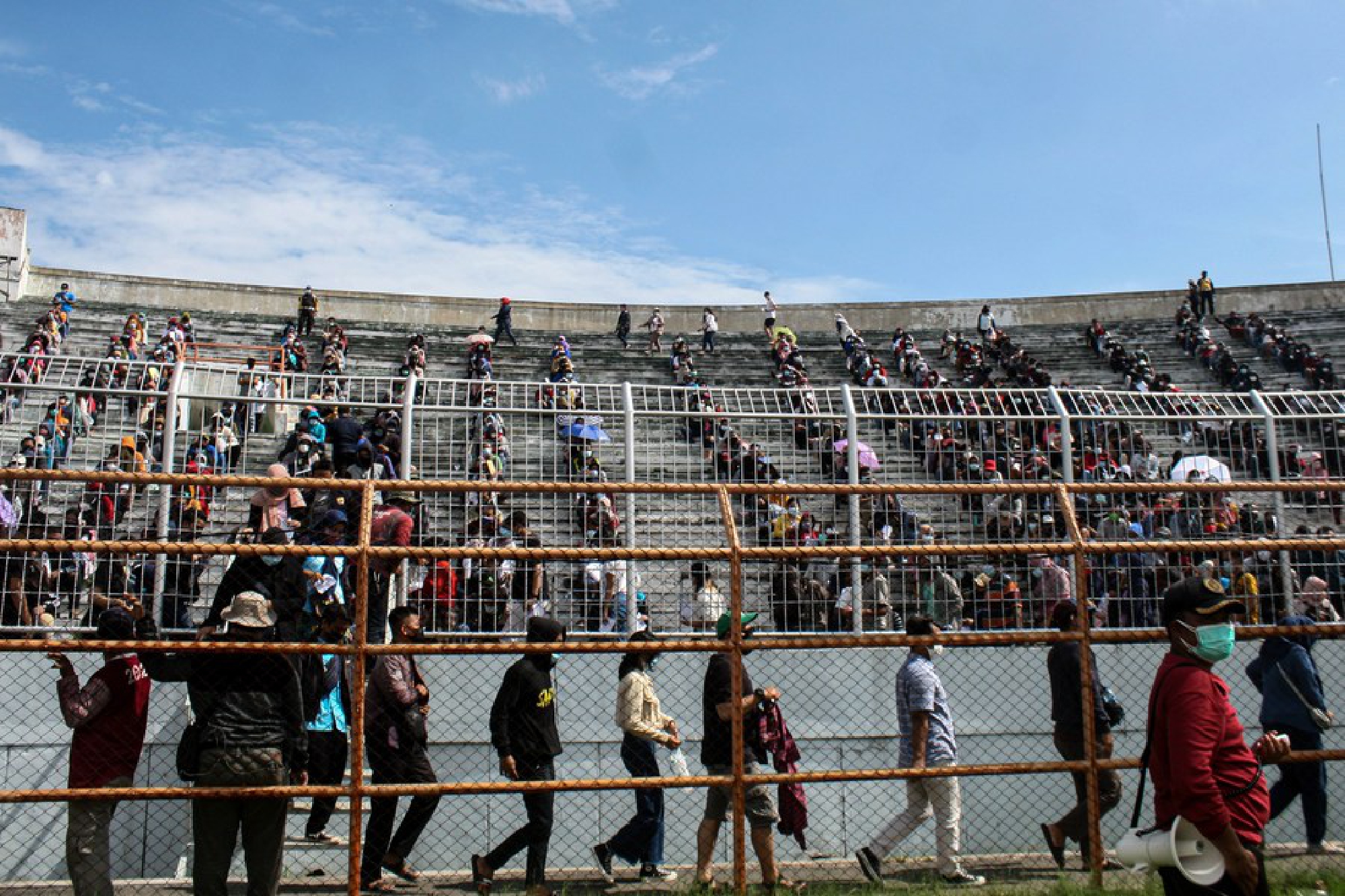

Oxygen supplies to Indonesian hospitals are in scarcity. The COVID-19 cases in the country rose by 35,094 in the past 24 hours to 2,491,006.

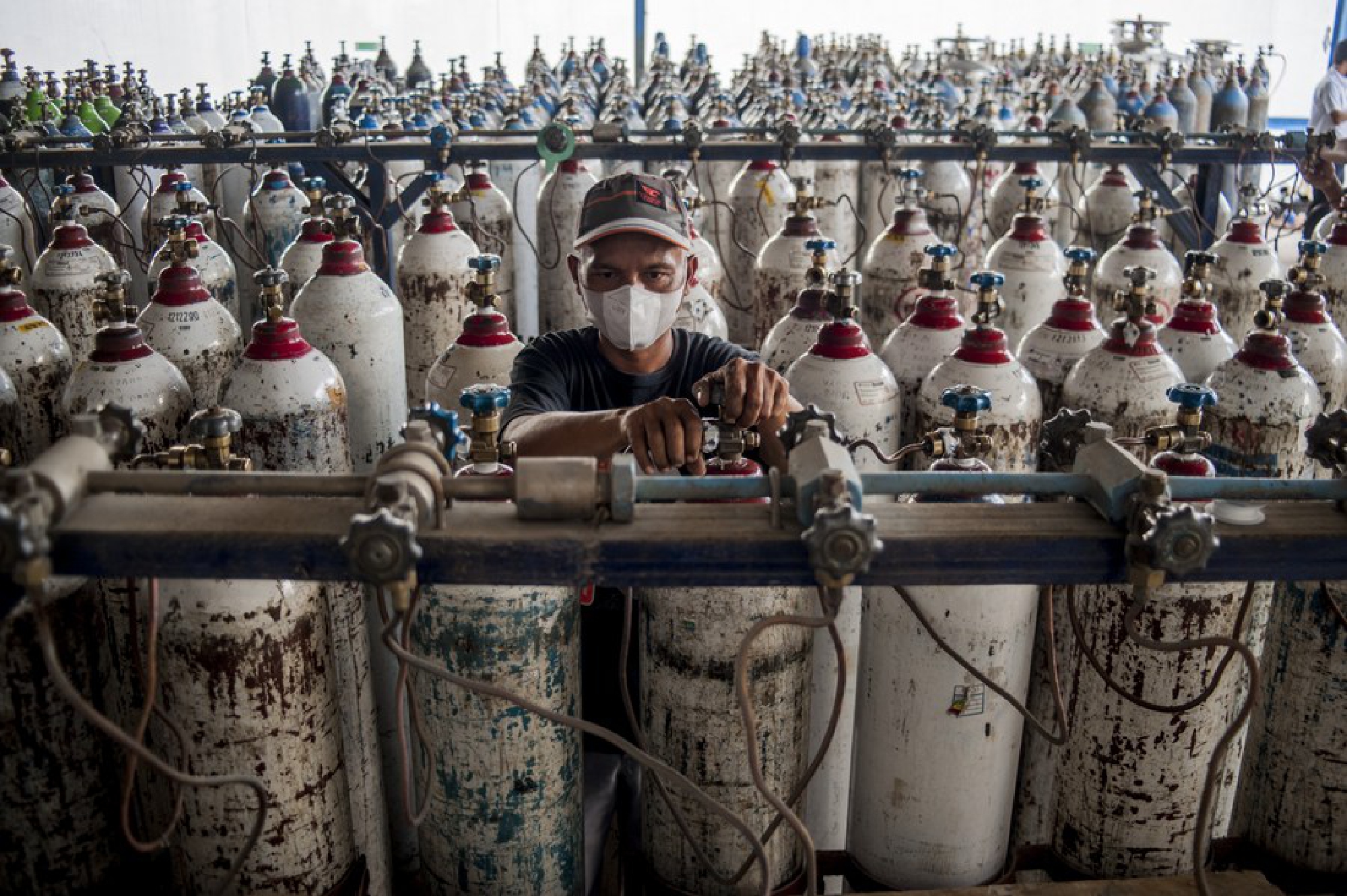
Indonesia is facing a shortage of medical oxygen as many hospitals across the country are in dire need of such an essential therapeutic substance to cope with the overwhelming number of COVID-19 patients.
Oxygen supplies to hospitals in Indonesia are in scarcity as the number of COVID-19 cases continues to surge, and some of them have to close their doors to new patients with respiratory distress.
The COVID-19 cases in Indonesia rose by 35,094 in the past 24 hours to 2,491,006, with the death toll adding by 826 to 65,457, the Health Ministry said on Saturday.
The Indonesian Association of Public Health Experts (IAKMI) has predicted that in June and July there would be a significant increase in the number of COVID-19 cases.
“The increase in cases and the oxygen scarcity are due to the government’s inability to predict and anticipate the situation,” Hermawan Sapura, a member of the IAKMI Expert Council, told the Kompas daily.
The increase was measured by several factors, namely the massive crowds due to major national holidays, the euphoria of a nationwide vaccination drive and also the disobedience of people who were tired of practicing health protocols. Indonesia faces shortage of medical oxygen with surging COVID-19 cases.Indonesia faces shortage of medical oxygen with surging COVID-19 cases.

From early June to early July, at least 324 people died as they had to make self-isolation at homes with inadequate health facilities, according to LaporCovid-19, a coalition of people to share information about COVID-19, recently.
“People flocked to hospitals, which became full and overwhelmed, running out of oxygen, so that many died outside the hospitals. Health facilities have collapsed,” Said Fariz Hibban from LaporCovid-19 said.
According to Secretary General of the Indonesian Hospital Association (Persi) Lia Gardenia Partakusuma, several factors have caused the crisis of oxygen stockpile in the country.
The first is the high demand for oxygen in hospitals, which is skyrocketing with the spike in the number of COVID-19 patients, she pointed out.
“For example, one hospital usually needs three tons of oxygen for three days to a week, but now it runs out in one day. There is even an increase of up to five times from before,” she said, adding that the oxygen demand in the capital Jakarta as well as in West Java and Banten provinces is 750 to 800 tons per day, whereas in normal times it was only around 150-200 tons.
The nearly five-fold increase is not matched by the ability to deliver oxygen from distributors to hospitals, she added. Indonesia faces shortage of medical oxygen with surging COVID-19 cases.Indonesia faces shortage of medical oxygen with surging COVID-19 cases.
What’s more, the lack of oxygen stockpile is caused by the limited number of tubes which are not easy to produce. As a result, oxygen cylinders become scarce and expensive.
“Another problem is that there are people who are not sick, but they just keep oxygen tubes at homes. Some even keep oxygen stocks of up to four tubes. That will affect small clinics that need oxygen cylinders because they are so scarce,” she said.
Coordinator for the implementation of the emergency public activity restrictions (locally known as PPKM) Luhut Binsar Pandjaitan admitted at a press conference on Tuesday that the oxygen supply was insufficient to meet the needs.
Luhut, who is also the Coordinating Minister for Maritime and Investment Affairs, said the current availability of oxygen based on calculations is capable of serving 5,000 cases per day, or even 60,000-70,000 cases per day if the worst happens.
He also explained that the government has diverted 100 percent of industrial oxygen for health.

“We order that this oxygen is purely used to help people who are isolated and in intensive care. While for the ones with mild symptoms, we use oxygen concentrators,” the minister added.
Luhut further said the government has prepared for a worst-case scenario if the number of COVID-19 cases increases to 40,000 or more with supplies of oxygen and medicines to hospitals.
Industry Minister Agus Gumiwang has consulted with the Indonesian Industrial Gas Association (AGII) to ensure the supply of medical oxygen gas to hospitals which treat COVID-19 patients.
“I have coordinated with the association and they are committed to maintaining the supply of oxygen to hospitals in the midst of rising demands due to the increase in COVID-19 cases,” Gumiwang said. Indonesia faces shortage of medical oxygen with surging COVID-19 cases.Indonesia faces shortage of medical oxygen with surging COVID-19 cases.

Published : July 11, 2021

By : Xinhua

Protection of giant pandas wont be weakened in China: official #SootinClaimon.Com

#SootinClaimon.Com : ขอบคุณแหล่งข้อมูล : หนังสือพิมพ์ The Nation.

https://www.nationthailand.com/international/40003081

Protection of giant pandas wont be weakened in China: official


Chinas protection of giant pandas will not be weakened despite their no longer being endangered.

Giant pandas are still first-class key protected wild animals in China, and are seen as the flagship and umbrella species of China’s endangered-species protection, according to the China’s Forestry and Grassland Administration.
The national treasure has become a trending topic in China after an official of the Ministry of Ecology and Environment said at a press conference earlier this week that it has been downgraded from “endangered” to “vulnerable,” as the population of giant pandas living in the wildness has reached 1,800.
The downgrade is a testimony of the achievements of our giant panda protection efforts and shows the recognition of the international community for China’s efforts in this area, the Forestry and Grassland Administration said.
Over the years, China has taken a raft of measures to strengthen the protection of wild animals, especially giant pandas. So far, the country has established 67 nature reserves for giant pandas, effectively protecting 53.8 percent of giant panda habitats and 66.8 percent of the wild giant panda population.
The administration said that continued efforts will be made to strengthen the protection of giant pandas in accordance with domestic and international requirements.

Published : July 11, 2021

By : Xinhua

Indonesia in need of respirators as Asean reports over 66,700 Covid cases #SootinClaimon.Com

#SootinClaimon.Com : ขอบคุณแหล่งข้อมูล : หนังสือพิมพ์ The Nation.

https://www.nationthailand.com/international/40003077

Indonesia in need of respirators as Asean reports over 66,700 Covid cases

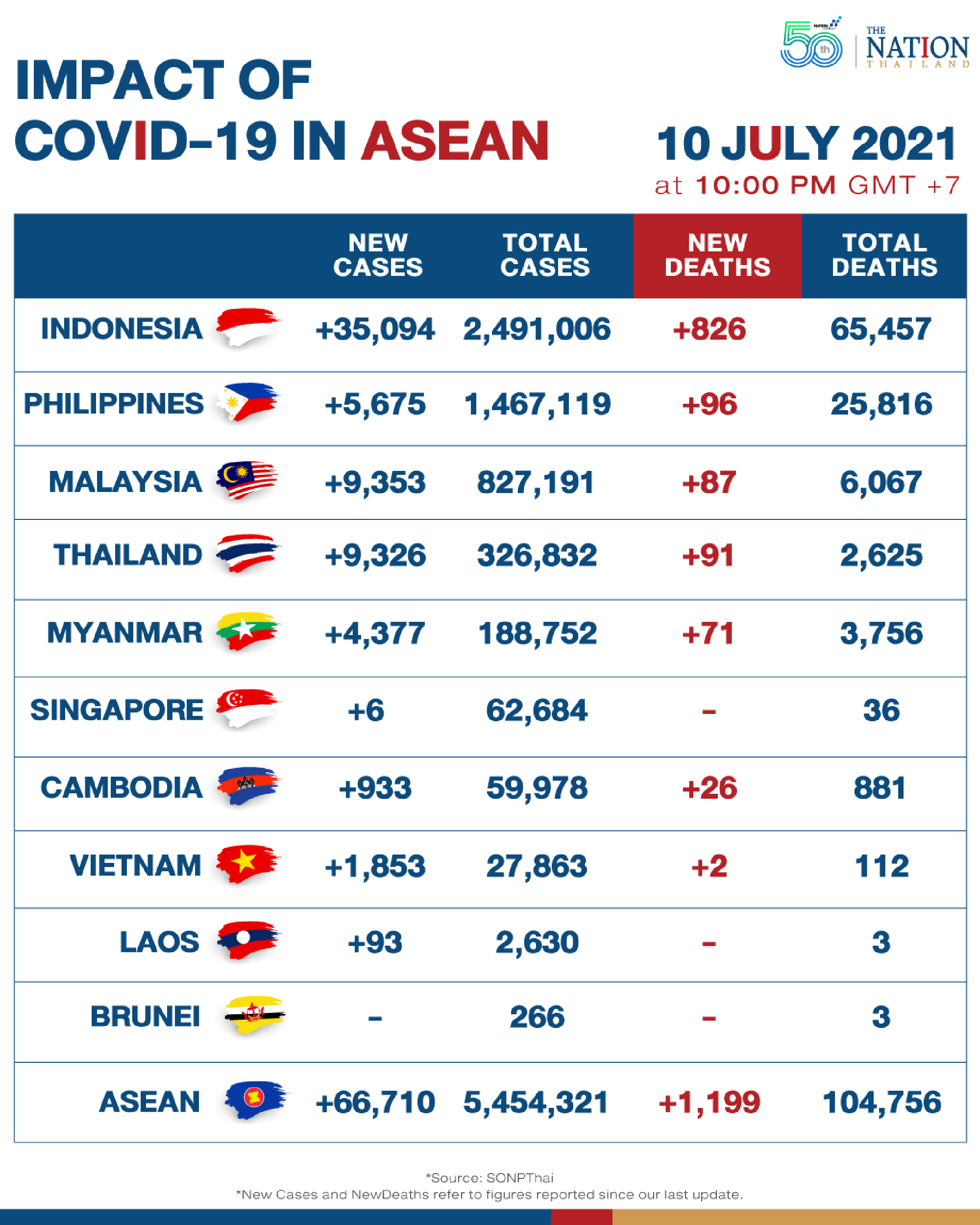
The Asean region saw 66,710 Covid-19 cases on Saturday, lower than Friday 69,472, but deaths were slightly higher at 1,199 from 1,189 the previous day.

Total Covid-19 patients in Southeast Asia reached 5,454,321 with 104,756 deaths.

Indonesia is seeking help from other countries as the country is facing oxygen shortage for treating Covid-19 patients.

On Friday, Indonesia received oxygen tanks and other medical supplies from Singapore, as well as 1,000 respirators from Australia.

Indonesia plans to purchase 36,000 tonnes of oxygen and 10,000 respirators from Singapore.

Malaysia reported that 2,341 medical staff had been infected with Covid-19 but none one of them had developed severe symptoms as they had already received two doses of vaccine jabs.

Indonesia in need of respirators as Asean reports over 66,700 Covid casesIndonesia in need of respirators as Asean reports over 66,700 Covid cases

Published : July 11, 2021

By : The Nation

Deadly standoff in Venezuela leaves over 20 dead, officials say, in latest escalation of gang violence #SootinClaimon.Com

#SootinClaimon.Com : ขอบคุณแหล่งข้อมูล : หนังสือพิมพ์ The Nation.

https://www.nationthailand.com/international/40003073

Deadly standoff in Venezuela leaves over 20 dead, officials say, in latest escalation of gang violence


Three days of intense fighting between state security forces and armed criminal groups in the most populous district of Venezuelas capital has left more than 20 people dead and dozens displaced in the nations latest escalation of gang violence, officials said Saturday.

Since Wednesday, gunshots have blared throughout much of Libertador as gang members operating from Cota 905, a slum in the southwestern part of the city, and several adjacent neighborhoods, exchanged gunfire with police and military forces.

By Friday afternoon, state security was able to penetrate the maze of houses that compose the hill-hugging sector of Cota 905, seizing ammunition, weapons and even an ocelot kitten – a threatened feline species – local media reported.

At a briefing aired on state television Saturday, Interior Minister Carmen Meléndez said 22 “delinquents” had been killed as well as a sergeant with the National Guard and three police officers. Meléndez sat next to tables displaying bullets, weapons and drugs authorities said had been seized. Twenty-eight people were injured during the ordeal, which the minister said involved 3,110 officers from various state agencies.

This latest burst of violence comes as Venezuela remains mired in a deep political, economic and humanitarian crisis. In recent years, Maduro has tightened his grip over the nation’s institutions, but he is still struggling to assert state control in long-neglected parts of the country – and even in the capital. Analysts believe the gangs are attempting to gain broader territorial control amid a power vacuum fueled by lack of policing.

Preliminary information from security analysts indicates the violence may have sparked after a feared gang leader was injured in a standoff with police.

“That unleashed their fury,” said Luis Izquiel, a lawyer and professor of criminology at the Central University of Venezuela. “But it’s also the case that they wanted to expand their territory to the neighboring slum, La Vega, which is larger, more consolidated, more commercial and has more people than Cota 905.”

As bullets began flying, people hit in their bathrooms and underneath beds. Others fled and began walking to the city’s downtown plazas – mattresses and other belongings in hand.

“A night of sleeping in the streets is better than waking up dead,” one displaced resident of El Cementerio told The Washington Post.

“I managed to leave with my family this [Friday] morning,” said the resident, who asked not to be identified out of fear of retaliation. “Everyone immediately thinks we’re criminals because we live in Cota 905, but it’s the gangs – they have no shame. They force us to pay ransom and they control all of our lives. We can’t count on the police because, if we denounce the crimes, we get killed. My neighbor tried and he got shot through his skull.”

Since the conflict erupted, Alfredo Infante, a priest in a community near standoff, has listened to harrowing testimonies from parishioners and their families. One woman said her home had been stormed and her possessions robbed. Another wondered if it was safe to sleep inside. Others prayed that God would protect them.

“These have been very difficult days, and a lot of people are stuck between the bullets flying from both sides,” Infante said. “It has been a war that has disrespected all of the humanitarian codes.”

Such experiences underscore how the estimated 300,000 people in Cota 905 are often caught in the crossfire between two violent actors fighting for control.

Following the government’s decision to withdraw security forces as part of the 2013 “Peace Zones” policy, gangs stepped in and now hold a monopoly on power in the area, Izquiel said.

“The government negotiated with the gangs, and withheld all the security forces in exchange for these groups diminishing violence and letting go of their weapons,” the criminology professor said. “This was an inflection point – it allowed the gangs to strengthen their grip, and it completely backfired.”

ADVERTISEMENT

Now, neighborhoods are presided over by mega-gangs – large criminal groups composed of several smaller ones. The gangs often exert social control through nonviolent means, like handing out food and giving toys to kids during national holidays.

“They basically operate under a feudal system that provides some sense of normalcy to people,” he said. “They’d rather live under a system they know how to navigate than under an unknown one in which violence is rampant.”

Videos circulating through social media show a group of women protesting the presence of state security forces.

“We ask the police to withdraw from Cota 905,” they screamed into a megaphone while beating pans. “Stop this violence.”

For Paola Bautista de Alemán, president of Instituto FORMA, a Venezuelan think tank dedicated to economic, social and political studies, people’s skepticism of state actors stems from the violent ways in which they have attempted to regain control.

ADVERTISEMENT

“And now we see people who have endured at least 48 hours of pure violence,” she said.

According to a United Nations fact-finding mission, Venezuela has one of Latin America’s highest rates of killings by state agents. The country’s police and security forces killed more than 20,000 people between 2016 and 2021, alleging “resistance to authority,” the investigation concluded.

The 411-page report details how many young men, targeted “due to the real or perceived involvement in criminal activities,” were killed as security forces unexpectedly barged into houses during crime-fighting operations. A common practice was to cover up extrajudicial executions by planting weapons and shooting at walls to simulate a confrontation.

Maduro, for his part, hailed the operation in Cota 905 a victory.

“Venezuela today more than ever is stronger from a constitutional perspective,” he wrote on Twitter. “Up against terrorism, Peace will always win.”

The standoff, nonetheless, left many on edge. Some bullets pierced apartment windows – reminding inhabitants of war-mired zones abroad. The gunfire was even audible from surrounding middle-class neighborhoods.

“It sounds like Kabul,” Pedro Pablo Peñaloza, a local journalist, said.

Published : July 11, 2021

By : The Washington Post · María Luisa Paúl

England heads to the Euro 2020 final, bringing with it a new kind of post-Brexit English fandom #SootinClaimon.Com

#SootinClaimon.Com : ขอบคุณแหล่งข้อมูล : หนังสือพิมพ์ The Nation.

https://www.nationthailand.com/international/40003072

England heads to the Euro 2020 final, bringing with it a new kind of post-Brexit English fandom


LONDON – On Sunday at Wembley Stadium, England will face Italy in the European Championship final as it seeks its first major tournament title since the 1966 World Cup. The run through Euro 2020 has turned Manager Gareth Southgate into a bit of folk hero. It has sent fans into a frenzy. Prince George even showed up.

But amid all that, England’s success has revealed another story, one about a new kind of post-Brexit Englishness.

The team has become a symbol of a diverse, multicultural nation, showcasing an Englishness that many are excited by.

“My teenage self would have been surprised if you’d said we’d get our inclusive national identity from football,” said Sunder Katwala, director of the think tank British Future. But this team, he said, was providing a “positive vision of a modern, shared English identity.”

In England’s semifinal against Denmark, seven of its starters were born abroad or had a parent or grandparent who was born overseas, according to the Migration Museum in London.

Some of England’s players – such as Marcus Rashford, whose grandmother is from the West Indies island of Saint Kitts – have moved into the social justice sphere by campaigning for free meals for schoolchildren during the holidays. Team captain Harry Kane, whose father is Irish, has worn a rainbow arm band in solidarity with members of the LGBTQ community.

Raheem Sterling, who moved from Jamaica to London when he was a child, was awarded an MBE from the queen – honored as a member of the Most Excellent Order of the British Empire – for his work on anti-racism, which continues.

Before kickoff Sunday, the players are expected to take a knee in solidarity with the Black Lives Matter movement, as they have for the duration of the tournament.

In early games, fans booed the gesture. As the team progressed, those boos were washed away by wild cheering. Likewise, Prime Minister Boris Johnson, who initially refused to condemn those who were jeering at the players, has urged people not to boo.

Priti Patel, Britain’s home secretary who has taken a tough stance on illegal immigration, accused the team of engaging in “gesture politics.” Those same politicians are now showing support for the home team.

Sport is a unifying force in England – nearly half the population tuned in to watch the semifinals – and for many it has been a welcome respite after the ugly, divisive Brexit culture wars propelled by anti-immigrant sentiment.

John Denham, director of the Centre for English Identity and Politics at the University of Southampton, said the tournament seems to be “causing large numbers of people to say, ‘there’s an Englishness that I feel comfortable with.’ “

To be sure, he said, that “most people cheering on England haven’t had a problem at all with English identity” but there is a section of society who are unsure of whether they want to call themselves English, or who may be from minorities and unsure if calling themselves English is open to them.

“That falls away,” he said, in this moments like this “where you have a visual representation about what England can feel like, and so people get a sense of solidarity with the football team, as well as with other people in the nation who are cheering that team on.”

Southgate, the team’s manager, has also played a significant role in connecting people from different backgrounds.

At the beginning of the tournament, he published a remarkable “Dear England” letter to defend his working class, multiethnic, multifaith team, filled with the children or grandchildren of immigrants.

“The idea of representing ‘Queen and country’ has always been important to me,” Southgate wrote. ” . . . Regardless of your upbringing and politics, what is clear is that we are an incredible nation – relative to our size and population – that has contributed so much to the arts, science and sport.”

Southgate hailed “the lads.”

“Their backgrounds are humble. For them to make it to this point as one of the chosen few in England’s history . . . well, it simply doesn’t happen without pride,” Southgate wrote. “This is a special group. Humble, proud and liberated in being their true selves.”

But he then pointed to the cruelty seen on social media, some of it directed at his players.

“Why would you choose to insult somebody for something as ridiculous as the colour of their skin? Why?” he asked. “Unfortunately for those people that engage in that kind of behaviour, I have some bad news. You’re on the losing side. It’s clear to me that we are heading for a much more tolerant and understanding society, and I know our lads will be a big part of that.”

“I am confident that young kids of today will grow up baffled by old attitudes and ways of thinking. For many of that younger generation, your notion of Englishness is quite different from my own,” the coach added. “I understand that on this island, we have a desire to protect our values and traditions – as we should – but that shouldn’t come at the expense of introspection and progress.”

Historian Richard Weight, author of the book “Patriots,” which sought to understand Englishness, said he heard the booing when England players took a knee and heard the booing in the stadium when other anthems were played.

But Weight said there was no longer an assumption that England should be doing better than it usually does just because it codified the rules of the game. There’s “less arrogance now” and “less entitlement,” meaning more realism, that England is just one part of the world.

Weight said the tournament, after years of division over Brexit, “allows people to have a kind of cultural nationalism versus a political nationalism.”

“The whole thing is less testy,” he said, a more gentle feeling, focusing on the good things and not the bad.

On Friday, English Heritage, a charity that looks after iconic sites across the country, hoisted St. George’s Cross flags at 11 locations – one for each player on the field – such as Stonehenge and Carlisle Castle. The flags are specially designed to feature the surnames of most people in England. The charity also launched a website where users can plug in their surname and see its meaning.

“People from England come from all places,” said Matt Thompson, the charity’s head collections curator. But while people may feel a strong surge of English identity now, during peak football fever, he said the “trick is how to bottle that enthusiasm beyond 90 minutes.”

Published : July 11, 2021

By : The Washington Post · Karla Adam, William Booth

Colombia investigates 4 companies in connection with Haitian presidents assassination #SootinClaimon.Com

#SootinClaimon.Com : ขอบคุณแหล่งข้อมูล : หนังสือพิมพ์ The Nation.

https://www.nationthailand.com/international/40003066

Colombia investigates 4 companies in connection with Haitian presidents assassination


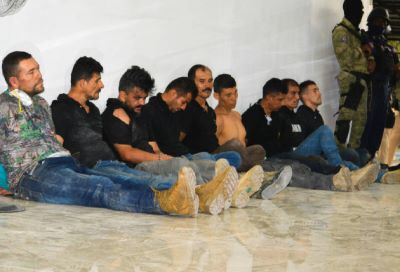
“The official information we have (from Haiti) is that 15 people have been captured, and we have been asked about the Colombian nationals as well as two people who died in a police procedure,” Director of the Colombian Police Jorge Luis Vargas said during a press conference.

Colombia is investigating four companies for hiring 17 former Colombian military personnel allegedly involved in the assassination of Haitian President Jovenel Moise, authorities said on Friday.

“The official information we have (from Haiti) is that 15 people have been captured, and we have been asked about the Colombian nationals as well as two people who died in a police procedure,” Director of the Colombian Police Jorge Luis Vargas said during a press conference.

The Haitian president was assassinated on Wednesday at his residence by a commando of mercenaries.

The four companies under investigation allegedly hired the ex-servicemen, initially taking them to the Dominican Republic and later moving them to Haiti, Vargas said.

“We began to gather a database with the 196 countries that make up Interpol for timely clarification, which allows us to share the collected data with Haiti,” he added.

“We offer all possible help to find the truth about the material and intellectual perpetrators of the assassination,” Colombian President Ivan Duque tweeted on Friday, adding that he had held a phone conversation with Haiti’s Interim Prime Minister Claude Joseph. 

Seized guns are displayed at a press conference in Port-au-Prince, HaitiSeized guns are displayed at a press conference in Port-au-Prince, Haiti
Published : July 10, 2021

By : xinhua

China provides 500 million COVID-19 vaccine doses to intl community. #SootinClaimon.Com

#SootinClaimon.Com : ขอบคุณแหล่งข้อมูล : หนังสือพิมพ์ The Nation.

https://www.nationthailand.com/international/40003060

China provides 500 million COVID-19 vaccine doses to intl community.


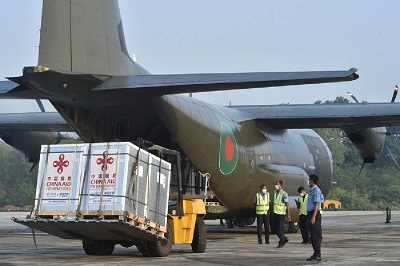
China has provided more than 100 countries and international organizations with 500 million doses of COVID-19 vaccines and concentrates, accounting for one-sixth of the current global COVID-19 vaccine production.

Guo Xuejun, deputy director-general of the department of international economic affairs at the Foreign Ministry, said during an interview with Xinhua that China has also actively supported other developing countries in producing vaccines to expand the global vaccine capacity.
China has always accommodated domestic and foreign needs for COVID-19 vaccines, said Guo, adding that China opposes vaccine nationalism.
With the help of the Chinese government, Chinese vaccine enterprises have carried out joint vaccine production in countries including the UAE, Indonesia, Malaysia, Egypt, Brazil, Turkey, Pakistan and Mexico, with production exceeding 200 million doses, Guo said.
Among the 140 countries that have signed Belt and Road cooperation documents with China, 84 countries have proposed introducing Chinese vaccines in the first half of this year, said Guo, adding that China has made a positive response to all these countries and provided vaccines.
Guo said that in the future China will continue to work with all parties to enhance vaccine cooperation, further improve the accessibility and affordability of vaccines in developing countries to make a greater contribution to fighting the pandemic and promoting economic recovery.

Published : July 10, 2021

By : Xinhua