McConnell, GOP face splits with Trump over defense, relief #SootinClaimon.Com

#SootinClaimon.Com : ขอบคุณแหล่งข้อมูล : หนังสือพิมพ์ The Nation.

McConnell, GOP face splits with Trump over defense, relief

InternationalDec 27. 2020Senate Majority Leader Mitch McConnell, R-Ky., wears a protective mask while walking to his office at the U.S. Capitol in Washington, D.C., on Dec. 21, 2020. MUST CREDIT: Bloomberg photo by Oliver Contreras.Senate Majority Leader Mitch McConnell, R-Ky., wears a protective mask while walking to his office at the U.S. Capitol in Washington, D.C., on Dec. 21, 2020. MUST CREDIT: Bloomberg photo by Oliver Contreras.

By Syndication Washington Post, Bloomberg · Laura Davison, Billy House

Congressional Republicans, led by Senate Majority Leader Mitch McConnell, face high-stakes decisions in coming days over two giant pieces of bipartisan legislation that President Donald Trump savaged this week.

Trump on Wednesday vetoed a $740.5 billion annual defense spending bill, which passed both chambers of Congress with greater than two-thirds majorities earlier this month.

On Saturday, Trump tweeted that he will “not stand by and watch this travesty of a bill happen without reigning in Big Tech,” but the outcome of the legislation now rests with lawmakers. House Speaker Nancy Pelosi plans a vote to override that veto next week, with McConnell’s office pledging guidance on his intentions after the House acts.

Also in play is a mammoth $2.3 trillion covid-19 relief and government funding bill. Since the measure passed this week Trump has attacked it repeatedly for including “wasteful” spending and for having insufficient stimulus checks — after the White House earlier signaled he would sign the legislation.

House Republicans blocked a bid Thursday by Majority Leader Steny Hoyer to increase the payments to $2,000 — up from the $600 previously authorized. Democrats blocked a Republican counterproposal that would repurpose foreign-aid money in the portion of the bill to fund the government.

House GOP leader Kevin McCarthy, in a letter to colleagues on Wednesday night, said Congress should “reexamine how our tax dollars are spent overseas,” though those provisions were part of a bipartisan appropriations process.

Democrats plan to vote Monday on new legislation to codify the $2,000 payments for most American adults and children. They could also vote on another stopgap measure to fund the government past the current spending deadline of midnight that day. While that would avert a government shutdown if the Senate also passes it and the president signs it, it is still unclear what Trump plans to do with the larger pandemic relief and annual spending bill Congress passed on Dec. 21. The bill has been flown to Florida, where Trump is spending the holidays, according to a person familiar with the matter.

“We can only do in the House what we can do,” Hoyer told reporters Thursday. “we are not going to let the government shut down. We are not going to the let the American people down from our perspective.”

David Popp, a spokesman for McConnell, didn’t respond to questions about Trump’s call for increased direct payments and Pelosi’s plan to pursue this in the House.

How Republican leaders respond to Trump’s criticisms could affect the outcome of the Jan. 5 Georgia runoff elections that will determine control of the Senate for the next two years — and whether McConnell will continue to oversee the flow of legislation and political and judicial nominations in Washington.

Trump rejected the defense policy bill on Wednesday, saying the legislation was a “gift” to China and Russia and failed “to include critical national security measures.”

Trump wanted to attach to the defense measure an unrelated provision to eliminate Section 230 of the Communications Decency Act, which protects technology companies from liability for most content published by their users. He had also criticized the legislation because it contained a provision for renaming military installations that honor Confederate generals.

The chairman of the Senate Armed Services Committee, Jim Inhofe, said the defense bill is “vital to our national security and our troops.” Inhofe, an Oklahoma Republican, said Trump’s complaints about technology liability could be addressed in different legislation.

“I hope all of my colleagues in Congress will join me in making sure our troops have the resources and equipment they need to defend this nation,” Inhofe said in a statement shortly after Trump vetoed the bill.

The bill, which includes military pay raises, hazard pay and health benefits for soldiers, has successfully cleared Congress for the past 59 years.

Lawmakers’ plans to override Trump’s defense bill veto next week will be the first time Trump is overruled by Congress. If Trump vetoes the combined pandemic relief and spending bill, that could be the second. Trump has rejected several bills during his tenure, but Congress has yet to successfully override any of his vetoes.

The decision about whether to expand the stimulus payments will also highlight growing political division in Trump’s party, splitting populists eager for more direct aid, like Senator Josh Hawley, against fiscal conservatives, including Senator Pat Toomey, who have been lobbying for months to keep the overall size of the stimulus package under $1 trillion.

Senate Minority Leader Chuck Schumer urged McConnell to take up a vote on the larger payments in a tweet Wednesday.

Trump’s moves also complicate the campaign politics for Georgia Senators David Perdue and Kelly Loeffler, who are seeking to ward off Democratic challengers Jon Ossoff and Raphael Warnock. A double win for Democrats would give them control of the Senate, albeit only through the tie-breaking vote of Kamala Harris as vice president.

Warnock and Ossoff have backed bigger payments, and dared their opponents to do the same. Loeffler stopped short of specifically calling for $2,000 payments, saying at an event Wednesday that she supports “redirecting any wasteful spending to be very targeted at families and businesses who have been impacted by this virus.”

The president has given Democrats an opportunity, by pitting himself against arguments put forward by his own party, said Gordon Gray, the director of fiscal policy at the right-leaning American Action Forum.

“For Pelosi and Schumer, it was never a problem with them to have higher rebates, so they are happy to put McConnell and McCarthy on the spot and cause problems for the Georgia delegation,” Gray said. “Fundamentally, the president has abdicated his responsibility. He was completely disengaged from the process.”

Tech worker turns hobby into a startup nearing unicorn status #SootinClaimon.Com

#SootinClaimon.Com : ขอบคุณแหล่งข้อมูล : หนังสือพิมพ์ The Nation.

Tech worker turns hobby into a startup nearing unicorn status

InternationalDec 27. 2020Gary Kim, co-founder and co-chief executive officer of Danggeun Market, at the company's office in Seoul, South Korea, on Nov. 18, 2020. MUST CREDIT: Bloomberg photo by SeongJoon Cho.Gary Kim, co-founder and co-chief executive officer of Danggeun Market, at the company’s office in Seoul, South Korea, on Nov. 18, 2020. MUST CREDIT: Bloomberg photo by SeongJoon Cho.

By Syndication Washington Post, Bloomberg · Sohee Kim

In his spare time, Gary Kim enjoyed trading used gadgets on an online bulletin board for employees of the South Korean messaging-app operator Kakao Corp.

Then he and a colleague realized it could become a money-making business. In 2015, with cash they got from selling Kakao stock options, they — and a former Naver Corp. engineer — launched a venue for selling second-hand goods online that’s now called Karrot.

It was initially only for people in South Korea’s Silicon Valley, the Pangyo Techno Valley outside Seoul, and has retained that localized approach even as it expanded throughout the country and beyond. Users who verify their location trade mostly face to face with others within a radius that’s usually about 6 kilometers (3.7 miles), in what’s known as a nearby marketplace.

Danggeun Market Inc., the startup behind Karrot, is planning to raise as much as 100 billion won ($90 million) in financing next summer, potentially pushing its valuation to about $1 billion, Kim said. It has — so far — been boosted by the pandemic, he said.

“We are hoping to become a unicorn,” Kim, 42, said in an interview in Seoul.

If it succeeds, Karrot would join a growing list of South Korean technology startups valued at more than $1 billion that serve the country’s deep and tech-savvy market. CB Insights, which provides analysis of private companies, has 11 Korean startups on its latest global unicorn list.

As well as buying and selling second-hand goods ranging from headphones to luxury yachts, Karrot users can share community information — on everything from job openings to lost-and-found items and housing listings — and trade with local businesses that advertise on the app.

“It’s an online gathering place for the local community,” said Kim, who serves as the company’s co-chief executive officer alongside Paul Kim, the other former Kakao employee who’s one of the co-founders. “If neighbors are gathered at a certain place, everyone wants to join.”

Karrot is now South Korea’s largest second-hand marketplace and second-biggest company in the country’s e-commerce industry after Coupang Corp., according to data-analysis company MobileIndex.

Joyce Yi, a 52-year-old English teacher, said she’s traded more than 20 items through the app since March, including a coffee-maker, books and an air-conditioner.”When I moved to Seoul from LA, I didn’t know anything about my new place and how to use the parcel delivery system — then I heard my friend bought a Louis Vuitton bag for $200 through Karrot,” she said. “Karrot is my first choice for shopping. It has cheaper and diverse options and I don’t need to go far to check out items.”

Although the Seoul-based startup is reporting losses, it’s generating tens of millions of dollars in annual revenue mainly from local advertisements, according to Kim. Monthly active users more than doubled to 12 million in October compared to January, while sales quadrupled in October from a year earlier, he said.

Until now, the covid-19 pandemic has helped the business, with users more actively selling through the app while spending more time at home, Kim said. The virus has had less impact in South Korea than in the U.S. or European countries.

“It’s a plus,” Kim said at the company’s headquarters in the Gangnam district of the capital. “Thankfully, our users don’t think there’s a risk of trading in person as everyone wears masks.”

But if the coronavirus has been a boost, it’s also a threat, according to Jay Choi, a senior associate at SoftBank Ventures Asia, which has invested in Karrot. New infections have risen to record levels in the country this month, raising the prospect of tougher social-distancing measures.

“The covid-19 pandemic poses risks and gives opportunity at the same time,” Choi said. “There was a concern that in-person trading may not survive if a city is locked down.”

Karrot is aiming to become as popular as Kakao Talk, the country’s largest messaging app, Kim said. Kakao Talk has about 36 million monthly active users, according to MobileIndex.

The company has no immediate plans to go public, but it will ultimately do so, Kim said. For now, it can stay afloat using funds from long-term investors who believe in its vision, he said.

Karrot has raised a total of 48.1 billion won from investors including SoftBank Ventures Asia, Altos Ventures, Kakao Ventures and Goodwater Capital.

Karrot will increase the number of employees to 300 in 2021 from 100 this year as it seeks to become the first Korean app that’s successful in both the U.S. and western Europe, Kim said. The company’s overseas expansion strategy is to enter cities with dense populations of environmentally conscious people who want to reuse old goods, he said. It prefers places where there isn’t a dominant market player. So far, Karrot is available in 42 areas of the U.K. and two cities in Canada, while the company is currently operating beta services in Manhattan and New Jersey.

“Our ultimate goal is to make a global local community service platform like Facebook,” Kim said.

Meanwhile, as his startup expands overseas, Kim continues his hobby of online trading in Seoul, now using his own firm’s app. Recently, he bought a table for his daughter and an electric piano for half the usual price.

“I go out by myself to trade used stuff,” he said. “Nobody recognizes that I’m the head of the company.”

Stalled E.U.-China deal signals European unease #SootinClaimon.Com

#SootinClaimon.Com : ขอบคุณแหล่งข้อมูล : หนังสือพิมพ์ The Nation.

Stalled E.U.-China deal signals European unease

InternationalDec 27. 2020

By The Washington Post · Emily Rauhala

Chances looked good for the resolution of a years-in-the-making investment agreement between China and the European Commission before the end of the year. This week, that changed.

In the span of days, reports of an emerging consensus gave way to news that negotiators had hit snags, as European officials voiced concern about forced labor in China and a senior aide to President-elect Joe Biden appeared to urge Europe to pump the breaks.

China and Germany are pushing the deal, which would make it easier for European and Chinese companies to invest in each other’s economies. But voices on both sides of the Atlantic are questioning whether this is the right time for Europe to deepen ties with Beijing.

The back and forth says much about how central – and how fraught – the issue of relations with China has become, both within the European Union and between Europe and the United States.

Within the E.U., there is growing unease about Beijing’s human rights record and role in international affairs, but little agreement on what to do about it.

Biden has promised to re-engage with Europe and to rally allies to respond to an increasingly assertive China. The timing and terms of that effort are not yet clear.

Against this backdrop, the fate of the investment pact is seen as an early signal of tensions set to play out in years to come, on issues ranging from trade to tech regulation to climate change.

“This is going to be a jumping-off point for a lot of these questions,” said Andrew Small, senior transatlantic fellow at the German Marshall Fund of the United States.

In some ways, the investment agreement, known as the Comprehensive Agreement on Investment, or CAI, seems straightforward.

For years, Europe has been pressing for greater access to China’s tightly controlled market. Europe contends that Chinese companies have more access to Europe than vice versa – and they want to change that.

Negotiations started in 2014. Progress has been slow, but picked up in the second half of 2020, as Germany began a six-month E.U. presidency and a push to get the deal done.

Biden’s election win, meanwhile, gave China a new sense of urgency. With Trump on the way out, Beijing sees a window to act before Biden, who is set to take office in January, seeks European cooperation to counter China.

It is not clear Beijing’s strategy will work. Early last week, Chinese diplomats touted progress, playing up the idea an agreement could be reached before the new year.

On Monday, Chinese Foreign Minister Wang Yi met with ambassadors from E.U. nations in Beijing. “China and Europe are hopefully reaching consensus on the comprehensive investment agreement,” he told the ambassadors, according to the South China Morning Post.

But the same day, Jake Sullivan, a top aide to Biden, responded to a news story about the potential deal with a tweet suggesting Europe ought to wait. “The Biden-Harris administration would welcome early consultations with our European partners on our common concerns about China’s economic practices,” he wrote.

On Tuesday, Poland expressed concern about the timing. “Europe should seek a fair, mutually beneficial Comprehensive Agreement on Investment with China. We need more consultations and transparency bringing our transatlantic allies on board,” Polish Foreign Minister Zbigniew Rau tweeted. “A good, balanced deal is better than a premature one.”

On Wednesday, France added its voice. Franck Riester, a French trade minister, told Le Monde his country will not sign an agreement unless China addresses the issues of forced labor in Xinjiang.

By Thursday, Christmas Eve, the South China Morning Post was reporting that Li was scrambling to salvage the deal, calling up Spain and the Netherlands to try to secure support.

If the agreement comes together, it will be a major diplomatic victory for China. But the stalled progress is revealing – and could signal trouble ahead for China-E.U. ties.

A central challenge is that much has changed since the E.U. and China entered talks in 2014. Under President Xi Jinping, the most powerful Chinese leader since Mao Zedong, China has become more authoritarian at home and more aggressive abroad.

In the United States, this has led to fundamental reconsideration of the practice of engaging China at all. For a while, Europe seemed to take a softer line. But China’s initial coverup of the coronavirus outbreak, repression in Xinjiang and the crackdown on Hong Kong may well change that.

“This [agreement] feels like it comes from when it was first negotiated,” said Small of the German Marshall Fund. “The overall political consensus is that the moment has passed, it fees like a tail end of the old, legacy agenda.”

Those who support the deal are trying to cast it as a practical, if imperfect step – not an endpoint for a new era in China-E.U. relations. Those who oppose it argue that it would be unwise to reward Beijing right now, especially with U.S. ties on the line.

“After this year, with China’s terrible behavior around the world, it would send a weird signal,” said Janka Oertel, director of the Asia program at the European Council on Foreign Relations.

“This is not about pragmatic, everyday business – it’s not something that we are just getting done,” she said. “At this critical moment, to do something like this with China, is not business as usual.”

RV that exploded in Nashville broadcast a message warning of imminent blast, police say #SootinClaimon.Com

#SootinClaimon.Com : ขอบคุณแหล่งข้อมูล : หนังสือพิมพ์ The Nation.

RV that exploded in Nashville broadcast a message warning of imminent blast, police say

InternationalDec 26. 2020 Police block off Nashville, Tenn.'s Broadway while investigating an explosion Friday, Dec. 25, 2020. 
Photo for The Washington Post by William DeShazer Police block off Nashville, Tenn.’s Broadway while investigating an explosion Friday, Dec. 25, 2020. Photo for The Washington Post by William DeShazer


By The Washington Post, Derek Hawkins, Paulina Firozi and Michael Kranish

Hours after a recreational vehicle exploded in downtown Nashville, Tenn., on Christmas morning, law enforcement officials – still without a suspect or motive for the blast – surveyed a devastated landscape including more than 40 damaged businesses, three people hospitalized with injuries, and disruptions to Internet and cell service. Authorities grounded planes and the mayor imposed a nighttime curfew on the busy historical district near the blast site.

https://www.washingtonpost.com/video/c/embed/6dc5c5e8-aa8c-4355-af3d-763f3c994259

On a holiday many hoped would bring a sense of calm in a chaotic year, the early-morning explosion dealt a terrifying blow.

“This is not how anybody wanted to spend Christmas morning,” Nashville Mayor John Cooper said at a news conference. “We are very lucky that there were not more injuries.”

“One more event in Nashville’s 2020,” he added.

Police and city officials called the incident an “intentional act” – Cooper, a Democrat, called it a “deliberate bomb” – and vowed to bring a plethora of local, state and federal law enforcement resources to bear to find a suspect. While there were no confirmed fatalities, Nashville’s police chief said investigators found tissue that could be human remains near the explosion that they were preparing to examine.

The chain of events began around 5:30 a.m. local time, when residents on Second Avenue, home to a row of restaurants and honky-tonk night clubs, heard what they thought were rapid-fire gunshots. Some later speculated that the sound of gunfire was an amplified recording designed to awaken them.

Then came a bizarre recorded warning from a loudspeaker on the RV, police and residents said.

“It was a computerized message of ‘Evacuate now. … This vehicle has a bomb and will explode,'” said Betsy Williams, who lives in a building adjacent to the blast site.

Soon after, the message changed to a 15-minute countdown to detonation.

 Police and a bomb-sniffing dog investigate an explosion Friday, Dec. 25, 2020. Photo for The Washington Post by William DeShazer
Police and a bomb-sniffing dog investigate an explosion Friday, Dec. 25, 2020. Photo for The Washington Post by William DeShazer

Officers responded to the area about 6 a.m. local time after receiving a report of gunfire on Second Avenue North, said Don Aaron, a spokesman for the Metropolitan Nashville Police Department.

When they arrived, Aaron said, they didn’t see any immediate evidence of gunshots but encountered a “suspicious” RV parked near an AT&T transmission building, heard the broadcast message coming from the vehicle and called in the police bomb squad.

Officers went door to door, telling residents to evacuate, even turning around one man who was out walking his dog, Aaron said. Moments later, at about 6:30 a.m., the RV detonated near Second Avenue North and Commerce Street, smashing windows, signs and garage doors and sending a ball of bright orange flames into the sky.

The explosion destroyed storefronts, scattered ash and debris through the streets and sent at least three people to the hospital with noncritical injuries, police said.

Cooper said the explosion was “intended to create chaos and fear in this season of hope.”

In an evening news conference, he said the city was imposing a curfew on the area around the explosion through Sunday and was working with the governor to declare a civil emergency.

At least 41 businesses were damaged, the mayor said.

“We stand with our downtown residents and business owners for whom this was a terrible day,” he said.

Nashville Police Chief John Drake said police had not identified a suspect or a motive. He said it was not clear whether anyone was inside the vehicle when it detonated.

In a video posted on social media, which The Washington Post has not independently verified, a voice can be heard saying: “This area must be evacuated now. If you can hear this message, evacuate now.” The message was followed by the sounds of an explosion, and the video of the street scene turned to a blur.

Aaron credited the officers on the scene who alerted residents to evacuate. “We think lives were saved by those officers,” he said.

Three people were injured, including one officer who was knocked off his feet, according to police. Bomb-sniffing dogs combed the area as a precaution but no other explosives were found, Aaron said.

Several of the buildings have structural damage, officials said. Police do not know whether anyone was in the RV when it exploded, “so I can’t tell you at this point whether there is a fatality in this scenario,” Aaron said.

Williams, the Second Avenue resident, said she was asleep with her wife, Kim Madlom, when they were jolted awake by the sound of gunfire a little before 5:30 a.m. and called 911. When the sound repeated in the same pattern, she figured it must have been a recording, she said.

“It was like it was being fired right next to your head almost,” Madlom told The Post. “It was unrealistically loud in retrospect, and it was the exact same pattern all three times.”

Peering out her third-story window, the 59-year-old said she could see an RV parked across the street. It was a light-colored vehicle the size of a small bus that looked at least a couple of decades old, she said.

As she surveyed the scene, a voice came booming from the camper: “It was saying, ‘This vehicle has a bomb, you must evacuate the area.'”

Then a countdown message began, telling people they had 15 minutes to leave, Madlom said. She and her three family members decided to flee. “That was the thing that made us go,” she said.

They scrambled into an elevator as the RV blared an 11-minute warning, then piled into their car to keep watch from a secure distance. After about 20 minutes, there was no explosion. Thinking the whole episode was a “sick prank,” Madlom said, they headed back.

The RV detonated just as they were rounding the corner back onto Second Avenue, according to Madlom.

“It was the biggest plume of fire that shot up,” she said. “We could see that from up the street. We were just shocked.”

From a block away, they could see that their building’s back windows were blown out. Somehow, Madlom said, their Christmas tree was still lit. Firefighters soon arrived and told them to clear the area.

Madlom, who works as a vacation property manager and hospital receptionist, says she and her family are staying in a local hotel, processing what happened and counting their blessings. Their building is badly damaged, and they don’t know what, if any, belongings they’ll be able to recover. But they’re grateful they weren’t physically harmed.

“We almost didn’t go,” she said. “We almost didn’t take it seriously. Whoever did this certainly intended for us all to leave.”

Police said the department’s hazardous-devices unit was headed to the area when the explosion happened.

“We do believe the explosion was an intentional act,” Aaron, the police department spokesman, told reporters.

Supervisory Special Agent Joel Siskovic said the FBI is leading the investigation, working with state and local authorities.

“The main thing right now is public safety to make sure that everyone in the surrounding area is accounted for and, at the same time, ensuring that the city itself is safe from any other potential incident,” said Michael Knight, a spokesman for the Bureau of Alcohol, Tobacco, Firearms and Explosives in Nashville, which is also probing the incident.

Investigators are working to create a timeline of events before and after the explosion, Knight said.

The explosion was felt at nearby residential facilities, including a hostel and a condominium building called the Exchange Lofts. However, due to the coronavirus pandemic and Christmas, there were far fewer people at those buildings than usual.

Windows and doors were blown out at the hostel, a low-cost residence for travelers, and the handful of guests were evacuated. At the upscale Exchange Lofts, where condos are typically owned as second homes by business executives, the impact of the explosion was recorded by a Nest security camera in a unit owned by music executive Aaron Trevethan.

In the video, the tranquil scene of couches and chairs arrayed around a flat-screen television is suddenly interrupted by sounds of a blast, which sent bright flashes of light through the windows, caused debris to fall from the ceiling and resulted in a swaying effect captured by the camera.

Trevethan, who was at his California home when he was alerted early Christmas morning about the blast, said it is hard to tell the extent of damage from the video because “everything shook so bad.”

Tennessee Gov. Bill Lee, a Republican, said on Twitter that he would “supply all of the resources needed to determine what happened and who was responsible.” He thanked first responders and called on Tennesseans to join him and his wife “in praying for those who were injured.”

The Justice Department said in a statement that acting attorney general Jeffrey Rosen had been briefed on the incident and had “directed that all DOJ resources be made available to assist in the investigation.”

Hours after the blast took place, President Donald Trump left his Mar-a-Lago resort and headed to Trump International Golf Club in West Palm Beach, Fla. The president spent at least three hours at the club, his second consecutive day there since arriving in Florida for the holidays.

Trump did not comment about the blast, but the White House said he was monitoring the situation.

“President Trump has been briefed on the explosion in Nashville, Tennessee, and will continue to receive regular updates,” White House spokesman Judd Deere said in a statement. “The President is grateful for the incredible first responders and praying for those who were injured.”

The White House has said Trump is spending his time in Florida participating in calls and meetings, though officials have not provided any details on his activities.

President-elect Joe Biden was briefed on the explosion, according to his office.

“The president-elect and Dr. Biden thank all the first responders working today in response to the incident,” Biden’s office said in a statement, “and wish those who were injured a speedy recovery.”

Japanese sponsors extend deals for Olympics #SootinClaimon.Com

#SootinClaimon.Com : ขอบคุณแหล่งข้อมูล : หนังสือพิมพ์ The Nation.

Japanese sponsors extend deals for Olympics

InternationalDec 26. 2020

By The Washington Post, No Author

The Tokyo Organizing Committee of the Olympic and Paralympic Games announced Thursday that it had reached a deal with all 68 domestic sponsors to extend their contracts for a year, through 2021.

The corporate sponsors have plans to make additional contributions of about 22 billion yen, which is set to be incorporated into the organizing committee’s revenue.

Since the decision to postpone the Tokyo Games to summer 2021 was made in March, executive members of the organizing committee, including President Yoshiro Mori, visited each of these companies to request an extension of their sponsorship contracts.

“We’ve received word [from the companies] that they’d like to support us as much as possible to ensure that the Games can be held,” Mori said at a news conference Thursday. “We can’t thank them enough for their support.”

Despite the possibility that the novel coronavirus could cause a deterioration in business performance, Mori said, “I believe that they will continue to cooperate with us as they recognize the significance in the Games being held.”

Visa deadlock reflects U.S.-Russia relations #SootinClaimon.Com

#SootinClaimon.Com : ขอบคุณแหล่งข้อมูล : หนังสือพิมพ์ The Nation.

Visa deadlock reflects U.S.-Russia relations

InternationalDec 26. 2020

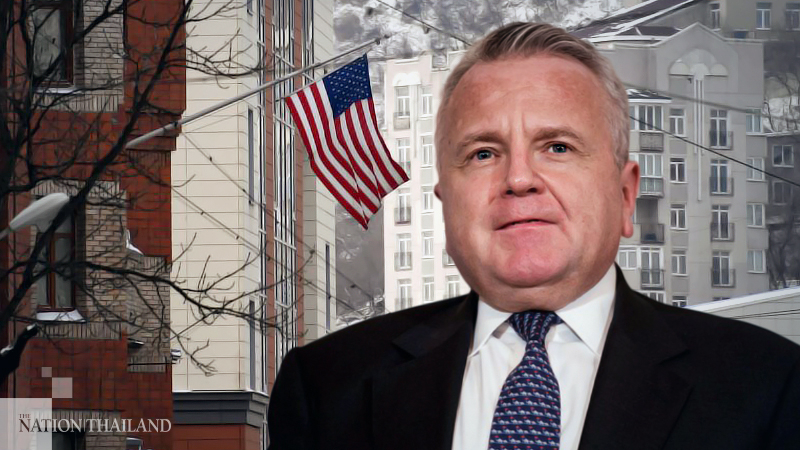
John Sullivan, the U.S. ambassador to Moscow

John Sullivan, the U.S. ambassador to Moscow

By The Washington Post · Carol Morello

WASHINGTON – Relations between Washington and Moscow have gotten so bad that the United States cannot get visas for American technicians to repair malfunctioning elevators and fire alarms at diplomatic missions.

The U.S. Embassy in Moscow is understaffed and overstretched as every diplomatic visa requires drawn-out negotiations that get snagged over minuscule matters. Senior diplomats are being tasked with basic duties including shoveling snow and mixing disinfectants to supplement depleted cleaning crews battling the coronavirus pandemic.

Even as President Donald Trump has refrained from directly criticizing Russian President Vladimir Putin, the State Department has been outspoken in condemning Russian transgressions and pressuring the government to change its behavior and rhetoric.

That has contributed to a “visa impasse,” as U.S. officials delicately phrase it, that has been growing since 2014, when the United States imposed sanctions on Russia over its invasion of Crimea. Since then, the diplomatic standoff has ballooned into a tit-for-tat visa war, with both sides expelling diplomats and closing each other’s consulates during rows over Russia’s interference in the 2016 U.S. election and Moscow’s poisoning of a former Russian spy in Britain.

After years without a solution, U.S. officials grew alarmed about the potential for a catastrophic fire or accident at the missions and their ability to keep the embassy in Moscow functioning. So in early December, the State Department notified Congress that it would permanently close the consulate in Vladivostok near the Pacific and suspend operations at the consulate in Yekaterinburg in Russia’s industrial heartland.

“We had to decide structurally how we can address this,” said a senior U.S. official, speaking on the condition of anonymity to talk about the delicate, tangled relationship. “We’re running out of Band-Aids to sustain our presence in those locations.”

The two consulates already had been effectively shuttered since March because of the pandemic. News that they would stay out of operation coincided with revelations that Russian hackers had penetrated the computers of U.S. government agencies, including the Departments of State and Homeland Security.

U.S. officials insist that the timing was coincidental and that the consulate decision was based solely on how best to keep the embassy in Moscow functioning with sufficient staff numbers.

“We took the decision we took because it’s part of . . . broader problems in a bilateral diplomatic relationship between the United States and Russia, which have extended to a so-called visa impasse,” John Sullivan, the U.S. ambassador to Moscow, said in an interview this week with Radio Free Europe/Radio Liberty. “We can’t get visas for U.S. personnel to come to work at our consulates in Yekaterinburg [and] Vladivostok, or the embassy in Moscow.”

“And without those personnel who are able to perform essential functions for health and safety risks, the risk is increasing that there could be a fire or other safety issues,” he added.

The other U.S. official said the consulate closures are not meant to send Moscow a message on any foreign policy issue other than the visas. “It’s not about Russian behavior, whether in cyberspace or elections or aggression abroad,” the official said.

But the decision effectively is a recognition that the U.S. relationship with Russia is unlikely to improve anytime soon, even after Joe Biden assumes the presidency.

“We are going from bad to worse,” Deputy Foreign Minister Sergei Ryabkov said in an interview Wednesday with the Interfax news agency. “This was very typical for the past four years, and so far there is no feeling that this trend has exhausted itself.”

Ryabkov said he doubted tensions would ease in a Biden administration, which he said would be stocked with foreign policy experts who harbor antipathy to Russia.

“It would be strange to expect good things from people, many of whom made their careers on Russophobia and throwing mud at my country,” he said.

The visa deadlock leaves the embassy in Moscow as the only U.S. diplomatic outpost in Russia, a vast country that encompasses 11 time zones. That complicates matters for Russians seeking visas to visit the United States, though they have dwindled with the pandemic. Before the coronavirus stopped most international travel, the wait for a U.S. visa in Moscow was almost a year, compared with a few months in Vladivostok and Yekaterinburg.

The pandemic also blocks most remaining opportunities for U.S. diplomats to connect with ordinary Russians and local government officials. Those contacts already were curtailed by the Russians, who had ordered the closure of American “corners” established in Russian libraries, banished U.S. exchange programs as undesirable and prohibited U.S. diplomats from speaking at universities.

The Russians have rejected U.S. requests to move to new buildings over the past year.

Under caps established under the retaliatory punishments, Russia and the United States are allowed to staff their embassies and consulates with 455 people, including local hires. The Russians have almost 430 people in their U.S. missions, while the United States is down to about 320.

Visas are occasionally granted when diplomats are rotated out, though the Russians have imposed limitations, such as insisting a woman can be replaced only by another woman, and a man with a man.

Some former U.S. envoys to Moscow consider the closures counterproductive.

“I cannot understand how this is anything but against the interests of the United States,” said James Collins, who as U.S. ambassador to Moscow oversaw the opening of the consulate in Vladivostok in 1992.

“It was in the American interest to get to know and establish relations with the Russian government beyond the Kremlin. It’s just as important today as it ever was,” he said.

Mike McFaul, a U.S. ambassador to Russia during the Obama administration, said his conversations with students and business leaders in Vladivostok and Yekaterinburg gave him valuable insights into popular sentiment.

“This is a self-inflicted wound,” he said of the consulate closures. “Russia is not kicking us out. We are unilaterally deciding we don’t want be there. It’s a giant mistake. I hope Biden reverses it.”

State Department officials say they have reached out to former ambassadors, explaining that conditions in recent years have made interactions with Russian citizens virtually impossible. About eight diplomats already have been transferred from Vladivostok to Moscow, but several remain in Yekaterinburg.

They have told the Russians that the United States will not order the closure of Russian consulates in Houston and New York, at least for now. They would like their action to spur negotiations that reverse the impasse.

“I hope this is the start of a path forward and the Russians will think about it, and we’ll be able to get to a more stable footing for the bilateral situation,” the U.S. official said. “But that’s going to require visas for us to get our mission-essential personnel on the ground.”

Air Canada Boeing 737 Max has engine problem, completes emergency landing #SootinClaimon.Com

#SootinClaimon.Com : ขอบคุณแหล่งข้อมูล : หนังสือพิมพ์ The Nation.

Air Canada Boeing 737 Max has engine problem, completes emergency landing

InternationalDec 26. 2020

By Syndication Washington Post, Andrew Davis

An Air Canada Boeing 737-8 Max on a test flight had engine problems that forced the crew to shut down one of the plane’s engines and make an emergency landing in Tucson, Ariz., Aviation24.be reported.

Shortly after takeoff, the crew received an indication of hydraulic low pressure in the left engine, the website said. The three-member crew of the empty plane initially decided to continue the flight to Montreal, but it shut down the engine and diverted to Tucson after receiving an indication of a fuel imbalance from the left wing, Aviation24.be said.

The incident took place Tuesday, according to the report.

The U.S. Federal Aviation Administration permitted the 737 Max to return to the skies in November, after a 20-month hiatus prompted by two fatal crashes. Boeing is seeking approval from other regulators around the world to relaunch the 737 Max, the manufacturer’s best-selling model.

Rebecca Luker, Tony-nominated Broadway singer and actress, dies at 59 #SootinClaimon.Com

#SootinClaimon.Com : ขอบคุณแหล่งข้อมูล : หนังสือพิมพ์ The Nation.

Rebecca Luker, Tony-nominated Broadway singer and actress, dies at 59

InternationalDec 26. 2020

Rebecca Luker, a Broadway actress and singer

Rebecca Luker, a Broadway actress and singer

By The Washington Post, Matt Schudel

An earlier version of this obituary misstated the date of the “Show Boat” revival in which Rebecca Luker played Magnolia and for which she received her first Tony nomination. The revival was staged in 1994, not 2004.

Rebecca Luker, a Broadway actress and singer who was nominated for three Tony Awards and starred in several classic musicals, including “Show Boat,” “The Sound of Music” and “The Music Man,” died Dec. 23 at a Manhattan hospital. She was 59.

Her death was announced in a statement by her husband, actor Danny Burstein. The cause was amyotrophic lateral sclerosis (ALS), a degenerative neurological disease that leads to paralysis.

Luker was one of the leading figures of musical theater for 30 years, appearing in nine Broadway productions and many others off-Broadway and on stages across the country. Known for her clear, crystalline soprano voice, she recorded several albums and was a popular cabaret performer.

She had starring roles in “The Phantom of the Opera,” Maury Yeston’s “Nine” and musicals by Stephen Sondheim, but she gained particular acclaim for bringing new life to beloved musicals from Broadway’s past.

She received Tony Award nominations for her performances in revivals of “Show Boat” and “The Music Man,” and her third nomination came for a role in “Mary Poppins,” a 2006 musical based on the 1964 movie. Luker also starred as Maria in a 1998 revival of Rodgers and Hammerstein’s “The Sound of Music,” which ran for more than a year.

“During her audition, Rebecca brought such a freshness to the music, as if I had never heard the score before,” Susan H. Schulman, who directed Luker in “The Sound of Music,” told Playbill in 1998. “Little hairs stood up on the back of my neck. You don’t expect songs that you are so familiar with to take you by surprise that way. She has the most glorious voice. The instrument is so pure.”

“The Sound of Music” has never impressed the critics – only the audiences that flock to see it and memorize the words of every song. But even some cynical Broadway scribes found something to like in Luker’s portrayal of Maria, a high-spirited nun – “Unpredictable as weather / She’s as flighty as a feather” – who becomes governess to the seven children of an Austrian nobleman in the 1930s as Nazis take over the country. (The role was first performed on Broadway in 1959 by Mary Martin, then on film in 1965 by Julie Andrews.)

Hartford Courant theater critic Malcolm Johnson called Luker’s performance “true and wonderful, never too sweet . . . a Maria who far surpasses Mary Martin, and perhaps even Julie Andrews.”

Luker received her first Tony nomination for a 1994 revival of Jerome Kern and Oscar Hammerstein II’s “Show Boat,” which was first presented on Broadway in 1927. She played Magnolia, an innocent girl who falls for a shady riverboat gambler named Gaylord Ravenal. Her songs included “Make Believe” and “Can’t Help Lovin’ Dat Man.”

Luker received her first Tony nomination for a 1994 revival of Jerome Kern and Oscar Hammerstein II’s “Show Boat,” which was first presented on Broadway in 1927. She played Magnolia, an innocent girl who falls for a shady riverboat gambler named Gaylord Ravenal. Her songs included “Make Believe” and “Can’t Help Lovin’ Dat Man.”

“Rebecca is a very truthful actor,” Mark Jacoby, who played Ravenal in that production, told the Raleigh News & Observer in 2016. “By that I mean that she doesn’t play the character, she inhabits the character . . . And what a great singer. I have not heard another voice like hers on Broadway in my lifetime.”

Luker was nominated again for a 2000 revival of Meredith Willson’s “The Music Man,” for playing Marian (the librarian), a role first performed on Broadway by Barbara Cook and later in a 1962 movie by Shirley Jones. In “Mary Poppins,” for which she received a Tony nomination in 2007, Luker played Winifred Banks, the mother of two children under the care of Mary Poppins, their nanny. She appeared in the musical for more than three years.

Luker made her Broadway debut in Andrew Lloyd Webber’s “The Phantom of the Opera” in 1988, eventually taking on the lead role, and also was in “The Secret Garden” (1991-93), “Nine” (2003), “Rodgers & Hammerstein’s Cinderella” (2013-15) and “Fun Home” (2015-16).

Elsewhere, she appeared in the 2014 world premiere at the Kennedy Center of “Little Dancer,” about a teenage dancer who inspired painter Edgar Degas, and in other productions in Washington and California. Seeking to expand her acting roles beyond those of ingénues, Luker had parts in several television series, including “NCIS: New Orleans,” “Law and Order: SVU” and “Boardwalk Empire,” and was in several films. She last performed onstage in a 2019 Kennedy Center production of “Footloose.”

Luker often appeared in concerts with orchestras and in intimate cabaret settings, singing show tunes. She “lends even the most anecdotal lyrics a gravitas that keeps you hanging on every word,” critic Stephen Holden wrote in the New York Times in 2005.

“If you’ve been wondering who, if anyone, might be the heir to the great Barbara Cook, Luker, who also comes from the South . . . and also played Marian the librarian (in the revival of “The Music Man”) is the one.”

Rebecca Joan Luker was born April 17, 1961, in Birmingham, Ala., and grew up in the small Alabama town of Helena. Her father was a construction worker, her mother a treasurer at a high school.

Luker seldom saw live theater as a child, but “I sang in church a lot and every singing group I could get into,” she told the Los Angeles Times in 2003. She was first runner-up for Junior Miss Alabama in 1979. She graduated in 1984 from the University of Montevallo in Alabama, then moved to New York, finding work in the theater almost immediately.

Her first marriage, to actor Gregory Jbara, ended in divorce. In 2000, she married Danny Burstein, a Broadway performer who has been nominated for seven Tony Awards.

In addition to her husband, of New York, survivors include her mother, Martha Hales, and stepfather, Lamar Hales; two stepsons; a brother and sister.

In February, Luker revealed that she had been diagnosed in 2019 with ALS, sometimes called Lou Gehrig’s disease. A month later, her husband became ill with covid-19, the disease caused by the coronavirus, and was hospitalized for a week.

Luker later contracted the disease herself but recovered. Burstein published two essays in the Hollywood Reporter about caring for his ailing wife while trying to recover from covid-19.

“Will she ever walk again?” Burstein wrote in August. “Her shoulders went, seemingly overnight. And now her hands.”

Two months earlier, Luker was still strong enough to sing three songs from her wheelchair during a fundraiser for ALS research broadcast over Zoom.

“Well, physically, it helps my lungs,” she told the Times in June. “But more than that, when I sing, I think it heals me. It helps me feel like I’m still a part of something, like I’m doing something that’s worthwhile.”

Russian hackers compromise Microsoft customer data through third party #SootinClaimon.Com

#SootinClaimon.Com : ขอบคุณแหล่งข้อมูล : หนังสือพิมพ์ The Nation.

Russian hackers compromise Microsoft customer data through third party

InternationalDec 26. 2020

By The Washington Post, Ellen Nakashima

WASHINGTON – Russian government hackers have compromised Microsoft cloud customers and stolen emails from at least one private-sector company, according to people familiar with the matter, a worrying development in Moscow’s ongoing cyberespionage campaign targeting numerous U.S. agencies and corporate computer networks.

The intrusions appear to have occurred via a Microsoft corporate partner that handles cloud-access services, those familiar with the matter said. They did not identify the partner or the company known to have had emails stolen. Like others, these people spoke on the condition of anonymity to discuss what remains a highly sensitive subject.

Microsoft hasn’t publicly commented on the intrusions. On Thursday, an executive with the tech giant sought to downplay the issue’s significance.

“Our investigation of recent attacks has found incidents involving abuse of credentials to gain access, which can come in several forms,” Jeff Jones, Microsoft’s senior director for communications, said. “We have still not identified any vulnerabilities or compromise of Microsoft product or cloud services.”

The troubling revelation comes several days after Microsoft’s president, Brad Smith, said the Fortune 500 company had not seen any customers breached through its services, including the vaunted Azure cloud platform used by governments, major corporations and universities worldwide.

“I think we can give you a blanket answer that affirmatively states, no, we are not aware of any customers being attacked through Microsoft’s cloud services or any of our other services, for that matter, by this hacker,” Smith told The Washington Post on Dec. 17.

Yet two days earlier, Microsoft notified the cybersecurity firm CrowdStrike of an issue with a third-party reseller that handles licensing for its Azure customers, according to a blog post CrowdStrike published Wednesday. In its post, CrowdStrike alerted customers that Microsoft had detected unusual behavior in CrowdStrike’s Azure account and that “there was an attempt to read email, which failed.” CrowdStrike does not use Microsoft’s email service. It did not link the tactic to Russia.

People familiar with the previously undisclosed email theft said it does not exploit any Microsoft vulnerability. The company itself was not hacked – only one of its partners, they said.

Nevertheless, the troubling development raises concerns about the extent of Microsoft’s disclosure obligations, cybersecurity experts said.

“If it’s true that a cloud service provider customer’s data has been exfiltrated and is in the hands of some threat actor, that’s a very serious situation,” said John Reed Stark, who runs a consulting firm and is former chief of the Securities and Exchange Commission’s Office of Internet Enforcement. “It should raise all sorts of alerts within that cloud provider that could trigger a litany of notification, remediation and disclosure requirements – both national and international.”

In a blog post last week, Microsoft stated it was notifying “more than 40 customers” that they had been breached. Some of them were compromised through the third party, people familiar with the matter said.

Specifically, the adversary hacked the reseller, stealing credentials that can be used to gain broad access to its customers’ Azure accounts. Once inside a particular customer’s account, the adversary had the ability to read – and steal – emails, among other information.

Microsoft began alerting private-sector clients to the issue last week. Jones said the company also informed the U.S. government last week “that some reseller partners were affected.” However, two individuals familiar with the matter said the government was not notified.

Microsoft itself has not publicly announced the reseller hack. By contrast, when the cybersecurity firm FireEye learned it had been breached through a software update, it disclosed the information. That software patch, from a company called SolarWinds, has been the path through which the Russians have compromised at least five major federal agencies in a major ongoing campaign that has U.S. officials working through the holidays.

SolarWinds has acknowledged the hack, calling it “very sophisticated.”

Microsoft’s Jones characterized the reseller issue as “a variation on what we’ve been seeing and not a major new vector.” He said: “Abuse of credentials has been a common theme that’s been reported as part of the tools, techniques and practices for this actor.”

Jones declined to answer questions about when the firm discovered the reseller compromise, how many customers the reseller has, how many were breached and whether the reseller was alerting its customers.

“We have various agreements with people, and we won’t share specific information about our engagement with specific partners or customers,” he said.

The fact that the hackers breached a Microsoft partner may not absolve the firm of legal liability, experts said. When hackers stole more than 100 million credit card applications last year from a major bank’s cloud, which was provided by Amazon Web Services, customers sued the bank and AWS. In September, a federal judge denied Amazon’s motion to dismiss, saying its “negligent conduct” probably “made the attack possible.”

Said Stark: “Just because a cloud provider denies liability does not necessarily mean the provider is off the hook.”

(Amazon chief executive Jeff Bezos owns The Post.)

The investigation has now become the top priority for Gen. Paul Nakasone, who heads both the National Security Agency and the military’s U.S. Cyber Command. Developing a coherent, unified picture of the extent of the breaches has been difficult because neither the NSA nor the Department of Homeland Security nor the FBI has the legal or jurisdictional authority to know where all the compromises are.

Nakasone’s challenge, as one U.S. official put it, is “he’s expected to know how all the dots are connected, but he doesn’t know how many dots there are or where they all are.”

Some of that inability is caused by federal contracting rules to protect agency privacy, Microsoft’s Smith said. In his interview last week, he said the company was the first to alert several federal agencies to the breaches that had taken place through the SolarWinds update. But, he said, the company was barred by federal contract from sharing that information outside of the agency affected.

“In many instances, because of the confidentiality restrictions that are placed on us by federal contracts, we would have to go to the government and say, ‘We have found another federal agency. We can’t tell you who they are. . . . But we are asking them to call you,” he said.

U.S. government and private-sector sources now say the total number of victims – of agencies and companies that have seen data stolen – is likely to be at most in the low hundreds, not in the thousands as previously feared. But even one major agency hack is significant.

Several years ago, Chinese government hackers compromised the Office of Personnel Management, exposing the records of more than 22 million federal workers and their families.

Then as now, the breaches were seen as acts of espionage. There was no evidence of network disruption or destruction, or of efforts to use the stolen goods in, say, an operation to interfere in an election or run a disinformation campaign.

The Russian effort is not an act of war, U.S. officials say.

“I want a throat to choke on this thing – I’m angry that they got us, but the reality is the Russians pulled off a highly targeted, complex and probably expensive cyber intrusion that was a sophisticated espionage operation,” said Rep. Jim Langevin (D-R.I.), a member of the House Armed Services Committee who co-chairs the Congressional Cybersecurity Caucus.

The breaches are akin to the Russians placing moles in multiple places in high levels of the government, Langevin said, adding that the U.S. government should respond as it would to a physical espionage campaign. “We could expel diplomats or suspected spies, or perhaps impose sanctions,” he said. “But we also want to be careful that we don’t destabilize the Internet or our own espionage operations.”

As Biden zeroes in on attorney general pick, some worry one contender is too moderate on criminal justice issues #SootinClaimon.Com

#SootinClaimon.Com : ขอบคุณแหล่งข้อมูล : หนังสือพิมพ์ The Nation.

As Biden zeroes in on attorney general pick, some worry one contender is too moderate on criminal justice issues

InternationalDec 26. 2020Joe BidenJoe Biden

By The Washington Post, Matt Zapotosky, Ann E. Marimow

WASHINGTON – As President-elect Joe Biden seeks to find an attorney general who can restore public faith in the Justice Department as an independent law enforcement institution while boosting internal morale, federal appeals court judge Merrick Garland has consistently found himself on the short list.

To some legal observers, Garland is an ideal candidate. A former federal prosecutor and Justice Department official who oversaw the case against the Oklahoma City bomber, Garland has the kind of Justice Department experience and credibility many have sought. Famously snubbed by a Republican Senate, which refused to consider his nomination by President Obama to serve on the Supreme Court, he still enjoys a reputation as a unifying, moderating force on the influential U.S. Court of Appeals for the D.C. Circuit, and is seen as being easily confirmable.

But as Garland draws increasingly serious consideration, some defense attorneys and criminal justice reform advocates say they worry Garland’s record on the bench shows he is too deferential to the government and law enforcement – and perhaps would not be as aggressive about implementing the kind of dramatic changes for which they had hoped.

“It’s certainly a safe choice,” said Kevin Ring, the president of FAMM, a criminal justice advocacy group. “It’s not an inspired choice.”

Garland is among three people, all former federal prosecutors, who remain under consideration by Biden for the attorney general job, according to people familiar with the discussions. The others are Sen. Doug Jones, D-Ala., who lost his reelection bid, and former deputy attorney general Sally Yates.

People familiar with the matter said Biden is not expected to make a selection this week, and that it is possible when he reveals his decision, he will also announce picks for deputy attorney general, associate attorney general and solicitor general. These people spoke on the condition of anonymity to discuss internal deliberations.

A Biden spokesman declined to comment, as did all those under consideration or their representatives.

Legal observers say all those under consideration are qualified for the position, though all also have their detractors. Civil rights leaders had pushed Biden to appoint a Black attorney general. All those under consideration are White.

Yates is a longtime Justice Department veteran with an extensive background in implementing criminal justice reform during the Obama administration. She ordered the closure of Justice Department private prisons, and has won plaudits from civil rights leaders. But she also played a role in the FBI’s investigation of President Trump’s campaign, and some Senate Republicans already have said they would likely oppose her nomination – suggesting her confirmation could be a bruising battle.

As a U.S. attorney in Alabama in the Clinton administration, Jones famously prosecuted members of the Ku Klux Klan who bombed a Black church in Birmingham in 1963, killing four girls. As a lawmaker, he co-sponsored the bipartisan criminal justice reform First Step Act. But some civil rights leaders have privately expressed concern to Biden’s inner circle that the Birmingham case, by itself, does not demonstrate the kind of track record on civil rights and criminal justice reform they would like to see.

Whoever Biden picks will have to restore morale inside a beleaguered federal agency, while trying to institute the left-leaning reforms Biden promised on the campaign trail. Biden’s selection will likely face significant pressure to reverse Attorney General Jeff Sessions’s aggressive charging policy – which called for prosecutors to bring the most serious charges they could prove against defendants – and restore the policy that existed under Attorney General Eric Holder, which urged prosecutors to charge certain cases in such a way that would avoid mandatory minimum penalties.

While the Sessions policy faced significant external criticism, the Holder policy was not embraced by federal prosecutors, and some would likely oppose its return. Criminal justice reform advocates, too, said they would like to see even more dramatic action to end mandatory minimum sentencing.

“That’s incredibly important, and they could go further than the Holder memo, but they should at least go that far,” said Ring, who himself was convicted and sentenced to 20 months in prison in a public corruption case involving lobbyist Jack Abramoff.

Garland’s judicial record first came under scrutiny in 2016, when Obama nominated him for a vacant spot on the Supreme Court.

A Congressional Research Service analysis found that Garland “tended to afford deference to law enforcement officers’ reactions in the field, with an eye toward protecting officers’ safety,” upholding police searches of vehicles that came under challenge. In one opinion, Garland noted that “appellate judges do not second-guess a street officer’s assessment about the order in which he should secure potential threats.”

One D.C. criminal defense attorney, speaking on the condition of anonymity because they could have to practice in front of Garland or his colleagues, said that while Garland’s “integrity is unquestioned,” he was on the “wrong side” of criminal justice reform.

“There’s never a word a police officer or an FBI agent or a government prosecutor ever says that he questions,” the attorney said. “He’s an enabler of the war on drugs and dismantling civil liberties in favor of police power, and that’s looking really bad right now.”

That view is not universal. The ACLU has a policy of not endorsing any nominees, but national legal director David Cole said of Garland: “I don’t see any real basis for concern from his judicial rulings that he wouldn’t be an attorney general committed to equal justice for all and criminal justice reform.” All federal appeals court judges, Cole said, generally side with the government.

Justin Driver, a former Garland clerk who is now a professor at Yale Law School, noted that Garland is not universally deferential to law enforcement or the government, and added that, “His experience as a judge makes him well qualified to be the face of the sentencing reform issues that are on the top of minds for many people.”

District of Columbia Attorney Greg Smith, who has argued in front of Garland, said, “I do think he’s not the most lenient guy on the bench. He’s not necessarily the easiest sell for my clients. But I have invariably felt like he gave me a fair shake, and that he was eminently fair and a decent person to boot.”

While Garland often sided with the U.S. on cases emanating out of the military prison at Guantanomo Bay, he once rejected a military tribunal’s decision that a person in custody was an “enemy combatant.”

He also has consistently sided with the majority when it comes to checking executive power. He was part of the 7-2 majority in two legal battles this summer between President Trump and Congress. The full court affirmed Congress’s oversight powers and the House’s long-standing right to compel government officials to testify and produce documents. In the second case, the majority said lawmakers were not barred from going to court to challenge the Trump administration to block the diversion of billions of dollars to build the president’s signature southern border wall.

In August, Garland was again in the majority that allowed a judge to scrutinize the Justice Department’s decision to drop the criminal case against Trump’s former national security adviser Michael Flynn.

Erin Murphy, another former Garland clerk who is now a professor at New York University School of Law, said while Garland was not likely to support radical reforms, he also would not be resistant to practical changes.

“I don’t think he’s someone who’s just going to say, ‘Let’s take all the money out of our policing budget and re-route it to social services,” Murphy said. “I do think he’s going to say, ‘Hey, this program is working over here, so let’s see if we can replicate it, or scale it.'”

The Congressional Research Service analysis noted Garland’s rulings on constitutional criminal procedure tended to be narrow, and the vast majority of his opinions “have involved relatively straightforward applications of Supreme Court or circuit precedent, or adherence to the uniform approaches of sister circuits.”

“There’s not really an opportunity for a judge to tell you how he feels about policy,” said Jamie Gorelick, a former deputy attorney general who worked with Garland in the Justice Department. “When we worked together, he understood the challenges of being in law enforcement, particularly when you have to make decisions on the spur of the moment, but he also was a very aggressive enforcer of civil rights.”

Rachel Barkow, a professor at New York University School of Law and the author of “Prisoners of Politics: Breaking the Cycle of Mass Incarceration,” said what while Garland is “certainly smart and honorable and decent,” it was “hard to see him way out front on criminal justice reforms,” based on his record.

“I’m not sure that would be a top priority for someone like him, but you never know. I’m always willing to have people surprise me in good ways,” Barkow said.

Barkow said she is also concerned with Garland being nominated as attorney general for another reason: doing so would vacate his seat on the important D.C. Circuit, which might be asked to consider legal challenges to Biden administration policies. Many Democrats have worried that if Republicans retain the Senate majority, they would refuse to allow Biden to fill the seat, tilting the court’s balance to the right.

“Unless you really thought that Merrick Garland was uniquely the only person who could take that job, I don’t know why you would even consider it and leave that seat vacant,” Barkow said.

Ring noted that all of those under consideration were former federal prosecutors, and the short list included “no one who I think people who care about criminal justice reform are ecstatic about.”

Michael Waldman, president of the Brennan Center for Justice at NYU School of Law, said Jones led a task force that recommended way prosecutors could reduce crime while at the same time reducing mass incarceration.

“Jones led a real breakthrough in criminal justice reform in giving a law enforcement voice saying we can have a system that doesn’t incarcterate so many people,” Waldman said.

Barkow praised Yates’s record on civil rights cases and examining problems with policing, though she said she was disappointed that a clemency initiative Yates managed under President Barack Obama did not go far enough. Yates’s supporters argue that, to the extent the clemency initiative was not progressive enough, that was due to Obama’s preference for granting clemency after individual reviews of cases, rather than doing so for broad categories of offenders.

“We did over 1,700 commutations of largely drug defendants, and I think – and the president thought – this is a criticism basically not really of Sally but of the president’s program,” said former White House counsel W. Neil Eggleston.

Yates also has worked on criminal justice reform after leaving government, serving on the advisory board of the Council on Criminal Justice think tank.

Adam Gelb, the president of that group, said that while prosecutors had generally “been among the loudest and strongest resisting changes to sentencing and corrections policy,” that was not his experience with Yates. Gelb said she pushed one of the organization’s task forces to recommend the elimination of mandatory minimum sentences for federal drug crimes.

“Her experience has made her deeply sensitive to the problems,” Gelb said.

Cole, of the ACLU, said that while all of those under consideration to be attorney general were federal prosecutors, that was typical for attorneys general, who command the nation’s law enforcement apparatus.

“I think, right now, whoever is the attorney general in a Democratic administration is going to be committed to criminal justice reform, because that is such a central concern of the Democratic party and the Biden administration,” Cole said. “I don’t think there’d be a huge amount of difference in terms of the reforms that would be put in place between Doug Jones, Merrick Garland or Sally Yates.”