Under late tycoon’s 27-year leadership, Samsung market cap grew 350 times #SootinClaimon.Com

#SootinClaimon.Com : ขอบคุณแหล่งข้อมูล : หนังสือพิมพ์ The Nation.

Under late tycoon’s 27-year leadership, Samsung market cap grew 350 times

InternationalOct 27. 2020The photo shows late Samsung Group Chairman Lee Kun-hee shaking hands with Samsung Electronics` employees in 2011. (Samsung Group)The photo shows late Samsung Group Chairman Lee Kun-hee shaking hands with Samsung Electronics` employees in 2011. (Samsung Group) 

By Kim Young-won
The Korea Herald/ANN

Death of Samsung chairman likely to have limited impact on Samsung stocks, analysts say.

The market capitalization of Samsung Group under the late Chairman Lee Kun-hee’s leadership of 27 years grew nearly 350 times, as the corporate empire he built turned into a global information technology powerhouse from a mere home appliance maker.

The combined market value of the conglomerate’s affiliates — including crown jewel Samsung Electronics and construction firm Samsung C&T — reached 318.7 trillion won ($282.4 billion) in 2014, when the late chairman had a heart attack and became incapacitated. That figure was 348 times higher than Samsung’s 1987 market value, which stood at 900 billion won. Lee took the chairmanship from his father, Samsung founder Lee Byung-chull, that year.

As Samsung’s stock value surged over the years, the value of Lee’s personal ownership in Samsung affiliates also grew dramatically, making the second-generation chaebol scion South Korea’s richest man. As of Friday, Lee held 18.22 trillion won in Samsung stocks, according to the Korea Exchange.

The death of Samsung’s leader will likely have a limited impact on the stocks of Samsung subsidiaries and affiliates, according to some market analysts, since the group has long prepared for the leadership transition.

“Since Lee’s son and Vice Chairman Jae-yong has been at the helm of Samsung Electronics for years, the tech giant’s stock price will less likely be affected by the passing of the chairman,” said Kim Ji-san, an analyst from Kiwoom Securities.

Inheritance taxes, involving the late chairman’s shares in companies that include Samsung Life Insurance, Samsung C&T and Samsung Electronics, could become a critical issue down the road, according to other analysts.

“The conglomerate has not yet announced measures to solve the inheritance issues, but many eyes will be on how the vice chairman prepares for money to pay for inheritance tax,” said Kim Yang-jae, an analyst at KTB Investment & Securities.

It is estimated that the bereaved family members will have to pay more than 10 trillion won in inheritance taxes.

Lee Jae-yong was the second-richest man in Korea as of last week, with the value of his stocks in Samsung affiliates reaching 7.2 trillion won.

The Samsung Group chairman died in a hospital in Seoul on Sunday at age 78, having been bedridden since his heart attack in 2014.

Based on a survey by Forbes earlier this year, the Samsung chairman was one of the 100 richest people in the world and his assets were worth $20.9 billion.

S. Korea’s economy returns to growth in Q3 as pandemic-caused trade slump eases #SootinClaimon.Com

#SootinClaimon.Com : ขอบคุณแหล่งข้อมูล : หนังสือพิมพ์ The Nation.

S. Korea’s economy returns to growth in Q3 as pandemic-caused trade slump eases

InternationalOct 27. 2020(Yonhap)(Yonhap) 

By The Korea Herald/ANN

South Korea’s economy returned to modest growth in the third quarter, marking the first quarterly expansion since the coronavirus pandemic began, as exports showed signs of improvement, the Bank of Korea (BOK) said Tuesday.

In the July-September period, the nation’s real gross domestic product (GDP) grew 1.9 percent from the previous quarter, when it shrank 3.2 percent, according to the BOK data.

The third-quarter reading marked the fastest expansion since the first quarter of 2010.

Compared with a year ago, however, the economy, Asia’s fourth largest, contracted 1.3 percent, the BOK said.

In August, the BOK expected South Korea’s economy to contract 1.3 percent this year.

If the nation meets the target, the economy should grow around 1.5 percent in the third and fourth quarters.

Park Yang-su, head of the BOK’s economic statistics department, told a media briefing that the nation could meet this year’s growth target, as the third-quarter results were better than expected.

Also, the economy could contract less than predicted this year if it expands by at least 0.4 percent in the fourth quarter, Park said.

However, the pace of recovery may be moderate for the trade-driven economy because new waves of coronavirus infections recently gripped the United States and European nations, Park said.

“Given the risk factors, annual growth rates are still in the range of previous projections,” Park said. 

Shortly after the data was released, Finance Minister Hong Nam-ki said the nation’s economy is on the road to recovery, helped by robust growth in exports.

“The economy entered a recovery path for normalization of the economy,” Hong told a policy meeting.

The economy is also expected to report an expansion in the fourth quarter, as advanced nations eased restrictions against the pandemic, Hong said.

Hong said the government will take measures to boost local consumption in the fourth quarter.

During the third quarter, exports grew by 15.6 percent, as overseas shipments of automobiles and semiconductors expanded, the BOK said.

Although the pandemic-caused trade slump eased as advanced nations lifted lockdown measures, domestic spending was still weak because of a resurgence of the new coronavirus in mid-August.

Last month, South Korea saw exports rebound for the first time in seven months as major trade partners gradually resumed their business activities amid the pandemic.

Outbound shipments came to $48 billion last month, up 7.7 percent from $44.6 billion posted a year earlier.

Facility investment rose 6.7 percent on-quarter in the third quarter, the BOK said.

Private spending edged down 0.1 percent in the quarter, while government spending inched up 0.1 percent.

The government has so far boosted its budget spending by at least 67 trillion won ($59.3 billion) with four batches of supplementary budgets to boost the virus-hit economy.

By sector, output by the manufacturing industry gained 7.6 percent on-quarter in the third quarter, a turnaround from a 8.9 percent plunge in the second quarter.

Output by the construction sector dipped 5.5 percent in the third quarter, while that of the service sector grew 0.7 percent. (Yonhap)

AirAsia’s regional passenger volume takes off again #SootinClaimon.Com

#SootinClaimon.Com : ขอบคุณแหล่งข้อมูล : หนังสือพิมพ์ The Nation.

AirAsia’s regional passenger volume takes off again

InternationalOct 27. 2020Consolidated aircraft operating certificate recorded 1.91 million passengers from July to September, representing a load factor of 66% compared with 204,082 passengers for the second quarter from April to June, which was a load factor of 59%.Consolidated aircraft operating certificate recorded 1.91 million passengers from July to September, representing a load factor of 66% compared with 204,082 passengers for the second quarter from April to June, which was a load factor of 59%. 

By The Star/ANN

PETALING JAYA: AirAsia Group Bhd maintained its recovery momentum into the third quarter of 2020 with almost a 10-fold increase quarter-on-quarter (q-o-q) in its passenger volume for Malaysia, Indonesia and the Philippines.

Its consolidated aircraft operating certificate recorded 1.91 million passengers from July to September, representing a load factor of 66% compared with 204,082 passengers for the second quarter from April to June, which was a load factor of 59%.

In a year-on-year (y-o-y) comparison, however, the low-cost airline’s number of passengers carried for the quarter was 85% lower, compared with 12.84 million passengers in the same period last year, according to its preliminary operating statistics released yesterday.

Of the 1.91 million passengers, AirAsia Malaysia carried 1.77 million, with a load factor of 68%.

It operated 52% of its domestic capacity in September, in comparison to 40% in July 2020 as travel demand has been on an upward trajectory since the second quarter with the easing of restrictions on interstate travel.

The group said AirAsia Malaysia was striving to recover to 60% of its pre-Covid domestic capacity by the fourth quarter.

AirAsia Indonesia’s 73,905 passengers were only 4% of the quarterly total but it was already an improvement of 18 times q-o-q.

AirAsia Philippines operated only 5% of last year’s capacity in the third quarter, but passenger numbers more than doubled q-o-q to 67,880.

Meanwhile, AirAsia Thailand posted a strong rebound, operating 96% of its pre-Covid domestic capacity, as compared to 59% in July 2020.

It carried 1.86 million passengers during the quarter, with a load factor of 65%. AirAsia India carried 590,873 passengers, equalling 25% of last year’s passengers in the third quarter.

It operated 36% of its capacity with a 62% load factor.

AirAsia said the improvements highlighted a strong upward rebound trend for air travel demand across key markets for the group.

Suga vows zero greenhouse gas emissions by 2050 in 1st policy speech #SootinClaimon.Com

#SootinClaimon.Com : ขอบคุณแหล่งข้อมูล : หนังสือพิมพ์ The Nation.

Suga vows zero greenhouse gas emissions by 2050 in 1st policy speech

InternationalOct 27. 2020Prime Minister Yoshihide Suga delivers his first policy speech at a House of Representatives plenary session in the Diet on Monday. (The Yomiuri Shimbun)Prime Minister Yoshihide Suga delivers his first policy speech at a House of Representatives plenary session in the Diet on Monday. (The Yomiuri Shimbun) 
By The Japan News/ANN

Prime Minister Yoshihide Suga delivered his first policy speech since taking office at plenary sessions of both Diet chambers on Monday, saying Japan will aim to reduce its greenhouse gas emissions to net zero by 2050 and realize a “green society.”

Suga also expressed his willingness to resume social and economic activities while preventing the resurgence of the novel coronavirus. He stressed that the government will aim to kickstart an economic recovery by appropriately implementing “Go To” stimulus measures, while securing the ability of local medical institutions to conduct an average of 200,000 coronavirus tests a day.

“I intend to take necessary measures without hesitation while paying attention to the impact of the novel coronavirus on the economy and economic trends in Japan and abroad,” Suga said.

The prime minister said his administration will carry on the Abenomics policy package launched by his predecessor Shinzo Abe, declaring that a virtuous cycle between the economy and the environment would be a pillar of his growth strategy.

He also unveiled a plan to create a new forum for national and local discussions to decarbonize society, while at the same time promoting nuclear energy policy to maintain a stable energy supply, with the highest priority on safety.

“I declare that our country will aim to realize a carbon-neutral society by 2050 by reducing greenhouse gas emissions to zero by 2050,” the prime minister said.

“Measures to cope with global warming no longer restrict the economy,” he added. “We need a shift in thinking that carrying out measures against global warming actively will bring about changes in industrial structures and economic and social systems and result in major growth.”

Suga also mentioned the establishment of a “digital agency” to digitize administrative procedures, insurance coverage for infertility treatment and the reduction of mobile phone fees, all of which are among his key policies.

To make Japan an international financial center, the prime minister announced plans to swiftly study ways to provide administrative services in English and ease visa requirements, among other measures.

“As the Cabinet working for the people, I’ll work to build a new era by realizing reforms,” Suga said.

Meanwhile, Suga called on the ruling and opposition parties to present their proposals for constitutional amendment at both Diet chambers’ commissions on the Constitution and hold constructive discussions. He expressed hopes that such discussions would lead to a national debate.

As for the Tokyo Olympics and Paralympics that have been postponed to next summer, Suga expressed his determination to hold the Games safely.

On foreign policy, Suga said the issue of the abduction of Japanese nationals by North Korea will remain at the top of his agenda. He expressed his determination to face Kim Jong Un, the chairman of the Workers’ Party of Korea, directly without attaching any conditions to achieve the return of the abductees.

Suga called South Korea an “extremely important neighboring country.” Toward restoring a strong bilateral relationship, he said his administration will maintain its stance and urge Seoul to make “appropriate responses.”

The extraordinary Diet session is scheduled to last for 41 days through Dec. 5.

The opposition camp is expected to challenge the prime minister over his rejection of six candidates for the Science Council of Japan.

ANA plans to transfer employees to Toyota Motor #SootinClaimon.Com

#SootinClaimon.Com : ขอบคุณแหล่งข้อมูล : หนังสือพิมพ์ The Nation.

ANA plans to transfer employees to Toyota Motor

InternationalOct 26. 2020

By The Japan News

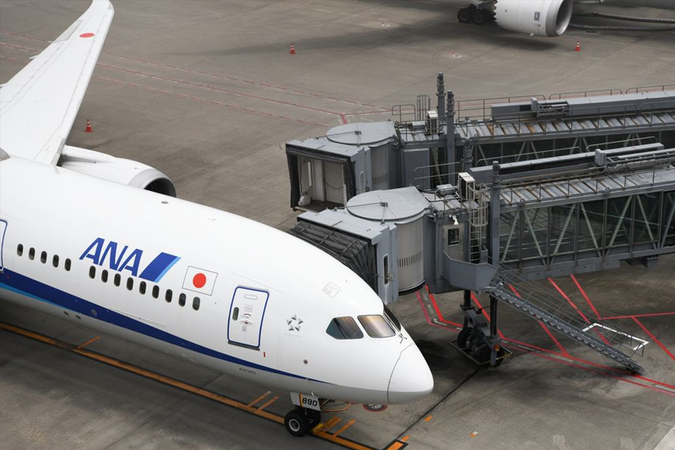
ANA Holdings will ask several companies, including Toyota Motor Corp., to accept the secondment of employees, it has been learned.

The contents of a business restructuring plan, set to be announced Tuesday by ANA Holdings Inc., the holding company of All Nippon Airways Co. (ANA), have been revealed. By fiscal 2022, it plans to reduce the number of its employees by about 3,500.

The company faces an urgent need to cut personnel costs, which account for 30% of its fixed costs. At the same time, it must also secure employees in anticipation of the end of the novel coronavirus pandemic. ANA Holdings is believed to have concluded that Toyota Motor is able to accept secondment because of its financial scale and its capacity to take in employees.

For the 2020 fiscal year ending in March 2021, ANA Holdings is expected to post a record net loss of about ¥500 billion, as opposed to a net profit of ¥27.6 billion in the previous fiscal year. The company will carry out structural reforms to prepare for a prolonged slump in aviation demand.

In fiscal 2021, the company expects to cut costs by ¥80 billion through measures such as reducing the number of employees and selling aircraft.

The reduction of about 3,500 jobs will be realized through natural retirement, support for job changes and a freeze on hiring. According to the securities report of ANA Holdings, the entire group employed 46,000 people as of the end of March.

The company also plans to sell about 30 aircraft, mainly large models. As many as 59 large aircraft, such as the Boeing 777, have low fuel efficiency and are expensive to maintain.

ANA Holdings also plans to speed up the creation of other revenue sources. It plans to expand its so-called platform business to provide financial services by using customer data collected through its travel and financial operations.

Regarding international flights, which have seen a sharp drop in passengers, the company plans to prioritize resuming flights to and from Haneda Airport, due to high profit margins and high demand for international flights there.

Some flights from Narita Airport to Europe and Asia will be suspended for the time being.

Domestic flights will be concentrated at Haneda and Itami airports. ANA Holdings will also use Peach Aviation Ltd., a low-cost carrier under its wing, to promote joint operations with ANA.

China to share Mekong data with MRC countries #SootinClaimon.Com

#SootinClaimon.Com : ขอบคุณแหล่งข้อมูล : หนังสือพิมพ์ The Nation.

China to share Mekong data with MRC countries

InternationalOct 26. 2020China's Ministry of Water Resources signed an agreement with the Mekong River Commission (MRC) on October 22. MRC
China’s Ministry of Water Resources signed an agreement with the Mekong River Commission (MRC) on October 22. MRC 
By Phnom Penh Post

China’s Ministry of Water Resources signed an agreement with the Mekong River Commission (MRC) on October 22 which stated China would share more hydrological data with Mekong countries to ensure they can prepare for potential floods and droughts.

In an MRC press release, the commission’s secretariat CEO An Pich Hatda said infrastructure operations in the basin and tributaries were contributing to river flow changes and fluctuations which can impact communities on the river. More operational data sharing would be vital to better managing the river.

“The increased regulation of the basin and the opportunities and challenges it brings calls for greater data and information sharing, improved water release notifications, coordination of operations, and enhanced early warning systems,” Pich Hatda said.

The MRC said China has shared its water level and rainfall data from June to October during the rainy season for the last 18 years. The information the country shared was recorded at two hydrological stations located on the Upper Mekong at Yunjinghong and on a tributary at Manan, both in China’s Yunnan province.

Under the new agreement, China will extend its current data-sharing schedule to provide year-round data from the two stations. The data will be shared twice daily and include rainfall and river level data, the MRC said.

“China has also agreed to share urgent information on any unusual rise or fall in water levels and discharges, as well as other relevant information on factors that might lead to sudden flooding in the lower reaches of the basin,” the press release said.

The MRC said it had worked with China since 1996 on a number of collaborative initiatives, including annual meetings, data and information sharing, joint symposiums and technical exchanges on water resource development, environmental protection and hydropower development.

Mak Bunthoeun, a coordinator of River Coalition Cambodia at the NGO Forum on Cambodia, said the sharing of this data was one of the goals that the Mekong countries had been trying to achieve.

He said the Mekong countries tried to make it compulsory for China to share the information, rather than sharing it upon request.

“This is good news because we need transparent information about the water flow from upstream. This can avoid suspicion on China. Recently, a US-based organisation said China hid information and stored water upstream.

“They did not let the water flow, which meant countries downstream lacked water. This cooperation will clear this suspicion,” he said.

‘Donald Trump had offered me position of Secretary of State’: Nikki Haley #SootinClaimon.Com

#SootinClaimon.Com : ขอบคุณแหล่งข้อมูล : หนังสือพิมพ์ The Nation.

‘Donald Trump had offered me position of Secretary of State’: Nikki Haley

InternationalOct 26. 2020

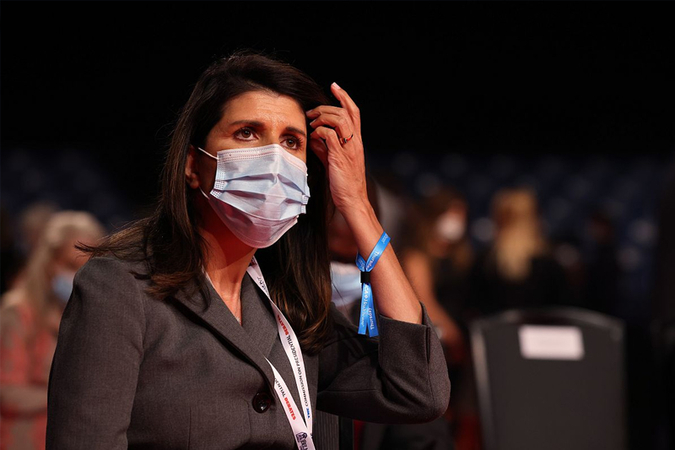
Former South Carolina Governor and former Ambassador to United Nations Nikki Haley. (Photo: Justin Sullivan/Getty Images/AFP)

Former South Carolina Governor and former Ambassador to United Nations Nikki Haley. (Photo: Justin Sullivan/Getty Images/AFP)

By The Statesman

Ms Haley, who went on to become one of the most successful US Ambassador to the UN, is now campaigning in support of Trump’s re-election bid.

Popular Indian-American Republican politician Nikki Haley has revealed that Donald Trump, soon after winning the November 2016 US presidential election, had offered her the position of Secretary of State which she politely refused.

However, the 48-year-old Haley, who at that time was the South Carolina Governor, said she could not refuse the second offer of the post of US Ambassador to the United Nations as Trump had met all the conditions she had set for accepting the position.

Ms Haley, who went on to become one of the most successful US Ambassador to the UN, is now campaigning in support of Trump’s re-election bid.

“There is a stark contrast” between President Trump and his Democratic challenger Joe Biden, she said at a fireside chat event organised by the Indian Voices for Trump in the battleground state of Philadelphia on Saturday.

“There is a lot at stake with this election,” she said.

Responding to a question from Dr Merlynn Carson, co-chair of Indian Voices for Trump, Ms Haley, for the first time, revealed that Trump, soon after winning the November 2016 presidential elections, offered her the position of Secretary of State. Trump sent a plane to fly her to New York.

However, Ms Haley said, she politely refused the offer, noting that she was not the right fit for the post as she had no experience.

Days later, after she returned from New York, Trump through his chief of staff offered her the position of US Ambassador to the United Nations.

Responding to the offer, she set three conditions — the position should be of Cabinet rank, the envoy should be a member of the national security council and that she will not be a yes-woman, Haley said.

To all the conditions, Trump”s response was: “Done. What next?”, leaving her with no option but to accept the position, she recalled.

Haley has been one of the most successful US Ambassadors to the UN, a position in which she served for nearly two years.

Ms Haley said Trump has stopped giving aids to countries like Pakistan, which harbour terrorists.

“The relationship (of US) with India (under Trump administration) has never been stronger,” she said, adding that President Trump and Prime Minister Narendra Modi get along very well.

Under Trump administration, the US is partnering with India on various issues, including defence, Haley said.

In the aftermath of the coronavirus, there is a far greater need to collaborate between India and the US, she said, referring to the increased co-operation between India and US along with Japan and Australia.

China, she said, is the number one national security threat to the US.

President Trump has “put China on notice,” Haley told the audience.

Trump is “not very much a politician”, “what you see, what he is,” she said when asked about the president. She referred to a conversation that she had with Trump, before he was scheduled a deliver an address at the United Nations and asked her opinion on calling the North Korean leader as the “Rocket Man”.

Not the way how you talk about ‘friends’: Joe Biden’s attack on Trump over ‘filthy’ remark for India #SootinClaimon.Com

#SootinClaimon.Com : ขอบคุณแหล่งข้อมูล : หนังสือพิมพ์ The Nation.

Not the way how you talk about ‘friends’: Joe Biden’s attack on Trump over ‘filthy’ remark for India

InternationalOct 26. 2020

Democratic presidential candidate Joe Biden. (Photo by Angela Weiss / AFP)

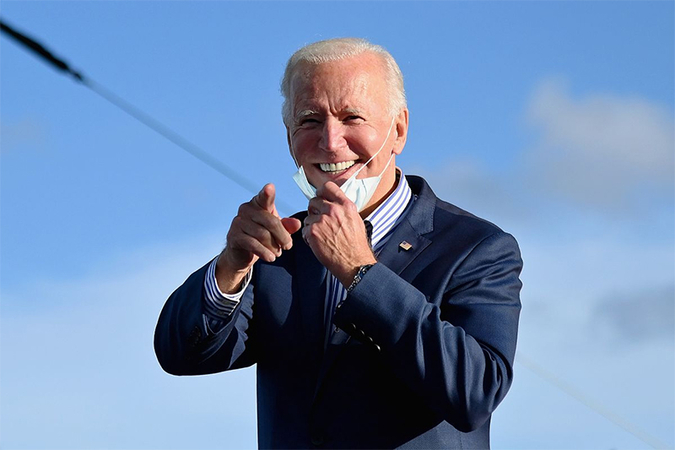
Democratic presidential candidate Joe Biden. (Photo by Angela Weiss / AFP)

By The Statesman

‘Kamala Harris and I deeply value our partnership-and will put respect back at the center of our foreign policy,’ he said.

US President Donald Trump’s opponent Joe Biden launched a scathing attack on him for his “filthy” remark for India over the climate situation.

Biden said that it was not the way how you talk about “friends”.

In a tweet, Biden said, “President Trump called India “filthy.” It’s not how you talk about friends-and it’s not how you solve global challenges like climate change.”

“@KamalaHarris and I deeply value our partnership-and will put respect back at the center of our foreign policy,” he further added.

President Trump called India “filthy.”

It’s not how you talk about friends—and it’s not how you solve global challenges like climate change.@KamalaHarris and I deeply value our partnership—and will put respect back at the center of our foreign policy. https://t.co/TKcyZiNwY6— Joe Biden (@JoeBiden) October 24, 2020

US President Donald Trump on Friday had described the air in India as “filthy” and shifts the climate change blame to India along with China and Russia.

Trump’s remarks come at a time when he was explaining his move to withdrew from the Paris climate accord. He had said that the move would have made America a non-competitive nation.

“Look at China, how filthy it is. Look at Russia. Look at India. The air is filthy. I walked out of the Paris Accord as we had to take out trillions of dollars and we were treated very unfairly,” he said during a debate with Democratic White House challenger Joe Biden.

The relations between US and India have been strengthening in last few months as the Quadrilateral grouping of US, Japan, India and Australia are sending their warships for the Malabar Exercise next month.

Quadrilateral grouping, which experts say is to be mirroring NATO, has already been criticized by China many times.

In another major development in direction of strengthening the ties, New Delhi and Washington are also stepping up efforts to conclude the Basic Exchange and Cooperation Agreement (BECA) ahead of the Indo-US 2+2 ministerial meeting on October 26-27.

Malaysia’s King rejects state of emergency plan: What’s next? #SootinClaimon.Com

#SootinClaimon.Com : ขอบคุณแหล่งข้อมูล : หนังสือพิมพ์ The Nation.

Malaysia’s King rejects state of emergency plan: What’s next?

InternationalOct 26. 2020

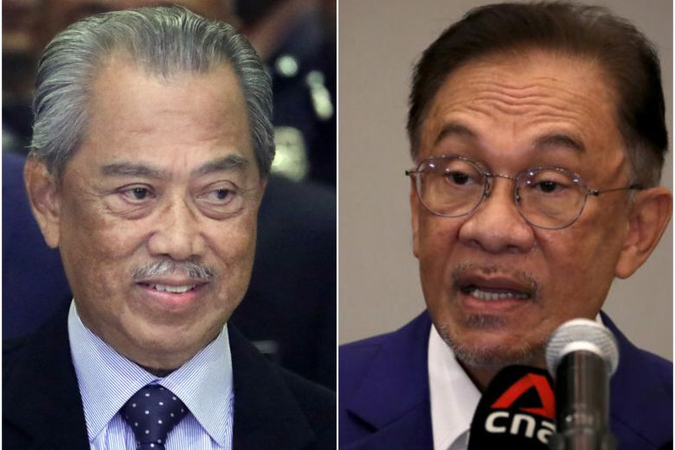
Opposition leader Anwar Ibrahim (right) could finally prove that he has the majority support over PM Muhyiddin Yassin.PHOTOS: REUTERS

Opposition leader Anwar Ibrahim (right) could finally prove that he has the majority support over PM Muhyiddin Yassin.PHOTOS: REUTERS

By Straits Times

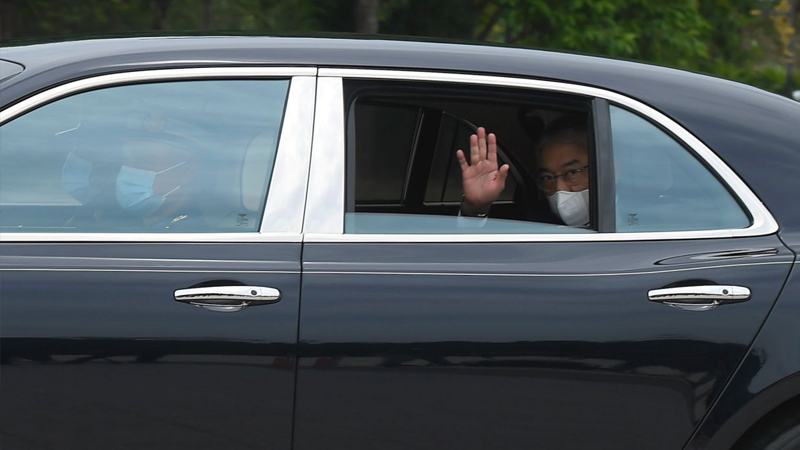
Malaysia’s King surprisingly rejected a controversial plan proposed by Prime Minister Muhyiddin Yassin to impose emergency measures on the country, after discussing the matter with other state monarchs on Sunday (Oct 25).

With the royal decree, Mr Muhyiddin’s embattled leadership now faces the prospect of defeat when Parliament reconvenes on Nov 2.

Here is how the power play could pan out:

1. Minority government

Tan Sri Muhyiddin Yassin can still soldier on with a doubtful majority if he can strike confidence and supply agreements with his political rivals.

Some opposition figures – including Senator Liew Chin Tong from the Democratic Action Party and MP Syed Saddiq Syed Abdul Rahman from the Malaysian United Democratic Alliance – have mooted the idea of supporting the government on some issues – for example, to pass the Budget and its expenditure to tackle the Covid-19 pandemic – as long as their views are taken into account.

“This is a set of legitimate open deals, without having to resort to buying off individual MPs,” said Mr Liew.

Referring to bipartisan support for a constitutional amendment to lower Malaysia’s voting age to 18, Mr Syed Saddiq said he worked on the proposal with rival politicians to further “the national agenda”.

“We did it before, we can do it again for Malaysia,” he said.

2. New prime minister

Opposition leader Anwar Ibrahim could finally prove that he has the majority support that he claims to command and take over as prime minister in a peaceful transition, without having to call a general election.

Datuk Seri Anwar’s Pakatan Harapan coalition has 91 MPs, and he has said he has the backing of over 120 lawmakers.

Speculation was rife that the additional numbers would come from Mr Muhyiddin’s current ally Umno, which has 39 MPs.

MORE ON THIS TOPIC

Malaysia’s PM Muhyiddin loses emergency bid but wins royal endorsement

Malaysia’s King rejects state of emergency plan, PM Muhyiddin to discuss decision with Cabinet

Mr Anwar’s appointment will still need to get the blessing of the King. The opposition leader has said that he presented documents in support of his claim during his audience with the King on Oct 13, although the palace said Mr Anwar did not provide it with a list of names.

Other prime ministerial candidates who have been floated include Umno veteran Tengku Razaleigh Hamzah, Datuk Seri Shafie Apdal and Tun Dr Mahathir Mohamad.

MORE ON THIS TOPIC

Malaysians hail King’s decision not to declare state of emergency

Malaysia’s King rejects controversial emergency measures: How the day unfolded

3. General election

If Mr Muhyiddin loses the Budget vote, there will be calls for Parliament to be dissolved and for voters to go back to the ballot box.

Politicians from both sides of the divide, as well as the public, have aired their objections to holding polls, after several new coronavirus clusters emerged from the state election in Sabah last month.

MORE ON THIS TOPIC

Political logjam over state of emergency plan drags Malaysia’s royal households into the fray

Malaysia’s PM Muhyiddin gets high approval for Covid-19 handling but popularity slips

The emergency measures were proposed in part to avoid this scenario and allow government spending on Covid-19 measures to continue.

The King, who in his statement yesterday stressed that lawmakers should stop politicking and that the Budget was crucial in combating the pandemic, could yet be implored again to reconsider an emergency declaration if a general election during the pandemic is on the cards.

Unite and play your part, says Malaysian King #SootinClaimon.Com

#SootinClaimon.Com : ขอบคุณแหล่งข้อมูล : หนังสือพิมพ์ The Nation.

Unite and play your part, says Malaysian King

InternationalOct 26. 2020

By The Star

PETALING JAYA: Yang di-Pertuan Agong Al-Sultan Abdullah Ri’ayatuddin Al-Mustafa Billah Shah has decided that there is no need for a proclamation of an Emergency in the country at this point of time.

Comptroller of the Royal Household of Istana Negara Datuk Ahmad Fadil Shamsuddin said that Sultan Abdullah also reminded all politicians to immediately stop all forms of politicking that could disrupt the stability of the country’s administration.

“Sultan Abdullah is of the opinion that there was no need for Members of Parliament to continue with their irresponsible actions that could disrupt the stability of the existing Comptroller, ” he said in a statement yesterday.

Ahmad Fadil said that after Sultan Abdullah and the Malay rulers had gone through a proposal by the government to declare a state of emergency, the King felt that the government had successfully contained the pandemic well and effectively.

He said the Prime Minister Tan Sri Muhyiddin Yassin on Friday requested the proclamation of Emergency under Article 150(1) and proclamation of Emergency (Essential Powers 2020) Ordinance pursuant to Article 150 (2B) of the Federal Constitution to combat the threat of the Covid-19 pandemic in the country.

“The King strongly believes in the ability of the government under the leadership of the Prime Minister to continue implementing policies and enforcement to curb the Covid-19 pandemic from spreading, ” he said.

Ahmad Fadil added that the Ruler stressed that the 2021 Budget to be tabled in Parliament was very important to the people in combating Covid-19 and restoring the nation’s economy.

“As such, the financial allocation is much needed by the frontliners to ensure the smoothness of their job and responsibilities, ” he said, adding that the King was very concerned about the people’s worry due to the emergence of several new Covid-19 clusters and the spike in daily positive cases.

Ahmad Fadil said that the King urged everyone, regardless of their background and their political leanings, to set aside all their differences to unite and play their respective roles in helping the government and the authorities to curb the spread of the disease.

The Malay Rulers had, at around 2.30pm yesterday, held a special meeting at Istana Negara in Kuala Lumpur to discuss the government’s plan to declare a state of emergency to tackle the worsening Covid-19 situation.

On Friday, the Prime Minister and several ministers presented the King with the Emergency plan at Istana Abdul Aziz Indera Mahkota in Kuantan.

They were accompanied by the Inspector-General of Police Tan Sri Abdul Hamid Bador, Attorney-General Tan Sri Idrus Harun and Health Ministry director-general Tan Sri Dr Noor Hisham Abdullah.

Related stories:

MPs on both sides back Budget 2021 approval – not Emergency declaration

Rulers’ meeting at Istana Negara ends after over two hours

MCA fully respects and supports King’s decision not to declare Emergency