Ming, Qing dynasty artefacts worth $109 million broken, Taiwan museum admits
THURSDAY, NOVEMBER 03, 2022
Taiwan’s National Palace Museum has admitted to breaking three Ming and Qing Dynasty artefacts – two bowls and a plate – said to be worth more than a combined US$77 million (2.92 billion baht).
The pieces were broken in three separate incidents over the past 18 months, but news of the damage emerged only last week after it was brought up by an opposition legislator.
On October 28, Kuomintang legislator Chen I-shin told lawmakers that he had received a tip-off about the incidents at the museum and accused its director Wu Mi-cha of a deliberate cover-up.
Wu denied the accusations, saying that there was “absolutely no hidden affair”. He added that the staff had immediately reported the incidents to the management, as protocol dictated.
On Wednesday, the museum told The Straits Times that the three items, which date back to the 15th and 17th centuries, were classified under the low-level designation “general antiquities” and thus reporting the incidents to the Ministry of Culture was not required.
According to the museum, two of the items – a Ming Dynasty bowl with dragon motifs and a yellow Qing Dynasty bowl – were discovered to be broken in their boxes while staff were sorting archive collections. It is unclear whether the pieces were damaged by workers or due to poor storage methods, the museum said.
But the Qing Dynasty blue and white porcelain plate had broken into several pieces due to negligent handling, the museum said. A staff member had put the plate on a one-metre tall table, from which it fell to the floor. Disciplinary action was taken, the museum added.
The museum said that it would assess the items for repair and vowed to improve artefact storage practices.
The National Palace Museum, located in Taipei, houses one of the world’s largest collections of prized Chinese artefacts, with pieces spanning 8,000 years of history.
Many of the pieces were moved there from China by former Kuomintang leader Chiang Kai-shek when his party fled to Taiwan after losing the Chinese civil war in 1949. For years, this has been a sore point for Beijing, which has said that the items were stolen from China.
Since news of the damage emerged, social media users in China have accused the Taiwanese government of destroying valuable Chinese treasures and destroying their shared heritage in the process.
On Chinese social media platform Weibo, a hashtag related to the incidents has received close to two million views. “Do they need help with repairing these items? They can come to the motherland for help,” one user wrote.
Beijing views Taiwan as a renegade province awaiting reunification with the mainland, by force if necessary.
Meanwhile, Chinese state media outlet Global Times slammed the museum’s management in an editorial and said that Taiwan’s reunification with the mainland was the way forward.
“Only under reunification can national treasures be better protected, and cultural relics can better play their role in passing on the bloodline of the Chinese civilisation,” it wrote.
US Fed opts for another interest rate hike as it tackles runaway inflation
THURSDAY, NOVEMBER 03, 2022
The US Federal Reserve went in for a fourth straight 75 basis points interest rate hike – 3.75 per cent to 4% – to achieve maximum employment as it chases an inflation target rate of 2%.
The Fed cited recent indicators as pointing to modest growth in spending and production as job gains have been robust in recent months while unemployment was seen to be low.
However, it noted that “inflation remains elevated, reflecting supply and demand imbalances due to the pandemic, higher food and energy prices, and broader price pressures”.
Furthermore, the Russia-Ukraine war is causing “tremendous human and economic hardship as it creates additional upward pressure on inflation and weighs down global economic activity”.
According to a Fed statement on Wednesday, its Federal Open Market Committee (FOMC) anticipates “ongoing increases in the target range will be appropriate in order to attain a monetary policy stance that is sufficiently restrictive to return inflation to 2% over time”.
In determining the pace of future increases, the FOMC will take into account the cumulative tightening of monetary policy and economic and financial developments.
The committee said it would continue reducing its holdings of Treasury securities and agency debt as well as agency mortgage-backed securities, as described in the “Plans for Reducing the Size of the Federal Reserve’s Balance Sheet” that were issued in May.
The statement added that the FOMC will continue to monitor the implications of incoming economic data and would be “prepared to adjust its monetary policy stance appropriately if risks emerge”.
The assessments will take several aspects into account, including public health data, labour market conditions, inflation pressures and expectations, and financial and international developments, it said.
Balancing act: Thailand faces challenge of keeping all sides happy at 2022 Apec Summit
WEDNESDAY, NOVEMBER 02, 2022
With the world more divided than ever, will Thailand be able to successfully balance world powers at the upcoming Apec Summit? Especially with the Russia-Ukraine war in the background and President Vladimir Putin scheduled to attend.
The last time Thailand hosted Apec nations was in 2003, and it was a successful event. Leaders from across the world had gathered and made agreements on free trade and enhancing security. The Thai government is hoping for a repeat of that success this month, but the conditions are different. This time, Apec members are torn – facing differences and threats.
The biggest threat is the Russia-Ukraine war, which complicates Thailand’s role as summit host in many ways.
Russia – Ukraine War Russia is a key Apec member but is being condemned and sanctioned by many other Apec nations like the US, Australia, Canada, Japan and New Zealand for invading Ukraine. On the other hand, other Apec members like China have rejected calls to condemn Russia for the invasion and have refused to join international sanctions against Moscow.
The question for Thailand as host of the Apec Summit now is: how will it balance these differences and ease tensions? If it makes the right moves, it could help with negotiations and bring peace to Ukraine faster. However, one minor mistake in the meeting with Russia, the US and China on the same table may result in an intensification of the war.
Though Thailand has taken pains to avoid condemning Russia directly, it shares the same hope as others that the war in Ukraine ends quickly. Hence, as Apec host this year, Thailand is not trying to isolate Russia from the rest of the world. The government has extended an invitation to Russia and is hoping Putin will attend. Thailand is hoping to balance negotiations with all sides and find the best solution for this conflict.
It also hopes there is no repeat of the incident at the Apec Ministers Responsible for Trade Meeting on May 21-22 when representatives from five countries walked out. Representatives from Canada, New Zealand, Japan and Australia joined their US counterpart in walking out while Russian Economy Minister Maxim Reshetnikov was delivering remarks.
Of course, Apec leaders are bound to clash over handling relations with Russia. Many members will try to exclude Moscow, but their efforts will most likely be blocked by China. Maintaining a balance between its neutral stance and being a capable host may put Thailand in an awkward situation.
Queen Sirikit National Convention Center (QSNCC) / APEC 2022
Apart from balancing challenges over the war, Thailand also has to tackle potential confrontations between China and the US over trade competition. While the US is doing what it can to protect its interests and supremacy, China is looking for ways to get its hands on the pie. Hence, Thailand will likely find itself in a difficult position – balancing the US and China’s economic concerns and stance.
The world is far more divided this year than it was in 2003 when each Apec country had its own agenda and interests to protect.
Furthermore, this will be the first time Apec leaders come face to face in three years since the pandemic. Anticipation and expectations are high as the world watches to see if Thailand can play a good balancing act and is successful in hosting the Apec Summit again.
Hun Sen speaks to Zelensky, agrees to send Cambodian deminers to Ukraine
WEDNESDAY, NOVEMBER 02, 2022
Prime Minister Hun Sen said that Cambodia would send deminers to Ukraine to provide training in mine and unexploded ordnance (UXO) clearance, while also accepting his Ukrainian counterpart’s invitation to visit the country at a “suitable time”.
Hun Sen made the pledge during a phone conversation with Ukrainian President Volodymyr Zelensky on November 1.
According to a press statement released by the Ministry of Foreign Affairs and International Cooperation, Cambodia will provide the demining training in collaboration with Japan, though it did not specify the timeline for the dispatch to the country at war with Russia.
Hun Sen also expressed concern over the recent attacks by the Russian military on the Ukrainian capital Kyiv and other regions, which had caused heavy casualties, damage to civilian infrastructure, power outages and water shortages.
He shared the suffering that Cambodia had gone through, and urged all parties to the conflict to strive for a “comprehensive” compromise so that Ukraine can regain peace, stability, territorial integrity and development.
Zelensky thanked Cambodia for co-sponsoring the UN General Assembly resolutions against Russia’s invasion and annexation of Ukrainian regions.
On the diplomatic front, Zelensky agreed to Hun Sen’s proposal to appoint ambassadors between the two countries.
“Onigiri” photos campaign helps provide 6.8 million meals to children in Africa, Asia
WEDNESDAY, NOVEMBER 02, 2022
“Onigiri” rice ball photos posted on social media through a campaign launched in 2015 by a Japanese nonprofit organization have helped provide a total of 6.8 million school meals to African and Asian children in need.
Under the “Onigiri Action” annual autumn campaign by Table for Two International (TFT), supporting entities donate 100 yen (25 baht) per photo post to deliver five school meals via local partners.
Onigiri is a staple traditional Japanese food made of white rice formed into triangular or cylindrical shapes and often wrapped in nori.
Any onigiri is acceptable, whether homemade or shop-bought, and anyone can post photos any number of times, free of charge.
TFT said more and more people in and outside Japan are taking part in the campaign as they can easily extend aid by simply posting photos on such social media as Twitter with the hashtag “#OnigiriAction” or on a dedicated website.
This year, the campaign is being held for a month through November 6, bringing together a record 37 supporting entities, including major convenience store chain operator 7-Eleven Japan Co and the prefectural government of Miyagi, northeastern Japan.
TFT said that thanks to school meals, more children in areas it supports now go to school and that their school performance is dramatically improving. Countries to which school meals have been sent through the campaign include Rwanda, Kenya, Tanzania and the Philippines.
The campaign has also helped improve the living standards of local farmers who provide food materials used in school meals.
After the start of the novel coronavirus pandemic, many schools closed, and the number of children diagnosed with nutritional deficiencies went up sharply as school meals were the most nutritious meal of the day for many of them.
Despite the pandemic easing, hunger issues remain severe across the world. According to the United Nations, the number of people affected by hunger reached 828 million globally in 2021, up by 150 million since the outbreak of the pandemic.
Food price surges triggered by Russia’s invasion of Ukraine are also dealing a blow to efforts to tackle malnutrition, making it harder to achieve “zero hunger”, one of theUN Sustainable Development Goals, or SDGs, which should be met by 2030.
TFT, which aims to resolve hunger issues in developing countries and obesity problems in developed nations simultaneously, is calling for more people and entities to join the support effort.
For this year’s campaign, TFT has set a target of providing 1.6 million school meals, the highest number since its launch and equivalent to annual school meals for 8,000 children.
“We are keen to unite our efforts to resolve social issues,” says Seiichi Aoyama, executive officer of 7-Eleven Japan, which sold about two billion onigiri rice balls last fiscal year. “Through onigiri, we hope to help achieve SDGs.”
Complex Myanmar crisis hangs over Asean summits, no immediate end in sight: analysts
WEDNESDAY, NOVEMBER 02, 2022
The Myanmar crisis stemming from the removal of former civilian leader Aung San Suu Kyi from power and subsequent violent conflicts between her supporters and the military remain a mounting concern for Asean member states with no immediate end in sight, analysts said.
Cambodian political observers generally believe the country, as the rotating chair of Asean this year, has achieved some fruitful results in its work on the Myanmar situation as it prepares to hand over the task to Indonesia in 2023.
Meanwhile, as Cambodia prepares to host the 40th and 41st Asean summits and related meetings in Phnom Penh on November 10 to 13, the Myanmar crisis is expected to be a central topic for discussion, with tact and diplomacy most likely required on the Cambodian side as was the case in previous talks.
Local pundits said they see it as a success that Cambodia has been able to maintain Myanmar’s membership within the Asean family at all, given the hard stances taken by some of the bloc member states and Myanmar’s lack of progress on the five-point consensus (5PC) devised as the guiding principles for solving the crisis.
Kin Phea, director of the International Relations Institute at the Royal Academy of Cambodia, said Cambodia and Asean have worked well together for nearly a half-century now, in line with the kingdom’s policy of strong support for multilateral diplomacy in the region.
“Throughout the many decades of its post-colonial era, Myanmar has been under military power and it has not been easy to get the juntas to give up power,” he said.
Phea noted that some of Myanmar’s neighbouring countries have also been barriers to resolving its internal political crisis, citing India as an example.
He claimed India does not want to see political stability in Myanmar as it serves its geopolitical strategy and that China and the US also have differences over the crisis.
First, Cambodia created the Asean special envoy position held by Minister of Foreign Affairs and International Cooperation Prak Sokhonn. Second was the visit to Myanmar by both the Asean special envoy and Prime Minister Hun Sen, who urged each side to end the conflict. The third was paving the way for Asean’s provision of humanitarian assistance directly to Myanmar, which has helped avert even greater tragedy from occurring.
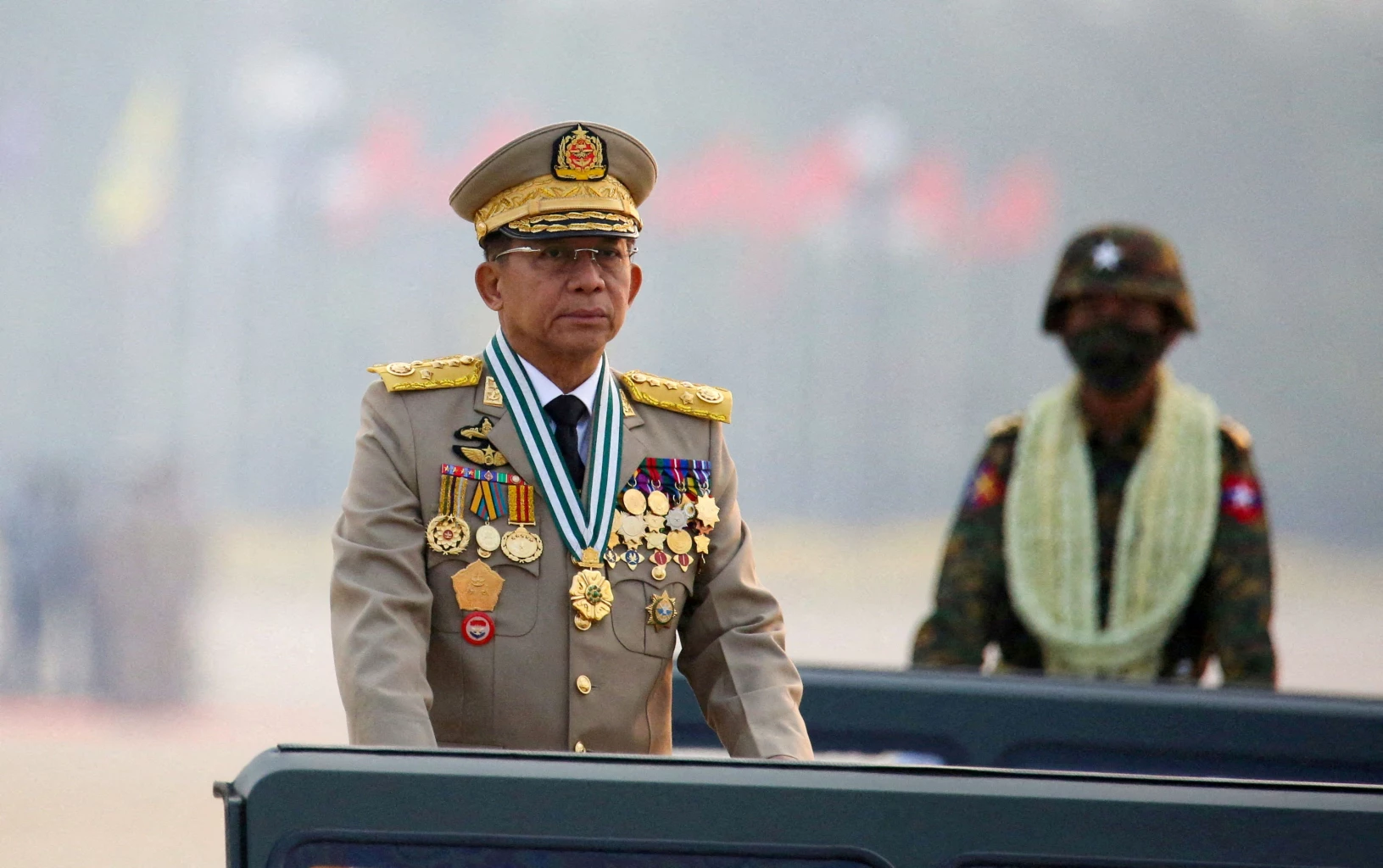
Bunna said these were all good elements to finding a solution, though they have not come to full fruition yet. He explained that Myanmar, currently led by the State Administration Council (SAC) with Senior General Min Aung Hlaing as chairman, does not seem interested in making any political concessions or negotiating with the other parties to the conflict, which has subsequently prolonged the crisis.
“We see that Russia and China’s support for the military regime is also a key reason why Myanmar military leaders remain strong despite sanctions from the international community, especially the West.
“On the other hand, Asean does not seem to be able to force a solution in a timely manner, and besides issuing the 5PC, Asean has had no other consensus on plans for solving the crisis,” he said.
With only two months remaining before Cambodia hands over the chair’s gavel, Bunna said he does not believe the country will be able to make much further progress on Myanmar aside from handing over work on the issue to Indonesia, which is said to be in the process of developing a master plan to address the crisis.
Kyodo News Agency correspondent Puy Kea said one remarkable result that Cambodia has achieved is to keep the Asean family from splitting up over the issue and losing any of its 10 members.
On the other hand, he said Cambodia has not persuaded the SAC to begin negotiations with the other parties to the conflict nor make headway on implementing the 5PC.
Kea believes that if Indonesia dares to use “hot” measures against Myanmar during its turn in the rotating chairmanship, then Asean could be faced with a bad scenario in which Myanmar might withdraw from the organisation in protest, as the nation was famously isolationist in its approach and closed off for decades by its military regime.
Rim Sokvy, co-founder and chairman of foreign relations research institute The Thinker Cambodia, believes Asean uses mechanisms that are too complex and require total consensus on most measures while some of the bloc’s members actively disagree on certain aspects of how to approach the Myanmar crisis.
“Obviously, under the 5PC, Asean has a common position in supporting negotiations between the parties to the conflict in Myanmar. But in reality, Asean has only met with the military side through Min Aung Hlaing and has not been given access to the others.
“So that is a serious issue – that Asean has not been allowed to meet with the other parties to the conflict, such as members of the former civilian government led by Suu Kyi, while Asean meetings or visits [by the chair’s special envoy] seem to have had little effect,” he said.
Thong Mengdavid, a researcher at the Asian Vision Institute’s Mekong Centre for Strategic Studies, said the Myanmar issue has given Asean members a lot of headaches and caused many disagreements. But Cambodia as the rotating chair of Asean has to continue to embrace its role and its responsibility in leading discussions to find a common solution and position for the bloc on the matter.
“At the upcoming Asean Summit, I feel that Cambodia must remain committed to urging Myanmar’s non-political representatives to attend, despite some disagreements over the composition of Myanmar’s delegation.
“Asean has no choice but to urge Min Aung Hlaing to stop the military violence against civilians and members of other political parties in exchange for humanitarian assistance from Asean and the UN,” he said.
Asean unity is being tested and it remains to be seen whether the bloc can continue to stand on the principle of centrality, he said, adding it would have to answer the question of how far it would go to put pressure on Myanmar.
He said that at the November summit, Cambodia must focus on coordinating with other Asean members and do its utmost to urge more powerful countries to participate in resolving the crisis.
At the start of Cambodia’s chairmanship of Asean in early January 2022, Hun Sen paid a state visit to Myanmar and was heavily criticised by some in the international community who felt it was a show of support for the SAC.
But the premier countered at the time that his two-day visit was aimed only at uniting Myanmar and finding a negotiated “win-win” solution to the crisis and that Cambodia’s move as Asean chair and willingness to criticise the Myanmar leaders since then have generally substantiated his claims.
In April 2021, Asean member states agreed on the 5PC in Indonesia, namely an immediate cessation of violence, constructive dialogue among all parties, appointment of a special Asean envoy to facilitate dialogue, the provision of humanitarian assistance, and a visit by the special envoy. But the summit notably failed to call for the release of Suu Kyi and other political prisoners.
The local pundits agree that Cambodia should urge the SAC to respect its commitment to the cessation of violence called for by the 5PC and that the bloc must remain united in its approach regardless of which member holds the Asean chair.
They agreed that Cambodia should do its utmost to urge Indonesia, as Asean chair for 2023, to continue to work towards resolving the crisis peacefully.
They also want to see Asean stay united, hoping that the bloc can soon find some way to end the Myanmar crisis so that the nation of 50 million people can heal quickly and return to peaceful democracy.
A majority of the Asean populace feels satisfied with the economic benefits brought by cooperating with China but still feels “anxious” and “distrustful” about Beijing’s political and security policies, a survey by the Foreign Policy Community of Indonesia found on Monday.
The distrust, stemming from China’s perceived lack of commitment to abide by international law, has resulted in a “paradoxical” relationship between the rising superpower and Asean, experts explained.
The onus is on Beijing, they said, to remedy this scepticism if it wishes to expand its influence in the future.
More than 1,600 respondents from 10 Southeast Asian countries participated in the survey. While students made up more than half of the respondents, “elite” voices were also represented by academia, the business community and civil society groups, analysts said. The responses, while mixed in some aspects, reflected an overarching tone of anxiety and wariness.
The survey found that 68.69% of all respondents believed that trade with Beijing was “the most satisfactory area of cooperation”, while defence was ranked first in the category of the “least satisfactory” aspect of China-Asean collaboration.
Compared with the United States Indo-Pacific strategy andIndo-Pacific Economic Framework, an overwhelming majority of participants also stated that Chinese programmes – the Belt and Road, Global Development and Global Security initiatives – had made “more contributions for Asean”.
“This is the paradox of the Asean-China relationship. On one hand, we welcome and relish our close economic [ties]. But there is also an apprehension when it comes to security,” said Renato Cruz de Casto, professor at Manila’s international studies department at La Salle University.
Troubled waters
Beijing’s response to some of the region’s most pressing issues, such as the South China Sea and Mekong River disputes, have been cited as the primary reason for anxiety looming over Southeast Asia.
With regard to the statement that “China respects the national unity, sovereignty and territorial integrity of Asean countries”, nearly 40% of respondents responded with “disagree” or “strongly disagree”.
While 29.19% declined to answer, 31.36% “agreed” or “strongly agreed” with the idea.
“There is a strong [indication] of scepticism in the satisfaction [rate] for [China’s] cooperation during the consultation of the Code of Conduct [COC],” said Shofwan Al Banna, head of the University of Indonesia’s international relations department.
The South China Sea, an area with an estimated 11 billion barrels of untapped oil and trillions of cubic feet of natural gas, has been disputed by China and several Asean countries – Malaysia, the Philippines, Brunei and Vietnam – since at least the 1970s.
In 2002, Asean leaders signed the Declaration on the Conduct of Parties (DOC) in the South China Sea and used various legal mechanisms such as the 1982 United Nations Convention on the Law of the Sea to resolve the dispute, with only lacklustre results. The COC was then drafted as a follow-up to the DOC, but China’s lack of commitment to the document’s discussion has resulted in a two-decades-long rut.
Another study previously cited the South China Sea as the “most dangerous and riskiest” problem for the region in terms of regional security and economy, as a consequence of possible trade disruption and the short geographical distance to Beijing, which could prove detrimental for Southeast Asian countries – Indonesia included.
An openness to resolve the South China Sea dispute through diplomatic means would be the ultimate remedy to this “trust deficit” issue, the experts said.
“The litmus test for China is the Code of Conduct. Respecting international law would be a signal to Asean countries that it is willing to have its power constrained by international law,” Cruz de Casto suggested. “It would be a good gesture for China to sit down and finalise the negotiations.
It would go a long way to addressing the distrust issue,” added Endy Bayuni, a seasoned foreign affairs journalist and observer.
The ball is now in China’s court to earn the trust of Asean and prove that it will not be unsparing as a hegemon, the panel of experts concurred.
“[Beijing] needs to project the image that it is a benign superpower, not a ruthless one,” Endy said.
‘Holding’ peace
Addressing these concerns in a pre-recorded speech, Chinese Ambassador to Asean Deng Xijun emphasised that a deeper relationship between Beijing and the bloc would only “contribute to peace, stability, development and prosperity of the region and the world”.
“China will always be committed to its foreign policy goals of holding world peace and promoting global development,” Deng asserted.
But the world is “entering a new phase of turbulence and transformation”, Deng said, alluding to the fact that resistance from long-existing superpowers has been the primary factor of instability in the world.
“Certain countries put their own hegemonic interests above the common interest, […] blatantly pursuing their own priorities at the expense of others. […] They gang up and stir up trouble,” he claimed.
“[These] external environments [have caused] China-Asean relations [to be] full of risks and challenges.”
Prayut, Don send condolences to South Korea over Halloween tragedy
WEDNESDAY, NOVEMBER 02, 2022
Prime Minister Prayut Chan-o-cha expressed his condolences to the South Korean president over a weekend Halloween stampede in Seoul, which led to more than 150 deaths.
The Foreign Ministry said on its website on Tuesday that Prayut sent a message of condolence to South Korean President Yoon Suk-yeol.
“I am extremely saddened to learn of the Halloween stampede at Itaewon district on 29 October 2022 in Seoul, which resulted in the loss of many lives, including a Thai national,” Prayut said in the statement.
“On behalf of the Royal Thai Government and the people of Thailand, I wish to extend my heartfelt condolences to you, and through you, to the people of the Republic of Korea and the bereaved families who have lost their loved ones in this tragedy. Our thoughts are also with those injured for a speedy recovery.
“I am confident that under your leadership and supervision, the Government of the Republic of Korea will be able to return the situation to normalcy in due time. We in Thailand stand in solidarity with the Republic of Korea during this difficult time,” Prayut added.
Meanwhile, Foreign Minister Don Pramudwinai also sent a message to his South Korean counterpart Park Jin.
“I wish to express my deepest sympathy and condolences to your excellency on the tragic Halloween festivity at Itaewon district on 29 October 2022 in Seoul, which caused the loss of many lives and casualties of Koreans and foreigners, including a Thai national,” Don wrote.
“We in Thailand extend our heartfelt thoughts and prayers to the families who have lost their loved ones in this unexpected tragedy and the injured for a full and speedy recovery. As the Republic of Korea observes a national mourning period, we send our support and encouragement to the Republic of Korea and her people in overcoming this difficult moment.”
At least 154 people were killed in the crush when a huge crowd celebrating Halloween surged into Itaewon, an alley in a nightlife area in the South Korean capital Seoul on Saturday night.
At least one Thai was killed in the stampede, according to the Royal Thai Embassy in South Korea.
Hotels in Japan now designed to cater to guests’ specific interests
TUESDAY, NOVEMBER 01, 2022
Hotels catering to guests’ preferences and interests, such as pets, cycling, films or books, have been popping up in Japan one after another.
Businesses are trying hard to set themselves apart from their rivals with original ideas, hoping to improve a declining occupancy rate amid the Covid-19 pandemic.
A hotel called Inumo Shibakoen which opened in February in Tokyo’s Minato Ward has an 80-square-meter space as a dog park in its basement, which is furnished with subtle-coloured walls and a soft, comfortable floor. The 70-room hotel also has a trimming salon and a kennel. The per night rate of about ¥50,000 (about 12,800 baht) also includes an “accommodation fee” for the guest’s dog. Up to two dogs can stay in a room.
Hotels with a large dog park in central Tokyo are rare, and an Inumo spokesperson said the number of guests is growing by word of mouth.
“I enjoyed walking around Tokyo Tower in the morning,” said a 59-year-old office worker from Hachioji, Tokyo, who stayed overnight at the hotel.
Hotel occupancy plummeted during the pandemic. According to the Japan Tourism Agency, a total of 317.77 million people stayed at hotels or inns in 2021, half the number in pre-pandemic 2019. The rush to build hotels in anticipation of increasing numbers of foreign visitors to Japan has also spurred price competition.
Hotels specialising in guests’ interests are also cropping up.
In 2020, Hoshino Resorts Inc opened BEB5 Tsuchiura, a bicyclist-focused resort in Tsuchiura, Ibaraki Prefecture.
The resort is connected directly to JR Tsuchiura Station and boasts convenient access to nearby areas. BEB5 guests can enjoy popular cycling routes such as Mt Tsukuba and Kasumigaura. They can also carry their bike into their room and even share the bed with bedsheets made of special materials. The rate for one room with two occupants starts at ¥13,000 per night.
Theatre 1, located in the village of Hinohara, Tokyo, features a sort of home movie theatre where guests can spend the night. Surrounded by lush mountains, visitors can watch films on a large 100-inch screen inside a well-furnished cabin. The facilities with their rather unique features are limited to one group per day.
In December last year, Tokyo-based business hotel chain Solare Hotels & Resorts opened Lamp Light Books Hotel Fukuoka, a hotel which comes with its own 24-hour bookstore, in Fukuoka City.
Guests can check out or buy any book they like from about the 4,000 books in the store and read in their rooms. This is the third bookstore hotel run by the company, which has also opened facilities in Nagoya and Sapporo.
“Hotels that cater to guests’ interests and preferences are more likely to satisfy them,” said Fumiko Watanabe, an associate senior researcher at NLI Research Institute who is well-versed in the hotel industry.
These hotels are expected to attract foreign visitors looking for a unique experience now that Covid-19 border control measures have significantly eased.
Gujarat hospital slammed for focusing more on PM’s ‘photoshoots’ than on injured
TUESDAY, NOVEMBER 01, 2022
The Aam Aadmi Party (AAP) and the Congress took a jibe at Prime Minister Narendra Modi’s visit to the Morbi Civil hospital in Gujrat, saying the painting had been done so the prime minister can hold “photoshoots”.
On Sunday evening, a suspension bridge collapsed in Gujarat’s Morbi district, leading to the death of more than 130 people and hundreds more injured, many of whom are being treated at this hospital.
The AAP shared a video clip on its official Twitter account showing the hospital allegedly being painted before Modi’s visit on Tuesday. The clip was captioned: “141 people are dead, hundreds are missing, no action has been taken against the real culprits, but BJP workers are busy covering up to prepare for the photo shoot.”
The renovation, which is not uncommon ahead of visits by top government functionaries, often sparks criticism.
The Congress also took to social media to share photographs saying the hospital was being freshly painted and new tiles being installed to prepare for the PM’s visit. It also slammed the prime minister, saying: “They are not ashamed! So many people died and they are engaged in preparing for an event.”
AAP Delhi MLA Naresh Balyan also remarked on the issue, tweeting: “There is a limit to shamelessness.”
Gujarat Congress spokesperson Hemang Raval commented on the issue, writing: “When so many people are dying, painting and decoration work is happening at the civil hospital in Morbi. The BJP is only known for its event management. There are two types of disasters, but the BJP in Gujarat is the third type of disaster. Instead of painting and decorating, they should ensure that the patients get proper treatment.”



 Russia – Ukraine War
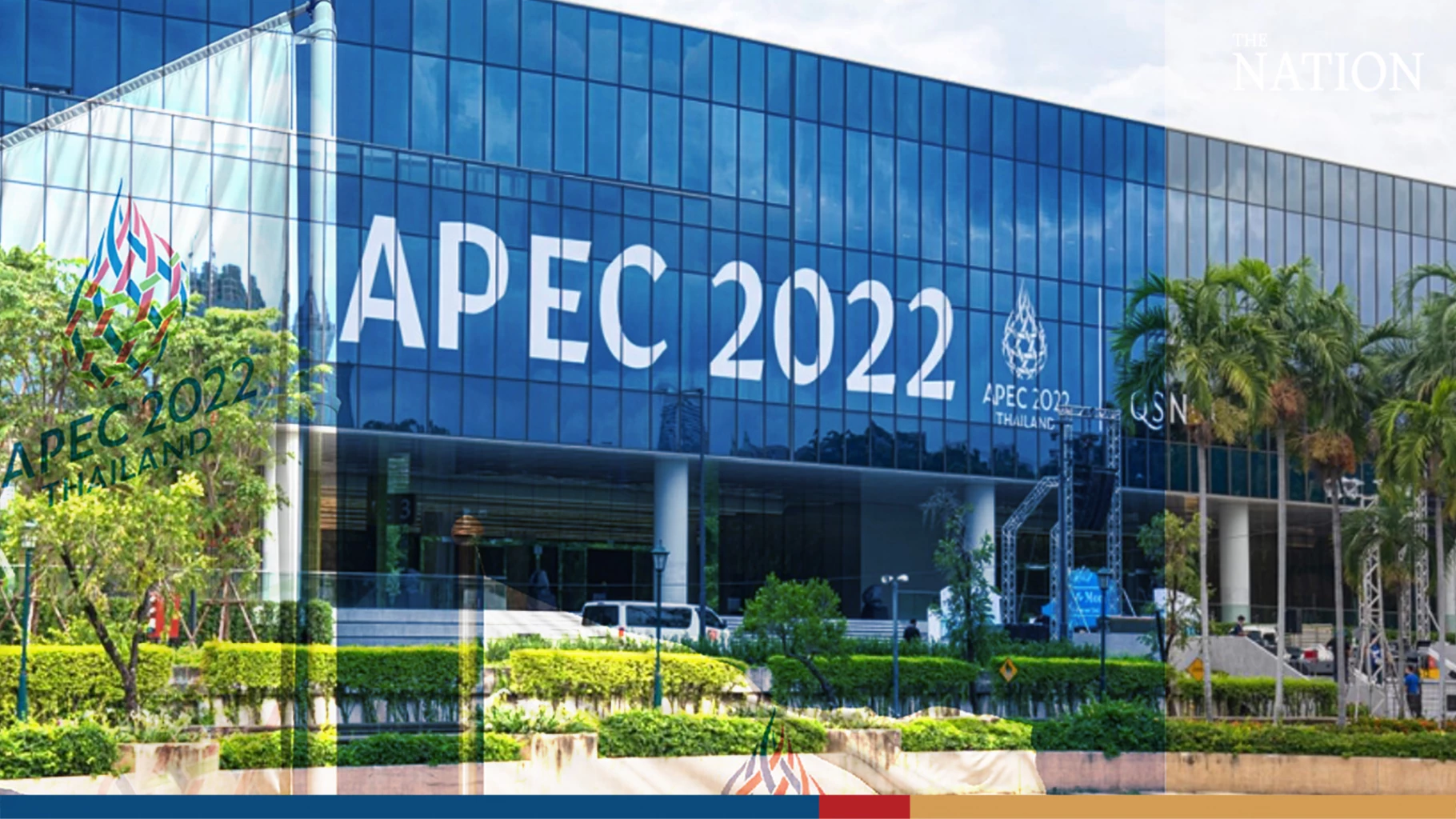 Queen Sirikit National Convention Center (QSNCC) / APEC 2022
 APEC 2022 THAILAND





 SootinClaimon.Com