Europe facing dearth of medical staff in test of virus readiness #SootinClaimon.Com

#SootinClaimon.Com : ขอบคุณแหล่งข้อมูล : หนังสือพิมพ์ The Nation.

Europe facing dearth of medical staff in test of virus readiness

InternationalOct 23. 2020A member of Germany's Red Cross stands near a Covid-19 mobile testing unit as travelers are tested in Berlin, Germany, on Oct. 12, 2020. MUST CREDIT: Bloomberg photo by Liesa Johannssen-Koppitz.A member of Germany’s Red Cross stands near a Covid-19 mobile testing unit as travelers are tested in Berlin, Germany, on Oct. 12, 2020. MUST CREDIT: Bloomberg photo by Liesa Johannssen-Koppitz. 

By Syndication Washington Post, Bloomberg · Chris Reiter, Lenka Ponikelska, John Ainger · WORLD, HEALTH, EUROPE, HEALTH-NEWS

Europe is preparing for a surge in coronavirus cases to hit hospitals, and authorities are acutely worried about a key resource: trained medical staff.

During the initial wave of the pandemic, clinics scoured basements for spare beds and governments pushed manufacturers to churn out ventilators and face masks. Equipment is now at hand, but a shortage of doctors, nurses and medical technicians is putting health-care services to the test, as record infections hit across the region simultaneously.

Europe has re-emerged as a global hot spot for the virus, which has infected more than 5 million people and caused over 200,000 fatalities on the continent. Germany and the Czech Republic recorded record numbers of new cases Thursday, a day after Italy also had the most in a single day since the start of the pandemic and Spain became the first Western European nation to top 1 million infections.

With fewer severe cases currently, hospitals are coping, but signs of strain are multiplying.

In the Czech Republic — the hardest-hit European country — Prime Minister Andrej Babis on Wednesday imposed a partial shutdown, and warned that the hospital system may collapse by early next month.

The government has already enlisted medical students and asked doctors working abroad to come home, and hospitals are calling for volunteers and offering part-time jobs for medical, cleaning and maintenance staff.

The armed forces are setting up a field hospital in Prague, while the U.S. ambassador announced Wednesday military medical personnel would be sent over to help.

“I cannot even imagine what will happen if the number of patients that need intensive care continues to rise,” Petr Sladek, head of the hospital in the hard-hit Moravian town of Uherske Hradiste, told website Seznam Zpravy. “It will be like doing battlefield medicine.”

While Eastern Europe is particularly exposed because of chronic underfunding of health care — Poland is establishing temporary hospitals at stadiums and conference centers — it’s a similar situation in Belgium.

In Europe’s second-worst outbreak, authorities are looking at recruiting out-of-work restaurant staff, pensioners and refugees to fill in. With so many Belgians currently in quarantine, there’s fewer people available to treat the sick than during the initial wave in the spring.

“We have less workers now in the field, and that’s a real problem,” Jan-Piet Bauwens, vice president at the Setca trade union.

Belgian medical facilities are currently reserving 50% of their available ICU beds for Covid-19 patients. Some clinics in Brussels and the province of Liege have transferred patients to other hospitals as they reach limits.

To be sure, the situation isn’t as severe everywhere. The U.K. has so-called Nightingale hospitals designed to cope with a sudden spike in virus patients. Named after Florence Nightingale, some of them weren’t used during the first wave of infections, and the ones that were in operation only treated a handful of people.

The Nightingale hospitals in Manchester, Sunderland and Harrogate are currently preparing to accept patients in upcoming weeks, according to an NHS spokesperson who cited last week’s Downing Street coronavirus press briefing. Those in London, Birmingham, Exeter and Bristol remain on standby.

The chances of a critically-ill patient hospitalized with Covid-19 surviving at least 28 days has risen to 72% for those admitted since September, compared with 61% previously, according to a report by the Intensive Care National Audit & Research Centre. Survival rates have improved across age groups, gender and race, the data show.

But even in Germany, which has experienced lower infection rates than most of its neighbors, concern is growing. With more than 70% of intensive-care beds filled, a spike in severe Covid-19 cases could quickly force other patients aside.

“We’re looking ahead to the coming weeks with concern if we can’t slow the exponential growth in infections,” Susanne Herold, a professor of pulmonary infections at the University of Giessen near Frankfurt, said on broadcaster ZDF.

In France, the jump in virus cases is putting pressure on ICUs and already exhausted staff.

Health Minister Olivier Veran said Tuesday that an additional 2.5 billion euros ($3 billion) would be spent on the country’s hospitals, adding to the extra 10 billion euros earmarked for health care in the 2020 budget.

“Public authorities haven’t learned the lessons from the first wave,” said Benoit Labenne, a general practitioner in Le Raincy in the Paris suburbs, who helps local emergency services a few times a week.

Italian authorities are preparing to expand coronavirus wards. New facilities built earlier this year at exhibition centers in Milan and Bergamo will open in the coming days, with an initial capacity of 200 beds.

The situation is worse in Campania. The region around Naples, which largely escaped the first wave, has more than 1,000 hospitalized Covid patients, above the April peak of around 700.

Even as hospitals convert wings for intensive care and equipment stands ready, staffing is in issue.

“It’s like having a Ferrari Testarossa in the garage and no driver,” Bruno Zuccarelli, vice president of Naples’ doctors’ association, said. “There are not enough specialists.”

In Getafe, a town in the south of Madrid, hospitals started to fill up again with coronavirus patients at the beginning of September.

By the middle of the month the local clinic was already overrun, says Yolanda Cabrero, an anesthetist who has worked there for 25 years and herself became infected with coronavirus while on the job in March.

“In Madrid, there has been a brutal pressure to come out of confinement fast, to prioritize the economy over the criteria of health are professionals and epidemiologists,” she said. “Time and time again we have seen how that’s a mistake because you can’t have an economy without health.”

India sets aside $7 billion to vaccinate the world’s second biggest population #SootinClaimon.Com

#SootinClaimon.Com : ขอบคุณแหล่งข้อมูล : หนังสือพิมพ์ The Nation.

India sets aside $7 billion to vaccinate the world’s second biggest population

InternationalOct 23. 2020

By Syndication Washington Post, Bloomberg · Siddhartha Singh · WORLD, ASIA-PACIFIC

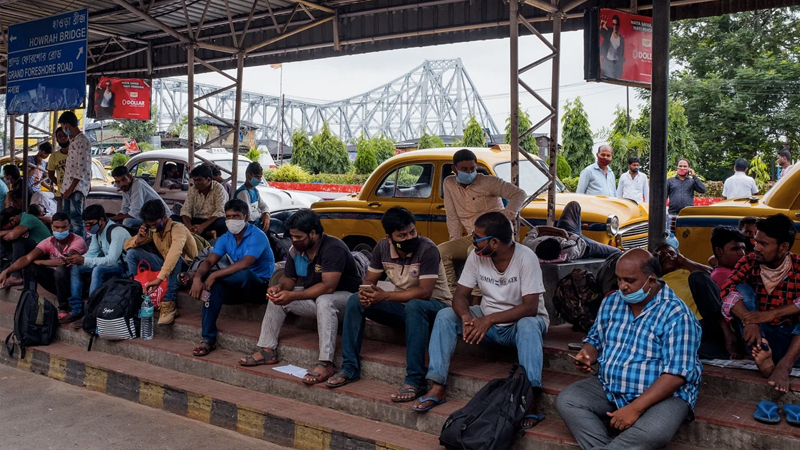
India’s government has set aside about $7 billion (500 billion rupees) to vaccinate the world’s most populous country after China against the coronavirus, according to people with knowledge of the matter.

Prime Minister Narendra Modi’s administration estimates an all-in cost of $6 to $7 per person in the nation of 1.3 billion, the people said, asking not to be identified as the details are private. The money provisioned so far is for the current financial year ending March 31 and there will be no shortage of further funds for this purpose, they added.

A Finance Ministry spokesman couldn’t immediately be reached.

Adar Poonawalla, head of the Serum Institute of India Pvt., the world’s largest manufacturer of vaccines, has predicted the nation would need about 800 billion rupees to procure and inoculate people living everywhere from the Himalayas to the remote Andaman & Nicobar islands. Apart from buying the treatment, transporting them from manufacturing sites would be a massive undertaking.

Delivering a vaccine across India “will be a gigantic task,” Mahesh Devnani, an associate professor at the Post Graduate Institute of Medical Education and Research in Chandigarh, said Wednesday on a webinar. “We need a prioritization plan, everyone cannot have it initially.”

By one estimate, airlifting single-dose regimens to protect the world’s population would require space in about 8,000 cargo planes.

The biggest challenge for India will be building up cold-chain logistics to distribute vaccines across India in a short period of time, Kiran Mazumdar-Shaw, the founder and chairman of Biocon Ltd., said at the Bloomberg India Economic Forum last week.

“I do hope by the end of November that we are able to say we have a plan” and digital platforms to help roll out vaccines, she said.

While a government-backed panel predicts that India is past the peak of infections and may contain the spread by February, the nation has taken a massive blow to economic growth and Modi has been reopening the economy. Starting this weekend, Indians will be celebrating several festivals that could lead to a sharp jump in daily virus infections.

Modi on Tuesday said his government will ensure all Indians have access to a covid-19 vaccine as soon it is ready.

India to restore visas despite virus in bid to open economy #SootinClaimon.Com

#SootinClaimon.Com : ขอบคุณแหล่งข้อมูล : หนังสือพิมพ์ The Nation.

India to restore visas despite virus in bid to open economy

InternationalOct 23. 2020

International travelers can now use options including flights under a government repatriation program.  Photographer: Dhiraj Singh/Bloomberg

International travelers can now use options including flights under a government repatriation program. Photographer: Dhiraj Singh/Bloomberg

By Syndication Washington Post, Bloomberg · Sudhi Ranjan Sen, Anurag Kotoky · WORLD, ASIA-PACIFIC

India is reopening its borders to international visitors in a bid to revive economic growth even as the South Asian nation battles the world’s second-worst coronavirus outbreak.

Prime Minister Narendra Modi is using a dip in new Covid-19 infections to prise open the economy from a strict lockdown, welcoming foreigners on business trips, but not tourists.

While regular scheduled commercial flights remain off limits for the time being, overseas travelers can use other options, including flights under a government repatriation program, so-called air-bubble agreements, and private charters, the Ministry of Home Affairs said in a statement Thursday. Ships will also be permitted. All travelers must “strictly adhere” to the guidelines on quarantine and other rules.

The surprise decision comes after the number of daily infections in India dropped to around 55,000 versus almost 100,000 last month. A government panel of scientists said this week the nation may have seen a peak in new infections and could contain the outbreak by February. But critics have attributed that decline to lower rates of testing as the disease spreads to the country’s vast hinterland.

All existing visas — except electronic, tourist and medical ones — will be restored immediately, the government said. People holding expired visas can apply again and foreigners wishing to visit for business, conferences, work, study, research or medical reasons will be allowed to apply, the government said.

India may not be alone in welcoming foreigners amid a worsening outbreak. Indonesia, Southeast Asia’s largest economy and the nation with that region’s worst outbreak, is also considering reopening borders, Foreign Minister Retno Marsudi said in a Thursday briefing.

Indonesia reported 4,432 new cases in the 24 hours through midday Thursday, the most since Oct. 11, bringing the total to 377,541.

India has extended a government repatriation program to allow private carriers including InterGlobe Aviation Ltd.’s IndiGo and SpiceJet Ltd. to operate such flights with special permission. The nation has also struck air-bubble agreements with 18 countries, including the U.S., U.K., Germany, Afghanistan and Canada.

India’s lockdown at the end of March was the world’s largest and one of its most severe, causing the economy to contract about 24% in the quarter ended June from a year earlier as businesses and jobs were demolished. Once restrictions were eased, authorities struggled to get the pandemic under control with the number of infections now second only to the U.S.

India has also been allowing local airlines to fly a limited schedule since May. But most carriers failed to fill even 70% of their seats last month as passengers remained wary about catching the deadly virus. Modi’s administration has set aside about 500 billion rupees ($7 billion) to vaccinate the world’s most populous nation after China, Bloomberg News reported Thursday.

Colorado wildfire grows by more than 100,000 acres in a day, forcing hundreds to flee #SootinClaimon.Com

#SootinClaimon.Com : ขอบคุณแหล่งข้อมูล : หนังสือพิมพ์ The Nation.

Colorado wildfire grows by more than 100,000 acres in a day, forcing hundreds to flee

InternationalOct 23. 2020

Jessy Ellenberger made this photo from the deck of her home north of Granby, Colo., just before sunset on Wednesday. (Jessy Ellenberger via AP)

Jessy Ellenberger made this photo from the deck of her home north of Granby, Colo., just before sunset on Wednesday. (Jessy Ellenberger via AP)

By The Washington Post · Andrew Freedman · NATIONAL, SCIENCE-ENVIRONMENT

A dire wildfire crisis is unfolding in Colorado after a blaze exploded sixfold in size in just 24 hours, growing to about 125,600 acres on Thursday morning. The East Troublesome Fire, burning in Grand County and extending now into Rocky Mountain National Park, forced hundreds to quickly evacuate from Grand Lake and Granby overnight, with more evacuations likely Thursday and an unknown number of structures reportedly destroyed.

The blaze has all the hallmarks of climate change. It’s burning at an elevation of 9,000 feet at a time of year when snow should be falling. The fire is also raging during a severe drought, aggravated by record heat, through stands of trees killed or weakened by a bark beetle infestation.

The East Troublesome Fire is now the fourth-largest wildfire in Colorado history. Three of the state’s five largest wildfires on record have now occurred in 2020. The largest, the Cameron Peak Fire, is still burning just west of Fort Collins.

Noel Livingston, who leads the team of firefighters tackling this blaze as incident commander for Pacific Northwest Team Three, said that crews saw an “amazing amount of fire spread yesterday.”

At times, National Weather Service Doppler radar showed the smoke plume from the blaze towering almost 40,000 feet above the surface, a sign of extreme fire behavior. Typically, at such a high elevation in the state, the weather at this time of year would not result in such a high wildfire danger. Instead, a red flag warning for “critical” fire weather risk is in effect through 7 p.m. Mountain time Thursday, with winds forecast to gust up to 50 mph, making efforts to increase fire containment difficult.

“We saw about 20 miles of fire growth throughout the day and throughout the night, which equated to about 100,000 acres of additional fire activity,” Livingston said.

Livingston said the fire burned quickly through heavily forested areas north of Granby and Grand Lake. A pre-evacuation notice was issued for Granby on Thursday.

There are indications via satellite imagery and ground observations from park rangers that the fire jumped the continental divide in Rocky Mountain National Park, despite being areas that are above the tree line. That is an extremely rare occurrence and may put new downwind areas to the east, such as Estes Park, at risk. A merging of this fire with the Cameron Peak Fire is even possible, Livingston said during a news conference Thursday.

Evacuation orders for the national park and parts of Estes Park have been issued, with traffic backups reported Thursday afternoon for people leaving Estes Park.

The ingredients for the massive, rapid growth of this fire, Livingston said, were the thick stands of trees, many of which had been weakened or killed by beetle invasions in recent years, a phenomena linked to climate change that is occurring across vast stretches of the West and into Canada.

As temperatures have increased in Colorado, it has given once-scarce pests, including mountain bark beetles, that were held in check by extremely cold winter temperatures, an opportunity to spread and damage or destroy trees. Studies have shown that in some ecosystems, these dead or weakened trees can accelerate blazes, while in others they may actually slow down some wildfires.

Livingston also pointed to extremely dry conditions and strong winds that pushed the fire through the timbered areas. Winds near the fire were gusting to 60 mph at times on Wednesday.

Winds are predicted to remain strong for the rest of the week, said Nick Nauslar, a predictive-services meteorologist with the National Interagency Fire Center in Boise, Idaho. He noted in an interview that at 9 p.m. on Wednesday night, near the fire at 8,500 feet in elevation, the air temperature was 70 degrees and winds were gusting to 68 mph.

“That’s pretty rare just in the summer for 8,500 feet, let alone late October,” Nauslar said, since normally it would be colder at that height. “I’ve used the word ‘unprecedented’ before and I’m starting to run out of adjectives to describe what’s happening this fire season,” he said.

Grand County Sheriff Brett Schroetlin published a Facebook video Thursday explaining how tough the night had been.

“I have a message,” he said. “I’m not even sure what those words are. Today [Wednesday] has been an extremely, extremely challenging day for our community. We knew this fire was here. We knew the impacts of it. We looked at every possible potential for this fire. We never, ever expected 6,000 acres per hour to come upon our community.”

The winds were strong and, as a result, the fire’s behavior was as well.

“As we drive around this northern part of Grand County, I don’t know what we’ll see in the morning, to be honest,” he said. “But you know what? Together, as a community, we’re going to get through this.”

The forecast for Thursday calls for more high winds and low relative humidity in the region of the fire.

“Unfortunately, today is another fire day,” Livingston said. “We have forecasted high winds coming in this afternoon with a cold front passage. We have again forecasted dry conditions. And we obviously have a lot of available fuel this fire could continue to spread in.

“We anticipate another day of large fire growth,” Livingston said.

Colorado is under drought conditions for the first time since 2013. Human-caused climate change is sparking more frequent and intense wildfires in much of the West, along with an extension of the wildfire season, studies show. Higher air temperatures are worsening droughts as well.

California is also experiencing a record wildfire season. More than 4.1 million acres have burned, and more than 9,200 homes and other structures destroyed since Jan. 1. California wildfires have killed 31 people this year, with more high winds in the forecast for the next week, which could spread any new blazes that ignite.

Stop wiping down groceries and focus on bigger risks, say experts on coronavirus transmission #SootinClaimon.Com

#SootinClaimon.Com : ขอบคุณแหล่งข้อมูล : หนังสือพิมพ์ The Nation.

Stop wiping down groceries and focus on bigger risks, say experts on coronavirus transmission

InternationalOct 23. 2020

By The Washington Post · Elizabeth Chang · FEATURES, HEALTH, HEALTH-NEWS

Although studies continue to show that the novel coronavirus can be detected on contaminated objects after days or weeks, a consensus has emerged among scientists that the virus is rarely transmitted through contact with tainted surfaces and that it’s safe to stop taking such extreme measures as quarantining your mail and wiping down your groceries.

“To the best of my knowledge, in real life, scientists like me – an epidemiologist and a physician – and virologists basically don’t worry too much about these things,” said David Morens, a senior adviser to the director of the National Institute of Allergy and Infectious Diseases, Anthony Fauci.

That’s in line with advice from the Centers for Disease Control and Prevention, which has updated its “How Covid-19 Spreads” Web page to say that “spread from touching surfaces is not thought to be a common way” the virus is transmitted.

Although ongoing research can sound alarming – such as an Australian study published Oct. 7, which found that SARS-CoV-2 could be detected on surfaces such as glass and stainless steel after 28 days – Morens said the public should not be concerned.

Such studies “basically tend to show that under experimental conditions, which are not real-world conditions, you can get virus to persist and you can detect that persistence,” he said. But, he added, that doesn’t mean the virus could infect anyone. “The amount of virus that can persist might not be the amount of virus that can affect you in a real-world environment.” In the real world, airflow, sunlight and heat all act quickly to weaken the coronavirus.

Stefan Baral, an associate professor in the department of epidemiology at the Johns Hopkins Bloomberg School of Public Health, said there’s a big difference between a single viral particle being able to survive on a particular surface and the ability of a virus to enter a mucus membrane, cross that mucus membrane and successfully replicate and infect someone. “A single viral particle is exquisitely unlikely to cause serious effect,” he said.

But public confusion about the coronavirus and surfaces is understandable, said Angela Rasmussen, a virologist at the Center for Infection and Immunity at Columbia University’s Mailman School of Public Health. “Scientists really haven’t really done a very good job of explaining how you get evidence for different types of transmission or different transmission routes.”

Rasmussen said epidemiologists can have a difficult time finding real-word evidence of a virus’s transmission via contaminated objects or surfaces, which are called fomites. In the case of the coronavirus, this is partly because transmission often occurs in the context of large, superspreader events, leaving researchers struggling to determine who talked to whom, and who touched what surface. “It’s not at all uncommon to not have strong epidemiological evidence for fomite transmission,” she said, “but that doesn’t mean that fomite transmission doesn’t happen.”

In fact, Rasmussen added, because we know that other respiratory viruses that are transmitted by inhalation, such as the flu and rhinovirus, are also transmitted by fomites, it stands to reason that coronavirus is likely transmitted by fomites as well. “It just may be that that’s not necessarily the dominant mode of transmission,” she said. And although it may be important for researchers to determine how long the virus remains infectious in various environments, when it comes to daily life, “I don’t think that it’s necessarily wise to be wiping groceries down.”

Morens agrees. “There’s just a lot of unnecessary worry about these things,” he said. “It’s like standing in the middle of a busy freeway with traffic all around you and asking, ‘What’s the chance I’m going to get hit by a meteor?’ Now there’s a chance, but it’s pretty low, and don’t you have other better things to worry about?”

Although no environment can be determined to be totally safe, Morens says we need to think about actions as low-, medium- or high-risk. The times to worry about contaminated surfaces would be when you are in a crowded public place where many people are touching the same surfaces. As an illustration of an area that poses high risk, he cited a public restroom next to a crowded airport lounge, where possibly contaminated people might touch the door handle, light switch, towel dispenser and faucet. That’s a situation where you should be super-alert; if you wash your hands and then touch the faucet or door handle again, for example, you’ve just possibly contaminated yourself.

Protection is not gained by washing down everything in the environment, Morens said. “It’s the behaviors you do to make sure that nothing in the environment, including your own hands, gets into your mouth, nose or eyes.”

Those behaviors include never touching yourself above the neck, wearing a mask (which also helps remind you not to touch your face), social distancing and making sure your hands are as clean as possible. In that case, you could even go into a restaurant and touch objects there – the chair, the menu – without wiping them down first, and “if the very last thing you touch is soap and water or hand sanitizer . . . you’re okay,” said Morens.

Baral, who has been pushing for the reopening of playgrounds, said that one of the factors he considers when deciding whether a situation is high-risk is the environment the virus might find itself in. “These viruses do not survive well outdoors,” he said. Coronaviruses like to be surrounded by fluid to protect them, and fluid evaporates pretty quickly outside – leaving the virus vulnerable to the elements. He noted that outdoor playgrounds, which have not historically been known as high-risk settings for other viruses, have not been identified as areas of common exposure for the coronavirus, months into the pandemic, which he finds “striking.”

However, Baral doesn’t feel the same way about indoor environments. There may be environments in people’s homes where the virus does well and lives on surfaces, he said. For that reason, people should immediately wash their hands as soon as they enter their home from the outside and frequently disinfect common surfaces, such as doorknobs and faucets.

But could all the sanitizer and disinfectant being used to clean hands and high-touch surfaces be paving the way for antibiotic-resistant “superbugs?” Not if you’re using soap and water or the products recommended by the World Health Organization and the CDC, which are alcohol or bleach-based – and not those labeled antibacterial, says Rasmussen. Antibacterial products are the ones that can encourage the development of drug-resistant germs – and they don’t kill viruses, anyway.

Soap and water, alcohol and bleach, on the other hand, work in a broad-spectrum way, Rasmussen said, and kill many bacteria as well as viruses. She believes there’s really no need for antibacterial cleaners in the household. “It’s unfortunate that for a while they were very popular on the consumer market,” she said. “But you can use soap and these other types of disinfectants that are more general and that won’t select for resistance.”

Finally, she said, it’s important to remember that “viruses have to have a host and they can’t replicate without one. So . . . the main place that’s going to be the source of virus in anybody’s household is going to be the people in it and not the surfaces or the physical environment.”

“Even if there’s virus kicking around on certain things,” she said, “that risk can really be mitigated practically by washing your hands.”

Fewer foreign election observers are coming to monitor U.S. this year #SootinClaimon.Com

#SootinClaimon.Com : ขอบคุณแหล่งข้อมูล : หนังสือพิมพ์ The Nation.

Fewer foreign election observers are coming to monitor U.S. this year

InternationalOct 23. 2020

By The Washington Post · Carol Morello · NATIONAL, POLITICS

WASHINGTON – As the eyes of the world focus on the U.S. election, teams of international observers are heading out across the United States amid concerns about the vote’s integrity.

ภาพนี้ไม่ได้ระบุแอตทริบิวต์ alt, ชื่อไฟล์ของไฟล์นี้คือ 800_a8bd48d2a73fb5e.jpg

For the ninth time, observers affiliated with the Organization for Security and Cooperation in Europe (OSCE) have come to the United States to watch over an election and recommend improvements, a mission little-noticed by most Americans.

But the 2020 campaign is different.

As fears rise about voter suppression, violence and a potentially contested outcome in the United States, the Europeans say they hope their efforts will help assure Americans that the vote is legitimate.

“This is one of the most important elections we have ever observed as the OSCE Parliamentary Assembly,” said Roberto Montella, secretary general of the group, which will dispatch 59 lawmakers and a staff of 16 to monitor voting in 10 states and the District of Columbia.

“One of the reasons is that this is the first time in my recollection that the incumbent cries foul before the competition actually takes place and before the outcome is known,” Montella added.

OSCE officials note that no election anywhere is perfect, and that many nations are undergoing a period of strident political divisiveness. But rarely have so many questions arisen about the validity of American elections, which are often considered as the epitome of fair and free voting.

In part to address the concerns, the OSCE’s Office for Democratic Institutions and Human Rights (ODIHR) has sent a pared-down group of 30 observers who will fan out to 28 states, aided by 15 electoral experts who will operate from Washington. That is far fewer than the 500 observers they initially recommended. But the raging coronavirus pandemic and travel restrictions made it difficult to recruit more people.

The two OSCE observer groups will coordinate their efforts and announce their preliminary findings the day after the election, then issue a complete report two months later.

In an interim report released Thursday, ODIHR observers outlined their concerns that the election will be hampered by the impact of the coronavirus and diminished voter confidence in its fairness.

The report said that $400 million in federal funds given to states to address health and safety issues stemming from the pandemic may not be enough to guarantee safe and well-organized elections.

In an unusually blunt warning, they worried that President Donald Trump’s unsupported assertions of widespread voter fraud could undermine trust in the election itself.

“Throughout the campaign, President Trump has repeatedly claimed that the elections would be marred by fraud, especially in relation to absentee and particularly postal voting,” the report said.

Many observers, it added, “expressed grave concerns about allegations from a sitting president casting doubt on the democratic process without presenting any evidence that the integrity of the election process could be systematically jeopardized. On a number of occasions, President Trump refused to commit to a peaceful transition of power if he lost the elections, using this stance to reaffirm his lack of trust in the process.”

In such a polarized political environment, the report said, the observers fear for “the potential for political violence in the aftermath of the elections.”

With their numbers so depleted, the observations this year will be more anecdotal than usual, as the smaller teams look for impediments to voting, such as long lines outside polling stations and signs of voter intimidation.

But OSCE officials are confident they can produce an accurate and credible report because the observers will have spent six weeks preceding Nov. 3 talking to local election officials. In previous elections, their recommendations have included restoring voting rights to felons who have completed their sentences and making more accommodations for voters with disabilities and other hindrances.

But some Europeans worry that the number of observers will be insufficient in a country as vast as the United States.

That prompted Martin Schirdewan, a German member of the European Parliament from a left-leaning party, to urge three European multilateral organizations to send more observers.

Schirdewan said he has grown increasingly alarmed by reports of voter suppression and intimidation, armed groups formed by white supremacists and Trump’s refusal to commit to a peaceful transition of power if he loses.

“I’m really a friend of the United States,” he said, noting that the U.S. Army liberated his grandfather from a concentration camp during World War II. “I see a real danger of the United States falling into a state of authoritarianism and anti-democratic rule. European institutions need to step up. We have to take a stand, as responsible Europeans, before the election, and make clear we expect nothing less than a democratic vote.”

Countries and organizations that want to send monitors to the United States must be invited by the State Department, a formality always granted the OSCE because the United States is a member. All visa requirements are waived. In 2018, the OSCE even included two Russian observers for the midterm elections.

This year, the State Department also invited observers from the Organization of American States, which represents countries in North and South America. But the OAS has not yet announced whetherit will send anyone, and a spokesman for OAS headquarters in Washington said more information was not immediately available.

A European diplomat, speaking on the condition of anonymity to be frank about the concerns, said many governments are watching from afar with a sense of “befuddlement, wonder and deep worry as well.” Another described the mood as “apprehensive.”

But others in the European Union are confident that the United States will live up to its ideals.

“The E.U. is following the U.S. presidential elections with great interest,” David McAllister, a German Christian Democrat who is chairman of the European Parliament’s Committee on Foreign Affairs, said in an emailed statement. “I strongly believe in the U.S. democratic and constitutional system of checks and balances.”

Maryland announces $250 million package for small businesses #SootinClaimon.Com

#SootinClaimon.Com : ขอบคุณแหล่งข้อมูล : หนังสือพิมพ์ The Nation.

Maryland announces $250 million package for small businesses

InternationalOct 23. 2020

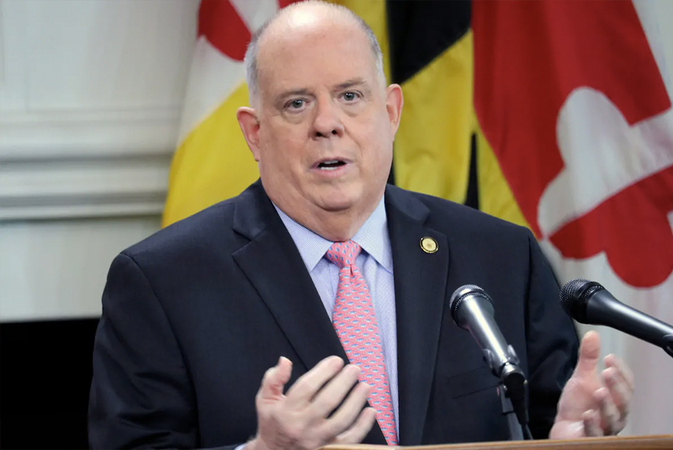
Maryland Gov. Larry Hogan (R) speaks at a news conference in Annapolis on Oct. 1, 2020. (Brian Witte/AP)

Maryland Gov. Larry Hogan (R) speaks at a news conference in Annapolis on Oct. 1, 2020. (Brian Witte/AP)

By  The Washington Post · Erin Cox · NATIONAL, HEALTH, HEALTH-NEWS 
ANNAPOLIS, Md. – Maryland Gov. Larry Hogan announced $250 million in state cash for the ailing economy Thursday for programs that will give grants and loans to restaurants, small businesses, shuttered entertainment venues and struggling arts organizations.

As federal stimulus talks drag on in Congress, Hogan announced that he would use about half the state’s budget savings from last year to expand existing programs and fund new ones to help floundering small businesses. The sum roughly doubles what the state already has pumped into similar programs.

“It’s a desperate situation,” Hogan said. “Many businesses . . . they’re hanging on by a thread. They may not make it another month or two.”

Requests for help from Maryland’s small businesses has far outpaced resources – even with about $10 billion in aid from the federal Paycheck Protection Program going to 81,000 state businesses, the governor said.

In two weeks in late March and early April, nearly 20,000 small businesses applied for aid through the Maryland Small Business COVID-19 Relief Grant Fund program, prompting the state to shut down the application window and start a waiting list that remains. About 4,000 applications were approved before the state ran out of money. 

Hogan put another $45 million into the program in July. He announced Thursday that the latest infusion of $50 million will clear the backlog of businesses that qualified and had been waiting since the spring. 

It was not clear Thursday whether the state will accept new applications. 

The largest share of new funding announced Thursday – $100 million – will go to what Hogan calls the Emergency Rapid Response Fund for Small Businesses. He said the money will be set aside until the administration determines how it could best be used. 

If federal aid arrives before the end of the year, the rapid response money might not be used, he said. 

A new program will give $50 million in grants for the state’s roughly 11,500 restaurants, which amounts, on average, to $434 per business. The money would not have to be repaid, and it could be used on a variety of expenses such as expanding outdoor dining, paying rent, upgrading technology to improve carryout business or buying personal protective equipment. Local governments would dole out the money. 

The state initially had expected enormous budget deficits for the fiscal year that ended June 30 because of pandemic-related shutdowns. But the multibillion-dollar infusion from the first waves of federal help – plus some cutbacks in Maryland’s budget – left the state with $500 million more than expected.

Another program that helps small businesses avoid layoffs will grow from $10 million to $30 million, with money supplementing employee income and financing telework operations so employees can stay on the job. 

Smaller initiatives aim to keep hard-hit businesses afloat, including $20 million for local entertainment and “Main Street” small businesses; $5 million in low-interest loans for disadvantaged entrepreneurs; $3 million to arts organization and artists; and $2 million to promote “hometown tourism” by marketing local stores, businesses and attractions.

“We’re hoping these are the right things and that it will be enough, but we really don’t know,” Hogan said, adding that what the state’s economy really needs is a major stimulus package from the federal government.

Hogan encouraged local leaders that have taken a slower pace to reopening to reconsider. Montgomery, Prince George’s and Anne Arundel counties, as well as Baltimore, have not fully embraced Hogan’s guidance to reopen every business, citing health concerns.

The governor said contact-tracing data showed that the top source of coronavirus infections continues to be small family gatherings and house parties. He said the state is closely watching a slight uptick in hospitalizations over the past two weeks, urging people to stick to proven strategies of mask wearing and social distancing.

The greater Washington region on Thursday recorded 2,114 new coronavirus cases and 21 additional deaths. Virginia added 1,332 new cases and nine deaths, Maryland added 743 cases and 12 deaths, and the District of Columbia added 39 cases and no deaths.

Thursday’s caseload was the highest in a single day across the region since Oct. 8, when 2,673 infections were announced, fueled by a one-day reporting issue in Virginia. 

Despite the daily increase, the regional rolling seven-day average of new infections stood at 1,709 cases, holding mostly steady for more than a week. Maryland’s daily average has risen through October, standing Thursday at 633 cases – the highest since Sept. 17. 

The pandemic’s economic fallout was evident Thursday, when figures from the Labor Department showed 25,669 new unemployment claims were filed last week in D.C., Maryland and Virginia. That’s up slightly from 23,369 claims filed a week earlier.

FDA approves Gilead virus therapy remdesivir #SootinClaimon.Com

#SootinClaimon.Com : ขอบคุณแหล่งข้อมูล : หนังสือพิมพ์ The Nation.

FDA approves Gilead virus therapy remdesivir

InternationalOct 23. 2020

By Syndication Washington Post, Bloomberg · Robert Langreth · NATIONAL, BUSINESS, HEALTH, HEALTH-NEWS

The Food and Drug Administration approved Gilead Sciences Inc.’s antiviral therapy remdesivir on Thursday, making it the first drug to obtain formal clearance for treating the coronavirus.

Regulators had granted an emergency-use authorization for remdesivir earlier this year, and since then the drug has become a widely used therapy in hospitalized covid-19 patients. It was given to President Donald Trump this month when he was diagnosed with the virus.

The approval of remdesivir, sold under the brand name Veklury, will allow Gilead to market the drug and talk about its benefits to doctors, nurses, and patients. That could help solidify its position as a go-to medicine for covid-19 patients even as other drugs for the disease begin to reach the market.

“Veklury is now the first and only approved covid-19 treatment in the United States,” Gilead said in a statement. While the drug was in short supply initially, Gilead said that the medicine is now widely available in hospitals across the country as manufacturing capacity has rapidly expanded.

Gilead shares gained 3.6% in trading after the close of regular market hours on Thursday. Analysts estimate that remdesivir will have sales of $2.17 billion this year, according to 13 surveyed by Bloomberg.

The company said in June that it will charge U.S. hospitals roughly $3,120 for most patients who need remdesivir.

The approval is based on a U.S. government-sponsored trial involving more than 1,000 hospitalized coronavirus patients that found that those who received the drug recovered about five days faster than those who got a placebo.

The overall side-effect rate was similar to the placebo in the government study. The most common side effects are nausea and elevated liver enzymes, according to the product’s label.

The drug hasn’t been proven to reduce deaths from covid-19. In a World Health Organization trial, the medicine failed to reduce fatalities, according to preliminary results that were posted on preprint servers last week.

Gilead has criticized the findings. In a letter posted on the company’s website, Chief Medical Officer Merdad Parsey said the WHO’s findings don’t negate other study results.

U.S. signs international declaration challenging right to abortion and upholding ‘role of the family’ #SootinClaimon.Com

#SootinClaimon.Com : ขอบคุณแหล่งข้อมูล : หนังสือพิมพ์ The Nation.

U.S. signs international declaration challenging right to abortion and upholding ‘role of the family’

InternationalOct 23. 2020

By  The Washington Post · Miriam Berger · NATIONAL, WORLD, HEALTH, POLITICS 
The United States joined Brazil, Egypt, Hungary, Indonesia and Uganda on Thursday to co-sponsor a nonbinding international antiabortion declaration, in a rebuke of the U.N. Human Rights Council., which has enshrined abortion access as a universal right.

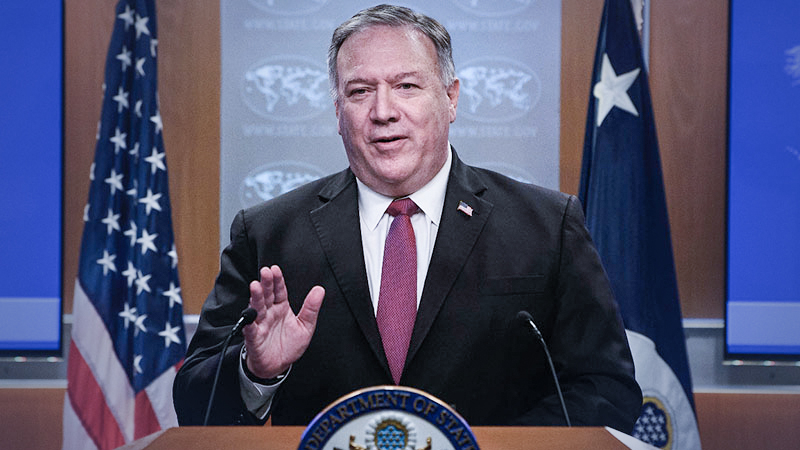
Secretary of State Mike Pompeo and Health and Human Services Secretary Alex Azar participated in the virtual signing ceremony. The Geneva Consensus Declaration aims to promote women’s health, “defends the unborn and reiterates the vital importance of the family,” Pompeo said at the ceremony.

Access to abortion is widely restricted in the other countries to co-sponsor the declaration. “There is no international right to abortion,” Pompeo said.

Though the document does not directly address same-sex marriage, the only co-sponsors to have legalized it are Brazil and the United States, while the text’s language affirming the family as “the natural and fundamental group unit of society” has clear meaning for countries that restrict LGBT rights. Among the co-sponsors, the Egyptian government targets LGBT people in a “systemic fashion,” according to a recent Human Rights Watch report, and in Uganda, gay sex is punishable by death.

The ceremony stood in contrast to Wednesday’s news that Pope Francis had expressed support for laws to protect same-sex unions.

Critics said Thursday’s declaration, less than two weeks ahead of the presidential election, marked the latest move by the Trump administration to build alliances with leaders accused of human rights abuses while working to promote abortion restrictions worldwide.

The Geneva Consensus formalizes a coalition united in opposition to the United Nations’ Universal Declaration of Human Rights, which forms the basis for the characterization of abortion and same-sex marriage as human rights under international law – a position that key U.S. allies, such as Britain and France, support.

Azar said Thursday that the coalition is intended to “hold multilateral organizations accountable.”

In addition to the six co-sponsors, 26 countries, including Belarus, Saudi Arabia and Poland, have joined as signatories.

“None of those countries [that have co-sponsored] at least currently have a strong commitment to women’s health and rights,” said Gillian Kane, a senior policy adviser for Ipas, a U.S.-based organization focused on abortion and contraception access around the world. “This administration is out of touch with the needs of women.”

The declaration is not legally binding and does not change any existing laws. But it is in step with the Trump administration’s repeated bypassing of traditional avenues of diplomacy to build parallel tracks.

“This will undoubtedly bring harm to LGBTQ people and roll back the established global consensus about the necessity of protecting the sexual and reproductive health and rights of women and girls in all their diversity,” said David Stacy, government affairs director of the Washington-based Human Rights Campaign.

In May, U.S. officials accused the United Nations of using coronavirus-related emergency funding for sexual and reproductive health services as a pretext to promote abortions, a charge that the global body denied.

One of President Donald Trump’s first moves in office was to reinstate a policy known as the global gag rule, which bans U.S.-funded health-care providers from providing or discussing abortions. Democratic presidential nominee Joe Biden has pledged to overturn it if elected, as President Barack Obama did shortly after taking office in 2009.

A 2019 study published in the Lancet found a global “pattern of more frequent abortions and lower contraceptive use” during periods when such U.S. restrictions have been in place.

The declaration could create “unnecessary legal, policy and service delivery hurdles that will obstruct interventions by Uganda to address the persistently high numbers of women and girls dying due to pregnancy-related complications,” a coalition of Ugandan civil society groups said Thursday in a statement opposing their government’s participation.

Judiciary Committee approves Barrett’s nomination #SootinClaimon.Com

#SootinClaimon.Com : ขอบคุณแหล่งข้อมูล : หนังสือพิมพ์ The Nation.

Judiciary Committee approves Barrett’s nomination

InternationalOct 23. 2020

By The Washington Post · Seung Min Kim, Paulina Firozi · NATIONAL, POLITICS, COURTSLAW, CONGRESS 

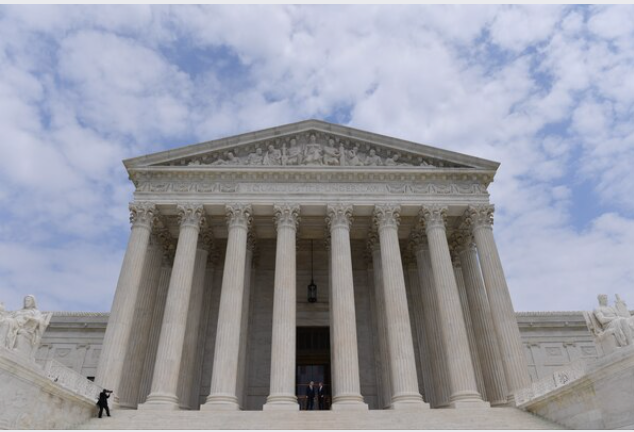
WASHINGTON – Judge Amy Coney Barrett moved one step closer to a seat on the Supreme Court on Thursday as the Senate Judiciary Committee advanced her nomination with solely Republican support after Democrats boycotted the vote in protest of what they viewed as an illegitimate confirmation process.

The vote was 12 to 0, with no Democrats present to officially register their objections. Senate Majority Leader Mitch McConnell, R-Ky., is expected to take procedural steps Friday to bring her confirmation to the floor, with Barrett being confirmed by Monday evening, putting her in position to hear key cases involving potential election disputes and health care.

Before then, Democrats are expected to throw up more procedural roadblocks – as they have been doing all week – and launch numerous floor speeches to frame what they say is the imminent threat Barrett poses to the future of abortion rights, gay rights and the fate of the Affordable Care Act.

Republicans, however, have been undeterred, vowing to swiftly install a 48-year-old jurist whose qualifications to serve on the Supreme Court have not been in dispute. Barrett’s installation would solidify a 6-3 conservative majority on the court and give President Trump his third successfully confirmed Supreme Court pick, just days before the Nov. 3 election.

“I could not live with myself if I denied her her day,” said Sen. Lindsey Graham, R-S.C., chairman of the Judiciary Committee. Of Democrats, Graham insisted that Republicans are “not going to allow them to take over the committee.”

Graham also defended Barrett’s personal beliefs after Democrats expressed concern during the confirmation hearings that her presence on the Supreme Court would result in further abortion restrictions. Both liberals and conservatives have suggested, based on her academic writings, personal beliefs and rulings as a judge, that she would support restricting or outright overturning the landmark 1973 abortion rights decision Roe v. Wade that guarantees a woman’s right to an abortion.

Barrett repeatedly declined to offer her legal views on presidential authority and voter intimidation, and insisted that she was not familiar with Trump’s positions on issues such as climate change and the health-care law.

“To all the people out there wondering about Judge Barrett I can tell you this: The law of Amy will not be applied to the case and controversy,” Graham added. “It will be the law as written in the Constitution or by statute or whatever regulatory body she is going to review. She will take her job on without agenda.”

Even though Democratic senators skipped the committee vote, they made their presence known. In their seats were 10 large portraits of constituents – Carrie from Delaware, Kenny from Illinois and others – who had benefited from protections mandated by the 2010 health-care law that ensures that millions of Americans with preexisting medical conditions cannot be denied coverage or pay more for insurance.

Each person’s story had been highlighted by Democrats during Barrett’s confirmation hearings last week, which centered on health care and whether she would be a vote to strike down the Affordable Care Act. The court will hear oral arguments Nov. 10 in the GOP-led challenge, backed by the Trump administration, to invalidate the law.

“No matter where you come down on this, this is personal,” Sen. Amy Klobuchar, D-Minn., said. “And this Republican majority and this president have chosen to make, as their closing argument, that they’re going to push through a nominee whose record shows us just where she’s going to come out on so many things.”

Trump injected his own thoughts as to what the Supreme Court should do on the health-care law in excerpts of a “60 Minutes” interview released Thursday. “It’ll be so good if they end it,” he said.

And on Barrett herself, Trump made his pleasure known in a tweet: “Judiciary Committee approves Judge Barrett. Moves to full Senate for final vote. Big day for America!”

Trump nominated Barrett, a judge on the 7th U.S. Circuit Court of Appeals, on Sept. 26, eight days after the death of liberal Justice Ruth Bader Ginsburg.

Rather than showing up for the committee vote, nine Democratic senators on the Judiciary Committee – all except Sen. Kamala Harris of California, the party’s vice-presidential nominee – and Senate Minority Leader Chuck Schumer, D-N.Y., gathered on the front steps of the Capitol to decry the confirmation process for Barrett and how they expect her to rule as a justice.

“The nomination of Amy Coney Barrett is the most illegitimate process I have ever witnessed in the Senate,” Schumer said. “Her potential confirmation will have dire, dire consequences for the Senate, for the Supreme Court and our entire country for generations to come.”

Schumer, who accused the Senate Republicans of “conducting the most rushed, the most partisan, and the least legitimate nomination to the Supreme Court in the nation’s history,” said the Democrats “will not lend a single ounce of legitimacy to this sham vote in the Judiciary Committee.”

Protesters on both sides of the debate made their views known. Some heckled the Democrats with obscenities as they spoke. Outside the Senate building, others dressed in the crimson robes and white bonnets of “The Handmaid’s Tale,” the television drama based on Margaret Atwood’s book, shouted “Trump-Pence, out now” and “Stop the confirmation.”

Republicans again warned the public that Democrats will surely move to expand the number of seats on the Supreme Court should they win the White House and flip control of the Senate in less than two weeks.

Democratic presidential nominee Joe Biden, facing pressure from the party’s base to embrace “court-packing,” said in his forthcoming “60 Minutes” interview that he would propose a bipartisan commission to study potential court changes but that the issue of expanding the Supreme Court was certainly a “live ball.”

Graham mused that the Democrats would be positioned to expand the Supreme Court to at least 13 justices. In a brief interview after the committee vote, Graham dismissed Biden’s commission proposal and said that if Democrats regain the levers of power in Washington, “they’re going to pack the court and Joe’s not going to be able to stop it.”

“As Ruth Bader Ginsburg pointed out, there goes the crown jewels of the American republic,” Sen. John Cornyn, R-Texas, said Thursday of the court proposals. “Our independent judiciary becomes nothing but another political body, a second legislative or political branch.”

In light of Biden’s comments, Democratic senators still tried to keep the focus on Barrett’s looming confirmation vote and the elections. Of the former vice president’s proposal, Schumer said that “everything is on the table when we get the majority.”

But “first job, get the majority,” Schumer said.

So Democrats continued to cast Barrett as a threat to health care and reproductive rights.

“Last week Democrats participated in the nomination hearings because we wanted to show what was at stake for America if Amy Coney Barrett is confirmed,” Sen. Dianne Feinstein of California, the top Democrat on the committee, said at the news conference. “We made our case about risks to affordable care, especially the Affordable Care Act, reproductive freedom, the right to vote and equality for all. We believe both the Affordable Care Act and Roe v. Wade could be lost.”

Democrats have lashed out at Republicans, calling them hypocrites based on their actions in 2016 when the court had a vacancy.

At the time, McConnell refused to consider nominee Merrick Garland, the choice of President Barack Obama, to fill the vacancy created by the death of Justice Antonin Scalia in February 2016.

McConnell and Senate Republicans, including Graham, insisted that the president chosen in November of that year, eight months after Obama’s nomination, should fill the seat.

Republicans argue that the circumstances now are different because Republicans hold the White House and the Senate majority.

Democrats also accused Graham of breaking committee rules to hold the vote, since the panel generally requires two members of the minority to be present to conduct committee business.

But Republican aides said that if a majority of the entire committee is present – which on Thursday it was – that means the Judiciary Committee can go ahead, under long-standing precedents. There have been more than six instances, including under Democratic control, since 2006 when the committee has conducted business without two members of the minority being there.