Putin says Ukraine power grid hit in retaliation for Crimea drone attack
TUESDAY, NOVEMBER 01, 2022
Reuters
Russian President Vladimir Putin said the strikes on Ukrainian infrastructure and decision to freeze participation in a Black Sea grain export programme were responses to a drone attack on Moscow’s fleet in Crimea. He blamed the attack on Ukraine.
Putin told at a news conference on Monday that Ukrainian drones had used the same marine corridors that grain ships transited under the UN-brokered deal.
Kyiv has not claimed responsibility for the attack and denies using the grain programme’s security corridor for military purposes.
The United Nations said no grain ships were using the Black Sea route on Saturday when Russia claimed its vessels in Crimea were attacked.
Meanwhile, Russian missiles rained down across Ukraine, with explosions blooming out in Kyiv, sending black smoke into the sky.
Russian forces shelled infrastructure in at least six Ukrainian regions on Monday, the general staff of the Ukrainian Armed Forces said on Facebook.
“That’s not all we could have done,” Putin said at the televised news conference.
Oleh Synehubov, governor of the northeastern Kharkiv region, said on Telegram that about 140,000 residents were without power after the attacks, including about 50,000 residents of Kharkiv city, the second-largest city in Ukraine.
Ukraine’s military said it had shot down 44 of 50 Russian missiles. But strikes left 80% of Kyiv without running water, authorities said. Ukrainian police said 13 people were injured in the latest attacks.
For the past three weeks, Russia has attacked Ukraine’s civil infrastructure using long-range missiles and suicide drones that fly at a target and detonate.
Ukraine’s Prime Minister Denys Shmyhal said 18 targets, mostly energy infrastructure, were hit in missile and drone strikes on 10 Ukrainian regions on Monday.
Japan’s iconic Itsukushima Shrine returns to its glory after renovation
MONDAY, OCTOBER 31, 2022
The familiar sight of the iconic vermilion Otorii gate at Itsukushima Shrine in Hatsukaichi, Hiroshima Prefecture, has returned after three years of renovation nears completion.
The current gate, which stands in the bay leading to the coastal World Heritage site, is said to have been built in 1875 and has been designated as an important cultural property.
Due to ageing, major repair work began in June 2019 that entailed replacing the cypress bark roofing, repainting columns that were noticeably damaged and other improvements. The gate had been covered with protective sheets during the renovation.
The sheets were removed by mid-October but the temporary walkway that extends about 100 meters from the left bank of the bay to the gate and a platform around the gate remains. Those had been built for the repair work.
The shrine will allow visitors to use the walkway and platform for an up-close view of the gate from Tuesday through to November 27. The temporary structures are scheduled to be removed by the end of the year.
Cambodia welcomes 1.26 million visitors, most from Thailand
MONDAY, OCTOBER 31, 2022
Cambodia welcomed nearly 1.27 million international visitors in the first nine months of this year – up 861.21% year-on-year but down 73.58% over the same period in 2019. The Tourism Ministry said 59.08% of the visitors were from Thailand and Vietnam.
Of the January-September arrivals, 946,125 or 74.75% declared “holiday” as their purpose of visit, 64,359 or 21.40% marked “business”, while 48,737 or 3.85 indicated other reasons.
Thailand accounted for 462,705 or 36.56% of visitors (444,943 holidays; 16,814 business; 948 other) – up 617.83% year-on-year and 60.61% above the corresponding period in 2019. Vietnam, meanwhile, had 285,163 or 22.53% (208,333 holidays; 76,461 business; 369 other), up 3,628.11% on-year but down 55.25% versus the 2019 period.
Visitors from China accounted for 4.93% of the total or 62,425, followed by Indonesia (49,903; 3.94%), the US (49,802; 3.93%), Laos (38,783; 3.06%), South Korea (36,404; 2.88%), Malaysia (34,438; 2.72%), France (31,157; 2.46%) and the UK (22,471; 1.78%).
September alone accounted for 21.13% of the nine-month total for international visitors, at 267,500, up 4.98% over August (254,813), which was up 7.65% from July (236,697).
If the number of international visitors for each remaining month this year is equal to or greater than the September figure, then the entire year will have seen more than 2.07 million visitors or 3.41% more than the estimates provided by the ministry last month.
Angkor Tourist Guides Association president Khieu Thy told The Post on October 30 that the number of foreign tourists visiting Angkor Wat has risen significantly in recent months, noting that most were from bordering countries, especially Thailand.
Thy claimed that since Covid-19 restrictions were rolled back “almost a year ago”, the uptick in visitors from Thailand and other nearby countries has been “overwhelming”.
Even without as many travellers from more distant destinations as before, the Cambodian tourism sector has remained sustainable thanks to tourists from neighbouring countries, he said.
“We expect there will soon be many more holidaymakers from countries farther away,” he said.
According to the ministry, most of the January-September international visitors arrived by land at 788,580 or 62.30%, followed by air (468,889; 37.04%) and waterways (8,303; 0.66%).
Cambodia Association of Travel Agents (CATA) president Chhay Sivlin argued that more travel facilitation measures for residents of nearby countries need to be adopted.
She explained that, for the time being, each jurisdiction’s tourism sector will be mainly dependent on internal and regional travel, amid the current global uncertainty tied to geopolitical and economic shocks as well as lingering Covid-19 disruptions.
“Visitors from neighbouring countries are a good starting point for the post-Covid-19 tourism recovery. Although they don’t spend as much as guests from European and American countries, their presence is very important at this time,” she said.
One such travel facilitation measure considered by government officials is a pilot scheme that would allow Thai tourists with official residence in any of the seven provinces that border Cambodia to travel overland to Siem Reap, especially Angkor Archaeological Park, with only a border pass and not a passport.
The idea was raised at a September 19 plenary meeting of the inter-ministerial commission tasked with facilitating travel into Cambodia at all ports of entry, which was presided over by its chairman Tourism Minister Thong Khon.
Siem Reap does not border Thailand, which would require participants of the scheme to enter Cambodia through one of the seven provinces along the frontier.
Following the meeting, Tourism Ministry’s secretary of state Hor Sarun, who is also deputy chairman of the commission, said that Khon was looking to make a formal request to the government for the scheme. No updates on the request were immediately available.
Sarun claimed that Cambodia would greatly benefit if Thai holidaymakers can enter the country more freely. “Some Thais want to see Angkor Wat, but they lack a passport. Now, those living in border provinces can apply for a border pass and visit,” he said.
He explained that residents of Thailand’s Sa Kaew or Surin provinces could make their way into Siem Reap via Cambodia’s Banteay Meanchey or Oddar Meanchey provinces, respectively.
The seven Thai provinces that border Cambodia are Trat, Chanthaburi, Sa Kaew, Buri Ram, Surin, Si Sa Ket and Ubon Ratchatani. The seven Cambodian provinces that border Thailand are Koh Kong, Pursat, Battambang, Pailin, Banteay Meanchey, Oddar Meanchey and Preah Vihear.
Halloween horror dims hope of recovery in Seoul’s entertainment hub
MONDAY, OCTOBER 31, 2022
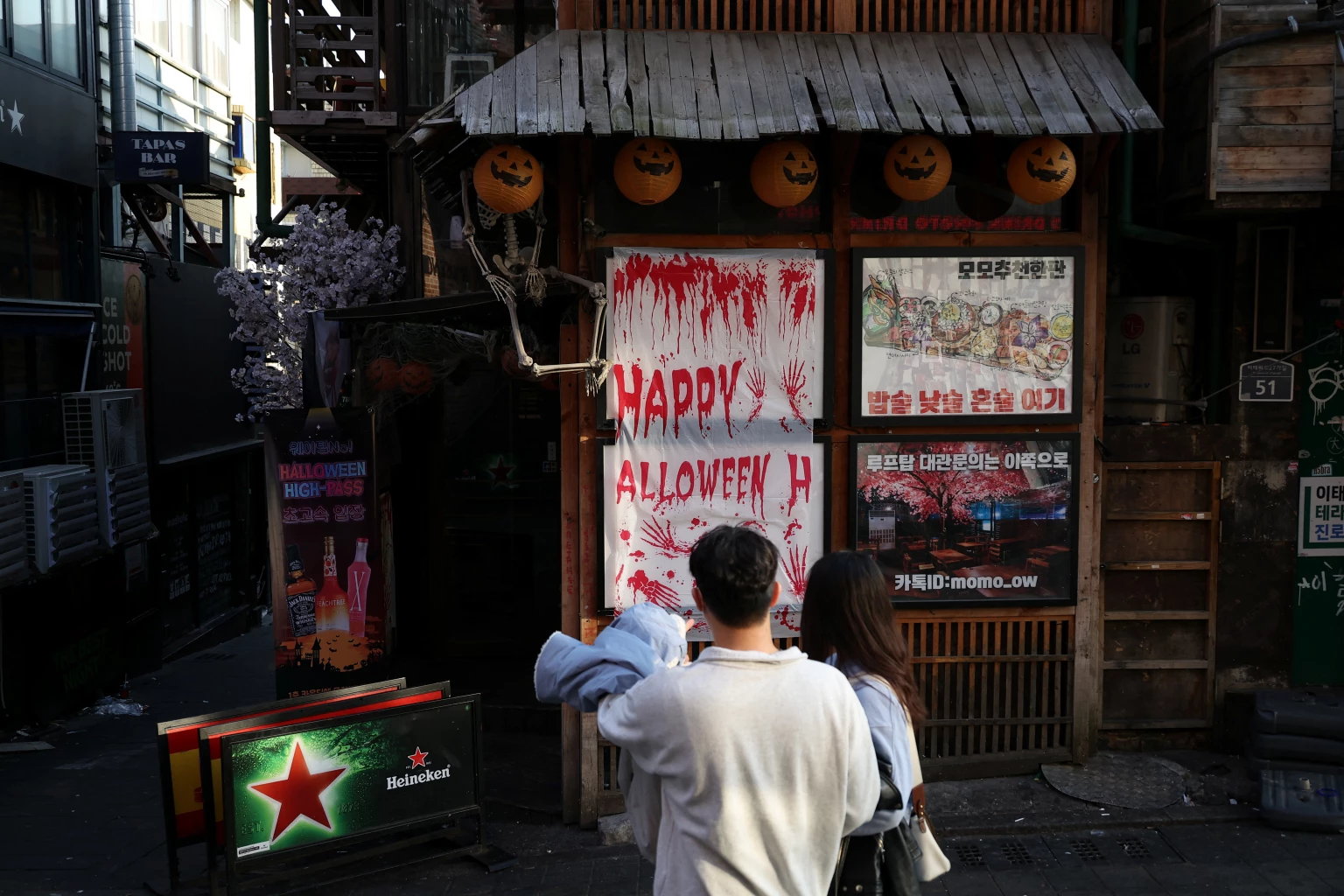
Restaurants, cafes and clubs in Seoul’s popular nightlife district of Itaewon seemed to be on a smooth road to recovery at last after years of pandemic disruptions – before Saturday. But its hopes of a quick revival were wrecked in minutes as a surge among tens of thousands celebrating Halloween in its narrow streets crushed more than 150 people to death.
The neighbourhood – once the realm of expats and American soldiers on R&R – has transformed into a culturally diverse and trendy hub beloved of locals and visitors alike in recent years. Its “Brooklyn-style” gentrification has brought in global brands, including Gucci and Lululemon flagship stores.
Boosting its unique charm was 2020’s hit TV series “Itaewon Class”, which was set in the neighbourhood, and the relocation of the president’s office nearby in May this year.
But the country’s Covid-19 restrictions saw a mass shuttering of Itaewon businesses from 2020 until the end of last year.
So expectation was running high for the first “maskless” Halloween party in three years, with many local business owners convinced the immensely popular festivities would get them out of the woods.
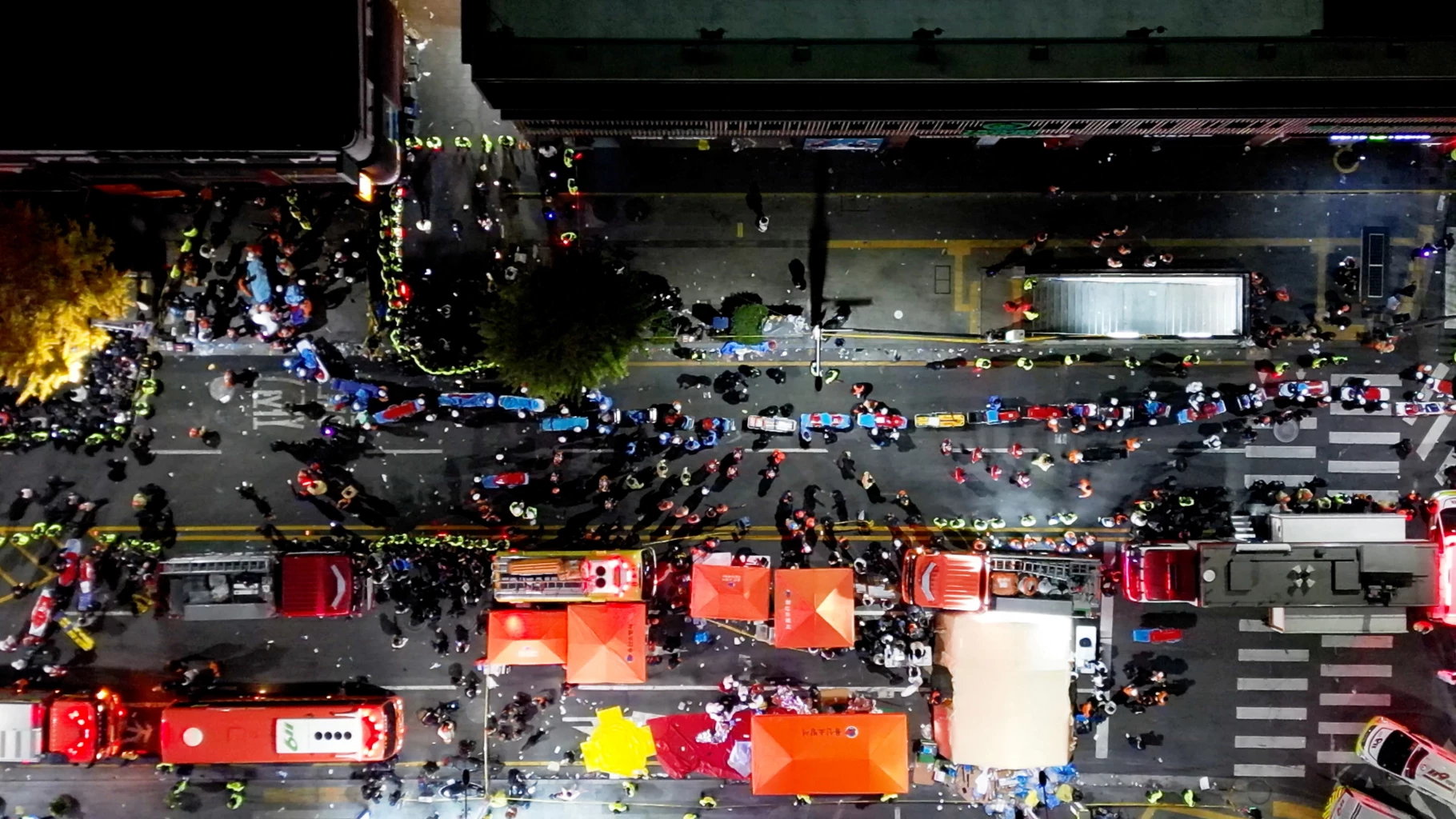
However, business sentiment was destroyed immediately after Saturday’s deadly crowd surge. At least 154 people were killed and 103 injured in the narrow and hilly alleyways around the area’s landmark Hamilton Hotel.
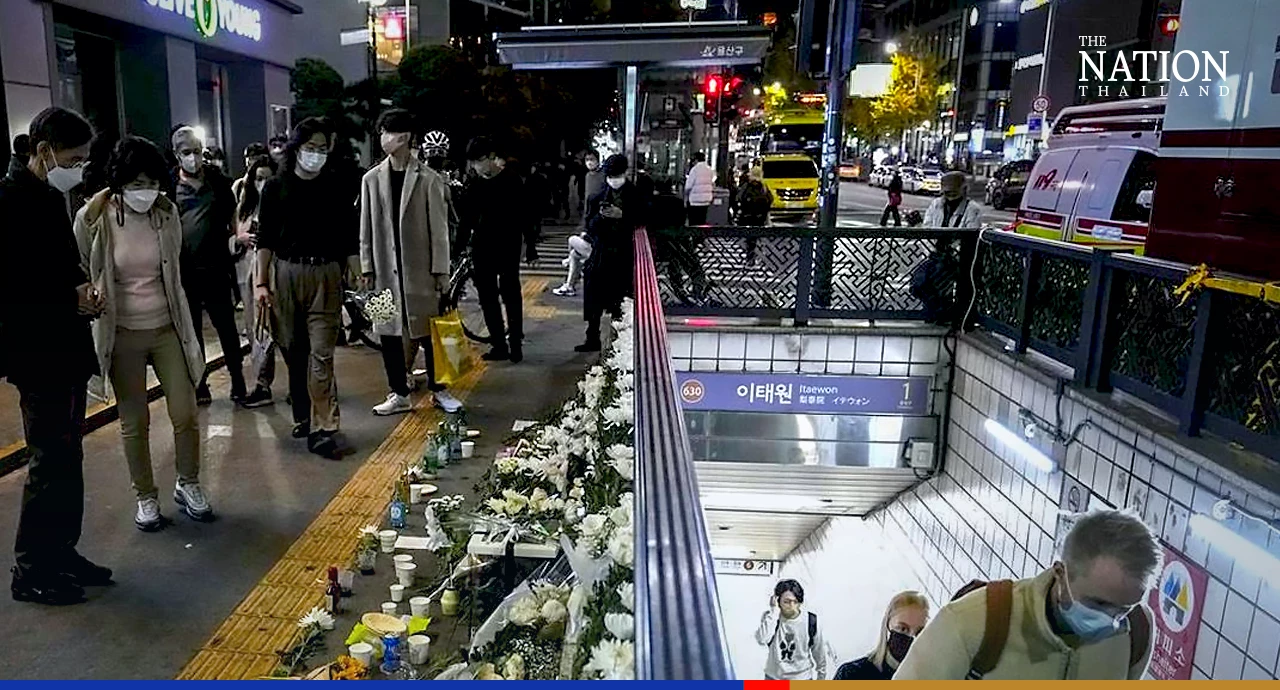
Out of respect for the dead and/or fear following the crush, the usually bustling streets of Itaewon are likely to remain empty for some time.
Businesses in Itaewon are closing for a two-day mourning period, according to police and local vendors.
“Some stores have already stopped operations. Whether the temporary closure will extend depends on how the situation unfolds,” said one police officer, who wished to remain anonymous.
The Itaewon Special Tourism Zone Association, an organisation of business owners in the area, reportedly sent an emergency message urging members to temporarily operations out of respect to the victims.
As of Sunday morning, several restaurants, cafes and clothing stores were shuttered with signs reading “may they rest in peace” on their windows.
The closures were voluntary and some businesses were open as usual, but onlookers worried that the latest fiasco may lead to another prolonged downturn for an area already feeling the pinch from pandemic disruption and inflation.
Park, 41, who runs a franchise coffee shop across from the stampede site, said “there has been no disaster like this in the neighbourhood over the past few years. My store is closed today.”
In fact, the stampede was the second-worst accident in South Korea’s history, after the 2014 Sewol ferry disaster that killed 306 people.
According to state-run real estate data provider Korea Real Estate Board, the vacancy rate at commercial properties in Itaewon surged to an average of 30 per cent at the pandemic peak of end-2020. But the figure showed signs of recovery, dropping to some 7 per cent last year when social distancing rules were relaxed.
South Korea has declared a week of national mourning until Saturday, asking local businesses and authorities to cancel Halloween festivals, events and parades.
“I don’t think I’ll be able to dine or meet with friends in Itaewon for some time,” Lee Ji-soo, a 32-year old said.
India bridge death toll rises to 132 as rescuers search Machhu River
MONDAY, OCTOBER 31, 2022
Reuters
The death toll from a bridge that collapsed in Gujarat state in India rose to 132 on Monday, Reuters reported.
The footbridge in the town of Morbi was packed with people enjoying holiday sightseeing when it fell into the Machhu River on Sunday, plunging people into the fast-flowing current.
“The death toll in the bridge collapse incident has gone up to 132. The search and rescue operations are continuing,” senior official NK Muchhar told Reuters, warning that the victim count could rise further.
Military personnel have joined rescue teams from nearby districts to search the river for any remaining victims, Muchhar said.
More than 400 people were on and around the colonial-era bridge when it collapsed, said authorities. The bridge was a sightseeing point for people celebrating the Diwali and Chhath Puja holidays.
A five-member team has been tasked with investigating the causes of the disaster.
The 230-metre bridge was built in the 19th century during British rule. It was reopened recently after undergoing six months of repair and renovation.
South Korea begins week of mourning, investigation as Seoul death toll rises to 154
MONDAY, OCTOBER 31, 2022
South Korean President Yoon Suk-yeol has declared a week of national mourning after at least 154 people were killed during a Halloween stampede in Seoul.
Partygoers were killed in the crush when a huge crowd celebrating Halloween surged into an alley in a nightlife area of the South Korean capital on Saturday night.
On Sunday, Yoon declared national mourning would be observed until Saturday (November 5) with government buildings will flying the flag at half-mast.
He also expressed condolences to victims and their families, prayed for quick recoveries among the injured, and vowed an investigation to find the cause.
US President Joe Biden also sent a message of solidarity: “Jill [Biden] and I send our deepest condolences to the families who lost loved ones in Seoul. We grieve with the people of the Republic of Korea and send our best wishes for a quick recovery to all those who were injured.”
Chinese President Xi Jinping said he was shocked to learn of the heavy casualties in the stampede, according to China’s Foreign Ministry website. On behalf of the Chinese government and people, Xi extended deep condolences over the deaths of the victims and sincere sympathies to the bereaved families and the injured.
The death toll from the crush among partygoers who had crowded into Seoul’s popular Itaewon district rose to 154 on Sunday. The accident is the second-worst in South Korea’s history, after the Sewol ferry disaster that killed 304 people in 2014.
At least one Thai was killed in the stampede, according to the Royal Thai Embassy in South Korea.
Tech and game firms Kakao and NCSoft pulled their Halloween promotions after the incident while South Korea’s Everland amusement park has cancelled its Halloween-themed events.
Regional governments and organisations across the country have also scrapped events to mark the festival tonight.
Mexicans party with ancestors in colourful Day of the Dead parade
SUNDAY, OCTOBER 30, 2022
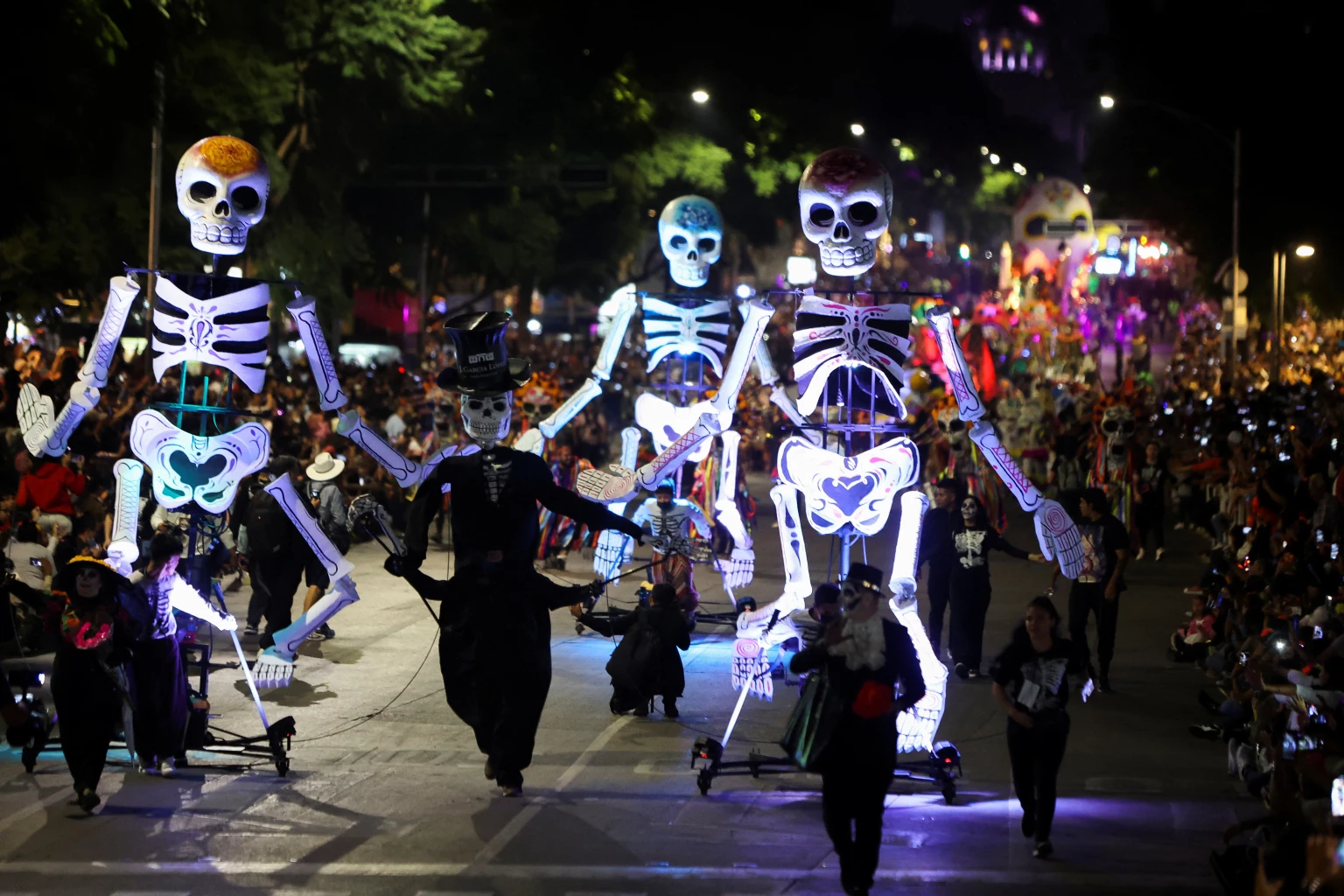
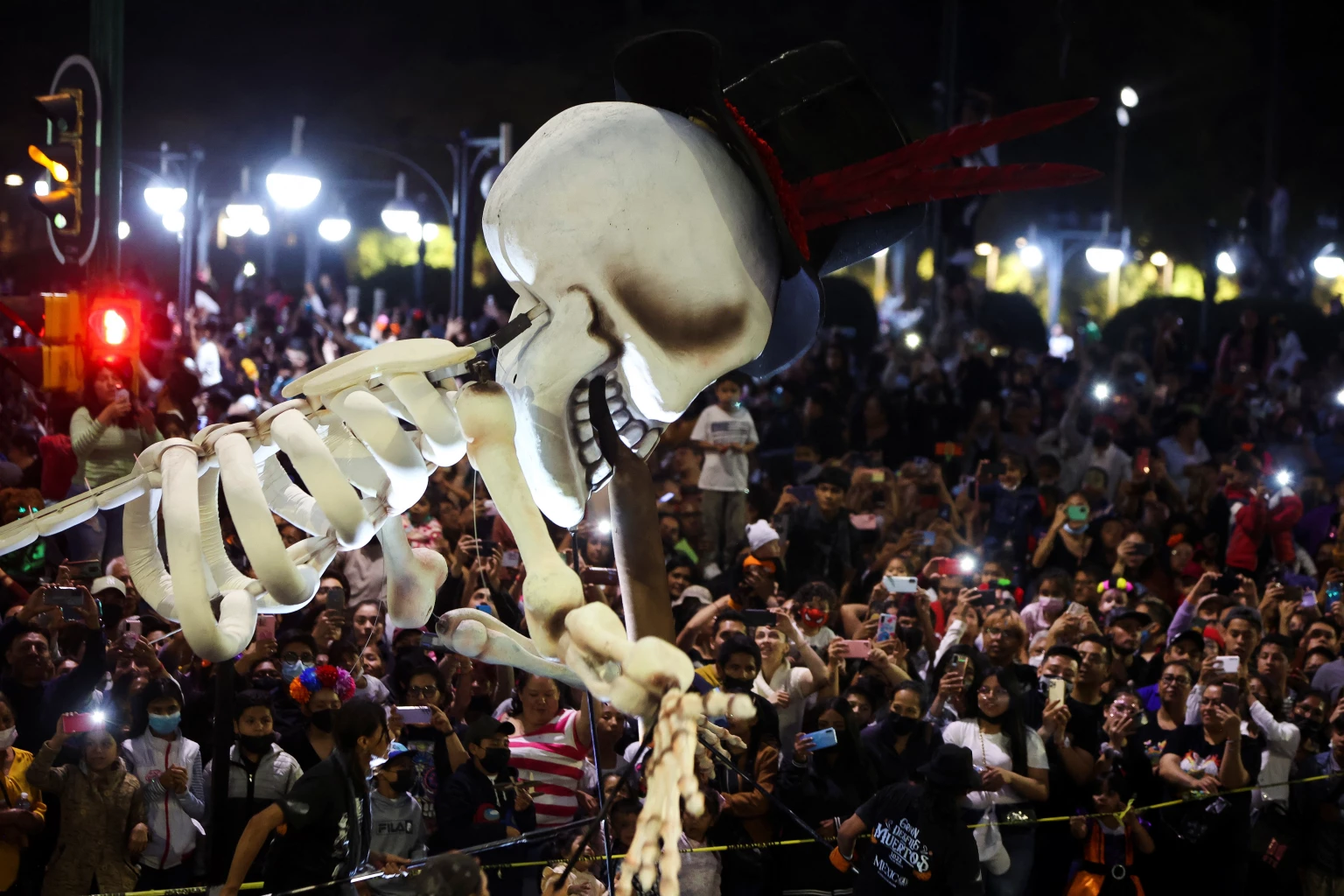
Thousands gathered in Mexico City’s streets to see the colourful Day of the Dead parade on Saturday ahead of today’s national holiday to honour spirits of the departed.
Spectators lined the Mexican capital’s Avenida de la Reforma to watch floats decorated with giant skeletons and tributes to famous locals like artist Frida Kahlo.
Groups of women wearing skeleton makeup and costumes of the traditional La Calavera Catrina character danced alongside paradegoers dressed as Mexican revolutionaries and figures from folklore.
“It’s amazing, I mean, it’s really interesting to see all the energy, the sounds, the colours,” said Julio Santos, a tourist from California.
Local reveller Rosa Romero told Reuters she was enjoying the chance to honour her roots and ancestors as the parade returned after the Covid-19 hiatus.
Drawing on beliefs that the dead can return from the underworld, Mexican celebrations begin on November 1 with the Day of the Innocents to honour departed children and end on November 2 with the Day of the Dead for adult spirits.
Families set up altars in homes, restaurants and offices, beckoning home the souls of the dead with photographs and cherished keepsakes amid an array of candy skulls, chocolates and their favourite food or alcohol.
Offerings include “pan de muerto“, a cake sprinkled with sugar and decorated to look like bones, as well as tequila shots and a glass of water to quench the returning soul’s thirst following a long journey from the underworld.
Shops in Itaewon closed for 3 days as Seoul mourns Halloween victims
SUNDAY, OCTOBER 30, 2022
Restaurants and cafes in Seoul’s Itaewon area will stay closed for three days to mourn the over 150 people who died in a fatal stampede on Saturday night, a police officer said on Sunday.
“Some stores have already stopped operations. Whether the temporary closure is extended depends on how the situation unfolds,” a police officer told Korea Herald on condition of anonymity.
The closures are voluntary and some businesses are operating as usual.
On Saturday night, at least 151 people died in a crush as a Halloween crowd rushed into a narrow alleyway near the neighbourhood’s landmark Hamilton Hotel. Officials say most of the victims were young adults in their 20s.
As of noon Sunday, many stores not located near the site of the tragedy have also temporarily closed as a gesture of respect.
Park, 41, who runs a coffee shop on the other side of the district where the stampede occurred, said “there has been no disaster like this in the neighbourhood over the past few years. My store is closed today”.
Electric motorbikes in Tokyo can swap batteries as part of net-zero scheme
SUNDAY, OCTOBER 30, 2022
A battery-sharing service for electric motorcycles with removable batteries was launched in Tokyo last week as part of a bid to promote electric vehicles that have a low environmental impact.
Fifteen battery stations will be set up around Tokyo by the end of this fiscal year, allowing registered users to exchange a low battery for a fully charged one. The number of sharing stations is expected to increase over time, allowing electric motorcycles to travel further afield.
Batteries that conform to standards agreed by four key motorcycle manufacturers, including Honda Motor Co, can be charged at the stations.
Swappable batteries are currently used only in vehicles for corporate use, but the local government will introduce models for personal use in the future. Tokyo metropolitan government aims to make all new motorcycles sold in the capital to be gasoline-free by 2035.
“We hope that supporting the instalment of battery stations will accelerate the wider use of electric motorcycles,” Tokyo governor Yuriko Koike said at a launch ceremony held in Shinjuku Ward on Tuesday.
Travelling takes courage, especially when it comes to trying out new food in a foreign country.
Although basic ingredients such as meat or vegetables are universal, the differences in seasoning and the resulting aroma of each dish can take a traveller by surprise.
But in Singapore, those with even the most fastidious tastes have nothing to fear.
Known as a melting pot of Asia for its mix of history, culture and arts, Singapore’s food options offer epicures endless variety.
From quick bites at a street stall to elaborate meals in fancy restaurants, the Merlion city’s dishes carry flavours that blend Southeast Asian cuisines with Chinese, Japanese and Indian influences.
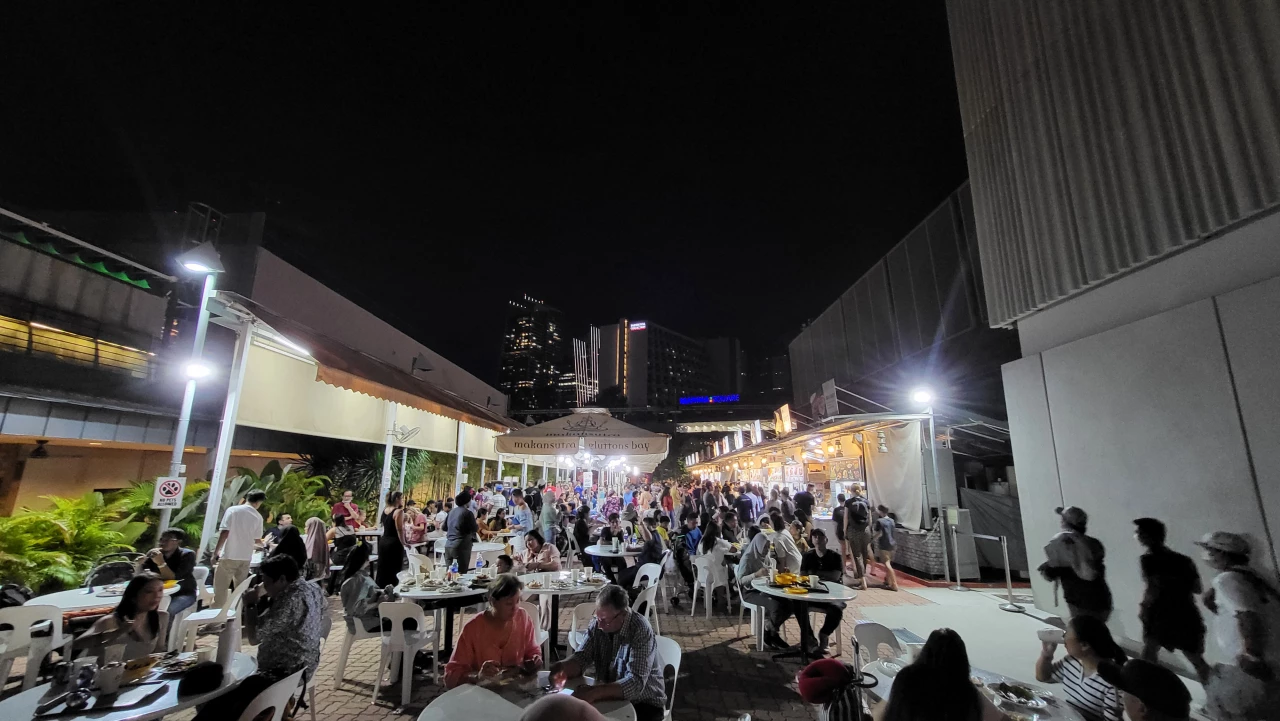
Singaporeans take pride in their hawker centres – wide outdoor halls with dozens of food stalls that sell popular dishes at affordable prices.
For travellers, these al fresco buffets are a place to eat like locals and discover the culinary delights of Singapore.
Just make sure you have some cash on hand, as most stalls do not accept credit cards.
Kaya toast
One of the most commonly enjoyed breakfast bites in Singapore is kaya toast.
Its origins date back to the 19th century, when Hainanese immigrants who worked as cooks on British ships and homes, adapted what they had served at work during the Straits Settlement Period. British breakfasts with western-style fruit-based jams morphed into kaya toasts in the early 20th century.
Kaya spreads are traditionally made of coconut cream, sugar, whole eggs and pandan leaves.
At 8am on weekends, the line grows at Ya Kun Kaya Toast eatery, a famous kaya toast shop that has been serving customers for 70 years.
The choice is simple: Milk tea or black coffee and a small bowl of soft-cooked eggs served with the toast.
While waiting for their toast, some simply slurp up the egg in a bowl, while add soy sauce and pepper before attacking with a fork.
A generous amount of light green kaya jam and a slab of cold butter is sandwiched between the two slices of toasted bread.
With just the right amount of sweetness, kaya toast will fuel you through the hot and humid morning until lunchtime – even more so with a bitter coffee alongside it.
Singapore prawn noodles
After bread in the morning, noodles make a good midday meal.
At lunch hour, Blanco Court Prawn Mee, located in the hip Haji Lane, is packed with a mix of tourists and young people.
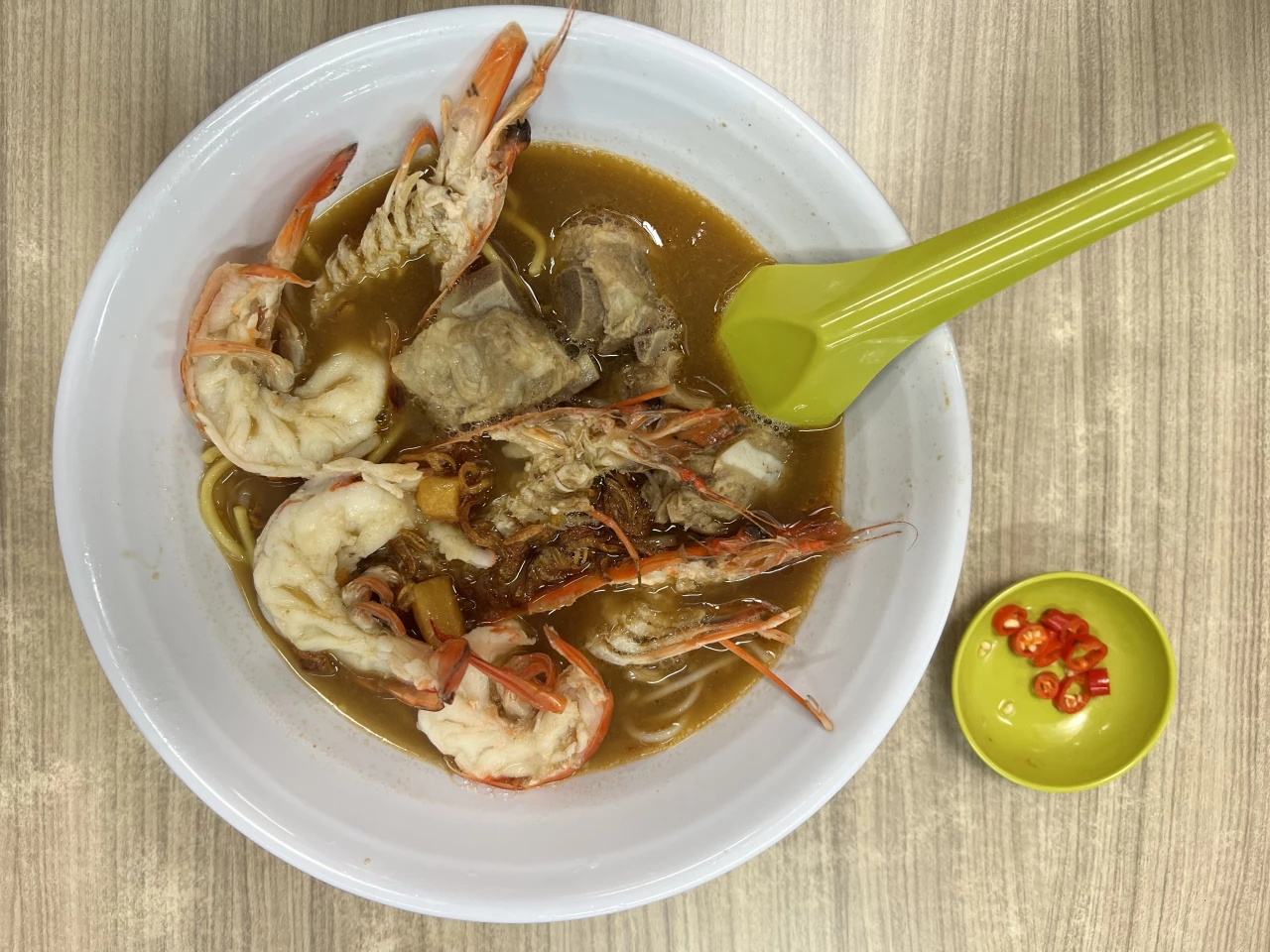
There are several types of noodles from which to choose – kway teow, vermicelli or thick bee hoon. With a dry or soup option, the jumbo prawn toppings are its signature.
Singapore’s vermicelli is often yellowish as curry powder is used in the recipe.
There are mixed views on its true origins, but most believe them to be from Hong Kong, inspired by Indian-Chinese influence.
Meat lovers can have pork ribs and pork tail added.
In the soup version of the noodle dish, the buttery prawn oil gently spreads into the dark brown broth, giving it an earthy flavour with a natural sweetness.
A few more spoonfuls of the soup bring home its spicy kick, which comes from the fried onions and pepper used in the recipe. Those who want a spicier version can add Malaysian sambal sauce or red chilli pepper slices.
Char siu rice
A trip to Singapore is incomplete without a serving of rice.
Char siu is a Cantonese style of roasted barbecue pork.
Char siu is crispy on the outside and juicy and chewy on the inside.
The cooking method and the sauce that blends into the meat are what make char siu unique.
Although the dish originated in China’s Guangdong Province, Singapore has one of the most famous char siu eateries in the world.
The restaurant Hawker Chan in Chinatown received a Michelin star in 2016 and although the restaurant did not make the Michelin guide list for two consecutive years starting in 2021, families and office workers still stand in long lines to get char siu with a simple option of rice or noodles.
Its signature home-made rich caramelized soy sauce coats the crispy shell of the pork belly. The meat itself is salty and sweet in flavour, so it goes well with a bowl of plain white rice.
Char siu can also be ordered with egg noodles or bao (steamed bun).











 SootinClaimon.Com