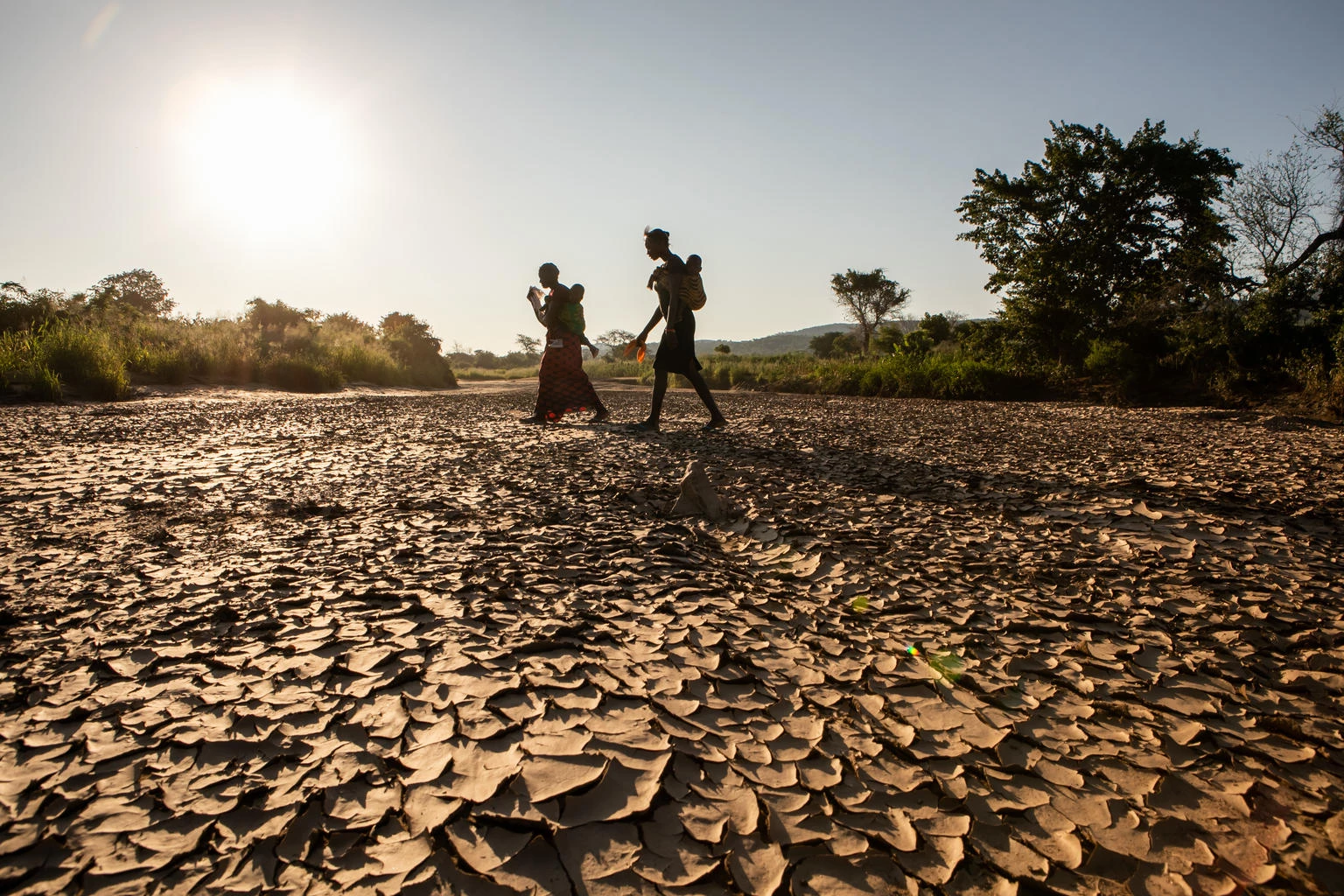
Children face the brunt of a rapidly heating planet

#SootinClaimon.Com : ขอบคุณแหล่งข้อมูล : หนังสือพิมพ์ The Nation.

https://www.nationthailand.com/pr-news/world/40021422

Children face the brunt of a rapidly heating planet

Children face the brunt of a rapidly heating planet

WEDNESDAY, OCTOBER 26, 2022

More than 2.02 billion children globally face the risk of exposure to high heatwave frequency by 2050.

New research by Unicef has shown that some 559 million children are currently exposed to high heatwave frequency. Furthermore, 624 million children are exposed to one of three other high heat conditions — high duration of heatwave, high severity and extremely high temperatures.

During a year in which heatwaves in both the southern and northern hemispheres broke records, The Coldest Year Of The Rest Of Their Lives: Protecting Children From The Escalating Impacts Of Heatwaves highlights the already extensive impact of heatwaves on children and reveals that, even at lower levels of global heating, in just three decades, more regular heatwaves are unavoidable for children everywhere.

The report estimates that by 2050, all of the world’s 2.02 billion children are expected to be exposed to high heatwave frequency, regardless of whether the world achieves a ‘low greenhouse gas emission scenario’ with an estimated 1.7 degrees of warming in 2050 or a ‘very high greenhouse gas emission scenario’ with an estimated 2.4 degrees of warming in 2050.

In Thailand, the report showed an alarming rate of children’s exposure to high heat factors in 2020, in which Thailand has faced problems with high heatwave frequency. Over 75 per cent of children under 18, or around 10.3 million, have been exposed to it. If no action is seriously taken, almost every child under 18 in Thailand will suffer high heatwaves more often and longer in 2050.

Children face the brunt of a rapidly heating planet

Produced in collaboration with The Data Collaborative for Children and launched in partnership with Unicef Goodwill Ambassador Vanessa Nakate and the Africa-based Rise Up Movement, these findings underscore the urgent need to adapt the services children rely on as unavoidable impacts of global heating unfold. It also makes a case for continued mitigation, to prevent the worst impacts of the other high heat measures, including longer and hotter heatwaves and higher extreme temperatures.

“The mercury is rising and so are the impacts on children,” Unicef Executive Director Catherine Russell said. “Already, 1 in 3 children live in countries that face extremely high temperatures and almost 1 in 4 children are exposed to high heatwave frequency, and it is only going to get worse. More children will be impacted by longer, hotter and more frequent heatwaves over the next thirty years, threatening their health and well-being. How devastating these changes will depend on the actions we take now. At a minimum, governments must urgently limit global heating to 1.5 degrees Celsius and double adaptation funding by 2025. This is the only way to save children’s lives and futures – and the future of the planet.”

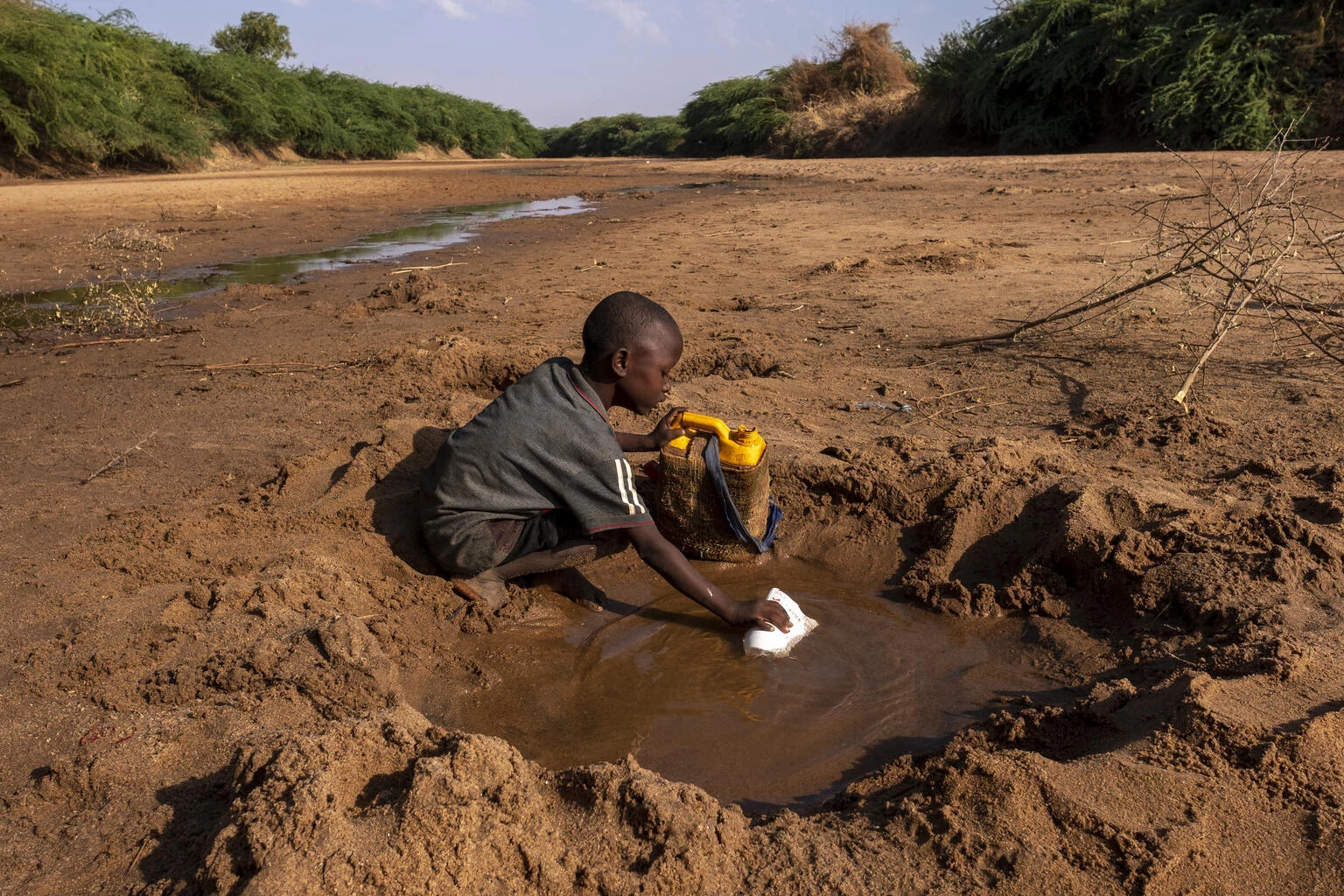
Heatwaves are especially damaging to children, as they are less able to regulate their body temperature compared to adults. The more heatwaves children are exposed to, the greater the chance of health problems including chronic respiratory conditions, asthma, and cardiovascular diseases. Babies and young children are at the greatest risk of heat-related mortality. Heatwaves can also affect children’s environments, their safety, nutrition and access to water, and their education and future livelihood.
Children face the brunt of a rapidly heating planet

The report found high heatwave duration currently impacts 538 million, or 23 per cent of, children globally. This will rise to 1.6 billion children in 2050 at 1.7 degrees warming, and 1.9 billion children at 2.4 degrees warming, emphasising the importance of urgent and dramatic emissions mitigation and adaptation measures to contain global heating and protect lives.

Millions more children will be exposed to high heatwave severity and extremely high temperatures depending on the degree of global heating reached. Children in northern regions, especially Europe, will face the most dramatic increases in the high severity of heatwaves and, by 2050, nearly half of all children in Africa and Asia will face sustained exposure to extremely high temperatures.

Currently, 23 countries fall into the highest category for child exposure to extremely high temperatures. This will rise to 33 countries by 2050 under the low emissions scenario and 36 countries under the very high emissions scenario. Burkina FasoChadMaliNigerSudanIraqSaudi Arabia and India are among the countries expected to remain in the highest category in both scenarios.

“The climate shocks of 2022 provided a strong wake-up call about the increasing danger hurtling towards us,” said Vanessa Nakate, climate activist and Unicef Goodwill Ambassador. “Heatwaves are a clear example. As hot as this year has been in almost every corner of the world, it will likely be the coldest year of the rest of our lives. The dial is being turned up on our planet and yet our world leaders haven’t begun to sweat. The only option is for us to continue to turn up the heat – on them – to correct the course we are on. World leaders must do this at COP27 for children everywhere, but especially the most vulnerable children in the most affected places. Unless they take action, and soon, this report makes it clear that heatwaves will become even harsher than they are already destined to be.”

Unicef is calling on governments to:

PROTECT children from climate devastation by adapting social services. Every country must adapt critical social services – water, sanitation and hygiene (WASH), health, education, nutrition, social protection and child protection – to protect children and young people. For example, food systems must be strengthened to withstand hazards and ensure continued access to healthy diets. Increased investments must be made in the early prevention, detection and treatment of severe malnutrition in children, mothers and vulnerable populations. At COP27, children and their rights must be prioritized in decisions on adaptation.

PREPARE children to live in a climate-changed world. Every country must provide children and young people with climate change education, disaster risk reduction education, green skills training and opportunities to meaningfully participate and influence climate policymaking. COP27 must-see countries strengthen the focus on children’s climate education and empowerment in the ACE action plan, adopt it, and implement previous commitments to build youth capacity.

PRIORITIZE children and young people in climate finance and resources. Developed countries must deliver on their COP26 agreement to double adaptation funding to $40bn per year by 2025 at a minimum, as a step toward delivering at least $300bn per year for adaptation by 2030. Adaptation funding must make up half of all climate finance. COP27 must unlock progress on loss and damage, placing the resilience of children and their communities at the centre of discussions on action and support. 

PREVENT a climate catastrophe by drastically reducing greenhouse gas emissions and keep 1.5 degrees Celsius alive. Emissions are projected to rise by 14% this decade, putting us on a path to catastrophic global heating. All governments must revisit their national climate plans and policies to increase ambition and action. They must cut emissions by at least 45% by 2030 to keep heating to no more than 1.5 degrees Celsius. 
Children face the brunt of a rapidly heating planet

Sunak makes history in Britain, but the tough part begins now

#SootinClaimon.Com : ขอบคุณแหล่งข้อมูล : หนังสือพิมพ์ The Nation.

https://www.nationthailand.com/world/europe/40021409

Sunak makes history in Britain, but the tough part begins now

Sunak makes history in Britain, but the tough part begins now

WEDNESDAY, OCTOBER 26, 2022

Robert Clive, the first British governor of Bengal presidency who is widely credited with laying the foundation for the British East India Company’s rule over Bengal/India, would not have imagined in 1757 that one day the son of an immigrant of Indian origin would become the prime minister of his country. It has taken 265 years, but the event is historic.

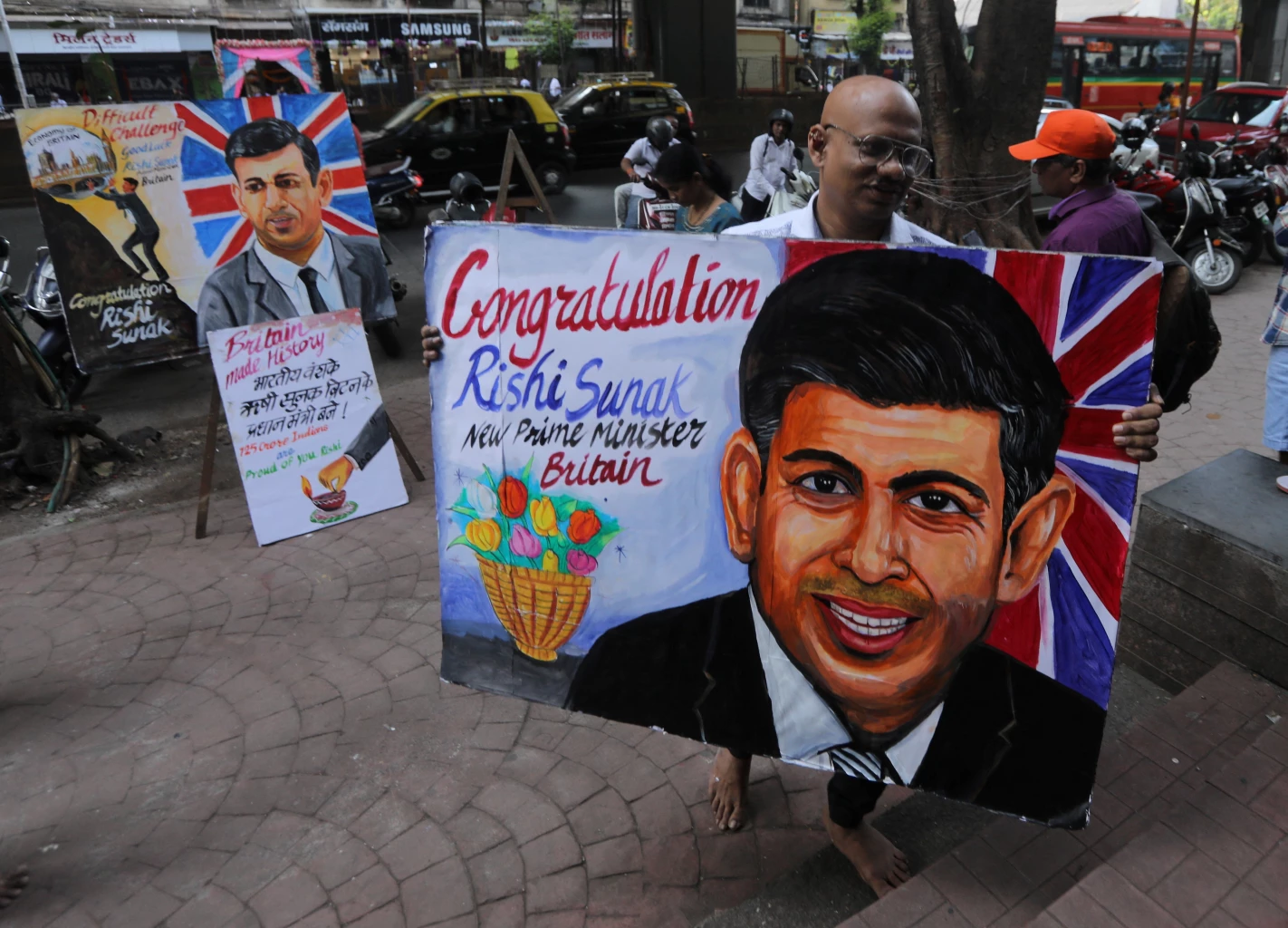
Rishi Sunak’s rise to become the 57th prime minister of the United Kingdom (UK), is a proud moment for Indians in Britain, which is home to a vibrant and diverse community of people with roots in India.

Sunak has always expressed pride in his Indian roots and he has often mentioned his upbringing as the son of immigrants. 
Sunak’s paternal grandparents hailed from Gujranwala, now in Pakistan. His grandfather moved to Kenya and Sunak’s father Yashvir was born in Kenya. The family moved to Britain in the 1960s. Sunak is a practising Hindu and as a testament of his faith, he took his oath of office as a member of parliament on the Bhagawad Gita. As the UK’s chancellor of the exchequer, he had then celebrated Diwali by putting lights outside his official residence at 11 Downing Street. Interestingly Sunak took over the leadership of Britain’s Conservative Party on a day when Hindus all over the world were celebrating Diwali, the festival of lights marking the triumph of light over darkness, good over evil and knowledge over ignorance.

But neither his forefathers’ origin nor his religion has ever been the central theme of his political message at any point. He has focused instead on his expertise in running the economy, a job in which had acquitted himself well during the Covid upheaval, saving British jobs and businesses.

At 42, he is also the country’s youngest prime minister over the last 100 years. Sunak completed his education at Stanford Business School and laid the foundation of his personal fortune while working for Goldman Sachs Group. He belongs to a governing conservative wing that swings wildly between responsible governance and irresponsible populism.

Sunak’s elevation is also a tribute to the multicultural character of modern Britain.

He joins the ranks of some 200 persons of Indian origin who have been elected to positions of political power in 25 countries, including Mauritius, Seychelles and Trinidad. He takes the reins of power at a time when the UK is confronted with numerous political and economic challenges.

Britons and the Tories have pinned their hopes on Sunak’s financial acumen extricating the country out of its economic mess, though there are no quick fixes. 
India and the UK were expected to sign a free trade agreement around Diwali. But that could be on the back burner, as Sunak is likely to prioritise the situation at home, restoring stability and winning the confidence of the British people after they have seen three prime ministers in less than two months.


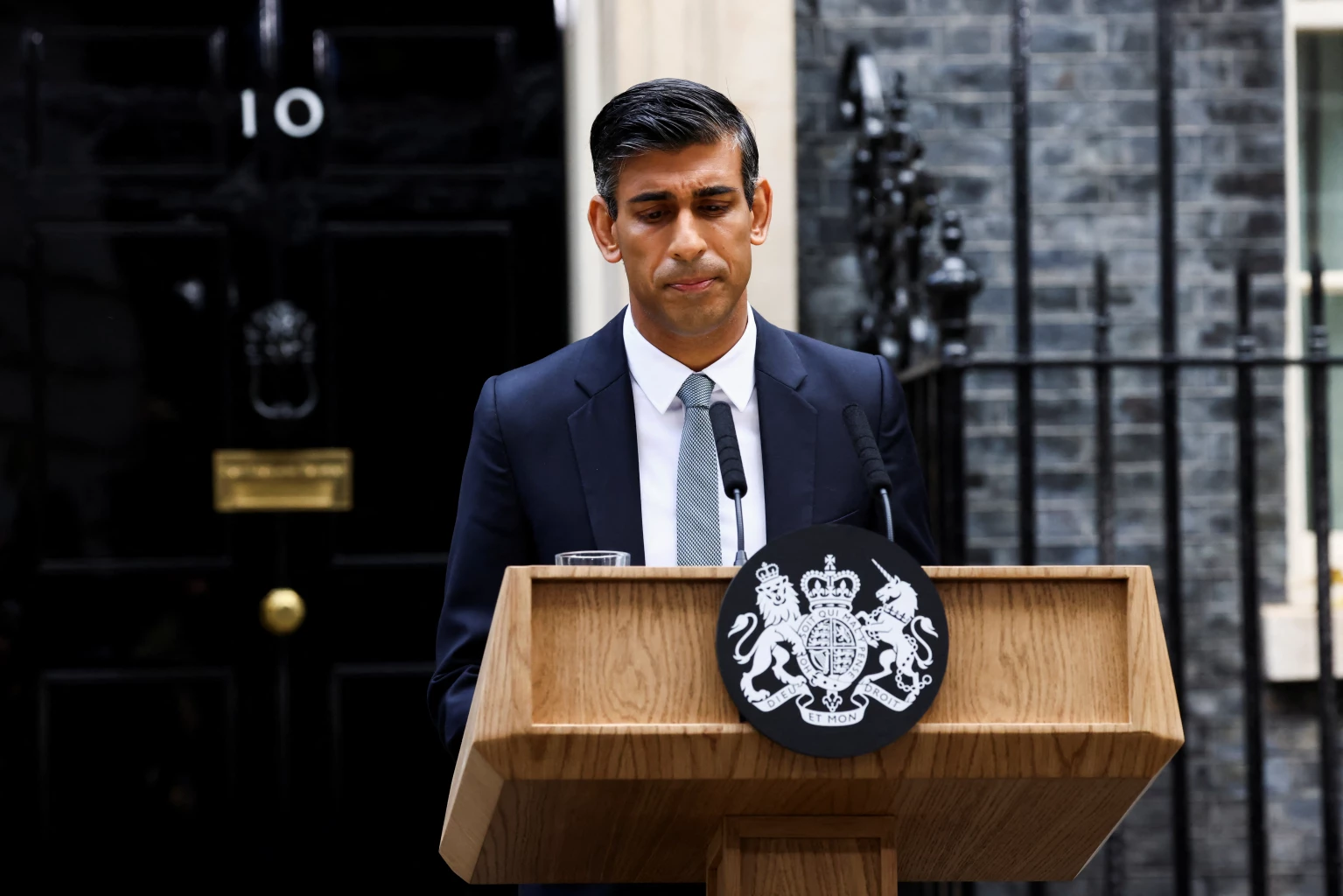
In his first speech outside 10 Downing Street, he warned the people of the profound economic crisis facing the nation, and that his task as new leader was to fix some of the mistakes of the previous government. He entered 10 Downing Street with a message of hope.

The Statesman

Asia New Network

Samsung still tight-lipped on Lee Jae-yong’s succession

#SootinClaimon.Com : ขอบคุณแหล่งข้อมูล : หนังสือพิมพ์ The Nation.

https://www.nationthailand.com/world/40021400

Samsung still tight-lipped on Lee Jae-yong’s succession

Samsung still tight-lipped on Lee Jae-yong’s succession

WEDNESDAY, OCTOBER 26, 2022

A memorial service honouring late Samsung Electronics chairman Lee Kun-hee was held on Tuesday, without a major announcement by the electronics giant in regard to a succession plan for his son to ascend to the top leadership.

Speculation has been building recently that Samsung Electronics vice chairman Lee Jae-yong might be promoted to the chairman’s post, using the memorial service for momentum.

Lee has held the vice chairman position for the past decade. His eventual assumption of the chairman title is widely seen as an indication that the 54-year-old will have a full grip on the chips-to-electronics empire.

A pardon granted to Lee by the Yoon Suk-yeol administration in August has cleared hurdles for him to seek the leadership position. Previously, a conviction of bribery and embezzlement hindered him from formal employment by Samsung under Korean rules, although he walked free on parole in August 2020.

The third-generation chaebol scion left the Samsung Electronics boardroom in October 2019 and has yet to return.

The market has been watching closely for Samsung’s next move, as it is widely expected to make a major announcement in the final quarter when it holds a series of in-house services celebrating the firm’s founding on November 1 and another memorial service for its founder, who passed away 35 years ago. A Samsung board meeting is also scheduled for Thursday and the regular executive reshuffle of Samsung for December.

The Korea Herald

Asia News Network

Russia raises accusation at UN of Ukraine ‘dirty bomb’ plans

#SootinClaimon.Com : ขอบคุณแหล่งข้อมูล : หนังสือพิมพ์ The Nation.

https://www.nationthailand.com/world/russia-central-asia/40021397

Russia raises accusation at UN of Ukraine ‘dirty bomb’ plans

Russia raises accusation at UN of Ukraine ‘dirty bomb’ plans

WEDNESDAY, OCTOBER 26, 2022

Russia on Tuesday took its accusation that Ukraine was preparing to use a dirty bomb – an explosive device laced with radioactive material – to the United Nations Security Council, voicing its concerns during a closed-door meeting of the 15-member body.

“We’re quite satisfied because we raised the awareness,” Russia’s Deputy UN Ambassador Dmitry Polyanskiy told reporters. “I don’t mind people saying that Russia is crying wolf if this doesn’t happen because this is a terrible, terrible disaster that threatens potentially the whole of the Earth.”

Russia has alleged that Kyiv has ordered two organisations to create a dirty bomb, without giving any evidence.

Russia’s UN Ambassador Vassily Nebenzia sent a letter to the United Nations on Monday detailing the accusations.

“We’ve seen and heard no new evidence,” Britain’s Deputy UN Ambassador James Kariuki told reporters, referring to Russia’s “transparently false allegations”.

He added: “This is pure Russian misinformation of the kind of we”ve seen many times before and it should stop.”

When asked what evidence Russia had to back its claims, Polyanskiy told reporters that it was intelligence information that had been shared with Western counterparts with the “necessary level of clearance”.

The UN nuclear watchdog – the Vienna-based International Atomic Energy Agency (IAEA) – is preparing to send inspectors in the coming days to two Ukrainian sites at Kyiv’s request, an apparent reaction to Russia’s dirty bomb claims.

Ukrainian President Volodymyr Zelenskiy has responded by accusing Russia of planning such an attack itself to blame it on Ukraine. Western countries also rejected Russia’s allegation as a pretext for intensifying the eight-month-long war.

The Security Council discussion on Tuesday was the first of three likely meetings requested by Russia this week.

Russia has also asked the council to be briefed on Wednesday on UN Secretary-General Antonio Guterres’ mandate under a 2015 resolution enshrining the Iran nuclear deal.

The move comes after Ukraine and Western allies accused Russia of using Iranian-made drones in Ukraine in violation of the resolution and asked Guterres to investigate.

The council is also due to meet on Thursday on Russian claims that there are “military biological programmes” in Ukraine. The United States and Western allies have slammed Russia for spreading propaganda, disinformation and “nonsense” when it had previously raised the issue at the Security Council.

Russia has circulated a draft resolution to council members to set up a commission – made up of all 15 council members – “to investigate into the claims against the US and Ukraine contained in the complaint of the Russian Federation”.

It was not immediately clear if or when Russia would put it to a vote. A resolution needs nine votes in favour and no vetoes by Russia, China, the United States, France or Britain to pass.

The Security Council has met dozens of times on Ukraine since Moscow invaded its neighbour on February 24, but is unable to take meaningful action as Russia protects itself with its veto.

Russia has, however, been diplomatically isolated. Earlier this month, three-quarters of the 193-member General Assembly – 143 countries – voted to condemn its “attempted illegal annexation” of four partially occupied regions in Ukraine and called on all countries not to recognise the move.

Reuters

New PM Sunak vows to lead Britain out of economic crisis

#SootinClaimon.Com : ขอบคุณแหล่งข้อมูล : หนังสือพิมพ์ The Nation.

https://www.nationthailand.com/world/europe/40021396

New PM Sunak vows to lead Britain out of economic crisis

New PM Sunak vows to lead Britain out of economic crisis

WEDNESDAY, OCTOBER 26, 2022

Rishi Sunak became Britain’s third prime minister in two months on Tuesday and pledged to lead the country out of a profound economic crisis and rebuild trust in politics.

Sunak formally became Britain’s new prime minister after meeting King Charles at Buckingham Palace. He is tasked with tackling a mounting economic crisis, a warring political party and a deeply divided country in one of the greatest challenges to confront any new leader.

Sunak, Britain’s youngest prime minister for more than 200 years and its first leader of colour, replaced Liz Truss who resigned after 44 days following a “mini-budget” that sparked turmoil in financial markets.

Sunak, one of the richest men in parliament, will have to find deep spending cuts to plug an estimated 40 billion pound (1.73 trillion baht) hole in the public finances due to an economic slowdown, higher borrowing costs and a six-month programme of support for people’s energy bills.

After a tumultuous period in British politics, he was met with both cheers and jeers as he arrived at Downing Street.

The former hedge fund boss said he would unite the country and has set out to end infighting within the ruling Conservative Party.

Sunak has praised the ambition of his predecessor, Liz Truss, to reignite economic growth but acknowledged mistakes had been made.

Some of Truss’s economic plans horrified investors and alarmed international allies, ultimately helping to end her tenure after only 44 days.

Sunak’s appointment was met with optimism for future cooperation by China, but the Russian government said it saw little sign of improving strained relations that have only soured further during Moscow’s conflict with Ukraine.

European Commission President Ursula von der Leyen and Belgian Prime Minister Alexander de Croo were among the European leaders to offer their best wishes to the new PM.

As the first British PM of Indian heritage, Prime Minister Narendra Modi also sent his congratulations, while Britain’s high commissioner to its former colony said Sunak’s appointment was indicative of the cultural changes that have occurred in the UK.

“This is a sign of a different United Kingdom which there is today compared to the country which I grew up in,” said British High Commissioner to India Alex Ellis.

“They [British] have outgrown their racism, shown a tremendous willingness to absorb and admit people of other religious faiths and on top of that, they have looked at merit and not age or experience in deciding that he was the right man in the time of an economic crisis,” said Indian politician Shashi Tharoor.

Renowned sand artist Sudarsan Pattnaik also congratulated Sunak with a sand sculpture.

New PM Sunak vows to lead Britain out of economic crisis

New cabinet

Sunak meanwhile appointed key ministers to his government.

With his new appointments, Sunak was seen to be drawing ministers from across the Conservative Party while leaving others in their posts – a move that should ease concerns that he might appoint loyalists rather than try to unify the party.

Sunak quickly reappointed Jeremy Hunt as his finance minister in a move designed to calm markets that had balked at his predecessor’s debt-fuelled economic plans.

The new prime minister also restored Dominic Raab to the post of deputy prime minister, a role he lost in Truss’s 44 days in office, but reappointed James Cleverly as foreign minister and Ben Wallace as defence.

Suella Braverman was reappointed as interior minister, less than a week after she resigned from the role for breaching government rules.

Braverman replaced Grant Shapps, who held the post for less than a week and was appointed business minister in Sunak’s government, taking over from Jacob Rees-Mogg.

Penny Mordaunt, who ended her bid to win a leadership contest against Sunak on Monday, also retained her position as leader of the House of Commons, a role that organises the government’s business in the lower house of parliament.

Sources had said she wanted to become foreign minister.

Michael Gove was appointed as the country’s levelling-up minister, a role he previously served between September 2021 and July 2022.

Gove, an influential figure in British politics for more than a decade, replaced Simon Clarke, who resigned earlier in the day after Sunak officially took office.

Kemi Badenoch has been re-appointed as trade minister, as was Chris Heaton-Harris as Northern Ireland minister and Michelle Donelan as culture secretary.

Therese Coffey, the outgoing deputy prime minister, became environment minister as Steve Barclay took over from her as health minister.

Nadhim Zahawi was named the Conservative Party’s new chairman as well as minister without portfolio.

Zahawi was finance minister for a brief period from July to September under Boris Johnson after Sunak resigned that role, triggering a rebellion against the former prime minister.

Gillian Keegan replaced Kit Malthouse as education secretary and Mark Harper took over from Anne-Marie Trevelyan as transport minister.

John Glen was appointed as chief secretary to the Treasury, replacing Edward Argar.

The role is one of the most senior ministerial positions within the finance ministry and carries responsibility for organising government departmental spending.

Simon Hart was appointed chief whip – the government role in charge of discipline within the Conservative Party – replacing Wendy Morton.

Reuters

Work to fix Truss’s ‘mistakes’ begins immediately, says PM Sunak

#SootinClaimon.Com : ขอบคุณแหล่งข้อมูล : หนังสือพิมพ์ The Nation.

https://www.nationthailand.com/pr-news/world/europe/40021383

Work to fix Truss's 'mistakes' begins immediately, says PM Sunak

Work to fix Truss’s ‘mistakes’ begins immediately, says PM Sunak

TUESDAY, OCTOBER 25, 2022

Rishi Sunak became Britain’s prime minister on Tuesday after his predecessor, Liz Truss, stepped down.

Truss spoke briefly outside 10 Downing Street before travelling to Buckingham Palace to formally offer her resignation to King Charles III, who officially appoints the British prime minister. As Truss left the palace, Sunak arrived and, after an audience, the King formally invited him to form a government.

The 42-year-old former hedge fund boss, who has only been in elected politics for seven years, has been tasked with bringing an end to the infighting and feuding at Westminster that has horrified investors and alarmed international allies.

Sunak is Britain’s youngest prime minister for more than 200 years and its first leader of colour.

Speaking outside his new official residence at 10 Downing Street, Sunak paid tribute to Truss and said her plan to reignite economic growth had not been wrong, but he said mistakes were made.

“And I have been elected as leader of my party and your prime minister, in part to fix them,” he said.

Work to fix Truss's 'mistakes' begins immediately, says PM Sunak

Sunak will now start forming his cabinet, with some Conservative lawmakers hoping he will include politicians from all wings of his Conservative Party.

Sunak said he was not daunted by the scale of the challenge as he became Britain’s third prime minister in two months, pledging to restore trust, rebuild confidence and lead the country through an economic crisis.

“I fully appreciate how hard things are,” he said outside the prime minister’s residence where he shunned the normal tradition of standing with his family and political supporters.

“I understand too that I have work to do to restore trust, after all that has happened. All I can say is that I am not daunted. I know the high office I have accepted and I hope to live up to its demands.”

Sunak, one of the richest men in parliament, is expected to slash spending to plug an estimated 40 billion pound ($45 billion) hole in the public finances created by an economic slowdown, higher borrowing costs and a six-month programme of support for people’s energy bills.

With his party’s popularity in freefall, Sunak will also face growing calls for an election if he moves too far from the policy manifesto that elected the Conservative Party in 2019 when then-leader Boris Johnson pledged to invest heavily in the country.

Sunak has warned his colleagues they face an “existential crisis” if they do not help to steer the country through the surging inflation and record energy bills that are forcing many households and businesses to cut back spending.

Reuters

As child deaths rise, Indonesia considers criminal cases against pharma companies

#SootinClaimon.Com : ขอบคุณแหล่งข้อมูล : หนังสือพิมพ์ The Nation.

https://www.nationthailand.com/world/asean/40021378

As child deaths rise, Indonesia considers criminal cases against pharma companies

As child deaths rise, Indonesia considers criminal cases against pharma companies

TUESDAY, OCTOBER 25, 2022

Indonesia has attributed the recent spike in acute kidney injury (AKI) cases to toxic levels of chemical compounds in medicinal syrups, as it considers a potential criminal investigation against drug manufacturers whose products have been linked to 141 child deaths this year.

The chief of Indonesia’s Food and Drug Monitoring Agency, Penny Lukito, revealed on Monday that the agency had singled out two pharmaceutical companies that produced medicines with unacceptable levels of ethylene glycol (EG) and diethylene glycol (DEG).

Commonly found as contaminants in the solvents of syrup-based medicins, EG and DEG are thought to be the cause of Indonesia’s spike in AKI cases and deaths.

Penny said the BPOM would work with police to build a criminal case against the two companies over the composition of ingredients used in their products. She did not identify the two firms in question.

“There is indication that EG and DEG levels found in these companies’ products more than exceeds [safe levels of] contaminants,” she told reporters after a meeting with President Joko Widodo at the Bogor Palace in West Java.

Previously, the BPOM was under pressure to explain how it had shown the greenlight to a number of products that scientists have found to be linked to kidney failure in over 100 cases involving children under the age of six.

But Penny said the agency had fulfilled its mandate and observed all prevailing regulations in inspecting products circulating in the market. She insisted it was the responsibility of pharmaceutical companies – and not the BPOM – to check the level of contaminants found in their own products.

“There is no international standard to be used as a reference to check EG and DEG content [in medicine],” she said.

“In light of the situation, there may be several points [in a medicine’s production supply chain] that were previously unsupervised that must now be checked, and the standards for it strengthened.”

Health Minister Budi Gunadi Sadikin said the number of AKI cases had risen to 251 this year alone, and resulted in 141 fatalities. This puts the fatality rate of an ailment that primarily affects children under five years at a staggering 57.6 per cent.

Budi insisted on Monday that the spike in cases started occurring only in August and that the ministry had taken note and conducted a number of probes in response. A pathological examination in September ruled out any viruses, bacteria or parasites as the cause of AKI.

The ministry then took cues from an October 5 World Health Organization (WHO) report that linked the deaths of 70 children in The Gambia to unacceptable levels of EG and DEG in paracetamol syrups circulating in the West African country and began conducting toxicology tests.

It revealed that seven out of 10 children tested had traces of the toxic chemical compound in their urine or blood. The ministry also did biopsies on deceased patients and found similar results.

Lab examinations of the medicines found in the homes of afflicted children also confirmed the presence of these compounds.

“Based on the WHO report, the biopsy results and the discovery of [EG and DEG] in medicines in [afflicted] children’s homes, we concluded that the cause [of the spike in AKI cases] are these chemicals, which are impurities found in solvents [for syrup-based medicines],” Budi said.

When asked why AKI cases only started to rise in August, Budi said it was most likely due to changes in the raw ingredients of the medications, signalling a potentially larger issue in the supply chain.

He said the government now had data on recent imports of raw ingredients and would share it publicly at a later time.

Indonesia imports most of its raw ingredients for medicines from China and India, according to the ministry. In The Gambia, AKI cases were traced to the product of an Indian pharmaceuticals firm that has since halted production.

Prior to Monday’s conclusion, the government took a number of precautions last week by ordering health facilities and medical professionals to temporarily stop prescribing all kinds of syrup-based medicines and drug stores to temporarily halt the sale of such products until further notice.

The policy, Budi said, had proved effective, particularly since hospitals nationwide had reported a drop in the number of children showing AKI symptoms, abnormally low urine output or failure to produce urine.

Based on input from the Indonesian Paediatric Association, Budi said the government was considering revoking the ban for a handful of medicines that are used to treat critical illnesses, such as epilepsy, so long as these medicines are prescribed by a doctor.

On Sunday, the BPOM issued a list of 133 medicinal syrups that do not use the four listed dangerous solvents – propylene glycol, glycerol, sorbitol and polyethylene glycol – as ingredients, and are therefore completely safe to use.

An update to the medicinal syrup ban is expected to be released soon in the form of a Health Ministry circular.

The Jakarta Post

Asia New Network

Phnom Penh Photo Festival ‘still true to its principles’

#SootinClaimon.Com : ขอบคุณแหล่งข้อมูล : หนังสือพิมพ์ The Nation.

https://www.nationthailand.com/world/asean/40021369

Phnom Penh Photo Festival 'still true to its principles'

Phnom Penh Photo Festival ‘still true to its principles’

TUESDAY, OCTOBER 25, 2022

After 13 years, the Phnom Penh Photo Festival still adheres to the principle of being a platform for the exchange of experiences between European and Asian artists.

This year’s art exhibitions are organised by the Phnom Penh Photo Association and the French Institute of Cambodia in collaboration with the ministries of Education, Youth and Sports and Culture and Fine Arts, the EU Delegation to Cambodia, the French Embassy and Phnom Penh City Hall.

The fest will feature 43 artists, who will exhibit their work at several venues across Phnom Penh from October 27 to November 27. Free screenings of handpicked foreign films will also be held at the festival’s partner cinemas.

Khun Vannak, communications officer of the Phnom Penh Photo Association, said: “For me, this year’s highlight is a photographic display of the late King Father Norodom Sihanouk on the wall of the French Institute of Cambodia. This year is the 100th centenary of his birth, so it makes sense to feature him.

“A total of 43 photographers are showing this year, including 35 foreigners and eight Cambodians.

“Each artist will feature in just one show, with the exception of Cambodian-French photographer Jean-Baptiste Phou, who has a solo show, while also appearing in a group exhibition.

“Thanks to the support of the EU, 100 tuk-tuks will also be employed in this year’s festival. Fifty have been used to transport the works to their venues, while 50 will be used to transport visitors during the opening week of the festival. All of them bear signage promoting the event’s programmes,” Vannak said.

Venues for the festival include the French Institute of Cambodia, Bophana CentreSra’Art Gallery, Java Cafe Tuol Tompoung Art Gallery, the walls of the French Embassy and F3 – the Friends Future Factory.

Christian Caujolle, artistic director and founder of the festival, said: “In addition, our team has organised a project called ‘Intersection’, which will feature four young female photographers, Ten Borey and Mech Sereyroth from Phnom Penh, and Hann Enong and Sok Rina from Siem Reap.

“They will work together on the same topic – ‘Food and Nutrition’. The results will be displayed during the opening week of the festival and will then be shown in Siem Reap.”

Four featured artists

Born in 1993 and trained at the Studio Images of the French Institute, Ten Borey works in a commercial studio in Phnom Penh, while developing her personal projects.

Mech Sereyrath, born the same year, received her bachelor’s degree in media management from the Department of Media and Communications at the Royal University of Phnom Penh in 2018.

Her first body of work was called “Contemporary Breath”, and it became a milestone on her journey as a visual storyteller. She has since created many photo series, including “My Neighbouring Space”, “Voice of Women” and “Element”. Her work has been exhibited in Japan, Thailand and France.

Born in 1993 in Siem Reap town, Hann Enong is a creative designer at SAHAT, an entrepreneurial platform in Siem Reap. She learnt photography from her father and uses the skill as a mode of expression, both her intimate feelings and her reactions to the world around her. Also an amateur painter, she has participated in many projects. Siem Reap-based Sok Rina, who was born in 1988, watched her father work as a wedding photographer and wanted to follow in his footsteps from a very early age. She achieved her dream and opened Kravan Photography, which allows her to pursue many activities in the medium, both cultural and commercial.

“Their work will link with recent unpublished creations by Jean-Baptiste Phou – whose square black-and-white self-portraits remain a novelty on the country’s stage – with the views of the city at dusk of Channal Sean, and with the colour self-portraits of Vannak Khun in the empty city during the lockdown.

“This year, the Swiss Confederation will occupy the space of F3, in the heart of the capital. With 10 artists, some famous, some very young, and with an original presentation that showcases the great tradition of Swiss graphic design, it will be a great opportunity to observe the diversity of today’s practices in the field. An evening screening of Swiss art videos will also feature at the venue,” Caujolle said.

The Frenchman offered his thanks to all those whose efforts had the event possible.

“Thanks to Marie Le Mounier and Beat Streuli for having conceived, curated and achieved this project with the support of Pro Helvetia.

“Conferences, portfolio reviews, tuk-tuk tours of the exhibitions – as well as three night-time screenings of curated films – round out the festival programme. We will begin with a tribute to Ukrainian artists, followed by a set of works around the topic of ‘Birds’ by 12 photographers from all over the world. We will also show, for the first time, the 12 shortlisted photographers of the Leica Oskar Barnack Award.

The Phnom Penh Post

Asia News Network

Japan farmers serve brown rice up as healthy beverages, noodles to boost demand

#SootinClaimon.Com : ขอบคุณแหล่งข้อมูล : หนังสือพิมพ์ The Nation.

https://www.nationthailand.com/world/asia-pacific/40021367

Japan farmers serve brown rice up as healthy beverages, noodles to boost demand

Japan farmers serve brown rice up as healthy beverages, noodles to boost demand

TUESDAY, OCTOBER 25, 2022

Products made from brown rice are being developed in Mie Prefecture as part of efforts to cultivate demand for locally grown grain, with noodles and a coffee-like beverage being some of the items to hit shelves.

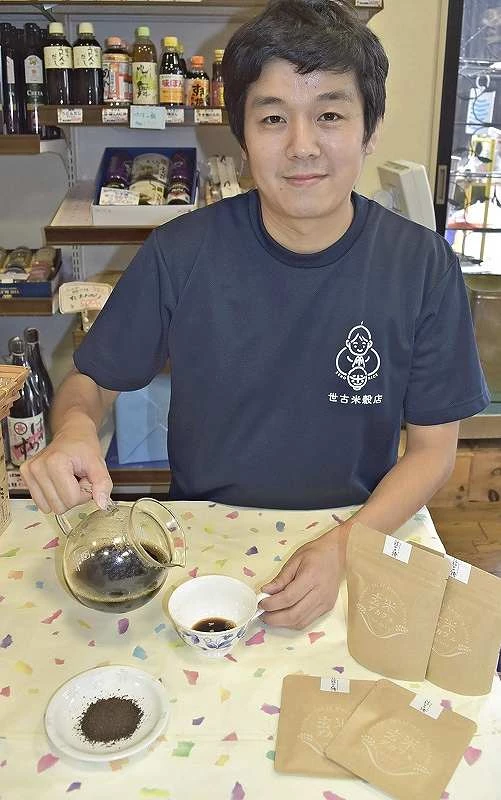
A group of rice dealers in their 30s and 40s released a beverage made from roasted brown rice in September that is being touted as a caffeine-free alternative to coffee.

The Mie Rice Club, which was formed last year by Daisuke Seko from Owase, Shinsuke Ishikawa from Kuwana and Norihide Tominaga from Nabari, organises activities and studies strategies to promote rice, amid a nationwide decline in consumption.

The group began developing a beverage made from brown rice in November last year, focusing on the locally grown Musubi-no-kami brand, which has a light flavour.

With the help of a specialist roaster in Yamagata Prefecture, the group developed a fragrant caffeine-free drink that has the flavour of brown rice and the aroma of grilled mochi.

“I hope this drink will make people want to eat Musubi-no-kami,” said Mie Rice Club member Seko, 37.

Meanwhile, in Kumano, farmer Ta-tsuya Hashimoto has developed noodles made from brown rice that he grows without chemicals.

Hashimoto, 43, began growing rice in a mountainous part of the municipality seven years ago, and last year, enlisted a specialist in Hiroshima Prefecture to help make noodles with his crop.

Japan farmers serve brown rice up as healthy beverages, noodles to boost demand

The noodles contain only brown rice and starch from potatoes, both of which are cultivated without chemicals. They have a light flavour and a firm texture similar to that of regular wheat noodles, making them a good match for Japanese cuisine and dishes from other Asian countries.

“The rice is carefully cultivated and [the noodles are] highly nutritious,” Hashimoto said.

Another noodle made with rice from the prefecture is produced by the Matsuzaka-based “konnyaku” specialist Uenoya, which started developing the product in 2017 and launched its Konnyaku Kahada Men noodles in 2019.

Konnyaku, a gelatinous food product made from a tuber of the same name, comes in various forms, including noodles. Uenoya’s rice noodles contain konnyaku and brown rice grown in the Kahada valley, a natural park in the prefecture.

From the product’s launch until the end of the last year, the company has sold more than 140,000 packs of noodles, which have the aroma of brown rice and the texture of conventional konnyaku noodles.

“With the farmers’ thoughts at the forefront of our minds, we’d like to convey the appeal of rice from this region,” said Uenoya’s Kotaro Sasaki, 44.

The Japan News

Asia News Network

Future leaders discuss human rights on the World Day against the Death Penalty

#SootinClaimon.Com : ขอบคุณแหล่งข้อมูล : หนังสือพิมพ์ The Nation.

https://www.nationthailand.com/world/europe/40021363

Future leaders discuss human rights on the World Day against the Death Penalty

Future leaders discuss human rights on the World Day against the Death Penalty

TUESDAY, OCTOBER 25, 2022

Bangkok, October 25 – On the occasion of the World Day against the Death Penalty, on October 10, 2022, the Delegation of the European Union to Thailand (EU), in collaboration with the Rights and Liberties Protection Department (RLPD) of the Ministry of Justice, organised a dedicated event for university students to enhance their knowledge on human rights and alternatives to capital punishment.

The event reaffirmed the EU’s strong opposition to the death penalty, which is cruel, inhuman and degrading, as well as irreversible and fails to act as a deterrent to crime. It also highlighted Thailand’s commitment to moving towards the abolition of the death penalty as stated in the 4th National Human Rights Plan (2019-2023).

The half-day event, titled “Death Penalty: The Road to Abolition”, was attended by over a hundred undergraduate students from Chiang Mai University, Chulalongkorn University, Mahidol University, Ramkhamhaeng University and Thammasat University.

In her opening remarks, Ms Sara Rezoagli, Chargée d’affaires (a.i.) of the EU Delegation to Thailand, reiterated that “the EU has put the abolition of the death penalty at the very centre of its human rights policy, as we firmly believe that the abolition of capital punishment is essential for the enhancement of human dignity. Death penalty is a violation to the right to life, enshrined in the Universal Declaration of Human Rights. It is irreversible in case of errors and it fails to act as a deterrent of crime. The EU conducts active diplomacy and engages international partners to promote discussion and raise awareness towards the abolition of capital punishment worldwide, as illustrated by this event.”

Ms Sujittra Kaewkrai, Deputy Director-General of the Rights and Liberties Protection Department of the Ministry of Justice, stated that “capital punishment is not a definitive means to eliminate crimes. Therefore, it is crucial to actively raise public awareness and promote better understandings of the adverse impacts of the death penalty among citizens at every age, particularly the young generations who play a key role in the future of change.”

Ms Marta Santos Pais, Commissioner of the International Commission against the Death Penalty (ICDP), delivered a keynote speech to inaugurate the discussion, emphasising the interconnection between the rule of law and abolition, which is reflected in the worldwide trend towards universal abolition. She stressed that “the vast majority of countries have abolished the death penalty, either in law or in practice. And over the recent past, we have witnessed visible progress, with a growing number of States introducing a legal ban on capital punishment and many others pledging to the same goal. Guided by international human rights standards, universal abolition of the death penalty is within reach.”

Prominent experts who took part in the panel were: Ms. Karen Gomez-Dumpit, Executive Committee Member of the Anti-Death Penalty Asia Network (ADPAN) and former Commissioner of the Commission on Human Rights of the Philippines; Dr Kattiya Ratanadilok, Director of Justice Research and Development Institute, Office of Justice Affairs, Ministry of Justice; Dr Mark Charoenwong, Provincial Public Prosecutor, Office of Chiang Rai Provincial Juvenile and Family Litigation; and Dr Khemthong Tonsakulrungruang, lecturer of the Faculty of Political Science, Chulalongkorn University.

The discussion, moderated by Ms Sanhawan Srisod, Legal Adviser of the International Commission of Jurists (ICJ), took stock of the global trend in favour of abolition. More than two thirds of all countries, including all EU Member States, have abolished the death penalty in law or in practice. The panel also touched upon the situation in Southeast Asia. Cambodia and the Philippines have officially abolished the death penalty, while Laos and Brunei have practically done so, having not carried out executions in decades. Malaysia has also announced plans to abolish it. Singapore and Myanmar, however, resumed executions in 2022.

“The anti-death penalty movement should watch closely and respond quickly to all actions that may cause a reversal in the trend towards universal abolition. Case in point is the Philippines, even with ratification of the Second Optional Protocol Aiming at the Abolition of the Death Penalty, the anti-death penalty collective must remain watchful. The ASEAN Region has recently seen such reversals with trials and executions negatively impacting on the rule of law and respect for human rights. Cross-regional cooperation around these reversals is needed to reach universal abolition in both law and practice,” said Ms Karen Gomez-Dumpit.

In Thailand, current law allows capital punishment for 60 offences, though it is rarely carried out, with restrictions on who can be sentenced to death, such as pregnant women and anyone under eighteen. Furthermore, the number of people under sentence of death continued to decrease significantly for the third consecutive year.

The event was facilitated by European Union Policy and Outreach Partnership (EUPOP) with the financial support of the European Union.