Zelenskiy vows to down Russian missiles as strikes destroy 40% of energy grid
SUNDAY, OCTOBER 23, 2022
Ukrainian President Volodymyr Zelenskiy said on Saturday that Russia had launched strikes on infrastructure on a “very wide” scale and pledged that his military would improve on an already good record of downing missiles with help from its partners.
“The geography of this latest mass strike is very wide,” Zelenskiy said in his nightly video address, citing regions in western, central and southern Ukraine.
“Of course, we do not yet have the technical ability to shoot down 100 per cent of Russian missiles and attack drones. We will gradually come to this – with the help of our partners, I’m sure. But we are already shooting down most of the cruise missiles, most of the drones,” he said.
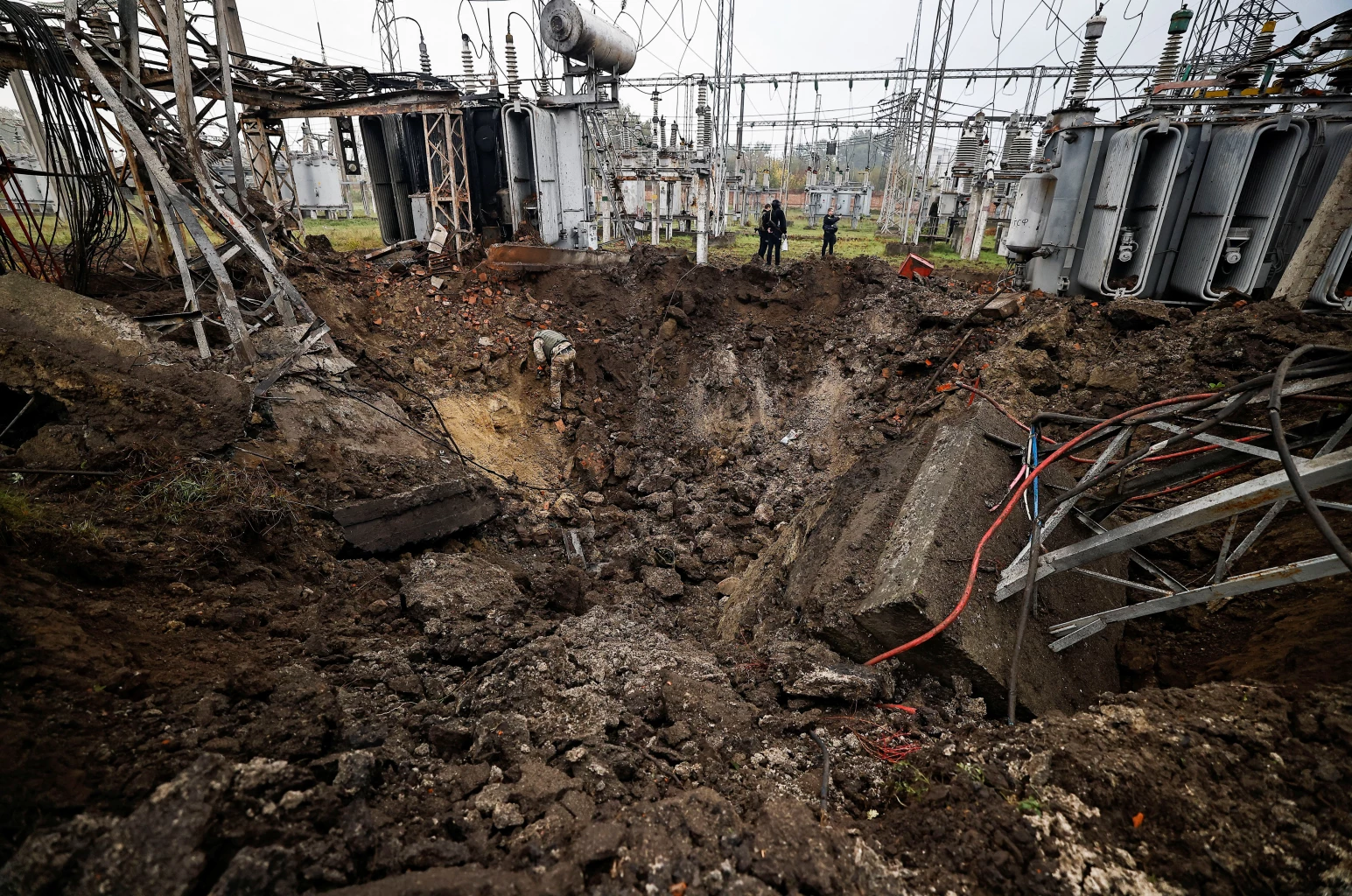
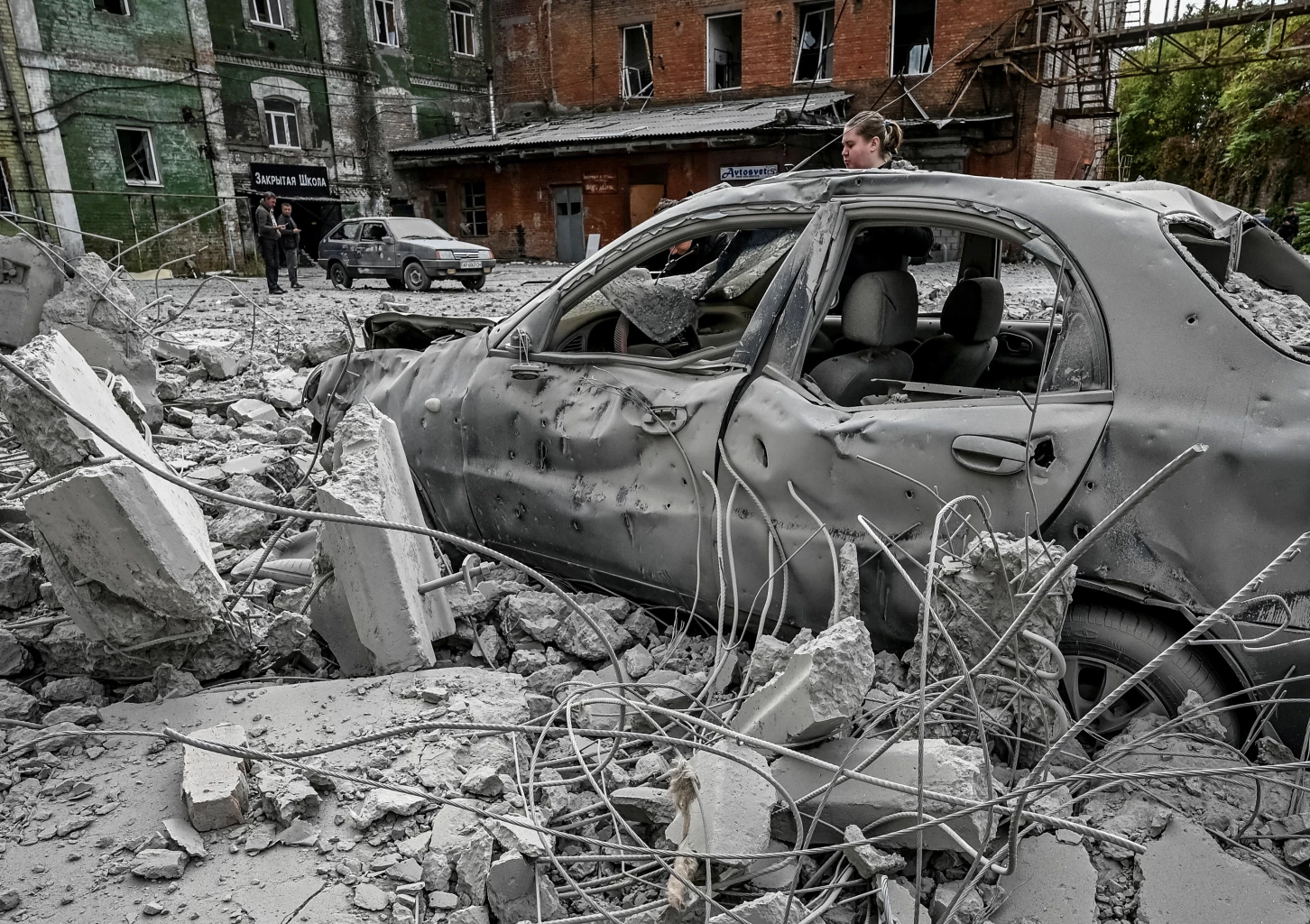
More than a dozen Russian missiles pounded critical infrastructure across Ukraine on Saturday, the Ukrainian air force said, with several regions reporting strikes on energy facilities and power outages.
The air force command earlier had said 33 missiles had been fired at Ukraine on Saturday morning, adding that 18 of them had been shot down.
Since October 10, Russia has launched devastating salvos at Ukraine’s power infrastructure, which have hit at least half of its thermal power generation and up to 40 per cent of the entire system.
Shortly after daybreak on Saturday, officials in regions across Ukraine began reporting strikes on energy facilities and power outages as engineers scrambled to restore the network. Governors advised residents to stock up on water.
Parts of Kyiv suffered power cuts into the early evening. In one central area of the capital, shops were closed and traffic lights were off.
Reclusive billionaire who founded Red Bull with Thai recipe dies aged 78
SUNDAY, OCTOBER 23, 2022
Dietrich Mateschitz, the Austrian billionaire founder and owner of energy drink company Red Bull, died on Saturday at the age 78 after a serious illness with cancer.
His death was confirmed by the championship-leading Red Bull Formula One team.
The Styrian-born entrepreneur built a global empire around the energy drink Red Bull and was considered the richest man in Austria. Mateschitz’s fortune is estimated at around 25 billion euros ($24.65 billion/936.5 billion baht). This puts him in 51st place on Forbes’ list of the world’s richest people.
The self-made billionaire was considered a marketing genius. After graduating from the University of World Trade in Vienna, he worked as a marketing specialist for various companies in the 1970s.
On his business trips to Asia, he got to know the market of energy and stimulant drinks. At that time, these drinks were still completely unknown in Europe and the United States. In 1983, he acquired the licence for such a drink in Asia. One year later, together with the Thai entrepreneurial family Yoovidhya, he founded Red Bull GmbH, in which he held a 49 per cent stake.
After modifying the recipe of a Thai energy drink and developing a marketing concept, Red Bull was introduced to the market in 1987. The bubbly, carbonated, sweet drink, whose taste is described as similar to that of gummy bears, rose to become the global market leader after a difficult market entry. The group achieved a turnover of 7.8 billion euros in 2021 and sold 9.8 billion Red Bull cans worldwide.
The Fuschl am See, Salzburg-based company is also known for its creative advertising with the world-famous slogan “Red Bull gives you wings“. An important milestone for Mateschitz was the entry into the US market at the end of the 1990s. Today, every third can is sold in the United States.
The entrepreneur paid a lot of attention to the image of the drink. He associated the Red Bull brand with adventure sports like surfing, mountain biking and cliff diving with the company eventually involved as a sponsor in a lot of them.
Mateschitz was also the founder and owner of Red Bull Racing, a Formula 1 racing team based in Milton Keynes, Britain. He had taken over the football club SV Austria Salzburg, now known as “Red Bull Salzburg“.
Little is known about Mateschitz’s private life. He was publicity shy and rarely gave interviews. He lived in Salzburg with his long-term girlfriend and once said years ago that he drank 10 to 12 cans of Red Bull a day himself.
It is not clear what consequences the Red Bull empire will face after his death. His only son Mark, 30, who most recently acted as managing director of one of his father’s investment companies is seen as a possible successor.
U.S. House panel issues subpoena to Trump over Capitol riot
SATURDAY, OCTOBER 22, 2022
Xinhua
The subpoena to Trump requires the production of documents to the committee by Nov. 4 and to appear for deposition testimony beginning on or about Nov. 14.
The U.S. House select committee investigating last year’s Capitol riot issued a subpoena on Friday to former U.S. President Donald Trump.
The move came more than a week after the panel voted unanimously to seek testimony and documents relevant to the investigation into the incident on Jan. 6, 2021 and its causes.
The subpoena to Trump requires the production of documents to the committee by Nov. 4 and to appear for deposition testimony beginning on or about Nov. 14.
Committee Chairman Bennie Thompson and Vice Chair Liz Cheney, in a letter, accused Trump of personally orchestrating and overseeing “a multi-part effort to overturn the 2020 presidential election.”
Trump has repeatedly lashed out at the committee and its members. He has also questioned the timing of the panel’s vote to subpoena him.
On Jan. 6, 2021, a large crowd of Trump supporters stormed the Capitol in Washington, D.C., and disrupted a joint session of Congress to affirm the 2020 presidential election results.
Approximately 140 police officers were assaulted. Authorities have linked at least five deaths to the mayhem.
It was the worst attack on the U.S. Congress in more than 200 years, which led to Trump’s second impeachment by the House of Representatives shortly before his term officially ended.
CDC data show that BQ.1 and BQ.1.1 seem to be spreading relatively quickly so far, but they are still a small proportion of overall variants.
The U.S. Centers for Disease Control and Prevention (CDC) is closely tracking a wide range of Omicron sublineages, including three drawing recent attention, the agency said on Friday.
The three new subvariants are BQ.1, BQ.1.1 and XBB. BQ.1 and BQ.1.1 are offshoots of the BA.5 subvariant, which has been dominant in the United States for months, according to the CDC.
CDC data show that BQ.1 and BQ.1.1 seem to be spreading relatively quickly so far, but they are still a small proportion of overall variants.
The CDC is also keeping a close eye on XBB based on international reports, although it is still very rare in the United States.
Numerous variants of SARS-CoV-2, the virus that causes COVID-19, have been tracked in the United States and globally during the pandemic.
Sometimes new variants emerge and disappear. Other times, they persist and continue to circulate in communities. As the virus spreads, it has new opportunities to change in ways that can make emerging variants more difficult to stop because the effectiveness of vaccinations or treatments may be reduced, according to the CDC.
The Ukrainian war reminds me of the American geopolitical classic, “America’s Strategy in World Politics: The United States and the Balance of Power” (1942) by Yale Professor Nicholas Spykman (1893–1943). In that, he wrote, “whoever rules the Rimland commands Eurasia, and whoever rules Eurasia controls the destinies of the world”.
The Rimland is the coastal land covering Western Europe, Arabian-Middle East and Asian monsoon land that surrounds the Eurasian land mass. Anyone who wants to understand American foreign policy with respect to Europe has to read former US National Security adviser Zbigniew Brzezinski’s 1997 Foreign Affairs article on “A Geostrategy for Eurasia”.
Brzezinski understood that “Eurasia accounts for 75 per cent of the world’s population, 60 per cent of its GNP, and 75 per cent of its energy resources. Collectively, Eurasia’s potential power overshadows even America’s.”
Even though America is protected on the East by the Atlantic Ocean and on the West by the Pacific Ocean, the mainstream realist American view followed the Spykman line that control of the Rimland would command Eurasia.
This explains why the American leadership of the North Atlantic Treaty Organisation (Nato) is so focused on Ukraine. The Russian decision to invade Ukraine was the US cold warrior’s dream outcome. Prior to that, Western Europe was drifting away from American influence as it depended more and more on cheap Russian energy.
The Ukraine war and severance of the Nord Stream gas pipelines meant that Europe once again depended solely on the American defence umbrella and therefore subject to US strategic direction.
Spending time in Europe last week made me realise how emotions are clouding logic in the current debate over the Ukraine War.
First, there is no European exit strategy on how to achieve peace negotiations over the Ukraine war, which is being flattened by battles, assaults and retreats that destroy lives and infrastructure every day it lasts. After Switzerland gave up its neutral stance, there is no neutral European agent to bring the warring parties to the negotiating table. The odd middle-man is Turkey, a member of Nato, but it has its own differences with Europe.
Second, the economic sanctions against Russia have backfired, with European households paying higher energy prices and therefore facing higher inflation, while Russia has increased exports with much less economic damage than expected. The IMF’s latest forecasts think that the Russian economy will only shrink 3.4 per cent this year, compared with a 35 per cent drop for Ukraine.
Third, the more Nato gives Ukraine in terms of advanced military equipment to hit Russia, the greater the brutal reactions and the higher risks of nuclear outcomes. Both sides think that it would be suicidal to use nuclear weapons, admit that accidents are possible, but claim that the other side would not dare to use them. This irresponsible drift to escalation is like the physicist Richard Feynman’s report on the space shuttle Challenger fiasco, where he found that the engineers’ estimates of the chance of failure were about one in 100, whereas Nasa officials claimed the chance of failure was about one in 100,000.
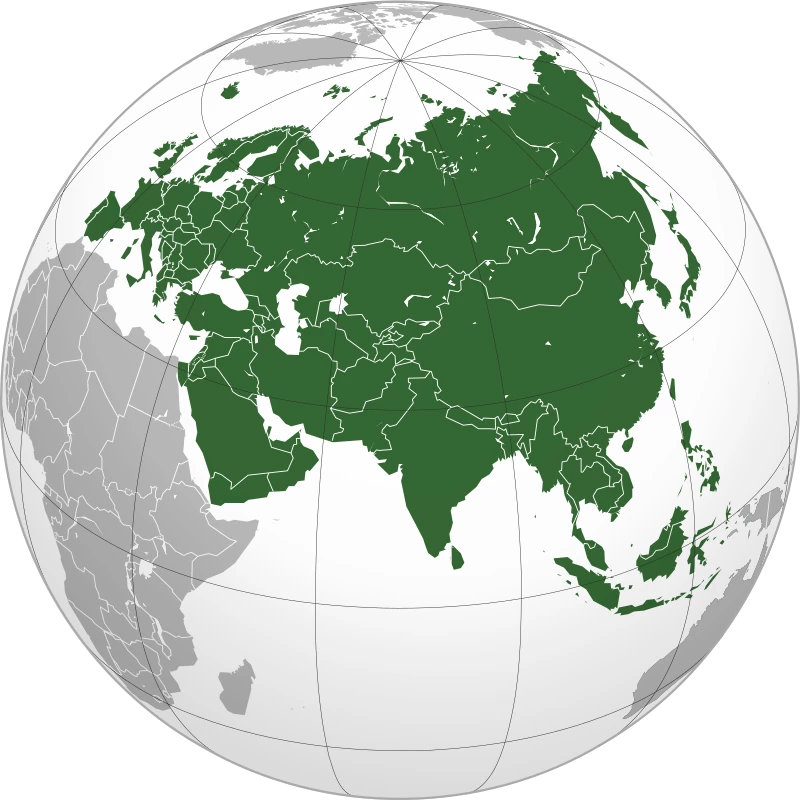
Eurasia
Fourth, as costs begin to mount in terms of a looming recession and higher inflation, more thoughtful European leaders are waking up to the uncomfortable dilemma of a protracted war in Europe with no end in sight, and a helpless situation in which final decision-making on their own security is already passed to Washington DC. In effect, in defending the sovereignty of a non-Nato member (Ukraine), their own sovereignty to decide on whether to end the war lies outside of European members.
Fifth, the biggest economic loser is Germany as the largest manufacturing and surplus economy in Europe, since the war has cut off her cheap sources of energy as well as loss of markets to Russia and potentially to China from sanctions. Germany’s decision to re-arm at the same time wakens fear in other Europeans who remember how the whole project of the European Union was to bind Germany into peaceful co-existence.
The Ukraine war, therefore, is a war fought inside Eurasia that will decide whether Eurasia itself can ever decide its own security. The whole purpose of the European Union project was to bind Europe through economic interests to avoid the catastrophes of two world wars. Eurasia as a continental mass has enough food and energy for all, except that the resources are not divided equally. Geographical space becomes complicated by emotional space, as neighbours fight over religion, race or tribal reasons that often defy logic. Continental Europeans remember how Britain as an offshore island kept playing divide and rule so that no European power could challenge the British empire. History seems to be rhyming when America is playing the same game.
All these raise the question of whether any nation-state can be totally sovereign in an interrelated world. All members of the International Monetary Fund (IMF) know that when they get into trouble financially, they have to cede sovereign decisions to the IMF in order to get financial aid. Small countries that have powerful neighbours know that they cannot act against the neighbour’s interests without costs. Realistically, no country is totally independent in sovereignty in an overcrowded and interdependent world.
Ukraine’s fate today is to fight to the last man. When that happens, there will be no principle to defend. If we take that logic to nuclear war, what is the moral principle to defend one’s sovereignty when everything disappears in all-out nuclear annihilation?
As long as emotions run high, the war will continue. Cold logic for peace can only come when everyone pays the ultimate price for the foolishness of senseless slaughter.
Vietnam has been named among the top 10 countries in the world with the best food, according to readers of the Canadian magazine The Travel.
Having distinctive cuisine with flavours that are particularly popular internationally, Vietnam has been ranked fifth on the list.
“Seafood is a popular food in Vietnam as the country contains so many fishing villages, but Vietnam is not all about seafood,” the magazine wrote.
“In fact, the wide variety of food in the country will leave visitors perplexed.”
It recommends tourists try pho the country’s iconic noodle soup with either beef or chicken.
Pho is made and served across the country though it originated in Hanoi and was taken to the south, where other distinct touches were added.
The magazine also suggests visitors should sample snacks such as spring rolls and banh mi, a type of Vietnamese baguette.
“There are different types of rice dishes to also try out and while some consist of chicken, others consist of beef or pork,” it added.
Thailand and the Philippines are the other two Southeast Asian nations on the list of the best food as chosen by readers of The Travel.
The US, meanwhile, tops the list, which also mentions Germany, Italy, Greece, Mexico, Spain and India.
Vietnamese cuisine has been praised by many international chefs and prestigious food magazines in recent years.
The oldest and largest French TV channel – TF1 – broadcast a report on the success of world cuisine in France over the past 10 years, in which Vietnamese cuisine was honoured as one of the three most loved by the French. The report was screened during the channel’s prime time on February 7.
According to TF1, there are about 3,000 products from 24 different countries being sold in retail distribution systems throughout France. Among them, Vietnamese traditional fried spring rolls ranked third in the list of foreign cuisines most loved by French consumers. The US peanut butter, popcorn and macaroni came in second while Japanese sushi was the most popular.
Vietnam was also honoured as Asia’s Leading Culinary Destination at the prestigious World Travel Awards (WTA) 2020. That was the second year in a row that Vietnam ranks first in Asia in the category.
Sugar shortages make sweet festivities bland in Malaysia
FRIDAY, OCTOBER 21, 2022
With Deepavali around the corner, those celebrating fear there could be sugar shortages. Some families in Malaysia’s Klang Valley said there were fewer sugar packets at grocery stores and that the ones still there appeared to have less sugar in them.
Housewife A Latha, 46, said she noticed there was less sugar in the packets she bought from her neighbourhood sundry store.
“Sugar is essential in making traditional Indian sweets or desserts such as laddu, jalebi and halva which are a must-have during our family’s Deepavali celebrations.
“Any shortages would definitely put a damper on this,” she said.
Another housewife, who wanted to be known only as Visithra, 42, said she was also facing a similar problem.
“On my usual trips to the local grocery store, I noticed sugar stocks were growing more scarce, besides there was less amount of sugar in the remaining packets sold there.
“Due to this, I have had to fork out more money to buy more sugar packets [when they are available],” she said.
“Given that I am also currently making Deepavali cookies for both extended family members and close relatives this year, the amount of money spent on sugar alone [for the cookies] has also been quite substantial compared to before,” she said.
Sundry shop operator Mohammad Faiz Yahaya said sugar supplies were few and far between.
“I am really not sure why this is happening. The supply takes longer to arrive now compared to before.
“Previously, it would take between two and three days for the ordered stock to arrive, but now it can go up to two weeks or more, with customers also complaining about it,” he said.
He also said he had checked with his usual suppliers but was informed that they too were running low.
“The supplier mentioned there were many orders [for sugar] coming in, but they were unable to cope as they did not have stock as well,” he said.
Consumers Association of Penang (CAP) president Mohideen Abdul Kader said some sundry shops in Penang were also experiencing a shortage in sugar supplies.
However, it was for a different reason.
Sundry shops here mentioned how restaurants and bigger industry players were buying the smaller sugar packets, which are cheaper, in bulk.
“The smaller sugar packets are usually purchased by households, and when bigger establishments purchase these stocks, it leaves consumers with a lower supply of items,” he said.
He also proposed that the government come up with a tiered system, stating that only households could buy the smaller packets, whereas restaurants would have to go for the large ones.
“If industries and big restaurants that rely heavily on sugar continue to purchase the smaller and cheaper packets, a more acute shortage could occur in the near future.
“This may even see the price of sugar going up, with stock hoarding potentially taking place,” he said.
Filipino ‘anti-cheating’ helmets go viral as students take inspiration from Thailand
FRIDAY, OCTOBER 21, 2022
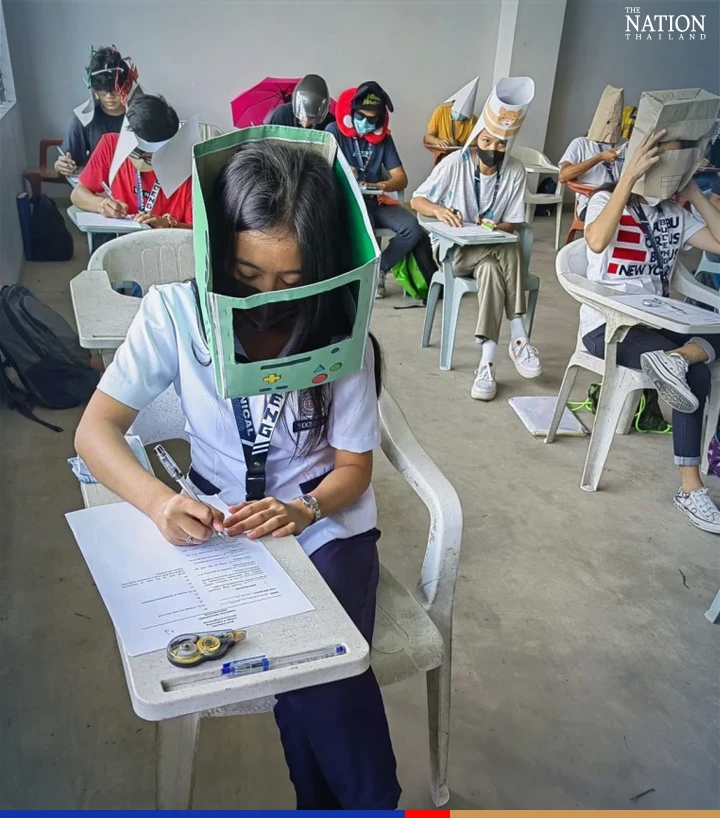
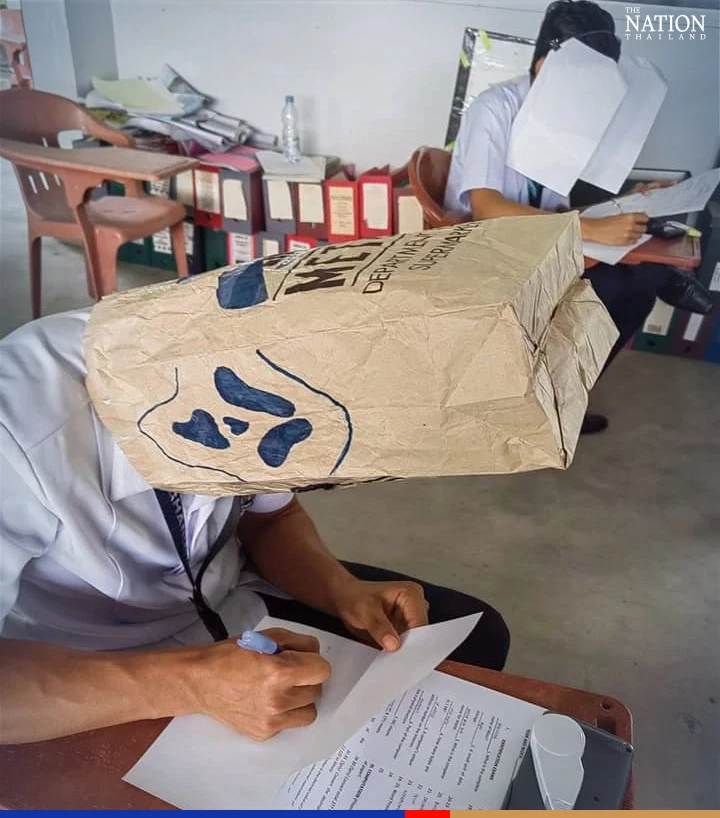
“Anti-cheating headgear” designed by Filipino students for their exams has gone viral as social media users marvel at their ingenuity.
Prof Mary Joy Mandane-Ortiz from Bicol University College of Engineering asked the students to prepare protective headwear for the mid-term exams on Monday and Tuesday.
She gave full clearance for students to go wild, and her students duly complied with some outrageous concoctions. Photos of the kids wearing their outlandish designs as they took the exam went viral on Filipino and international social media.
Each student sported a unique contraption displaying creativity and humour in designs made from leftover materials including a motorcycle helmet, egg carton, and clothes hanger complete with a drawing of underpants.
“I really love and [I’m] proud of my students because their engineering midterm exams can be pressuring and stressful, yet they managed to add some colour and fun. Thank you very much, students. You make me proud,” Prof Mandane-Ortiz wrote on Facebook.
The professor took inspiration from a Thai university that required students to wear bizarre horse blinker-like gear to keep eyes from wandering, according to Coconuts website on Tuesday.
Earlier, photos of Kasetsart University Faculty of Agro-Industry students wearing anti-cheating headgear made of paper sheets went viral. The photos earned heavy criticism from Thai netizens citizens and the idea was quickly scrapped despite having been originally proposed by the students.
British Prime Minister Liz Truss announced on Thursday she would step down. Given the divisions in the ruling Conservative Party, there is no obvious candidate and her replacement would face a country likely heading into a recession. Leading names are below:
RISHI SUNAK
Britain’s former finance minister was the most popular candidate among Conservative lawmakers at Westminster but, after getting through to a run-off against Truss, he lost out in a vote involving some 170,000 party members who make the final decision.
Many members were angry when Sunak quit in July, helping to trigger a rebellion that eventually brought down Johnson. They also ignored his warning that markets could lose confidence in Britain if Truss delivered her unfunded tax cuts.
Betting exchange Betfair puts Sunak as the favourite to replace Truss, but those lawmakers who remain loyal to Johnson would likely oppose that move.
JEREMY HUNT
With Truss’s economic programme collapsing, the prime minister fired her finance minister and turned to Hunt, a former health and foreign minister, to put things right.
A series of confident performances on television and in the House of Commons, as he ripped up Truss’s economic manifesto, have already led to some Conservative lawmakers referring to Hunt as the “real prime minister”.
He has insisted he does not want the top job, despite entering two previous races to become prime minister, including in 2019 when he lost out in the final round to Johnson. Hunt does not have the obvious support of a large group of lawmakers in parliament.
BEN WALLACE
Britain’s defence secretary is one of the few ministers to have emerged from recent political turmoil with his credibility enhanced. Wallace, a former soldier, was defence minister for both Johnson and Truss, leading Britain’s response to Russia’s invasion of Ukraine.
Popular with party members, he surprised many earlier this year when he said he wouldn’t run for the leadership, saying he wanted to focus on his current job. He told the Times newspaper this week that he still wanted to stay as defence secretary.
PENNY MORDAUNT
A former defence secretary, Mordaunt was a passionate supporter of leaving the EU who only just missed out on the final two-place run off in the recent leadership challenge.
Mordaunt won plaudits for her performance in parliament on Monday, when she defended the government even as it reversed most of its policies.
One lawmaker has described Mordaunt as having “broad appeal”, referring to her ability to find friends in the various tribes of the party.
BORIS JOHNSON
Former prime minister Boris Johnson, a journalist, has loomed large over British politics ever since he became London Mayor in 2008. After causing trouble for leaders such as David Cameron and Theresa May, he finally became prime minister in 2019 and went on to win a landslide election victory.
Johnson was the face of the Brexit vote and won votes in parts of the country that had never voted Conservative before. But he was forced out by a string of scandals.
Some closest to him say at the moment he is more interested in making money on the speech circuit than returning to frontline politics.
Liz Truss resigns after six weeks as UK prime minister
THURSDAY, OCTOBER 20, 2022
Liz Truss said on Thursday she would resign as British prime minister, brought down just six weeks into the job by an economic programme that shattered investor confidence and enraged much of her Conservative Party.
Speaking outside the door of her Number 10 Downing Street office, Truss accepted that she had lost the faith of her party and said she would step down next week, becoming the shortest-serving prime minister in British history.
Truss, who had said on Wednesday she was a “fighter and not a quitter”, told the mass of journalists gathered in Downing Street that she realised she could no longer deliver on the promises that won her the Conservative leadership.
“I have therefore spoken to His Majesty the King to notify him that I am resigning as leader of the Conservative Party,” said Truss, who was supported only by her husband with her aides and loyal ministers noticeably absent.
Britons in the midlands welcomed the news that Liz Truss would resign as British prime minister.
Those in Knutsford, part of the traditionally conservative constituency of Tatton, were in favour of Truss’s resignation, though were at a loss as to who was fit to replace her. Tatton has delivered a conservative MP in all but one election since 1983.




 Eurasia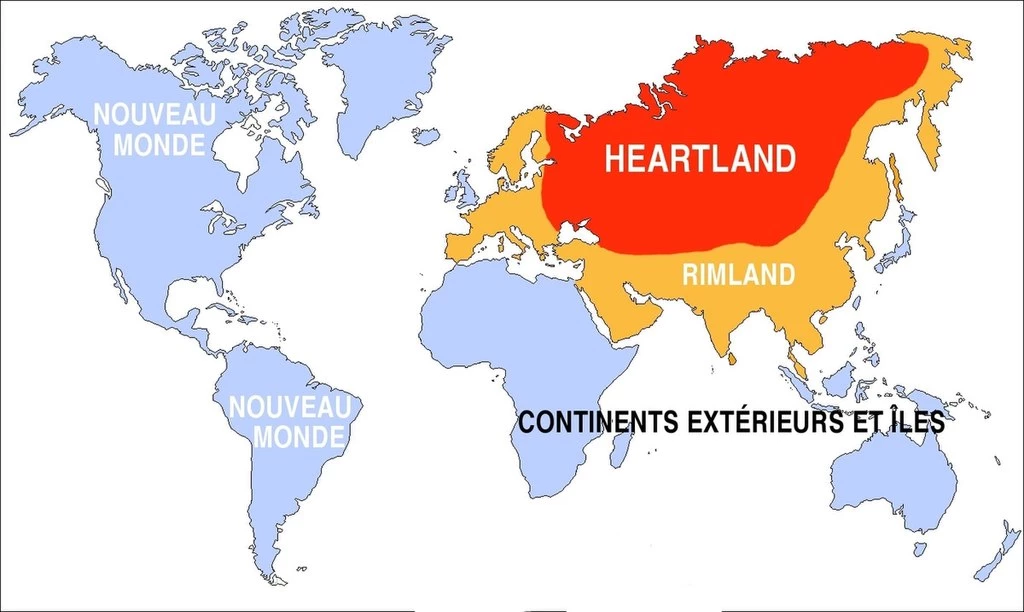







 SootinClaimon.Com