No confirmation from White House on Harris attending Apec Summit instead of Biden

#SootinClaimon.Com : ขอบคุณแหล่งข้อมูล : หนังสือพิมพ์ The Nation.

https://www.nationthailand.com/world/asia-pacific/40021231

No confirmation from White House on Harris attending Apec Summit instead of Biden

No confirmation from White House on Harris attending Apec Summit instead of Biden

THURSDAY, OCTOBER 20, 2022

The White House has refused to confirm whether US Vice President Kamala Harris will be attending the Apec Summit in Bangkok next month in place of President Joe Biden, as had been reported earlier by Thai media.

White House press secretary Karine Jean-Pierre said in Washington on Wednesday [today Thailand time] that, “We don’t have any travel announcement … at this time.”

Responding to a media question during her press briefing, she dismissed criticism that the US appeared to view the Asia-Pacific Economic Cooperation forum as “not important enough”.

“We consider the forum important. That is why the United States will be the host of the Apec in 2023. So clearly, that is important to the president; that is important to us,” the White House spokesperson said.

“It is a top priority for the Biden-Harris administration to serve as a strong, reliable partner to Apec economies and identify common ways to replenish — to unleash economic opportunity, prosperity, and growth for us all,” she added.

The US Embassy in Bangkok, when approached for an answer on the matter, said on Thursday (Oct 20) that the White House has not made any official announcement regarding Harris taking Biden’s place at the Apec Summit.

Thailand will be hosting this year’s Apec Summit at Queen Sirikit National Convention Centre on November 18-19.

It was reported earlier that Biden would be at the White House on November 19 to attend the wedding reception of his eldest granddaughter Naomi Biden.

In a related development, Thai Foreign Ministry spokesman Tanee Sangrat said on Wednesday that Thailand had already received written confirmation from six economies to attend the summit — Chile, Hong Kong, Taiwan, New Zealand, Peru and Singapore.

“Three countries have said their leaders would attend the summit, while two will send representatives to attend the meeting,” Tanee said, adding that Thailand is currently waiting for a response from four nations.

According to him, leaders from three countries will attend the Apec Summit as observers and special guests of the chair.

A complete list of Apec economies attending the summit will be announced during the October 31 meeting of the national committee tasked with preparation, to be chaired by Prime Minister Prayut Chan-o-cha, according to the Foreign Ministry’s spokesman.

Growing of Prachak trees emerging as an alternative to rice in some Cambodian villages

#SootinClaimon.Com : ขอบคุณแหล่งข้อมูล : หนังสือพิมพ์ The Nation.

https://www.nationthailand.com/pr-news/world/asean/40021232

Growing of Prachak trees emerging as an alternative to rice in some Cambodian villages

Growing of Prachak trees emerging as an alternative to rice in some Cambodian villages

THURSDAY, OCTOBER 20, 2022

Many Cambodian farmers in the Svay Rieng province have given up on rice to plant Prachak trees, so they can refine their oil and earn more.

In the past, this plant was unpopular, and many were felled by farmers to create more land for other crops.

Su Kea, who refines oil in Samlei Khang Tbong village, Kampong Ro district, said until a decade ago he had never been interested in the plant, and ironically had cut many of them down and thrown them away.

“Now everyone has realised that they are useful. Almost half of the villagers here have given up other crops and are planting these trees, as they see the profits that some people have made,” he added.

He explained that the business was now declining as more and more people were producing oil.

When compared to traditional rice farming, oil refining remains a better source of income. Rice generally yields about US$1,000 per hectare, whereas Prachak oil can generate up to twice that, he added.

Prachak is most likely a melaleuca tree, possibly Melaleuca cajuputi.

“People are planting more and more of the trees – they used to buy them cheaply from other farmers, but now they are considered valuable. Farmers who only have half a hectare of land cannot grow enough trees to refine enough oil, so they have to pay others for trees. Most people are now planting two or three hectares at a time, which gives a good yield.

“Rice is worth less when it reaches the market, and has more costs – we have to pay to get the fields ploughed, for example,” he said.

In the past, brokers were prepared to pay 150,000 riel (1,380) per kilo of oil. Lately, that sum has declined to 75,000.

Like the people of Samlei Khang Tbong, the people of Samlei Khang Choeung village are also switching to oil production. Local farmer Sok Savon said that one driving factor behind the change was the high cost of fertiliser which rice production requires.

He echoed Kea’s assertion that up to $2,000 per hectare could still be earned if the villagers were prepared to refine their own oil. If they were not, they could sell a hectare of plants for up to $250. The trees can be ready for harvesting in as little as six months. Only older plants should be used, as they produced a higher quality of oil.

He said that his family has three hectares of farmland, all of which was planted with Prachak.

The oil is used as liniment or sometimes mixed with other medicines. It is an effective coagulant and is used to stop cuts from bleeding, and is also excellent for sprains, he added.

“Thanks to the oil, we can support our families. As far as I am aware, almost all of the villagers are considering giving up rice production,” he said.

The plants are as simple to grow as cassava, with pieces of root used to start new plants. If farmers want to accelerate their growth, they can use fertiliser, much as they do with rice, he added.

Phin Chantha, chief of Samlei commune, said that more than 200 families in the two villages are refining the oil. The profitability of the product has led to increased prices for farmland in the area.

Previously, villagers could sell farmland for just $4,000 per hectare, but now they would not accept offers as high as $10,000, he added.

“They have much better lives than they did when they were growing rice. In the past, many people sold their land and gave up farming. Now, families are staying,” he said.

The Phnom Penh Post

Asia News Network

Japanese bakery offers a delicious bargain and a mystery through vending machine

#SootinClaimon.Com : ขอบคุณแหล่งข้อมูล : หนังสือพิมพ์ The Nation.

https://www.nationthailand.com/world/asia-pacific/40021221

Japanese bakery offers a delicious bargain and a mystery through vending machine

Japanese bakery offers a delicious bargain and a mystery through vending machine

THURSDAY, OCTOBER 20, 2022

A confectionary shop in Matsue, the capital city of Shimane prefecture, in Japan’s Chugoku region, has found a novel way of disposing of unsold cakes to avoid wastage.

The confectionery shop, Matsue Claude, has set up a vending machine for customers to buy up the bakery’s unsold cakes.

Customers select cakes that are already boxed, so they cannot see what they are purchasing. The idea of selling the shop’s unsold cakes this way has not only cut back on food loss but also encouraged a work-style reform.

The machine was already set up near the entrance of Matsue Claude to sell cookies and other baked goods. However, on August 15 the shop started selling fresh cakes — each of which costs about 500 yen (127 baht) for two slices — only on days when there were cakes left unsold.

The shop started referring to the selling method as “SDGs gacha for imperfect cakes”, which is named after the UN Sustainable Development Goals (SDGs). “Gacha” comes from the gachapon vending machines that dispense toys in capsules. Customers do not know what they have bought until they open it.

As dozens lined up in front of the machine, some customers said they were delighted by the bargain or excited by the mystery of it. It is uncommon to be able to purchase fresh cakes from a vending machine, but it has grown in popularity, and the shop no longer has to throw away unsold cakes.

“I was happy to find a cheesecake I wanted inside the box,” said a 42-year-old woman, who stood in line with her junior high school-aged daughter for almost 20 minutes. “Not only is it inexpensive, it’s also delicious. It makes me want to line up again.”

Since April, Matsue Claude has been closing an hour earlier at 6pm and increased the number of days the shop is closed from four days a month to nine. Initially, the bakery was worried that more closed days would lead to a loss of customers, but the vending machine has helped attract customers to maintain its overall sales.

“With more days off, our employees are more motivated to work,” said the shop’s managing director Risa Ishikawa, 46. “I’m grateful to know that we are supported by the community.”

The Japan News

Asia News Network

As seas and rivers rise, Bangladesh farmers revive old practice of floating raft farms

#SootinClaimon.Com : ขอบคุณแหล่งข้อมูล : หนังสือพิมพ์ The Nation.

https://www.nationthailand.com/world/asia-pacific/40021219

As seas and rivers rise, Bangladesh farmers revive old practice of floating raft farms

As seas and rivers rise, Bangladesh farmers revive old practice of floating raft farms

THURSDAY, OCTOBER 20, 2022

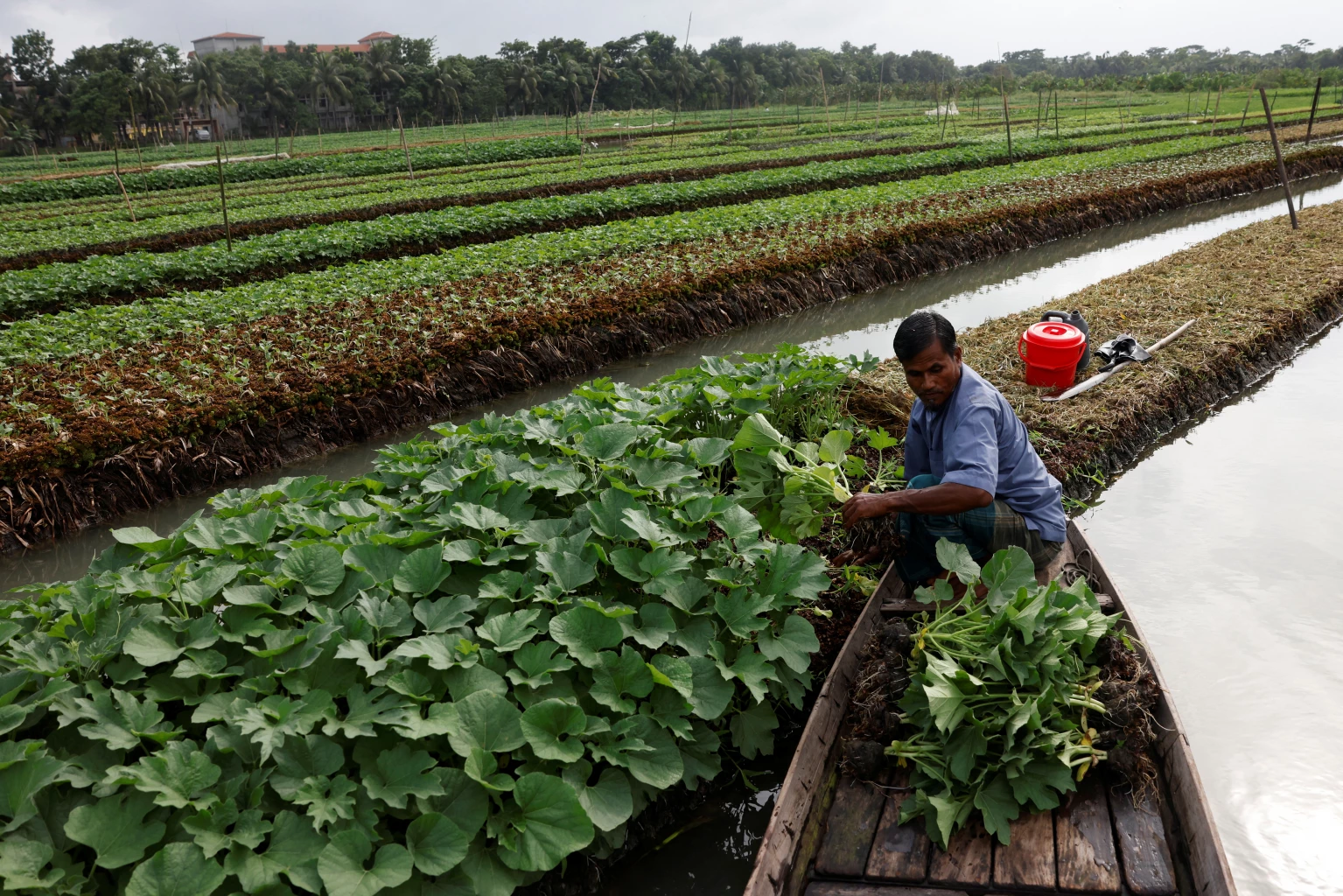
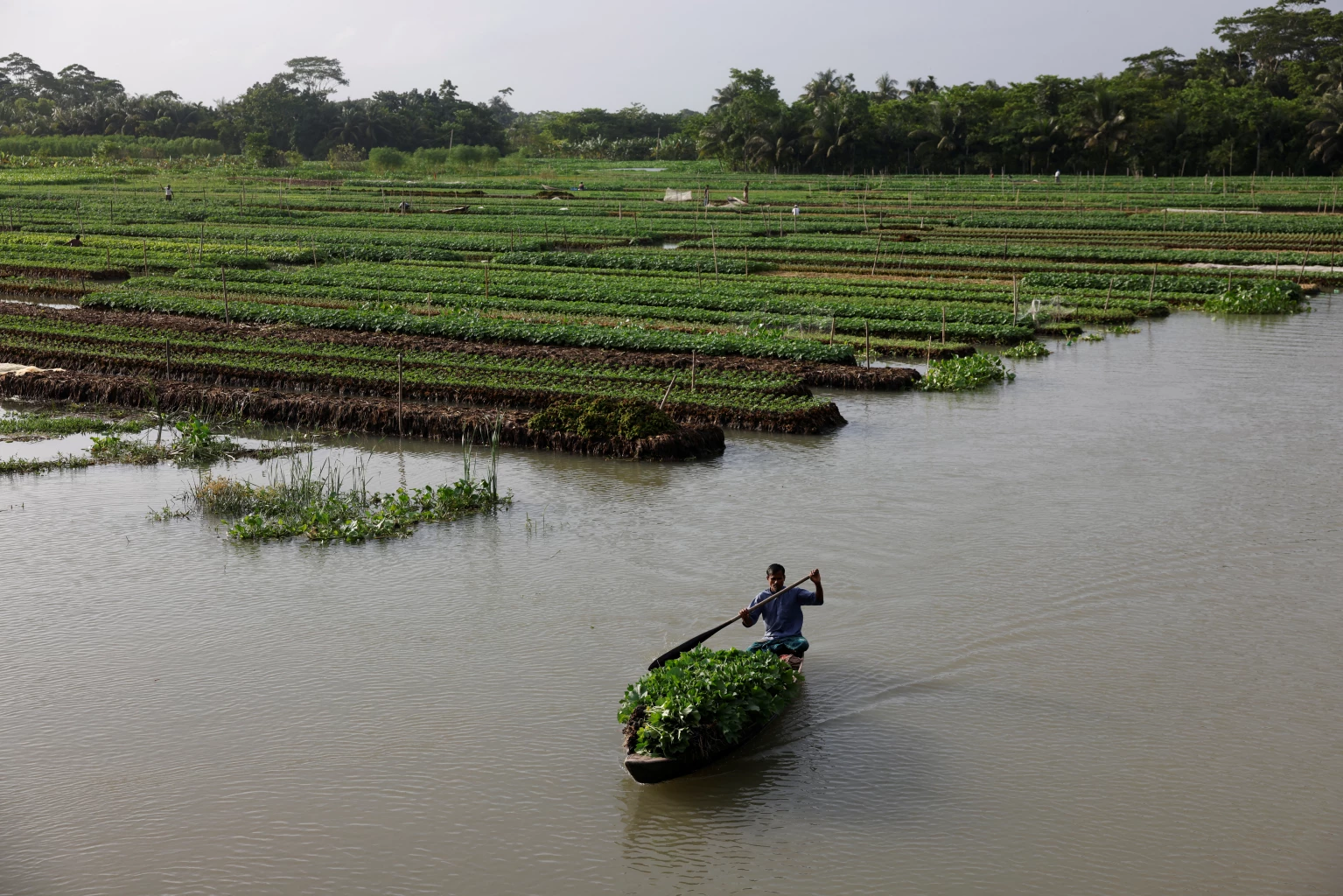
Mohammad Mostafa, a farmer in the low-lying deltas of southwestern Bangladesh, has revived his forefathers’ farming practice of growing crops on floating rafts as rising seas and storm floods threaten more and more farmland.

With prolonged waterlogging posing an increasing threat to families growing their own food, more have turned to use rafts as secure platforms to start seedlings and grow vegetables and fruit, such as cucumbersradishespumpkinspapayas, and tomatoes.

The rafts, woven from the stems of invasive hyacinths, are providing a lifeline for families during the increasingly extreme monsoon seasons when dry land can be especially scarce.

“When I was a boy, this area was dry land, we used to play in the fields and grow rice,” said 42-year-old Mostafa, as he planted balls of seedlings on floating beds.

“But with the water levels rising in both the sea and river, water started to accumulate here, so we can’t cultivate crops anymore. I have been growing seedlings on floating beds for the past five years, growing seedlings of different vegetables,” said Mostafa, the sole breadwinner of his six-member family.

The 200-year-old technique was initially adopted by farmers in the region during the flooding season, which used to last about five months each year. But nowadays the area remains underwater for 8-10 months and more land is being flooded.

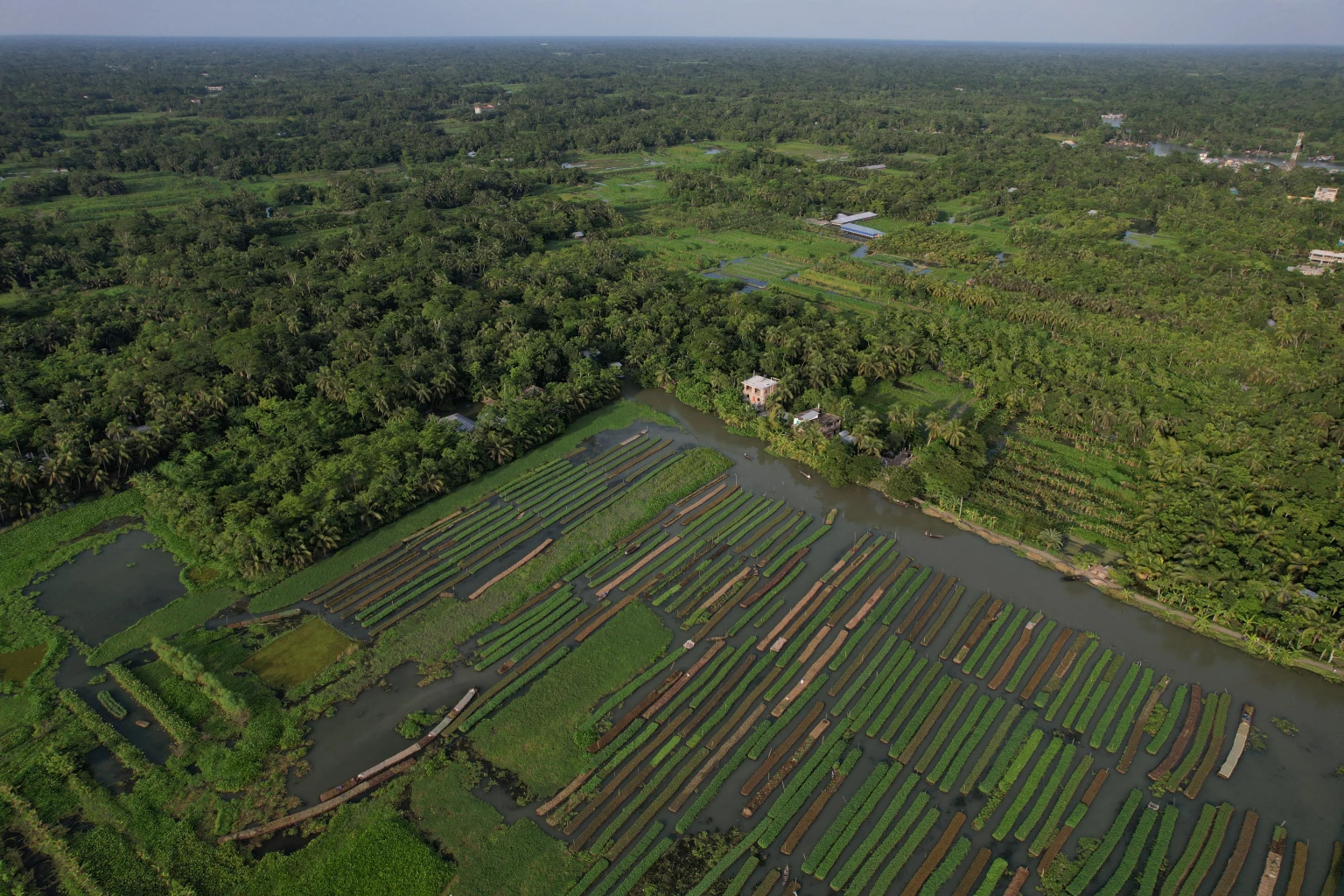
Floating farms now cover a total 120 hectares (296.53 acres), up from 80 hectares (197.68 acres) five years ago, farm officials in Nazirpur said.

The approach, now practised by some 6,000 subsistence farmers, having risen from around 4,500 five years ago, across the swampy southwest, may prove crucial as climate change sends sea levels higher and makes the monsoons more erratic. More than a quarter of Bangladesh’s population of 165 million live in the coastal zone.

As seas and rivers rise, Bangladesh farmers revive old practice of floating raft farms

Low-lying Bangladesh is considered among the most climate-vulnerable countries, with the impact of rising waters compounded by storms, floods, and erosion.

The climate impact is being compounded by natural factors, such as tectonic shifts that are causing the land beneath to sink, and upstream dams holding back silt that would replenish the eroding delta.

Between 2000 and 2019, Bangladesh was ranked seventh in a list of countries hit hardest by climate change, according to the Global Climate Risk Index 2021 produced by non-profit Germanwatch.

Bangladesh is also frequently hit by cyclones that barrel up the Bay of Bengal, while global warming makes rainfall patterns increasingly erratic.

Rising sea levels and coastal erosion could cause Bangladesh to lose 17 per cent of its land surface and 30 per cent of food production by 2050, according to a 2019 International Monetary Fund report.

Farmer Mostafa says thanks to his seedling sales, he is now able to feed his family without asking for help but the profit margins have been shrinking as costs rise. This year, he spent about 4,500 taka (1,700 baht) for a boatload of water hyacinths weighing about 1.2 tonnes to weave into new rafts for the year. Last year, the cost was just 1,000 taka (360 baht).

The rafts, which take two months to make, are typically around six metres long and one metre wide, but can be several times that length, farmers said. They need to be replaced with new ones after each harvest.

The number of floating farms has increased so much that local authorities say they are now offering support for farmers so they can grow quality seedlings to ensure good yields.

Reuters

Minister Chaiwut attends all-important Asean cybersecurity meet in S’pore

#SootinClaimon.Com : ขอบคุณแหล่งข้อมูล : หนังสือพิมพ์ The Nation.

https://www.nationthailand.com/world/asean/40021213

Minister Chaiwut attends all-important Asean cybersecurity meet in S’pore

Minister Chaiwut attends all-important Asean cybersecurity meet in S’pore

THURSDAY, OCTOBER 20, 2022

Thailand’s Digital Economy and Society Minister Chaiwut Thanakamanusorn attended a crucial Asean cybersecurity meeting in Singapore on Thursday to discuss cooperation in fighting cybercrime.

The 7th Asean Ministerial Conference on Cybersecurity (AMCC) was chaired by Singapore’s Communications and Information Minister Josephine Teo.

On the sidelines of the AMCC, Association of Southeast Asian Nations representatives also held a meeting with senior officials from its dialogue partners – Australia, Canada, China, India, Japan, New Zealand, Russia, the United Kingdom, the United States and the European Union.

Chaiwut told reporters the meeting reaffirmed the importance of the Asean-Japan Cybersecurity Capacity Building Centre (AJCC BC) in Bangkok to provide training for IT personnel and others so they can fight cybercrime.

The AJCC BC was set up to advance the skills of those working on cybersecurity, particularly in government agencies and Asean’s Critical Information Infrastructure, to enhance cybersecurity awareness, strengthen information security and data protection, and promote information sharing.

Its objectives also include the development of a standardised Incident Reporting Framework across the region and the establishment of Asean-CERT, which are in line with the Asean ICT Master Plan 2020 Strategic Thrust 8: Information Security and Assurance.

The AJCC BC was one of the key deliverables of Thailand’s Asean 2019 chairmanship under the theme of “Advancing Partnership for Sustainability”.

Minister Chaiwut attends all-important Asean cybersecurity meet in S’poreDuring Thursday’s meeting, Chaiwut also shared his ministry’s operations to promote knowledge among stakeholders of cybersecurity in Thailand so they can handle cyber threats.

Chaiwut told the meeting that to effectively uphold cybersecurity, state agencies must cooperate with the private sector to raise their guard.

He noted that technology companies play an important role in effective cybersecurity, so the government should define how these firms play a part in tackling cyber threats.

Accompanying Chaiwut to the meeting were National Cyber Security Agency secretary-general AVM Amorn Chomchoei and representatives from the Electronics Transactions Development Agency and the Foreign Ministry.

Chaiwut said the meeting also discussed how to leverage cooperation with the United Nations and other international organisations to maintain effective cybersecurity in the region.

Indonesian medical team probes acute kidney failure that has killed 74 children this year

#SootinClaimon.Com : ขอบคุณแหล่งข้อมูล : หนังสือพิมพ์ The Nation.

https://www.nationthailand.com/pr-news/world/asean/40021196

Indonesian medical team probes acute kidney failure that has killed 74 children this year

Indonesian medical team probes acute kidney failure that has killed 74 children this year

WEDNESDAY, OCTOBER 19, 2022

Indonesia’s Health Ministry has formed a team of medical experts to investigate cases of acute kidney failure of unknown origin in children as cases continue to pop up around the country.

As of Monday, the ministry had recorded at least 189 cases of fatal kidney failure in 20 provinces with 74 fatalities since January.

Ministry spokeswoman Siti Nadia Tarmidzi said that the team would study the origins of the mysterious disease.

“The team comprises epidemiologists, clinical pathologists, officials from the Health Ministry, doctors from the Indonesian Paediatrician Association [IDAI], officials from the Food and Drug Monitoring Agency [BPOM] and the World Health Organization’s [WHO] representatives in Indonesia,” Siti told The Jakarta Post on Monday.

The ministry has found cases of unusual acute kidney failure in the country since January, with cases beginning to show a significant uptick in August. Most of the patients were under the age of five, with no congenital kidney anomalies, chronic kidney diseases, nor major blood or fluid loss prior to their kidney failure.

According to IDAI head Piprim Basarah Yanuarso, almost all patients developed fever, acute respiratory infection or gastrointestinal infections between one and two weeks before their kidney failure.

“Their kidney function worsened quickly and soon they developed either oliguria – abnormally small amounts of urine production – or anuria – failure to produce urine. Both are predictive biomarkers of acute kidney injury,” Piprim said on Friday.

Medicine contamination

Although no definitive cause of acute kidney failure has been found yet, the ministry is looking into the possibility that it might be linked to similar cases found in Gambia.

Nearly 70 children in Gambia died from acute kidney failure after taking paracetamol syrups made by New Delhi-based Maiden Pharmaceuticals Ltd used to treat fever. Investigators from the WHO have found “unacceptable” levels of diethylene glycol and ethylene glycol, which can be toxic, in four products made by the company.

The BPOM said in a statement the syrups were not registered in Indonesia and the use of the two contaminants in any medicinal syrup products had been banned. The agency, however, is investigating the possibility that the two toxic ingredients had contaminated other materials that are used as solvents in other medicines sold in Indonesia.

Sumariyono, director of nursing and medical services at Cipto Mangunkusumo Hospital (RSCM) in Central Jakarta, said on Friday that doctors so far had not found any indications of ethylene glycol intoxication in the 44 patients treated at the hospital.

“But we’re still continuing to investigate all the medications previously taken by the patients,” he said.

Linked to Covid-19?

Epidemiologist Dicky Budiman has said that although it could not be conclusively proven yet, there was a strong possibility that the influx of acute kidney failure in children was linked to previous Covid-19 infections.

“The influx of this mysterious acute kidney failure occurred just months after reports of more than a thousand cases of severe acute hepatitis of unknown aetiology in children across the globe,” Dicky said recently. “Considering that long Covid has been linked to kidney damage and liver diseases, there is a strong possibility that it might be caused by previous infections of the SARS-CoV-2 virus.”

Dicky said there was a possibility that the Covid-19 virus could attack the lymphatic system and impair immune function, causing one’s body to be more prone to infections. Children under the age of six are especially vulnerable to this phenomenon, as they have not yet been eligible for Covid-19 vaccines.

IDAI nephrologist Eka Laksmi Hidayati said that doctors found hyperinflammation of various organs in patients with acute kidney injury, which was very similar to the multisystem inflammatory syndrome in children (MIS-C). MIS-C is a rare but serious condition associated with Covid-19 in which different body parts – for instance, heart, lungs or kidneys – become inflamed.

“However, after further inspection, we found different viruses and bacteria in patients. Usually, during an outbreak, we’ll find the same virus or bacteria in all patients. So we can’t positively conclude that it is linked to long Covid,” she said.

Based on RSCM data, only 58 per cent of patients treated for acute kidney injury had antibodies against Covid-19, indicating that they had previously contracted the disease.

Nina A. Loasana

The Jakarta Post

Asia News Network

Malaysia foils attempt to smuggle illegal immigrants across Thailand border

#SootinClaimon.Com : ขอบคุณแหล่งข้อมูล : หนังสือพิมพ์ The Nation.

https://www.nationthailand.com/world/asean/40021179

Malaysia foils attempt to smuggle illegal immigrants across Thailand border

Malaysia foils attempt to smuggle illegal immigrants across Thailand border

WEDNESDAY, OCTOBER 19, 2022

A human trafficking syndicate believed to be smuggling illegal immigrants from Thailand has been crippled by Malaysia’s immigration department with the arrest of a Cambodian man.

Department director-general Khairul Dzaimee Daud said the 47-year-old man was arrested while bringing five Myanmar nationals to Kuala Lumpur.

“They were detained following a special operation that was conducted at around 7pm on Sunday at the Shah Alam Bus Terminal.

“Our personnel from the Intelligence and Special Operations Division received information that an agent was bringing in five illegal immigrants.

“The three women and two men, aged between 18 and 44, were believed to have entered Malaysia from Thailand through a smugglers’ trail,” he said in a statement yesterday.

Khairul added that the six individuals were detained as soon as they came out of the bus terminal.

“Our checks showed that the Myanmar nationals did not have any documents and that they entered the country on Saturday through a non-gazetted road.

“The Cambodian man entered the country in July this year using a social visit pass,” he said, adding that the syndicate was believed to have started operations as soon as the borders reopened.

He also said checks revealed that an agent across the border would charge each illegal immigrant between 5,000 (40,000 baht) and 6,000 (48,000 baht) ringgit to make arrangements to send them across the border.

“The agent in Malaysia would then be paid 300 to 500 ringgit to smuggle them across the border.

“The six have been sent to the Immigration Detention Depot in Putrajaya while we investigate the case under the Anti-Trafficking in Persons and Anti-Smuggling of Migrants Act and Immigration Act,” he said.

The Star

Asia News Network

A museum in Yokohama offers insights into history of Western confectionery in Japan

#SootinClaimon.Com : ขอบคุณแหล่งข้อมูล : หนังสือพิมพ์ The Nation.

https://www.nationthailand.com/pr-news/world/asia-pacific/40021172

A museum in Yokohama offers insights into history of Western confectionery in Japan

A museum in Yokohama offers insights into history of Western confectionery in Japan

WEDNESDAY, OCTOBER 19, 2022

Chocolate bars, caramels, marshmallows — these Western confections are familiar today, but were a rarity for ordinary Japanese people during the Meiji era (1868-1912). Morinaga & Co, a company established at that time, manufactured and spread these products across the nation.

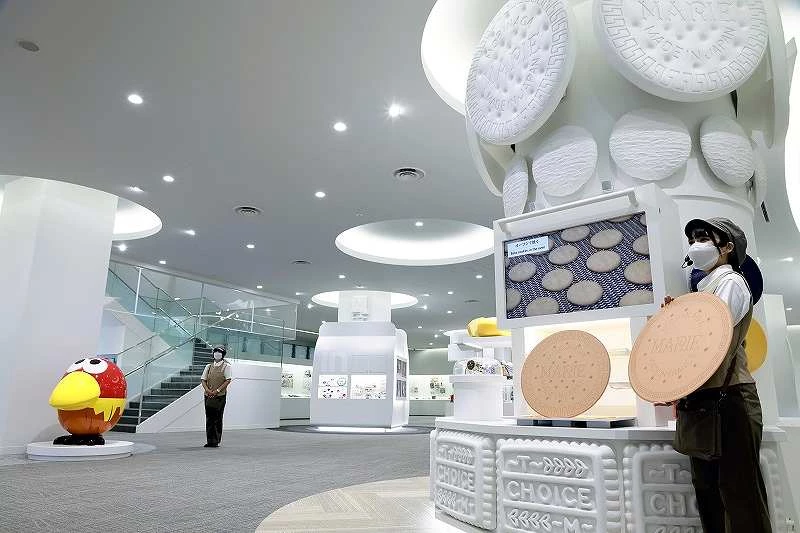
The Morinaga Angel Museum Morium in Tsurumi Ward, Yokohama, explains the history of the company as one of the pioneers in the industry, along with the manufacturing methods of some of their creations.

The founder, Taichiro Morinaga (1865-1937), first experienced Western confectionery when visiting the United States on unrelated business.

He received training at a confectionery factory there, and upon returning to Japan in 1899, set up his own factory with a floor area of only two tsubo (about 6.6 square metres) in Tokyo.

A section of the museum focuses on the company’s early years, with a small model of a travelling vending stall used to sell the confectioneries, which did not sell well in the beginning.

This section displays a package of milk caramel in 1914, an advertising poster, and a package of the first milk chocolate made in Japan. Museum staff provide explanations on the displays.

Another must-see display is the Omocha no Kanzume (a can of toys), a free novelty product that made its debut in the late 1960s as a giveaway for customers who bought Morinaga chocoball products. As it was featured in a TV commercial, it was coveted by many children, but only a small number of winners were able to get it.

A museum in Yokohama offers insights into history of Western confectionery in Japan

Visitors to the museum can see many variations of Omocha no Kanzume that have changed over time.

But only the packages are on display.

“Even our president does not know what’s inside. It’s a treat only for people who get it,” company spokesperson Kazuyo Tamura said with a smile.

There is also a section of the museum explaining the manufacturing process, with videos to help explain.

The attractive crispy texture of the Choco Monaka Jumbo, an ice-cream product featuring thin chocolate sheets and monaka wafers, has always intrigued many people.

“The secret lies in our chocolate coating technique,” museum director Yoko Nakajima said. Visitors can learn about it from an explanatory video.

“I hope many people will learn about the special techniques and innovations that we have been developing and pursuing for many years,” Nakajima said.

The museum was built in 2019 to mark the 120th anniversary of the company and opened in January this year.

The Japan Times

Asia News Network

The emergence of the new super-wealthy global elite

#SootinClaimon.Com : ขอบคุณแหล่งข้อมูล : หนังสือพิมพ์ The Nation.

https://www.nationthailand.com/pr-news/world/40021161

The emergence of the new super-wealthy global elite

The emergence of the new super-wealthy global elite

WEDNESDAY, OCTOBER 19, 2022

It’s an age-old question: How much money do you need to be considered super-wealthy? A new landmark report on the rise of the centi-millionaire reveals that although a handful of the world’s billionaires, such as Elon Musk, Mark Zuckerberg, Jeff Bezos, Roman Abramovich and Bill Gates dominate the news headlines, their wealth cohort is outnumbered nearly 10-to-1 by a fast-growing global elite of highly influential super-wealthy movers and shakers who boast US$100 million or more in investible assets.

The first global study of the world’s 25,490 centi-millionaires pulls back the curtain on a growing and powerful class of super-rich tech titans, financiers, multinational CEOs, and heirs whose ranks have swelled amid a period of relative global prosperity and market gains — more than doubling in number over the past 20 years — and whose capital accumulation has been dramatically accelerated by the economically and socially disruptive effects of technology and the recent Covid pandemic.

The Centi-Millionaire Report released by international investment migration advisory firm Henley & Partners points out that in the late 1990s, US$ 30 million was considered the definition of ‘super wealthy’ but asset prices have risen significantly since then, making US$ 100 million the new benchmark.

The USA is home to an astonishing 38% (9,730) of global centi-millionaires, despite constituting only 4% of the world’s total population. The big emerging markets of China and India follow in 2nd and 3rd place, with 2,021 and 1,132 centi-millionaires, respectively.

They rank significantly higher than the main European markets, with the UK in 4th place (with 968 centi-millionaires) followed closely by Germany in 5th place (with 966). Switzerland (808), Japan (765), Canada (541), Australia (463), and finally Russia (435) make up the rest of the top 10 countries for centi-millionaires.

According to the report, there appears to be no set path to attaining centi-millionaire status but there are some notable generational differences. While a growing number of younger entrepreneurs who founded successful tech companies are newcomers to the club, Baby Boomers still tend to dominate the centi-millionaire circle despite many now cashing in their stock options and selling their businesses.

As Misha Glenny, financial journalist, author, and contributor to The Centi-Millionaire Report, points out, unsurprisingly, white males over the age of 55 from the US and Europe make up the majority of the cohort, but these demographics are shifting.

“At around 57%, the growth of centi-millionaires in Asia will be twice that of Europe and the US over the next decade. Concentrated primarily in China and India, the centi-millionaires in these countries are set to eclipse their European and American peers.”

The fastest growing market for centi-millionaires over the next decade is forecast to be Vietnam, with an astonishing 95% growth rate predicted for this emerging Asian manufacturing hub.

India is next in line with an anticipated 80% growth rate in individuals worth over US$ 100 million by 2032.

Mauritius has recently emerged as a hot spot for migrating centi-millionaires, with growth of 75% predicted for this business-friendly African island nation.

Three other countries on the continent make it into the top league of fastest growing centi-millionaire markets ­in the next decade — Rwanda (70%), Uganda (65%), and Kenya (55%) ­­— with New Zealand (72%) and Australia (60%) also forecast to enjoy exceptional growth.

Commenting in the report, author, financial writer, and global investment expert Jeff Opdyke says a basic tenet of wealth preservation in the 21st century, regardless of wallet size, is diversifying away from the risk of having most or all of one’s assets exposed to a single currency, a single government, and a single legal, taxation, and financial system.

“In an era where currencies are burdened by the debts and economic weaknesses of the countries they represent, it doesn’t take much to undermine the status quo. Just look at the British pound. In the span of less than two months, it lost nearly 30% of its value relative to the dollar. That’s a major Western currency. The same can easily happen to the dollar.”

South Korea’s Kakao outage: What happens when a country relies on one app?

#SootinClaimon.Com : ขอบคุณแหล่งข้อมูล : หนังสือพิมพ์ The Nation.

https://www.nationthailand.com/world/asia-pacific/40021151

South Korea’s Kakao outage: What happens when a country relies on one app?

South Korea’s Kakao outage: What happens when a country relies on one app?

TUESDAY, OCTOBER 18, 2022

South Korean tech giant Kakao said most of its services have been restored following an extended outage that began Saturday. But as the country suffered a digital blackout for many hours, the dominance of this “super app” is being called into question.

Launched in 2010 as a messaging app, KakaoTalk grew in popularity exponentially over the years and branched out to other areas such as shopping and banking. Kakao also launched in-house apps that work along with KakaoTalk, such as the ride-hailing app Kakao T and GPS location service Kakao Map.

In a country of 51.8 million, KakaoTalk counted 45 million active users as of April this year, according to industry tracker WiseApp. It was also the most frequently used app in the country; South Koreans used the messenger app 72 times a day and 2,168 times a month on average.

While a Facebook or WhatsApp outage might have a similar impact in other countries, KakaoTalk’s tight grip on various aspects of life in South Korea means the consequences can be dire when it stops working.

How reliant is South Korea on KakaoTalk?

“I use Kakao T to hail a taxi. I use KakaoTalk to order Starbucks so I can use gift cards. I use Kakao Pay to order milk from E-mart regularly. Many people are in group chats on the app,” software engineer and technology journalist Lee Jun-haeng told The Korea Herald.

Lee’s tweet on how heavily reliant people are on the digital platform went viral over the weekend, racking up over 4,000 retweets.

“Hailing a taxi on the street has been almost impossible since most of them are ordered on Kakao T. But I enjoyed being able to do so over the weekend,” he said.

In addition to banking, mapping and ride-hailing, the app is also widely used for online identification verification.

When using digital government services or signing up for other apps, many people have grown reliant on Kakao’s in-app verification feature for its convenient interface.

Linked to official services

The Kakao-issued digital certificate is widely recognised by many entities in public services, banks and brokerages, including the Financial Supervisory Service and the National Pension Service.

Since early last year, people can use the app’s digital certificate when they settle their taxes. In January, the app’s certificate was used 9.79 million times for the annual year-end tax settlement service, becoming the most popular private authentication certificate provider in the country.

The app also took on a “quasi-governmental” role in the Covid-19 pandemic, according to tech critic Kim Good-hyun.

“Kakao apps play a quasi-governmental role in the country, in handling the Covid-19 pandemic or sending notifications from government offices for instance,” Kim said.

At the height of the pandemic, KakaoTalk teamed up with the Korea Disease Control and Prevention Agency to offer in-app features such as QR scanning and digital vaccine certificates. These features became essential in everyday life during the pandemic for a period, as they were required to enter big supermarkets and restaurants.

“In fear of facing criticism over the incompetence of its own system, the government let major tech firms take on the role on its behalf, driving more users to the apps as a result. It raises the potential issue of fair trade,” Kim said.

Super apps take over

The country’s mobile app landscape has faced criticism over the dominance of a handful of local super apps for not being friendly to foreigners who do not speak Korean and who are used to more global apps like Google Maps and Uber.

Kim also argues that peer pressure played a role in the app’s growth. As the app became a household name in Korea, not using KakaoTalk would be considered strange even.

“In cultures where people tend to go along with the majority, you see apps like WeChat, Line and KakaoTalk emerge, which unites a whole nation.

“The bright side is not having issues such as green bubbles and blue bubbles [when sending messages] in the US, for instance,” he said, referring to technical differences between Android and Apple users.

Tech firms are increasingly looking to develop super apps that people heavily rely on for strategic reasons while trying to cut down on staff who monitor the infrastructure, technology journalist Lee explained. Against this backdrop, he said greater efforts are needed to hold the companies accountable.

“We need a law which ensures that super apps that people heavily rely on in our everyday lives have a growing responsibility to guarantee safety,” he said.

Yim Hyun-su

The Korea Herald

Asia News Network