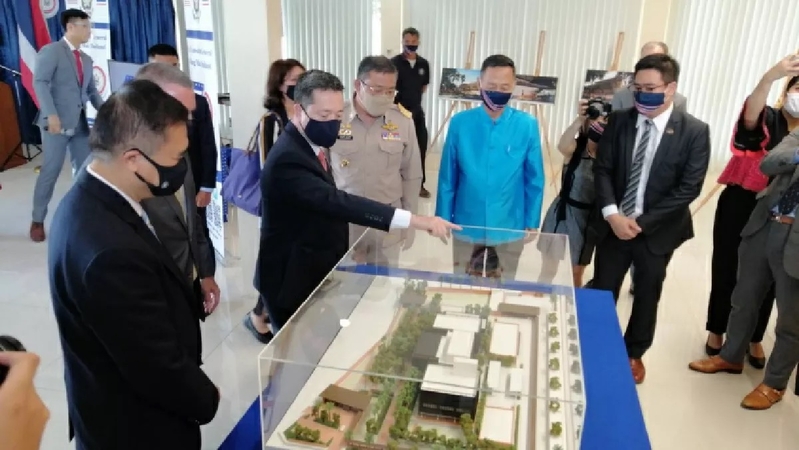
US ambassador Michael George DeSombre, Consul General Sean K O’Neill and Chiang Mai governor Charoenrit Sanguansat jointly presided over the groundbreaking ceremony for the new US Consulate General building in Chiang Mai on Friday.
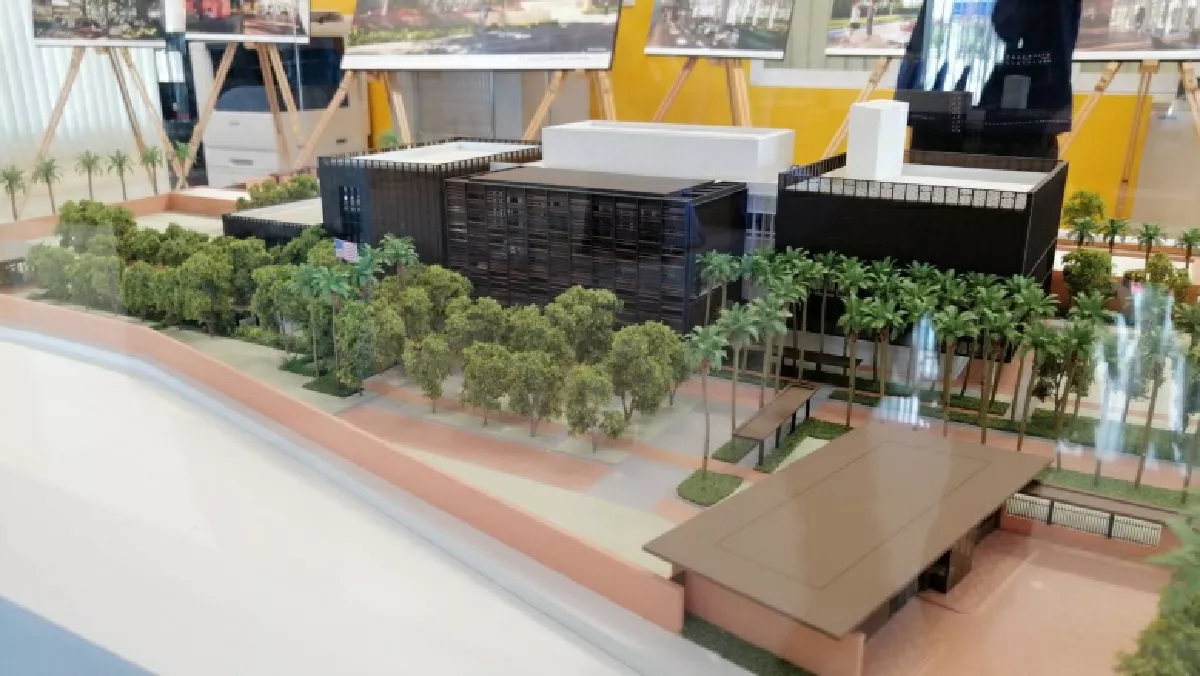
The new US consulate will be located on the Super Highway (Chiang Mai-Lampang) road in Nongpakrang subdistrict and will replace the Cold War relic on Witchayanond Road by the Ping river, which was built in 1950.
It is the oldest operating foreign consulate in Chiang Mai and the sole US consular presence outside Bangkok.
“Seventy years ago the first consulate building was built in Chiang Mai, and we hope that the new building will stand at least 70 more years to represent the long standing relationship between US and Chiang Mai province,” said DeSombre.
Part of the consulate’s mission, said the US, was to target transnational crime in the North, including narcotics trafficking and trafficking in persons. “We also believe that the construction of new Consulate General building will help create more than 400 jobs for local people,” added the ambassador.
The new Consulate General building will be located on 16.5 rai of land under a construction budget of $284 million (Bt8.8 billion). Construction is expected to complete within 2023.
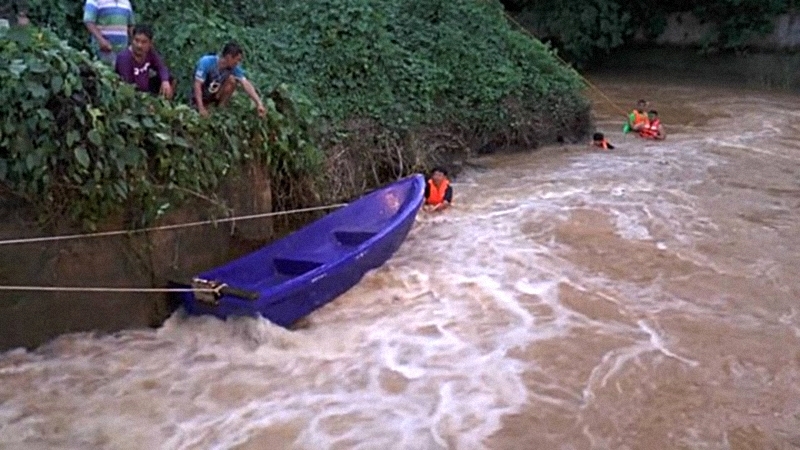
A rescue team in Phrae province is searching for a 69-year-old man who was swept away by the flash flood triggered by the heavy rains on Thursday.
More than 50 volunteers are following the current to find Dawid KhamKhao, a local of Sung Men district, who was dragged away by the floodwaters at 4.30pm on Thursday.
However, the rescue team is hampered by the strong current and the depth of the water. The team halted the search around 10pm and planned to split themselves into several teams to cover more areas.
The mayor of Sung Men subdistrict ordered the closure of irrigation gates to reduce the water volume. The rescue teams began the search again at 9am on Friday.
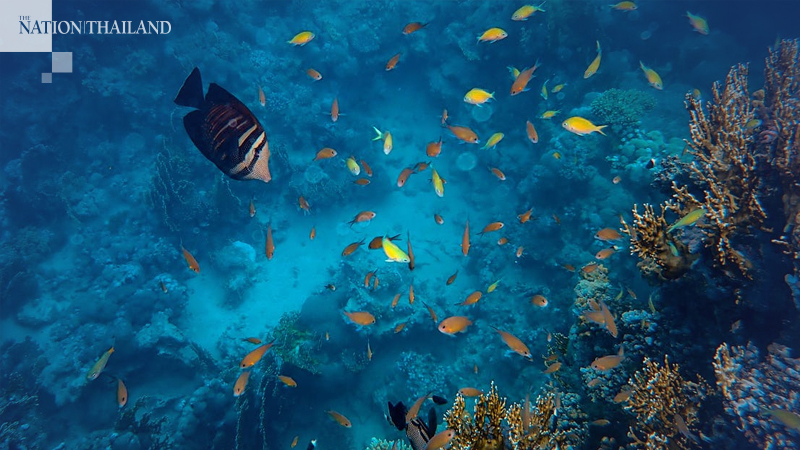
Natural Resources and Environment Minister Varawut Silpa-archa has instructed related state agencies to take immediate steps to protect marine resources that have been damaged by fishing.
On Friday (September 25), the minister said he had gone diving near Surat Thani’s Koh Tao island and in other places in the country and found trash under the sea as well as other signs of damage.
He said related agencies will have to urgently take steps to protect marine resources in most-affected places such as Ranong’s Koh Phayam as well as look after the coral reefs in Surat Thani, Pattani, Phang Nga and Krabi.
The minister said Thailand initially had close to 149,000 rai of coral reefs, but now only 5.7 per cent of them are alive. The rest have been destroyed by humans.
The Department of Marine and Coastal Resources recently announced new rules to protect marine resources. According to these rules, people are prohibited from parking their boats near coral reef of Koh Phayam, as well as disposing wastewater or poisonous things into the sea. Fishing near the specified reefs is also prohibited.
Violators will face a fine of up to Bt100,000 and/or a year in prison. These new rules went into effect on Wednesday.
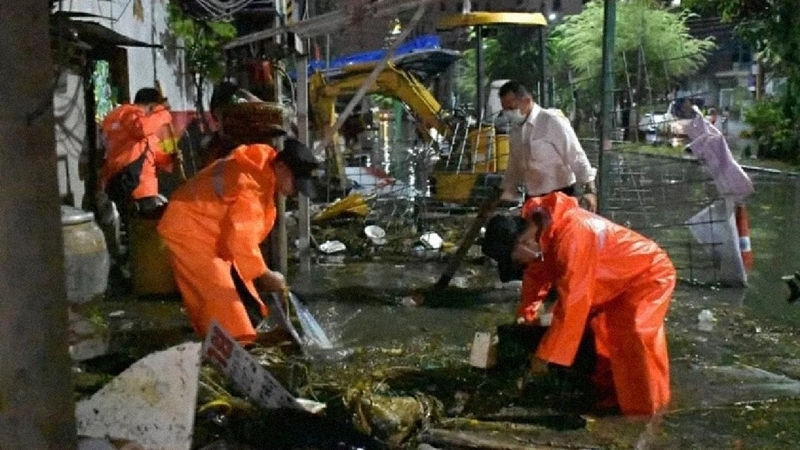
A basin-like formation at Mcot Junction, which makes it difficult to drain water out, was the cause of severe flooding in the area after heavy rains on Wednesday (September 23), Bangkok Governor Aswin Kwanmuang explained.
Aswin said that several districts in Bangkok faced the same issue, especially Wang Thonglang and Din Daeng districts that saw 124 millimetres and 120mm of rain per hour respectively.
The strong winds also brought down many trees on the streets in Din Daeng. He said officials in the area were told to cut the trees so that traffic could move again.
In Huai Khwang district, officials had to drain the floodwater with two pumps, while taking out a big amount of trash which was blocking the water flow.
Mcot Junction, located in Huai Khwang district, was a hot topic of discussion on the Internet after a video showing vehicles being swept into the flood by the wave went viral.
The governor said the junction had a unique topography like a basin, leading to water logging during rains and causing major flooding.
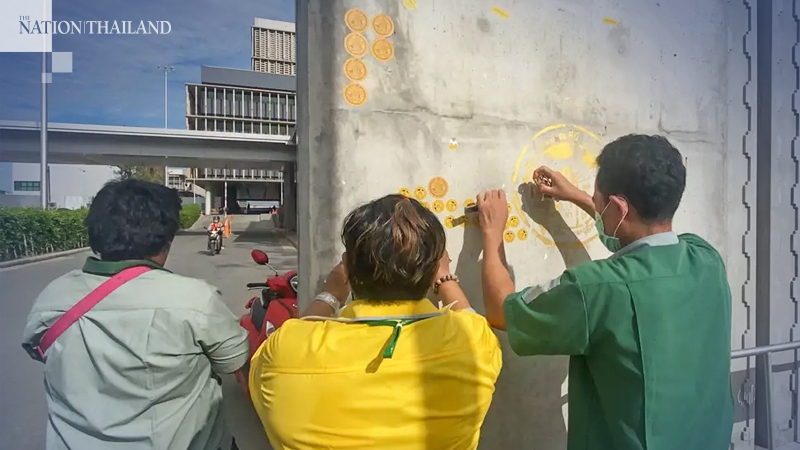
Parliament staff started their day on Friday (September 25) cleaning areas where pro-democracy protesters had gathered the previous evening.
The protesters had pasted stickers of the 2020 coup memorial plaque, which had been installed by them in Sanam Luang on Sunday (September 20) and later removed.
The activists also placed white ribbons to symbolise democracy.
Members of Parliament staff removed the stickers and ribbons, as well as the barriers that were put in place to keep protesters out of the complex.
The Thai economy is on a path to recovery after being impacted by the global Covid-19 pandemic and could see further upside as international companies consider Thailand as an investment destination amid the ongoing US-China trade war, experts said at a forum.
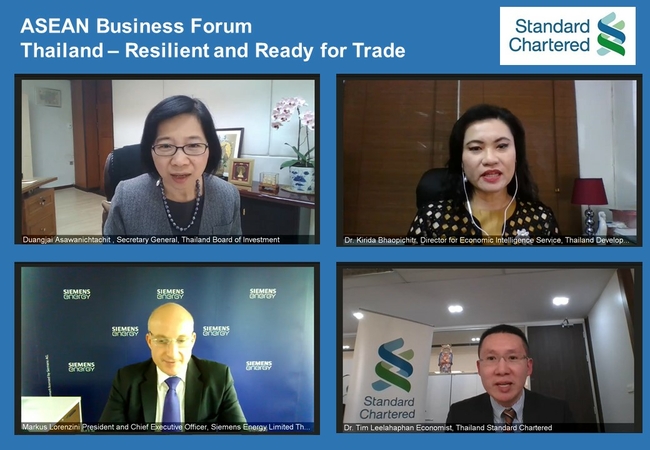
Thailand’s economic expansion could be further propelled by growth in sectors including tourism, manufacturing, agriculture, real estate, investments in the country’s Eastern Economic Corridor (EEC), renewable energy and digitalisation, according to a panel discussion at Standard Chartered Bank (Thai)’s “Asean Business Forum: Thailand – Resilient and Ready for Trade”.
“Over the past several months, Thailand has proved that the country is more than resilient and can persevere when facing both public health and economic challenges. The international communities have recognised Thailand as one of the most viable and trusted countries with strong public health affairs. Certainly, that has led to strong confidence in Thailand as a trusted destination for trade, investment and tourism,” said Boonyarit Kalayanamit, permanent secretary, at the Ministry of Commerce.
“Thailand has strong potential to become a regional trade hub. The country’s ideal geographical location and extensive infrastructure typically mean Thailand could serve as a product and distribution centre for Asean countries and beyond,” added Boonyarit in his keynote address.
With the US-China trade war still simmering and as a result of the pandemic, international companies are shifting their investments and Thailand has emerged as a target destination.
Duangjai Asawachintachit, secretary-general, Thailand Board of Investment (BOI), said to support the potential relocation of investments and to be part of a resilient supply chain, the BOI has implemented a special investment stimulation package in order to tap these investments looking for a safe haven. The EEC has been positioned as a new growth hub of Asean, supporting investments with a focus on sectors using higher technology and knowledge content.
“Not only Chinese firms but also American, Japanese, Taiwanese and South Korean companies are relocating their business to this region,” said Kirida Bhaopichitr, director, Economic Intelligence Service (EIS), Thailand Development Research Institute.
International tourism, which accounts for around 12 per cent of Thailand’s gross domestic product, is critical to the economic recovery but can only support the rebound if Thailand is reopened to the international market, said Kirida, adding that tourism should be developed to become a higher value industry.
“Thailand is one of our most focused countries in the region. The country has set a benchmark in reliable electricity supply, the basis for investment, with digital infrastructure being put well in place,” said Markus Lorenzini, president and CEO, Siemens Energy Limited Thailand (Cambodia, Laos & Myanmar).
As for power generation and related power transmission, Siemens is cautiously optimistic about future demand and future needs of energy infrastructure given the prospects for the EEC and the export industry, digitisation, renewable electricity and cross border electricity trade, added Lorenzini.
Thai Airways (THAI) brought more than 300 Thais stranded in Hong Kong and New Zealand on Wednesday.
Sqn Ldr Anirute Sangrit, vice president, flight operations department, of THAI, and head of THAI’s operations control centre, said the airline partnered with the Ministry of Foreign Affairs, the Royal Thai Consulate in Hong Kong and the Royal Thai Embassy in Wellington to operate these repatriation flights:
Flight TG607, for the sixth time, brought 92 Thais from Hong Kong at 9.12pm (local time) and arrived in Bangkok at 10.45pm on Wednesday.
Flight TG492, for the fourth time, brought 220 Thais from Auckland at 1.10pm (local time) and arrived in Bangkok at 8.15pm on Wednesday.
THAI also delivered cargo on the roundtrip flights.
There were two cases of reinfection of the three new Covid-19 cases in state quarantine over a 24-hour period, the Centre for Covid-19 Situation Administration (CCSA) said on Friday.
A 42-year-old man who had returned from Singapore on September 18 was found positive on September 23 in Chonburi state quarantine. He had been infected earlier but did not go to a hospital in Singapore for treatment. The Singapore health authority found him free from infection on June 11.
A 58-year-old man travelled back from Kuwait on September 22 and tested positive the same day. His health history showed that he had been infected and got treated in a hospital before returning to Thailand.
A 42-year-old woman returned from the United States on September 19 and tested positive on September 23 in Chonburi’s state quarantine facility.
Meanwhile, seven patients have recovered and been discharged from hospitals.
The total number of confirmed cases in Thailand increased to 3,519 (581 in state quarantine), of whom 100 are in hospital and 3,360 have recovered and been discharged, while the death toll is 59.
According to Worldometer, as of 10am, the total number of confirmed cases had increased to 32.4 million (up by 314,855 over a 24-hour period), 23.9 million have recovered, there are 7.49 million active cases ( 63,333 in severe condition) and 987,724 have died.
Thailand ranks 136th for most cases in the world, while the US has the most number with 7.18 million, followed by India 5.81 million, Brazil 4.65 million, Russia 1.12 million and Colombia 790,823.
The younger sister of a woman who allegedly defrauded a gold shop using a fake bank application has said that she knows nothing about her sister’s alleged crime.
Recently, a woman named Pichapa Kornarong, aged 46, reportedly purchased 20 baht weight gold worth around Bt578,000 by using a fake bank application, which can show a payment slip.
The shop found out 30 minutes after she had left that no money was transferred to its account.
This case occurred in a gold shop named ‘Supatra Yaowarat’ in a Tesco Lotus branch, located in Rayong province.
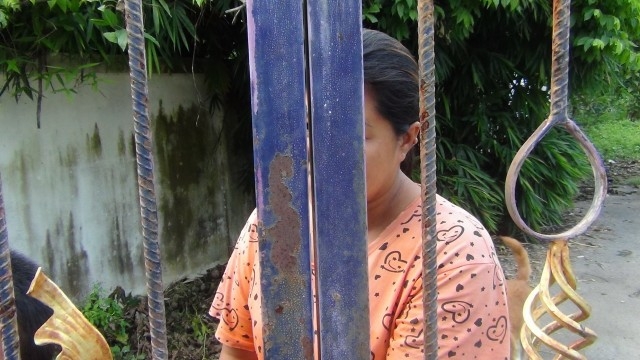
On Thursday (September 24), a reporter visited the place specified as the suspect’s house in Chachoengsao province, and found a woman who called herself the suspect’s younger sister.
The woman said that she did not know about the fraud or her sister’s involvenent. She said her sister had returned to the house only once in recent times.
The younger sister added that her sister’s last visit was the first one in almost one year.
The woman said that her sister had not mentioned about the fraud or related matters to her or other family members. The woman said that she waa informed about her sister’s case after a friend called her up and told her about it.
She added that the house belonged to her sister, but she, her mother and her children lived there.
Officials from the Royal Irrigation Department will hold public hearings with locals of Khao Chamao district in Rayong province to discuss a fair compensation before construction of the Klong Phlo reservoir.
“The Klong Phlo reservoir will help solve the drought problem in Rayong that has been aggravating since 2019,” said Praphit Chanma, the department’s deputy director-general. “However, the construction of the reservoir would inevitably affect the fruit plantations of farmers in three districts, namely Klaeng, Khao Chamao and Wangchan,” Praphit said.
“The public hearing session will discuss a fair compensation for land owners in the affected areas, as well as elaborate the benefits for villagers and farmers in Khao Chamao district from the reservoir in providing a water source during the dry season,” he added.
The Khlong Phlo reservoir will be a zone type dam 1,680 metres long and 17 metres high with capacity to hold 40 million cubic metres of water and can irrigate more than 30,000 rai (4,800 hectares) of farmlands in five subdistricts in Khao Chamao. Once complete, it would help prevent water shortage during the dry season, mitigate flood problem during monsoon, as well as serve as a tourist attraction. Construction is expected to start in 2022 and finish in 2024.


 (Representational Image)

