The Bank for Agriculture and Agricultural Cooperatives (BAAC) is arranging Bt5.3 billion for disbursement as loans to fishermen in 22 provinces for improvement of their boats and equipment to promote sustainable fishing in Thai waters.
The move is part of the government’s policy to reform the fishery sector.
“To be eligible for the loan, applicants must be operators of fishing boats with capacity not over 60 gross tonnage,” the bank’s president, Apirom Sukprasert, said. “The maximum loan a customer can get is Bt5 million under a seven-year repayment plan. The borrower will pay 4 per cent interest per year while the government will pay the rest.”
Apirom added that the loans would be available from now until May 25, 2021 to fishermen in 22 seaside provinces: Trad, Chanthaburi, Rayong, Chonburi, Chachoengsao, Samut Prakarn, Samut Sakhon, Samut Songkhram, Phetchaburi, Prachuap Khiri Khan, Chumphon, Surat Thani, Nakhon Si Thammarat, Songkhla, Pattani, Narathiwat, Satun, Trang, Phuket, Phang Nga, Krabi and Ranong.
Applicants must be more than 20 years old and a Thai national, or be a juristic person under Thai law, and have been holding a valid registration of a fishery boat for at least one year, Apirom said.
Applicants could use their fishing boat, land or property as collateral, or use the Thai Credit Guarantee Corporation as guarantor, he added.
For more information, contact BAAC call centre at 02 555 0555.
The Thailand Meteorological Department forecast on Tuesday (September 1) that an active monsoon trough lies across the lower North, the upper Central and the lower Northeast regions, bringing more rain and some heavy downpours to those areas.
People should beware of the severe weather conditions that may cause flash floods and water runoffs.
The southwest monsoon continues across the Andaman Sea and the South.
Meanwhile, the category 5 typhoon “Maysak” over the Pacific is moving towards the Korean peninsula on September 2-3, but it will have no effect on Thailand, the department said.
The weather forecast for the next 24 hours is as follows:
North: Mostly cloudy with thundershowers in 60 per cent of the areas and isolated heavy rain; minimum temperature 23-26 degrees Celsius, maximum 31-34°C.
Northeast: Mostly cloudy with thundershowers in 60 per cent of the areas and isolated heavy rain; minimum temperature 23-26°C, maximum 30-36°C.
Central: Cloudy with thundershowers in 80 per cent of the areas and isolated heavy rain; minimum temperature 24-27°C, maximum 36-37°C.
East: Mostly cloudy with thundershowers in 60 per cent of the areas and isolated heavy rain; minimum temperature 25-28°C, maximum 32-36°C; waves a metre high and 1-2 metres during thundershowers.
South (east coast): Mostly cloudy with thundershowers in 60 per cent of the areas; minimum temperature 23-25°C, maximum 33-37°C; waves less than a metre high and one metre during thundershowers.
South (west coast): Mostly cloudy with thundershowers in 60 per cent of the areas; minimum temperature 24-26°C, maximum 33-34°C; waves a metre high and two metres during thundershowers.
Bangkok and surrounding areas: Cloudy with thundershowers in 80 per cent of the areas and isolated heavy rain; minimum temperature 25-27°C, maximum 32-37°C.
The Public Health Ministry is pushing for a complete ban on three hazardous pesticides, after reports showed that toxic residue was found in newborns and more than 40,000 people have been sickened in the past five years.
The highest number of such cases was in the Northeast.
Public Health Minister Anutin Charvirakul and Agriculture and Cooperatives Minister Chalermchai Sri-on held a joint press conference to discuss the subject of completely prohibiting the use of paraquat, chlorpyrifos and glyphosate. The agriculture minister said he will have the Hazardous Substances Committee look into the complete ban.
Meanwhile, Dr Suwannachai Wattanayingcharoenchai, director general of the Department of Disease Control (DDC), said data collected between 2015 and 2019 showed that there were 41,941 cases of pesticide poisoning. In 2015, there were 9,620 cases; in 2016, 9,018; in 2017, 10,686; 2018, 6,609; and in 2019, 6,008 cases.
The number of pesticide poisoning cases dropped in 2018-2019 thanks to a campaign against the use of these chemicals and subsequent reduction in imports.
As of August 29 this year, there were 4,933 cases of pesticide poisoning, with the highest number of cases recorded in Health Zone 9 in the Northeast, followed by Health Zone 1 in the North and Health Zone 11 in the upper South.
As many as 2,951 patients suffered from chlorpyrifos poisoning in Mae Hong Son, Nakhon Ratchasima and Lampang provinces, while 889 suffered from paraquat and glyphosate poisoning in Mae Hong Son, Nakhon Si Thammarat and Nong Bua Lamphu.
Separately, online surveys were conducted between January and July 2019 on two subjects – the use of household chemicals and how the use of household chemicals has affected the health of family members.
One survey found that 2.65 million households used chemicals, while 677,522 used agricultural chemicals. The other found that household members suffered from symptoms or illnesses related to pesticide poisoning. Of the respondents, 12,554 suffered from shaky hands or walking problems, 79,645 suffered from numbness in hands or feet, 22,569 had developed dermatitis, 641 suffered necrotising fasciitis, 370 developed leukaemia, 922 were lymphoma patients, 1,132 developed mental problems while 2,349 required haemodialysis.
Dr Opas Karnkawinpong, director-general of the Department of Medical Sciences, said laboratory tests in eight provinces in 2019 found paraquat residue in 23 per cent of the fruit and vegetable samples.
In February this year, a House committee collected samples from 41 provinces and found chlorpyrifos and glyphosate residue in most of them.
“Pesticide poisoning was discussed at the latest symposium on chemical residues and its effects on the mother and child. Studies in areas where agricultural chemicals are heavily used found residues of organophosphate, a chemical used in insecticide, in pregnant mothers’ urine, while newborns’ first faeces was found to contain paraquat residue.
“These newborns were closely monitored and it was found that their development was slower than normal. This should be considered as a reminder that chemicals should be stopped from entering the food chain and poisoning humans,” Dr Opas said.
The board of Eastern Power (EP) Group said it will propose an increase in general mandate capital to shareholders, from Bt1.026 billion to Bt1.579 billion.
EP shares closed at Bt3.62 today.
Weera Louwitawas, EP chief executive officer, explained that the company aimed to increase its capital by issuing 552.94 million new common stocks to shareholders and other investors.
The capital raised from the stocks will serve EP investment in the future, Weera added.
The board also plans to propose four wind farm projects in Vietnam to the shareholders, total value Bt7.040 billion.
Weera said that 30 to 35 per cent of the budgeted Vietnam investment would come from the share issue. He added that EP is also in loan talks with a financial institution, but did not disclose the institution’s name or the loan conditions.
The scheduled commercial operation date (COD) for the Vietnam plants is October 2021. The economic internal rate of return of each project is expected to be 20 to 25 per cent.
Farmers of economic crops have backed a move by Agriculture and Cooperatives Minister Chalermchai Srion to reconsider the ban on paraquat and chlorpyrifos.
The farmers asked Chalermchai to file a letter with the National Hazardous Substances Committee (NHSC), asking for a limit on usage rather than a ban, said Sukan Sangwanna, Safe Farming Confederation chief and a representative for 19 agriculture associations.
The deadline for farmers to hand over their stocks of both chemicals passed on Saturday (August 29), 90 days after the June 1 ban came into effect.
Farmers complained the ban had forced them to switch to pricier alternatives that do not kill weeds and pests effectively.
Meanwhile, the Public Health Ministry and Department of Livestock Development still used paraquat while demanding that farmers not to use it, they said. Alternatives such as glufosinate and glyphosate were also hazardous, they added.
Farmers also complained of double standards designed to benefit big businesses, since both substances can still be imported.
However, Public Health Minister Anutin Charnvirakul insisted that the chemicals had to be banned to protect public health.
Today the ministry also underlined the findings of a five-year study that showed more than 40,000 farmers had suffered serious illness due to the use of the substances.
Anutin admitted the ban was going to affect the economy but he said wanted people to be as serious about toxic substances as they were about Covid-19.
The Education Ministry today unveiled its Digital Education Excellence Platform (DEEP), which gives students and teachers direct access to curriculums and modules via online classrooms.
DEEP aims to give students in the most remote corners of the country access to the same resources as those in big cities, closing the gap in Thailand’s notoriously uneven education system.
On the new platform, students can also access Google and Microsoft learning tools via a single sign-on for the first time in Thailand.
Education Minister Nataphol Teepsuwan hailed DEEP as a fundamental tool to boost Thailand’s human capital to meet 21st-century needs, as he launched the platform at Wat Rajabopit School in Bangkok today.
“DEEP is a critical stepping stone toward equality in education. This digital platform transforms a Thai education system that is relatively fixed, into one that is flexible and versatile. Students will now have access to a diverse set of curriculums or modules that are provided on DEEP, which opens endless opportunities for them to acquire additional knowledge in their unique areas of interest,” said Nataphol.
The platform addresses issues of unequal education access expressed by students, teachers and the administrative body, he said.
“Consequently, we will have a labour market that answers the private sector’s demands. It is important to reiterate that DEEP promotes a culture of lifelong learning, with hopes that everyone can and will ‘re-skill’ or ‘upskill’ themselves”, said Nataphol.
“Building Thailand’s human capital is a necessity, education’s sole purpose is to ensure that all Thais have the opportunity and capability to pursue a career they dream of. … The future of our youth is the future of our country.”
A ground-breaking feature of DEEP is to incorporate online classrooms as a new national standard for learning outside the classroom.
DEEP also allows the private sector to create content for the platform, which should generate a plethora of learning material for students to use.
In the initial stage, additional resources from public and private efforts on DEEP will solely aim at building English and digital literacy of Thai students, teachers and school administrators.
Among the global companies who have partnered with the ministry to upload learning content to DEEP are Google, Microsoft, Cambridge Assessment English, Pearson, the British Council, IC3, ICDL, Arkki, along with more than 40 Rajabhat universities.
A group of con-artists, including a Thai woman, were arrested on Monday (August 31) for allegedly running an illegal medical equipment company and defrauding a German man of Bt57 million.
Cameroon national Ferdinand Ayuk Agbor, 34; Ivory Coast national Souhadou Traore, 35; and Thai national Thanwarot Worasan, 24, were charged with fraud and money laundering.
They had allegedly sold rubber gloves to a German buyer in the United Arab Emirates, who had paid them Bt57 million but did not receive the products.
Thanwarot was found to have connections with Mepony Toure, 28, who allegedly runs an illegal firm from another country and is wanted by the Interpol.
Thai police are looking to see if this group is linked to a similar case in which the victim was an Israeli national.
The government whip will present the draft of charter amendments to the House on Tuesday, Palang Pracharat Party spokesperson Patcharin Samsiripong said on Monday (August 31).
Patcharin said the draft will be delivered to House Speaker Chuan Leekpai so it can be added to the agenda of the September 23 to 24 meeting being held to discuss the setting up of a Constitution Drafting Committee.
However, she said, the amendments will not touch chapters 1 and 2, which are related to the monarchy.
Meanwhile, the drafting committee will comprise 200 members, 150 of whom will be elected personnel from each province, 20 will be chosen by the House, 20 will be named by the Conference of University Presidents of Thailand and 10 will be student representatives, she said.
Four districts will pilot Bangkok’s transformation into a smart city, under a plan unveiled by the National Charter of Thailand today.
The plan, which covers Rattanakosin Island, Yaowarat (Chinatown), Asoke (from Asoke intersection to Rama IX Road) and Tao Poon, was presented to the Bangkok Metropolitan Administration (BMA) today by the National Charter of Thailand, which is funded by Thailand Science Research and Innovation (TSRI).
It calls for 580 square metres of Yaowarat to be developed into a web of transport and shops integrated through CCTV and free public Wi-Fi. The district will be made pedestrian-friendly by extending the pavement and reducing traffic, with upgrades for the bus system, lighting, shopfronts and drainage. The aim is to boost the number of shoppers and tourists visiting Chinatown.
Negotiations for Yaowarat’s smart district development are underway and the project could get started this year, said Thapana Bunyapravitra, director of the National Charter of Thailand.
“The development budget will be around Bt30 million and the National Charter will design it for free,” said Thapana.
However, the first smart district eyed for development is Rattanakosin Island, to be designed and operated by Silpakorn University. This project is awaiting approval from the Royal Household Office and the Treasury Department.
Meanwhile, the Asoke Smart District is set for development next year and will cover Asoke intersection and its large shopping centres, Srinakharinwirot University, Makkasan BTS station and its future large shopping centre, and Rama IX intersection with Central Rama IX mall.
Plans for the Tao Poon-Bang Po smart district centre on the new national railway hub, Bang Sue Grand Station, which will be used by almost 3 million people per day. Smart infrastructure will link the station and its 200,000 square metres of retail space to the new Parliament area and Rajamangala University of Technology Phra Nakhon.
Innocent street sweeper beaten up when royalists ‘see red’
NationalAug 31. 2020Photo Credit to Sombat Thongyoi
By The Nation
A guard at a royalist rally on Sunday (August 30) at Bangkok’s Thai-Japanese Stadium in Din Daeng allegedly beat up a man just because he was wearing a red shirt.
Din Daeng police were notified of the assault and took down a complaint that street sweeper Sukhon Puttan, 60, was beaten up by another man, who then fled.
It is assumed that the guard of Thai Pakdee royalist group may have assumed that Sukhon had worn red to show he was associated with the anti-coup red-shirt movement.
Move Forward Party MP Amarat Chokepamitkul responded to the assault with a sarcastic message on Facebook saying the party would help the Thai Pakdee group if they were threatened by officers, and pointed out that the rally went smoothly without any interference.

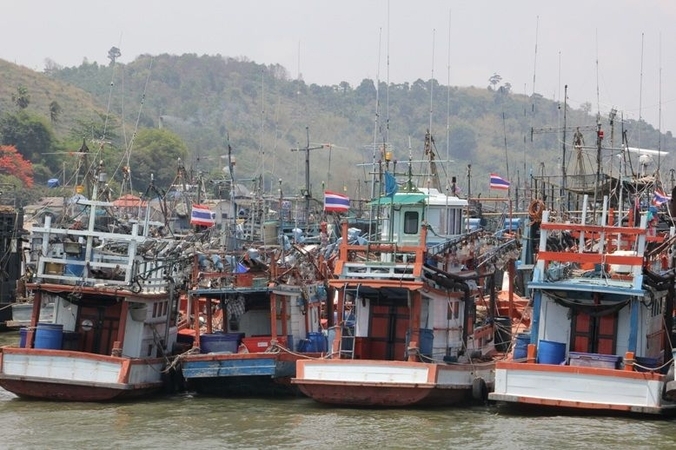



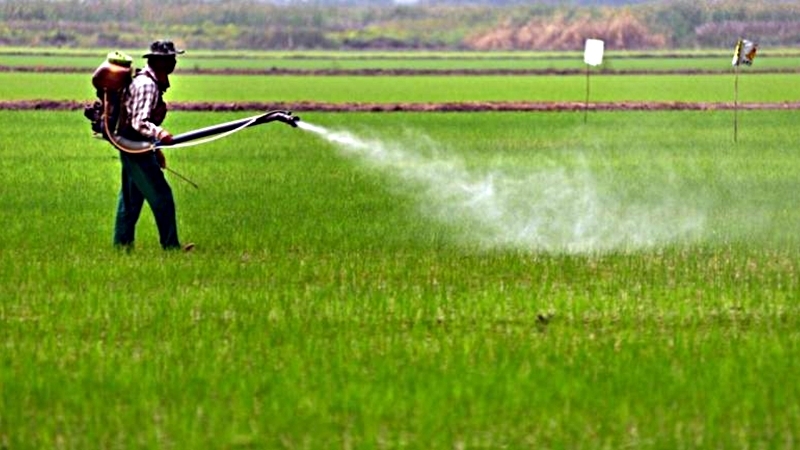

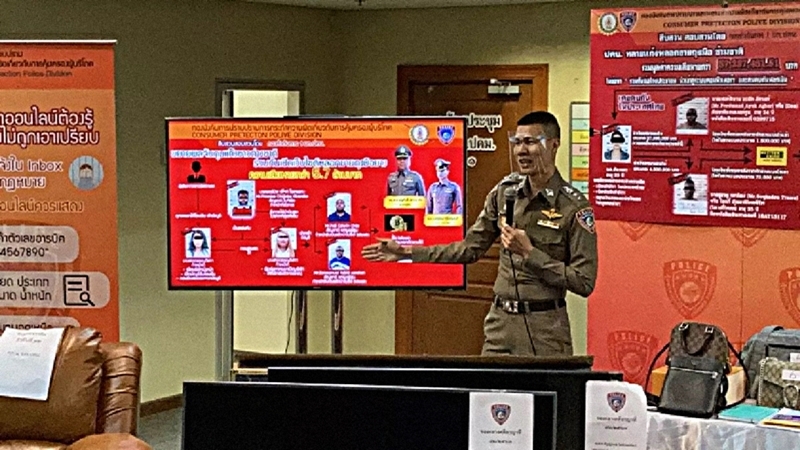

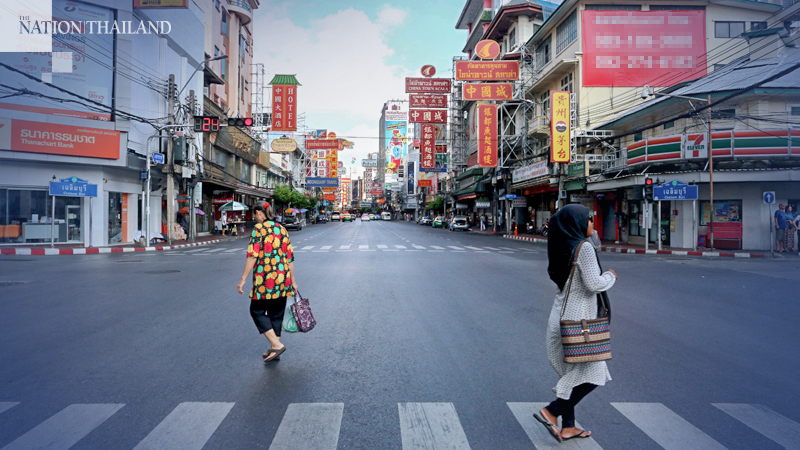
 Photo Credit to Sombat Thongyoi

