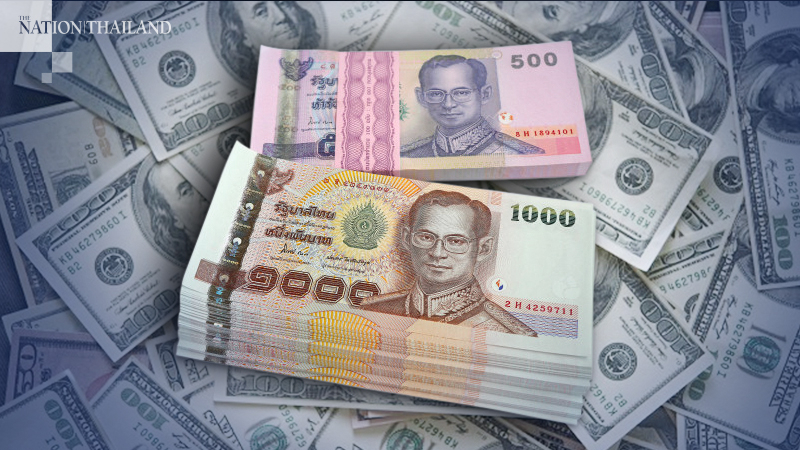
The baht opened at 31.51 to the US dollar this morning (August 25), weakening from yesterday’s close of 31.46.
The Thai currency is expected to move between 31.40 and 31.60, said Jitipol Puksamatanan, head of Markets Strategy at SCB Securities.
Financial markets performed well yesterday, with the S&P 500 increasing by 1 per cent as investors believed a Covid-19 vaccine would be ready soon. This also helped the Euro Stoxx 600 increase by 1.5 per cent.
The US Ten-Year Treasury yield rose by 3 basis points to 0.65 per cent, while the gold price decreased to around $1,925 (Bt60,560) per ounce. The yen meanwhile increased to 106 per US dollar.
Jitipol said the baht fluctuated, moving amid low liquidity, while foreign investors have not yet returned to the Thai market. He added that the currency’s base was strong, but had no major factor to support its recovery.
[Taiwan] Authorities concerned as migrant workers and students quarantine among locals
NationalAug 25. 2020The mayor said that many migrant workers and foreign exchange students have been moving into Shanglin community(上林社區)for centralized quarantine. (photo courtesy/ 簡志偉@Facebook)
By Joyce Lee The China Post/ANN
Chien Chih-Wei (簡志偉), mayor of Dalin township (大林鎮), Chiayi, recently received calls from local residents, saying that the community has seen an influx of migrant workers and foreign exchange students in quarantine.
The residents feared that quarantining among local residents will bring the risk of an outbreak to the community. Chien Chih-Wei took to Facebook to speak on the matter and expressed his support for screening all residents for Covid-19 for safety purposes.
The mayor said that many migrant workers and foreign exchange students have been moving into the Shanglin community (上林社區) for centralized quarantine. However, the town hall wasn’t notified about the matter.
He added that it has caused great concerns for the local residents to the point that they are scared to encounter foreigners when buying groceries, fearing they might be people supposedly in quarantine.
“With manpower agencies sending migrant workers in batches to the community’s student dormitory to quarantine for 14 days, It is imperative that Dalin Township residents all be screened,” he wrote in a Facebook post.
He stressed: “This has caused the residents to panic, and risks breaching epidemic prevention. In order to ensure the safety of the local residents, the government is obliged to conduct universal COVID-19 screenings.”
According to the United Daily News, the acting director of the Chiayi counter health bureau (嘉義縣衛生局) Chao Wen-hua (趙紋華) said that migrant workers and foreign exchange students must be quarantined in centralized facilities provided by the government.
She added that The Central Epidemic Command Center (CECC) will work with local police forces to monitor those in quarantine with Intelligent Electronic Fence Systems, so the residents must not worry.
Recently, The Changhua County Public Health Bureau(彰化縣衛生局) was investigated by the Civil Service Ethics Department (政風局) for going against CECC’s policy and conducting universal Covid-19 screenings.
Chien Chih-Wei’s Facebook post has triggered people’s assumption that he is in support of the Changhua Health Bureau. However, he has clarified that his stance was purely out of consideration of the health and interests of the residents.
The Public Health Ministry has asked the Budget Bureau to consider a Bt600-million project on production of Covid-19 vaccines with Oxford University and pharmaceutical companies in England, Minister Anutin Charnvirakul confirmed today (August 25).
On August 17, Anutin announced the Bt600-million budget though Thailand is spending Bt3 billion on vaccine research and production.
“The next step is for the bureau to consider from which budget the project will be financed,” he said.
“If they decide it is part of the Bt400-billion economic rehabilitation budget, the project will be sent to the Office of the National Economics and Social Development Council. However, if the project is to be financed using the central budget, it will be sent for Cabinet approval at the next meeting,” Anutin said.
“The public health permanent secretary has already signed a letter expressing interest in joining the partnership with Oxford, but I have yet to receive an update on the reply,” the minister said.
Anutin added that the Cabinet meeting scheduled in Rayong today will also consider the appointment of a new permanent secretary of the Transport Ministry, which is under his supervision as deputy prime minister.
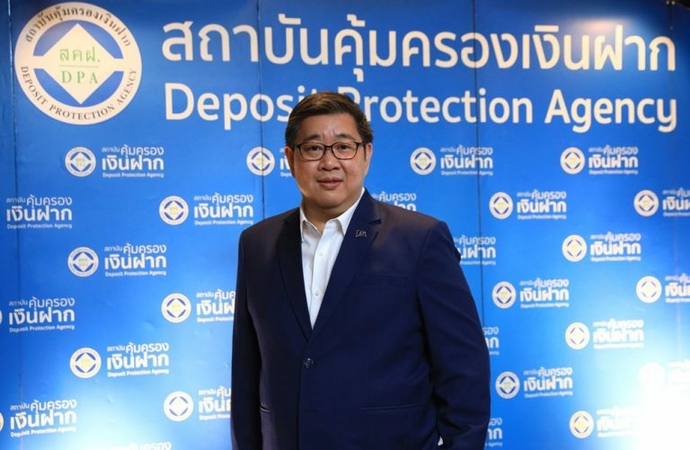
“Bank customers need not worry that they will lose their money, as the DPA will help protect your deposits in case another crisis strikes,” director Songpol promised.
The current non-performing loan (NPL) problem will not be as serious as during the 1997 financial crisis due to the strong financial status of commercial banks that enable them to help borrowers with debt restructuring before they become NPLs, Deposit Protection Agency (DPA) director Songpol Cheewapanyaroj said.
“The DPA’s commercial bank reserve fund is also strong, with approximately Bt129 billion in reserve from contributions by commercial banks in the last 12 years at a rate of 0.01 per cent of their deposits,” he said.
“The DPA receives contributions of Bt1.4 billion on average annually, which we invest in bonds from the government and the Bank of Thailand. This has resulted in a return of Bt2 billion per year.”
Songpol said the DPA estimated the economic contraction caused by Covid-19 would not cause commercial banks to collapse, as they still have strong reserves that will act as a buffer to shield them from a financial crisis.
“Bank customers need not worry that they will lose their money, as the DPA will help protect your deposits in case another crisis strikes,” Songpol promised.
Currently, 80.82 million bank customers are protected under the DPA, with combined deposits of Bt14.67 trillion. Around 98 per cent of these are individual customers with less than Bt1 million in their accounts.
“The DPA is planning to expand protection to cover electronic money or e-wallets, which should start by the fourth quarter this year. E-money or e-wallets have relatively low risk compared to traditional money, since the Bank of Thailand does not allow businesses to use them in investments or loans,” Songpol added.
Meanwhile, TMB Analytics Centre executive director Naris Sathapholdecha said commercial banks nowadays are much stronger than in 1997, when they had only Bt460 billion in reserve.
“As of the second quarter of 2020, commercial bank reserves have been recorded at Bt2.9 trillion, which is enough to cover up to 21 per cent of NPLs,” he said.
“Even if customers are worried and withdraw their cash, banks could still continue operating as they have liquidity assets of Bt4.8 trillion, or 28 per cent of total assets. Commercial banks also have a liquidity coverage ratio of 183 per cent, making them much stronger than in the past,” Naris said.
“This year, commercial banks should record profit of around Bt100 billion, thanks to aggressive debt restructuring programmes to prevent a high volume of NPLs,” he added.
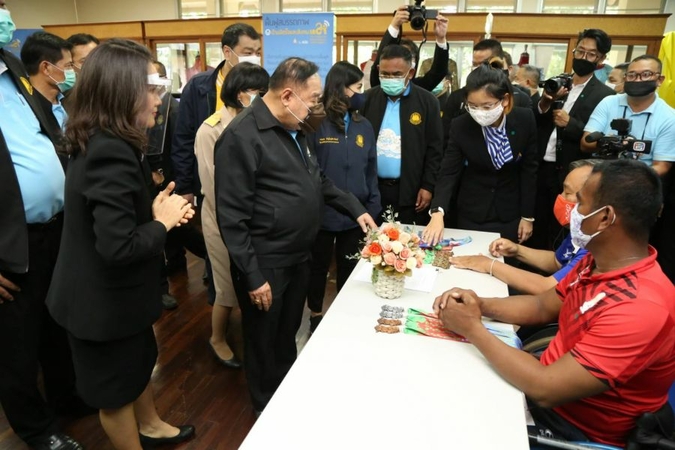
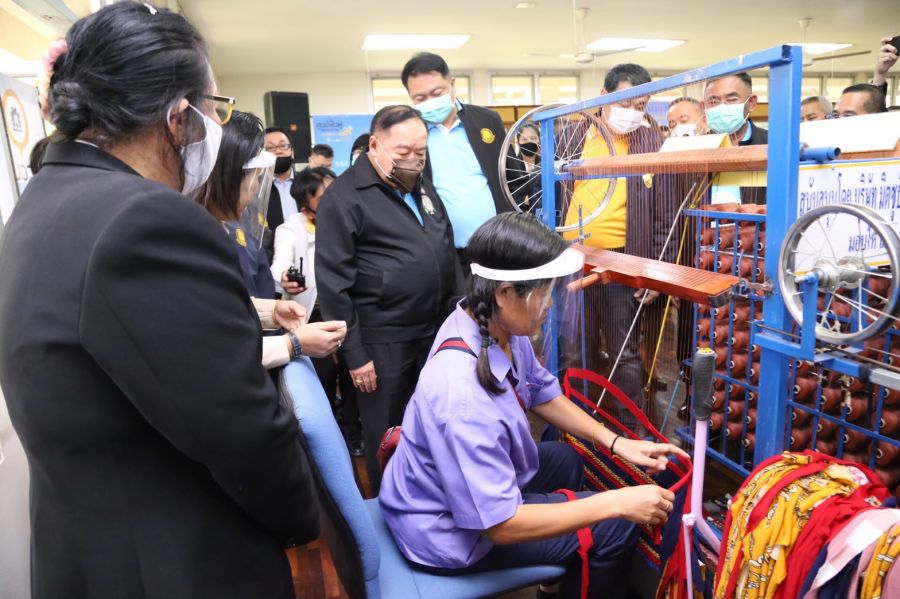
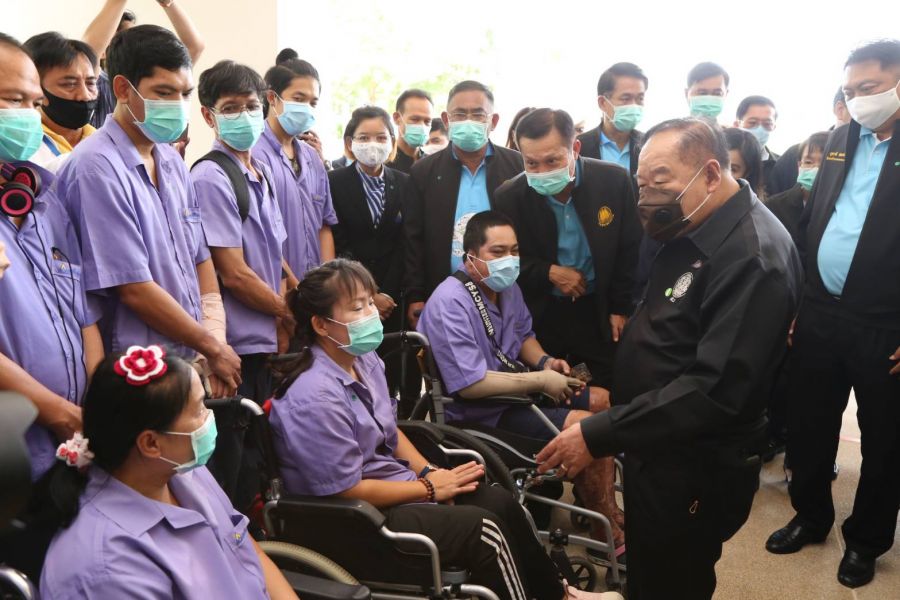
Deputy Prime Minister General Prawit Wongsuwan visited Rayong’s Labour Rehabilitation Centre with Labour Minister Suchart Chomklin, Deputy Labour Minister Narumon Pinyosinwat and executives of the ministry yesterday (August 24).
Prawit thanked ministry officials for helping Thai and foreign labourers during the Covid-19 crisis by mitigating the impact from unemployment and wage cuts that several employers have undertaken to keep their businesses afloat.
The deputy premier also announced “urgent policies” for the ministry to implement to improve the labour situation after the crisis. They are:
> Improve efficiency in preventing human trafficking and illegal, unreported and unregulated fishing to upgrade Thailand’s anti-human-trafficking status to Tier 1.
> Promote up-skilling and re-skilling of labourers to suit changing markets and employers’ needs, as well as educate workers on modern technologies.
> Continue providing aid to labourers affected by the Covid-19 crisis, both those under social security and those who are not.
> Monitor and prevent the spread of Covid-19 among labourers from Myanmar, Laos and Cambodia, who are allowed to work in Thailand until March 31, 2022.
“Most importantly, Labour Ministry officials must prioritise the safety and welfare of workers and ensure they are properly treated and rehabilitated in cases of accident at work, and receive benefits they are legally entitled to, so that they can continue to support themselves and their families as functioning members of society,” Prawit added.
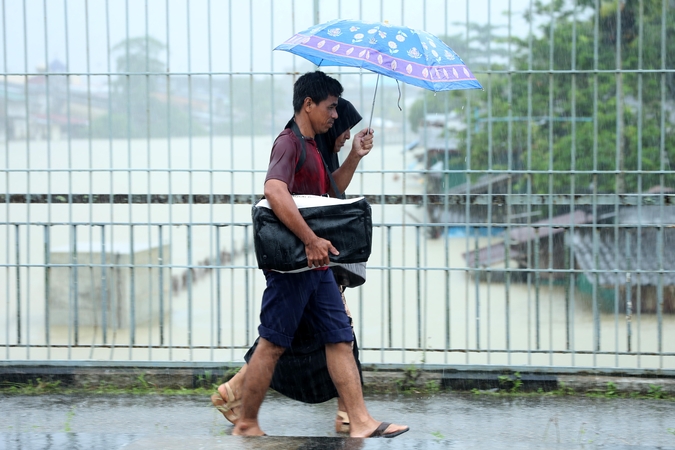
The Meteorological Department forecast less rain for upper Thailand today (August 25), even as the southwest monsoon prevails across the Andaman Sea and the country. It still advised people in the North and the Northeast to beware of possible severe conditions.
Here’s the weather forecast for the next 24 hours:
North: Cloudy with thundershowers in 40 per cent of the area; temperature lows of 23-24 degrees and highs of 28-33 degrees Celsius.
Northeast: Mostly cloudy with thundershowers in 40 per cent of the area; temperature lows of 23-25 degrees and highs of 27-34 degrees Celsius.
Central: Mostly cloudy with thundershowers in 30 per cent of the area; temperature lows of 23-25 degrees, highs of 34-35 degrees Celsius.
East: Mostly cloudy with thundershowers in 30 per cent of the area; temperature lows of 25-26 degrees, highs of 33-35 degrees Celsius; waves a metre high and 1-2 metres during thundershowers.
South (east coast): Partly cloudy with thundershowers in 30 per cent of the area; temperature lows of 23-26 degrees, highs of 33-35 degrees Celsius; waves less than a metre high and 1 metre during thundershowers.
South (west coast): Partly cloudy with thundershowers in 20 per cent of the area; temperature lows of 23-26 degrees, highs of 33-35 degree Celsius; waves a metre high and 2 metres during thundershowers.
Bangkok and surrounding areas: Mostly cloudy with thundershowers in 30 per cent of the area; temperature lows of 25-26 degrees, highs of 33-36 degrees Celsius.
The Mass Rapid Transit Authority of Thailand (MRTA) plans to invest around Bt35 billion for the first phase of its tram project in Phuket province.
The first phase linking Phuket Airport and Chalong intersection was discussed at a meeting between Phuket deputy governor Wongsakorn Noonchukhan and MRTA assistant governor Sarot T Suwan on Monday (August 24).
This meeting also heard opinions from local people and businesses as well as the Phuket administration.
The first phase covers 42 kilometres and 21 stations, while the second will cover 16.5 kilometres.
The MRTA will invest Bt35.201 billion for the first phase, with fares set at between Bt35 and Bt140 per trip. Official studies estimate returns of 13.11 per cent for project investors.
The project will be proposed to the Cabinet by mid-2021, with private companies invited to join bidding for contracts in 2022, said the MRTA. Tram services are scheduled to begin operating in 2026.
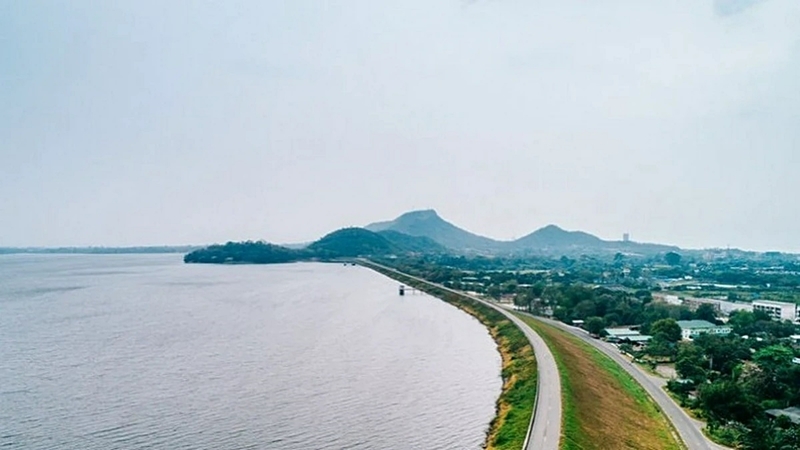
Deputy Prime Minister Prawit Wongsuwan expressed concern over the drought in the Eastern Economic Corridor (EEC) after visiting Dok Krai Reservoir in Rayong province on Monday (August 24).
The eastern region’s reservoirs are down to 42 per cent capacity and hold only 1.15 billion cubic metres of usable water, according to Samroeng Sangphuwong, deputy secretary-general of the Office of the National Water Resources.
Meanwhile, the six dams feeding the EEC – Bang Pra, Nong Kho, Nong Plalai, Dok Sai, Prasae and Klong Yai – are down to just 264 million cubic metres of usable water.
Water demand in the EEC is currently about 2.4 billion cubic metres per year but is forecast to reach 3.09 billion cubic metres in 2037.
The rainy season is expected to fill three EEC reservoirs to 46 per cent capacity but water will be managed according to 12 urgent drought-relief measures announced earlier by Prawit.
The Office of the National Water Resources is assigning four task forces to create plans and measures to manage resources effectively and ensure sustainable usage to protect industrial development in the EEC.
A total of 38 water development plans for 2020-2037 are being implemented to increase capacity in the East by 87 million cubic metres.
Navy defends Bt22.5bn deal for submarines as ‘good value’
NationalAug 24. 2020High-ranking Navy officers line up at a press conference today to defend its purchase of two additional subs. (Nation Photo by Tatchadon Panyaphanitkul)
By The Nation
The Royal Thai Navy has defended its Bt22.5-billion deal to purchase two more submarines following public complaints that the money should be spent on relieving people’s suffering amid the Covid-19 crisis.
Vice Admiral Talengsak Sirisawad, Naval Operations Department chief, today said the submarines were needed to protect Thai marine interests worth Bt24 trillion.
He added that the submarines would reinforce Thailand’s bargaining power when negotiating with other countries to defend national interests.
Talengsak said the Navy considered the purchase carefully and found it was beneficial for the economy and for national security.
The Navy spoke up to defend the deal following a public outcry when government coalition MPs voted to purchase two more submarines as the economy sinks under the impact of Covid-19.
The subcommittee for procurement, ICT, state enterprises and revolving funds, which is vetting the budget bill for 2021, voted 5:4 on Friday to spend Bt22.5 billion on two more subs from China.
The vote was deadlocked after four coalition MPs from the Palang Pracharath, Democrat and Bhumjaithai parties approved the Navy budget for the China-made subs, while four opposition MPs voted against. The opposition lawmakers were from Move Forward, Pheu Thai and Seri Ruam Thai (Thai Liberal Party).
The chairman of the subcommittee, a member of the pro-military Palang Pracharath Party, then voted in support, resulting in approval of the Navy budget.
The planned purchase is part of a deal signed by the military-backed government of Prayut Chan-o-cha to buy three subs from China. The first submarine was purchased in 2017 and will be delivered in 2024.
Vice Admiral Tirakul Kanchana, the Navy’s Comptroller-General, said the purchase of all three submarines will cost Bt36 billion. For the first sub, Thailand is paying over Bt13 billion in instalments between 2017 and 2023.
Tirakul said the purchase of two additional subs is part of this same deal, not a new procurement. The Bt22.5 billion payment will be divided into seven annual instalments of Bt2 billion-Bt3 billion, using the Navy regular annual budget, not an extra budget, he said.
Navy Chief of Staff Adm Sittiporn Maskasem said any delay in purchasing the subs could affect the country’s marine security and Thailand’s credibility in international trade.
Two ancient stone lintels to return to Thailand soon: FAD
NationalAug 24. 202011th-century stone lintel that originated at Prasat Khao Lon in Sra Kaew. Photo/Culture Ministry
By The Nation
The Fine Arts Department (FAD) announced on Monday (August 24) that the process of repatriating 23 artefacts from museums in the US is heading in the right direction.
“Two key 11th-century stone lintels from Buri Ram’s Prasat Nong Hong and Sa Kaew’s Prasat Khao Lon, which were part of the permanent collection of the Asian Art Museum in San Francisco are currently waiting release in line with US laws,” FAD’s director-general Prateep Phengtako said.
These two lintels are expected to be returned to Thailand by March 2021.

 The mayor said that many migrant workers and foreign exchange students have been moving into Shanglin community(上林社區)for centralized quarantine. (photo courtesy/ 簡志偉@Facebook)
 Anutin Charnvirakul (File Photo)

 High-ranking Navy officers line up at a press conference today to defend its purchase of two additional subs. (Nation Photo by Tatchadon Panyaphanitkul)
 11th-century stone lintel that originated at Prasat Khao Lon in Sra Kaew. Photo/Culture Ministry

