In a press conference on Wednesday (July 15), Prime Minister Prayut Chan-o-cha told reporters to make their reports on new Covid-19 cases less scary.
He said the latest case in Rayong province was the government’s fault and anybody affected by it will be provided with help.
When the PM asked what scares people into not leaving home, the answer he got was “the press”, and in response to that he told reporters: “You should ease off on spreading news about recent cases. Tell people to shop as usual as the situation is not severe.”
Moreover, he said, Thailand had suffered the Covid-19 crisis before and effectively brought it to an end.
“We can deal with these new cases as well,” he said. “We do not know if there will be more new infections and whether they will come from local people.”
It has been reported that the premier is planning to visit Rayong in the near future.
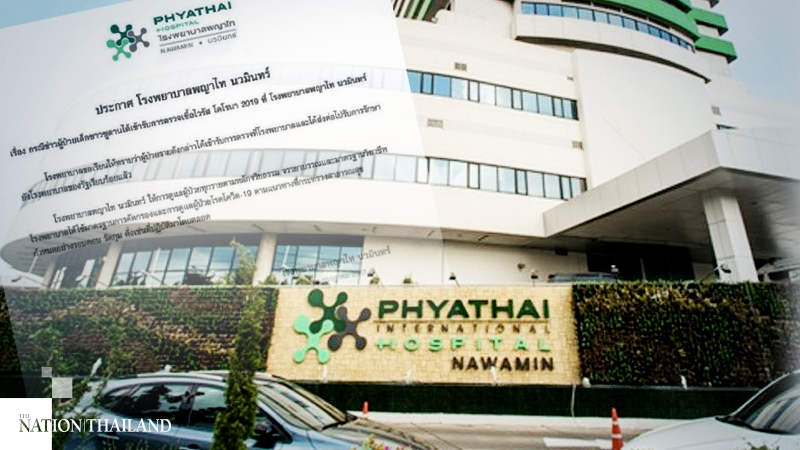
Phyathai Nawamin Hospital announced that it received the 9-year-old Sudanese Covid-19 patient at 2pm on July 10 under maximum safety measures.
An official statement confirmed that the patient had arrived at the hospital in a personal vehicle and was received by medical personnel wearing personal protective equipment.
The patient has had no contact with public areas as she is being treated for respiratory tract infection under quarantine.
Tests show inflammation in the youngster’s lungs and her family asked that she be transferred to the Queen Sirikit National Institute of Child Health.
Meanwhile, the interpreter who helped the patient during the procedure has been told go to into self-quarantine for 14 days as the hospital wants to reduce all risk of the virus spreading.
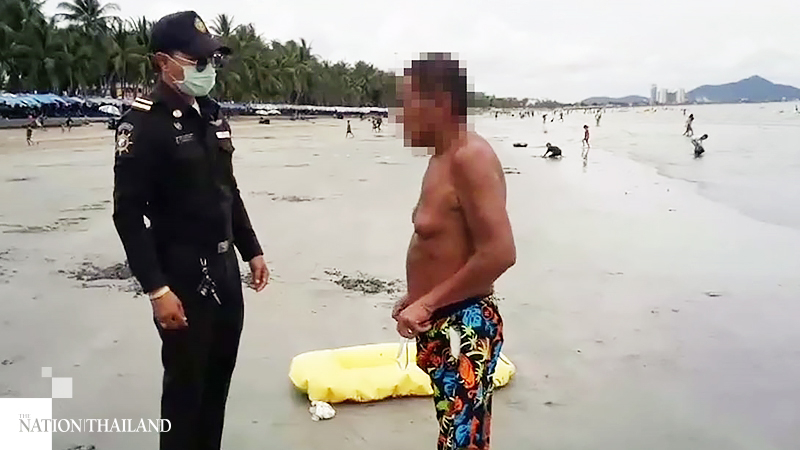
By The NationOfficials overseeing Chonburi’s Bang Saen Beach found pants for a 60-year-old exhibitionist who was caught walking down the beach stark naked, much to the shock of vendors nearby.
Bang Saen municipality officials, Pornsiri Thongwichien and Chaikit Somprasong, had received a report from tourists that a man was seen walking down the beach without any clothes.
Upon examination they learned that “Uncle Samran” had walked down the beach naked two or three times before. Siriporn said “Uncle Samran” came to the beach daily, but on some days he “loves connecting with nature without protection”.
He said the elderly exhibitionist was quite rich and lived alone, so he had nobody to watch over him.
Dr Suwannachai Wattanayingcharoen, Department of Disease Control (DDC)’s director-general, said on Wednesday (July 15) that more details have been found about the infected Egyptian soldier’s movements in Rayong.
According to CCTV images, the infected soldier and five of his colleagues had gone out, while the rest of the group also formed small groups and took frequent trips out of DVaree Hotel.
The group with the infected soldier had walked to Passione Shopping Destination opposite the hotel and stayed there for about three hours from 11am. The soldier had visited two floors of the department store, but since he did not eat or purchase anything, the chance of him spreading the virus is quite low.
Meanwhile, 1,333 samples had been taken from people in Rayong who had either been alerted by the ThaiChana app or who volunteered to undergo tests. So far, 400 have tested negative.
On Wednesday, as many as 120 people registered with ThaiChana for a virus test.
DDC is calling on people register and book tests on ThaiChana because that will cut down the chance of overcrowding at testing sites.
He also said DDC will be on high alert for the next 14 days and will continue testing people in high-risk areas. He added that so far, there is little or no possibility of another lockdown.
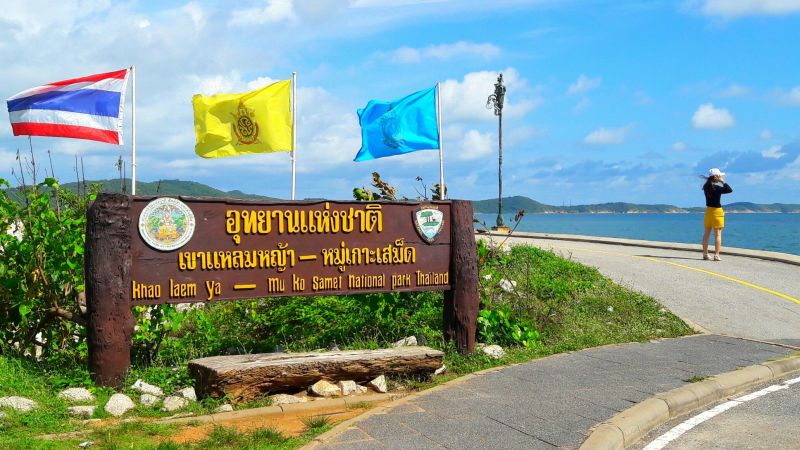
The discovery of a visiting Egyptian soldier’s Covid-19 infection has hit Rayong’s tourism sector badly, with people cancelling hotel bookings in Koh Samet.
Sarinthip Thapmongkolsap, chair of the Samet Tourism Association, said each and every hotel booking had been cancelled over fears of the virus spreading after the soldier’s infection was announced on Monday (July 13).
She added that business operators on the island, along with officials of the Khao Laemya-Koh Samet National Park, had put in place strict measures to screen and control visitors since the island opened to visitors on July 1.
She said many people had visited and booked rooms, until the “government ruined it” with its carelessness in dealing with foreign visitors.
The Interior Ministry has instructed provincial governors nationwide to publicly announce that people who had travelled to Rayong on July 8 to 11 immediately contact the provincial public health office or call the Department of Disease Control (DDC)’s 1422 hotline.
This effort is to prevent the spread of Covid-19 as these individuals may have been in contact with an infected Egyptian soldier who was visiting the province.
The letter, signed by Interior Ministry’s permanent secretary Chatchai Promlert, instructed provincial governors to immediately find out who in their province had visited Rayong during the period the infected soldier was visiting different venues in the province’s main city.
“Provincial governors must proceed in line with measures to prevent the spread of Covid-19 if they find people who were in contact with the patient in Rayong,” the letter read.
Five new Covid-19 cases were confirmed in state quarantine with zero deaths over a 24-hour period, Dr Panprapa Yongtrakul, assistant spokesperson of the Centre for Covid-19 Situation Administration (CCSA), reported on Wednesday (July 15).
Wednesday marked the 51st day without a domestic infection since May.
The five cases were all Thais, two of whom had returned from UAE, two from Singapore and one from the United States. Only the US returnee is showing symptoms and has lost their sense of smell.
Meanwhile, one earlier patient has fully recovered and sent home.
As of Wednesday, the total number of confirmed cases in Thailand stood at 3,232 (295 found in state quarantine) – 82 are being treated, 3,092 have recovered and been discharged and there have been 58 deaths.
Globally, total confirmed cases stand at 13.4 million, up by 221,000, with 7.8 million having recovered, while deaths stand at 581,000. Thailand is still 100 in the list of countries with Covid-19 cases, while the US is still at the top with more than 60,000 new cases confirmed followed by Brazil and India.
Two schools have decided to cancel classes after a student from each school had visited places where new Covid-19 infections were found.
Bangkok’s Samsen Wittayalai School shut its doors on Wednesday (July 15) after learning that a student and his/her family had stayed at the hotel in Rayong where an infected Egyptian soldier was staying.
Sahachai Sa-Suan, the school’s director, said the school will be closed for a day for sanitisation, which will be done by officials from the Phya Thai district office.
He also said that the student in question will be told to quarantine at home for 14 days.
However, teachers were required to go to the school on Wednesday to prepare for online classes. The school’s Facebook page said that some students will be allowed to return to school on Thursday and Friday, while the rest will attend online classes.
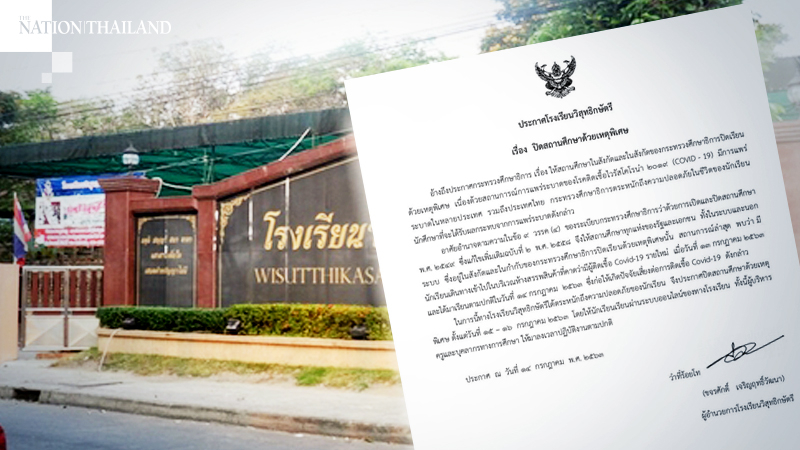
Meanwhile, Samut Prakan’s Wisuttikasattree School also announced it is having students attend online classes on Wednesday and Thursday after learning that one student had visited a high-risk venue on Monday (July 13) and had come to school the following day.
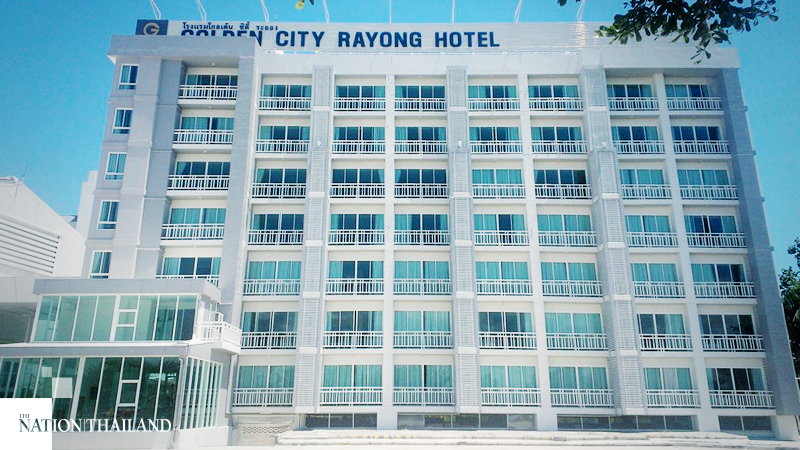
The owner of Golden City Rayong Hotel said that the impact of the imported Covid-19 case had been severe for Rayong province, forcing numerous businesses to close.
She said just when occupancy at her hotel had increased to around 50 or 60 per cent, new customers are back to zero.
The owner said that the lack of clarity in the soldier’s case had sparked fear among the customers. Several people had called her hotel up, and 90 per cent of bookings were cancelled on Monday (July 13), the day the new infection in Rayong was announced.
On Tuesday (July 14), the updated timeline of the Egyptian soldier was reported. Anuchida said that the timeline should ease people’s fears and increase their confidence in travelling to Rayong.
The government’s Centre for Covid-19 Situation Administration admitted on Monday that it had made errors in managing the entry of some groups of foreigners.
The infected soldier was among a 31-strong delegation of Egyptian military personnel who landed at Rayong’s U-Tapao Airport last Wednesday and stayed in a local hotel and visited a local shopping mall.
They were not subject to state quarantine, unlike Thais who return to the country. The group left Thailand on Saturday (July 11), but a test result the next day confirmed one soldier had Covid-19.
Anuchida said that the case was an expensive lesson for the government, and she wanted the related agencies to instruct the public about each safety measure.
Kasetsart University is conducting a study on efficient water usage for agriculture in the Eastern Economic Corridor (EEC) areas to prevent water shortage in the next 20 years when all development projects in the areas will be operating at full capacity.
An estimated over 1 billion cubic metres are expected to be used annually.
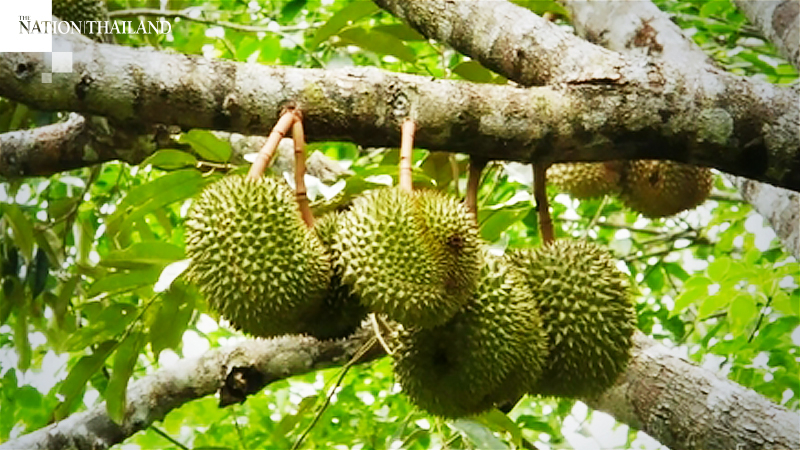
“The study is supported by National Research Council of Thailand and Thailand Science Research and Innovation,” said Songsak Phatrawutthichai, Department of Irrigation Engineering, Kasetsart University (Kamphaeng Saen Campus). “The study aims to reduce water usage for agriculture in the EEC by at least 15 per cent by adapting growing plans to climate change and study the real water requirement of economic production, especially of durian.”
Songsak added that there are more than 350,000 rai of farmland in the eastern region, most of which are dedicated to growing durian.
“In Rayong alone, there are over 50,000 rai of durian plantations and the number is continually growing every year,” he added. “This study is the first time that academics have tested the belief shared by local farmers for generations that growing durian requires a lot of water to ensure satisfactory results.”
Durian growers in the eastern region use a lot of water in the six months of the growing period starting from November onward.
“In the first three months they use around 150 litres of water per tree per day, and will increase to 200-300 litres per tree per day in the next three months, which is around the time that durian fruits are ready to harvest,” he added. “We tried to reduce the water usage to 100 litres per tree per day in the first three months, and then increase to 200 litres per tree per day in the next three months, and the result was still roughly the same.”
“The reduction of water has no effect on the quality of durian produce,” Somsak concluded.
The study calculated the water needed by durian tree via sap flow equipment that measures the flow of water from the plant’s xylem. Data was collect every day for months to determine what time the plant needed water the most and what time it did not. The experiment was conducted at Patthaphee Plantation in the Muang district of Trad province.
“A 10-rai durian plantation will normally use around 6,573 cubic metres of water in the six months of growing, whereas the method suggested by the study will help reduce water usage to 4,132 cubic metres, which is greater than the target of 15 per cent water reduction,” said Somsak.
“The challenge, however, is to convince local growers to reduce water usage. As durian is a high value economic fruit that requires steep investment, most farmers do not want to risk jeopardising their output by reducing water usage,” added Somsak. “The researchers are also working on integrating the findings to water resource management strategy among local authorities.”

 Prayut Chan-o-cha
 Dr.Suwannachai Wattanayingcharoen

 Chatchai Promlert, Interior Ministry’s permanent secretary